




Abstract
Adam Zamenhof was greatly influenced by his father, Ludwik Zamenhof, who designed the international language Esperanto. Like his father, he became an ophthalmologist and joined the Esperanto movement. He published in the field of ophthalmology and was soon chosen as head of an ophthalmology department. He subsequently became Chief of the Orthodox Jewish Hospital at Czystem in Warsaw. He was active in the leadership of the Bialystok-Warsaw Chamber of Medical Doctors. He perished in the Nazi Holocaust (Shoah) but all Zamenhof's ideals that Adam served as a doctor and social activist remain still alive.
Private life, education and work
Adam Zamenhof was born on 11 June 1888 in Warsaw in the Kingdom of Poland, incorporated in Imperial Russia, the son of Dr Ludwik Eleazar Zamenhof (1859–1917), creator of the international language Esperanto, and Klara Zilbernik (1863–1924). 1 From early on in his life Ludwik Zamenhof passed on to his son an altruistic attitude, reflecting his profession of ophthalmology, his creation of a language designed to unite people and his leadership of the Esperanto movement.
Duly influenced by his father, young Adam decided to be an eye doctor. He studied medicine in Lausanne, Switzerland, graduating in 1912. In 1914 his diploma was validated in Kiev, formerly Imperial Russia, now Ukraine. 2 He was very interested in the Esperanto movement and participated in Esperanto congresses in Bern, Dresden, and other centres at his father's side. Living in fear of anti-Semitic riots, both he and his father thought that Esperanto would be a cure for misunderstandings and prejudice due to language differences. 3 He settled in Warsaw and was trained in ophthalmology at a local Jewish Hospital.
Adam was a helpful and loving son, who was always at hand in any case of worsening of his father's health. He was upset to observe his father's cigarette addiction, which increased particularly after the outbreak of World War I. He called for professional physicians for heart problems and assisted him while he suffered from serious cardiac insufficiency. He also took over some of his father's duties at the ophthalmology practice. At the time Zamenhofs lived at Dzika street, which was a crowded and noisy district without green areas. In July 1915, in order to comfort his seriously ill father, his family moved to Krolewska Street near the central City garden with its marvellous baroque sculptures that were the remains of Saxon Electors and Polish kings, Wettin Augusts' great garden composition. The number of his father's patients was also restricted in so as to not overload him.
His father's last years were, for Adam, a great lesson of sacrifice for the creator of Esperanto and a medical doctor who was confused because of partial inability to perform his everyday tasks. 4 To provide some relaxation and relief to his terminally ill father, Adam played the violoncello as his father was fond of music and often practised at the piano alone. 5 After restoration of the Polish state's independence, he declared Polish nationality and Jewish faith. He was a military hospital commander during the Polish-Bolshevik War of 1918–20. Retiring as a Polish army captain, he returned to private medical practice at 41 Krolewska [Royal] Street in Warsaw. He was soon recognized professionally across Poland and published articles in the Warsaw Medical Journal. He also wrote many articles in the Esperanto language for the newspaper Pola Esperantisto. 5 His medical work was very good and he was well paid. According to correspondence from 1929, 1931 and 1938 he had problems with income tax, which, in his opinion, were overestimated by the fiscal authorities. 6
He married Wanda Frenkiel (Frenkel) (1893–1954), also an ophthalmologist, and they cooperated in their professional work. Their marriage was happy and he had a son Ludwik, born in 1925. 6 Adam and Wanda Zamenhof lived in the same house with his sister Sophia Zamenhof (1889–1942) who was a specialist in internal medicine and paediatrics. He practised in the Jewish Hospital at Czyste (now the Wola Hospital) – a huge medical centre with six wards and more than 1000 beds. He also saw patients in an outpatient section at 9 Zamenhof Street (formerly Dzika) in Warsaw.
On 2 February 1935 Adam Zamenhof was appointed a judge at the Bialystok-Warsaw Medical Chamber of Medical Doctors. 6 He cooperated with his uncle, Leon Zamenhof, who was also a referee in controversial medical matters in the institution. Being the most skilled medical doctor in the hospital ward, he replaced retired Dr Endelman as Chief of Ophthalmology at the Orthodox Jewish Hospital in Czyste, which earned an excellent reputation in Warsaw for its high medical standards. He remained in this role until his death. From 16 September 1939 he directed an entire hospital at Czyste. After the outbreak of World War II he coordinated the hospital's work with military requirements. 2
Adam Zamenhof was a talented ophthalmologist and very well known in Warsaw. However, his medical authority was questioned at least once: he was accused by doctor Henry Mendelsson in 1936 but was found innocent and free of charges of medical error or unethical behaviour by the Bialystok-Warsaw Medical Chamber at the beginning of the following year. 6 After Hitler's invasion of Poland he was arrested by Nazi Germans along with his wife Wanda, son Ludwik and (physician) sister Sophia. 7 He was executed by gunshot in occupied Warsaw at the beginning of 1940. Lidia (1904–42), Adam's youngest sister, a language teacher perished in a death camp in Treblinka, as did Sophia. Wanda Zamenhof and her son managed to escape from a transport train and survived the war. 5 They moved from Warsaw to Paris. 8 Adam Zamenhof's life ended suddenly and dramatically but, thanks to the fact that he published widely on his scientific interests and clinical observations, his memory lives on. Thus, we can today see in perspective his professional achievements in ophthalmology (Figure 1).
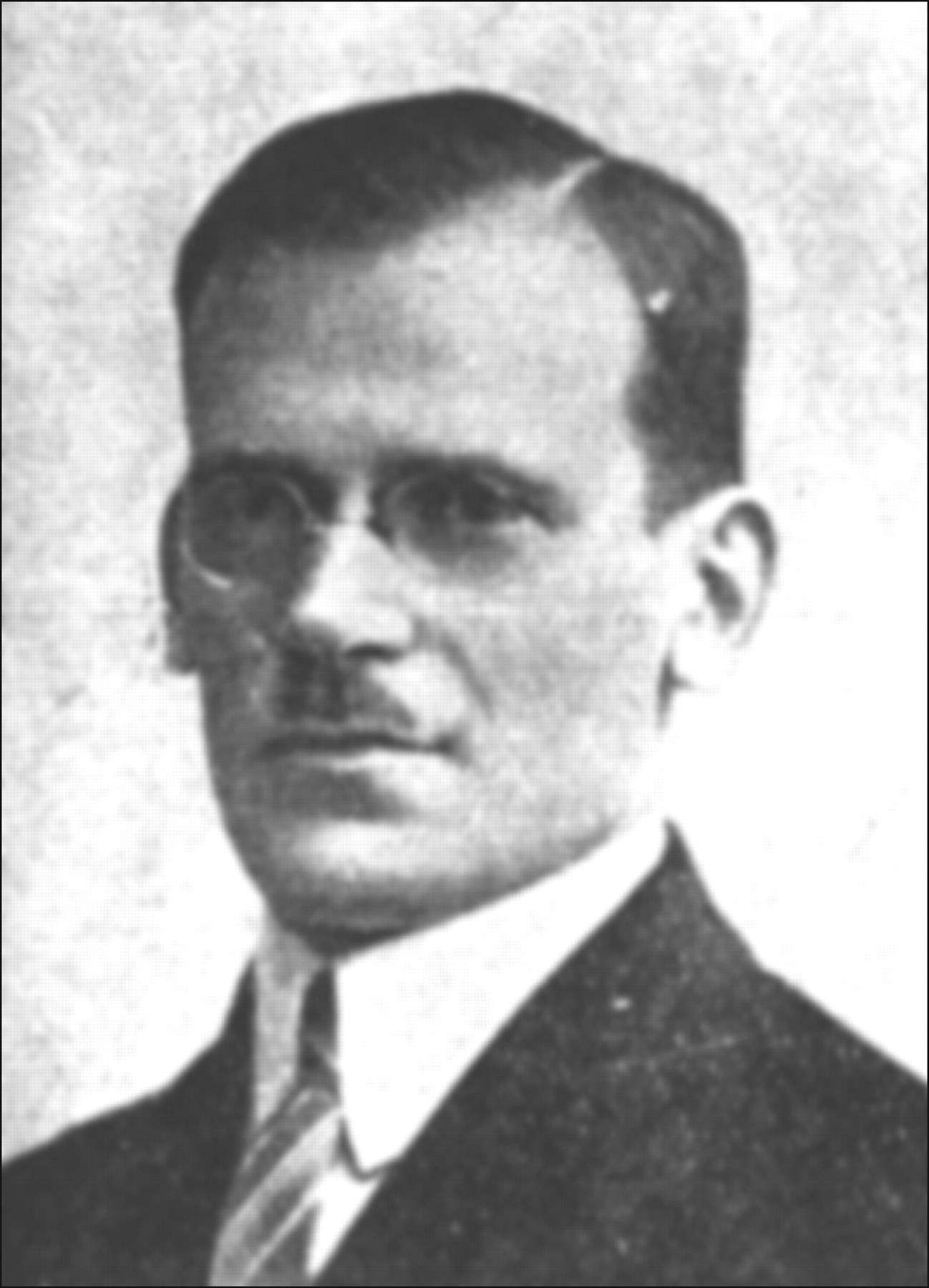
Dr Adam Zamenhof (1888–1940)
Adam Zamenhof's equipment
Eye fundus examination
First, Adam Zamenhof's examination of the ocular fundus used concentrated and indirect light. 9 This interest led to a critical review of methods used for examination of the fundus of the eye and proper selection of medical instruments. He investigated the diagnostic techniques introduced by Eugene Wolff (1896–1954), the first proponent of concentrated light; 10,11 Leonhard Koeppe (1884–1969), the pioneer of examination with the contact lens and improver of the slit lamp, 12 and Albert Lemoine, 13,14 who in 1933 applied concave lenses instead of contact ones in visualization of the fundus. In the course of his studies Zamenhof thought that the major problem was the means of directing the light beam. The solution was Allvar Gullstrand's (1862–1930) use of the slit lamp for illumination of the eye in inverse perspective. 15 The examination of eye grounds with the Gullstrand probe was facilitated by the phocalizator, a convex +32 D rectangular lens, framed at three sides and free at one side. It was a simple, positive lens that was fixed to the Gullstrand probe with a regulating shoulder. This phocalizator was adjustable for individual refraction. It was produced by Gabriel Tran of the Optic Institute at Graniczna [Border] Street in Warsaw. Adam Zamenhof presented a detailed advice of how to adjust the phocalizator to gain a clear, well-focused picture. In addition, he tried to identify patterns of pathological change in examination of the fundus as commonly seen in retinal detachment, papillary oedema and melanoma of the eye. 9
Zamenhof was fond of fundus examinations, which allowed an internal view of vascular pathology in retinal disorders, information about hypertension-induced damage of vessels and the estimation of intracranial pressure. 16 As a great advocate of this diagnostic tool, he asserted that every doctor should be able to examine the fundus using the ophthalmoscope. He drew up guidelines on interpretation and what to expect from the ophthalmologist.
He called attention to Gunn's, Salus' and Guist's signs. 17 Zamenhof stressed that fundal changes should be compared with clinical data from other organs. His metaphor: the visible fundus resembles a silent movie that should be interpreted in the clinical context. 16 Therefore he suggested providing precise information on the patient's disease, what the clinician suspected and why the patient was referred for ophthalmic consultation. Clinical data collected by other medical specialists could be necessary to prevent misdiagnosis.
He also discussed difficulties and limitations in ophthalmoscopy. 18 For example, it was difficult to develop a clear view of the fundus in cases of narrow pupil and opacity of the lens. In such cases he proposed modified ophthalmoscopy to reduce interfering reflections. He advised an immersion method with application of contact lenses or a film of water and a technique with polarized light using prisms in combination. The other solution was a geometrical one, dividing the observed area into two fields of entering and exiting light rays. The latter solution was applied in Thorner's ophthalmoscope and widely used techniques of immersion and polarization instead. Walter Thorner designed reflex-free ophthalmoscopes: a hand-held monocular and a binocular type in cooperation with the Emil Busch Company. 19 He also presented catoptrical examination of the fundus. 18
Visual field examination
Adam Zamenhof also cared for appropriate propagation of projectors for measurement of the visual field on a flat surface. He recommended a very simple electrical projector in capimetry of his own design instead of quite expensive optical projectors. 20
Other instrumental developments
He promoted usage of the distractor (retractor) and extractor for capsular cataract extraction. 21 He encouraged the use of a magnifying glass in the diagnosis of trachoma and described several advantages of that diagnostic tool. 22
He was soon regarded as an authority and innovator in the field, and his inventions were propagated abroad. MI Mantinband provided a translation of Zamenhof's article on the method of sclerotomy in the surgical treatment of glaucoma in a British ophthalmology journal; he published a drawing of a sclerotomy knife of his own design that allowed incisions no deeper than 1.2 mm. Mantinband also presented Zamenhof's instructions for iridectomy and sclerecto-iridectomy. 23
Retinal detachment treatment
Zamenhof had a major interest in the surgical repair of retinal detachment 24 and cited reports by Gonin. 25 Gonin's method became widely adopted in Polish ophthalmology after World War II. 26 He developed techniques to create adhesions between the retina and the choroid using Paquelin's thermocautery, 27 electric cautery and galvanocautery. The other method, recommended by Karl Linder in 1930, was chemical cauterization with potassium lye, a technique designed by Guist. 28 He favoured Guist's method, which led to relatively little scarring. In his opinion, the method could be applied repeatedly and over a wide area. The adhesions were induced on a retinal area large enough to minimize the chance of missing the detachment. The disadvantage of Guist's operation was the need to perforate the sclera repeatedly and this took up to three hours. For this reason, Linder modified the Guist method and after scleral dissection he performed a choroid lysis, separating the choroid from the sclera and injecting a 3% lye solution into the suprachoroid space. This procedure simplified the operation and also allowed treatment of macula lutea.
Diathermy coagulation was the next approach, proposed independently by Weve and Larsson, 29,30 which Zamenhof tested. Evacuation of sub-retinal fluid accelerated healing and, thus, Weve punctured the sclera with a diathermy needle. Zamenhof used micro-puncture, which allowed the fluid to escape. Another eminent ophthalmologist, Karl Safar, improved electrocoagulation techniques by the more superficial insertion of a coagulating electrode at choroid level with fixation of the choroid with 1.8-mm long pin pegs. 31 According to Zamenhof, Safar's method was preferable because it spared the retina from electrical trauma and attached the choroid to the retina. 24 Zamenhof broadly described the indications for surgical treatment of retinal detachment, too. In the end he concluded that non-surgical therapy of this disorder was ineffective and should be avoided. 24
Adam Zamenhof and non-surgical therapy
Zamenhof was receptive to therapeutic innovation. He reported on a treatment by Dr Kerschman, an ophthalmologist from Bialystok, who used egg white in troublesome corneal wounds, erosions and ulcerations as occurring in keratitis herpetica and in corneal inflammation. The use of egg derivatives in ocular disorders has a long-standing tradition. The egg white was poured into a clean glass container. The patient lay down on the table, his head resting horizontally, and a retractor exposed the eyeball whose margins were covered by a C-shaped sterile gauze. Egg white was poured on the corneal surface for five minutes twice daily. 32 In 1983 Fujii et al. 33 showed that egg yolk phosphatidylcholine stimulates proliferation of corneal endothelial cells. Moreover, proteolytic products of ovalbumin have antimicrobial activity; 34,35 useful to promote regeneration of an injured cornea that is vulnerable to infection.
He also recommended warm compresses soaked in boric acid or Burrow's solution in the management of most internal hordeol. As a result, small abscesses of Meibom's glands only rarely require drainage of pus. In severe inflammatory reactions he prescribed anti-staphylococcal vaccines and in frequent recurrences an autovaccine prepared from the patient's purulent discharge. 36
Presentation of clinical case reports
Adam Zamenhof participated actively in meetings of the Warsaw section of the Polish Society of Ophthalmology. He presented a case concerning the differential diagnosis of inflammatory and papillary oedema of the optic disc. 37
Ophthalmic oncology was of great interest to Zamenhof. He and his colleague from the Jewish Hospital, the pathologist Maurycy Plonskier who died in the Warsaw ghetto in 1942, described the case of a 53-year-old woman with metastatic adenocarcinoma of ‘papillary texture’ (the primary site was probably the ovary or stomach) in the choroid. 38 He was also involved in treating tuberculosis, one of the main health problems at the time. Ocular tuberculosis was common; affected eyes have retinal exudation. 39 Such presentations were important in the education and training of ophthalmologists in Poland. 40
Conclusion
Adam Zamenhof was a talented ophthalmologist who devoted his professional life to health care, particularly in the field of ophthalmology, along with energetic social activism. Through medical practice, teaching and his involvement in the Esperanto movement he proved himself a great humanitarian. His life ended abruptly at 52 when he was executed by Nazi invaders. 41 His death was a great loss for medical care in Warsaw. In honouring his memory we should work to build a humane social and political environment that respects and upholds the dignity of all. In our dynamically changing world, progress for peace and health can be made now and in future generations in the spirit of ophthalmologist and Esperantist Adam Zamenhof, who himself followed in the footsteps of his father, the Polish ophthalmologist, linguist and creative idealist Ludwik Zamenhof.
Footnotes
Acknowledgement
Andrzej Wincewicz thanks the Foundation for Polish Science for granting him a START scholarship, which supported him in this study.