




Abstract
Dr Alfred Stephens was the co-founder of the Liverpool Children's Infirmary. The institution was funded initially by Matthew Gregson (1800–76) and later by public subscription. Opened in 1851, it was the second Children's Hospital in England. Alfred Stephens was a general practitioner without higher qualifications. In due course he perceived that the free treatment of children at the Infirmary affected his income and he redirected patients to his practice. This led to confrontation with his colleagues and the Board of the Infirmary, and good relations were never restored. His name has not been commemorated nor his charitable work remembered.
Liverpool children's infirmary
In the year 1839 Samuel Malins (1807–43) made a plea for the establishment of a children's infirmary in Liverpool (Figure 1). He pointed out that one-third of the city's children died before the age of two years and that only half of them reached the age of 10. 1 The plea was answered 10 years later and the founding father of the new institution was Alfred Stephens. It might be expected that his name would be commemorated, but when he died in 1890 the only obituary notice which appeared was in the Liverpool Mercury. 2 At the time of his death he was living in Clevedon in Somerset, far away from the city in which he had spent his professional life. The death notice described him as co-founder of the Children's Infirmary and honorary consulting physician for life. In the year 1907, 17 years after his death, the Liverpool correspondent of the Lancet suggested that his name should be commemorated by the erection of a plaque or other suitable memorial. 3 This never happened, although the foundation of the Infirmary was commemorated 100 years later. 4,5 No portrait nor any other representation of Alfred Stephens has survived in local archives. The evidence suggests he had fallen from grace when he ended up at loggerheads with the authorities of the institution of which he had been the medical founder.
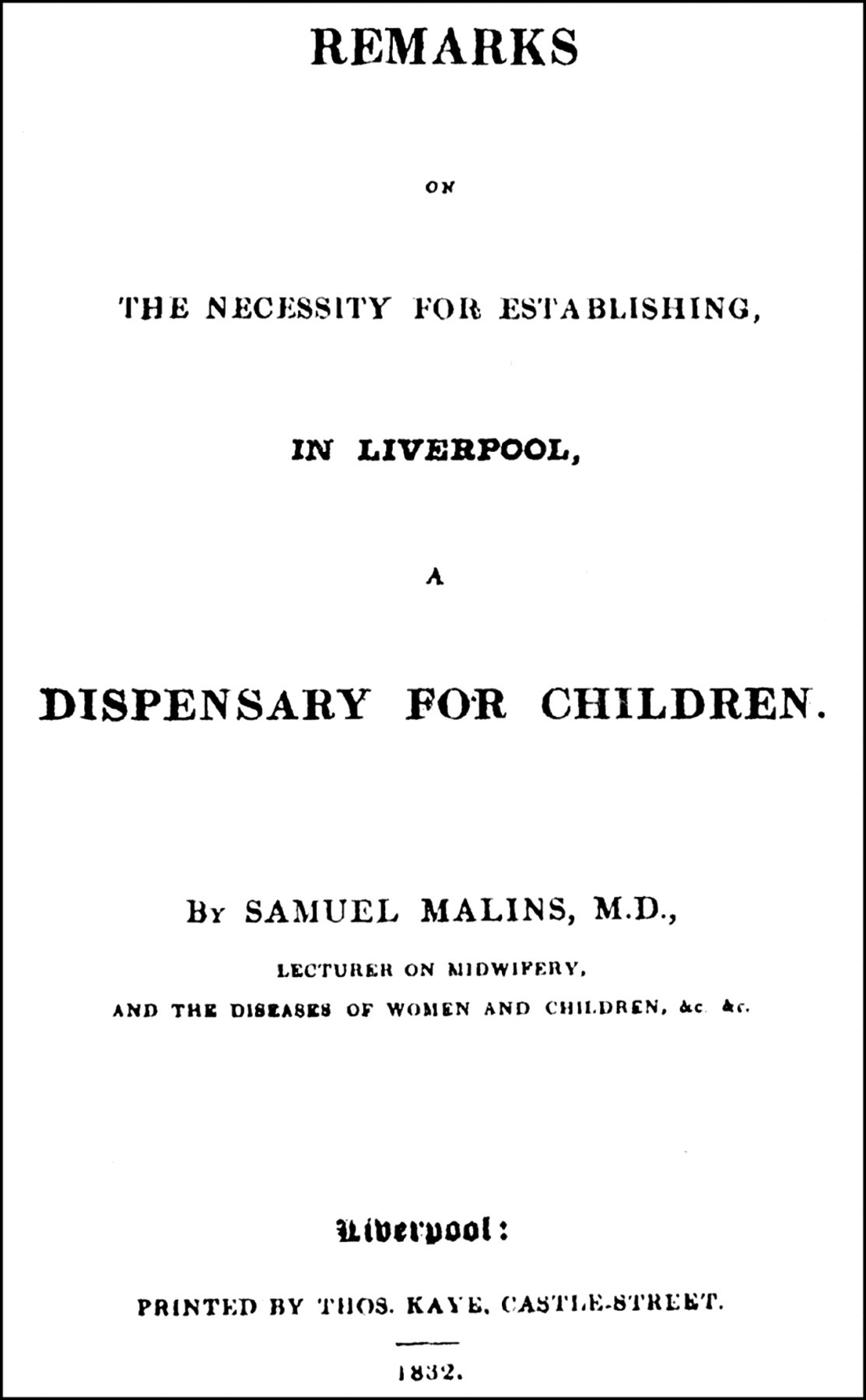
Samuel Malins Pamphlet, Liverpool Medical Institution
Alfred Stephens, founding father
His entry in the Medical Directory for the year 1852 describes Alfred Stephens as the senior surgeon to the Infirmary for Children. This is the first archival reference to the Infirmary. He was also described as surgeon to the West Derby Union. 6 It was common practice to describe as surgeons those doctors whose qualification was MRCS rather than a university medical degree. He had taken the MRCS in 1842, the Licentiate in Midwifery at the Rotunda Hospital in Dublin in 1843 and the Licentiate of the Society of Apothecaries in 1845. The commemorative plaque at the site of the former Royal Liverpool Children's Hospital follows a local tradition that the Liverpool Infirmary for Children opened its doors in 1848 (Figure 2). The official Infirmary records, however, give the date of foundation as 1851 (Figure 3). An unsigned internal memorandum from the 1950s also gives support to the suggestion that the date of foundation of the hospital was as early as 1848 rather than 1851. 7 However, even the earlier date does not make Liverpool the first English city to have a children's hospital. That honour goes to Manchester, the clinic which later was to become the Children's Hospital, having opened in 1829. 1 The first designated entry in the Medical Directory for the Children's Infirmary was for the year 1856 when it was recorded that upwards of 3000 children had been treated over the previous five years. 8
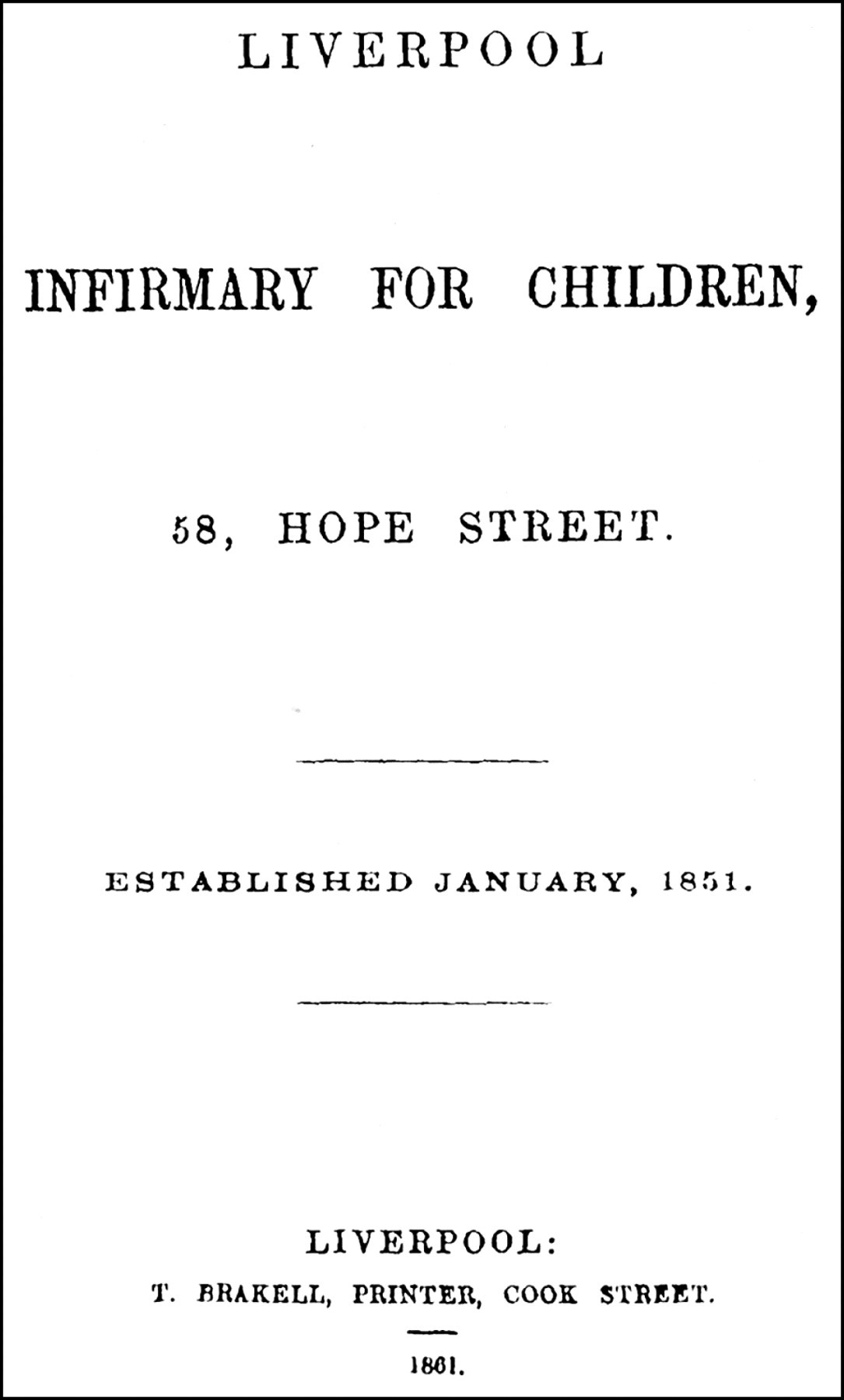
Liverpool Infirmary for Children Annual Report 1860, Liverpool Record Office CHI614/1/2/1
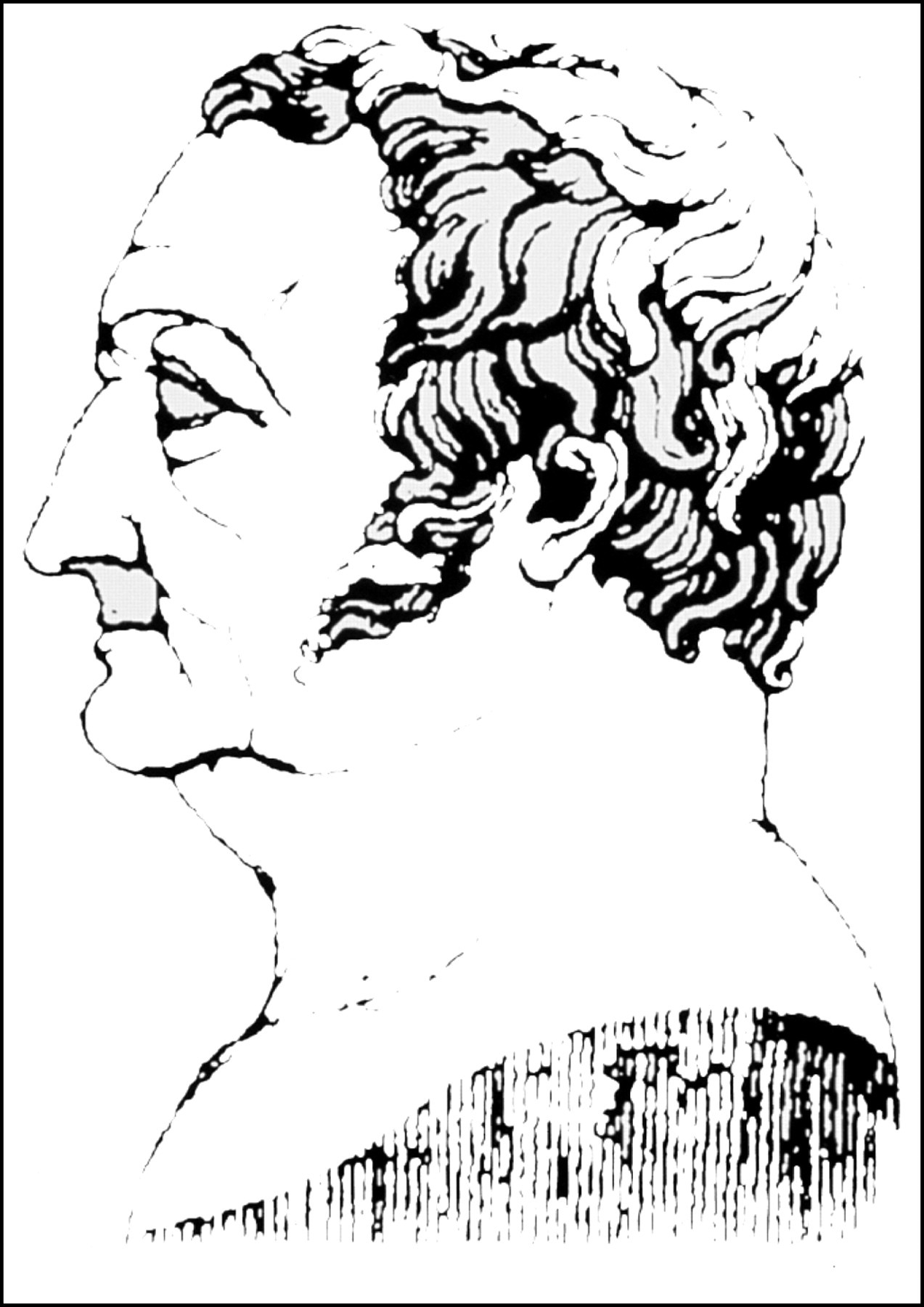
Matthew Gregson. Liverpool Museum Bulletin, October 1956
The development of the infirmary
Fletcher (1826–66), writing in 1857 relatively close to the time in question, also gave 1851 as the year in which the hospital was established. 9 In 1869 the Liverpool correspondent to the Lancet wrote: ‘The children's infirmary in this town which has been in existence for upwards of 16 years, had, like many a similar institution, a very humble origin. In 1851 a small house in a frequented thoroughfare was rented for children by Dr Stephens who may be said to have been the promoter of the undertaking. In a very few years the house grew too small, such were the numbers availing themselves of the advantages and the benefits derived from it. A larger house was taken in a better neighbourhood and 20 beds were fitted up’. 10 The Lancet of 1907 indicated that he had got the idea of setting up a children's infirmary when he visited Dublin in 1845 11 and he came to know of the Dublin Institution for the Diseases of Children, which had opened in 1821. 12
Bickerton (1827–72) has provided more details. 13 He describes the first location as a small private house in Upper Hill Street and wrote that the funds were provided by Matthew Gregson, the first President of the hospital (Figure 4). Matthew Gregson was a timber merchant and became wealthy by the introduction of steam power in his sawmills in which he employed up to 150 men. A public-spirited citizen, he was Chairman of the Watch Committee and a Town Councillor. He served as President of the Infirmary until his death in 1876. 14 Upper Hill Street was described as a modest address. At the time of the 1851 Census, Dr Stephens, as yet unmarried, also lived in Upper Hill Street, at No. 3. 15 The occupant of No. 1 was a mariner with his wife and child. No. 4 was occupied by a farm labourer and No. 5 by a warehouseman and his family. Residents were not listed for No. 2, which would point to this property as the first address of the Infirmary. The fact that Dr Stephens and the Infirmary were next-door neighbours suggests he started a feasibility study at this address, funded by Matthew Gregson, possibly from 1848 and before the Infirmary opened officially in 1851. This would account for the local tradition that put the opening date as 1848. The year 1851 was an eventful one for Alfred Stephens since it was also the year in which he married Anne Brittain.
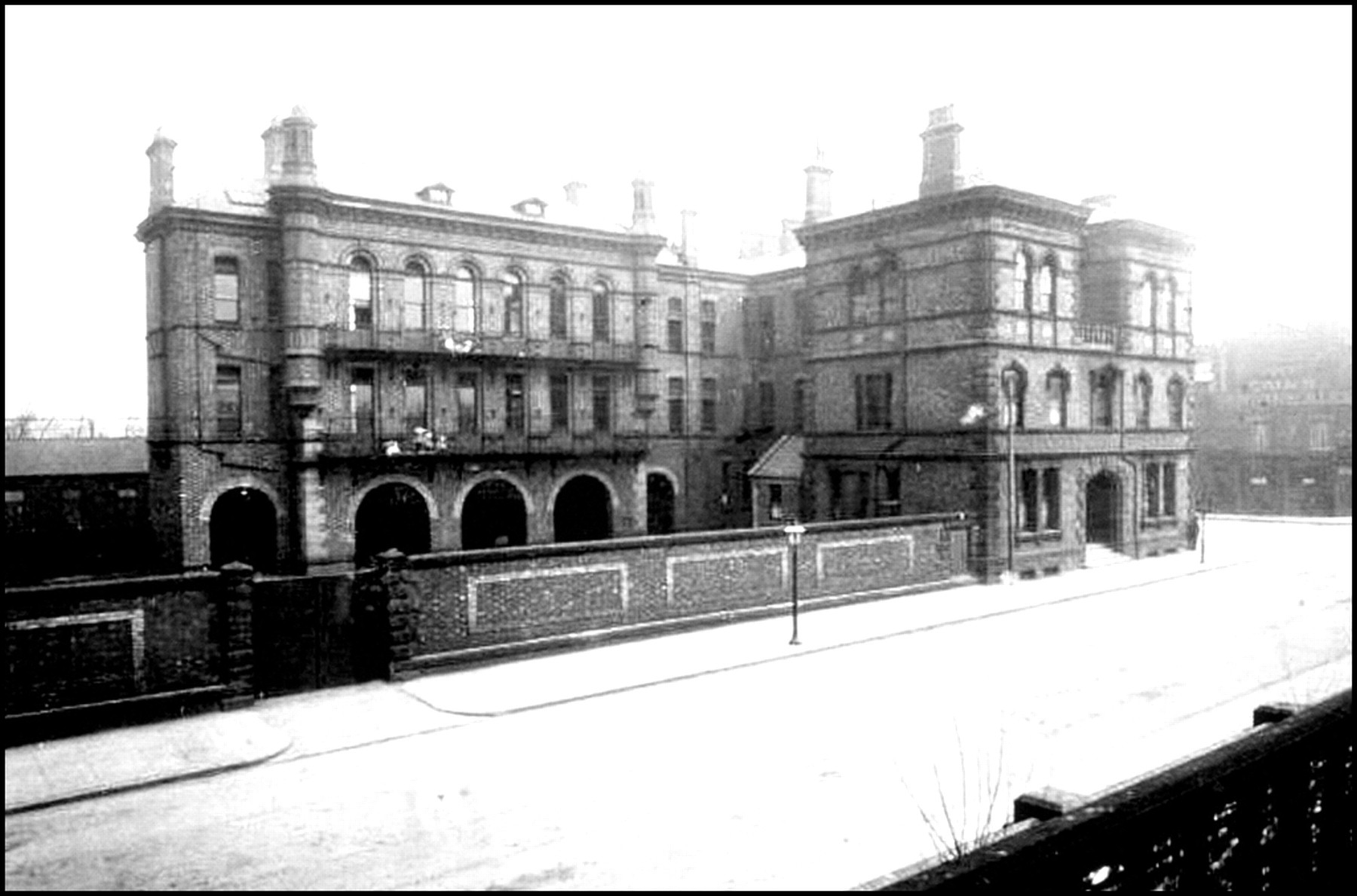
Liverpool Children Infirmary rebuilt on Myrtle Street in 1868
In 1856 the Infirmary moved to No. 48 Great George's Street, described by Bickerton as a larger house. It was not until the next change of address that inpatients were admitted. By the time of the next census in 1861 the Infirmary was located at 58 Hope Street, 16 which has survived, and the house gives the impression of upper middle class comfort. A woolbroker lived in the house next door, father of six children, and sufficiently well to do to have a resident staff of six. The Lancet referred to the move as being to a larger house in a better neighbourhood. Hope Street was fitted up with eight beds, later increased to 20. In 1868 the Infirmary moved to a purpose-built hospital of 60 beds in Myrtle Street close by. The hospital finally relocated to another site in Myrtle Street in 1904.
The objectives and the operation of the infirmary
The published objectives of the Infirmary were first, to provide medical treatment and medicines for the children of the poor; second, to promote the advancement of medical science with reference to the diseases of infancy and childhood; third, to diffuse among the poorer classes a better acquaintance with the management of young children during sickness; and fourth, to afford opportunities for the training of women in the special duties of children's illnesses. The Infirmary was to be devoted exclusively to children under the age of 12 years. 17 Each annual report listed the influential backers of the contemporary Hospital for Sick Children, Great Ormond Street in London, and quoted the opinions of its backers, the eminent Drs Latham, Watson, Burrows, Locock, Ferguson, Sir John Forbes and its founder Charles West. The implication was that Liverpool should have a similar institution. Local letters of support were furnished by Robert Bickerstaff and James Long, surgeons to the Liverpool Royal Infirmary, James Turnbull and Thomas Inman, physicians to the Infirmary, James Cameron and JL Minshull, physician and surgeon to the Southern Infirmary, and Ellis Jones, senior surgeon to the Northern Hospital.
Alfred Stephens' practice
In 1861 Alfred Stephens, having lived previously in the modest surroundings of Upper Hill Street, was now in practice in the more upmarket Upper Parliament Street and, aged 42, he was married, had four children and employed a governess. By 1871 he no longer needed to employ a governess for his children and a housemaid had been replaced by a ‘waitress’, presumably a practice receptionist. 18 He had advanced in the world of medical practice.
Alfred Stephens was a general practitioner. Apart from his annual salary of £200 for his duties in West Derby Union and £80 as Medical Officer to the Toxteth District, the rest of his income was derived from fee per service payments from patients in his practice. His surgery was in his house. Patients' fees at that time were roughly aligned to the ability of patients to pay. 19 As a general practitioner his fee in his less fashionable first address was probably two shillings and six pence but, upon moving to Upper Parliament Street where his neighbours were of the merchant class, he would probably have increased his scale of fees accordingly, possibly to five shillings per visit. He is described in the census of 1861 as a general practitioner rather than as a physician or surgeon, a distinction that would point to an expectation that his fee would be less than a guinea, the accepted fee for a specialist.
His work for the Infirmary was voluntary. Any subscriber could refer patients. 20 Subscribers were supplied with tickets to give to patients they recommended. These were to be given ‘only to such as have not sufficient means to provide medical attention for themselves’. It was clearly a matter of importance to him that the system whereby a subscriber could nominate a patient to attend for treatment on a no fee basis, without further verification of means, lent itself to abuse. Effectively patients who were potentially fee-paying, and who might otherwise have been brought to his private practice, could be seen at the free Infirmary clinics.
Conflict of interest: loss of private fees
General practitioners in other areas complained of the impact of the charity system on their practices. In London nearly all the medical men testifying before the House of Lords Select Committee on Metropolitan Hospitals in 1893–94 urged the necessity for greater control over charity medical care and insisted that many people received treatment in hospital who could well afford the fees of private practitioners. 21 In Belfast the Ulster Medical Society in 1881, and again in 1890, called for a wage limit to be fixed above which patients presenting at the developing Royal Hospital for Sick Children would be excluded. 22 Whereas in London and Belfast efforts were made to induce the hospital authorities to introduce means-testing, Alfred Stephens took the matter into his own hands. Formal means testing was indeed applied in some hospitals, including the Children's Hospital in Birmingham. In Birmingham the ceiling for eligibility was a weekly family income of 25 shillings for a family with three children and a limit of 30 shillings for a family with more than three. 23
Medical board action against Alfred Stephens
A special meeting of the Medical Board was held on 18 January 1874 to consider ‘Dr Stephens' practice of sending patients to his own house from this Infirmary’. 24 A resolution was passed unanimously as follows: ‘The facts having become notorious that the senior medical officer makes a practice of sending patients applying to this institution for medical advice to his own house and charging a fee, the Medical Board wish to draw the attention of the Committee to the circumstances, believing that such a practice is likely to bring discredit upon the institution and injures it in the eyes of the public. The Medical Board regrets that having applied in vain to induce him to relinquish this practice it is reluctantly compelled to taking the matter to the General Committee’.
The resolution was signed by Dr Martin Oxley (Physician) and the meeting was attended by Dr Rawdon (Surgeon), Dr Armstrong (Assistant Physician), Dr Caton (Assistant Physician) and Dr Chalmers (Assistant Physician). The resolution looks, in retrospect, like something in the nature of a palace revolution but the members had apparently exhausted any possibility of resolving the matter by direct discussion with Dr Stephens. Drs Oxley and Rawdon, in advance of the meeting, had become governors through subscription and so had direct personal access to the administration.
The General Committee duly met on 30 January and it was resolved that, having received the reply of Dr Stephens and having fully considered the resolution of the Medical Board, the Committee could only come to the conclusion ‘that it was neither in the interest of the institution, nor was it conformable to the general practice of the profession that the course pursued by Dr Stephens should be continued’. Dr Stephens having heard the resolution read, agreed in deference to the opinion of the Committee to discontinue the practice complained of in the resolution of the Medical Board. 25
Was Alfred Stephens treated fairly?
The later minutes of the Medical Board indicate that Dr Stephens, although he remained listed as physician until the time of his death in 1890, rarely attended any meeting of the General Committee. He had clearly taken the rebuke to heart. In 1880 he asked to be relieved of his duties in the outpatient department. His health was declining. The Committee agreed to appoint an assistant house surgeon, to act without salary for a period of six months at a time, with free board in the Infirmary and, that in lieu of residence in the Institution, suitable rooms conveniently near there be obtained by the Committee and at the expense of the Institution. Aside from the affairs of the Infirmary the serial entries in the Medical Directory later list Dr Stephens as Medical Referee to the Southern and British National Assurance Companies and other insurance companies. He had worked to develop collateral income.
Alfred Stephens was a man without academic ambitions. He published no papers, he wrote no books, he carried out no research and he did not participate in the academic life of Liverpool. He was not a member of the Liverpool Medical Institution. He was a man of goodwill, ready to give his services to the poor of the city without financial reward. However, he was financially dependent on an income derived from the fees he earned in his middle-class practice. His critics practiced in Rodney Street, the Harley Street of Liverpool, and served the needs of better-off families outside the scope of the Infirmary service. Their private patients were unlikely to present themselves at a charitable institution. The critics emerged from their positions of professional independence to criticize a colleague struggling at the interface between modest security and poverty. His wife and he took in medical students as lodgers and they had two students living with them at the time of the censuses in 1861 and 1871.
It is also possible that the Medical Board felt embarrassed by his lack of academic ambition. In due course Martin Oxley's name appeared in several medical journals including, in particular, an important review of 41 cases of chorea, one of the most important contemporary reports on the condition. 26 Henry Rawdon wrote on surgery in harelip and cleft palate and was to an extent the originator of surgical interest in a field in which the institution later was to become famous. 27,28 His colleagues may have felt Alfred Stephens should have extended his academic interests. Likewise, Alfred Stephens was not a medical politician. He could have canvassed the governors to introduce means testing rather than taking the matter into his own hands. He was written out of local history for over a century and his name is almost forgotten in spite of his pioneering work.
The final years
Alfred Stephens and his wife Anne spent their declining years in the home of Alexander Ross in Upper Crumpsall near Manchester. Their daughter Annie had married Alexander Ross. A son Charles qualified in medicine in 1875 and practised in Jedburgh near Edinburgh. Alexander Ross was a successful engineer and the couple had her parents living with them from 1886 until Alfred died in 1890 and his wife in 1892. Alfred appears, however, to have been visiting Clevedon in the company of his wife and his daughter at the time of his death on 19 December 1890. Anne, who was with him when he died, registered his death and the certificate cited the cause of death as dilation and degeneration of the heart, and accompanying oedema of three months duration. Charles was in practice in Jedburgh near Edinburgh and then in Leicester but in 1893 he was living in Manchester with his sister. He later emigrated and from 1896 his name was on the New South Wales Register.
Alfred Stephens' death notice in the Liverpool Mercury seems to be the only other record of his death. 2 There was no mention of him in the Lancet or the British Medical Journal. His obituary pays tribute to his work for the Children's Infirmary and also makes mention of his work for Lodge 32 of the Freemasons and for the volunteer Press Guard. History has not been kind to a man who should be remembered for his early endeavours. 29
Footnotes
Acknowledgements
Roger Hull, Archive Department at the Liverpool Record Office, identified and cheerfully retrieved relevant documents. The Royal Liverpool Children's Hospital internal historical document was furnished by Gwynneth Rowe. The assistance of Malcolm Dockerty and Mary Riddoch was very helpful. Mair Moulton, Archivist at the Liverpool Medical Institution, retrieved materials held by the Institution. Christine Barnes carried out additional archival research. Early drafts were reviewed by Adrian Allen, Liverpool University Archivist, and Professor Julian Verbov. This help was greatly appreciated. The illustrations were enhanced for publication through the efforts of Mike Moore.