




Abstract
The science of immunology emerged in the last of the 19th and the first of the 20th century. Substantial progress in physics, chemistry and microbiology was essential for its development. Indeed, microorganisms became one of the principal investigative tools of the major founders of that science – Louis Pasteur, Robert Koch, Ilya Ilich Metchnikoff, Paul Ehrlich and Jules Bordet. It is pertinent that these pioneering scientists were born when questioning and exploration were encouraged because of the legacies of the previous century of enlightenment. Mentors greatly aided their development. Their discoveries were shaped by their individual personalities. In turn they developed other contributors to the nascent field. Their discoveries included the types of leukocytes, the roles of neutrophils in inflammation and defence, cellular lysis due to complement, the principles of humoral and cellular immunology, passive and active immunization, tissue antigens, anaphylaxis, anaphylactoid reactions and autoimmunity. Their work formed the basis of modern immunology that developed many decades later. Immunology has enormously impacted our understanding of the pathogenesis, diagnosis and treatment of infections, immune-mediated disorders and inflammation. Burgeoning advances forecast further important clinical applications of immunology. Yet, their applications will be problematic because few physicians sufficiently understand the science. We propose that understanding modern immunology requires a grasp of how that science developed – who made the discoveries, how they were made, their successes and failures, their interactions and debates all reveal the foundation of modern immunology.
Previously we explored the lives of three of the founders – Ilya Ilich Metchnikoff (1845–1915), 1 Paul Ehrlich (1854–1915) 1 and Jules Bordet (1870–1961). 2 However, Louis Pasteur (1822–95) 3 (Figures 1 and 2) and Robert Koch (1843–1910) 4,5 (Figures 3 and 4) laid the bases for their work. During the late 19th and early 20th centuries these five scientists discovered most of the basic concepts of immunology (Table 1). Here we explore through the lens of their lives the discoveries that form the basis of modern immunology.
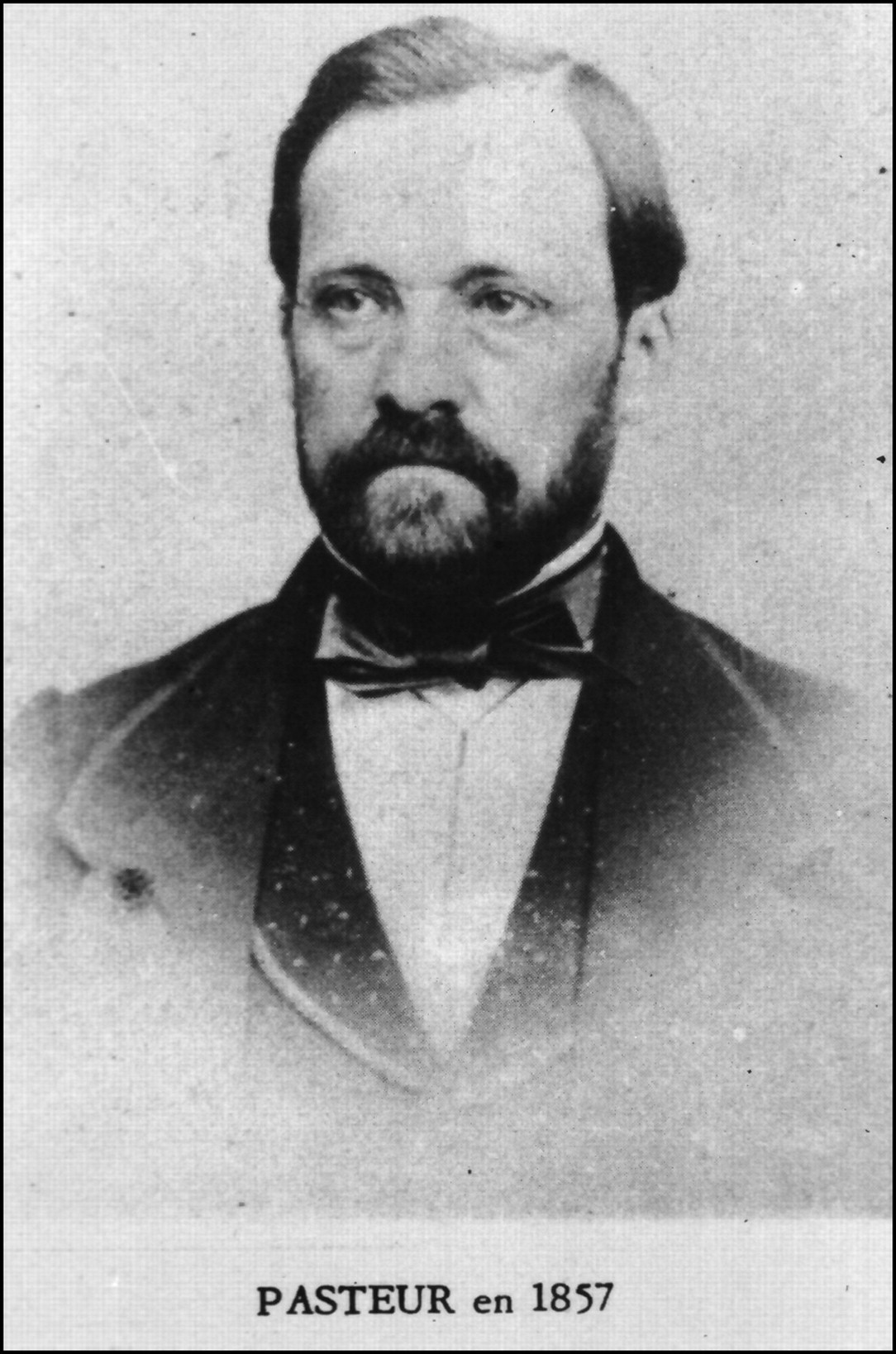
Photograph of Louis Pasteur when he was Doyen de la Faculté de la Science à Lille in 1857 (age 35), reproduced courtesy of the History of Medicine of the National Library of Medicine
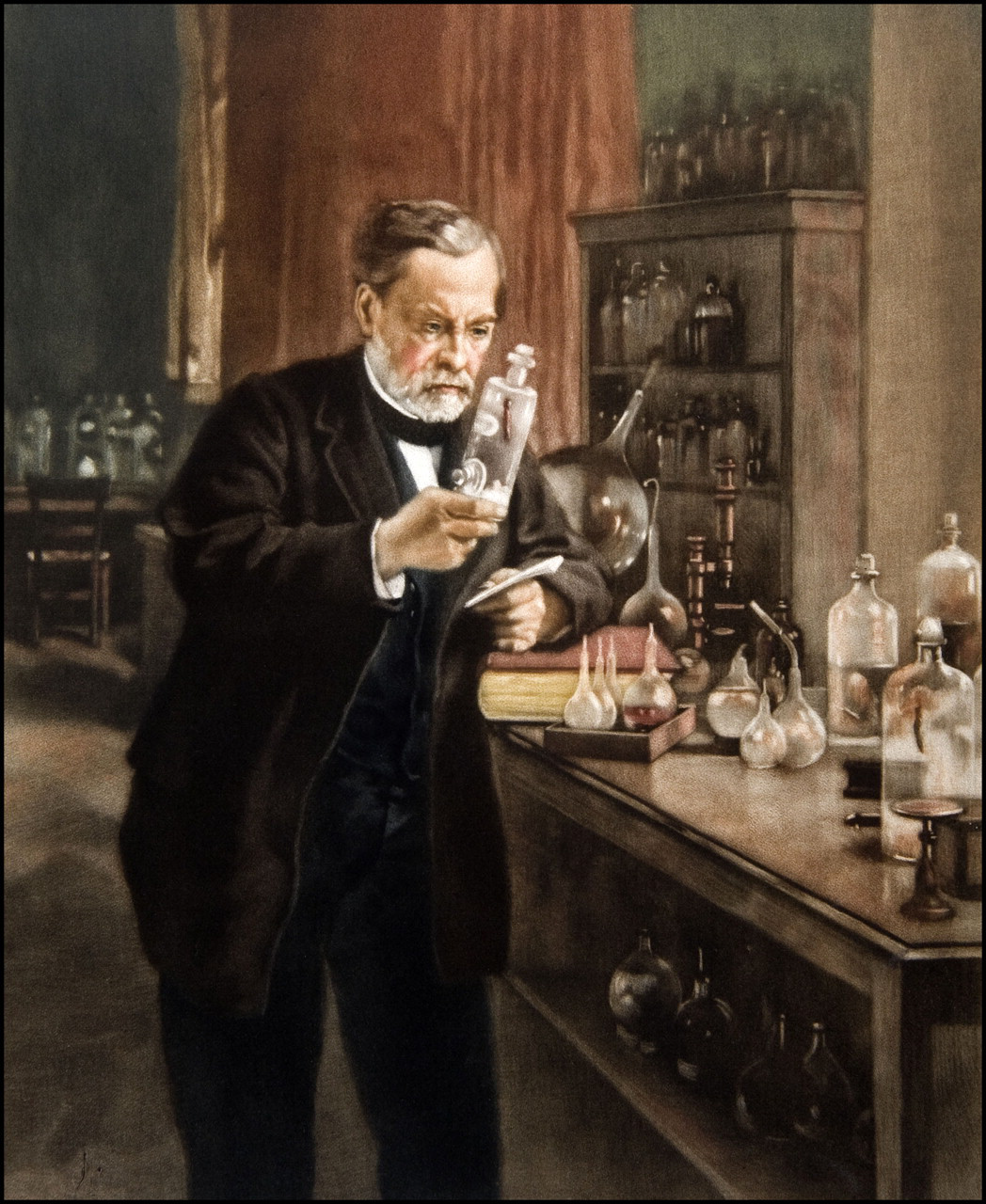
Painting of Pasteur when he was Directeur de l'Institute Pasteur in 1885 (age 63). The painting by Albert Gustave Aristides Edelfelt (1854–1905) may not have been entirely accurate since Pasteur, who was partially paralysed in the right upper and lower extremities, is depicted holding a flask in his right hand and supporting himself by leaning against a book with his left hand. Furthermore, there appears to be a silkworm in the flask, but Pasteur's investigations of silkworm infections ceased decades before then. This reproduction was a rendition of the original by Thomas Hamilton Crawford (1860–1948). The reproduction is part of Pasteur's Library housed in the Blocker History of Medicine Collection of the Moody Medical Library at the University of Texas Medical Branch in Galveston
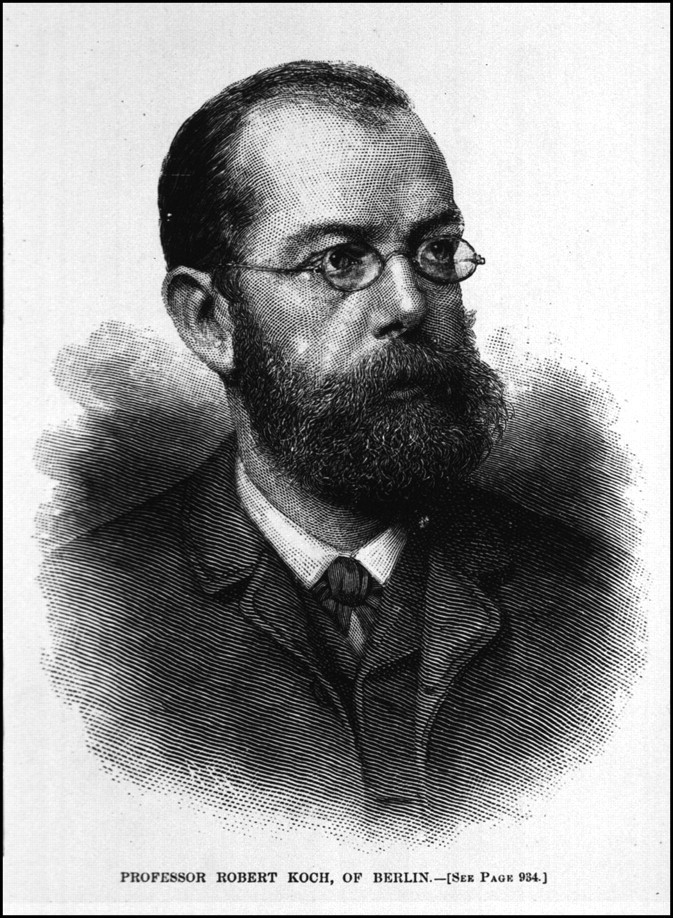
Print of a wood engraving of Robert Koch when he was Professor der Hygiene in Universitãt von Berlin in 1885 (age 42), reproduced courtesy of the History of Medicine of the National Library of Medicine
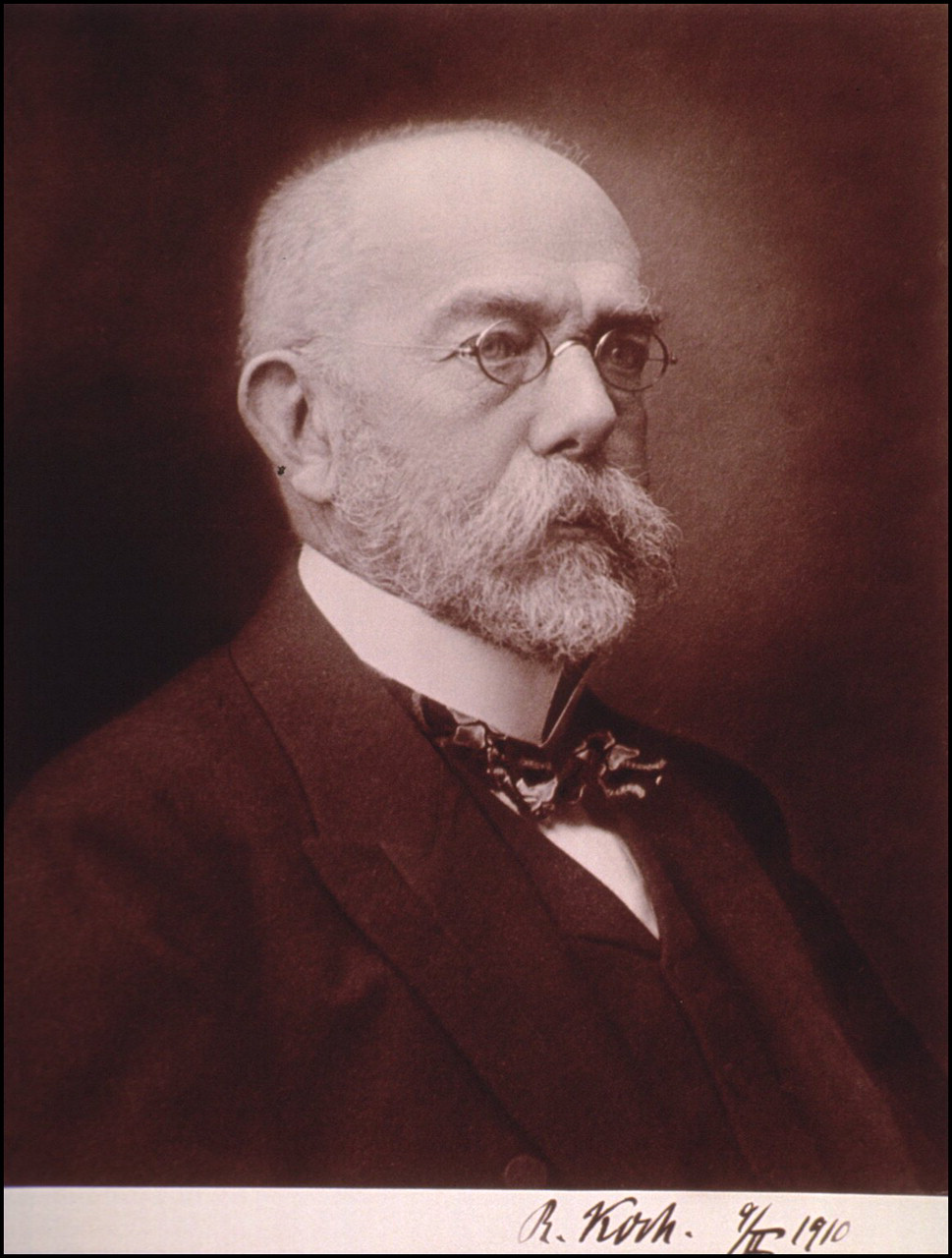
Photogravure of Robert Koch when he was Direktor des Preussischen Instituts für Infektionskrankheiten in Berlin (age 67), reproduced courtesy of the History of Medicine of the National Library of Medicine
Principles of immunology and their discoverers
*Discovered by Wright
†Discovered by Richet (see text)
Early advantages and obstacles
Each scientist had advantages that aided their development but most overcame major obstacles before achieving success. Pasteur, born in Dole, a small village in Eastern France, came from a modest family of tanners who lived for most of his early years in nearby Arbois. 3 He greatly admired his father who served under Napoleon in the war in Spain for which he was awarded the Chevalier de la Légion d'honneur. Louis' patriotism was a factor in his zeal to contribute to French science.
Louis' parents and his school principal Monsieur Romanet of l'Université d'Arbois encouraged him to better himself through education. The training culminated in a Docteur-ès-Sciences in 1847 from l'Ecole Normale Supérieur in Paris. Afterwards he became Professeur de Chimie à Strasbourg in 1849, Professor et Doyen de la Faculté de la Science à Lille in 1854, Professeur de Chimie à l'Sorbonne and Directeur du Laboratoire de la Physico-chimie v l'Ecole Normale Supérieur in 1865, and Directeur de l'Institute Pasteur in 1887 3 (Figure 2).
However, in childhood Pasteur was most interested in portrait painting. 3 Those of his parents attest to his keen understanding of light and perspective. But his parents advised a more secure profession that would require higher education. Captain Barbier in the Parisian municipal guard, who served with Pasteur's father in Napoleon's army, funded his admission to the Almanach du Commerce in Paris. Pasteur floundered in his studies until his late teens when he awakened to science. His initial scientific interest was in chemistry. He was encouraged by the chemist–crystallographer Auguste Laurent (1808–53) 6 and then by the celebrated scientist Jean-Baptiste Biot (1774–1862). 7
Pasteur's first research concerned mirror-image populations of organic crystals. He separated racemic mixtures of tartaric acid crystals by hand into right-handed and left-handed populations. The re-solubilized crystals rotated polarized light to the right or left depending upon their orientation. This finding spurred investigations by others that provided insights into the chiral nature of many carbon compounds.
Few devoted themselves more to science and applied lessons learned from one experimental field to another. In that respect, despite little initial training in biology and medicine and a stroke at age 46 that left him partially paralysed in his left arm and leg, Pasteur made remarkable discoveries in bacteriology, fermentation, infectious disease and immunology. 3 In that respect, Pasteur commented three years before his discovery of mirror-image populations of organic crystals that ‘in the fields of observation, chance favours only the prepared mind’. 8
Koch, the son of a mining official, was born in 1843 in Clausthal 4,5 in the Hartz mountains, then in Prussia. His parents recognized he was precocious and encouraged his education. His maternal grandfather Heinrich Bievend, a self-taught naturalist, introduced him to nature. Furthermore, Koch's maternal uncle Eduard Biewend, a naturalist and photographer, further fostered those interests. Koch wished to be a naturalist but chose the more secure profession of medicine. At the Universität Göttingen the synthesizer of urea, Friedrich Wöhler (1800–82), 9 the famous mathematician Carl Friederich Gauss (1777–1855), 10 the anatomist Friedrich Gustave Jacob Henle (1809–85) 11 and the animal experimentalist Georg Meissner (1829–1905) 12 inspired him.
Koch was drawn to science, but after graduating in 1866 he chose private medical practice. After three unsuccessful attempts he established a successful practice in Rakwitz in the Province of Posen in 1869. 4,5 Despite being excused from military service because of myopia, he served as a physician in a battlefield hospital during the Franco-Prussian War where, as he wrote in letters, he gained much experience with battle wounds, diarrhoeal diseases and typhus. 4
He considered becoming a ship's doctor or joining an older brother in the USA. 4 Instead, he accepted an appointment as the Kreisphysikus (Circuit Physician) in Wollstein (Prussian Poland) in 1871 where he established a small laboratory to experiment with bacteria and took the first photomicrographs of bacteria. 13 His most important discovery there was of the conditions that allowed anthrax bacilli to sporulate. 13
In April 1876 he travelled by train with his equipment, cultures and experimental animals to Breslau (now Wroclaw, Poland) to show those experiments to Ferdinand Cohn (1828–98). Cohn granted the unknown physician an audience with little hope that anything important would come of it. However, everyone at the Institute was astounded by Koch's sophistication, meticulous work and experimental results. Consequently, he gained important colleagues including Julius Connheim (1839–84), an important pathologist and editor of Beiträge zur Biologie der Pflanzen where Koch's anthrax work was published.
Koch's work was not uniformly accepted. The most noted doubter was the founder of cellular and comparative pathology, Rudolf Ludwig Karl Virchow (1821–1902) 14,15 who believed that the pathogenesis of infectious disease was due to disordered cellular processes in the host rather than to microorganisms. 16 Later both explanations were found to be correct, depending upon the type of infection.
In January 1879 Koch was invited to direct institutes in hygiene and pharmacology at Breslau. Koch declined since buildings for those institutes did not exist. The Breslau faculty recommended Koch to be Gerichtsphysikatstelle (Coroner). The plan was ill conceived in that the funds to support the position were insufficient. Fortunately he was able to return to his position in Wollstein. However, later that year he accepted a position in the Kaiserlichen Gesundheitsamt (Kaiser's Health Office), a Prussian government laboratory in Berlin devoted to studying the control of infectious disease. There, a remarkable gathering of students and associates fuelled the birth of immunology. Koch became Professor der Hygiene in Universität von Berlin in 1885 (Figure 3). Then in 1891 he became Direktor des Preussischen Instituts für Infektionskrankheiten in Berlin (Figure 4). Curiously, Koch instituted a rigid, complex administrative structure at his new post. This discouraged the close associations that were formerly so fruitful. Consequently the relationship between Koch and his colleagues dwindled.
Metchnikoff was born in Ukrainian Russia in 1845. 17 He seemingly was a born naturalist. 2,17 He wished to be a physician but his mother thought he was too sensitive for that work 17 and so he studied natural sciences. After graduating from the University of Kharkov in 1864, he became influenced by Charles Darwin's 1859 publication On the Origin of Species. 18 Early in his career while in Messina, Italy, he discovered the role of phagocytes in invertebrate inflammation. He was greatly encouraged at that time by Virchow who was visiting there and the German evolutionary zoologist Nicolaus Kleinenberg (1842–97) at the marine station in Messina. 17 Aged 25 he was appointed Professor at Odessa. A decade later he attempted suicide twice because of the death of his first wife and what he construed as personal failures. 17
Because of the rigidity of academia and poor support for research in Russia, he sought a position in Western Europe. Koch was not encouraging but Pasteur invited him in 1888 (age 43) to be Chef de Service in his new institute. 17 His research flourished (Table 1) despite coronary artery insufficiency from age 33 until his death at age 71 in 1915. 17
In turn, Metchnikoff sheltered Bordet early in his career although Bordet's research 2 was very different from his own. 1 Bordet was born in 1870. He displayed an aptitude for science in childhood. His parents who were schoolteachers in Belgium probably encouraged him to enter medicine. After becoming a physician, the Belgian government funded him to join Metchnikoff at l'Institute Pasteur. There, Bordet discovered complement (Table 1). After seven very productive years in Paris, he established a research institute in Belgium in 1901. Except for the German occupation of Belgium during World War I, Bordet experienced few obstacles 2 (Table 1).
Ehrlich was born in Strehlen, Silesia, Prussia in 1854 to a prominent industrial Jewish family. 19 He was precocious, curious and displayed a proclivity for vivid expressions during childhood. 19 He became aware of the staining of cells from his mother's cousin Karl Weigert (1845–1904). In medical school he was influenced by Julius Cohnheim (1839–84) 15 who proposed the vascular theory of inflammation and by Wilheim von Waldeyer-Hartz (1863–1921) who described the pharyngeal lymphoid ring. 20
When aged 24 and after receiving a medical degree from the University of Leipzig in 1878, Ehrlich became Ãlterer Arzt (Senior Physician) at the Erste Medizinische Klinik des Charite-Krankenhauses in Berlin. There he discovered the types of blood leukocytes by their different affinities to aniline dyes. He was denied a full professorship because he was Jewish. 19 At that time he found tubercule bacilli in his sputum and consequently went to Egypt for a cure.
The following year, aged 39, he returned to Berlin to work in a small laboratory funded by his father-in-law. 19 Soon Koch hired him to direct clinical research concerning tuberculosis at the Stadt-Krankenhaus Berlin-Moabit. He was given a research laboratory at the Institut für Infektionskrankheiten where there were colleagues and research support. There he developed his famous receptor theory of antigen–antibody reactions 21 from Emil Fischer's (1852–1919) 22 lock-in-key concept of enzymes binding to substrates, determined the potency of diphtheria antitoxins (Table 1) and enunciated the concept of autoimmunity. 1
What of Koch's other associates? Emil von Behring (1854–1917) and Shibasaburō Kitasato (1852–1931) developed tetanus and diphtheria antitoxins. The original paper describing diphtheria and tetanus antitoxins was authored with Kitasato, but a paper published shortly thereafter was not.
Von Behring initially came to assist Koch with his work on tuberculin. Later, von Behring submitted a patent for tuberculin similar to Koch's preparation. Koch understandably challenged the patent. Subsequently, von Behring withdrew the proposal. Furthermore, Ehrlich accused von Behring of trying to eclipse Koch by laying claim to tuberculin. 23 Ehrlich also mentioned that a contract between him and von Behring for producing antitoxins was broken by von Behring. The potential treatment of important infectious diseases caused emotions to run high and personal faults to surface. But this should not detract from the close association of Koch with his colleagues and Koch's great influence upon their thinking and work.
Their discoveries
The studies of these immunologists were foreshadowed by great uncertainties about the nature of diseases. Since antiquity, disease was attributed to imbalances in the body's four humors, 24 miasmas and decaying flesh. But then physical, chemical and biological sciences began to reshape medicine. Pasteur was one of the first to forge a link between physical and biological sciences. At first he investigated how certain inorganic and organic crystals rotated light rays to the right or the left. 3,8 He was fortunate to investigate appropriate molecules and to have the correct temperatures in his laboratory for the experiments concerning tartaric acid. 3 He ascertained by chemistry and physics that optical refractions of tartaric acid, quinine and aspartic acid were due to their molecular asymmetries. 3,8,25–27 How these asymmetries developed was unknown, but he suggested they were primordial events. 3,8
Because of his success in crystallography, Pasteur was asked to examine the cause of wine spoilage. He discovered by microscopy that fermentation was due to microorganisms that were destroyed by controlled heating. 28 He concluded that fermentation was due to living microorganisms rather than simpler chemical processes. In that regard he was at odds with the famous chemist Justus von Liebig (1803–73). 29 A few years after Pasteur's death, fermentative enzymes were found in live microorganisms or released from dead ones. After his work on fermentation, Pasteur ascertained that the decline in the silk worms in France was due to infecting agents. 30
The ancient idea of abiogenesis prevailed during Pasteur's early years although Francesco Redi (1626–97) demonstrated in 1668 that maggots did not appear in meat or fish from which adult flies were excluded. 31 During the mid-19th century, Félix-Archiméde Pouchet (1800–72), Directeur de l'Museum d'Histrorie Naturelle de Rouen, championed spontaneous generation. In Pouchet's experiments, microorganisms appeared in boiled hay under mercury exposed to oxygen or air. 32 It was determined later that the mercury was contaminated with bacterial spore-formers. 3 The final blow to spontaneous generation was delivered by Pasteur who showed by using swan-necked vessels that allowed dust-borne microorganisms in the air to be excluded from test media that some infectious agents were airborne. 33 That indicated that causes of epidemic diseases were transmitted rather than spontaneously created. Pasteur thus founded the science of microbiology.
Pasteur then investigated infections in vertebrates. As with his earlier research concerning the spoilage of wine and silkworm larva infections, he was concerned with preventing infections. The investigations of chicken cholera,
34
anthrax in sheep
35,36
and human rabies
36
were important milestones. Pasteur turned an inadvertent experimental error into the production of a vaccine against chicken cholera.
9
His associate Charles Chamberlain (1851–1908) mistakenly left a culture of the pathogen out of the incubator for some days before injecting it into uninfected chickens.
8,34
The infected animals survived without ill effects. Pasteur reasoned correctly that the pathogen became attenuated and could be a vaccine to prevent the disease. Next he confirmed earlier observations by the veterinarian Casimir-Joseph Davaine
His final contribution, with Roux, was the accidental development of a rabies vaccine from air-dried rabies-infected spinal cords. 8,39 It was disconcerting to learn decades later that Pasteur first used the vaccine in an adult who may not have had rabies and in a rabid adult who died before the vaccine was tested in experimental animals. 8 Moreover, when Pasteur's assistant, Jacque-Joseph Grancher (1843–1907) accidentally injected himself with rabies virus, Pasteur convinced him he should receive the vaccine. The injector (Pasteur's nephew, Adrien Loir) and Grancher received the vaccine without untoward effects. 40 The famous treatment of the child Joseph Meister who was exposed to rabies 3,8,39 came afterwards and before animal experiments with the vaccine were completed. 8
Robert Koch, who was 21 years younger than Pasteur, completed the foundation of microbiology that Pasteur began. His first research in 1865 as a student at the Universität Göttingen concerned the anatomy of nerves in the uterine ganglia. 41 He then conducted a self-experiment regarding the effect of diets upon the urinary excretion of succinic acid. 42
When Koch began his research in infectious diseases, there was a fierce debate as to whether bacteria and other microbes were aetiologic agents or were a non-pathogenic phenomenon. Koch advocated the infectious agent view of Jacob Henle
43,44
and Eberth Edwin Klebs (1834–1913).
44
Koch's postulates were developed to a large extent from those investigators.
44
These postulates were as follows:
The microorganism must be found in abundance in all organisms suffering from the disease, but should not be found in healthy animals; The microorganism must be isolated from a diseased organism and grown in pure culture; The cultured microorganism should cause disease when introduced into a healthy organism; The microorganism must be re-isolated from the inoculated, diseased experimental host and identified as being identical to the original specific causative agent.
As mentioned previously, Koch discovered endospores on anthrax bacilli.
13
Following Klebs' principles
44
and Ferdinand Cohn's (1828–98)
45,46
experiments, he showed that bacteria from the hide of an infected animal passed anthrax to rabbits.
4,5
Subsequently he found that aqueous humor from the cornea of rabbits or oxen provided culture media for growth and spore formation of the bacillus. This enabled him to study the life cycle of anthrax bacilli.
47
The discovery also indicated that different diseases were due to different pathogens. He then capitalized on the work of Joseph Schröter (1835–94) with pigmented bacteria
48
and principles enunciated by the mycologist Julius Oscar Brefeld (1839–1925)
49
further to develop culture plates with solid nutritive media that supported the growth of pure bacterial colonies. The introduction of the polysaccharide, agar, by Koch's associate Walter Hesse (1846–1911) and Hesse's wife Fannie, and the modification of glass culture plates by Julius Richard Petri (1852–1921), allowed Koch to perfect the method. The colonies were probably the first experimentally produced clones.
4
The purified bacteria then were used to test whether they caused specific diseases, perfect methods of sterilization and conduct immunological experiments.
4
Koch identified the roles of anthrax bacilli and Vibrio cholerae in their respective diseases by fulfilling his own postulates. But his major accomplishment was the identification of the tubercle bacillus by painstaking experiments. 50 Mycobacteria were identified in infected tissues by a new staining method. Then the fastidious agent was grown on coagulated human blood. Finally, its infectivity was demonstrated by passage into guinea pigs. The discovery firmly established Koch's international reputation.
In the early 1890s, Koch sought a treatment for tuberculosis. Tubercle bacilli were subjected to many different agents including dyes, metal salts and organic chemicals, without success. Then he produced a glycerin extract of the bacilli (tuberculin) that necrotized the dermis of infected guinea pigs and humans, including himself. 4,51 He concluded that the altered tissue did not support the growth of the bacilli and that tuberculin was a treatment for tuberculosis, but he was incorrect. However, later it was realized that the tuberculin reaction was a prime diagnostic test for tuberculosis. In the latter 20th century, the finding culminated in the discovery that immune elimination of tubercle bacilli depended upon antigen-activated T-cells.
In 1883 Koch was asked to lead the Deustche Cholerae Kommission to investigate epidemics of cholera in Egypt and India. That began a series of expeditions worldwide to aid in controlling many epidemics. 4,5
Pasteur and Koch directed competing research centres in Europe that attracted and developed famous scientists. Pierre Paul Emile Roux, the co-discoverer with Alexandre Emile John Yersin (1863–1943) 52 of diphtheria toxin, Yersin, one of the first discoverers of the plague bacillus (Yersinia pestis) 53 and Metchnikoff came to l'Institut de Pasteur de Paris. Metchnikoff discovered macrophages and that acute inflammation was caused by mobile blood microphages (neutrophils) that were induced to pass through the walls of small blood vessels (diapedesis), migrate to the infecting agent (chemotaxis), engulf it (phagocytosis) and destroy and digest it intracellularly. 1
Bordet joined l'Institut de Pasteur to work in Metchnikoff's laboratory in 1895. 2 He explored the basis of the ability of serum factors to lyse bacteria and in doing so discovered complement and found it was distinct from antibodies by its sensitivity to heat. 54 Later Bordet returned to Belgium to lead the new l'Institut de Pasteur de Brabant. There he discovered that complement reacted with antigen–antibody complexes. 55 This was the first demonstrated interaction between different immunological agents. Complement fixation to antibodies became an important tool for the diagnosis of infectious diseases.
Anaphylaxis due to antigen–antibody reactions was discovered at the beginning of the 20th century. 56 Bordet demonstrated soon afterwards that anaphylactic-like reactions could be produced by serum factors that were neither antigens nor antibodies. 57 He was also the first to demonstrate a defence agent in human milk – lysozyme. 58
Koch attracted many excellent researchers. Kitasato isolated the tetanus bacillus 59 and with Theodore Weyl (1851–1913) found its toxin. 60 Kitasato also independently discovered the plague bacillus. 53 Friedrich Loeffler (1852–1915) isolated Corynebacterium diphtheriae. 61 Von Behring with Kitasato produced the first tetanus and diphtheria antitoxins. 62 Richard Friedrich Johannes Pfeiffer (1858–1945) demonstrated immune lysis of live Vibrio cholerae in guinea pigs. 63 August von Wasserman (1866–1925) developed the serological test for syphilis, using Bordet's discovery of complement fixation. 64
Ehrlich, perhaps Koch's most famous colleague, discovered mast cells and the types of blood leukocytes and by special stains 1 demonstrated the transfer of specific maternal immunity in mice, 1,65 measured with Kossel and Wassermann the potency of diphtheria antitoxin, 66 conducted the first successful therapeutic trials of diphtheria antitoxin, 66 formulated the receptor theory of antibody formation, 22,67 produced evidence for the diversity of antibody binding specificities 68 and devised the first successful chemotherapy for syphilis. 1
The grand debates
The early age of immunology is illuminated by grand debates between the principal immunologists in France and Germany. The background of the debates was due in large part to different cultural attitudes in those neighbouring countries and the bitterness that arose in France following the Franco-Prussian War (1870–71). 69 That was marked in Pasteur who refused an award from the Prussian Government for his scientific achievements. 3 It was not surprising therefore that the first major disagreement was between Pasteur and Koch. After Pasteur reported the successful vaccination of sheep against anthrax in 1881, 36 Koch raised grave doubts about the methods and the results of the study. At the Quatrième Congrès Internationale de l'Hygiène et Démographie in Geneva in 1882, Pasteur delivered a polemic against Koch and his anthrax experiments during his own presentation. 70 In turn, Koch publicly ridiculed Pasture's scientific methods and soon published a detailed critique. 71 Koch maintained that Pasteur failed to reveal the entire nature of the immunogen and the full results of the anthrax vaccine trials. 71 Pasteur replied to refute the objections. 72 One problem may have been difficulty in understanding each other's language, 5 but mutual jealousies and large egos must also have been contributory.
Koch's criticisms were warranted but Pasteur was exonerated when others demonstrated that immunization greatly reduced the incidence of anthrax in domestic sheep. 3 However, Koch could not reproduce Pasteur's vaccine because the exact method was not revealed until more than a century later. 8 Nevertheless, the debate illuminated the need for scepticism and full disclosure concerning research methods and results. The debate also set the stage for the development of other live attenuated vaccines 73,74 in the latter 20th century.
The second grand debate was in the next generation of European immunologists. Paul Ehrlich and Jules Bordet were at odds concerning the nature of antibodies and complement, 1,2,75 the diversity of antibodies, 70,76 the formation of antibodies 1,2,75 and the reversibility of antigen–antibody reactions. 70,75 Neither was correct concerning these matters. Ehrlich unerringly predicted, with little experimental evidence, the modern concept of antibody producing, secreting cells (B cells) and the requirement for antigens to bind cellular receptors to initiate antibody production. 21,67
Ehrlich also interpreted correctly that his experiments were consistent with diversity in antigen binding by antibodies. 68 Bordet disagreed because a mechanism was not known to explain such a notion. Instead he favoured a colloid theory that became the basis of the instructional theory of antibody–antigen reactions. 2 In the last part of the 20th century antibody diversity was found to be due to recombination of genes responsible for antibody formation. However, Bordet was correct in that antigen–antibody reactions were reversible and consistent with thermodynamic principles. 76
Perhaps the grandest debate was between the protagonists of cellular and humoral immunity. On the side of cellular immunity was Metchnikoff who discovered the role of phagocytes in inflammation and protection. 1 On the side of humoral immunity was Ehrlich who developed therapeutic antitoxins and promulgated the theory of antibody formation and diversity. Ironically, they were co-recipients of the Nobel Prize in Physiology or Medicine in 1908. 1 However, Metchnikoff was less doctrinaire. In that respect, he discussed in his Nobel Prize Address that cellular and humoral immunities in some circumstances were connected. 77 In that respect, immunized rabbits and guinea pigs infected with anthrax marshalled many more phagocytes to inoculated areas than unimmunized animals because specific antibodies directly and indirectly facilitated chemotaxis of neutrophils and phagocytosis and killing of the bacilli by neutrophils, monocytes and macrophages. 1
However, soon after Metchnikoff's death, humoral immunity dominated the field of immunology because of the therapeutic usefulness of antibodies.
Where and why they failed
No one is infallible and these pioneers in immunology were no exception. Pasteur's elucidation of asymmetrical crystalline structures lends some insight into his abilities and perhaps his limitations. In spite of his immediate connection of the optical isomers of tartaric acid to an asymmetric carbon atom, the implications for carbon chemistry escaped him. It is not a large step to the inference that with four single chemical bonds around a carbon atom, optical isomerism requires the shape of the compound to be a tetrahedron (a concept independently put forward by Jacobus Henricus van't Hoff [1852–1911] in 1875 78 and Joseph Achille LeBel in 1874 79 and proven by Irving Langmuir [1881–1957] in the early 20th century). 80
Pasteur's ability to deal with spatial concepts is unquestioned given his lifelike portraits of his parents. However, at the time of his crystallography discoveries in 1848 the nature of atoms and whether they were arranged into geometrical shapes were debated. In view of this uncertainty, Pasteur may have elected not to pursue the idea. He interpreted that compounds from living organisms that frequently demonstrated a single optical isomer provided a clue to the fundamental nature of life. His perceived importance of this ‘asymmetric life force’ was indicated by his wife's comment to the effect that another Galileo or Newton may emerge. 81 He pursued this idea for 30 years with little published progress. His preoccupation with this notion was at odds with his usual scientific approach. 81
Koch was convinced that tuberculin cured tuberculosis. 82 However, a large multicentre trial of tuberculin conducted between 1890 and 1891 at the behest of the Prussian Ministry of Culture demonstrated that tuberculin was ineffective. 4,5 In addition, Virchow and others believed that the destruction of tuberculous tissues exacerbated the disease by augmenting the release of tubercle bacilli. 83,84 The systematic approach that was the hallmark of Koch's earlier investigations was lacking. The cause of his atypical behaviour is unclear. For whatever reason, Koch never admitted the failure and the controversy concerning the therapeutic effect of tuberculin continued for decades. 84
In an international conference held in 1908 at his bequest, Koch maintained that bovine tuberculosis was rarely transmitted to humans by contaminated bovine milk. 85 He also begged the question as to whether bovine milk used for human consumption should be pasteurized. He maintained both views despite evidence to the contrary. 85
Bordet failed to appreciate the diversity of antibodies or the direct lytic effects of bacteriophages. 2 Ehrlich mistakenly believed that antigen–antibody reactions were irreversible. Metchnikoff maintained that fermented milk increased longevity. 1 Neither Bordet nor Metchnikoff discovered opsonins, although they are often specific antibodies and fragments of the third component of complement. Instead, Almroth Edward Wright (1861–1947) and Stewart Douglas made that discovery. 86,87
Evolution – genetics
Charles Darwin's (1809–82) theory of evolution due to his theory of Natural Selection 18 and Gregor (Johann) Mendel's (1822–84) genetic discoveries 88 were published during the birth of the science of immunology. Yet, with one exception those momentous discoveries had little influence upon the five nascent immunologists. Pasteur postulated that the optical rotation of organic molecules must have been a primordial event, 3 a view that recalled Darwin's thesis concerning the origins of plants and animals. However, Pasteur's views on Darwin's ideas were unclear.
Spontaneous generation and evolution had religious implications. Many believed that spontaneous generation and evolution were linked and that ran counter to the concept of a Creator-God. What was in vogue depended upon fluctuations in the tides of conservatism and liberalism. However, these pioneering immunologists were not concerned expressly with that matter except Pasteur who declared that religion should not influence science. 3
Darwin's works greatly influenced Metchnikoff. 89,90 In that respect, Metchnikoff stressed that functions in higher animal species descended from primitive multicellular forms. Indeed, Metchnikoff's early observations that mobile cells unconnected with nutritional digestion engulfed splinters of rose thorns introduced into starfish larvae 91,92 and that mobile phagocytes in water crustaceans eliminated ungerminated parasitic fungi (Monospora bicuspidate) 93 led him to discover the role of phagocytes in vertebrates during inflammation 89 and protection against infection. 94
The founders of immunology did not reference Mendel's 1886 discovery of genetics. 88 Eight years later, Ehrlich was wary of genetics which he felt was based on unsound statistics 95 and could not understand how male and female inheritances were equally transferred by bodies as disparate in size as ovum and sperm. 96 The statistics of concern were not stated. It is doubtful whether other immunologists thought much about genetics since the molecular basis of genes and how the chemistry of DNA determines the nature of their protein products were unknown. Indeed, it was not revealed until 1944 that genes involved DNA. 97 Furthermore, it was unknown until the 1980s that the genesis of antibodies 98 and T-cell antigen receptors 99 was due to recombination of genes coding for each protein.
The stars were aligned
Throughout history there are times when a conjunction of events leads to extraordinary progress. As the little ice age ended in the mid-19th century, 100 the environment became more favourable for the development of agriculture, industries and public enterprises. 100 In addition, the legacy of the age of enlightenment from the 1700s was fostering basic sciences. 101 Thus, enough principles of physics, chemistry and technology were at hand to explore important questions in biology. In Western Europe long-established academic traditions, and their governments and industries, supported basic and medical science. Basic technologies, such as incubators, thermometers, timers, flasks, tubes and microscopes, were commonplace. Freedom to doubt, even when one's views ran counter to prevailing ones, was a hallmark of the period. Ancient beliefs such as the theory of humors in health and disease 24 were being replaced by those based on research. 102 Thus medicine was becoming a science.
But, as Western countries modernized, certain problems emerged or intensified. Warfare became more terrible because of rising nationalism and more deadly military technology. Thus the stain of war became more indelible. Certain social structures were at risk because of secularism and war. With the rise of industrialization, more people moved to cities to seek economic opportunities. Instead, they encountered crowding and other poor environmental conditions in workplaces and homes. The degree depended upon the country. Over-all, this led to an increase in certain infections such as cholera 103 and tuberculosis. 104 But science also held the promise to ameliorate many infections by introducing sanitary measures and immunizations.
At that time there was the conjunction of Pasteur, Koch, Metchnikoff, Bordet and Ehrlich. Pasteur – ambitious, obsessive, secretive, challenging, tenacious, domineering – had great powers of inductive thinking, an ability to learn from chance observations as well as structured research and the ability to use basic science in medical research. This enabled him to help to discover stereochemistry, disprove spontaneous generation, initiate microbiology and develop the first laboratory-based vaccines. Koch – a keen observer, compulsive, controlling, enormously energetic, devoted to public health – demonstrated that medical progress depended upon advances in basic sciences, new technologies and key postulates. He was a founder of microbiology, a science that greatly improved public health and made immunological discoveries possible. And, very important, his professionalism drew talented scientists who were inspired to make new discoveries. Metchnikoff – the founder of cellular immunology – devoted, serene, introspective and exceptionally observant – discovered the key functions of phagocytes by applying Darwinian principles of evolution and was the first to gather and correlate important discoveries in the new field of immunology. Bordet – conscientious, logical, guided by experimental results, unflappable, a polymath in his field and a humanist – discovered complement, interactions between immune components, the cause of whooping cough and lysozyme in human milk. And finally there was the mercurial Ehrlich – the consummate illustrator, master theorist and fierce competitor – who dominated the field of humoral immunology by discovering antibody diversity, the cellular model of antibody formation and transfer of immunity via the placenta and breastfeeding.
We cannot ascertain the degree to which the times or the personalities fostered the development of the science of immunology. Arguments can be made for both propositions. Indeed, interactions between both seem most tenable. Furthermore, the contributions may have depended upon the individual. For example, Ehrlich generated hypotheses that were difficult to justify at the time but proved to be correct decades later, whereas Koch's hypotheses and discoveries depended upon appropriate technologies as well as his rigorous logic. Surely, this question will continue to provoke students of the history of medicine.
The interactions and debates between these luminaries stimulated immunologists decades later when electron and fluorescence microscopy, sequencing of amino acid in proteins and nucleic acids in DNA, recombinant technologies, monoclonal antibodies and molecular genetics all became available. The history of the current era may be grist for the mill of future historians, but they should realize that the molecular immunology that emerged in the late 20th century depended upon discoveries made a century earlier.
Footnotes
Acknowledgements
We thank Julie M Trumble, Anne Howard, Sarita B Oertling and Alexander Bienkowski of the Moody Medical Library at University of Texas Medical Branch in Galveston for their assistance with many references and for the painting of Pasteur.