




Abstract
John George Adami (1862–1926) qualified in medicine at Manchester and in 1892 was appointed professor of pathology at McGill University. At the invitation of the Royal College of Physicians (in London) he delivered the Croonian Lectures in 1917. He chose the title ‘Adaptation and disease; the contribution of medical research to the study of evolution’. Adami believed that medical work had brought to light important facts about heredity that had not been communicated adequately to biological scientists. He used the lectures to describe this work, placing particular emphasis on his contention that acquired characters are inherited. At this time the medical audience at Adami's lectures would have been generally sympathetic to the idea that acquired characters can be inherited, though many leading British biologists were not sympathetic. Adami hoped that a concise review of the medical findings would persuade the biologists to his point of view or at least would be the starting point for a serious discussion of his evidence. However, the biologists were not persuaded and, although there were acrimonious personal exchanges, there was no scientific debate.
John George Adami (Figure 1) was born in 1862 in Manchester where his father owned a hotel. He travelled widely in Europe with his father before going up to Christ's College, Cambridge in 1880 where he read Natural Sciences with others who were to have distinguished careers – D'Arcy Thompson (1860–1948, classical scholar and zoologist), the neurologist Henry Head (1861–1940), Arthur Shipley (1861–1927) and the pioneering geneticist William Bateson (1861–1926) (Figure 2), some of whose work is discussed below.
1
Shipley, a zoologist who became Master of Christ's College in 1910, was a close friend of Adami throughout his life.
2
JG Adami in 1923 William Bateson in 1905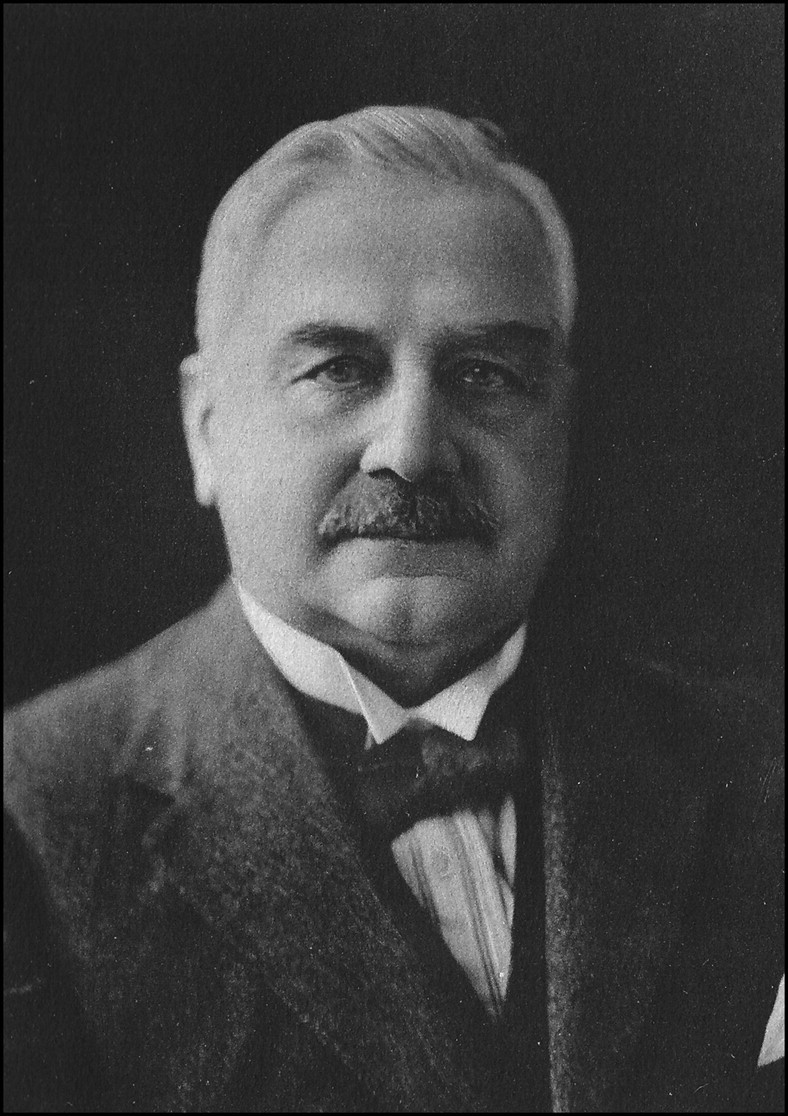

Adami had graduated in 1884 and in the following year worked at Breslau with the physiologist Rudolf Heidenhain (1834–97). He completed his studies for medical qualifications in Manchester and then became University Demonstrator in Pathology at Cambridge. The professor of pathology was Charles Smart Roy (1854–97) and they worked together on the physiology and pathology of the heart. When it was thought Adami had been exposed to rabies from a diseased deer in 1889, Roy sent him to Pasteur in Paris for preventive treatment. In 1890 Adami returned to Paris for a few months to work with Pasteur (1822–95), Emile Roux (1853–1933) and Elie Metchnikoff (1845–1916) who were then making major scientific advances in microbiology, developmental embryology and immunology. In 1891 he became Director of Studies in Natural Sciences at Jesus College, Cambridge.
In 1892 Adami was appointed to the new Chair of Pathology at McGill University in Montreal and in the following year became Pathologist to the Royal Victoria Hospital. He oversaw the development of these new departments, including the construction of new premises for each of them. He quickly established a professional reputation. The year after his arrival in Canada he joined the Association of American Physicians at the invitation of William Osler (1849–1919), becoming President of the Association in 1912.
When war broke out in 1914 Adami joined the Canadian Army Medical Corps (for which he had to pass an additional examination). He spent most of the war in London with occasional visits to France carrying out medical administrative work. In 1916 his wife Mary died in Montreal. In 1917 he took up an invitation issued before the war to give the Croonian Lectures.
Biology and medicine
The distinguishing feature of Adami's thinking was the appeal to pure biology as the basis of medicine. At Cambridge he came to perceive medicine as a branch of biological science; indeed, it was said that ‘Adami was at heart a biologist’. 3 He had first qualified in natural sciences and had worked with leading scientists in Paris. Furthermore, during his working lifetime the practice of medicine had been transformed by a series of scientific discoveries. The greatest practical advances had derived from the new science of bacteriology. The investigations of Robert Koch (1843–1910) in Berlin, Louis Pasteur in Paris and many others had identified the causative agents of a long list of infectious diseases. This led in turn to great improvements in public health, diagnosis, treatment and prevention.
At the same time research in many other fields of science had, or held out the prospect of, major practical benefits including immunology, endocrinology, allergy, vitamins, blood group serology, heredity and chemotherapy. Adami himself made important contributions to several branches of medical science including immunology, inflammation, the classification of tumours and the control of infectious diseases. He worked to advance the cause of public health, especially the control of tuberculosis, and eugenics.
Adami saw the relationship between biology and medicine as reciprocal; medicine should be based firmly on a biological foundation but at the same time medical discoveries could contribute much to the advancement of biology. Adami himself drew upon medical findings to develop a theory of heredity but this was almost completely ignored by the scientists working on the subject.
Heredity at the turn of the century
In the first part of the 19th century the main activity of biologists had been the collection, description and classification of living things. In 1859 the publication of On the Origin of Species by Charles Darwin (1809–82) held out the prospect of a unifying theory for the whole of biology with the explanatory power of a true science. Darwin set out many examples of evolutionary changes but also suggested a mechanism for such changes – the spontaneous occurrence of minute variations, some of which are beneficial to the possessor, who would then be favoured by ‘natural selection’ in life's struggles. So if by chance there arises a giraffe with a slightly longer neck, it will have access to a little more food than others and so will prosper and be a little more successful reproductively. This process, by imperceptible steps repeated many times over thousands of years, leads to the long-necked giraffe of today.
During the rest of the century, evolution by natural selection was debated, extended, modified and criticized. One criticism in particular troubled Darwin and proved intractable at the time. The spontaneously arising long-necked giraffe must find a mate. If it mates with another that has a neck of the average length, the offspring will have necks of intermediate size. If they then mate with others having necks of average length, the offspring will be even closer to the average in neck length. This ‘swamping’ process would result in the loss of the original favourable increase in neck length in the course of a few generations. 4
From objections such as this there developed doubts about natural selection as the causative mechanism of evolution and they could not be resolved by direct observation because the process is postulated to operate over millenia. Some thought that large-scale mutations play an important role in evolution, including TH Huxley (1825–95), Darwin's great advocate, and Francis Galton (1822–1911), a cousin of Darwin who had made pioneering researches of his own on heredity. Such ‘discontinuous variations’ (which would now be described as ‘large-scale mutations’) were known to occur – William Bateson (who had studied at Cambridge with Adami) published a 600-page compendium of them in 1894 where he explicitly opposed the Darwinian view that ‘all distinctness [of species] is due to natural selection’. 5
Mutationists, including Bateson and Galton, rejected the element of gradual change over geological time in Darwin's natural selection. Others rejected Darwin's postulate of spontaneously-arising chance modifications, suggesting instead that heritable changes can occur in response to the needs of the organism. For example, the need to reach higher leaves would induce the giraffe to lengthen its neck. Since all giraffes needed to reach higher leaves, all would grow longer necks. The longer necks that had been acquired during the lives of those giraffes would then be passed on to following generations.
The idea that a characteristic acquired during life by parents can be passed on to their offspring can be traced back through the writings of many authors to Aristotle and Hippocrates. Jean Baptiste de Lamarck (1744–1829) brought it into modern times in the form of two laws set out in 1809 in Philosophie Zoologique. To simplify, the first law states that animals can become modified when the environment changes – for example, increase or decrease of temperature, humidity, ambient light levels or the physical demands of work. The second law states that when both parents have the same modification, this ‘acquired character’ can be passed on to the offspring. At that time this was little more than a codification of what everyone believed to be true but 50 years later Darwin offered natural selection as an alternative mechanism to drive evolutionary change. In the first edition of the Origin in 1859 Darwin emphasized natural selection as opposed to the inheritance of acquired characters. But, as noted above, he found it difficult to deal with criticisms based on the ‘swamping’ of newly arising favourable characters and in later editions he gradually gave more prominence to ‘Lamarckian’ processes.
In this he was swimming against the tide of opinion (at least in England). As the 19th century progressed, there was increasing opposition to Lamarck's second law – many biologists came to believe that modifications induced by the environment would not be inherited by the offspring. The most prominent opponents were Galton (from 1875), the English zoologist Edwin Ray Lankester (from 1881) (Figure 3) and (from 1883) the German zoologist August Weismann (1834–1914). As we shall see, Adami decided to use the Croonian Lectures to set out the evidence for the inheritance of acquired characters after a conversation with Lankester.
E Ray Lankester in 1907, from a portral by John Collier
In spite of the opponents, there has been support for the theory of the inheritance of acquired characters through the 20th century even to the present day 6 and it had a major influence on the development of biological thought; ‘More than anything else, it has held back the investigation of living organisms in general, and reproduction in particular’. 7
Adami's theory of heredity
Adami's ideas about heredity were developed in several books and papers over a period of 25 years. The first paper, ‘On the variability of the bacteria and the development of races’, was published in 1892 8 as he moved from Cambridge to Montreal. The new science of bacteriology promised to bring a new dimension to the study of heredity and evolution. Whereas zoologists could not conceive of observing evolutionary changes in the necks of giraffes because of the timescale involved, bacteriologists could see changes in their cultures over the course of a working day. Adami observed many examples of changes in bacteria in response to environmental conditions. He found that the changes persisted from one generation to the next and he became committed to a belief in the inheritance of acquired characters.
The first statement of Adami's theory of heredity was in 1901 in an address to the Brooklyn Medical Club. The principal element that shaped the theory was, as his title says, ‘the inheritance of acquired conditions in man’. 9 He says that Weismann's ‘dictum of non-transmission of acquired characters does not wholly accord with medical experience’ and justifies advancing ‘yet another theory’ of heredity because it ‘does appear to satisfy the conditions met with in man’. 10
Adami postulates that inheritance, and many other life processes, is to be explained in terms of the activities of the ultimate units of living matter, the idioplasmic molecules. He acknowledged that his theory of particulate inheritance was only one of many 11 but it was unusual in that it included some speculations on the structure and functioning of the hypothetical particles. They are conceived as complex chemical rings, with side chains 12 of varied composition that can be modified, detached or replaced. In 1907 Adami adopted from Weismann the term biophore for the particles of his theory (the ‘idioplasmic molecules’), saying ‘our conception of the biophore differs a little from that of Weismann … We adopt this self-explanatory term rather than commit the crime of adding one more name to the long list of those intended to convey what is practically the same idea’. 13
The theory is developed further in the chapter ‘Inheritance and disease’ in Osler's Modern Medicine (1907) 14 and in his own Principles of pathology (1908) 15 and A Textbook of Pathology (written with John McCrae) 16 (1912, 1914). 17 The biophores of Adami's theory can reproduce themselves, using raw materials taken from the environment. In these iterations of Adami's theory of heredity, the processes of growth, variation, immunity, inheritance of the effects of parental intoxication, amphimixis, reversion, mutation and Mendelian inheritance are all explained in terms of the activities of the biophores.
Adami and acquirements
Bacteriology was the source of many apparently Lamarckian phenomena for over a hundred years. At the time of Adami's Croonian Lectures, it was stated that: In fact, it is among bacteriologists and paleontologists, of all biologists, that a belief in the inheritance of acquired characters still has its strongest hold. In the case of the bacteria, the belief is based on the not uncommon observation that when a particular condition produces a change in a culture of organisms, and cultivation is continued a sufficient time under the condition, the variation may become so thoroughly fixed that there is no return to normal, even though cultivation under the original conditions is resumed. In other words, it is believed that the change has been impressed on the organism by the conditions of the environment …
18
Even in the second half of the 20th century, data from many studies of bacteria were interpreted as showing the inheritance of acquired characters. 19
Adami's early researches in bacteriology had convinced him that acquired characters can be inherited and for him this process must be explicable by any legitimate theory of heredity. In the first formulation of his own theory, in 1901 he wrote ‘To the worker in bacteriology the hesitancy on the part of biologists in general to accept environment as a most important factor in originating variation is almost incomprehensible’. 20 His position on matters of detail varied somewhat over the years but he always believed that some acquired characters are inherited and it was of this fundamental point that he wanted to convince the biologists when he gave the Croonian Lectures in 1917. His belief that acquired characters can be inherited derived from the scientific results of his own researches and those of others but, once formed, that belief became part of the system of eugenic reform that he advocated. 21
Adami believed that only some acquired characters are inherited, dismissing the transmission of maternal impressions and of use-acquirements, such as the well-developed muscles of the blacksmith. 22 Intoxication of the parents he believed would ‘tell upon the offspring’, 23 giving the examples of alcohol, syphilis, soluble products of the tubercle bacillus and lead. Adami believed that the data on lead poisoning were particularly persuasive of the inheritance of acquired characters. Toxic agents in the mother could affect the germ cells or the developing fetus. However, if the father only is exposed to the toxin, it must be through the germ cells that any influence is transmitted.
He quoted repeatedly the work of the French physician Constantin Paul (1833–96) 24 showing high levels of abortion and early mortality in the children of fathers exposed to lead. 25 Adami writes of these results ‘… notwithstanding that we have brought them forward on several occasions, no-one has submitted evidence in contradiction, and such additional evidence as we have obtained is in the same direction’. 26 Adami reports preliminary experiments of his own in which male rabbits were given small doses of lead salts with the result that the germ cells were ‘seriously affected’. 27
Adami explains the inheritance of acquired characters in terms of modification of the biophores by the environment. For example, toxins cause the removal of side-chains so that the offspring are deficient in some way. He accepts that the results from parental intoxication only show that degenerative changes can be passed on but, with something of a leap of faith, he claims that beneficial changes could also occur: ‘… if it can be shown that the biophores can be deleteriously affected by diffusible poisons, it is obvious that other combinations are possible, leading to what we would term favourable or progressive modifications in their side-chains’. 28
In his Textbook of pathology for students of medicine, published in 1912 (second edition 1914), Adami again represents the biophore theory as providing a mechanism by which ‘some kinds of acquirements can be transmitted’; so ‘The biophoric molecule weaves into itself, thus, some flavour of its surroundings, and can transmit whatever it has’. But there is less emphasis on the inheritance of acquirements. In the first edition it is said that the germ cells have only a slow metabolism and so ‘the interchange of the side chains of the biophore with those of the cytoplasm will not be very active, and the environment will thus affect the biophore only to a limited extent. That it affects it even in the slightest degree is sufficient for our contention’. 29 In the second edition it is said again that the biophores take on the flavour of the surroundings and examples are given again of male animals exposed to toxins (including lead) whose offspring ‘present a high percentage of monstrosities, short-lived and mentally defective children’. But here it is acknowledged that this ‘is not the transmission of characters acquired by the parent: at most it is proof – equally important to us as medical men – that conditions affecting the parent may simultaneously influence the germ-cells and so tell upon the next generation’. 30
Thus in 1914 Adami seems to retreat from the idea that reproductive problems arising from poisoning of the parent is evidence to support the hereditary transmission of beneficial acquirements. In the Croonian Lectures of 1917 again he sets out instances of parental poisoning and says ‘To-day we must recognise that infections of one or other order and intoxication are capable of telling upon the parental germ plasm, and that, at some definite point in the line of descent, conditions arising from without upon the germ cells have led to the acquirement of conditions of defect’; but he still expects future research to show that beneficial acquirements are also transmissible: ‘… we may confidently expect by fuller studies along these lines to establish firmly, what several observers have already reported, namely the inheritance of acquired immunity, the inheritance not merely of conditions of defect, but of positive acquirements’. 31
Adami's theory of heredity was developed in the years up to the outbreak of the World War in 1914. This was a time of intense interest in the subject but there are only rare references to Adami's theory of heredity. Indeed there was scant recognition of any of his biological generalizations – he wrote of ‘Fighting a losing cause’ and of ‘finding no sympathy for pathology that was not essentially applied to medicine and surgery’. 32
The Croonian Lectures
Adami chose the subject of his lectures when ‘a chance discussion with a leading British biologist convinced me that the time was ripe to bring together and sum up the conclusions regarding Adaptation which as a student of pathology I had reached gradually in the years preceding the War. I judged from the discussion above referred to that the earlier work was not known to biologists in general. Varied as is his reading and brilliant his memory, this distinguished biologist was evidently wholly ignorant concerning it’. 33
The lectures were entitled ‘Adaptation and disease’ and Adami says: I have selected this subject of Adaptation and disease not merely because of its importance to physicians, but also, and to an even greater extent, because of its broad biological significance. The time is ripe, and more than ripe, for attention to be directed to the bearing of the investigations of the bacteriologist on the one hand, and of the student of immunity on the other, upon what are some of the most important problems of general biology. For some little time I have been impressed by the fact that the latter-day investigations in medical science are of the very highest significance to the general biologist, and that with singularly rare exceptions the general biologist – be he zoologist or botanist – has been superbly indifferent to them and to their bearings upon the basal problems of heredity and variation, and this notwithstanding the fact that investigations into heredity and variation are, and must always be, his greatest concern.
34
Adami then goes on to consider ‘extenuating circumstances’ for this ‘indifference and neglect’ on the part of the biologists and he attacks two leading British biologists by name, specifically for their failure to accept that acquired characters are inherited. First he devotes several hundred words to an attack on William Bateson, his fellow student at Cambridge, who had since become a leading geneticist. Bateson did not believe that acquired characters could be inherited; indeed by his ‘unpacking’ theory of evolution, no new character ever arises de novo. Instead, evolution proceeds by the serial activation of hereditary factors that were all present in some primeval ancestor but whose actions had formerly been suppressed in some way. 35 Bateson's theory had little support 36 and Adami was not its only critic. He likened Bateson to a bumblebee ‘… blundering out of the fields and hedgerows into a greenhouse, and bumping its head noisily again and again against the glass’. It seems that Bateson made no response. 37
Adami then attacks Sir Edwin Ray Lankester, the ‘leading British biologist’ whose ignorance of Adami's work had decided the subject matter of the lectures. Adami refers to the discussion that they had had 18 months earlier about the inheritance of acquired characters and quotes from a letter Lankester had sent to him on the subject (Lankester took strong objection to the public use of this letter, as discussed below). Lankester's position was quite simple: he believed that there is no ‘direct adaptation’ in response to environmental stimuli; instead the persistence of favourable variations is always to be explained by natural selection.
Adami concludes this introductory passage by saying, in effect, that medical findings show that Lankester is wrong to reject the inheritance of acquired characters and so sets the scene for a review of those findings and a description of his theory of heredity by which they are to be explained. 38 In the lectures Adami sets out his evidence that acquired characters are inherited. He describes the modification of bacteria to metabolize an unfamiliar carbon source, and congenital defects in children born to fathers exposed to various toxins. Much of the space is taken up with a restatement of his biophore theory of heredity developed over the preceding 25 years. There is nothing that he has not published before: ‘… these lectures are little beyond what I have taught and written in the fifteen years and more preceding the war’. 39 But what is new is a rather abrasive challenge to biologists to listen to him.
Edwin Ray Lankester (1847–1929)
Lankester was born in London in 1847 and educated at Cambridge and then Oxford. He travelled on a scholarship to Vienna in 1870 and Leipzig in 1871, and then worked at Oxford for three years. In 1874 he became Professor of Zoology and Comparative Anatomy at University College London, a post he held for 16 years. In 1891 he became Linacre Professor of Comparative Anatomy at Oxford (Bateson had also applied for the post) and in 1898 he became Director of the Natural History Museum in London. He was editor of the Quarterly Journal of Microscopical Science for 50 years and edited the nine-volume Treatise on Zoology (1900–09).
He retired in 1908 but continued to work and publish, including many popular essays in the Daily Telegraph, published in book form in 1910 and 1912 under the title Science from an easy chair.
Lankester was always ready to enter into a dispute and to ‘… wage war upon imposture in whatever form it might present itself’. 40 His targets included the scientific but he was also a fierce opponent of spiritualism.
Adami was quite right to identify Lankester as a leading opponent of the inheritance of acquired characters. In 1881 he had written a review for Nature of the English translation of Karl Semper's ‘Natural conditions of existence as they affect animal life’ and in the course of this he said that the available evidence shows that the inheritance of acquired characters cannot be an important factor in the production of new races. 41 Thereafter he engaged in several disputes with advocates of the inheritance of acquired characters – in The Athenaeum in 1884 with Herbert Spencer (1820–1903) and Samuel Butler (1835–1902), in Nature in 1889 with the Duke of Argyll (1823–1900), in Nature in 1894 with Sir Edward Fry (1827–1918), and in The nineteenth century in 1910 with Peter Kropotkin (1842–1921). Although opposed to ‘Lamarckism’, Lankester had a high regard for Lamarck as a scientist. In 1907, as the leading British zoologist, he led the appeal in Britain for subscriptions to the international memorial to Lamarck. 42
The exchanges between Adami and Lankester
When Adami spoke in London in 1917 Lankester was 70 years old but still professionally active. By virtue of his scientific and administrative work he was regarded as one of the leading lights of British biology. He had been invited to attend Adami's lectures but did not do so,
43
probably because he was at that time moving house to the south coast town of Bournemouth to avoid the German air raids on London. However, the first two lectures and an abstract of the third including Adami's complaints about Bateson and Lankester, were published in the British Medical Journal on 23 June.
44
Lankester wrote to the editor and his letter was published on 14 July with a dozen or more criticisms of what Adami had written, particularly his personal attacks on Bateson and himself, his misuse of biological terms and his quoting from Lankester's letter without permission.
45
Adami then wrote to the editor to defend himself
46
but must have been disappointed when Lankester wrote in a second (and final) letter to the editor: Sir - Dr Adami is suffering from an illusion. I have never had, and at present have not, the intention of discussing a scientific theory with him. His manner and methods render that impossible. My purpose in writing to you was to expose (as I explained in my letter of July 14) the offences against the laws of social intercourse of which he has been guilty in making public use of a confidential communication from me without my permission and in making use of vulgar ridicule and rhetorical abuse when entrusted by a learned and dignified College with the privilege of addressing it. …
47
Adami wrote his last letter to the editor: Sir – It is a piteous exhibition that Sir Ray Lankester has made of himself, and were it not that he has again touched on points of personal honour I would have preferred to be silent and not further discover his shame … He cannot refuse to discuss so vital a matter as this of the evidence recently obtained regarding direct adaptation with its bearing upon heredity and social matters of the first order. He cannot do this without tacitly resigning his position as a leader.
48
But Lankester did refuse to discuss the matter further and Adami never did initiate a scientific debate with the biologists. The series of four letters to the editor touched upon technical matters but the principal issue was ‘points of personal honour’. Indeed, the four letters are reproduced as an appendix in Adami's collected works under the title Sir E Ray Lankester rebukes rudeness. 49 Adami had succeeded in getting Lankester to take some notice of him but he had failed to engineer a serious debate about the inheritance of acquired characters. However, there was one small success for Adami – a four-page summary of the lectures was published in Nature, the leading journal of the scientific community. 50
Adami's last years
After the war Adami returned to Canada but only to put his affairs in order before taking up the post of Vice-Chancellor of the University of Liverpool. He involved himself with great energy in developing the university and in the public life of the city and the surrounding region. He started a public appeal for £1 million for the university but the early 1920s was a time of great economic stringency and only £360,000 was raised. He interested himself in a range of causes, medical and educational, including eugenics. He was a keen supporter of the attempts of William Blair-Bell (1871–1936) of the Liverpool Medical School to show that colloidal lead could be used to treat cancer. In London he sat on a national Consultative Committee on education and played a large part in preparing its first two reports, on ‘Differentiation of curricula between the sexes in secondary schools’ and ‘Psychological tests of educable capacity’. In 1923 he attended the Pasteur centenary celebrations in Paris and carried out an inspection of the London medical schools. He wrote no more about his theory of heredity which made little impact at the time and is now forgotten.
In 1924 he became unwell and spent four months in Sicily. He made two visits to New York for treatment, and kept busy to the last. He died in August 1926.