




Abstract
The Declaration of Independence had 56 signers, four of whom were physicians. The constitutional convention in 1787 had 55 delegates and 39 of them signed the Constitution. Three of these delegates were physicians and two signed the document. The Bill of Rights was a product of the first Federal Congress and three of its members were physicians. This paper presents a biographic outline of these physicians and their contributions to society, within a context of contemporary medicine during the first 25 years of the USA.
Introduction
This paper describes the founding fathers who were also physicians and their involvement in creating the founding documents of the USA, the Charters of Freedom: The Declaration of Independence, the Constitution and the Bill of Rights. 1 Several publications have presented biographic data on the physician signers of the Declaration of Independence 2–5 and the physician framers of the constitution 6,7 but not within the same publication, and over a decade ago. For most of them, more is known about their public service than their individual medical careers. This is an attempt to present a biographic outline of these physicians and their contributions to society in general, within the context of the contemporary state of medicine and the founding of a new nation.
The Charters of Freedom
From medicine to careers in politics
What were the reasons for these rather drastic changes of careers? Why would these well-established and educated individuals of high rank in society embark on this risky endeavour where the outcome was all but certain? By signing the Declaration of Independence, they had pledged their ‘lives, fortunes and sacred honor’, 8 and surely signed their own death sentences, by committing treason to the British crown, had the revolution failed.
The constitutional convention of 1787 was a desperate attempt to save the young nation from dissolution due to a powerless Confederation Congress. This time they did not risk their lives but perhaps their fortunes and sacred honour, so why get involved?
There were social, economic and philosophical reasons for entering politics. First, medicine was a trade and most medical practitioners were trained by apprenticeships rather than having a university education. For this reason medicine did not rank as high as law and the ministry in terms of intellectual status. 9 Second, physicians were generally not paid very well and were expected to treat the indigent for free. Public office and military commissions were attractive because of cash fees and regular salaries. 9,10 Third, the American Revolution took place during the Age of Enlightenment when the old world order was challenged. The founding fathers wanted a representative democracy that guaranteed the individual's rights to ‘life, liberty and the pursuit of happiness’ 8 but also internal stability in order to ‘ensure domestic tranquillity’ and ‘promote the general welfare’. 11 The Electoral College system and the (until 1913) indirect elections of USA senators by the individual state legislatures and not directly by the people are testaments that the founders did not necessarily trust an uneducated populace. Physicians of the Age of Enlightenment believed that a just society would follow progress in the sciences. 9 Perhaps this advancement required the population to be not only sufficiently educated but also healthy enough to exercise their liberties responsibly. As today, healthy citizens meant a healthy society and being an advocate for one's patients went hand in hand with being an advocate for society in general.
Physicians in congress
The percentage of physicians serving in congress was at an all time high (7.1%) at the time of the signing of the Declaration of Independence 12 (Table 2). In the early days, when physicians constituted a relatively high proportion of the educated few, it was common for professionals, whether in law, medicine or as a member of the clergy, to take on many roles. Over the ensuing two centuries the percentage of physicians in congress declined drastically as a consequence of gradually increased specialization and length of training. 13
Physicians in Congress
Today the salary for the average physician is comparable to that of a representative or senator. 14 Is there, as Table 2 might suggest, an increasing trend again in physician membership 15–18 and, if so, what are the reasons? Are they perhaps similar to the reasons in 1776, i.e. social, economic and philosophical?
In a survey of 1662 USA physicians in 2004, 70% were defined as being civic-minded. More than 90% felt individual political involvement was important and more than one-third that it was very important. One-fourth of the surveyed physicians had been politically active (other than voting) within the preceding three years (Figure 1). 19
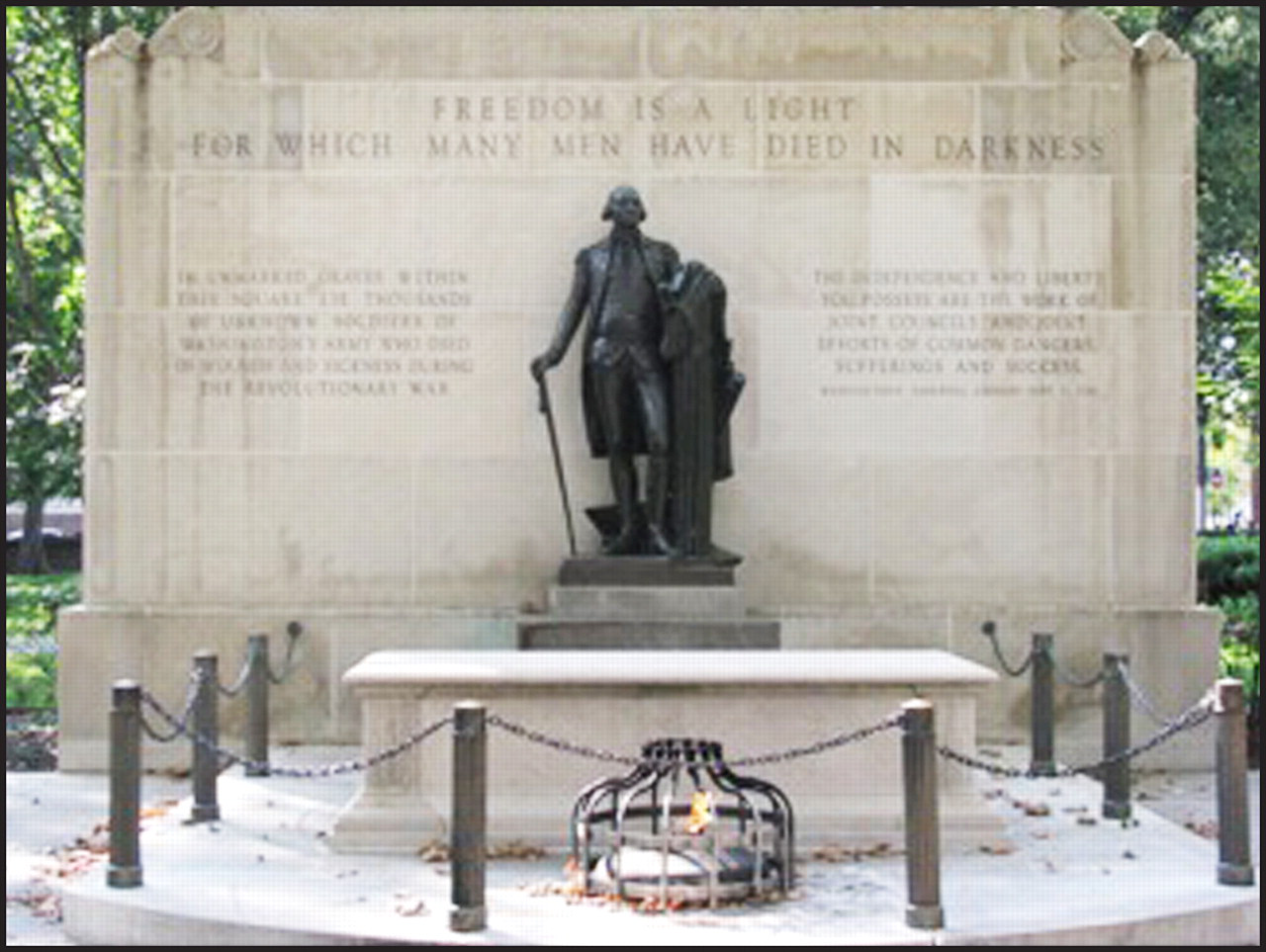
Tomb of the unknown soldier of the American Revolution, Washington Square, Philadelphia. During the Revolutionary War the area was used as a burial ground for citizens and troops from the Continental Army. After the revolution, victims of the city's yellow fever epidemics were interred here. The area is full of unmarked graves 159
Medical theories in the early 18th century
The best-known academic physicians during the 18th century were Herman Boerhaave (1668–1738) 20 at the University of Leyden in Holland and William Cullen (1710–90) 21 at the University of Edinburgh. While Boerhaave thought of the body as a hydraulic system where friction caused fever, 22 Cullen stipulated that fever was related to nervous tension within the body's solid matters. 22,23 Each advocated depletion therapy, mainly bleeding of the patient. 22 Fever could also stem from remote (i.e. infectious) causes known as miasma and contagion.
Infectious diseases
Contagion was the belief that disease could spread by direct contact with an ill person. Miasma was the notion that disease could be caused by unhealthy or contaminated environment. 24
Epidemics in the 13 colonies were a frequent occurrence. However, the low population density did not fuel epidemics to the same extent, as was the case in the crowded cities of Europe. 25 Philadelphia, the largest city, was a melting pot for all kinds of diseases due to its commerce with Europe and the Caribbean. 26 Between 1699 and 1799 the Philadelphia region experienced 66 epidemics, the worst being smallpox and yellow fever. 27 In addition, Malaria was endemic from Georgia to New England. 28 It is easy to see why fever and its aetiology and treatment were so important to the 18th century medical professional.
Yellow fever is caused by an arborvirus carried by a mosquito vector. The disease was usually limited to the docks where the mosquitoes lived, leading to the assumption that the disease was spread from incoming ships. 29 The mosquito vector was not understood and the disease was believed to spread directly from person to person. 29 This led the authorities to employ extreme measures in the form of quarantines, evacuations and the burning of large bonfires to clean the air from miasma. 29 The relationship between the mosquito and the disease was not understood until 1900 when major Dr Walter Reed (1851–1902) 30 described the association after the Spanish American War. 31
Philadelphia was the biggest city in the USA and by 1793 its population had swelled to 55,000. This summer was extremely hot and this provided an excellent breeding ground for mosquitoes. Due to a rebellion on the French slave colony on Hispaniola, Philadelphia saw a large influx of refugees, many already infected with yellow fever, fleeing to the American mainland. 32 This led to a disaster as the large waiting mosquito population quickly started spreading the disease. 33 By the time the epidemic subsided with colder weather in November, large parts of the city's population had fled, including the federal government and many physicians. 33 Left behind were 4000–5000 dead, about 10% of the population. 34
Medical education
In 18th century England, physicians constituted a small, educated elite who mainly observed and speculated (rather than examining with their hands) and prescribed. 35 They usually held a degree but were often addressed as ‘doctor’ whether they had a degree or not. 36 Physicians were essentially internists, leaning heavily on physical diagnosis and were regarded as being superior to barbers/surgeons and apothecaries who were less likely to have degrees. 36,37 Barbers/surgeons could perform a limited number of procedures such as setting fractures, reducing dislocations and amputations as well as lower urinary tract lithotomies. Dissections were rare and anatomical knowledge poor therefore. 38 Apothecaries formed the largest group of medical practitioners and in addition to attending to patients they also prescribed and compounded medicines. 36,37 Pharmacists on the other hand only made and dispensed medicines. 39 These guild distinctions were less pronounced in the rural areas where there were fewer medical practitioners; this attitude carried over into the colonies where few upper class medical practitioners (i.e. physicians) moved since they were financially comfortable in England. 40–42 Hence, all those practising medicine in the colonies were referred to as ‘doctors’. 42
At the onset of the Revolutionary War 3500 medical practitioners were practising within the 13 colonies. 43–47 They were caring for an estimated population of between two and three million. 43,45,48 This meant one physician per 570–860 people. In the USA today there is one physician per 336 people. 49 However, as mentioned earlier, training was mostly via apprenticeships or even self-teaching. Only 400 of these 3500 practitioners had formal medical training or a degree from a medical school. 22,44,46,50–52 This meant one physician with formal training or a degree per 5000–7500 people or one in every nine practitioners. The medical schools at the College of Philadelphia and King's College in New York were the only two in the colonies and had conferred only 51 of these 400 degrees. 46,51 There were only three hospitals: Philadelphia founded in 1751, 53 New York in 1769 47 and Williamsburg in 1772. 54
Medical instruction began in 1765 at the College of Philadelphia where Dr William Shippen Jr (1736–1808), 55 a graduate of the University of Edinburgh, had founded the first medical school in Colonial America. Prerequisites included a degree in arts or satisfactory proof to the trustees and professors of adequate knowledge in Latin and the natural sciences. The Bachelor of Medicine degree in 1767 required at least one course in a medically related subject such as anatomy, materia medica, chemistry, and theory and practice of physic, one course of clinical lectures and a clerkship at the Philadelphia Hospital for one year, and an examination followed by an apprenticeship with a reputable practitioner. 56,57 The degree of Doctor of Medicine required that at least three years had elapsed since the Bachelor's degree, the candidate had reached 24 years of age and had written, published and publicly defended a thesis at his own cost. 57,58 The Bachelor's degree was conferred between 1768 and 74 after which the Revolutionary War inhibited further medical instruction. 59 In 1791 the University of Pennsylvania was formed by the re-organization of the College of Philadelphia and its rival school, the University of the State of Pennsylvania (founded in 1779). 59,60 Few students returned for the Doctorate degree since it did not confer any additional clinical privileges over the Bachelor's degree. 61,62 In 1789 the Bachelor of Medicine degree was abolished at the College of Philadelphia and in 1792 in Philadelphia as a whole by the merger of the two competing medical schools into the newly organized University of Pennsylvania. 63 The degree of Doctor of Medicine became the initial degree and the requirements were changed to three years of medical studies, two examinations in front of faculty and trustees followed by a thesis in Latin. 64 The apprenticeship requirement for a degree was gone and instead became part of the licensing process. This is still the case today in many jurisdictions.
In New York medical instruction started in 1767 at King's College. The Doctor of Medicine degree could be conferred after only one year after having obtained the Bachelor's degree provided the candidate had published and defended a thesis and reached the age of 22 years. 65,66 Medical instruction was suspended in 1776, and in 1784 King's College was reorganized as Columbia University. 67 The Bachelor of Medicine degree at King's College existed between 1769 and 1792 after which, and perhaps influenced by Philadelphia, the Doctorate of Medicine became the initial degree. 68 As a result, the first medical degrees in colonial America were the MB in Philadelphia in 1768 and the MD in New York in 1770. 69,70 The switch from the MB to the MD degree was likely influenced by the Scottish system where the MD was the initial degree, rather than the MB as was the case in the English system. The MD was also the initial degree at the Dutch universities including Leyden and Utrecht. 71 The faculty of the Medical College of Philadelphia in 1769 had four professors: John Morgan (1735–89), 72 William Shippen Jr (1736–1808), 55 Adam Kuhn (1741–1817) 73 and Benjamin Rush (1745–1813), 74 all graduates of the University of Edinburgh. 75 In New York the initial faculty at King's College in 1767 consisted of six professors: 76 two were graduates from Scottish Universities – Peter Middleton (1730–81) 77 from St Andrews and Samuel Bard (1742–1821) 78 from Edinburgh – and John VB Tennent (1737–70) 79 from Leyden.
Lectures in human anatomy were generally unpopular due to the practice of stealing the bodies of the diseased. 51 This practice led to occasional disturbances with the public. The most serious incident was the Doctor's Mob Riot in New York in 1788 where medical professionals had to seek refuge in the city jail before two or three days of civil unrest subsided. 80–83 As a result, New York passed a law in 1789 making all body snatching illegal and providing for the bodies of executed criminals to be used for dissections. 80
In 1792 New York also became the first state after the Revolutionary War formally to regulate the practice of medicine, 84 possibly as a result of the profession's tarnished reputation from the Doctors’ Mob Riot. 81 A licence to practise medicine now required a two to three yearlong apprenticeship (two years when the applicant had a background with university studies, three when not) and a formal examination in front of a government official such as a Governor, Judge or Attorney General. 81,85 Examination was not required when the applicant held a formal medical degree. 86 In 1797 medical practice without a licence became illegal in New York and was punishable with a $25 fine. 87 The apprenticeship requirement was extended to three years and four when without a university background. In addition, certification by the preceptor under oath was also required. 88 In Massachusetts the state medical society started to license medical practitioners in 1781 and, by 1783, a Harvard diploma per se or approval by the Massachusetts Medical Society was required to practise medicine. 89 Around 1800, six of the original 13 states had licensing laws. 90 It is interesting to note that a formal medical degree was still not a strict requirement to practise medicine in the USA.
Pharmaceuticals
Continental Army physicians at Valley Forge compiled the first USA pharmacopoeia in 1777. 91 At that time there were no specific treatments for specific diseases with the exception of citrus fruits for the prevention of scurvy, as discovered by James Lind (1716–94) in 1753. 52,92,93 The pharmacopoeia in the 18th century consisted of various remedies for purging the body such as rhubarb, and calomel which contains mercury and jalap. Calomel and jalap were often combined together into a very powerful purge known as ‘thunder clappers’. 22 Ipecac and antimony were used as emetics. 94 Calomel was used for syphilis since mercury is toxic to spirochetes (as well as to man). Mercury was also used for a variety of conditions classified as inflammatory including pleurisy, pneumonia, rheumatism, typhus, yellow fever, dysentery, smallpox and tuberculosis. 95 The only effective analgesics available were alcohol and opium – morphine was not introduced into medical practice until the 1840s. 96 Peruvian bark contains quinine and had been introduced into the colonies from South America in the 1720s 97 and was used against fevers in general since all fevers were thought to have a common aetiology. 98
The Declaration of Independence
On 2 July 1776 the Continental Congress voted for the colonies to unite as free and independent states and to dissolve all allegiance to the British Crown. The vote was affirmative by 12 colonies, with New York abstaining. On 4 July New York adopted the declaration, making the vote unanimous. It was subsequently signed on 2 August and ensuing days (Figures 2 and 3).
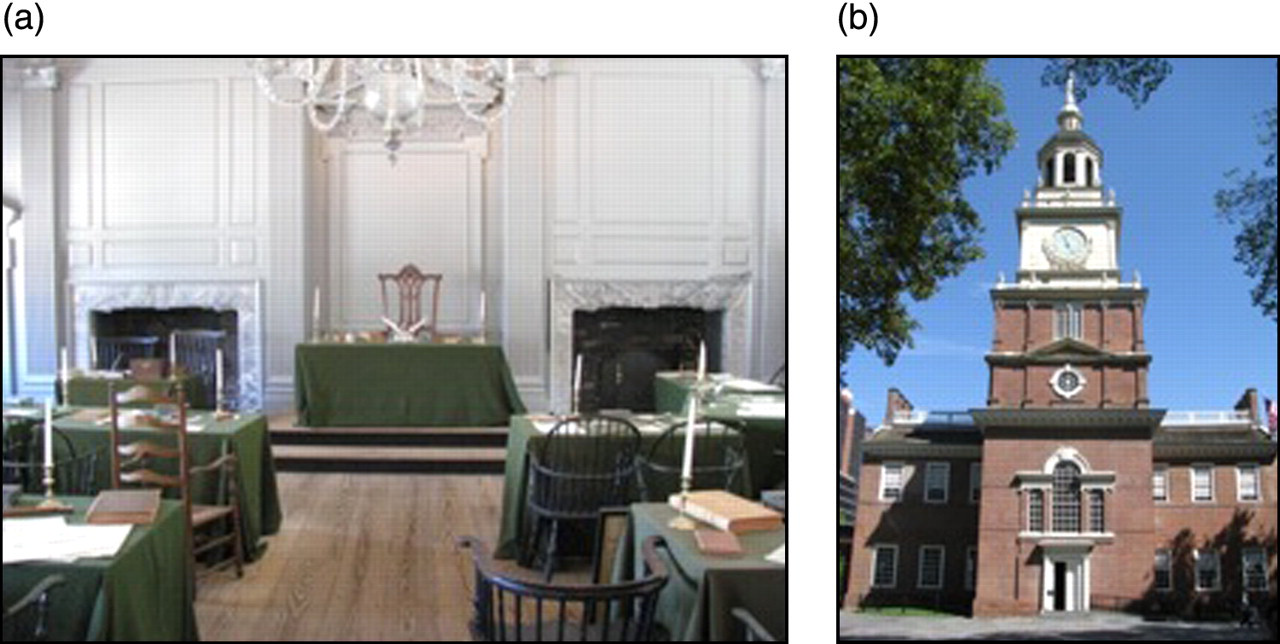
Independence Hall, Philadelphia: interior (a) and exterior (b). Place of the adoption of the Declaration of Independence on 4 July 1776 and the signing of the Constitution on 17 September 1787 160
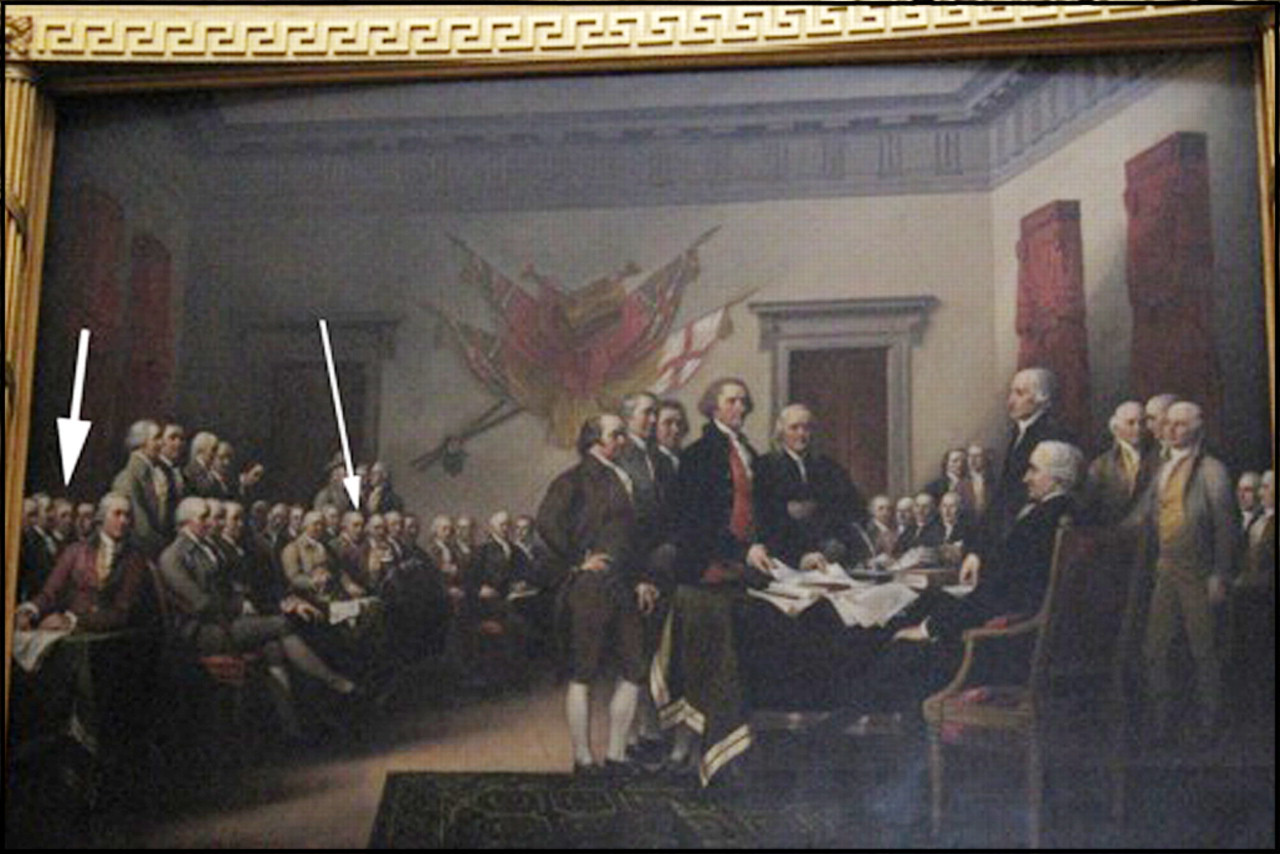
Declaration of Independence by John Trumbull (1756–1843), 1817, US Capitol Rotunda, Washington, DC. Josiah Bartlett (thick arrow) and Benjamin Rush (thin arrow) 161
The Physician Signers of the Declaration of Independence
Josiah Bartlett (1729–94), New Hampshire
Josiah Bartlett was born in Amesbury, MA in 1729. He received his medical training through an apprenticeship (1745–50) in the office of a relative since his family was unable to afford the cost of a university education. After training, he started a medical practice in Kingston, New Hampshire.
99–101
The practice grew and Bartlett later gained a partner as well as two apprentices. Three of his 12 children and five of his grandchildren followed in his footsteps and also became physicians. According to Judson (1851):
99
Bartlett was the first physician who boldly assumed the position that the angina maligna tonsillaris [canker] was putrid and not inflammatory and first gave Peruvian bark for this distressing disease. He also introduced the successful practice of using antiphlogistic remedies for cynanche maligna [sore throat] at that time terrific among children – four being sometimes buried in one grave from the same family.
Cynanche was a term used for throat conditions in general. Cynanche Maligna referred to serious throat disorders, including streptococcal sore throat and diphtheria. Canker denoted ulcerative lesions. Exactly what throat disorder Bartlett treated with Peruvian bark and antiphlogistics we do not know for certain.
In 1735 a serious disease known as ‘throat distemper’ began in Kingston and ravaged New England between 1735 and 1740. The epidemic is thought to have been diphtheria and not streptococcal sore throat given the disproportionately large number of children affected. 102,103 In the 18th Century the term ‘croup’ was used to describe both simple spasmodic and inflammatory croup (stridulous laryngitis, false croup) as well as diphtheria (membranous laryngitis, true croup). 104 Although Peruvian bark does not possess antimicrobial properties, the neuromuscular effects of quinine stem from inhibition of acetylcholine within the skeletal muscle and in theory could have been effective as symptomatic relief in those conditions associated with airway spasm.
During the Revolutionary War, Bartlett served as a surgeon in the New Hampshire Militia during 1777 and attended to wounded militiamen after the battle of Bennington. 100,105
His political career started in 1765 with his election to the New Hampshire House of Representatives. 101 In 1774, he became a member of the New Hampshire Committee of Correspondence and in the same year he was elected to the Continental Congress (which later became the Confederation Congress) in which he served until 1779. On 4 July he was the first member to cast his vote for independence and on 2 August 1776 he became the second member of the Continental Congress, after John Hancock, formally to sign the Declaration of Independence. 100 Bartlett was also the only physician who signed both the Declaration of Independence and the Articles of Confederation (9 July 1778). 101
After serving in congress until 1779, Bartlett became justice of the New Hampshire Court of Common Pleas, a position he held until 1782 whereafter he was Justice (1782–88) and later Chief Justice (1788–90) of the New Hampshire Superior Court. During this time, he was a delegate to the New Hampshire convention for the ratification of the constitution. In 1789 he was elected to the USA Senate but declined. Instead, he went on to become his State's Chief Executive 1790–94 and elected its first Governor. 106 In 1790 Dartmouth College granted Bartlett an honorary MD degree in recognition of his services and in 1791 he became the Founder and the first President of the New Hampshire Medical Society. 100,101
Matthew Thornton (1714–1803), New Hampshire
Matthew Thornton was born in Ireland and had emigrated to North America at the age four. He received his medical education via an apprenticeship and entered medical practice in Londonderry, NH in 1740 and retired in 1780. 107
Thornton had served as a surgeon in the New Hampshire Militia during King George's war in 1740–48 and he was present at the British capture of the French Naval Base Louisburg on Cape Breton, Nova Scotia in 1745. 108 In 1758 he was elected to the New Hampshire House of Representatives where he served until 1775 and in that year he was elected President of this assembly. 107 Thornton chaired the committee that wrote the New Hampshire State Constitution, the first in the colonies. 109
In the fall of 1776 Thornton was elected to the Continental Congress. Although the formal signing had already taken place, being a member of Congress he was still allowed to affix his signature to the document on 4 November. 109 Thornton's motivation as a revolutionary stemmed from his background as a Scottish Presbyterian whose family had found oppression present in both Ireland and the colonies. 110 Just like Josiah Bartlett after him, Matthew Thornton served as a Justice of the New Hampshire Superior Court (1776–82). He finished his political career in the New Hampshire State Senate (1784–86). 107
Lyman Hall (1724–1790), Georgia
Lyman Hall was initially a student of theology and obtained a Master of Arts degree from Yale University and became a pastor but was dismissed after allegations against his moral character in 1751, and went on to study medicine under a local physician. Records regarding his medical career have not been found and details of these allegations remain a mystery. He did have a medical practice in South Carolina 1756–57 and later moved to Georgia. 111 He served as a member of the Continental/Confederation Congress 1775–80 and after the Revolutionary War went on to became Governor of Georgia from 1783 to 1784. 112,113 In 1785 he became one of the founders of the University of Georgia. 114,115
Benjamin Rush (1745–1813), Pennsylvania
Benjamin Rush was the only physician signer of the Declaration of Independence to hold a formal university degree in medicine. 34 After an apprenticeship (1761–66) under the prominent Philadelphia physician John Redman (1722–1808) 116 he travelled to Europe and studied medicine at the University of Edinburgh 1766–68 under William Cullen. After his MD degree in 1768 he undertook postgraduate studies in London and Paris between 1768 and 1769.
After returning to America in 1769, a busy 45-year long medical career followed. Upon his return to Philadelphia he was appointed Professor of Chemistry at the College of Philadelphia. In 1786 Rush founded the Philadelphia Dispensary, the first free medical clinic in the country. In 1787 he became one of the co-founders of the Philadelphia College of Physicians. In 1789 he was appointed Professor of the Theory and Practice of Medicine at the College of Philadelphia 34,117 and later he became the first President of the Philadelphia Medical Society. During his career, Rush produced 85 publications, among them the first American textbook of chemistry. 118 His 1778 essay entitled ‘Directions for Preserving the Health of Soldiers’ was the first American preventive medicine text and was used until the Civil War. 119
Rush's long and active medical career was paralleled by an equally active political one. In 1776 he encouraged Thomas Paine (1737–1809) 120 to write Common Sense and also suggested the title. He was elected to the Continental Congress in mid-July 1776 and served on its medical committee throughout the war. He did not participate in the debate and vote for Independence since he was not yet a member. Just like Matthew Thornton, Rush was allowed to sign the engrossed copy of the Declaration of Independence beginning on 2 August. 121,122 During the Revolutionary War, Rush served briefly as Surgeon in the Continental Army and treated wounded soldiers after the Battle of Brandywine. During his career he was an advocate for abolition, prison reform and education for women. Between 1789 and 1790 he was a member of the Philadelphia ratifying convention. During the last years of his life he served as Treasurer of the USA Mint (1797–1813). 117,123 By this time his medical career and reputation had suffered due to high mortality among his patients in the Philadelphia yellow fever epidemic of 1793 where he had been a staunch supporter of aggressive depletion therapy. 124
According to Rush's doctrine, inspired by Boerhaave's and Cullen's, all fever and disease were caused by irregular convulsions in the vasculature, what he called ‘hypertension’. 125 The treatment was by depletion therapy. This involved bleeding the patient of large volumes of blood to relieve vascular tension and purging to divert the force of the fever to the bowels and thereby to save the liver and the brain from dangerous congestion. 126 Rush practised bleeding of his patients of six to eight pints over a few days (the total blood volume is 12 pints). This invasive treatment in itself, as well as the high mortality among his patients during the Philadelphia yellow fever epidemic of 1793, made him subject to criticism. His opponents called him dangerous and many in the medical community rejected his methods. 124 Not only could depletion therapy cause physical harm to the patient, Rush had tremendous influence on medical education and on the training of future physicians in his doctrine. 22 His opinion that yellow fever was caused by miasma from putrid matter on the streets and not from contagion further angered patients and some colleagues. 34
Benjamin Rush is considered the Father of American Psychiatry and his image appears on the seal of the American Psychiatric Association. He was the first to suggest humane care of the insane instead of the use of whips, chains and straightjackets. In 1812 he published Medical Inquiries and Observations upon the Diseases of the Mind, the first textbook of psychiatry in the USA. Rush described mental illness, like all other disease, as being caused by over-stimulated blood vessels in the brain. He prescribed the use of the ‘Gyrator’ or ‘Circulating Swing’. Both of these devices spun the patient at high speed, utilizing centrifugal forces thought to relieve congestion within the brain. Another of Rush's inventions was the ‘Tranquillizer Chair’, restraining and calming combative patients and preventing self-inflicted injury. 34,127
In 1803 President Thomas Jefferson (1743–1826) 128 purchased the Louisiana Territory from France for 15 million dollars ($18 per square mile). In preparation for an expedition to explore this new area in 1803, Jefferson sent Meriwether Lewis (1774–1809) 129 to Benjamin Rush in Philadelphia for training. During a period of two weeks, Rush instructed Lewis in the essentials of medicine, i.e. how to bleed and purge. During the expedition Lewis performed blood letting on several occasions, including on their guide, Sacagawea (c. 1786/88?–1812). 130 He treated cases of heatstroke, frostbite, hypothermia, a dislocated shoulder, various cuts and bruises, a gunshot wound, dysentery and other diarrhoeal diseases, and syphilis. The expedition consisted of 34 persons and covered 8000 miles between 1804 and 1806. To Rush's and Lewis’ credits, it only sustained one fatality (a case of burst appendicitis) and it is doubtful whether even the most well-trained physician would have been able to save such a patient in the early 19th century. 22
The physician signers/framers of the constitution (Figures 2 and 4)
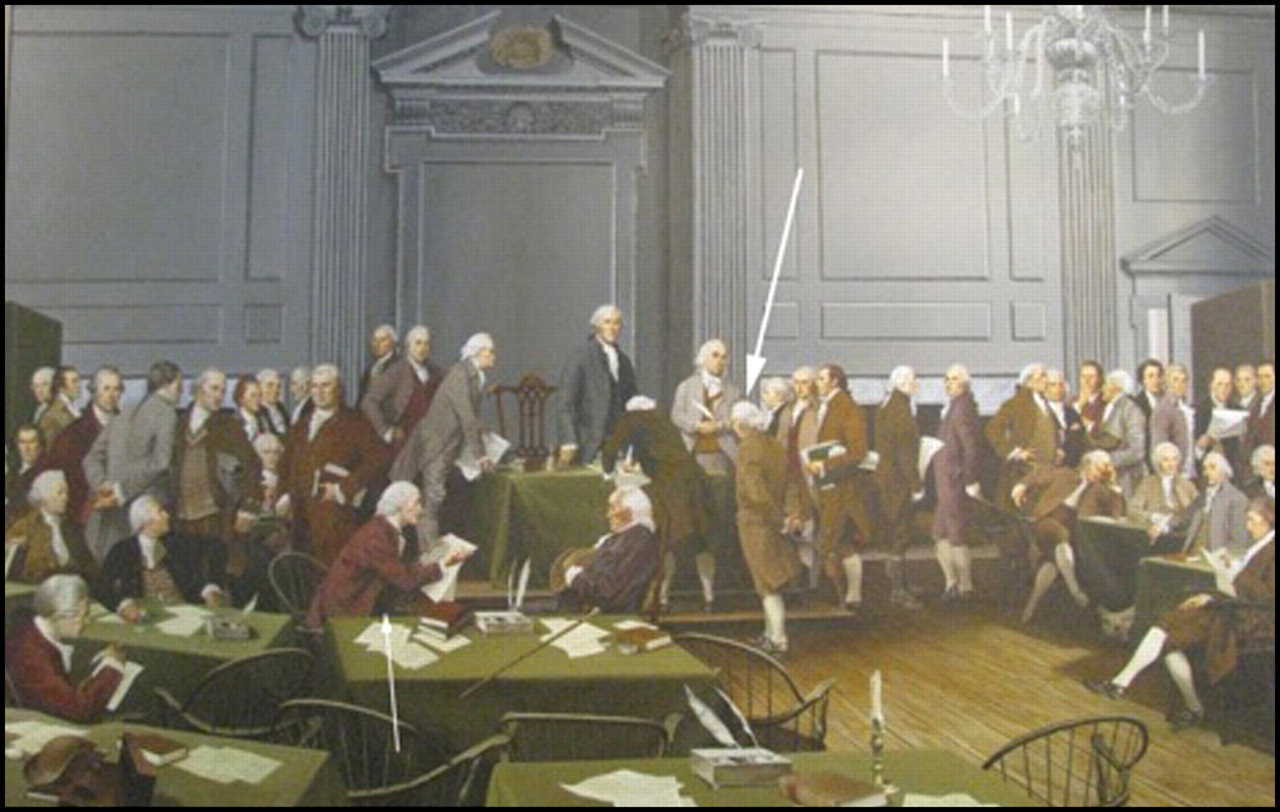
The Signing of the Constitution by Louis Glanzman (b. 1922), 1987, Independence Hall, Philadelphia. Hugh Williamson (short arrow) discussing with Benjamin Franklin and James McHenry (long arrow) awaiting his turn to sign the constitution 162
James McHenry (1755–1845), Maryland
James McHenry was born in Ireland and emigrated to Philadelphia in 1771. After two years of medical studies in Philadelphia under Benjamin Rush, McHenry was ready to enter medical practice but ‘the course of human events’ 8 decided differently and the Revolutionary War broke out. McHenry came to serve as a military surgeon with the Continental Army and in 1776 the British captured him at the American defeat on Manhattan Island in New York. He spent the next two years as a prisoner of war (POW) and treated sick and wounded soldiers while in captivity. In 1778 he was released during a POW exchange and was assigned to Valley Forge. Here he became George Washington's (1732–99) 131 Secretary. This effectively ended McHenry's medical career and he dedicated the rest of his life to politics. 132 He was elected to the Maryland Senate in which he served between 1781 and 1786. In 1783 he was elected to the Confederation Congress in which he served during the same time (1783–86). As a delegate at the constitutional convention in 1787, McHenry was absent for most of the debates due to an illness in the immediate family. 133
Under the new constitution, McHenry came to serve as Secretary of War under both the Washington and Adams administrations. After a disagreement with President John Adams (1735–1826) 134 over the issue of neutrality in the war between Britain and France he was asked to resign his post in 1800. 133,135
James McHenry perhaps is associated mostly with the fort that bears his name and which guards the entrance to Baltimore Harbour. During the war of 1812 Francis Scott Key (1779–1843) 136 was inspired in the early dawn of 14 September 1814 to write his poem Defence of Fort McHenry after seeing the USA flag still flying over the fort despite intense British bombardment. Set to the tune of an old British drinking song, it became known as the Star Spangled Banner and in 1931 it became the National Anthem.
Hugh Williamson (1735–1819), North Carolina
After medical studies in London, Edinburgh and Utrecht and a MD degree from the University of Utrecht in the Netherlands in 1764, Hugh Williamson entered medical practice in Philadelphia. In 1773, en route to England, he came to be a witness to the Boston Tea Party. This event inspired him to write The Plea for the Colonies in 1775 while in Britain. During the Revolutionary War Williamson served as a Surgeon-General of the North Carolina Continentals and attended to wounded after the Battle of Camden, SC in 1780. His work in preventive care addressing the issues of hygiene, diet, shelter and drainage led to a reduction in illness among his troops. He served two episodes in the Confederation Congress (1782–85 and 1787–89) and was a delegate at the constitutional convention in 1787. Here he took part in brokering the great compromise, resulting in the bicameral USA legislature still in place today. Subsequently he served as a delegate at the State Ratification Convention in North Carolina and campaigned for its approval. The successful campaign was followed by North Carolina electing him to serve as their Federalist congressman for two terms in the new United States House of Representatives. 137,138
James McClurg (1746–1823), Virginia
James McClurg is mentioned here as one of the Founding Physicians. Although he did not sign the document in 1787, he was an active participant at the convention. McClurg had received his MD degree from the University of Edinburgh in 1770 and thereafter had undertaken postgraduate work in Paris and London. 139
During the Revolutionary War he served as a surgeon in the Virginia Militia and had a practice in Williamsburg as well as serving as Superintendent and Inspector of Hospitals. In 1779 he was appointed Professor of Anatomy and Medicine at the College of William and Mary, and in 1820 be became the first President of the Medical Society of Virginia. At the constitutional convention he argued for life tenure of the President, greater independence of the executive branch and the right of federal power to override state law. However, he was not present at the signing of the constitution. 139,140
The Bill of Rights and the First Federal Congress
A Bill of Rights was needed to satisfy the antifederalists and to achieve ratification of the constitution. The First Federal Congress met in New York 1789–91. Three physicians were among its members: two Representatives, Thomas Tudor Tucker and Hugh Williamson, and one Senator, Jonathan Elmer.
Representative Thomas Tudor Tucker (1745–1828), South Carolina
Thomas Tucker had received an MD degree from the University of Edinburgh. During the Revolutionary War he served as a surgeon in the Continental Army 1781–83, as a member of the South Carolina State Assembly in 1776, 1782–83, 1785 and 1787–88, and as a member of the Confederation Congress between 1787 and 1788. As an antifederalist, Tucker had opposed the adoption of the Constitution. He was elected to both the First and Second USA Congresses (1789–93) and later served as USA Treasurer (1809–28) under four presidents (Jefferson, Madison, Monroe and Quincy Adams) and as the personal physician to President James Madison (1751–1836) 141 between 1801 and 1817. 142–144
Senator Jonathan Elmer (1745–1817), New Jersey
Jonathan Elmer had received his MB degree from the first graduating class of the Medical College of Philadelphia in 1769. Thereafter he practised medicine in Bridgeton, NJ and in 1777 he received his MD degree, also from the Medical College of Philadelphia. During the Revolutionary War he served as an officer in the New Jersey State Militia and was a member of the Confederation Congress 1777–78, 1781–83 and 1787–88 as well as the New Jersey state legislature in 1780 and 1784. In 1787 he became President of the New Jersey Medical Society. A Federalist, he was elected to the USA Senate where he served 1789–91. Upon returning home, he served as a Justice until his retirement in 1814. 142,145,146
Epilogue
By the beginning of the 19th century the USA had added two additional medical schools: besides the University of Pennsylvania and Columbia, Harvard College (1636) had added a medical school in 1782 and Dartmouth in 1798. 147,148 The population had doubled in size and so had the number of medical schools. 149 However, most of the medical faculty was still trained in Europe. The number of physicians with a formal medical degree had nearly doubled from 1:9 to 1:5. 22 Although public dispensaries existed in Philadelphia (1786) and New York (1790), 150 there were still no real specific therapies for many specific diseases. The notable exception was digitalis for the treatment of congestive heart failure, discovered by William Withering (1741–99) in Birmingham, England in 1785. 151
Today after only 200 years, with the USA being one of the oldest democracies and a leader in biomedical research and development, it is noteworthy how it all began in the early hours of 19 April 1775: Doctor Samuel Prescott (1751–77) 152 was on the road after an evening with his fiancée when he met Paul Revere (1734–1818) 153 and William Dawes (1745–99) 154 on their ride from Lexington to Concord and he joined them to warn of the British plan to seize the rebels’ cache of arms. Dr Joseph Warren (1741–75), 155 a physician member of the Massachusetts Committee of Correspondence and a participant in the Boston Tea Party, had in turn despatched Revere and Dawes. 156,157 Although Prescott joined the ride late, he was the only one to reach Concord. Revere and Dawes were captured beforehand but had successfully ridden all the way from Boston, spreading the alarm. 158,159
Joseph Warren was killed at the battle of Bunker Hill on 17 June 1775. 156 Samuel Prescott came to serve as a surgeon in the Continental Army and later joined the crew of a privateer. He was captured by the Royal Navy and died as a POW in Halifax, Nova Scotia in 1777, never having got to marry the woman he had been visiting on the night of the famous ride. 152,158 These physicians risked their lives and reputations by putting themselves in harm's way on the battlefield and by committing treason.
The political situation in the late 18th century motivated the founding physicks and their patriot colleagues to act out of conscience for their society and they played a peripheral but significant role in shaping the new nation. Perhaps the political and economic reality of health care in the USA in the early 21st century is again motivating physicians to seek congressional office? Just as in 1776 and 1787, the challenges ahead are enormous and the outcome all but certain but, with 70% of USA physicians being civic-minded, 19 the game might be afoot.