




Abstract
In May 1863 at the Battle of Chancellorsville in the American Civil War, Lieutenant General Thomas J ‘Stonewall’ Jackson received three gunshot wounds and subsequently underwent amputation of his left arm. Four days after his operation Jackson developed pneumonia and died three days later. Some modern physicians have challenged the diagnosis of pneumonia and have suggested other diseases as the being the likely cause of his death. Reviewing the accounts of Jackson's course of illness in the context of 19th-century medical knowledge supports the original diagnosis of pneumonia as the cause of his death.
Introduction
On the night of 2 May 1863 at the Battle of Chancellorsville in the American Civil War, Lieutenant General Thomas J ‘Stonewall’ Jackson (Figure 1) received three gunshot wounds and subsequently had his left arm amputated below the shoulder joint. After an initial promising recovery, his condition worsened and Jackson died seven days after surgery. His physicians attributed death to pneumonia, believing it had developed secondary to a chest contusion Jackson may have suffered when he fell from a stretcher while being removed from the field.
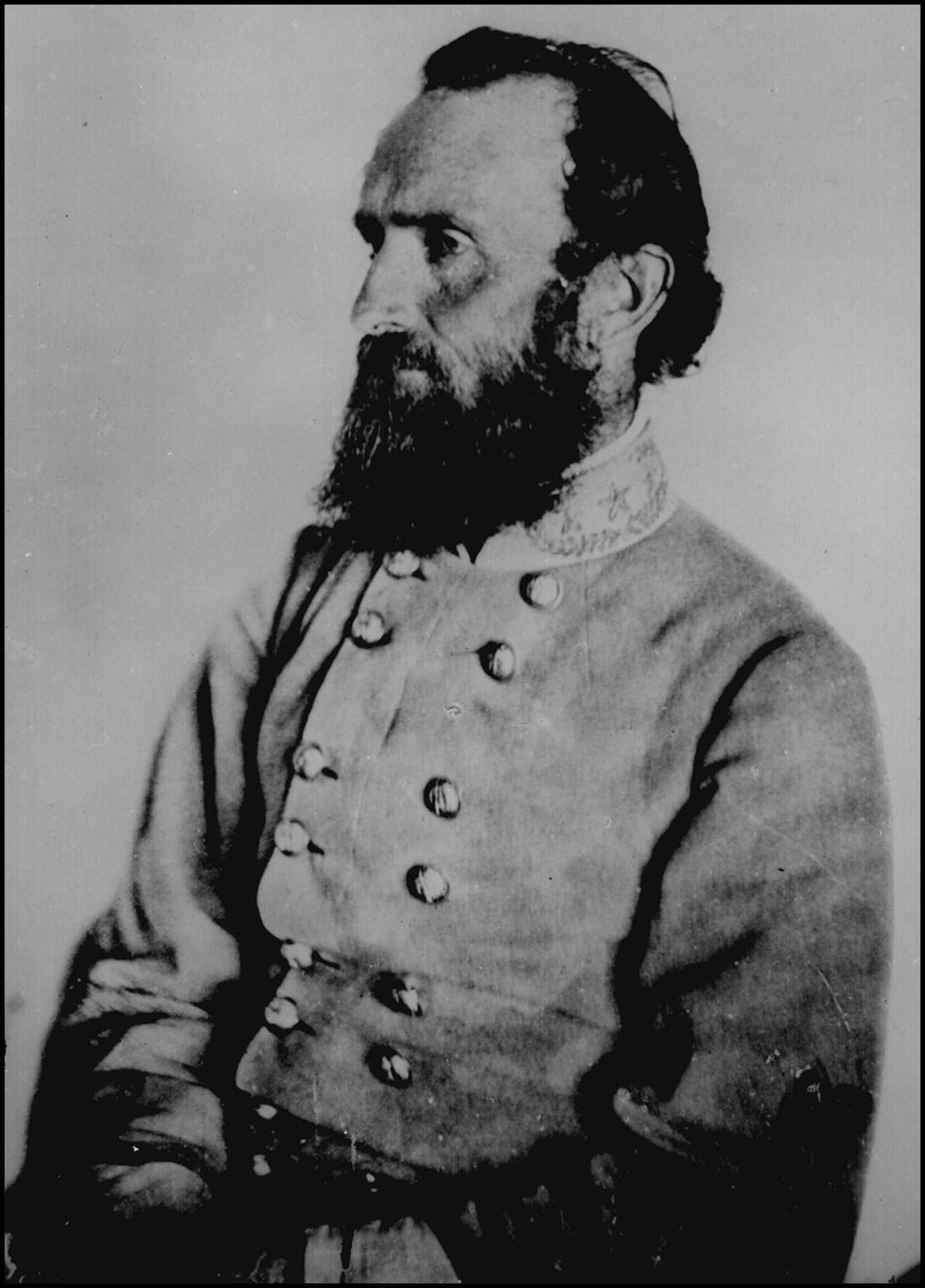
Photograph of Thomas J ‘Stonewall’ Jackson taken two weeks before his death (US National Archives)
Modern physicians reviewing the case have challenged the diagnosis of pneumonia and instead have proposed other causes of death including intra-abdominal injury, pulmonary embolus and wound sepsis. 1–6 Using first person accounts of Jackson's wounding and treatment, including those of his treating physicians, and drawing upon the most respected medical textbooks in use at the time, this review of the available information places it in the context of medical knowledge during the American Civil War.
Wounding
On the morning of the second day of the Battle of Chancellorsville Stonewall Jackson awoke with an upper respiratory infection, maybe from sleeping on the ground without a blanket or other covering. He may also have been experiencing chills throughout the day as he wore two shirts, a dress coat and a raincoat despite temperatures nearing 80°F. During that evening's battle, his troops surprised the Union Army's right flank and drove them back two miles toward the hamlet of Chancellorsville. Subsequently the attack stalled due to darkness and disorganization among the charging Confederate Army. Jackson wanted to continue the attack through the night and as his column was reforming with fresh troops he and members of his staff rode out beyond the Confederate line to scout the enemy position. As the group returned in darkness toward their own line, a newly placed regiment of Confederate infantry, unaware their general had ridden forward, mistook the approaching riders for Union cavalry and fired from short range.
Two musket balls passed through Jackson's left arm – one below the shoulder joint and another in the forearm. A third bullet entered the palm of his right hand and remained lodged within. Jackson was removed from his horse, carried to the side of the road and laid beneath a tree. One of his staff officers cut open the four layers of clothing Jackson was wearing and examined the wounds. 7–9 He found that: ‘The ball passed through the arm, which was very much swollen, but did not seem to be bleeding at all then … ’. 7 A handkerchief was tied above the wound just below the shoulder while another officer ran off to locate a nearby surgeon. The doctor arrived within minutes, examined the wounds and determined the bleeding was controlled sufficiently by the handkerchief. After the surgeon left to obtain supplies, Jackson's staff officers decided he should be moved from the area as the fighting had renewed around them. Jackson rose to his feet and, leaning on the shoulder of an officer, walked a few paces before weakness prevented him from continuing. He was laid upon a litter and, with one man at each corner, he was lifted on the stretcher and taken toward the rear. Just as they entered the road a Union cannon opened fire, sweeping the area with shrapnel and injuring a litter bearer in both arms causing him to drop his corner. Fortunately the handle of the litter was caught by another individual, preventing Jackson from falling but the men were compelled to put the stretcher down and lay beside the general to protect him from the shelling. 7,10–12
When the fire slackened, Jackson again attempted to walk but became faint after several steps and was placed back on the litter. Deeming it too dangerous to continue on the open road, the litter bearers entered the woods to the side, lifting the stretcher to shoulder height to clear the thick underbrush. One of the bearers tripped on a vine and fell, dropping his corner. This time no one was able to catch the handle and Jackson rolled off, hitting the ground hard on his broken left arm and the bleeding resumed. 7,10–13 He was placed back on the litter and carried about half a mile until the group met an ambulance that would convey Jackson to the corps hospital nearly three miles distant. Along the way, the ambulance stopped at a small field hospital where Dr Hunter H McGuire (1835–1900), the Corps Medical Director, met the group and assumed control of Jackson's care. 8 McGuire examined the left arm and, finding it actively bleeding, pressed his finger on the brachial artery and then readjusted the handkerchief to control the haemorrhage. 14–16 McGuire stated that without doing this, Jackson would ‘probably have died in ten minutes’. 14 Jackson was given whiskey and morphine, and transported to the corps hospital with McGuire continuing to hold his finger on the artery in case the bleeding should restart.
Surgery
When the ambulance arrived at the corps hospital, McGuire found a courier had preceded them and alerted the physicians that Jackson was wounded and en route to the location. A warm tent had been prepared and Jackson was placed in a bed and covered with blankets, the physicians concluding he was too unstable for surgery and nothing more could be done at that point but keep him warm and wait until the shock resolved. Two and a half hours later, Jackson had stabilized sufficiently to warrant surgery and at around 2 a.m. on 3 May Jackson was given chloroform and McGuire operated with the help of three other surgeons. McGuire described the wounds and surgery:
The round ball which had lodged under the skin upon the back of his right hand, was extracted first. It had entered the palm about the middle of the hand, and had fractured two of the bones. The left arm was then amputated about two inches below the shoulder, very rapidly and with slight loss of blood, the ordinary circular operation having been made. There were two wounds in his arm. The first and most serious was about three inches below the shoulder-joint, the ball dividing the main artery and fracturing the bone. The second was several inches in length; a ball having entered the outside of the forearm, an inch below the elbow, came out upon the opposite side just above the wrist.
15
Following the operation, McGuire instructed Jackson's aide-de-camp to wake the general in half an hour and have him drink coffee. At the appointed time Jackson was easily aroused, drank half a pint and then returned to sleep for nearly six hours until the sounds of the renewed battle awoke him. 12 Around 10 a.m. Jackson complained of right-sided pain and commented to McGuire that he believed he had injured it on a stone or a stump when he fell from the litter the previous night. Examining Jackson's side, McGuire noted: ‘The skin was not bruised or broken and the lung performed as far as I could tell, its proper function’. 14 McGuire prescribed a ‘simple application and rub’, most likely a mustard plaster, and by 8 p.m. that evening the pain had resolved and Jackson was doing well. 14
Postoperation
The outcome of the battle remained in doubt and General Robert E Lee (1807–70), Commander of the Confederate army, became concerned that Jackson could be captured should the battle shift. He ordered that Jackson be moved, if possible, to a more distant location and instructed McGuire to turn over his duties as medical director to the next ranking physician and continue his direct personal care of the recovering general.
On Monday morning 4 May 1863, Jackson was placed on a mattress in the back of an ambulance wagon and with McGuire sitting alongside set out on a 15-hour, 27-mile ride to a house called Fairview near the railroad stop of Guiney's Station. Jackson tolerated the journey well but at one point complained of the afternoon heat along with nausea and asked that a wet towel be placed on his stomach. Jackson was a believer in hydrotherapy or ‘the water cure’ and had previously used the therapy to treat a variety of illnesses. McGuire permitted the treatment and, shortly after the towel was placed, the nausea resolved. Upon arrival at Fairview, Jackson was placed near the house in an isolated, but comfortable outbuilding with several rooms; he ate bread and drank tea with ‘evident relish’ and slept well through the night. 15
Next day was uneventful with Jackson resting comfortably and complaining only of an annoyance from the ‘cold’ he had developed the night before his wounding. 17 On Wednesday, he was doing ‘remarkably well’ with a good appetite and a cheerful attitude. 14,15 Changing the bandages on this day, McGuire described the condition of the surgical sites: ‘I found his wounds to be very well to-day. Union by the first intention had taken place to some extent in the stump, and the rest of the surface of the wound exposed was covered with healthy granulations. The wound in his hand gave him little pain, and the discharge was healthy’. 15
In the early morning hours of Thursday 7 May, four days after the operation, complications surfaced. Jackson awoke around 1 a.m. suffering from an attack of nausea and instructed his servant to give him a wet towel to place on his stomach. Around daylight McGuire found the General ‘suffering great pain in his side and difficulty of breathing’ with an examination revealing ‘pleuro-pneumonia of the right side’.
15
McGuire attributed the pneumonia to the trauma experienced during Jackson's removal from the field, stating:
I believed, and the consulting physicians concurred in the opinion, that it was attributable to the fall from the litter the night he was wounded … The nausea, for which the cloths were applied that night, may have been the result of inflammation already begun. Contusion of the lung, with extravasation of blood in his chest, was probably produced by the fall referred to, and shock and loss of blood prevented any ill effects until reaction had been well established, and then inflammation ensued.
15
McGuire's initial treatment for the pneumonia consisted of wet cupping, a form of superficial bloodletting, along with the oral administration of mercury and antimony – all standard 19th century therapy for febrile pneumonia. 18 Regular dosing of opium was also started which, in addition to the illness, would have an effect on Jackson's mental alertness for the remainder of his illness.
Throughout Thursday Jackson suffered from a fever, pain in his side and restlessness. His wife Anna (1831–1915) arrived that afternoon and was overwhelmed at the sight of his physical appearance:
His fearful wounds, his mutilated arm … and above all, the desperate pneumonia, which was flushing his cheeks, oppressing his breathing, and benumbing his senses, wrung my soul with such grief and anguish … He had to be aroused to speak to me, and expressed much joy and thankfulness at seeing me; but he was too much affected by morphia to resist stupor.
19
Dr Samuel B Morrison (1828–1901), a relative of Anna Jackson and surgeon for a nearby division, was called in by McGuire for consultation. When Morrison arrived that evening he found Jackson breathing badly, suffering much pain and at times delirious. 20 Later in the evening Jackson's condition slightly improved but he slept little through the night. 15
His improvement was sustained into Friday morning as the pain in his side had resolved and his mind was clearer but as the day continued Jackson began showing signs of increased ‘prostration’ and failing strength. 20 Two additional physicians were called in for consultation and a blister – the topical application of a caustic substance such as cantharides – was applied to Jackson's side as another treatment for the pneumonia. However, his wounds continued to heal, McGuire noting: ‘Friday his wounds were again dressed, and although the quantity of the discharge from them had diminished, the process of healing was still going on. The pain in his side had disappeared, but he breathed with difficulty, and complained of a feeling of great exhaustion’. 15 Although Jackson's mental status waned during this time, when called upon he appeared lucid.
On Saturday Jackson continued to weaken and was restless and feverish; his wife and aide-de-camp spending the day sponging his forehead with water. 12,20 Dr David H Tucker (1815–71), considered an expert in pneumonia, arrived from Richmond, Virginia to provide an additional consultation and he determined that other treatment was not indicated. 14
On Sunday morning 10 May 1863, it became obvious to the treating physicians that Jackson would not survive the day. They informed his wife who then relayed the news to her husband. At 1:30 p.m, as Jackson's condition deteriorated, McGuire informed Anna Jackson that her husband had only two hours to live. 14 At approximately 2:30 p.m. Jackson spoke his last audible words, ‘Let us cross over the river and rest under the shade of the trees’. 14,21,22 Then he lapsed into a semiconscious state and at 3:15 p.m., seven days after the amputation of his left arm, Stonewall Jackson died.
Discussion
In the third edition of The Principles and Practice of Medicine Sir William Osler (1849–1919) wrote: ‘Pneumonia may well be called the friend of the aged. Taken off by it in an acute, short, not often painful illness, the old man escapes those “cold gradations of decay” so distressing to himself and to his friends'. 23 Over time, this statement became paraphrased into the well-known historical description of pneumonia as ‘the old man's friend’. In 19th-century medicine the diagnosis of pneumonia was considered straightforward since ‘no disease is more readily recognized in a large majority of the cases’. 23 In the case of Stonewall Jackson, Dr Hunter H McGuire and the consulting physicians agreed that pneumonia was the final cause of the General's death; and pneumonia was a disease familiar to all Civil War surgeons.
The most accurate reference for medical statistics of the American Civil War is the multi-volume work Medical and Surgical History of the War of the Rebellion, a compilation of both Union and Confederate medical reports published in the post-war years of 1870–83. During the war from 1861–65, there were 61,202 recorded cases of pneumonia with a mortality rate of 24%, making ‘inflammation of the lungs and pleura’ the third most common cause of death from disease during the Civil War. 18 In the preantibiotic era of the 1800s, pneumonia was often deadly and Osler noted ‘Pneumonia is the most fatal of all acute diseases’. 23 Without means to alter the course of such infectious diseases, physicians of the era were able to observe the complete natural history of pneumonia and became adept at predicting its clinical course, an ability demonstrated when McGuire informed Anna Jackson that her husband had two hours to live and then pronouncing Jackson dead one hour and forty-five minutes later.
Pneumonia was often ushered in by a chill followed by fever, chest pain, dyspnoea and a productive cough, although the presentation of the disease could be variable. 18,23,24 When pleuritic chest pain was an initial complaint, the term pleuropneumonia was often used. Terminal patients would typically progress through stages of prostration, ‘muttering delirium’, drowsiness, semiconsciousness and coma – a course consistent with Jackson's illness. 18 Physical examination of the chest provided the most consistent findings of pneumonia as noted in a respected text of the time: ‘Percussion and auscultation combined afford sure evidence of the nature of the disease’. 24 McGuire's accounts on Jackson's illness detail findings of chest pain and dyspnoea but lack mention of fever, chills or cough and he fails to provide specifics of his physical examination findings, noting only that an examination disclosed pleuropneumonia. McGuire did keep bedside clinical notes during Jackson's treatment but the notes were lost in March 1865 when his medical wagon was captured by Union forces. McGuire most likely neglected to mention medical details in his later accounts since they were written not as a case study but as a narrative for a lay audience.
McGuire and his colleagues considered Jackson's pneumonia to be secondary to the trauma he received in falling from the litter on the night of the wounding. Traumatic pneumonia, or what Osler referred to as contusion-pneumonia, was the complication of an underlying pulmonary contusion. 23 This condition was noted to occur at times without any sign of external injury or rib fracture and carried a mortality rate as high as 86% during the Civil War. 25
The treatment of pneumonia in the mid-19th century started typically with the oral administration of cathartics, most commonly tartar emetic – a combination of antimony and potassium – followed by mercury-based compounds including calomel. In the initial treatment of pneumonia opium, often in the form of morphine, was frequently dispensed together with cathartics and was used for both its analgesic and its antitussive properties. Chest consolidation was treated with sinapisms or plasters, blistering agents and dry cupping. Bloodletting by venesection was a common treatment for pneumonia before the Civil War and maintained a degree of popularity post-war but the therapy seems to have fallen into disfavour with military physicians during the conflict and was seldom used for this illness although local bloodletting through the use of wet cupping was utilized. 18
Pneumonia as a postoperative complication was not specified in the medical statistics of the Civil War but mortality from various procedures is well documented. The overall mortality of primary amputations during the war was 23.9%, while specifically those of the upper one-third of the humerus, the surgery Jackson received, was 13.6% – almost half the fatality of pneumonia. 25,26 The mortality after primary amputation is surprisingly low in view of the fact that the procedures were performed hurriedly on the battlefield with unsterile technique and before the advent of antibiotics. The unsterile conditions, however, did promote the complication of pyaemia, also called septicaemia or blood poisoning, which was the most common cause of postoperative death following amputation of the upper arm. 25
Pyaemia was a condition for which physicians had no treatment and it had a mortality rate of 97.4%. 26 When it occurred following amputation, two-thirds of patients died within seven days of symptom appearance; most on the fifth day with death attributed to asthenia. 26,27 The initial presentation of pyaemia was severe rigours and profound sweats followed by a jaundiced appearance of the skin. A period of ‘tranquility’, in which the patient seemed improved, was described by some as occurring after the onset of symptoms followed by an eventual recurrence of the fever and chills, perhaps similar to Jackson's brief period of improvement the first evening of his pneumonia and lasting into the next morning. 27
One of the most consistent findings in postamputation pyaemia was changes at the surgical site. Initially an abundance of pus would flow from the surgical wound but as the condition progressed the discharge would become thin, watery and foul-smelling, accompanied by sloughing and dehiscence of the closed incision. 28–30 In Jackson's case, however, McGuire describes the wounds as healing well at the time of the dressing changes and specifically mentions that ‘union by first-intention’ was taking place in the stump, a term used by Civil War surgeons to describe healing without signs of suppuration. 15 Postoperative pyaemia could also produce painful metastatic abscesses that would be found scattered in areas far removed from the surgical site, including the lungs, muscles and joints. Although pyaemia was a well-known and feared complication of surgical procedures, it occurred with lower frequency in the Confederate Army than in the Union Army and was uncommon at the Battle of Chancellorsville. 28,31
Pulmonary embolus was also a diagnosis known to Civil War physicians and, similar to modern day presentation, fatal emboli were often of an acute, rapidly progressing nature. 32 Although Jackson's surgery and period of immobilization would have predisposed him to the formation of a venous thrombosis, his physical findings and slow course of illness were not consistent with a death secondary to an acute pulmonary embolus.
Although many autopsies were completed during the American Civil War, postmortem examination of Jackson's body was not performed. His physicians established pneumonia as the cause of death based on clinical grounds alone.
Conclusions
While the definitive aetiology of Stonewall Jackson's death remains unknown, the surviving information supports an answer. The American Civil War physician was acquainted with the diagnoses of pneumonia, pyaemia and pulmonary embolus, and was able to differentiate between the conditions based on observation and physical examination. It is highly unlikely that Hunter McGuire and the other military surgeons would all misdiagnose another disease as pneumonia and therefore almost assuredly Jackson had the condition and his care was consistent with the standard treatment of pneumonia for the era. Although Thomas J ‘Stonewall’ Jackson was aged 39, a young man when he died, his body had been weakened by an unfortunate series of events in May 1863. Already suffering from an upper respiratory infection, Jackson was shot three times, lost a significant amount of blood, was dropped from shoulder height while being removed from the battlefield, had surgery to amputate his arm, was transferred 27 miles by wagon the following day and endured several days of a febrile illness. Stonewall Jackson's peaceful ‘crossover the river’ was consistent with the condition Sir William Osler would describe 35 years later as ‘an acute, short, not often painful illness’ – septic pneumonia or ‘the old man's friend’.
Footnotes
Acknowledgements
The author wishes to thank American Civil War historian Frank A O'Reilly for his guidance in the preparation of this paper.