Abstract

This book distils the collection of experience of approximately 4000 cases of cardiac diagnoses, obviously made in the most compelling of circumstances for the parents during their difficult journey with their unborn, and who were cared for by the principal author and her colleagues. There is much compassion displayed through the application of dedication and reasoning especially within the final eighth chapter, where outcomes are analysed implicitly for the benefit of those yet to be cared for by colleagues, national and international, and it is hugely commendable for that contribution alone to the promotion of excellence in fetal cardiac scanning.
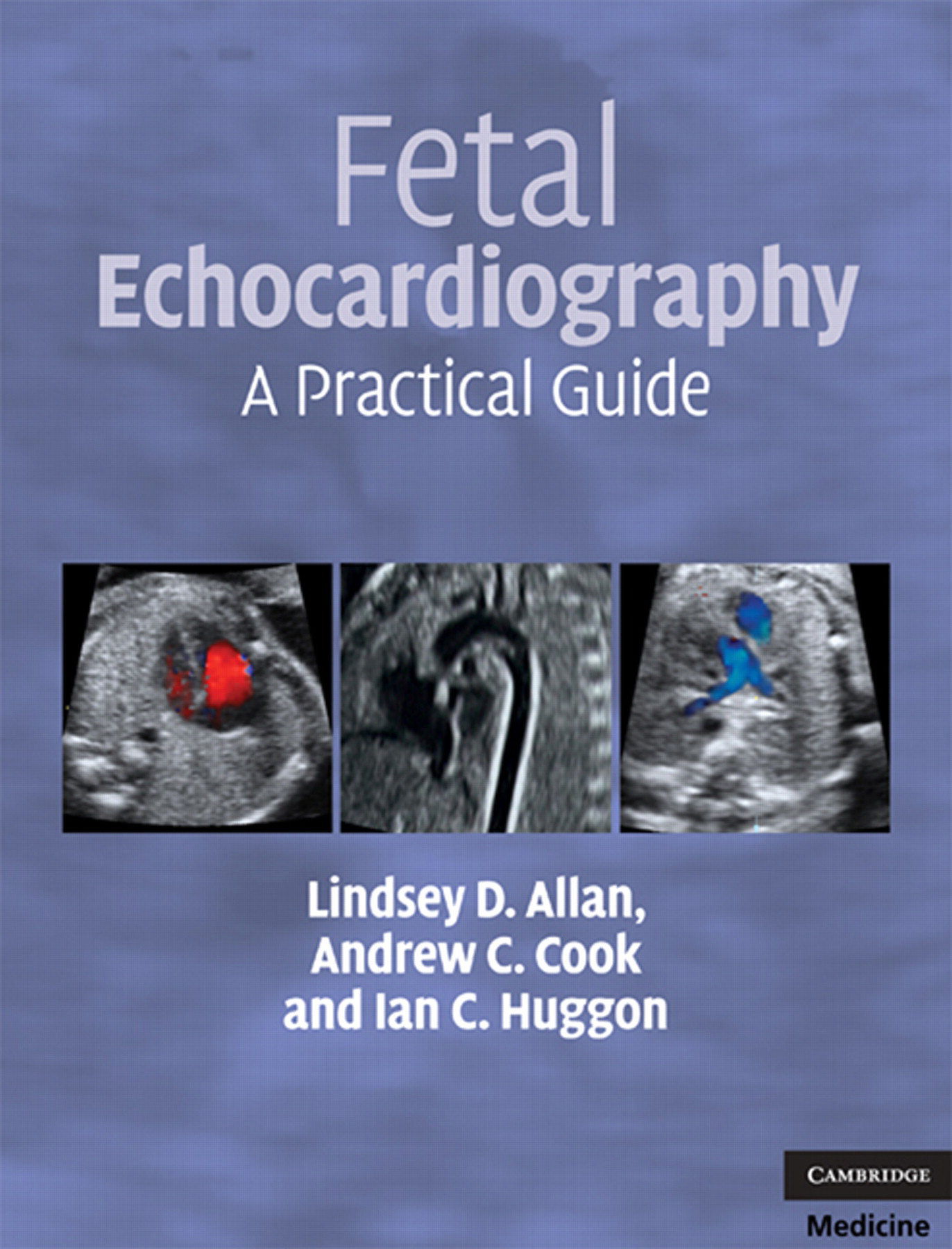
Such a personal professional experience for them is presented to all as a pictorial review (according to my calculations, 555 diagnostic images on the subject are included).
All of the main conditions that one is ever likely to encounter in a lifetime of general obstetric scanning are covered in images that run well into double figures for all of the 10 commonest diagnoses. This is, therefore, a personal, or a departmental, collection if you buy this book and the main conditions are also covered on an informative and highly educationally illustrative DVD compiled by the late co-author Dr Ian Huggon, to whom the book is dedicated. Whenever you view this DVD you'll probably find like me that, just as on the silver screen, the still frames are never as good as the movies are in telling the story of the condition. Also with illustrative book writing being part of the human condition it is inevitable perhaps that there will be out-takes. Notably, the image and markers are transposed on page 75, figure 3.2(e), leading to more errant arrows there than you would find after a blindfolded archery competition. However it is, serendipitously, a fascinating picture to test your anatomy with!
The first six of the eight chapters cover technique (physics coverage is appropriately minimal, yet concise and useful in context when emergent throughout the text), standard and additional views of all the conditions, Doppler evaluation, and include a chapter on first trimester cardiac appearances in normality and disease. Arrhythmia diagnosis and therapy comprises the subject of the seventh and penultimate chapter. Of particular note, there is a bibliography selected for subject merit by the author, instead of references, to guide further study. The figure legends are in smaller print, and given their undoubted quality (aside from the very occasional mishap) are premium educational material, which could beneficially be emphasized with full size text if there was some way to do this in future editions.
As this is a modified academic selection from a tertiary centre referral, it becomes problematic to contextualize it within the reality of screening for heart disease in a low-risk population, which is where I feel the vast majority of the intended audience's efforts will be concentrated. However, I think this aspect has been well considered by the authors as, while demonstrating good practice in technique and analysis as a model to aspire to, inaccuracies that occurred in the process of evaluation (correlated with outcome) have been usefully highlighted systematically in the final chapter. This is good intelligence to impart, informing more practical advice, tips, and a realistic perspective for this majority of readers to assimilate.
For a pictorial review, this highly recommended book would otherwise benefit from an image (rather than just textual) index. I have tabulated my own, and anyone wishing to avail themselves of that is welcome to a copy by return.