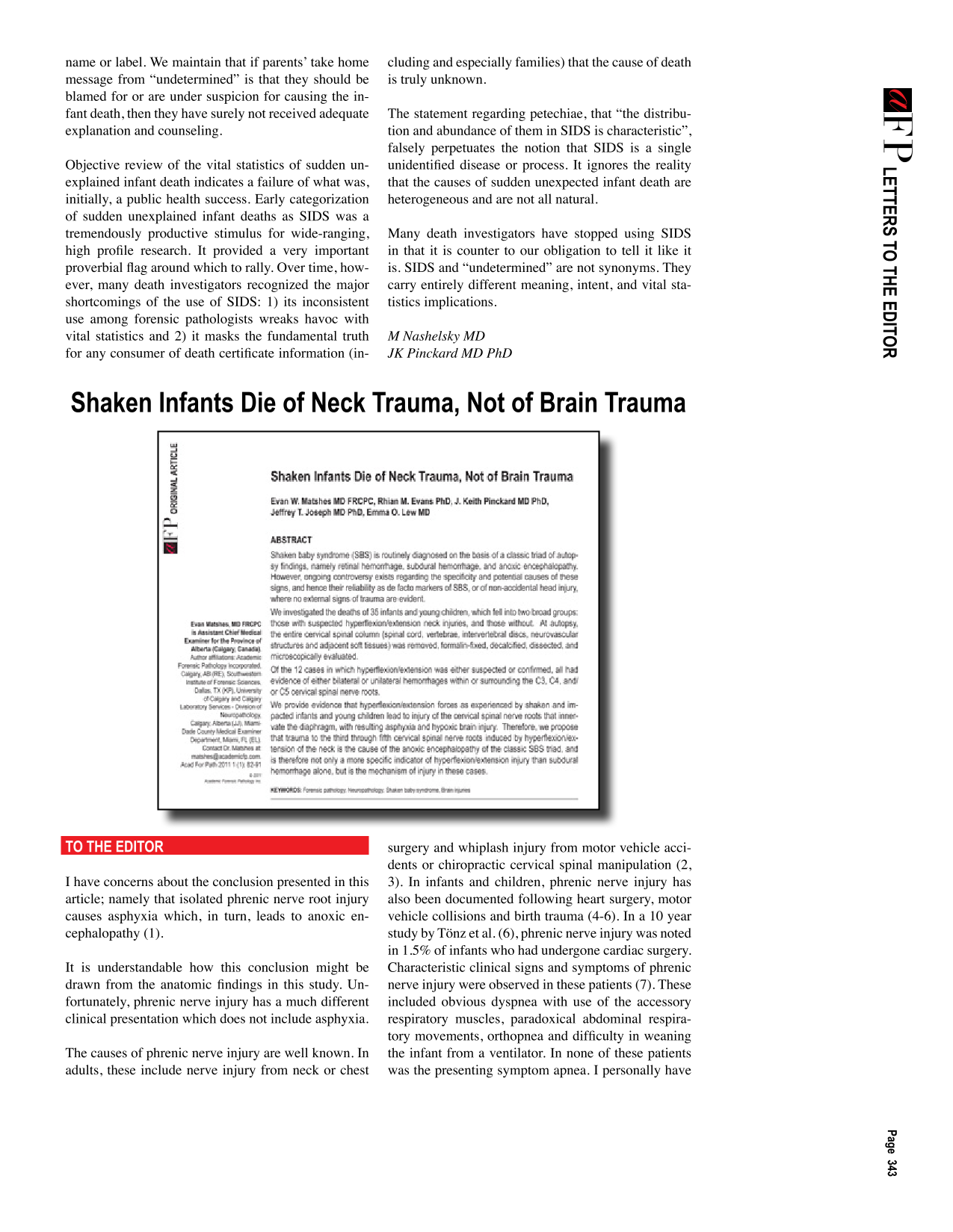
MatshesE.W., EvansR.M., PinckardJ.K., JosephJ.T., LewE.O.. Shaken infants die of neck trauma, not of brain trauma.Acad Forensic Pathol.2011 Jul; 1(1): 82–91.
2.
DaviesS.J.. “C3, 4, 5 Keeps the Diaphragm Alive.” Is phrenic nerve palsy part of the pathophysiological mechanism in strangulation and hanging? Should diaphragm paralysis be excluded in survived cases? A review of the literature.Am J Forensic Med Pathol.2010 Mar; 31(1): 100–2.
3.
SchramD.J., VosikW., CantralD.. Diaphragmatic parlysis following cervical chiropractic manipulation: case report and review.Chest.2001 Feb; 119(2): 638–40.
4.
GreeneW., L'HeureuxP., HuntC.E.. Paralysis of the diaphragm.Am J Dis Child.1975 Dec; 129(12): 1402–5.
5.
CommareM.C., KurstjensS.P., BaroisA.. Diaphragmatic paralysis in children: A review of 11 cases.Pediatr Pulmonol.1994 Sep; 18(3): 187–93.
6.
TönzM., von SegesserL.K., MihaljevicT.. Clinical implications of phrenic nerve injury after pediatric cardiac surgery.J Pediatr Surg.1996 Sep; 31(9): 1265–7.
7.
YaddanapudiS., ShahC.. Bilateral phrenic nerve injury after neck dissection: an uncommon cause of respiratory failure.J Laryngol Otol.1996 Mar; 110(3): 281–3.
8.
PadoschS.A., DettmeyerR.B., SchmidtH.. Spinal epidural haematoma after blunt trauma to the neck and hyperflection of the cervical spine.Forensic Sci Int.2006 Jun 2; 159(2-3): 230–4.
9.
CaffeyJ.. The whiplash shaken infant syndrome: manual shaking by the extremities with whiplash-induced intracranial and intraocular bleedings, linked with residual permanent brain damage and mental retardation.Pediatrics.1974 Oct; 54(4): 396–403.
10.
SquierW., ScheimbergI., SmithC.. Spinal nerve root β-APP staining in infants is not a reliable indicator of trauma.Forensic Sci Int.2011 Oct 10; 212(1-3): e31–5. Epub 2011 May 28.