



Abstract
The incidence of violence in dating relationships has a significant impact on young people, including decreased mental and physical health. This review is the first to provide a quantitative synthesis of empirical evaluations of school-based programs implemented in middle and high schools that sought to prevent or reduce incidents of dating violence. After a systematic search and screening procedure, a meta-analysis of 23 studies was used to examine the effects of school-based programs. Results indicated school-based programs influence dating violence knowledge (
Dating violence in teen relationships has a significant impact on young people and can involve both perpetration and victimization experiences, including verbal aggression, relational aggression (controlling behaviors, jealousy), physical aggression/violence, sexual aggression/violence, or coercion. Violence in dating relationships is associated with a variety of adverse effects for both partners, including lowered self-esteem, reduced self-worth, and increased self-blame, anger, hurt, and anxiety (Cornelius & Resseguie, 2007). The rates of teen dating violence in middle and high school are significant. School-based studies have noted prevalence rates among 9th to 12th graders of 8.7% for physical dating violence (Hamby, Finkelhor, & Turner, 2012) and 10% to 25% when considering both physical and verbal aggression (Cornelius & Resseguie, 2007). A nationally representative study of U.S. students found a 1-year incidence rate of 3.6% for 13 through 17 year olds (Hamby et al., 2012). Given the prevalence of teen dating violence, researchers have devoted a considerable amount of attention to understanding the impact of dating violence on young people.
The experience of teen dating violence has consequences for the well-being of youth and challenges a young person’s ability to be successful in multiple domains, including in social interactions in and out of school. Consequences of teen dating violence include mental health concerns, low academic achievement, and aggressive conflict management (Offenhauer & Buchalter, 2011). Research has also found that girls who are the victims of violence in a dating relationship are at an increased risk of discipline problems at school (Vézina & Hébert, 2007). The consequences of teen dating violence extend beyond externalizing symptoms and can include psychological symptoms such as feelings of incompetence, anxiety, paranoia, severe depression, isolation from family and friends, guilt, and self-blame (Molidor, 1995). Scholars have also documented the long-term impact of teen dating violence, including ongoing isolation, withholding of emotional support, and an increased likelihood of continued experiences with abuse, such as harassment and degradation (Banyard & Cross, 2008; Exner-Cortens, Eckenrode, & Rothman, 2013; Molidor, 1995).
Additionally, longitudinal studies have identified sustained difficulties for individuals who have experienced intimate partner violence, including depression, binge eating, substance abuse, and antisocial behavior (Foshee et al., 2012). These adverse and potentially long-lasting effects highlight the importance of working to prevent incidences of teen dating violence through policies and programs that can support the prevention of violence in dating relationships. Indeed, efficacy and evaluation studies have increased and have focused on determining if intervention programs are effective in reducing the incidence of teen dating violence, including the sexual, physical, and emotional abuse that young people may experience in unhealthy dating relationships. The present review provides a quantitative synthesis of these evaluation studies to provide a clearer understanding of the effectiveness of current teen dating violence prevention efforts.
Teen Dating Violence Prevention Programs
A growing body of cross-sectional and longitudinal evidence suggests that aggression toward a dating partner peaks during early adolescence and then declines with age (Capaldi & Langhinrichsen-Rohling, 2012), highlighting the importance of addressing dating violence during adolescence. Given that too many adolescents experience abusive relationships in high school and some as early as middle school, primary prevention efforts need to start before adulthood (Mulford & Blachman-Demner, 2013) in order to support the development of the skills needed to form positive relationships with others (Centers for Disease Control and Prevention, 2012). Numerous programs exist that can be implemented in schools with the aim of preventing the onset or reducing the prevalence of violence in teen dating relationships (Calvillo, 2010).
Etiological longitudinal models of teen dating violence have attempted to elucidate risk and protective factors using a social–ecological framework (Espelage & Low, 2013; Foshee & Matthew, 2007) that implicate individual characteristics (e.g., attitudes supportive of violence, rape myths acceptance, conflict resolution skills), familial factors (e.g., maltreatment, lax parenting, exposure to violence), peer influences (e.g., peer support for aggression), and environmental factors (e.g., school policies) as risk factors for teen dating violence victimization and perpetration. Many of the prevention programs focus heavily on the individual and peer factors because the programs are school-based curriculum delivered to individual students in classrooms; however, more recent programs are targeting family and environmental influences.
These programs exist at the universal level, where the school introduces various stimuli or psychoeducational directives to all students in a grade or all students in the school (Durlak et al., 2007). These programs include classroom-based curriculum that introduce lessons for students, placement of informational posters in the school hallways, and policies that encourage reporting of violence (e.g., Shifting Boundaries; Taylor, Stein, Mumford, & Woods, 2013). Other universal prevention efforts have focused on training influential high school student leaders in dating violence prevention strategies, with the thought that these students would then intervene when they see violence (e.g., Green Dot; Coker et al., 2011).
The aims and goals of the programs vary according to the developmental group being targeted. Many programs, especially those implemented with elementary school students (ages 6-10), focus on altering the school culture in an effort to decrease aggression and promote respect (Flannery et al., 2003; Haynes, 1998). Programs targeted at young students have the goal of shifting the culture of the school in positive directions, partly by encouraging bystander support, so that students are supportive of victims of dating violence while also not accepting of dating violence behaviors perpetrated by their peers. Programs implemented for older youth, on the other hand, spend more time trying to change dating attitudes and behaviors of students (Foshee et al., 1998; Macgowan, 1997). In addition, programs focused on older students teach the fundamentals of a healthy dating relationship and impart skills to negotiate conflict.
The Safe Dates program is an example of a school-based prevention program for adolescents (Foshee & Langwick, 2004). The program includes a 45-minute theater production, a 10-session curriculum, and a poster contest. Safe Dates is both a prevention and intervention program. Lessons help students recognize the difference between caring, supportive relationships and controlling, manipulative, or abusive dating relationships. The activities in the Safe Dates program target behavior change by seeking to shift gender role, sexual behavior, and teen dating violence norms, while also improving conflict management skills (Foshee et al., 2005). Changes in dating violence and gender role norms and increased conflict management skills are intended to support the prevention of dating violence as well as decrease experiences of dating abuse perpetration and victimization.
In addition to an increase in universal prevention programs by researchers, policymakers and practitioners have begun to focus on addressing environmental factors, specifically educational policies. Many states in the United States include healthy relationship or violence prevention education as part of the health education curriculum, and at least 19 states have laws that require or urge school districts to include this information as part of their lessons (Blackman, 2015). Some states have gone further, requiring schools to develop policies related to dating violence and plans to address and manage dating violence. Twenty-two states have enacted legislation that specifically addresses teen dating violence in the educational context (National Conference of State Legislatures, 2015). Although legislation is a promising initial step, these efforts are often not connected with corresponding funding support, which make it difficult for school personnel to implement specific programming. To bolster efforts that advocate for policy changes and funding to support school-implemented programs, empirical evidence about the effectiveness of prevention programs is needed.
Theory of Behavior Change
Prevention researchers should consider the manifestation of individual behavior change. Programs often include targeted messages that are developed to present information and material that describe the advantages and disadvantages of adopting a particular behavior (Hampton, Brinberg, Peter, & Corus, 2009), and in the case of teen dating violence, the goal is to reduce the potential of engaging in the behavior and/or being a victim of dating violence. The reduction of dating violence is likely the result of a chain of events as opposed to a simple bivariate relationship, and as such, a logic model provides a useful illustration of the components necessary to impart behavior change (Anderson et al., 2011). As an example, the Safe Dates program, discussed above, implements activities intended to shift dating violence and gender role norms as well as to increase conflict management skills (Foshee et al., 2005). These changes in norms and an increase in skills are then expected to lead to reductions in the onset of dating violence and a cessation of dating violence perpetration and victimization. Thus, behavior change manifests as a result of both attitude change and skill building. Cornelius and Resseguie (2007) showed that programs focusing exclusively on attitudinal or educational components will likely not change behaviors, and therefore, the skill-building component of Safe Dates is a crucial component of the chain of events that can lead to positive outcomes.
Systematic reviewers, moreover, should consider the components of the chain that contribute to prevention efforts effecting behavior change, and they should identify specific components that are necessary to improve outcomes (Anderson et al., 2011). Within dating violence prevention efforts, increasing knowledge of dating violence, promoting attitudes that are not supportive of dating violence, and building skills to effectively prevent or reduce incidents of dating violence are expected to be important components to support the prevention or reduction of dating violence perpetration and victimization. Currently, it is unclear whether dating violence prevention efforts are effective at reducing these behaviors. As such, there is a need to quantitatively synthesize empirical studies that have been conducted.
Previous Reviews
Several narrative reviews and meta-analyses have been conducted previously on the topic of teen dating violence. These previous reviews, however, fail to sufficiently synthesize the extant literature in several key areas. The following is a review of the previous reviews to analyze and summarize where the current knowledge gap exists.
Narrative reviews of teen dating violence prevention interventions have provided support for the use of these programs in schools. Law (n.d.) and Calvillo (2010) detailed several large-scale prevention programs using a narrative review technique and note overarching benefits of prevention programs including altering the school climate and changing attitudes supportive of teen dating violence. Additionally, Foshee and McNaughton-Reyes’s (2009) review of school-based dating violence intervention programs found that changes in dating abuse norms and attitudes were found with these interventions. These narrative reviews provided a summary of existing research and theories by taking a qualitative rather than quantitative approach. Although narrative reviews provide useful information on the effectiveness of dating violence prevention programs, they do not allow for a quantitative synthesis of information and cannot estimate effect sizes or meta-analytic results.
One systematic review and two meta-analyses have been conducted on teen dating violence programs to date. Fellmeth, Heffernan, Nurse, Habibula, and Sethi (2013) conducted the systematic review of educational skills–based interventions aimed to prevent the onset of and subsequent relationship violence among individuals between the ages of 12 and 25 years. In the review, programs that were implemented in any setting (e.g., schools, community centers) were included. Primary outcomes were frequency of dating violence episodes, injuries, adverse events (e.g., number of dating violence episodes, risky dating behaviors), and subjective well-being. Secondary outcomes included knowledge of what constitutes dating violence and awareness of services to intervene when dating violence occurs (e.g., Rape Myths Acceptance Scale [RMAS], justification of interpersonal violence questionnaire). The authors concluded that programs affected the knowledge of participants, but this conclusion was derived from a narrative synthesis as opposed to a meta-analysis.
Ting (2009) conducted a meta-analysis of dating violence prevention programs implemented in middle and high schools and included 13 studies. Ting’s outcomes included teen dating violence knowledge (k = 10) and attitudes (k = 9), and the author measured changes in scores from preintervention to postintervention. The author found robust and statistically significant average effect sizes (
Finally, Edwards and Hinsz (2014) conducted a recent meta-analysis of eight teen dating violence prevention programs implemented from Grades 8 through 12. The authors only included programs that had undergone empirical study and had been peer-reviewed. Rather than evaluating the impact of the programs on a wide range of variables, they combined both attitude and behavior measures into one composite outcome measure. They found significant overall weighted mean effects, indicating participants in prevention programs had lower scores on dating violence outcomes after the intervention compared with control participants (Edwards & Hinsz, 2014). These results should be considered with caution; however, given that the review failed to search the unpublished literature, the outcomes were combined into one composite measure, and behavioral outcomes were not considered.
Although previous reviews have found that teen dating violence prevention programs produce positive changes on either knowledge or attitudes, it is still unclear whether changes in knowledge and attitudes lead to corresponding changes in behavior (Whitaker et al., 2006). From the Fellmeth et al. (2013) review, there was no evidence for prevention programs leading to a reduction in violence episodes, which leads to the question of whether prevention programs are able to alter behaviors. The present systematic review builds and improves on the previous meta-analyses and reviews by quantitatively synthesizing empirical evaluations of all types of school-based programs designed to prevent or reduce the incidence of dating violence and includes rates of victimization and perpetration as outcomes of interests.
The Current Systematic Review
The purpose of the present review, therefore, is to evaluate and synthesize the efficacy of school-based teen dating violence prevention and intervention programs. More specifically, this meta-analysis included an examination of the efficacy of middle and high school dating violence prevention programs on increasing knowledge about teen dating violence, changing attitudes or beliefs supportive of teen dating violence, and perhaps, most important, reducing incidents of dating violence perpetration and victimization. Unlike the three previous reviews, this review included a wide range of outcomes, included a larger number of evaluations and efficacy studies from both the published and unpublished literature, and employed state-of-the-art meta-analytic techniques (Van den Noortgate, López-López, Marín-Martínez, & Sánchez-Meca, 2013). In addition, we examined the effects both immediately following the program and at later follow-up, which extends previous reviews that focused on posttests only. Substantive and methodological variables (e.g., program characteristics, age, gender, location) were also examined to test whether their presence moderated the effect sizes. Taken together, we believe the current review significantly extends the previously conducted research.
Method
The results of this systematic review and meta-analysis were a product of a detailed and predetermined protocol, following the guidelines provided by the Campbell Collaboration (2014). The protocol for this review is freely available for download (De La Rue, Polanin, Espelage, & Pigott, 2013).
Procedures
Inclusion Criteria
To provide clear support that an intervention was indeed the cause of a change in knowledge, attitudes, and behaviors, only those studies that implemented a two-group, experimental or quasi-experimental design with a control group were included. Pretest–posttest and follow-up measures help minimize the attribution of changes to experimenter, practice, attention, spontaneous maturation, or Hawthorne effects (Topping & Barron, 2009). In addition, only studies that were implemented in middle and high schools were included. In the United States, middle and high school spans Grades 6 to 12 and includes youth between the ages of 11 and 18 years. No studies included information for students younger than sixth grade. The choice to focus on school age youth was due to the specific needs and constraints of working with students in schools, including the need for developmentally specific material that can be implemented effectively in schools and classrooms. No restriction was placed on the date of publication, type of publication (i.e., gray literature), or geographic location.
Exclusion Criteria
Studies were excluded if they measured the outcomes of interests as secondary outcomes. Studies that utilize community centers or other locations outside the brick-and-mortar schools were also excluded, given the difference in structure and varied populations that are present in these settings. Although we included studies that published an English translation, we excluded studies that were published exclusively in a non-English language.
Outcomes of Interests
The primary outcomes of interest were attitudes, knowledge, and behaviors. This included outcomes that measured knowledge about teen dating violence and what behaviors constitute teen dating violence, attitudes about teen dating violence behaviors, and frequency of perpetration or victimization in adolescent intimate partner violence relationships. Perpetration and victimization experiences include verbal aggression, relational aggression (controlling, jealousy), physical aggression/violence or sexual aggression/violence, or coercion. In addition, outcomes that assessed bystander support or intervention were also of interest. We included studies that measured outcomes immediately following a program and also included studies that measured outcomes at any time period after an immediate posttest. This allowed us to examine both the immediate and long-term outcomes.
Literature Search
A comprehensive search of the literature was conducted to identify qualifying studies. The following search terms and their variants were used in different combinations using the Boolean operators “AND” and “OR”: intervention, prevention, program, sexual violence, sexual coercion, peer support, intimate, partner violence, bystander, dating violence, physical violence, dating aggression, dating abuse, rape, experiment, quasi-experiment, 4–12 grade, high school, middle school, and middle level.
The electronic databases searched included Education Resources Information Center, PsychInfo, SocIndex, Applied Social Sciences Index and Abstracts, PubMed, Sociological Abstracts, Gale Search Database, and Academic Search Premier. The electronic databases included international publications; however, we also searched Canadian Business & Current Affairs Education, the British Education Index, and the Australian Education Index for citations of studies conducted outside the United States. Gray literature databases were also searched, including scientific.thomson.com databases, csa.com/factsheets databases, apa.org/psyextra database, and Proquest (for dissertations and theses). To identify potential gray literature outside of indexed databases, we also searched Google and Google Scholar search engines to locate conference abstracts, government documents, and other online material. In addition, the reference lists of primary studies were backward and forward searched. We also contacted researchers who have published extensively in the area of teen dating violence and researchers who have received grants to implement teen dating violence prevention programs to identify studies in press or in preparation.
Two independent researchers screened all titles and abstract independently. A total of 1,608 articles were identified in the search, and 1,518 study abstracts were screened. All studies that appeared to meet the inclusion criteria were collected for full-text screening. The same two independent researchers again screened each article for potential inclusion. When disagreements arose, the researchers met to determine a consensus of inclusion.
Coding Procedures
A codebook was created specifically for this project in an Excel database. The codebook included all pertinent information about the studies, including demographic information about the sample, program type and characteristics, and effect sizes. An assessment of the methodological quality of studies using the risk-of-bias tool developed by the Cochrane Methods group (Higgins, Altman, & Sterne, 2011) was also performed. Two independent researchers coded the studies; disagreements were handled by consensus.
Analysis
Effect sizes and variances were extracted from each study using relevant summary statistics and followed procedures delineated by Lipsey and Wilson (2001). Most often, the studies reported means and standard deviations for the intervention and control group, and as such, a standardized mean difference effect size was calculated. Discrete outcome data were transformed to a standardized mean difference. Studies that used a nested design were adjusted for clustering using the procedure suggested by Hedges (2007). Teen dating violence attitudes and knowledge as well as the Conflict Tactics Scale (CTS) were coded such that positive values indicated a treatment effect. On the other hand, teen dating violence perpetration and victimization as well as the rape myths awareness scale were coded such that negative values indicated a treatment effect.
To include all effect sizes from each study, we utilized a three-level meta-analysis procedure (Van den Noortgate et al., 2013). The three-level model is preferable given the inherent and common occurrence of multiple and clustered effect sizes within studies. For instance, Jaycox et al. (2006) reported multiple teen dating violence attitude outcomes that fit the inclusion criteria. Instead of simply averaging the results, the three-level model estimates the average effect size using the entirety of information available then adjusts the standard errors to account for the inherent clustering of these related effect sizes. Conceptually, the synthesis calculation differs little from traditional meta-analysis, where each effect size is weighted by the inverse of the study’s variance. Included in the weight calculation, however, are two random-effects variance components instead of the one found in traditional meta-analyses (Van den Noortgate et al., 2013). The three-level model decomposes the variance of the effect size (i.e., the inverse of the weight) into three parts. The first partition is the Level 1 variance, estimated via the traditional variance calculation methods described by Hedges and Olkin (1985). The second component, Level 2, is the variance within studies but between effect sizes. Finally, the Level 3 variance is the variance between the studies. Each variance component is estimated using maximum likelihood iterative procedures. We assess for heterogeneity by estimating τ2 and as I2 (Higgins & Thompson, 2003) for each synthesis. All analyses were conducted using the R package metafor (Viechtbauer, 2010).
Finally, we tested for moderators using a meta-regression approach. This limited the number of statistical tests conducted because moderators could be tested once (Polanin & Pigott, 2015). Lipsey (2009) suggested utilizing three types of moderators: extrinsic, methodological, and substantive. Extrinsic variables are represented by the study’s unchangeable characteristics and included date of publication, publication type, and funding source. Methodological variables can be represented, for example, by random versus nonrandom assignment—variables that the study’s authors often have control over. In the present review, this included study design, risk of bias measures, and metric. Lengths of intervention or intervention location are examples of substantive moderators. The substantive variables examined included program type, age, gender, location, racial composition, and socioeconomic status.
Results
The main searches were run in July 2013. Twelve national and international bibliographic databases were searched. In addition, an extensive gray literature search was performed, which included searching the websites of five foundations and organizations that are focused on the prevention of teen dating violence or sexual violence in intimate relationships. The total number of potentially relevant records identified through these methods was 1,608 after excluding duplicates (database: 1,331; gray: 266; hand search and other: 11). The titles and abstracts of all 1,608 citations identified in the search were screened for relevance. Following a title and abstract screen, 90 study reports were retrieved for a more detailed evaluation. Of these, 22 were excluded for not meeting inclusion criteria. After a full review, an additional 45 of the 68 remaining studies were excluded, leaving 23 studies for review (see Figure 1). A majority of the studies were retrieved from journal articles with the exception of two dissertations (Sanchez-Cesareo, 2002; Silverman, 2000), a book chapter (Jones & Levy, 1991), and one unpublished online final summary report for a funded program evaluation (Gardner, 2005).

Diagram of article search and screening steps to identify teen dating violence (TDV) prevention studies.
Measures
Studies included measures of knowledge, attitudes, and rates of perpetration and victimization as outcomes. Below we provide a brief summary of the outcomes of interests. Supplementary Table S1 (available in the online version of the journal) provides additional details for each measure and also identifies which studies included the outcome of interest.
Thirteen studies measured teen dating violence knowledge, including both true/false questions and questions that assessed whether students could recognize teen dating violence behaviors. Many of the researchers developed their own knowledge measures based on the information provided in the specific intervention program under study. Ten studies measured attitudes toward teen dating violence. Often these measures presented scenarios or described behaviors and asked students to indicate if these behaviors were acceptable in dating relationships. Multiple studies made distinctions between being a male or female perpetrator.
Four studies measured adherence to rape myths and used the RMAS (Burt, 1980) or versions of the scale. The original RMAS consists of 19 items in three sections. In the first section, 11 declarative statements are presented and students select one of seven levels of agreement. In the second section, there are two items that ask students to indicate the percentage of rape reports they feel are false due to vengeance or pregnancy. The final six items focus on how likely students would be to believe reports of rape depending on the status of the victim. The RMAS items are summed to provide an overall score.
Studies were less likely to measure dating violence perpetration behaviors. Five studies did include perpetration measures, including psychological abuse perpetration and measures of sexual and nonsexual violence perpetration. Students were presented with behaviors and asked how often they perpetrated these behaviors against a dating partner. For sexual violence, students were asked to indicate how often they forced a partner to have sex or engage in sexual acts. Five studies assessed for dating violence victimization. This included measures of psychological abuse and sexual and nonsexual violence victimization in dating relationships. Studies may also include prevalence (yes/no) and incidence (number of times) questions on the experience of being a victim of sexual and nonsexual violence by people they have dated.
Seven studies used the CTS, and an additional study used a measure aimed to capture similar information. The CTS2 (Straus, Hamby, Boney-McCoy, & Sugarman, 1996) is a measure designed to assess both frequency of use and type of behaviors used (i.e., reasoning, verbal, physical) when dealing with conflict. This measure consists of three subscales of using reasoning, verbal aggression, or physical aggression to resolve conflicts. Higher scores reflected a greater likelihood to use the respective strategy.
Characteristics of Included Studies
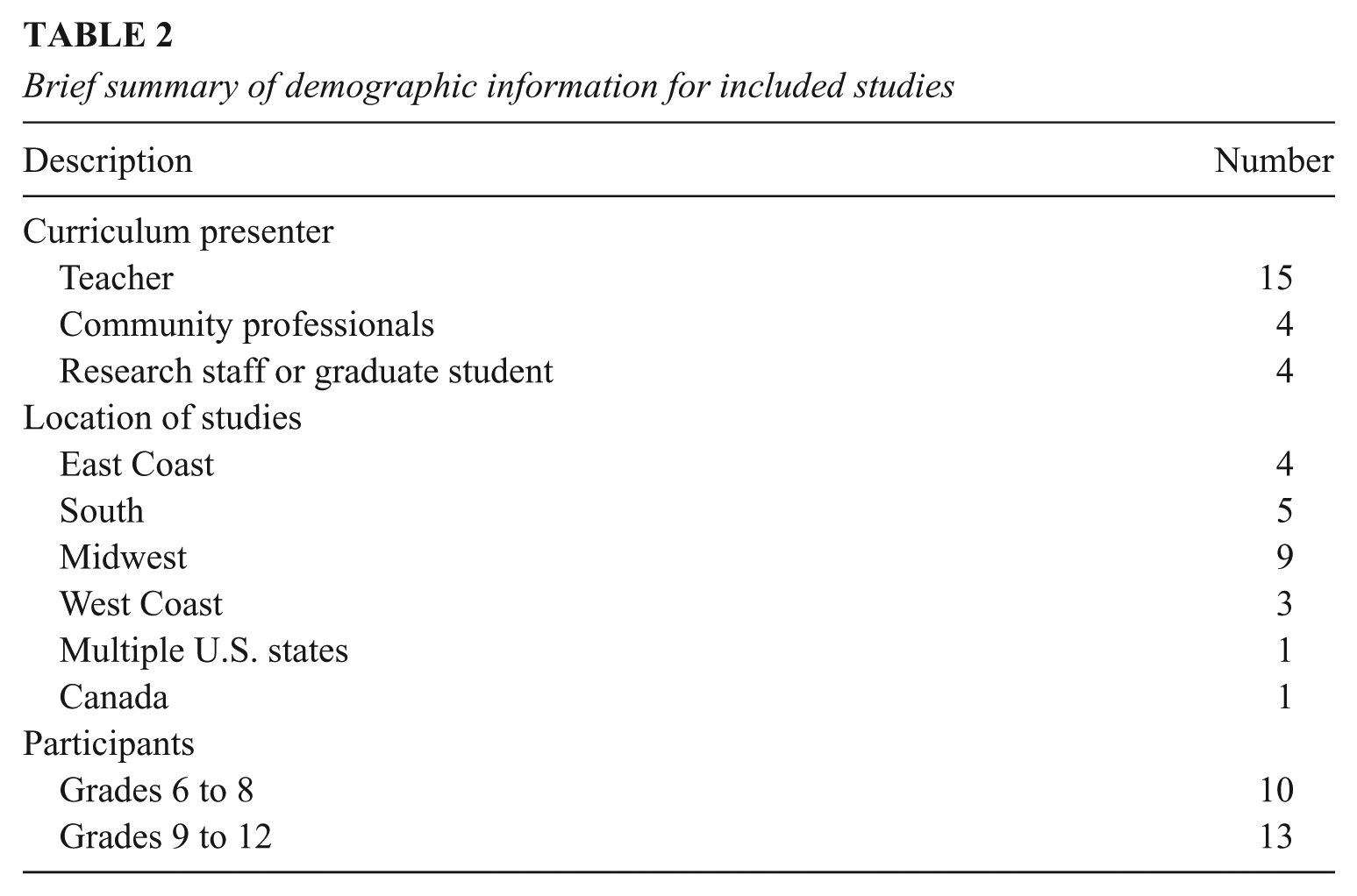
Twenty-three studies met our inclusion criteria (Table 1; also see Supplementary Table S2 [available in the online version of the journal] for additional details). Most of these studies utilized either random assignment (n = 10) or nonrandom assignment that included pretest equivalence measures (n = 11). One study, in addition, implemented a quasi-experimental design with a matching procedure (Adler-Baeder, Kerpelman, Schramm, Higginbotham, & Paulk, 2007), and one additional study used quasi-random assignment by using time of class (Proto-Campise, Belknap, & Wooldredge, 1998). The specific programs implemented varied widely across studies. Very few programs were utilized across multiple studies. Details on each program are available in Supplementary Table S2 (available in the online version of the journal), including program name, the implementer, duration, and specific aspects of each program. A majority of the studies utilized either a wait-list control group (n = 10) or the control group received treatment as usual (n = 12). The exception was one study in which the control group received a minimal intervention (Sanchez-Cesareo, 2002). See Table 2 for additional demographic summary information for the included studies.
Descriptors of studies included in the meta-analysis
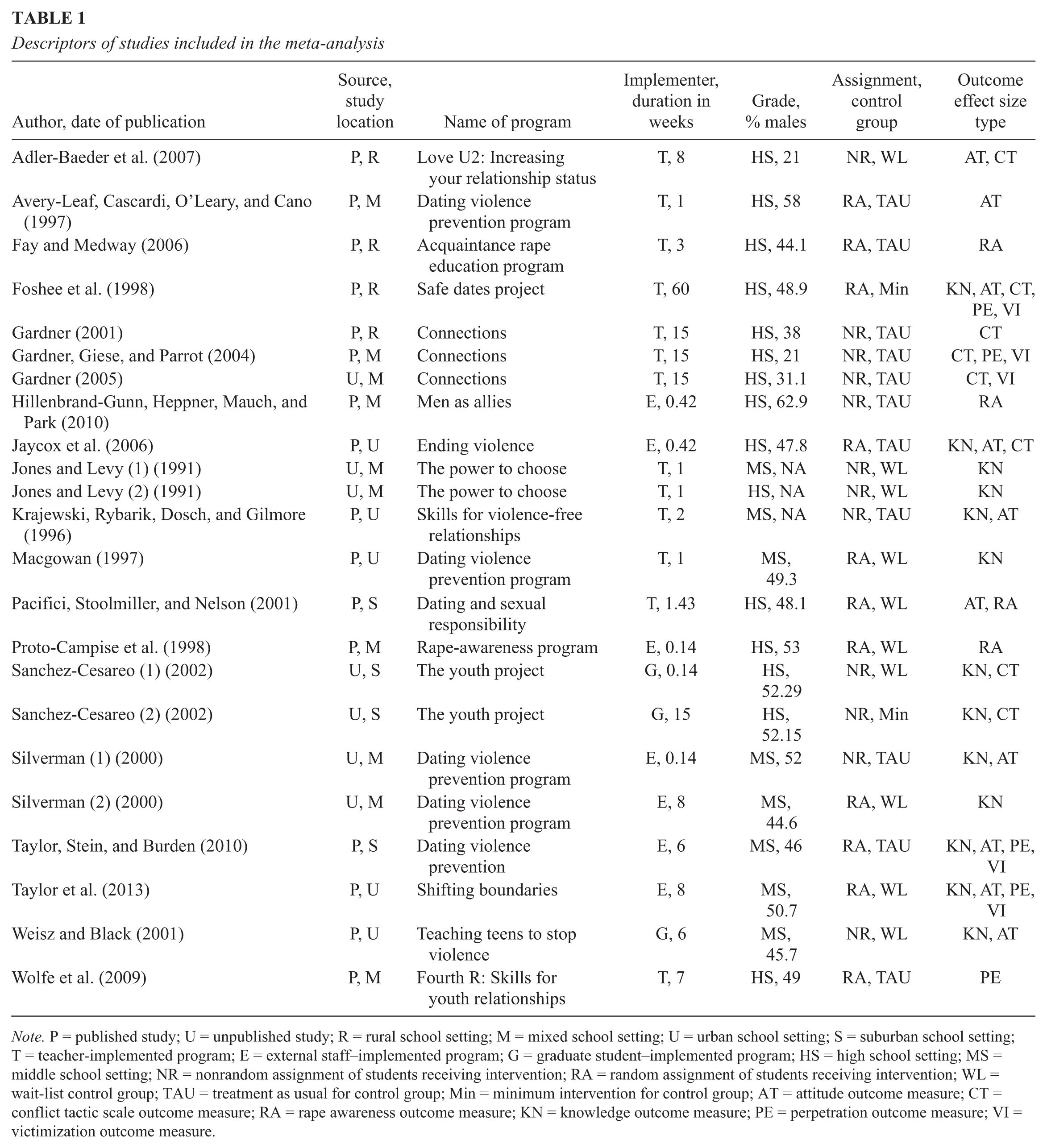
Note. P = published study; U = unpublished study; R = rural school setting; M = mixed school setting; U = urban school setting; S = suburban school setting; T = teacher-implemented program; E = external staff–implemented program; G = graduate student–implemented program; HS = high school setting; MS = middle school setting; NR = nonrandom assignment of students receiving intervention; RA = random assignment of students receiving intervention; WL = wait-list control group; TAU = treatment as usual for control group; Min = minimum intervention for control group; AT = attitude outcome measure; CT = conflict tactic scale outcome measure; RA = rape awareness outcome measure; KN = knowledge outcome measure; PE = perpetration outcome measure; VI = victimization outcome measure.
Brief summary of demographic information for included studies
Risk of Bias
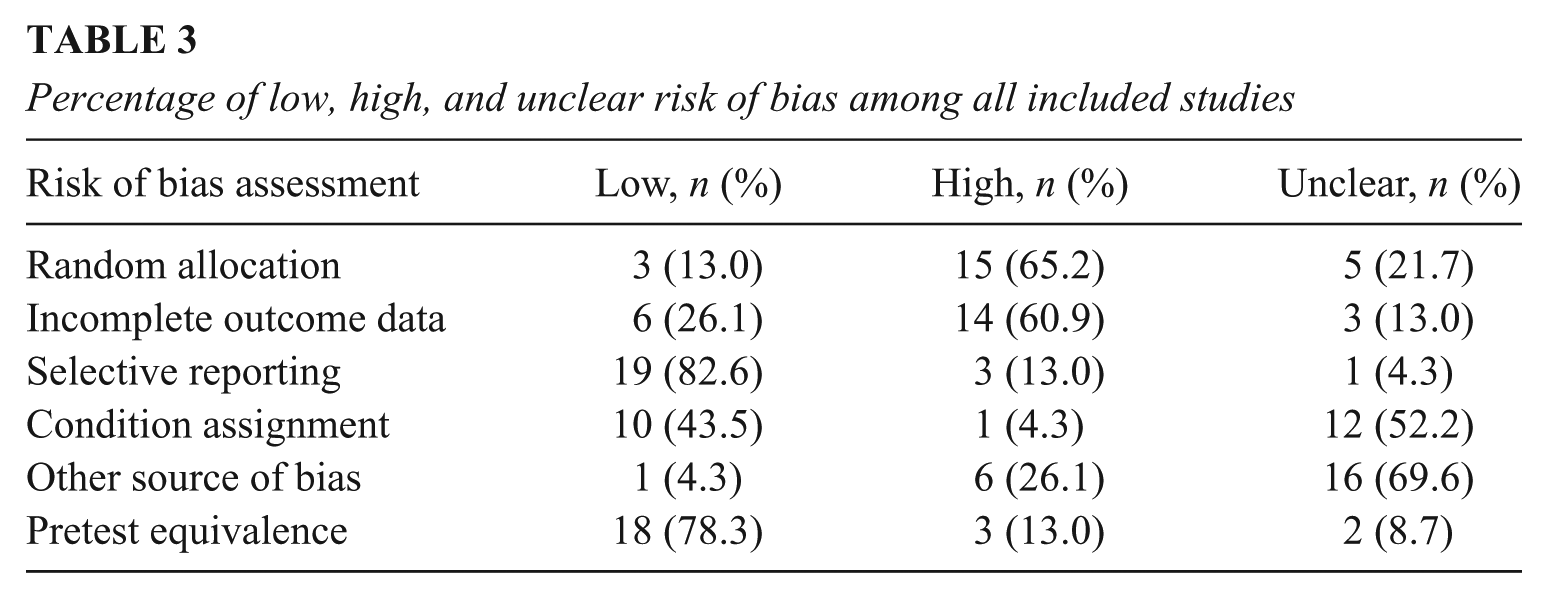
The 23 studies included were of medium-to-high risk of bias (see Table 3). This assessment was expected given the high level of unclear assessments of bias inherent in a number of the categories. In fact, the coding on allocation concealment, blinding of studies, or assessment blinding is not presented, simply because all of the studies failed to report this information. These findings are likely a reflection of the nature of school-based research in which it is impossible to blind participants or researchers to the conditions and of social science research more generally where these risk-of-bias assessments are often not feasible.
Percentage of low, high, and unclear risk of bias among all included studies
Effects of the Intervention: Posttest
The effects for each outcome at posttest are displayed in Table 4. These effect sizes were taken from measures given immediately after (or as close to) the conclusion of the intervention. The three-level random-effects model was used to estimate the synthesized effect sizes. Moderator analyses were conducted across all the effect sizes (i.e., both posttest and follow-up effect sizes), and as such, a discussion of the heterogeneity of each construct is not provided here. For the knowledge, attitude, and CTS, a positive effect size indicates a favorable outcome for the intervention group. For the rape myths, perpetration, and victimization constructs, a negative effect size indicates a favorable outcome for the intervention group.
Intervention versus no intervention using random-effects meta-analysis for posttest measures
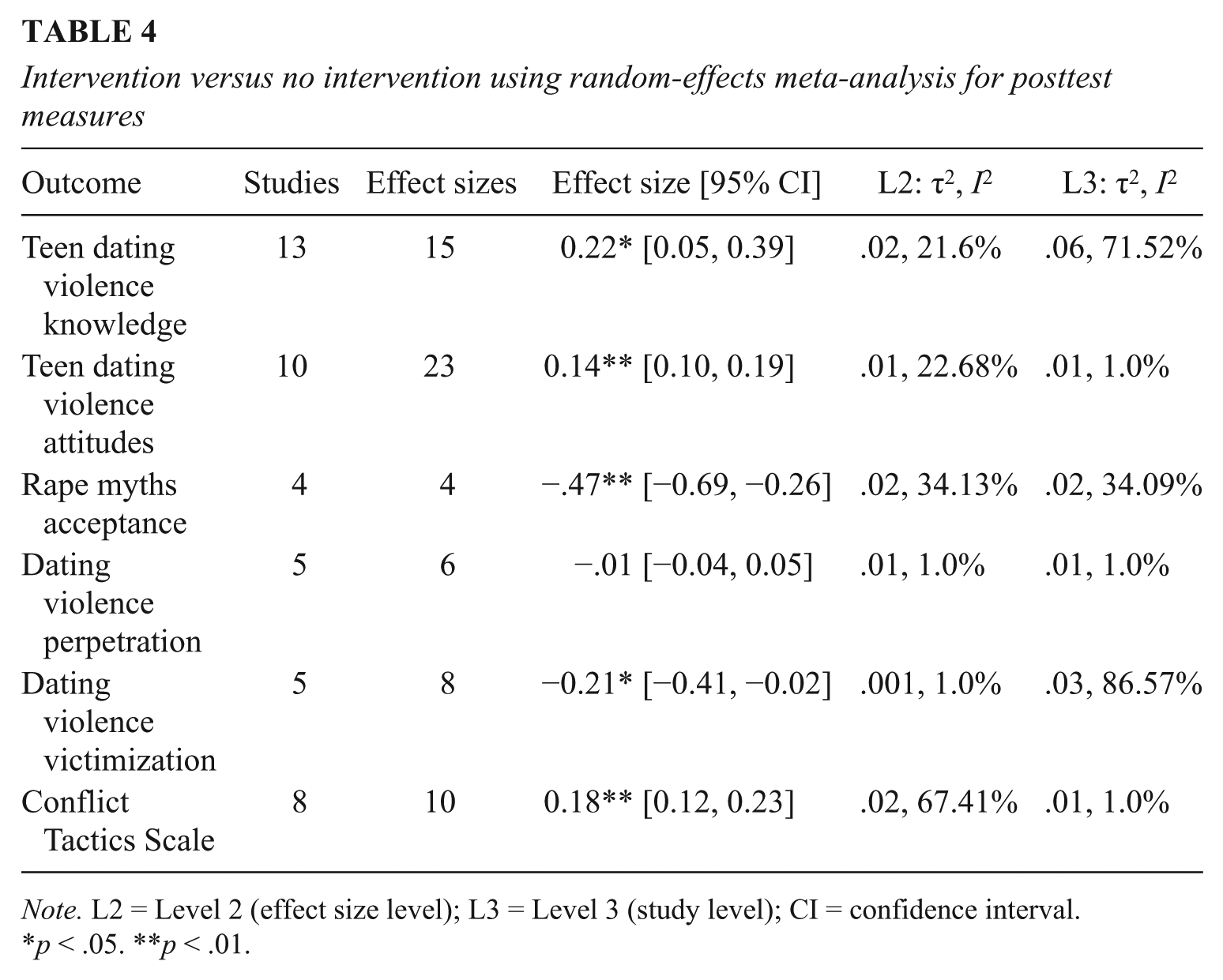
Note. L2 = Level 2 (effect size level); L3 = Level 3 (study level); CI = confidence interval.
p < .05. **p < .01.
Teen Dating Violence Knowledge
Thirteen studies measured teen dating violence knowledge, with a total of 15 effect sizes available to calculate an effect size for knowledge. The effect sizes ranged from a high of 1.23 (Weisz & Black, 2001) to a low of −0.04 (Sanchez-Cesareo, 2002). A three-level random-effects model was fit to the data and revealed an intervention effect (
Teen Dating Violence Attitudes
Ten studies included information sufficient to calculate an effect size on teen dating violence attitudes. Most of the studies provided multiple measures of teen dating violence attitudes, and therefore, 23 effect sizes are calculated. The effect sizes ranged from a high of 0.89 (Weisz & Black, 2001) to a low of −0.38 (Taylor et al., 2010). The three-level random effects model revealed a small but statistically significant result (
Rape Myths Acceptance
Four studies, including four effect sizes measures, provided a measure of rape myths acceptance. Therefore, multilevel modelling was not appropriate and a traditional meta-analytic approach was used to synthesize the effect sizes. The effect sizes ranged from a low of −0.69 (Proto-Campise et al., 1998) to a high of −0.18 (Pacifici et al., 2001). All the effect sizes were negative, indicating intervention groups espoused fewer rape myths relative to control participants (
Dating Violence Perpetration
Five studies, contributing six effect sizes, were synthesized for the dating violence perpetration outcome. The range of effect sizes varied from −0.19 (Wolfe et al., 2009) to 0.05 (Avery-Leaf et al., 1997). Using the three-level design, the random-effects meta-analysis revealed a very small nonstatistically significant, overall intervention effect (
Dating Violence Victimization
Eight effect sizes, calculated from five studies, were used to synthesize the intervention effects on dating violence victimization. The effect size range was slightly larger, relative to dating violence perpetration: The lowest effect size was −0.49 (Gardner et al., 2004), while the highest was 0.08 (Taylor et al., 2010). Again, the three-level random-effects model was used to assess the average intervention effects across studies. The results revealed an average effect size that was not statistically significant (
Conflict Tactics Scale
Eight studies, 10 effect sizes, provided sufficient information to calculate an effect size on the CTS. Sanchez-Cesareo (2002) reported the largest effect size (0.57), and the Jaycox et al. (2006) study yielded the smallest effect size (−0.02). The random-effects, three-level model revealed a statistically significant intervention effect (
Effects of the Intervention: Follow-Up
In addition to posttest effects, which included outcomes immediately following a program, follow-up effects, which included effects at any time period following posttest, were also evaluated. This allowed for an examination of both the immediate and both longer term outcomes. The effects for each outcome at follow-up are displayed in Table 5. The results for the follow-up effect sizes yielded similar conclusions as those in the posttest analyses, with a few notable differences. For teen dating violence knowledge, the results indicated a significant treatment effect (
Intervention versus no intervention using random-effects meta-analysis for follow-up measures
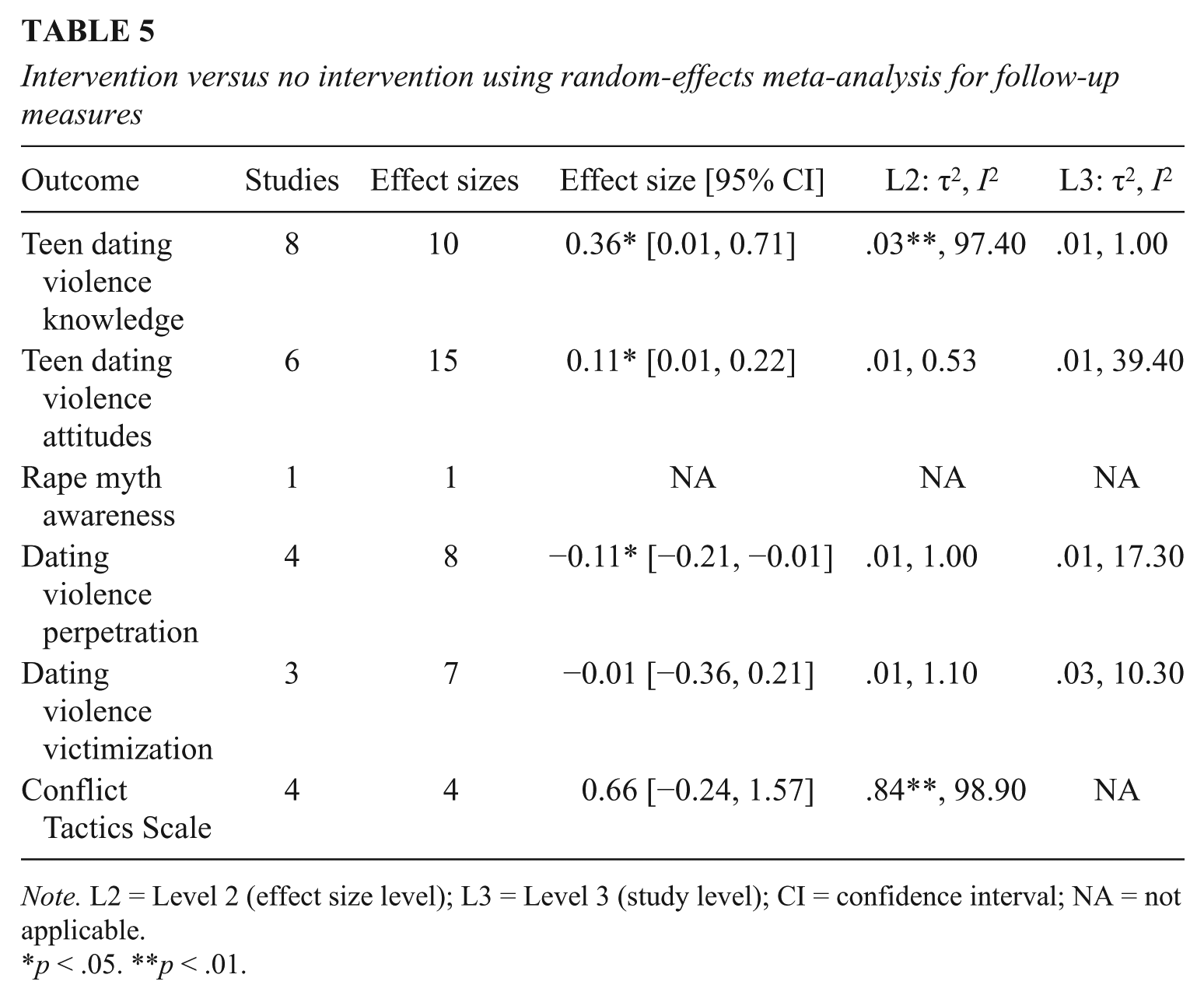
Note. L2 = Level 2 (effect size level); L3 = Level 3 (study level); CI = confidence interval; NA = not applicable.
p < .05. **p < .01.
Moderator Analysis
Two sets of analyses were conducted to examine if there were any significant moderators of the effect sizes. Table 6 presents the results for the first set of analyses. The first analysis assessed the impact of the assignment mechanism on the outcomes. In line with previous analyses, the posttest and follow-up effect sizes were separated. The results revealed small but important differences. For posttest effect sizes, studies that utilized random assignment produced larger effect sizes compared with nonrandom assignment for only one of the five outcomes (Note: The dating violence perpetration outcome studies used only random assignment). The differences between effect sizes were largest for dating violence victimization and CTS outcomes. With regard to follow-up studies, a large difference was also found for the CTS’s outcome. It should be noted that none of the follow-up average effect sizes were significant at the p < .05 level. The second of the two moderator analyses used meta-regression. The results of this analysis did not yield any statistically or conceptually significant results; therefore, the results are not presented here. Instead please refer to the Campbell Collaboration systematic review report (De La Rue, Polanin, Espelage, & Pigott, 2014).
Moderator analysis using method of assignment across all outcomes
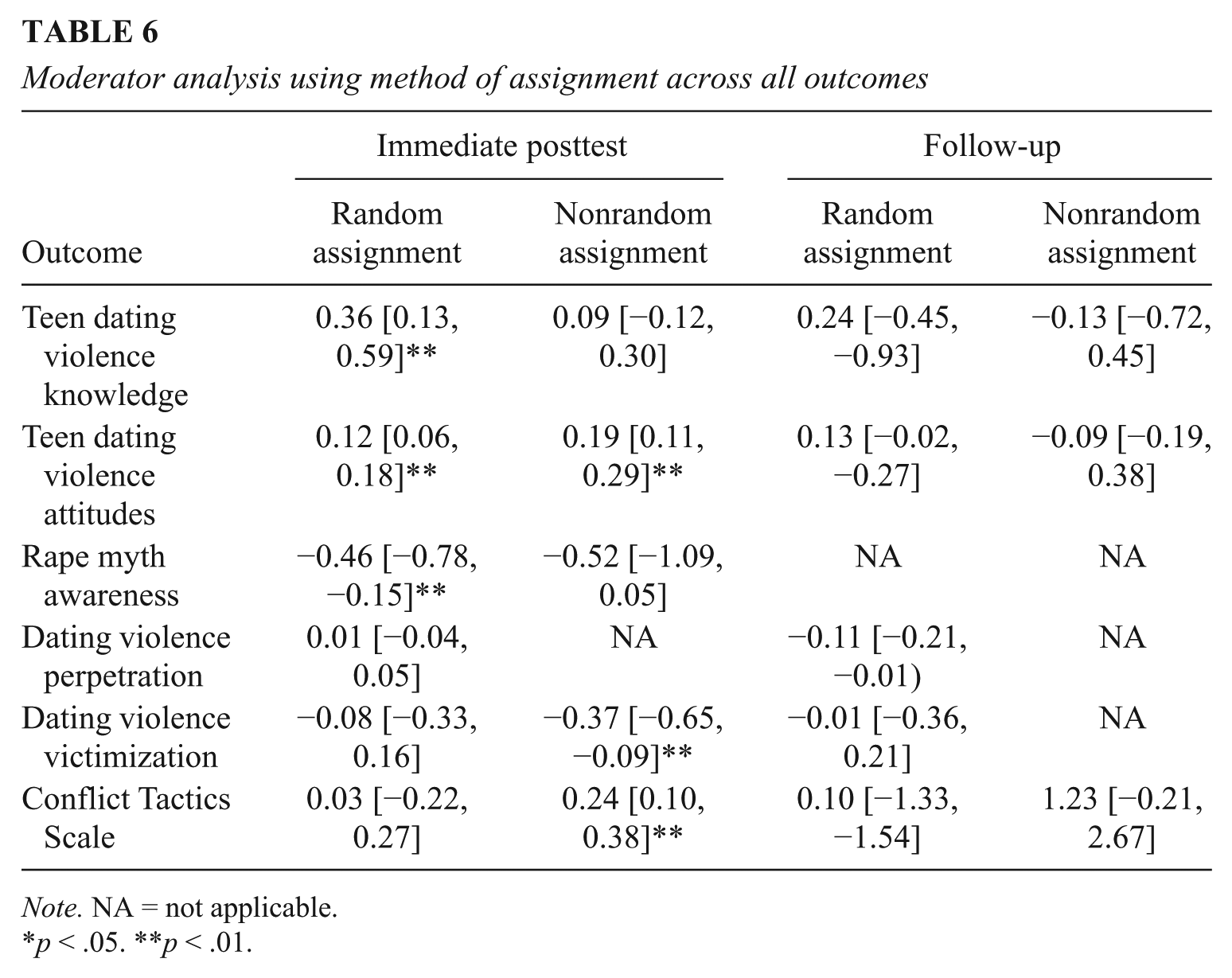
Note. NA = not applicable.
p < .05. **p < .01.
Discussion
Effective prevention programs are essential to prevent the immediate concerns of dating violence in young relationships but are also important in terms of helping prevent the possible long-term trajectory of escalating violence in intimate relationships (Cornelius & Resseguie, 2007). Although there are numerous intervention programs available to address teen dating violence, there is a lack of knowledge surrounding the effectiveness of these interventions. This review represents an effort to evaluate and synthesize the efficacy of school-based interventions that are designed to reduce or prevent teen dating violence, the results of which highlight several significant findings relevant to educators, researchers, and to policy.
The results of this meta-analysis indicated that school-based prevention programs have a significant and important impact on dating violence knowledge and attitudes. Across 13 studies, varying in intervention length, location, implementation, and participants, the interventions increased the participants’ knowledge above and beyond that of control students at posttest, and this increase in knowledge was sustained at follow-up. Additionally, significant effects were also found for teen dating violence attitudes; students exposed to a school-based dating intervention endorsed attitudes less supportive of dating violence at posttest compared with control students. However, this effect was attenuated at follow-up. These results are consistent with previous reviews that have found dating violence prevention programs can be effective in increasing participant knowledge and shifting attitudes to be less supportive of violence in dating relationships (Fellmeth et al., 2013; Ting, 2009).
Raising awareness of dating violence and helping students recognize violent and abusive behaviors is an important step in helping students establish healthy and safe dating relationships and can also increase young people’s awareness of resources available to them if they are in a violent dating relationship. Additionally, shifting attitudes to be less tolerant of dating violence is an important precursor to fostering a positive school climate and peer culture. Although knowledge and attitude change are important precursors to addressing teen dating violence, it is likely this is not sufficient to lead to changes in actual behaviors (World Health Organization, 2010).
Results of the perpetration and victimization analyses in the present review support this concern. Intervention students showed no change in their levels of dating violence perpetration, and this null finding remained at follow-up. When considering dating violence victimization, there was a small effect at posttest where intervention students showed lower levels of victimization; however, at follow-up, this effect size decreased to null. Fellmeth et al. (2013) note similar results when considering programs implemented in schools and community centers, finding no evidence that programs were able to reduce actual incidents of violence in dating relationships. Although prevention programs show promise in increasing knowledge and awareness, they likely require development to make an impact on behaviors, specifically the inclusion of skill-building components. Many programs had the stated goal of increasing knowledge and shifting attitudes around dating violence; however, without a skill-building component that integrates specific training to modify behavior and develop competencies, it is unlikely that behavior change will be accomplished (Cornelius & Resseguie, 2007). Of the studies included in this review, only two clearly described a skill-building component as part of the program curriculum (Foshee et al., 1998; Wolfe et al., 2009), and an additional two studies mentioned activities that may reflect skill components, but this was not stated explicitly. We suggest that future interventions explicitly incorporate a skill-building component to promote behavior change. Skill building may include explaining how to discuss disagreements in an appropriate manner and then allowing young people the opportunity to practice these skills. It may also include providing them with the skills to leave an abusive relationship or awareness of the steps to take to seek support or assistance.
Limitations
Although this review included a comprehensive literature search and in-depth analyses, there are some limitations to be noted. First, requiring a study to have a control group limited the number of studies that were available for this review. While this increased confidence that outcomes could be attributed to the program, it also significantly reduced the number of studies available (for a list of excluded studies, see De La Rue et al., 2014). Indeed, this is a major limitation of dating violence research more generally in that many programs are being implemented, but are not being evaluated, and it is simply being assumed that changes are occurring (Cornelius & Resseguie, 2007). In order to advance the field, it is paramount that researchers continue to attempt randomized-control trials or, at the very least, high-quality matched-group studies so that an understanding of the effectiveness of such programs can be reached.
The lack of evaluations also contributes to the second major limitation of this review, specifically the small number of studies included. We are confident most, if not all, studies were included in the review; however, the total included limits the applicability and generalizability of the review’s conclusions. Additionally, given the small number of studies, we were unable to differentiate between separate types of interventions or specific components of interventions. For example, we are unable to identify whether intervention efforts would be more effective if implemented in middle school (Grades 6–8), or are they more effective in high school (Grades 9–12) when young people are dating more actively. Indeed, this is an important area of further exploration.
Finally, although we were able to identify a number of contextual variables (e.g., urban vs. rural setting, school size) of each study, likely other factors might contribute to the variability in the efficacy of programs that should be considered in future evaluations. For example, dating violence programs may yield greater success when exposure to community violence is low and when models of healthy relationships for youth are demonstrated. In other words, these programs have to be evaluated with the larger social context in which youth reside, including the family and neighborhood context. Furthermore, as dating violence is often driven by peer norms and attitudes around dating aggression, future studies need to consider how these programs are shifting norms over time.
Implications for Practice and Research
This review highlights some of the benefits of implementing dating violence prevention programs in schools and demonstrates that students will likely increase their knowledge, including an improved ability to recognize abusive behaviors within intimate relationships. In addition, to a lesser degree, students included in prevention programs will likely report attitudes less supportive of violence in intimate relationships. Developments are needed, however, in order to lead to changes in actual behaviors. It may be necessary for schools to develop or extend prevention programs by including skill-building components. Indeed, theories of behavior change indicate that changing attitudes will likely not be enough to lead to changes in actual behaviors, and if the goal of prevention programs is to alter behaviors, then significant modifications may be needed.
It will also be important for schools to continue to monitor behaviors and to make focused efforts to address dating violence in their schools and among their students. This will require school policies that provide clear direction on how to implement dating violence prevention efforts, while also requiring school districts to not be tolerant of teen dating violence behaviors. These policies need to address the school culture and make efforts to promote an atmosphere that is not tolerant of violence.
Apart from modifying the actual programs, researchers must continue to conduct and evaluate prevention programs and, moreover, measure teen dating violence perpetration and victimization. A limited number of studies actually measured these behaviors, despite the fact that programs are often implemented to decrease perpetration and victimization. We hope to motivate researchers to look beyond simple knowledge and attitude measures and examine how programs may change behaviors, especially given that this is the ultimate goal of many prevention efforts. This will require that researchers work closely with schools and institutional review boards to satisfactorily address issues around confidentiality and mandated reporting. In addition, it will likely prove beneficial to develop more nuanced measures of these constructs given the lower prevalence of many of these behaviors within adolescent relationships. For example, Hamby and Turner (2013) suggested collecting data on a broad spectrum of victimization and perpetration experiences, allowing flexibility and detail in responses. This may manifest in the form of screening questions, with follow-up measures as appropriate, a process that will become more readily available as surveys move to online and technology-based platforms.
Developmental timing is also key and should be considered not only in the development of prevention programs but also in the evaluation. Prevention researchers should employ longitudinal studies that include youth from early to late adolescence to examine predictors of the onset of, and changes in, teen dating violence behaviors over time. For example, longitudinal studies have demonstrated that bullying and sexual harassment in middle school predicts teen dating violence among high school students (Espelage, De La Rue, Anderson, & Low, 2015), underlining a trajectory of behaviors that increase in severity over time. It may be that early increases in knowledge and changing attitudes will allow students to make healthier choices when they face increasing levels of intimacy in their dating relationships, which may then lead to changes in behaviors. But only longitudinal studies will be able to illuminate this question. Although longitudinal studies are expensive and require ongoing funding, they are necessary in revealing how the trajectory of teen dating violence unfolds across development and elucidating what kind of intervention and at what age can be most effective.
Future researchers should also consider the context of dating violence, specifically the role of bystanders and peer support for victims of teen dating violence. For example, an aim of this review was to understand the role of bystanders, yet only one study reported this outcome, and as such, the role of bystanders remains unclear. Program implementers should consider the social contextual factors present in adolescence, and specifically the powerful influence that peers have on social development (Cornelius & Resseguie, 2007). Given the importance of peers in adolescence, this is an important area in need of further exploration.
Implications for Educational Policy
Teen dating violence is important to address among young people given the significant adverse effects noted, and the potential for these behaviors to continue into adult dating relationships (Noonan & Charles, 2009). Educational policy represents an important avenue to making schools safer. Current policies around teen dating violence, however, are limited in that they do not provide clear guidance on how to address teen dating violence: many simply specifying that it must be done. Current efforts to reform schools and improve the school climate should include issues of teen dating violence, and must include educational efforts directed not just at students but also toward staff, teachers, and administrators. Efforts must also include appropriate responses to perpetrators and being able to provide support to victims, or appropriately directing students to resources. Indeed, fostering a positive school climate has been found to be associated with reducing all types of aggression (see Espelage, Low, & Jimerson, 2014, for a review), highlighting the importance of school administrators actively addressing all forms of aggression and violence in conjunction with efforts that explicitly aim to support victims. A focus on addressing school climate must include prevention strategies where attitudes supportive of dating aggression are addressed specifically among youth and adults in schools. But prevention is not enough; schools must encourage victims and their peers to report incidents of dating aggression so that adults can prevent the escalation of such behaviors. While addressing school climate within educational policy is important, this is unfortunately not central to current accountability policies, which are often academically focused.
Conclusion
The findings of the meta-analysis tentatively support the use of dating violence prevention programs in schools. Specifically, within this review, it was found that students who were part of a teen dating violence intervention showed moderate increases in knowledge, lower adherence to rape myths, and moderately improved abilities to appropriately resolve conflicts in interpersonal relationships at posttest. Intervention students also demonstrated small changes in attitudes or beliefs supportive of teen dating violence and small reductions in the incidence of dating violence victimization, including reductions in mental and/or physical abuse and/or sexual violence or coercion experienced in a dating relationships. The reductions in perpetration of dating violence victimization were minimal and not sustained at follow-up. Only one study reported bystander effects; so this review was unable to determine if dating violence prevention programs are effective in encouraging bystander intervention to stop the perpetration of dating violence and/or increase peer support for victims of dating violence.
Given the adverse consequences of teen dating violence, including decreased mental and physical health and lower life satisfaction (Banyard & Cross, 2008), depression and suicidal behaviors (Vézina & Hébert, 2007), and long-term consequences of binge eating, substance abuse, and antisocial behavior (Foshee et al., 2012), it is imperative to engage in efforts to prevent and reduce incidences of dating violence. This review tentatively supports the use of dating violence prevention programs in schools as a means to address this need. The implementation of teen dating violence prevention programs in schools has been systematically shown to provide benefits to students (including increased knowledge and improved attitudes), but will require some modifications to support behavior change. This review also highlights the need to continue with educational policy advocacy efforts, so that school districts are provided with clear guidance and appropriate resources to implement teen dating violence prevention efforts.
Footnotes
Notes
Authors
LISA DE LA RUE received her doctorate in counseling psychology from the University of Illinois at Urbana-Champaign. She is now an assistant professor in the Counseling Psychology Department at the University of San Francisco, San Francisco, CA 94117, USA; email:
JOSHUA R. POLANIN, PhD, is a senior research scientist at Development Services Group, 7315 Wisconsin Ave., Suite 800 East, Bethesda, MD, 20814, USA; email
DOROTHY L. ESPELAGE, PhD, is an Edward William Gutgsell & Jane Marr Gutgsell Endowed Professor in the Department of Educational Psychology, Child Development Division, University of Illinois at Urbana-Champaign, 1310 S. 6th St., Champaign, IL 61820, USA; email:
TERRI D. PIGOTT, PhD, is dean and professor of the School of Education at Loyola University Chicago, 820 N. Michigan Ave., Chicago, IL, USA; email:
References
Supplementary Material
Please find the following supplemental material available below.
For Open Access articles published under a Creative Commons License, all supplemental material carries the same license as the article it is associated with.
For non-Open Access articles published, all supplemental material carries a non-exclusive license, and permission requests for re-use of supplemental material or any part of supplemental material shall be sent directly to the copyright owner as specified in the copyright notice associated with the article.
