



Abstract
BACKGROUND:
The co-contraction of the core muscles has been reported as the key mechanism towards spinal stability. Classic Pilates exercises aimed at these muscles are known to improve the stability and strength of the trunk without damaging the deep structures of the spine.
OBJECTIVE:
To evaluate the co-contraction of the mobilizing (rectus abdominis; longissimus) and stabilizing (multifidus; internal oblique) trunk muscles during Pilates exercises – going up front, mountain climber, and swan.
METHODS:
Sixteen women, all Pilates practitioners, participated in the study. The stabilizing and mobilizing muscles of the trunk (right side) were submitted to electromyography to calculate the percentage of co-contraction during the exercises. One-way repeated measures analysis of variance (ANOVA) was used to verify the difference in %COCON between stabilizers and mobilizers among the three exercises. The post-hoc Bonferroni test (
RESULTS:
The co-contraction values of the stabilizers were higher than those of the mobilizers for all exercises. The going up front (stabilizers) and the swan (mobilizers) exercises showed the highest %COCON values.
CONCLUSIONS:
The Pilates method is effective for either rehabilitating pathologies or training the trunk muscles in healthy individuals and athletes.
Keywords
Introduction
The core muscles are known to stabilize the spine and, if stimulated adequately, allow better quality of the daily body movements, including those made by athletes in their respective sports [1, 2]. To ensure spinal stability, these muscles need to be trained properly [3]. One of the alternatives for core muscle training is the Pilates exercise, whether done on the mat or on apparatuses [4, 5].
The Pilates method provides practitioners with several benefits, such as postural alignment, fitness, flexibility, strength, balance and body awareness [6]. It consists of six fundamental principles: concentration; control; fluidity; precision; breathing; and centralization [7]. Centralization is based on an isometric contraction of the abdomen’s internal oblique and transverse muscles, resulting in an increased antagonistic co-contraction of the low back muscles [8].
Pilates exercises challenge the stability of the trunk and intensify the activity of its stabilizing (multifidus; internal oblique) and mobilizing (rectus abdominis; longissimus) muscles. Such muscles are also referred to as stabilizers and mobilizers [9, 10].
The stabilizers are mono-articular, deeper, and directly inserted in the vertebrae. Despite their limitation towards torque, they control the segmental movement of the spine, keeping it in a neutral position and producing eccentric contractions that aid in stabilizing and controlling the spinal movements. As for the mobilizers, with their great resistance to external forces, they have optimal torque ability and can also control the spinal movements [9, 11].
The co-contraction of the trunk core muscles increases the stability of the vertebral column and protects its structures during functional activities and physical exercises [14]. Classic Pilates exercises aimed at these muscles are known to improve the conditioning and strength of the trunk muscles without damaging the deep structures of the spine [14].
Using mathematical software to calculate the forces exerted by all muscles that surround a joint is ideal for quantifying muscle co-contraction. However, this approach is time-consuming and its outcomes often show limitations and assumptions, leading researchers and clinicians to rely on electromyography (EMG) to measure muscle co-contraction [15]. EMG has been used to analyze the function of the neuromuscular trunk system [16, 17, 18, 19] and to verify the co-contraction of the antagonist muscles [20] during Pilates exercises.
The Wunda Chair, an apparatus engineered by Joseph Pilates, is commonly used in classical Pilates. It consists of two removable springs, a pedal, and a seat. Exercises can be carried out with the feet or hands resting on its pedal or seat, in three decubitus positions – dorsal, lateral, or ventral [7].
No studies have been found that evaluate the co-contraction of the mobilizing and stabilizing muscles of the trunk during Pilates exercises using the Wunda Chair. Therefore, the aim of this study was to evaluate and compare the co-contraction of the mobilizing and stabilizing trunk muscles during Pilates exercises – going up front, mountain climber, and swan – conducted in the Wunda Chair.
The first hypothesis of our study was that, during these exercises, the co-contraction of the stabilizers (multifidus; internal oblique) might be greater than that of the mobilizers. The second hypothesis was that the co-contraction values would vary among the three exercises since they involve different trunk positions.
Methods
Participants
Fifteen young female Pilates practitioners (Table 1) participated in this study. Exclusion criteria were orthopedic disorders, neurological problems, cardiovascular disease, and surgery of the spine or abdomen [18]. The inclusion criteria were: 18–35-year-old women who were right-limb dominant and had been practicing the method for at least six months.
Mean values of body anthropometrics, age, and time of practice
Mean values of body anthropometrics, age, and time of practice
This study was approved by the Ethics Committee of Piracicaba Dental School, University of Campinas (UNICAMP), Brazil (protocol: 5418/2017). All experimental procedures were conducted at a laboratory of biomechanics (LABIOMEC), Department of Physical Education, São Paulo State University (UNESP), Rio Claro, São Paulo, Brazil.
Individuals’ age, time of practice (years), weight, height, and body mass index were recorded at one session right before Pilates exercise. Their right side stabilizing – internal oblique (IO) and multifidus (MU) – and mobilizing – rectus abdominis (RA) and longissimus (LO) – trunk muscles were then submitted to EMG during the exercises. All exercises were supervised by a Pilates instructor with a degree in physical education.
Pilates exercises and equipment
Each individual did three Pilates exercises – going up front, mountain climb, and swan – on the Wunda Chair, containing one (Fig. 1) and two springs (Fig. 2), with a 10-minute interval [16]. Each exercise involved eight repetitions under a 50-bpm metronome rhythm, considering Pilates method’s principles for practitioners and following the Pilates Method Alliance, PMI [7, 21].
Wunda Chair with one spring.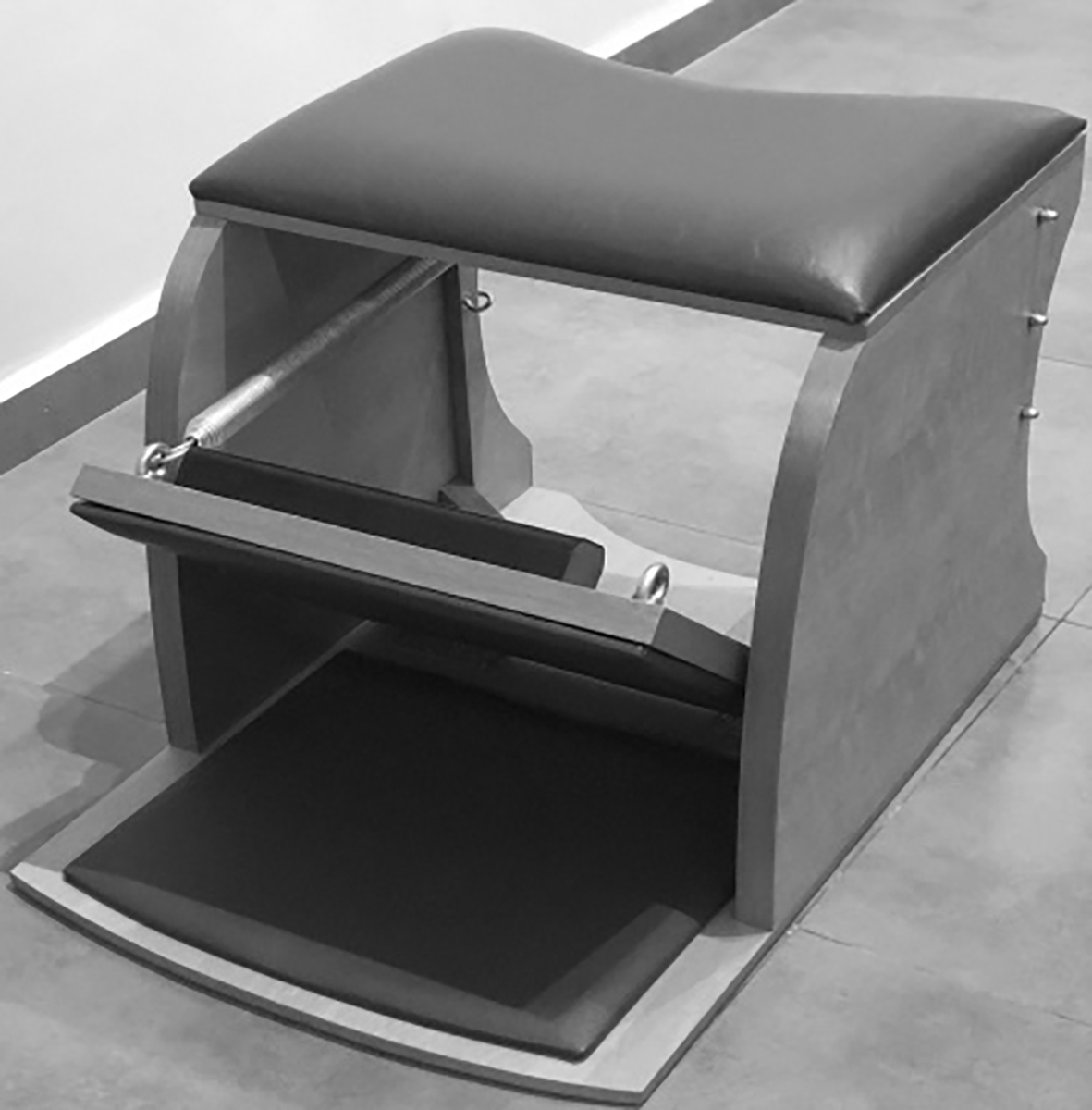
Wunda Chair with two springs.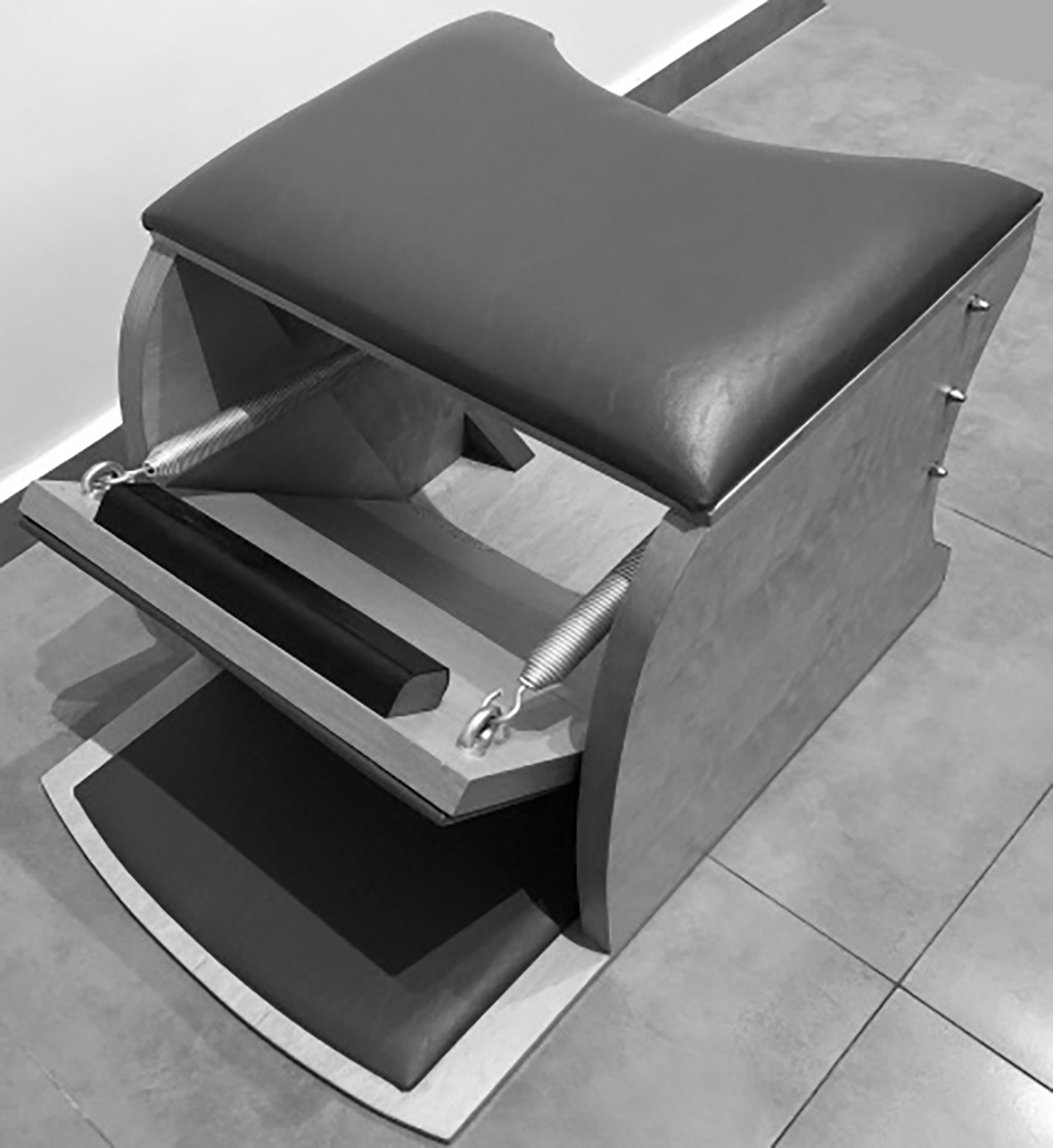
Going up front exercise.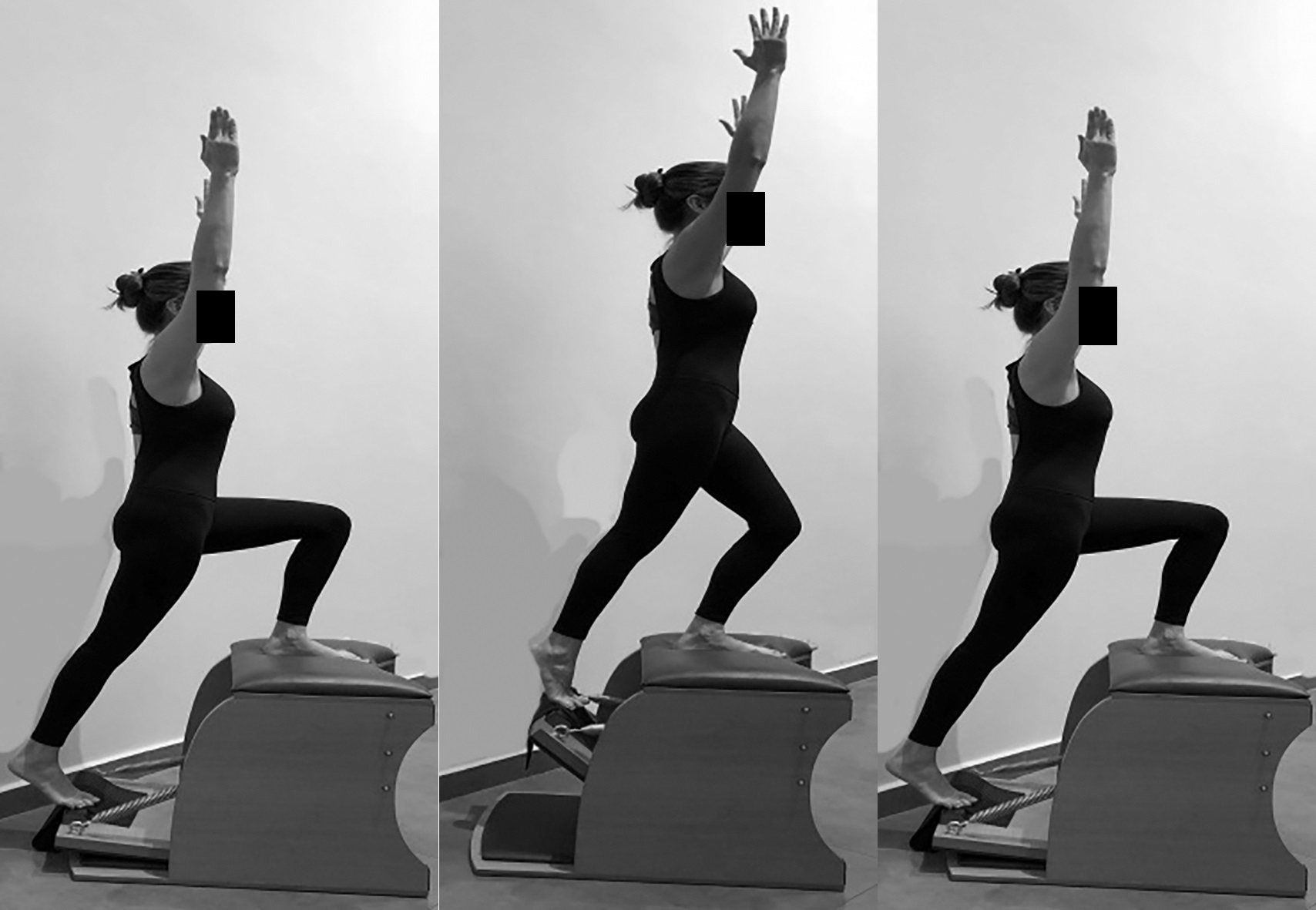
Swan exercise.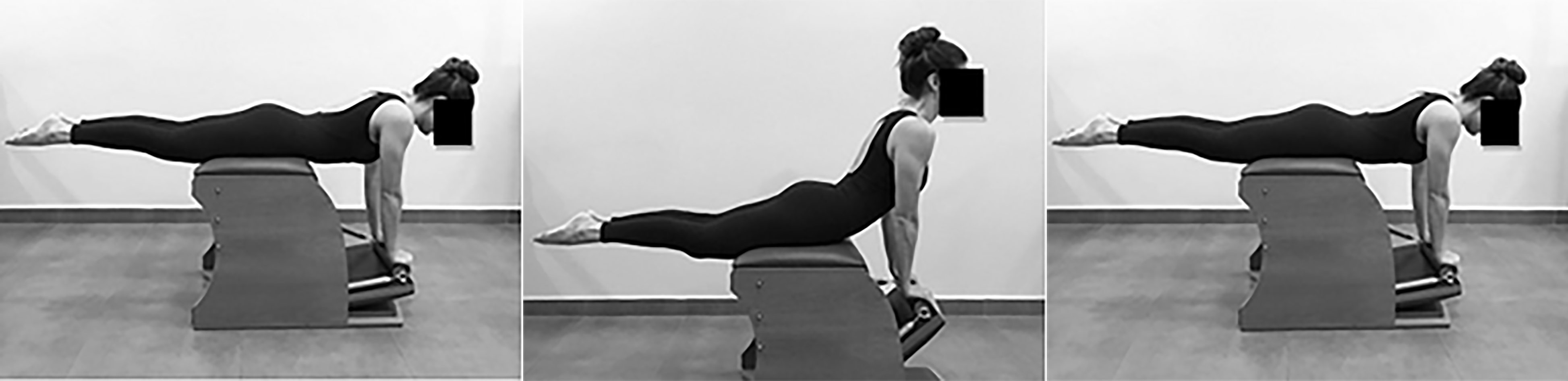
Mountain climb exercise.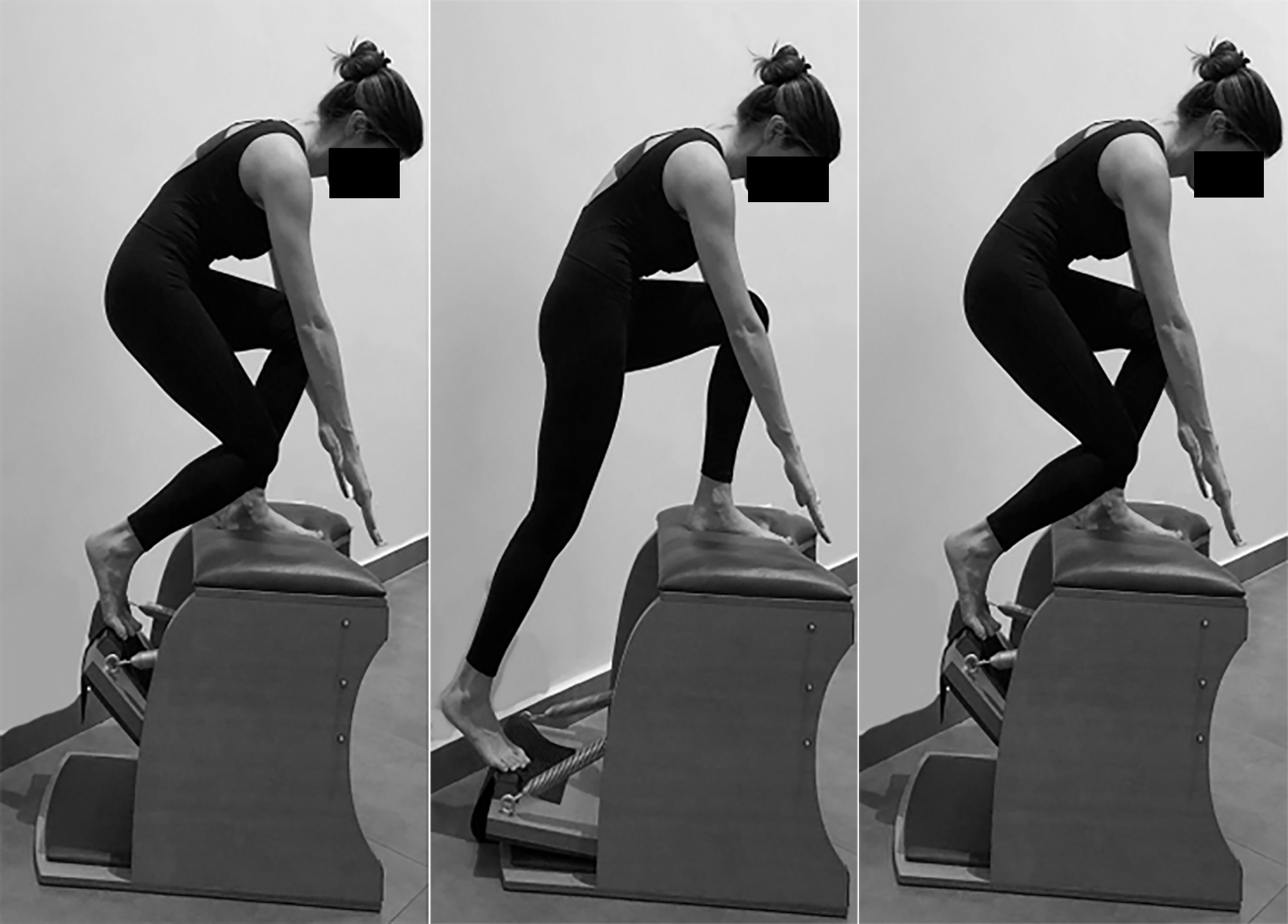
The going up front exercise (Fig. 3) started with the individuals in a sagittal position in relation to the equipment, resting the right foot on the pedal and the left on the seat, or top, of the Wunda Chair (two springs). As the exercise started, the individuals raised their arms and held them up to completion of the session. Repetitions involved the individuals standing up on their left foot on top of the chair until their left knee straightened all the way. Keeping their right foot on the pedal, they then lowered themselves back down to the starting position.
The swan (Fig. 4) started with the individuals in the ventral decubitus position with their iliac crests resting on top of the chair (one spring). With their spine extended and legs stretching out together parallel to the floor, they placed their hands on the pedal (held down to the base of the chair by an instructor), aligning them under their shoulders and straightening their arms. They inspired as they extended their back allowing the pedal to rise and expired as they lowered to the initial position
For the mountain climb (Fig. 5), individuals were instructed to keep their left foot on top of the chair (two springs), spine in flexion (C-curve), left thigh parallel to the floor, and arms stretching out at the level of their left knee. The leg on the pedal was free to pump up and down.
A direct transmission system (TELEmyo DTS, 16 channels, 1500 Hz) with the software myoMUSCLE (Noraxon
For data collection, participants did an active warm-up of their trunk muscles from a standing position for approximately 2 minutes – 40 sec for alternate trunk rotation, 40 sec for alternate trunk flexion, and 20 sec for static stretch on each side. After the warm-up, the electrode placement site was shaved and cleansed with 70% alcohol to reduce impedance [22].
The electrodes were placed on the muscles (dominant side) assessed: IO – 2 cm medially and inferiorly to the anterosuperior iliac spine; RA – 3 cm away from the line (midpoint) ranging from the navel to the xiphoid process; LO – 2 cm away from the spinous process of the lumbar (L1) vertebra; and MU – 3 cm away from the line (midpoint) ranging from the spinous process of L1 to that of L5 vertebra [8, 23, 24, 25].
EMG signals were filtered (4
Equation described by Winter, 2005. Area A comprehends muscles RA or IO while area B involves muscles LO or MU. A&B represents a common area of activity of the muscles involved.
%COCON for (a) mobilizers and (b) stabilizers for all exercises.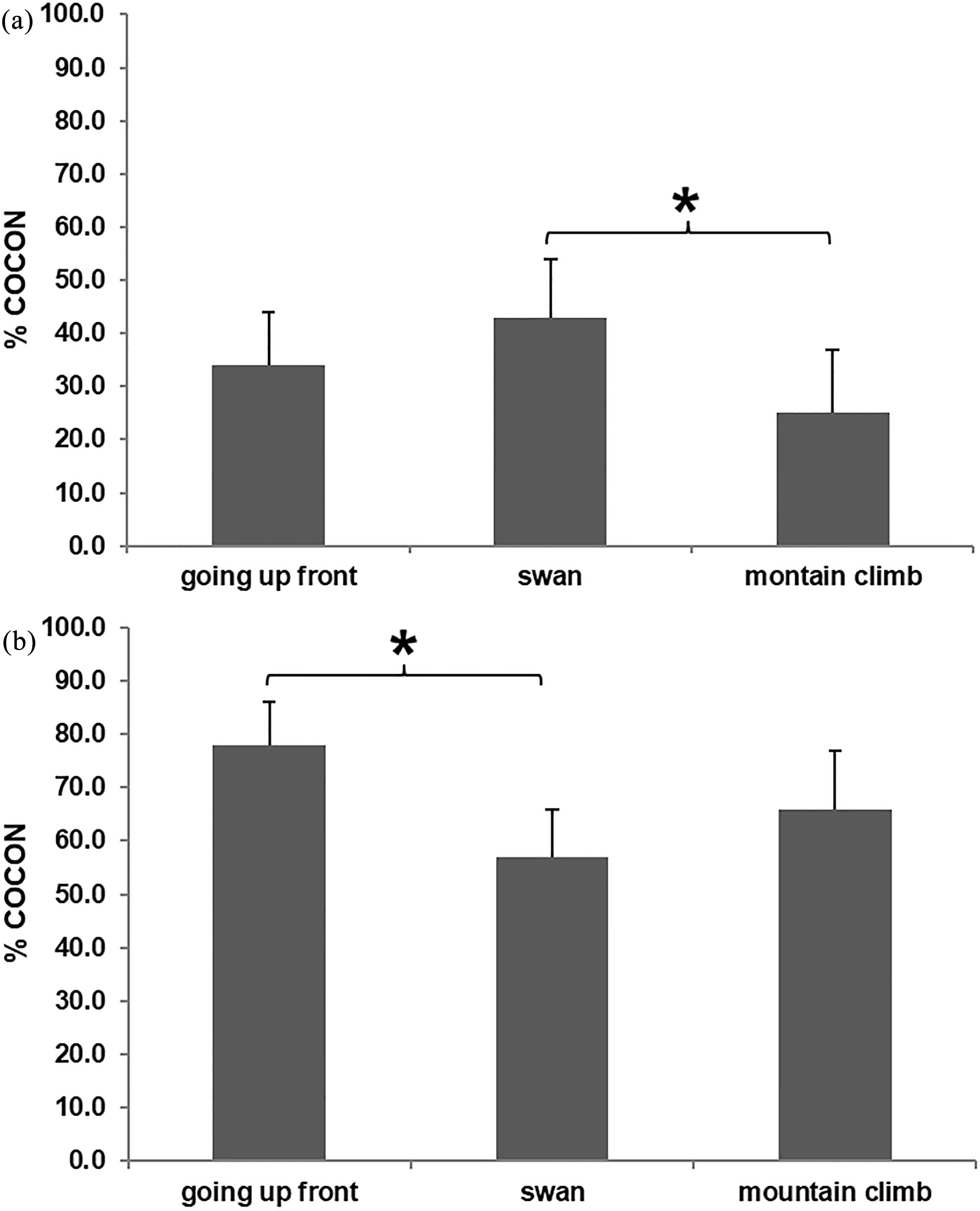
%COCON for stabilizers and mobilizers for each exercise: going up front (a), swan (b), and mountain climb (c).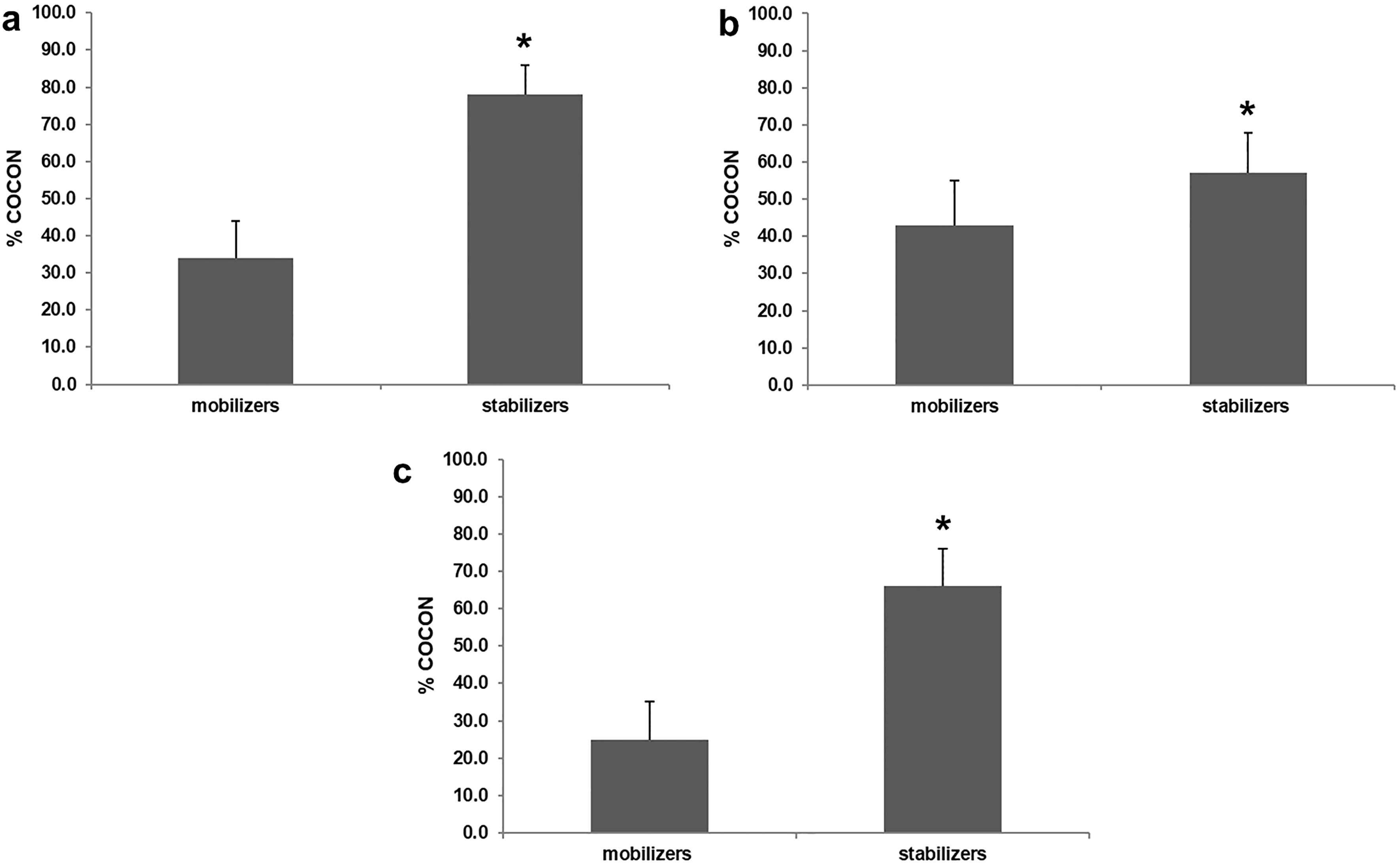
Data were submitted to BioEstat 5.3 software (version 2007, Belem, PA, Brazil) for all statistical tests. Data normality was assessed by D’Agostino test. One-way repeated measures analysis of variance (ANOVA) was used to verify difference in %COCON between stabilizers and mobilizers among the three exercises assessed. The post-hoc Bonferroni test was applied when necessary. The paired
Results
Figure 7a and b shows %COCON to mobilizers and stabilizers. As for the mobilizers (RA and LO), the highest %COCON value was detected for the swan exercise (43%), followed by going up front (34%) and mountain climb (25%). Significant difference was observed between the swan and mountain climb exercises (
As illustrated in Fig. 7b, the going up front exercise (78%), when compared to the mountain climb (66%) and swan (57%), showed the highest %COCON value for the stabilizers (IO and MU). Statistically significant difference was observed between the going up front and swan exercises (
Figure 8a–c shows a difference in %COCON between stabilizers and mobilizers for the three exercises assessed. Statistical analysis (Student
Discussion
Based on Pilates’ principle of centralization, an isometric contraction of the internal oblique and transverse muscles leads to an increased co-contraction of the abdominal and low back muscles. Hypotheses are that, during the exercise, (a) the %COCON values of the local muscles would be higher compared to that of the global muscles and that (b) the %COCON values would differ among the three exercises.
The first hypothesis was confirmed; %COCON of the stabilizers was greater than that of the mobilizers. The second hypothesis was partially confirmed, because no statistical difference in %COCON concerning the stabilizers was found between mountain climb and the other exercises; in relation to the mobilizers, no difference was observed between going up front and the other exercises.
The swan exercise, concerning the mobilizers, showed the highest %COCON value; this might be due to a co-activation of the abdominal (RA) and extensor (LO) muscles during the extension of the spine (pedal elevation). Proper abdominal muscle activation provides better support to the spine and, together with the extensor muscles, helps to create a long and uniformly distributed arch over the vertebrae and to control the torque generated by hip extension [11, 29, 30].
In relation to the stabilizers, the going up front exercise showed the highest %COCON value. This finding might be explained as follows: because the spine remains in a neutral position during this exercise, the stabilizers are more intensively recruited to maintain its vertebral stability and protect its structures, minimizing the disturbance of the vertebral segments created by upper and lower limb movements [9, 31, 32, 33].
During the mountain climb exercise, the stabilizers (IO and MU) are recruited to maintain body posture and balance until completion of the exercise [6, 34, 35]. In the present study, because the spine was kept in flexion (C-curve) during this exercise, the %COCON of the mobilizers (RA and LO) was lower than those recorded for the other exercises applying no spine flexion. Such finding might be due to the RA muscle – the main flexor of the trunk [36] – being recruited more intensively than the LO muscle.
Rossi et al. [20] found results different from those observed in the present study, with the stabilizers showing significantly higher %COCON values than those found for mobilizers. To be included in the present study, participants had to be Pilates practitioners and familiar with the method; the participants in the previous study did not know the methodology and its principles. This might account for such difference in the values since supervised training makes a difference over the time.
Based on our results, the Pilates exercises assessed can be used to recruit the core muscles [4, 5] by activating the individual’s deep musculature [4]. Further studies, involving individuals with different clinical conditions and types of exercise, are needed to confirm our findings and to establish protocols aimed at Pilates exercises for specific purposes.
Conclusion
The co-contraction of the stabilizers was greater than that of the mobilizers for the three Pilates exercises assessed. The positioning of the trunk may increase or decrease co-contraction of these muscles; the more the physiological curvature (no flexion or extension) of the spine is maintained during the exercises, the more such muscles are recruited. The Pilates method is effective in either rehabilitating pathologies or training the trunk muscles in healthy individuals and athletes.
Limitations
The EMG evaluations were performed only unilaterally (right side of the body). Only three exercises were applied. Individuals included only Pilates practitioners.
Footnotes
Conflict of interest
None to report.