



Abstract
In recent years several parallel bridges were designed and built in North America. These bridges have been selected to replace existing structures and to meet the ever-increasing demands of vehicle traffic. To meet the demands of increased traffic, the parallel configuration is often selected where each bridge deck carries traffic of opposite direction. This pair of decks, even when remaining dynamically independent, become coupled aerodynamically due to their proximity. In this configuration the aerodynamic forces can be enhanced by the similar cross-sections of each bridge and by the close dynamic properties of the twin structures. Becoming aerodynamically coupled, these twin-deck systems have been found to display aerodynamic behavior noticeably different to what could be expected from a single deck of the same cross-section. Typical known aerodynamic solutions to cure instabilities such as vortex shedding and flutter may not be as efficient for these cases. The conventional strategy to study each deck dynamically suspended upwind or downwind of the other statically-mounted deck section showed limited application given the new and complex motion-driven aerodynamic behavior that appeared only in a tandem dynamic arrangement of testing. Generally, there are slight geometrical differences in the twin sections (e.g., a walkway on one of the decks) and these difference lead to asymmetries in the combined cross-section. Therefore, finding an aerodynamic solution for one wind direction will not necessarily work for the opposite direction. Given that known solutions of a single section may not be efficient, and vice versa when considering bridge’s construction, an extensive circle of trials was required until appropriate aerodynamic solutions were found applicable in all conditions.
This paper presents results of the aerodynamic studies for three different bridges, and of particular solutions found when required. Useful suggestions for future twin-bridge configurations of similar arrangements are also given.
Introduction
Parallel Bridges
Parallel bridges have become the choice for bridge replacement strategy in recent years in North America. By splitting the traffic flow into two independent structures the advantages of the twin-bridges are to: attain high volume on relatively smaller structures; provide the option of adding a light transport lane in-between the two decks in the future; achieve more efficient construction given the application of the same erection process twice; accomplish the unique architectural appearance of a double structure; build the replacement bridge at the same location and right of way with a minimal disturbance of traffic; and, increase the inherent redundancy of the bridge.
In the case of Tacoma Narrows Bridges for example, the original iconic bridge has been preserved while the second bridge has intentionally been built to resemble the existing bridge. In other instances, old single deck bridges have been replaced by parallel new bridges (Tappan Zee, Goethals, and Kosciuszko Bridges, New York and New Jersey, USA).
Tandem section aerodynamics
Placing two sections side by side, however, may cause significant problems considering aerodynamic stability. Even when structurally independent, the responses of sections in tandem arrangement will be coupled by the wind flow. The wake shed from the upstream section interacts with the second downstream section which in turn responds and, while moving into the flow, may effectively enhance the undulations and amplitudes of motions of the flow and the upstream section and vice versa. This effect is most pronounced when the structural frequencies of two geometrically similar sections are close or exactly half or double. Depending on shape, spacing, frequency ratio, and mass-damping properties, the tandem arrangement may result in: vortex shedding with increased amplitudes; vortex shedding at a different Strouhal number; wake galloping and buffeting; and/or, flutter at different critical speeds;
compared to a standalone section of the same cross-section and dynamic properties. For example, in the classic example [1] peak amplitudes of vortex shedding on a pair of circular cylinders depending on their spacing may increase by 50 to 75 percent over a single cylinder at the same flow conditions. Amplification of the vortex-shedding excitation and reduced flutter speed has also been found on dynamically tested sections in tandem [2].
Case studies
Current bridge designers are generally well supported by wind engineering specialists and advanced bridge aerodynamic studies have become an integral part of the design process. On most of the twin bridges built, the aerodynamic tandem problems have been well controlled. Yet there are still unpleasant surprises of wind-induced vibration occurring on newly built bridges such as on the Second Jindo Bridge, South Korea [3].
The Tacoma Narrows Parallel Bridges
The Tacoma Narrows Bridge is a suspension bridge that was twinned in 2007 by a second suspension bridge to accommodate the eastbound traffic. The 2nd Tacoma Narrows Bridge opened to traffic in 1950 in replacement of the structure that collapsed in 1940, now bears the westbound traffic to Gig Harbor. Given the proximity of the two decks, Fig. 1, there were concerns during the design of the potential for aerodynamic instabilities and especially the risk of a low flutter speed [2].

The Parallel Tacoma Narrows Bridge – B = 78 ft is the deck width of the new bridge.
To address this concern, the project necessitated the most reliable prediction of the aerodynamic behaviour of the twin bridges to wind. Figure 2 shows the unique aeroelastic model test carried out to examine the aerodynamic interference effects between the two bridges [2]. This has been the first experiment of its kind and complexity. On very detailed aerodynamic and dynamic replicas of the parallel bridges, aerodynamic stability was examined over a range of wind directions and speeds. There were no adverse aerodynamic effects observed in either smooth or turbulent flows.
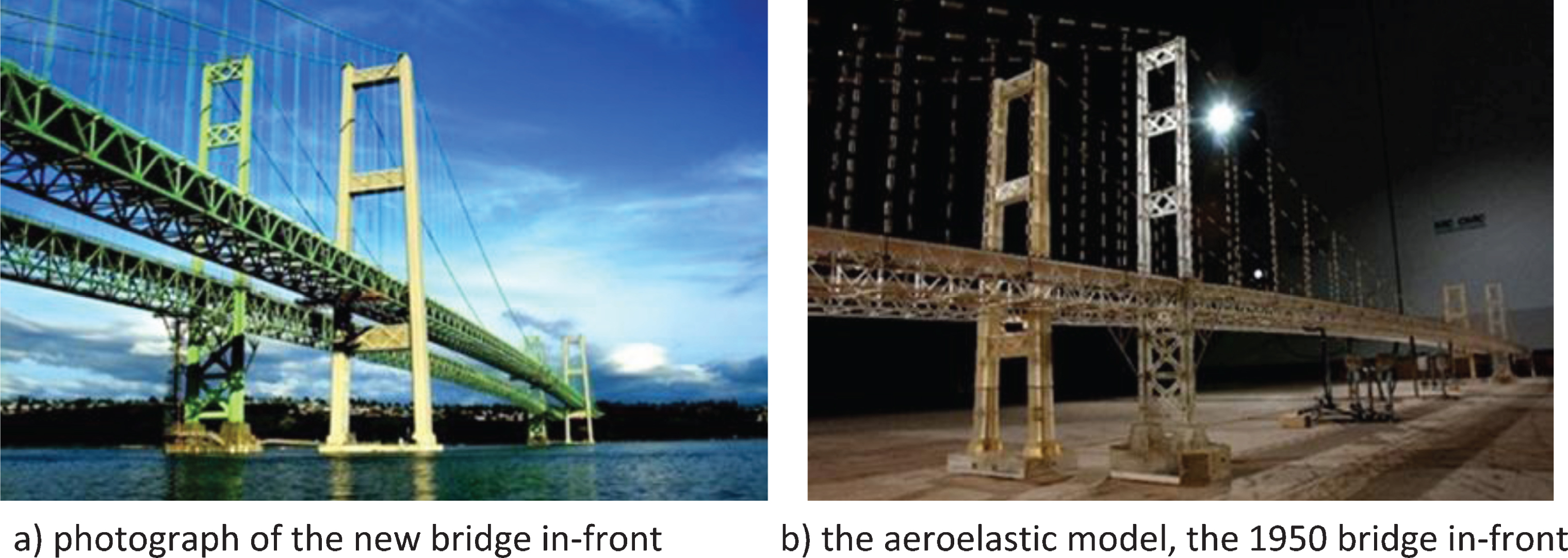
The Parallel Tacoma Narrows Bridges and the 2003 aeroelastic model in scale 1 : 211.
Based on observations from the test, the stable behavior of the truss decks has been attributed to breaking the flow patterns around the sections. This break-up of the flow does not allow the development of well correlated flow patterns which may cause aerodynamic instabilities. Although of similar deck sections, the geometry and fundamental frequencies of the two bridges were not identical, which is also believed to have favored the stable behavior. Given these bridges have been designed and built fifty years apart, structurally they are rather different thus the differences in their dynamic properties.
Given that a lower response to wind actions was always measured on the downwind bridge, the presence of each bridge upwind was found to be favorable, effectively sheltering the downwind structure from wind buffeting.
The new Goethals Bridge is a twin cable-stayed structure over Arthur Kill which connects New Jersey to Staten Island, New York. Part of the studies for this bridge carried out in 2013-15 included: wind climate assessment of the bridge site, sectional model and aeroelastic model tests, derivation of design wind loads, stay cable wind studies, and vehicle-, light rail transport-, pedestrian- and wind-induced vibration analyses.
Figure 3 presents the initial section concept where on the westbound structure there was an open grating between the walkway and the traffic barrier. It was hoped that this grating would improve the aerodynamic stability of the section. The proposed design originally had solid traffic barriers. However, following the initial stability evaluation, the grating was closed and barriers replaced with a one-half open configuration.

The Goethals Bridge Replacement – the initial deck configuration, B = 126.5 ft.
Even with this modification, the section could not meet the project requirement. Figure 4 shows test results of the eastbound deck upwind of the base configuration alone (with one-half open traffic barriers and grating closed) and as well of the final adopted configuration.
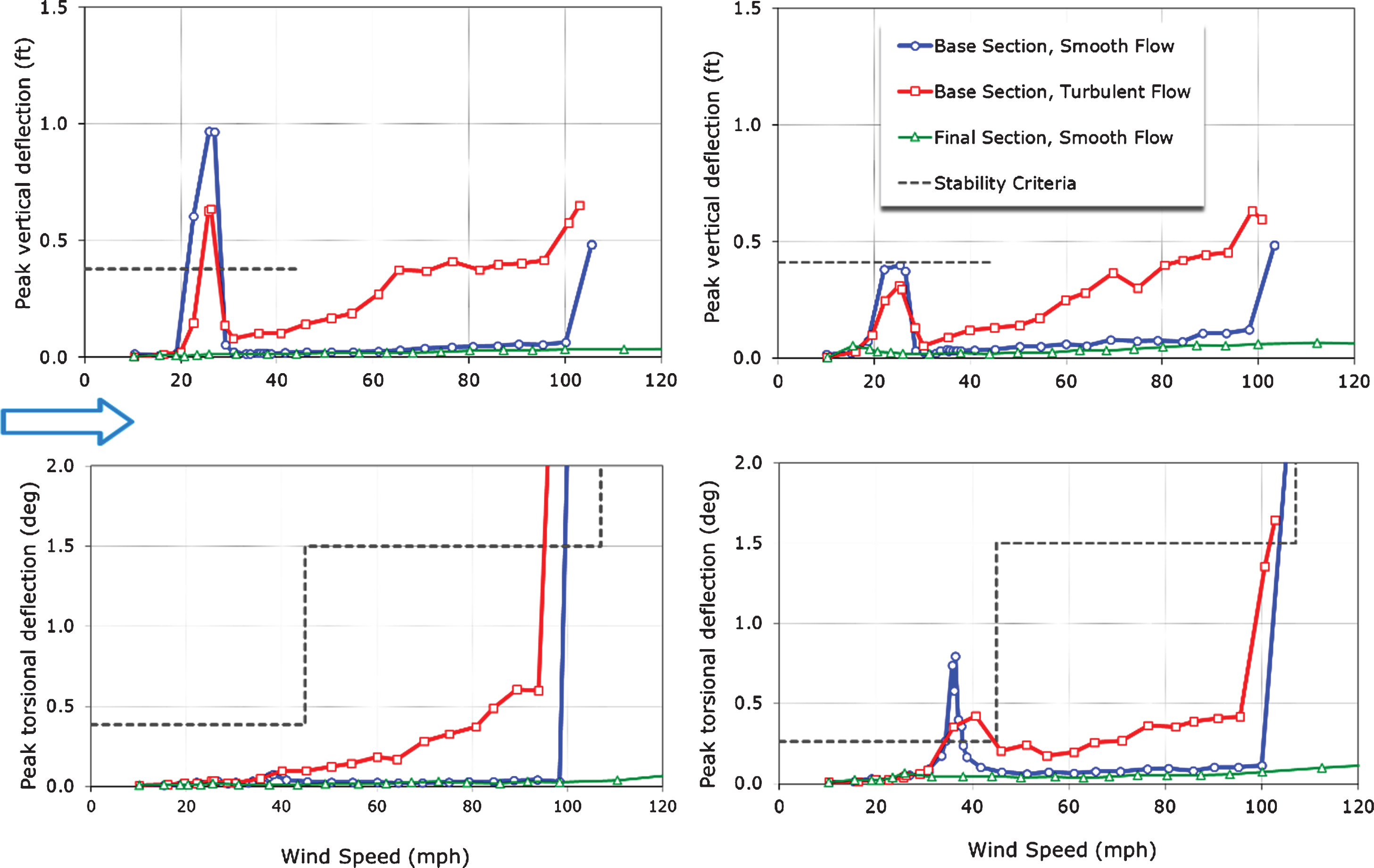
The Eastbound Section Upwind – peak vertical and torsional response of the base configuration and the final configuration with fairings and baffle plates installed (structural damping ratio 0.5%, angle of wind attack 0).
Aerodynamic stability criteria were based on vertical accelerations not to exceed 5% of gravity up to 45 mph. In the plots above these were converted to deflections based on the lowest frequency vertical and torsional modes of vibration. The criterion for flutter was established as peak rotations exceeding 1.5 degrees at wind speed less than 107 mph.
The response of the Base Section failed to meet the stability criteria both in terms of low speed instability due to vortex shedding with peak vertical amplitude at about 28 mph, in torsion near 35 mph, and flutter at 100 mph. These were the results of the test in smooth flow with an intensity of longitudinal turbulence less than 1% and a uniform speed profile. It is noted that the highest vertical vortex shedding motions of 1 ft amplitude occurred on the upwind section. The downwind section amplitude was about 0.45 ft. Torsional vortex shedding was observed only on the downwind section. When the high frequency component of the nominally expected turbulence was simulated in the test, it did reduce the vortex shedding amplitude however it remained still higher than the criteria for the upwind section. It is interesting to note that flutter in turbulent flow did occur at a somewhat lower speed of about 90 mph.
The principal source of instability was attributed to the blunt edge girders forming a large cavity underneath the roadway. Baffle plates beneath the deck were introduced in attempts to improve the aerodynamic stability. Although these were found to enhance stability, the deck still did not meet the required criteria. This led to further testing of deflectors (slats or flaps like) and guide vanes which proved ineffective for this twin deck configuration. At the end, the solution which was found to effectively suppress all instabilities included baffle plates with a nose fairing at the eastbound deck edge and sloped fairing beneath the walkway of the westbound deck.
The unique double-sloped nosing shown in the photograph above, and the triple-sloped fairing were conceived in an attempt to bring the separated flows over the sections as close as possible to the deck. These measures are believed to reduce wake width and the strength of the fluctuating pressures about the section, thus finally eliminating all instabilities within the project criteria.
Compared to the conceptual deck design, the final configuration shown in Fig. 6 includes: one-half open traffic barriers; closed grating; baffle plates at the inner one-third of the deck cavity; double-sloped nosing on the eastbound edge; and triple-sloped fairing below the walkway.
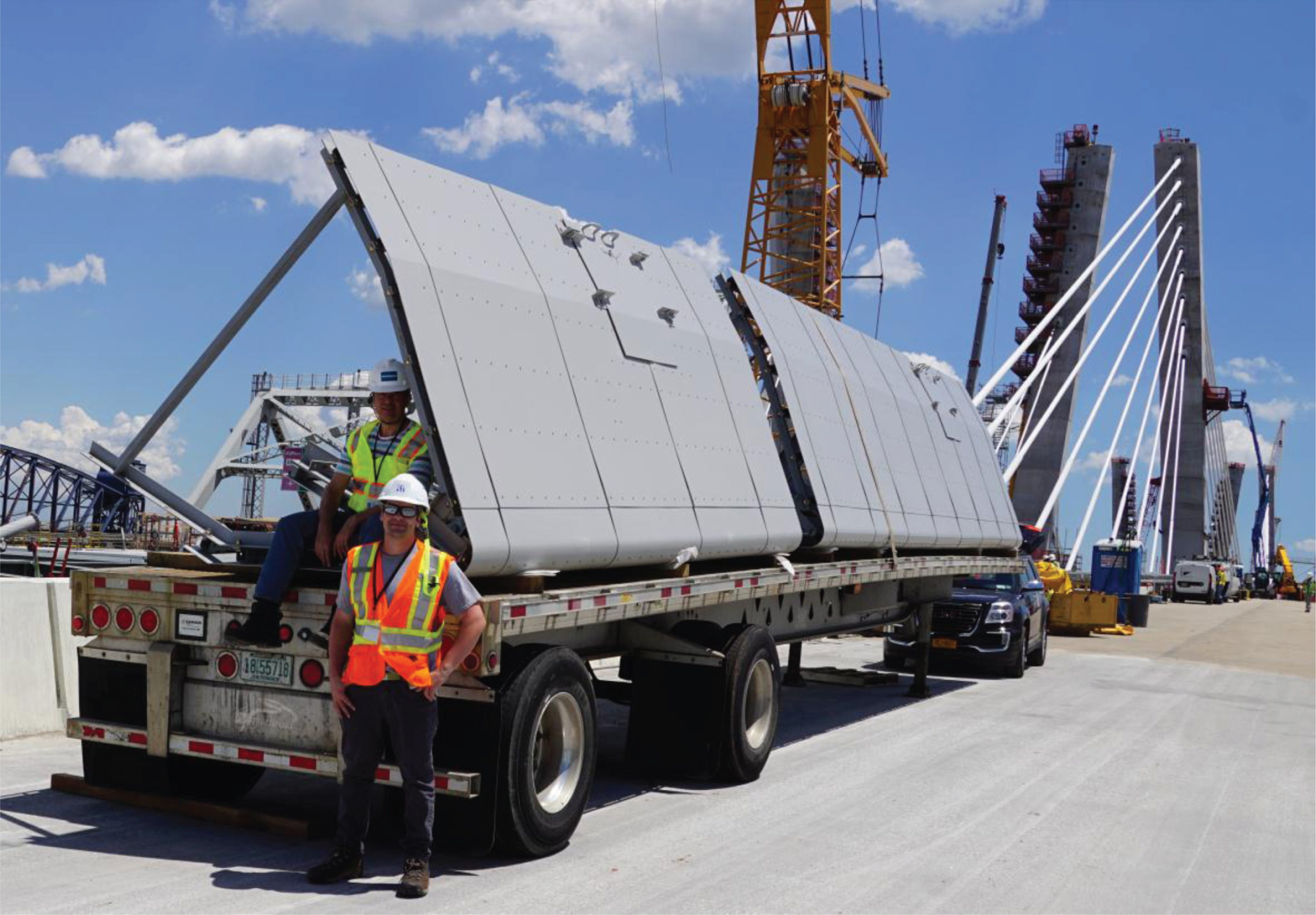
The Goethals Bridge During Construction – the double slopped fairing readied for installation on the eastbound edge.

The final aerodynamic solution of the Goethals Bridge deck sections.
This final configuration met all project criteria for aerodynamic stability.
The 1939 Old Kosciuszko Bridge over the Newtown Creek between Brooklyn and Queens, carries one of the busiest highways in New York, the I-278. The twin cable-stayed bridges replacing this bridge are of unique design of opposing single cable stayed towers (Fig. 7).
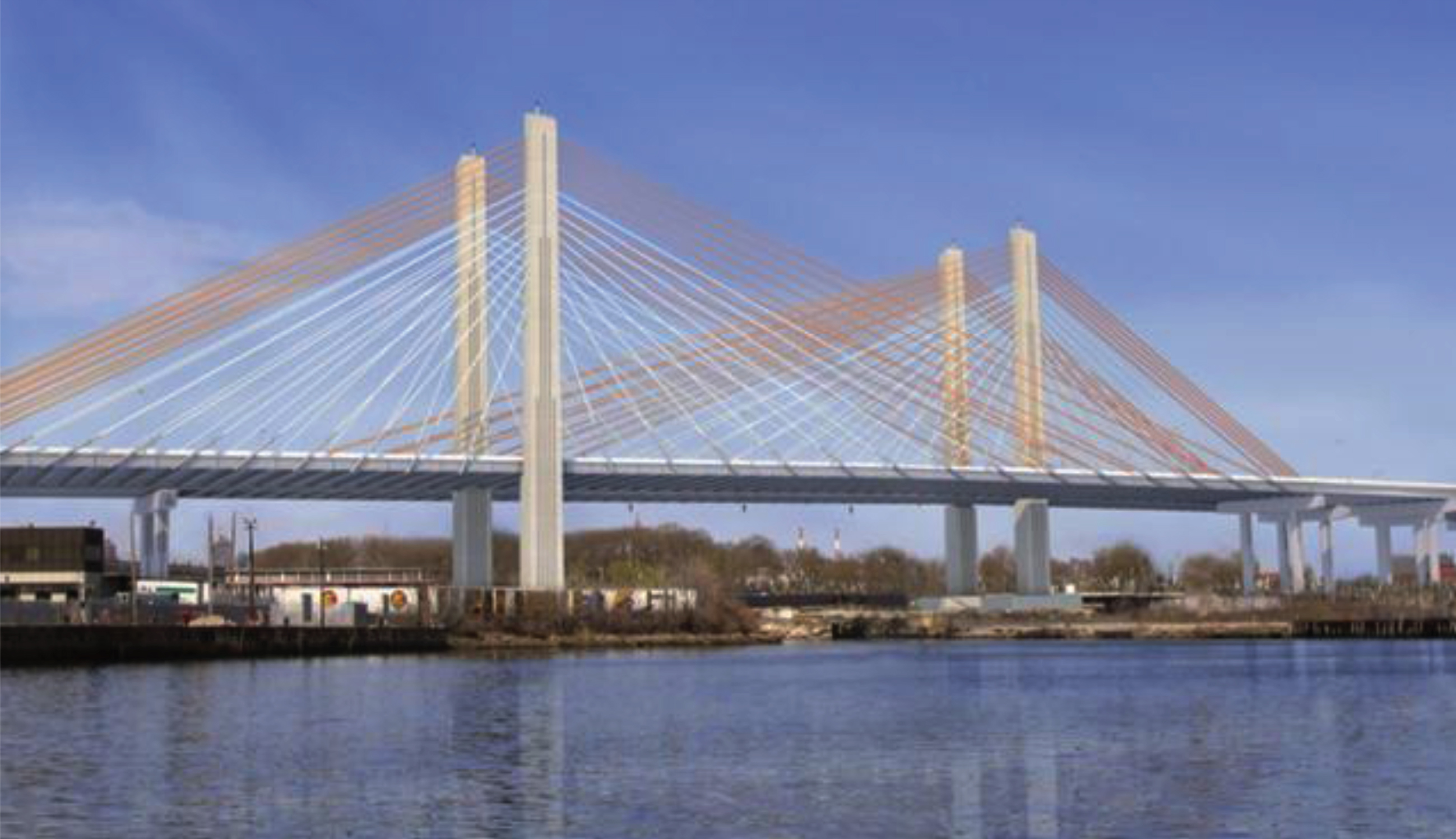
Artist impression of the future Kosciuszko Twin Cable Stayed Bridge (courtesy of WSP and HNTB Corporation).
Figure 8 presents the general arrangement of the bridge sections. It is noted that the two deck sections have similar widths and are being spaced much closer to each other when compared to the previous examples. Due to the curving road alignment, both sections are also slightly sloped.
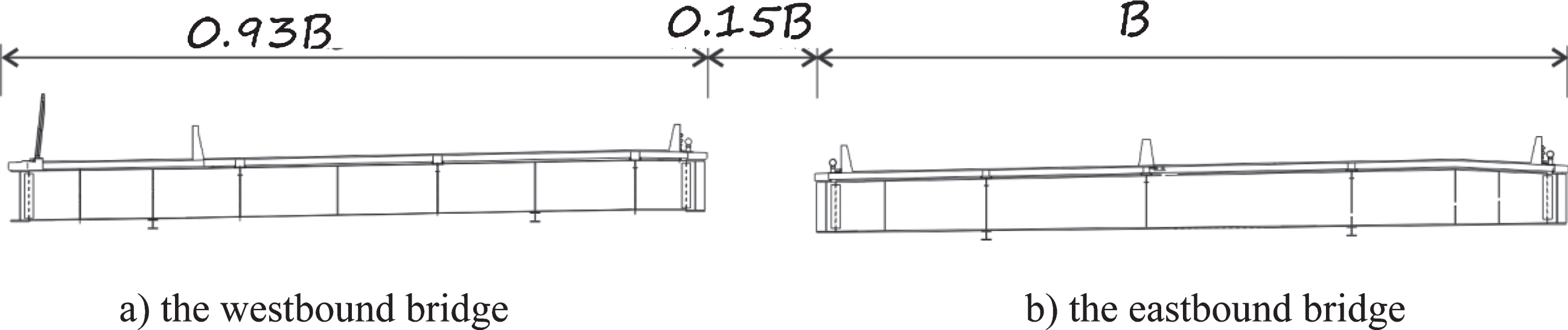
Deck section arrangement of the Kosciuszko Twin Cable Stayed Bridge, B = 100 ft.
The initial test in smooth flow showed vortex shedding vibrations. In the example of the westbound section upwind, significant vertical and torsional vortex shedding motions were found in the range of 40 to 60 mph. Lower amplitude vertical vibrations were also detected near 20 mph. Although both vertical and torsional responses were observed over the same wind speed range, it should be noted that these were not observed simultaneously. Rather, the response of the sectional model depended on the initial excitation of the model. If the model was excited vertically then vertical motions would persist, whereas torsional excitation would lead to persistent torsional oscillations. Therefore, sectional model tests were performed first for vertical excitation followed by tests with torsional excitation to define the response curves shown in Figure 9. Given the difference in frequencies of vertical and torsional motions, these instabilities corroborate the existence of at least three flow-excitation mechanisms with distinct Strouhal numbers. It is interesting to note that the leeward section did not vibrate in any of these observed cases.
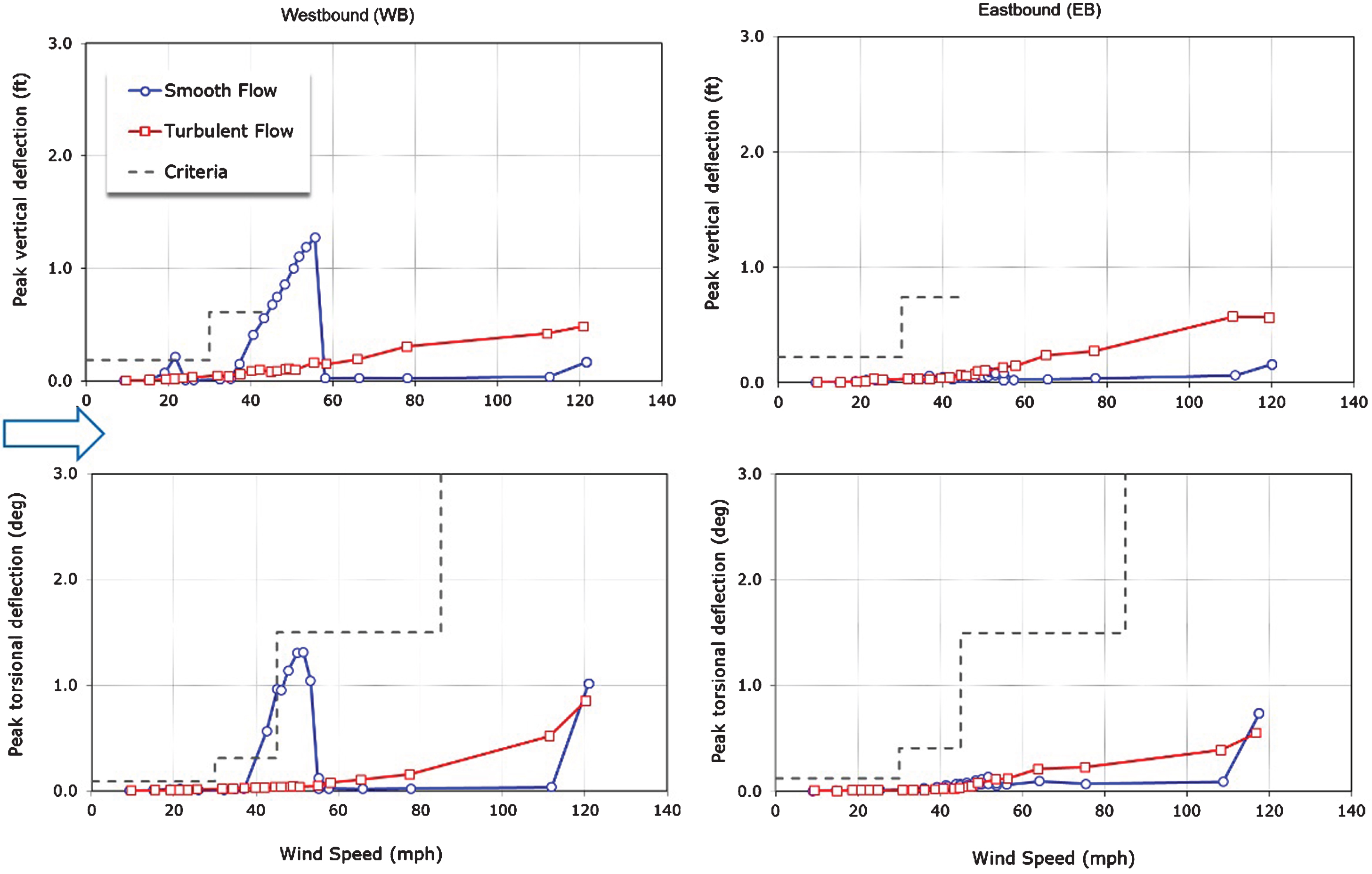
The Westbound Section Upwind – peak response of the base configuration in smooth and low-level turbulent flows (structural damping ratio 0.5%, angle of wind attack 0°).
These vortex-shedding vibrations were observed in smooth flow alone. Smooth flow tests traditionally reveal conservative response predictions. Turbulent flow tests were also carried out to investigate the effects of turbulence on the observed instability. The turbulence properties at the bridge side were derived based on the wind speeds recommended for structural design which are much higher than those where vortex shedding instabilities may occur. It has been observed however that vibrations may occur on a bridge when the actual level of turbulence are lower than the expected nominal values at high winds [5].
Several studies have shown that the methodology used to predict turbulence properties provide reasonable estimates for high wind speeds. At low wind speeds, however, a significant scatter has been observed in the wind records for turbulence intensity [6]. At lower wind speeds the influence of buoyancy forces is greater, which may increase or decrease the turbulence intensity depending on temperature and surrounding conditions at the site. Furthermore, much longer sample records are required to obtain turbulence statistics as the wind speed decreases. Given the tests showed that for this bridge turbulence could mitigate vortex shedding vibrations, it has been vital to establish the lower bound of the actual turbulence properties at the bridge site. To provide some measure of conservatism, the turbulence simulated for testing was lower in intensity than both the nominally expected values and those actually measured at the bridge site (Fig. 10).

Wind speed measurements at the Old Kosciuszko Bridge site
Since wind tunnels cannot fully replicate the longitudinal length scales of atmospheric turbulence, it is accepted practice to scale down the intensity of turbulence in the simulation using the partial turbulence simulation technique [7]. Scaling down the turbulence intensity ensures proper simulation of the energy effects of the smaller (high frequency) eddies in relation to the geometric shape of the sectional model.
Wind speed measurements were carried out on the Old Kosciuszko Bridge for a period of 6 months. For the wind tunnel tests, the assumed lower level of turbulence corresponded to approximately 13% turbulence intensity at full scale whereas over 17% was measured at the site. It is important to note that the new bridge deck will be lower in height than the old bridge. Thus, turbulence at deck level of the new bridge would likely be even higher than what has been measured. The relatively high level of observed turbulence was attributed to the significant roughness about the bridge site, generating a type of turbulence that appears to be mechanically created which is less sensitive to atmospheric variability.
Both sectional and aeroelastic model tests confirmed stable sections in the assumed turbulent flow. Given that these tests were carried out at a lower level of turbulence than measured and expected at the site, and that this turbulence mitigated all instabilities, no aerodynamic modifications were required to the original design.
The aerodynamic stability of the New Kosciuszko Bridge was attributed to the following factors: relatively high level of on-site turbulence; low lateral spacing of the decks, spaced at only 0.15 of the referenced deck width; and, slight difference in the section geometry and frequency detuning (although close, not identical) of the opposing tower arrangement.
This paper explored aerodynamic stability problems of parallel-deck bridges. Based on experience from the fundamental aerodynamics of tandem sections, this arrangement draws out concerns for amplified and difficult to mitigate instabilities and points to the need for a detailed experimental investigation to confirm the potential for wind-induced vibrations. Known forms of instabilities such as vortex shedding, flutter, and galloping or buffeting of a single section, may get amplified or reduced compared the same sections in tandem arrangement and/or new types of instabilities may be found occurring. These interference instabilities may or may not occur depending on section shape, spacing, mass-damping and dynamic properties.
To illustrate the problem the studies of Tacoma Narrows Parallel Bridges; Goethals Bridge Replacement; and Kosciuszko Bridge Replacement are presented.
The good aerodynamic stability of the parallel Tacoma Narrows Parallel Bridges has been attributed to their truss-sections which do not exhibit vortex shedding in a standalone configuration. Although not very significant, the differences of the cross-section and bridge dynamic properties between the two bridges could be assumed to have also been favorable. As an added benefit of this arrangement, the presence of the upstream bridge was found effective in reducing the wind loads on the downstream bridge.
In the instance of the Kosciuszko Bridge Replacement, the original sections prone to vortex shedding in smooth flow were found quite s when turbulence was introduced. The relatively high level of turbulence at the bridge site was found sufficient to mitigate the instabilities. The turbulence properties were confirmed by full-scale measurements. The cross-sections being not identical and the opposing tower arrangement are also considered advantageous for this bridge.
The Goethals Replacement Bridge has been most challenging to stabilize aerodynamically. Turbulence was not found sufficient to mitigate the instabilities to meet the project requirements. Its solid barriers had to be replaced with reduced solidity traffic barriers and the walkway grating closed. Baffle plates and fairings on both deck leading edges were also required to stabilize the sections. The baffle plates introduced beneath both decks serve to reduce the flow-resonance effects of these cavities. The double- and triple-slope fairings at the leading edges are considered effective in reducing the width and strength of the separated shear layers from the leading edges by reattachment to the deck thus mitigating the magnitudes of the fluctuating pressures. The findings and solutions of the sectional model tests were confirmed with aeroelastic model tests of both bridge side by side. The New Goethals Bridge was opened to traffic in June 2017.
Conclusion
Based the presented examples, the following considerations can be given for parallel bridges: Sectional model test should be carried out on tandem dynamic test rigs and/or aeroelastic models. Aerodynamic solutions of a single section may not be effective for the same section in tandem arrangement. On asymmetric cross-section arrangement, solutions found for one wind direction may not work for the other direction thus both directions need to be tested. Standalone sections may perform better in a tandem arrangement. Closely spaced sections could be less susceptible to wind-induced instabilities. Local turbulence may be able to suppress vortex shedding of tandem sections when closely spaced. Truss sections are less prone to instabilities in general, which is also shown to be the case for the parallel bridge arrangement.
Conflict of interest
None to report.
Footnotes
Acknowledgments
The authors would like to express their gratitude to the Parsons Transportation and HNTB Corporation bridge designers of the Tacoma Narrows Parallel Bridges. The Goethals Replacement Bridge was also designed by Parsons Transportation. HNTB designed the Eastbound Kosciuszko Bridge whereas WSP was responsible for the Westbound Bridge design. The bridge authorities, WSDOT, PANYNJ, and NYSDOT who own and operate these magnificent structures are also acknowledged. The New Tacoma Bridge was constructed by the joint venture of Bechtel Infrastructure and Kiewit Construction. The Skanska-Kiewit-ECCO III JV built Kosciuszko Eastbound and Granite Contractors did the Westbound Bridge, whereas the Goethals Bridge was built by the Kiewit-Weeks-Massman AJV.
The large teams of model builders and wind tunnel technicians and engineers of the National Research Council of Canada and RWDI who built and executed these unique tests should be recognized.