



Abstract
Empathy entails basic cognitive processes such as the recognition of facial expressions and basic emotional processes such as emotional contagion, but also higher-order cognitive processes such as abstract reasoning about the other person’s emotional states and higher-order emotional processes such as empathic concern. Thus, empathy must be conceptualized as a multidimensional and multifaceted construct. It can be differentiated from related constructs such as theory of mind, emotional contagion, compassion, emotional mimicry, or perspective-taking by its associated processes and functions. To understand the nature of empathy, it is important to combine phylogenetic, ontogenetic, neuroscientific, dynamic-interactionist, and sociological perspectives on this phenomenon.
In the last decades, the academic interest in empathy has been rapidly growing among researchers from various disciplines such as psychology, sociology, philosophy, neuroscience, history, and ethology(Preston & de Waal, 2002; Schuler, Mohnke, & Walter, 2016; see Fig. 1).
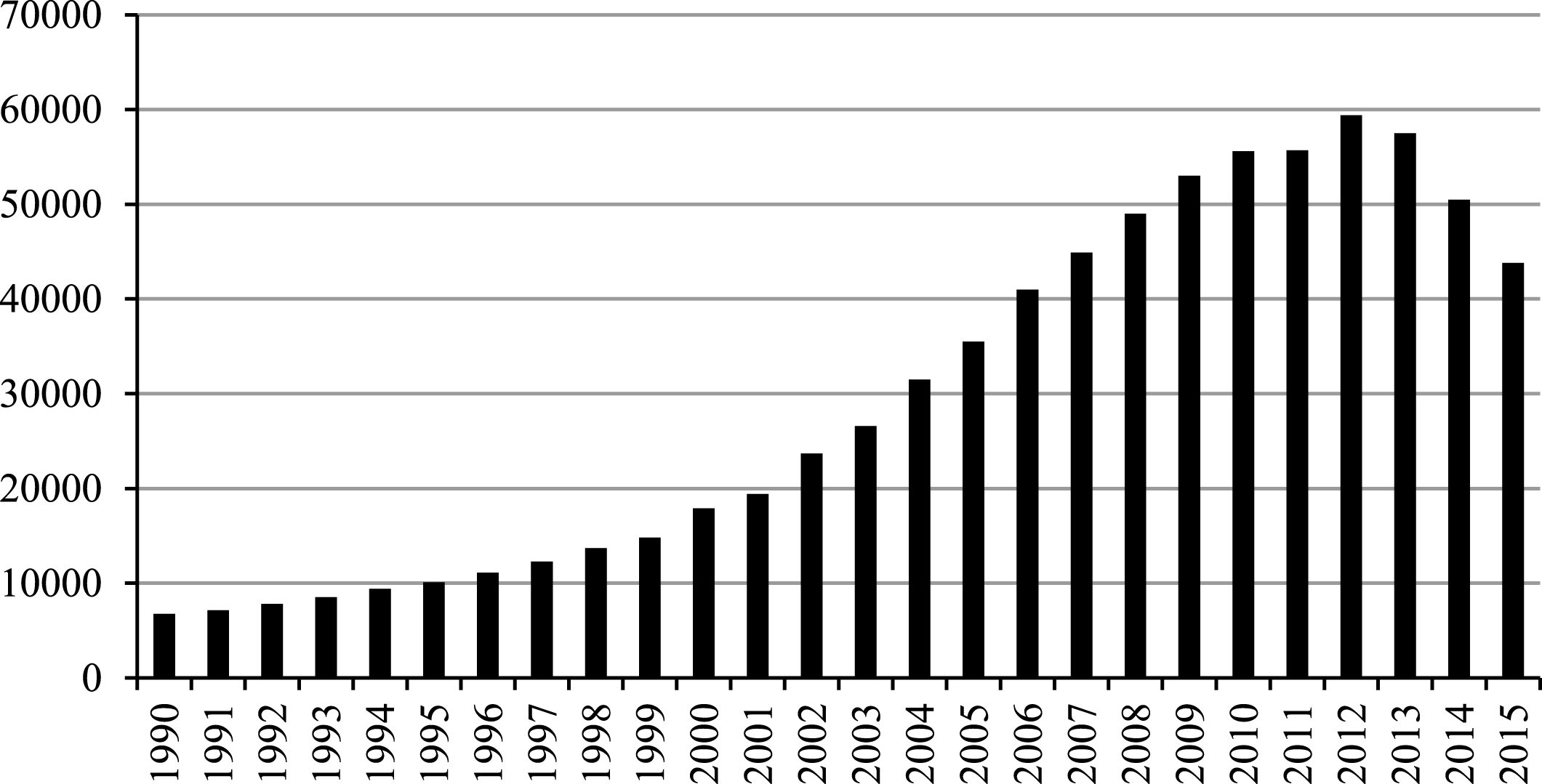
Number of publications with the keyword empathy by year (Google Scholar).
However, this growing body of interdisciplinary research on empathy has also led to a growing number of theoretical frameworks and conceptualizations. For example, Nowak (2011) discusses 57 different scientific definitions of empathy. Further, the existing theoretical frameworks mostly do not provide precise differentiations between empathy and similar concepts such as theory of mind, emotional contagion, or compassion. Finally, each of these disciplines provides only limited perspectives on the phenomenon of empathy.
This review aims to address these challenges by deepening existent conceptualizations of empathy, focusing on commonalities and differences between empathy and similar constructs, and integrating existent theories and empirical findings towards a holistic perspective on empathy. For this purpose, this review will combine different perspectives from developmental psychology, evolutionary psychology, sociology, and neuroscience, with a special focus on relational and systemic conceptualizations of empathy. For reasons of clarity, the present survey will not deal with disorders of empathy and clinicalinvestigations.
The Multidimensional and Multifaceted Structure of Empathy
In the last century, the concept of empathy was mainly addressed within two research traditions: a cognitive and an affective approach (Baron-Cohen & Wheelwright, 2004). The cognitive approach defines empathy as the understanding of another person’s emotions, whereas the affective approach understands empathy as the emotional response to the emotions of another person. These two processes seem to have different phylogenetic trajectories (Preston & de Waal, 2002), different ontogenetic trajectories (Singer, 2006), and to be related to different neural systems (Decety & Jackson, 2004) and different behavioral outcomes (Smith, 2006). However, most researchers agree that cognitive and affective facets of empathy are complementary and interrelated (e.g., Baron-Cohen & Wheelwright, 2004; Decety & Jackson, 2006; Dziobek et al., 2008), providing the theoretical framework for the common multidimensional definition of empathy as the ability to understand and to share the emotions ofothers.
The ability to understand the emotions of others is usually characterized by the term cognitive empathy and can be regarded as a specific subcomponent of theory of mind (Decety & Jackson, 2004), which is in turn defined as the ability to attribute mental states to the persons we are interacting with and to oneself (Sodian & Kristen, 2010). Cognitive empathy is dependent on basic cognitive functions such as attention and working memory (Rankin, Kramer, & Miller, 2005), and on the ability to recognize and interpret facial expressions, voice prosody, social salience of movements, and eye-region expressions (Baron-Cohen, Wheelwright, Hill, Raste, & Plumb, 2001). However, it also entails higher-order cognitive processes such as abstract reasoning about the other person’s emotions, cognitive flexibility, and meta-cognitive techniques, for example shifting one’s attention back and forth to compare and contrast the experience and behavior of another person to one’s own cognitive and emotional state (Rankin et al., 2005).
The ability to share the emotions of others is usually referred to as emotional empathy. An emotional reaction to the emotions of another person is based on emotional responsiveness and arousal, as is any emotional experience (Rankin et al., 2005). Nonetheless, some researchers suggest that the core mechanism of emotional empathy is emotional contagion, the automatic activation of congruent emotions, and that this activation is mediated by the mirror neuron system (perception-action hypothesis by Preston & de Waal, 2002; see also Nummenmaa,Hirvonen, Parkkola, & Hietanen, 2008). Further, emotional empathy involves higher-order emotional processes such as empathic concern, defined as the awareness that the other person’s experience and not one’s own is of primary importance (Davis, 1983; Rankin et al., 2005).
The two dimensions of cognitive and emotional empathy are strongly interdependent, as understanding an emotional state may precede consciously sharing this state (Decety & Jackson, 2004). On the other hand, emotional empathy can in turn help to understand and elaborate the emotions of another person cognitively (Shamay-Tsoory, Aharon-Peretz, & Perry, 2009).
Nonetheless, several researchers provide alternative and more differentiated conceptualizations, which are not limited to distinguishing cognitive from emotional empathy. For example, a popular self-report measure of empathy, the Interpersonal Reactivity Index (IRI; Davis, 1983), differentiates between four different subcomponents of empathy: perspective-taking, fantasy, empathic concern, and personal distress. Each of these four components seems to be differently interrelated with external criteria such as social functions, self-esteem, and emotionality. Chrysikou and Thompson (2015) support this four-factor model of empathy and provide evidence against subsuming the IRI scales under a two-factor approach, for example by defining the scales Perspective-Taking and Fantasy as subcomponentsof a higher-order factor Cognitive Empathy.
In contrast, Wispé (1986) differentiates between primarily cognitive and motivational facets of empathy, defining it as an attempt of a self-aware being to comprehend positive and negative experiences of another self-aware person without judgements. In her eyes, empathy depends upon imaginal and mimetic capabilities, is most often an effortful process, and often has the function of providing information on mental states for at least one of the involved parties. By positing a link between empathy, the intention to understand the other person, and a non-judgmental attitude, Wispé provides a more elaborated framework separating empathy from general cognitive abilities and pointing to its specific social functions.
Batson (2009), in turn, argues for the existence of eight distinct facets of empathy, including adopting the posture or matching the neural responses of an observed other, imagining how another is thinking and feeling, how one would think and feel in the other’s place, or feeling personal distress at witnessing another person’s suffering. Some of these facets are similar to the subscales of the IRI, for example Personal Distress, and some represent distinct constructs that are interrelated but not equivalent with empathy, for example emotional mimicry.
However, defining so many different facets makes it difficult to develop a distinct and precise operationalization of empathy and raises questions about the convergent and discriminant validity of such definitions. Consequently, an important step towards structuring and specifying existent conceptualizations of empathy would be a clear differentiation between genuine empathy with its core mechanisms and related constructs such as theory of mind, emotional contagion, compassion, emotional mimicry, and perspective-taking. The following section offers core propositions about the main commonalities and distinctions between empathy and these other constructs, based on the most prevalent definition of empathy as the ability to understand and to share the emotions of others.
Constructs Related to Empathy: Definitions and Differentiating Features
Theory of mind is defined as the ability to attribute mental states to the persons we are interacting with and to oneself (e.g., Sodian & Kristen, 2010), and is often used synonymously with mentalizing (e.g., Fonagy & Bateman, 2006; Walter, 2012). Theory of mind is a very broad ability referring to any kind of mental state. Cognitive empathy is a specific subcomponent of theory of mind that refers to emotional states, and it can be also referred to as affective theory of mind (e.g., Kalbe et al., 2010). Cognitive theory of mind, affective theory of mind, and emotional empathy may elicit each other, but they are associated with functions of rather independent neural networks(Walter, 2012).
Emotional contagion is defined as the tendency to automatically synchronize one’s expressions, vocalizations, postures, and movements with those of other persons, and the associated emotional conversion with other persons (e.g., Hatfield, Cacioppo, & Rapson, 1993). Emotional contagion is a very basal process, which can occur automatically and unconsciously, without the subject knowing that the other person is the source of the subject’s own feelings (e.g., Singer & Lamm, 2009). Prehn-Kristensen et al. (2009) even documented emotional contagion of anxiety solely through chemosensory stimuli. In contrast, empathy is a conscious emotional and cognitive response that involves higher-order emotional and cognitive processes (e.g., empathic concern or abstract reasoning). Nonetheless, emotional contagion can serve as a precursor of empathy (e.g., Hoffmann, 2000), and some researchers conceptualize it as a core component of emotional empathy (e.g., Hatfield, Rapson, & Le, 2009).
Compassion is defined as the openness to the suffering of others, which involves a desire to relieve this suffering, cognitions related to the understanding of this suffering, and behaviors that aim at relieving this suffering (e.g., Gilbert, 2005), and often used synonymously with sympathy (e.g., Batson, 2009). Common conceptualizations of compassion are very broad and relate to unspecific emotional or behavioral responses to the suffering of others (e.g., being in despair at seeing someone in pain; Singer & Lamm, 2009). Empathy is restricted to understanding what another person is feeling and sharing the same emotion (e.g., feeling pain when seeing someone in pain; de Vignemont & Singer, 2006). Further, compassion is restricted to negative emotional states, whereas empathy relates to negative and to positive emotional states (e.g., Dziobek et al., 2008). However, compassion entails elements of both cognitive and emotional empathy and may be activated by sharing the emotions of another person (Baron-Cohen & Wheelwright, 2004).
Emotional mimicry is defined as the automatic imitation of another’s facial, vocal, or postural expressions (e.g., Hoffmann, 2002). In contrast to empathy, it may occur automatically, unconsciously, and does not necessarily involve any emotional or cognitive reaction to the other’s emotional state (e.g., Walter, 2012). Nevertheless, the generation of emotional facial expressions within emotional mimicry and the recognition of these emotions in other persons are both associated with the activation of the same premotor neurons (Motor Theory of Empathy; Leslie, Johnson-Frey, & Grafton, 2004). Further, emotional mimicry may elicit an emotional conversion and therefore emotional empathy (Hatfield et al., 1993).
Perspective-taking is defined as the adoption of the mental perspective of another person (e.g., Walter, 2012). It is a very broad concept and refers not only to understanding but also to experiencing the cognitive states, the emotional mental states, and the sensory perceptions of others (e.g., within visuospatial perspective-taking; Walter, 2012). In contrast, cognitive empathy refers only to the understanding of emotional states and seems to activate different neural networks than cognitive perspective-taking (e.g., Ruby & Decety, 2004).
Based on these differentiating features, it is possible to specify distinct functions of genuine empathy as a next step towards a holistic and integrative theory of the ability to understand and to share the emotions of others.
The Functions of Empathy
In contrast to the basal process of emotional contagion, which enables quick and immediate behavioral responses to another person’s emotions while the main focus of this reaction remains the self, genuine empathy enables more other-oriented and complex functions.
With regard to mental functions, empathy provides a general understanding of mental states, helps in making predictions about others, and therefore affects decision-making in interpersonal contexts (Redmont, 1989). Besides these elementary functions, empathy has a strong influence on ethical decision-making and moral judgments (Eisenberg & Strayer, 1987; Mencl & May, 2009). Further, it enhances positive emotions in interactions with others and general subjective well-being in the short term (Grühn, Rebucal, Diehl, Lumley, & Labouvie-Vief, 2008), and triggers a sense of belonging and tightens relational bonds in the long term (de Vignemont & Singer, 2006). Finally, empathy is related to the constitution of our self-concept through the “seeing ourselves in others’ reflections of us” (Eisenberg & Strayer, 1987).
With regard to behavioral functions, empathy mainly triggers and enhances various forms of prosocial and altruistic behavior. The first empirical investigation of this interrelationship was conducted by Krebs (1975), followed by a series of experiments by Batson and colleagues (Batson, Duncan, Ackerman, Buckley, & Birch, 1981; Batson et al., 1988), finally leading to the formulation of the popular “Empathy-Altruism Hypothesis”. Even if the level of empathy was not directly measured within these investigations, and even if the interrelationship between empathy and altruism could also be explained by confounding variables such as perceived similarity (Cialdini, Brown, Lewis, Luce, & Neuberg, 1997), the “Empathy-Altruism Hypothesis” provided an important theoretical framework for subsequent investigations. Today, most researchers agree that empathy triggers prosocial and altruistic behavioral responses (e.g., Decety & Jackson, 2004; de Vignemont & Singer, 2006; Preston & de Waal, 2002), and even related basic functions such as emotional mimicry seem to enhance prosocial behavior (Baaren, Holland, Kawakami, & Knippenberg, 2004). However, some investigations suggest that cognitive empathy can also be used to manipulate others and maximize one’s benefit at the cost of others, and therefore realize antisocial functions (e.g., Galinsky, Maddux, Gilin, & White, 2008; Maddux, Mullen, & Galinsky, 2008). Emotional empathy can also have negative behavioral outcomes in the form of higher distress resulting in relational conflicts and conflict escalation (Eisenberg, 2002; LeBlanc, Gilin, Calnan, & Solarz, 2012). Singer and Klimecki (2016) suggest that this kind of empathic distress is associated with the activation of distinct neural networks and negative health outcomes. These costs of emotional empathy are also measurable on an immunological level, as high levels of emotional empathy seem to be associated with higher systemic inflammation (Manczak, DeLongis, & Chen, 2015).
Summing up, both cognitive and emotional empathy have a variety of functions, some of which can be highly adaptive but also maladaptive, depending on the specific situation and circumstances. Thus it does not seem appropriate to characterize empathy either as unambiguously beneficial or as unambiguously harmful (Zaki, 2017).
Trajectories of Empathy
Psychology provides certain scientific paradigms to describe, explain, predict, and influence human experience and behavior. The phenomenon of empathy can also be investigated from several perspectives, for example based on an evolutionary, an ontogenetic, a neuroscientific, or a dynamic-interactionist approach. For a holistic understanding of empathy it is important to consider and to combine all of these paradigms.
Phylogeny of Empathy
Evolutionary psychologists distinguish two types of explanations for the evolution of a psychological trait such as empathy: Ultimate causes, which relate to the fitness consequences of a trait or why the associated genes were favored by natural selection, and proximate causes, which relate to the concrete mechanism that enables the experience or behavior (de Waal, 2008; Preston & de Waal, 2002). The most important ultimate cause for the evolution of empathy is probably its central role within the coordination of group activities and cooperation (Decety, Bartal, Uzefovsky, & Knafo-Noam, 2016; de Waal, 2008; Plutchik, 1987; Preston & de Waal, 2002). From a phylogenetic perspective, cognitive and emotional responses to emotional states of others have survival values, because they enable a group of individuals to efficiently gather and hunt for food and to respond appropriately and quickly to common threats. Furthermore, members of a highly cooperative social group have generally higher survival chances than members of a less cooperative social group. Another ultimate cause for the evolution of empathy is its function of bonding individuals to one another, especially mothers to their offspring (Plutchik, 1987). With regard to our evolutionary past, the genes of a mother who was able to recognize pain or distress in her infant had higher survival chances than the genes of a mother lacking this ability. This evolutionary framework offers a suitable explanation for the gender differences in empathy, theory of mind, emotional contagion, and neural correlates of mentalizing abilities, which were reported in several studies (Baron-Cohen & Wheelwright, 2004; Derntl et al., 2010; Doherty, Orimoto, Singelis, Hatfield, & Hebb, 1995; Krach et al., 2009; Toussaint & Webb, 2005). The proximate mechanism behind these ultimate causes for the phylogenesis of empathy is most probably the mirror neuron system (Preston & de Waal, 2002), which will be discussed in more detail later. However, Preston and Hofelich (2012) demonstrate within their theoretical framework for the proximate bases of empathy that it is important to distinguish neural self-other overlap as a precondition of emotional contagion from subjectively experienced self-other overlap as a precondition of genuine empathy.
In addition to the analysis of ultimate and proximate causes of empathy, it is important to deepen the understanding of this ability through cross-species comparisons. Most researchers agree that the phenomenon of emotional contagion is phylogenetically continuous and observable in most mammal and bird species (e.g., de Waal, 2008; Koski & Sterck, 2010). Interestingly, recent studies demonstrate that mice and rats are also capable of sharing the emotional states of their conspecifics, and furthermore capable of prosocial behavior driven by these shared emotional states (Meyza, Bartal, Monfils, Panksepp, & Knapska, 2017). Several investigations suggest that great apes are even capable of higher-order cognitive and emotional processes associated with empathy, for example cognitive and affective theory of mind (see the classic study by Premack & Woodruff, 1978, but also O’Connell, 1995; Povinelli, 1996; Suddendorf & Whiten, 2001) and empathic concern (de Waal, 2008; Hirata, 2009; Romero, Castellanos, & de Waal, 2010). These studies indicate that unconscious emotional contagion is not only a precursor of empathy in general but that it may also be an evolutionary precursor of empathy. This thesis is summarized within the “Russian Doll Model” by de Waal (2008) and further supported by ontogenetic investigations ofempathy.
Ontogeny of Empathy
Emotional contagion is already observable in newborn babies (Singer, 2006; Decety & Jackson, 2004; Tousignant, Eugène, & Jackson, 2016), and there is evidence for an interrelationship between individual differences in primitive emotional responding and increased social referencing in the second half of the first year of life (Bischof-Köhler, 1991). In this period, there are also early signs of empathic concern for others (Roth-Hanania, Davidov, & Zahn-Waxler, 2011). However, genuine empathy requires not only basal abilities such as self-recognition, self-objectification, and person permanence, which usually develop between 18 and 24 months of age (e.g., Decety & Jackson, 2004; Gallup & Platek, 2002), but also a clear differentiation between one’s own emotions and the emotions of others, and the ability to attribute mental states to others (Singer, 2006). These theory-of-mind abilities are fully developed around the age of four years (e.g., Decety & Jackson, 2004; Eisenberg & Strayer, 1987; Singer, 2006; Tousignant et al., 2016) and usually tested with the False-Belief Task by Wimmer and Perner (1983) or with the Sally-Anne Test (Cohen, Leslie, & Frith, 1985). Between four and six, the link between empathy and prosocial behavior gets gradually stronger (Barnett, 1987), and it is reinforced and increasingly moderated by moral principles between six and ten (Hoffmann, 2000). At this age, advanced theory-of-mind abilities enable more complex inferences about the emotional states of others, for example higher-order beliefs (Singer, 2006). In youth and early adolescence, empathy towards significant peers becomes increasingly important, and deficits in empathy are associated with antisocial and aggressive behavior (Lovett & Sheffield, 2007; van Noorden, Haselager, Cillessen, & Bukowski, 2015). The development of empathy in later adolescence and early adulthood is characterized by the onset of elaborated emotion regulation abilities. In this developmental stage, it is possible to regulate personal distress resulting from sharing the negative emotions of others in order to provide a more other-oriented and adequate behavioral response (Mella, Studer, Gilet, & Labouvie-Vief, 2012; Tousignant et al., 2016).
Unfortunately, findings on the development of empathy in middle and later adulthood are inconsistent and demand further investigations. For example, Schieman and van Gundy (2000) report a decrease of self-reported emotional empathy in late adulthood, whereas Bailey, Henry, and Hippel (2008) report a decrease of cognitive empathy in late adulthood, but no change in the level of emotional empathy. In contrast, Sze, Gyurak, Goodking, and Levenson (2012) report an increase in self-reported emotional empathy in late adulthood, while Grühn et al. (2008) found no age-related decline in self-reported empathy based on a longitudinal study spanning 12 years. Finally, O’Brien, Konrath, Grühn, and Hagen (2013) report quadratic effects of age on empathy, as middle-aged adults had higher levels of emotional and cognitive empathy than young and older adults.
Neuroscience of Empathy
The conceptual and functional differentiation of basic empathy-related abilities such as emotional contagion and higher-order empathic responses is further documented by neuroscientific studies. On the one hand, automatic emotional contagion is associated with an activation of the sensorimotor cortex and limbic system (Singer, 2006). Even if some recent neuroscientific studies question the existence of mirror neurons in humans (Dinstein, Gardner, Jazayeri, & Heeger, 2008; Lingnau, Gesierich, & Caramazza, 2009), most researchers regard mirror neurons as the most suitable explanation for automatic emotional contagion (e.g., Bastiaansen, Thioux, & Keysers, 2009; Nummenmaa et al., 2008; Singer & Lamm, 2009). On the other hand, higher-order processes such as affective theory of mind are associated with cortical activity of the temporal poles, the posterior superior temporal sulcus, and the medial prefrontal cortex (Decety & Jackson, 2004; Singer, 2006). Furthermore, executive functions such as the regulation of empathy-related emotional states are probably located in the ventral prefrontal cortex (Decety & Jackson, 2004). Finally, Schuler et al. (2016) provide an integrative neuroscientific approach by specifying the anterior insula, the anterior cingulate cortex and the midcingulate cortex as the core regions of empathy, connecting both to the mentalizing network and the mirror neuron system.
Dynamic-Interactionist Perspectives on Empathy
The development of genuine empathy is based on dynamic reactions to another person and dependent on the presence of this person. Therefore, empathy can be described as a mutual, interpersonal process (Trevarthen & Aitken, 2001). Observation, reciprocal imitation, and role-taking during social interactions are important conditions for any shared subjective experiences, and therefore also important conditions for the development of empathy (Decety & Sommerville, 2003; Gieser, 2008). Recent studies on the association between motor mimicry, synchronization, and empathy (Hatfield et al., 2009; Koehne, Hatri, Cacioppo, & Dziobek, 2016) support the relevance of these social processes for learning to empathize with another person.
Consequently, this dynamic-interactionist perspective points to the necessity to operationalize empathy not only as an individual trait, but also as a trait of a social relationship. For example, Ickes, Stinson, Bissonnette, and Garcia (1990) demonstrated that empathic accuracy, a construct defined as the ability to infer the emotions and thoughts of other persons, is mainly an emergent product of social interaction processes occurring at the level of the dyad and not at the individual level. A subsequent investigation by Stinson and Ickes (1992) revealed that dyad-level empathic accuracy is mainly dependent on the acquaintance between both interactionpartners.
This work inspired further studies on empathy as a dyadic trait. Simpson, Ickes, and Blackstone (1995) demonstrated that persons in a romantic relationship tend to have lower levels of empathic accuracy with regard to the emotions of their relationship partner when their partner evaluated pictures of unfamiliar and highly attractive persons of the opposite-sex with whom the partner had to interact later on. The effect of reduced empathic accuracy was especially strong within close and long-lasting but currently insecure relationships. The authors explain this phenomenon by two functional factors: Empathic inaccuracy may serve to protect the self-esteem of a person who is exposed to a situation threatening his or her romantic relationship, but it may also protect the stability of an insecure romantic relationship. Within this investigation, nearly all statistical analyses were conducted on a dyadic level. Another study on empathic accuracy by Ickes et al. (2000) additionally analyzed the difference between dyad-level and individual scores and demonstrated verbal intelligence and interpersonal trust as predictors of empathic accuracy on the individual level.
These relational investigations demonstrate the limits of an exclusively individual perspective on empathy. In this regard, Vreeke and van der Mark (2003) provide a comprehensive theoretical model on how relational factors may influence emotional and cognitive empathic reactions. They identify four factors determining relational empathy: A combinationof specific reactive emotions and cognitive abilities, a control system based on judgments and self-regulation, personality factors such as for example agreeableness, and finally relational factors such as for example the quality of attachment between both involved persons.
However, to fully understand the relational nature of empathy, it may be important to take all persons into account who participate in empathy-related social interactions. This is only possible by focusing the role of empathy in a larger social context of a group or a culture.
Systemic Perspectives on Empathy
According to the phylogenetic perspective on empathy presented here, an important ultimate cause for the evolution of this ability is its central role within the coordination and cooperation of social groups. The basal transmission of thoughts and emotions seems to be an important condition for any coordinated action of a group (Rafaat, Chater, & Frith, 2009). Further, emotional convergence within groups enhances cooperation and team performance and decreases conflict potential within these groups (Barsade, 2002; Kelly & Spoor, 2006). These basal supportive functions are reinforced by a strong in-group advantage: Members of a social group tend to empathize more with persons whom they categorize as in-group members than with persons whom they categorize as out-group members (e.g., Gutsell & Inzlicht, 2010; Thibault, Bourgeois, & Hess, 2006). Hence, empathy not only enhances cooperation within social groups, but it also seems to be associated with processes of group identification and intergroup competition. Consequently, Stürmer, Snyder, Kropp, and Siem (2006) reported that the acknowledged interrelationship between empathy and prosocial behavior is moderated by group membership: The effect of empathy on helping intentions is stronger when the helper and the target belong to the same cultural group than when they belong to differentcultures.
On the one hand, these effects can be ultimately explained by their survival values within human evolution as described above. On the other hand, there are several possible proximate explanations for their existence. An important proximate mechanism eliciting emotional convergence in groups may be the immanent need of humans to share their emotions with significant others (see Rimé, 2007, and Rimé, 2009, for a review). The proximate mechanism promoting cognitive empathy within groups and the successful recognition of emotions between group members may be high personal relevance and greater effort put into decoding the emotions of members of a social group that individuals identify with. Thibault et al. (2006) demonstrated this effect by creating in- and out-groups within an experiment in which all participants in all groups shared the same cultural and linguistic background and had the same expression styles. Within this experiment, emotional expressions of in-group members were decoded significantly more successfully than emotional expressions of out-group members. This result cannot be explained by similarity between the members of the in-group, because all participants were similar to each other in central demographical characteristics. Thus, the authors explain the in-group advantage in cognitive empathy by a higher personal relevance and the greater effort put into decoding emotional expressions of in-group members (Thibaultet al., 2006).
A further central function of empathy in social groups is to regulate intergroup attitudes, emotions, and behavior. Despite the in-group advantage with regard to emotional and cognitive empathy, empathy focused on members of other groups seems to be an important condition for cooperation between groups. Empathy seems to be interrelated with harmonic intergroup behavior and the reduction of prejudices, stereotypes, and discrimination (Paolini, Hewstone, Voci, Harwood, & Cairns, 2006; Vanman, 2016). Interestingly, even seeing a member of an out-group display empathy in front of the perceiver leads to more self-reported liking and fewer prejudices and stereotypes towards this out-group member than towards out-group members who do not display empathy (Yabar & Hess, 2007; Nadler & Liviatan, 2006).
Finally, empathy is highly dependent on the cultural context and cultural norms. For example, Cheon et al. (2011) revealed that the cultural preference for social hierarchy is associated with self-reported empathy and with several neurophysiological correlates of empathy (e.g., an increased activity in the left temporo-parietal junction). Chopik, O’Brien, and Konrath (2017) analyzed cultural differences in empathic concern, perspective-taking and prosocial behavior within a sample of 104,365 adults from 63 countries and documented an interrelationship between empathy and cultural variables such as higher levels of collectivism.
Conclusion
The present review provides a holistic perspective on empathy by integrating theoretical, evolutionary, ontogenetic, neuroscientific, dynamic-interactionist, and sociological investigations of the ability to understand and to share the emotions of others. After distinguishing basic emotional, basic cognitive, higher-order emotional, and higher-order cognitive processes as core components of empathy, this review offers core propositions for how to differentiate empathy from related constructs as theory of mind, emotional contagion, compassion, emotional mimicry, and perspective-taking, on both a conceptual and a functional level. It is important to understand and investigate empathy not only as an individual trait, but also as an emergent trait of a social relationship, a social group, or a culture, and even as an intersystemic trait characterizing the relationship between social groups. Based on these insights, it may be possible to specify current academic perspectives and future empirical investigations onempathy.