



Abstract
This paper studies the state of discussions on DE&I and racism within LIS in EU higher education institutions.
Introduction
The United Nation’s International Convention on the Elimination of all Forms of Racial Discrimination (CERD) (1969)1 defines racism as “Any distinction, exclusion, restriction or preference, based on race, colour, descent, national or ethnic origin, which has the purpose of modifying or impairing the recognition, the enjoyment or exercise on an equal footing of human rights and fundamental freedom in the political, economic, social, cultural, or any other field of public life constitutes racial discrimination.”
Racism is enacted through different forms and the following typology is now consensually recognised:
Everyday racism (also known as individual racism or interpersonal racism) reinforces negative stereotypes or prejudices about people based on their race, colour or ethnicity. It is often expressed through off-hand jokes, comments and prejudices in daily interactions. Institutional racism. Originally defined by political activists Stokely Carmichael and Charles Vernon Hamilton in the book Black Power in 1967, institutional racism “is normative, sometimes legalized, and manifests as inherited disadvantage. It is structural, having been codified in our institutions of custom, practice, and law. (…) examples include differential access to quality education, sound housing, gainful employment, appropriate medical facilities, and a clean environment. With regard to access to power, examples include differential access to information (including one’s own history), resources (including wealth and organizational infrastructure), and voice (including voting rights, representation in government, and control of the media)” (Phyllis Jones, 2000). Institutional racism results in white privilege and systemic inequalities for people of darker skin colours in all walks of life. Systemic racism explains how discriminatory actions function across different sectors for instance in the educational system, the economic system, the health care system, the criminal justice system and more. Structural racism is the cumulative effect of everyday and institutional racism. It is pervasive, insidious and very damaging because it operates in an intersectional manner, reinforcing explicit and implicit prejudice manifested in attitudes, beliefs, unconscious racial bias and produces lasting structural inequalities and an imbalance of power leading to unequal access to services and opportunities for ethnic minorities and migrants across institutions.
The European Union’s Eanti-racism coordinator, Michaela Moua, acknowledged the pernicious nature of racism and in particular of structural racism:
“The European Commission’s Anti-racism Action plan recognizes the importance of fighting structural racism to achieve sustainable change. Structural racism is the most dangerous form of racism, due to the silent mechanism in which it operates. It is almost invisible but at the same time affects a person’s access to equal opportunities.” – cited in (Brzozowski, 2021).
Despite decades of declarations, actions, initiatives, and resolutions by national and international organisations to eradicate racism, it continues to thrive because it is embedded in the cultures, structures and institutions of dominant societies and civilisations. See (Furner et al., 2022); (Birdi et al., 2022) for a review of these declarations and for the state of anti-racist initiatives in LIS in the US and the UK.
Higher Education and Research Institutions have an obligation to the society to play an active part in the fight against extremist and supremacist ideologies if they are to fulfil their role of preparing the future generation of leaders to work in a more racially and ethnically just world.
As a field whose self-acclaimed cardinal contribution to science is the development of methods, tools, language, artefacts, and processes to enable people to find the information they need, Library and Information Science (LIS henceforth) cannot shy away from the ongoing debate on continuing racial inequities and discriminations against people of colour.2 Whereas a critical race theoretic (CRT) paradigm has now emerged in the field and intensified since 2020 (cf. the emergence of the critical librarianship strand with associated journals), with the notable exception of the United Kingdom (UK), much of the research, initiatives and writings on anti-racism come from authors situated in North America. In continental Europe,3 the LIS community has been largely mute on these issues. This is all the more troubling considering that the roots of historic racism lie firmly at the feet of European white supremacist ideologists, scientists and monarchs whose expansionist and imperialist wealth grabbing expeditions led to the enslavement and colonisation of people deemed “inferior” for centuries. Furthermore, Europe has a significant proportion of people of colour amongst its citizens who continue to suffer the effects of racism and prejudice on a daily basis.
This paper will dwell on how the concept of “Diversity, Equity & Inclusivity” has been instrumentalised in lieu of effective policies to tackle racism and racial inequity in Higher Education and in particular in LIS (§2). Then, it will take stock of the research output devoted to this topic in Social Sciences and Humanities (SSH) in order to ascertain European LIS’s involvement in it or lack thereof (§3). Finally, it will analyse the results of a preliminary qualitative survey of some European LIS scholars on how racially and ethnically “diverse” their departments and student population are (§4).
Diversity, Equity & Inclusivity (DE&I): The tree that hides the forest
The brutal murder of George Floyd in 2020 brought to the fore the prevalence and ugliness of racism. Since then, sales of books on racism increased by more than 6800%. They remained very high at
Well-known public and big private corporations such as Netflix, Google, Apple Microsoft made public pronouncements to increase “Diversity, Equity & Inclusivity (DE&I) in their institutional cultures. “Diversity, Equity and Inclusion” (DEI) has now become a topic and a feature in many organisations. Learned societies including the major ones in LIS all put out statements to the effect that they denounced racism and “stood with the Black community” (ALA,5 ALISE,6 ICCTP7 ). A 2009 report by the professional UK LIS association CILIP found that multiple intersectional discriminations were responsible for the under-representation of BAME (Black Asian, Minority, Ethnic) in the library staff in London (Inskip, 2022).
However, a critical look at how DE&I has been implemented shows that it has become at best, a public relations stunt, and at worst, a symbolic gesture that does not address the roots of systemic and structural racism nor change the cultures and historical attitudes that entrenched them. Furthermore, measurable indicators are rarely set up to monitor the progress towards equality and a discrimination free culture in these organisations. A 2021 survey found that there was a “4% rule” or glass ceiling in many big organisations, i.e., only 4% of non-white people are found in senior leadership positions in major global corporations such as Amazon, Google, Microsoft, etc.8 This figure is probably much lower in continental Europe despite EU countries having significant proportion of ethnic minority citizens who are just as capable as their white counterparts to occupy senior management positions.
In the field of LIS, (Hudson, 2017) observed that the “centering of DE&I as its core anti-racist strategy has inhibited a deep and meaningful treatment of racism as a structural phenomenon” and “as the dominant anti-racist modality within LIS, diversity has tended to coalesce around a number of core tenets and logics. The LIS diversity paradigm treats racism largely as a problem of monocultural homogeneity, identifying multicultural heterogeneity as its vision of racial justice and inclusion as its central anti-racist framework.”
Putting DE&I at the forefront has therefore served to shift the focus on individual experiences of discrimination and on demographic representation of marginalised “others” while avoiding confronting the causes of structural and institutional racism.
Analysing the websites of the 64 American Library Association MLIS programs in North America (Ren, 2022) observed that “The topic of diversity in the LIS curricula and in Faculty recruitment has been discussed for close to two decades in North America without significant progress being made to date:
“while diversity could be represented by entire courses, a class session or content unit, or readings about diverse communities or by diverse authors, in some cases it was represented only by a policy statement (e.g., about diversity, inclusion, and/or disability) or a statement from the instructor. Another study of 84 syllabi from 19 ALA-accredited MLIS programs (Alajmi & Alshammari, 2020) found a slow but significant increase in diversity content, with 90% of programs offering related courses as opposed to 81% in 2013.”
(Adhikari-Sacré & Rutten, 2021) carried out a three-year participant observation in anti-racist debates across Belgian university campuses and analysed the diversity policy plans of Belgian universities. They observed that “diversity policy plans are often about managing students by categorising them into groups by focusing on (cultural) difference” Most plans avoided using the words “race” and “racism” which made “institutional racism difficult to name, rendering discriminatory practices invisible and almost impossible to contest.”
The instrumentalisation of DE&I in lieu of actually tackling racism may be explained in part by the sensitivity and difficulty of broaching the topic with white students:
“As racism is used to refer to such a large spectrum of covert, overt, personal and institutional acts, the ‘anti’ of it becomes difficult to grasp. How then do we teach anti-racism to White students? By the time they reach our classrooms, most White students are thoroughly invested in a system of White privilege that provides them with opportunities and benefits based on their skin color, and, most importantly, that denies the reality of this privilege (McIntosh, 1997).” – (Rebollo-Gil & Moras, 2006).
Currently, the majority of the research and teaching on DE&I in the LIS field originates from the United States (Colon-Aguirre, 2022), (Inskip, 2022). (Singh, 2022) used a course on Cultural Competency and self-exploration to help LIS students in a US university navigate the intersectionality of race, gender, religion, ethnicity, language. The students who participated in the course were in the majority whites, thus reflecting the white hegemonic dominance of the field. They undertook critical self-reflection and multi-cultural discussions to understand the full range of racial prejudice and its consequences to which their fellow students of colour were subjected daily. This led them to a better awareness to spot different forms of racism to which they had been hitherto blind and to which people of colour are subjected to such as colour-blindedness, unconscious racial bias, white privilege, social and cultural and geographic segregation, racial micro-aggressions, police violence and judicial inequities. As the authors observed in their conclusion: “The findings from students’ candid conversations reveal their willingness to admit to their privileges in addition to highlighting their struggles. However, we seldom notice similar courage from professionals and scholars in their academic discourse and professional practice.” It is hoped that students who have been exposed to a cultural competency course that confronts the issues of race will be more racially aware of their privileges and thus be in a better position to be truly anti-racist in their professional and personal practices.
Taking stock of publications on racism in the social sciences and humanities
In a study aimed at identifying how DE&I was being dealt with in LIS education in the UK, (Inskip, 2022) used a bibliometric method to map the contents of 200 academic and professional articles. While we will also be looking at research output on the topic, our focus is much broader than Inskip’s in that it looks at the research output on racism in Social sciences and Humanities (SSH) worldwide with a view to determining LIS’s part in it. For this, we searched the ISI-Web of Science (WoS) Core collection9 database which is considered the most select bibliographic database in all disciplines. We are not unaware of criticisms leveled at WoS for being precisely very elitist, for not adequately covering all the disciplines and for rewarding the privileged and reinforcing the St Matthews effect. However, the facilities its offers to perform simple bibliometric counts of search results made it the most practical database for our purposes. We searched for the word “racism” in all the fields of the 55 WoS subject categories situated in the social sciences and humanities. Figure 1 gives our search criteria.
A total of 12 199 publications were found in answer to these search criteria.
The “analyse results” function of the WoS interface enabled the export of tables and figures that facilitated the breakdown of publications by various bibliographic fields. The table below shows the distribution of publications by year.
Distribution of publications on racism by year
Distribution of publications on racism by year
WOS query on publications on racism submitted on 20/09/2022.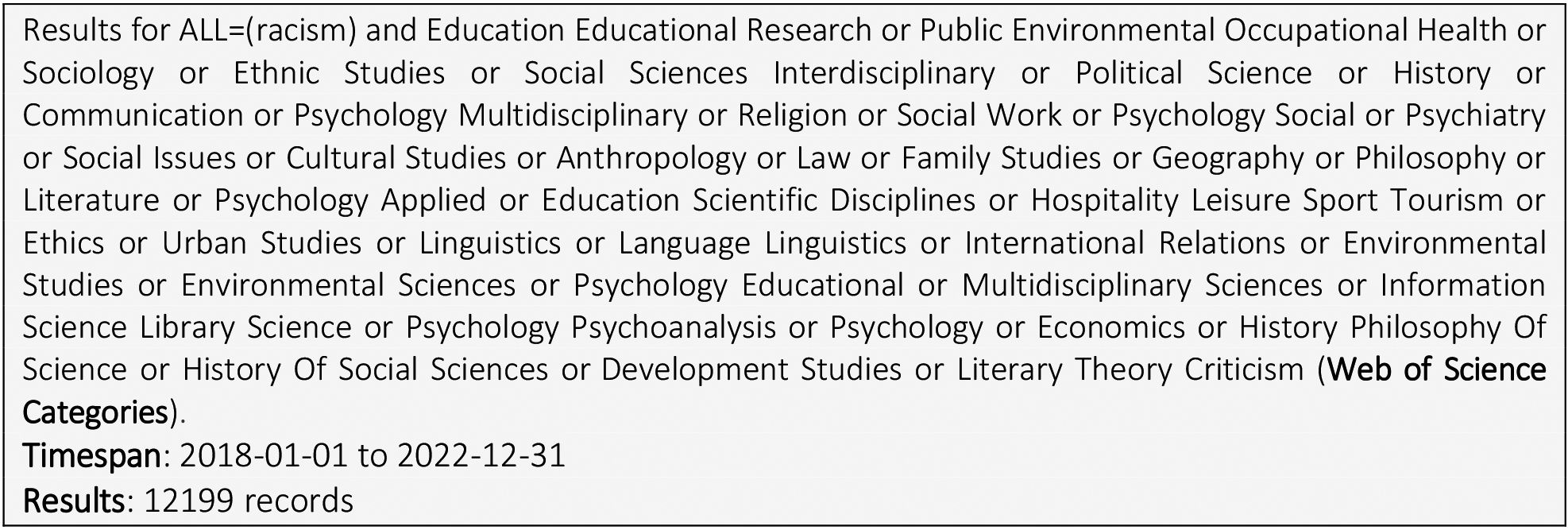
Between 2018 and 2021, the number of publications more than doubled. Given that 2022 had not ended at the time the search was performed, the number for 2022 will likely have increased by the end of the year. Table 2 shows the distribution by type of publications.
The top ten types of publications on racism
Articles constituted the vast majority of publications (85%), pointing to the fact that this topic was being dealt with in a scholarly manner, through research and not as “politics”, “conversations” or “opinion pieces”. Also, the real number of articles is likely much higher because “Early access” is not a type of publication but the number of accepted papers (1145) in early view which had not yet been assigned an issue number.
In terms of disciplinary provenance, Fig. 2 shows the top twenty fields publishing research on racism. Psychology is in the topmost position, followed by ‘Education Educational Research’ and ‘Sociology’ in the third place. Communication arrives in the 9
The top 20 social science & humanities fields publishing research on racism between 2018-2022-09. Source: WoS.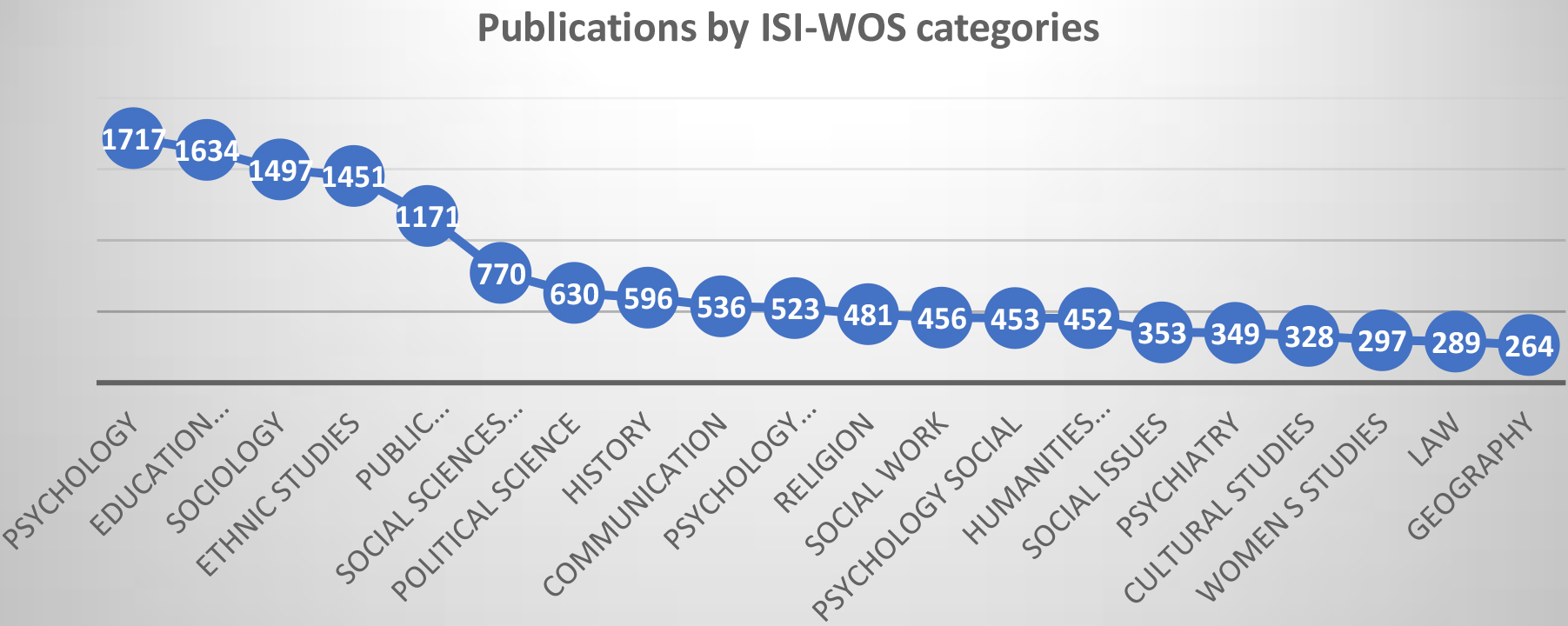
Some of the WoS categories seem composite in nature. For instance, “Social sciences interdisciplinary” and “Humanities Multidisciplinary” will likely cover publications of an inter- or multi-disciplinary nature. The WOS category “Information science Library science” which corresponds to LIS arrived at the 42
Top twenty titles (journals) publishing articles on racism between 2018–2022. Source: WoS
As expected, journals from race and ethnic studies, psychology, education, sociology top the chart. Out of the 3236 titles, two LIS journals featured in the list: LIBRARY JOURNAL10
in the 41
The next table confirms what (Colon-Aguirre, 2022) and (Inskip, 2022) had already observed, i.e., the majority of research and teaching on racism in the LIS field is produced by scholars located in the United States, except that this is the case not only for LIS but for the entire SSH. Aside from University of London in the UK which came in an honourable 3
Top twenty affiliations of authors publishing on racism worldwide. Source WoS
Top twenty countries by number of publications on racism in the social sciences and humanities between 2018-2022-09. Source. WoS.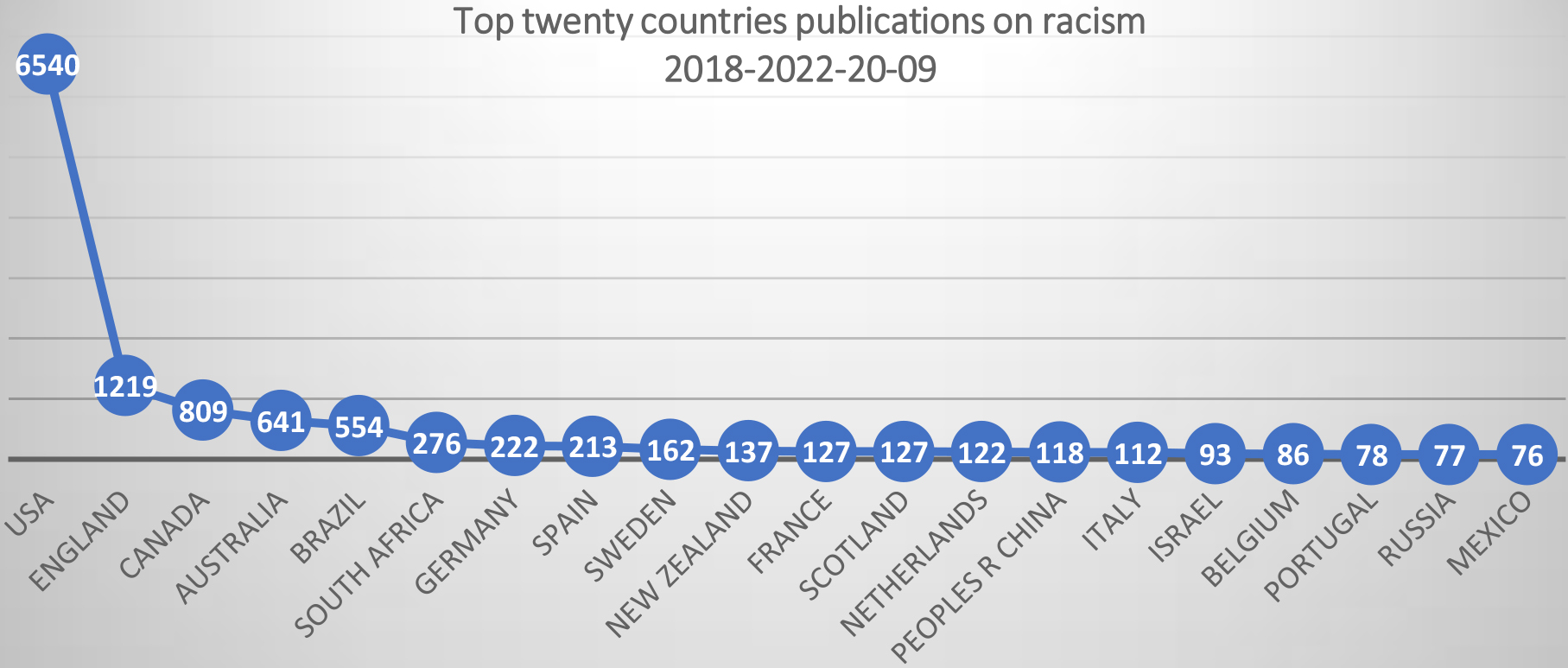
Of the 5083 affiliations found in this field, the first European institution appeared in the 100
A look at the country distribution shows a similar trend (Fig. 3). Of the total 126 countries (including the Vatican) represented, the USA again tops the chart with 6540 publications. The UK arrived second with a fifth of that number (1219) while Canada arrived in the third position with around 12% of US’s production (809). Australia was fourth with 641 publications. Perhaps not so surprisingly, Brazil and South Africa, two countries historically marked by overt, brutal forms of racism and strong racial inequalities arrived in the 5
Given the elitist nature of WoS and the little representation of LIS journals on this topic, we also searched the Library, Information Science & Technology Abstracts (LISTA) database with the same term “racism”. However, in contrast to our search on WoS, we accepted the LISTA system’s suggestions of expanding the query to “equivalent subjects”. This gave rise to the expanded query in Fig. 4.
LISTA query on publications on racism submitted on 2/04/2023.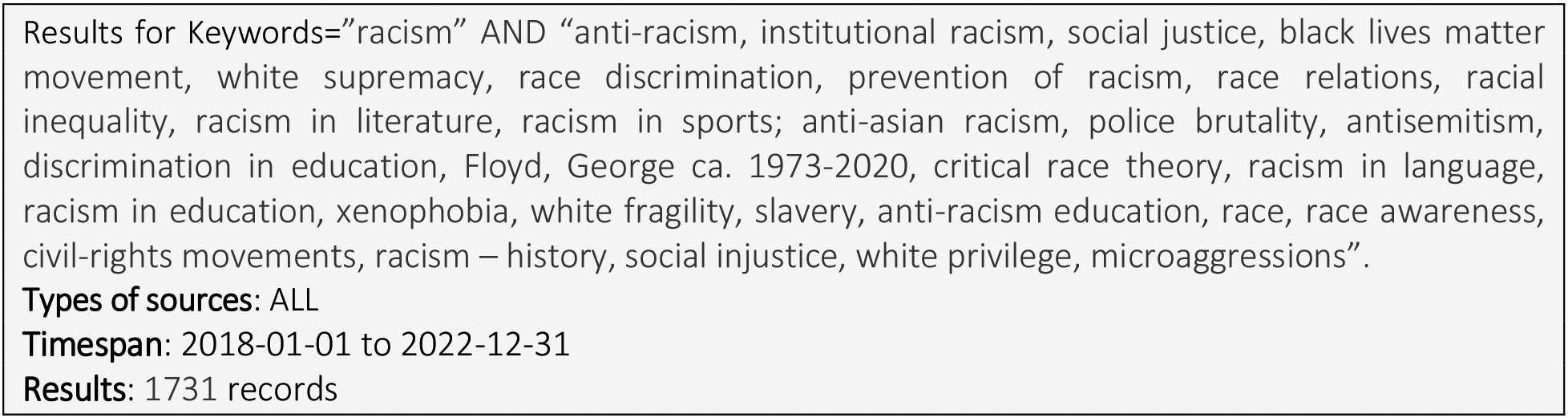
As the query subjected to LISTA was broader than that submitted to WoS and the period covered was also slightly different (it included the whole of 2022), the results cannot be compared to the multidisciplinary coverage of WoS. Also, LISTA is solely focused on LIS studies.
(Furner et al., 2022) observed that:
“Just like any other academic field, LIS/KO can be characterised demographically by considering the racial composition of its various groups of participants: its authors and readers; its journal editorial boards and conference program committees; its student cohorts and faculty members; and so on. The ongoing domination of most of these groups by white people indicates the operation of a systemic racism that can be countered only by deliberate application of affirmative action policies in favour of BIPOC (Black, Indigenous, and people of colour) groups.”
In this vein, (Ball, 2022) also affirmed that “lack of diversity and racism are linked”. Hence, while increasing diversity will not eradicate racism, it is one of the indicators of the level of prejudice and racism within a field or organization.
We carried out a preliminary qualitative survey to assess the level of DE&I policies and of anti-racism training modules within LIS and/or Knowledge Organisation (KO) institutions in Europe, the UK and Ireland. Ethnic minorities are understood here as non-whites, aka BIPOC in the US or BAME in the UK. A major difficulty was to find participants willing to take part in this survey. (Colon-Aguirre, 2022) observed that “LIS research tends to fall back on convenience sampling that relies heavily on utilizing the researchers own workplace and those in the field who are interested and available to participate in research (Lyons, 2011)” and the snowball approach which “relies on participants to help identify and locate additional participants (Cohen et al., 2018). Snowball sampling is most beneficial when a researcher is struggling to identify potential participants for a study. This difficulty could be due to the topic of the research (e.g., the topic is considered niche or taboo), due to the lack of availability of participants (e.g., a phenomenon not experienced by many), or because the researcher may not be a part of the “group” being studied (Cohen et al., 2018).”
These observations were borne out in our case as we had to fall back on these two non-probability sampling approaches: convenience sampling and snowball approach which enabled us to identify 34 Faculty members from 13 EU countries whom we knew personally. They were contacted by email and invited to fill our online questionnaire. To encourage participation, the identity of respondents is anonymous, and no contact details nor names were collected. The questionnaire was structured around 16 questions divided into three sections.
The first section sought factual information on the type of host institution, the location (country) and the length of time the respondent had been working there and if s/he has held any positions of management.
The second section sought data on the diversity of the population (ethnic minority students, staffs and Faculty) in these institutions and the level of representation of ethnic minorities in management positions.
The third section sought to ascertain the presence of anti-racism or DE&I training modules in the respondent’s institution and their relevance as a prerequisite for accreditation of LIS/KO degree programmes.
Multiple choice, binary choice and open-ended questions enabled us to gather free-text answers.
Out of the 34 people contacted, only 11 filled the questionnaire, thus a return rate of 34% which is not unusual for qualitative studies where reliance on the willingness of human subjects to participate is unavoidable. The 11 people that filled the survey represented 9 out of the 13 countries thus lending the responses some measure of representativity of the situation in LIS institutions in Europe, Ireland and the UK.
The first question on the country of residence, the UK appeared twice owing to a name variation, we have taken this into consideration in our analysis.
Distribution of respondents by location of institution.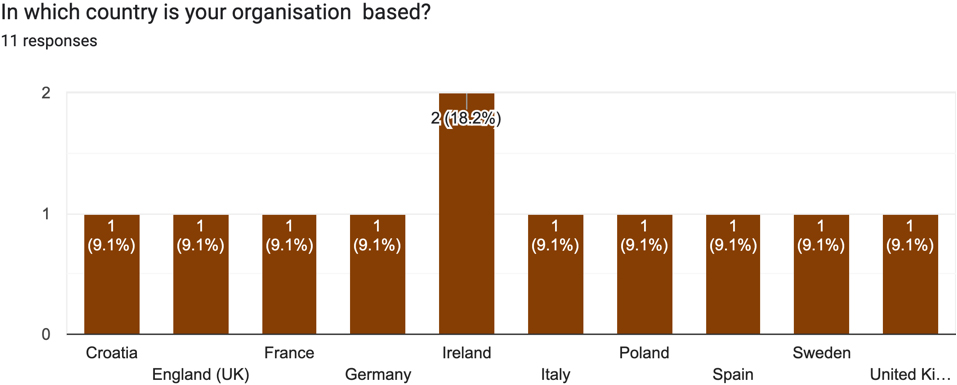
Respondents worked predominantly in universities and were scholars in stable academic positions (Fig. 6 professor, lecturer, associate professor).
Type of position held by respondents.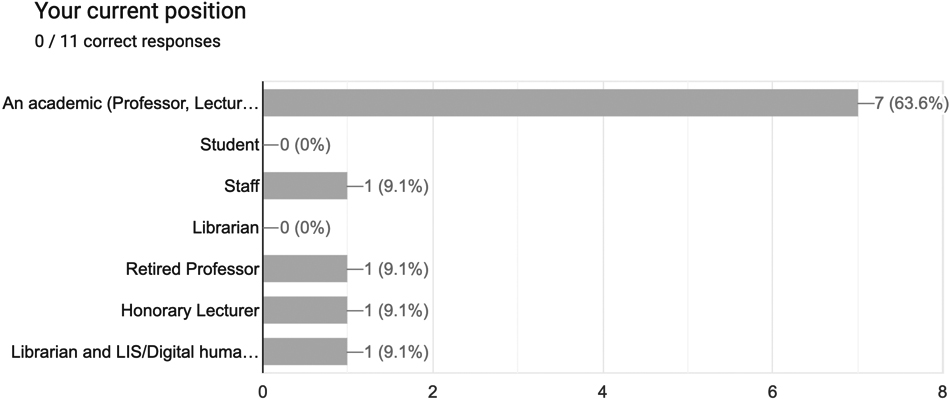
The next figure shows that most respondents have been in their institution for over 10 years, thus ensuring that their responses about institutional policies and practices on the topic were well-informed.
Length of time spent in current institution by respondents.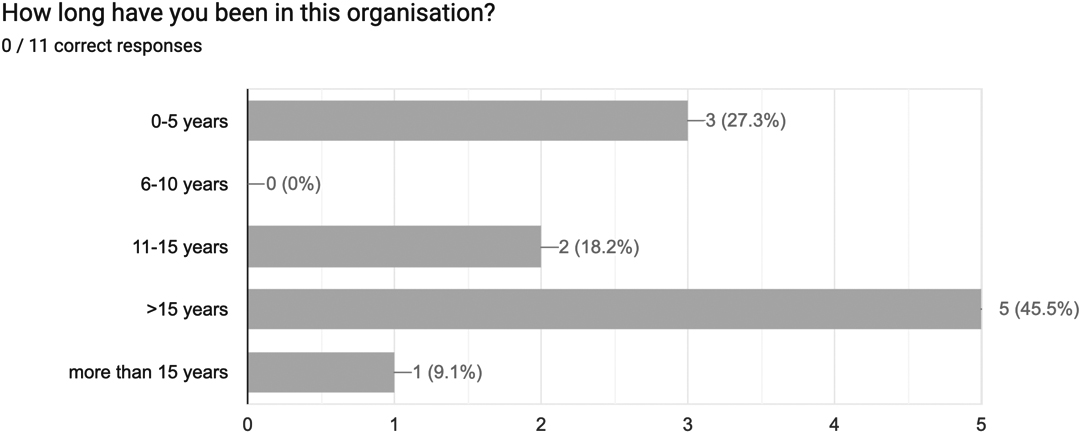
Figures 8 and 9 show the answers on the representation of ethnic minorities within the student and staff populations. Five respondents indicated having fewer than 50 ethnic minority students in their institution while two respondents indicated between 100–500. In terms of ethnic minority staff and faculty, three respondents had none in their institutions; three had fewer than five, one respondent reported having less than 10 and another respondent fewer than 20.
Representation of ethnic minority students in the institutions of respondents.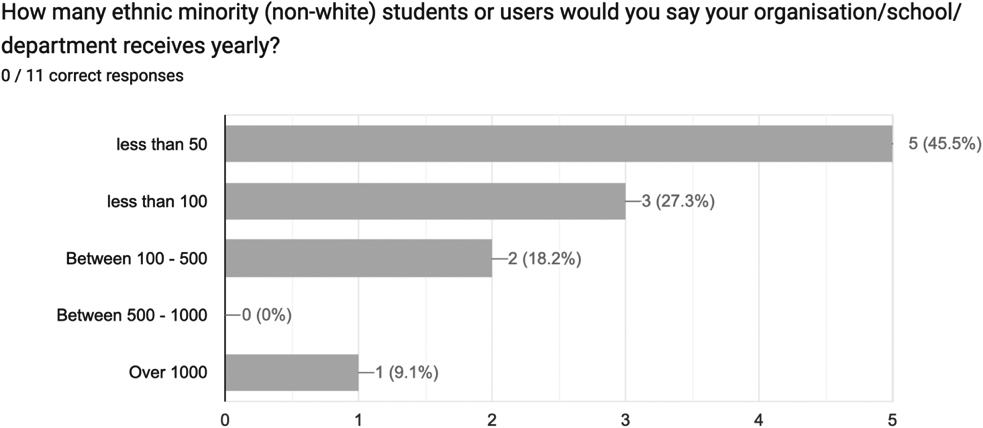
Representation of ethnic minority staff in the institutions of respondents.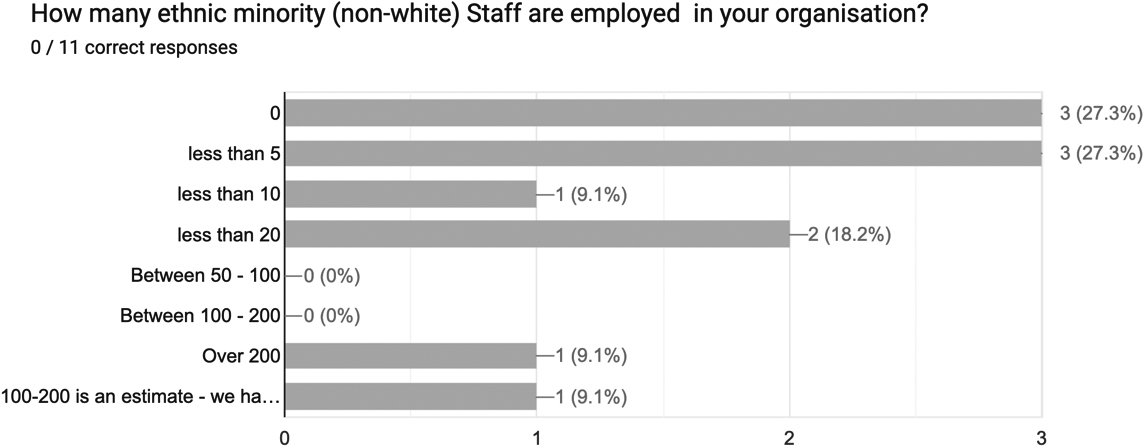
On why there was a low number of ethnic minorities within the student population, some respondents explained that they were in small size institutions situated in countries with “ethnically homogeneous populations” to which international students were not attracted.
Representation of ethnic minorities in Faculty positions.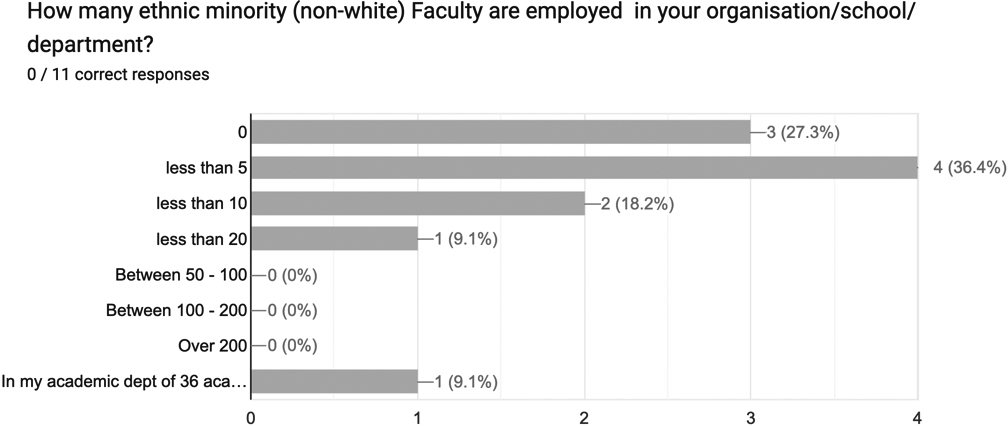
As to why there were few or no ethnic minorities amongst Faculty, one respondent explained:
“We are a comparatively small School in the university, with just 13 academic staff members. Among the 13, there are 3 faculty who are non-white, which accounts for 23% of our staff. I do not have the overall university figures, but a 2021 survey among university staff revealed approximately 13% who identified with a non-white ethnic or cultural background, or preferred not to say. It is unclear why the numbers of ethnic minority are not higher – one reason may be that recruitment of academic staff is primarily from European countries (due to work permit regulations), which are also countries with predominantly white ethnic populations. Systemic and deep-rooted inequality in these countries is also a likely cause - ethic minority populations may not have the same access to the educational opportunities that lead to academic careers. Recent recruitment drives in the university have endeavoured to redress this imbalance, and efforts in general are focused on diversifying the staff and student populations. It is clear, however, that much work remains to be done.”
Figure 11 shows the representation of ethnic minorities in management positions (Dean, Chancellor, Provost, Head of Department/school, Director of studies, etc.). Seven respondents reported “none” while two respondents reported “less than 2” and another respondent “less than 10”.
Representation of ethnic minorities who have held management positions.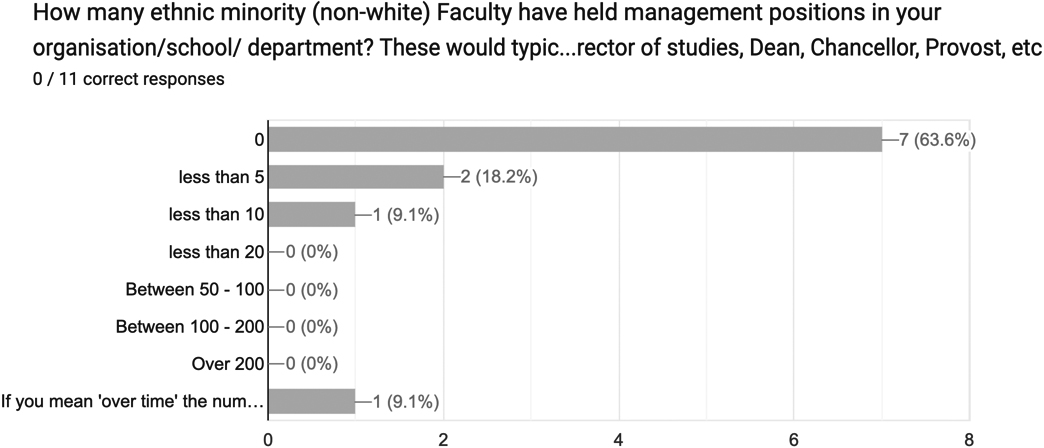
The open-ended question inviting respondents to elaborate on their response shed further light on these numbers. One respondent wrote:
“Preference is strongly given to local (Northern Ireland) candidates, who would strongly tend not to be from ethnic minorities.”
Another respondent wrote:
“There aren’t many non-whites in my organisation in general. In addition management positions usually need voting and backup, so that you have to have know other well and convince them to vote for you. It could be hard for non-whites to do that right now in Poland.”
A third respondent wrote: “This is an issue which emerges from the overall low percentage of ethnic minority academic staff in the university.”
These candid responses show that respondents were aware that racism constituted aggravating factors in the face of other prevailing factors such as local politics and favouritism and that this will further hinder the accession of people of colour (where they are present) to Faculty and management positions in their institutions.
Concerning the presence of DE&I and anti-racism training modules, the seven respondents who answered this question confirmed the existence of some form training modules in their institution.
Presence of training modules on racism and DE&I within LIS institutions in Europe.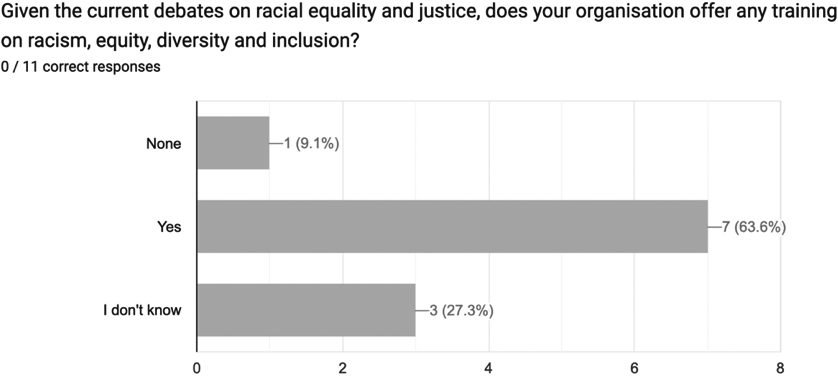
When invited to describe the nature of these trainings, responses showed a lack of uniformity on the concepts covered in these training with many citing topics such as “DE&I/EDI, race equality, implicit bias, anti-racism, critical perspectives in LIS; Equity, diversity and social sustainability”.
One respondent explained that they had “training workshops during the year, to which all staff have access – this includes sessions such as “Being Aware of Our Biases: Unconscious Bias Awareness Training.” There is also an “Equality Diversity and Inclusion in Higher Education” (EDI in HE) e-Learning Programme” which encompasses an online self-paced training course, consisting of four 30–45 minute modules, which can be completed either as an entire programme, or as a series of modules allowing participants to build up their knowledge over time at their own pace.”
Another respondent explained that: “The university provides online ‘mandatory’ race equality training for all staff at all levels, and implicit bias training for staff involved in recruitment (of staff and students), and other related roles. We use external trainers to provide staff in key leadership roles with race equality training, and this will shortly be rolled out to more staff. There is currently a debate about how training for EDI work can/should be mandatory (I think it should!), and this can slow things down. For the last 3 years students have also received anti-racism training via workshops on campus and in student accommodation.”
A third respondent simply affirmed: “We teach “critical” perspectives in all our LIS and Digital Humanities programs. Equity, diversity and social sustainability aspects are the cornerstones of what we do.”
A fourth respondent was quite vague: “mostly meetings and input sessions on equity and much on inclusion (as well digital accessibilty of services)”.
While these responses show that some initiatives are being taken in some institutions situated mainly in the UK and Ireland, there was no clarity on who the target audience was and on whether these trainings were mandatory or optional. Also, no respondent explained how the effectiveness of these trainings was measured although we did not explicitly invite respondents to elaborate on this. There is a risk that these trainings may end up being an exercise in box ticking which will render them ineffective.
On whether they thought that anti-racism modules should be integrated into LIS/KO curricula, the eleven respondents believed that this should become the norm.
On the necessity to incorporate anti-racism training modules in LIS/KO degree programmes in LIS institutions in Europe.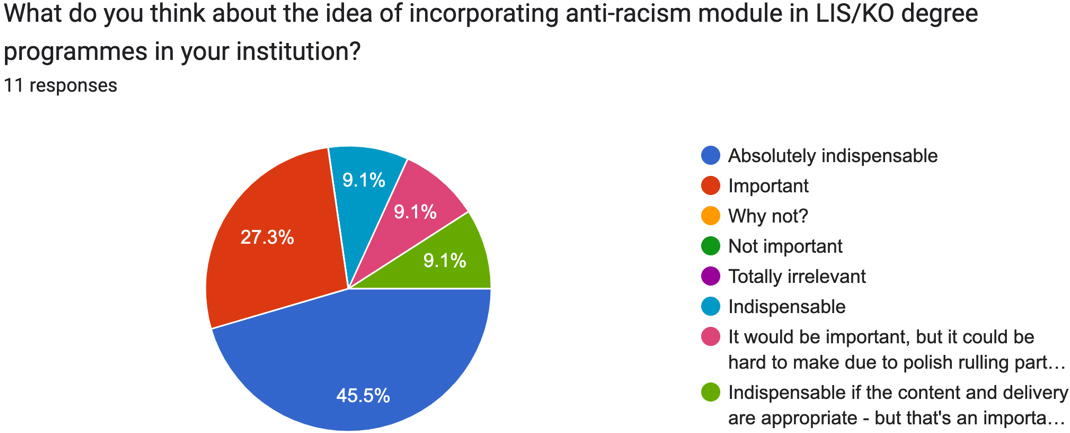
Finally, 9 out of the 11 respondents (81.8%) would be willing to join a coalition that will advocate for anti-racism pedagogy as a requirement to obtain accreditation of an LIS/Ko degree programme in the future.
Willingness to join a coalition to advocate for mandatory anti-racism training modules to obtain accreditation of LIS/KO degree programmes in Europe.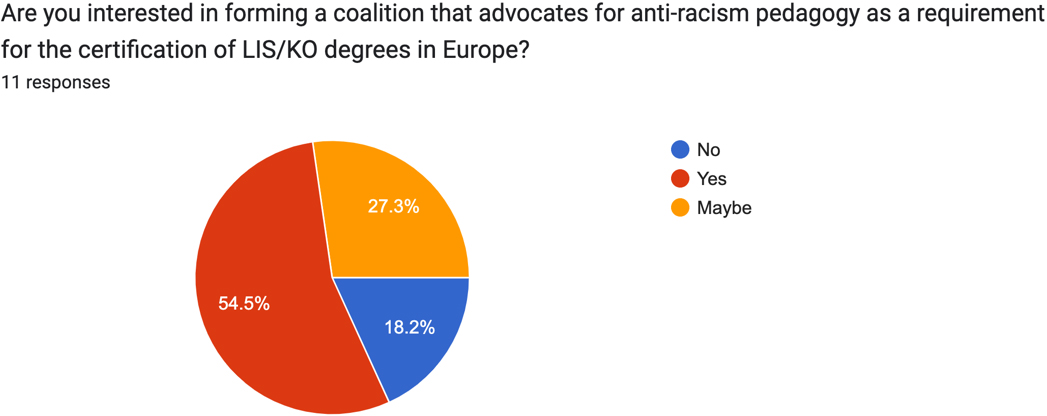
Racism is not a North American issue alone that somehow halts on the other side of the Atlantic ocean.
There appears to be a disconnect between the European LIS and the current race theoretic current sweeping through all scientific disciplines as evidenced by the exponential rise in publications on this topic over the last five years. Many disciplines and scientific institutions have begun a self-examination of their legacy towards racism and racial inequities. To this end, Nature, the topmost scientific journal launched a series of issues entitled “
Integrating teaching, research and advocacy on racial equality and diversity is not only the natural subject of sociology, anthropology and ethnic studies. With the notable exception of the UK, the European LIS landscape is dominated by white-hegemonic centrism that does not reflect the multi-ethnic makeup of the European population where a significant proportion of people of colour contribute to its economic, cultural and scientific growth.
Our exploratory survey of European faculty revealed a low level of representation of ethnic minority students and faculty, especially in management positions. When correctly tackled in the classroom (and not as a top-down institutional communication strategy), DE&I modules will at least put the topic of racial discrimination and white privilege on the curriculum and will initiate difficult but necessary conversations. If LIS wishes to remain relevant to the society, it needs to step out of its self-appointed tasks of book and document classification and tackle issues which are relevant to our 21
Footnotes
wurlhttps://www.ohchr.org/en/professionalinterest/pages/cerd.aspx.
In order to be understood, we are using as expression that has come to conventionally signify “non white” people although we are uncomfortable with it as everyone has a “colour”.
“Continental Europe or mainland Europe is the contiguous continent of Europe, excluding its surrounding islands. It can also be referred to ambiguously as the European continent” –
Jemima McEvoy, Sales Of ‘White Fragility’ – And Other Anti-Racism Books – Jumped Over 2000% After Protests Began. Forbes, July 22, 2020.
American Library Association:
Association for Library and Information Science Education (ALISE):
International Consortium of Critical Theory Programs (ICCTP):
According to a CNN Amanpour Interview program, 14
Acccording to its website “A curated collection, Web of Science Core Collection contains over 21,100 peer-reviewed, high-quality scholarly journals published worldwide (including Open Access journals) in over 250 sciences, social sciences, and arts & humanities disciplines. Conference proceedings and book data are also available”. –
This title is not an academic journal per se but “an American trade publication for librarians. It was founded in 1876 by Melvil Dewey. It reports news about the library world, emphasizing public libraries, and offers feature articles about aspects of professional practice.”