



Abstract
BACKGROUND:
In the global competition for talent, the highly skilled and professional workers are increasingly being recognized as key drivers for innovation and economic prosperity.
OBJECTIVE:
The aim of this study was to investigate the wave and determinants of the brain-drain migration of skilled human capital from China.
METHODS:
We carried out a survey across a few rural and urban areas in China with 2,077 respondents by using a probability sampling technique. For empirical estimation, we employed the logistic regression estimation technique to compute and evaluate the data.
RESULTS:
The findings of this study suggest that high wages outside China and low wages within China is the top reason to move out of China. Additionally, more opportunities and better lifestyle away from China are key factors to push skilled human capital from China to host country. The findings of our study also indicate that better education abroad has a positive correlation with the brain-drain migration intention in China.
CONCLUSIONS:
The empirical results of the survey should be a high concern for the policy makers of China. Most survey respondents were young, well-educated and highly skilled, they identified several critical reasons that compel them to migrate from China.






Introduction
Since 1950, international migration of talent is a hot issue for both developed and developing countries. International migration of skilled and professional workers raises tangible concerns about the possible adverse effects on economic growth and development of any country [1–3]. The demand of skilled human capital is always high, and many countries are not only struggling to train their skilled human capital but are also trying to attract skilled and professional human capital to fill their human capital gap [4]. In the global competition for talent, the highly skilled and professional workers are increasingly being recognized as a key driver for innovation and economic prosperity [5, 6]. The number of international migrants worldwide has been rising dramatically, from 220 million in 2010 to 258 million in 2017. It has been estimated that 244 million (equivalent to 3.4%) of the world’s population is living in countries other than their home countries [5, 6].
The People’s Republic of China (PRC) is the second largest economy in the world. The economic reforms from 1978, helped propel China through the ranks and become a major economic power. China has showed great development potential in all these years and has been ranked as world’s second largest foreign direct investment recipient after United States [7]. However, China’s economy is now growing at its slowest pace since the global financial crisis [8]. At the same time China has faced some other socio-economic issues during the past couple of years such as the lack of young skilled human capital, aging population and low fertility rate [9]. The share of Chinese population in the age bracket of 60 or above, is expected to rise rapidly, from the current 12% to 31% in 2050. China’s fertility rate has fallen to just 1.7 children per women below the population replacement level. Its population is expected to reach 1.4 billion by 2025 [10, 11]. At the same time the China has witnessed an extraordinary increase in both external and internal migration. Since1979, more than 500 million people have been migrated from rural-to-urban areas [2]. According to the national bureau of statistics of China, there are more than 60 million ethnic Chinese living abroad. This number makes Chinese the community with largest overseas migration [12]. The latest report issued by the Chinese Ministry of Education (MoE) about China’s students outflow states that nearly 610,000 Chinese students are studying abroad in 2017, up 11.7 percent increase from the previous year 2016 [13]. The top five favourite destinations for Chinese students to study abroad are; United States, United Kingdom, Australia, Canada, and France. Table 1 shows the number and percentage of Chinese students in various countries in 2016 [14] (See Table 1).
Number of Chinese students in the major destination in 2015
Number of Chinese students in the major destination in 2015
Source: [15].
Brain-drain migration in China has been extensively studied from various perspectives over the past two decades. Previous literature mostly focuses on internal migration, but it has been observed from the existing literature that the analysis on brain-drain migration is scarce and needs to be investigated comprehensively, particularly in the context of China. Basis aforementioned facts and background, the main objective of this study is to highlight the current wave and determinants of brain-drain migration intentions and to take a closer look at the issue from a Chinese perspective. It is generally acknowledged that the skilled human capital has greatly contributed to China’s economic growth and development. However, there has been mounting concern regarding brain-drain migration which could potentially curb the country’s future economic growth and development. It’s important to investigate the recent trends of brain-drain migration from China. Moreover, consistent increase in the international student migration from China is of great concern for policymakers, so it’s important to examine the current wave and determinants of brain-drain migration from China. It would help policymakers in designing more productive and effective policies in the long-term to address brain-drain migration in China. To analyze the data, logistic regression is applied due to the binary nature of the dependent variable.
This paper is different from other studies in a variety of ways. Firstly, prior studies mainly focused on the theoretical perspective of brain-drain migration in China. In this study, an empirical analysis of brain-drain migration intention was conducted to give an in-depth view of the brain-drain migration intention and to provide fresh insights to policymakers. Secondly, to the best of our knowledge, this is the first study of its nature to empirically analyze the current wave and determinants of brain-drain migration intention in China by applying the push-pull factors approach. Thirdly, this study has exploited advanced regression techniques such as logistic regression approach to analyse the data.
The rest of the paper organized in the following way; Section 2 provides a detailed literature review, Section 3, explains the methodology and data collection procedure. Section 4, discusses and analyses the data, and finally, the paper is concluded in Section 5.
Push-pull factors approach
A variety of theoretical models have been proposed to explain why international migration of skilled human capital happens. As per the basic framework, international migration of skilled human capital is the result of a combination of reasons that push or pull a person to leave their country of origin (pull factor) and reasons that attreact a person to a particular destination country (push factors) [16, 17]. Empirical studies found a set of factors that push people to migrate from under-developed or developing countries to developed countries such as more opportunities, unemployment, insecurity, poor working environments, low wages, corruption, and inadequate career development [18, 19], while pull includes the factors that attracts people to live in other countries such as better education, employment, security, high wages, better healthcare, immigration rules and better working environments [20, 21]. The following push-pull factors of brain-drian migratin are divided into three catagries: brain-drain migration and eduction, brain-drian migration and wage structures and brain-drain migration, lack of social security, basic facilities and more opportunties.
Hypothesis development
Brain-drain migration and education
Education plays a vital role in an individual’s decision-making process. Previous empirical studies highlighted that education increases the chances to migrate from developing countries to developed countries for the sake of better opportunities, better lifestyle and high wages [22, 23]. Better education in advanced countries is the major pull factor for brain-drain migration, while lack of access to good quality of education in less developing countries is the main push factor for brain-drain migration [24]. Some studies found a positive impact of brain-drain migration in the home country education, remittances, and transfer of technology [25, 26]. In fact, brain-drain migration becomes brain gain for home countries when the well-educated and skilled human capital return back to their home countries with international exposure and expertise [27].
Brain-drain migration and wages structure
Workers in several countries are outraged over the issue of poor pay. Wages are considered as key factors that can play a major role while taking migration decisions [14, 28]. Low wages in home countries and high wages in host countries can increase the chancese of brain-drain migration form home to host countries [29]. Every country needs a set of well educated professionals and the host country can easily attract them by paying them fancy salaries, provide them a good working environment and better lifestyle [30, 31]. Moreover, low wages, less opportunites and bad working environment in home countries discourage and push the skilled human capital from home to host countries [32]. Salaries and job satisfaction are potential factors that directly affect an individual’s behaviour towards work and if they stay in their home country or leave their home country [33].
Brain-drain migration, lack of social security, basic facilities and more opportunities
The link between brain-drain migration and lack of social security is not a new phenomenon. The social safety agenda is linked with societal, personal, ethnic, physical, environmental, health and cultural security [34, 35]. Moreover, brain-drain migration is also linked with social welfare which includes both financial and non-financial benefits such as unemployment bonuses, housing welfares, family relief, taxation benefits, and minimum wage structures. They play a vital role in the decision to stay or leave the home country [36]. The issues related to social insecurity issues such as high crime rate and violence play an important role when deciding to leave or stay in the home country [37]. International migration and flow of highly skilled professionals depends on the gap between social security in the country of origin and the country of destination [20].
H1: There is positive correlation between better quality of education, high salaries and more opportunities with brain-drain migration from China to other countries.
H2: There is negative correlation between better quality of education, high salaries and more opportunities with brain-drain migration from China to other countries.
The conceptual framework, research methodology and model specification
Conceptual framework
The conceptual framework of this study is based on related studies and literature review [20, 39]. The conceptual framework presents a set of push-pull factors that influences the individual’s decision to migrate from China based on the random utility theory [40]. The model comes from the family of probability models, known as a discrete choice model. The heart of probability models is random utility theory. According to the random utility theory, an individual can evaluate the utility associated with a set of viable alternatives and subsequently select the one that he perceives will yield maximum utility. Based on the conceptual framework, the study comprises of five independent variables that can influence the individual’s behaviour to migrate from China. The questionnaire was designed basis the following studies; [19, 35].
Data collection
Before data collection, ethical approval was obtained from the university human research ethic committee. With help of the university’s international student’s office, the primary data was collected from the respondents in China. The new technology has eased the process of collecting responses, thus we generated our own microdata base and collected the data online through survey monkey (https://www.surveymonkey.com/). As pointed out by [13] the advantages of online survey is low cost, less time consuming, real-time access and convenience for the respondents.
The participants of the survey were employed, students and unemployed individuals. After eliminating all the incomplete responses, the valid sample size was 2077. The data was collected from and selected from both urban and rural areas in China based on access to respondent through random sampling techniques. The questionnaire was designed based on the following studies; [19, 35] and reviews of literature books, articles, and related studies. The questionnaires were used to identify the factors that influence a Chinese individual’s intention to migrate or stay in China.
The questionnaires were measured on a five-point Likert Scale. The Likert Survey is an efficient method for data collection, it can generate a reflection on each factor and is considered significant to the overall agreement [37]. This paper employs three different sets of explanatory variables to explain the brain-drain migration intentions from China. The set of demographic variables consists of gender, marital status, age. The second set of explanatory variables includes other individual-specific attributes, such as socio-economic background, level and year of study, and years of prior professional working experience. The final set of explanatory variables contains perception-related variables, measuring how respondents perceive different aspects of either their home country or the country in which they intend to reside; for example, perceptions of wages, working environment, opportunities to apply knowledge, lifestyle, family ties, network of friends and race equality.
Econometrics strategy
A series of Pearson’s Product Correlation was applied to analyze the sample data, identifying the relationships between independent variables and the dependent variable. Logistic regression analysis was used to examine the predictive power of all factors on the overall Chinese citizen’s intention to migrate from China. The cross-tabulation analysis helped evaluate deep insights for the sake of analyzing and comparison with other categories. Statistics and data (Stata) are used to evaluate and analyze the primary data. The descriptive statistics are reported in Table 2 which includes frequencies, means, and percentages. The respondents were asked to provide their demographic information, including gender, marital status, province, skills, the field of study, level of study, work experience, etc. The earlier research considered that some of these qualifications and occupations may have important effects on respondent’s intention toward migration from China.
Brain Drain Descriptive position in China
Brain Drain Descriptive position in China
In the model brain-drain migration intention (BNDR) is the dependent variable, having a discrete choice and binary outcomes. It is assigned a value of 1 if the educated individual has intentions to go abroad, and 0 for the opposite. For models having limited (binary) dependents variables, simple regression and linear probability model may be used, but its estimates would be biased due to the binary nature of the dependent variable. Logistic regression model counters the biases and problems faced by simple regression and the linear probability model. Logistic regression has advantages e.g. flexible in explanatory variables and interpretation of meaningful results. Additionally, logistic regression analysis can be conducted when the dependent variable is dichotomous (binary), logistic regression is used to describe data and explain the relationship between one dependent binary variable and one or more nominal, ordinal, or ratio-level independent variables [25]. Therefore, we implemented logistic regression models to estimate the impact of push and pull factors on brain-drain migration intentions, based on a maximum likelihood estimation technique. The Logistic regression model of brain drain intentions can be written as follow:
Where P (BNDR
i
= 1) is the probability that the individual has brain-drain migration intention. Xi represents the explanatory variables, α is intercept and β depicts the coefficients vector. Let α + X
i
β = Z then Equation 1 can be stated as
Equation 2 demonstrates the logistic distribution function along the natural logarithm base, i.e., “e.” It also indicates the brain drain intention probability while Equation 3 represents the probability of no brain drain intention.
Equation 4 shows the natural logarithm of probability ratio
As we have assumed that +X
i
β = Z. Thus, Equation 6 illustrates the final model for estimation.
In Equation 6, Yi shows the log of odd, Xi and represents the explanatory variables. α is the intercept, β is the coefficient vector and ɛ0 is the error term. Based on the literature review, this paper is dedicated to compute empirical impacts of push (HW = High wages, MOPL = More opportunities and better lifestyle, BED = better education) and pull factors (LSFO = lack of social security, basic facilities and opportunities and LW = low wages) on brain drain in context of the Chinese economy.
Finally, the functional form of econometric models is as follows:
Push factors logistic regression:
Pull factors logistic regression:
Both; push and pull Factors logistic regression:
In Equations 7, 8 and 9;
ϕ0, ϕ4 and ϕ7 are the intercepts while ϕ1, ϕ2, ϕ3, ϕ5, ϕ6, ϕ8, ϕ9, ϕ10, ϕ11, ϕ12 are coefficients; HW = high wages, MOPL = more opportunities and better lifestyle, BED = better education, LSFO = lack of social security, basic facilities and opportunities and LW = low wages.
Descriptive statistics
Table 2 demonstrates the descriptive statistics of the study. In the survey, 52% of the respondent are female while 48% of the respondents are male. Most of the survey respondents are single (48%), while 42% of the respondents are married. The participants of the survey belong to different age groups, such as 26% of the participants lie in the age group of 33–37, 24% of the respondents belong to the age group 28–32, while, 20%, 16% and 15% of the respondents are in the age groups of 18–23, 24–27 and older than 37, respectively. From a residential perspective, 89% of the survey population was from urban areas, while only 11% of the participants belonged to the rural areas. The majority of the 58% of respondents hold a master’s degree, while 26% of the respondents hold doctorate (Ph.D.) degrees. Moreover, 74% of the respondents were working, while only 26% of the survey respondents are unemployed and students. Most of the participants (40%) have their incomes lie in the range of ten to twenty thousand RMB per month, and only 18% of the respondents lie in the range of twenty thousand or more than twenty thousand RMB respectively. By discipline wise, 29% of the respondents are from the medical sciences, 27% are from social sciences, and 25% of the respondents belong to the engineering sciences. If we are talking about professions, 30% of the respondents are doctors, 25% are engineers, 26% teachers by professions and remaining are from other professions.
Correlation matrix
Table 3 illustrates the correlation matrix between brain-drain migration intention and the factors (push-pull) that cause brain-drain migration. The results of correlation matrix indicate that brain-drain migration intentions are significant and negatively correlated with more opportunities, better lifestyle, better education, and lack of facilities in China. The results indicating that the availability of mentioned factors discourage individuals to migrate from China. Whereas, the brain-drain migration intentions and low wages in China have a statistically significant and positive correlation. From Table 3, it is concluded that there is no multi-co-linearity among the concerned variables. High wages in China have a statistically positive correlation with more opportunities, better lifestyle, lack of facilities, and low wages. While high wages and better education in China are negatively correlated, indicating that the more educated and skilled individuals are willing to work on low wages, the results validated by the work of [23]. Lack of basic facilities and low wages have a negative correlation, indicating that more people are willing to work on low wages on one condition i.e. to provide them basic facilities and better work environment, the results are validated by the work of [16].
Results of Pearson correlation matrix (N = 2077)
Results of Pearson correlation matrix (N = 2077)
Note BNDR = brain drain; HW = High wages; MOPL = More opportunities and better lifestyle; LSFO = Lack of social security, Basic facilities, and opportunities and LW = Low wages.
The cross-tabulation analysis (Table 4) explores the brain-drain migration intention across the demographic characteristics. The comparative analysis shows alarming results. In the survey, we asked the respondents about their future intentions to stay or leave China, more than half (52%) of the survey respondents show their positive intention to move aboard or have an absolute brain-drain migration intention from China. While, 48% of the survey respondents want to stay and work in China or have no brain-drain migration intention. The urban people have high (49%) brain-drain migration intention as compared to rural (41%) areas. Moreover, 55% of male respondents show their motivation to migrate from China, while 42% of female respondents show their keenness to move abroad. Married respondents have higher brain-drain migration intentions (52%) as compared unmarried respondents (48%). After getting married, the married person is responsible for their family and their daily necessities. For this purpose, a married person needs to increase their earnings and fulfill their daily necessities. It can also be validated through employment statues, 52% of employed respondents want to move aboard for the sake of better career opportunities, better lifestyle, and higher salaries. It is a negative situation for a home country when the experienced or already employed human capital migrate to other countries [41]. If discuss age, almost half (51%) of respondents have brain drain intention within the age 28–37. Age wise division also confirms that half of the respondents in the age of 28–37 want to move out. It also validates the above finding of the study that most of the younger respondents are willing to move abroad.
Demographic characteristic Brain drain intention patterns (N = 2077)
Demographic characteristic Brain drain intention patterns (N = 2077)
A student’s career after graduation was the most the important factor in determining whether to migrate to other country or stay and work at home country. Here we can see alarming results in the survey where results show that (68%) of technical degree holders, (61%) of Ph.D. degree holders and (50%) of master’s degree holders are willing to migrate from the Peoples Republic of China. The respondents of the survey identified that lack of better opportunities, environmental issues and lack of better education are the vital driving forces to leave China [42]. 53% of the survey respondents with a major in engineering sciences and, 51% of the respondents with a major in medical sciences have brain-drain migration intention to move abroad. The art and music respondents have less (44%) brain-drain migration intention as compared to engineering sciences (53%), medical sciences and social sciences (51%). Moreover, professional human capital is more likely to migrate as compared students. 55% of doctors and (53%) engineers have more brain-drain migration intention as compared to teachers (49%) and students (35%). We can assume that the new generation and especially students show confidence in the improvement of China and they are more optimistic about their career, job opportunities, better environment as compared to the professional human capital. Based on the survey results, the most competent, highly skilled and well-educated human capital want to migrate from the People’s Republic of China (PRC).
Table 5 presents the three types of logistic are estimated for push factor, pull factor and for both push-pull factor together, named as Model (1), Model (2) and Model (3) in each estimation division, respectively. Estimation is done through logistics model because our endogenous variable is dichotomous (binary) in nature. The respondents were asked to choose the most important factors that affect their decision to move or stay in the China. In our empirical analysis we find strong evidence that the high wages outside of China and low wages within China can be accounted for as the top reason to move from China. The results verify that high wages in aboard and low wages in China have a statistically significant positive impact on brain drain intention. Our findings are supported by the work of [43]. The coefficient of low wages (LW) is higher than that of high wages (HW). This implies that greater magnitude of low wages (LW) in the home country pushes skilled human capital to migrate from home countries to host countries, while the higher wages in destination countries are pulling skilled human capital from the home countries [44]. Our empirical results suggest that more opportunities and better lifestyle abroad are key factors to push skilled human capital from China. The results verify that more opportunities and better lifestyle abroad have a negative impact on the brain-drain migration intention on China. The lack of opportunities and poor lifestyle in home country compel skilled human capital to move for more opportunities and a better lifestyle [45]. To provide more opportunities and improve the lifestyle, the home country can play an important role to reduce the brain-drain migration intention in the People’s Republic of Chinese [46]. Lack of basic facilities in the home country (such as social securities, and social welfare) have a significant negative impact on the brain-drain migration intention in China. The findings of the study were supported by the work of [9]. The results indicate that better education abroad has a positive correlation with brain-drain migration intention in China. Mainland Chinese parents are strongly in the favour of sending their children abroad for higher studies to get international exposure, to develop a broader vision, and to gain lots of confidence thus becoming remarkably independent [47]. Improving the education system within the home country can reduce the brain-drain migration intention of China. In this regard, the study finding was supported by the work of [24]. Logistics Goodness of Fit (GOF) is statistically significant at 1% level in each model (See Table 6). Link test was applied to investigate the functional form and omitted variable problem [48]. The prediction square (hats) is statistically insignificant, which revealed that all our models passed the Link test. There is a chance of multi-co-linearity in the primary data analysis. The estimated magnitudes become unstable and have wildly inflated standard errors. Thus, the Variance Inflating Factor (VIF) and Tolerance (I/VIF) were computed from the full sample to diagnose the multi-co-linearity level in the data. As a rule of thumb, if the VIF and Tolerance values are greater than 10 and 0.1 respectively, the data may need to be further investigated. Mean VIF is 1.01, 1.00 and 1.03 in push factor model; pull factor model and both factors model respectively, which is acceptable (See Table 5).
Logistics regression model (Dependent variable = BNDR), N = 2077
Logistics regression model (Dependent variable = BNDR), N = 2077
Note: GOF = goodness of fit, VIF = variance inflating factor, TOL = tolerance level, hat and hatsq indicate prediction and prediction square, * indicates 1 % level of significance.
Sensitivity and Specificity analysis
Model accuracy
Sensitivity and specificity analysis is applied to compute the robustness and reliability of estimated results from logistic regressions [20, 21]. Table 6 demonstrates the results of model accuracy for Model 1–3. Sensitivity and specificity indicates the model power to predict true positive, and negative values in true cases (actual values) within prevailing model respectively [37]. The geomatical illustration of Model 1–3, is presented in Figs. 2, 3 & 4. Correct classification reveals 63.07 %, 62.40 %, and 63.26 % model accuracy for Pull (Model 1), Push (Model 2) and both Pull & Push (Model 3) respectively.
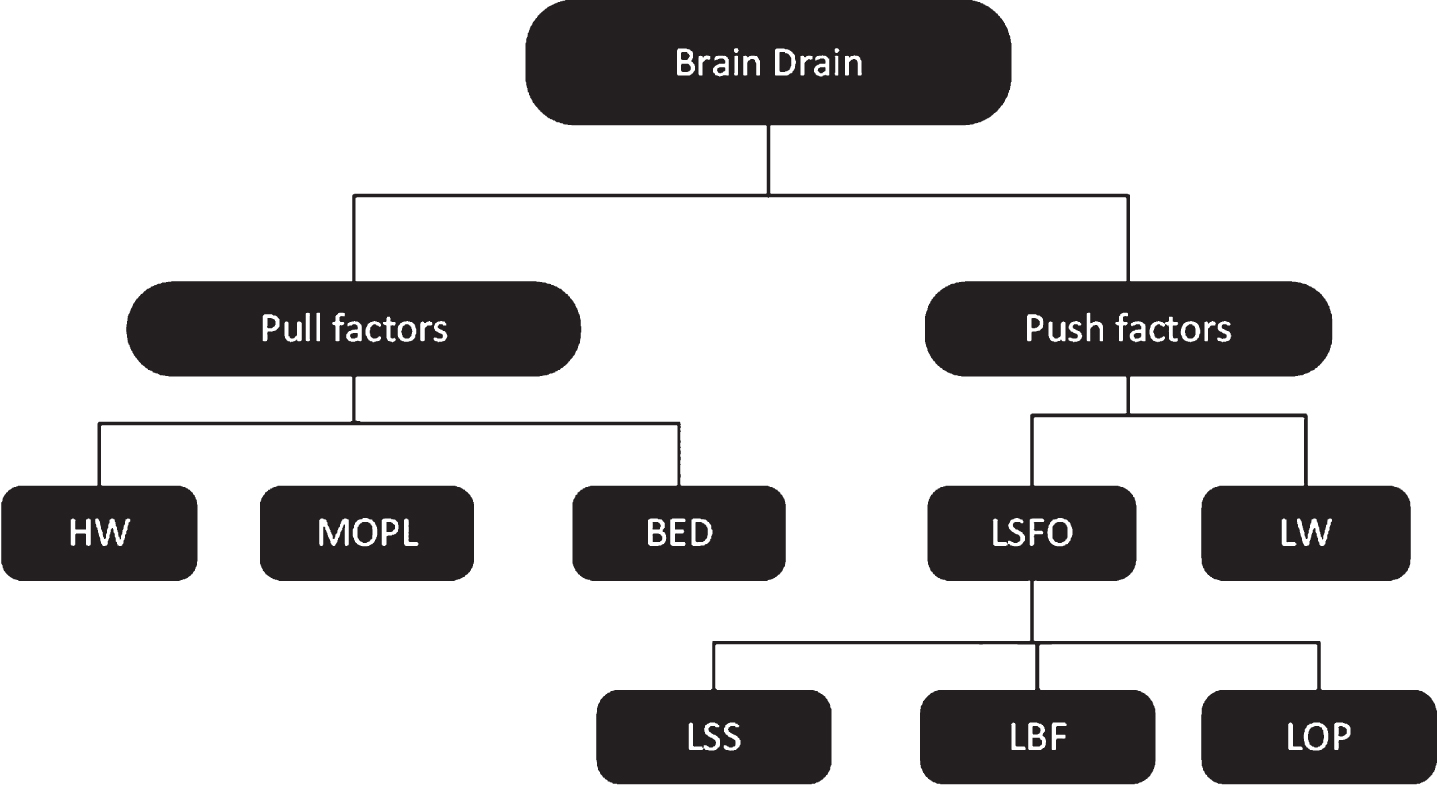
Demonstrates the theoretical framework of the research model.
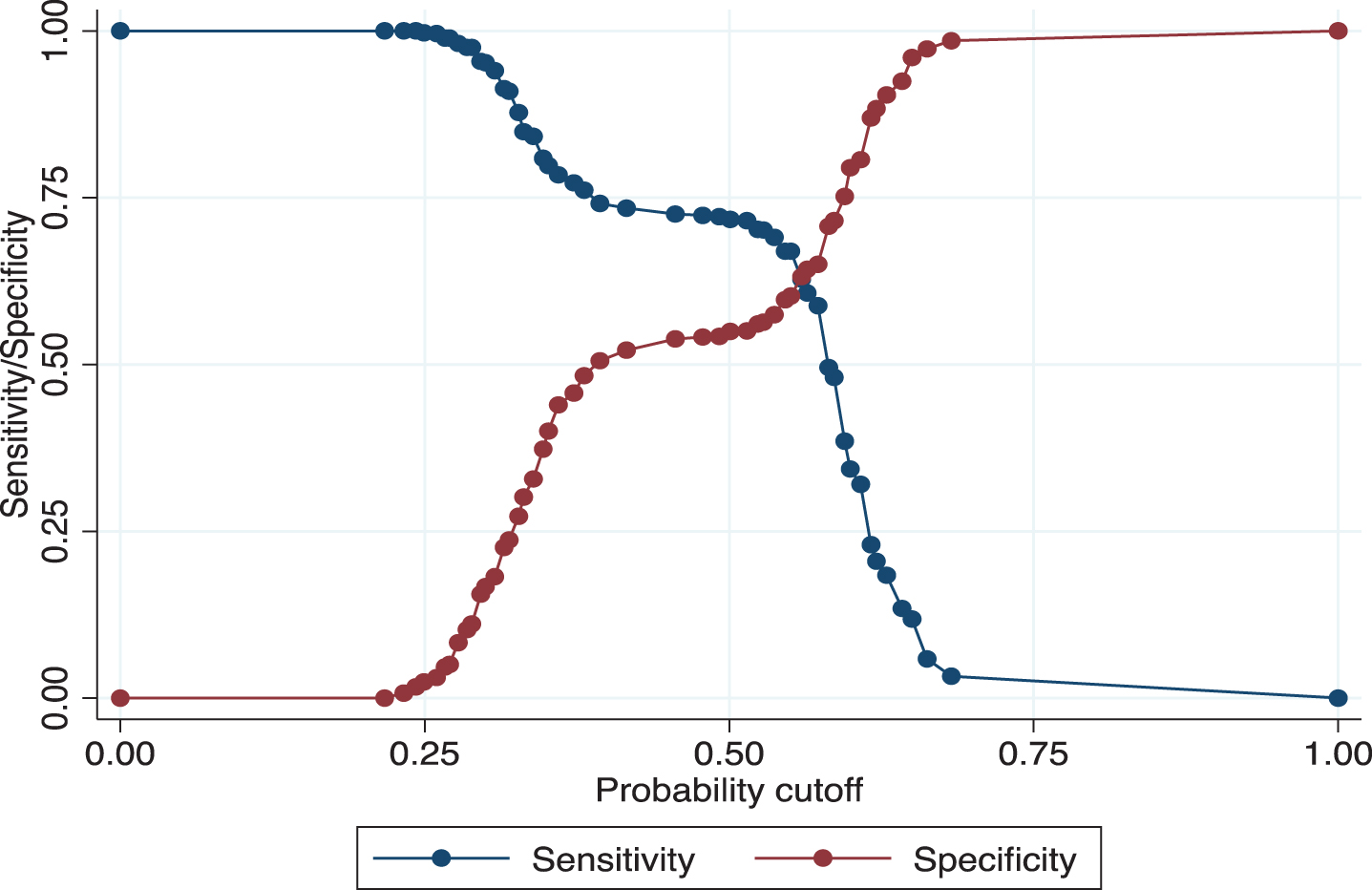
Push factor model validity and accuracy analysis.
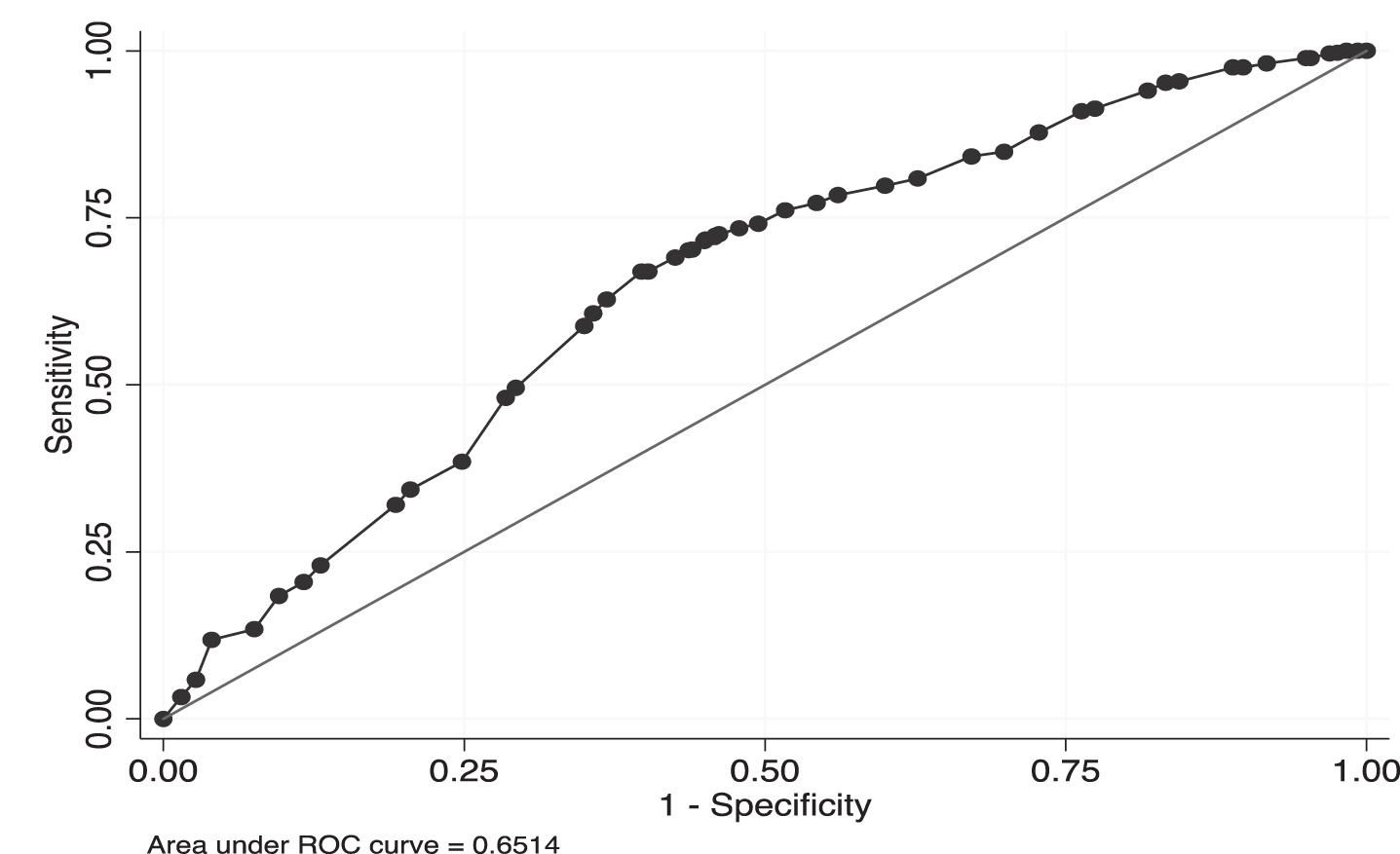
Push factor model ROC analysis.
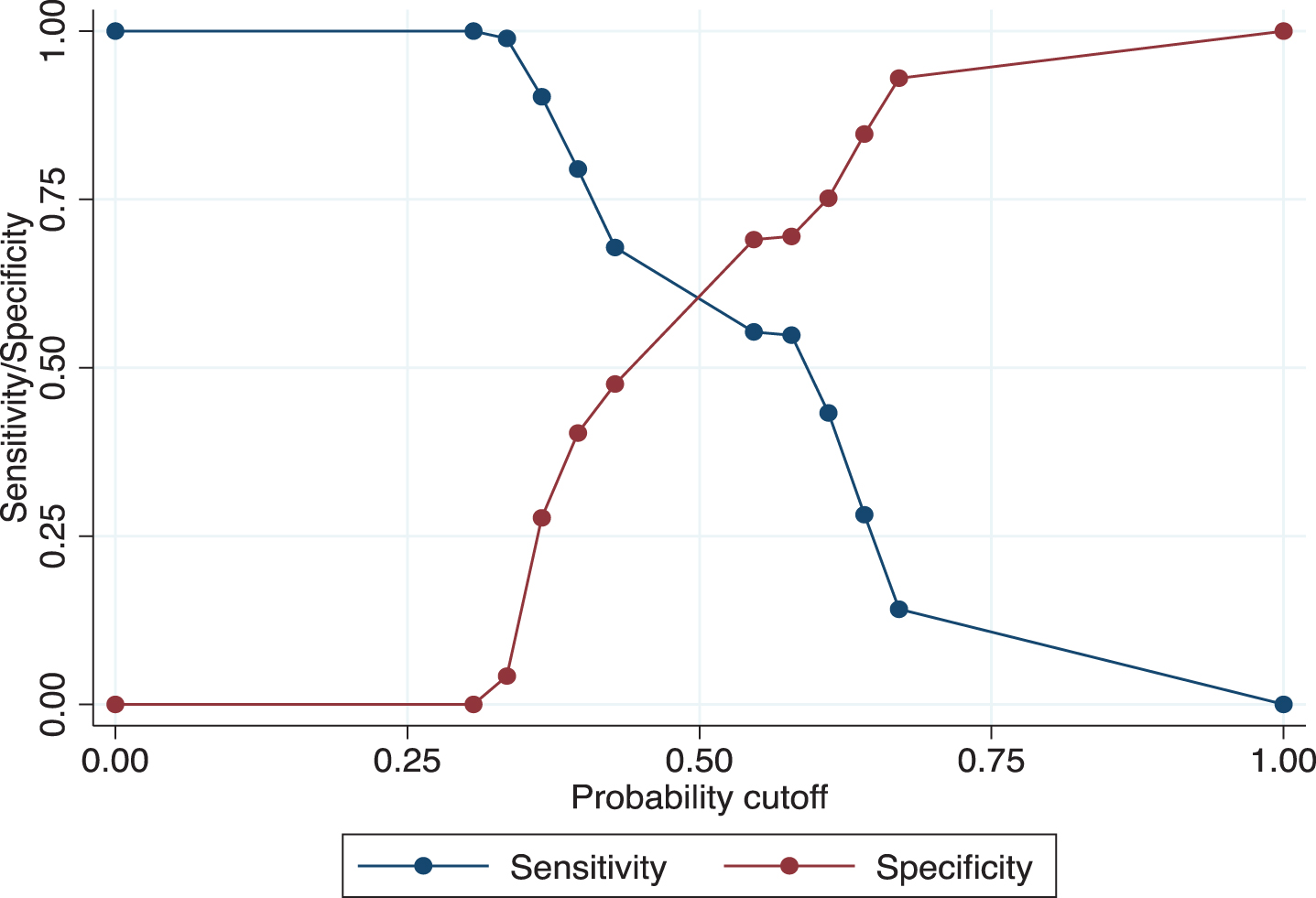
Pull factor model validity and accuracy analysis.
ROC analysis, area under the ROC curve, is also conducted to test the validity as an additional goodness fit [20, 21]. It infers the true and false rate cut-offs and is presented in Figs. 5, 6 & 7 for Pull (Model 1), Push (Model 2) and both Pull & Push (Model 3) respectively. Higher magnitude of ROC indicates the best model fit and must lie between 0.5 and 1 [37]. The estimated values of Pull (Model 1), Push (Model 2) and both Pull & Push (Model 3) are 0.6514, 0.6437, and 0.6966 subsequently. Hence, the ROC analysis infers 65.14 %, 64.14 %, and 69.66 % correctly predicted in case of Pull (Model 1), Push (Model 2) and both Pull & Push (Model 3) subsequently.

Push factor model ROC analysis.

Push-Pull factor model validity and accuracy analysis.
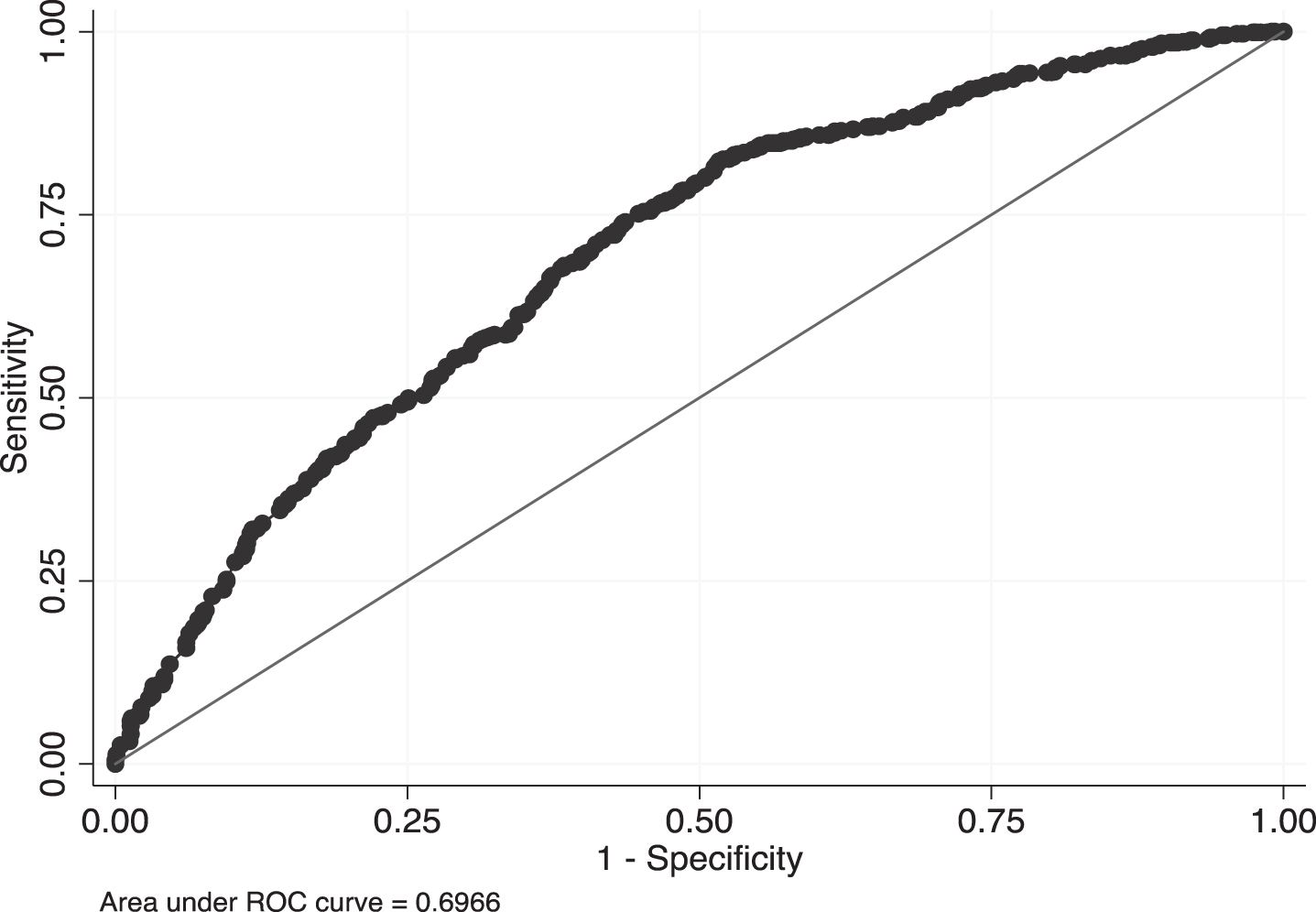
Push-Pull factor model ROC analysis.
The present study also goes through the Ramsey test to address the endogeneity issue and specification-error. As the cross-sectional data has endogeneity due to the omitted variable(s) problem. The results from the Ramsey test are reported at the bottom of Table 6. The null hypothesis of Ramsey can be stated as “the estimated model has no omitted variables”. Hence, it accepts the null hypothesis and infers that there is no specification-error and endogeneity problem in estimated Models 1–3.
Conclusions and policy recommendations
This paper sets out to investigate the wave and determinants of brain-drain migration intentions from China. Several determinants have been identified in this study. The findings of this study suggest that high wages outside China and low wages within China is accounted as the top reason to move out from China. Additionally, more opportunities and better lifestyle outside China are key factors to push skilled human capital from China to host country. The findings of our study also indicate that better education abroad has a positive correlation with brain-drain migration intention in China. The empirical results of the survey should be of high concern for the policy makers of China. Most of the survey respondents were young, well-educated and highly skilled and they identified several critical reasons that compel them to migrate from China.
The population potential can be turned into economic advantages if the Chinese government implements a labour friendly policy, thus making it one of the national priorities. The government of China already implements policies and initiates the “thousand talents program”, to bring their skilled human capital back to home, but still policymakers are recommended; (i) to improve the basic structure of the education system. (ii) the government of the day needs to ensure good employment opportunities are present in China. (iii) China need to revisit their labour policy and raise the average salaries in the country to allow local companies to better compete with foreign companies for talent and to pay them good salaries. (iv) favourable taxation for entrepreneurs will not only stop brain drain but also increase the employment opportunities within the country. For career incentives, China needs to create more employment opportunities by promoting economic development, resolving employment problems, encouraging and guiding non-state-owned businesses and increasing its employment capacity. Although this study is greatly important for policymakers, it has limitations that pave the way towards future research; such as the study employs a non-stochastic sampling technique with limited data set which limits it generalizability. In future, random probability sampling is recommended to collect large scale data to increase the generalizability of results.