



Abstract
BACKGROUND:
Knowledge remains an essential intangible resource for competitive advantage in organizations. In the context of knowledge management (KM) strategy, knowledge management systems (KMS) help to manage scattered knowledge and promote knowledge innovation. However, KMS adoption is context-specific and depends on several factors.
OBJECTIVE:
This paper proposes a five-factor model and tests empirically the presence support and effectiveness of these factors, which are antecedent to KMS adoption.
METHODS:
The University of Education, Winneba (UEW) in Ghana, was used as an illustrative case to test the applicability of the model. As regards the data analysis, we collected data from teaching and non-teaching staff using questionnaires and semi-structured interviews. We reviewed the extant literature thoroughly to explore the five factors to develop our conceptual model. The factors are management and leadership support (MaLS), knowledge sharing and transfer capability (KSaTC), support of knowledge architecture and infrastructure (SKAaI), knowledge innovation capability (KIC), and knowledge access control policy (KACP).
RESULTS:
Our study established that SKAaI has a positive and significant relationship with KSaTC, MaLS, and KACP. Also, MaLS correlated positively and significantly with KSaTC, while KSaTC has a significant direct relationship with KIC but an inverse relationship with KACP. Thus, this study is useful to both researchers and practitioners regarding a thorough examination of these factors.
CONCLUSIONS:
Practitioners and researchers must systematically examine these five factors concerning their extent of the impact, prioritization, and significant contribution to KM strategies.
Keywords


Introduction
Like other traditional resources that had gained much recognition in the past decades, knowledge (explicit and tacit) as an intangible asset had continuously evolved across time, context, and space in organizations. Today, practitioners and researchers in the IS discipline in general and KMS, in particular, elevate and still recognize knowledge as an essential intangible resource(e.g., [1]). The success and competitiveness of organizations are derived from possessed unique knowledge [2–4]. Other works such as [5–7] ascribed an organization’s sustainable competitive edge to rather its effective management of knowledge. This long-term competitive advantage, according to the resource-based view (RBV) and the knowledge-based view (KBV), are configurationally aligned with strategic business goals to define results-oriented knowledge management (KM) initiatives [8–10]. [11, 12]. described KM as a vehicle to integrating an organization’s capabilities with these two perspectives, particularly in ways that lead to creativity, innovation, and performance. Organizations invest in KMS to effectively execute KM activities for anticipated benefits. For instance, [13] associated an increase in KMS investment to an anticipated increased net benefit. Similarly, [14, 15] asserted that a more significant number of firms recognized the need to engage in knowledge management initiatives, and this effort correspondingly had increased the investment rate in KMS. Coherent with DeLone and McLean’s model, the goal of the net benefits is indicative of IS success.
KMS might not achieve success in all instances of its adoption and diffusion in organizations. [16] pointed out that only about 30 percent of KM initiatives deployed by organizations could reap full net benefits. This suggests how careful and tactical the approach to KM initiatives should be. However, the design and implementation of KMS are context-specific and dependent on those business requirements that KMS is envisaged to address. In a broader sense, KMS defines all those knowledge architecture and technologies (hardware and software) that enable people in and across an organization to capture, create, store, share, disseminate, and reuse knowledge [17]. Clearly, KMS can be understood at different contexts-level (individual, organizational, environmental, and business process) regarding the interplay between social and technical factors. This socio-technical viewpoint allows these contexts to assimilate in a multi-level fashion [18]. The intriguing nature of socio-technical KMS impacts organizational learning, knowledge capabilities, and knowledge-value creation.
While many studies in the extant KMS literature focused on KMS adoption and diffusion (e.g., [19–21]), others attempted to establish some correlations between some socio-technical KMS success factors as well as corporate performance and KMS adoption, usage and effects (e.g., [22, 23]). Metrics identified in KMS literature also targeted success factors that determine KMS service quality relative to organizational capabilities. Such works include [24–26]. In a socio-technical perspective, many works in KMS literature find social factors and dimensions inseparable from technical factors. Hence, a broad range of knowledge management initiatives aims at defining socio-technical contexts for successful KMS. This holistic view enables organizations to expand KMS architecture and technologies to empower knowledge sharing and transfer for quality organizational learning. It can be contended that KMS is a multi-layered system transitioning from social elements to technical factors, and therefore, cannot be loosely decoupled.
Interestingly, more studies have been done on IS success factors in general than KMS success factors. Perhaps, a simple reason is that KMS is a narrower area of IS and strictly intended for knowledge communications, learning, and sharing collaboratively. Few studies that attempt to address KMS success factors also draw on some IS success factors while at the same time focusing on knowledge-sharing capabilities (KSC) and knowledge-value creation (KVC). The motivation for such studies originates from individuals and organizational learning experiences that impact growth and innovation.
Today, in KMS literature, many frameworks, models, or theories find it useful to combine social and technological contexts to explain conditions, constraints, and factors that potentially impact KMS adoption, use, and success. For instance, the success of KMS use and knowledge quality is contingent on perceived KMS usefulness, perceived use, and knowledge architecture capabilities –a contingency perspective [27]. However, an aspect in the KMS literature that remained incoherent is the failure to ensure the presence support and effectiveness of five crucial factors for KMS design and implementation. In this study, we uncover these five factors. This study recognizes theories and models such as theDeLone and McLean IS Model, contingency theory, social system theory, organizational capability theory, RBV, and KBV. Based on these theories, we develop a model that explains the interconnectedness of these factors and the need for them to be present and productive for KMS success. Success, in this sense, is antecedent to metrics used to measure KMS success empirically. Thus, we justify with our proposed model that any KMS success is also dependent on the availability and effectiveness of these five factors and their potential and existential relationships. Hence, this paper contributes specifically to the KMS literature by emphasizing that organizations can be more successful when these five factors are fully present and effective, including their supportive interrelatedness.
This paper is organized as follows. Section two discusses the theoretical basis of the proposed five-factor model. Section three explains the methodology of the study, whereas section four presents the results of the analysis. Section five discusses the results. In section six, we give the implications of the study. Section seven gives the limitations of the research and future work. The last section, that is, section eight, gives conclusions of the study.
The theoretical basis of the proposed model
The five-factor model preludes KMS success measurement, and these factors are critical to any contextual KMS success measurement. The individual, team, knowledge-sharing platform specialists/section leaders, and senior management reinforce the presence and effectiveness of the five factors. As noted by [26], context is vital in the specification and application of the IS model. By this notion, we introduce the context of factor presence and effectiveness before measuring KMS success. Thus, the terms presence support and effectiveness in KMS setting mean sustainability and success respectfully. While the former expresses a phenomenon of a long-term effect of knowledge strategy, the latter emphasizes the achievement of expected knowledge-oriented results. Our discussion highlights the need to sustain these factors while ensuring the quality success of each factor.
Knowledge architecture and infrastructure
Knowledge architecture refers to an information-based framework that enables knowledge managers/workers to transform unconnected data in a connected fashion and into usable/reusable knowledge. For effective KM, [18] emphasized that knowledge architecture is a critical and fundamental requirement for KMS solution development. In practice, from knowledge representation to knowledge usability/reusability, knowledge managers in knowledge-intensive organizations continue to find innovative ways in the design and specification of knowledge architecture. Mostly, tacit and explicit knowledge in their complex forms gets scattered across hierarchical levels within an organization. Such heterogeneous information needs to be identified, organized and made accessible for reuse. Knowledge architecture thus enables knowledge managers to define knowledge processes based on functional operating procedures and the lifespan of information contained in knowledge repositories. To better understand knowledge and knowledge processes, a framework is necessary to guide the design and specification in whatever contexts and purposes [28]. Thus, organizations need to institutionalize comprehensive and robust knowledge architecture that leverages knowledge in a more powerful way across all functional areas.
Knowledge infrastructure refers to all knowledge-related elements that facilitate knowledge creation, capture, organization, access, and use/reuse of knowledge assets. In the KMS context, it is purely a socio-technical phenomenon that embraces an organization’s culture, structure, information technology –hardware and software [77], knowledge (tacit and explicit), and physical environment (internal and external). [9, 77] saw knowledge infrastructure as rather a capability in its own right. They argued that capabilities in culture, structure, and technology are generic to an organization’s knowledge infrastructure capability. Interestingly, [18] conceptualized knowledge infrastructure capability as consisting of infoculture, infostructure, and infrastructure. Also, [29] stressed the need to leverage knowledge through infrastructure capability in ways that enhance knowledge process capability. Thus, we argue that organizations must ensure the presence and effectiveness of more robust knowledge architecture and infrastructure that lowers risks associated with unconnected data, eliminates time loss, and reduces the high cost involved in operationalizing knowledge platforms.
The convoy effect of effective knowledge management, knowledge analysis, and knowledge informatics tends to enhance the competitiveness of knowledge-intensive organizations. Besides, while knowledge architecture and infrastructure facilitate the activities of organizational management and leadership, the ability of performance leaders or knowledge managers to innovate is contingent on the supportiveness of individuals and work teams across systems’ functionalities.
Management and leadership
Senior managers and functional leaders play an essential role in KMS adoption and usage. They are the conduit to lower-level business operations. A weak connection implies a lack of knowledge-sharing capability. To initiate a move towards KMS diffusion, senior management must have a clear knowledge strategy. This depends mainly on how well management embraces KMS diffusion and adoption. If they do, they would surely support all efforts that address KMS concerns in the spate of developing and deploying a supportive knowledge management strategy. The strategy must define a knowledge trajectory in anticipation of persistent knowledge creation and knowledge sharing built into the mindset of people in the organization. As regards implementation concerns, functional leaders must have a more profound understanding of the knowledge strategy to subsequently inculcate into the mindset of people from which much innovation drive is expected.
Intension to share knowledge and attitudes towards knowledge sharing are managerially related to knowledge flows at all levels backed by support, commitment, and motivation from senior management [30–32]. In essence, the ability of managers and leaders to excellently sustain the shared value of knowledge sharing depends on the presence of support from management [33]. For better delivery of knowledge infrastructure by managers [77], [33], for example, suggested that transformational leadership as more suitable for promoting KM initiatives. If workers feel at ease with senior management’s efforts towards systems’ design and implementation protocols, the notion of sharing knowledge becomes a reflection of their anticipated benefits. Thus, for a trust-building strategy, the presence of managers and leaders becomes a form of re-orientation to the entities involved in knowledge sharing. As trust in senior management and leaders increases, knowledge-sharing capability also increases [34, 35]. Knowledge innovation capability improves if the organization’s ability to innovate at the individual, team, and functional levels becomes more distinct, observable, and measurable. Hence, we emphasize that the presence (i.e., support in all forms, commitment, motivation, and trust.) and effectiveness (i.e., KM initiatives, ease of adoption, ease of KMS orientation/re-orientation, willful power to share, and document knowledge) of senior management and leaders are inevitable to KMS success.
Knowledge innovation capability
Innovation diffusion theory approaches KM effectiveness in the context of innovation capability [36]. Also, organizational capability theory highlights organizational capability as a contributing force towards KM effectiveness. Both theories in KMS context are time-bound because the more innovative individuals and teams become over time, the faster the growth in organizational intellectual capability.
Knowledge innovation capability thus facilitates effective knowledge sharing. The presence effect of this factor in a KMS environment is to enhance the rate at which new knowledge is given recognition and accepted for use for further increased innovation. A question that remains a challenge to KMS practitioners and researchers is: In what shared vision will people willingly contribute knowledge to the system and consciously participate in knowledge sharing? The premise of answering this question is the ability to create knowledge usable for its context and purpose in a sustainable manner. As a result of this, [9,37, 9,37] identified the leverage of knowledge-based capabilities as being dependent on building new knowledge that reinforces organizational capability. For example, organizations in looking up for unique product designs to satisfy customers can achieve long-term competitiveness by combining IT capability with KM capability [38]. Thus, it is not a mere hail of a one-off knowledge innovation but somewhat sustainable patterns of knowledge innovation capability emerging from various functional units across the organization.
The success effect of knowledge innovation capability relates to the unique abilities of an organization towards knowledge innovation. As much as people continue to learn, adapt, and participate in knowledge sharing, the ability to advance knowledge innovation is not limited to the individual knowledge worker or team but the entire organization. In light of this, people and teams dynamically influence knowledge innovation capability across time and space. A situation that [39] saw as a continuum from the inventive capability to improved capability. Hence, the presence and success effects of knowledge innovation capability: 1) integrates innovation culture 2) increases knowledge innovation intention and behavior 3) impacts adaptive system strategies, and 4) reinforces knowledge entrepreneurship in the organization. Thus, we argue that the presence and effectiveness of knowledge innovation capability factor are critical to building quality knowledge and competence across an organization.
Knowledge access control policy
Access control is a security-based mechanism that regulates the ability of subjects (e.g., users or programs) to access valuable organizational objects (e.g., knowledge or database assets, files, printers, or computers). Technically, the term “access” defines information flow (e.g., information request, information grant, and information denial) between the subject and the object [40]. A subject defines the entity that requests access to use an object (i.e., resource). An object refers to the entity for which an access request is made. It contains the needed information by the subject. A subject is given specific privileges within the system to access objects. The two mediating operations between a subject and an object are access grant and access denial. Thus, a subject requesting access to use an object is either granted permission or denied. If a grant is permitted, then the subject satisfies the constraints on the object. It is then identified as privileged to access the object; otherwise, the subject is denied. In this sense, identity verification, authentication, and authorization control principles are applied. With this understanding, access control on organizational information assets enables organizations to monitor, restrict, and control access and the use of resources. Hence, the integrity and confidentiality of corporate knowledge assets can be assured.
The environment of KMS is a dynamic one. The concept of trust between knowledge providers and knowledge seekers has similar transitive semantics for tools or technologies that engage in knowledge transfer and sharing. Trust is considered a tool for decision-making at the system level (e.g., KMS) just as the influence of trust in decisions made by humans [41]. For quality and secured KMS, a trust-based access control policy is necessary to address security-related issues while at the same time promoting effective knowledge sharing [42]. The protection and security of organizational knowledge assets using an access control policy is a critical function of the overall knowledge-based system implementation strategy. Senior management defines the kind of overall administrative access control policies and procedures required of members of the organization.
Access control capability in KMS is one surest way to enhance the competitiveness of an organization. The reason is that knowledge leakage to unauthorized individuals, groups, or competitors can jeopardize the strategic intents of an organization. Models deployed in KMS need to be effective in the right context and goal for quality security enforcement. Hence, we advocate that the presence and effectiveness of knowledge access control policy, such as role-based access control (RBAC) policy remains an important consideration as far as the rationale for designing a KMS is a concern.
Knowledge sharing and transfer capability
From the perspectives of organizational capability theory and knowledge-based theory, we find it appropriate to combine the two terms into a single term for capability purpose. However, our initial discussion explains the unclear distinction between the two terms based on the existing literature. Though there is blurriness between knowledge sharing and knowledge transfer [43], knowledge transfer is generally discussed in the arena of technology transfer and innovation, as exemplified by [44, 45]. In IS/KMS literature, many researchers preferred to use the terms interchangeably based on the movement of knowledge. It is essential to point out that an organization’s capability in knowledge sharing or transfer is as crucial as a consideration of knowledge as a competitive resource.
A transfer and sharing capability relate to the capacities of the source unit (i.e., willingness and enthusiasm to share or transfer) and the recipient unit (i.e., disposition to acquire, absorb, and apply) to mutually enhance knowledge innovation capability. Essentially, who needs knowledge at what time and in what form, and who possesses the needed knowledge at what distance and ready to transfer or share such knowledge are greater concerns for knowledge sharing and transfer capability success. It is one of the reasons why [46] demonstrated that business knowledge transfer is purely a dynamic process.
Knowledge sharing refers to the activity in which a source entity (e.g., an individual, a workgroup, a department, or an organization) shares knowledge willingly and intentionally with a recipient entity (e.g., an individual, a workgroup, a department or an organization). This indicates a multi-level knowledge sharing where each level is characterized by knowledge explicitness, tacitness, and embeddedness. For instance, [38] emphasized that product design capability is much realized when KM is embedded in IT. Whether implicit or explicit knowledge [47], the success of the knowledge sharing (i.e., knowledge-sharing effectiveness) is reliant on the source entity’s capacity to identify and contribute possessed knowledge and the recipient entity’s predisposition to adopt and re-create knowledge. However, the sharing of knowledge is highly contextual. Contexts such as the environment (internal and external –inter-organizational and virtual work teams), the relationship (between the source and the recipient), the source entity sharing capability, the recipient entity learning predisposition and adaptability, and knowledge, its location and form can impact knowledge localization and overall knowledge-sharing implementation success [48].
In the existing literature, knowledge sharing is variously defined across the various levels. At the basic level, knowledge sharing occurs between individuals and defined in terms of knowledge available to others [8], knowledge channeled from a knowledge source to a knowledge recipient [48], knowledge exchanged among employees [49], know-how and activity-based information collaboratively given to others to develop new ideas or solve some problems [50], and knowledge dissemination facilitated by the adoption of new attitudes, re-orientations, and behaviors [51, 52]. Beyond this level, knowledge sharing also transcends to include between and within teams, departments, or organizations. Thus, the implementation of a KMS strategy for knowledge sharing purposes in an organization leverages knowledge-sharing capability [51]. The persistent interaction at every knowledge-sharing level (i.e., knowledge-sharing presence) regarding tasks, routines, and procedures for each knowledge stage in its life cycle facilitates knowledge growth and innovation.
Knowledge transfer defines the process in which knowledge is transferred from a willful source entity to a receptive recipient entity. While [53] expressed knowledge transfer in terms of knowledge location and applicability, [54] instead argued that knowledge transfer is closely linked to motivation –intrinsic and extrinsic. It means that knowledge needs analysis is vital to facilitate the identification of knowledge locations and to determine what forms of motivation required for knowledge creation and transfer. Also, [55] stressed that the characteristics or identity of the recipient units involved in knowledge transfer matter for the realization of distinct experience. As [56] noted, knowledge transfer is not limited to mere knowledge conveyance between a source entity and a recipient entity but also includes the transformational stages of knowledge. They argued that the context and stage of knowledge relative to other factors could produce negative or positive effects. Hence, knowledge transfer is successful when the transfer leads to knowledge acquisition, re-creation, and application [51] –knowledge transfer effectiveness. Fig. 1 shows the five-factor model.
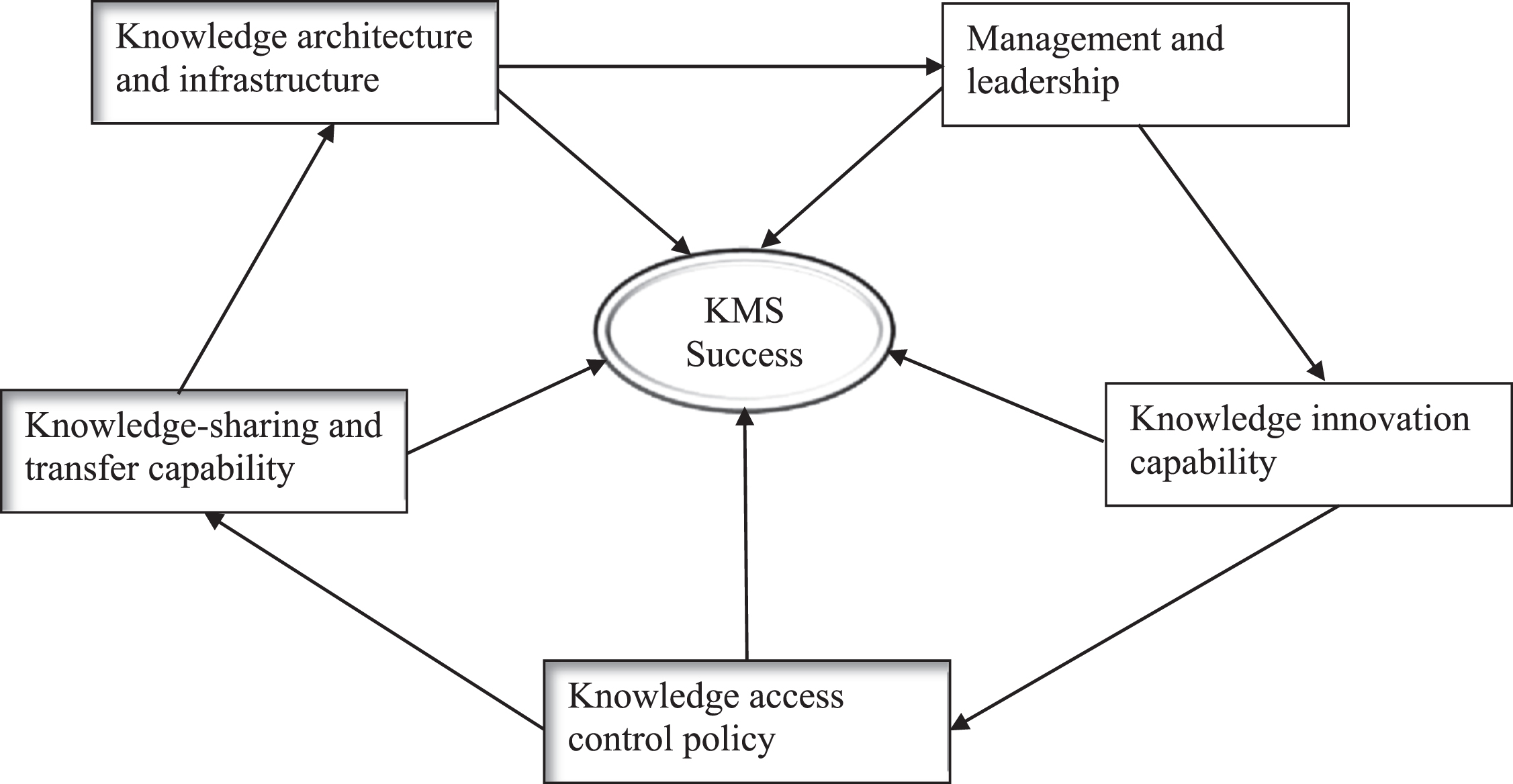
A five-factor modelfor KMS success.
We, therefore, emphasize that whether or not there are blurriness, stickiness, or barriers, knowledge sharing and transfer capability must be present and effective at each knowledge stage and unit level to increase knowledge innovation. It is essential to note that the place where knowledge sharing and knowledge transfer occurs is intrinsically contextual. For example, entrepreneurial, learning, and innovation environments require contextual analysis to determine the exact knowledge needs regarding what aspects of knowledge are relevant and available [57], in what form [2] and fittingness to the knowledge recipient [58]. Hence, the capability context is also a critical consideration in the overall knowledge sharing and transfer capability efforts. As noted by [48], five contexts are paramount to knowledge sharing, and they are knowledge context, source context, recipient context, relational context, and environment context (see Fig. 2). Like knowledge sharing, the five contexts are applicable and valid for knowledge transfer since there is blurriness between the two terms [43]. From an organizational capability context, we argue that knowledge sharing or knowledge transfer cannot be successful if knowledge transfer units (source and recipient units) lack the capacities to grow knowledge innovation for sustainable competitive advantage. In practice, KM is context-specific, as evidenced by [59] and reflects the capability context of the organization because it needs to answer the “who” and “how” questions relating to knowledge management processes.
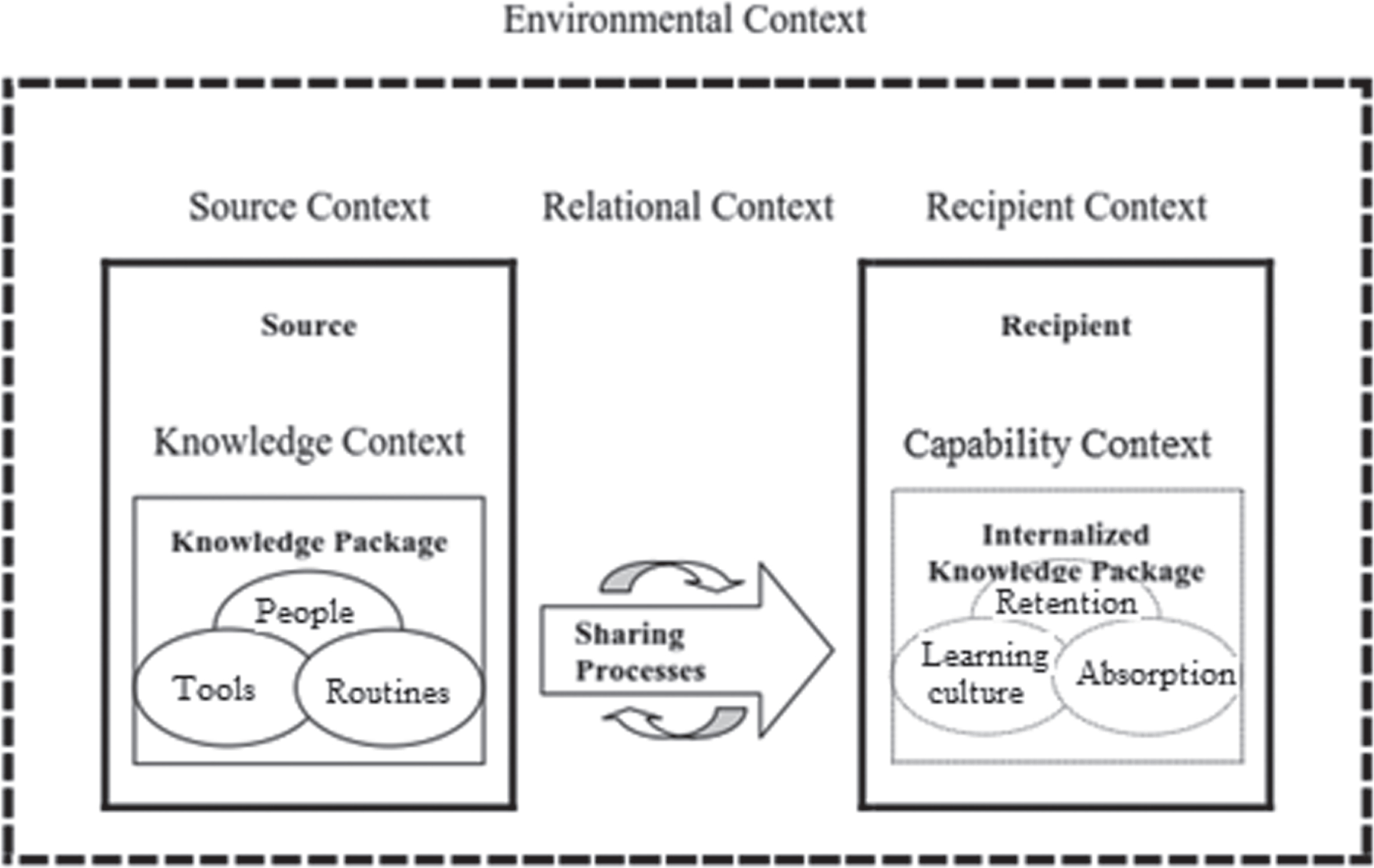
Enhanced Cummings (2003) five contexts model.
Capability in itself is contextually-based and can be linked to the capacities and predispositions of the recipient entities. As regards the recreation of knowledge package at the recipient unit from the source unit, [60] appropriately used the term “knowledge internalization” to explain the capability-related context in terms of retention, absorption, and learning culture. In this sense, commitment to knowledge use, ownership of knowledge acquired, and satisfaction with knowledge packages are antecedents to knowledge internalization. We then find it suitable to include the capability context at the recipient unit of [48] five contexts model (also see Fig. 2). The reason is that successful knowledge sharing or knowledge transfer is reliant on the presence and effectiveness of the sets of capability-related contexts of the knowledge recipient.
We demonstrated the applicability of our five-factor model using the University of Education, Winneba (UEW), in Ghana as an illustrative case study. The choice is based on the nature of KM practices, infrastructure, and the existing system, which facilitates the testability of the model. There are four campuses of the UEW, namely Kumasi, Mampong, Ajumako, and Winneba. The population of this study was made up of teaching and non-teaching staff. Due to the technical nature of the study area, we considered purposely the faculties of Technical Education and Science Education, which included the non-teaching staff from the ICT Units. More importantly, we took into consideration the staff’s familiarity with and use of existing portals to do their jobs. The list of staff, together with their email addresses and contact numbers, was obtained from the Human Resources Division. Specifically, the non-teaching staff included Technicians, IT Assistants, Assistant Registrars of IT Services, and Office Administrators, while the teaching staff consisted of mainly Lecturers, Assistant Lecturers, and Teaching Assistants.
A stratified sampling technique was used to classify the population into teaching and non-teaching staff, and this was followed by a systematic sampling technique to select the respondents from each stratum. Sample sizes of 58 and 91 were selected from the teaching and non-teaching staff, respectively, giving a total sample size of 149. Questionnaires and interviews were thus used to obtain data from the respondents. Before administering the questionnaires, we pre-tested the instrument using two IT Service Technicians, one principal research assistant, and three OfficeAdministrators from the Information Technology Education (ITE) Department of the Kumasi campus. This initial test helped us to enhance the validity, clarity of content, wording, and sentence structure of the questionnaire.
Two hundred questionnaires were sent out by an email system with a cover letter to the targeted respondents in the four campuses. The cover letter specified the rationale of the study and the expected returnable date of the questionnaires. After two weeks, a follow-up message was sent by email to the respondents as a reminder. Out of the total, 149 valid responses were returned, representing a response rate of 74.5%. A five-point Likert scale varying from “strongly disagree –1” to “strongly agree –5” was used for all the items in the questionnaire and for each construct. Each construct has five items for measurement.
Also, we employed a semi-structured interview in which questions we asked focused on the five constructs and their degree of relationships. Seven senior officers were purposely selected and interviewed because of their relative positions and knowledge in overall ICT management. The interview was done through telephone due to the spatial distribution of the interviewees. They comprised of Director of IT Services, Deputy Registrar IT Services, Chief IT Assistant, and Senior Technician from the non-teaching staff and three Heads of Departments from Mathematics Education, Information Technology Education, and Electronic/Electrical Technology Education. Before the interview, the interviewees were contacted through telephone to seek their consent. Appointments were scheduled at their convenience at different dates and times. It took approximately ten days to interview all the interviewees in February 2020. For the analysis, we used open coding from which themes reflecting the constructs were mapped out and examined. Each interview was recorded and lasted approximately 35 minutes. The interview was meant to triangulate responses from the questionnaires, and a peer debriefing technique was used to enhance the reliability and validity of the interview data.
The software used for the analysis of the data obtained from the questionnaire was Statistical Package for the Social Sciences (SPSS) software version 23, and the results are presented in three parts. First, descriptive analysis was done to show the sample characteristics regarding the choice of respondents and their composition. Second, factor analysis was used to obtain the components that corresponded with the critical factors used in the five-factor model. Cronbach’s α was used to determine the internal consistency reliability. There was a total of 25 items that yielded the five components. Lastly, correlation analysis was done to explain the relationship between the constructs.
Data analysis and results
Descriptive statistics
Respondents’ position, academic qualification, years of work experience, age, and gender were basic information necessary to understand the sample characteristics, and these are shown in Table 1. Out of the 149 respondents who responded validly to the questionnaires, 68.5% were males, and 31.5% were females. While 50.1% and 24.1% of the teaching staff were between the ages of 41 to 50 years and 31 to 40 years, respectively. 29.7% and 35.1% of the non-teaching staff were between the ages of 41 to 50 years and 31 to 40 years respectively. These results corresponded to 37.6% and 30.9% of the respondents belonging to the age groups of 41 to 50 and 31 to 40, respectively. A total of 68.5% of the respondents were between the ages of 31 to 50 years, which suggests a higher cognition of the respondents concerning the understanding of the system’s functionality. Also, only 1.1% of the non-teaching staff was below the age of 20 years, but none for the teaching staff. In terms of work experience, the teaching staff and non-teaching staff represented 41.4% and 34.1% respectively for the years between 5 and 7. While 30.8% of the non-teaching staff had work experience between 8 to 10 years, the teaching staff had 15.5% for the same year interval. Thus, a total of 77.8% of the respondents had at least five years of work experience, which perhaps indicates greater familiarity with the existing portals for KM initiatives in terms of IT service provisions.
Demographic characteristics
Demographic characteristics
As regards academic qualification, the teaching staff had more terminal (i.e., doctoral) degrees than the non-teaching counterpart representing 67.2% and 4.4%, respectively. This phenomenon is a common characteristic of academic institutions as terminal degrees are mostly prerequisites for teaching at the university, and UEW was no exception. Contrarily, the non-teaching staff had more master degrees than the teaching staff representing 51.6% and 19.0%, respectively. The attainment of a master’s degree complements job performance for promotion. Thus, the various degrees attained by the respondents were useful to respondents’ ability to understand issues relating to KMS adoption. As regards the respondents’ position, the majority were lecturers, office administrators, and IT assistants, representing 24.2%, 11.4%, and 10.7%, respectively. Just a small percentage represented staff at relatively higher positions such as Senior Assistant Registrar IT Services, Assistant Registrar IT services, and Principal IT assistant representing 2.7%, 2.7%, and 5.4 %, respectively. Generally, the high academic background, age, and positions of the respondents eased respondents’ comprehension of KMS adoption.
To assess the psychometric proprieties of the scale, we used Cronbach’s α and factor analysis [61, 62]. We employed principal component analysis (PCA) and varimax rotation property to test the validity of the 25 items. The PCA thus yielded five components explaining 79.308% of the total variance. These components corresponded with the five factors, namely management and leadership support (MaLS), support of knowledge architecture and infrastructure (SKAaI), knowledge sharing and transfer capability (KSaTC), knowledge access control policy (KACP), and knowledge innovation capability (KIC). Items intended for their respective constructs had at least good loadings.
Moreover, the value of the Kaiser-Meyer-Olkin (KMO) sampling adequacy statistic was 0.557, indicating a satisfactory factor analysis. We considered factor loadings threshold of 0.5 to be significant because, according to [61], practical and acceptable factor loading should be equal to or greater than 0.5. All the items’ loadings exceeded 0.5 regardless of their distinctive loading relative to another. Generally, there were high loadings on the items. Table 2 shows the constructs together with their factor loadings, eigenvalues, variance explained, and cumulative variance.
Validity of questions
Validity of questions
To test for the unidimensionality of the internal consistency reliability of the items, we used Cronbach’s α, and the values were between 0.791 and 0.917. As evidenced by [63], Cronbach’s α of 0.70 or more is acceptable. Our α values were greater than the acceptable threshold value, and this indicates good internal consistency reliability. For the intercorrelations among the constructs, there was a significant positive correlation between SKAaI and MaLS (r = 0.832, p < 0.05), and this relationship also became evident from the interviews conducted when one of the participants made the following assertion:
“ ... ... ... top management relentlessly offers support to improve information technology infrastructure to motivate staff to become active rather than passive members of knowledge exchange ... ... ...and I think this effort has been helpful to us all despite the challenge of differences in individual intentions and attitudes towards knowledge sharing”. (Director of IT Services, 02/16/2020, interview)
Moreover, the results of the correlation coefficient show that SKAaI has a significant and positive relationship with KSaTC, (r = 0.794, p < 0.05) and KACP (r = 0.747, p < 0.05). Impliedly, securing knowledge infrastructure is a sign of trust, which further motivates people to share voluntarily. Evidently, an interviewer commented as follows when asked of whether or not securing knowledge resources could demotivate knowledge sharing:
“As far as I am concern, our intellectual capital is what drives us on and to compete in the arena of academia. I feel that, first, it is so important to secure our knowledge assets, second to inculcate into the staff to trust the system, and last to find ways to encourage them to share what they know willfully.” (Deputy registrar IT Services, 02/19/2020, interview).
For the relationship between top management support and staff capacity to share knowledge, our study revealed that the MaLS construct has a significant positive correlation with KSaTC (r = 0.708, p < 0.05). Interestingly, the ability of top management to institutionalize a culture of knowledge sharing depends on how much effort, commitment, motivation, and trust that the members of staff expect from senior management. This significant relationship was apparent when a participant made this remark:
“I feel that more and more work is being done by our top management to promote knowledge sharing, but sometimes it is not reflected in their interactions with staff. I expect to see adaptive approaches that trigger many of us to donate our possessed knowledge, especially to the young ones.”(HOD Mathematics, 02/17/2020, interview).
One significant benefit of KM initiatives is the leading edge of knowledge innovation originating from effective knowledge sharing. From the results of the analysis, there is a significant positive relationship between KSaTC and KIC (r = 0.786, p < 0.05). The interview also revealed that the capacity to innovate both at individual and departmental levels was a primary concern of the University. However, one participant expressed this sentiment.
“ ... ... I have observed that the issue of the culture of silence directly or indirectly affects the intention, attitude, and orientation of some staff members towards knowledge sharing ... ... It is a canker that needs to be addressed, I think.”(Senior Technician IT Services, 02/23/2020)
However, there exists a statistically significant negative or inverse relationship between KSaTC and KACP (r = –0.607, p < 0.05). This finding reflects a statement put forward by one of the participants:
“I think that we are overclocked in the rules for accessing knowledge resources, which can influence staff’s sharing behavior and intention ... ... I would wish if local system administrators were empowered to assist us when challenged with entering results of students rather than consulting the Chief IT Assistant at the main campus.” (HOD Information Technology Education, 02/24/2020, interview).
The intercorrelations among the constructs, internal reliability, means, and standard deviations are presented in Table 3.
Means, standard deviations, and correlations
*Correlation is significant at the 0.05 level (2-tailed).
Past studies on KMS adoption and implementation have successfully examined factors that enhanced collaborative knowledge sharing to increase knowledge innovation for improved organizational performance (e.g., [64]). Interestingly, there are certain factors highlighted in isolation in the existing literature and remained unclear whether or not as antecedents to KMS adoption and diffusion. A careful assessment of such factors for KMS adoption in the context of presence support (i.e., factor-sustainability) and effectiveness (i.e., factor-success) is needed to facilitate appropriate KMS diffusion and successful pre- and post-implementation. In this study, we modeled five critical factors as existential factors that require critical attention before the application of any metrics to measure the quality of KMS deployed in organizations. Precisely, the ability of organizations to sustain the contributive roles of these factors and their interrelationships for the realization of effective KMS adoption is vital for the KM initiative.
As noted in the work of [65], the majority of the respondents were found to be young people in the range of 31 to 50 years, representing a total of 64.7%. Their study established that the dominance of such an age group was the first step to comprehend KM initiatives and secondly as a source of knowledge innovation capability through knowledge donation across the organization. Our study found a similar representation of the respondents for the same age range accounting for 68.5%. However, the slight difference in the percentage may be attributed to the difference in the type of respondents, organizational type, and setting. Moreover, the significant positive relationship between KSaTC and KIC (r = 0.737, p < 0.05) is an indication of an expected increase in knowledge donation for improved innovation capability. As established from the results, senior management can achieve knowledge-sharing success for knowledge-value creation and increase innovation capability only if the effects of inhibiting factors such as the culture of silence are minimized or removed.
Given a majority of 69.2% of the respondents in our study as IT professionals, it was relatively easy for the respondents to understand the security concerns of KMS adoption in particular. This finding is similar to the study of [66], in which the sample consisted of only IT professionals from a public university. Further, the authors found that strict security measures did not negatively impact users’ perceptions about using a KMS, given the guarantee that there was some level of transparency. Also, the authors identified RBAC as the more reliable access control mechanism to secure the KMS. Hence, the knowledge access control policy construct included in our five-factor model was of much importance.
For many KM strategies, it is the responsibility of senior management to ensure a fertile knowledge-sharing environment. The provision of reliable, secured, and tasks-fit kind of knowledge infrastructure facilitates knowledge-sharing efforts. From the results, SKAaI significantly and positively correlated with MaLS. The higher and sustained level of commitment by senior management of the University to the provision of quality knowledge infrastructure and architecture, the more staff members of the University become motivated to share knowledge. Moreover, results from the interviews showed that top management is committed to providing a secure and quality backbone of knowledge infrastructure for successful knowledge-exchange activities. In particular, the remark from the Director of IT Services suggests that top management prioritizes knowledge architecture, and perhaps look forward to senior management to introduce more advance technologies to speed up knowledge-sharing activities for increased innovation.
Intention to share knowledge, according to [57], is people-bound and purely motivational, but such sharing efforts increase when there are massive support and interaction with senior management and functional leaders [18, 77]. Typically, as an academic institution, portal users expect senior management to commit to tasks in their efforts to promote a friendly and results-oriented environment. One such task is the provision of knowledge architecture that necessitates technology infrastructure to moderate other factors like culture, structure, and knowledge sharing [67]. Our finding is thus consistent with the work of these authors in respect of the strong association between senior management support and knowledge infrastructure and architecture for increased knowledge-value creation.
Further, the form and context of specific knowledge packages in an organization may determine the kind of knowledge-sharing activities [48], and the knowledge-sharing mediums used thereof can facilitate knowledge-sharing activities [68]. Thus, the overall technology infrastructure and architecture determines the appropriate knowledge-sharing mediums relevant to specific user tasks. Our study found a positive and significant relationship between SKAaI and KSaTC. This strong association is perhaps due to users’ understanding of the value of knowledge and the need to share for the benefit of the entire University. This finding supports the work of [47], where knowledge sharing is positively related to knowledge-sharing mediums for improved transfer capability. A sound knowledge infrastructure serves as a stimulus for trusting the existing system in terms of privacy and confidentiality. As noted from the results of the interviews, motivation, and trust are influential factors to employees’ intention to share knowledge willingly. It is important to emphasize that knowledge sharing and transfer activities cannot be productive if there is a lack of strong support for knowledge infrastructure and architecture as well as support from top management.
Moreover, active support of overall knowledge or technology infrastructure stimulates users to flexibly and confidently generate, store, share/transfer, or utilize knowledge [77]. In this way, users can internalize knowledge, which can further enhance knowledge sharing and transfer capability across the organization. Thus, organizations must be so mindful of their knowledge architecture and infrastructure if they intend to increase knowledge sharing and transfer capability.
Besides, this study reveals a significant and positive relationship between SKAaI and KACP. Information about staff and students are so vital in any learning environment such as a university. How well the intellectual capital is protected stands to make organizations remain competitive. Limited security on technology infrastructure exposes knowledge resources to unauthorized access at relatively high risk. Results from the interviews suggest that securing knowledge resources for the sake of competitiveness of the University is very important. However, knowledge access requests must be delegated to local administrators for faster and immediate provision of solutions to problems that employees encounter in using the system.
Massive investment in knowledge infrastructure cannot be compromised at the expense of sufficient system security and control mechanisms on intellectual assets. Thus, to protect and secure the intellectual assets of the University, the access control protocols of the RBAC model increase users’ confidence in the system while ensuring the security of the knowledge-base. This kind of enforcement suggests that it is essential to secure and control access to knowledge resources since organizational knowledge assets are the basis of competition [69]. This finding is in tandem with the results of [66, 71] that showed a significant and positive relationship between the two constructs. In this instance, the authors implemented the RBAC model to secure KMS. Thus, the higher the support of the overall knowledge architecture and infrastructure to knowledge-sharing activities, the more relevant it is to secure knowledge resources.
According to [18, 72], the top management team corroborates and initiates knowledge-sharing efforts before trickling down to those in the lower levels in the organization. From the results in Table 3, the correlation between MaLS and KSaTC (r = 0.708, p < 0.05) suggests that top management should increase efforts to inspire staff to share or transfer knowledge, and given the adequacy of technology infrastructure, KSaTC is likely to increase tremendously. Also, it is clear from the results of the interviews that knowledge sharing is critical to top management. However, pragmatic and adaptive approaches are still necessary to facilitate effective knowledge sharing. In this sense, knowledge sharing can enhance KIC. Most KM strategies involve a culture of knowledge sharing, which targets the quality knowledge repository [57]. As top management openly interacts with lower-level staff coupled with other sharing strategies, trust increases and users become so much willful to internalize knowledge.
Besides, KSaTC has a positive and significant effect on KIC. This relationship indicates that employees recognize knowledge sharing and transfer as a fundamental requirement to grow in knowledge capability and innovation. Though the institution suffers from a syndrome of a culture of silence, the results suggest that employees do not intend to hoard knowledge for whatever reasons. This finding supports the work of [68], whose finding indicated that knowledge and norm distances do not disrupt knowledge-sharing efforts among employees in government institutions in India. However, the issue of the culture of silence can impede knowledge-sharing progress if not addressed. As evidenced in the interviews, the cognitive framework of employees tends to be distractive in their attitude and orientation towards knowledge-sharing efforts. If employees become directly affected by the culture of silence, knowledge sharing can breakdown. Moreover, it can be inferred that they do not share all that knowledge they possess, which can affect the competitiveness of the institution.
A fertile-sharing environment facilitates employees’ knowledge-sharing behaviors, and this can lead to significant improvement in knowledge innovation. The capacities of employees to act as either knowledge seekers or sharers at any point in time is essential to augment knowledge-sharing activities given flexible knowledge-sharing platforms. Hence, senior management needs to align KM strategies to those aspects that promote knowledge innovation and value creation rather than overconcentrating on the forms of distances between the knowledge source and the knowledge recipient.
This study further reveals that KSaTC has a significant but negative relationship with KACP (i.e., r = –0.607, p < 0.05). This finding partly supports past findings regarding the debate on whether or not to deploy access control models such as RBAC in knowledge-sharing platforms. For instance, [73] found an insignificant and inverse relationship between KSaTC and KACP in the KMS environment. The authors argued that the capacities of the source entity and the recipient entity for knowledge exchange purposes had no relational properties with policies or protocols that govern how knowledge is secured and protected.
As far as knowledge sharing is key to most KM initiatives [58], employees’ willful intention to share the knowledge they possess is motivated when there are no such high access restrictions on knowledge assets. This notion, as pertains to what exists in KMS literature, explains the inverse relationship between KSaTC and KACP typically. Given this perspective, there remains higher recognition and relevance of quality access control mechanisms complemented with other KMS strategies to facilitate effective knowledge sharing and transfer. Therefore, the quality of knowledge obtainable from a secured KMS: 1) builds users confidence and trust in the system 2) increases users’ intention to share knowledge, and 3) helps to improve job performance. Moreover, from the results of the interviews, employees feel that restrictions are overclocked towards the Chief IT officer and Registrars of IT Services rather than delegating some controls to local administrators such as Senior IT Assistants or Principal IT Assistants.
Besides, we can infer from Table 3 that the strong relationship between MaLS and KSaTC also affects the relationship between MaLS and KIC, (r = 0.525, p < 0.05) positively. Similar to other studies such as [74–76], we found that KSaTC correlates positively with KIC given effective KM strategy and adequate support of top management and functional leaders. Thus, employees can internalize knowledge effectively for increased knowledge innovation.
Implications of the study
The factors are critical to any KMS success framework. At each stage of knowledge transformation, one or more of these factors become crucial in the life cycle of a particular knowledge package. Impliedly, knowledge advancement in a sustainable manner is dependent on the implementation concerns of these factors. Hence, the model offers some important theoretical and managerial implications.
Theoretical implications
The study draws attention to both researchers and practitioners about the importance of a thorough examination of the five critical factors antecedent to the metrics used to measure KMS success. In particular, SKAaI has a positive and significant relationship with MaLS, KSaTC, and KACP. These findings are so crucial to knowledge-intensive organizations (e.g., academic institutions in Ghana). However, the inverse relationship between KSaTC and KACP suggests that there is still a heckle in deploying access control models in the KMS environment. As there is a statistically significant relationship between the two factors, they are worth examining for successful KMS adoption because KMS is meant to promote knowledge sharing regardless. Also, the lack of a significant relationship between KIC and KACP is attributable to the effect that KACP has on KSaTC. Hence, it is a challenge for employees to nurture and re-create knowledge for improved knowledge innovation capability.
Essentially, this study attempts to address the research gap in KMS literature in particular by demonstrating the relevance of the five key factors that must be sustained throughout KM processes and made effective before measuring KMS success.
Managerial implications
This research demonstrates the significance of the five critical factors in terms of their presence support and effectiveness. Though there may be a varying degree of sustaining these factors to satisfy the intended KMS strategy, senior management has to remain focused and committed to providing a fertile knowledge-sharing environment supported by appropriate knowledge infrastructure and quality security. To build capabilities for effective knowledge sharing and knowledge innovation across the entire institution, we expect both heads of departments (or functional leaders) and senior management to offer a deep-rooted system of “openness for all” for knowledge co-creation and utilization cooperatively. In doing so, employees can intuitively and discretionary approach knowledge sharing and transfer in ways that positively impact knowledge-value creation.
Mostly, knowledge recipients feel reluctant to seek the kind of knowledge they need when there is poor packaging of knowledge for easy access. Based on the findings of this study, top management should see it as a priority to at least include knowledge-sharing platform specialists to help streamline information or knowledge that benefits all individuals and departments. This attempt can put knowledge items in the right shape and format for easy use by those who need them.
Limitations and future research
This study has some limitations, and as a result, will need further investigation. First, we identified the factors in IS/KMS literature and consolidated them into the five-factor model; they do not indicate the exhaustiveness of all KMS success factors. Moreover, our model does not consider other inhibiting factors that can affect the existential contexts assumed for each of the factors articulated in the model. In practice, it is uncommon to have the five factors in the right proportions to ensure a straightforward KMS success. Future work can prioritize the factors in ways that can still lead to successful KMS adoption and diffusion. Thus, the extent of factor presence support and effectiveness may vary among organizations in terms of both KM strategy and KMS design. Given this, future studies may extend the dimensionality of the model, especially assessing any inhibiting factor(s) that can affect the assumption made on the existential contexts, and predict the appropriate factor-balance that will facilitate a successful KMS adoption.
Second, our model was applied to only one academic institution in Ghana, and the contexts of UEW may vary from other private or public academic institutions and some other knowledge-intensive organizations. Therefore, additional work will be necessary to test our model across different institutions to determine the interplay of the factors and their presence support and effectiveness.
Last, the illustrative case study used to test the model was not suitable for determining some intermediate successes at each knowledge stage of the KMS process when the factors are examined in a pairwise manner. Hence, additional work in the future should consider a case study (or a multi-case study) that will produce results reflecting some intermediate successes, and this can include other methodologies.
Conclusions
With varying organizational contexts and knowledge needs, several factors influence the implementation and quality use of KMS. Despite new models or frameworks, some KMS initiatives still fail because not much scrutiny is done concerning some contextual and existential factors before applying the generally acceptable IS model. This paper consolidates some critical success factors into a five-factor model based on the existing IS/KMS literature. It proposes the need for the presence and effectiveness of these five factors. Segregating each factor’s presence support and effectiveness from others can jeopardize the KMS adoption. While the presence support defines an organization’s capability in terms of factor sustainability throughout the life cycle of knowledge, factor effectiveness relatively emphasizes a factor success at each stage of KMS design and implementation. It is incumbent on practitioners to re-align KMS change initiatives not only with organizational objectives, mission, and goals but also institutionalizing cultures, structures, teams, rewards, and incentive systems that target productive knowledge-sharing practices and innovation capability.
Our proposed model gives initial insights into the five critical factors affecting KMS initiatives. Organizations must identify the structural elements of these factors and thoroughly examine factor capabilities to ensure successful KMS. In essence, practitioners must systematically examine them concerning their extent of the impact, prioritization, and significant contribution to KM strategies. The empirical evidence from UEW suggests that the five factors are so crucial and prerequisite to the design and successful adoption of KMS. Hence, our model can serve as a useful guide to successful KMS design and implementation.
Footnotes
Acknowledgments
We want to thank Mr. Adasa Nkrumah Kofi Frimpong of the School of Management Science and Engineering of UESTC for quality proofreading of the manuscript. Also, we sincerely thank Ms. Li Xiaoyu of the School of Information and Software Engineering of UESTC for meticulously helping to dive into the IS/KMS literature to identify and assess the likely effects of the five factors used in the model.