



Abstract
BACKGROUND:
Knowledge remains a competitive, intangible resource in today’s contemporary organizations. Most knowledge management initiatives aimed at leveraging knowledge for sustainable corporate performance. Knowledge sharing is fundamental to growing intellectual capital. Security on knowledge resources is a prerequisite to quality knowledge content. To increase trust in both knowledge content and security, a knowledge-sharing platform specialist (KsPS) plays a significant role in the overall management and authentication of corporate intellectual capital.
OBJECTIVE:
This paper analyzes the contributive role of the KsPS and investigates whether or not KsPS matters in strengthening knowledge quality and security in organizations.
METHODS:
We conducted a broader review of relevant literature on issues relating to knowledge management, knowledge security, KsPS, and sharing platforms to have a better understanding of roles played by the KsPS. Besides, 18 KsPS from 15 organizations were interviewed through telephone or Skype regarding their role expectations in knowledge sharing, quality, and security in the knowledge management system (KMS). Thematic analysis was done to obtain the relevant themes for the study.
RESULTS:
The study established that the KsPS provides quality facilitative roles in knowledge-sharing processes for secured KMS. Thus, the KsPS significantly contributes to knowledge codification and internalization.
CONCLUSIONS:
With very little recognition of the KsPS in the existing KMS literature, this study draws attention to the management of organizations about the need to invest in a KsPS for quality knowledge support services and increased knowledge security.
Keywords


Introduction
Organizations employ KMS as a tool to mobilize scattered knowledge both within and across all functional areas. The investment and development of KMS are mostly in line with KM strategies. Thus, KMS is the technology-based knowledge tool used to acquire, store, share, and utilize relevant knowledge for improved task-related competencies [1–3]. The adoption of every KMS is based on specific intent. Such intent is geared towards the realization of some knowledge-sharing benefits. Within the context of the knowledge-sharing process, KMS plays an integrative role in facilitating knowledge sharing and transfer. Also, from the perspective of organizational capability, KMS is an enabler of an organization’s absorptive capacity and knowledge innovativeness [4] found that KMS impacts both organizational knowledge and the success in innovation and that the absorptive capacity of the firm mediates such an effect. By this understanding, the quality of KMS must reflect the rationale for its adoption and implementation.
Knowledge security is a crucial factor in the overall perceived quality of KMS [5, 6]. Securing organizational knowledge resources such as trade secrets, “best practices,” and intellectual property requires holistic awareness of all individuals and departments [7] recognized that one way to reduce breach of information or knowledge security is security awareness to all people in the organization. From the KMS perspective, multiple technologies get assembled to facilitate knowledge-sharing activities. A network of interconnected devices offers sharing platforms for people to access the knowledge-base from different access points within and across the organization. Tracking and monitoring activities of the use of every device by users to perform their various roles are complex in nature. To protect and secure knowledge assets, only authorized users must be allowed to access knowledge assets that relate to their job functions and operations. Because individuals in an organization occupy various positions associated with roles [8], role-based access control (RBAC), for example, is commonly used to manage users’ authorization in the KMS environment [9, 10]. As organizations grow to become multi-service and knowledge-intensive, knowledge security has become an increasingly more significant concern to many organizations. This is one crucial means that an organization can become competitive in the global economy. Thus, an organization that aims at quality security measures deploys security mechanisms in terms of trust, confidentiality, and privacy [11, 12].
KMS tools encompass technologies such as collaboration systems, data and document management systems, and web-based systems. It is crucial to secure all forms of technology-based systems integrated for knowledge-sharing purposes. Today, it takes efforts of all stakeholders in an organization to be security conscious in managing and securing knowledge assets. Security policies require a collaborative approach rather than an individualized one. Though the Chief Knowledge Officer, together with System Administrators, provides the requisite security needs of an organization, Knowledge-sharing Platform Specialists (KsPSs) also play a significant role in contributing to knowledge security [13, 14]. Thus, the role expectations of KsPS comprise of securing knowledge packages either directly or indirectly. One critical focus of a KsPS is the identification, conversion, and re-packaging of informal and disguised knowledge on sharing platforms. Though KMS aims at promoting knowledge-sharing culture, knowledge security cannot be compromised. As noted by [11], there are essential aspects of knowledge security that organizations are expected to consider as part of their knowledge management efforts. Aspects such as security strategies, metrics, techniques, processes, and technologies enhance knowledge assets’ security. Sometimes the nature and content of knowledge determine the elements of security policies that are suitable in a given context of the knowledge management process.
In the KMS literature, very little recognition has been given to the role of the KsPS in the overall knowledge-sharing process. As knowledge flows from the knowledge source to the knowledge recipient, the KsPS ensures that only the right knowledge and valuable contents are stored into the knowledge-base. Also, the KsPS facilitates such knowledge movement for knowledge internalization by the recipient unit [15, 16]. The question this study seeks to answer is whether or not the KsPS matters in either knowledge sharing, knowledge security, or both. Establishing the relevance of the KsPS in knowledge-sharing processes could motivate top management of organizations to include the work of the KsPS in the organizational structure and process. So, besides the numerous KM roles, the role of the KsPS is as essential as the other roles, specifically in terms of knowledge sharing and security.
Section two of this work presents the related work, while section three explains the methodology used for the study. In section four, we present the results. Section five gives a discussion of the study. Finally, section six provides the conclusions of the research.
Related works
Knowledge-sharing platforms
In the context of knowledge management, a knowledge-sharing platform (KsP) is a technology-led medium through which people interact, share, and contribute knowledge either formally or informally to a knowledge repository [17] used the term to describe a web site that allows knowledge sharing regarding questioners, answerers, and advertisers. This leads to a crisscross of these groups engaged in shared knowledge, competencies, and skills. With the transition from the face-to-face knowledge sharing to technology or web-based knowledge sharing, the quality of knowledge continues to become more productive as more people participate, create, and contribute relevant knowledge into the knowledge-base. For successful participation and extensive use of KsP, [18] recommended that top management should approach knowledge sharing in ways that motivate more people to participate and use the sharing platforms. The authors argued that reward systems encourage more employees to have the ego to share and contribute knowledge than to resort to mandatory or enforcement measures. Examples of knowledge-sharing platforms (KsPs) are BoostHQ, Web 2.0, and its advanced versions, and blogging technology [19, 20]. A KsP’s architecture is essential to what knowledge is intended to be shared, and that the successful sharing outcomes depend on the efficient management of the KsP.
Tacit and explicit knowledge get codified, organized, and formatted into storable and accessible forms to ease knowledge retrieval. Though it is mostly difficult to codify tacit knowledge [21, 22], the representation of tacit knowledge in some forms of meaningful patterns is useful in the process of accumulating all knowledge kinds, including embedded knowledge. [23, 24] argued that social interaction facilitates knowledge construction and negotiation. This suggests that knowledge sharing is much influenced by the nature of social ties exhibited through the socio-cultural dynamics within the organization. Essential and social relations are appropriate for high-quality knowledge, and they are a priority for collaborative knowledge sharing. In this sense, a KsP opens up new opportunities for knowledge creation and application between individuals, teams, or departments [25].
To accomplish close and effective collaboration between employees, a KsP’s design, particularly the user interface, is required to be more user-friendly to ease barriers of user participation [26]. Participation is the first level of acceptance for successful knowledge-sharing outcomes. A well-design KsP helps to reduce costs, increase productivity through knowledge innovation, and enrich employee sharing capabilities through their idiosyncratic inputs for more collective gains across the organization. For instance, KsPs improve customer satisfaction and increase customer loyalty and retention when solutions can be provided in real-time. Employees get satisfied with their job performance because they can address problems on the shared platform, which further increases their knowledge-sharing behavior [27]. Besides, a KsP offers context-based job orientation or training for new hires in a faster and efficient means than the traditional manual or document-based.
Interestingly, [28] articulated that KsP is seen as a talent and expertise-discovery platform through which employees of excellent ideas can be identified and rewarded for their spectacular contributions. Also, prominent topics that attract extensive discussions are clues for reshaping or re-aligning some corporate strategies for improved organizational performance. Thus, to facilitate the work of managers and supervisors, reports on shared knowledge and their performance data on both users and the system are useful to top management. This enables senior management to assess whether or not it is worth investing in KsP. Moreover, scalable KsP allows for flexible integration with other systems and devices. To a greater extent, the use of mobile devices for mobile operations supported by KsP enhances the work of remote knowledge workers. Consequently, [11] explained that processes get streamlined, and collaboration becomes open to all employees, and this promotes a trusted-sharing culture for effective leverage of knowledge across the organization. Given this premise, the role of KsPS in the management of KsP is crucial for the realization of these benefits, as mentioned earlier, of using KsP.
Functional role of KsPS
There are many KM roles for knowledge management initiatives. Roles are structured as being managerial at the macro level, and operational at the micro-level. As suggested by [29], such macro-level roles include knowledge discovery advancement and application, implementing and managing knowledge infrastructure, negotiating contracts and managing relationships with external knowledge producers, contributing to knowledge creation and utilization, designing and implementing the process of the codification of knowledge, measuring and evaluating knowledge-value creation, developing quality knowledge strategy, and managing other knowledge managers (e.g., a KsPS, knowledge analyst, and knowledge synthesizer). The role expectations of the KsPS are primarily directed towards platform management in KMS. They may overlap with some of the activities of operational knowledge managers (e.g., knowledge editor, knowledge transfer engineer, and knowledge broker) at the micro-level. Depending on the KM strategies, KM roles may vary from one organization to another.
A knowledge-sharing platform specialist (KsPS) refers to information technology and knowledge management professional who is responsible for managing and authenticating knowledge-sharing platforms to ensure organization-wide high-quality knowledge repository. Knowledge generated is not merely stored in the knowledge repository. Instead, they are subject to further processing activities to take the form of the right accessible formats. According to [13], a KsPS functions as a mediator between participants (i.e., sharer and recipient) active on the KsP. The authors illustrated that when a question is put on the platform, the KsPS identifies experts deemed appropriate to answer the pending question. When an answer is provided, and contributions from other related experts adjudged it to be the correct solution, the KsPS repackages the solution into usable formats and store it into the knowledge-base for future reuse. Such new knowledge from experts can be shared and internalized by others to suit their job contexts.
Moreover, the KsPS articulates knowledge generation policies, principles, and codifying standards representative of specific knowledge needs. Knowledge needs analysis is essential to augment knowledge-sharing platform strategies. The choice of a KsP may be influenced by factors such as organizational culture, existing social ties, KM strategies, state of the existing knowledge infrastructure, number of participants, and knowledge exchange policies. However, codified knowledge is best understood and applied when it is in its simplest and easily accessible formats –texts, audio, video, and images. Further, as pointed out by [30], proper knowledge packaging given friendly search tools contribute to effective knowledge retrieval from the knowledge-base. Though employees are free to provide their inputs using KsP, not all kinds of information may be relevant and stored as part of the intellectual capital of the organization. Thus, the KsP has to be intelligent to enable KsPS to siphon the relevant knowledge out of the mundane. In the KMS environment, different teams or departments may have different platform interfaces either within or across the organization [28]. It is, therefore, possible for some generated new knowledge to overlap with others, and maybe sometimes represented or codified inappropriately. Thus, there is the need to have the KsPS to verify, validate, and organize the new knowledge before storing it into the knowledge repository. Hence, the KsPS ensures knowledge consistency and integrity between a knowledge source and a knowledge recipient. In this sense, privacy, trust, and confidentiality are critical factors to increase user participation in knowledge sharing [18].
The role of the KsPS is significant in the exchange of knowledge that takes place between the knowledge source and the knowledge recipient. At each end of the spectrum, the knowledge providers possess unique, inner interactive behavior for knowledge creation/co-creation. In contrast, the knowledge recipients exhibit a unique disposition to knowledge refinement and utilization. It is expected of knowledge producers to identify, prepare, and convert possessed knowledge into forms that meet the absorptive capacity of knowledge seekers. Based on the knowledge predisposition of knowledge recipients, knowledge sharing becomes successful when there is much commitment from knowledge recipients to own, nurture, and internalize knowledge [31]. Given an intelligent and reliable sharing platform, the KsPS facilitates a fertile environment for effective knowledge sharing. Successful KsPS have attributes such as experience in leadership, negotiation skills, competencies, and rich understanding in KMS management, interpersonal communication skills, and appropriate ICT skills. It is, therefore, vital for the KsPS to be effective in overseeing the traffic flow and management of the sharing platform and enrich the knowledge-base (see Fig. 1).
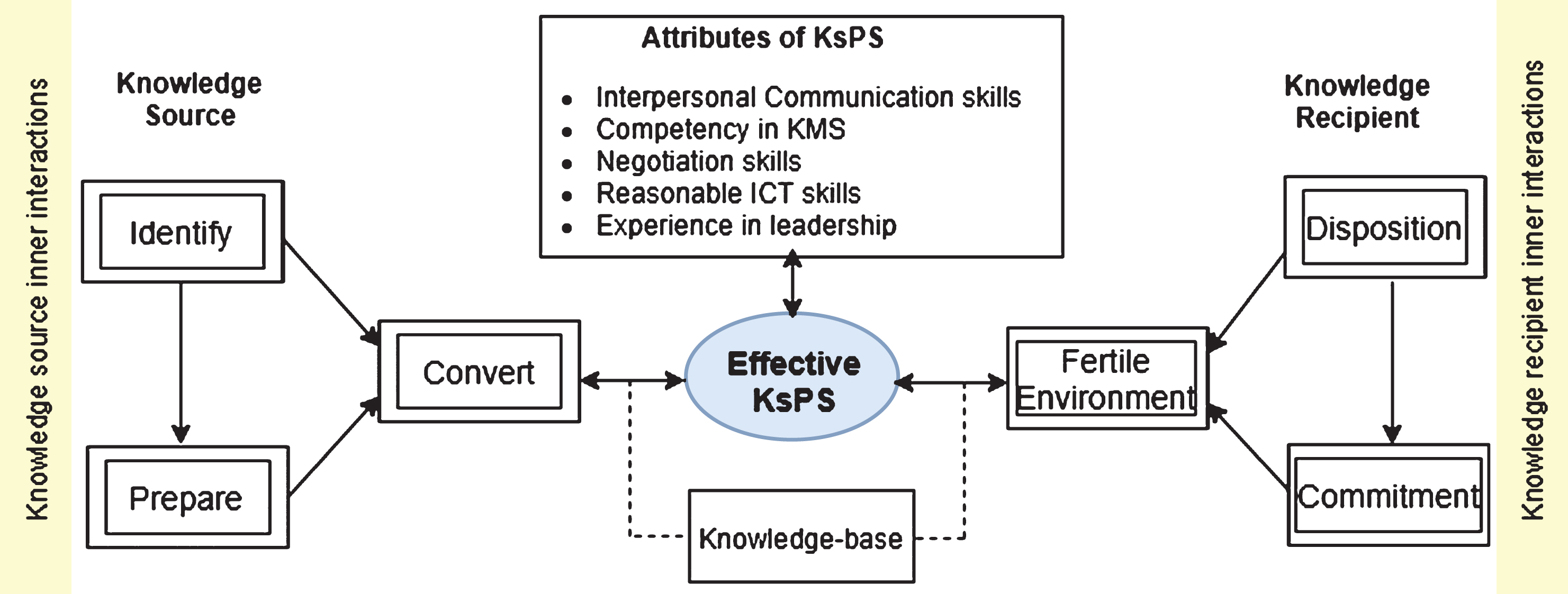
Interactive role of KsPS in knowledge sharing.
As part of the role expectations, the KsPS is responsible for identifying questions, suggestions, or comments on the KsP that is context-specific and solutions searchable from the knowledge-base. The KsPS monitors all activities of participants and ensures that feedback on knowledge requests are done in real-time, and authorized knowledge sharers and recipients at any given time to effect knowledge exchange or transfer. For inter-organizational knowledge transfer or sharing, the KsPS assists remote knowledge workers with platform support, including conferencing and library functions. Such a library-related function may include electronic library threading and documents unloading into the knowledge repository. In the case of a multi-national level of the organization, the KsPS performs language translations as there may be varying language gaps among knowledge managers in other remote areas.
We, therefore, argue that the role of the KsPS is crucial in the organizational effort to promote knowledge innovation at both ends of the spectrum. At the knowledge source, the KsPS facilitates knowledge package directly or indirectly using some tools and routines [32], and repackage or format newly internalized knowledge at the knowledge recipient [16]. By this rationale, the KsPS employs innovative ways to ensure that collaborative, communications, and technological knowledge capturing tools enhance productive use of KMS for creation, storage, and utilization of knowledge in specific contexts [33]. With the mediated role between the knowledge source and the knowledge recipient, the KsPS ensures privacy, trust, and confidentiality between the parties engaged in knowledge sharing [11, 13]. If employees repose trust and confidence in the system, they can be sure of their privacy on knowledge objects, which can further spike positive knowledge-sharing behavior.
Knowledge sharing is the exchange of knowledge between a source entity and a recipient entity. Past studies have shown that successful knowledge sharing occurs when the recipient unit can internalize knowledge for improved task performance [16, 32]. In knowledge sharing, an entity that possesses the knowledge must be willing to share, and the recipient of the knowledge must have the absorptive capacity to internalize knowledge acquired [2, 43]. If there are large entities such as between departments or organizations involved in the knowledge sharing, [34, 35] preferred to term such movement of knowledge as knowledge transfer regardless of any reciprocity. Whether or not knowledge is shared or transferred, what remains significant is the nature and context of knowledge package applicable as it undergoes its life cycle.
Knowledge sharing is a multifaceted concept. Numerous factors influence an individual’s capacity and intention to share knowledge. Both internal and external factors influence people’s intention to share knowledge, including departments within an organization [34] found that employees who are not executives are more influenced by factors. such as intrinsic and extrinsic motivation, organization, technology, and culture to share knowledge. This suggests that what matters in knowledge sharing is the propensity to collaborate, formulate, and validate new knowledge to increase organizational knowledge.
Securing knowledge assets implies deploying security policies, metrics, and processes that provide high-level support, operations, and access controls for successful knowledge sharing. Tasks such as knowledge creation, representation, manipulation, language definition, and dissemination require security policies throughout the knowledge management process. As noted by [11], organizations need to put in place protective measures to enforce security in knowledge sharing. The authors argued that it is better to include and enforce access control policies such as RBAC as part of knowledge-sharing or transfer operations. This, however, depends mainly on the secure knowledge architecture designed to support knowledge-sharing activities. The notion is that knowledge so created must have the intended users such as “best practices” purported for specific problems. For users to access such knowledge, they need to have access rights. If user-permission constraints are good enough, only verified and authorized users can access the system and for the specific purpose. In this sense, both the sharer and the recipient are motivated to engage in knowledge transfer or sharing. Thus, trust management and control are critical factors for effective knowledge sharing.
Methodology
Qualitative approach
We employed a descriptive study in which in-depth semi-structured interviews were conducted to find out the role expectations of KsPS. The use of the qualitative approach was suitable to obtain rich and detailed information about whether or not the roles of the KsPS are relevant in knowledge sharing and security. Also, with the small number of participants involved in the study [36], the qualitative research allowed for probing for more details concerning some questions. We selected purposively 15 organizations from Ghana that used sharing platforms and managed by KsPSs. The organizations included banks, telecommunications firms, real estate firms, gold mining companies, brewing or distillery firms, building and road construction companies, and higher learning institutions. This was followed by a convenience sampling technique used to collect data from the 18 KsPSs identified.
We based the selection on the role expectations of sharing-platform experts whose core functions related to the monitoring of knowledge-sharing processes such as knowledge creation, security, and sharing that enhance successful knowledge sharing for improved job performance. Before the interviews, an invitation letter was sent to each of the participants through the email system. It was intended to seek first their willingness and dedication to participate in this study. All the 18 knowledge-sharing management experts formally agreed to partake in this study voluntarily. However, based on the scheduled appointment dates for the interviews, one of them (from a banking institution) could not make it but was represented by the IT service project coordinator.
Data collection
The interviews were conducted using the telephone or Skype and recorded with the permission of the participants. Each interview lasted approximately 35 minutes. The interview was done at the convenient appointment times of the interviewees. We avoided face-to-face interviews due to the pending global pandemic, COVID-19. The data were collected between February and March 2020. The questions asked in the interviews related to strategies adopted by [13] when assessing the essential roles of forum specialists and section leaders in managing forums across multi-functional areas for innovation and quality knowledge sharing. We used open-ended questions to enable us to identify relevant themes that could emerge from the interviews. Two IT assistants and one database administrator were used to pilot test the content validity of the items in the interview guide. The medium used was Skype for the pilot test. We did not pilot test the telephone usage because regular telephone calls are known to be more reliable than Skype. The use of Skype provided virtual face-to-face interaction, though it was susceptible to unstable network traffic flow due to network connection challenges in some parts of Ghana. To be familiar with the data for effective data analysis, notes were taken during the interviews, and where necessary, follow-up questions were asked. Thus, there was a total of thirteen questions asked during the interviews for this study, and these related to: How does the organization recognize knowledge assets at both micro and macro levels? Is the existing sharing platform worth enhancing communications between employees, managers, or both? Are there promotional strategies by top management regarding knowledge sharing in the organization? Is the knowledge-sharing platform customer-focused, employee-focused, or both? Is the knowledge-sharing platform dynamic, multi-dimensional, and user-friendly? Does the KsPS’s role in the overall knowledge management capability of the company contribute to securing knowledge assets and facilitating knowledge sharing?
To understand the role expectations of the KsPS and to enable thorough analysis, we sourced for documents that detailed job specifications and responsibilities of the KsPS. These were received through the email system even though five of the participants could not provide theirs. The methods of the data collection enabled us to triangulate the findings for optimum validity and conformity. Moreover, we reviewed the IS/KMS literature on the role of KsPS concerning knowledge sharing and knowledge security thoroughly.
Data analysis
The recordings from the interviews were transcribed. However, in three of the interviews using Skype, some responses from the interviewees encountered technical hitches such as poor network connection, inconsistent audio, and freezing video. This problem affected the transcription of these three interviews’ data, and as a result, not all responses could be transcribed from these participants. These concerns, however, were insignificant in the entire interviews’ data. For sufficient familiarity with the transcripts data, repeated readings were done to aid detailed interpretation and understanding of the content of the interviews, and to clarify ambiguous responses. For confidentiality reasons, as agreed with the participants, we labeled the participants from P01 to P18. This scheme enabled us to shelve the names of the participants because of the delicate nature of the position concerning access to corporate intellectual assets, which makes the companies compete in their respective industries. Moreover, inductive, thematic analysis was used to screen for themes from the transcripts reflecting the contributive roles of the KsPS in knowledge sharing. As explained by [36], thematic analysis is not based on one specific theoretical approach, but instead a flexible way to obtain themes for qualitative analysis.
Further, we used NVivo 12 (QSR International) to code and collate the transcriptions systematically. The coding process was an open one to allow for more iterative and interpretative analysis. Thus, patterns of codes that repeatedly emerged across the interviews’ data were categorized into sub-themes. Subsequently, these sub-themes were aggregated into well-defined themes, and they were labeled based on the content. To validate the emerged themes, the researchers coded the interviews’ data separately. Labels, sub-themes, and main themes that emerged from each researcher were thoroughly examined and discussed together before arriving at a consensus. Ultimately, the agreed themes reflected the key role expectations of the KsPS.
Results
Eighteen knowledge-sharing platform specialists participated in this study. Participants’ age ranged from 29 to 48 years. Of the 18 participants, 16 were males, and two were females. Twelve had a masters degree, and 6 had an undergraduate degree. On average, the work experience of the participants was four years in the capacity of a KsPS. Twelve of the participants were interviewed through Skype, while the remaining six were through regular telephone calls (See Table 1).
Sample characteristics
Sample characteristics
Prior to occupying their present positions, seven migrated from other related information or knowledge management positions such as database administrators, systems administrator, and knowledge editor. Participants manage knowledge sharing between groups on some projects, Q&A on specific tasks for either employee or customer, customer-based solutions, and employee-manager or employee-employee task-based coordination with chat or comments features. All the participants emphasized the supportive nature of the knowledge infrastructure regarding the technical capabilities that enable workers to access the same knowledge, which makes them confident, productive, and well informed. As regards office tenure, 15 of the participants occupied the position on a life-long basis, while the remaining 3 changed every three years based on the organizational policy of employee reshuffling. In the case of the reshuffling of the employees, one of the participants gave this reason:
“We have different sections in the IT Department. Our senior management feels that it’s inappropriate for one person to occupy one position for far too long for security reasons. Besides, a change over for a three-year tenure of the office allows for the transfer of experience from one section to another.” (P07, 06/02/2020, interview).
At the macro level, knowledge is regarded as a critical resource without which the organizations can lose grip of their competitiveness. This ideology is what management has indoctrinated into the minds of workers to understand the concept of knowledge-value creation and knowledge processing. In particular, the more the organizations can preserve tacit knowledge and expertise, the higher the extent of impact they have on knowledge innovation at the micro-level as well. From the analysis of the interview data, all the participants admitted that the companies’ strength largely depended on 1) knowing the value of knowledge, 2) the need to optimally share knowledge, and 3) the practical application of knowledge. This was evident in a comment made by one of the participants as:
“For me, I think every piece of information is important whether, about products, customers, or we the staff whether formal or informal, I try to harness what is useful for our knowledge-base.” (P12, 03/02/2020, interview).
With the investment in KsPs, top management anticipates having some significant benefits. Importantly, the degree of patronage and useful contribution of knowledge through the sharing platform are recipes for increasing knowledge-value creation and innovation. All the participants agreed that the use of the sharing platforms had promoted more robust collaborations between individuals, teams, and departments. Interestingly, one of the participants from the telecommunications company described the existing BoostHQ as reliable and effective in assisting teams in brainstorming topics that were useful and relevant to their respective projects.
“I think that our sharing platform makes us look like an electronic family. I mean that if teams are in different geographical regions, they can share files, links, and ideas concerning the job without feeling as a single person working, you know ... ... And one beauty of it is that team members can curate content for sharing as well as do discussions in real-time. ” (P02, 11/02/2020).
Moreover, participants were enthused with the ability to harness informal information, which was overlooked when there were no such sharing platforms. The mere recognition and capture of relevant aspects of employees’ informal information increased their active participation in contributing or sharing knowledge aggressively. A participant made the following remark.
“I feel that this sharing platform is gradually making employees feel proud because of their thoughts in whatever forms are not wholly ignored. I think they feel part of the decision-making process.” (P05, 14/02/2020, interview).
When asked of inferiority complexity between sharers and recipients, one participant gave this comment.
“As part of our sharing platform policies, every opinion makes sense, and as a result, no distinction is made whatsoever between middle managers and frontline workers. In fact, we are all equal to the platform because we talk to topics but not individuals.” (P09, 03/03/2020, interview).
Moreover, participants generate reports either weekly or monthly to examine the degree of interaction or engagement among employees using the KsP. The higher the level of interaction, the more employees become familiar with the platform. Generally, participants attested that the KsPs are multi-dimensional and more user-friendly.
Senior management’s role in knowledge sharing
Participants were asked about whether or not top management prioritized knowledge sharing. In probing for more details, a question was asked on knowledge-sharing needs analysis by top management. Interestingly, all the participants articulated that senior management was much concerned about employees’ knowledge-sharing efforts. However, six participants refuted that senior management had not provided strategic guidelines to advance knowledge sharing. Often, senior management expected the KsPS to develop strategic knowledge-sharing policies that were consistent with corporate norms and policies.
“I have since introduced a few sharing policies regarding the rules of the game of sharing. But everything I do; I seek clarification from top management before rolling it out. Well, you know, it’s good to regulate chats on the platform while extracting facts relevant to the knowledge-base.” (P14, 03/15/2020, interview).
The role of top management is so important in influencing employees’ attitudes and behaviors toward knowledge sharing. All the participants described senior management as being committed to encouraging individuals and departments to share what they know with others willingly. In terms of achieving project deliverables, team members in the mining companies were motivated to use the sharing platform to speed up project development processes to meet deadlines. This was evident in a comment made by one participant from a mining company.
“Honestly, senior management is doing a fantastic job when it comes to inspiring employees to share their experiences with others vigorously. A mentee-mentor reward program institutionalized by top management had motivated many of our employees to participate in the creation and dissemination of knowledge.” (P18, 02/24/2020, interview).
In addition, most of the participants emphasized the robust and intelligent nature of the knowledge-sharing platforms that allow both employees and customers to contribute to the knowledge-base. Thirteen of the participants pointed out that their sharing platforms are both customer and employee focused. While the Q & A session addresses customers’ needs regarding their transactions with the companies, most chat sessions enabled employees to solve problems relating to their jobs, and where to search for relevant information. One of the participants remarked as follows:
“With the comments, chat or Q & A features, employees contribute valuable knowledge and expertise for sharing, post queries, provide feedback, and do healthy discussions, which I think promote a learning culture.” (P01, 03/05/2020).
Depending on the sophistication of the sharing platform, participants outlined that their sharing platforms had multiple features that enabled individuals, teams, and departments to perform various knowledge-sharing operations. The participants articulated the multi-dimensional property of the sharing platforms as what motivated most of the employees to engage in creating, contributing, or applying some forms of knowledge.
KsPS’s role in knowledge sharing and security
Participants admitted that top management appreciated the intermediary role between KsPS and the platform’s users. As part of their role expectations, participants expressed their ability to conduct smart files or knowledge indexing to ease information or knowledge search. They explained that a lack of sufficient knowledge and time constraint about the use of the KsP in terms of identifying and locating relevant knowledge discouraged some workers from becoming active users of the KsP. Participants indicated that they categorized and indexed files or knowledge packages in more innovative ways that eased knowledge search for employees, and this confirms a comment made by one of the participants:
“For me, I can tag the shared contents of employees with suitable labels and classify them according to their search needs, my quarterly opinion survey from the employees yielded a good response regarding knowledge search.” (P08, 02/27/2020, interview).
Thus, participants viewed proper packaging of knowledge as vital to employees because the employees could access whatever knowledge they needed and relevant to their jobs through the KsP. As regards the role of KsPS on knowledge retention process, one participant gave the following remark:
“Whether formal or informal knowledge, I make sure that the platform becomes a learning board that facilitates the creation, storage, retrieval, and use of knowledge available and reliable for all of us.” (P09, 03/23/2020, interview).
Participants addressed knowledge security with much regard to tracking knowledge shared in terms of identity and authentication of the knowledge source. Participants’ control over shared knowledge was expressed in terms of volume, popularity, and most contributing user. For knowledge analytics and reports generation, most of the participants agreed in principle that comparing new knowledge with stored knowledge in the knowledge repository led to the identification of some knowledge gaps. Through knowledge-needs analysis, all the participants expressed a concern that not every user was allowed to access some restrained aspects of the knowledge-base. Hence, only verified and permitted users were able to access such specific knowledge resources.
“I think that it is what must be done because it cannot be everyone working here, you know. I make sure that only verified, and authorized users can access those aspects of the knowledge-base.” (P03, 02/10/2020, interview).
The interview data further suggested that securing knowledge resources helped to reduce some overheads (such as high cost of information leakage or security breach) because knowledge management initiatives involved huge investments.
“I think you can agree with me that protecting the company’s intellectual assets is not only dependent on me or management but all of us. If anyone of us loosely allows information to get out, we are all in trouble because every company wants to remain competitive. I believe we all as employees have a collective conscience to avoid such an occurrence.” (P16, 03/10/2020, interview).
Moreover, the results of the interview data showed that companies have different security measures and policies which directly or indirectly related to the expected security for the KsP. Participants underscored the notion that employees’ contributions in most chat forums were, to a greater extent, devoid of mischievous remarks. However, instances where there were such unacceptable utterances or behaviors, the KsPS had to restore order and sanity, and further remind all contributors of the need to respect every single opinion.
“I sometimes find myself as an arbiter to settle disputes in situations where there seems to be a kind of tag of war on a topic between two employees, and tempers begin to go high ... ... .I mostly cease-fire on that.” (P04, 03/22/2020, interview).
Participants described their role in the overall knowledge sharing as an essential supervisory function on sharing behaviors and shared contents. One important responsibility was to determine and predict future knowledge needs to increase intellectual assets based on past discussions on various topics. Also, they emphasized the need to do regular updates using the cloud facility for both implicit and explicit knowledge. With the effort to prevent knowledge loss, participants recommended systems such as a reward system to motivate and increase employees’ participation in sharing their expertise and tacit knowledge. A participant from one of the banks commented as follows:
“You know, there are instances where some relationship officers become attracted to other competitive banks and go with experiences acquired over the years with our bank. So, I make deductions based on platform discussions and offer topics relating to perceived customer behaviors to solicit views from the staff occasionally. It’s been beneficial.” (P15, 02/09/2020, interview).
From the interview data, participants recognized that employee engagement was pivotal to an organizational learning culture. Some participants attested that should there be the absence of platform specialists, teamwork among employees could be significantly affected. For instance, participants from the real estate businesses articulated the value they add to remote workers as they operate from different project sites. Not only did they claim that such a role performance enhanced information or knowledge sharing between individuals and teams but also an increase in productivity and profit.
“Well, I sometimes receive calls from remote teams requesting help on guidelines on some stored best practices to address similar problems. It’s been helpful, though.” (P11, 03/14/2020, interview).
Discussion
With the increasing advancement in knowledge management systems and tools, an organization finds it relatively easier to mobilize knowledge (i.e., formal and informal) scattered across functional areas in the organization. Knowledge stored in a knowledge repository is the intellectual property of the organization. Individuals, teams, and departments (i.e., knowledge subjects) can have access to the knowledge-base. Since the knowledge-base is what makes the organization competitive, securing and protecting the knowledge resources are critical concerns for sustaining the competitiveness of the organization. Also, knowledge subjects can share knowledge through a KsP. Thus, for effective management of KsP to increase knowledge-value creation, KsPSs are required to facilitate knowledge identification, preparation, and conversion, which over the years, remain a challenge for both the knowledge source and the knowledge recipient. This paper gives insight into the significant contribution of KsPS in building and managing corporate knowledge assets.
A change from one job position to another, as identified in the results of the interview data, suggests that some internal or external factors can trigger the need for KsPS. Examples are the need to attain effective knowledge mobilization as the organization grows, and subsequently, organizational reshuffling policy on job rotation. It is economically feasible to reshuffle positions to solve such a need. The study found that the position of the KsPS was not a life-long one but could be periodical. Three participants experienced a three-year job rotation among middle-level knowledge management professionals. The idea is based on the continuity of the functional role of the KsPS besides ensuring shared experience. This finding partly supports [44], where, through job rotation, technical staff acquire diverse experience to enhance career development. Impliedly, if more than one person in the organization had developed skills in the position of KsPS, there is usually a backup of staff to manage the sharing platform. The reason is that another person takes charge of the KsP in the case where the occupant leaves the organization, proceeds on leave of absence, takes some off-duty days, or goes to spend some holidays. Perhaps, top management of these companies finds it risky if the occupant of the position leaves the company with some vital information or experience.
Moreover, the conversion of 7 participants from different backgrounds of information or knowledge processing expertise is justified for the role of the KsPS. This finding is similar to [13], in which a professional with a background in organic chemistry, though not in the information technology field, became a KsPS. However, it is not always the right decision because some experts in different areas of knowledge management cannot manage sharing platforms effectively. The larger the participant set on the KsP at any given time, the more complicated and sensitive it becomes in managing and controlling knowledge generation, storage, and transfers. Hence, professionals with experience and quality skills are required to manage such knowledge-sharing platforms because knowledge is a sensitive and competitive resource [21].
The study established further that knowledge-value creation is so crucial to the survival of the companies involved in this study. By this notion, every piece of information is given greater recognition, whether formal or informal. All the participants emphasized more considerable efforts to making sense, if possible, out of whatever information or knowledge they identify on the shared platforms. This finding supports the study by [37], which found that forum specialists are required to manage both knowledge resources and knowledge processes effectively to increase value creation. More knowledge can be obtained from individuals should they be motivated to be active users of the KsP. Opportunities to know what others know and what could have taken a long time to identify and made available can facilitate knowledge internalization of knowledge recipients. Besides, the right form that knowledge takes is critical to knowledge recipients so that they can better understand, nurture, and apply the knowledge package [32]. Thus, the functional contribution of the KsPS is vital in the overall knowledge-sharing process.
As regards the usefulness of the available KsP, the study found that technology-based collaborative tools are one surest means to get opinions of most employees participating in the sharing platform. With much recognition of their contributions on the sharing platforms, participants explained that such mere recognition is one of the sources of motivation for employees to create, share, and use knowledge actively. This finding is consistent with the usefulness of the “Debate Dashboard” developed by [38] that recognizes all forms of contributions from platform users and to facilitate collaborative performances and knowledge sharing. Arguably, the mediating role of KsPS in the relationships between knowledge resources, knowledge processes, and knowledge-value creation is so vital in the overall knowledge-value chain. Besides, the success of most knowledge-sharing platforms depends on increased knowledge-sharing behavior, activeness, and recognition of the value of knowledge by participants [27].
However, the lack of commitment and support by top management can jeopardize knowledge-sharing efforts, especially in terms of motivation and investment in knowledge infrastructure. When senior management prioritizes and motivates employees to develop a collective conscience toward knowledge sharing, there is a more significant influence of knowledge sharing on knowledge-value creation. In support of the study by [39], motivation from senior managers increases an organization’s knowledge-sharing behavior. This suggests that top management needs to invest in intelligent sharing platforms to enable the KsPS to ensure quality knowledge mobilization across the organization.
One of the motivational aspects of using a sharing platform is the user-friendliness, sufficient knowledge content in the right forms, and shorter search times to access knowledge assets. The study revealed that a KsPS plays a key role in managing knowledge processes such as codifying, creating, organizing, storing, converting, preparing, and disseminating to facilitate knowledge search. Similarly, [37] found in their study that extracting relevant value out of the mess of knowledge on sharing platforms requires effective and efficient management by a forum specialist through the right knowledge processes. The KsPS can thus achieve success in managing KsP when knowledge processes are aligned with organizational processes and knowledge infrastructure [46]. Also, the KsPS promotes a culture of learning through effective knowledge-sharing processes, and this was also evidenced in the work of [13]. If users realize that the forum is also an arena of learning from one another to enhance an individual’s competencies and skills, there can be an improvement in employees’ job performance.
Further, the study found that the KsPS is capable of performing knowledge needs analysis to determine some knowledge gaps, usually based on a comparison between new and existing knowledge. Though knowledge needs analysis involves multi-stage activities to determine what gaps exist, the appropriate sharing-medium tools are expected to be smarter for knowledge-sharing activities. Besides, because knowledge resources are sensitive to the organizations, the study found that the KsPS grants access to participating users to access certain parts of the knowledge-base provided they have the legal privilege. In contrast, [40] advocated for knowledge managers or the Chief Knowledge Officer to enact access control measures that wholly secure and protect shared knowledge across the organization. It is important to stress that this function of the KsPS may overlap with other technical knowledge professionals such as the Chief Knowledge Officer. Technically, the security policies and access control levels determine the kind of privileges in the existing system [40, 41]. Thus, corporate security policies and reference guidelines are vital in delineating responsibilities and roles among the technical staff.
Evidently, the functional role of the KsPS suggests support in two folds: 1) facilitating the knowledge-sharing process between the sharer and the sharee for successful knowledge creation and application [45], and 2) ensuring only authorized participants to engage in knowledge sharing and transfer for knowledge integrity and security within the organization. Moreover, from the data analysis, it is apparent that most participants showed interest in the future use of reward systems to increase further employees’ behavioral intention to share knowledge. This finding is in support of the result by [42], which established that an individual-based reward system offers more benefits in terms of knowledge contribution. However, the authors noted that group-based reward systems face the problem of willful knowledge contribution because workers who have adequate skills and knowledge avoid participating in knowledge sharing.
We acknowledge the limitations of this study in the following areas. First, the findings cannot be used to generalize for the population of KsPS because of the small sample size of 18, and also conducted only in Ghana. Second, the results of this study may be affected by the medium used to collect the data as some of the interview sessions got interrupted due to poor network connectivity. In some instances, the video-recordings through Skype or voice calls were quite challenging to decipher, which affected some aspects of the transcription process. Third, as a purely qualitative approach, the results may lack significant tests in a quantitative sense to demonstrate the relevance of the role expectations of the KsPS in any particular knowledge-sharing environment. Last, the role of the KsPS may overlap with other positions supposedly also involved in the knowledge-sharing process. As a result, some data collected may not necessarily represent specific role expectations of the KsPS.
Conclusions
Knowledge-sharing platform specialists are relevant in facilitating knowledge-sharing processes for effective knowledge sharing in the KMS environment. Due to the vast differences in the forms of knowledge – formal and informal, the KsPS monitors and harnesses the relevant knowledge and stores them into the knowledge-base for easy retrieval and reuse in the organization. Sensitive as knowledge may be, senior management of organizations must recognize the significant and contributive roles of KsPS in strengthening knowledge-sharing efforts.
Moreover, senior management can invest in state-of-the-art KsP that will enable the KsPS to monitor both professional and job-related activities effectively to increase knowledge-value creation. If employees find it easy and friendly to use sharing platforms, they develop a growth mindset toward knowledge sharing. For intra- and inter-organizational knowledge sharing, protection on knowledge resources is vital for the organization to remain competitive. With access control permissions on more sensitive information or knowledge, the KsPS can verify and authenticate all active participants on the platform at any given time. Despite the significant contribution of the KsPS, further research is needed not only to ensure quality knowledge assets but also to senior management’s efforts to make the KsPS more resourceful in accomplishing knowledge-sharing objectives.
Footnotes
Acknowledgments
We thank Ms. Li Xiaoyu of the School of Information and Software Engineering of UESTC for helping to carry out the transcription of the interviews and assisting in the pilot test of the interview guide. Also, our gratitude to Mr. Adasa Nkrumah Kofi Frimpong of the School of Management Science and Engineering of UESTC for quality proofreading of the manuscript.
Author contributions
CONCEPTION: Gabriel Nyame
INTERPRETATION OF DATA: Zhiguang Qin
PREPARATION OF THE MANUSCRIPT: Gabriel Nyame
REVISION FOR IMPORTANT INTELLECTUAL CONTENT: Gabriel Nyame and Zhiguang Qin
SUPERVISION: Zhiguang Qin