



Abstract
BACKGROUND:
The rapid expansion in economies has resulted in overconsumption which is alarming for the environment. Patterns of consumption play a key role in the worsening environmental surroundings, causing consumers to seek sustainable features in their buying patterns. Therefore, it is vital to understand the elements that lead to sustainable purchase intentions (SPI).
OBJECTIVES:
This study investigates the impact of distinct green practices – environment (EnV), perceived environmental responsibility (PreR), environmental advertisement (AvT), and eco-labeling (EcL) – on SPI. The originality of the present study lies in the investigation of distinct practices on SPI which has been ignored in past studies.
METHODS:
The data were collected from the main cities of Pakistan (n = 300) and analyzed using the partial least square and CFA.
RESULTS:
The results demonstrate the positive nexus of such practices – EnV, PreR, AvT, and EcL – on SPI. They provide extensive input into the growing literature of psychology in terms of humans’ sustainable consumption behavior with empirical evidence from a developing nation.
CONCLUSIONS:
This study provided the implications for the marketers along with future research directions for academicians and practitioners.





Introduction
Adopting an environmentally-conscious lifestyle is now mainstream, requiring a subsequent change in economies. Sustainable markets are not just a fleeting feature of current economies, rather they will stay, grow, and mature further [1]. Global issues of concern like; pollution, urbanization, and industrialization have given rise to the awareness of the global community and it is realized that the change in the climate is being caused by natural [2] and human elements [3]. There are two dimensions of human elements addressed in sustainability; humans are causing environmental issues and they are also affected by the consequences of these hazardous elements. Therefore, it is important to look at the different dimensions of human behavior towards sustainability [4]. Knowledge of these factors can help in the enhancement of sustainable behavior and can be utilized in protecting the planet [5–7]. In developed countries, environmental protection is now perceived as a social responsibility [8], and consequently, showing environmentally responsible behavior has become the necessity of time.
In developing countries, researches on the pro-environmental consumer behavior are still at a preliminary stage. Considering this, the need to replicate and advance research in the Asia region to study and analyze the sustainable consumption behavior is suggested in the literature [9]. It further added that emerging markets are ideal to conduct marketing research due to extreme heterogeneity in demographic, socio-economic, and living standards of the consumers. In emerging economies, urban areas are more important to study because consumers have a wide variety of choices and a larger number of stores to show environmentally responsible behavior.
Within the Pakistani context, according to the agenda for the execution of the climate change policy by Govt. of Pakistan [10], the majority of the specialists came to an agreement that the major source of climate change is the human activities, which includes human contact with the natural surroundings along with the economic and social changes. It is not a distant threat; Pakistan is already experiencing its impact within the country and in the region. Although Pakistan is not contributing to global greenhouse gas (GHG) emissions at a large scale, but being a responsible member of the international community, it is giving due importance to mitigation efforts in the fields of industry, energy, forestry, agriculture, urban planning, and livestock. Ponzi Daniele [11] reports that Pakistan, the People’s Republic of China, and India are the fastest-growing markets for sustainable investments.
The theory of planned behavior (TPB) was employed in this study as this is considered one of the well-known predictive persuasion theories to understand behavioral intentions [9]. Environmental features like environmental concern and perceived environmental responsibility reflect the sustainable purchase intention in the anticipated theoretical structure. Moreover, the effect of environmental advertisement and eco-labeling were added into this framework. This interaction was studied as it remained unexplored in the study by [12].
In this context, several researchers have examined sustainable consumer behavior by employing the Theory of Reasoned Action (TRA) [13–15] and the Theory of Planned Behavior (TPB) [16–19]. The former was developed to analyze behavioral intentions, whereas the latter adds the notion of perceived behavioral control and elaborates the relationship between intentions and behavior [16]. Although TRA was used to measure intentions but the exclusion of non-volitional aspects for establishing behaviors minimized the application of TRA [20]. According to Ajzen [16], and Perugini [21] utilizing TPB and including additional constructs in a particular context increases the predictive power of an individual’s intentions/behavior. According to Kaiser [22] and Watson [23], TPB is widely used and successful in predicting behavioral intentions. Thus, TPB is employed as a directorial source in this study.
This paper examines direct and indirect influences on SPI in a developing country using the TPB framework. The originality of this paper lies in the analysis of distinct practices on SPI. This paper comprises six sections; the literature review is presented in Section 2, the methodology is described in Section 3, the data analysis in Section 4, the discussion in Section 5, and the conclusions with the limitations are discussed in the last section.
Literature review
Sustainable purchase intention
Sustainability is a term defined and utilized in significantly different ways. It has been more commonly used for its relation to sustainable development, which is elaborated as adopting strategies for the social development of the current generation in such a manner that the needs of upcoming generations are not compromised [24]. The existing literature suggests that the environmental concern is at an increased level in the developing countries [25] and that sustainable behavior and production vary across countries [26]. Choi D and Johnson KK [27] in their study about influences of motivation on SPI, revealed that environmental knowledge and situation-specific motivations have a considerable influence on explaining SPI. Another study investigated the influence of interactions between representative environmental cues and results demonstrate that sustainable labels are important in SPI when consumers have a high level of awareness, however, sustainable labeling is not considered when consumers have low levels of environmental knowledge [28]. This increased environmental awareness and concern is leading towards the formation of stronger attitudes in favor of the environment and consequently resulting in relevant behaviors [29].
Theory of planned behavior
Icek Ajzen in his TPB [30, 31] posits that for the prediction of consumers’ behavior, one needs to examine the behavioral intentions. Consumers’ behavioral intentions are influenced by perceived behavioral control, subjective norms as social pressures, which are forced by the expectation of significant others and one’s attitudes towards some action. The theory measured the attitudes towards behaviors and not towards a product, as according to Icek Ajzen that sort of analysis is towards a particular product and consequently this prediction of attitude will not be generalizable [27]. Table 1 explains the use of TPB in SPI in different frameworks. This study captures behavioral concerns and these concerns translating into purchase behavior under the TPB framework. Furthermore, the data was collected from consumers to increase the generalization of results. The previous studies had limitations of collecting data focusing on only student samples in Pakistan [32].
Theory of planned behavior in the sustainable consumption context
Theory of planned behavior in the sustainable consumption context
A person having an environment-friendly behavior and preferring to buy sustainable products is termed as a sustainable consumer. These consumers have the perception that every individual effort contributes to save the environment. UršaGolob and LukaKronegger [37] analyzed a model of environmental consciousness and used its variables for the segmentation of the European Union (EU) consumers. A relatively high ratio of variance in sustainable behavior was found in the dimension of personal attitudes. The results demonstrated three different segments that varied in their environmental concerns and belonged to distinct EU country clusters. Dirgha J. Ghimire and Paul Mohai [38] focused on finding out the connection between the population of an area and its environment. In this study, they examined some serious environmental matters. The research report revealed that the people who give importance to the environment and its deteriorating conditions, try to bring change in their lifestyle and behavior according to their social, political, and economic context. The study by Kaman Lee [12] found that Asians consider environmental issues worst in nature in Asia when compared with western countries. Saichao Li [39] conducted a study in Thailand and the results revealed that health and environmental concerns are the main reasons to develop tendencies to purchase sustainable products. This discussion led to the development of the following hypothesis:
H1. Sustainable Purchase Intention is positively influenced by environmental concern.
Effect of perceived environmental responsibility on purchase intentions
Consumers’ perceived environmental responsibility determines that the actions of a person are not just for the remedy of environmental issues but the individual also assumes the responsibility of a citizen who cares about the environmental and social well-being of the society. It is about a genuine desire to act and take significant measures for resolving the environmental challenges [40]. Consumers consider that by using any product, will they be causing air pollution or harming the environment or not. Consumers are ready to pay for the products which can do well to the environment. Some consumers are even paying more to the electricity companies which are sourcing it from wind or solar power. Philip Kotler [41] also mentioned that if more people start following LOHAS (Lifestyles of health and sustainability) patterns, then it will directly affect the producers. Companies would have to think of eliminating the elements which are harmful to the sustainability of the planet. This will also compel business to business (B2B) companies to bring change in those components or ingredients which are harming the environment. Deepak Sangroya and Jogendra Kumar Nayak [42] concluded in their study that it is not only the financial aspect but the social and emotional aspects also that play a significant role for consumers to buy sustainable products. Understanding consumers’ perceived responsibility can lead policymakers towards the up-gradation of environmental performance index and can also guide organizational management to make their supply chains green [40]. The above discussion helped in the development of another hypothesis which is described below:
H2. Sustainable Purchase Intention is positively influenced by perceived environmental responsibility.
Effect of environmental advertisements on purchase intentions
Among the 4ps of the marketing mix, advertisement lies under the head of promotion. It is a tool used to spread information about a product and to ultimately influence the decision of consumers to purchase a certain product. Advertisements with environmental content increase information about sustainable products and help in making purchase decisions [39]. Companies nowadays are using social media for marketing on a large scale [43]. They have identified that customers’ metrics get influenced by Firm Generated Content (FGC). They also examined the harmonious effects of FGC on email communication and television advertising. Their results indicated that after controlling the major impact of TV and email advertising, FGC had a substantial effect on spending and cross buying behavior of customers. They further explored that FGC works in harmony with email marketing and TV advertising. Sales are important for business survival and they are affected by the connection between sales and customers [44] and a source of building this link is an influential advertisement. In the study by Chiou-Fong Wei [45] findings show that advertisements affect behaviors towards products if the consumers have trust in the sustainable manufacturing of the firm. They also recommended that to build trust on sustainability, advertisements should mention the quantitative figures of the toxic chemicals used in manufacturing. So, companies now need to hold some activities to inspire consumer buying decisions. This is where brand management and advertising can play its role resulting in the development of the following hypothesis:
H3. Sustainable Purchase Intention is positively influenced by environmental advertisements.
Effect of eco-labeling on purchase intentions
Shopping can induce stress in life due to a change in family structure and increased work pressure. The study by Rambalak Yadav and Govind S.Pathak [46] revealed that to ease the sustainable buying decision of consumers we need to facilitate them in terms of making ecological products more conveniently available. Although companies are progressing quickly in terms of environment, the sensitivity of consumers is being neglected and companies are unable to achieve a similar level of information about them. The design, packaging, and quality of the environment-friendly products should be according to the eco-concept [39]. Kais Mtar and Souad Bannour Ep Sfar [47] in their research elaborated that when products get environmental or ecological certification, then they enhance added value in the revenues of organizations. Many global firms now focus on eco-labeling on their products, which shows that the product is less toxic, and eco-friendly. Mentioning these details on products helps them in winning the trust of the consumers [45]. This elaboration resulted in the development of the following hypothesis:
H4. Sustainable Purchase Intention is positively influenced by Eco-product labeling.
Research methodology
Research context
In 2015, Pakistan committed to the 2030 Agenda for Sustainable Development and as a result of that commitment, she became the first country in the world to adopt sustainable development goals as the country’s own national development goals. In 2018, the national SDGs framework got approved by the National Economic Council and responsible consumption and production have been categorized in Category 3 as SDG 12 [48]. To combat the climate change issues, Pakistan has promulgated multiple laws and regulations; such as the policy of National Conservation Strategy in 1992, Environmental Protection Act in 1997, National Environmental Action Plan in 2001, National Environmental Policy in 2005, National Drinking Water Policy in 2009 [11], the Punjab Safe Cities Authority Act in 2016, the Pakistan Climate Change Act in 2017and the GB Environmental Protection Act [48]. In the context of sustainable consumption and production, and to incorporate the SDGs in the national policies and plans, the Govt. of Pakistan has adopted the Industrial Transformation Policy and Pakistan National Action Plan on Sustainable Consumption and Production. Pakistan, along with 20 other member countries, is a part of APO, which is an international intergovernmental organization, working in the Asia-Pacific region for the development of eco-products directory and database, and for conducting Eco-products International Fair [49]. After the completion of the Billion tree plan, the recent Govt. has initiated the Clean and Green Pakistan campaign [50].
While Pakistan is preparing to achieve sustainable goals, there are several challenges in her way [51]. Finances for SDGs are a major concern in a developing country [52], where the GDP rate is very slow. Pakistan is lacking in the field of education [53] and technology advancement [54]. The country is pursuing local solutions by involving local talent and is developing a responsible industrial framework along with making its current alliances strong and building new ones to work on the 2030 Agenda. Despite all the hurdles, Pakistan is looking forward to achieve SDGs through innovative and focused strategies in different zones [55].
Although the existing literature discusses that sustainable consumerism is prevailing more in the developing countries as compared to the established economies, Pakistan is yet far behind in achieving the SDGs. So, the need for more research on the topic is necessary.
Sample and data collection
The survey was conducted in Pakistan. Before starting the data collection, HoD Research, Military College of Signals, NUST, Pakistan, was briefed about the design of the study and the target population and formal approval to conduct the study was obtained. The convenience sampling method was used to collect data from buyers outside supermarkets over four weeks. It was essential to contact the consumers who are having awareness of sustainable purchase or they buy the green products but there was no access to such a sampling frame or database to select such consumers. In this scenario, the convenience sampling method was applied following prior literature in the field [34]. Informed consent was presented to the participants and they were requested to fill the questionnaire forms. The respondents filled the forms voluntarily and no compensation was offered for their participation in the survey. Appropriate facilities to fill the questionnaire were provided to the participants and confidentiality of the responses was emphasized, assuring the participants of non-disclosure. To minimize social desirability artifacts, the introduction part indicated that the survey is only aimed at getting responses towards “Impact of Green Practices on Consumers’ Sustainable Purchase Intentions” and the clarity that there was no right or wrong response, helped in reducing participants’ evaluation apprehension [56]. A total of 300 questionnaires were distributed revealing the demographic characteristics of the respondents as presented in Table 2. Analysis of Table 2 disclosed the following information about the respondents who took part in the survey; 52% were males as opposed to 48% being females. The respondents mainly belonged to the age groups 31–40 (48%) and 20–30 (31%) with the majority (58.3%) graduate degree holders and only 5.3% were postgraduates. Moreover, the monthly income of 33% of the participants was below Pak Rs. 30,000/- and only 7.7% of them had a monthly income between Pak Rs. 61000–75000/-.
Demographic profile of participants
Demographic profile of participants
Due to the shortage of published research in this field in Pakistan, it was essential to collect the primary data to meet the needs of this research. The questionnaire was designed after a thorough literature review and discussion of the focus group. It helped in identifying major factors that can lead to SPI. In the focus group, two categories of participants were invited; eight participants [57] having knowledge of sustainable consumption and eight participants having no familiarity with sustainable consumption. The participants in the focus groups were asked to discuss 8 factors identified through the literature review that can have an impact on sustainable consumption. The participants were also encouraged to identify any new dimension of sustainable consumption and to comment on the decisions of the discussions recommended by other participants. The discussion of the focus groups and existing literature lead to the formulation of the research model (Fig. 1).
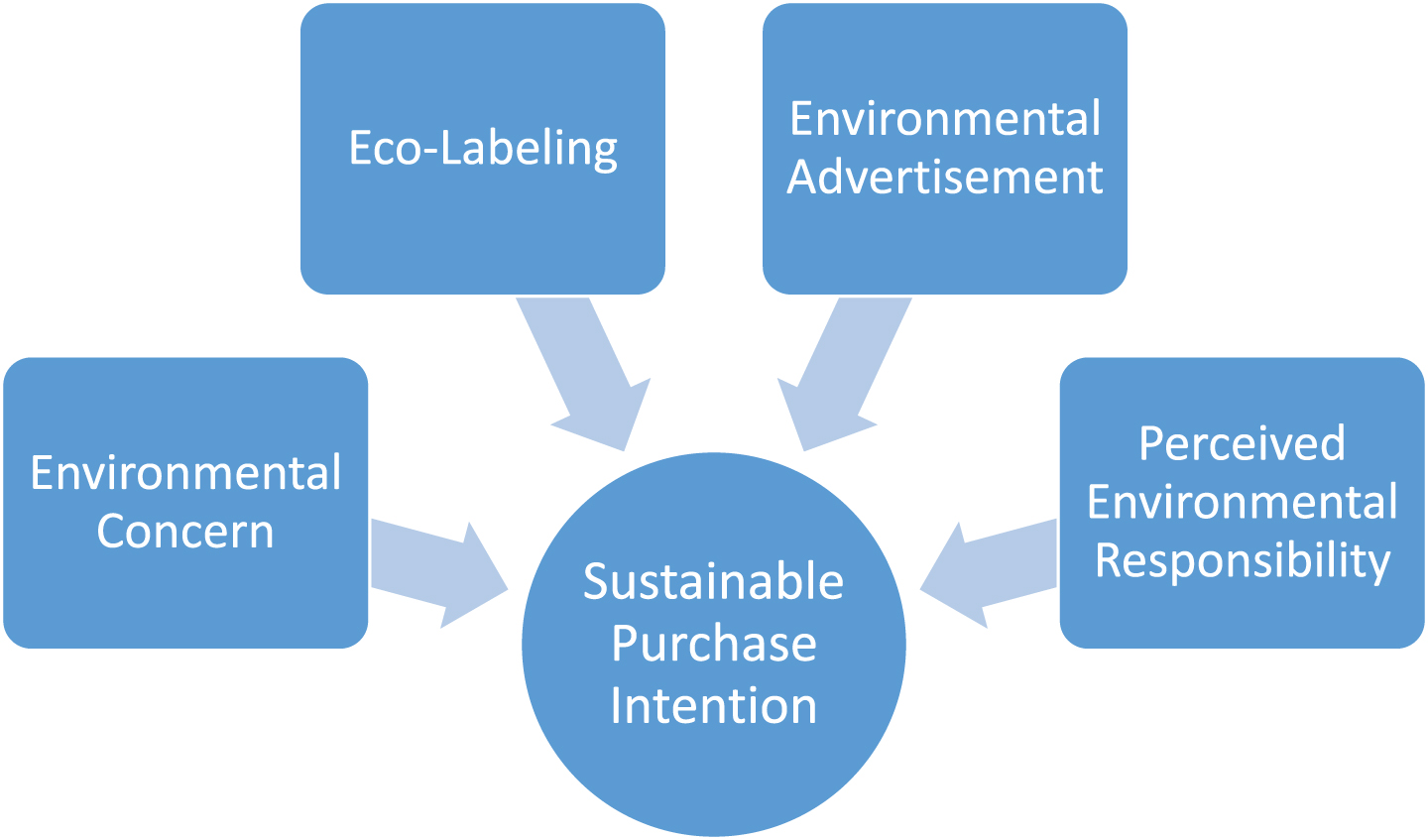
The research model and hypotheses.
The questionnaire consists of two sections; section A collects the demographic data of participants such as gender, age, educational qualification, and monthly income, whereas, section B collects data on various constructs that were developed from existing literature and discussion of focus groups. The participants were requested to respond on a 5 point Likert scale ranging from 1 = strongly disagree to 5 = strongly agree. The questionnaire was pre-tested on a random sample of 30 Pakistani consumers who were 20 years old or above. This pretest was administered outside a shopping market. Feedback from the participants helped in the assessment of the validity and reliability of the questionnaire. Few minor changes were made to the questionnaire based on the feedback.
Consumers’ environmental concern (EnV) was analyzed using items taken from GREEN Scale [58]. This part measures consumers’ behavior towards the environment. This scale analyzes the preferences of a consumer towards sustainable products and it predicts that having sustainable values leads towards SPI. The effect of perceived environmental responsibility (PreR) was analyzed using six-item adopted from Kaman Lee [12]. The items were adjusted to measure the behaviors in the context of Pakistan. This scale can measure the behaviors in the context of environmental concern. It covers a greater variety of sustainability-related behavioral activities such as pollution, recycling, packaging, and energy efficiency. This scale has also been used to examine the green consumer behavior model [59]. The effect of environmental advertisement (AvT) was assessed using the four-item scale adopted from Haytko DL [60]. The items included from this study measure the opinions about green advertising claims and their role in the formation of company images. Effect of product labeling (EcL) on sustainable consumption was measured by items adopted from the study of Emma -Sophie Doksaeter and Julia Nordman [61]. One item about the knowledge of eco-labels was self- constructed and added to analyze if participants know the sustainable labeling of products. SPI (SPI) was measured using items from the Ecologically Conscious Consumer Behaviour Scale [62].
To analyze the research model, Partial Least Squares structural equation modeling (PLS-SEM) was used instead of covariance-based structural equation modeling (CB-SEM). The PLS-SEM was preferred due to having the capacity to predict instead of confirming, following the recommendation of Joseph F. Hair JR [63]. PLS has been elaborated as an analytical tool that evaluates the interactions by reducing type II errors [64]. Another benefit of using this tool is that it uses a non-parametric approach [65]. This implies that the technique can be applied where the sample size is low. It helps in analyzing multiple item paradigms to determine the predictor variants. They also recommended data analysis through the two-step method. Before exploring the structural relationship of the model, this method is used for checking the validity and reliability of the measures. First, the measurement model was investigated and then the structural relationship of constructs was analyzed.
Results and discussion
Measurement model results
The reliability and validity tests were conducted to analyze the measurement model [66]. As recommended by Joe F.Hair et al., [67] all items if load at least at 0.4, are accepted. All variables except environmental concern have internal consistency reliability larger than the cut-off value of 0.7 [65] (see Table 3). Environmental Concern has the Cronbach Alpha value higher than 0.6 which is the minimum standard established by Bryman and Bell [68]. The average variance extracted of all items is greater than the minimum threshold value of 0.5 which confirms the convergent validity according to Hair et al., [65]. The results reveal that the AVE values are between 0.523(PreR) and 0.630 (EcL) (Table 3), confirming their convergent validity.
Measurement model results
Measurement model results
To investigate the discriminant validity of the items, the Claes Fornell, & David F. Larcker [69] criteria were used. This criterion required that the square root of AVEs (diagonal values) of each item should exceed the inter-correlations of the item with the other items (off-diagonal values). In Table 4 the analysis confirmed the discriminant validity between all items.
Discriminant Validity-Forner-Larcker criterion
Before analyzing the structural model, the inner model is assessed for collinearity. Table 5 shows the collinearity assessment of the model. The VIF values for every construct are less than 3.3, revealing the absence of any collinearity issue [70].
Assessment of collinearity
Assessment of collinearity
Following Joe F. Hair Jr et al., [66], at the first step, the construct validity is analyzed and established, and at the second step, the structural model was assessed. This assessment was established on path coefficient (β values), t-values, predictive relevance (Q2), the coefficient of determination (R2), and effect size (f2) [65]. The significance of the path coefficient was assessed using a bootstrapping procedure with 5000 re-samples. The results demonstrate that all five structural relationships are significant. The results show that environmental concern (β= 0.155, t = 2.326 > 1.64, p < 0.05), Perceived environmental responsibility (β= 0.220, t = 2.077 > 1.64, p < 0.05), advertisement Influence (β= 0.197, t = 3.182 > 1.64, p < 0.05), effect of eco-labeling (β= 0.140, t = 2.198 > 1.64, p < 0.05) and digitization influence (β= 0.245, t = 2.837 > 1.64, p < 0.05) were quite significant on the SPI. Hair et al. [71] stated that for behavioral studies, the R2 value of 0.2 is relatively high. The R2 of SPI was 0.263, which is greater than the level established by Hair et al. The f2 values examine the effect of an exogenous construct on endogenous construct [66]. In Table 6 f2 values explain a small effect [72]. The predictive relevance (Q2) value significantly above 0 demonstrates that the model has predictive relevance [64]. Table 6 shows that the Q2value for SPI (Q2 = 0.141) was considerably above 0, which determines the significant predictive relevance of the model.
Results of SEM and hypothesis testing
In the recent few decades, researchers and marketers have paid considerable attention to SPI with some research gaps remaining. This study attempted to explore those gaps, concentrating on the patterns of SPI in Pakistan, based on TPB to explore the environmental concerns, perceived environmental responsibility, the influence of advertisement, and eco-labeling. Results establish the significant positive influence of environmental concern, perceived environmental responsibility, advertisement, and labeling on SPI in Pakistan.
The results of this study reveal that the EnV has a significant relationship with SPI with the (β= 0.155, t = 2.326 > 1.64, p < 0.05). The results of the study are consistent with the previous studies conducted in this area [38, 74]. Deepak Sangroya [42], suggested that the emotional and moral values play a vital role in developing SPI. Considering the fact that saving the environment is an individual responsibility and not leaving it as a job of institutions, has an impact on the consumption behaviors of consumers. The consumers living in the big cities are adopting SPI due to media campaigns and law enforcement but consumers living in the small towns are still not having much awareness of environmental issues, which is having an impact on their buying behaviors.
The findings of the study indicate that the PreR towards sustainable products plays an important role in their SPI with the (β= 0.220, t = 2.077 > 1.64, p < 0.05). Previous studies in this area confirm these findings [38, 75]. A possible reason for this outcome is the collectivist nature of consumer society in Pakistan. Collectivism, as defined by Hofstede, is prevalent in Pakistani society as consumers here make buying decisions depending on the suggestions and recommendations of their social group. Consumption, which is dependent on social group affiliation strengthens social identity. The consumers get social approval and establish good impressions on buying sustainable products [76]. Appreciation of environmental behavior tends to get translated into SPI. The results reveal that the support and motivation of family, peer group and social group enhances the SPI [77]. Environmental organizations and policymakers should publicize the research being done in this field with moral and emotional arguments to enhance the positive emotions of consumers for buying sustainable products.
The results also suggest that there is positive effect of AvT on SPI with (β= 0.197, t = 3.182 > 1.64, p < 0.05). The findings are consistent with the earlier studies in this area [39, 43]. Celebrity endorsement is one of the factors which makes this impact positive [78]. Advertisements have several factors that can contribute to influencing buying patterns. Highlighting the sustainable features of the product and giving its comparison to its existing alternatives can be an effective strategy to influence consumers. If the product is available in limited stores, then by mentioning the location of outlets, the buying process can be made easy for consumers. Another approach for policymakers can be to emphasize the use of emotionally-laden content for promoting sustainable products and to limit the use of positive emotion content in advertisements of products harming the environment.
The statistics collected from the study indicate that the EcL of the product has a positive relationship with the SPI (β= 0.140, t = 2.198 > 1.64, p < 0.05), which has already been established in the previous researches as well [39, 45]. The label on a product elaborates on the details of the ingredients used to produce it and shows if the material used in the packaging of the product is recyclable or not. The label of the product also speaks about its quality and considering all these factors marketers can utilize the product label to influence consumer buying behaviors. Emphasis on providing sufficient product details on its label will also be helpful in the buying process and in disposing of the product after use to promote sustainability in the surroundings.
Conclusion
This study attempts to explore the sustainable product purchase intention of consumers in Pakistan. We investigated four factors based on TPB and their influence on sustainable purchase. The theoretical model was based on finding the influence of EnV, PreR, AvT, and EcL on SPI. Survey data was collected from consumers outside shopping malls, living in Pakistan. For testing the hypothesis, variance-based structural equation modeling was used. The results demonstrate that all five hypotheses are supported.
The findings showed that EnV, PreR, AvT, and EcL have an impact on SPI. Analysis of the results shows some similarities and also some contradictions with studies conducted in the past on SPI with cultural and manufacturing differences being major causes of these findings. However, to develop sustainable surroundings, it is important to convert these positive sustainable buying intentions into an actual purchase through campaigns and advertisements about sustainable products available in the Pakistani market. It will strengthen the positive attitudes towards consuming ecological products and will help enhance SPIs. By delivering moral norms, raising awareness, highlighting individual responsibilities, and showing the availability of eco-friendly products in the market, consumers can be motivated to buy eco-friendly products. Moreover, manufacturers can make use of the increasing prevalence of digitization in everyday life, thereby motivating consumers to buy sustainable products.
Finally, we hope that the findings of this study can be used by manufacturers, marketers, and researchers to address the motives of sustainable consumption and that would ultimately be helpful in the protection and sustainability of the environment.
Limitations and future directions
Besides having practical implications, this study has few limitations and suggestions for future research. Firstly, this study focused on SPI towards all product categories, which may be improvised in the future, by examining SPI towards specific categories. Secondly, the findings confirm the collectivism aspect of Hofstede’s cultural dimensions theory in a sustainable consumption context. Further studies can analyze the SPI in other cultural aspects. Thirdly, in the future, the theory can be further extended by including the influence of promotion and pricing in a sustainable consumption context. Moreover, a cross-cultural study between Pakistan and some other economically developed countries would increase our understanding of SPI.