



Abstract
BACKGROUND:
Due to the continuous shift being experienced in the higher education landscape, the quality of teaching had become an issue to be discussed from different perspectives by the concerned stakeholders.
OBJECTIVE:
The purpose of the research on the quality of teaching and identify the characteristics and best practices on supporting, developing, and improving Kosovo’s higher educational system’s effectiveness by improving the quality of teaching.
METHODS:
The paper used qualitative paradigms in research. The study targeted professors at Kosovo universities from two public universities and two private Colleges where focus group interviews, individual interviews, and documentation content analysis were obtained.
RESULTS:
According to professors’ opinions, the research results show that the quality of teaching is related to the research of professors, and it depends on the experience of the teacher, knowledge transfer, technology use, and degree of professor qualification. Other key factors determining the teaching quality are communication, motivation, pedagogy, cooperation, and adequate implementation of planned activities.
CONCLUSIONS:
Kosovo should establish appropriate mechanisms and policies for evaluating professors’ performance and make their selection and re-election based on these performance indicators and not only based on formal documents.


Introduction
Higher education institutions are currently having a board foresee certification and accreditation to ensure quality of teaching. These instances are even estimated to international levels. The institutional and programs ranking flourish more everyday [1]. The use of semantic quality spreads to almost anything that corresponds to higher education [2]. The justification that all this causes in the progressions and yields of higher education is also a constituent of today’s academic life. The same occurs with the significantly rising hope by higher education learners aiming to achieve quality education. This aspect is majorly mediated by the goals they aim to achieve from quality of teaching. Quality covers tertiary education plan; it is the north of institutions, governments, citizens, and entrepreneurs. However, it is not easy to deliver an accepted and common definition about it [3]. The more quality is described as a promise of objectification, the more liquefied it becomes.
However, the main issue does not revolve around definition of quality [4]. The inequality in learning, especially in the marginalized countries, has become a predominantly intense issue [5]. With the acute concentration of income, with limited rights guaranteed by the Government, states have presented education as the ultimate mechanism for establishing equal opportunities [6]. Quoting all public reports and the documents that put the hope of a more impartial society in teaching quality would be challenging [7]. It is not about understanding it in an operational and technical sense. The literature constituting and surrounding these aspects exhaust these objectives with sufficient consistency.
Neither does it attempted to subject it to political criticism, empirical or normative judgment [8]. It concerns understanding it in a sociological sense, as a social linkage in the origin of recent modernization, whether its axioms are real or imaginary indicators.
Kosovo higher education system and policy borrowing
The history of Kosovo has resolved policy development for different country, especially their education system. Kosovo’s higher education system has experienced significant effects since the conflict ended in 1999 [9]. In Kosovo, higher education experienced substantial reforms, despite the availability of differed arguments regarding the transformations. In recent years, Kosovo’s government has viewed education as a substantial factor that could impact its economic development. The government has realized that quality education is likely to increase labor productivity, boost innovation and exploration of new technology [10].
Meyer [11] argues that attaining higher levels of education in the country will result in knowledge transfer, local innovation, and enterprise development. Global stakeholders have been pursuing for reforms in the systems for higher education in Kosovo. Still, there are struggles in ownership among local stakeholders of the process to drive it to the next level. As a result, the higher education system in Kosovo has been affected by political influence.
Statement of the problem
Kosovo’s system of higher education is characterized by poor institutional infrastructure; hence, it struggles to equip learners with knowledge and skills relating to the labor market demand, and that results in high levels of unemployment [12]. Since early twentieth century, the donor-funded program has been used to develop and support the education sector. Up to date, Kosovo receives most of its funds from donors. It is ranked third last among the seventy-two OECD countries that participated in the PISA test. [13].
The European Union prioritize education as a very significant sector, and therefore, the region has opted to support Kosovo in various ways. The European Union recognizes that investing in education is vital towards achieving quality teaching, hence significantly boosting the country’s progress. Quality of instruction and time spent by teaching professionals on it are crucial aspects resulting in a productive labor force that will substantially impact economic development [10]. Kosovo higher education system is still experiencing challenges despite the reform process that have been initiated. Furthermore, research shows that students from higher education institutions are not satisfied with the teaching techniques and evaluation approaches used by their professors. This lack of contentment has proved to have a negative influence on their academic realization [14].
The purpose of the study
The purpose of this research is to analyze the quality of teaching in Higher Educational Institutions in Kosovo. The institutions need to establish innovative approaches to measuring the impact of their support on quality teaching. They are still struggling to understand the causal link between their engagement in teaching and the quality of teaching. Sightseeing the correlation among processes, inputs and outcomes of higher education calls for pioneering and in-depth evaluation equipment. The impact on pedagogy is apparent despite the limited number of quantitative measurements. Particularly, quality teaching analysis strives to evaluate student-teacher interactions and enhance information technology in pedagogy improvement. The purpose of this research is to examine the professors’ quality of teaching in Kosovo’s Higher education institutions.
Purpose, research questions, and methods
The aim and purpose of this study are to determine the quality of teaching in Kosovo’s Higher Education Institutions. The research focuses on quality of teaching grades by assessing institutional leaders, lecturers, and other teaching professionals. This dissertation aims to identify the characteristics and best practices in developing, supporting, and improving the effectiveness of Kosovo’s educational system, and finally, improving the quality of teaching in Kosovo, with a focus on higher education. The researchers examined the theories and best practices for the improvement of quality teaching in Kosovo.
It explores the best practices and developments contributing to the quality if teaching improvement in educational institutions. The sample is a case study on Kosovo’s higher education institutions, with inclusion of all faculties - public and private. The research results are purposed to act as a tool for the educational management of Kosovo’s higher education institutions’ quality of teaching.
The following research questions and tasks steered this study: How familiar are Kosovo higher education institutions with characteristics and processes of the quality of teaching articulated in OECD and Kosovo official documents? How is the transfer of knowledge on system and features of quality teaching from other countries’ higher education systems reflected in Kosovo official documents? How do the criteria and processes for re-appointments of professors boost the development of quality of teaching and pedagogical skills? What opinions do higher education institutions students, professors, and leaders have on the quality of teaching?
Conceptual framework of the research
The research results will be a booster in shaping debates, influence practices, and inform policies by investigating the perceptions that teaching professionals have on the quality of teaching in Kosovo’s higher education institutions, hence contributing towards the understanding of initial professor’s education, their continuing professional development, and the improvement of their quality of teaching. Quality of teaching is linked towards the process and structural characteristics of the educational systems [15].
Significance of the study
The issues on education system will become imminent with guaranteed solutions when the quality of teaching is improved to substantial levels.
Education plays a significant role in generating the human capital of a society and hence acting as a significant foundation for the country’s socio-economic development. It raises the productivity and efficiency of every individual members and evolves them into skilled and resourceful personnel ensuring a sustainable economy [16].
Research organization
This paper has utilized literature reviews on the quality of teaching trends in higher education institutions in Kosovo. Research Design and Methodology is divided into various subsections, introduction, research design, study area and sample size, data collection, validity and reliability, and data analysis. The research method has applied interviews on focus groups for teaching professionals in various higher education institutions in Kosovo. Data obtained from the interviews and documentation reviews have been analyzed to obtain ?he research ladings, discussions, results, recommendations, and limitations of the research.
Literature review
Quality of teaching measurement has become very challenging as it involves confidence and teaching preparation [17], positive attitude, pedagogical skills, and knowledge and experience [18], as well as planned and controlled classroom skills [19]; [20].
Quality of teaching trends
The teaching quality had become an issue to be addressed from different angles by the concerned stakeholders as a result of the shift being experienced in the higher education landscape [21]. There has been considerable diversification and expansion in the body of students, both socially and geographically. New students require new methods. Modern technologies installed in classrooms has modified the nature of the interaction between students and professors. The government, sponsors, students and their families, employers, and stakeholders demand value for their money. Their aspiration is for teaching to be effective. In higher education institutions, the quality debate and quality culture remain provocative [22]. While others regard quality as an outcome some view it as a property. Research also indicates that some believe that quality cannot be achieved in higher education as it involves a series of processes. Therefore, reducing defects becomes almost impossible. Thus, all these quality of teaching uncertainties have left the public with minimum understanding of what quality really entails regarding higher education perspective. However, quality of teaching is determined by the establishment that professors who are well conversant with the pertinent knowledge in their line of specialization. In this case, other factors such as the moral of teaching professionals and how conversant they are with the outside world can be indulged [23].
Teaching qualifications and environment
Researchers have always stressed that the best professors will prioritize students [24–27]. Professors must be experienced and organized to be considered qualified professors. On the other hand, professors with a passion for teaching can be regarded as excellent professors. However, other scholars have attested that quality teaching depend s on the skills delivered and other various situational factors [18, 28].
The quality of teaching is majorly students’ oriented. The focus should be concentrated on the professor’s pedagogical skills, but it should also be focused on the learning environment. The learning environment demonstrates the students’ personal needs [29]. The students should have the ability to justify and comprehend their learning and receive clarifications where they deem necessary. Adequate support from staff and teaching professionals, for instance financial support, academic and social support, support to minority students, and counseling support, will also improve the student’s learning outcome
Quality of projects and services in institutions
Quality is a relative concept related to the institutional projects, their efficiency, purpose, cost, results, objectives, project’s ability to fulfill its social commitment or meet the needs of its customers, recipients, or users [30, p.38]. However, education should not be considered to revolve around users, customers, and recipients, instead, higher education should be perceived with a higher vision of a commercial type. Still, when looking at it from process management, there is a more organizational vision here, showcasing in its different management areas such as academic or social management, which require different approaches and points of view when addressing them. This feature entails perceptions by the particular interest group indicating the relationships between those who will express their satisfaction with the provision of educational services and those who ill express dissatisfaction [31].
As indicated above, it is quite difficult to see the quality of teaching in tertiary education in absolute terms. Its social relevance emerge as a determinant of the evidence from its significant aspects. Research on these social effects can be achieved by assessing factors such as the rate of study programs’ enrollment, the transformation or repercussions institutions bring to the society, and the relationship between institutions and the external sectors. Therefore, the quality concept depends mostly on each institution and has range from its social environment. It must consider the social, economic, political, and cultural aspects which will have differed prioritization in taking actions, but which must be considered in one way or another [32].
Quality is determined by the universality’s transparency, efficiency, effectiveness, relevance, coherence, suitability, equity, integrity, and responsibility with which the institution expresses itself and realizes the major tasks of higher education. As has been said, it is a set of aspects that facilitate the recognition of whether the institutional accreditation conditions are met or not. Thus, higher education quality is shaped as a historic development of the society, which restricts the actions on itself in its context with indigenous settings [33].
Transfer of knowledge by teaching professional
Apart from being a Ph.D. holder, a teaching professional should also have progressed in teaching and stay updated with information. Therefore, the education system must provide a system through which professors with initial education could continue improving their skills throughout their careers [34]. Professionals could better their teaching quality by increasing their level of education and consistency in gaining new knowledge. There are various quality teaching indicators, such as cultural influence, pedagogical teaching skills, and the professional ability to transfer knowledge, among others [35].
Globalization has resulted in increased transfer of knowledge among higher education institutions. Higher education institutions lend some teaching policies from other institutions of higher education having best practices, in specific areas of teaching, are evident. However, knowledge transfer may not as up-front as is projected.
Instead, the host countries for these higher education institutions have their own particularities limiting the effective transfer of knowledge to another entrenched tradition.
Besides, the challenge of knowing the institutional level or that of the country in which one is emulating brings confusion concerning whether to proceed or surrender the transfer of knowledge [36].
Thus, a successful transfer of knowledge between these levels require one to have the essential pedagogical skills and professional ability. This case is specifically seen in culturally diverse settings where an educator tries to transfer knowledge and skills to learners who are conversant with a different culture and lack advanced experience. Even within higher education institutions, educators deal with culturally diverse groups of students. The ability to sail across cultural influences may be a significant pointer of the quality of teaching. It is from these perspectives that the quality of teaching in Kosovo will be examined.
Research design and methodology
This section contains the methodology used by the research design in collecting data; these include interviews, focus group interviews, documentary review, research validation, data, and research analysis.
Research design
Research design is the framework of conditions necessary for data collection and analysis such that the objectives ai e relevant to the research purpose [37]. It institutes the outline for collection, measurement, and evaluation of data. Qualitative research designs have been employed for this study. Qualitative research design relies on non-numeric data, while quantitative research design majorly relies on raw data executed from individuals or objects.
Study area and sample size
The study area is the region where the study was conducted. For this research, the study revolved around various higher education institutions in Kosovo. Teaching professionals and focus groups were selected from four higher education institutions, the University of Prishtina, University of Prizren, UBT College and Rezonanca College. This grouping helped to combine their thoughts and ideas since they have different resources, skills and knowledge concerning their teaching quality. This composition brought uniqueness in information sourced hence resulting in reliable data for analysis.
Data collection
The research has applied a qualitative approach with the focus group, interview, and documentation content analysis methods. The study applied various techniques to acquire data and supplemented it with information obtained from the literature review. The methods used to guarantee the validity and reliability of the information collected.
Interviews
An interview is a virtual or face to face discussion between one individual and another with the aim of sourcing information [38]. The interview method as a method for collecting data is quite effective and straightforward as interviewers can quickly examine the respondents and receive immediate clarifications on technical answers. Open-ended questions were used in the interview to ensure the respondents provide honest and reliable information without bias or fear. The questions focused on the percept in of the quality of teaching, lectures that improve quality of teaching, the impact of professors’ qualifications and reappointments in quality teaching, and professors’ experience on knowledge transfer from the OECD or EU Countries in Kosovo.
The content analysis was used to determine the presence and frequency of certain words, themes, and concepts in analyzing the focus group interviews. Analyzing the content conceptual analysis was utilized to determine the existence and frequency of terms in a text. Interviews served as the primary source of identifying dissimilar personalities among teaching professionals and their varied teaching strategies and techniques - this facilitated computation of research analysis to determine the quality of teaching in Kosovo higher education institutions.
For focus group interviews, the target audience for this research were four higher education institutions’ professors, the University of Prishtina, University of Prizren, UBT College and Rezonanca College. The target audience was informed through announcements that were made during Academic Council meetings in respective institutions.
The research targeted only six respondents per institution. This small number was obtained based on many factors; for instance, many respondents require a longer time to interview them in details and time was limited [38]. Again, interviewing a large group would also be costly hence settling on the small number. There was an organization of four focus group interviews, one per institution. A total of 19 professors showed up during the interviews: five from the University of Prishtina, five from the University of Prizren, four from UBT College, and five from Rezonanca College.
Documentary review
The main advantages of employing research interviews in this study were the in-depth understanding and comprehensive data collection on the issues and factors contributing to higher education quality. Moreover, since the talks were face-to-face, facial expressions and body language helped determine the research respondents’ real attitudes and higher education quality. Four interviews were conducted, one with each institutional leader, Rectors of public Universities, and Vice-Presidents of private Colleges. Questions were focused on their quality of teaching perception and institutional stands on the quality of education and the support given to professors. The questions also focused on what they perceive on knowledge transfer from other countries and their familiarity with criteria’s and characteristics of quality of teaching; the policies regarding the reappointments of academic personnel, and how it reflects on the quality of education.
Documentation content analysis
Documentation content analysis is the process of obtaining data from any relevant visual or written source such as official documentation, incident reports, books, diaries, books, newspapers, and so on. Content analysis methods were utilized to analyze Kosovo’s and international agencies’ documents dealing with higher education quality. Initially, there was the generation of code words and phrases. The research questions were analyzed during the initial process while selecting names that assigns the salient attribute to data; codes were repeated to ensure accurate information is recorded. There are some repetitive patterns and consistencies. The goal is to find these repetitive patterns and textures documented in the data. The confounding property of categories of codes cannot always be precisely and discreetly bounded.
Validity and reliability
To affirm validity and reliability of the data obtained through focus group interviews, various programs were prepared to confirm that the collected data achieved the intended results and information relevant for the study. This procedure involved coding of words for conceptual analysis by assigning resilient attributes to data obtained during the coding process. During the text’s conceptual analysis, the primary goal for the research was to examine selected terms in the data. Only explicit terms were selected from the numerous data obtained. The research aimed at ensuring that what was recorded was valid and has a solid value towards the study being conducted.
Coding of words for conceptual analysis
The research questions were analyzed, and words assigned the salient attribute to data were selected during the coding process. During the coding, process codes were repeated to ensure precision as there are some repetitive patterns and consistencies. The research objective is to find these repetitive patterns and consistencies documented in the data. The confounding property of categories of codes cannot always be precisely and discreetly bounded.
Since the research questions are focused on three main concepts; quality of teaching, criteria, and procedures of Professor’s appointment, and knowledge transfer, application of the concepts of coding is essential when combining data for analysis. There is the examination of interview text for precise words. Since the categories were quite broad, there is a division of types into subcategories and coding of single names.
While doing text analysis, there is coding for frequency since coding for the word’s existence would give a minimal perspective of the text. The number of times the code/word appears in the text is indicative of its significance. Comments that are similar but occur in a different form, for example, “pedagogy” and “pedagogical,” are treated as the same thing (Table 1) (Table 2) and (Fig. 1).
Codes used during conceptual analysis
Codes used during conceptual analysis
Presence of code words in all focus groups combined

Web scatterplot on top 12 codes present in focus group interviews.
The discussion for the focus group interviews was focused on four main themes, and below is a summary of the analysis of responses.
Theme 1: How one perceives the quality of teaching
Teaching professionals perceive the quality of teaching as a broad field, scientific definition are necessary from which contributions are necessary from all parties. According to the focus group professors’ views, the professor’s research and student assessment contribute the quality of teaching, this depends on various aspects including transfer of knowledge, professor’s degree achievements, technology, and the professor’s experience. Other significant factors determining the teaching quality are accuracy in implementation of planned activities, pedagogy, communication, collaboration, and motivation.
Theme 2: A short description of a case of a successful teaching technique experienced in the teaching profession
From the experiences recalled by the interview respondents, some of the successful methods applied include active and practical engagement with students during lectures, labs, and scientific research. Although not robust in terms of their application, these methods are perceived to deliver the desired product. The professional respondents acknowledged the weaknesses and circumstances of these techniques, hence opting for the attention of appropriate institutions to plan for the future.
Theme 3: What is your thought on the qualification and reappointment of professors in relation to their quality of teaching
Most of the respondents confirmed that the reappointments of professors is not done according to the specified standards and institutional laws. However, professors are capable of publishing scientific papers; in which most of them are not the authors. In which, it is still considered as an additional academic qualification. Reappointments and academic promotion should consider the quality of teaching as its main pillars that must be prioritized before other qualifications, but it is unfortunate that they are not necessarily considered.
Theme 4: What are your experiences on knowledge transfer to Kosovo from OECD or EU countries
Transfer of knowledge is somewhat impossible especially when the form of its acquisition was through individual learning considering that Kosovo’s higher education institutions do not qualify the professional or technical settings to enact a head-to-head transfer. According to teaching professionals, this transfer can be effective through sections, such as theoretical terms, communication with teaching personnel and teaching approaches. But not in practical terms, which is considered as the most significant in success achievements and gaining of the skills necessary for curriculum and job market qualifications.
Summary
The content analysis was used to analyze the interviews to determine the presence and frequency of certain words, concepts, and themes. While investigating the content, conceptual analysis was utilized in determining the existence and regularity of terms in a text.
During the text’s conceptual analysis, the primary goal was to examine explicit terms selected from the data.
Coding of words for conceptual analysis of interviews
The research questions were analyzed and words that assigns the salient attribute to data were selected during the process of coding. The coding process involved repetitive coding, as there are some repetitive patterns and consistencies and utilized the same codes as when analyzing focus group interviews. The main goal of this dissertation is to obtain these repetitive patterns and consistencies renowned in the data.
The clean read or smooth verbatim transcript system was used during the audio transcription of the recorded interview. Again, there was a word for word transcription, leaving out all utterances (hums or ahs) and all decorating words (like, yeah, you know, right, and the). During the focus group interaction, numerous data that was insignificant to the research topic were neglected—hence producing a comprehensible text representing a grammatical structure and the original wording. Short cut dialect and expressions are translated into the universal language. Whenever the interviewers mentioned the names of their institution they were rephrased as “institution”. Roman numbers were assigned to the Institution names or the higher education institutions’ respondents (Table 3) and (Fig. 2).
Presence of code words in all interviews combined
Presence of code words in all interviews combined
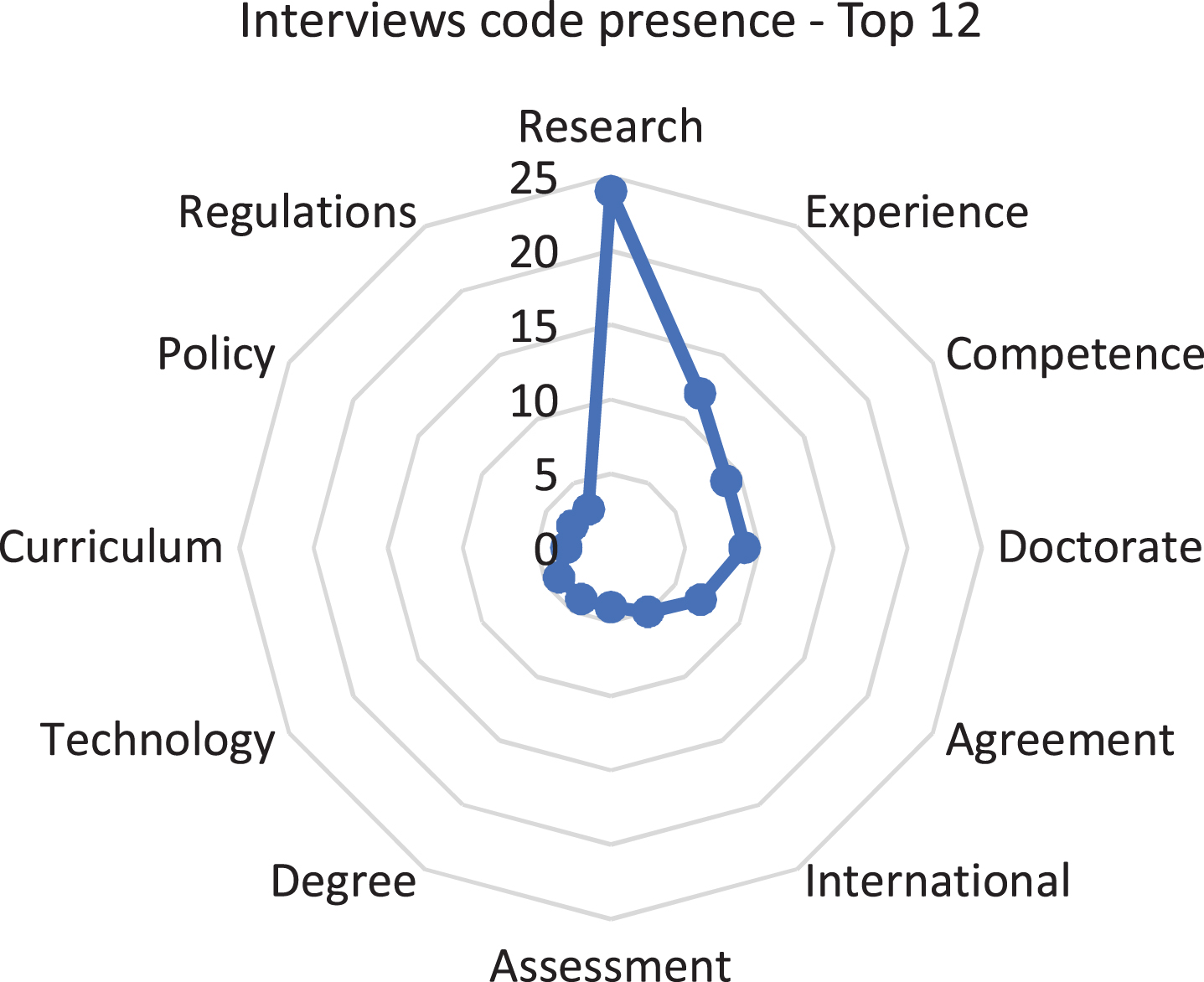
Web scatterplot on top 12 codes present in interviews.
During the interviews of higher education institution leaders, the interview discussion with the higher education institution’s professors was focused on six main themes, and below is a summary of the analysis of the respondents’ responses.
According to the data analysis, private and public higher education institutions in Kosovo have “quality coordinators” who are responsible for monitoring and controlling teaching quality in their respective institutions. “Quality coordinators” operate in their quality offices situated in every University and Faculty. There is a quality coordinator for every faculty who assess the academic staff with the help of Deans. Some of the factors influencing quality of teaching in relation to the perceptions of higher education institution’s professionals include local and global collaboration, competence, level of education, and the professor’s research and experience. Other factors that were significantly considered to determine the quality of teaching include students’ assessment, professors’ experience, technology, teaching curriculum, and policies regulating the curriculum.
Theme 2: What tools are Institutions using to help Professors develop new competencies and explore teaching innovations
Higher Education Institutions in Kosovo use various tools and techniques to help develop new competencies and explore innovative teaching methods, these include internship in labs in collaboration with various local and global institutions. Hence, they will interact with scientific resources written and published in highly credible journals, and the level of degree entailed by qualified professors. In some scenarios, they apply policies and regulations, and curriculum for supporting professors in their development of new competencies.
Theme 3: What are the Institution support collaboration with academic personnel
Higher education institutions in Kosovo motivate collaboration among their staff, through special coordinators. These coordinators deal directly with the teaching staff. Their task is to provide the right conditions for professors to cooperate and collaborate in the exchange of professional experience, publication of scientific papers, and cooperate with foreign higher education institutions, and while also attending various academic training congresses on various topics. Through these strategies, continuous work from the professors will be achieved as required of them, cooperation will be imposed, and objectives of both public and private higher education institutions will be achieved.
Theme 4: Research and teaching competencies relations regarding professors’ performance and reappointment
From the respondents’ analysis, the reappointment of professors in Kosovo’s Higher education institutions is directly based on their research work, for instance, their scientific publications. Higher education institutions require that research papers be published in journals with high impact factor. Also, the Institutions highly signify the correlation between professor’s level of education, research, and competencies, as there is a consideration that a teaching professional is considered incomplete if they do not have degrees despite having qualified scientific works, and vice versa.
Theme 5: Leadership experience on educational policies and knowledge transfer to Kosovo from OECD or EU countries
Higher education institutions are in agreement with international organizations effective transfer of knowledge is achieved through exchange of professors and students. This aspect grants a direct opportunity for debate by professors, collaborators, teaching methods and practices, a compilation of syllabi, and interaction among students. Lack of financial support in public institutions deteriorates the possibility of continuous knowledge transfer and development. Most public higher education institutions dependent on EU funding in organizing summer camps and various seminars. Private higher education institutions have a better chance in this regard, as their finances offer real conditions and options for knowledge transfer and international cooperation from EU higher education institution into Kosovo with the EU.
Theme 6: What would be that one educational change, that if implemented, would guarantee a positive impact on the students who attend Higher education institutions
In regard to higher education institutions in Kosovo, curriculums on project implementations and industry needs is that one thing that can boost quality teaching and impact student attending higher education institutions hence should be adopted immediately. This action will boost employment of students after accomplishment of their studies; the increase of hours of internships, enhancing lecturing conditions and providing training for professors, providing financial support for students; and supporting continued cooperation for professors at national and international levels.
Presentation of findings
The secondary sources used are majorly based on the literature review based on the research topic, available online public resources, and corresponding legislation in Kosovo’s Ministry of Education, Municipalities, and Parliament.
There was the application of content analysis to determine the presence and frequency of certain words, themes, and concepts to analyze Kosovo’s institutional documents regarding teaching quality. Simultaneously, the content analysis utilized the conceptual analysis to determine the existence and frequency of words in a text.
Codes similar to the ones used in the analysis of focus group interviews and other interviews were applied. The main aim is to find these repetitive patterns and consistencies documented in the data. (Table 4) and (Fig. 3).
Presence of code words in Kosovo’s institutional documents
Presence of code words in Kosovo’s institutional documents
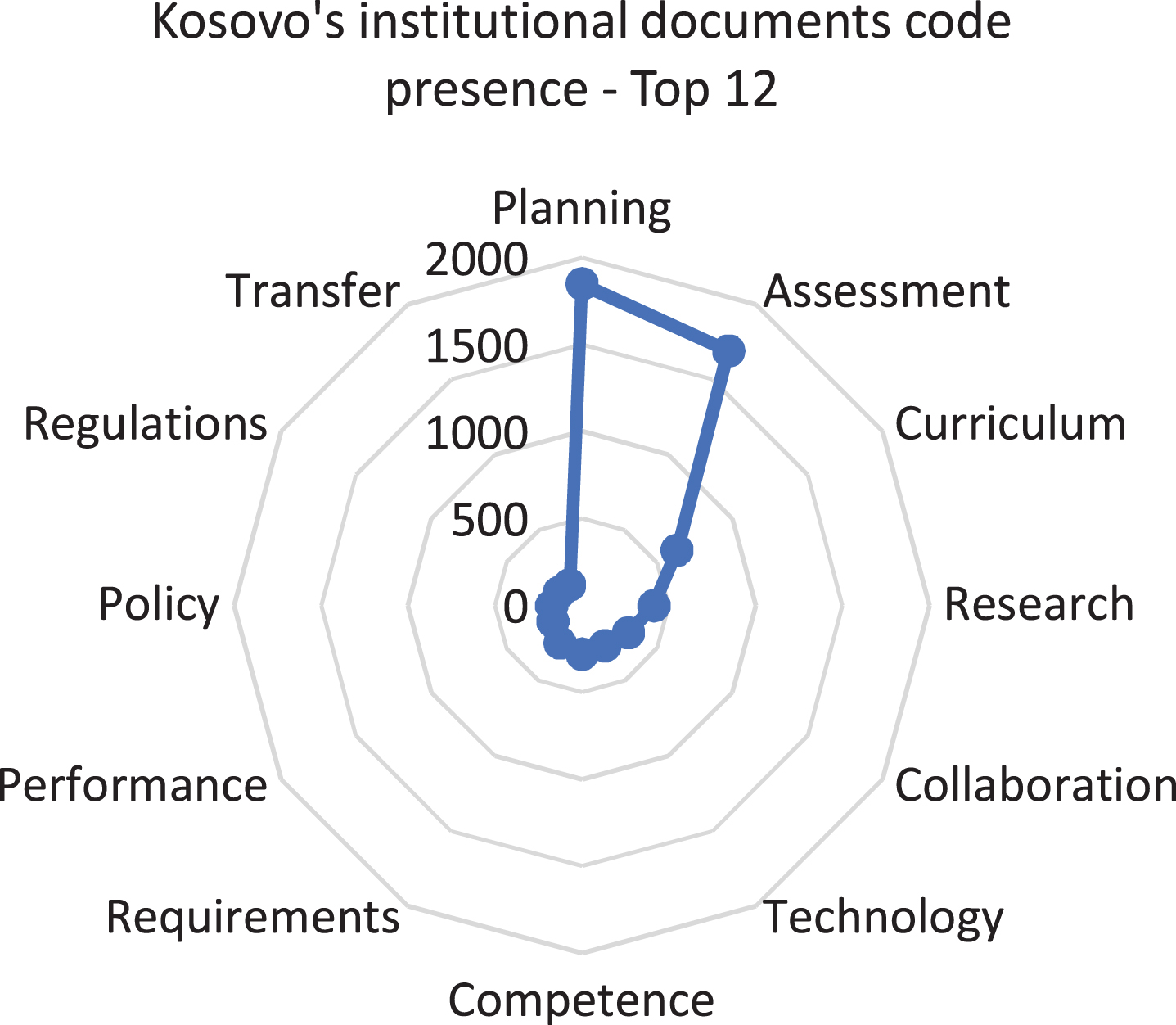
Web scatterplot on top 12 codes present in Kosovo’s institutional documents.
When analyzing Kosovo’s institutional documents on quality of teaching, some major emerging themes include research planning, assessment, technology, collaboration, and curriculum. The second tier of themes include competence, performance, regulations, requirements, knowledge transfer and policy
This paper was destined to research the quality of teaching in higher education institutions. According to professors’ opinions expressed in the focus groups, the teaching quality is related to the professors’ research and students’ evaluation. It depends on technological use, knowledge transfer, the teacher’s experience, and professor qualification. Other significant factors influencing the teaching quality are pedagogy, motivation, cooperation, communication, and adequate implementation of planned activities. Below are some of the discussions obtained from the data analysis and findings
Professors appreciate the level of quality of teaching
Professionals appreciate the quality of teaching as they participate in various internships; hence they could showcase their research locally and globally.
Higher education institutions’ leaders also stressed that factors determining the quality of teaching are mainly the Professor’s research, acquired qualification, experience, and national and international cooperation. Other factors signifying the quality of instruction include the use of technology in teaching, students’ evaluation, rules related to education, curricula, and policies. The development of laboratories for professional practice in Higher education institutions helps professors explore innovation in teaching and develop new competencies. They achieve this in cooperation with local and foreign institutions through published scientific work with high scientific credibility. In other cases, they apply the policies and curriculum to support teaching professionals in developing new competencies.
New curricula and quality teaching
Adopting curricula that can adapt to the industrial needs is one step that can swiftly improve the quality of teaching since it would be a booster in the immediate employment of new graduates based on the perception of teaching professionals of higher education institutions in Kosovo. The support delivered by higher education institutions towards the quality of teaching, in the formal aspect, is determined by the appointment of certain personnel as the quality coordinators at the tertiary level and the academic units’ level.
Quality coordinators have been given the mandate to monitor Kosovo’s teaching quality in public and private higher education institutions. The quality coordinators appointed in every institution ensure quality teaching. Higher education institutions leaders believe that competence, research, experience, degree, and collaboration significantly affect teaching quality. The more a professor increases their higher degree levels, the more their knowledge is built as they become more competent [39]. Experience refers to the number of years a professor works in a teaching career. The longer they work more challenges they encounter; hence they learn to adapt. Consequently, it improves their quality of teaching.
Research is essential to apply the knowledge that professors gain in their careers as they get eligible for reappointment [11].
The interviews done with higher education institution leaders revealed that the higher education institution leaders perceive collaboration, degree, competence, experience, and research as necessary in improving the quality of teaching.
Leaders of local higher education institutions stress that curricula need to be tailored to the industry’s needs, facilitating the immediate employment of new graduates. Also, increase professional practice hours in the field and financial support for students.
Measures to improve quality of teaching
Documentary review exposed that Higher education institutions in Kosovo use different methods to improve the professors’ competency, including collaborations between local centers and international ones and lab internships to develop scientific research. They are innovative and add to the professors’ credentials. There are some regulations and policies to develop the competencies and achieve the curriculum goals as they help the Kosovo government stay in control and monitor the progress [40]. Higher education institutions give the professors the platform to collaborate and research on various scientific works. They can then partner with international Professors to review and boost their research.
Regarding teaching techniques applied during lectures, laboratory research and practices are some of the approaches currently in use. Professors have stated obstacles and unfavorable conditions for employing these methods. Therefore, the attention of relevant leaders in higher education institutions is necessary when making plans. Traditional teaching techniques involve activities such as professors encouraging students to recite and memorize contents [41].
Conclusion
Findings obtained from the research on Higher education institutions in Kosovo resulted in the following conclusions. First is the inception of modern teaching techniques as traditional ones become more immaterial with time. There is more stress on quality assurance in the education system as the Kosovo government perceives it as a good base for societal, social, and economic advantage [42].
Teaching professionals have guaranteed that the main factors determining the teaching quality are pedagogy, adequate implementation of planned activities, cooperation, communication, and motivation. Professors have elaborated that they lack the proper infrastructure and conditions necessary to provide the best quality teaching.
According to the professors’ opinions, the quality of teaching directly relates to students’ evaluation and professors’ research. They consider quality teaching as a collective process that requires both the students and the professors’ efforts. They also perceive that the assessment of students and research significantly affects the quality of teaching. The student assessment depends on the Professor’s degree and knowledge transfer, experience, and technological literacy. Other factors that have been considered essential for quality teaching include planning, communication, pedagogy, collaboration, and motivation [43].
The election and re-election of professors’ positions has become ineffective despite institutions having installed unique procedures, but these procedures are not adequately adhered. Kosovo’s higher education institutions’ reappointment does not adhere to the set of government regulations. These laws require professors to publish their research papers from their projects, but they do not follow the rule. It is an academic check in the country that improves teaching quality [43]. It is because of the essentiality in reappointments that augment the higher education institutions’ competence. Reappointments increase Professors’ competency as they improve their skillset and amass more knowledge hence developing their research work. Journal publications and Scopus are influential in expanding previous research ana allowing scholarly reviews for improvement and considerations. Kosovo’s higher education institutions delight in the significance of research and their contribution towards competencies [40]. Most people think a qualified professor is one with relevant degrees and scientific works.
The knowledge transfer from global higher education institutions to local ones will be achieved through international agreements to exchange professors and students. Lack of public institutions’ finances is emphasized as a weak point in the continuous knowledge development and dissemination. The transfer of knowledge from EU and OECD countries to Kosovo is an extensive challenge. Kosovo has a poor infrastructure with limited institutions; therefore, the occurrence of professional and technical processes becomes difficult. However, the professors realize that the transfer of teaching techniques is the best way of information transfer. Therefore, teaching professionals from different geographical regions can interact and exchange theories [44].
Kosovo’s higher education system is way behind the EU standards and the United States higher education system. Kosovo has high development potential, but higher education professionals and professors need to follow the EU guidelines to meet these standards. Kosovo has a quality assurance policy; therefore, it fulfills the first guideline. The quality assurance policy is suitable for competency development and strategic management to remain relevant in the sector and be competitive with the EU countries and the United States. Kosovo needs to establish an approval system for its higher education programs to ensure that they fulfill their objectives and goals [45]. The relationship between data use and advancement was realized in higher education institutions’ external self-evaluation processes [46].
Recommendations
The following recommendations have been discussed based on the findings and discussion of the research. First is the merged commitment and coordination of all higher education institutional activities. The ministry of education and Kosovo accreditation agency are necessary for improving the quality of the teaching process in general.
Kosovo should put more investment in physical infrastructure to ensure students gain more practice-based learning opportunities in fields and laboratories. Public funding for scientific research, support to professors and students in conducting scientific research should be increased. Educational institutions and employers should closely cooperation to adapt with the curricula-based market needs and demands.
Kosovo should learn from the EU and the United States since majority of the EU and the United States promote student-centered methods in their higher education institutions. The Professors should stop being at the center of the teaching process, like in Kosovo, instead, students should actively participate in fulfilling the goals of the learning process [45].
Despite their academic qualifications, professors’ personalities play a vital role in the success of their class. It is also crucial for academic professionals to align their interests as they pursue their profession. Students must relate to their professors’ words and motives to ensure they effectively share information and make them comfortable. Personality determines a professor’s attention, attitude, and communication skills [47]. A qualified professor must maintain a stable mind as they handle different type: of students [48].
Kosovo needs to develop appropriate mechanisms and policies for assessing professors’ performance and generating their selection and re-election based on these performance indicators and other formal documents. To account for more recommendations concerning the students’ opinions and feedback regarding professors’ performance, Kosovo should implement strict requirements for the reappointment regulations and policies and ensure every institution adheres to them.
Limitations
Like any other study, the research on teaching quality in Kosovo’s higher education institutions discovered various limitations. First, the political instability and high poverty levels have directly influenced the quality of education, teaching professionals’ dissemination of knowledge, and Kosovo’s teaching standards. Detailed figures and recent information is another issue that limited this research project [49]. Some of the factors observed to derail the research on the quality of teaching in Kosovo’s Higher education institutions include the limited connection between comprehensive statistical facts, empirical data, and higher education policy-making procedures.
Research also shows that appropriate and efficient higher education institution administration lacks a challenge in achieving better quality teaching in the higher education institutions [49]. Furthermore, few have been done regarding modernizing higher education towards more market- oriented and quality knowledge and skills in the higher education sectors. Other significant challenges that continue to disrupt Kosovo’s higher education institutions’ quality include lack of research financing, limited budget, obstruction of academic freedom and managerial autonomy, insufficient research infrastructure, and limited teaching space.
Footnotes
Acknowledgments
The article research was conducted for PhD thesis, and was not founded by any sources.
Author contributions
CONCEPTION: Andrej Koren and Dugain Sokoli
METHODOLOGY: Dugain Sokoli and Andrej Koren
DATA COLLECTION: Dugauin Sokoli
INTERPRETATION OR ANALYSIS OF DATA: Dugain Sokoli and Andrej Koren
PREPARATION OF THE MANUSCRIPT: Dugain Sokoli and Andrej Koren REVISION FOR IMPORTANT INTELLECTUAL CONTENT: Andrej Koren and Nada Trunk Širca
SUPERVISION: Andrej Koren and Nada Trunk Širca