



Abstract
BACKGROUND:
Given the growing issues in environmental management, there is a need to respond to this increasing pressure by implementing the strategy of sustainability like green human resource management.
OBJECTIVE:
The study focuses on examining the influence of practicing green human resource management activities on environmental performance. The research also explores the interplay of Green HRM, green innovation, and service leadership in influencing environmental performance.
METHODS:
The technique of SEM analysis was applied to examine the direct and indirect effects. The data was captured from 328 employees of the Indian IT sector.
RESULTS:
The findings indicated the positive and significant mediating role of green innovation (product and process) between Green HRM and Environmental performance. Servant leadership also moderates their relationship thereby strengthening the positive influence of Green HRM on environmental performance.
CONCLUSIONS:
The large industries need to upgrade their system to GHRM for embedding green values, culture, and attitudes in the organization. Hiring the employees with environmental consciousness, training, and rewarding them for the promotion of an environmentally friendly culture promote green innovation. These practices with green innovation and servant leadership ensure that green initiatives are instilled in employees for the responsible behavior for positive environmental performance, which is a global need.

Introduction
The preservation and protection of the natural environment have been a vital issue for the last few decades. About every concern has embraced the practices for environmental protection. Hilton developed goals, policies, eco-friendly programs, and reporting tools for monitoring progress to protect the environment. As a result, reduction in overall water consumption by 14.1% and usage of energy by 14.5% from the 2009-to-2014 period. The environmental performance of the enterprises has gained increasing attention from researchers and practitioners over the past few years. Governments also emphasize the environmental performance to sustain the surrounding environment and natural resources and to attain the goals of UNSDGs (United Nations Sustainable development goals). Positive environmental performance plays an imperative role in preserving the environment from negative influences such as pollution waste, and environmental releases and helps in sustaining the enterprises and their overall performance. Green HRM (human resource management) practices offer a realistic way to develop human capital for improving environmental performance in the organization. The system of GHRM also helps the firm with its sustainable development [1–3]. Green human resource management is defined as the HRM aspect of environmental management [4] and that leads to positive environmental outcomes. Green HRM practices can be categorized into three major activities such as 1. Developing the green abilities of employees, 2. motivating the employees, and 3. Providing the employees with green opportunities [4]. Developing green abilities in the employees encompasses integrating positive ecological thinking into the firm by utilizing HR (human resource) activities like recruitment and selection, training, and development of leadership [5]. After recruitment and training at once, the employees stay motivated through evaluation of performance and compensation frameworks that are centered on providing opportunities for improvement in environmental performance [4, 6]. Several researchers have examined the nexus between Green HRM practices and the EP of a firm [4, 7]. The findings of these scholars deliberated the positive influence of GHRM on a firm’s EP through practices like efficiency in organization and waste reduction [8]. Overall Green HRM practices can upgrade the green behavior of employees to improve the firm’s performance voluntarily.
Ability, opportunity, and motivation (AMO) theory is used to illustrate the relationship between green HRM and green performance. This theory of [9] has been used in the literature to explain the association between HRM and performance. Drawing upon this theory, it is believed that the GHRM practices in the firm aim at hiring, motivating, compensating, and sustaining the employees’ behavior at the job towards management of environmental goals and objectives through green product and process innovation leading to improvement in the green performance of the firm [10].
Research gap
The link between green HRM and environmental performance is well established in the existing literature [11–13] but according to the study conducted by [14] the study in the field of green HRM that how it leads to environmental performance is not complete without considering its process [15] also emphasized the need for in-depth literature on the association between green HRM practices and its factors such as green human capital, interactions among green human resource management practices contributing to organizational performance, and green employee performance [14] emphasized the need to examine the alternative mediating mechanism to understand the association of green HRM and environmental performance and its dynamics. Further [16], showed the role of leadership in contributing to organizational outcomes positively by influencing attitudes and performance of an organization. Specifically, servant leadership has been recognized as one of the moderating factors influencing the relationship between green human resource management and environmental performance [17]. Servant leadership is self-sacrificing and more probably embeds a sense of interest in the community. Servant leadership pays attention to serving the community and green HRM and EP (environmental Performance) are related to the protection of the environment and society by preserving the environment. Thus, as per the view of [17], this becomes essential to study its moderating role in their relationship. Moreover, there are lack the studies examining the role of servant leadership in affecting environmental performance. The present research fills the gap by studying the mediating role of green innovation and moderation of servant leadership in their relationships.
Theoretical background and hypotheses formulation
Green HRM and environmental performance
Arulrajah [18] stated that GHRM refers to the techniques, programs, and processes that get fulfilled to reduce the negative effects on the organization. The green HRM method is regarded as one of the best methods to implement environmentally friendly programs, by training employees to have the capability to identify environmental issues in the organization [4]. Previous researchers have examined different indicators of environmental performance. For instance, the studies have focused on the environmental disclosure adequacy in financial reporting, which provides the information regarding exposure of the organization to green regulation and practices on environmental performance as discerned by [19, 20]. Another researcher [21], conducted research in the paper industry and employed profitability, systematic risk, total risk, price-earning ratio, and size to study or as indicators of environmental performance. His findings also indicated the significance of these variables with environmental performance. Moreover, the study in 1980 by [22] examined environmental performance by taking into account annual accounts of the corporation by looking at its environmental disclosure but their results reflected the insignificance of their relationship. The present research examined Green HRM as a strategic tool of management to increase environmental performance due to the view of [19], about the management strategy that is a key to exploring the interrelations between economic and environmental performance. Green values, beliefs, and awareness levels of the employees should be emphasized to encourage the green performance of the green enterprises. Standardization of GHRM obligations and objectives enhances the environmental performance of the enterprises. Various researchers have inspected the interrelation between GHRM and green performance. The results reflected that Green HRM enhances green consciousness, green innovation, green creativity, and green performance. Furthermore, organizations practicing green management systems i.e. GHRM officially, showed a high level of environmental performance. A recent survey on SMEs also indicated that green ability, motivation, and opportunity (GHRM) had a positive influence on sustainability. Thus, the following hypothesis is proposed:
H1: Green human resource management has a positive influence on environmental performance
Green human resource management (GHRM) and green innovation
According to [23] green innovation is meant by developing eco-friendly processes and products through the adoption of practices of an organization such as the use of fewer and greener raw materials to design the products by following eco-design principles that intend to reduce carbon emission, reduce the consumption of electricity, water and other resources [24]. [25] deliberated that previous literature justifies green innovativeness as a key indicator of highly successful firms. These firms also have better overall performance in comparison to their rivals due to the leverage of green resources and abilities to act fast and according to the needs of the customers [25–27]. Several pieces of research suggested that human resource management has a positive and significant impact on product and technological innovation [28, 29]. As per the view of [28], HRM practices have focused on promoting a culture of commitment rather than compliance have a positive influence on companies’ innovation orientation. Moreover, Wei et al. 2011 proposed that strategic HRM has a positive impact on a firm’s product innovation, having a flat organizational structure and developmental culture. On the other hand [30], reviewed past literature on HRM-Innovation that HRM does not have much influence on administrative and product innovation as compared to technological and product innovation. Thus, past literature advocated the mixed results on the linkage between HRM and innovation in the firms. Therefore, the organization which values and leverages the abilities of its human talent will go to institutionalize Green HRM practices to attract, motivate and provide opportunities to green HR to leverage their abilities for green product and process innovation.
H2: Green human resource management has a positive influence on green innovation
H2 (a): Green human resource management has a positive influence on green product innovation
H2 (b): Green human resource management has a positive influence on green process innovation
Green innovation and environmental performance
Green innovation is concerned with the green management agenda of the enterprise, which enhances green performance. The negative impact on the environment is reduced significantly in the business through innovation in green products and processes. This also leads to an increase in the firm’s performance in terms of financial, social, and environmental through the reduction in waste and cost by saving time, money, and resources [31]. According to previous research, green performance is a positive influence by green innovation in the enterprise. As per the view of [32], environmental performance is related to initiatives of the organizations to meet and surpass the expectations of the society and natural environment [33] deliberated that, this environmental performance also goes over mere complying with the rules and regulations. It includes the effects of organizational products, processes, and consumption of resources on the environment in a way that also has optimum fit with environmental desires and requirements [33–35] were also of the view that the quality of eco-friendly products, green product, and process innovation, the introduction of environmental sustainability into business operations determine the environmental performance of the enterprise. The main results of the study conducted on the influence of green innovation and green suppliers on environmental performance revealed that product, process, and innovation in management have a significant and positive impact on the green performance of the enterprise. The study on SMEs also disclosed its positive influence on green performance. Hence, the following hypothesis is proposed:
H3: Green innovation has a positive influence on green or environmental performance.
H3 (a): Green product innovation has a positive influence on green or environmental performance.
H3 (b): Green process innovation has a positive influence on green or environmental performance.
Mediating role of green innovation
The practices of green Human resource management enhance environmental awareness of employees [4, 36] green creativity [37] and green performance of the organization [33, 37] Existing literature suggests that Green HRM influences green innovation (Chen and Chang; Zhou et al., 2018) and the green performance of the firm [38, 39]. But there are only a few studies conducted so needs more research especially when organizations experience great pressure from the key stakeholders to practice eco-friendly activities. Moreover, the studies from previous literature suggest that an organization should recruit potential employees by keeping in mind their environmental beliefs, values, and knowledge [4] to ensure that newly hired employees also appreciate and comprehend these beliefs and values as stated by [40]. likewise, green training and development, Green performance management, green compensation management stand out as core practices of HRM to positively influences a firm’s environmental performance [4, 41] were of the view that green training and development programs are designed to develop proficient skills and knowledge of employees for eco-friendly workplace analysis, waste management, recycling, and energy efficiency. Along with training and development, institutionalizing the performance management system, responsibilities, and eco-friendly objectives also increase environmental performance [42]. The existing studies [28, 42–44], suggest that bundles of human resource management practices influence product and process innovation, and administration. The negative impact on the environment is reduced significantly in the business through innovation in green product and process. This also leads to an increase in the firm’s performance in terms of financial, social, and environmental through the reduction in waste and cost by saving time, money, and resources [31]. Thus, we propose the following hypothesis
H4: Green Innovation plays a mediation role between green human resource management practice and environmental performance.
H4 (a) Green Product Innovation plays a mediation role between green human resource management practice and environmental performance.
H4 (b) Green Process Innovation plays a mediation role between green human resource management practice and environmental performance.
Moderating role of servant leadership
Leadership is defined as the art of motivating and influencing a group of persons to attain their common goal. Social influence is a driver of leadership rather than seniority or strict hierarchy. The researchers considered servant leadership as one of the most effective styles of leadership. The role of servant leadership is to serve the individuals rather than individuals attempting to serve the leader. The servant-leader aims to serve other individuals and ensure that the necessities of others are fulfilled [45]. As per servant-leadership philosophy, a servant leader depicts an altruistic personality for the followers and helps them to grow and learn by providing chances to experience and get better their spiritual and material condition [46]. The distinguishing feature of servant leaders is that they are caring and pay attention to the community in which they live. They are active in giving direction, support, and resources to their followers. In the area of green performance, these leaders augment the understanding of their followers concerning pro-environmental behavior by showing themself as role models of environmental values [47]. Abundant empirical research in the field of hospitality has scrutinized the positive influence of servant leadership on behavioral and attitudinal outcomes, like psychological empowerment [48], work engagement [49], organizational commitment [50], job satisfaction [51], service quality performance [52], organizational citizenship behavior [53]. employee creativity [48], and customer service performance [54]. In the field of Green HRM also expect that if it is implemented concerning servant leaders in the companies, will lead to a major increase in environmental performance. The moderating role of servant leadership in the relationship between GHRM and environmental performance and the mediating role of green innovation has not been examined to date to the best of our knowledge; however, existing literature [14, 56] have provided some empirical base or pieces of evidence that helped formulate a hypothesis based on the interaction between green human resource management and servant leadership.
H5: Servant leadership plays a moderating role between green human resource management and environmental performance.
Research methodology
Sample and procedure
Our sample population consists of the IT sector of India. Data were collected from IT sector employees that have more than 20 members and are located in the several geographic regions of India, specifically, Bangalore, Hyderabad, Mumbai, Delhi, and, Chandigarh. The majority of the respondents were from Bangalore and Delhi region due to the highly developed IT sector and which is also known as the IT hub. IT sector has been selected due to its ability to control global carbon emissions by 20% by 2030 which is balancing the Co2 emissions in 2015 (Global E-Sustainability initiative 2015 report, ‘SMARTer 2030’). Further, India is among the bottom 5 countries in terms of green scores (Yale and Columbia Universities report in collaboration with WEF, Economic Times).
Measuring instruments
The measuring or survey instrument was developed to collect the data on four major constructs, namely, the GHRM practices, Servant leadership, green innovation, and Environmental performance. 500 questionnaires were distributed to capture the data but received 328 valid responses representing a response rate of 65.6%. The benefit of collecting data through the survey method is due to its flexibility in covering a larger geographical region [73]. Forty-one of the participants were senior and middle-level managers and left were operational employees across the various functional departments. A 5-point Likert scale was used to measure each item of the factors under the survey, with a score from 5 to 1 (strongly disagree to strongly agree).
Green human resource management (GHRM)
The scale consisting of twelve items, to measure GHRM was adapted from [4, 57]. The Sample item or statement comprises, “Environmental training is designed to enhance employee’s environmental skills & knowledge”.
Green Innovation (GINNOV)
The seven items scale of GINNOV consisting of four statements of green product innovation and three items of green process innovation was adapted from [58]. The sample item includes, ‘My company operations consume less energy and resources.
Environmental performance
The five items scale to measure environmental performance (EPERF) was adapted from [59, 60]. The questionnaire contain the sample item was “Environmental activities significantly reduced waste within the entire value chain process”.
Servant leadership
Servant leadership was measured with the five items scale adapted from [61], which was also considered by [62]. The sample item includes, ‘Employees at our company can tell if something work-related is going wrong’.
Data collection
Data were captured through both online and offline media. The questionnaire in the form of Google forms were sent online to employees of the IT sector through hyperlinks. About 250 questionnaires were sent through offline and online modes leading to 500 total invitations. 131 and 197 valid responses were received from both the modes respectively, yielding a return rate of 65.6% (328 responses). Left of 172 responses was not received or were invalid and discarded. The probability of potential biasness was also controlled by sending a maximum invitation of 10 questionnaires to single company employees.
Analysis of data
SPSS version 23 was used to analyze the captured data and proposed conceptual model. A minimum sample size of 200 was recommended according to existing literature [63]. Therefore, the basic requirement to apply SEM has been fulfilled. Previous validated and standardized scales were used in the research. Thus, the reliability of the construct was checked using Cronbach’s alpha and confirmatory factor analysis (CFA) was used for testing the validity with maximum likelihood estimation to examine the goodness of the fit to the proposed model (Byrne, 2013). For hypotheses testing, Model 5 of Process v 3.4 of IBM SPSS 23 with 5000 bootstrapping at a confidence level of 95% [64] was utilized.
Results
Description of data
Table 1 shows the demographic details of the respondents’. Our sample population is heterogeneous, consisting of participants who varied in age, qualification, income, job role, and organizational department (see Table 1).
Demographic profile of the respondents
Demographic profile of the respondents
Source = Primary data.
Table 1 reflects that most of the respondents belong to the age category of 31–35 i.e 35.6%. 64% of the participants were males. Although we considered age and gender while capturing the data, we did not use this information for analysis because the main aim of the research is to examine the relationship between green human resource management practices, servant leadership, and green innovation on environmental performance. Qualification of the respondents shows the awareness of green operations and the ability to adapt green HRM practices in different departments and at various levels irrespective of any gender or age. More than half of the respondents (57.3%) were graduates and only 6.7% belonged to the above post-graduation or super specialization. The majority of the participants (33.23% and 26.21%) were from HR and customer service departments and 59% of the survey respondents were operational employees.
Table no.2 reflected the descriptive analysis of the sample ie. Mean and standard deviation. Correlation analysis was also done for checking the inter-relation among the variables before processing to the measurement model. The results in the above table (see Table 2) shows that GHRM has positive and significant relation with green innovation (r = 0.434, p < 0.01), Servant leadership (r = 0.242, p < 0.01), and environmental performance (r = 0.359, p < 0.01). All the four variables are found to be significantly associated in the expected direction, therefore, providing fundamental support to the proposed hypothesis. Normality of data was also checked using Skewness and kurtosis [65]. The resultant values of skewness and kurtosis were found to be lying within the specified range of –1.5 and +1.5 [66]. Reflecting on the normality of data. Besides this, outcomes of the t-test and one-way ANOVA showed no significant difference in terms of age, gender, and organizational level but the results revealed significant variations in terms of qualification, work experience, and organizational departments. Thus, these variables are controlled to move for further analysis.
Descriptive analysis of the sample
Note: N = 328, **p <0.01 *p <0.05; Source=Primary data
The four-factors model was analyzed using confirmatory factor analysis(CFA) and reflected goodness of fit of data with chi-square/df = 983.226/359 = 2.739 < 3 [67], p < 0.01, GFI = 0.832 > 0.80 [68], CFI–0.92 > 0.9 [67], TLI = 0.91 > 0.90 [69, 70], RMSEA = 0.073 < 0.08 [71].
Reliability and validity
The appropriateness of sample size and reliable data are the prerequisites for the goodness of fit of the model for the research [72]. The results of the KMO test (Kaiser Meyer-Olkin) i.e the measure of sampling adequacy and Bartlett’s test of Sphericity are displayed in Table 3 which reflects that the sample of the research is adequate as the value of the KMO test (0.895) is above the specified limit of 0.8. Bartlett’s test of sphericity also shows a p-value <0.001, meaning that variables formulating factors are significant and satisfactory.
KMO and Bartlett’s Test
KMO and Bartlett’s Test
Source = Primary data.
Reliability of constructs (Variables)
Source = SPSS output.
Convergent and Discriminate validity of the constructs (variables)
Source = Amos output; Notes: EP = Environmental Performance; GHRM = Green human resource management; PDINNO = Product Innovation; PRCINNO = Process Innovation; SL = Servant leadership.
Convergent and discriminate validity were used to assess the construct validity of the measuring instruments. As per the views of Kline, 2015 the constructs have convergent validity if the loading of the individual measuring items on the corresponding factor is greater than 0.50 (> 0.50). combined with the composite reliability (CR) of the scale of more than 0.7 [67]. AVE i.e Average variance extracted should have a minimum value of 0.5 and above [73]. All of the constructs under study fulfill the requirements [73] and have convergent validity as the loading of individual items measuring the constructs were more than 0.6, had CR > 0.7, and the AVE was > 0.548 to 0.645. Therefore discriminant validity was also examined as recommended by Fawcett et al. (2009) MSV is less than AVE and the square root of AVE for the construct was more than the correlation among them. Thus, the construct has both convergent and discriminant validity.
After examining the reliability and validity of the variables, the proposed or conceptual model was put for SEM analysis. The outcomes or results of direct effects using standardized path coefficients are reflected in Table 6.
Direct Effects
Direct Effects
Note: 1. ***p-value <0.01; **p-value <0.05 and *p-value <0.10. 2. PDT INN = Product innovation, PRCINN = Process innovation, GHRM = Green human resource management, EP = Environmental performance.
The results of SEM analysis (Table 6) show that Green human resource management has a positive and significant effect on Environmental performance (EP). Thus, supported hypothesis 1(H1) (CR = 2.963, p-value < 0.01). Similarly, hypotheses 2(a), and 2(b) also estimated a positive and significant relationship between GHRM and product innovation (CR = 7.668, p-value < 0.01 and GHRM and process innovation (CR = 6.850, p-value < 0.01). Further, Product innovation (CR = 3.154, p-value < 0.01) and process innovation (CR = 8.595, p-value < 0.01) were also significantly positively associated with environmental performance. Therefore, provide support to hypotheses 3(a), 3(b), and hypotheses 2(a), 2(b).
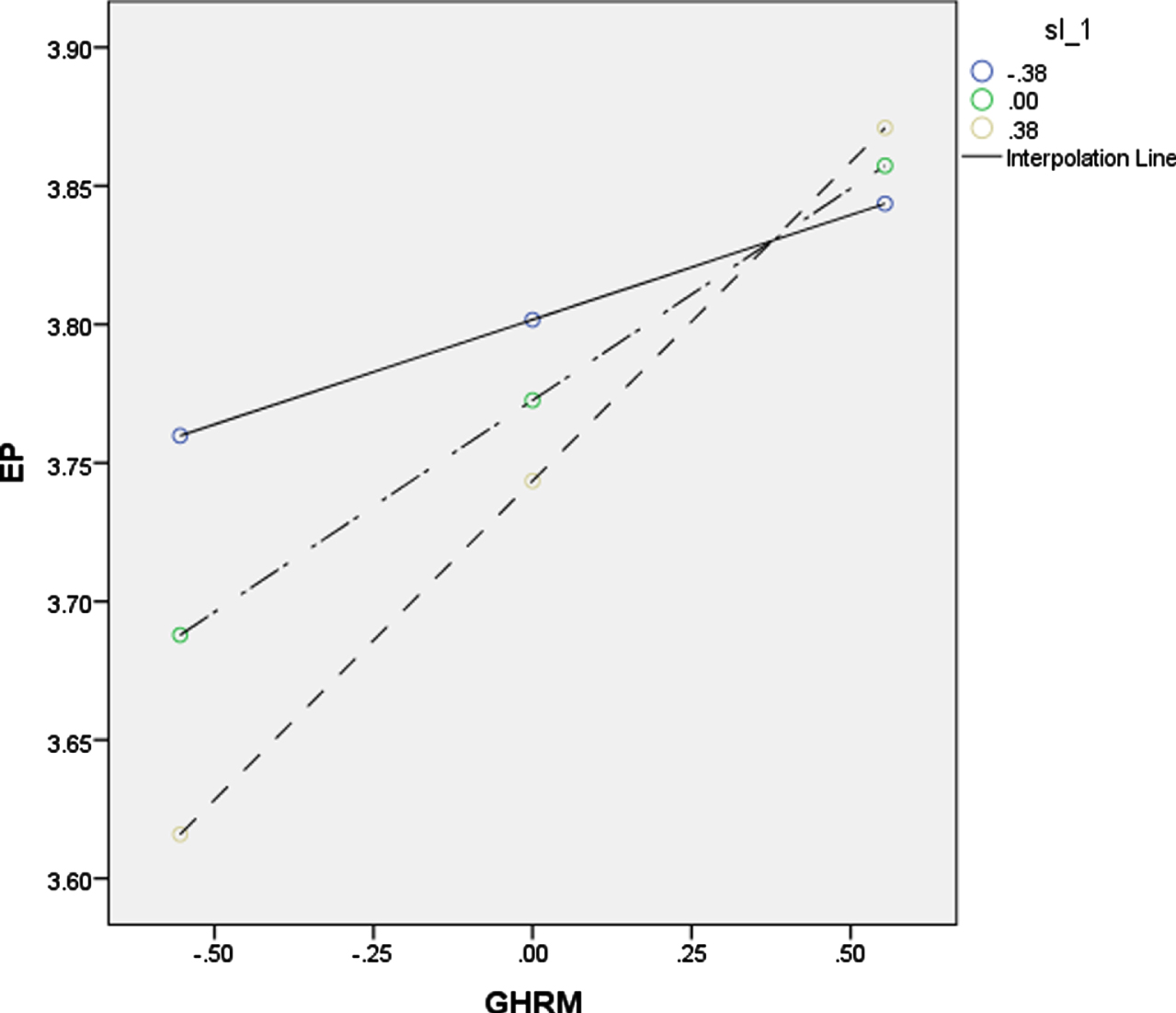
Table 7 depicts the moderating effect of servant leadership on the relationship between green human resource management and environmental performance in the existence of mediating role of green innovation (product innovation and process innovation). It is discerned from the table that green human resource management through the mediating role of green innovation in the form of product innovation and process innovation also significantly and positively affects environmental performance. But the positive effect of green human resource management on the environment is reduced after the inclusion of green product and process innovation as a mediator. Moreover, to examine whether the mediation is full or partial, the direct influence of GHRM on EP is checked. It can be seen from Table 7 that the effect (β= 0.1539, t = 2.97 with p-value < 0.01) is significant. Thus, there is the existence of partial mediation of green innovation (product and process). So, it is interpreted that green human resource management serves as a predictor of environmental performance regardless of the presence or absence of green innovation as a mediator. Therefore, hypothesis 4(a) and hypothesis 4(b) are partially supported. Further on examining the moderating role of servant leadership, it was found that servant leadership moderates the nexus between green human resource management and environmental performance thereby supporting hypothesis 5. The conditional effect of servant leadership was also examined. On probing the conditional effect in Table 8, it is depicted that the effect of servant leadership varies with its degree. The effect is more significant (β= 0.2302, t = 3.7914, p < 0.01) in the case of servant leadership at a high degree (above mean) on the other hand the effect of servant leadership is less and insignificant (β= 0.0755, t = 1.1504, p > 0.01) in case of low degree i.e below mean.
Outcomes of Mediation and Moderation Analysis When the Outcome Variable is Environmental Performance
Source = SPSS output.
Conditional effects of Green HRM on Environmental performance at different mean values of the servant leadership(s)
The present research attempt to investigate the interplay of green human resource management, green innovation in the form of product and process innovation, and servant leadership on environmental performance. The research supports all the formulated hypotheses.
The study found the positive and significant effect of green human resource management on environmental performance (H1) and green innovation (product and process) also play a mediating role in the relationship between H4(a) and H4(b). The finding of our research supports the previous research of [11, 74], wherein they observed that green human resource management practices are a key predictor of environmental performance. The present study also advances the ability, motivation, and opportunity (AMO) theory where it revealed that green recruitment and selection, green training and development (green ability), green performance evaluation, green reward system (motivation), green involvement (opportunity) generates significant contribution in improvement in Environmental performance of the firm. The results of the study suggest that if the employees are aware of the benefits of applying green practices while performing their duty, they will voluntarily participate in the activities leading to their eco-friendly behavior and ultimately enhancement in productivity and firm’s performance. It can also be argued that new ideas in the form of product and process could result in low cost and positive environmental performance. So, developing better and more innovative products helps to develop a niche in the market to gain competitive advantage and efficiency in operations by eliminating unnecessary activities leading to an upgrade the performance. The research results are also consistent with [25, 76], where Green HRM positively affects green innovation (H2(a) and H2(b). The present research is in the line with the existing literature where; [31, 41] found the positive impact of green product and process innovation on a firm’s environmental performance (H3(a) and H3(b). The firm’s environmental performance is improved with the introduction of green innovation in operations [41].
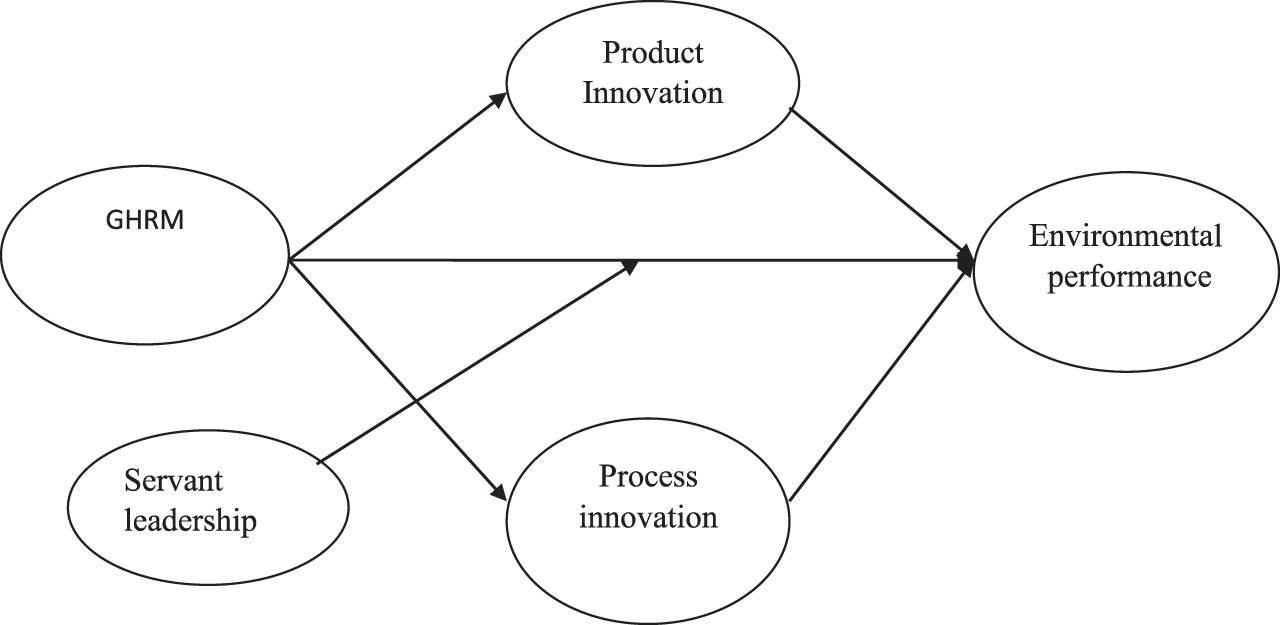
Conceptual framework.

Moderating effect of servant leadership on the relationship of GHRM and Environmental performance. Notes: Servant leadership strengthens the positive relationship between GHRM and Environmental performance.
Further results also demonstrated the positive moderating role of servant leadership in influencing the relationship between GHRM and environmental performance (H5). Servant leadership strengthens the positive relationship between them as depicted in Fig. 3. These findings of the study are in contrast with the findings of [77] where the author used SLT theory to explain the moderating role of servant leadership and their results also indicated partial support for the interaction of GHRM and servant leadership in enhancing environmental awareness. On the other hand, our study provides empirical evidence of its positive moderating role that can be interpreted as servant leadership encouraging employees to accomplish their tasks and engage in environmental behavior, and, this support and encouragement interplay with green HRM to enhance environmental performance.
The study provides a significant contribution to the existing literature on Green HRM and specifically in the IT sector. First, the importance of the present research lies in its focus on the environment and its protection which is a hot topic for the economy of every developing country. The research contributes to advancing the AMO theory to explain the reason for green innovation (product and process) and environmental performance. The firm should shape its green human resource management system to encourage green innovation and ultimately positive environmental performance. GHRM practices are crucial for attracting, motivating, and bringing innovative ideas for green innovation and promotion of green performance. The employees of the firm should be aware of green HRM practices to take the advantage of its implementation of competitive advantage and better service [14] emphasized the need to examine the alternative mediating mechanism to understand the association of green HRM and environmental performance and its dynamics. The research provides the essential understanding and fills the research gap in the sense that GHRM is a key predictor of green innovation to prompt employees’ proactive eco-friendly behavior. The research also suggests the key role of servant leadership in encouraging the development of green attitudes by recognizing the green abilities of employees. Servant leadership helps to motivate employees to show their tendencies regarding pro-environmental activities and engage in eco-friendly behavior beyond their work duties. There is a need for a specific type of servant leadership quality to develop a green attitude to achieve significant results and necessary job outcomes. Overall by examining the role of green human resource management, green innovation, and servant leadership in shaping environmental protection behavior leading to its positive performance in the IT sector of India, the study provides empirical evidence which has rarely been studied in the existing literature.
Practical implications
The research provides important practical implications for policymakers, researchers, experts, and practitioners. The IT sector plays an important role in the protection of the environment, through automation and digitization, which is a global challenge for the economy of almost every developing country. It is believed that large industries rather than small ones play an essential role in environmental sustainability. Thus, the large industries need to upgrade their system to GHRM for embedding green values, culture, and attitudes in the organization. This could stimulate the behavior of environmental protection among the employees. Hiring the employees with environmental consciousness, training, and rewarding them for the promotion of an environmentally friendly culture promotes green innovation. These practices ensure that behavior is embedded in the habits of employees for the responsible initiatives to protect the environment that results in positive environmental performance, which is a global need. Further Servant leadership is self-sacrificing and more probably embeds a sense of interest in the community. The research is helpful to the managers in making policies for the protection and preservation of the environment by considering the interest of the society also through the servant leadership.
Limitation and direction for future research
Although, the present research significantly contributes to the existing literature admittedly the study is not without limitations. These limitations can further provide insights for future research. The study focuses on the general green human resource management system, but future researchers can extend the present model by extending AMO theory into GHRM through the division of its practices into ability (green recruitment and selection and green training and development), motivation (green performance evaluation and rewards system) and opportunity (green involvement and green organizational culture). These could be interesting findings. Future researchers could also focus on specific GHRM functions. The present research used a single quantitative method in researching while qualitative research has its benefits also. So, in the future mixed approach can be applied to achieve more reliable results. in the present research, most of the data have been captured using a close-ended questionnaire. For the sake of having more detailed information regarding GHRM practices, open-ended questions could be the part. Further, alternative or additive moderating variables that can strengthen the positive nexus of GHRM and EP such as green transformational leadership could be taken in the future study. The present research used a cross-sectional approach due to the limitation of funds and time, experimental research having a time lag can also be conducted for more accurate outcomes. Moreover, the research is conducted in the Indian IT sector, for generalization of the present outcomes, the model can be applied in another sector.
Footnotes
Acknowledgments
The authors have no acknowledgments.
Author contributions
CONCEPTION: Ella Mittal
METHODOLOGY: Parvinder Kaur
DATA COLLECTION: Parvinder Kaur
DATA ANALYSIS AND INTERPRETATION: Parvinder Kaur
REVISION FOR IMPORTANT INTELLECTUAL CONTENT: Ella Mittal
SUPERVISION: Ella Mittal