



Abstract
BACKGROUND:
The effectiveness of the paper’s bibliometric analysis and systematic assessment of change management research in administrative and technological studies may open the way for more study in this field. This study may be the first of its type, and its findings will be useful to other academics working in the subject of change management.
OBJECTIVE:
The goal of this literature study is to identify essential ideas that might influence change management and to lay the groundwork for future research in change management that uses bibliometric analysis. The evaluation determines the most important and frequently used terms connected with change management.
METHODS:
The method used in this study is a systematic review of change management publications from Web of Science.
RESULTS:
The most often used terms in change management research, according to the survey, were Leadership, Organizational Change, Organizational Development, Organizational Culture, Performance, Innovation, Framework, Technology, and Transformation. Change management papers were mostly published in the United States, China, Pakistan, Germany, Australia, and Finland.
IMPLICATIONS:
The study’s findings may be used to generate articles on change management in the market discipline, notably in the domains of business and technology.






Introduction
Each corporate organization seeking long-term success must implement change management as a critical activity. It entails taking a methodical approach to getting people, teams, and organizations to move from their present state to a desired future state [1, 2]. It takes careful preparation, coordination, and execution to successfully complete the complicated and difficult work of change management [3]. Investigating the function of change management in corporate settings and how it impacts overall performance is the goal of this study.
To remain relevant in today’s dynamic and competitive business environment, businesses must adapt to the changing environment [4]. Organizations can adapt to changes in an effective and efficient manner by using the framework provided by change management. It entails determining the need for change, organizing and putting that change into place, and then assessing how well it worked [5, 6]. Effective change management can aid businesses in increasing productivity, cutting expenses, and boosting market competitiveness. Change management, however, can also lead to ambiguity, resistance, and conflict. Understanding the components of effective change management, such as leadership, communication, and employee involvement, is crucial [7].
Business organizations that want to adapt to a rapidly changing environment need to focus on change management. Many studies and books have examined different facets of change management, including its obstacles, techniques, and results. The field has been the subject of substantial research. Despite this, there hasn’t been much examination of how research on change management in corporate settings has developed [8–13]. Bibliometric analysis can offer insightful information on the field’s research trends, patterns, and gaps. The objective of this study is to review the existing literature on change management in business organizations, pinpoint important research strands, and look at how this body of knowledge has developed over time. The results of this study will aid in a better understanding of the change management research environment in business organizations and offer direction for future research initiatives.
For business organizations to successfully adapt to and react to the dynamic business environment, change management is a key activity. The literature has identified a number of variables that affect whether change management projects are successful or unsuccessful, including communication, leadership, employee involvement, and organizational culture [14]. Nonetheless, despite the wealth of knowledge on change management, many businesses still have trouble putting effective change initiatives into practice [15]. This emphasizes the necessity for a deeper comprehension of the mechanics of applying change management in actual situations [16]. Resistance to change is one of the biggest issues that organizations must deal with. Employee skepticism, a lack of buy-in, and overt rejection are just a few ways that resistance to change might appear [17]. Identifying the sources of resistance and taking proactive measures to resolve them are necessary for effective change management. This can be accomplished by employing communication techniques that encourage openness and dialogue, as well as initiatives to involve staff members in the transformation process [18]. Leadership is another critical element since it sets the tone for the change project, motivates employee commitment, and advances the change process [19].
The contribution of this research on change management in business organizations lies in the practical application of theoretical frameworks and concepts. The theoretical foundations of the process have received most of the emphasis in the literature on change management, with little attention paid to the actual implementation of change. By offering useful insights into the major components that contribute to change management success as well as the contextual variables that affect these aspects, this research aims to close this gap. This research adds significant value to the subject of change management by outlining the realistic tactics and approaches that businesses may employ to overcome the difficulties of putting into practice successful change efforts. The study’s conclusions provide corporate organizations with a framework for putting change management initiatives into practice that are more likely to provide the desired results, boosting organizational performance and competitiveness.
The purpose of this study is to investigate the function of change management in corporate settings and illustrate its significance. The article will explore several facets of change management, including the techniques and strategies employed to supervise organizational changes as well as the advantageous results that can come about as a result of effective change management. Readers will be able to adopt effective change management strategies and processes within their own businesses by comprehending the relevance of change management and its impact on business performance. By undertaking a bibliometric analysis of the Web of Science Core Collection, this study will expand on previous research. There are five main sections to this page. The second section, which follows the introduction, offers an overview of previous bibliometric studies. The research technique is thoroughly explained in the third section. The fourth section summarizes the findings and gives an overview of the field’s development as well as a look at current change management trends in corporate settings. The fifth and final section provides the study’s conclusions, its limitations, and recommendations for future research trajectories. Besides setting out the article in this way, readers will be able to fully comprehend the study process and the results as well as spot areas that could use more investigation.
Literature review (change management in business organization bibliometric research)
Modern commercial organizations must effectively manage change, and this subject has long been a hot one for academic inquiry. Many elements that affect organizational change have been examined in depth by researchers and authors, who have also identified best practices that can assist firms in managing change successfully. In this literature review, we will examine some of the most important results from bibliometric research on change management in corporate settings.
The creation of the change management process model has been one of the most important contributions to change management research. Organizations frequently utilize this paradigm to organize, carry out, and control change. The concept has received a lot of attention in the literature, where numerous authors have investigated its usefulness in various organizational settings. For instance, Al-Haddad and Kotnour [16] discovered that the change management process model was the most commonly cited and applied framework for managing change after conducting a bibliometric review of the literature on change management from 1990 to 2014. The importance of leadership in change management is another area of change management study that has drawn a lot of attention. Effective leadership, according to researchers, is essential for the accomplishment of change management activities. For instance, Armenakis et al. [20] discovered that leadership was one of the most often studied themes in the area after conducting a bibliometric review of the literature on change management from 1986 to 2006. They also discovered that the best leadership style for managing change was transformational leadership.
In addition to the leadership and the change management process models, academics have looked at a number of other elements that influence organizational transformation. For instance, communication’s role in managing change has been the subject of extensive research. To ensure that employees comprehend the need for change and are dedicated to the endeavor, communication is essential. Effective communication has been determined to be crucial for the success of change management activities by numerous researchers [21]. Scholars have also looked into the difficulties of managing change in contemporary organizations. Resistance to change is one of the biggest obstacles. Change management activities may not be as successful as they could be since many employees are reluctant to change. Researchers have found a number of tactics that firms can take to overcome resistance to change, including integrating workers in the process, offering support and training, and effectively communicating [22].
Current bibliometric studies have also concentrated on how change management has gone digital. Several businesses are embracing digital tools and platforms to support change management as a result of the development of digital technology. Researchers have looked at how well digital technologies manage change, and they’ve concluded that they can boost collaboration, employee engagement, and communication [23]. The need for digital skills and cybersecurity issues are, nevertheless, two obstacles that come with digital transformation. The effect of organizational culture on change management has been the subject of additional research. Organizational culture can help or hurt change management activities, according to researchers. For instance, businesses with an innovative and flexible culture are more likely to be successful at handling change [24]. Determining an organization’s culture is therefore essential for successful change management. Researchers have looked into how change agents can help manage change. The people or groups in charge of implementing change initiatives within an organization are known as change agents. Researchers have discovered that change agents are crucial to managing change and that they must possess the necessary abilities, information, and experience to do so [25]. The likelihood of managing change successfully can therefore be increased by building a team of knowledgeable change agents.
Furthermore, several scholars have emphasized the significance of stakeholder engagement in change management. Stakeholder involvement is the process of involving important stakeholders in change management, including shareholders, consumers, suppliers, and employees. Studies have discovered that involving stakeholders in change projects can increase their efficacy by obtaining insightful input and bolstering support for the change [26]. Engaging stakeholders effectively can also aid in identifying possible problems and reducing change resistance. The study of the ethical aspects of change management has gained more and more traction. Researchers have looked into the moral ramifications of change management, including how it affects consumers, employees, and the general public [27]. Since change can have a substantial impact on people’s lives and society as a whole, ethical issues are crucial in change management.
In conclusion, change management has received a great deal of attention from authors and academics because it is a crucial component of contemporary commercial organizations. Some of the major themes that have arisen from the literature are leadership, communication, and overcoming resistance to change. Organizations can increase their chances of successfully managing change by comprehending these themes and applying best practices to their change management activities. The change management process model, leadership, communication, overcoming opposition to change, digital transformation, organizational culture, and change agents are some of the important topics that have been found through bibliometric research on change management in business organizations. Organizations can increase their chances of managing change effectively in a constantly changing business environment by comprehending these themes and applying best practices to their change management projects.
Methodology
The research methodology employed in this study involves a bibliometric analysis, which is conducted in two phases. The first phase is focused on evaluating the bibliometric performance of the research field related to change management in business organizations, while the second phase involves the development of a visual mapping of the references in this field. Bibliometric analysis is regarded as a powerful tool for mapping and analyzing research production and the scholarly impact of authors, institutions, countries, and journals in a particular domain.
Various databases are available for bibliometric analysis, including Dimensions Database, Google Scholar, Web of Science, and Scopus. In this study, the Web of Science Core Collection was employed to investigate change management in business organizations. The authors focused on the Science Citation Index Expanded and the Social Sciences Citation Index to conduct a bibliometric analysis of the journals indexed in the Web of Science Core Collection database. The choice of Web of Science as the search database was based on its comprehensive coverage of publications and journals compared to other databases [28]. Similarly, the Web of Science Core Collection database provides a wealth of bibliographic information, such as publication year, author affiliations, title, abstract, source journal, subject categories, and references.
The bibliometric analysis in this study focused on articles published in the English language between 1982 and 2022, with the keywords “change management” and “organizations” used to search the Web of Science Core Collection database. Bibliographic data were exported from the database in Bibliography TeX (.bib) format and analyzed using the bibliometric R package in R Studio (version 4.2.2 as of February 14, 2023). The bibliometric R package, developed in R, is a powerful tool for overall analysis in scientometrics and bibliometrics, utilizing efficient mathematical algorithms and providing access to high-quality computational procedures for optimized visual analytics. For the second phase of the study, 939 papers were selected for analysis. Graphical mapping of bibliometric data was performed using VOSviewer software (version 1.6.15, developed by Nees Jan van Eck and Ludo Waltman, Melbourne, Leiden, The Netherlands). The VOSviewer software was used to create visual maps of co-occurring keywords, countries for co-authorships, most relevant affiliations, a three-field plot, and a factorial map using the exported data [28].
Primary information
The primary information extracted from the Web of Science Core Collection database is shown in Table 1. The information relates to 50 documents that were obtained from 39 sources, including journals, books, etc., between the years of 1982 and 2022. The average age of the papers is 8.86 years, and the data has a 1.75% yearly growth rate. Each document has an average of 9.44 citations, 94 keywords plus (ID), and 182 author’s keywords (DE). 102 authors contributed to the data, including 17 and 20 single authors for individual papers. 30% of co-authorships are foreign, and there are 2.14 co-authors on average per document. 30 articles, 1 article-book chapter, 1 article-proceedings paper, 1 editorial material, 15 proceedings papers, and 2 reviews are among the document categories. The number of references in the data totals 1901.
General information exported from the Web of Science Core Collection database
General information exported from the Web of Science Core Collection database
Keywords analysis
Bibliographic data was exported from the Web of Science Core Collection database and used in bibliometric studies and mapping with the VOSviewer program. To determine the entire power between keywords and their occurrences, co-occurrence analysis was employed for all keywords; the volume of the clusters reveals the potency and significance of terms. Moreover, the curving lines and colors highlight the importance of word clusters and linkages between them. There are 266 text-data terms in all, and 34 of them fulfill the 2 thresholds. The keyword co-occurrence map is shown in Fig. 1. Six clusters make up the map; the strongest cluster is related to the change management term, which appears 35 times and is related to nearly every other keyword, showing a significant impact. Organizational change, leadership, organization development, and organizational culture are the many keywords for each cluster, listed in order of strength.
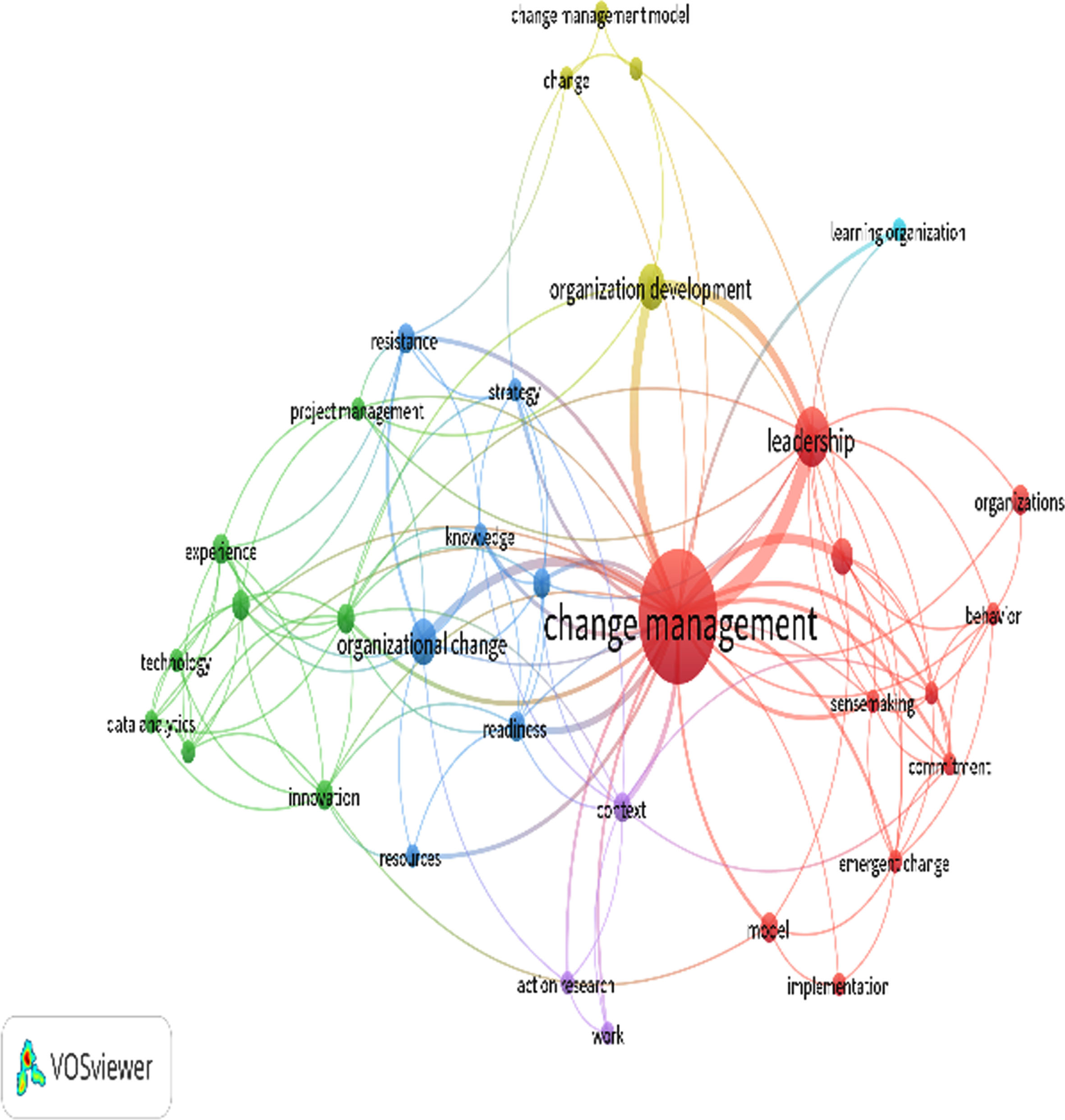
Keyword co-occurrence.
Figure 2 depicts a chronology of an organization’s development and transformation efforts since its inception in 2012. The use of a precise starting year implies that the organization’s activities were planned, and the gradual implementation method suggests a patient and deliberate approach. According to the graph, the organization began applying change management methods in 2014, concentrated on leadership development in 2016, and recognized the significance of technology, a framework, and transformation after 2018. The effectiveness of these endeavors, however, cannot be assessed only by the beginning locations represented in the figure. Additional criteria, such as particular aims, tactics, and outcomes, would need to be considered in order to assess their efficacy.
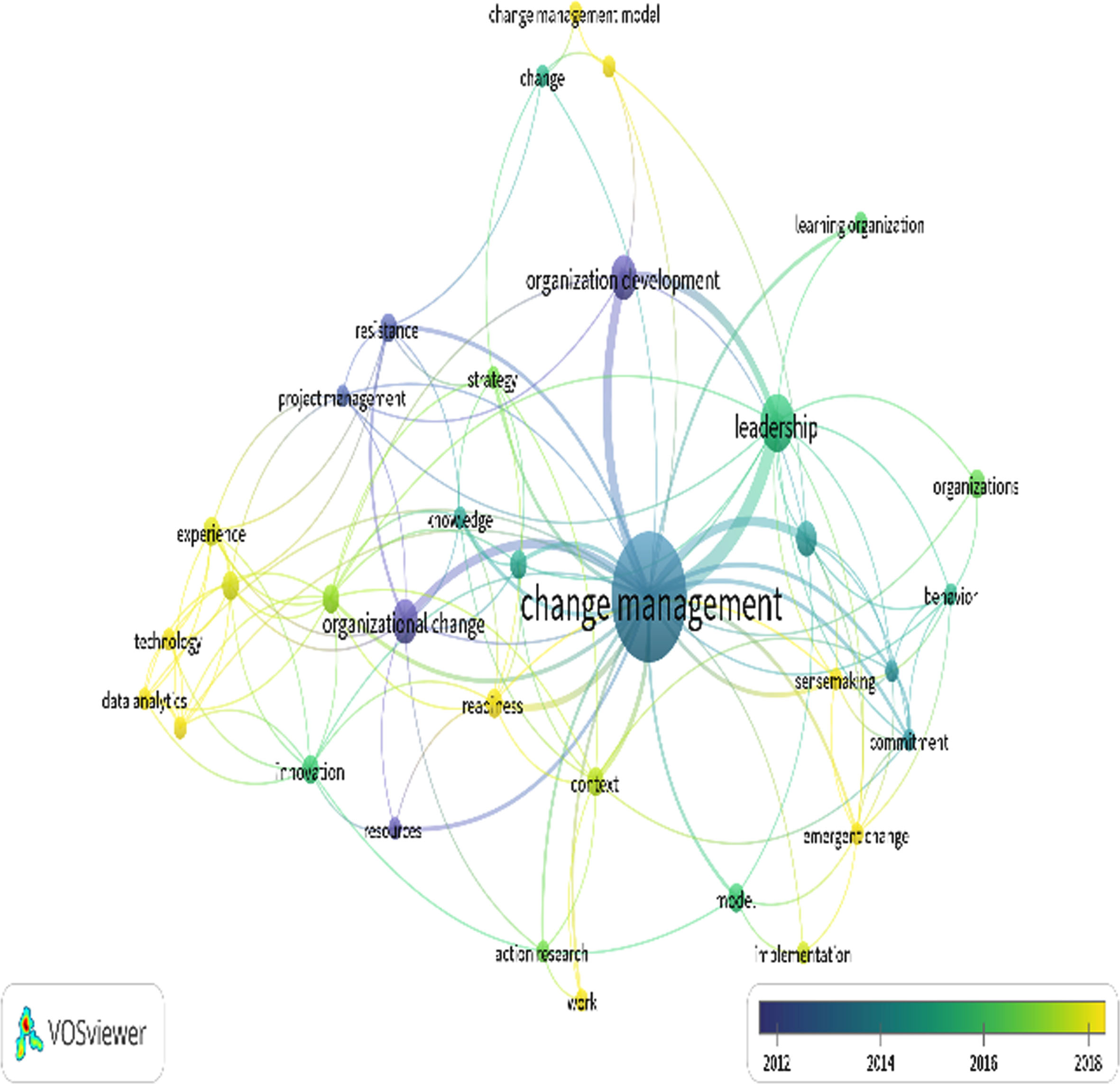
Growth of keyword co-occurrence.
According to Table 2 of the VOSviewer statistical technique, the term “change management” is the most common author keyword in the literature, followed by the word “leadership.” Nonetheless, expressions like “organizational change management,” “change management model,” “emergent change,” and “change management technology” all imply the word “change management.” There will be 128 occurrences when the frequencies of those elements are added together. Subsequently, the phrases “change management” and “leadership” can be regarded as the two most frequently used author keywords in the literature. The typical time that scholars have used this keyword in their works is shown by the mean year of publication. Collaboration-related papers, for instance, attracted more attention in the last months of 2018, while leadership-, technology-, and transformation-related publications attracted more interest in 2016 and 2018. Besides, we might expect that change management will be replaced by resilience management during and after the pandemic, which appeared in 2020. The links show how many nodes are connected to a specific node, while the total link strength shows how strong all the linkages are that are connected to that node [29]. For instance, the keyword “change management” has a total link strength of 35, which is the greatest of all the nodes and indicates the keyword has the strongest inter-relatedness to change management in a business organization.
Network parameters for selected keywords
The number of papers for each affiliation and the most pertinent affiliations that support this study topic are shown in Fig. 3. The two universities with the most publications throughout the study years were Walden University and Transylvania University of Brasov (4 documents each). The research’s themes were published by 10 different affiliations in total (28.73 percent of all publications). For each of the seven different affiliations, there has to be a minimum of two publications.
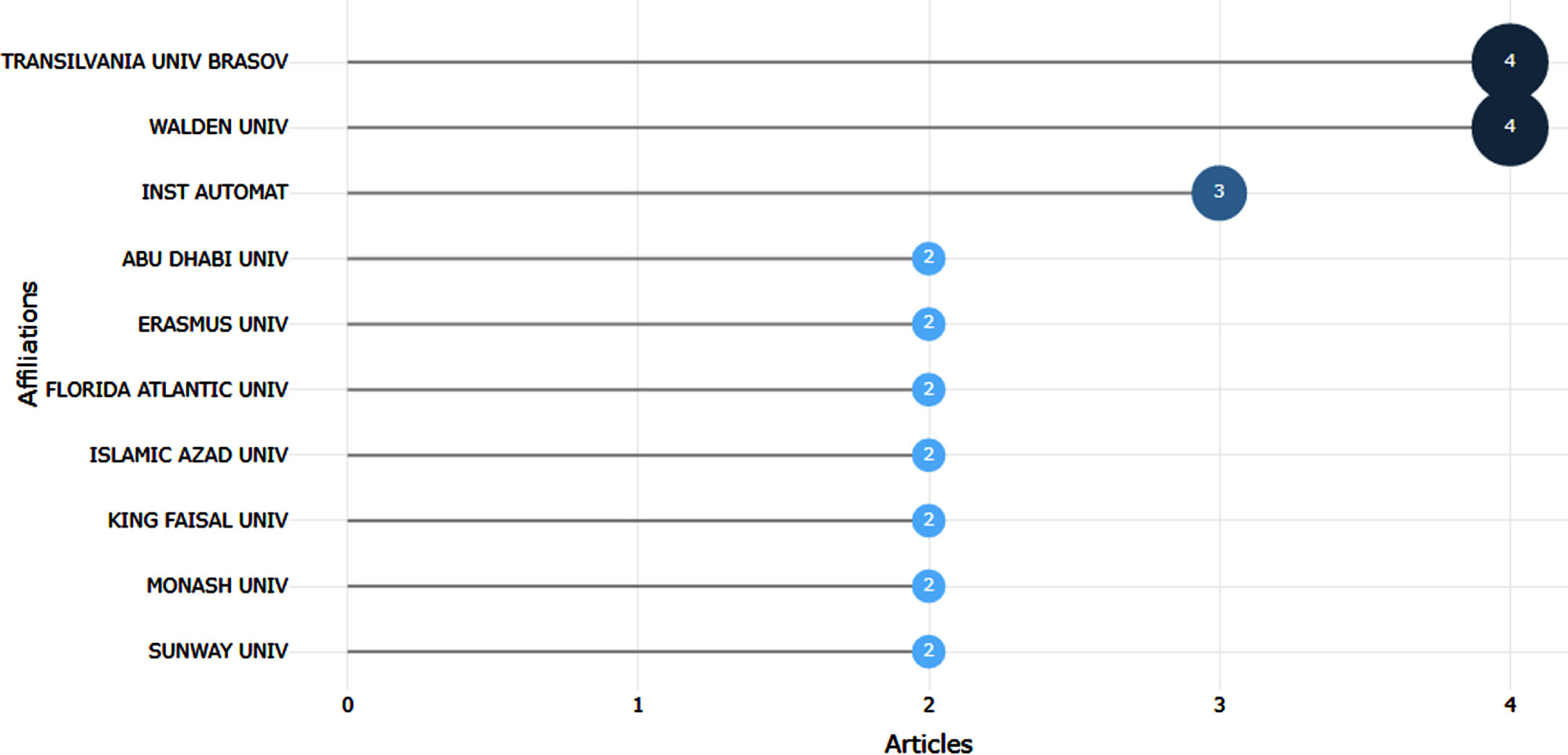
Highest quality affiliations.
The analysis determined which research terms had been most commonly utilized by various associations and nations (right) (left). According to an analysis of the most popular associations, nations, and words (change management, leadership, organization development, organizational change management, and data analytics), there were five keywords. Figure 4’s Sankey diagram depicts four nations (the USA, China, Australia, and Romania) supported by four universities (the Institute of Automation, Walden University, Transylvania University of Brasov, Cebu Technological University, and Erasmus University Rotterdam) [30].
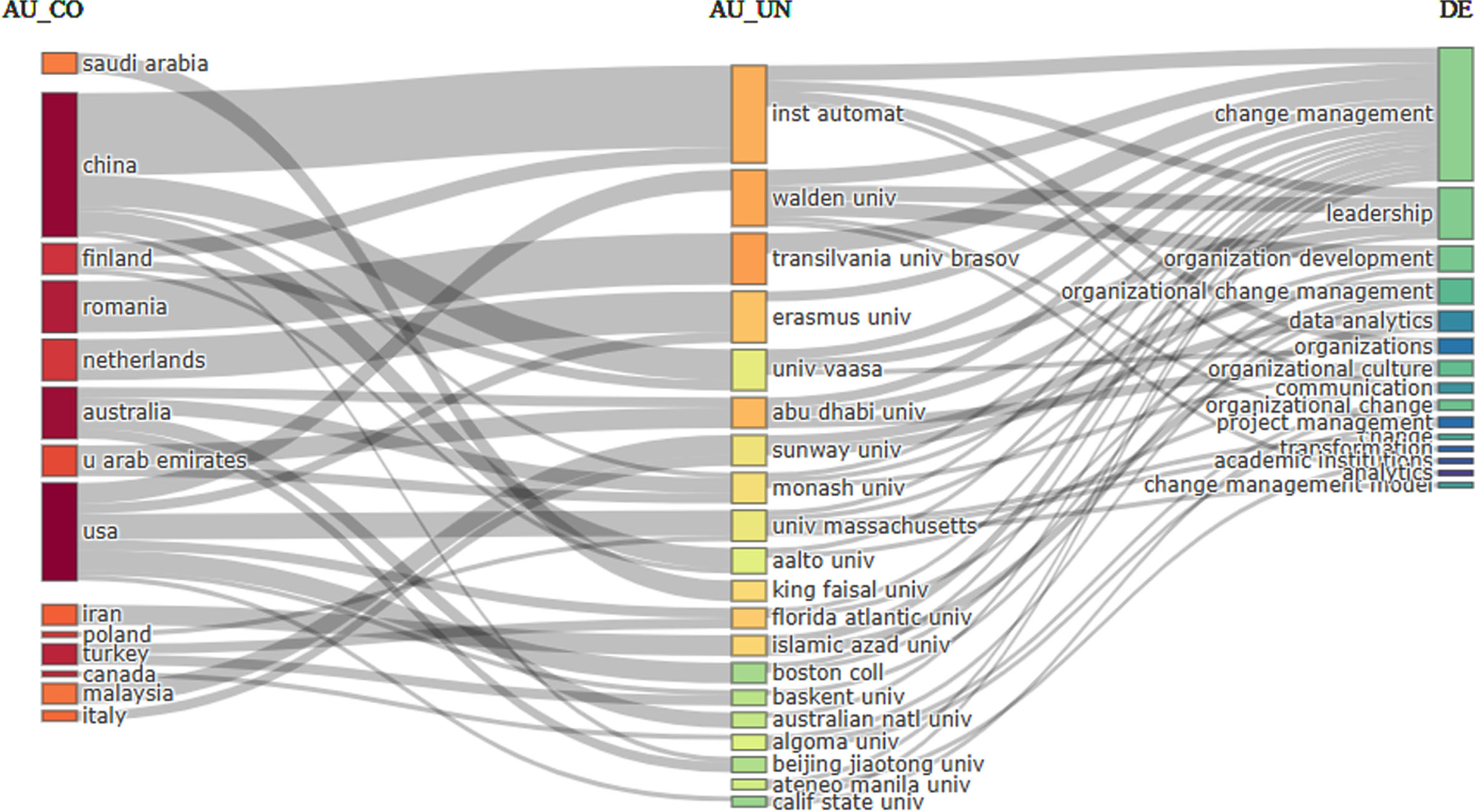
Three Field Plot Keywords (left), affiliations (middle), and countries (right).
A country’s level of international collaboration is gauged using the country collaboration map. The strongest contributions come from the USA, China, Pakistan, Germany, Australia, Finland, and Australia. Pakistan is represented by the dark blue color. Figure 5 shows that China is the nation where the most documents with three co-authors were written, next to Australia with two collaborations [31].
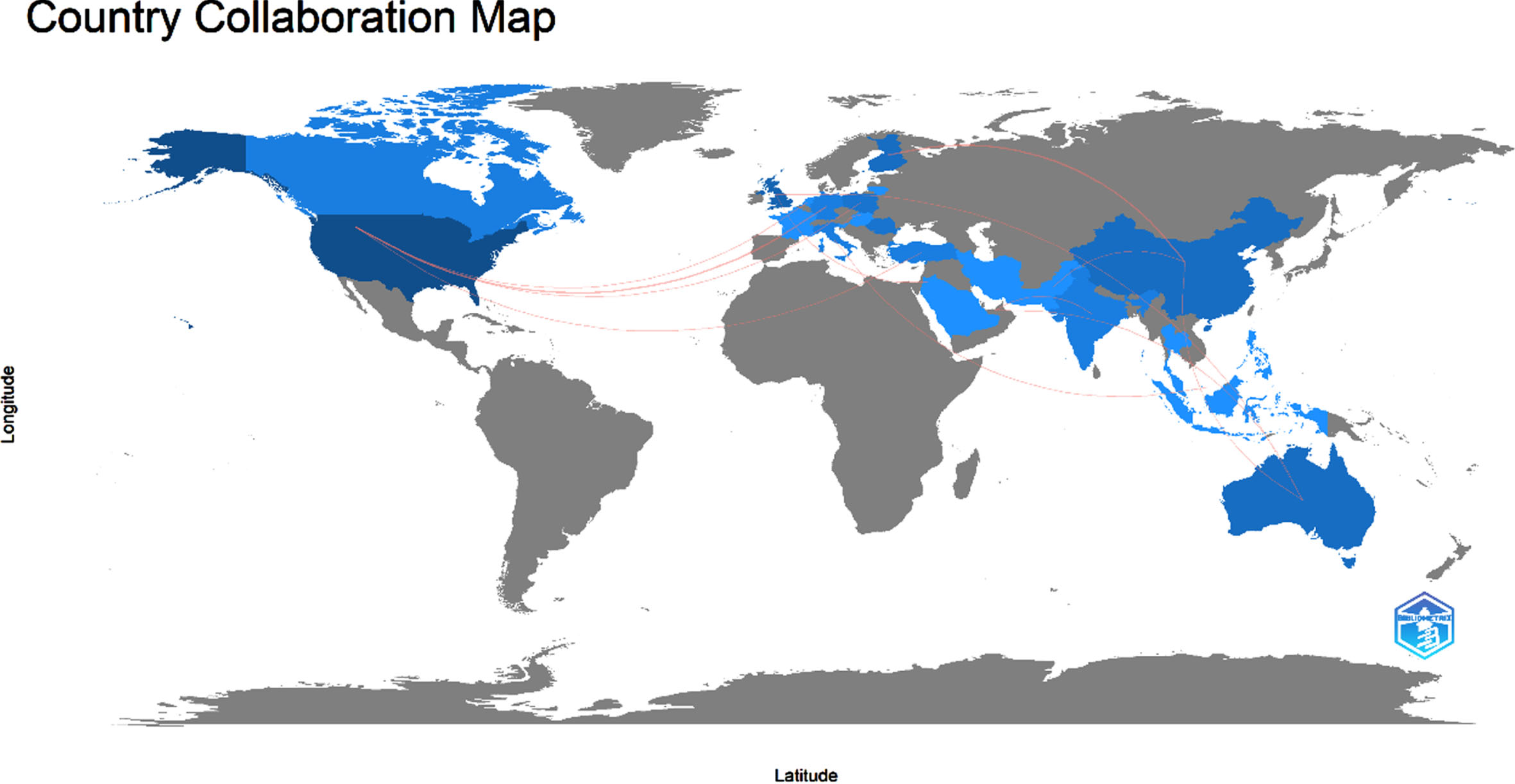
A global collaboration map for literature using keywords.
For each cluster of the conceptual structure map, the group of papers is identified using the “factorial map of the publications with the highest contributions,” which mostly uses the targeted keywords. The papers stated in each cluster detected the relationships between the keywords because this analysis is based on the use of a keyword co-occurrence network [32]. (e.g., one paper could use two or more of those keywords). Two groups of documents with the highest contributions are shown in Fig. 6 in the colors red and blue as two clusters. The separation between any row points or column points serves as a gauge for similarity [33].
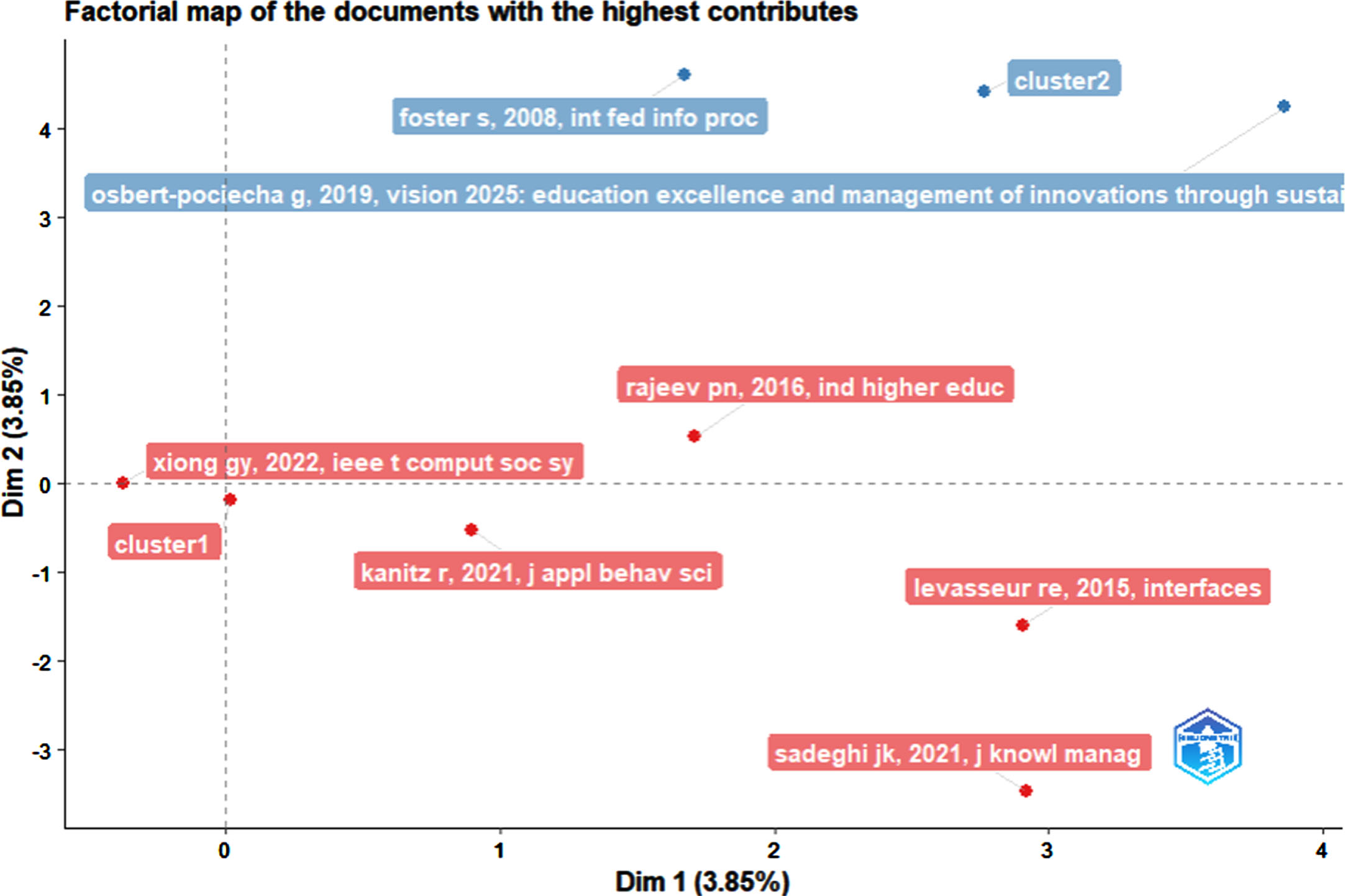
Map showing the documents with the largest donations factored.
Figure 6 displays the most important texts in the bibliometric data using a factorial map and the correspondence analysis statistical approach. This technique may be implemented as an alternative using the Bibliometrix-R program. The map’s two groups are determined by the number of documents per author and the overall number of citations. Five papers in Cluster 1 and two papers in Cluster 2 are in the positive quadrants of both dimensions, suggesting the greatest effect. One publication in cluster 1 is Xiong et al. [34], paper on “A Case Study in Social Manufacturing: From Social Manufacturing to Social Value Chain,” and one paper in cluster 2 is Bieliska and Osbert-Pociecha’s [35] article on “Ghosting in Polish Companies: Failure or Success of the Company. ”
The study examined the patterns of individual and organizational publication as well as the geographic distribution of innovation in change management research. The findings indicated that North America, Asia, Europe, and Australia were the main research regions. Significantly, no research from Africa or South America was included in the analysis. This is in line with earlier research by Houghton et al. [36], Mody, Hanks, and Cheng [37], and Li and Liang [38], which focused on adoption hurdles rather than change management problems in African nations. The results thus point to the need for more research on underrepresented regions and a deeper investigation of the particular difficulties these regions encounter when putting change management strategies into practice.
This study, as depicted in Fig. 7, has captured significant and current achievements in change management research, establishing links between innovations and existing issues related to change management use with the goal of demystifying technical jargon, identifying patterns, and promoting enhanced comprehension of recent breakthroughs and research trends. This gives corporate stakeholders and scholars a full view of the intellectual landscape and future research possibilities in change management.
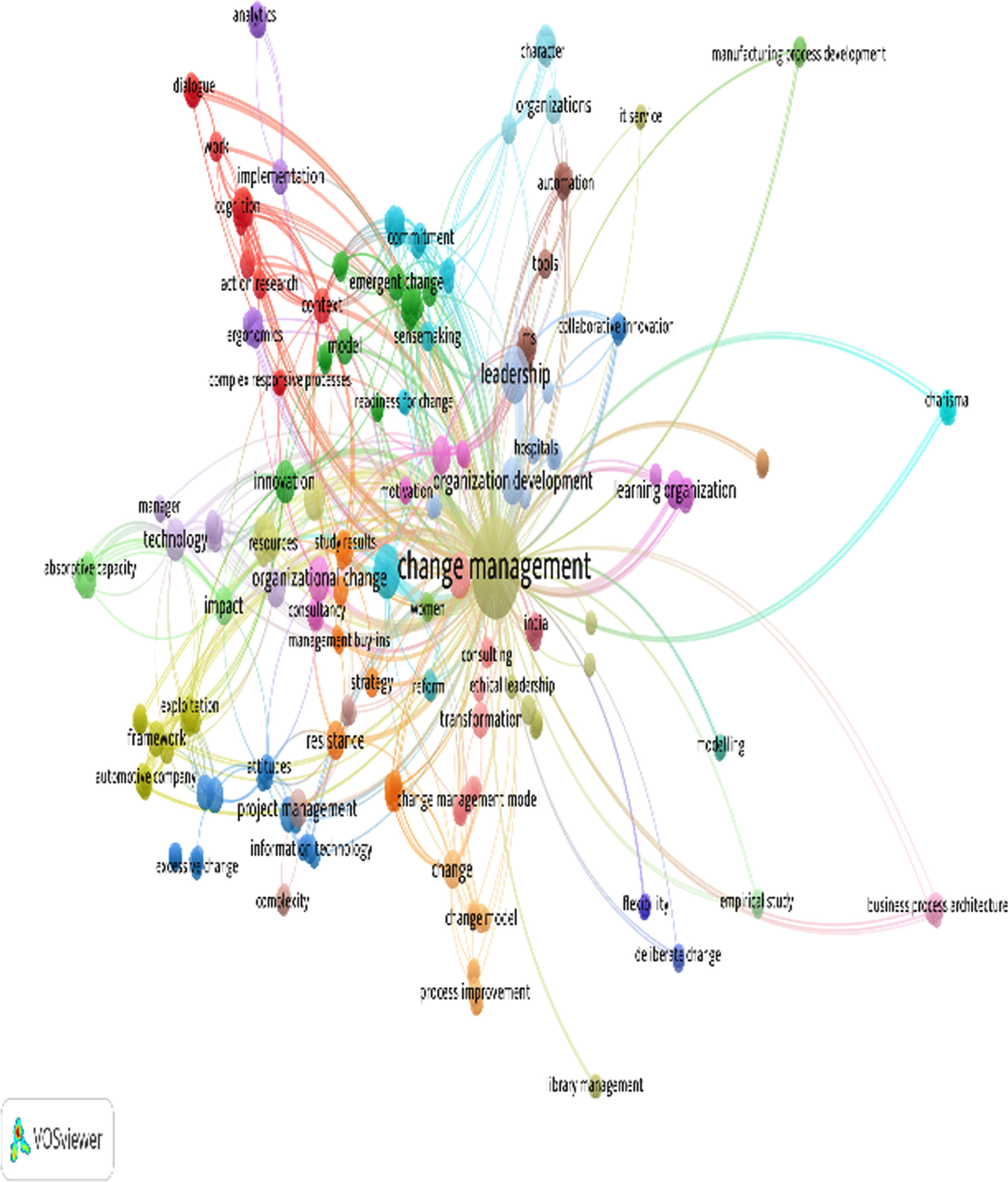
Network map of the most related change management topics.
Bibliometric data can give the information needed to evaluate a certain field’s performance in the literature, support research organizations in managing budget distribution rules, and evaluate scientific inputs and outputs [22]. Furthermore, the results of the bibliometric analysis can reveal the primary elements that boost contribution in a certain field of study and direct researchers to conduct more successful investigations [5]. This analysis examines a revised search query to locate 939 publications relevant to change management in business organizations in the Web of Science database. Data show that 83.28% of the gathered documents are about business and economics, while 9.94% are about computer science. From 1982 and 2022, the number of publications in this field increased, with the largest number of articles occurring in 2016 and 2019. The first research question of this study was about identifying the most prominent terms in the subject of change management, as visible in the keyword co-occurrence network created by the VOSviewer tool. Table 2 shows the top keywords identified from Web of Science publications, sorted by high occurrence frequency. The second issue in the study was determining the most important associations. A three-field plot is also used to represent data in three dimensions. Furthermore, international collaboration is tracked using a country collaboration map. The United States, China, Germany, Pakistan, Finland, and Australia are among the countries that provide the greatest contributions to international cooperation. Lastly, the documents’ factorial map is divided into two clusters.
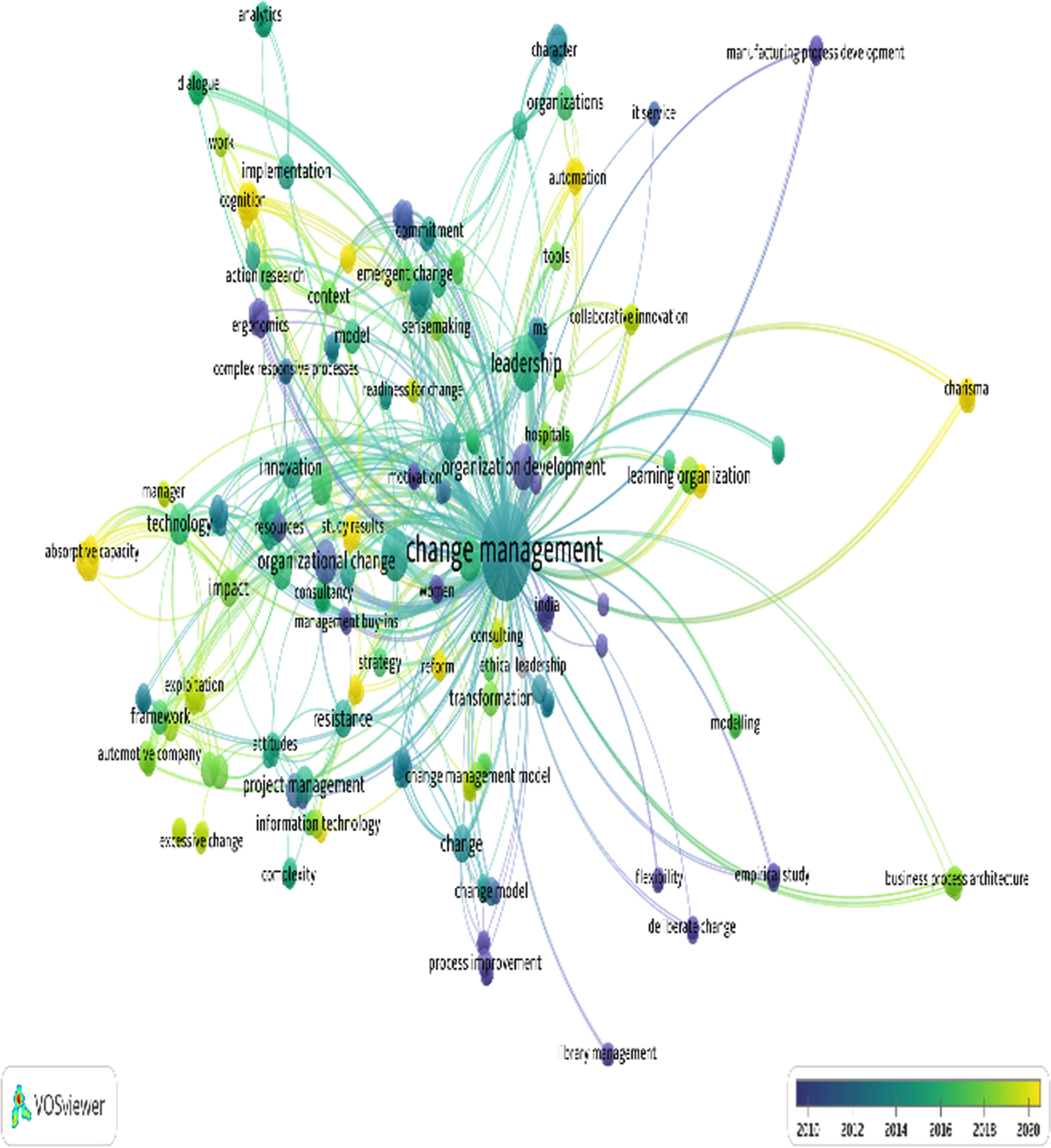
Network map of the most related change management growth.
In this section, we will examine the presented clusters and analyze the most frequently cited documents within each group. Additionally, we will analyze research topics by their most significant publications and rank them based on the number of publications within each research area.
Organizational culture and change management are two ideas that are intertwined and critical to the success of any firm. Change management is planning, executing, and monitoring changes to reach a desired end, whereas organizational culture refers to the common values, beliefs, and practices that govern behavior inside an organization. These two principles work together in a variety of ways to produce effective organizational transformation. Identifying cultural impediments to change is one way organizational culture and change management interact [39]. Change management techniques must take into account the cultural environment in which they are implemented and devise tactics to overcome any cultural norms, attitudes, and beliefs that may stymie change. Other approach is to create a shared vision for change that is consistent with the culture of the organization. Employees will feel more ownership and dedication as a result, making change projects more likely to succeed. The partnership between organizational culture and change management is crucial for developing a culture that promotes change and achieving a shared understanding of the intended outcome [40].
Leadership and change management are two important aspects of organizational success. Although leadership provides the business with a vision, direction, and guidance, change management is the process of planning and executing changes to reach a specified objective. Leadership and change management must work together to ensure the success of any organizational change program. Leaders must be able to define the change vision and support and guide the change management team. They must also be open to receiving feedback and adjusting their strategy as needed [41]. Change management, on the other hand, is in charge of the change process’s planning, implementation, and monitoring. They must collaborate closely with executives to ensure that the change project is consistent with the broader strategy and goals of the firm. Creating a common vision for change is one way that leadership and change management may collaborate. A shared vision fosters employee ownership and commitment, increasing the chance of effective transformation. Leaders must give leadership and direction to the change management team, ensuring that the change project corresponds with the overarching goals and strategy of the firm. In contrast, change management must collaborate closely with leaders to ensure that the goal for change is clear, reasonable, and doable. They must also create a plan for obtaining the target result and track progress to ensure that the effort remains on track [42].
Change management and innovation work together to generate continuous development and keep firms competitive. Working collaboratively, innovation and change management teams may identify areas for improvement and design change strategies, resulting in the development of new products, processes, and services that improve the organization’s performance and market position. Furthermore, they may develop an innovation culture that encourages creativity, risk-taking, and continuous improvement, resulting in continued innovation and progress [43]. Organizations must collaborate on innovation and change management in order to stay nimble and responsive to changing market circumstances. Change may be driven through innovation, but change management is required to guarantee that the innovations are implemented properly and sustainably. Working together, innovation and change management teams may foster an innovative culture that fosters experimentation and the creation of new ideas, while also ensuring that these ideas are organized and planned into the organization’s operations. This joint endeavor has the potential to result in the development of new goods, services, and procedures that improve the organization’s performance and market position while also building a culture of continuous innovation and improvement [44].
Performance management and change management can collaborate to accomplish corporate goals by identifying and addressing areas for improvement. Performance management, via the use of data and analytics, may give useful insights into employee and organizational performance, which change management can utilize to make educated decisions about necessary adjustments. This cooperation has the potential to result in more effective and data-driven decision-making, eventually increasing the performance of the business [45]. Moreover, performance and change management teams may collaborate to ensure that all parts of the company are covered by designing comprehensive performance improvement strategies. Training programs, process enhancements, and changes to corporate culture or structure can all contribute to the overall performance of the business. Performance and change management may assist push the organization toward its goals and objectives by partnering on the creation and implementation of these strategies [46].
Resilience management has indeed gained prominence during and after the COVID-19 pandemic. The unprecedented disruptions caused by the pandemic have highlighted the need for organizations to be agile, adaptive, and resilient in the face of rapid changes and uncertainties. Change management, which traditionally focused on planned and structured changes, may not be sufficient in the current volatile and uncertain environment. Resilience management is a broader approach that encompasses not only managing change, but also preparing for and responding to unexpected shocks and disruptions. It emphasizes the ability to bounce back, adapt, and thrive in the face of adversity. Resilience management involves building a culture of resilience, developing flexible strategies and plans, fostering innovation and creativity, strengthening communication and collaboration, and empowering employees at all levels to contribute to problem-solving and decision-making [16, 20].
Resilience management recognizes that change is constant and unpredictable, and organizations need to be agile and responsive to external shocks and internal challenges. It also emphasizes the importance of fostering resilience at the individual, team, and organizational levels, recognizing that the well-being and mental health of employees are critical factors in maintaining resilience. While change management still has its place in managing planned and incremental changes, resilience management has emerged as a complementary approach that addresses the need for organizations to be adaptable, agile, and prepared for unexpected disruptions. In the post-pandemic world, resilience management is likely to continue to gain importance as organizations strive to navigate the complexities and uncertainties of the business landscape [11, 22].
As firms aim to adapt and remain competitive in a rapidly changing business environment, transformation and change management go hand in hand. Cooperation between these two principles is critical for successful transformation initiative execution. A clear vision and strategy, a detailed plan, and a focus on people and culture are critical variables for effective transformation and change management collaboration [47]. Employee and other stakeholders must be involved in the transformation process to ensure that they understand the rationale for the change and are prepared to support it. Furthermore, fostering an environment of innovation, cooperation, and continuous improvement may assist firms in achieving their targeted transformation outcomes, improving performance, and driving development. Organizations that collaborate effectively may successfully manage the hurdles of organizational change and emerge stronger and more competitive [48].
Cooperation between technology and change management may also assist firms in remaining competitive. Organizations may adapt to market trends and consumer requirements faster than their rivals by employing technology to execute changes quickly and efficiently. This can provide them with a substantial competitive edge and aid in their ability to remain relevant in a continually changing business environment [49]. Furthermore, coordination between technology and change management may also assist firms avoid risks connected with technology adoption. Organizations may identify and handle possible risks and obstacles early on by including all stakeholders in the change management process, reducing the likelihood of costly mistakes and failures. This can help firms save time and money while ensuring that technology-driven changes are implemented successfully [50].
Both change management and crisis management are critical procedures that need strong leadership abilities. These approaches need effective communication and adaptation. Leaders must be able to communicate openly and honestly with stakeholders, as well as be agile in order to deal with unanticipated difficulties and opportunities. Another way these processes are linked is the requirement for strategic planning. Leaders in change management must have a clear vision and strategy for the organization’s future, taking into consideration stakeholders’ demands and concerns. Leaders in crisis management must build a strategic strategy swiftly in order to lessen the impact of the crisis and maintain company continuity. Leaders who are experienced in both change and crisis management may use their strategic planning abilities to predict possible crises and prepare for long-term change projects that are consistent with the organization’s goals and values [51, 52].
Future research directions
After discussing current significant topics in the field of change management, the following section will explore anticipated future research directions in this field. These include:
AI and ML have the potential to boost overall organizational performance in addition to their ability to alter change management. These technologies can boost efficiency and productivity by automating typical operations and processes, allowing firms to do more with less. AI and ML may also give insights on customer behavior and preferences, helping firms to better customize their products and services to their target audience’s demands. This can result in higher levels of client happiness, loyalty, and income. Overall, AI and machine learning have the potential to add tremendous value to enterprises across a wide range of sectors [53].
However, it is crucial to stress that the use of AI and ML in change management and other areas of business must be done with caution and responsibility. Like with any new technology, there are possible hazards and obstacles that must be addressed, such as data privacy and security issues, algorithm biases, and the potential displacement of human employees. Companies must ensure that they have the required infrastructure, processes, and skills in place to efficiently adopt and manage new technologies, while also addressing any ethical concerns. AI and machine learning have the ability to provide considerable advantages to enterprises and their stakeholders with good strategy and implementation [54].
Therefore, AI and machine learning may boost efficiency and productivity, enable data-driven decision-making, personalize change initiatives, support agility and flexibility, and improve customer-centricity. Organizations must, however, evaluate ethical considerations as well as possible hazards linked with these technology. Adopting a scientific approach entails maximizing the benefits of AI and machine learning while addressing difficulties and assuring ethical use in change management procedures.
Remote work has also opened up new avenues for change management and corporate culture. Organizations can now attract and retain talent from a larger pool of applicants, as well as develop a more varied and inclusive workforce, because employees are no longer constrained to a physical office location. Furthermore, remote work has given employees more flexibility and autonomy, which may contribute to higher job satisfaction and engagement. Organizations may position themselves for long-term success in a remote work environment by embracing these opportunities and modifying their change management and organizational culture initiatives appropriately [55].
Remote work, on the other hand, introduces additional issues that firms must address in their change management and organizational culture initiatives. Working from home, for example, increases the risk of employee burnout and isolation, which can have a negative influence on productivity and engagement. Moreover, remote work can blur the lines between work and home life, leading to greater stress and poor work-life balance. Organizations may provide a healthy and sustainable remote work environment for their workers by addressing these difficulties and prioritizing employee well-being [56].
Therefore, through an increased talent pool, flexibility, and autonomy, remote work has the ability to favorably affect change management and company culture. It does, however, pose difficulties such as staff burnout and communication hurdles. In a remote work environment, organizations must prioritize employee well-being, effective communication, and continual adaptation in their change management and organizational culture efforts, which must be backed by scientific research and evidence-based solutions.
Change management can raise concerns linked to employee welfare and well-being in addition to the ethical and social responsibility issues stated above. For instance, if the change entails considerable restructuring or reorganization, there may be worries about job security as well as the impact on staff morale and mental health. Leaders must be aware of these issues and take actions to help staff during the transformation process. This might include delivering training and development opportunities, counseling or support services, and conveying the change to staff on a regular and transparent basis [57].
The possible influence on stakeholders such as suppliers and partners is an ethical and social responsibility problem in change management. For example, if a company changes its supply chain or distribution channels, stakeholders may be concerned about the impact on them and their capacity to adapt to the change. Leaders must be proactive in engaging these stakeholders and resolving their problems, as well as be willing to cooperate and create mutually beneficial solutions that are consistent with the organization’s values and objectives. Leaders may guarantee that the change is sustainable, ethical, and socially responsible by assessing the impact of the change on all stakeholders [58].
Therefore, Ethical and social responsibility concerns are significant considerations in change management because they affect the welfare and well-being of employees and stakeholders. Organizations must prioritize employee assistance throughout transition processes, including training, counseling, and open communication. Furthermore, enterprises must be cognizant of the possible impact on stakeholders such as suppliers and partners, and interact with them proactively to resolve issues and find mutually beneficial solutions. Organizations may navigate change management with a scientific approach that respects the ethical and social responsibility principles by examining the impact of change on all stakeholders and assuring sustainability, ethics, and social responsibility.
Conclusion
This research has aided the field of change management by identifying logical research clusters and recommending new areas for exploration. The study investigated five separate categories of major papers and journals relevant to change management in the WoS core collection. This bibliometric study gives other researchers critical information for future research and enables an examination of the subject’s evolution by topic, context, and measurement. Change management is still in its early phases of publication, according to a content analysis of 939 publications, with just a few qualitative research methodologies being used. Yet, the study discovered that its relevance in commerce and information systems library science has grown significantly, while its significance in development studies and educational administration has grown only somewhat. In addition, the study emphasized the significance of corporate culture in change management as a fundamental approach to interpersonal connections.
Due to limited financial resources, the study has certain limitations, including the sole use of the Web of Science database for bibliometric analysis. A future study should look into the literature on change management, utilizing all credible databases such as WoS and Scopus. Consequently, this study broadens exposure to change management research and deepens awareness of interconnected relationships and their effects on social capital, technology, and leadership.
The Human Systems Management Journal’s discussion of the literature on change management in corporate organizations includes many main areas. Change leadership, change communication, change implementation, employee reactions to change, organizational culture and change, resistance to change and overcoming hurdles, change assessment and measurement, change in diverse organizational settings, and change and innovation are among the subjects covered. Leadership styles and strategies, communication channels and content, implementation approaches, employee reactions to change, organizational culture and its impact on change, strategies for overcoming resistance, evaluation and measurement of change success, contextual factors influencing change management, and the relationship between change and innovation have all been studied in these areas. Further research could look into the role of transformational leadership, change agent characteristics, emotions in employee reactions to change, different communication strategies and their impact, the effectiveness of implementation strategies and the use of change agents, the alignment of culture and change goals, strategies for overcoming resistance, and the transferability of change management practices across disciplines.
Footnotes
Acknowledgments
We would like to extend our sincere gratitude to our colleagues who provided invaluable support and assistance throughout this research project. Their contributions were instrumental in the successful completion of this study. We are particularly grateful to Amman University College, whose expertise and insights greatly benefited our research. We also thank our colleagues who generously shared their time and resources, and provided valuable feedback and constructive criticism. We could not have achieved this without their contributions, and we are truly grateful for their support.
Author contributions
CONCEPTION: Tareq Abu Orabi and Ghaith Abu Alfalayehi
INTERPRETATION OR ANALYSIS OF DATA: Ahmad Ababne
PREPARATION OF MANUSCRIPT: Wael Alhyasat
REVISION FOR IMPORTANT INTELLECTUAL CONTENT: Wael Alhyasat, Reyad Alkhawaldah and Mazen Qteishat