




Abstract
BACKGROUND:
The bibliometric analysis and systematic appraisal of research on job satisfaction and organizational commitment in administrative and technical studies in the study show substantial efficacy, opening the path for future research in this subject.
OBJECTIVE:
The goal of this literature review is to identify important ideas that have the potential to influence job satisfaction and organizational commitment, as well as to provide the groundwork for future research in this field using bibliometric analysis.
METHODS:
This study used a bibliometric review approach to examine Web of Science papers on job satisfaction and organizational commitment.
RESULTS:
Performance, Impact, Transformational Leadership, Citizenship Behavior, Employee Performance, Organizational Justice, Job Satisfaction, Turnover, Psychological Empowerment, Organizational Commitment, Normative Commitment, Empowerment, and Turnover Intentions were the most frequently used terms in research on job satisfaction and organizational commitment, according to the survey. The bulk of these publications were published in the United States, China, Turkey, South Korea, Canada, Indonesia, Pakistan, Taiwan, and Jordan.
IMPLICATIONS:
The findings of the research may be used to generate articles on work satisfaction and organizational commitment in the field of market discipline, notably in the domains of business and technology.







Introduction
In the fields of organizational behavior and human resource management, job satisfaction and organizational commitment are two key concepts [1]. In today’s competitive and dynamic business climate, organizations strive to attract and retain talented employees who not only find fulfillment in their roles but also exhibit strong dedication to the company [2]. Organizational commitment refers to the psychological attachment and loyalty that individuals feel toward their employer, while job satisfaction represents the level of contentment individuals experience in their employment [3]. According to Chou et al. [5], Bharadwaj, and Yameen [2], these constructs play a crucial role in shaping employees’ attitudes, behaviors, and overall performance, which, in turn, influence the success and productivity of a business. To cultivate a healthy work environment, enhance employee engagement, and foster long-term organizational success, managers and leaders must grasp the factors that contribute to job satisfaction and organizational commitment [6, 7].
Job satisfaction and organizational commitment are two critical factors that strongly influence an organization’s performance and longevity in the dynamic and competitive business climate of today [8]. Businesses must progressively understand and effectively manage personnel acquisition and retention as they provide considerable hurdles [8]. Organizational commitment refers to the psychological attachment and loyalty employees feel toward their employer, whereas job satisfaction refers to the amount of happiness people experience at work [9]. Businesses may create a favorable work environment, increase employee engagement, and ultimately drive organizational success by developing a thorough grasp of the variables affecting job satisfaction and organizational commitment [7, 10].
Organizations have substantial difficulties creating a dedicated and content workforce in today’s changing business environment [7, 12,]. Individual attitudes and behaviors inside the business are greatly influenced by job satisfaction, which is the total fulfillment and contentment a person obtains from their work [13]. The development of a sense of belonging and engagement among workers, meanwhile, depends on organizational commitment, which is defined by a person’s loyalty, identity, and emotional attachment to the company [14]. However, given the complex interactions of various factors such as work-life balance, compensation, career advancement opportunities, and organizational culture, it is urgently necessary to investigate the real-world relationship between job satisfaction and organizational commitment in the business context [15–17]. For organizations to create effective strategies that can raise employee satisfaction levels, encourage greater commitment, lower turnover rates, and ultimately improve overall organizational performance, it is essential to understand the nuanced dynamics between job satisfaction and organizational commitment. To better understand how job satisfaction affects organizational commitment in a business setting, this study will use bibliometric analysis. It aims to provide organizations looking to improve employee engagement and well-being with actionable insights and suggestions.
In order to evaluate data and identify patterns and trends within certain academic disciplines, bibliometric analysis uses statistical and mathematical methodologies [18]. It has become increasingly popular and is used often across many academic fields. Scholars have recently studied the interaction of bibliometric analysis with the fields of Job Satisfaction and Organizational Commitment in Society and the Environment.
Recent bibliometric research across a range of industries have examined organizational commitment and related subjects. In their study of organizational commitment in the healthcare industry, De Las Heras-Rosas et al. [19] highlighted the increased need for nursing staff. Additionally, Ribeiro et al. [20] identified clusters associated with job satisfaction and professional commitment in the context of organizational commitment and job satisfaction in the health professions. Mumu et al.’s [21] investigation of work-family conflict also emphasized the need for more research on pay satisfaction and occupational inequalities, as well as the rise in publications but poor productivity. Similar to this, Rojas-Dávila et al. [22] examined citizen organizational behavior in public management and discovered considerable development since 2000 as well as repeating themes including public service motivation and job satisfaction. Finally yet importantly, Qudah et al. [23] investigated organizational behavior, Islamic finance, and the evolution of Islamic finance. These studies shed light on issues, point out gaps, and suggest directions for future study in the disciplines concerned.
This bibliometric review significantly advances the fields of organizational commitment and job satisfaction in the context of business. First, it gives a thorough assessment of the body of literature that has already been written on the subject by methodically examining several publications from numerous databases. This aids in assembling the body of knowledge and highlighting the major trends, gaps, and future prospects for this field of study. In addition, the analysis emphasizes the significance of organizational commitment and job satisfaction for creating long-term competitive advantage in firms. Finding the most pertinent authors, publications, and references may provide researchers and practitioners with insightful information that they can use to expand on or expand upon previous jobs. Furthermore, a fuller knowledge of the interrelated ideas and areas of attention within the topic is provided by the examination of co-occurring keywords and thematic progression. Finally, the analysis makes recommendations for future research topics, including a look at how leadership, organizational culture, and employee wellbeing affect organizational commitment and job satisfaction. Overall, by providing a thorough analysis, identifying research gaps, and laying the groundwork for future studies in the areas of job satisfaction and organizational commitment in business, this bibliometric study considerably adds to the body of knowledge.
The following portions of this paper are structured as follows: The technique and data gathering approach used for the bibliometric analysis are described in Section 2 of this article. The most important conclusions from the analysis are presented in Section 3. In Section 4, a thorough discussion sets the results in a larger perspective while taking their implications and significance into account. The study is concluded in Section 5 with a summary of the key findings, a discussion of the implications for future research, and prospective lines of inquiry.
Data and methodology
We investigated the topic of Job Satisfaction and Organizational Commitment using the Web of Science Core Collection database (WoS) in a manner similar to earlier research [23–28]. We looked for scientific publications between March 1, 1992, and May 11, 2023, using the first notable publication in the WoS Core Collection database by Aryee in March [29] as our starting point.
We initially retrieved 1350 articles using the keywords “job satisfaction” and “organizational commitment.” However, we narrowed down our search to focus on English-language journal publications related to the business sector, emphasizing the application of economic principles to the study of organizational behavior. Specifically, we considered articles listed in the 2022 Academic Journal Guide by the Association of Business Schools (ABS) to ensure a thorough peer-review process and publication in respected journals. Adhering to PRISMA standards, we systematically reviewed the 1350 publications, incorporating broader keywords to encompass relevant research on job satisfaction and organizational commitment in the business sector. We exclusively utilized the Web of Science (WoS) database due to its substantial overlap with Scopus such as excluding 22 articles. The ABS journal recommendation list served as a quality criterion. Figure 1 illustrates the flow of information and stages in our systematic review approach [30].

Depicts the information flow inside the PRISMA system for the areas of job satisfaction and organizational commitment in businesses.
To analyze the selected articles [31–36], we utilized VOSviewer 1.6.19, a bibliometric tool. We particularly employed bibliographic coupling analysis [31–36]. This method counts the number of references that two articles share to determine how closely connected they are. Using this approach, we were able to identify the relationships and connections between the articles in our dataset.
Our strategy makes use of bibliographic coupling as a trustworthy and dependable method, in contrast to other bibliometric studies carried out in the subject of Job Satisfaction and Organizational Commitment literature [24–28]. In contrast to the fluctuating number of citations, this method offers a strong and accurate analysis based on the number of references, which remains constant over time [31–36].
In addition, we used the normalized citation strategy to reduce any potential bias towards more recent works, which have a tendency to receive fewer citations than older ones [35]. According to van Eck and Waltman [32] and Bartolacci et al. [35], normalized citations are calculated by dividing the total number of citations obtained by an article by the average number of citations received by all articles published during the same year. The variance in citation rates across several publication years is well addressed by this method.
Web of science review
Studying and examining the trends in research and development within this discipline is essential if one wants to fully comprehend the research landscape relevant to job satisfaction and organizational commitment in the field of business. This entails keeping track of the publication activity of numerous entities over a predetermined time frame, including authors, journals, affiliations, and nations. We may learn a great deal about the development and organization of the subject by analyzing these indicators, as well as locate key players in the industry. In order to track the development of the literature on job satisfaction and organizational commitment, the important bibliometric analyses carried out between 1992 and 2023 are summarized in this section. Along with a review of 1350 papers that were published in 33 scientific publications, the report includes a rating of prominent academic institutions and the partnerships they have formed.
Figure 2 illustrates the recent exponential rise in literature on job satisfaction and organizational commitment. In the first 22 years, there were between 10 and 50 publications per year. The number of publications increased significantly to 68 in 2015, indicating a noticeable rise in the use of the ideas of job satisfaction and organizational commitment in the business world. The publishing numbers increased over the next three years as well, hitting 79 in 2016, 78 in 2017, and 78 in 2018. The most publications— 119— were published in the year 2019. Surprisingly, the majority of citations— 9,029 in total— took place in 2022.

Evolution and Citations Analysis of Job Satisfaction and Organizational Commitment Research Publications (1992–2023).
There are a number of reasons why there has been a recent rise in publications on organizational commitment and job satisfaction [19, 22]. First off, there is increased interest in these subjects because they have the potential to improve workplace culture and employee wellbeing. As job satisfaction and organizational commitment are strongly linked to employee engagement, productivity, and retention, businesses are becoming more and more aware of the importance of fostering such environments [19, 20].
There are a number of reasons for the current increase in publications on organizational commitment and job satisfaction. First off, more thorough investigations in these fields have been made possible by improvements in research methodology and access to huge datasets [22]. Second, the focus on understanding and enhancing job satisfaction and organizational commitment has risen due to the changing nature of work and changing employee expectations, such as remote work and work-life balance [19, 20]. Finally yet importantly, as pleased and dedicated personnel contribute to enhanced results, the understanding of the influence of these elements on organizational performance has spurred growing interest and investment in studies [22].
Based on the given statistics, Appendix A provides insightful information about the top journals, authors, nations, and institutions. Three important variables— Ct (Total Citations), Pb (Number of Publications), and Ct/Pb (Average Citations per Publication)— are used to calculate these rankings. The International Journal of Human Resource Management stands out as a leading journal in this field, with 91 articles and 2,970 citations, averaging 32.6 citations per publication. The Journal of Applied Psychology has the highest number of citations, with 11,862 citations spread across 55 publications, averaging 215.7 citations per publication. The Journal of Organizational Behavior comes in second, with 47 publications and 6,932 citations, or 147.5 citations per publication. It is important to note that these numbers are not normalized. Other journals that have made significant contributions to this field include the Journal of Business Research and the Journal of Business Ethics.
With 511 publications and 34380 citations, the United States (USA) leads the list of countries with an average of 67.3 citations per article. With 5334 citations and 109 articles, China is next, with an average of 48.9 citations per publication. The top five nations also include Canada, England, and India, all of which have made important contributions to the study of organizational commitment and job satisfaction. Cohen A stands out among writers with 317 citations spread over nine articles, averaging 35.2 citations per publication. With 2300 citations and 8 articles, averaging a remarkable 287.5 citations per publication, Lee Tw emerges as a significant author. Mossholder KW, Rutherford Bn, and Vandenberghe C. also make a notable addition to the literature in this area.
The University System of Ohio leads the way among institutions, with 3740 citations and 49 articles, an average of 76.3 citations per publication. The State University System of Florida, the University System of Georgia, the University of North Carolina, and the University of Texas System also rank highly in terms of their contributions to job satisfaction and organizational commitment studies. These rankings, which highlight significant journals, authors, nations, and institutions, give vital insights into the topic of job satisfaction and organizational commitment. The top-ranking entities in each area have made significant contributions, published influential research and producing a large number of citations, demonstrating their competence and significance in the subject.
Appendix B lists the most commonly cited papers in the document collection. Among these studies, Tett and Meyer [37]’s “Job-Satisfaction, Organizational Commitment, Turnover Intention, And Turnover: Path Analyses Based on Metaanalytic Findings” stands out. This specific publication has received 1798 citations, suggesting its great impact in the area. The prominent reputation of the journal in which it was published, the Journal of Personnel Psychology, with a high impact factor of 5.5 and an h-index of 161, may have contributed to its outstanding performance.
There were two types of analysis in the study: co-occurrence mapping and co-authorship mapping. Co-occurrence mapping sought to investigate the links between terms, whereas co-authorship mapping sought to investigate cooperation between authors, nations, or affiliations [38]. The research used a thorough counting technique with particular criteria, resulting in 35 terms fulfilling the minimum occurrence threshold out of 272. Linkages, total link strengths, and co-occurrences for each term were calculated using specialized software. Through co-occurrence mapping, the most frequently encountered phrases were “job satisfaction,” “organizational commitment,” “performance,” “antecedents,” and “work.” The occurrence weights for these words were 49 (246), 46 (243), 23 (147), 22 (142), and 12 (77), respectively. The years 2010–2020, 2012–2020, 2008–2016, and 2005–2020 are consistently represented in our data. This is because the program we used filters out periods with fewer connections across research papers and only keeps periods with strong correlations.
Figure 3a depicts a network diagram of the co-occurrences of 441 keywords. The figure depicts four separate clusters: Cluster 1 (shown in red), Cluster 2 (represented in green), Cluster 3 (represented in blue), and Cluster 4 (represented in yellow). The size and visibility of the circles and text inside each cluster show the degree to which additional phrases are co-occurring. The elements’ interactions and affiliations are depicted by the distances between them and the connecting lines. This graphic representation successfully reflects the links and correlations between the words under consideration.
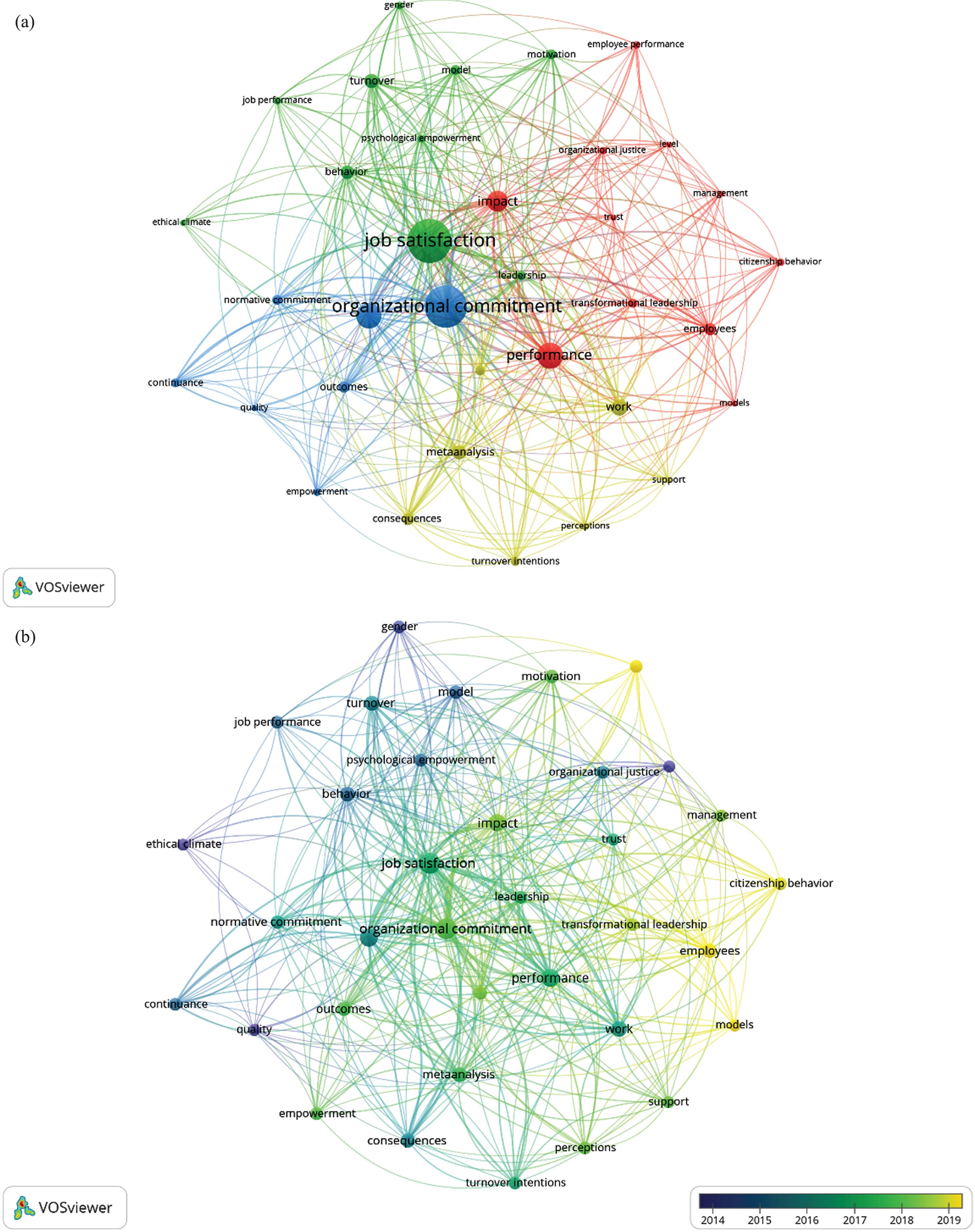
(a) Co-occurrence of keywords in network visualization on job satisfaction and organizational commitment (b) Growth of keyword network visualization on job satisfaction and organizational commitment.
Figure 3b depicts how the ethical atmosphere, work performance, and equality actions have evolved since their inception in 2014. The selected starting year represents the preparation of accountability activities, while the gradual implementation method demonstrates a patient and careful approach. According to the timetable, the community embraced job satisfaction techniques in 2016, and organizational commitment, and employee performance gained prominence in 2018. Concerns about transformative leadership, employee citizenship behavior, and employee performance were also identified as key concerns beyond 2019. It is crucial to highlight, however, that assessing the efficiency of these efforts only from the beginning positions represented in the picture would be insufficient. Additional factors, such as particular goals, procedures, and outcomes, would need to be assessed to determine their performance.
In addition, a thorough investigation of the numerous themes within each cluster was conducted. The purpose of this research was to determine the specific subjects represented by the sentences classified within each category. The idea was to investigate the phrases associated with each cluster to uncover common themes or topic areas. The goal of this research was to gain a better understanding of the specific thematic emphasis of each cluster by identifying the key themes that existed within them.
The study cluster “Transforming Performance in the Digital Era: Trends, Strategies, and Implications for Leadership” is made up of eleven core components that include essential themes including “Performance,” “Transformational Leadership,” “Citizenship Behavior,” and “Employee Performance.” Table 1 shows the initial grouping of words, known as Cluster 1, as well as their frequencies and interrelationships. According to the statistics, the significant concept indicated by the red cluster on the map merits additional investigation in the future. This vast cluster stretches from the map’s center to the far right, with major links to all other clusters. However, its links with the blue cluster are somewhat weaker.
Cluster 1 keywords including job satisfaction and organizational commitment
In order to highlight the importance of performance, transformational leadership, citizenship behavior, and employee performance in the context of the digital era, the title “Transforming Performance in the Digital Era: Trends, Strategies, and Implications for Leadership” was chosen. This made it the focus of further investigation.
The broad use of remote work and flexibility in performance management is an emerging trend in the corporate world as we go into the digital era [39]. Organizations are adopting remote work options and flexible hours in order to draw in and keep top personnel because of technological improvements and shifting workplace dynamics [40]. Businesses will use project management software, video conferencing platforms, and digital collaboration tools to execute this trend and enable smooth communication and cooperation between remote teams. Employees will be able to work in a way that best matches their productivity and personal circumstances thanks to revised performance management systems that put an emphasis on outcome-based evaluation rather than outdated time-based measures [41, 42].
Remote work and performance management flexibility are expected to deliver considerable benefits for enterprises. For starters, it will allow enterprises to access a larger talent pool by removing geographical constraints, allowing them to access highly talented workers from anywhere in the world [43]. This increased personnel pool can provide new perspectives and diversified experience, resulting in creativity and enhanced problem-solving abilities. Second, remote work and flexibility foster a better work-life balance, lowering employee stress and burnout. This improves employee wellbeing and work satisfaction, which in turn boosts output and performance [39, 40]. Additionally, remote work agreements can help organizations cut back on overhead expenditures like office rent and travel reimbursements [41].
The upcoming trend of adopting remote work and flexibility in performance management will promote work-life integration by fostering a more flexible and adaptive workforce and attracting and keeping top talent. This change in strategy is anticipated to boost engagement levels among employees and eventually improve corporate outcomes in the digital age.
The ten key components that make up the research cluster “Future Ethical Climate, Job Satisfaction, and Turnover: Unlocking Employee Potential for Sustainable Organizational Success” place a strong emphasis on key concepts like “Job Satisfaction,” “Turnover,” “Motivation,” and “Ethical Climate.” The first group of words, Cluster 2, is shown in Table 2, along with their frequencies and linkages. In the near future, a thorough analysis of the conspicuous green cluster seen on the map is required. This consolidated cluster makes links with other clusters while having few connections to the yellow cluster, emphasizing its importance in the entire study.
Cluster 2 keywords including job satisfaction and organizational commitment
Because it places a strong emphasis on important factors like job happiness, turnover, motivation, and ethical climate, the title “Future Ethical Climate, Job Satisfaction, and Turnover: Unlocking Employee Potential for Sustainable Organizational Success” was chosen. This emphasis highlights the significance of these elements in creating long-term organizational performance, making it an interesting topic for additional research.
In order to maximize employee potential and achieve long-term organizational success, organizations will come to understand the essential relevance of combining ethical atmosphere, work happiness, and turnover in the future [44]. Organizations may build a solid ethical foundation by creating explicit standards of conduct, encouraging openness, and nurturing an integrity-oriented culture. Additionally, they will put emphasis on employee appreciation, professional development opportunities, and work-life balance programs [45]. Businesses will also proactively manage turnover by putting in place methods for retaining top staff, such as competitive remuneration packages, strong performance feedback systems, and chances for career promotion [46].
This integrated approach’s deployment is anticipated to have a significant positive impact on enterprises. First, encouraging an ethical culture will promote employee commitment and trust, resulting in higher job satisfaction and organizational loyalty. Employee performance and productivity will increase because of increased employee engagement and motivation [47]. Second, putting job happiness first will improve employee wellbeing, lessen plans to quit, and encourage greater retention rates. According to Wang and Xu [48] and Dorta-Afonso et al. [45], satisfied workers are more likely to remain with the company, which lowers recruiting and training expenses and ensures the retention of important institutional knowledge.
Furthermore, companies may recruit and retain outstanding people, boosting their competitive edge in the market by proactively managing turnover and offering possibilities for growth and progress. According to Mazharul Islam and Alharthi [44], integrating an ethical atmosphere, job satisfaction, and turnover would result in a productive workplace that encourages cooperation, creativity, and employee empowerment. The emerging trend of combining ethical atmosphere, job happiness, and turnover for long-term organizational performance will result in a more motivated and dedicated staff, lower turnover costs, and an improved corporate reputation. It will help organizations achieve long-term success by releasing their people’s full potential while also fostering a good and ethical company culture.
The seven essential components that make up the research cluster “Strategies for Sustainable Business Success: Unlocking Employee Engagement and Talent Management via Organizational Commitment” cover important subjects like “Organizational Commitment,” “Normative Commitment,” “Empowerment,” and “Quality.” The initial cluster of terms, designated as Cluster 3, as well as their frequencies and correlations, are shown in Table 3. According to the analysis of the presented map, the blue cluster of terms signifies a crucial topic that will need in-depth research in the near future. Although there are few links between this merged cluster and the yellow and green clusters, there is a weak connection between it and the red cluster.
Cluster 3 keywords including job satisfaction and organizational commitment
Because it clearly highlights important elements like organizational commitment, empowerment, and quality, the title “Strategies for Sustainable Business Success: Unlocking Employee Engagement and Talent Management via Organizational Commitment” was chosen. The importance of these elements in creating sustainable success is highlighted by this focus, making it a subject worthy of further in-depth study.
Businesses will increasingly focus on customizing their organizational commitment strategies in the future to unleash employee engagement and successfully manage talent. Recognizing that various employees have distinct requirements, motivations, and goals is part of this trend [49]. Organizations will take a more customized approach to implementing this trend, conducting frequent employee evaluations, surveys, and feedback sessions to learn their specific preferences, career objectives, and areas of interest. Based on these findings, specialized measures to increase employee engagement will be devised, such as customized development plans, flexible work arrangements, and targeted recognition and incentive programs [50].
Businesses are expected to profit significantly from the use of customized techniques for organizational commitment. For starters, by catering to individual requirements and preferences, employees will feel more appreciated and engaged, which will lead to higher motivation and loyalty to the firm [51, 52]. This, in turn, will lead to increased productivity and performance. Second, individualized people management systems will allow firms to identify and develop high-potential workers, connecting their talents and aspirations with the organization’s strategic goals. This focused personnel management strategy will increase succession planning and retention rates and build a culture of growth and development [45].
Furthermore, individualized organizational commitment techniques will contribute to a healthy work environment by encouraging employees to feel a sense of belonging and loyalty. As a result, employee satisfaction will increase, turnover rates will decrease, and top talent will be attracted to the firm. Businesses may build a workplace where workers are completely engaged, motivated, and dedicated to achieving long-term success by understanding and supporting the specific requirements of individuals [50–52]. Personalizing organizational commitment solutions for improved employee engagement and talent management has the potential to produce a workforce that is highly engaged, driven, and aligned with the organization’s goals. This personalized strategy will result in enhanced productivity, better employee retention, and a pleasant work culture conducive to long-term company success.
The seven key components that make up the investigation cluster “Understanding Work Dynamics in the Changing Business Landscape: Perceptions, Turnover Intentions, and Employee Engagement Implications” are primarily centered on important themes like “Work,” “Consequences,” “Turnover Intentions,” and “Perceptions.” The initial collection of words— known as Cluster 4— as well as their frequencies and correlations are shown in Table 4. The yellow cluster of words reflects complicated subjects that need more research, according to the analysis of the map. Additionally, the few linkages between this cluster and the other clusters on the map suggest that it may not be fully integrated into more comprehensive conceptual frameworks. To further comprehend the complexities and potential connections between the yellow cluster and other clusters, a thorough investigation and analysis are essential.
Cluster 4 keywords including job satisfaction and organizational commitment
Because it effectively captures the key elements of the cluster, such as work dynamics, turnover intentions, and their implications on employee engagement, the title “Understanding Work Dynamics in the Changing Business Landscape: Perceptions, Turnover Intentions, and Employee Engagement Implications” was chosen. Due to its intricacy and sparse links to other clusters, this one requires in-depth investigation and analysis in order to identify potential connections and insights.
An emerging trend for firms in the developing business landscape is the widespread use of flexible work arrangements to improve employee engagement and decrease turnover intentions [53]. This approach involves rethinking traditional work structures and adopting alternative arrangements such as remote work, flexible hours, and job sharing. Businesses will invest in digital collaboration tools, communication platforms, and performance management systems that facilitate remote work and flexible arrangements in order to execute this trend. They will also set clear standards and regulations to promote successful communication, cooperation, and performance measurement in this new work paradigm [54, 55].
Businesses are expected to significantly benefit from the deployment of flexible work arrangements. For starters, it encourages employee engagement by improving work-life balance, increasing autonomy, and decreasing stress levels. Employees who may choose their own work schedules and places are more likely to be motivated, satisfied, and devoted to their careers [56]. This, in turn, boosts organizational productivity, creativity, and innovation. Second, flexible work arrangements reduce employee turnover by enhancing staff retention. Businesses may attract and retain top talent by providing work alternatives that respond to individual requirements and preferences, lowering the expenses associated with recruiting and onboarding [57, 58].
Furthermore, because flexible work arrangements allow for varied lifestyles, caregiving duties, and personal situations, they can lead to a diverse and inclusive workforce. This diversity generates an inclusive atmosphere and promotes employee well-being and performance. Reduced commute time and office space needs can also result in cost savings for enterprises [53, 58]. In the changing company landscape, the upcoming trend of embracing flexible work arrangements is projected to result in improved employee engagement, lower turnover intentions, and increased organizational performance. Businesses may establish a good work environment that attracts and keeps talent, promotes work-life balance, and drives long-term success in the changing business landscape by giving workers flexibility and autonomy.
Bibliographic coupling is a bibliometric approach that examines the overlap in two sources’ reference lists to determine their similarity. In bibliometrics, this approach is widely used to examine research domain structures and uncover links between diverse sources. Bibliographic coupling gives useful insights into their relatedness by estimating the number of shared references between two sources and representing it as a percentage or proportion of the total number of references in each source [23].
A high level of bibliographic coupling shows a significant link between the sources, meaning that they are likely from the same research tradition or topic. A low degree of bibliographic coupling, on the other hand, indicates a lack of connection or correlation between the sources, which may reflect unique research traditions or topics [59].
The wide circle in Fig. 4a symbolizes the Journal of Business Research, which contains the most important studies on job satisfaction and organizational commitment. The Journal of Business Research has garnered the most references and ranks second in overall link strength (66), behind only the Journal of Business Ethics, which has the greatest overall link strength of 125. It is worth mentioning that the study specifies a minimum citation criterion of 35 for each publication. The investigation discovered 143 linkages with a total link strength of 917, resulting in the development of three different clusters.
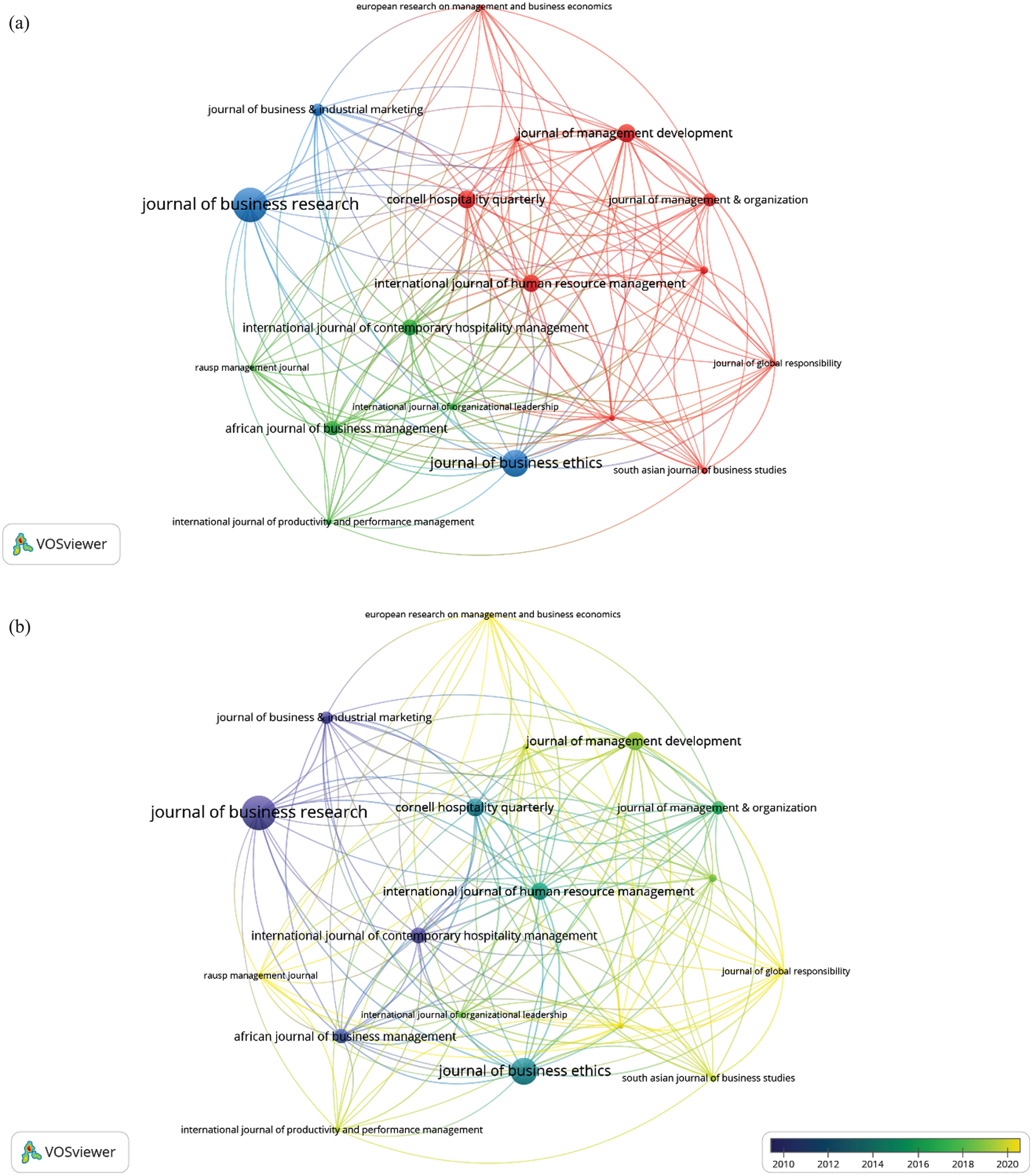
(a) Visualization of the source network on job satisfaction and organizational commitment, (b) Growth of the source network on job satisfaction and organizational commitment.
Figure 4b, on the other hand, shows notable publications that have lately made significant contributions to the topic of job satisfaction and organizational commitment in the context of business. The Journal of Global Responsibility, the South Asian Journal of Business Studies, European Research on Management and Business Economics, and the International Journal of Productivity and Performance Management are among them. These publications have developed into authoritative sources in the field, giving useful insights and furthering study in this field.
Figure 5 depicts a network of international cooperation in a certain scientific topic. The research focuses on the most important bibliographic linkages, as defined by satisfying at least one document requirement. Entities are represented by circles in the graphic, with their size representing their relevance and labels denoting their weight or significance. The most influential entity in the network is represented by the biggest circle and label [23].
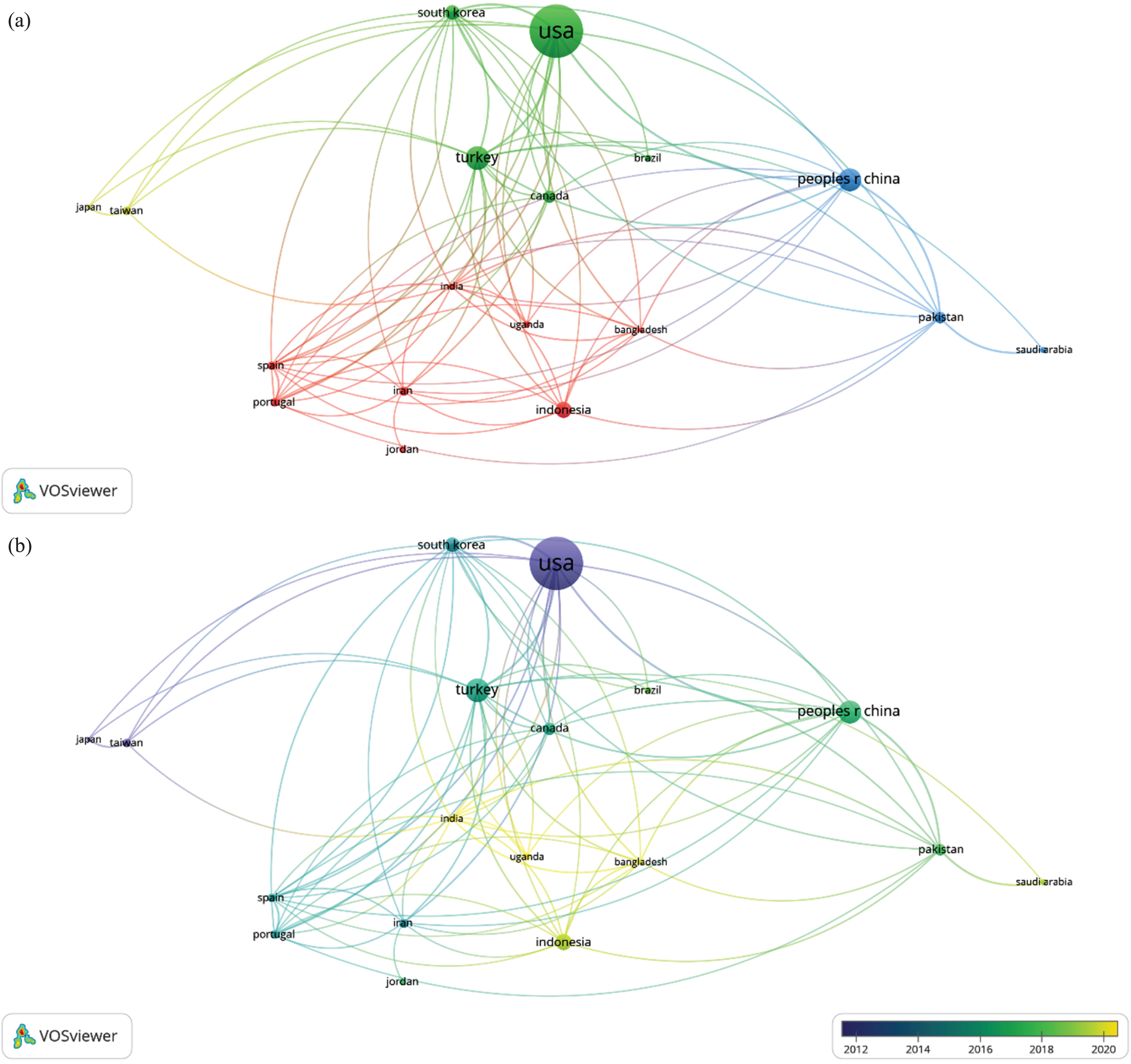
(a) Visualization of countries network on job satisfaction and organizational commitment, (b) Growth of countries network on job satisfaction and organizational commitment.

(a) Visualization of authors’ network on job satisfaction and organizational commitment, (b) Growth of authors’ network on job satisfaction and organizational commitment.
The distance between items in the graphic represents the degree of similarity across nations in the examined domain, while connecting lines show the occurrence of collaborations or partnerships. The ability to compare nations or regions with comparable features is a significant advantage of this map. Countries on the same continent frequently share characteristics, which is why they show close together on the map [60].
The biggest circle in Fig. 5a symbolizes United States, which has strong ties with neighboring nations such as China, Turkey, South Korea, Canada, Indonesia, Pakistan, Taiwan, and Jordan. Through a variety of programs and regulations, United States is highly driven to enhance worker satisfaction and organizational commitment. This motivation arises from the potential advantages that these elements may provide to people, companies, and the economy as a whole [17]. According to the analysis, the United States is expected to provide 32% of all link strengths in the domain, showing a significant influence and active participation of the United States in job satisfaction and organizational commitment research, partnerships, and advancements. Figure 7 depicts the strong link between these features and the partnership’s four research clusters.

(a) Visualization of universities and institutions networks on job satisfaction and organizational commitment (b) Growth of universities and institutions networks on job satisfaction and organizational commitment.
Figure 5b depicts the most recent leading countries in research and development relative to the function of job satisfaction and organizational commitment, which have made major contributions to empowering business fields. Indonesia, Bangladesh, Uganda, India, and Saudi Arabia are notable among these countries. These countries have emerged as important contributors to the advancement of knowledge and understanding in this subject, allowing for the improvement of corporate environments and practices.
Author Bibliographic Coupling (ABC) is a type of bibliographic coupling in which two authors cite the same article(s) in their joint publications. ABC is founded on the idea that the more references two writers have in their collective works, the more likely their study would be comparable [23].
Figure 5a depicts the top 26 contributing authors based on the number of publications citing them in research on the use of document bibliographic linking for data mining and scientific visualization [61]. Among these writers, Schwepker, CH, Deshpande, Satish P., Fu, Wei Hui, Aksarayli, Mehmet, Gunlu, Ebru, and Top, Mehmet have gotten the most citations in studies on job satisfaction and organizational commitment, totaling 1102 citations. Each of the top 26 writers has 12.32 publication citations in the topic of job satisfaction and organizational commitment on average.
Figure 5b also highlights notable writers who are now contributing significantly to the study and development of job satisfaction and organizational commitment, ultimately boosting business fields. Among these writers, Richard Lacoursiere and Cynthia Mathieu of the Université du Québec à Trois-Rivières stand out for their important work in this subject. These writers have made significant contributions to our knowledge of job satisfaction and organizational commitment, which has implications for improving corporate environments and practices.
Figure 7 depicts an organizational cooperation network that highlights major bibliographic linkages based on document criteria. Entities are represented in this network by circles with labels, with the size of both the label and the circle reflecting the weight or relevance of each entity. The biggest label and circle denote the most prominent item in the network [23].
The closeness of the pieces in Fig. 7a represents their amount of interconnection, while the lines linking them show their affiliations or ties. One of the map’s key benefits is its ability to find colleges with comparable qualities. Because institutions from the same continent frequently share characteristics, they tend to cluster together on the map. Based on these grouping tendencies, nine unique groups were found in this study.
The graphic’s biggest circle depicts Missouri State University (USA), which has garnered the most citations (371). As shown in Fig. 5a, the University of Science and Technology Beijing (China) is placed second in terms of both citations (207) and overall link strength (193). Notably, via three published publications, this institution has made important contributions to the fields of job satisfaction and organizational commitment, with a total link strength of 3362 on the map.
Figure 7b also highlights notable colleges and institutions in the fields of job satisfaction and organizational commitment. Examples include Pakistan’s Lahore School of Economics, Uganda’s Makerere University, and Indonesia’s Tanjungpura University. These institutions have emerged as key players in the advancement of research and knowledge in the fields of job satisfaction and organizational commitment. Their involvement in the network emphasizes the importance of their contributions to the area.
The research cluster analysis gives important insights into the developing trends and essential components affecting the future of corporate performance and employee engagement. The first cluster, shown by the color red, is concerned with the transition of performance in the digital era. As firms adjust to technological improvements and alter workplace dynamics, this cluster emphasizes the relevance of remote work and flexibility in performance management. These developments, according to the results, allow firms to access a broader talent pool, improve work-life balance, and minimize overhead expenses [39, 40]. Remote work and flexibility have been linked to greater employee welfare, improved work satisfaction, and increased productivity [39, 40]. More research is needed to investigate the implications and possibilities of this trend for leadership and organizational results.
The second cluster, represented by the green hue, underlines the significance of an ethical atmosphere, job satisfaction, and turnover for long-term organizational performance. This cluster emphasizes the importance of firms establishing a strong ethical foundation, encouraging employee appreciation, and prioritizing work-life balance initiatives. According to the findings, building an ethical culture increases employee engagement and trust, which leads to higher job satisfaction and organizational loyalty [44]. Job satisfaction has been connected to higher levels of employee engagement and motivation, which contribute to higher levels of performance [47]. Furthermore, businesses that successfully manage turnover through competitive pay packages and chances for promotion can minimize recruitment and training costs while maintaining significant institutional expertise [44, 46]. The convergence of ethical climate, job satisfaction, and turnover is expected to result in a productive workplace that promotes cooperation, innovation, and employee empowerment, eventually leading to lower turnover costs and an enhanced company reputation.
The blue cluster highlights research on techniques for long-term corporate performance, with an emphasis on employee engagement and talent management via organizational commitment. This cluster emphasizes the significance of tailoring organizational commitment techniques to individual employee needs, motivations, and goals. According to the findings, tailored techniques, such as customized development plans and targeted recognition programs, increase employee engagement, loyalty, productivity, and retention [51, 52]. Customized organizational commitment solutions foster a sense of connection and loyalty among employees, leading to higher levels of satisfaction and lower turnover rates [50]. This tailored method is projected to boost productivity, increase employee retention, and generate a favorable work environment conducive to long-term organizational success.
Finally, the yellow cluster is concerned with comprehending work dynamics in a changing company landscape, namely perceptions, turnover intentions, and employee engagement. This cluster highlights the rising trend of employing flexible work arrangements to boost employee engagement and reduce turnover intentions. Flexible work arrangements, such as remote work and flexible hours, appear to contribute to employee happiness, work-life balance, and stress reduction [53, 56]. Organizations may also attract and retain top personnel by providing work options that fit with individual preferences, resulting in cost savings associated with recruiting and onboarding [57, 58]. Furthermore, the flexibility afforded by these arrangements fosters a diverse and inclusive workforce, hence enhancing employee well-being and performance [54]. In a changing company landscape, the implementation of flexible work arrangements is expected to boost employee engagement, reduce turnover intentions, and increase organizational success.
The study’s cluster analysis gives useful insights into the patterns and components that shape organizational performance, employee engagement, and talent management. Organizations in the digital era must prioritize remote work and flexibility in performance management, an ethical atmosphere and job happiness, individualized organizational commitment techniques, and the utilization of flexible work arrangements. According to the research, these trends have the potential to boost employee well-being, happiness, and productivity while lowering turnover rates and improving organizational performance. More study is needed to investigate the interdependence of these components and their consequences for leadership, employee potential, and long-term organizational performance. The findings lay the groundwork for future studies and have practical consequences for firms looking to flourish in an ever-changing business world [71, 72].
Research implications, future research directions, limitations and conclusions
Practical and theoretical implications
This cluster analysis sheds light on the complex interactions between different variables that influence organizational performance, employee engagement, and talent management. It highlights the importance of tailoring organizational commitment techniques to individual employee needs and motivations, advancing our theoretical understanding of employee engagement and loyalty. This tailored approach challenges traditional one-size-fits-all strategies and suggests that customization can lead to higher job satisfaction and lower turnover rates.
Furthermore, the study sheds light on the growing trend of flexible work arrangements and their impact on employee well-being and organizational success. This has theoretical implications for the fields of organizational psychology and management, as it suggests that flexible work arrangements can contribute to a diverse and inclusive workforce, positively affecting employee performance. The findings also suggest that organizations need to adapt to changing workplace dynamics in the digital era to remain competitive. Overall, the study’s theoretical implications provide a foundation for future research exploring the intricate relationships among these components and their effects on leadership, employee potential, and long-term organizational performance.
Future research directions
The study’s cluster analysis offers useful insights into the patterns and components that shape organizational performance, employee engagement, and talent management. However, further study is needed to investigate the interdependence and consequences of these components. To begin, future studies may concentrate on merging the discovered clusters. While the study identifies separate clusters, more research into the possible overlap and integration between these clusters would offer a more complete picture. For example, investigating how remote work and performance management flexibility connect with an ethical environment and worker happiness or how specialized organizational commitment approaches match flexible work arrangements Understanding the synergy and interdependence of these components can shed light on their overall influence on organizational results. Second, future studies should focus on the influence of remote work on leadership practices and styles. It is critical to examine how leaders modify their techniques to effectively manage remote teams and boost employee engagement and performance. It would be beneficial to investigate the function of transformational leadership in remote work situations and its impact on employee engagement, cooperation, and organizational outcomes.
Furthermore, longitudinal studies can shed light on the long-term consequences of the detected patterns and components. Tracking organizational performance, employee engagement, and talent management over time can indicate if these strategies are sustainable and durable. Longitudinal research can also give information on possible problems and adaptations that businesses may encounter as these patterns unfold. Furthermore, for a complete understanding, it is necessary to investigate the cultural disparities in the acceptance and influence of these trends. Investigating how different cultural settings perceive and practice remote work, an ethical atmosphere, organizational commitment, and flexible work arrangements can reveal cultural elements that influence their efficacy. Cross-cultural studies can help companies operating in varied cultural environments develop context-specific strategies. Furthermore, while the study clusters address the beneficial influence of the detected trends on employee well-being and performance, further research might be conducted to better understand the underlying processes. Examining the elements that mediate the link between remote work, flexibility, an ethical atmosphere, job satisfaction, and employee well-being and performance can give a more comprehensive picture of the mechanisms at work.
It is also critical to consider technical enablers. As the digital era progresses, it is critical to investigate the function of various technical enablers in supporting remote work, flexible arrangements, and talent management. Exploring the influence of project management software, digital collaboration tools, communication platforms, and performance management systems on employee engagement, cooperation, and productivity can provide insights into improving these technologies for organizational success. Finally, future research can use multi-level views to investigate the significance of these patterns and components at other levels of analysis. Exploring how these practices and tactics affect individual individuals, teams, and the whole business may give a full picture of their effect. This technique can also shed light on potential misalignments and issues that may occur at various levels.
Limitations
This study has several limitations that should be acknowledged. Firstly, the data source utilized was limited to the WoS core collection, which may have restricted the study’s scope. Additionally, the study focused on specific fields and locations, and the conclusions reached were inconclusive, leaving many areas unexplored.
Secondly, the absence of quantitative research, the concentration of authors and nations, limitations in currency and period, potential language bias, and constraints in keyword analysis may have compromised the comprehensiveness, generalizability, and representativeness of the findings. Therefore, further research is needed to overcome these limitations and gain a deeper understanding of job satisfaction and organizational commitment.
Conclusions
This study adds to the current body of literature on job satisfaction and organizational commitment by undertaking a thorough inspection and clustering analysis of articles from the WoS core collection. The findings shed light on essential features of the area, such as notable authors, key issues, noteworthy publications, and research countries. Several notable tendencies emerge from the investigation. For starters, there is a major emphasis on the theme of “Transforming Performance in the Digital Era: Trends, Strategies, and Implications for Leadership.” This demonstrates the increased acknowledgment of the influence of digital breakthroughs and changing workplace dynamics on performance management techniques and leadership initiatives.
Second, the trend “Future Ethical Climate, Job Satisfaction, and Turnover: Unlocking Employee Potential for Sustainable Organizational Success” emphasizes the growing importance of creating an ethical work environment, promoting job satisfaction, and effectively managing turnover for long-term organizational success. The third identified trend is “Strategies for Sustainable Business Success: Unlocking Employee Engagement and Talent Management via Organizational Commitment.” This emphasizes the importance of adapting organizational commitment tactics in order to improve employee engagement and efficiently manage talent within a firm.
Finally, there is increased interest in “Understanding Work Dynamics in a Changing Business Landscape: Perceptions, Turnover Intentions, and Employee Engagement Implications.” This represents a rising acknowledgment of the importance of understanding work dynamics, such as how perceptions, turnover intentions, and employee engagement influence organizational outcomes, especially in the context of a changing business landscape. Despite the growing number of papers on this topic, it is vital to recognize that quantitative research in this area is still restricted. Because of this constraint, the literature contains confusing findings and undiscovered regions. As a result, further study is needed to fill these gaps and improve our understanding of the complicated link between job satisfaction, organizational commitment, and the different contextual elements that influence them.
The examination of 1350 publications found that the bulk of them were published in Asian and Australian journals, demonstrating a considerable interest in exploring the subject of job satisfaction and organizational commitment. Notably, nations such as the United States and China have regularly contributed to the literature on the significance of job satisfaction and organizational commitment during their expansion. Schwepker, CH, is a well-known author who is regularly quoted in articles on this subject. Missouri State University (USA) and the Journal of Business Research have evolved as prominent universities and journals in terms of publishing and citations, respectively. The significant increase in academic papers has resulted in unforeseen issues and worldwide patterns, which may be linked to the field’s quick expansion. These findings highlight the exciting and practical elements of assessing job satisfaction and organizational commitment, both philosophically and practically.
Future research on job satisfaction and organizational commitment should focus on longitudinal studies to examine the dynamic nature of these dimensions over time. Cross-cultural research can shed light on cultural influences, while multilevel analysis can explore the effects of individual, team, and organizational factors. Investigating mediating and moderating variables, employee voice and engagement, leadership and organizational practices, technological advancements, and their impact on employee well-being and mental health are all crucial areas to investigate. These studies can assist businesses in enhancing employee engagement and overall organizational effectiveness by providing a deeper understanding of job satisfaction and organizational commitment.
Footnotes
Acknowledgments
The authors are grateful for the reviewers’ help with a specific technique and methodology, as well as their comments, which greatly improved the manuscript. Additionally, I appreciate the guidelines provided by Human Systems Management on the latest version of the manuscript.
Author contributions
Tareq Abu Orabi played a key role in conceptualizing the study, designing it, writing the initial draft, and overseeing the entire project. Hadeel Sa’ad Muhammed Al-Hyari and Hanan Mohammad Almomani were responsible for preparing the manuscript, devising the methodology, collecting and interpreting data, and drafting the original manuscript, with their work also supervised by Tareq.
Ahmad Ababne and Yazan Abu Huson were involved in revising the paper, providing crucial input regarding the literature, study design, and discussion. They also contributed to the writing and editing of the final draft. Emad Ahmed and Hussein Al Banna contributed significantly to the paper’s revision, offering essential intellectual content, conceptual ideas, literature review, and suggestions during discussions. Their contributions extended to writing, editing, and overseeing the research, alongside Tareq Abu Orabi and Emad Ahmed.
Together, the collaborative efforts of all authors, led by Tareq Abu Orabi, ensured that the paper’s methods, analysis of data, and discussions were robust and comprehensive. Their combined expertise enhanced the quality and impact of the research.
Conflict of interest
The authors declare no competing interest.
Funding
We have not received any funding to execute this research study, the rigorous procedure of collecting data, and other associated processes to conduct this study.
