



Abstract
Background
In recent years, Albania, Bosnia and Herzegovina, and Kosovo have witnessed a notable increase in the number of skilled individuals, including healthcare professionals, seeking employment outside the country.
Objective
This paper’s research objective is to determine the factors influencing the brain drain of young individuals who work abroad based on the migration push and pull factors of healthcare professionals in Albania, Bosnia and Herzegovina, and Kosovo.
Methods
This paper combines a qualitative and quantitative research design. Data was generated via a questionnaire addressed to 300 young healthcare professionals. In addition, logistic regression was selected to evaluate future migration intentions.
Results
One of this paper’s main findings is that young healthcare professionals cannot make a sound judgment on whether remuneration in the destination country will improve their situation.
Conclusions
The absence of accounting literacy is one of the main factors in young professionals’ poor judgment. The negative correlation between home country opportunities and migration intentions appeals to significant reforms in the health care sector to deter brain drain from the Western Balkan region.
Keywords
1. Introduction
Due to political challenges, followed by low economic development, low level of education in general and accounting in particular, and long-term transition for the Western Balkan countries, academic mobility, exchange, and partnership with the European Union (EU) and other worldwide educational institutions are crucial. However, the academic mobility and free movement of people from the Western Balkans to the EU and other countries has been a source of migration and brain drain. In recent years, Albania, Bosnia and Herzegovina, and Kosovo have witnessed a notable increase in the number of skilled individuals seeking employment outside the country, including healthcare professionals. This trend has raised concerns about the potential brain drain and its impact on the country’s workforce, particularly in critical sectors such as healthcare [1].
Apart from challenges, other studies support the idea that, for the Western Balkans, emigration has been a tremendous source of growth, experience, and connections with the global market, mainly circular migration supported by the EU programs. Returnees to the region significantly impact government services, reforms, and the financial sector, with many now working in these areas [2]. At least 20 percent of employees in the financial industry in Bosnia and Herzegovina, Serbia, and Croatia hold foreign degrees. Most Albanian government employees were educated abroad by using different financial support. With connections between knowledge-intensive sectors and institutions in the Western Balkans and Western Europe, these professionals with international education and experience could improve the local administration and create a better working environment in their home countries [3].
The research objective of this paper is to determine the migration intentions of young healthcare professionals currently living in Albania, Bosnia Herzegovina, and Kosovo based on push and pull factors that influence labor movements from home to destination countries. The push and pull factors are analyzed Different from the existing literature, this paper 1 emphasizes accounting literacy as one of the unexplored push and pull factors that influence the migration intentions of young healthcare professionals.
To continue, this paper initially addresses theoretical issues on push and pull factors, followed by methodology and empirical results. Furthermore, the paper continues with interpreting results, conclusions, and references. The paper will discuss the interlinkage between the push and pull factors affecting the migration of young healthcare professionals, including opportunities and challenges for the Western Balkans [4].
2. Theoretical framework
In the global context, migrations are not a new phenomenon. Throughout history, people have always migrated, sometimes in groups or as individuals, and for multiple reasons. The most common types of migration are from war or poverty, political instabilities, religious intolerance, or better opportunities for themselves and their families.
The workforce has become one of the most dominant migration trends as knowledge has become one of the most valuable resources in economies. In addition, according to a study of International Organization for Migration (2022) 2 , the structure of people who intend to migrate is currently changing from low-skilled people to more educated people, which is a challenging process for the countries of the Western Balkans [5].
Regarding brain drain and academic mobility, many countries around the globe experience the phenomenon of brain drain, which is generally defined as a massive and permanent outflow of highly qualified individuals (researchers, academics, and scientists) from home to foreign (or so-called ‘receiving’) countries. According to [6], academic mobility strongly impacts mutual understanding, quality enhancement, a more prosperous cultural life, and personality development. At the same time, other authors, such as [7], pointed out the potential challenges from academic mobility, such as misunderstandings and new mistrust, and – last but not least – ‘brain drain’. Additionally, several authors pointed out that the academic mobility of researchers, respectively “brain circulation,” helps to exploit the high-quality human capital and contributes to the increase of skilled human capital that supports economic sustainability [3].
The concepts that describe the phenomenon of brain drain usually start from the analysis of the decision of a highly educated person to emigrate and what effects his departure may have in the country of origin. If the phenomenon is viewed from the perspective of highly developed countries, then the policies of these countries to attract qualified labor play a decisive role. This is the case with the European Union (EU), which issues the Blue Card as a residence and work permit for the experts it needs. It is a policy that draws, most often, the technical knowledge of experts in developing countries to increase the wealth of developed countries. In addition to brain drain analysis, it should be emphasized that in addition to financial and personal motives, an important role in the decision to migrate is also played by the better organization of the system and the conditions in which the qualified work. Deterioration of working conditions in the country of origin can lead to what was initially a temporary migration and then become permanent. If the departure of the skilled causes the loss of the country of origin to be greater than the gain, then we are dealing with brain drain and not mobility [8].
The brain drain – or the movement of highly skilled human capital from developing to developed countries – is driven by aspirations for a better quality of life and the growing demand for skilled personnel in developed countries. Health-related report, for example of Westmister Foundation for Democracy, emphasize that the brain drain of health professionals negatively affects the population’s health and general development situation in the countries of origin. 3 According to the United Nations Development Program (UNDP), the brain drain is a link in a vicious cycle of capacity depletion that will continue to impact developing countries and their path toward sustainable development. 4 These countries are less equipped with qualified people, who are a vital asset in creating the conditions for economic growth 5 . UNDP considers international migration a highly politicized issue, with developed countries struggling to attract highly skilled labor to fill gaps in IT, education, science – especially medicine – and other highly specialized fields [9].
In Germany, the Law on Immigration of Skilled Workforce has been put into force, which allows workers qualified in professional education from countries outside the European Union to immigrate more easily to Germany. This law mainly affects skilled workers. 6
The German authorities announced 2022 that this country needs about 400,000 qualified workers from other countries every year, especially in healthcare.
The analysis of this paper will focus on the health sector, as employment opportunities in the health sector have recorded their most substantial growth over the past few decades, and the health sector itself is absorbing about 10% of the workforce. Despite the rising employment, shortages are already evident. According to [10], the European health system is facing the issue of retirement, the rise in life expectancy, and the aging of the population, which is further increasing the demand for health professionals. The paper further describes the current situation in Albania, Bosnia Herzegovina, and Kosovo regarding migration trends, with a particular focus on young healthcare professionals and their lack of accounting literacy in evaluating personal finances.
The intention to migrate encompasses various factors that allow individuals to move from one geographical area to another. Push factors comprise elements such as limited prospects, inadequate wages, joblessness, substandard health and educational conditions, insecurity, unfavorable work environments, and corruption. At the same time, pull factors consist of enticements drawing individuals towards another location for superior academic and healthcare opportunities, increased job prospects, enhanced life security, and lenient immigration regulations. These push-pull factors are further categorized into (a) individual socioeconomic aspects, (b) incentives and prospects, (c) institutional elements, and (d) labor market conditions. These determinants significantly influence individuals’ decision-making processes when contemplating migration [11]. The existing research indicates that education, both in host and home regions, significantly influences individuals’ decision-making processes. Previous studies have highlighted that inadequate education in one’s home region increases the likelihood of migration to host regions in search of better wages, more opportunities, and an improved standard of living [12]. Conversely, better education opportunities in host regions as a primary attraction for young talent. Numerous studies have established a clear and positive correlation between brain-drain migration, education, and technology transfer. Brain-drain migration can transform into brain gain for home regions when highly educated and skilled individuals return with international exposure and expertise, contributing positively to their homecountries [13].
2.1. Albania
According to the latest population census published by the National Statistical Institute in June 2024 7 , only 2.4 million of more than 4 million people with Albanian citizenship currently reside in Albania. The first wave of emigration started in the turbulent 1990 s, following the fall of the Iron Curtain and the modern Republic of Albania’s battle to free itself from one of the most authoritarian communist regimes. Until 2008, when the global financial crisis affected significant host nations like Greece and Italy and temporarily reversed the flow, it remained high. Over the past ten years, emigration has been slowly rising once more. It is estimated that more than one million Albanians live overseas. According to data gathered by the European Commission, around 780,000 people legally reside in the EU. Albania became one of the sending nations for skilled labor in 2005 because of significant negative net migration from Albania to the EU. The country’s political, economic, and immigration policies and those of the EU member states seeking to recruit workers from less developed nations have all contributed to the country’s growing brain drain. One of the areas most impacted by the widespread population migration in Albania is the healthcare industry, which includes health workers (doctors andnurses) [14].
On the contrary, Albania has a shortage of healthcare workers. This trend has risen recently, with many healthcare professionals leaving for other European countries such as Italy, Greece, and Germany. The migration of healthcare workers has significantly lost human capital in the Albanian health system. This process has harmed the quality of care provided and has contributed to a sense of instability in the health sector. The decrease in the workforce in several economic sectors is one of the main effects noticed in nations where brain drain is a problem. Fewer opportunities for the state to tax employers and job seekers result from this simultaneously [15].
This issue also significantly impacts society because emigrants tend to be older individuals who desire to start families. The effects of the brain drain problem in Albania can be analyzed on two levels: macro and micro [16]. He attributes brain drain as the cause of the pension system’s crisis on a macro level. He claims that this will decrease tax revenues for the state budget and harm specific economic sectors like agriculture. He discusses the impacts of the brain drain phenomena on young people’s lives at a micro level. The decision of many young people to leave the country leaves a void in the labor market that must be filled by individuals with lower qualifications. On the other hand, a faltering economy and an unregulated labor market encourage young, qualified people to establish their futureselsewhere [17].
The country is losing more skilled workers because of this. The decline in the health sector’s workforce is yet another direct impact of the brain drain problem. Studies indicate that the skilled labor force in Albania’s health sector is declining, as many students who have moved abroad in the past choose to remain there after finishing their studies. Albania has a shortage of skilled employees because of their employment, particularly in Germany. According to the report entitled “New trends in possible migration from Albania,” the employees at call centers are in first place followed by nursing students who desire to leave their country, while construction employees take up third in ranking. 8
2.2. Bosnia and Herzegovina
According to the population census 2013, about 3.5 million people live in Bosnia and Herzegovina (BiH). The actual population of the country is less than 3 million. 9 Comparing the size of the Bosnian diaspora of 1.6 million with that number, the diaspora represents a significant socio-economic factor and is an unavoidable macroeconomic variable. According to available data from the Ministry of Security of Bosnia and Herzegovina, from 2016 to 2020, almost 20 thousand people deregistered their residences in Bosnia and Herzegovina. According to Eurostat 2020, the most common countries for emigration from Bosnia and Herzegovina are European Union countries, primarily Germany and Austria, followed by Slovenia and Croatia [18].
Within the general phenomenon of emigration from BiH, the emigration of health workers and nurses represents one of the biggest challenges facing the domestic health system. The high emigration rate of healthcare workers seriously affects the country’s availability and quality of healthcare. Qualified health professionals leave the country for better working conditions, higher salaries, and development opportunities that BiH cannot currently provide. This emigration has long-term consequences for the domestic health system, creating a severe imbalance between the supply and demand of health services [19]. According to the available research and data on emigration and the profile of emigrants, it can be noted that the dominant trend of emigration from Bosnia and Herzegovina is the workforce from the health sector, followed closely by the ICT sector. Most migrants go to Croatia, Germany, Slovenia, Austria, and Italy. In contrast, recently, fewer migrants from Bosnia and Herzegovina have moved to the Czech Republic, Norway, and Sweden. The leading destination for health workers, primarily young nurses, is Germany. 10
It is also important to note that health workers and nurses primarily migrate to neighboring countries such as Serbia and Croatia. In contrast, emigration to EU countries such as Germany, Austria, and Slovenia is mainly permanent. Another indicator that favors these claims is the decreased number of registered unemployed health workers at the Employment Service. According to data from the Institute for Public Health BiH, in the total number of employed health professionals in public institutions of the Federation of Bosnia and Herzegovina for the year 2020, nurses/technicians make up almost half of the 9,199 (46%). 11 The wave of emigration of health professionals, with the number of nurses/technicians, was triggered by the authorities’ carelessness and the health system’s very organization [20]. On the other hand, the demand for health professionals is growing throughout the European Union. Developed countries attract health professionals by offering them better working conditions, the possibility of career advancement, and a better standard of living [21].
2.3. Kosovo
In April 2011, Kosovo carried out the population census, which was the planned period in the round of population censuses in 2010, determined by the United Nations and international criteria and standards for registration. 12 The next population census is expected to take place in April 2024. Still, according to the latest estimates of the Kosovo Statistics Agency (ASK), at the end of 2021, Kosovo had 1.739.825 million inhabitants. Currently, the main challenges for Kosovo are the state of education and health, as well as the increase in the immigration rate, as most employees have net salaries between 400 and 500 euros per month. The large-scale departure of citizens abroad in recent years, especially after 2000, has begun to have visible economic and social consequences. The emigration of qualified citizens will have even more consequences if Kosovo’s institutions do not take adequate measures. Due to the high demand for workers in the EU countries and the many times higher salaries, the emigration trend is expected to increase continuously in the coming years. The priority of many citizens of Kosovo is better education for their children. Therefore, they hope to ensure a better career perspective and a better way of life for their children, which are conditions Kosovo cannot offer. Kosovars also tend to use or benefit from the EU educational opportunities, as the level of education is of the highest level, as well as the employment opportunities after graduation [22].
In Kosovo, many people emigrate for reunification purposes, as wider family intend to join the new country of emigration with other members, which enables them to emigrate/go to that country through various forms such as reunification with the family (with parents, children, or other members of the extended family) marriage with the person who is in the target country for emigration or cohabitation. Based on the national statistical data, over 35% of the entire Kosovar population immigrates to Germany and then to Switzerland with about 23%, and to Italy over 7%. Until recently, other countries such as Canada, Australia, and others constituted over 10% of the Kosovar emigrant population. 13 Apart from the challenges and adverse effects of migration, from 1991 to 1999, the education system in Kosovo operated in a parallel system; therefore, all educational activities in Kosovo were financed mainly by the Kosovar diaspora. 14
The emigration of Kosovo’s citizens and workforce continues to be one of the main challenges for institutions and society, especially in the health sector. The lack of working conditions in the public sector, low wages, and the inconsistent educational curriculum with the labor market demands have resulted in a “brain drain,” causing the emigration of many doctors and other health professionals. This directly affects the country’s economic development growth country’s economic development growth and raises the need for immediate activation of the institutions [23]. Deficiencies in the public health sector have harmed the well-being of citizens, resulting in many of them leaving the country for better conditions and easier access to health services. According to the Kosovo Doctors Chamber, in 2022, the number of young healthcare professionals that migrated was 205, a 35% increase from 2021.
3. Methodology
To analyze this phenomenon, the surveys are employed to address the respondent’s intentions to migrate and work abroad and identify the socio-demographic factors that act as the main drivers behind these intentions. The Western Balkans supported endorsed the survey
Alumni Association (WBAA), and by the European Commission. The present study thoroughly examines scholarly literature surrounding the concept of health experts’ migration, utilizing qualitative and quantitative research methods. The foregoing research is conducted through a survey questionnaire comprising twenty-one questions and distributed among 300 nursing students from various colleges and nursing departments in Albania, Bosnia and Herzegovina, and Kosovo in 2022.
The survey was designed collaboratively, based on [24, 25] respondents’ demographic background, educational history, accounting literacy, education level, and attitudes and intentions regarding migration and working abroad. The survey was administered electronically, ensuring confidentiality and anonymity for the participants. The target population for this survey included students enrolled in secondary medical schools and medical universities across Albania, Bosnia and Herzegovina, and Kosovo. A random sampling technique was employed to ensure representation from various regions and educational institutions. The survey was distributed through academic institutions and online platforms frequented by the target population. Through this survey, we tried to address one of the main hypotheses of this paper, which is that the lack of accounting literacy and education stimulates migration to developing countries [26].
This paper investigates the correlation between the variables, and a series of Pearson product correlations was used. Logistic regression was selected to evaluate the future intentions of migrating from the Western Balkans. In our proposed model, the brain drain is the dependent regression variable with a discrete choice and binary outcome. If an individual plans to migrate, we assign a value of 1; if there is no future intention to relocate, we assign a value of 0 [7, 27]. Given the limited number of binary dependent variables, we employed logistic regression, linear probability, and simple regression models. Logistic regression was chosen because it can address potential biases in simple regression and linear probability models. It offers flexibility with explanatory variables and provides meaningful interpretation of results. The functional form we estimated follows Equation 1 [28].

We estimated three logistic models: push factors according to Equation 2, pull factors according to Equation 3, and a combination of push and pull factors according to Equation 4. Concerning Equations 2, 3, and 4 the following α0, α1α2 are the intercepts, while the γ1, γ2 ⋯ γ16 are coefficients of regressors.



4. Results
The analysis of the survey data yielded significant insights into the intentions of students in secondary medical schools and medical universities to migrate and work abroad. The findings shed light on the socio-demographic factors that drive their decisions, as well as their perceptions of the benefits and challenges associated with international work opportunities. Below is a detailed analysis of the survey results.
4.1. Gender
According to the data presented in Table 1, in Albania and Kosovo, most of the people who completed the questionnaire were women, while in Bosnia Herzegovina, more men completed it, and more men completed it. Data in Table 1 shows the percentage of respondents according to their gender. In Bosnia, out of 100 respondents, 46% are women and 56% are men; in Albania, out of 100 respondents, 74% are women and 26% are men; and in Kosovo, out of 100 respondents, 69% are women and 31% are men.
Gender of respondents.

Source: Own calculations.
4.2. Age
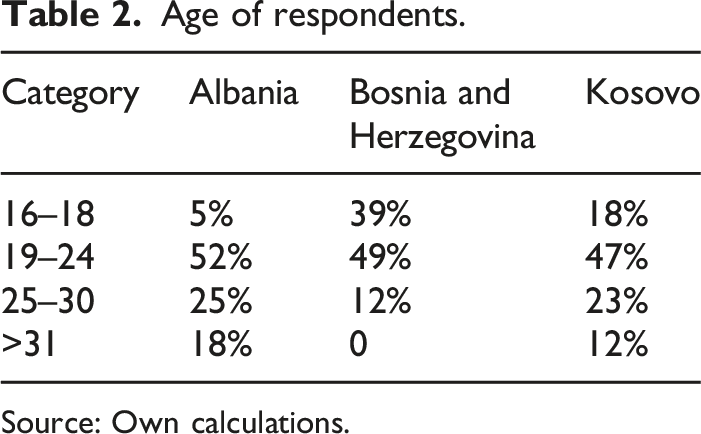
According to data in Table 2, most respondents were between 19 and 24 years old. In Albania and Kosovo, the second largest group comprised people aged 25 to 30, with 25% in Albania and 23% in Kosovo falling in this age range. Meanwhile, in Bosnia and Herzegovina, the second largest group comprised individuals aged 16 to 18. While some nurses in Albania and Kosovo had several years of experience (including those over 31) and participated in the survey, no experienced nurses in Bosnia and Herzegovina completed the questionnaire.
Age of respondents.
Source: Own calculations.
Albania: One noteworthy characteristic of the participants is the predominance of youth within the sample. A significant proportion of the survey participants, precisely 52%, were found to fall within the age bracket of 19–24 years. Moreover, 25% of the respondents belonged to the age group of 25–30 years. Merely 18% of those surveyed possess the characteristics of being senior and highly proficient individuals in their respective fields.
Within the survey participants, a minority of 5% are identified as high school students who desire to pursue advanced educational opportunities in the nursing field.
Bosnia and Herzegovina: Most respondents, precisely 49% of the surveyed population, were 19 to 24 years old. This age group constituted the largest segment of the sample, signifying a substantial representation of young adults in the surveyed population. The second-largest group comprised individuals aged 16 to 18, accounting for 39% of the respondents. In the 25 to 30 age range, 12% of the surveyed population fell within this category, representing a smaller proportion than the previous age groups.
Kosovo: Regarding the age of the visitors, the 19–24 age group dominated at 47%, followed by the 25–30 age group at 23%. The 16–18 age group followed with 18%, while only 12% of participants were over 31.
4.3. Education level and accounting literacy
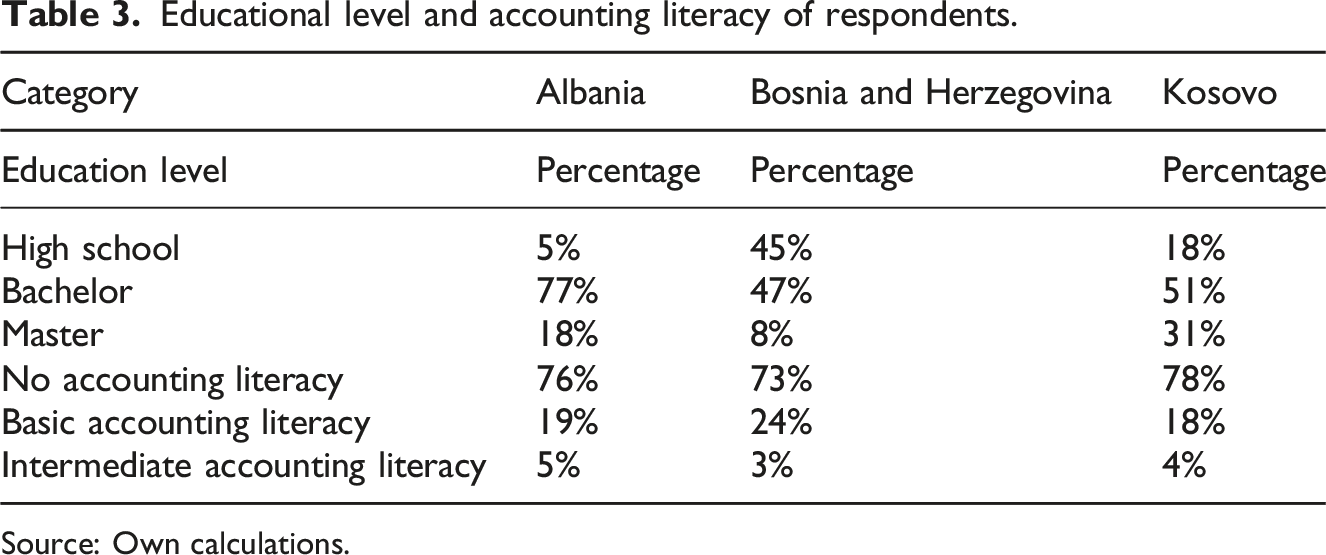
Referring to the data introduced in Table 3, the categorization of students based on their academic association disclosed that most respondents were medicine learners at the Health Studies Faculty. Correspondingly, in Albania, most individuals who have completed the survey are students at the Faculty of Medicine, with 77% at the undergraduate degree (Bachelor) and 18% at the postgraduate level (Master). In contrast, in Kosovo, out of the 82% enrolled in the Faculty of Health Studies, 51% are undergraduates (Bachelor) and 31% are postgraduates (Master). Meanwhile, in Bosnia and Herzegovina, the participants consist of 47% undergraduates (Bachelor’s) and 48% high school students.
Educational level and accounting literacy of respondents.
Source: Own calculations.
Albania: Through the implementation of our questionnaire, our objective was to encompass individuals aged 16 years and above. Consequently, we were able to obtain responses from diverse participants, including secondary school students and seasoned healthcare professionals, such as registered nurses. Based on the survey data, it was observed that most respondents, 52%, were identified as students. Among the student participants, 9% belonged to the first year of their undergraduate studies, followed by 14% in the second year, 19% in the third year, and 10% identified as master’s degree students. According to the data, 43% of the examined individuals possess significant health expertise, while 5% comprise secondary school students. When asked about accounting literacy, most respondents do not have any knowledge that would allow them to compare the living costs, expenses, and taxation between the country of origin and the destination country [29].
Bosnia and Herzegovina: In the surveyed population, the distribution of students based on their academic affiliation revealed that 47% of the participants were medical students at the Faculty of Health Studies. Furthermore, 8% of the respondents were enrolled as students at the Faculty of Medicine, while a significant proportion of 45% represented students from secondary medical schools. Including students from the Faculty of Medicine provides insights into the perspectives of future physicians. In contrast, the significant representation of secondary medical school students highlights the interest and aspirations of individuals pursuing a nursing or medical career at an earlier stage of their education. Regarding accounting literacy, a similar situation occurs in Albania, as respondents do not have the basic skills to compare the net financial benefits of living in different countries.
Kosovo: From the conducted surveys, results showed that 18% of the participants had a high school medical degree, 51% of the participants had a bachelor’s degree in nursing, and 31% of the Participants were in the final year of the master’s degree in nursing or health management. Kosovo follows the same trend regarding accounting literacy, indicating that students in medical schools in the Western Balkan countries lack accounting literacy to help them better evaluate the financial benefits of migrating to another country.
4.4. Migration intentions
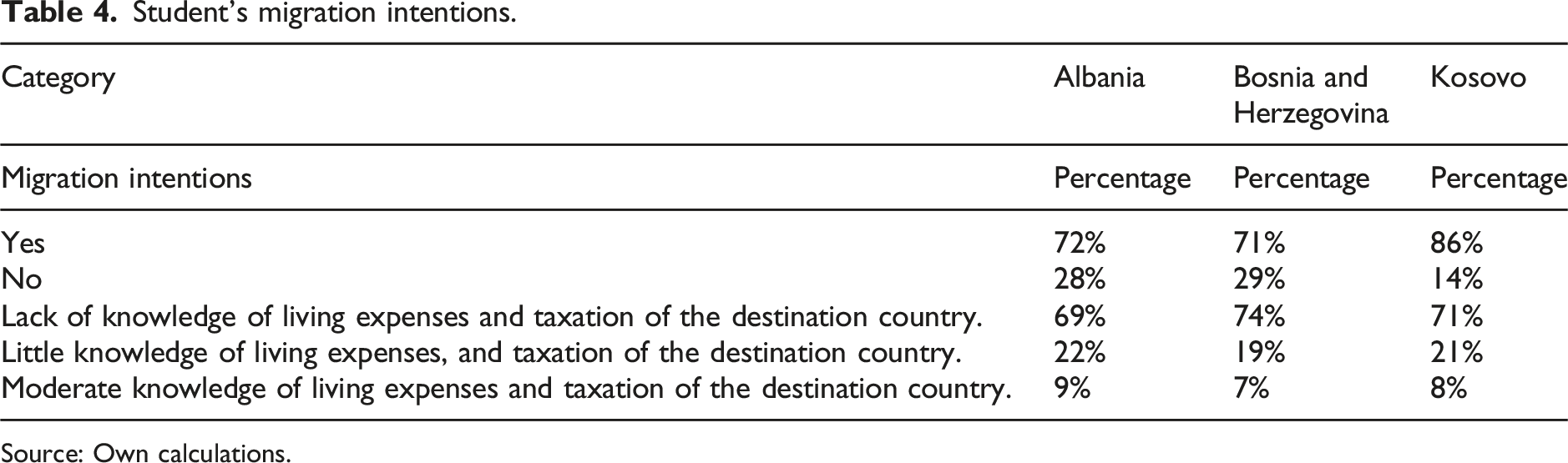
The data in Table 4 indicates the prevalence of students aspiring to relocate from their respective countries is prominent across all three countries. Kosovo out, with 86% of students expressing their desire to move abroad, topping the list. Albania and Bosnia Herzegovina exhibit a nearly identical proportion of students wishing to migrate, with only a marginal 1% discrepancy. The survey indicates that respondents are not aware of the costs and expenses incurred by living in the country of destination. Survey findings indicate that most respondents in the three countries in the Western Balkans lack proper and detailed information on the living costs and the basic accounting principles to evaluate the migration costs to the destination country properly. The absence of accounting literacy and information on the migration costs are often not adequately considered before deciding on their migration [29].
Student’s migration intentions.
Source: Own calculations.
Albania: Inquiring as to whether they have contemplated departing from Albania, 72% of participants responded in the affirmative. Meanwhile, 28% of respondents indicated they had not considered departing from Albania. When surveyed about their intentions to emigrate from Albania, the respondents were asked to indicate the timing of their decision-making process. Most respondents, comprising 27% of the sample, indicated an immediate desire to depart from Albania following graduation. Amongst those respondents, a prevailing sentiment was a lack of interest in pursuing further academic specializations within Albania. Conversely, a minority of respondents, representing only 5% of the sample, expressed a willingness to remain in Albania as specialists for 2–3 years before considering emigration [30].
Bosnia and Herzegovina: The students were asked about their migration intentions and the knowledge they have on living expenses, minimum wage, accommodation rent, childcare, taxation, transportation costs, leisure activities, etc. Among the respondents, 71% indicated they were considering or would be willing to leave BiH, while 29% preferred to stay. This shows a significant portion of students contemplating migration, suggesting potential challenges in retaining talent within the country. For those who indicated a willingness to leave BiH, further questions were asked to understand their plans regarding migration. The data showed that among the respondents who expressed a positive stance towards migration, 38% stated that they planned to migrate immediately after completing secondary school or university. Additionally, 21% said they would migrate immediately after completing their specialization. A significant percentage of 25% said they would migrate within a year if they could not find employment. Furthermore, 29% of respondents did not display their specific plans regarding migration.
Kosovo: The results of the research show that 86% of the respondents have intentions to migrate, while only 14% of the research participants have no intention to leave their place of origin.
4.5. Benefits of education and accounting literacy in the home country
As shown in Table 5, individuals from Bosnia Herzegovina and Kosovo exhibit doubt regarding the advantages they can derive from receiving education within their respective countries. Specifically, 71% of Bosnians and 69% of Kosovars expected benefits from formal education in their country to some extent. Conversely, of respondents from Albania, precisely 52% possess high levels of confidence in the Albanian education system, owing to the collaborative initiatives that Albanian Universities have established with foreign Universities. Most respondents indicate that accounting literacy makes it easier to understand different taxation systems and better calculate the living costs and expenses in the destination country. Also, the lack of an educational system to provide basic accounting concepts to medical students makes it harder for them to understand and manage personal finances between their country of origin and the destinationcountry [30].
Expected benefits from formal education and accounting literacy in country of origin.

Source: Own calculations.
Albania: When queried regarding the potential efficacy of Albanian education in facilitating migration, the participants exhibited ambiguous attitudes towards the extent to which education received therein would aid them in this pursuit. Some respondents expressed moderate optimism that Albanian education might be advantageous, while others indicated it might be significantly helpful. Around 48% of the respondents expressed their belief that the education system in Albania would have a moderate impact, whereas 52% reported that the education they received would significantly positively influence their personal development.
Bosnia and Herzegovina: These findings indicate that most surveyed medical students in Bosnia and Herzegovina, comprising 71% of respondents, believe that their education in the country will be of some assistance if they decide to leave. A smaller proportion, 20%, expressed a stronger belief that their education would be highly beneficial in such a scenario. However, it is worth noting that a small percentage of respondents, 9%, expressed no expectations regarding the usefulness of their education in Bosnia and Herzegovina in the event of emigration.
Kosovo: The results indicate that most surveyed students in Kosovo believe that formal education in Kosovo meets their expectations to some extent, with a value of 69%. In comparison, 18% of the other participants consider that formal education in Kosovo does not meet their expectations, while 13% have great.
4.6. Reasons for migration
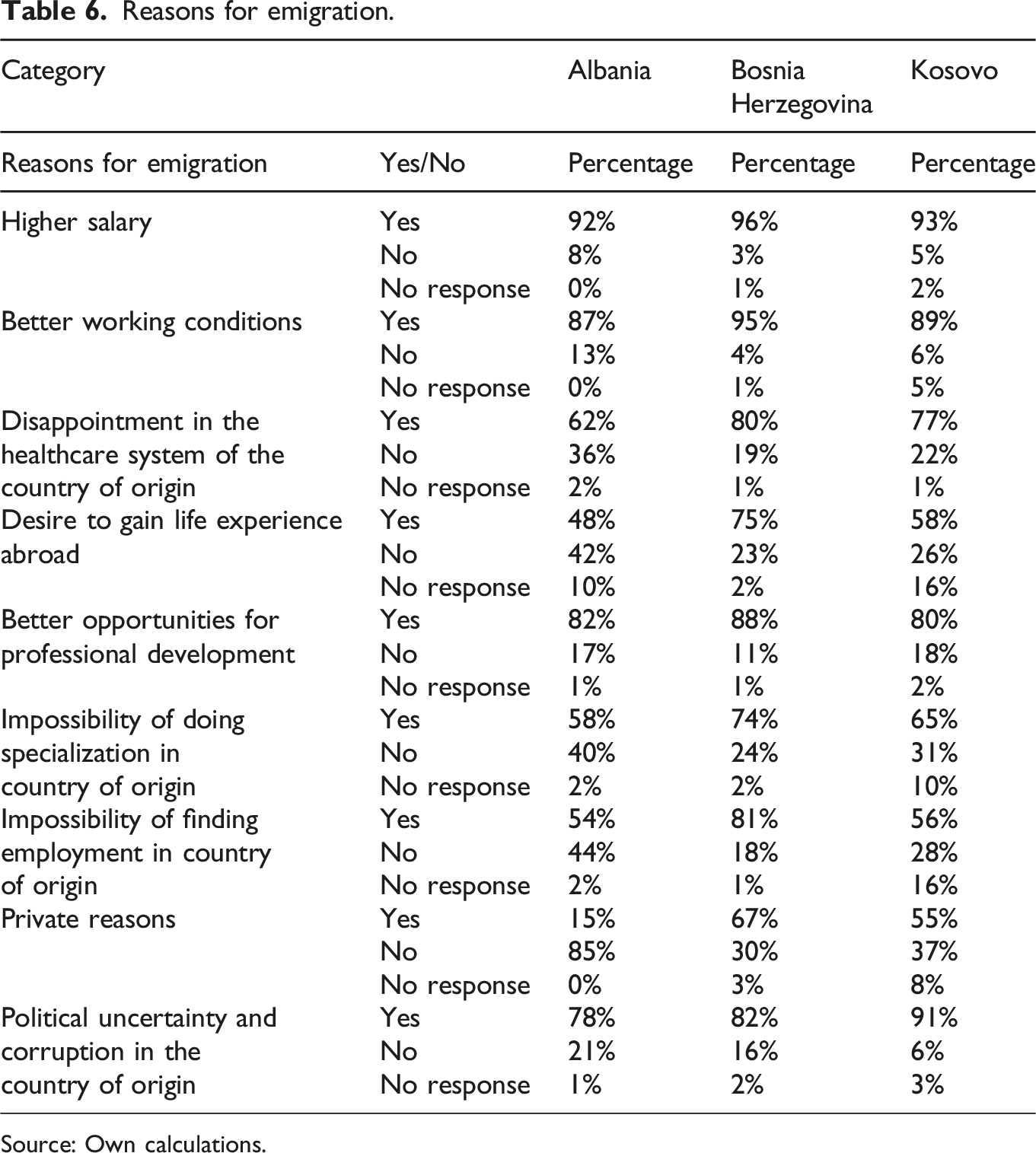
Based on the data in Table 6, 82% of Bosnians state that political instability and graft in their homeland are also drivers for departing Bosnia. In Kosovo, this figure is even higher at 91%, which is also attributable to the political circumstances in the country. A mere 15% of respondents would migrate from Albania for personal reasons. The inability to pursue specialization programs in their respective nations, with rates of 58% for Albanians, 74% for Bosnians, and 65% for Kosovars, incentivizes young individuals to migrate [31].
Reasons for emigration.
Source: Own calculations.
Albania: The present study revealed three core factors influencing Albanian healthcare professionals’ attrition. Specifically, a significant increase in wage compensation, reaching up to 92%, enhanced working conditions by up to 87%, and improved prospects for professional advancement by up to 82%. Merely 15% of the individuals would undertake migration for personal motives.
Bosnia and Herzegovina: Working conditions (higher pay and better working conditions) were cited as the most common reasons for emigration, with more than 95% of affirmative answers, and better professional development opportunities with 88% of affirmative answers. This is followed by socio-economic and political reasons such as disappointment in the healthcare system of Bosnia and Herzegovina (80%), inability to find a job (81%), and political insecurity and corruption in Bosnia and Herzegovina (82%). Previously, private reasons were significantly more influential, while now they are marked as the least important.
Kosovo: Regarding the reasons for migration, 93% of respondents migrate because of higher salaries, 89% of students because of better working conditions, 77% of participants because of deep disappointment with the healthcare system in Kosovo, and 56% because they cannot find work in Kosovo in the healthcare sector. Improved remuneration, enhanced working environment, and superior prospects for professional advancement are the primary factors that would prompt medical students in these three nations to relocate.
4.7. Regression analysis results
The correlation matrix in Table 7 suggests that future migration intentions in the Western Balkans are inversely associated with improved living standards, enhanced education, increased opportunities, and the availability of amenities. This indicates that these push-pull determinants deter migrants from considering leaving the Western Balkans. Importantly, there is no evidence of multicollinearity among the variables examined. To continue, a critical finding of the results presented in Table 8 is that improving accounting literacy provides better analytical skills to evaluate financial opportunities in the destination country. Accounting literacy is negatively correlated with migration intentions [33]. Additionally, there is a statistically significant and positive correlation between future migration intentions and low wages in Western Balkan countries, implying that inadequate pay in the region and comparatively better pay abroad encourage migration, particularly towards developing countries within the European Union.
Results of Pearson’s correlation matrix.
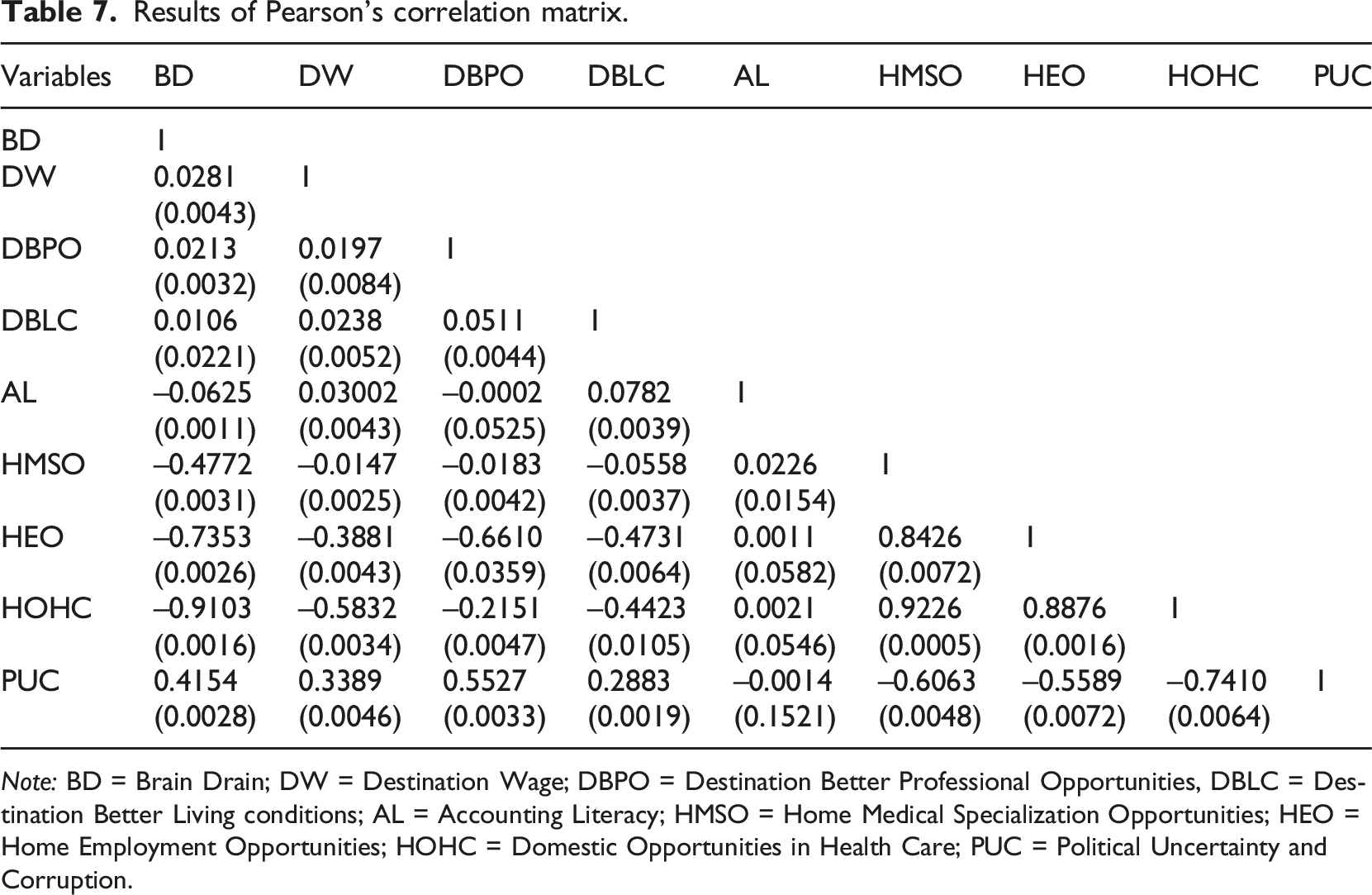
Note: BD = Brain Drain; DW = Destination Wage; DBPO = Destination Better Professional Opportunities, DBLC = Destination Better Living conditions; AL = Accounting Literacy; HMSO = Home Medical Specialization Opportunities; HEO = Home Employment Opportunities; HOHC = Domestic Opportunities in Health Care; PUC = Political Uncertainty and Corruption.
Logistic regression model results.

Note: BD = Brain Drain; DW = Destination Wage; DBPO = Destination Better Professional Opportunities, DBLC = Destination Better Living conditions; AL = Accounting Literacy; HMSO = Home Medical Specialization Opportunities; HEO = Home Employment Opportunities; HOHC = Domestic Opportunities in Health Care; PUC = Political Uncertainty and Corruption. *Indicates the level of significance at 5%. **Indicates the level of significance at 1%.
Furthermore, a positive correlation exists between satisfactory pay in one’s home country and factors such as better quality of life, lower wages, and increased opportunities. Lastly, there is a negative correlation between the absence of basic facilities and low wages, supporting the validity of the results. Similar results are found in [34]. The only push factor that positively influences migration intentions is the political uncertainty and corruption in the host country. The pull factors positively affect migration intentions and are also influenced by the proximity of the Western Balkan countries to the European Union [35].
We systematically applied logistic goodness-of-fit (GOF) at a 1% significance level for all three models, as presented in Table 9. The prediction square hats were found to be statistically insignificant, indicating that the relation test was passed by all three estimated models [7]. During primary data processing, there is a possibility of multicollinearity. To diagnose the degree of multicollinearity in the results, we utilized the variance inflation factor (VIF) and tolerance (1/VIF) metrics across the entire sample. If the values of VIF exceed 10 and tolerance falls below 0.1, further examination of the data may be necessary to address multicollinearity concerns. However, our analysis revealed that multicollinearity is not an issue in the estimated models, as the VIF and tolerance values were within acceptable ranges [36].
Goodness of fit (GOF) and variance inflation factor (VIF).

Note: BD = Brain Drain; DW = Destination Wage; DBPO = Destination Better Professional Opportunities, DBLC = Destination Better Living conditions; AL = Accounting Literacy; HMSO = Home Medical Specialization Opportunities; HEO = Home Employment Opportunities; HOHC = Domestic Opportunities in Health Care; PUC = Political Uncertainty and Corruption. **Indicates the level of significance at 1%.
5. Discussion
The analysis conducted among medical students in Albania, Bosnia and Herzegovina, and Kosovo provided valuable insights into their migration intentions, motivations, and socio-demographic factors. The findings shed light on the aspirations and concerns of these students regarding their plans, both within and outside the country. One notable finding is that many medical students from secondary schools and medical universities intended to migrate abroad. This trend highlights the issue of brain drain in future years as a Many highly educated individuals, specifically medical professionals, may seek opportunities outside their home country [38].
The finding suggests that these students perceive better prospects for career advancement and personal development abroad. The main reasons cited for considering migration were related to better working conditions, more significant opportunities for professional growth, and dissatisfaction with the socio-economic situation in Albania, Bosnia and Herzegovina, and Kosovo. Political instability, corruption, high unemployment rates, and an inadequate education system contributed to dissatisfaction [39].
The high percentage of students considering migration reflects concerns about the local socio-economic and political climate and the aspiration for better professional opportunities and quality of life. The decision to leave the country is not limited to personal reasons but encompasses many factors [40].
According to a survey targeting young professionals, the primary motivators for emigrating from Albania, Bosnia and Herzegovina, and Kosovo were considered the most significant factors to be professional advancement and working conditions. The present study has identified a range of push factors that negatively impact employee retention. These factors included inadequate remuneration, both in absolute and relative terms, unsatisfactory working conditions, insufficient access to essential resources, limited career advancement and professional development opportunities, a volatile work environment, and economic instability [41].
Insufficient training updates and limited opportunities for further professional development are regarded as professional motives influencing the decision to migrate among junior and seniornurses.
One of this paper’s main findings is that medical students in Albania, Bosnia Herzegovina, and Kosovo cannot make a sound judgment on whether remuneration in the destination country will make them better off. This absence of accounting literacy is the main factor in young healthcare professionals’ poor judgment [34, 35].
6. Conclusions and recommendations
The migration of young healthcare professionals in the Western Balkans typically encounters a complex interplay of economic, social, and psychological factors in their respective countries. Certain factors, namely inadequate remuneration, substandard working conditions, and limited professional potential. Conversely, destination countries are characterized by pull factors such as growing demand for healthcare professionals, augmented earnings, ameliorated working conditions, and abundant opportunities for professional advancement [36, 39].
The findings indicate that issues about the migration of healthcare professionals across countries are increasingly relevant. The ramifications are contingent upon the caliber of the healthcare system, its potential to inspire and engage each successive generation of medical students, and the successful dissemination of knowledge and expertise [40]. There would be a decline in the government’s allocation of resources towards education for these skilled professionals, resulting in a loss of tax revenue based on their income, among other factors. The current situation in Albania, Bosnia and Herzegovina, and Kosovo could deteriorate quickly, leaving the country with a significant shortage of human capacity in health. The loss of qualified professionals from a critical sector for the country’s development, such as health, will harm the country’s economy and the quality of life of its citizens [41].
To ensure efficient management of migration trends and to prevent the departure of the workforce in the health sector, the institutions of these chapters must take concrete steps, including: Increasing the public budget for health, which should result in the creation of better working conditions in public health institutions; Increasing salaries for health workers to be close to the countries of the region and competitive with other European countries; Immediate employment of health workers after completing their studies to assist specialist doctors, thus gaining experience and stopping emigration; Introduce basic accounting knowledge in the general curriculum for medical students so they can fairly compare financial and in-kind benefits between the country of origin and the destination country.
Finally, apart from the different measures, local institutions should ensure structured mobility programs that allow the exchange of knowledge and the process of its inclusion through non-permanent stays abroad [37]. These can be considered adequate tools to mitigate the integration challenge and contribute to the “circulation of brains” rather than their own “loss. To conclude, all these measures would be more beneficial for the healthcare system in the Western Balkan if the medical students were exposed at least to fundamental accounting principles and knowledge, making them more capable of carefully evaluating the financial costs and benefits [38].
Footnotes
Acknowledgments
Authors are thankful to young healthcare professionals for participating in this research.
Author contributions
For every author, his or her contribution to the manuscript needs to be provided using the following categories:
CONCEPTION: Jolta Kacani, Aleš Trunk, METHODOLOGY: Jolta Kacani, Gazmend Qorraj. DATA COLLECTION: Gentjan Shaqiri, Jolta Kacani
INTERPRETATION OR ANALYSIS OF DATA: Jolta Kacani, Aleš Trunk, Gentjan Shaqiri. PREPARATION OF THE MANUSCRIPT: Jolta Kacani, Gazmend Qorraj, Gentjan Shaqiri. REVISION FOR IMPORTANT INTELLECTUAL CONTENT: Jolta Kacani, Aleš Trunk.
SUPERVISION: Jolta Kacani, Aleš Trunk.
Notes
Author Biographies