



Abstract
With the continuous progress of science and the development of society, there are also problems of resource shortage and environmental pollution. People are eager to change this situation. How to achieve sustainable development has become an important problem to be solved. The development of society is inseparable from the supply chain, but the traditional supply chain cannot meet the requirements of sustainable development. The research manifests that the Closed-Loop supply chain (CLSC) can protect the environment while economic development, and achieve harmonious coexistence between man and nature. CLSC is studied initially, and the connotation and characteristics of CLSC are introduced. A management optimization of CLSC based on deep learning technology is proposed. Meanwhile, the genetic simulated annealing algorithm is used for simulation, and the obtained solution is the optimal solution. And this algorithm has good convergence, which provides new ideas for the future development of Chinese enterprises.
Keywords
Introduction
With the progress of society and the continuous development of science, there are also problems of resource shortage and environmental pollution. People are eager to change this status quo, and how to achieve sustainable development has become an important issue to be solved. The growth of society is inseparable from the supply chain, but the traditional supply chain cannot meet the requirements of sustainable development. It shows that the Closed-Loop supply chain (CLSC) can protect the environment while economic development, and achieve harmonious coexistence between man and nature. Domestic and international researchers have carried out research on CLSC, so that it can be widely used in human production and life, while developing the economy, protecting the earth’s homeland of human beings, and creating a green environment. Mobile devices as well as social media gadgets might cause psychological problems as well as health complications including visual discomfort and difficulty concentrating on critical steps. As well, they might exacerbate more severe medical issues like melancholy. In terms of enterprise development, scientific development is changing with each passing day, products are being updated faster and faster, resulting in a huge waste of resources, and the environment is getting worse and worse. How to pay attention to both economy and environmental protection has become a problem that enterprises must face.
More and more companies have begun to apply CLSC to product production, and the effect is remarkable, and people’s research on CLSC is also increasing. Whenever private consumption is strong, income levels rise, jobless is minimal, and firms are flourishing, the economy is said to be stable. As well, it can lessen production of greenhouse gases and pollution from production methods. Companies can conserve revenue through using closed loop supply networks to reduce the requirement for ongoing purchased goods. Bressanelli et al. introduced the connotation of CLSC, and created a quantitative model for recycling and using waste products. They proposed their own views on CLSC management from an economic point of view, and put forward suggestions on environmental pollution caused by product production [1]. Kazancoglu et al. described the simple composition of CLSC, summarized the development process of CLSC, analyzed the advantages of CLSC compared with traditional supply chains, and discussed the basic ideas when designing CLSC [2]. The five main components of supply chain management are strategy, locating raw supplies, production, distribution, & refunds. The strategy step includes creating a comprehensive supply chain strategy, whereas the other four components focus on the essential conditions for putting that approach into action. CLSC can protect the environment while developing the economy, and achieve harmonious coexistence between man and nature. It is of great benefit to the development of the country, and more and more scholars study CLSC.
The connotation and characteristics of CLSC are introduced, and a management optimization study of CLSC by deep learning (DL) technology is proposed. A search and optimization method relying on the concepts of heredity or natural processes is known as a genetic algorithm (GA). Using a set of predetermined selecting principles, this method allows a community made up of several people to develop to the best possible outcome. The Genetic sampling algorithm (GSAA) is used for simulation, and the optimal solution is obtained, which provides a new idea for the future development of Chinese enterprises.
Materials and methods
DL technology
DL belongs to the broad category of Machine Learning (ML) and is the most widely used. It has a feature structure, so it is called feature learning, and it is also called featureless supervised learning [3]. DL is based on a neural network, but it is more complicated than traditional ML, the steps are more complicated than traditional algorithms, and the operations of traditional algorithms are different. Since they also understand the image processing techniques, deep learning machines typically perform more effectively than traditional ML techniques. For instance, the conventional method for picture identification involves extracting hand-crafted characteristics but then feeding them to an SVM. However, the learning results obtained by the DL model far exceed the traditional algorithms, and the running time is much faster than the traditional algorithms [4]. Conventional machine learning algorithms need to be trained from scratch, that is demanding operationally & needs a lot of data to work well. Transfer learning aids provide good outcomes with less information and therefore is highly scalable. The limitations of traditional algorithms are elucidating how inherent complexity might be applied to address issues like access control, distinguish among issues with workable solutions and we talk about heuristics approaches whenever an ideal solution is impractical. DL was only used in image processing at the beginning, but it has been continuously developed and has been applied to many aspects including but not limited to face recognition, smart home, environmental survey, etc. Convolutional neural networks (CNN or ConvNet) are a subclass of biological systems that are mostly employed in voice and image identification activities. With no loss of data, its integrated convolutional layer lowers the large number of features of visuals. It has continuously penetrated into human production and life and has a profound impact. Figure 1 shows similarities between DL and traditional machine learning.
The advantages and disadvantages of DL are exhibited in Table 1.
Advantages and disadvantages of DL
Advantages and disadvantages of DL
Similarities between DL and traditional ML.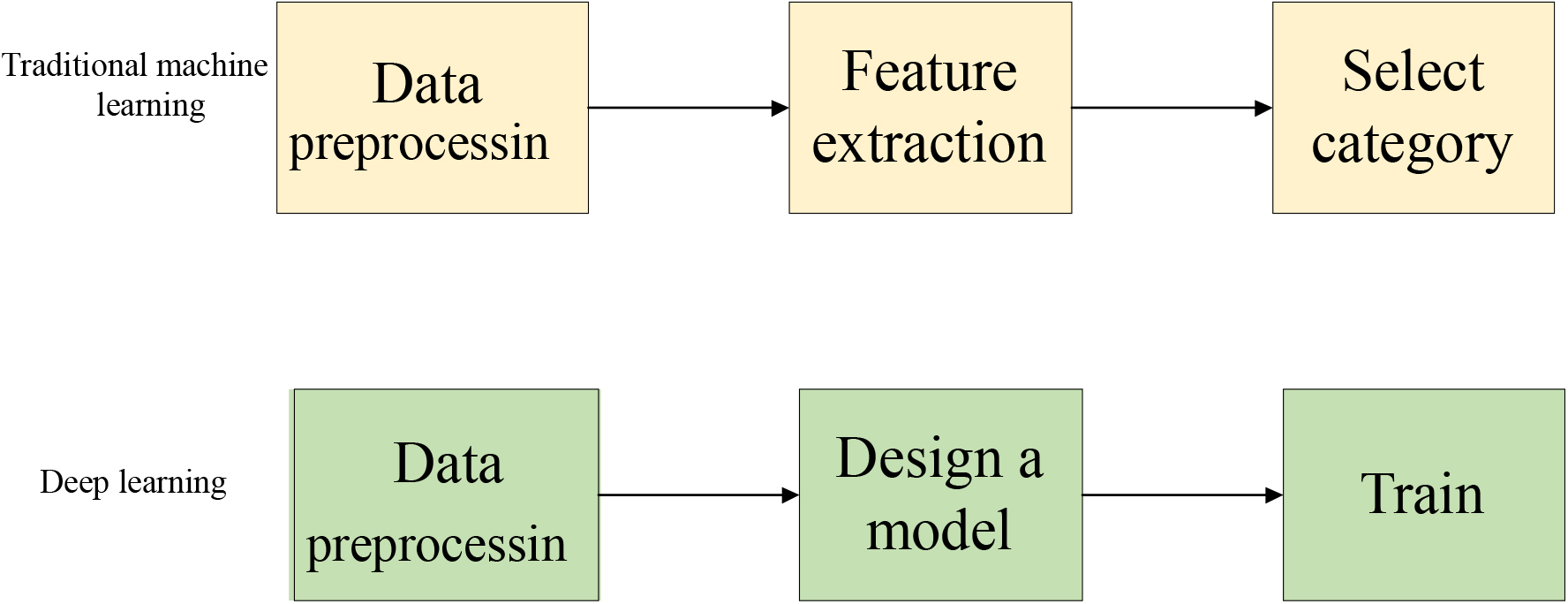
CNN is the most widely used neural network except the DL network, which is based on the traditional network but developed on its basis [5]. The CNN architecture is regular and achievable. It mainly includes input, convolution part, pooling part, and output. The algorithm principle is to input the data set into CNN, then perform data calculation, and output the results after multiple steps such as pooling. A backpropagation technique is used by a convolutional neural system, which is made up of many construction blocks including activation functions, average pooling, or feature maps, to autonomously & seamlessly acquire provides advanced of information. It is widely used in image processing [6, 7], and has played a huge role in environmental detection and medical fields. Simultaneously, CNN can be combined with a variety of algorithms to process data to achieve the desired effect, with a high recognition rate, high accuracy, and good robustness (Fig. 2).
CNN model.
Unlike CNN, which takes images as data input, RNN’s input is a sequence, and then the nodes on the network are connected based on the sequence [8]. A typical kind of artificial neural system utilized in speech recognition as well as natural language translation is the multilayer perceptron. Recurrent neural systems identify trends in the data & utilise them to anticipate the following most probable option. RNN is progressive, has complete parameters, and can accurately remember past data sets, which is superior to other methods when dealing with sequences [9]. RNNs are able to accurately forecast what will happen ahead cos of their system storage, that helps machines to retain key details about the information they obtained. CNNs are good for managing spatial information, whereas RNNs are appropriate for handling chronological or consecutive information (images). Whilst both methods employ sparseness and reuse the identical cells & parameters across period or across several regions of the image, their operations are quite comparable. RNN not only has advantages in image recognition, but also plays a stable role in processing text and video information. Figure 3 denotes the RNN model.
RNN model.
The principle of the AE neural network is to use backpropagation to make the input value equal to the output value, that is,
AE neural network.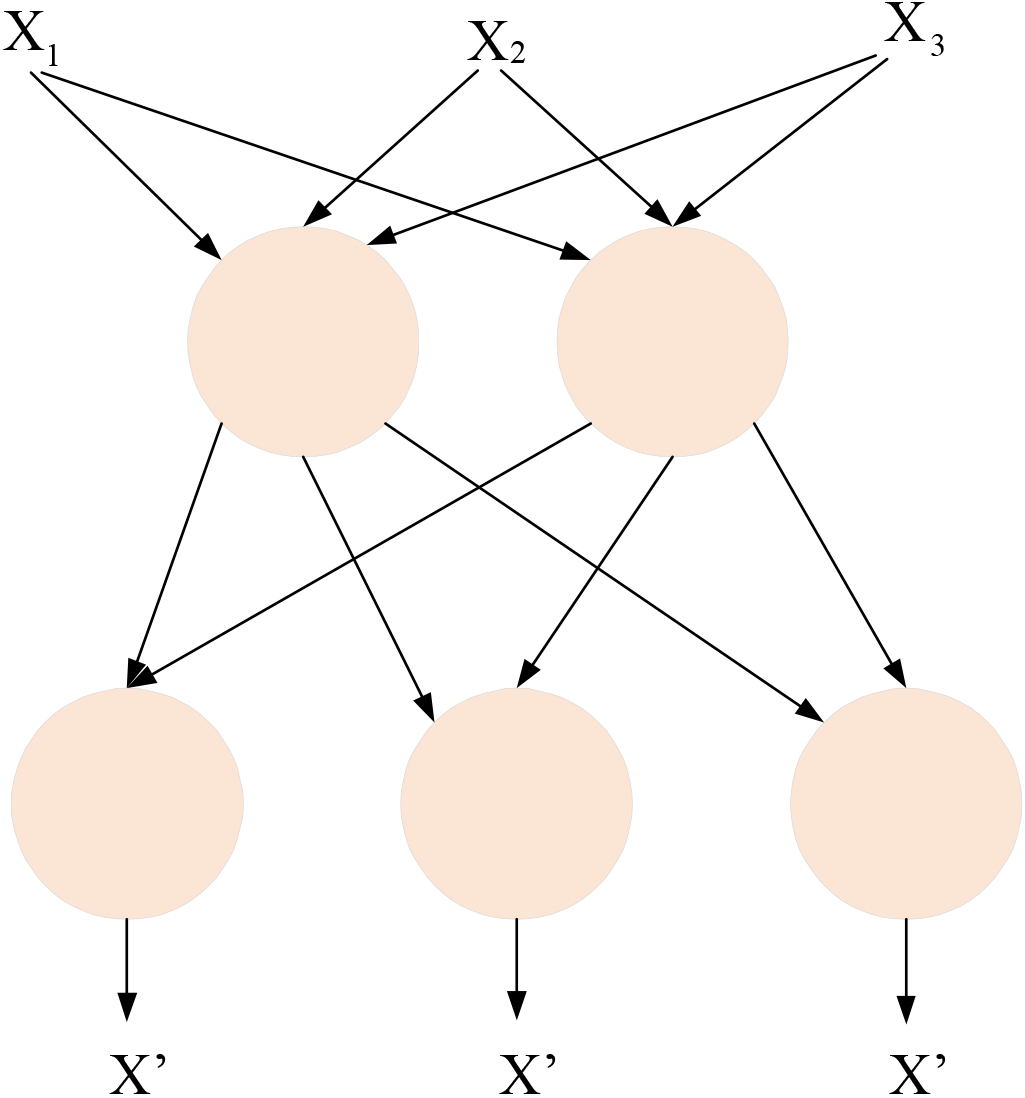
CLSC can be split into the forward supply chain and reverse supply chain. Forward supply chain refers to reducing production costs and improving production efficiency when manufacturing products, saving resources and protecting the environment while meeting production needs. One may dramatically lower those expenses by checking the stock and taking note of everything you’re keeping. Even yet, you’ll be capable of identifying patterns that are causing losses or abandoned stock so that you can begin to make the appropriate adjustments and cutting expenditures. In a closed-loop system, companies continually repurpose the identical resources to produce fresh consumer goods. It’s a method of preserving mineral wealth & keeping garbage out of landfills, and a growing number of businesses are embracing it. The reverse supply chain refers to recovering products from consumers, reprocessing them to maximize their use-value, and trying to dispose of these products in an environmentally friendly and cost-effective manner. The forward supply chain is the process from products to consumers, starting from the source without causing waste of resources, while the reverse supply chain is the process from consumers back to products, trying to prevent waste of resources. In order to control the forward motion of commodities from the source to the final customers, advanced logistical is employed. It is the sequence of steps necessary to take a damaged item from a client and either recycle it or disposed of it. A product from a system that hasn’t yet achieved the end-of-waste condition is referred to as a garbage. An outcome that isn’t a loss but has little worth in comparison towards the commodity or co-products is referred to as a by-product. The common purpose is to protect the environment and achieve both economic and environmental protection. This is the definition and characteristics of a traditional supply chain. CLSC also has the same characteristics, but also has its own characteristics.
System resources are not fixed, but are continuously recycled. CLSC management needs to consider the possibility of the product itself, the environment, recycling methods, recycling methods, reprocessing processes, etc., and needs to be planned in advance. CLSC management must consider cost factors and economic benefits. The responsibility is greater, and it is necessary to protect the environment while ensuring economic benefits. The recycling of waste resources that can be reused has a profound influence on the human living environment. Because the closure of several industrial outlets, economic growth has slowed. The workforce’s backward movement as well as the resulting unemployment problem caused significant development to slow down even more.
The structure of CLSC is divided into several parts, the two most vital parts are the forward supply chain part and the reverse supply chain part, both of which are essential [12, 13]. The value of the reverse supply chain is greater, and more work needs to be done. It needs to ensure the secondary utilization of resources, reduce environmental pollution, and achieve environmentally friendly production. The structure of CLSC is expressed in Fig. 5.
CLSC has 5 different models: “Retailer sells and recycles, Retailer sells but 3rd party recycles, Retailer sells but manufacturer recycles, Manufacturer sells directly and recycles, Manufacturer sells to 3rd party recycling”, as shown in Fig. 6. The five models are shown in Fig. 6. In which the initial stage is between retailer sales with their retailer recycling process. Then, the next process is with the manufacturer recycling. In the third stage, the relationship is taken between the retailer sales with the third-party recycling. While, in the fourth and fifth stages, the manufacturer directly deals with the sales manufacturer and third-party recycling respectively.
The structure of CLSC.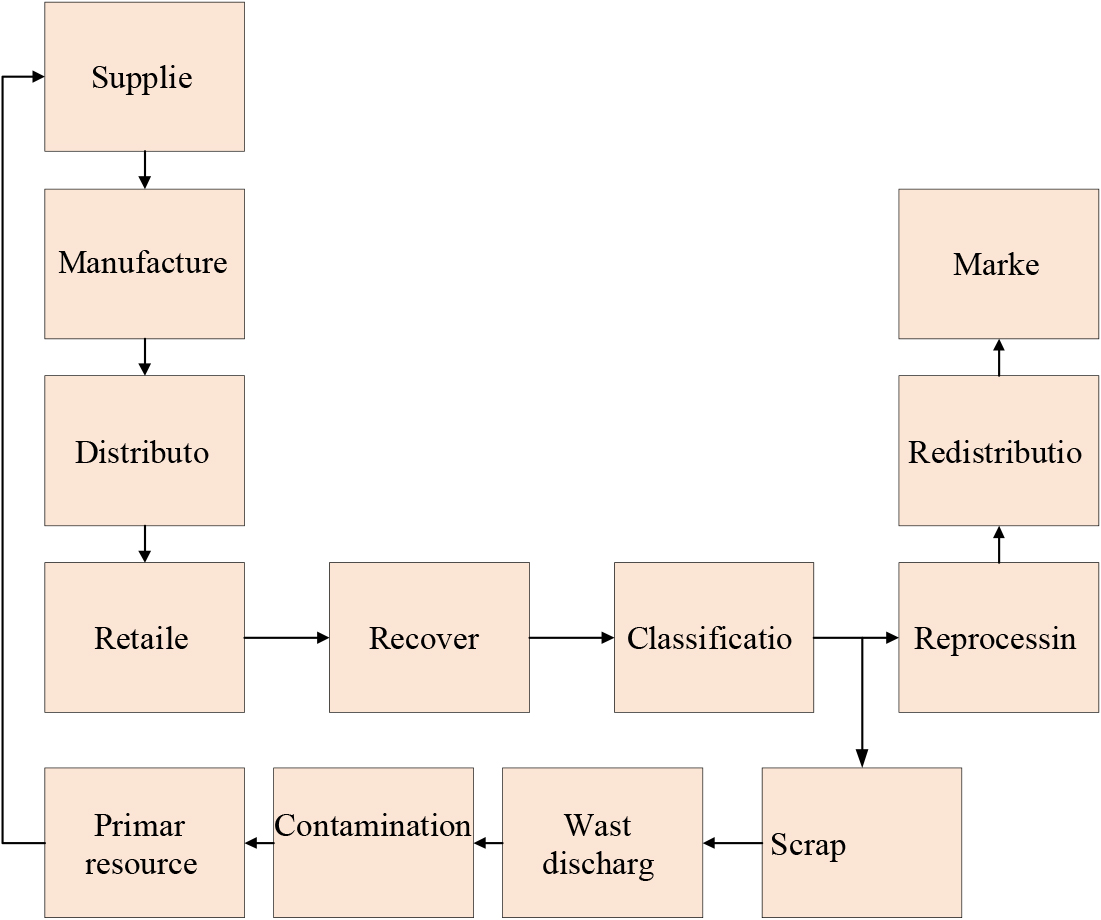
Five models of CLSC.
The complete and efficient operation of the supply chain is inseparable from the pre-determined principles, so that the interests of both suppliers and sellers are guaranteed, and information is transparent and does not favor any party. At the same time, it is necessary to maximize the benefits and achieve a win-win situation. When parties cooperate to satisfy objectives & increase wealth creation during negotiations, a win-win situation is the consequence. If both parties are happy with their arrangement after a win-win discussion, the likelihood of a sustained results is significantly increased. In behavioural economics, a win-win situation, sometimes known as a win-win game or non-zero-sum sport, is one where all players gain via collaboration, negotiation, or collective engagement. Objects in the supply chain all want to realize their own interests, and it is inevitable that there may be differences. At this time, the CLSC contract is required to coordinate the efforts and gains of each object, which is fair and just, efficient and high-quality [14, 15].
There are four basic contracts in a supply chain:
Wholesale price contract: The retailer observes customer demand to determine the wholesale quantity, negotiates the wholesale price with the customer, and then informs the supplier of the price and quantity. Suppliers produce on-demand and sell to retailers, but if the supplier has unsalable products, the retailer is responsible for dealing with them. Repurchase contract: If the retailer has unsalable products, the supplier will repurchase these remaining products, and the repurchase price is negotiated by the supplier and the wholesaler, which provides a guarantee for the retailer. Retailers will also increase the quantity when purchasing products, achieving a win-win situation [16]. Revenue sharing contract: The supplier and the retailer share the profit and revenue by reducing the price of the product by the supplier. But retailers and suppliers share revenue proportionally, which is also a win-win situation. Quantity flexible contract: The retailer first predicts the number of products that can be sold, and then orders it through the supplier. If the predetermined amount is not enough for the customer, then the supplier will increase the production and provide it to the retailer [17].
CLSC management can protect the environment while ensuring economic interests, ensure that economic interests can achieve economic development, and protect the environment to achieve sustainable social development. Nowadays, the world economic situation is becoming more and more severe, and the impact of the epidemic has led to slow economic progress. How to achieve economic development is not just a competition between enterprises, but gradually developed into a comparative competition between supply chains. If CLSC management is good enough, it can bring higher benefits to the enterprise. How to manage the supply chain is inseparable from the checks and balances of the supply chain contract. If the members of the supply chain follow the established contract, then the supply chain contract can realize its value and create a win-win situation. A closed-loop distribution network can assist a company in being green by decreasing manufacturing cost, cutting waste, strengthening brand loyalty, increasing product delivery, and minimising air degradation. Hence, many scholars have begun to study the formulation of supply chain contracts, the purpose is to maximize benefits [18].
The effect of CLSC is remarkable, but its operation is also very difficult. Some items are difficult to recycle. It may be challenging to salvage a lot from an old item due to the products and production procedures producers utilise. As a consequence, recycling waste could be too expensive, and companies would not get back sufficient product to make up for such expenses. Because of the numerous structures and incomplete information, each member has a selfish desire to seek benefits for himself, so the practice process is very hard, and the management of CLSC is very complicated. How to ensure operational efficiency and overall interests is not an easy decision, so it is significant to establish appropriate supply chain management (SCM) measures, such as supply chain contracts [19]. The contract protects the rights and interests of each member and also restricts the behavior of each member, ensuring that each member obtains his due interests and maximizes the interests of the enterprise. At the same time, the responsibilities of each member are clarified and their actions are restrained. Members need to strictly perform the contract, regulate their own behavior, and clarify their own goals. With the contract to check and balance, the development of the enterprise will not be a mess, but in an orderly and orderly manner, guaranteeing the interests of the enterprise in small aspects and maintaining the ecological balance in large aspects, which has many benefits. Ecological environment is described as a condition of dynamical stability inside a population of animals wherein genomic, taxonomic, and ecological processes usually stay constant, susceptible to radical reforms via continue taking by a number of online languages.
Supply chain emergencies and emergency management
Supply chain emergencies
In the 21st century, natural disasters, accident disasters, social security incidents, public health incidents, etc. constitute emergencies in China [20]. At its most basic level, supply chain management (SCM) is the control of the movement of ingredients, information, and money associated with an operation or an item from the acquisition of ingredients to the distribution of the item at the ultimate location. The stability of society and the rapid development of the economy are affected by various emergencies, and the consequences are very serious. The administration has the right to detain anyone it believes to be a risk to the country throughout this time. The environment and social economy on which human beings depend have suffered losses to varying degrees. These losses have varying degrees of impact on the safety of human life and the operations of the supply chain system.
Supply interruption, operation interruption, and sudden demand change constitute the risk of emergencies in the supply chain. The horizontal emergency strategy among supply chain enterprises is adapted to different degrees of operation interruption and supply interruption. When facing the risk of sudden demand change, the most effective emergency strategy is the vertical coordination of enterprises, but the risks of upstream and downstream enterprises in the supply chain can be shared by emergency contracts. Operations upstream would be those via whereby resources enter the organisation. Activities that are downwards involve the transportation of materials from an organization to its clients, typically in the shape of refined products. Only when emergencies occur, people can realize their impact. For example, people have realized that the impact of emergencies on enterprises and SCM is huge through emergencies such as SARS, the Sanlu milk powder incident, and the Qinghai Yushu earthquake. To a certain extent, most of the supply chain imbalances are inevitably caused by the sudden occurrence of emergencies, for example, due to the interruption of logistics capital flow, the interruption of information sharing among members of each node, the disconnection of production and sales, the large change in the scale of product demand, the sudden shortage of raw materials, the substantial increase in production costs, the huge fluctuations in social demand, and the destruction of goods or services have caused a series of chain effects. On the basis of this, in terms of practical significance and guiding role, how to deal with emergencies in the supply chain system has become a hot spot that people pay attention to. So those with greater health effects engage in anti-selection behaviours, anti-selection occurs. The health insurer should raise premiums to cover the extra demands because sick individuals are more likely to join and utilize more services. Because people’s life safety and property are damaged by emergencies, it also leads to limited and asymmetric information when the decision-making is wrong. People’s research on emergency management can guarantee the long-term development of enterprises and the protection of consumer rights and interests.
Supply chain emergency management
Although the probability of sudden emergencies is very low, it is the sudden outbreak of emergencies, the consequences are often catastrophic. The consequences of these emergencies are often manifested as disrupting the flow of resources between the upstream and downstream of the supply chain and affecting the trade between the upper and lower node enterprises to varying degrees. Based on this, it will cause terrible losses to a node enterprise in the supply chain, or even to each node system of the supply chain. With the continuous emergence and occurrence of emergencies, the equilibrium state of the supply chain will be disrupted by them, and even the normal operation will be seriously disrupted. In recent days, the total number of emergencies showing a rising trend is scary. Therefore, for improving supply chain members, the ability to deal with emergencies is not only very important, but also a valuable research direction. On account of scientific analysis of emergencies, emergency management enables emergencies to be effectively controlled by the integrated resources of all parties. The structure for working with each other to prevent, plan for, react to, or recuperate from catastrophes and calamities is known as integrated emergency administration. The purpose of supply chain emergency management is to improve the company’s ability to foresee emergencies, respond to and handle emergencies after incidents, the learn ability in the recovery stage, timely and effectively resolve the critical state, restore the supply chain function as soon as possible, and reduce losses as much as possible. When the supply chain system was initially researched to deal with emergencies, the relevant personnel analyzed the impact of market size changes caused by emergencies on supply chain coordination, and adjusted the original coordination mechanism, to achieve the purpose of supply chain system coordination. CLSC’s coordination of application contracts under emergencies can greatly improve CLSC’s ability to deal with the current frequent occurrence of each node enterprise, and can also better cope with the ever-changing production environment that may be faced. It can also better coordinate the benefits of members at all levels in the CLSC under emergencies and ensure the overall benefits of the CLSC.
Flow of GA and SAA.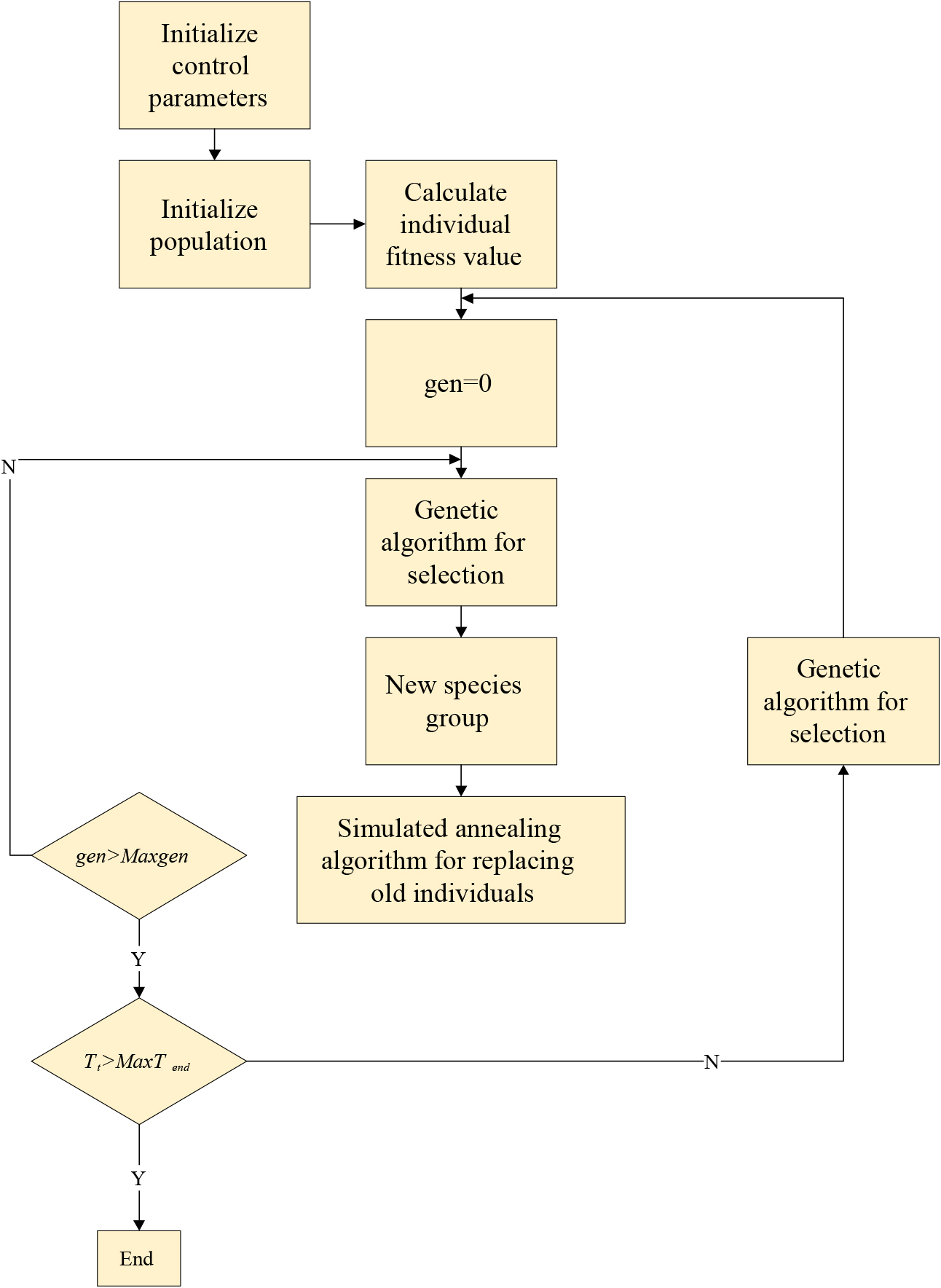
The GA designed and proposed by the evolutionary laws of organisms in nature is a computational model. The natural selection of Darwin’s theory of biological evolution and the biological evolution process of the genetic mechanism are simulated by this model. Natural selection is a process that Darwin as well as a scientific contemporaries theorised causes creation. According to the principle of natural selection, creatures breed greater young than they can withstand in their surroundings. The model searches for the optimal solution by simulating the process of natural evolution. By means of mathematics, the algorithm in biological evolution can be transformed into crossover and mutation similar to chromosomal genes according to computer simulation operation. When solving complex combinatorial optimization problems, compared with some conventional algorithms, the algorithm can calculate the results at a very fast speed, and then can obtain better optimization results. According to this, GA is widely used to solve existing problems in the fields of combinatorial optimization, ML, signal processing, adaptive control, and artificial life. Benchmarking optimal solution issues are resolved using the GA. Different architectures, fertility rates, and crossing operations are assessed using computing testing. The findings are contrasted with those obtained using various approaches from the research.
Simulated annealing algorithm (SAA)
As a basic probability algorithm, the principle of solid annealing is the source of SAA. The principle is to heat the temperature of the solid, and then slowly cool the temperature of the newly heated solid. The flexibility or toughness of a specimen are altered throughout the annealing process as the particles spread inside the crystalline structure as well as the quantity of misalignments decreases. The material recrystallizes when it starts to cool. During heating, the particles inside the solid become disordered as the temperature increases, and the internal energy increases. The particles proceed in an orderly manner during the slow cooling process, reaching an equilibrium state at each temperature, and finally, the particles reach the ground state at normal temperature, and the internal energy at this time is the smallest. The genetic algorithm was observed to yield outcomes that were comparable to those of evolutionary algorithm for one circuitry as well as superior outcomes for the remaining two signals. According to such findings, genetic algorithms might solve the location and sizing more effectively than optimization algorithm.
The combination of GA and SAA makes the algorithm more accurate, and avoids the premature problem of GA and the low robustness of SAA. And a fitness function is designed to enable the algorithm to obtain the optimal solution. The specific algorithm flow is illustrated in Fig. 7.
The process of using software to deal with problems.
The specific algorithm flow is as follows:
Initialization algorithm parameters: population size, number of iterations, crossover and mutation probability, and temperature are all initialized; The fitness value corresponding to each group is calculated to determine the decision variable of each group; The initial value of the loop count variable is 0, that is, gen SAA is used to select new individuals, and to perform genetic manipulation and selection on new individuals; Determine whether gen is less than the maximum number of iterations, if it is less than, then gen Judging whether the temperature is lower than the final temperature, if it is lower, the algorithm ends, if it is not lower, start the cooling operation, and turn to step 3.
The software used for the simulation is VENSIM PLE, which is a dynamics-based installation package that enables modeling operations, features visualization, optimizes and conceives models that have been built, and records data. When evaluating the effectiveness of prediction techniques, measured in many different ways are used, as well as the modelling variable is specified as the proportion of actual to anticipated capability (Qm/Qp). Once information transfer is complete, several kinds of information are examined for quality & consistency as part of the data verification system. It can establish a dynamic model, mark the parameters of each variable, analyze the relationship, and finally establish an equation and record it in the model. In the process of use, the parameters are continuously adjusted to make the model more stable and accurate. The general process of using software to deal with problems is demonstrated in Fig. 8.
Results and discussion
Parameter settings of the model
The parameters of the model are the basic parameters related to the recycling and remanufacturing of a product by a product recycling remanufacturer (Table 2).
Related basic parameters
Related basic parameters
Fitness curve of GA solution.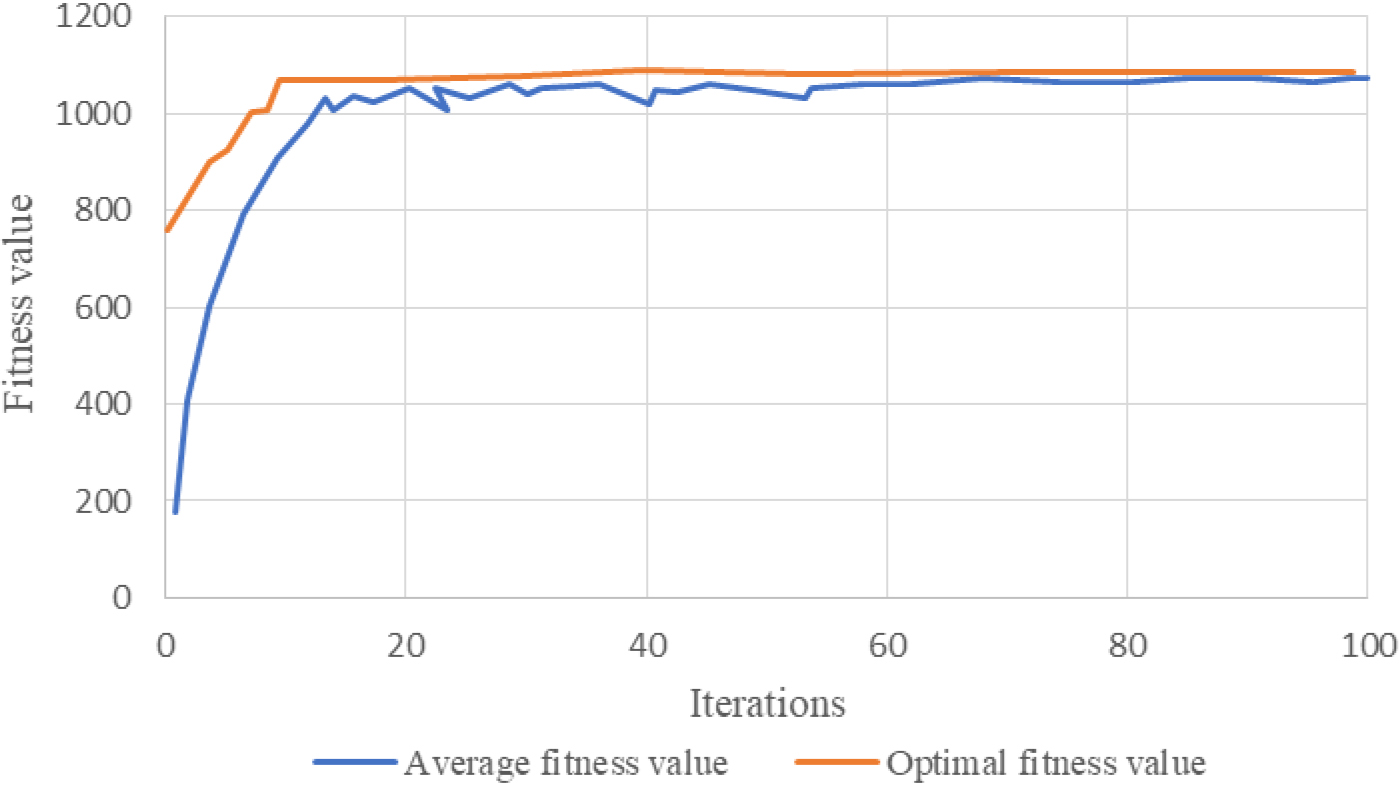
According to the specified parameters and GA, the fitness curve of the shown function can be obtained by programming.
Figure 9 implies that the function begins to converge when the number of iterations is 15, indicating that it has a good convergence effect. And it proves that the application of GA in solving fitness is effective.
Fitness simulation of SAA
According to the specified parameters and SAA, the fitness curve of the expressed function can be obtained by programming.
Fitness curve of SAA solution.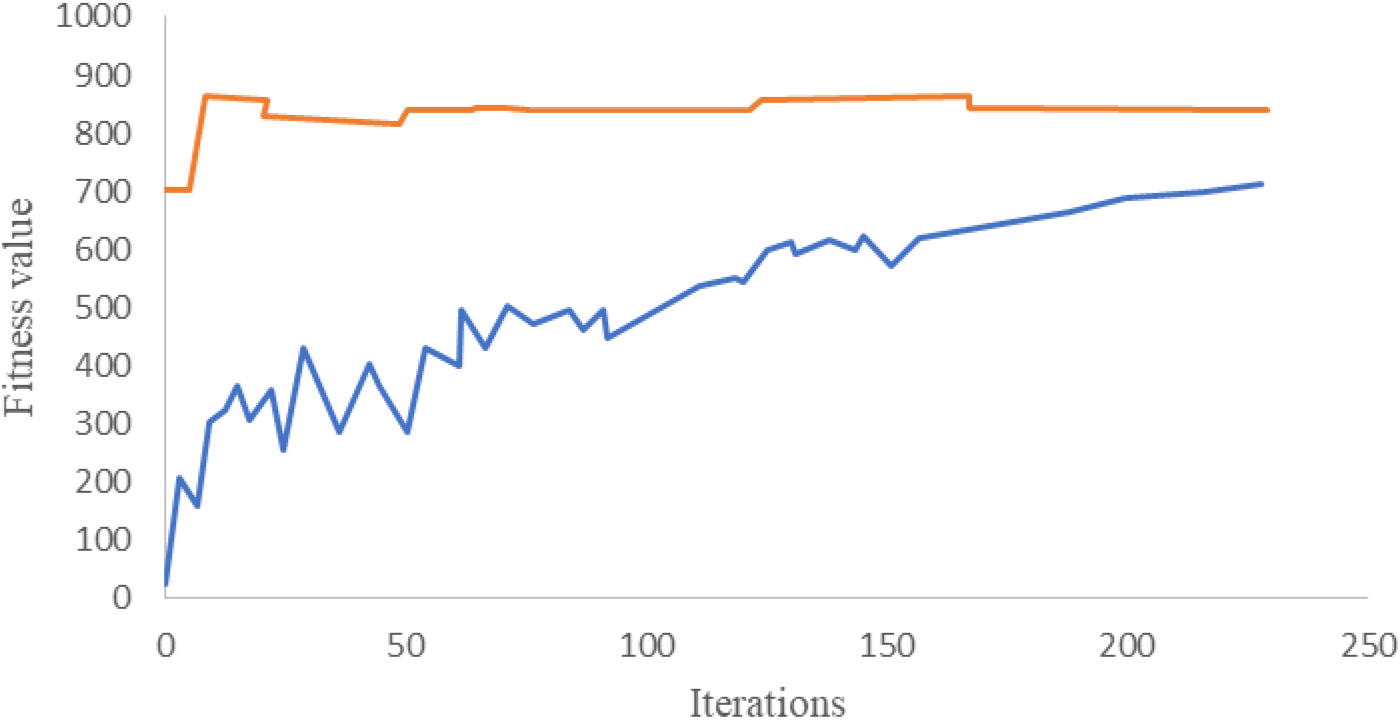
Figure 10 denotes that the function begins to converge when the number of iterations is 160, illustrating that it has a good convergence effect. It also proves that the application of GA in solving fitness is effective.
According to the specified parameters and GSAA, the fitness curve of the displayed function can be obtained by programming.
Fitness curve of GSAA solution.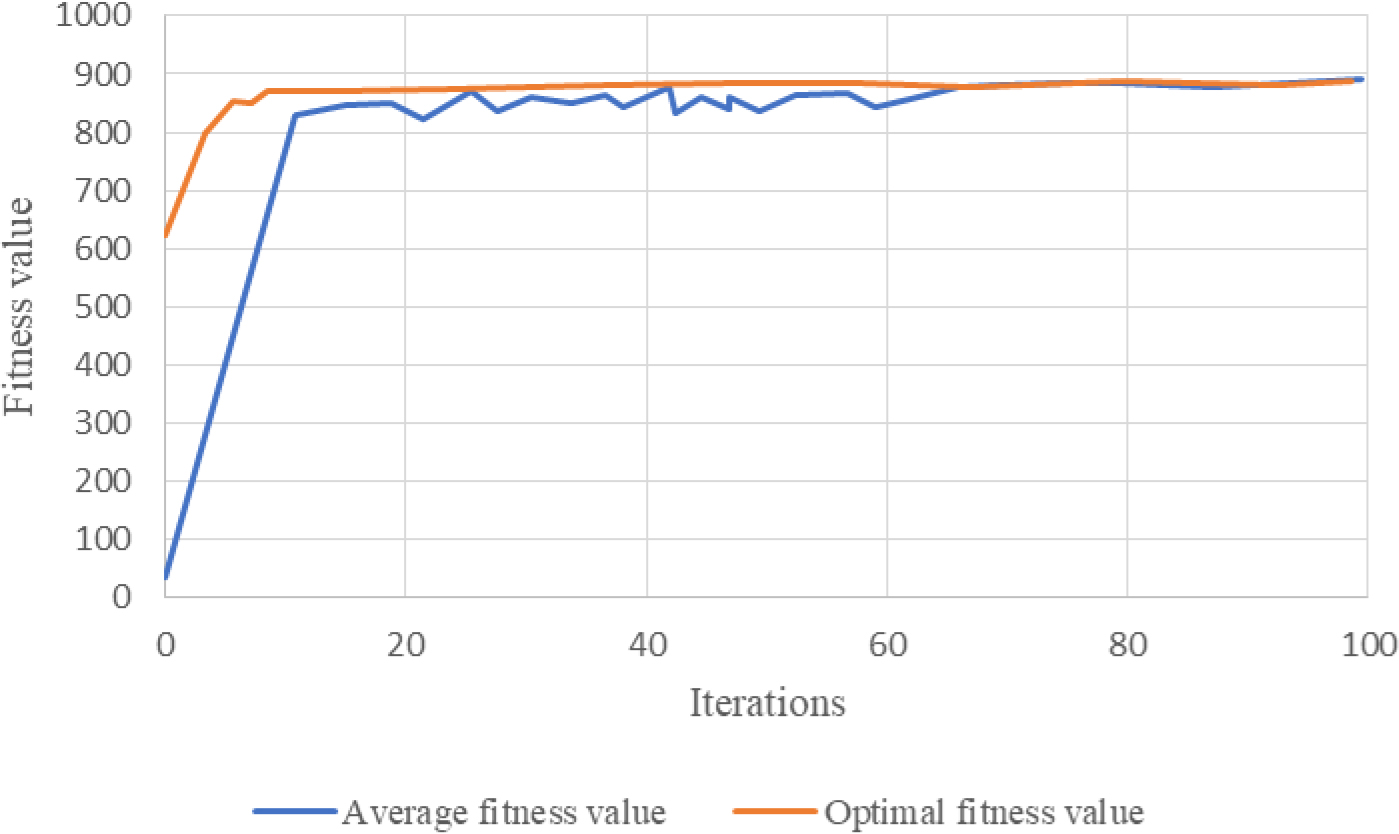
Figure 11 signifies that the fitness function has reached a state of convergence when the number of iterations is about 15 (but the running time of each iteration is much longer than the time of the other two algorithms), and the number of iterations is relatively large. It means that the convergence effect is good, which proves that the designed algorithm is effective. At the same time, the optimal solution and the value of each decision variable can be obtained by using the algorithm. Compared with other algorithms, GSAA can find the optimal solution, but the running time is also the longest. But the defects cannot belittle virtues, and the ultimate goal is to get the optimal solution, and this algorithm can achieve this goal.
With the continuous improvement of science and the growth of society, there are also problems of resource shortage and environmental pollution. People are eager to change this situation. How to achieve sustainable development has become an important problem to be solved. The development of society is inseparable from the supply chain, but the traditional supply chain cannot meet the requirements of sustainable development. The research found that CLSC can protect the environment while economic development, and achieve harmonious coexistence between man and nature. CLSC has been preliminarily studied, and the connotation and characteristics of CLSC are introduced. A management optimization strategy of CLSC by using DL technology is proposed. Simultaneously, GSAA is used for simulation, and the optimal solution is obtained. And this algorithm has good convergence, which provides new ideas for the future development of Chinese enterprises. However, this method has the disadvantage of too long running time under the experimental comparison, which needs to be improved in future research.
Funding
No funds, grants were received by any of the authors.
Data availability
All data generated or analysed during this study are included in the manuscript.
Code availability
Not applicable.
Author’s contributions
Chunjuan Gao. contributed to the design and methodology of this study, the assessment of the outcomes and the writing of the manuscript.
Footnotes
Conflict of interest
There is no conflict of interest among the authors.