



Abstract
BACKGROUND:
The aging of the population is a historical stage that many countries must experience, and the current design and development of elderly health care products can no longer meet the increasing demands of the elderly.
OBJECTIVE:
The impact of ethical design of elderly health care products on socio-economic development is explored to provide a theoretical basis for the development direction of elderly health care products.
METHODS:
In this study, a questionnaire survey is conducted on 268 middle-aged people to record the subjects’ willingness to purchase elderly health care products and their reasons, concerns, satisfaction, and future demands.
RESULTS:
Among the subjects, 181 people have purchased elderly health care products, accounting for 67.36%; the subjects are more concerned about the quality and safety of elderly health care products, accounting for 92.56% and 91.85% respectively, followed by operability (68.46%); the problems encountered by the elderly using elderly health care products are mainly operational problems, accounting for 65.37%; and high safety (86.13%) and good quality (79.55%) are the subjects’ main demands for future development of elderly health care products. 73.61% of the 30–40 year old subjects said that the intelligent aged care products were very good; 65.89% of the 41–50 year old subjects said that the intelligent aged care products were very good; 52.67% of the 51–60 subjects thought that intelligent elderly care products were very good; and 47.82% of the subjects whose age were over 60 expressed their willingness to try intelligent elderly care products.
CONCLUSIONS:
Good quality and high safety are the main demands for the future development of elderly health care products. The elderly health care products manufactured based on the people-oriented design ethics concept can greatly meet the aspirations of the elderly to pursue a happy later life, and promote the vigorous development of the elderly industrial economy.
Keywords
Introduction
Population aging refers to the increase in the proportion of the elderly population, which is caused by the decrease in the number of young people in the total population due to the decrease in fertility rate and the increase in life expectancy. Organic drop is the reverse of natural growth and occurs when there are greater deaths than births, which might result in a shrinking population. It is estimated that the global aging population may reach 2 billion by 2050, and the pension problem is becoming increasingly serious [1, 2, 3]. Generally speaking, when a person enters the old age, the consumption demand such as clothing, education, food, and beverage gradually decreases, while the cost of medical care and medical treatment increases obviously, which provides a strong condition for the promotion of elderly health care products [4, 5]. Technologies like home automation, enhanced as well as VR technology, and smart watches can assist careers in providing healthcare to an elderly society. Multiple-choice questionnaires or heavily organized data processing are used by qualitative researchers to gather evidence. Comparatively, qualitative approach heavily relies on how the investigator interprets the healthcare companions’ perceptions. The duty of health care products is to meet the demands of the physical and mental health of the elderly, take care of their lives, and assist health care, which refer to the elderly’s needs, such as clothing, food, housing, transportation, health, rehabilitation, and entertainment, and it can reflect the entire society’s ethical and moral quality and sense of responsibility through performance and materials [6, 7, 8]. Complicated relationships, end-of-life requests, upholding regard & decency, encouraging autonomy, and ensuring the person’s safety are just a few examples of the many contexts wherein moral problems could arise. With the help of elderly health care products, some elderly people can get rid of their dependence on others, reduce the care burden of other family members, and promote the harmonious development of the society [9]. Transportation help frequently tops the list of items that elders most frequently require. Considering movement difficulties, a prime importance is the first step in maintaining elders secure, if they require assistance getting around when out and about or inside their home. A senior’s household is the largest significant social grouping to that they are typically connected through a deep intimate bond and an interchange of positive advantages. Close relatives are required to assist an elderly relative in their difficult circumstances first and primarily [10]. Therefore, it is of social practical significance to actively promote the adoption of elderly health care products
Compared with developed countries, many developing countries have a relatively late start in the elderly industry, and their markets are mixed and varied. In undeveloped countries, ageing occurs more quickly owing to little nutrient-rich food, excessive effort, etc. Additionally, citizens in developing nations experience psychological and physical frailty. As a result, the definition of old age differs between nations. A mixed economy is one that is structured with a combination of free-market as well as communist components and that falls between the spectrum among free markets or complete communism. As a result, the elderly health care products have negative problems such as poor functionality, lack of humanization in design, excessive packaging, and poor quality [11, 12, 13]. Human factor, failing of humans, and technology malfunction are the leading reasons of information leakage. This phenomenon not only fails to meet the care demands of the elderly, but also greatly restricts the development of the elderly care industry. Therefore, it is very important to make use of the design ethics to conduct moral constraint and guidance on product design [14]. Design ethics is not a strange term for modern design, and it requires that the design should comprehensively consider the factors of people, environment and resources, focus on long-term interests, promote the beautiful, kind and genuine aspects of human nature, and make use of ethics to achieve the balance and coordination of people, environment and resources [15, 16]. Giving senior people the chance to working for extended stretches of time while still participating in volunteering, caring, & artistic endeavors can have favorable economic and social effects and lessen a portion of the financial strains associated with ageing populations. In terms of elderly health care products, design ethics can shape the new design intention of products and correct the design values based on the physiological, psychological, and behavioral characteristics of the elderly, so as to obtain the people-oriented design concept [17, 18]. A sufficient number of nutrient-rich meals, spick-and-span apparel, a pleasant place to live, restful sleep, excellent cleanliness and sanitation, a satisfying job, a reasonable salary, recreational activities, and reliable conveyance are among the physiological demands [19]. From the perspective of design ethics, the impact of optimal design of elderly health care products on economic and social development is discussed in this study. The design elements for economic development are lower the level of excessive noise, colors to use and stay away from, communicate effectively to get around care hurdles, offer patients power over the illumination besides reduce the chance of tripping.
In summary, there are major problems in the design and development of elderly health care products. How to meet the increasing demands of the elderly is the focus of many scholars. Based on the design ethics concept and combined with the physical, psychological, and behavioral demands of the elderly, the “Questionnaire on Elderly Health Care Products” is compiled and adopted to the middle-aged and elderly groups to analyze the impact of elderly health care products on the development of the entire society influences. To recognize senior patients’ health issues and deliver suitable communal treatment strategies with such a growth resulting infrastructure. To increase the ability of physicians and paramedical staff, in addition to family careers, to provide older patients with treatment.
Methods
Selection of research subjects
In this study, middle-aged and elderly people (over 30 years old) in Sichuan area are selected as the research subject. A total of 298 questionnaires are issued and 279 are recovered. After the invalid data are eliminated, there are 268 questionnaires remained, with a total recovery efficiency of 89.93%.
Questionnaire
The phrase basic moral concepts relate to such overarching conclusions that support particular moral directives and assessments of social cognition. Based on the design ethics concept and combined with the physical, psychological, and behavioral demands of the elderly, the “Questionnaire on Elderly Health Care Products” is compiled. Surveys are frequently employed to gauge consumer satisfaction with a given commodity or business. For instance, surveys that inquire about personal views seeking treatment are typically used to examine user perceptions on quality in the medical and community service sectors. As shown in Table 1, the questionnaire includes the subjects’ basic information; the subjects’ purchase intention and reasons for elderly health care products; the subjects’ concern about elderly health care products; analysis of subjects’ satisfaction with the quality, practicability, safety, and operability of elderly health care products; the problems encountered when the elderly use elderly health care products; and the demand of subjects for the future development trend of elderly health care products.
Questionnaire on elderly health care products
Questionnaire on elderly health care products
In this study, SPSS19.0 statistical software is used for data entry and analysis, the count data is expressed as a percentage (%), and statistical methods are mainly general descriptive statistics. Investigators from a variety of fields utilize the application software SPSS (Statistical System for the Society Studies) for the mathematical evaluation of complicated information. Sampling techniques, likelihood, simple random dispersion, margins of error, as well as testing of hypotheses encompassing one or two mechanisms as well as ratios, situational tabular, connection, or simple sequential reversion are among the topics covered. Graphical representations and mathematical summarizing are also covered. In a report that explains the large dataset as well as its observations, description metrics explain, illustrate, and summarize the fundamental characteristics of a database discovered in a research article. It aids in improved data comprehension for analyzers.
Results
The basic situation of the subjects
The basic situation of the subjects is shown in Figs 1–3 below. In terms of the gender of the subjects, the proportion of female (64.65%) is significantly more than that of male (35.35%); in terms of age, 51–60 years old people account for the largest proportion (40.15%), followed by the population of 41–50 years old (26.63%); in terms of address of residence, the proportion of urban population (78.99%) is significantly more than that of rural areas (21.01%).
The subject’s gender.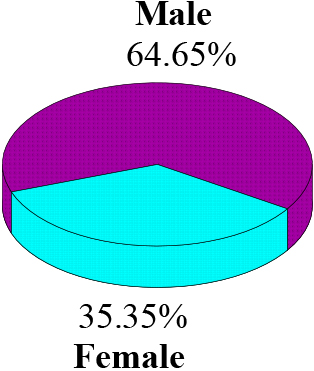
The subject’s gender based on largest proportion and population.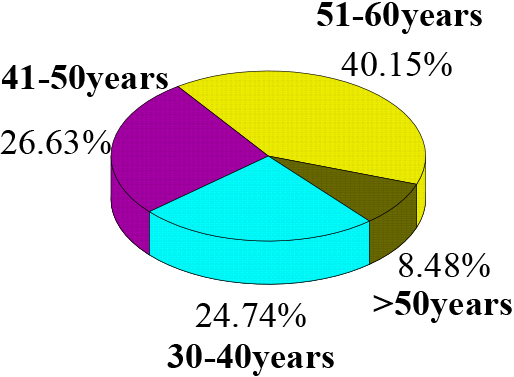
The subject’s address of residence.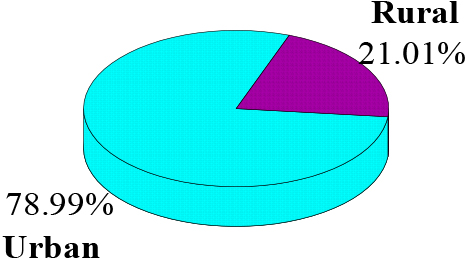
As shown in Figs 4 and 5 below, 181 of all subjects have purchased elderly health care products, accounting for 67.36%; while 87 people have never purchased elderly health care products. Among the subjects who have never purchased it, 23.16% choose quality problems as the reason, 21.45% think they are expensive, 13.75% think the products are out dated, and 56.36% selected other reasons.
Subjects’ concerns about elderly health care products
As shown in Fig. 6 below, the subjects are more concerned about the quality and safety of elderly health care products, accounting for 92.56% and 91.85% respectively; followed by operability, accounting for 68.46%; and subjects choosing price, brand, and appearance account for 36.96%, 30.88%, and 6.83% respectively.
The subject’s willingness to purchase elderly health care products.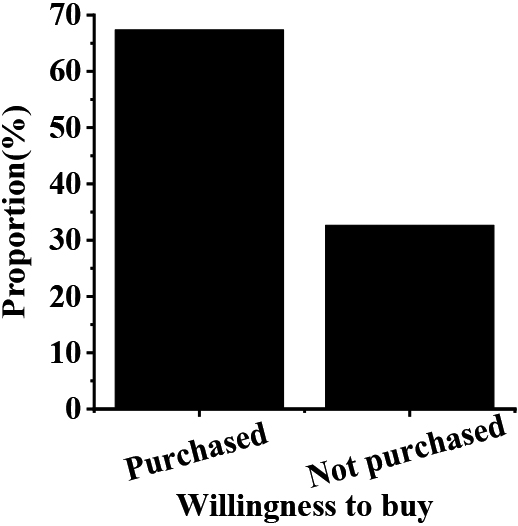
The analysis of the reasons why the subjects don’t purchase elderly health care products.
Subjects’ concern to elderly health care products.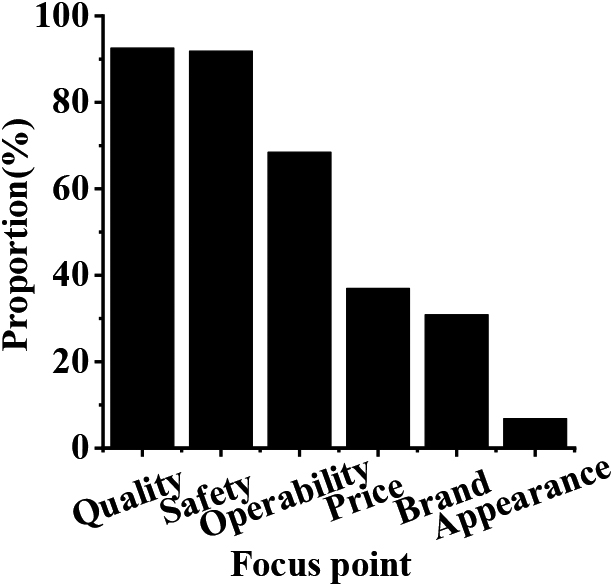
The subject’s satisfaction with the quality of elderly health care products.
The subject’s satisfaction with the practicality of elderly health care products.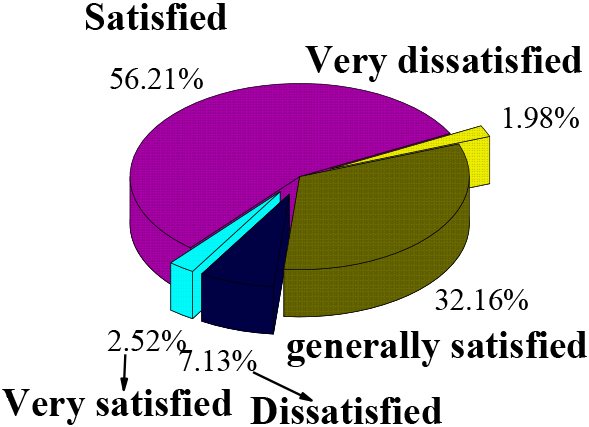
The subject’s satisfaction with the safety of elderly health care products.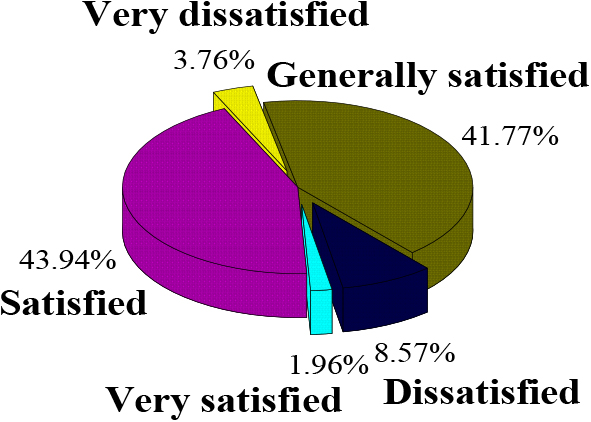
The subject’s satisfaction with the operation of elderly health care products.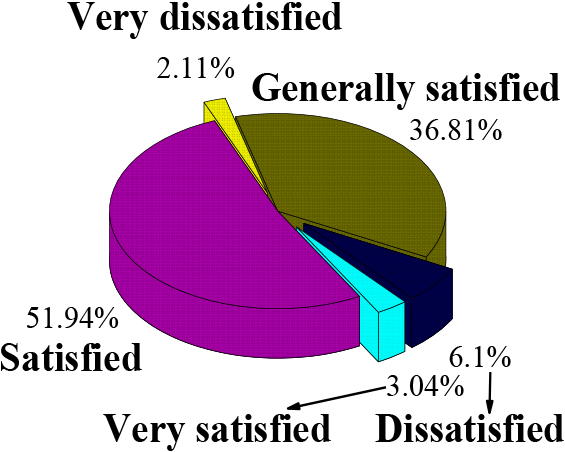
As shown in Figs 7–10 below, subjects’ satisfaction with the quality of elderly health care products are mainly at levels of satisfied and generally satisfied, accounting for 40.14% and 45.47%, respectively; while the proportion of those who are very dissatisfied, dissatisfied, and very satisfied is relatively small. Subjects’ satisfaction with the practicability of elderly health care products are mainly at levels of satisfied and generally satisfied, accounting for 56.21% and 32.16%, respectively; while the proportion of those who are very dissatisfied, dissatisfied, and very satisfied is relatively small. Subjects’ satisfaction with the safety of elderly health care products are mainly at levels of satisfied and generally satisfied, accounting for 43.94% and 41.77%, respectively; while the proportion of those who are very dissatisfied, dissatisfied, and very satisfied is relatively small. Subjects’ satisfaction with the practicability of elderly health care products are mainly at levels of satisfied and generally satisfied, accounting for 51.94% and 36.81%, respectively; while the proportion of those who are very dissatisfied, dissatisfied, and very satisfied is relatively small.
Views of subjects of different ages on intelligent elderly health care products
Smart devices are typically the supportive items that are the greatest apt to benefit an older parent. Prescription alarms, tablet conveyors, and telemedicine services can all help with healthcare. As shown in Fig. 11 below, 73.61% of subjects aged 30–40 express that intelligent elderly health care products are very good, time-saving and efficient, while 26.39% express that intelligent elderly health care products are not good and the operation is complicated; 65.89% of subjects aged 41–50 express that intelligent elderly health care products are very good, time-saving and efficient, while 34.11% express that intelligent elderly health care products are not good and the operation is complicated; 52.67% of subjects aged 51–60 express that intelligent elderly health care products are very good, time-saving and efficient, while 47.33% express that intelligent elderly health care products are not good and the operation is complicated; and 47.82% of subjects older than 60 express that intelligent elderly health care products are very good, time-saving and efficient, while 52.18% express that intelligent elderly health care products are not good and the operation is complicated. Muscle toning not just to improves and preserves one’s functional fitness for everyday tasks, while it often fosters pleasure, conviction, as well as a greater feeling of empowerment, which are all essential for thinking positive for one’s life situation.
Views of subjects of different ages on intelligent elderly health care products.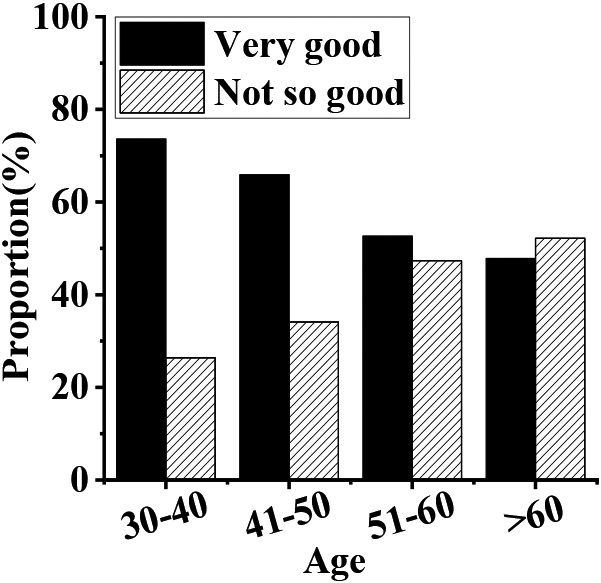
The two most significant improvements that can undertake are to your fitness and diet routine. It’s rarely too long to begin, regardless of how long you’ve been sporty. A balanced diet and regular exercise are beneficial at any time. These positive habits make your joints and muscles stronger as they mature. Information from a variety of input modality, including sound, vision, textual, among others, are required for human-computer interaction (HCI). Such communications’ variable measurement quantities and temporal periods create difficulties for a people conceptual representation to properly communicate with personal computers. The method through which a technology transitions from an error are caused to a nonproblem condition is what we refer to as conflict resolution. One such concept has a number of significant consequences as well as numerous critical regions of ambiguity. Each of these issues will be covered in succession. As shown in Fig. 12 below, problems encountered by the elderly when using health care products mainly include operation problems, human-computer interaction problems, interface interaction problems and functional problems, among which operation problems account for 65.37%, functional problems account for 37.71%, human-computer interaction problems account for 25.92%, and interface interaction problems account for 24.66%.
Problems encountered by the elderly in using elderly health care products.
As shown in Fig. 13 below, subjects’ demands for the future development trend of elderly health care products mainly include properties such as high safety, good quality, low price, energy conservation and environmental protection, and soothing effect; and 86.13% choose high safety, 79.55% choose good quality, 48.26% choose cheap price, 35.08% choose soothing effect, and 27.11% choose energy conservation and environmental protection.
Analysis of the demands of the subjects on the future development trend of elderly health care products.
The aging of population is an inevitable stage in the development of human society, and it is a symbolic event of human progress from short life to long life. How to actively respond to the challenges brought by aging society can reflect the degree of social civilization [20, 21, 22, 23]. As a people becomes older, their agility as well as coordination gradually deteriorate, making it harder to complete daily chores. This can progressively make individuals concern about themselves and keep individuals from engaging in group events, developing activities, or enjoying hobbies. Analyzing the societal and cultural causes of diseases and disorders is a crucial task for sociologists of healthcare. It offers details about the causes of the problems, mitigation strategies, and precautionary strategies. The elderly industry in many developing countries is developing late, and the design and development of elderly health care products have great deficiencies. Based on the design ethics concept, the “Questionnaire on Elderly Health Care Products” is compiled, and the questionnaire survey analysis on the middle-aged and elderly population (over 30 years old) in Sichuan area is conducted. The results showed that the number of female subjects (64.65%) is significantly higher than that of male subjects (35.35), which is because that females care more for the elderly, and they care more about elderly health care products. 51–60 years old account for the largest proportion (40.15%), followed by 41–50 years old (26.63%). In other words, the older the subjects, the higher the relationship with the elderly health care products [24]. In terms of residence, the proportion of urban residents (78.99%) is significantly higher than that of rural residents (21.01%), this is because the urban population has a clearer understanding of various elderly health care products and attaches more importance to the health care of the elderly than the rural population [25].
Among all the subjects, 181 people have purchased elderly health care products, accounting for 67.36%; 87 people have never purchased elderly health care products; which is similar to the research results of Ramsey et al. [26]. The demand for aging care products in China is actually very large, especially after entering the aging society, the basic demand for aging products has greatly increased, and many ordinary families are still willing to buy suitable care products for the elderly. Among the subjects who have never purchased it, 58.36% are worried about quality, price, and product innovation, while 56.36% chose other reasons. According to public data, there are only more than 2,000 kinds of elderly care products in my country, which are completely inadequate. Regardless of the overall scale or the size of the monomers, the relevant manufacturing companies are rather small, so it is difficult to meet the current demands of the elderly. The subjects pay more attention to the quality and safety of elderly health care products, accounting for 92.56% and 91.85% respectively; followed by operability, accounting for 68.46%, which is similar to the research results of Awais et al. [27]. Therefore, elderly health care products should increase their innovative development and design to produce high-quality, high-security, and affordable and efficient products, to meet the real demands of elderly users, which is conducive to the stable development of society [28]. The satisfaction of the subjects with the quality, practicality, safety, and operability of elderly health care products is mainly concentrated on levels of satisfied and generally satisfied, which indicates that there is still much room for improvement in current elderly health care products. 47.82% of subjects aged over 60 years indicate that they would like to try intelligent elderly health care products, while another 52.18% think that intelligent elderly health care products are not good and the operation is complicated, and they worry about these difficulties. Therefore, it can be concluded that the elderly is less receptive to high-tech products and less willing to try new intelligent nursing products, which is different from the research results of Sjögren et al. [29] that intelligent product brought great convenience to young people, but the more complicated operation procedures for the elderly often made them overwhelmed. The contemporary society, particularly family ties and wellness, were discovered to be among the most crucial elements for a favorable impression of life satisfaction as a consequence of evaluating the approach. Using OCR, AI, & ML features, the Digitalization program Nanonets intelligently extracts unorganized as well as organized information from PDF files, photos, or scanning objects. The design of elderly care products requires comprehensive consideration of the psychological needs of the elderly. Problems encountered by the elderly when using elderly health care products mainly include operational problems, human-computer interaction problems, interface interaction problems, and functional problems; among them, the proportion of operational problems is the highest, reaching 65.37%, which indicates that the design of elderly health care products cannot endue too complex functional operations, but should focus on simplicity and practicality. Every kind of exercise is beneficial to start with, including strolling, farming, performing, dog walking, and engaging in organized or professional sports. Adopting healthy eating habits as you get senior can help you avoid long-term ailments as well as speed up your recuperation from sickness. The subjects’ demands for the future development trend of health care products for the aged mainly include high safety, good quality, cheap price, energy saving and environmental protection, and soothing effect; among them, 86.13% is for high safety, 79.55% for good quality, 48.26% for cheap price, 35.08% for soothing effect, and 27.11% for energy conservation and environmental protection. Therefore, it can be inferred that the elderly health care products required by customers not only have higher safety and better quality, but also can be priced appropriately and can comfort the souls of the elderly [30].
The aging of the population is already an extremely serious social problem that many countries need to face, which seriously affects the development of society, economy, and other aspects, and the design of elderly health care products occupies a considerable proportion of the aging industry [31]. With the development of social economy, China’s overall manufacturing level is very high, but the manufacturing level of elderly products is still low. In China, the increasing elderly development has cultural, economic, and economic implications. The dependence proportion as well as the frequency of several chronic conditions have both grown with the expansion of the elderly community. So, well and so what much we survive can be greatly influenced by socioeconomic status, including money, schooling, work, neighborhood security, or social resources. These elements have an impact on our capacity to choose healthier choices, pay for accommodation and healthcare, control anxiety, or other things. On the one hand, it is because the market for elderly products is too small and there is not enough consumption power. Enterprises are not willing to increase investment; on the other hand, it is because the elderly are pursuing low-cost products and conforming elderly care habits. Therefore, the design of China’s aging products doesn’t take into account the real needs of the elderly, and there are various phenomena of unevenness, causing social conflicts [32]. Conflict is frequently sparked by competing over few commodities. Three principles make up the hypothesis: The various individuals who make up the nation struggle with one another for goods. Communities might appear to be cooperative, yet social groupings constantly compete for power as individuals seek their individual goals. The majority of software is not designed with elders’ unique requirements in mind; smart phones can be challenging to be to utilize the, credentials & login details can be complex or difficult to recall, while choices & customer layouts can be overpowering. Based on the above analysis, it can be concluded that the elderly health care products manufactured according to the physiological, psychological, and behavioral demands of the elderly, combined with the people-oriented design ethics can greatly satisfy the aspirations of the elderly to pursue a happy life in old age, promote the vigorous development of the aging industrial economy, and benefit the stability and harmony of the society. If it allows them to communicate with the individuals they value, commonplace activities such popping by for tea or relaxing in the yard may be all that beloved member requires to be pleased. The important terms, in general, have been linked to community members’ satisfaction in previous research: melancholy, functional capacity, socio-physical surroundings, family and social, & community engagements. Interact first with your loved ones-friends, relatives, colleagues, and neighbors. Concentrate on finding a creative, sympathetic method to handle any discord in the lives as well as on helping others in the neighborhood. Maintaining one internal sense of equilibrium will assist you in feeling in tune with one another, so be certain to do so as well. Harmony and tranquility are essential for the existence and advancement of humanity and can help create a harmonious and stable societal environment. Without unity and tranquility, the globe will undoubtedly disintegrate and go back to the days of the forest, when the powerful preyed on the vulnerable.
Principal results
The number of female subjects (64.65%) is significantly higher than that of male subjects (35.35); 51–60 years old accounted for the largest proportion (40.15%), followed by 41–50 years old (26.63%); and urban population (78.99%) is significantly higher than rural population (21.01%).
Among the subjects, 181 people (67.36%) had bought elderly health care products, and 87 people had never purchased elderly health care products. Among the subjects who have never purchased it, 23.16% choose quality problems as the reason, 21.45% think they are expensive, 13.75% think the products are out dated, and 56.36% selected other reasons.
The subjects pay more attention to the quality and safety of elderly health care products, accounting for 92.56% and 91.85% respectively, followed by operability, accounting for 68.46%. Among subjects older than 60, 47.82% express that they are willing to try to use intelligent elderly health care products, and 52.18% believed that intelligent elderly health care products are not good and the operation is complicated. Problems encountered by the elderly when using elderly health care products mainly include operation problems, human-computer interaction problems, interface interaction problems, and functional problems, among which operation problems account for the highest proportion, reaching 65.37%.
86.13%, 79.55%, 48.26%, 35.08%, and 27.11% of the subjects’ requirements for the future development trend of elderly health care products are high safety, good quality, low price, smoothing effect, and energy conservation and environmental protection.
Limitations
The number of research subjects selected in this study is too small and there are regional limitations, which does not support the argument of international results and conclusions, and the specific design of a nursing product using design ethics has not been specified. In the future, the sample size should be enlarged and the actual product design process should be used to further explore the influence of elderly health care products on the whole social and economic development.
Comparison with prior work
Many related research literatures are based on the qualitative discussion of the concept and design theory of elderly health care products, lacking corresponding data support. Therefore, based on the concept of design ethics and combined with the physiological, psychological, and behavioral demands of the elderly, the “Questionnaire on Elderly Health Care Products” is compiled for quantitative analysis, so as to improve the design and demonstration of elderly health care products
Conclusions
Good quality and high safety are the main requirements for the future development of elderly health care products. According to the physiological, psychological, and behavioral demands of the elderly, the elderly health care products manufactured in conjunction with the human-oriented design ethics can greatly meet the aspirations of the elderly in pursuing a happy later life, promote the vigorous development of the elderly industrial economy, and are conducive to social stability and harmony.
Funding
The authors acknowledge China Panxi health industry research center, Sichuan Provincial Key Research Base of Philosophy and Social Sciences (Grant: PXKY-YB-202101), Social development and social risk control research center, Sichuan Provincial Key Research Base of Philosophy and Social Sciences (Grant: SR22A10), Talent Introduction Project of Xihua University (Grant No. Z202110), Sichuan Grassroots Public Cultural Service Research Center, Sichuan Provincial Department of Education Humanities and Social Science Key research base (Grant: JY2020B02).
Data availability statement
No datasets were generated or analyzed during the current study.
Footnotes
Conflict of interest
The authors have no conflicts of interest to declare.