



Abstract
In China the number of accidents and deaths in construction industry is increasing rapidly in recent years. Cause analysis is important to reveal the main factors contributing to the accidents, and therefore improve the safety mechanism for accident reduction in future. In this paper, 653 construction safety accidents in China which are fully investigated and formulated by a set of country-specific factors are used as the source data of potential causal relationships among the factors. By utilizing association rules a total of 13 main factors contributing to accident causation are explored, and 9 factors significantly impacting on the severity of accidents are identified. The discovered association rules offer scientific grounds for Chinese construction safety management and decision support. The novelty of this study is to present a different perspective during cause analysis in which the factors impacting the construction site safety and the consequences of construction accidents are revealed respectively.
Introduction
The statistics of construction safety accidents in China from 2004 to 2019.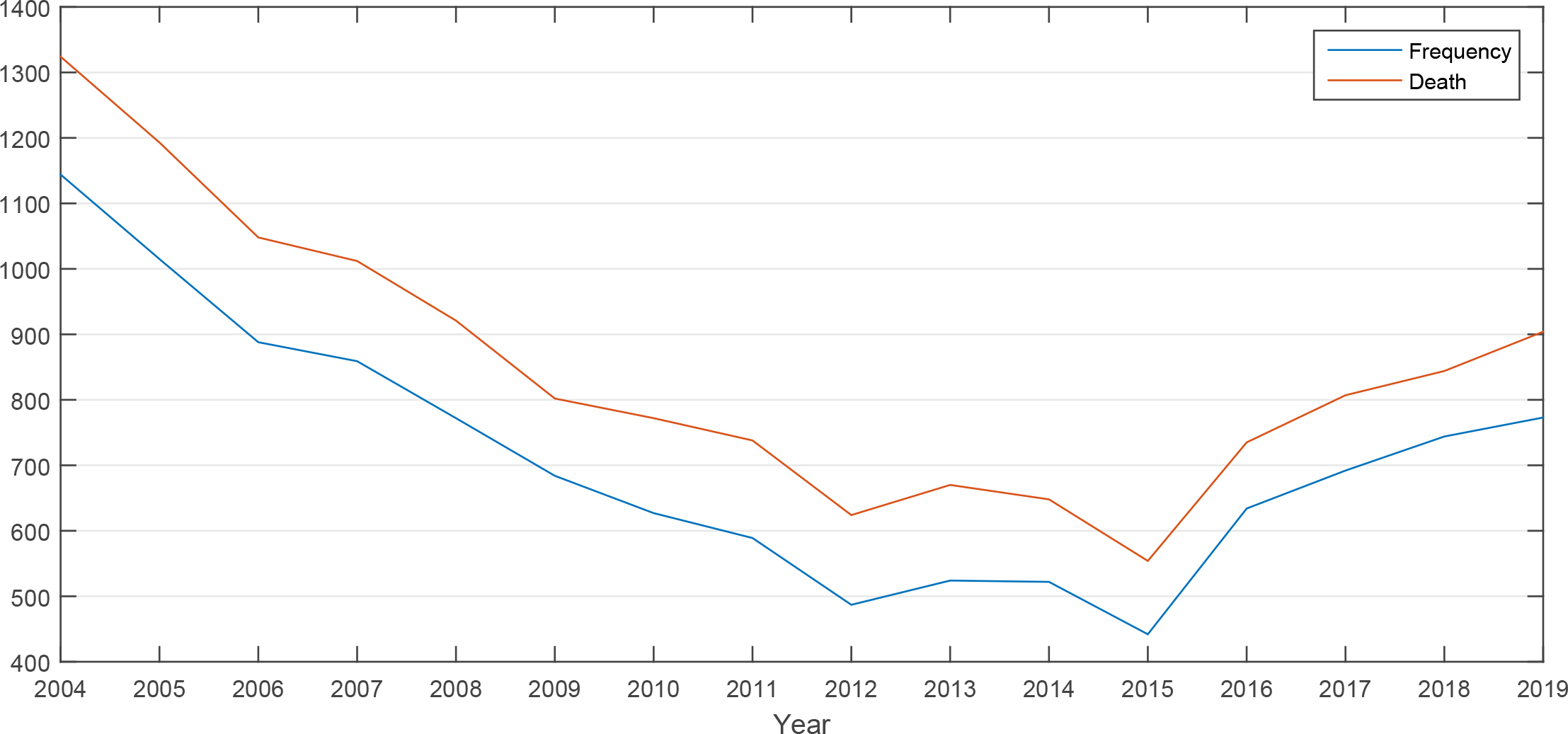
Construction is one of the high-risk industries in the world with frequently occurred safety accidents. Construction safety accidents are the abrupt events in building engineering activities which injure personal safety and health, damage equipment and facilities, cause economic losses, and result in a temporary suspension or even termination of construction activities. In the past years, around 340 million occupational accidents occurred annually resulting in 2.3 million injuries and 6000 deaths daily all around the world [3]. In China construction industry has become the pillar industry of national economic development at the cost of numerous casualties. The number of accidents and deaths in construction industry increases rapidly ranking the first in all fields of industrial production since 2012. Figure 1 shows the number of construction accidents and deaths in China from 2004 to 2019. Since the release of regulations on safety production management of construction projects in 2004, construction enterprises began to pay attention to safety management so that the number of construction accidents and deaths gradually declined with a small range of fluctuations. However the absolute number of accidents and deaths per year remains at a high level and rises rapidly since 2015, reaching 773 construction accidents and 904 deaths in 2019. Some typical constriction safety accidents are listed in Table 1. The high incidence of construction safety accidents leads to a large quantity of casualties and property losses due to the concentrated hazard sources, large proportion of migrant workers in low education level, frequent change of on-site workers, etc. It is therefore a vital issue of China to enhance the safety situation of construction industry and improve the safety mechanism of construction so as to promote the stable improvement of construction safety production.
According to accident cause theory, accident is the product of factors under the action of catalysis and criticality. Cause analysis which focuses on extracting the accident mechanism from the analysis of typical accidents, identifying the critical causing factors contributing to accidents, reducing the accident rate, eliminating the potential danger, ensuring the health and safety of employees remains a topic of significant importance in construction industry.
In the literature Heinrich noted that human unsafe behaviors, unsafe working conditions and equipment were important causes of industrial accidents [10]. Haslam regarded workers fault, workplace problems, PPE defects, construction materials, and defects in risk management as common factors of construction accidents. Other causing factors include emergency management factors (e.g., insufficient protection equipment, incomplete accident prevention plan) [3, 16], worker factors (e.g., unqualified worker, noncompliance behavior, inadequate execution of construction plan) [22], safety inspection factors (e.g., insufficient safety supervision, safety inspection, risk identification ability, and safety training) [7, 20], project planning factors (e.g., unqualified contractor, multi-level subcontractors) [9, 19], etc.
A diversity of methods were proposed to analyze the causing factors of accidents, such as Domino Model, HFACS (Human Factors Analysis and Classification System), STAMP (Systems Theoretic Accident Model and Processes), Haddon, TMAR (Theoretical Model of Accident Reaction), FTA (Fault Tree Analysis), Delphi, safety risk network [27, 29, 33]. In [15] the contribution of construction project features to accident causation was investigated including project nature, construction method, site restriction, project duration, procurement system, design complexity, level of construction, and subcontracting. Zhang et al. evaluated the applicability of four contemporary accident causation models, namely, STAMP, AcciMap, HFACS, and 2–4 Model [30] on a typical construction accident. Alomari et al. investigated the key factors including site conditions, human, environmental, social, economic, organizational, regulatory, psychological, and ergonomic factors contributing to construction worker safety using Delphi technique [2]. In [31], 39 factors on construction accidents are evaluated by grey relational analysis method and classified into three levels: critical, important, and ordinary. However the relationship among these factors hidden the accidents was not investigated in the study.
In fact the construction accidents are usually caused by the violation of safety restrictions [13] which may trigger other factors [18]. Association analysis is intended to explore the possible relationship among objects from a large quantity of data. In a broad sense, the relationship can be concurrent relationship, causal relationship, temporal relationship etc. Association rules initially proposed to study the goods that are often purchased at the same time in the customer transaction database [1] has be broadly applied in diverse fields [6, 12]. Association rules able to discover the hidden relationship or patterns from data are found effective and prospective in cause analysis of various accidents, including railway accidents [17], construction accidents [23], marine accidents [32], fire accidents [11], work zone crash casualties [26], underground coal mine accidents [21], and elevator accidents [24], etc.
Some construction safety accidents in China
Although the risk factor analysis in construction accidents is an over-researched problem addressed by updated AI-driven machine learning algorithms in the literature [4, 5, 34], there still remains value to investigate the relationship behind the causing factors due to the variability and complexity of this problem. In addition, to the best of our knowledge there is no formal comparative analysis between the factors causing construction accidents and those causing the severe accidents. In this paper 653 typical safety accidents in construction industry of China are statistically analyzed. The construction safety accidents are fully investigated and formulated with a set of country-specific factors and then used as the source data of association analysis. The main causes contributing to construction safety accidents, particular severe accidents are identified from the 39 common factors using association rules. The beneficial rules can be used in safety inspection to reduce the occurrence of causing factors and improve the accident prevention measures. The contributions of the paper are (1) find out the main factors contributing to accident causation in Chinese construction industry; (2) analyze the importance of causing factors with respect to severe safety accidents; (3) propose some strategies for accident reduction based on the findings.
The rest of this paper is organized as follows. Section 2 outlines the methodology of the study. Section 3 describes the data of construction safety accidents. Section 4 is devoted to some analytic results. Finally, section 5 concludes the paper along with some suggestions and highlights the future directions.
Rank of construction safety accidents in China
Let
Some quantitative criteria including support, confidence and lift are used to define the statistical significance of association rules. Support is defined as the percentage of records in
The confidence of
Given a data set
The lift of
In this study, association rules are used to analyze the relationship among causing factors (items) hidden in the construction accidents (records).
Data description
In Chinese Production Safety Law the severity of construction safety accidents is defined as four ranks with respect to the number of deaths and serious injuries, and direct economic losses as shown in Table 2. In this study, the first three ranks (i.e., very serious accidents, serious accidents, and major accidents) are combined to severe accidents due to the minority of data. The data is organized based on the source released in [31] by adding the severe construction safety accidents since 2016 reported in the website of Ministry of Emergence Management and The State Administration of Work Safety. The resulting data set contains 653 accidents, including 221 severe accidents and 432 general accidents. From the perspective of accident type, falling from height, collapse, object strike, and lifting injury are the main accidents in construction industry, accounting for up to 80% of the total number.
Property and causing factors of construction safety accidents
Property and causing factors of construction safety accidents
As described in [31] the construction safety management system is composed of 6 subsystems, namely Organisation and behaviour (OB), Technical management (TM), Resource support (RS), Contract Management (CM), Safety training (ST), and Emergency management (EM). Each subsystem can be divided into several factors and subfactors. Consequently, each record contains the accident type (Collapse, Object strike, Lifting injury, Electric shock, Poisoning choke, Vehicle injury, Mechanical injury, Drowning, Explosion, Fire), the severity (general, severe), and 39 causing factors. As seen from the percentage values in Table 3, the top four critical causing factors, namely O32 Non-compliance of workers, O22 Default of safety engineers, T23 Inadequate safety inspection, T13 Inadequate execution of construction plan, account for 55.13%, 45.18%, 44.41%, 37.06% respectively in the total construction safety accidents. As outlined in Fig. 2, construction safety accidents caused by four to eight factors account for 70.6% in all accidents. The rough relationship among the factors can be represented by Venn diagram, a common way to show the mathematical or logical relationship between different sets. For instance, Fig. 3 outlines the co-occurrence of the four critical causing factors in accidents. Due to the complexity of causing analysis for construction safety accidents, it is of necessity to explore the hidden relation from the data. In this study, association analysis is used to reveal and quantify the co-occurrence relationship behind the factors from the data.
Number of causing factors of 653 construction safety accidents.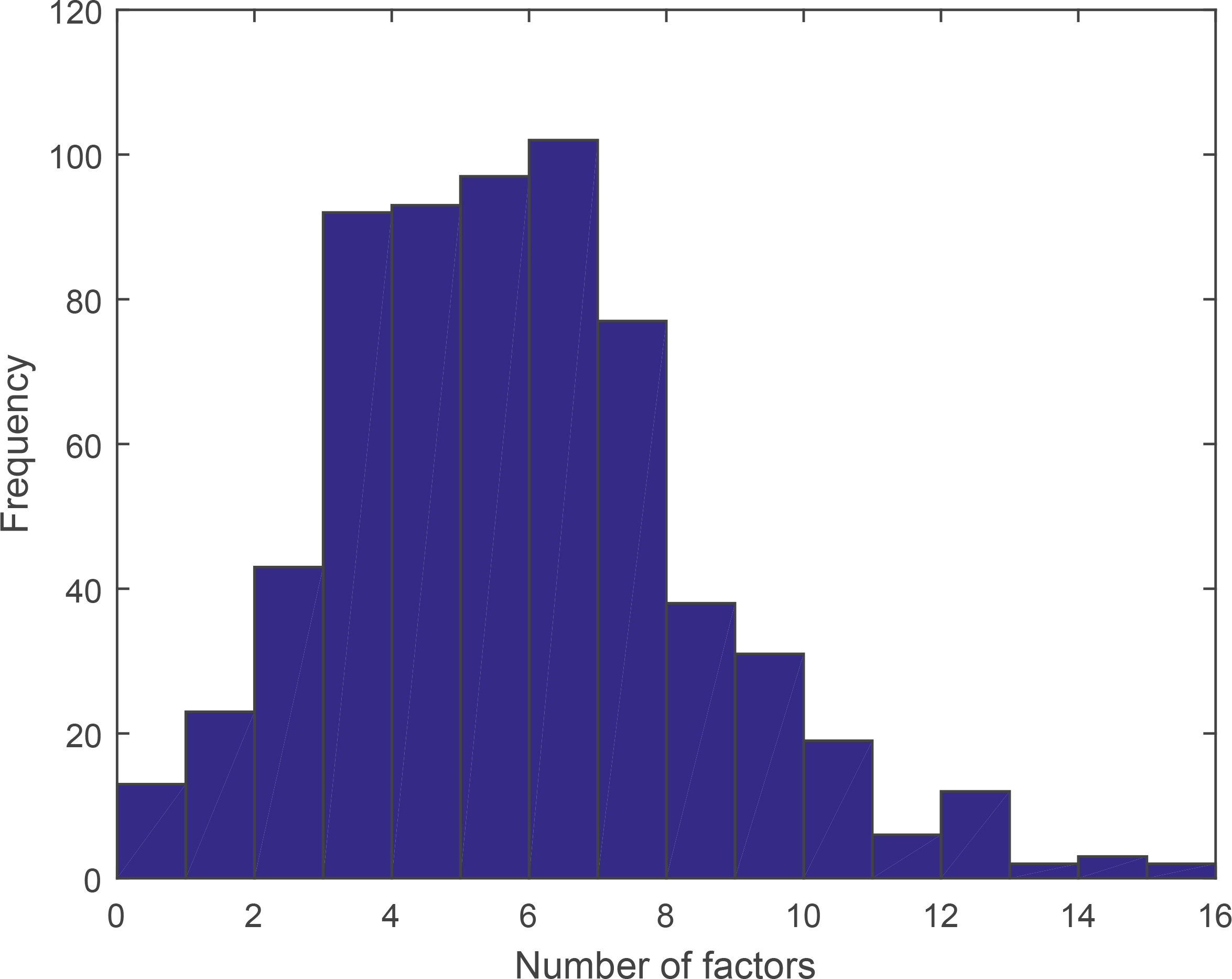
Venn diagram of four critical factors.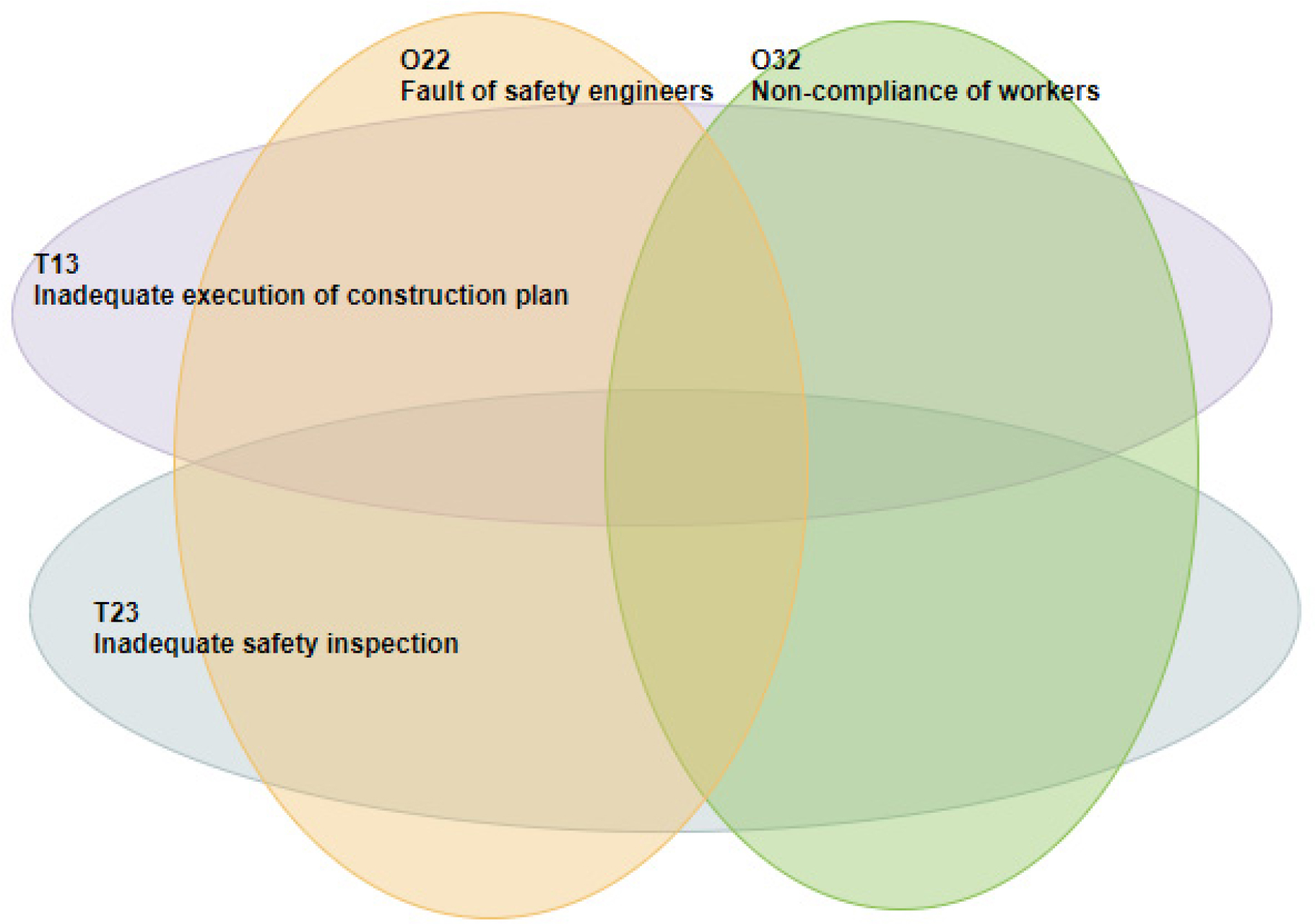
In this section, association rule mining is utilized to recognize the hidden relationship behind the causing factors of construction safety accidents, and then evaluate the importance of factors with respect to the severity of accidents. Figure 4 depicts the overall methodology, including (1) data collection and pre-processing, (2) cause analysis of construction site accidents to recognize the critical factors and closely related causing factors, (3) significant factors causing severe construction accidents, (4) comparative analysis and safety strategy discussion.
Flowchart of the proposed methodology.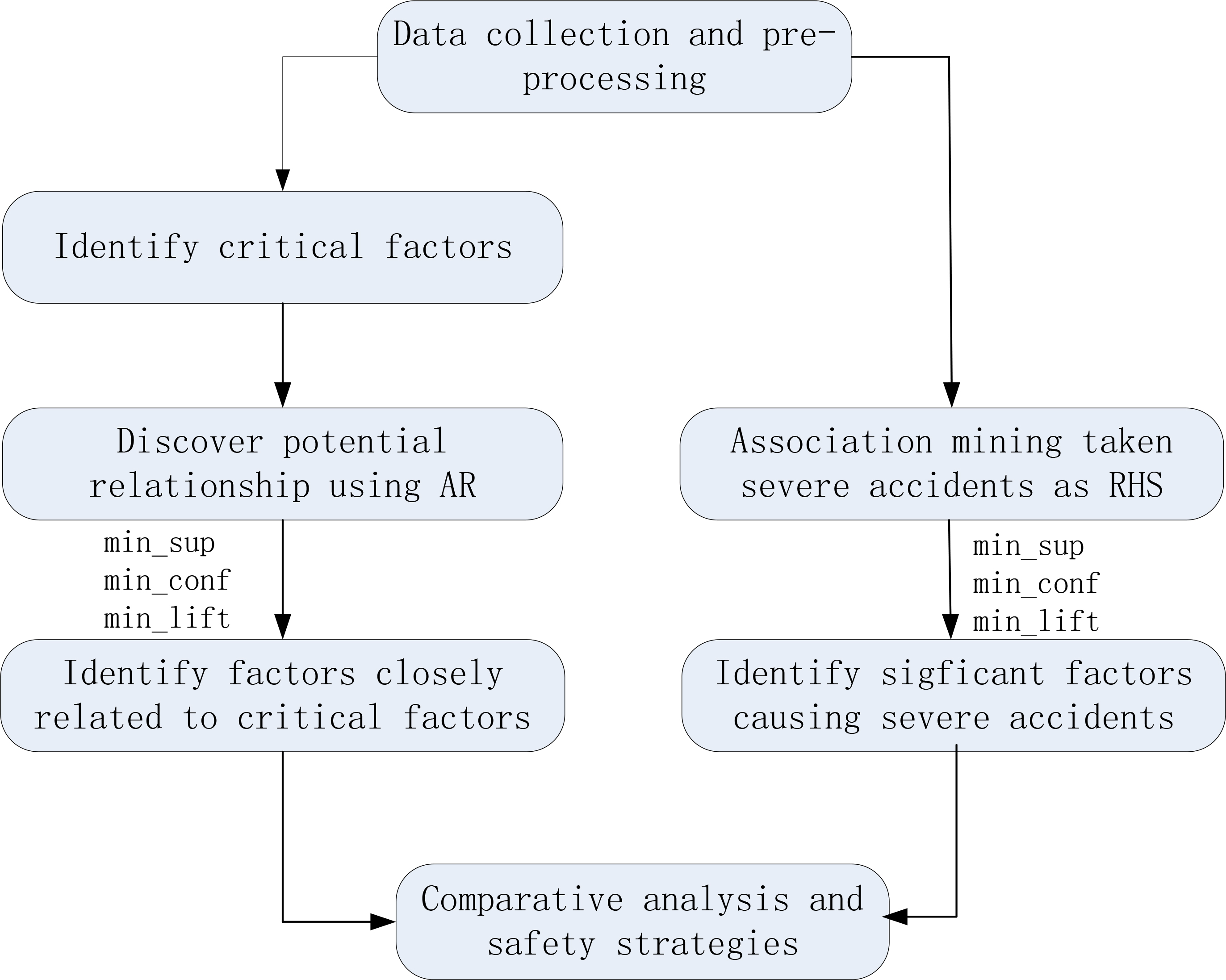
Association rules of construction safety accidents
Grouped matrix of 37 association rules.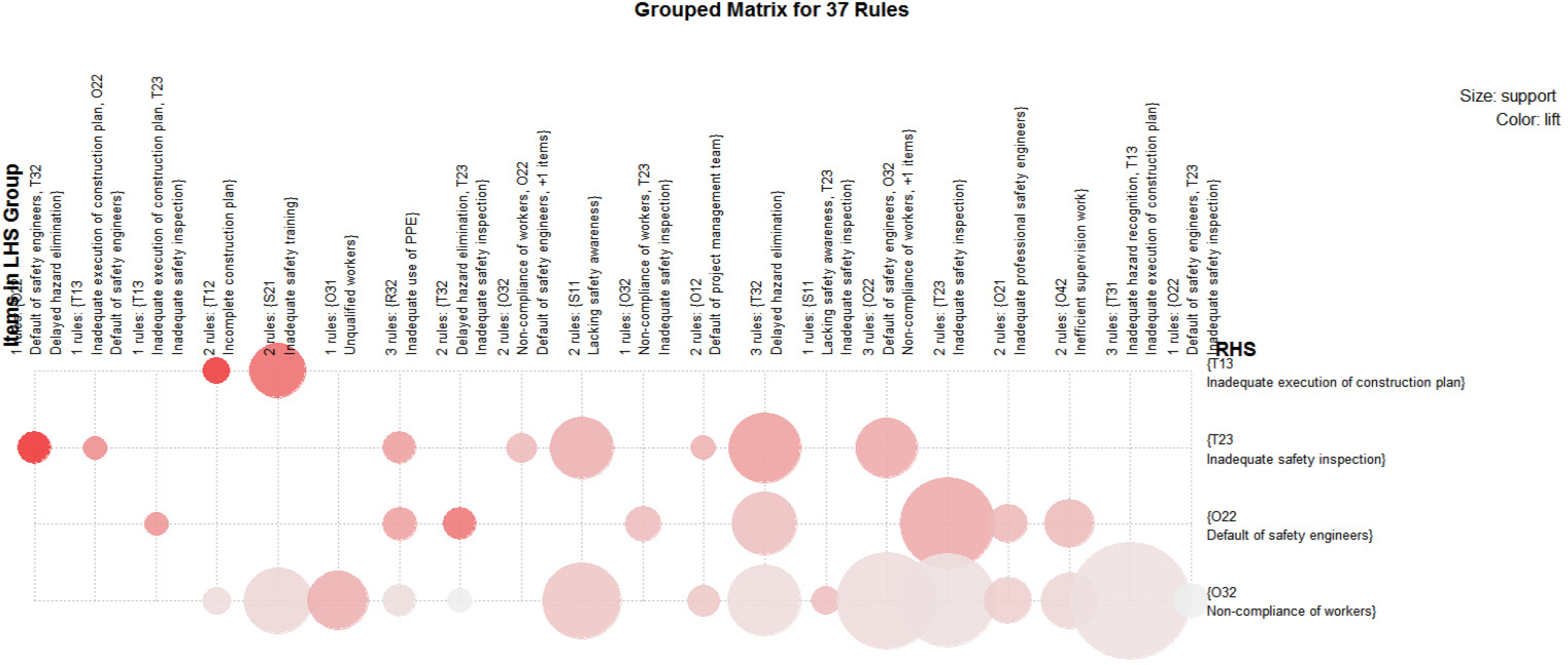
The Apriori algorithm implemented in arulesViz package [8] is used to find association rules from construction safety accidents. By setting min_sup as 0.1 and min_conf as 0.5, a total of 37 rules are found implying the relationship among the causing factors. Figure 5 shows the grouped matrix of rules which clusters the itemsets shown in the
In general, The found association rules are beneficial to improving the efficiency of safety inspection and optimizing the safety early warning system. Some evidences can be found from the results. (1) T12 Incomplete construction plan and S21 Inadequate safety training have positive impact on T13 Inadequate execution of construction plan with the lift up to 1.464 (Rule 2) and 1.362 (Rule 3) respectively, that is to say, the incomplete construction plan or the inadequate safety training may lead to the inadequate execution of construction plan. (2) The causing factors O31 Unqualified workers, O12 Default of project management team, T23 Inadequate safety inspection, and S11 Lacking safety awareness will probably lead to O32 Non-compliance of workers (Rule 14, Rule 21, Rule 23, and Rule 24). For example, if the workers are unqualified, then they are probably non-compliance with the confidence
Network visualization: O22 default of safety engineer.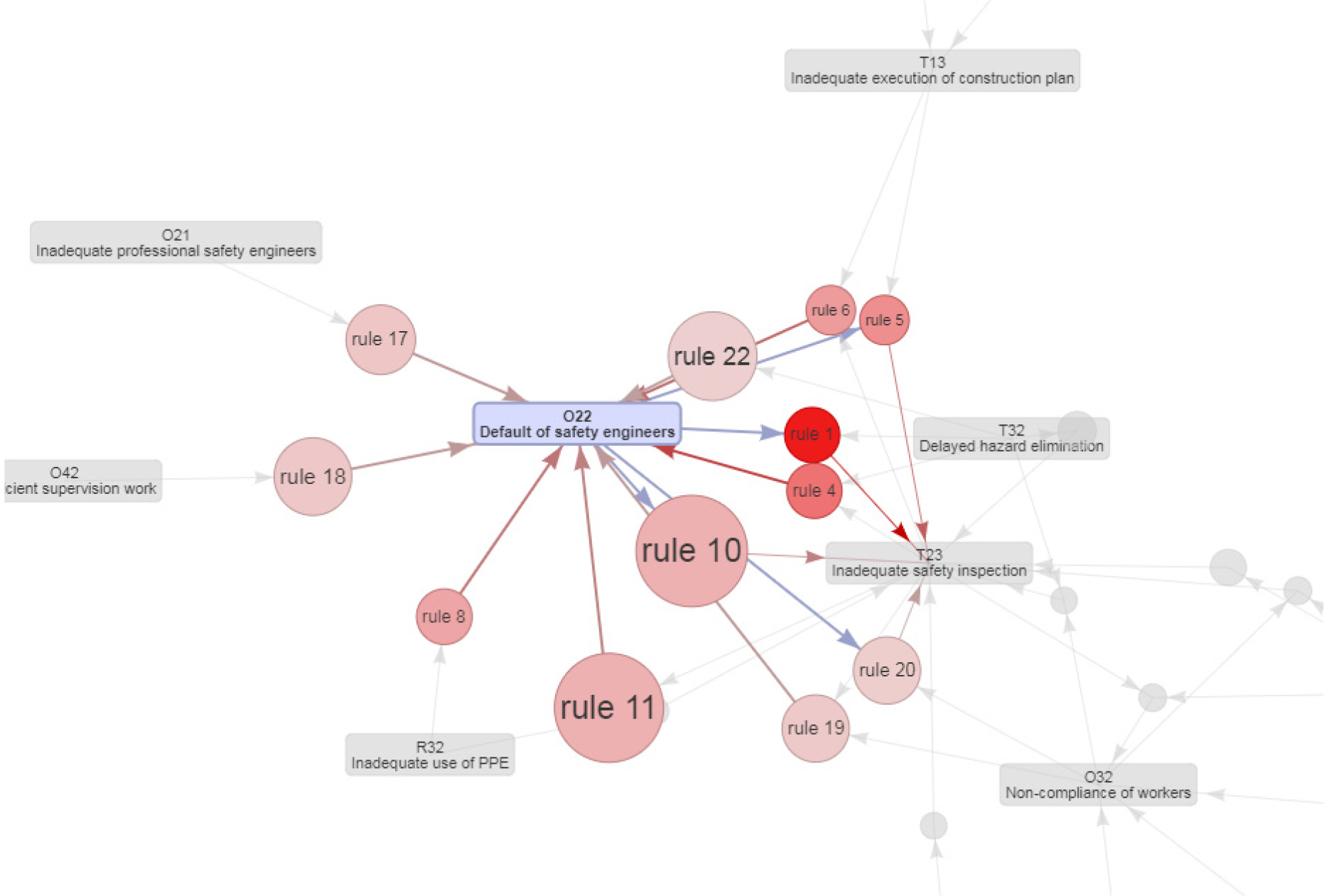
Network visualization: O32 non-compliance of workers.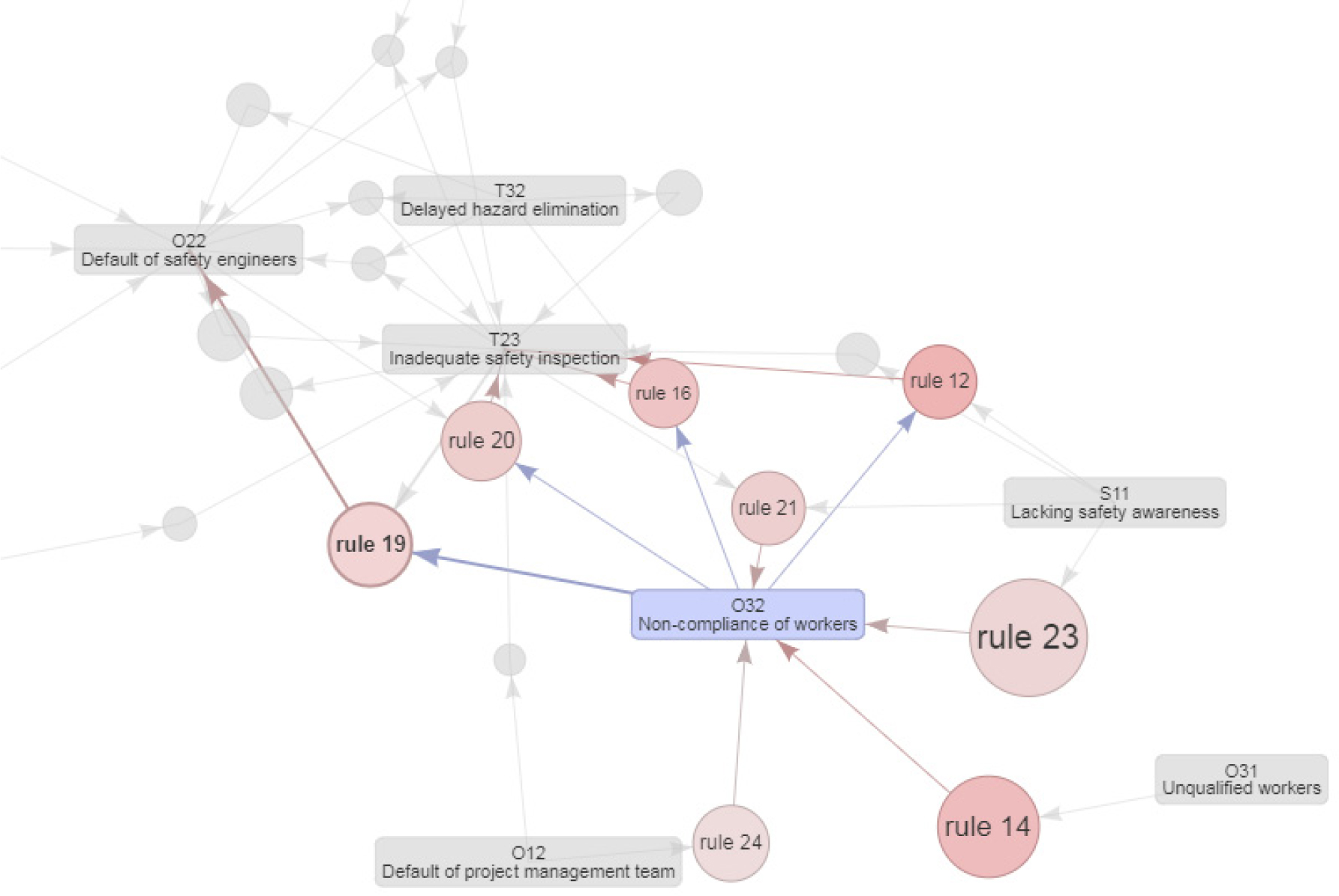
Network visualization: T13 inadequate execution of construction plan.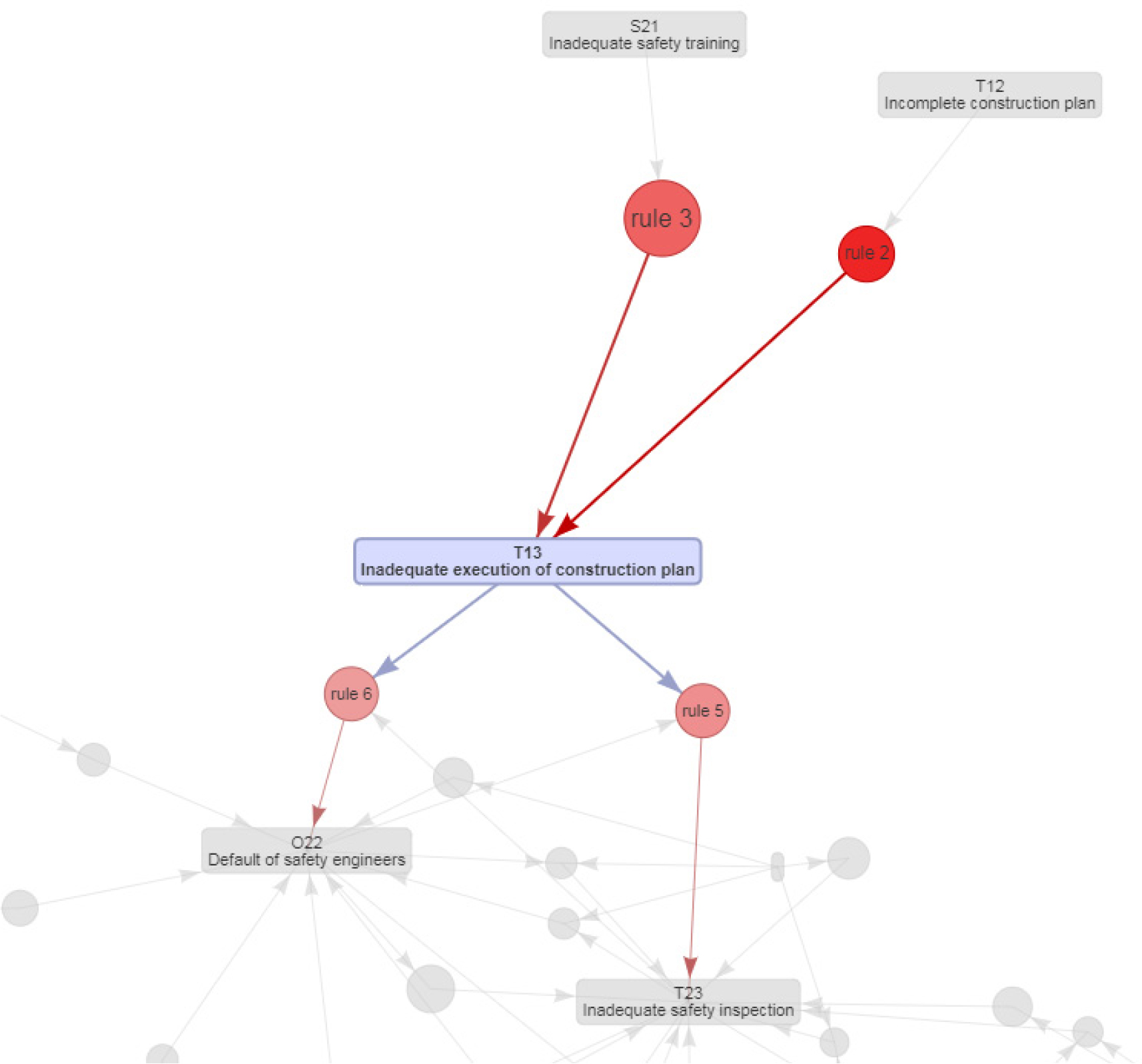
Network visualization: T23 inadequate safety inspection.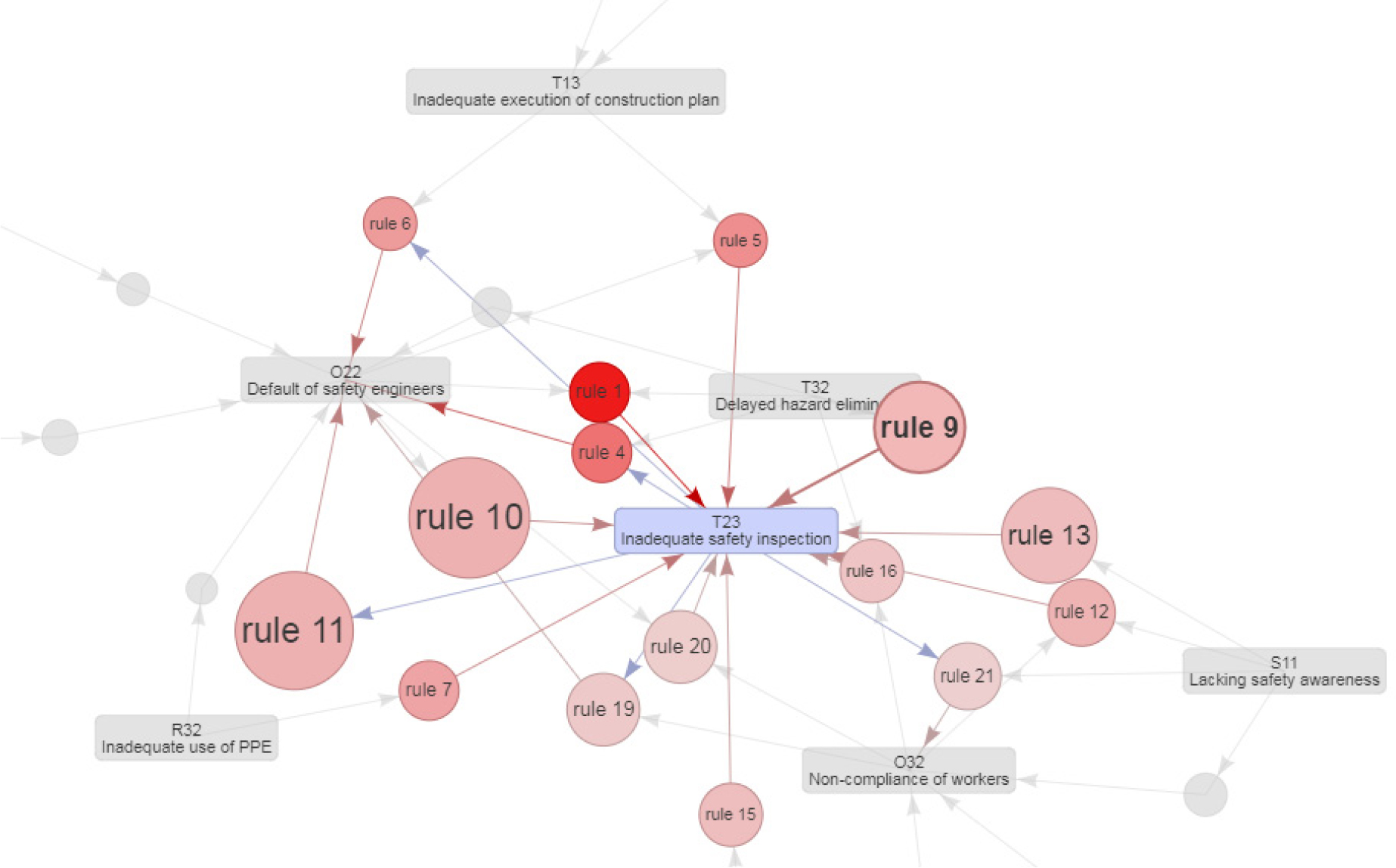
Network visualization of 24 association rules.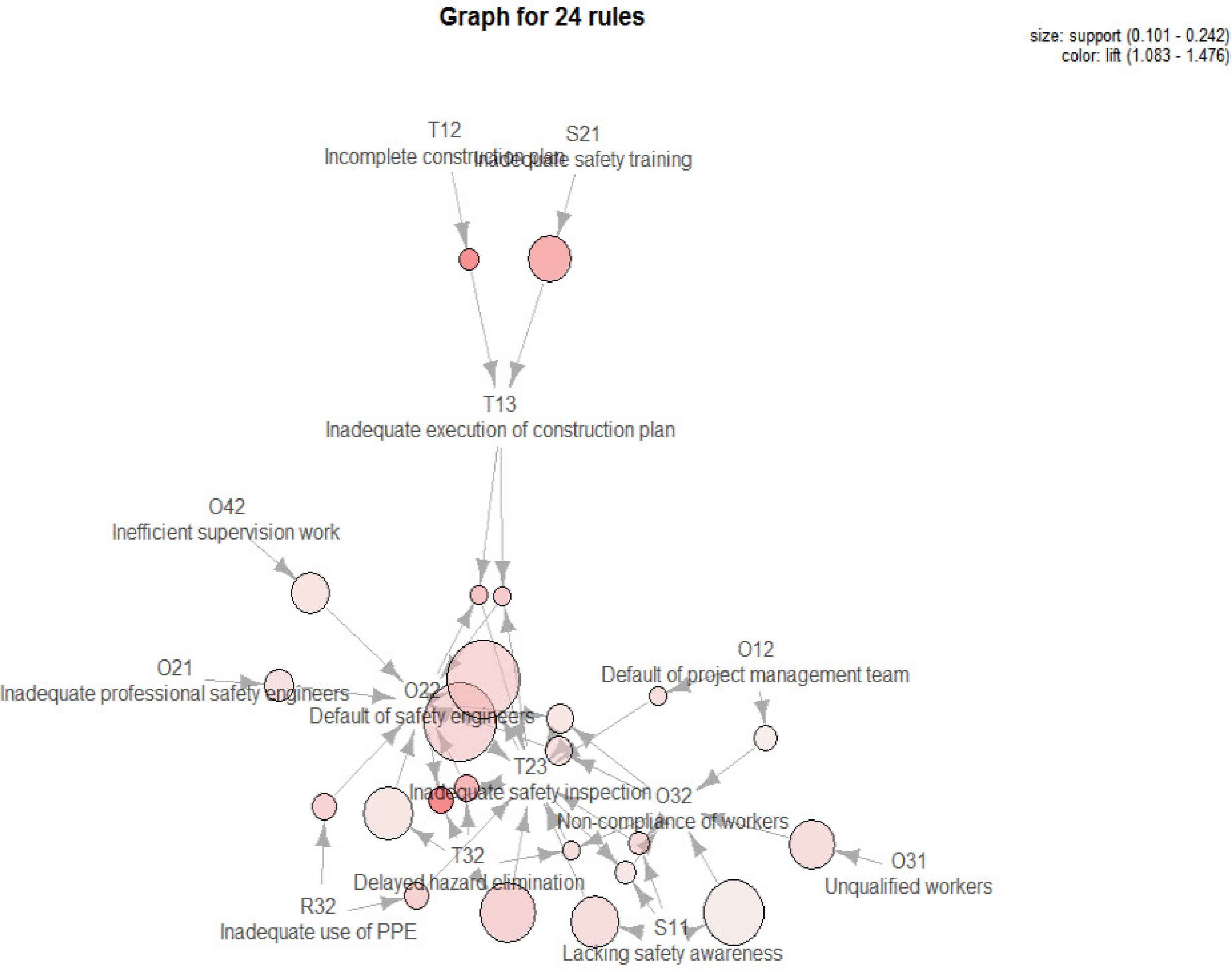
Impacting factors of four critical factors
Causing factors wrt. severe construction safety accidents
In Chinese construction industry, the severity of accidents has particular importance on the safety production license and qualification of enterprises. According to the regulations on safety production management of construction projects issued by the Chinese State Council, in case of a major (or more serious) safety accident the enterprise shall temporarily suspend the work safety license for 60 to 90 days, or even lose the work safety license and bidding qualification in the construction market. In consequence, the sever accidents should be given more attention than general accidents and controlled strictly. For this purpose, the causing factors impacted mostly on the severity of accidents are analyzed using association rules and measured by lift.
Table 6 shows the support, confidence, and lift of rules taking each causing factor as LHS and severe accident as RHS. The rules are listed in descending order of lift, which implies the positive relevance with severe accident with the value more than 1, and negative relevance with the value less than
The quality of construction drawing design is the foundation of construction project. The design drawings must comply with the regulations on the depth of construction engineering design documentation. However, due to the short design cycle and heavy task at present the problem of low-quality drawing is common in construction industry. It is a major issue to improve the responsibility of designers, strengthen the proofreading of drawings, and reduce the mistakes.
The supervision engineers play an important role in the process of construction and ensure the overall quality of the construction project. However, the construction supervision in China is suffered from inadequate or unqualified supervision engineers in order to reduce the investment. To properly complete the project supervision, the quality supervision is worthy of attention in the whole life cycle of construction project [25].
Multi-tier subcontracting system is widely adopted within the construction industry in the world for the better efficiency due to the specialization of subcontractors [14]. However it usually makes difficult to establish effective safety supervision system so that the safety accidents caused by subcontracting are common. Therefore, it is necessary for general contractor to control safety accidents under the subcontracting system.
It should be noted that the emergency rescue plan and proper accident reporting and handling are essential to the severity of construction accidents, not only effectively preventing the occurrence of construction safety accidents but also minimizing the casualties and property losses once the accidents occur.
For comparison Table 7 lists the top 10 causing factors related to the severity of construction accidents using the proposed Association Rule
Importance of factors to the severity of construction accidents using six methods (M1: Association rule
lift, M2: CfsSubsetEval
bestFirst, M3: Ranker
InfoGainEval, M4: Ranker
ReliefEval, M5: Ranker
Correlation, M6: Ranker
GainRatioEval)
Importance of factors to the severity of construction accidents using six methods (M1: Association rule
The number of construction safety accidents occurred in China is increasing significantly in recent years, therefore, it is of utmost importance to implement corrective and preventive measures in order to prevent the accidents in the future. This research intends to reveal unknown relationships among 39 common causing factors contributing to construction safety accidents by analyzing the data of 653 past accidents from 2008 to 2020 in China. By utilizing arulesViz package as the data mining software tool, the preferential relation are found behind the construction casualty causes.
Our findings yields some important insights to construction safety management and decision support. In general, the organizing and behaviour, particularly non-compliance of workers and default of safety engineer, and technical management, particularly inadequate safety inspection and inadequate execution of construction plan, are the critical factors causing safety accidents in construction industry. Besides, 9 factors are found closely related to the critical factors, including unqualified workers, default of project management team, inadequate safety inspection, lacking safety awareness, inadequate use of PPE, delayed hazard elimination, no enough professional safety engineers, inefficient supervision work, and incomplete construction plan. From the perspective of accident severity, the most impacting factors are delayed or low-quality drawings, incomplete construction plan, inadequate supervision engineers, lacking safety examination, inadequate emergency rescue plan, improper accident reporting and handling, improper operation of mechanical equipment, unqualified contractor and multi-level subcontracting.
Based on the findings of the study, some strategies can be put forward. Firstly, the results shows that human unsafe behavior acts as a main factor on construction accidents, referring to improper operation of workers, command error of engineers, poor quality of workers, etc. In China there is a large proportion of migrant workers in construction industry. According to the report of the National Bureau of statistics, the total number of migrant workers in 2021 is 273.95 million, of which 18.3% are in the construction industry. Migrant workers generally have low level of education and low proportion of vocational training resulting in inadequate awareness and knowledge of safety. The construction enterprises should pay attention to the non-compliance of workers by strengthening the safety training of employee, improving their safety awareness and professional skills, and preventing the occurrence of unsafe behaviors. The safety engineers who are responsible for safety plan design, safety inspection, and accident elimination play an important role in the process of construction project. The default of safety engineers can be largely avoided by adequate safety inspection and supervision, proper utilization of PPE, and elimination of potential risks.
Secondly, the importance of PPE is verified in the study as was widely observed [28]. The statistics illustrate that inadequate usage of PPE accounts for around 35% of the total accidents in Chinese construction industry. The inadequate usage of PPE including unqualified PPE, incorrect wearing of PPE, delayed distribution of PPE is another factor which endangers the safety and health of workers. The enterprises and supervisor department should highlights PPE’s importance in construction projects so as to reduce the accidents and occupational injuries of on-site workers.
Thirdly, the enterprises should improve the safety management system, formulate reasonable construction organization design and construction scheme, implement safety risk management, identify and confirm the hazard factors in the construction process. In order to diminish the severe safety accidents, sufficient attention should be given on improving the low-quality drawings, completing the construction and emergency rescue plan, completing safety examination with adequate supervision engineers, avoiding improper operation of mechanical equipment, unqualified and multi-level contractor.
This study concentrates on the relationship among causing factors contributing to the common construction safety accidents, particular the severe accidents. In the next study the relationship between the causing factors and the type of accidents will be investigated. Additionally the discovered association rules will be integrated in safety inspection system for risk prediction.
Footnotes
Acknowledgements
This work was supported by National Office of Philosophy and Social Sciences (19AZD019), National Ethnic Affairs Commission (2020-GMB-015).