



Abstract
Blockchain, also known as Distributed Ledger Technology (DLT), has attracted a considerable lot of attention from academics and industry professionals. When it comes to the tourism industry, the exploitation of blockchain technology could result in significant gains. Among the possible uses are digital identity management, tokenization of frequent flyer programs, accommodation, and transportation. After conducting a comprehensive review of the scientific literature published in this field over the past five years, we identify the most significant blockchain-enabled services and uses of this technology within the context of smart tourism. We analyze the benefits of blockchain technology for the travel industry, local economies, and tourists, laying the groundwork for future studies. Moreover, we present a novel context-aware mobile application that uses artificial intelligence and blockchain to create a hybrid cyber-smart tourist application.
Introduction
Blockchain, or Distributed Ledger Technology (DLT), has garnered a great deal of interest from scholars and practitioners in a variety of industries. Blockchains are distributed, tamper-resistant, and tamper-proof digital ledgers implemented without a central repository and often without a central authority. In other words, in a distributed peer-to-peer network enabled by blockchain, there is no requirement for a trusted authority, and individuals who do not trust one another can join in a verifiable manner [1]. Data stored and shared using blockchain, is notoriously difficult to tamper with or hack with no single entity controlling the network.
Although blockchain first appeared 31 years ago, it garnered significant attention in 2009 when Satoshi Nakamoto [2] utilized it to build the now-famous Bitcoin. In October 2008, Nakamoto, an unknown person or group of people, published the white paper Bitcoin: A Peer-to-Peer Electronic Cash System [2]. In it, Nakamoto outlined a technique for conducting electronic transactions without a central authority. In January 2009, the first Bitcoin block, named the genesis block, was mined. Actually, several electronic cash schemes existed before Bitcoin, but none of them reached widespread adoption. The work of Satoshi Nakamoto served as the foundation for all later cryptocurrencies, with variations and alterations. Utilizing a blockchain allowed Bitcoin to be built in a decentralized fashion, such that no single user controlled the digital currency and there was no single point of failure; this contributed to its rising popularity. Its primary purpose was to facilitate transactions between users without the need for a trusted third party [3].
At the same time, smart tourism which has existed for a number of years, remains a catchphrase as evidenced by the proliferation of printed and electronic materials devoted to the topic. In fact, the rising body of research on smart tourism reveals that this concept is exciting and replete with immense potential. According to [4], the notion of “Smart Tourism” can be traced back to the late 1990s [5] however, the research trend can be claimed to have begun roughly 10 years ago with [6, 7] as stated in [4]. Since then, curiosity towards the smart tourism sector has remained on the rise [8], with this increased focus being reflected in research, with Google Scholar retrieving over 17.300 results for the Smart Tourism phrase at the time of writing.
In related literature, tourism that prioritizes innovation and utilizes digital tools to improve efficiency, competitiveness, environmental impact, and social well-being is often referred to as “smart tourism” [9, 10]. Technology infrastructures including sensors, cloud-computing services, smartphones, radio-frequency identification (RFID), and Wi-Fi, are currently utilized by practitioners and researchers in the context of smart tourism [11]. In parallel, algorithms, new technologies, and approaches that could offer smart tourism services, such as recommender systems that generate suggestions of tourist attractions based on a user’s profile [12], systems that exploit travellers’ location to assume his/her behavior and achieve location-based advertising [11], and smart tourism applications that employ sensors [13], are being researched.
In our earlier research [14, 15], we were able to identify the most prevalent approaches/concepts in this field, namely Privacy and Data Protection, Context Awareness, Cultural Heritage, Recommender Systems, Social Media, Internet of Things, User Experience, Real-Time, User Modeling, Augmented Reality, Artificial Intelligence, Big Data, Blockchain and Cyber Tourism.
Indeed the implementation of blockchain technology in the tourism industry could yield enormous benefits. Possible applications include digital payment, tourism supply chain management, tourism transportation, accommodation, tourist attractions etc [16]. The fragmented nature of the tourism industry, characterized by a large number of contracts and transactions involving various parties, produces security issues, tensions, and inefficiencies. Although these considerations encourage the use of blockchain, tourism sector professionals have just recently begun to study blockchain’s additional value [17].
Currentrly the tourism and travel industry has numerous intriguing blockchain 2.0 applications, such as digital identity management, tokenization of frequent flyer programs, and item custody-change tracking. After a comprehensive assessment of the scientific literature published in this field over the past five years, we distinguish below the [18] key research areas on the application of blockchain technology in the context of smart tourism. We have outlined the blockchain’s benefits for the travel sector, online travel firms, the local economy, and tourists worldwide. It is essential to emphasize this new phenomenon in order to inspire thought and research about this potential smart tourism trend. At the same time, inspired by the present literature analysis and our previous research [15, 19], we introduce a context-aware mobile application that employs artificial intelligence and blockchain to create a hybrid cyber smart tourism application. Figure 1 displays the main concepts/approaches in the smart tourism area with emphasis to the concepts included in the current research.
Smart tourism concepts and approaches.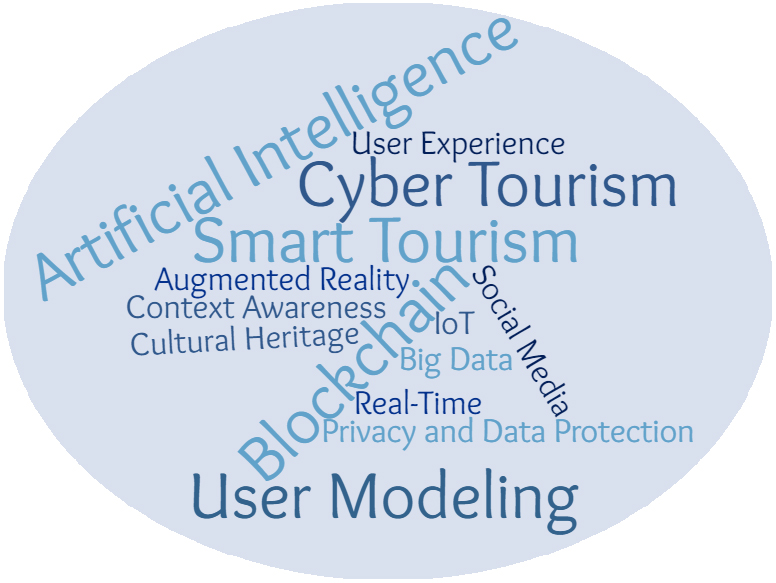
This paper is organized as follows: We begin with a discussion of the methodology and approach used in this study. In the following section, we will go through the fundamental data structure of a blockchain. What follows is a list of some of the most significant blockchain-enabled services. Following is a discussion of how blockchain technology can be applied to smart tourism. The next section is our proposed system architecture. Conclusions include findings, limitations, and recommendations for future research.
One of the main goals of this research is to present blockchain technology in the smart tourism industy, mapping the state of the art and practice from 2018 to 2022, along with a few articles from earlier years. During our investigation, we were able to find, select, categorize, and analyze relevant articles pertinent to the subject and time period in question. To accomplish our objectives, we implemented a stringent procedure to ensure the quality of the papers and prevent the loss of scientific data. Initially, we set the conceptual limits of our investigation exclusively on tourism and blockchain technology. The ensuing phases entailed locating pertinent material and reviewing a vast number of research publications published within the past few years. Moreover, we have discovered websites and applications that connect blockchain technology with tourism in order to create a smart tourist ecosystem. Described below are the steps of the adopted methodological approach:
Determine, based on the international literature, the need for a complete presentation of blockchain technology in the context of smart tourism Determine the importance of locating and documenting blockchain technology used in the tourism industry on a global scale Select relevant studies, including grey literature, uncovered by meticulous investigation Examine articles and other informative sources Analyze the significance of the findings, identify and summarize the major findings Report outcomes and challenges that have emerged
Papers included in literature review per year.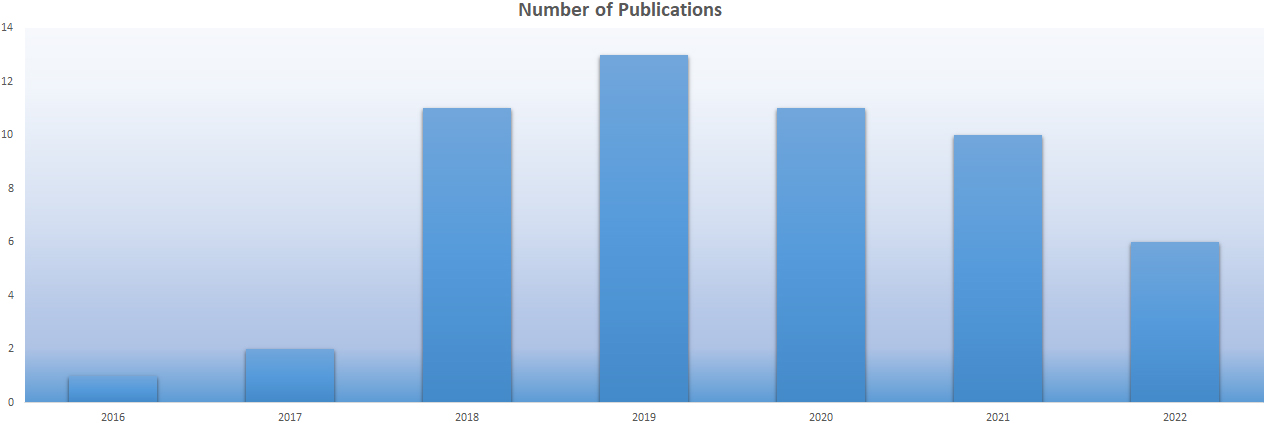
Figure 2 illustrates the number of publications evaluated per year. Specifically, 121 terms were discovered in the relevant literature. Others were indexed only once, while others were indexed several times. We grouped synonymous keywords to discover subjects that are frequently encountered.
The great majority of peer-reviewed works are indexed in DBLP, Google Scholar, Scopus, and ResearchGate. Initially, we scanned these databases for the following terms: Smart Tourism
A blockchain is a network of blocks that retain encrypted and interconnected data [20]. Typically, any blockchain implementation can specify its own data. However, blocks often contain the hash of the current block, the hash of the preceding block, a date, and some block data [20]. In blockchain, a block is the set of valid transactions. Once network nodes successfully validated a transaction utilizing previous transactions, the transaction is added to the current blockchain. Each block has only one parent block, with the genesis block having no parent block and being at the top of the list, followed by an increasing number of blocks.
The Block Header and the Transaction List comprise a block. The block header consists of the block version, a timestamp, the hash of its predecessor, the Merkle tree root hash, which is the hash value of all transactions, a nonce (abbreviation for “number only used once”), which is a random value that the author of a block can change, and nBits, which is the current difficulty used to create this block [21]. The block body includes a transaction counter as well as transactions. According to [21], the maximum number of transactions a block can contain is based on the block size and transaction size.
Types of blockchains and consensus protocols
In general, blockchains are categorized based on the permission model that defines the access and rights each member has within the network and the level of openness that determines who could join the network. Consequently, blockchains may be public, private, consortium, and permissionless or permissioned. In most instances, the public blockchain refers to a blockchain that is accessible to everyone with Internet access. In a public blockchain, anyone can join, while in a private blockchain, only authorized nodes can partake. Multiple organizations participate in consortium blockchains, also known as federated blockchains.
In a permissionless blockchain, anyone can become a node and interact in a number of ways with the network, including submitting transactions and thereby adding blocks to the distributed ledger, verifying transactions, mining blocks, and developing smart contracts. Consequently, the chain can be accessed and updated by anybody who has access to a computer system. Permissioned blockchains, on the other hand, restrict participation in transactions and state updates to only authorized users [22].
Consensus refers to the mechanism by which all nodes agree on the authenticity of a given collection of transactions and blocks. The consensus of a blockchain is realized by a set of rules that everyone adheres to. There is no external body enforcing these standards; the community as a whole rigorously adheres to them. The greater the size of the blockchain network, the greater the number of nodes and miners that enforce their own rules, thereby improving the overall consensus. Popular consensus protocols include Proof of Work (PoW), Proof of Stake (PoS), Delegated Proof-of-Stake (DPoS), Proof of Authority (PoA), and Practical Byzantine Fault Tolerance.
In a Proof-of-Work system, in order to add new “blocks” to the blockchain, network members must solve “cryptographic puzzles.” This approach to solving riddles is commonly known as mining. These cryptographic puzzles include all previously recorded data on the blockchain as well as a new set of transactions to be included in the subsequent block. Due to the fact that the input of each puzzle increases over time (resulting in increasingly complex computations), the PoW method requires an enormous number of computer resources, which consumes a significant amount of energy Due to the fact that the input of each puzzle increases over time (resulting in increasingly complex computations), the PoW method requires an enormous number of computer resources, which consumes a significant amount of energy Bitcoin, Litecoin, and Monero are cryptocurrencies based on the Proof-of-Work consensus algorithm [23].
To validate transactions in a Proof-of-Stake system, nodes must demonstrate ownership of a certain asset. This method of transaction verification is known as forging. In the case of cryptocurrencies, for example, a transaction validator must demonstrate his “stake” (i.e., his fraction of all coins) in order to validate a transaction and receive compensation for their services. Cryptocurrencies such as Neo and Cardano employ the PoS consensus mechanism.
Blockchain enabled services
Privacy
As stated previously, blockchain is basically a cryptographically verified, append-only list of data. The lack of cryptographic assurances of database integrity, which are essential for any database to function in a hostile environment, is one explanation for blockchain’s popularity [24].In contrast, blockchain technology offers significant privacy protection benefits, such as data immutability, anonymity, and network stability, which may alleviate the privacy disclosure difficulties experienced by centralized services [25].
In multiple ways, blockchain reduces dangers and improves security and safety. For instance, it can expedite bank transfers, guaranteeing hotels, airlines, and other businesses that consumers’ cash would be easily transferred to them. Moreover, the immutability of blockchains makes them ideal for digital identity, hence improving the identification of travelers during their travels. The authors of [26] examine privacy issues related to online hotel reservation services and suggest a privacy-preserving paradigm enabled by blockchain that controls risks such as malevolent outsiders and compromised visitor data. The work utilizes the Bitcoin blockchain to generate and manage anonymous visitor credentials.
Although blockchain provides an immutable database of transactions, blockchain networks are not immune to hacking and fraud. Malicious actors can exploit known vulnerabilities in blockchain technology and have been successful in numerous hacks and frauds over the years [27]. By design, blockchains are based on the principle of total transparency, as all transactions, even if hashed or encrypted, are accessible to all network participants for validation [28], which could have adverse effects on privacy protection. In permissioned blockchains, privacy and secrecy are frequently preserved far more successfully than in permissionless systems through the use of access control mechanisms. Researchers have demonstrated that despite the fact that user accounts in permissionless blockchains can stay largely anonymous and are therefore believed to offer a variety of privacy benefits to its users, there are still major threats to users’ privacy [29]. Due to the permanent and transparent nature of blockchain technology, which requires that data be stored eternally and made publicly accessible to the whole network, it is typically discouraged to store personal information on blockchains.
Thus, there are still various concerns to be discussed and resolved in order to develop a safer and more efficient privacy protection method. Based to [25] the most notable example is the combination of blockchain and trusted computing technologies to achieve privacy protection and a trust mechanism.
Smart contracts
There are various conceptions of smart contracts, but in general, smart contracts are contracts implemented using blockchain technology. The term “smart contract” is deceiving because a smart contract is not always a legal contract. Rather, it is the technological means for executing a contract [30]. A smart contract is an agreement between network nodes on a blockchain. They employ blockchain technology and store information on a distributed ledger. It is a computer protocol that facilitates, verifies, and enforces digital contract agreements. Smart contracts automatically process and execute network transactions. Therefore, whenever a transaction occurs between nodes, a function is executed that invokes the smart contract, and processing begins [31].
Considering the preceding, smart contracts do not require human interaction. In the absence of a third party, intermediaries such as banks or other businesses can be avoided, expenses can be reduced, and processing times can be accelerated. The tourist industry is constituted of numerous activities, parties, and interactions between them. As a result, it is comprised of numerous contracts and agreements between diverse parties, which increases the danger of security breaches, misunderstandings, or regret among stakeholders, as well as delays in fulfilling obligations and high costs. The adoption of smart contracts has a significant effect on the aforementioned challenges by eliminating market intermediaries and establishing direct ties between customers and service providers. As a result, it decreases the costs of services, improves the overall efficiency of processes, and shortens the time required to meet the demands of travelers [32].
In addition, smart contracts provide travelers with greater flexibility than is feasible with regular transactions. Using smart contracts, tourists who are unable to go for any reason can resell, trade, or exchange bookings such as airline tickets with other travelers. In addition, certain smart contracts allow travelers to rebook if costs decrease after purchase, with the price difference returned to their account promptly. Similarly, smart contracts enable seamless cancellations, upgrades, and changes to bookings, paving the path for a smart tourism experience.
Cryptocurrencies
Unknown person(s) using the alias Satoshi Nakamoto advocated in 2008 the need for a decentralized electronic payment system based on cryptographic evidence rather than faith. Such a system would enable any two willing parties to transact business directly without the requirement for a trustworthy third party. In order to achieve this goal, the whitepaper [2] developed a digital signature chain in the form of an electronic coin; this chain became the foundation for the now-famous Bitcoin, which was made available to the public in January 2009. Throughout history, dozens of cryptocurrencies have been produced, and hundreds of them are presently traded and have a market value. The public ledger that is accessible to network users and the usage of native tokens as a way to compensate users for administering the network in the absence of a central authority are the two elements that connect the various cryptocurrency systems. Most cryptocurrencies, also known as altcoins, don’t really do anything new; they’re just variations on the same basic concept as Bitcoin or another digital currency, with little tweaks to certain parameters (such as block time and currency supply) [33].
Today, the number of digital currencies has skyrocketed to more than twenty thousand [34]. However, it should be emphasized that many of these cryptocurrencies may be rather insignificant. Due to the blockchain’s transparency, it is simple to establish your own coin. According to [35], the top 20 cryptocurrencies account for 90 percent of the market.
With the rise of cryptocurrencies, the manner in which we travel, book trips, and pay for them will be drastically altered. In particular, as a result of the recent surge in the value of cryptocurrencies, many startups and established businesses are seeking innovative methods to incorporate digital currency into their business models. One of these industries is the smart tourism sector. In recent years, there has been an increasing interest in the use of cryptocurrencies in the smart tourism industry, despite the fact that only a small percentage of tourist-related firms accept cryptocurrencies as payment [36]. As a tool for promoting tourism, bitcoin acceptance can result in lower travel options, the formation of loyalty networks, and the drawing of tourists to new and underserved tourist destinations [37].
XcelTrip1
Travala,2
In this section, we provide the blockchain applications identified in the context of smart tourism based on a comprehensive assessment of the existing state of the art and practice in this field. Table 1 describes the smart tourism research topics and the role blockchain has in each of them.
Transfer, accommodation and local tourism industries
In this subsection, the significance of blockchain technology in terms of transfers, local tourism industries, and lodging-related factors is studied. Due to the significance of these industries to the concept of smart tourism, it is crucial, within the scope of this paper, to investigate how the aforementioned technology may be utilized to promote smart tourism and which blockchain applications have an effect on the aforementioned industries. To illustrate, some uses of blockchain technology in the accommodation and transfer industry include revenue management, inventory control, privacy preservation, staff welfare management, and financial management, among others [81, 42, 41]. In order the following subsections we attempt to describe this topic exhaustively and define the varied functions of blockchain in these industries.
Baggage tracking
An annual loss of millions of bags costs airlines hundreds of millions of dollars [46]. Additionally, airlines are liable for lost, damaged, or delayed baggage while in transit [46]. In 2020, there were 3.5 reports of mishandled baggage per 1,000 travelers worldwide, according to statistics. Even while this was a decrease from the previous year’s number of 2.5 billion U.S. dollars, the total cost of luggage mishandling in the airline industry in that year was still significant. When a passenger’s baggage is lost, the process to file a claim for reimbursement can be complicated, and the claim must be filed within a timeframe that varies by airline’s regulations. The airlines must compensate passengers for verifiable losses.
Applications of blockchain in smart tourism
Applications of blockchain in smart tourism
Blockchain technology can significantly improve the tracking of missing luggage and the surveillance of the baggage’s whole journey. With blockchain, each transaction is recorded and made accessible to all network participants, making it more difficult for third parties to meddle and providing the highest
level of security and transparency. Blockchain technology might significantly improve baggage handling, especially for international travelers whose bags frequently change hands many times. In addition, it is possible to provide smartphone users with current information regarding the location of their baggage. Furthermore, luggage tracking might be linked to smart contracts involving airlines or travel insurance firms to make automated reimbursement payments when the shared ledger records information about lost, damaged, or delayed baggage [48, 39]. Consequently, it is not surprising that related research exists in the literature. For instance, the authors of [47] offer a luggage handling system that employs blockchain technology to meet the needs of all air travelers for the dropping, storing, conveying, sorting, and retrieving of their bags.
Tourism intermediaries can facilitate international tourism significantly. They can help promote a location, identify possible tourists, and book flights, hotels, and other accommodations. In addition, intermediaries can aid in tracking traveler behavior and offering customer assistance. In addition, they can assist in the creation of marketing initiatives. Nevertheless, they impose costs for both tourists and the tourism industry. Despite the fact that this is the case, little can be done to prevent it. At least until now.
As a result of the emergence of blockchain technology, intermediaries’ roles in the tourism sector may change. As stated previously, blockchain is a distributed database that enables secure, transparent, and tamper-proof transactions. This could allow customers to interact directly with various parties, hence removing the need for booking agencies. This could result in lower prices and fees for consumers, as well as a greater degree of control over their personal data. Using blockchain, a traveler might, for instance, reserve a hotel room or airline ticket through the execution of a smart contract, which automates a range of commercial transactions between participants without the need for human intervention [17]. Recent research by the World Tourism Organization indicates that blockchain technology could eliminate the need for middlemen in the tourism industry.
LockTrip, a Blockchain-based network specialized to the lodging industry, serves as an example. LockTrip is an ecosystem and marketplace that allows travelers to search for, locate, and reserve hotel rooms and other types of lodgings globally. It is the first platform that allows customers and property owners to communicate for free. All transactions are decentralized using blockchain technology for this purpose. It runs via smart contracts that can handle the customer/host connection and is set to handle scenarios with its native utility token, LOC. The entire decentralized LOC Ledger, which is based on the Ethereum Virtual Machine, is open source and free for anybody to use anywhere in the world [40]. This ultimately allows LockTrip to bypass payment processors and connect customers directly with property owners. As a result, customers incur lower travel expenses, while property owners enjoy more competitive pricing. Reliability and transaction speed are two factors that can be improved through the use of blockchain technology to the mutual benefit of all parties [41]. Winding Tree,21
At several stages along their vacation, including while making reservations, boarding their flight, transferring, and checking into their hotel room, travelers are now required to present identification. Using a blockchain-based identification system offers a variety of benefits. First, it would be more secure than conventional methods of identification, such as a photo on a passport. A blockchain-based identification system can assist travelers in verifying their identities and provide a more secure mode of travel. By connecting a traveler’s passport to a blockchain, the technology can prevent fraud and guarantee the passport’s accuracy. Second, it would give an immutable record of all past travels. This might be especially beneficial for travelers who travel for extended periods, as it would ensure that their passports are always valid.
Digital identification through blockchain technology could streamline the identification of travellers en route and minimize unwelcome interactions at many checkpoints. Unique digital ids might replace identification-related documentation [42] and reduce traveler wait times at border crossings, particularly when coupled with smart gates and scanners through automated check-in [49, 50]. In other words, blockchain permits the speedy, automated, and seamless identification of travelers [39], which is great news for those who are on vacation.
Digital identification can help mitigate potential security threats provided by wanted criminals, radicalized persons, and others who can travel freely under the cover of ordinary citizens, while eliminating identity theft and fraud. Lastly, blockchain-based identity systems could minimize the issue of lost passports by removing the administrative burdens imposed by embassies when providing new certification documents.
Overbooking
The proliferation of internet travel booking sites, such as Expedia,22
However, technological advancements have not been without hurdles. The competitive climate for travel companies has caused these enterprises to face a range of challenges. For instance, duplicate reservations are a typical concern for travel businesses. This occurs when a customer repeatedly makes the same reservation, generally because they do not understand the platform’s limitations. Due to a problem with the booking platforms, a second scenario would include multiple guests reserving the same accommodation. During the holiday and vacation seasons, when severe strain on centralized payment systems results in repeated bookings by one or more clients, the problem of duplicate bookings and overbooking is exacerbated. The ability of blockchain to ban duplicate expenditures can eliminate the issue of double bookings in the travel industry, making travel more convenient for travelers, hotels, and airlines.
Having customer loyalty programs to retain customers is not an original idea. In reality, there are far too many loyalty programs, each with its unique point-earning system. However, a new trend has developed recently: blockchain-based loyalty schemes. Thus, a further advantageous application of blockchain technology for travelers is blockchain-based loyalty programs [39]. This strategy addresses the shortcoming of the majority of traditional loyalty programs, which are neither transferable nor redeemable when purchasing from a third party, resulting in low redemption rates and high switching costs [82]. This strategy aims to address the issue of dissatisfied customers and a large number of unused points.
However, blockchain enables businesses to decentralize their loyalty programs, and customers may reap the benefits of blockchain technology in full. According to Deloitte, “Blockchain is an ideal remedy for what ails loyalty rewards programs” [43]. Indeed, blockchain-based loyalty programs can be advantageous for both providers and consumers. In a distributed ledger system, as presented in [43], each loyalty rewards program is managed by participating agents in an interconnected network, without the need for intermediaries and without compromising secrecy. With blockchain, there is no need to worry about points being misplaced or stolen, and transactions are considerably quicker. Moreover, delivering loyalty programs through a single digital wallet may enable consumers to conveniently manage numerous membership programs, share their tokens, and prevent token expiration and fraud [43].
In the use case scenario for the travel sector, numerous businesses, such as airlines, hotels, and car rental agencies, can connect and manage their loyalty programs under a single blockchain-based loyalty program. In blockchain-based, interoperable loyalty systems, tokens can be sold or traded with others, and a traveler can earn or redeem loyalty points across several merchants [50, 39]. Additionally, blockchain enables travelers to earn and use loyalty points in real-time, as compared to traditional programs that award points much later [39]. Moreover, exploiting tourists’ real-time whereabouts permits the implementation of location-based advantages such as discounts and special offers [50].
Local tourism industries
Blockchain is a distributed database that enables transactions that are safe, transparent, and tamper-proof. It is frequently employed for tracking the movement of products and enforcing contracts. Using blockchain technology can be extremely advantageous for local tourism industry. Using blockchain, reservations for restaurants, cruises, and trains would be secure and transparent. Local tour guides would be another example of a use case that might be assessed in a blockchain system, achieving record transparency and immutability, and paid in cryptocurrency.
MeetnGreetMe28
Inspired by the fact that blockchain has the potential to revolutionize the travel industry, the authors in [52] present BlockTour, a blockchain-based smart tourism platform that provides a customized response to existing problems in the industry and a prototype that has already been implemented in the real world. In particular, they build the general system architecture of BlockTour in order to connect tourists and sites reliably. In addition, a strategy of effective consensus is devised, which includes incentives for people to visit many sites. Experiments indicate that BlockTour could be an efficient and beneficial platform for smart tourism. To elaborate, the implementation of blockchain could benefit tourists and local tourism industries by automating several processes, reducing the need for intermediaries, boosting trust, and moving the emphasis to tourism-related services offered by local firms.
One of the superpowers of blockchain is its ability to build credibility and foster trust. Similarly, user ratings are unquestionably the best way to gauge the quality of a service, and customer evaluations have a substantial impact on the purchasing decisions of prospective customers [39]. In an era of fraudulent reviews, it becomes difficult for users to identify problematic tourism service providers. The recurrence of false reviews is a big problem for the tourism industry due to the increasing economic competition [44]. Travelers submit reviews and ratings of various service providers, which may not always be correct. In addition, hotels and restaurants furnish customers with bogus reviews due to market competition and commercial motives.
Blockchain can increase the transparency and dependability of an online review system [45]. The immutability of blockchain records ensures that any review submitted on a blockchain-based platform cannot be deleted. As mistakes might occur when submitting a review, it is considered best practice to empower individuals to control their own reviews. Nonetheless, readers should have access to all previous versions of edited evaluations. This method provides additional data for assessing reviews. Some existing platforms permit users to alter their reviews, but do not retain all previous versions. Even though some platforms display all versions of reviews, the platform owner can alter them without the users’ awareness because the data is stored in a centralized database [45]. The immutability of blockchain records ensures that any review made on the blockchain platform cannot be withdrawn, and that only revisions with a verifiable history are permitted.
Moreover, secure digital identification helps identify authentic customer reviews from bogus ones [44]. Such traceability should not frighten customers, as it does not need the revealing of personal information, merely the avoidance of duplicate reviews with the same identity, hence preventing review manipulation [44, 39]. Therefore, tourists can use these trustworthy rankings and ratings to select service providers.
Medical tourism
Medical tourism refers to the practice of patients seeking medical care in a foreign country. This expanding sector offers a new sort of tourism with access to medical care by combining healthcare services with the tourism industry and the consumption of tourism-related services such as transportation, lodging, and hospitality. Typically, the aforementioned word refers to elective procedures, such as cosmetic surgery, but it can also refer to necessary medical care, such as cancer therapy. This type of tourism might be motivated by a variety of factors, including the desire to receive treatment at a lesser cost or to receive therapy unavailable in the patient’s country of origin.
Given this, it should come as no surprise that the last decade has witnessed a dramatic surge in the popularity of medical tourism abroad. In example, the medical tourism business was estimated to be worth $54.4 billion in 2020 and is anticipated to surpass $200 billion by 2027. Despite the fact that medical tourism has been interrupted as a result of the coronavirus pandemic, its revival and explosive growth are anticipated in the coming years [35]. Specifically, the market for medical tourism in Europe has grown tremendously over the past several years, giving rise to new types of medical tourism such as fertility tourism, wellness tourism, and dental tourism. Prior until recent years, the United Kingdom, Germany, France, Italy, and Spain were the top five European destinations. A new European Directive on Cross-Border Healthcare was implemented in 2014, ensuring open access to care in the community for all EU citizens. As a result of this rule, a new market for public-pay medical tourism formed, and “newly entered” Central European countries, such as Hungary, Poland, the Czech Republic, Romania, and Latvia, became desirable destinations for Western Europeans exercising their entitlement to cross-border treatment. Indeed, the ability to have access to specific treatments that are unavailable in their home countries, the high quality and lower cost of such treatments, and the opportunity to combine them with a vacation for rest and recuperation in the destination country are among the primary reasons why these patients would choose to travel abroad.
There are a number of reasons why people choose to travel for medical care, but one of the most popular is the technology that is available today. In order for medical tourism to expand, information technology is crucial [53]. Access to data regarding services, prices, lodging, tourism, and recovery options is now easily searchable, thanks to technological advancements. Currently, a number of information systems that can be profitably integrated into the medical tourism industry do exist, like point-of-sale systems for cosmetic services [83], electronic health records systems, medical tourism recommendation systems and decision support systems [84, 53].
While medical tourism is not a novel concept, the use of blockchain technology to facilitate it is. The focus of researchers and practitioners has switched towards incorporating the aforementioned technologies into medical tourism, ushering in an era of smart medical tourism. A recent study published by the Blockchain Research Institute indicated that blockchain technology might save the healthcare industry $100 billion annually by 2025. The study discovered that blockchain might be used to ease the process of sharing medical records and prescriptions and to improve the efficiency of claims processing. This study discovered that blockchain technology might be utilized to minimize the cost of medical tourism.
Consider the example of healthcare intermediaries. Due to patients’ limited ability to evaluate a medical-tourism destination’s quality, suitability, and benefits without expert help, healthcare intermediaries are increasingly playing a role as liaisons between overseas patients and healthcare providers. Medical tourism encompasses visas, airfare, lodging, treatments, and post-operative care during recuperation. Nonetheless, it may also involve the planning of more specialist travel processes, such as acquiring licenses for prescription drugs or a nurse to accompany the patient during their journey citelunt2010medical. Even though intermediaries may appear to facilitate the entire process, they can sometimes result in increased expenses and less options for patients because they are linked with specific healthcare providers to whom they send all of their patients. In the worst-case situation, medical middlemen may send patients to unsuitable healthcare providers who charge excessive markups and referral fees. As they are not the actual healthcare providers, these intermediaries for medical tourism are unlikely to be held accountable for any errors [55].
In the context of medical tourism, blockchain technology can promote real-time, bidirectional communication between patients and foreign medical facilities. Having access to this information enables independent verification of their credentials, certification, and procedure costs. This can be advantageous in a variety of ways. Reducing patients’ dependency on exclusive arrangements made through intermediaries can result in cost savings. Removing or minimizing the effect of non-value-adding middlemen is also advantageous for the reputation of the medical tourism sector and medical tourism destinations. In addition, travel agents will be incentivized to specialize and provide higher value-added services to prospective customers [53].
In addition, blockchain permits the establishment of a decentralized database of medical records, so patients can access their records regardless of their location. As a result, patients would not be limited by their geographical location, which has the potential to radically revolutionize the delivery of healthcare. The removal of the need to maintain numerous copies of patient records is another way blockchain technology may help reduce healthcare costs.
Moreover, medical secrecy is always of the utmost concern, especially when seeking treatment overseas. In a survey of Americans who engage in medical tourism, “privacy and anonymity of treatment” placed second, behind the overall cost of a procedure. Some patients who travel for medical care prefer to travel to less developed nations in order to maintain the confidentiality of their medical records, regardless of how far away their hospital or clinic is. In addition, some patients contemplating medical tourism may be hesitant to travel abroad out of concern about the lack of a comprehensive system in place to protect the privacy of their personal health records. Blockchain technology might be viewed as a “privacy-by-design” solution in light of the numerous privacy concerns presented by the widespread digitization of medical records. Instead of being an afterthought, blockchain technology integrates privacy and data protection measures into the core of the system. By having access to and control over their own data, medical tourists can be certain that their personal information is secure. Therefore, by exhibiting a strong commitment to protecting the privacy of international patient tourists, health care providers will be able to express privacy-enhancing attributes, which will make patients feel more at ease, confident, and even eager to give private information. Blockchain’s inherent anonymity allows patients ultimate control over who views their sensitive data, for how long, and under what conditions [57]. In the case of medical tourism, for instance, a permissioned mechanism will govern the information and data of tourist patients by authorizing or denying access to non-domestic medical institutions. They will be able to keep their confidentiality even after receiving medical care [53].
Government initiatives
Blockchain is undeniably one of the most revolutionary digital technologies that must be considered in the context of digital government. According to proponents, the key benefits of applying blockchain technology in governments include reduced economic expenses, time, and complexity in inter-governmental and public-private information exchanges, hence enhancing the administrative function of governments. Using distributed ledgers and programmable smart contracts simultaneously reduces bureaucracy, discretionary power, and corruption. Citizens gain from increased automation, transparency, auditability, and accountability of information in government registries. The employment of algorithms that are no longer solely under the control of the government [85] enhances the confidence of individuals and companies in government procedures and record-keeping.
Consequently, the use of blockchain technology by several government agencies around the world has resulted to an increase in the transparency of transactions, the improvement of data integrity, and the identification of identities, among other benefits. Governments across the globe have constructed their blockchain ecosystems in a number of ways, with Malta establishing a Digital Innovation Authority to implement a blockchain technology certification process that certifies platforms in order to boost trust. The government of South Korea has implemented blockchain technology for identity management, while e-Estonia is employing it for healthcare innovation [86]. The European Commission submitted a report by the Joint Research Centre [85] that discusses several use cases, including citizen identity management, taxes reporting, and development enabling new decentralized business models without intermediaries, and e-voting, in which blockchain can play a significant role in facilitating government decision-making. Government initiatives when it comes to the incorporation of blockchain in the tourism industry are outlined below.
The case of Caribbean
There is a great deal of discussion regarding blockchain currently. The technology has the potential to alter how international tourists visit the region. As a region well-known for its offshore banking and financial services businesses, the Caribbean is an ideal testing ground for blockchain technology. With so much growth potential, it’s not surprising that businesses are already investigating how they may benefit from this new technology.
In recent years, the Caribbean has demonstrated an increasing interest in cryptocurrencies. Despite the fact that tourism is one of the most important economic elements in the Caribbean islands, the region also provides astounding innovations. Recently, the Caribbean introduced DCash, its own digital currency and a digitalized version of Caribbean Dollars based on blockchain technology [60]. Starting on March 31, 2021, DCash could be used to trade products. It is accessible in Grenada, St. Lucia, Antigua and Barbuda, and St. Kitts and Nevis, four island states.
It is essential to highlight that tourism is one of the Caribbean’s most important sectors. Therefore, the Caribbean Tourism Organization (CTO) seeks to employ the most cost-effective payment mechanisms for tourism-related goods and services. Cryptocurrency is an excellent technique for handling these payments and boosting the Caribbean economy. CTO and Bitt Inc., a blockchain company with operations in Barbados, have reached an agreement to support the implementation of more efficient payment systems for tourism-related goods and services [59]. Such partnerships demonstrate that cryptocurrencies are gaining traction in the region [60].
In the near future, additional Caribbean nations may establish regulations pertaining to cryptocurrency. These developments will add to the growth of digital assets in this region. The Caribbean is interested in building its own digital currency. Jamaica, for example, aims to implement CBDC in 2022. CBDC is a central bank digital currency. The Caribbean is quickly becoming one of the global hubs of bitcoin innovation. Nonetheless, crypto-asset regulations remain inconsistent [60].
The case of Aruba
Aruba is a small island in the Caribbean, located around thirty miles from Bonaire and fifteen miles from the coast of Venezuela. It is one of the four countries that comprise the Netherlands Kingdom. Netherlands, Curacao, and St. Maarten make up the remaining three nations. Aruba is an island with abundant sunshine and white sand beaches. Aside from the aforementioned, Aruba is a place that has recognized the power of blockchain and plans to use it to displace travel monopolies and maintain tourism revenue on its sandy coastlines. Aruba relies heavily on tourism, as 1,2 million tourists visit the island annually. With third-party booking sites dominating the travel industry and a few of online travel agencies (OTAs) and airlines controlling prices, Aruba’s tourism earnings is largely exported.
The ATECH Foundation, which is responsible for fostering technology development on the island, intends to change this by cooperating with the Swiss firm Winding Tree32
Malta has developed an innovative legislative framework for blockchain technology and cryptocurrencies. Governments at all levels have implemented schemes to accept blockchain technologies and cryptocurrencies. Malta’s development could be accelerated with the adoption of these technologies. We are referring to the advantageous and progressive application of blockchain technology to generate creative IT solutions and cryptocurrencies created by applying these technologies as money, securities, and other forms of capital. These two blockchain applications contribute to the sustainable development of Malta. To attract firms and specialists, the government of Malta built a legislative framework for blockchain technology and a balanced financial stance on bitcoin usage, followed by an alluring tax policy. Maltese policy favors cryptocurrency trading platforms, transforming the country into a hub for digital currencies. Binance, the world’s largest cryptocurrency exchange, recently shifted its headquarters from Hong Kong to Malta [61]. In light of this, the government of Malta is actively trying to build a workable regulatory framework to support the tourism industry and become a global leader in regulating DLT and Blockchain technology. An example might be a travel service called “Bitcoin Adventures” that organizes trips to Malta for “Bitcoiners” ( visitors that travel to a country solely using Bitcoin).
The case of Thailand
Thailand is one of the world’s most popular travel destinations. The country is recognized for its cultural diversity, which includes its unusual food, breathtaking scenery, and rich cultural legacy. In 2019, Thailand welcomed over 40 million international tourists, generating more than $60 billion in income. Since 2017, until the interruption caused by the COVID-19 pandemic in 2020, more than four million individuals have worked in the country’s tourism business, according to [35].
According to Governor Yuthasak Supasorn of the Tourism Authority of Thailand, the Tourism Authority of Thailand is partnering with national regulators and a local cryptocurrency exchange to pave the way for the acceptance of digital tokens for travel in order to resuscitate its pandemic-ravaged tourism sector. This might help the tourism-dependent nation recover a portion of the $80 billion in revenue lost because to the pandemic, he stated. The idea that visitors will be able to use their own cash without exchanging it or being subject to government fees seems convenient and enticing to tourists. However, it may take some time before Bitcoin, Ethereum, and other digital tokens may be used for travel in Thailand, as the country does not recognize cryptocurrencies as legal tender. Yuthasak noted that the state tourism authority is laying the groundwork for its widespread adoption once international travel returns to normal [62].
The case of developing countries
Numerous developing and underdeveloped countries rely on tourism for economic growth. Indeed, tourism can play an important part in the economic development of underdeveloped countries, as it can be considered as a tool for job creation and revenue generating [87]. Despite the fact that exoticism in the aforementioned locations attracts tourists, the absence of safety is a hindrance.
However, a blockchain system naturally enforces norms about identity verification and transaction security. Thus, when it comes to countries known for fraud or corruption, this technology might be a game-changer as it assures the safety of travelers during transfer to an airline or hotel, removes foreign exchange risks, and weeds out service providers with a questionable reputation [17]. In addition, it may be difficult for locals who cannot establish their identities to provide their services or act as tour guides. There is a chance that blockchain technology can be utilized to dramatically improve the security of biometric data verification and deliver a seamless identity-proving experience.
Cultural heritage preservation
Contemporary studies has focused on the digital transformation of cultural heritage [63]. Emerging technologies are being utilized by cultural institutions for a range of objectives, including the development of new exhibits and the improvement of the customer experience [65]. The application of blockchain technology in cultural heritage documentation will provide future generations with a precious, universal, and impervious timeline of documentation recordings [66].
In addition, natural disasters have ruined cultural artifacts and catalogues throughout history, posing a threat to cultural heritage assets. The cultural heritage is cataloged through centralized databases or hardcopy material. These tools are easily replicable or ineffective. Existing digital management systems for intangible cultural assets are incapable of addressing the issue of data manipulation from within and outside the system. The security and stability of the management system for intangible cultural resources, as well as its protection against all forms of damaging attacks and incursions, have become the subject of a number of studies. It would suggest that blockchain technology is a suitable option for securing and preserving digital art archives and cultural heritage [63, 64]. In Russia, for instance, artifacts are safeguarded and cataloged using blockchain by cultural professionals [67].
In many instances, governments must also supervise the upkeep of monuments to guarantee adherence to schedules and procedures. In this use scenario, a blockchain is also a viable option because data cannot be altered and is visible to all participants. The same holds true for the discovery of new cultural heritage sites or artifacts.
Supply chain traceability
Product tracking and tracing abilities are crucial to the success of supply chain management. Traceability impacts supply chain efficiency, product safety and security, risk management, on-time delivery, customer issue resolution, cost control, and regulatory compliance [69]. There are numerous readily available technologies for tracing materials and products along the supply chain. Still, broad lack of standardization persists, and organizations continue to struggle to capture and handle the massive amounts of available data.
Evaluating the origin of physical products, also known as supply chain provenance, has generally become increasingly challenging as a result of the proliferation of complicated, global supply chains that lack exact tracking of physical features and product locations [70]. Blockchain technology may affect traceability. Due to the fact that the information generated in a blockchain system is crowdsourced, competing or conflicted actors can work together because no single entity controls the information, hence making the system fraud-resistant [69]. Supply chain provenance startups Provenance33
The hotel industry relies on the efficient tracking and monitoring of food items [71]. At the same time, gastronomy tourism is a rapidly expanding industry, and as a result, numerous locations are becoming attractive vacation destinations due to their culinary reputations [72]. Therefore, tourist destinations must be provided with cutting-edge tools that verify the authenticity of local products within the context of Smart Tourism. This sort of tourism could attract new visitors, posing a substantial expansion opportunity for local economies, towns, and regional destinations. Consequently, industries and authorities should ensure product quality, authenticity, and provenance [72]. Thus, it is not surprising that a number of academics are focusing on the tourist industry and attempting to use blockchain technology to usher in the era of smart tourism [72, 71, 73].
Numerous applications that offer a variety of tourism-related services, ranging from purchasing tickets to recommending tourist attractions, greatly simplify the implementation of smart tourism. The very core of smart tourism rests on utilizing technology and smart systems as a platform for tourist-related activities and real-time information sharing [74, 75]. Multiple technologies, including cloud computing, the Internet of Things, big data, and smart gadgets, are utilized by smart tourism. The essential question is how blockchain could enhance intelligent tourist platforms.
Privacy insurance
One of the key applications of blockchain outlined above is the success in offering privacy, security, and transparency, hence creating a higher degree of trust in smart tourism travel platforms. This demonstrates that blockchain is a viable strategy for persuading travelers to supply data required for applications to achieve their goals. With the visitors’ permission, blockchain-stored visitor data can be used to provide results that are advantageous to both customers and service providers.
Consider a use case in the smart tourism industry in which a system requires access to the personal information and images of users. The objective of the system is to accomplish personalization using cutting-edge technologies such as deep learning like the frameworks presented in [88, 19]. For a tourist to be willing to share such information, he or she must be assured that it will not fall into the hands of malicious third parties. Blockchain has arrived to save the day, delivering the certainty that personal information has not been compromised. In addition, service providers are provided with the necessary data to train their models and achieve future personalization enhancements.
In such a scenario, this technology could result in the improvement of smart tourism platforms, as the sense of security it offers leads to a high level of personalization in services and clients who submit data without hesitation. Moreover, blockchain can increase the transparency and dependability of online reviews by guaranteeing that no review posted on a blockchain-based platform can be withdrawn, giving users an additional incentive to trust, remain loyal to, and promote the platform.
dApps
Decentralized applications (dApps) are digital programs that function on a blockchain or peer-to-peer (P2P) network of computers, as opposed to a single computer. dApps, which are typically built on the Ethereum platform, are not governed or controlled by a single entity and can be used for numerous purposes, such as gaming, finance, and social networking. A traditional web application operates on an organization-owned and maintained computer system granting the organization complete operational control over the application. On one side, there may be multiple users, but only one organization controls the backend. dApps are capable of running on both P2P and blockchain networks. BitTorrent, Tor, and Popcorn Time are examples of software that runs on computers that are part of a peer-to-peer (P2P) network, in which multiple participants are either consuming content, feeding or seeding content, or performing both functions concurrently. Due to their decentralization, dApps cannot be controlled or manipulated by a single authority. The protection of user privacy, the absence of censorship, and the adaptability of development are all advantages of such systems. Negative elements include the potential inability to expand and the difficulty of altering code [76].
The rise of dApps in tourism has grown in popularity over the past few years, and dApps are currently a trending topic. Developers are constantly coming up with new concepts, and the smart tourism sector is constantly searching for novel and imaginative ways to attract visitors to its places. Indeed, utilizing dApps, tourism businesses may create more efficient platforms for engaging with and interacting with their customers [77, 42]. Thus, it is not surprising that a number of researchers study this topic, such as the authors of [78] that focus on the introduction of dApps for room booking services, analyzing the impact of these technologies on market competitiveness and the recruitment of new guests to hotel accommodations, which will increase city revenue. Another example would be where authors develop a set of core blockchain criteria, namely blockchain governance model, blockchain platforms, consensus type, use of crypto money, smart contracts, and tokens, that would enable decision makers to compare diverse dApps [79].
Proposed system architecture
In the preceding section, a variety of blockchain-enabled smart tourist services are outlined. This intensive research has generated numerous ideas regarding the integration of multiple blockchain-enabled services with other cutting-edge technologies so as to design and develop applications that could convert the tourism industry into a smart one.
Inspired by the current literature review and our prior studies [15, 19] we designed and present a context-aware mobile application that utilizes artificial intelligence and blockchain to create a hybrid cyber smart tourism application. Specifically, one of the central features of the system will be to connect tourists with locals willing to serve as tour guides. In addition, tourists will have the option to purchase audio tours through a map interface that indicates the available points of interest for which audio tours are available. Last but not least, a cyber tourism component would offer virtual tourists the opportunity to purchase video and audio excursions that were produced by locals. With that being said, we aim at the development of a smart tourism application that with the assistance of cutting edge technologies, will lead to an upgraded smart tourism experience.
At the same time, as tourism has long been regarded as a potent instrument for combating poverty [89], one of our main objectives is to build and promote a system that could highly benefit residents of less developed nations. Based on [90], Tanzanian research analyzing the impact on the poor of the tourism value chains linked with two particularly prominent tourist products – Kilimanjaro climbing and safari game viewing – indicated that 28% of Kilimanjaro climbing-related tourist expenditures reached the poor. 19% was the corresponding figure for the safari tour. The largest benefit to the poor from climbing Mount Kilimanjaro comes from the salaries and tips paid to the guides, porters, and cooks required to support the hike, which totaled only 18% of the overall visitor expenditure. In addition, scholars and officials have asserted that small tourism businesses can aid in reducing poverty. With their restricted social networks, though, power asymmetries with intermediaries such as travel agents and tour operators, and intricate family and ethnic ties, micro-enterprises confront barriers that hinder them from expanding their operations and reaping the tangible benefits of the tourist industry [89].
The aforementioned circumstances necessitated the creation of a system that would enable individuals to operate as guides without the need for intermediaries and permit impoverished nations to use smart tourism as a means of alleviating poverty. The innovation of the aforementioned system is that it is founded on a combination of cutting-edge technologies and smart tourist techniques, as depicted in Fig. 3. Presented below are the methodologies and technology that comprise the aforementioned system.
App overview.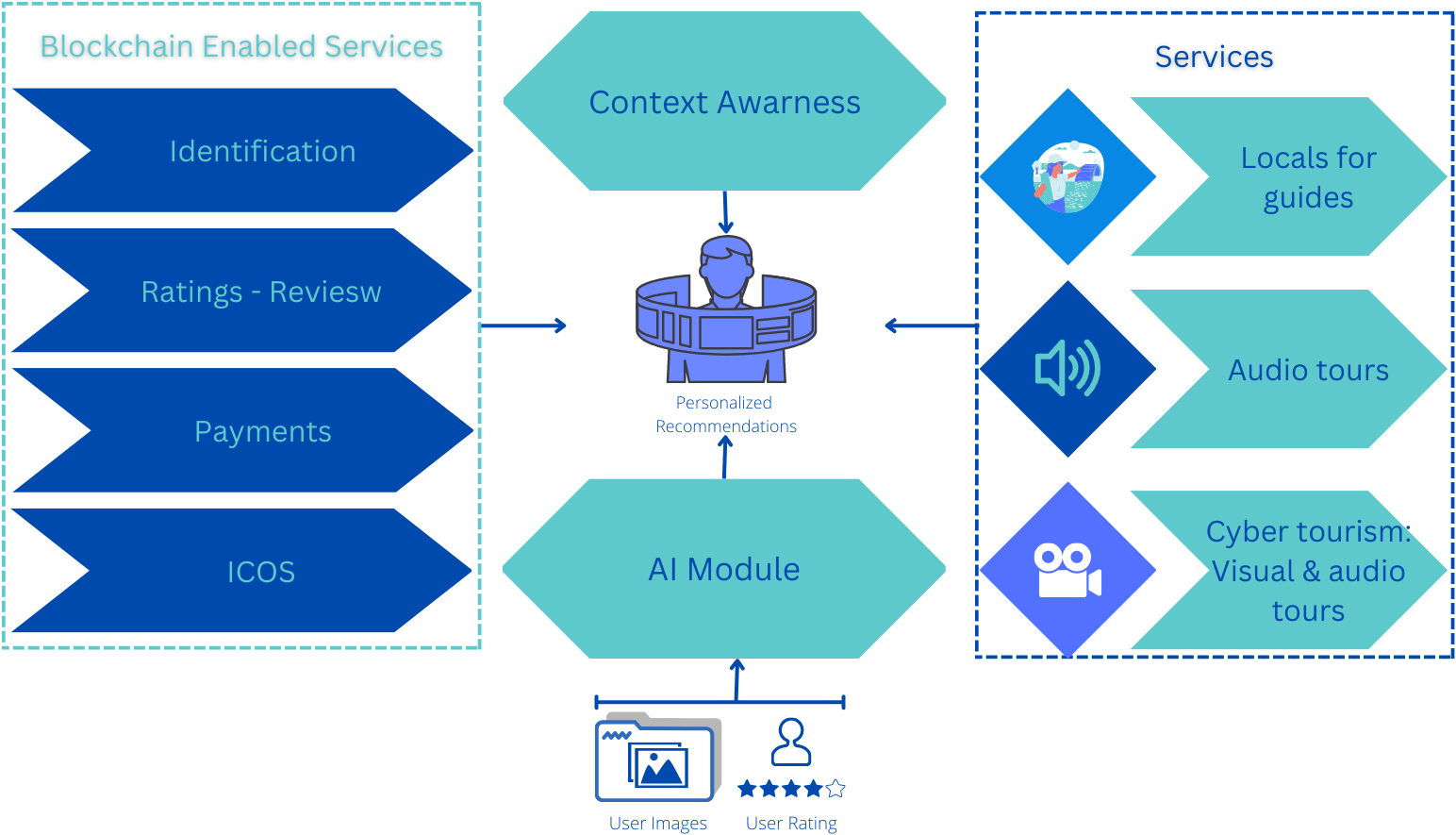
The findings of this study have provided us with the impetus necessary to establish a blockchain-based module that consists of different exploitations of blockchain and could enchance the usability and novelty of the proposed application. In the following sections, we will discuss the characteristics of the blockchain components that the proposed system includes, as well as provide an explanation as to why these components should be included in the first place.
Identity management component
The objective of the identity management component is to develop a sort of persistent online identity that will facilitate the formation of trust between parties.
As the world becomes more interconnected, some individuals may wish to conceal their true identities or create multiple profiles. Identification and profile management are crucial when leveraging an application that supports any type of transaction between unknown users. Even if social media applications lack genuine identity verification, this suggested approach aims to support the demand for a form of digital identification that could permit some form of security. As mentioned above, one of our objectives is to build and promote a system that could highly benefit residents of impoverished nations. In such countries is common for locals to work as guides with the assistance of intermediaries who retain large commissions. One of the reasons that this may happen is lack of trust. In such use-case scenarios, however, digital identity may be necessary to increase trust and reduce instances of fraud. In a world where about one billion people lack formal identification, blockchain offers a viable alternative. The correct digital ID technology, built with the right principles and enforced with the right standards, might protect individuals from the risk of misuse and enable billions to join the digital economy safely. In addition, secure digital identification aids in distinguishing genuine customer reviews from fake ones [44], thus strengthening trust once again. In particular, as its immutability makes it suited for digital identification, blockchain is capable of revolutionizing the way data is stored and managed. Blockchain enables individuals to establish their identity without using traditional documentation. It permits the storage of user data on blocks secured by cryptographic methods. As the blockchain evolves, each node containing transaction data becomes obsolete [17]. Currently, several blockchain-based self-sovereign identity systems that offer blockchain identity creation and management do exist that could be integrated in similar system architectures [91, 92, 93].
Ratings component
In the proposed smart tourism application, ratings and reviews serve as a potent instrument for establishing the trustworthiness of local guides and fostering tourists’ much-needed confidence. Unquestionably, user ratings are the best method to accomplish this, but in an era of false reviews, it becomes difficult for customers to trust what they read. Blockchain can improve the reliability and openness of an online review system [45]. Due to the immutability of blockchain records, reviews made on a blockchain-based platform cannot be removed. Due to the potential for making mistakes when writing a review, this module shall allow reviewers to have access to their own submissions. Nevertheless, all earlier versions of revised evaluations should be accessible to users. The immutability of blockchain records guarantees that any change performed on the blockchain platform cannot be undone and that only updates with a verifiable history are permitted.
Cryptocurrency payments component
The proposed application shall allow the use of cryptocurrencies for payments. Offering such an option in a smart tourism application is important for numerous reasons. As cryptocurrencies maintain a worldwide unit price, they enable fast, fee-free transactions, reaching universal coin prices. At the same time, the use of cryptocurrency in the smart tourism sector could allow locals without bank accounts to offer their services and be paid through trustworthy systems. As more than two billion people worldwide do not have access to bank accounts such an option is of grave importance. When cash becomes digital, people can spend and save money more easily and securely. At the same time, paying via cryptocurrencies relieves tourists of the burden of using foreign currency, which is fraught with the risk of high transaction costs and fraud.
A payment module that supports cryptocurrencies shall allow users to set and share unique deposit addresses. A deposit address is a transitional address used to link deposits to specific user wallets on a native cryptocurrency network. In other words, it is an address for receiving cryptographic payments. Specifically, the app will enable users to select the cryptocurrency(ies) they wish to be paid in from a dropdown menu and to set their deposit address(es) in a field. The aforementioned dropdown list must only include cryptocurrencies with large market capitalization such as Bitcoin and Ethereum, as well as low-volatility tokens. Volatility quantifies the degree to which the price of an asset has grown or dropped over a particular period. When it comes to investing, a volatile asset is generally viewed as risky [94, 95]. Such a coin is Tether, the first cryptocurrency backed by the U.S. dollar. Once deposit addresses are established, the user will be able to provide tourists with one or more cryptocurrency tokens to facilitate the payment together with the required amount for each token.
Initial coin offering
Additionally, tourism organizations can use initial coin offerings ICOs to acquire funds and produce a consistent income stream for investments and growth in new sectors that will improve the service quality they deliver to their clients [38]. ICOs are smart contracts based on blockchain technology that allow businesses to raise external capital without a middleman by issuing tokens. Unlike present approaches for early-stage financing, tokens might offer investors quick opportunities through liquid trading platforms. Numerous businesses provide the general public with tokens that may be sold on marketplaces. ICOs, a form of crowd financing, are widely used by blockchain businesses to fund the development of their distributed ledger or blockchain-based business models.
Generally, the process for the funding phase requires the publication of a whitepaper that describes the business plan, the coin’s technical approach, token creation, and the type of blockchain employed, in addition to other information regarding the features or functional specifics. To finance its operations and product development, the tokens or coins created are issued via a platform in exchange for money or cryptocurrencies like Ether or Bitcoin [96]. Typically, an emission startup defines two financial objectives: First, there is the soft cap, a minimal goal that must be met for the project to be realized. Second, a hard cap, automatically halts the ICO after the specified amount has been raised [97, 98]
That being the case, the key aim is to issue an ICO token to raise funds and promote the application in question. In order to create an incentive for utilizing application services, the platform will also reward users with the token. Users can view their accumulated tokens, which can be exchanged for app services. At the same time, users will be able to use these tokens outside the platform, such as for trading.
AI recommendations module
AI, or artificial intelligence, has been effectively implemented in a range of industries [99]. Together, smart tourism and artificial intelligence have the potential to totally change the tourism industry. This is not surprising considering that AI paves the way for autonomous human-like decision-making, which enables a variety of actions in the tourism business, from tailored suggestions to autonomous agents who reply to tourists. Consequently, a number of publications with theoretical or practical contributions to the deployment of AI in smart tourism have been produced. At the time of writing, however, AI has not yet realized its full potential in the tourism industry. Motivated by this, we concentrated our research on artificial intelligence approaches within the context of smart tourism and proceeded to a number of publications [88, 19, 100].
More specifically, inspired by our previous research [19], a combination of deep learning techniques is going to compose the AI module of this proposed system. Specifically, data required for the realization of the AI recommendations module can be divided into photographs captured by tourists and their ratings of application offered services.
With smartphones having become a “wearable” that nearly always accompanies travelers [101], one could claim that users capture in their photographs the things that they are most interested in, giving them an invaluable source of information regarding their long-term preferences. That being the case utilizing image labeling on user gallery images via convolutional neural network algorithmic approaches allows the identification of a list of entities that reside in the photographs of users, pinpointing the most frequent labels of touristic interest. In order to achieve that, Firebase’s image labeling is exploited. Firebase ML provides APIs that function on both the cloud and the device [102]. Convolutional Neural Networks (CNNs), a class of deep artificial neural networks [103], are frequently used for image identification and categorization into categories [104]. CNNs are feedforward networks that analyze low-level information to extract abstract notions, similar to a biological visual system in which objects and figures are identified by their edges and curves. CNNs, like all artificial neural networks, have an input layer, an output layer, and at least one hidden layer. When an image is fed into a CNN, it passes through the hidden layers, and the output is the probability that the image belongs to a particular category. Convolution Layers, Rectified Linear Unit (ReLU) Layers, Pooling Layers, and Fully Connected (FC) Layers typically make up hidden layers [105].
Labels deriving from the aforementioned approach together with user-rating interaction matrices, are going to be utilized in a Collaborative filtering Neural Network module, where pre-trained neural network models are going to be used to generate accurate predictions on user preferences from diverse data sets. Through this method, we hope to eventually address challenges such as the cold start problem, data sparsity, and privacy protection while providing accurate recommendations to travellers with minimal effort on their part. Moreover, we wish to establish a module that could be easily integrated in numerous smart tourism applications, as it relies for its success on data constantly present in environments that such systems run: images and ratings.
Context awareness module
“Context Awareness” in the area of technology refers to the ability to comprehend the context and use learned knowledge of the present environment [106]. Let’s take for example smartphones, these portable devices contain a significant number of sensors that capture raw data from their surroundings and are usually, if not always, within the context of travelers. Therefore, it is not unexpected that smart tourism studies devote considerable attention to the concept of context awareness.
For instance, data retrieved from GPS (Global Positioning System) sensor readings that reflect a geographical position, current date, time, and month, temperature, users’ speed, nearby persons and devices, etc., may correspond to users’ context and be beneficial in the smart tourism industry. Particularly, context may have a significant impact on user preferences, according to [107]; consequently, context modeling may be as important as user modeling in a personalized tourism recommendation system. In fact, it can play a significant role in the design of a tourism recommendation application because it enables intelligent responses. On the basis of this assumption, the developed application exploits smartphones’ physical sensors to dynamically obtain data that can be exploited in the scenario described above. In particular, user location and time are crucial in order to recommend activities and guides in the proposed system. Thus the context awareness module is responsible for the final filtering of the recommendations generated from the AI module. Moreover, exploiting tourists’ real-time whereabouts permits the implementation of location-based advantages such as discounts and special offers [50].
Cybertourism
Cybertourism has existed for a lot of years and has a clear tie with smart tourism. In 2002, [108] described cyber-tourism as a substitute to conventional travel by defining it as a virtual, electronic travel experience [109]. Twenty years later, [110] provides a definition again:
“Cyber Tourism: Is a developing alternative type of tourism where information technologies, especially virtual reality technology, are widely used. Cyber tourism has led to a change in the traditional space conceptualization, and has become increasingly emphasized in the context of tourism accessibility and smart tourism.”
Thus, while addressing cyber tourism, it is possible to abolish physical, social, and economic barriers, granting everyone access to an altogether new tourism realm. Therefore, practitioners and researchers appear to anticipate a future without physical constraints in which cyber tourism broadens horizons. To illustrate, the authors of [111] investigate the possibilities of both physical and cyber space travel. They contend that after cyber tourism replaces physical travel, the delivered experience will closely mirror the real thing.
Existing cybertourism platforms require simply a computer or mobile device with internet connectivity. A notable example is Google Arts & Culture [112], a non-profit effort that, in conjunction with cultural organizations and artists from around the world, renders the art and culture of the world accessible online to anybody, anywhere. Virtual reality 360-degree panoramas allows online viewers to take a panoramic tour of the Acropolis Museum’s galleries.35
Even though attempts have been made to use the possibilities of new technology in this industry, cybertourism has yet to be fully explored. Cyber tourism enables the avoidance of costly travel, the accessibility of previously inaccessible places, such as space, to a large number of tourists, and the participation in a virtual tourism world free of physical limits for people who are unable to travel. During the years of the Coronavirus outbreak, when several nations closed their borders to tourists, cybertravel was an attractive alternative that may be considered in similar situations where the number of accessible travel locations is restricted.
Inspired by aforementioned research, towards a cybertourism era that still allows local economies to benefit from travelers, albeit virtual ones, the suggested system incorporates a cyber tourism module that enables users to purchase tours captured by locals, as inspired by the aforementioned research. Consequently, visitors are able to witness places/monuments/experiences/locations via the eyes of a local, the most realistic experience possible. At the same time, guides will be able to introduce themselves, promote their tours, and establish a bond with prospective customers beforehand.
Blockchain is widely viewed as a revolutionary new technology that will disrupt established business and government administration structures in the coming years. In light of this, there has been a burst of interest from many industries and a spirited discussion on the role and purpose of this new technology in society [38]. In recent years, blockchain technology has been the buzzword in the area of smart tourism and hospitality. As indicated in this study, there is currently a number of research studies focusing on blockchain-enabled services for smart tourism.
In light of this, following an extensive review of the scholarly literature that has been produced in this sector over the course of the previous five years, we have selected and presented key research fields on the application of blockchain technology in the context of smart tourism. In this innovative study, we discuss the advantages of blockchain technology for the travel sector, online travel companies, the local economy, and travelers worldwide. Our goal is to discover and evaluate the applications of this technology in smart tourism, pave the way for future study, and inspire practitioners and researchers to develop systems that will usher in a more advanced era of smart tourism.
At the same time, inspired by the presented literature analysis we designed and introduce a context-aware mobile application that employs artificial intelligence and blockchain to create a hybrid cyber smart tourism application. By combining these two technologies, we hope to create an application that increases security and trust among its users, provides more flexible payment alternatives, and results in faster and more accurate suggestions. In addition, we hope to develop a smart tourist culture in which the combination of emerging technologies, such as those applied in this study, will truly reform and revolutionize future systems and applications.
As the suggested system is simply a prototype, it is crucial to distribute it, collect tourist-related data resulting from real users of the system in order to evaluate its performance, and possibly reevaluate the chosen configuration. Consequently, it is on our research agenda to conduct a comprehensive evaluation of variations of the suggested system. Distributing such a system widely in order to observe user acceptance, demonstrate and test its performance on actual data could result in the fine-tuning of an innovative smart tourism recommender application that utilizes AI and blockchain in a novel way.
Despite the fact that a number of research papers have already been published on the use of blockchain in smart tourist applications and frameworks, widespread adoption of such systems has not yet materialized. As a result, IT specialists, tourist stakeholders, and governments face difficulty, as the majority of tourism stakeholders are unaware of blockchain technology’s potential applications and effects on the business. Due to the fact that IT specialists are not tourism experts and vice versa, their cooperation becomes a need. If tourist stakeholders do not completely accept and embrace blockchain technology, neither the aforementioned services nor their widespread implementation can exist. Thus, linking tourism sciences and travelers with technologies remains a difficulty.
Utilizing various blockchain-enabled services, such as cryptocurrencies, necessitates education and knowledge of the particular topic. This study has the ability to raise awareness of the need to urge enterprises and governments to invest in the technological education of tourism scientists, IT professionals, tourists, and locals. Consider the proposed approach that could possibly be used in impoverished nations to increase locals’ income opportunities. There is a high possibility that such individuals will initially be unskilled or semiskilled. To use tourism to alleviate poverty, it is necessary to implement policies that promote education on the utilization of smart tourist systems. In addition to education, we believe it is essential to support investments and laws pertaining to smart tourism, artificial intelligence, and blockchain in order to advance the smart tourism industry.