



Abstract
In the context of fifth generation (5G) technology, Device-to-Device (D2D) communication plays a pivotal role, requiring swift and intelligent decision-making in mode selection and device discovery. This study addresses the challenge of rapid mode selection and device discovery within 5G communication networks, focusing specifically on enhancing spectral and energy efficiency for Internet of Things (IoT) applications. A novel self-centered game theory-based algorithm is introduced to optimize spectral efficiency and support intelligent mode selection. Additionally, the utilization of the support vector machine (SVM) expedites mode selection decisions. For D2D discovery, the Frank-Wolfe method is adopted, significantly improving the differentiation between D2D and Cellular users based on signal strength and interference, thereby enhancing spectral efficiency. The proposed approach maximizes spectral efficiency while adhering to strict power and interference constraints, intelligently partitioning bandwidth into two subparts using game theoretic principles to amplify spectral efficiency. Furthermore, the emphasis on energy efficiency is underscored through iterative calculations to achieve maximum energy-efficient spectral allocation. Numerical analyses validate the efficacy of the proposed technique, revealing substantial improvements in accurately predicted labels. As the number of devices increases, precision and recall rates experience noteworthy enhancements, ultimately leading to superior bandwidth utilization. This research presents a significant contribution to the field of 5G communication, particularly concerning energy efficiency, which is paramount for IoT applications. By accelerating D2D connectivity and optimizing energy and spectrum resources, it advances the goals of energy-efficient D2D communication within 5G-IoT networks.
Keywords
Introduction
In the world, there is always a problem with medical facilities and services for village/rural and urban areas. Although there are several hospitals available, the main issue of concern is to obtain the medical facilities at the proper time. In village areas, good multispecialty hospitals are not present in the nearby locations, so, the delay in the medical facilities is very obvious because of the long distance has been travelled by ambulance to get the medical services. However, the major issues arise even in Urban areas, where large numbers of hospitals are available, but due to heavy vehicle traffic on the road, the ambulance is not able to reach the destination on time. Fifth-generation (5G) applications in conjunction with IoT devices [1] provide a solution to this problem. With the help of the Device-to-Device (D2D) communication feature of 5G wireless communication [2], the alert signal may be provided to every vehicle and machine which is placed on the road like bus stands, traffic poles, and pillars, to provide a special lane for the ambulance, to get rid of traffic and reach the destination within the minimum stipulated time. By leveraging the feature of the Internet of Things (IoT), that is, service provisioning with multiple operators and carriers [3] between the D2D and the non-D2D devices, network congestion during peak hours may be a thing of the past. Since the mobility of the IoT devices [4, 5] will be greater than the conventional devices, the relay [6] of essential information via the D2D route would be a welcome innovation. Multi-hop D2D communication must be paired with secure IoT devices [7, 8] so that when it comes to avoiding vulnerabilities and threats, the newly formed D2D-IoT paradigm is up to the expectations of its intended usage [9] advertisement.
With the above-mentioned solution, we started working in the domain of D2D communication and explored the new smart and intelligent method with Machine learning techniques and proposed algorithms to provide the spectral efficient intelligent mode selection with Interference and optimal power management. In D2D communication, there is a lot of scope for working in the areas of resource allocation, mode selection, power management, energy efficiency [10], and spectral efficiency for the underlay model. Our efforts are concentrated in the domain of device discovery, mode selection, and spectral efficiency. Swift processing holds significant importance while utilizing communication modules. To guarantee minimized decision delays in mode selection for D2D communication, we apply machine learning techniques. To harness band efficiency in D2D communication, our emphasis lies on optimizing spectral efficiency and energy efficiency through mode selection.
List of abbreviations used in the paper
List of abbreviations used in the paper
Cutting-edge technologies such as IoT, Blockchain, Machine Learning, and Deep Learning are instrumental in driving progress in communication [11]. Among these, 5G wireless communication stands out for its pivotal role in enabling machine-to-machine (M2M) and device-to-device (D2D) communication. D2D communication is particularly noteworthy for ensuring optimal service quality in the 5G landscape, as it harnesses licensed frequencies to facilitate seamless communication among various compact devices. Within the realm of D2D communication, there exist several promising areas for research, including resource allocation, energy and spectral efficiency, power control, and mode selection. In our study, we placed special emphasis on investigating the mode selection method while delving into aspects of spectral and energy efficiency. In D2D communication joint optimization is used for the mode selection with power management with consideration of network load [12]. The mode selection dilemma in interference management can be solved using the degree of freedom approach [13]. The mode selection with power control is ensured by the resource management for 5G networks [14]. The enhanced packet rate can be achieved by implementing the D2D mode selection strategy in the case of burst traffic [15]. Mode selection is done with the resource allocation to minimize the end-to-end delay. The mode selection process is carried out using the allocation of resources. It helps minimize the end-to-end delay while utilizing Orthogonal Frequency Division Multiple Access (OFDMA) [16]. The joint mode selection process and the allocation of resources ensure the system’s spectral efficiency [17]. In [18], the authors proposed a method that can help improve the energy efficiency of distributed D2D offloading systems. However, authors should include robust algorithms that are capable of adapting to intelligent mode selection, and spectral efficiency, and addressing interference management challenges in crowded D2D communication environments. The optimal channel selection algorithm is carried out using the greedy algorithm to improve the Quality of Service (QoS) [19]. The optimal channel selection algorithm is carried out using the game theory method to improve the spectral efficiency [20]. Proximity-based mode selection is done to decrease the transmission delay for the D2D communication users [21].
With the help of the Internet of Things, the terminal devices shall be able to form a seamless connectivity, which shall support ubiquitous computing [22]. Authors of [23], proposed an approach to managing resources in D2D-NOMA networks that is more energy-efficient. However, the authors have not considered the algorithm’s performance under different dynamic network conditions with mode selection issues and enhance the spectral efficiencies in D2D communication scenarios. IoT also paves the way for easing the load of cloud storage by repurposing the end devices with storage capability [24]. Although virtualization properties of D2D networks have forayed into the “anything-as-a-service” domain [25], however, the integration of IoT in this field is still in the beginning phase. One area in which IoT spreads its reach towards a successful D2D communication establishment is when the service proximity discovery is taken into the data traffic routing techniques [26]. However, the practical benefit observed by the prosumers would be highlighted when the stimulus behind the use of two or more devices by leveraging IoT shall rope in even more users, leading to superior bandwidth utilization per user [27]. Using an iterative algorithm to solve the weighted minimum mean square error (WMMSE) problem increases the overall throughput of the D2D system considering the joint mode selection method [28]. The mode selection process is carried out by using a Markov model that increases the D2D system’s capacity [29]. The joint method for the mode selection and spectral distribution is represented here with the use of Stackelberg game theory [30]. Optimal power control with spectral efficiency is presented using resource allocation [31]. The use of an auction-based algorithm in D2D communication helps improve its spectral efficiency [32]. An optimal forwarding strategy and a mode selection method are introduced to increase the system’s spectral efficiency [33]. A traffic offloading scheme is used to achieve spectral efficiency [34].
The machine learning algorithm makes decisions for the data transfer without delay in the D2D communication [35]. Authors in [36], presented a method that enables D2D communication to efficiently allocate energy resources. However, the authors noted that the algorithm’s scalability and the ability to handle a large number of devices are still under investigation. They also are looking into the mode selection issues that can arise in complex IoT networks. The authors utilized a deep neural network framework to improve the efficiency of the optimization process for resource allocation [37]. DNN technique is used for the control logic optimization in the 5G networks [38]. Utilize the machine learning technique for resource allocation [39]. In 2014, the Stackelberg game theory was utilized to maximize the profit with minimum power flow to perform the resource allocation between the different data centres [40]. For the D2D communication to optimize the power allocation with interference, the Stackelberg game approach is utilized [41]. In [42] game theory is utilized for the mode selection in D2D communication to ensure the quality of services. For attaining the optimized transmission rate in D2D communication, Nash equilibrium is utilized for priority search-based resource sharing [43].
By studying the above-mentioned literature, several research studies have already existed in the domain of mode selection [10, 11, 16, 21, 27, 12, 13, 14, 15, 17, 18, 19, 26, 34], spectral and energy efficiency separately and jointly [17, 20, 28, 29, 30, 31, 32, 33, 34]. However, none of the mentioned literature demonstrates the application of machine learning methods in mode selection to enhance spectral and energy efficiency for low-power D2D communication with minimum interference [44]. For exploring more about the machine learning techniques in the domain of D2D communication, there is a dearth of work that addresses the mode selection, spectral efficiency, and energy efficiency with machine learning techniques for D2D communication. The literature reviews highlight the potential of machine learning methods to improve the efficiency and energy-saving capabilities of D2D communication. This paper presents a framework for developing a device discovery method based on the finite value method that takes advantage of the support vector machine (SVM) technique [45] for mode selection. SVM is a supervised machine learning method for the classification to attain the best optimum values. The selection of the SVM method in this work was motivated by its various advantages. It is because of its ability to perform well in the classification tasks, which aligns with the objective of classifying different modes such as D2D modes from Cellular modes. In addition, SVMs are well-suited for handling complex data structures and relationships since they can utilize kernel functions to extract complex patterns and correlations from the information. With its ability to handle complex relationships and data structures, SVMs are a suitable choice for developing our machine learning framework. In addition, due to its ability to generalize data, SVMs are ideal for performing well in the classification tasks related to D2D communication. This is crucial for the application in D2D communication where we need reliable and accurate predictions for mode selection in real-world scenarios. SVM ensures that it is suitable for addressing the energy efficiency challenges of 5G networks. Self-centric game theory concept has been used to optimize the spectral and energy efficiency in D2D communication within 5G-IoT Networks. Device-to-Device (D2D) communication involves the use of various IoT devices and users to make decisions regarding power control, mode selection, and resource allocation. Game theory can be utilized to analyze the behavior of each individual agent. In scenarios where the network environment is dynamically variable and energy constraints are significant, game theory can provide adaptable strategies to address these changes. This approach can help optimize the allocation of resources, manage interference, and reduce energy consumption. It can also facilitate decision-making among the network’s nodes to improve system performance. The game theory approach utilizes the incentive mechanism for resource allocation. It provides an optimization framework to attain better results in terms of energy efficiency, spectral efficiency, and minimum interference.
Key contribution
The key contributions of our work are summarized as follows:
We propose the machine learning-based Intelligent mode selection, spectral, and energy efficient algorithm (IMSSEEA) with device discovery for D2D communication. The formulated problem aims to enhance the spectral and energy efficiency of D2D system using the (cooperative) self-centric game theory-based algorithm while minimizing interference. The Support Vector Machine (SVM) method is utilized for the classification of the different modes such as D2D mode and Cellular mode. Further, we utilize the Frank Wolfe (FW) method to optimize complexity and ensure efficient device discovery. The proposed algorithm reduces decision time and quickly converges for mode selection, leveraging machine learning techniques. Numerical results confirm significant improvements in energy and spectral efficiency that can be achieved through the proposed IMSSEEA algorithm, which is also applicable in 5G-IoT applications.
The remainder of this article is organized as follows. In Section 2, we present the system model and the corresponding spectral and energy efficiency optimization problem. Section 3 describes the Intelligent mode selection, spectral, and energy efficient algorithm (IMSSEEA). Numerical results and detailed analysis are discussed in Section 4. Finally, the proposed work is concluded in Section 5 with future scope.
In this section, we describe the basic system model for D2D communication, defining the mathematical formulae of spectral efficiency by following the assumption and basic communication system parameters. In the cellular model, we assume that the channel bandwidth is divided into two parts
System model and assumptions
Let us assume that, there are
where
For the Resource sharing in the
whereas,
where,
Similarly, the SINR for the D2D user in the
whereas,
In this section, we formulate an optimization problem for the maximization of spectral and energy efficiency of the overall system. The objective is to maximize the efficiency of utilization of the spectrum and make the device more energy efficient for reliable connectivity of the device during communication.
Spectral Efficiency and Energy Efficiency can be defined as
where is the spectral efficiency and
Then, the objective of maximization of spectral efficiency can be mathematically formulated as an optimization problem as follows:
The constraint C1 ensures that every device can establish a single D2D link. On the other hand, constraint C2 defines the specific domain of the pairing indicator. Constraint C3 specifies the maximum power that each device can transmit. C4 represents the Quality of Service (QoS) constraints or threshold SINR. We denote the maximum transmit power by
List of notations used in the paper
Flow chart of proposed IMSSEEA algorithm.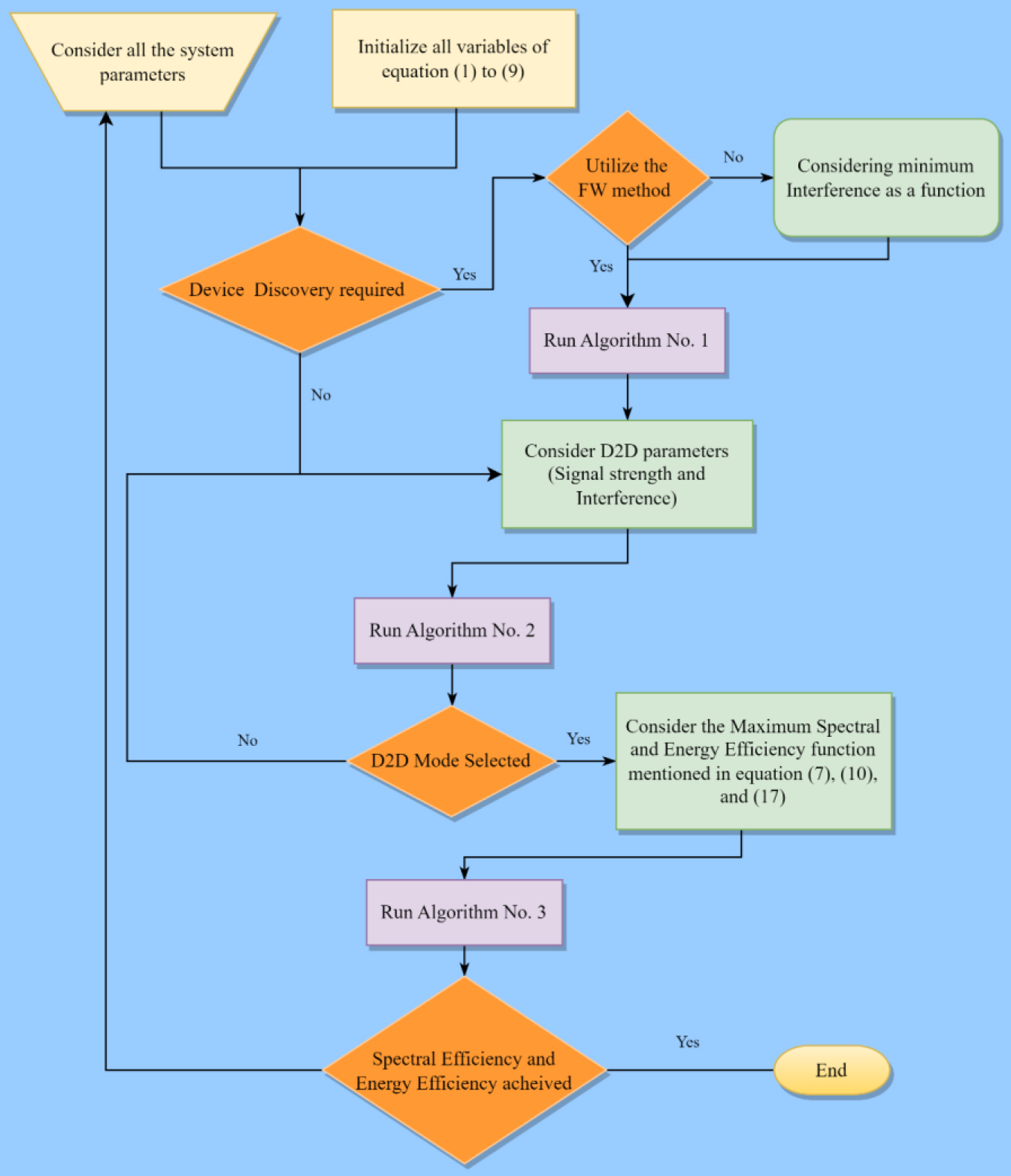
The formulated problem focuses on enhancing the spectral and energy efficiency of the D2D system using the (cooperative) self-centric game theory-based algorithm while minimizing interference. The algorithm utilized in our study is based on a self-directed game theory framework, which falls under the cooperative subgenre of games. For instance, D2D user pairs can collaborate to achieve certain goals, such as minimizing interference and maximizing energy efficiency. The goal of our study is to find a game model that enables users to work together seamlessly within a network. This can help improve its overall performance and allocate resources more efficiently. When paired with other devices, D2D communication within 5G-IoT systems can be enhanced by efficiently utilizing the available spectrum resources, reducing interference, and improving energy efficiency. This is important since it can help guarantee reliable connectivity. The algorithm’s self-centered concept states that each user makes decisions on their own based on their utility functions. These include data rate, energy consumption, and interference. Users make decisions together to improve the network’s efficiency. This study employs a self-governing algorithm that is based on the cooperative model, allowing users to enjoy the benefits of teamwork without compromising their autonomy. The cooperative model can help improve the system performance by providing a structure for decision-making of mode selection process, and it can also help develop a more efficient method for optimizing spectral and energy efficient for D2D communications within 5G-IoT network’s. The proposed algorithms are divided into three parts Algorithm 1, Algorithm 2, and Algorithm 3. To achieve Intelligent Mode selection, Spectral Efficiency and Energy Efficiency Algorithm 3 is used with its subparts Algorithm 1 and 2. When Algorithm 3 runs, then it automatically recalls the results of Algorithm 1 and 2.
Figure 1 represents the workflow of the proposed method (IMSSEEA). After the initialization of all the parameters given in Eqs (1) to (5a) by the consideration of the system parameters from Table 2, the discovery of the devices was done by the implementation of Algorithm 1. Whether a user is a D2D user or a cellular user can be determined by the implementation of an intelligent mode selection approach in Algorithm 2. Algorithm 3 is based on the game theoretic approach utilized for spectral efficiency and energy efficiency with the help of outcomes of the Algorithm 1 and 2.
Device discovery and intelligent mode selection
D2D communication, which does not require a centralized base station or other infrastructure, describes direct communication between nearby mobile devices. Device identification and discovery to create direct communication linkages between devices is a vital stage in D2D communication. Devices can locate possible communication partners using the proposed IMSSEEA technique for a variety of functions like file sharing, multiplayer gaming, and teamwork.
To perform the device discovery, the Frank Wolfe method [46] is utilized. The Frank-Wolfe algorithm is an iterative optimization method that is designed to tackle specific types of convex optimization problems. The main advantage of this method lies in its suitability for large-scale problems where computing the entire gradient at each step might be impractical or computationally prohibitive. Frank Wolfe’s algorithm is well-known for its simplicity and efficiency. This method works by progressively updating the current solution estimate in the direction of the gradient of the objective function at the current point. Instead of taking a full gradient step, it moves towards the minimum of the linear approximation of the objective function in alignment with the gradient.
To solve the device discovery problem, the below-mentioned solution is proposed using the Frank-Wolfe method.
Whereas
In Algorithm 1, the Frank Wolfe method is utilized to discover the D2D devices while keeping the view of minimum Interference, which achieves optimal performance by efficient device discovery. Further, we move towards the utilization of machine learning algorithms in the intelligent mode selection in the next step.
Intelligent mode selection is done by the implementation of Algorithm 2. In the Mode selection, decisions will be taken based on machine learning approaches used to determine whether mobile users started working in D2D mode or cellular mode. Mode selection uses the concept of Support Vector Machine (SVM) [47], a machine learning technique to predict the mobile user mode. After deciding on mode selection, if the user works in the D2D mode, then the spectral and energy efficiency is enhanced by using the game theory approach and achieved reduced interference with optimal power control which is ensured by Algorithm 3. The proposed concept reduces the time for decision-making of mode selection and enhances spectral and energy-efficient D2D communication.
Algorithm 2 provides a method to perform the intelligent mode selection which is used in Algorithm 2. If the system works in D2D mode, then the next step is to find the spectral and energy efficiency of the D2D communication, which is defined in the spectral and energy efficiency optimization approach in the next sub-section.
Spectral efficiency and energy efficiency optimization approach
To optimize the overall spectral and energy efficiency of the system, we utilize the self-centric and non-cooperative game theory approach. In this approach, each sub-band of
Subject to
and
Subject to
The power value of the Sub-bands has been updated by using the iterative method. Hence, the power is updated with the Sub-bands of
Where
With the help of Algorithm 3, we achieve the spectral efficiency for the D2D communication by concluding the decision of mode selection mentioned in Algorithm 1.
The data rate for the D2D communication at the k sub-channel is defined as
Whereas,
Energy efficiency [48] can be represented as
Where,
After obtaining the spectral allocation for D2D communication, the energy efficiency of the system is evaluated using Eq. (16) to analyze the impact of power losses in performance parameters and determine the number of iterations required to achieve maximum energy efficiency.
This section explores the outcomes of the algorithms that we have proposed. We used a machine learning method to select a suitable mode, and a game theory approach to improve the efficiency of the energy and spectral efficiency. The spectral efficiency of a given mode is then computed and simulated through a machine-learning training model. We assume the various parameters of the system model that are mentioned in Table 3.
System parameters for the numerical analysis
System parameters for the numerical analysis
Considering all the above-mentioned parameters, device discovery is performed by Algorithm 1.
Convergence rate of FW-based device discovery algorithm.
Figure 2 depicts the convergence characteristics and progress of the Frank-Wolfe (FW) algorithm during its iterations. FW gap measures the disparity between the current literate’s objective function value and the optimal objective function value. Keeping track of the Frank-Wolfe gap over iterations provides valuable insights into how rapidly the algorithm is approaching the optimal and energy-efficient solution. A diminishing gap indicates progress toward the optimal solution, while a slow or stagnant decrease may imply that the algorithm is nearing convergence or the current solution is already close to the optimal one. The rate at which the Frank-Wolfe gap reduces over iterations gives an insight into the algorithm’s overall convergence rate. The convergence rate of the Frank-Wolfe algorithm is O (1/k) which linearly converges with
Impact of different step size (0.2, 0.3, 0.4, 0.5, 0.6) with FW convergence.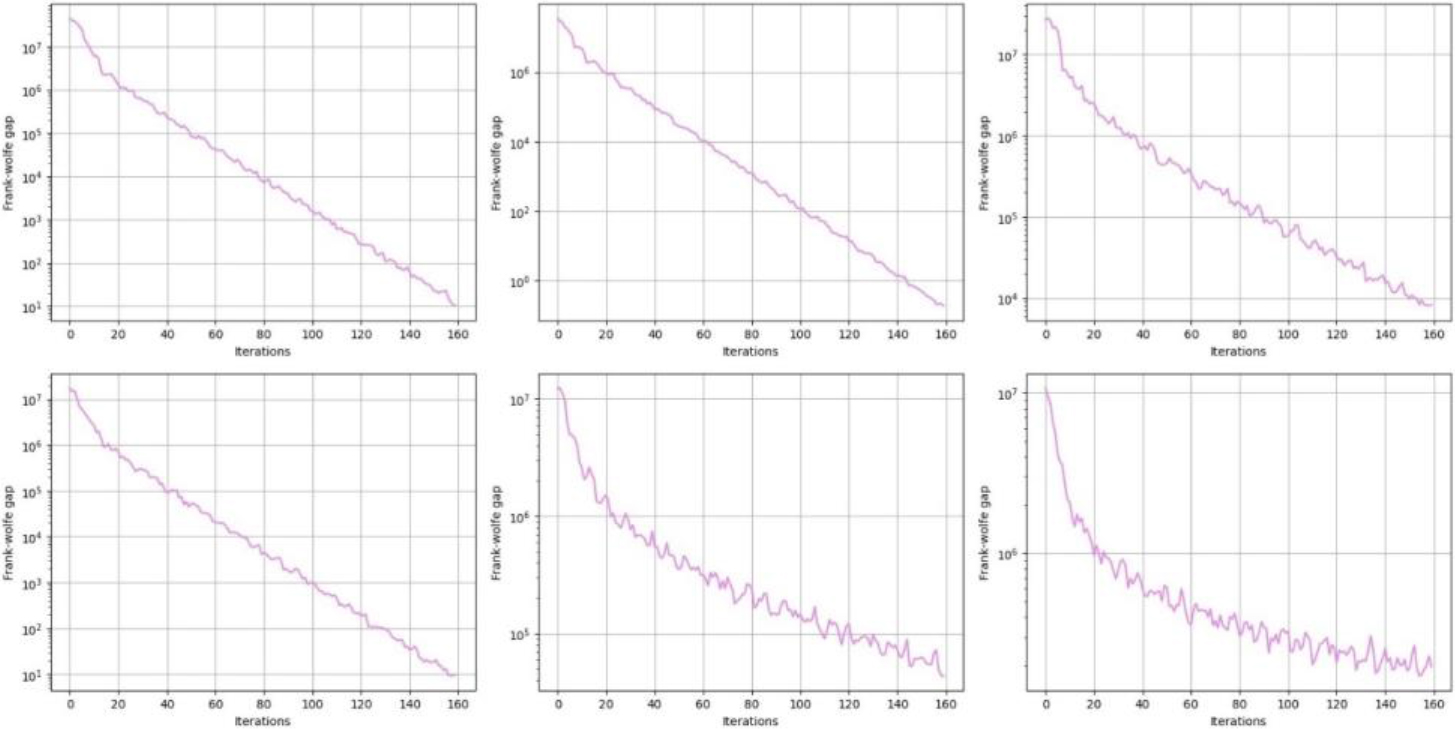
In Fig. 3, the impact of six different step sizes (0.2, 0.3, 0.4, 0.5, 0.6) can be visualized, with the plot between the Frank Wolfe gap and iterations to understand the convergence. In the Frank-Wolfe (FW) method, the step size also known as the “step length” determines how far each iteration moves in the negative gradient direction. The significance of the FW method comes from its impact on the performance and convergence rate of the proposed algorithm. The speed at which the algorithm approaches the ideal solution and how effectively it achieves convergence are directly influenced by the step size that is used. By choosing a suitable step size, the algorithm can converge more quickly and require fewer iterations to get a workable solution. For sophisticated computationally intensive large-scale situations, this efficiency is very important. Ultimately, the selection of the step size plays a pivotal role in the Frank-Wolfe algorithm, influencing how quickly the algorithm converges its stability and computational efficiency. Finding the right balance between fast convergence and stable behavior, without overshooting or undershooting the optimal solution, demands thoughtful deliberation and experimentation.
Convergence comparison of the proposed approach with other standard approaches for device discovery.
In Fig. 4, we analyze the convergence of different types of algorithms that is proposed technique (FW-based), Gradient Descent method, and Conjugate gradient method. The above-mentioned graph illustrates the linear convergence of Frank-Wolfe, logarithmic convergence of Gradient Descent, and rapid convergence of Conjugate Gradient. If the learning rate is too high, it can cause oscillations or divergence, leading to poor convergence. Conversely, if the learning rate is too low, the algorithm may take a long time to converge, resulting in slower progress. The Gradient Descent method, on the other hand, exhibits logarithmic convergence. The reasons for Gradient Descent performing poorly could include issues like choosing an inappropriate learning rate, or slow convergence due to the nature of the optimization perspective. Gradient descent overshoots the local minima if the learning rate increases that is the one reason that the proposed technique shows better convergence in comparison to other standard techniques (gradient descent method and conjugate gradient method) for device discovery problems.
Frank wolfe gap versus Iterations with different numbers of n-samples for device discovery.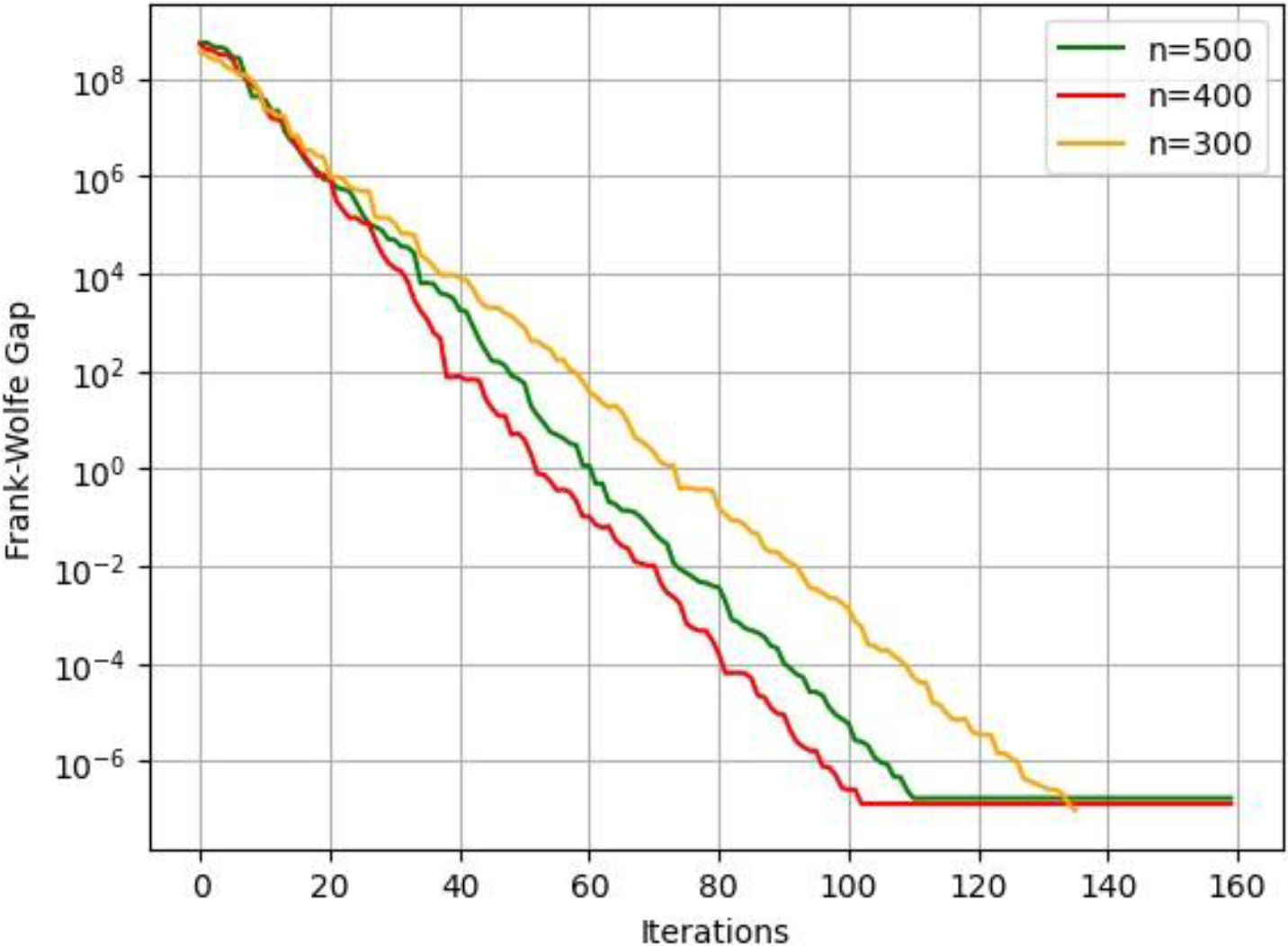
In Fig. 5, the impact of n number of samples can be visualized for FW-the based device discovery algorithm. Figure 5 shows the behavioral changes FW gap and number of iterations for samples
In the second step, we run Algorithm 2 in the machine learning simulation environment by setting the minimum value of Signal strength
True labels and prediction labels.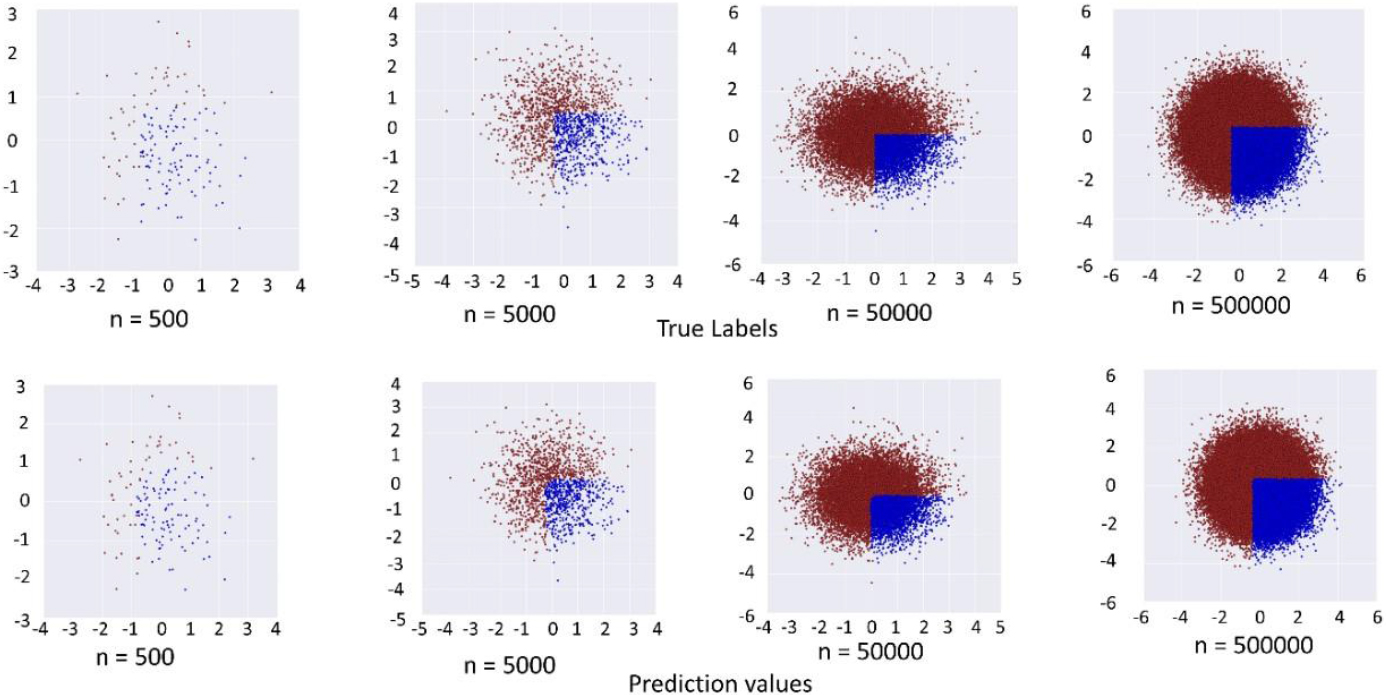
In Fig. 6, the true labels of
Final trained model for different number of devices.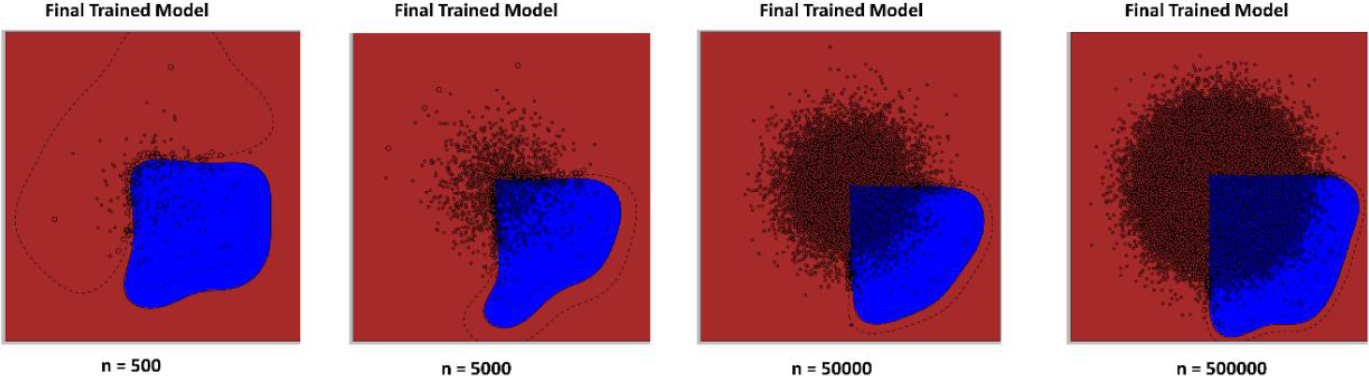
Figure 7 represents the final trained model that comes after the simulation of the n number of devices while considering the training set (true label) and prediction value (prediction label). The above figure shows the trained model results with
The representation of recall, accuracy, and precision by varying the number of D2D nodes is shown in Fig. 8. We were able to train the final model and achieve the desired recall, precision, and accuracy with Algorithm 2. The increase in the number of devices in a given cell leads to higher precision, recall, and accuracy values. Table 4 shows the accuracy, precision, and recall value after the simulation with
Comparison of mode parameters for different number of devices
Comparison of accuracy, precision, and recall percentages for the number of devices.
Table 4 illustrates the machine learning model response to the mode selection criteria for devices when the number of devices increases significantly. It considers precision, recall, and accuracy. For instance, if there are 5 Lac devices, the recall, precision, and accuracy values are 99.64, 99.49, and 99.64 respectively, are almost near to 100 percent accurate. The advantage of using a machine learning approach for the mode selection is that it can perform better than the past prevailing techniques [16, 21, 28, 29] when it comes to making fast decisions and accurate decisions with large numbers of devices. The intelligent classification and mode selection process of the IMSSEEA platform is powered by machine learning techniques such as support vector machine. This allows it to improve decision-making speed and reduce network congestion. The platform uses a cooperative game theory-based approach for optimizing spectral efficiency and mitigating interference. It also facilitates decision-making and helps improve network performance. The system uses the Frank-Wolfe method for discovering and mode selection, which helps reduce network congestion and decision time. It also optimizes the spectral efficiency of the network through energy efficiency and bandwidth partitioning.
To get the spectral efficiency of the D2D communication system, we have done the numerical analysis of Algorithm 3 which automatically calls Algorithms 1 and 2, taking further action after getting the decision whether the device works in D2D mode or cellular mode.
Spectral efficiency versus interference.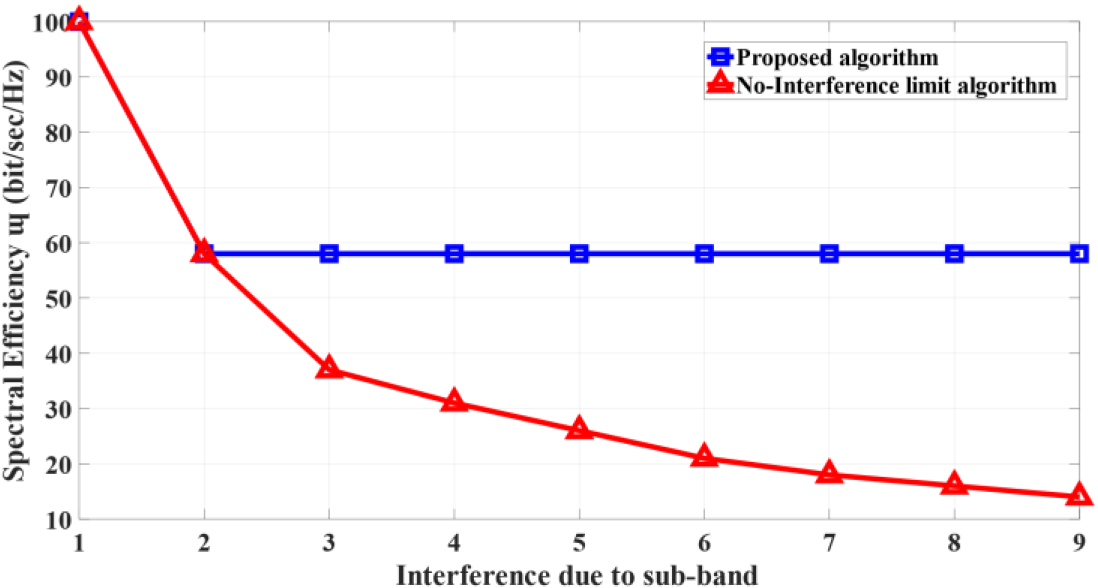
Figure 9 illustrates that the spectral efficiency of our proposed algorithm is best as compared to no-interference limit algorithms that is Fixed channel allocation method [49], which assumes that each communication channel operates independently without causing interference to others. As per the proposed algorithm, the total band B divides into two sub-bands named
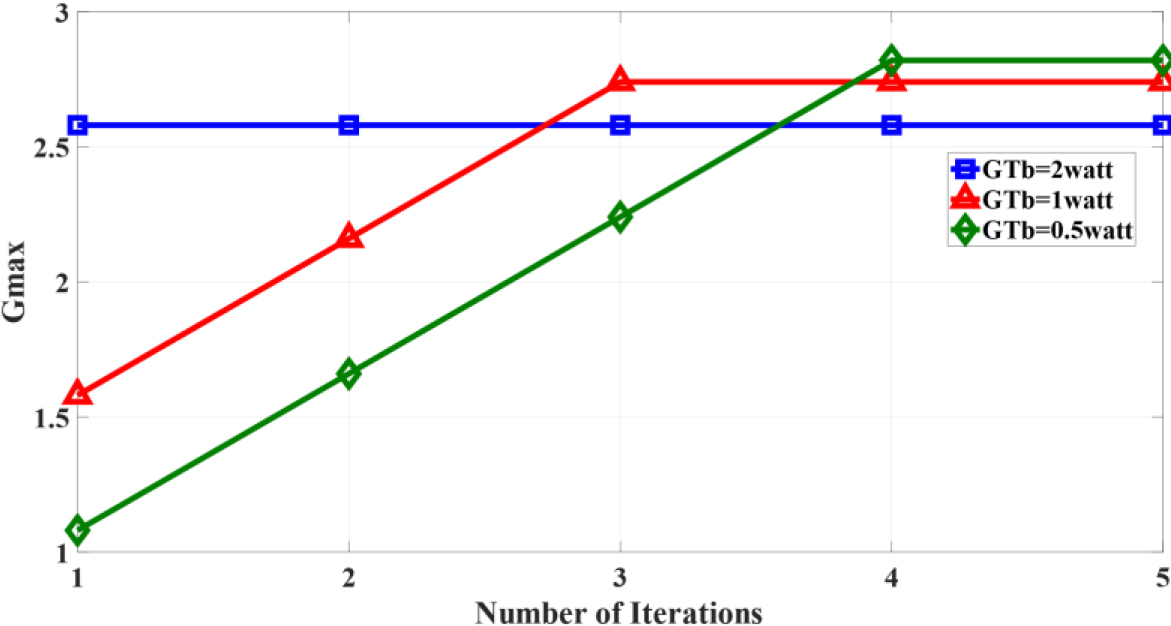
Figure 10 shows the maximum power that a system can transmit while accounting for the number of iterations that are required to achieve its optimal performance of the system. As we can see from Fig. 10, the lower transmission power
Energy efficiency versus iteration.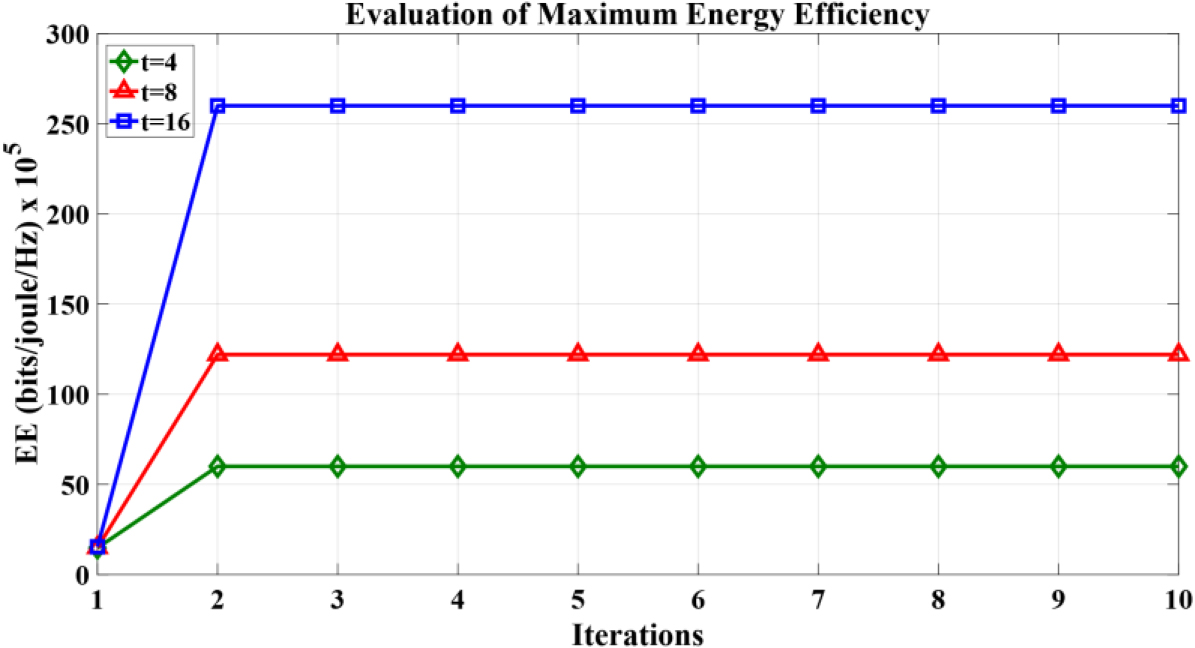
Figure 11 represents the evaluation process of energy efficiency, which involves various parameters from Table 3, and Eqs (1) to (16) represent a critical step in optimizing D2D communication systems. A noteworthy observation is that the number of D2D devices presented in a cell can significantly impact the energy efficiency outcomes. In this particular scenario, three different values, namely 4, 8, and 16, are used to represent the number of D2D users within a cell. Remarkably, the results of this evaluation vividly demonstrate the enhanced value of energy efficiency achieved by the proposed approach. Specifically, it is observed that the system requires only two iterations to reach the point of maximum energy efficiency. The proposed algorithm not only maximizes energy efficiency but also enhances the overall sustainability and economic viability of D2D communication systems. In essence, the significance of energy efficiency in D2D communication lies in its ability to streamline operations, reduce costs, and contribute to a more sustainable and environmentally responsible communication infrastructure.
In this paper, we have empirically established the exceptional performance of our proposed Intelligent Mode Selection, Spectral, and Energy Efficient Algorithm (IMSSEEA) across various facets of device discovery and D2D communication optimization. IMSSEEA has proven itself capable of intelligent discovery, mode selection, and spectral efficiency enhancements, positioning it as a promising solution in the landscape of 5G networks and the Internet of Things (IoT). A pivotal contribution of our algorithm lies in the realm of device discovery. By incorporating the Frank-Wolfe (FW) method, we have significantly enhanced the efficiency of this critical process while simultaneously minimizing computational complexity. This improvement translates into swift and accurate identification of devices, ultimately bolstering overall network efficiency. The Support Vector Machine (SVM) is an integral part of the proposed IMSSEEA approach by leveraging machine learning techniques that help the system perform well in mode selection. This approach enables rapid decision-making, with accuracy, precision, and recall values approaching perfection as the number of mobile users increases. Additionally, our algorithm adopts a self-centric game theory approach to maximize spectral efficiency, leading to a remarkable twofold increase in overall spectral efficiency. The algorithm exhibits a rapid convergence towards maximum energy efficiency, necessitating minimal iterations. This attribute underscores its prowess in conserving energy while optimizing network performance, both of which are of paramount importance in the realm of D2D communication and 5G applications. IMSSEEA demonstrates its applicability by successfully implementing D2D communication for 5G applications. It is particularly effective in scenarios that demand swift mode selection and spectral efficiency, especially when catering to a larger user base within a cell. For 5 Lac devices, the achieved recall, precision, and accuracy values for the proposed IMSSEEA approach are 99.64, 99.49, and 99.64, respectively. Also, linear convergence is achieved for the proposed Frank-Wolfe (FW) method for intelligent device discovery. IMSSEEA holds immense promise in facilitating the seamless switching of IoT devices, ensuring uninterrupted connectivity for D2D end-users, and enabling a diverse range of services. It has the potential to reshape the landscape of IoT and D2D communication, emphasizing the critical role of energy efficiency in driving a connected and sustainable future. IMSSEEA represents a substantial leap forward in addressing the evolving challenges presented by 5G networks, showcasing its capabilities in energy conservation and performance optimization.
In the future, this work may strive to refine and extend the proposed algorithm that can dynamically adjust mode selection and resource allocation based on changing network conditions and traffic patterns will be crucial to optimize D2D communication in highly dynamic and heterogeneous IoT environments.
Footnotes
Acknowledgments
There are no acknowledgments.
Conflict of interest
The authors declare that they have no known competing financial interests or personal relationships that could have appeared to influence the work reported in this paper.