



Abstract
A secured IoT routing model against different attacks has been implemented to detect attacks like replay attacks, version attacks, and rank attacks. These attacks cause certain issues like energy depletion, minimized packet delivery, and loop creation. By mitigating these issues, an advanced attack detection approach for secured IoT routing techniques with a deep structured scheme is promoted to attain an efficient attack detection rate over the routing network. In the starting stage, the aggregation of data is done with the help of IoT networks. Then, the selected weighted features are subjected to the Multiscale Depthwise Separable 1-Dimensional Convolutional Neural Networks (MDS-1DCNN) approach for attack detection, in which the parameters in the 1-DCNN are tuned with the aid of Fused Grasshopper-aided Lemur Optimization Algorithm (FG-LOA). The parameter optimization of the FG-LOA algorithm is used to enlarge the efficacy of the approach. Especially, the MDS-1DCNN model is used to detect different attacks in the detection phase. The attack nodes are mitigated during the routing process using the developed FG-LOA by formulating the fitness function based on certain variables such as shortest distance, energy, path loss and delay, and so on in the routing process. Finally, the performances are examined through the comparison with different traditional methods. From the validation of outcomes, the accuracy value of the developed attack detection model is 96.87%, which seems to be better than other comparative techniques. Also, the delay analysis of the routing model based on FG-LOA is 17.3%, 12.24%, 10.41%, and 15.68% more efficient than the classical techniques like DHOA, HBA, GOA, and LOA, respectively. Hence, the effectualness of the offered approach is more enriched than the baseline approaches and also it has mitigated diverse attacks using secured IoT routing and different attack models.
Keywords
Introduction
IoT is the situation where the sensor, things, and objects are offered with network connectivity and computing. So, the objects are easily created and convey the data without human interaction [1]. Moreover, IoT is widely utilized by many applications to monitor farming, the environment, industry, tracking and shipment, smart city, and so on [2]. Thus, the need for IoT is increasing rapidly in human life. In the real-world scenario, highly secure communication is essential for effective installation. It is more complicated to provide secured communication with heterogeneous devices [3]. Most communication devices are more powerful than resource constraints. Furthermore, users required effective communication among the devices with improved security rates [4]. Professionals sometimes work efficiently to design lightweight protocols and techniques for effectual communication in the constrained node on the internet [5]. IoT is the smart object network linked with various nodes and the internet. Based on IoT, smart electric devices gained an effectual progress rate [6]. But, privacy and security-based techniques efficiently utilize IoT techniques. Data exchange is more essential in IoT networks, at the same time, they are highly affected due to breaching attacks. Health applications are called sensitive applications, which need to handle the data related to the service provider and the end-user. Various disruptive attacks take place due to minimal security solutions [7]. Furthermore, IoT needs to fulfill the requirements based on security, integrity, confidentiality, and availability for efficient adaption. The enhancement in IoT secured better improvements in different smart solutions. This leads to the implementation of a wide range of different smart solutions and multiple IoT-based linked objects [8].
Generally, IoT is fused with different small-sized smart devices with minimal resources like energy, storage, and validation [9]. The traditional connection setup inter-connects the components according to energy-efficiency-based wireless communication. Utilizing Low-power and Lossy Networks (LLNs) offers a better performance rate to design an efficient networking solution with an IoT structure [10]. The essential characteristic of LLN effectively supports the efficacy of energy and minimal power communication over the simple wireless structure [11]. LLN requires a minimal-cost IoT network that deploys interconnection over multiple constrained IoT devices. The network routing performed between the IoT devices in the LLN layer is subjected to efficient data communication in IoT [12]. So, an effectual network routing solution for IoT is essential to improve the important features of LLN.
Different complications presented in the IoT devices are resolved using RPL to minimize the routing attack in the system and enhance the efficacy of routing in RLP [13]. Moreover, they are not developed in real-world applications and approaches. Later, more research works are implemented for detecting different kinds of attacks over the RPL model [14]. Deep structured methods like Recurrent Neural Networks (RNNs), as well as Long-Short Term Memory Networks (LSTMs), are utilized to study the patterns presented in the long sections. LSTM effectively performs pattern analysis because they are improved from RNN [15]. It is feasible to utilize the LSTM to study the characteristics and pattern of the network data, and they are employed to categorize whether the attack is normal or not [16]. Deep learning techniques didn’t need to perform more procedures as they work efficiently with the features, and also, the traditional machine learning approaches are widely utilized with the raw data. Different research works have been designed for the RPL to enhance the cryptographic defense attack and security features over the rank attack [17]. Yet, they resulted in validation overhead and utilized more energy, which is against over RPL policy. Thus, the basic aim of the recommended technique is to enhance the RPL technique to identify and isolate the rank attackers. Among all those implemented techniques, this paper provides a new concept for better performance for Secured IoT routing against different attacks.
Multiple contributions linked with the initiated attack detection with malicious node mitigation framework for secured IoT routing are explained below.
To implement an innovative attack detection model for secured IoT routing technique with deep learning strategy to obtain effective attack detection rate over the routing network to offer better attack detection rate. To obtain the efficient weighted features, the weights presented in the selected features are tuned by recommended FG-LOA to improve the efficacy of attack recognition. To construct the novelty in attack detection technique in secured IoT framework named MDS-1DCNN to resolve the complications by modifying the parameters of 1DCNN by initiated FG-LOA to enhance the rate of attack identification by maximizing the accuracy. To mitigate the malicious node in the IoT network to minimize constraints like energy consumption, path loss, delay, and shortest distance by developed FG-LOA. To design a novel heuristic technique named FG-LOA to alter the constraints of 1DCNN like learning rate, epochs, and the number of suitable hidden neuron counts and improve the weights and essential features of the recommended system. To validate the efficacy of the constructed MDS-1DCNN-based attack detection framework over multiple observations with conventional heuristic technique and attack detection strategy.
The leftover parts of the implemented attack detection framework for secured IoT routing systems are elaborated as follows. Multiple literature works connected with the conventional attack detection framework are detailed in Section 2. Secured IoT routing over different attacks is explained with the deep learning strategy provided in Section 3. Multi-attack detection frameworks with the developed MDS-1DCNN-based attack detection are detailed in Section 4. Attack detection with several multi-objective constraints is discussed in Section 5. Different experimental observations performed over the initiated framework over the conventional technique are provided in Part VI. Finally, the conclusion parts of the offered framework are provided in part VII.
Related works
In 2022, Nandhini et al. [18] proposed an Enhanced-Rank Attack Detection (E-RAD) framework to minimize the production of DODAG Information Object (DIO), and also they utilized the message solicitation model DODAG Information Solicitation (DIO) for isolating the rank attackers. The attackers can be identified using the Destination Advertisement Object (DAO) message. Moreover, alarm models were linked with the control message but not the packet to identify the attackers. Finally, the designed model attained an enriched performance rate regarding accuracy and minimal overhead issues in constructing the control packet.
In 2022, Muzammal et al. [19] proposed a protocol based on Secured Mobility Trust named SMTrust by validating the trust measures associated with mobility-based measures in IoT. The major usage of SMTrust was to offer better security over the blackhole and RPL rank attacks. Moreover, the recommended protocol was validated over three various scenarios like mobile nodes, static, and dynamic in the IoT network. Later, the developed SMTrust was contrasted over different objective functions and ranking schemes regarding throughput, packet loss rate, and topology stability.
In 2020, Alsukayti and Singh [20] introduced a lightweight as well as efficient recognition and fusion resolution over RPL VN attack. Here, minimal changes were performed in the functionality of RPL. Next, a security technique named the collaborative and distributive model was fused with the protocol structure. The implemented protocol offered an accurate and efficient recognition rate with a better convergence rate on the attempted attack. They efficiently maintained traffic overhead, consumption of energy, efficacy of QoS, and stability rate of the network in various VN attacks. The recommended framework secured better efficacy outcomes when contrasted with the existing techniques with minimal communication overhead, no additional entities, and simple local node processing.
In 2022, AliSeyfollahi et al. [21] proposed an optimization technique named Moth-Flame Optimization-based secure scheme for RPL (MFO-RPL) to modify the routing procedure and the attack identification in RPL. Moreover, MFO-RPL utilized the petal approaches to choose the next hop nodes and design an optimal way among the root and the source in a graph. Further, the rank attacks presented in RLP were identified by MFO to secure from the malicious nodes chosen by the parents. Experimental analysis performed under various analyses displayed that the suggested framework lost minimal packets and used decreased convergence time and attack than the classical techniques.
In 2020, Sahay et al. [22] recommended a layered framework to perform efficient security routing for observing the attacks related to every stage of the routing procedure. They effectively explored inherent characteristics presented in blockchain to increase the routing security in IoT LLNs. To conclude this developed framework, a novel blockchain-based framework, and smart contracts were designed to produce real-world alerts for improving the efficacy of the sensor node included in the LLN tampering.
In 2022, Ragesh and Kumar [23] has proposed securing data for IoT-based communications. At first, Fuzzy and Particle Swarm Optimization (F-PSO) was employed to define a secured path. Later, cryptographic models were utilized with a learning-based encryption framework for effective data encryption. Here, the trust values of the entire node presented in the network were validated by trustworthiness observation. Based on true value, the malicious nodes were collected then the features of secure nodes were used to identify highly secured paths among the destination and source by F-PSO. Once the secured paths were identified, the essential data were encrypted effectively. Thus, the suggested structure secured a better throughput rate with a minimal delay than the classical techniques.
In 2022, Janani and Ramamoorthy [24] presented a deep structure architecture according to LSTM and Adaptive Mayfly Optimization Algorithm, and this combination is termed (LAMOA) to perform efficient categorization in IoT attacks. The adaptive optimization model altered the weights over different layers in LSTM and fully connected layers for categorizing. In different examination procedures, the offered approach achieved an enriched rate than the standard techniques.
In 2020, Lalit Kumar and Pradeep Kumar [25] addressed the energy problems presented in Wireless Sensor Networks (WSN) to attain better routing rates. The main stages of the implemented framework were transmission and clustering, and also the energy-efficient cluster head is performed according to various criteria like distance, packet delivery ratio, throughput, security, and residual energy. Later, different classical optimization models were used to employ efficient cluster head selection in the multi-objective function. Finally, the recommended model attained a better routing energy efficacy rate.
Summary
The major advantages and limitations of secured IoT routing against different attacks are listed in Table 1. The e-RAD [18] model has effectively detected the newly joined attackers in the networking model. It consumes lower energy for performing the overall performance in the networking model. Incorporating node mobility as well as the detection of other IoT attackers needs to be developed. SMTrust [19] technique has been adopted by most IoT applications and is prone to various attacks. It has also provided better outcomes for throughput, topology stability as well as packet loss rate. There is a requirement for a power consumption system. CDRPL [20] method has incorporated the distribution and collaborative model against the VN attacks. It also can provide fast and accurate detection of composite and simple VN attacks. The effective mitigation of hybrid attacks is lacking in this model. The MFO-RPL [21] model has a better balance between the exploitation and the exploration phase, which improves the performance of this model. It has also provided a better convergence rate while performing the cluster head function. But, this technique has failed to protect the routing information. IoT-LLNs [22] model has assured the most secure and effective routing process. It has included the alert signal in this model, which has improved the performance of this model. The growing size of the blockchain and the volume of the generated data have a major impact on this model. F-PSO [23] model can potentially optimize the parameters of several learning models and is also used to resolve various issues. It shows better computational efficiency when assimilated over other models. It has acquired a low convergence rate. The ensemble [24] technique has been utilized to get rid of the characteristics that are redundant and irrelevant features. It has shown better outcomes over the performance metrics when compared to other models. There is a lack of a better understanding of dataset and pattern classification and predictions. The ensemble [25] method has provided secure-energy-aware multi-hop routing that has effectively increased the model’s performance. But, it is more expensive in terms of both time and space.
Uppercomings and Lowercomings of secured IoT routing against different attacks model
Uppercomings and Lowercomings of secured IoT routing against different attacks model
Proposed energy efficient attack detection-based secured IoT routing model
IoT is widely employed to fuse different devices, which are operated and communicate continuously to allow devices, peoples, and services to link and interchange the data in huge applications utilized in industrial and healthcare environments. Such devices are termed potential vectors for the attack from the malicious node. Moreover, malware and botnet-related attacks create more threats to the protection of the device and the hosting network, like IoT devices. Based on these attacks, more demand is generated to recognize and classify the compromised device in time to integrate the risk with the network and IoT devices. According to this previous outcome, more need is generated to perform dynamic detection as well as recognition in the compromised devices on time to resolve the mitigation risk in the network and also a successive time limit in the IoT devices. The key elements are more needed for recent and upcoming security in sensor-cloud systems. So, there is a need to analyze the efficient solution for countering the attacks. Moreover, an Intrusion Detection System (IDS) became an essential technique to resolve the complications presented in network security. Further, these techniques are employed to monitor the traffic on the network and also to detect dangerous activities. Generally, the IDS are categorized as anomaly-based and signature-based defense methodologies. The signature-aided IDS effectively identifies the instructions and protects the network from well-known attacks. Next, the anomaly-aided IDS monitoring network effectively monitors and compares the traffic over the previously obtained patterns to detect malicious activities. Finally, the anomaly recognition model offered a better recognition rate in detecting the new attacks, at the same time; it requires some recurrent updating to identify the new attack. So, several complications presented in the standard energy-efficient attack detection models must be determined. Hence, a novel energy-efficient attack detection framework with malicious node mitigation is designed by considering the limitations of the existing techniques, and their pictorial presentation of the developed framework is given in Fig. 1.
Pictorial view of developed energy efficient attack detection framework with malicious node mitigation.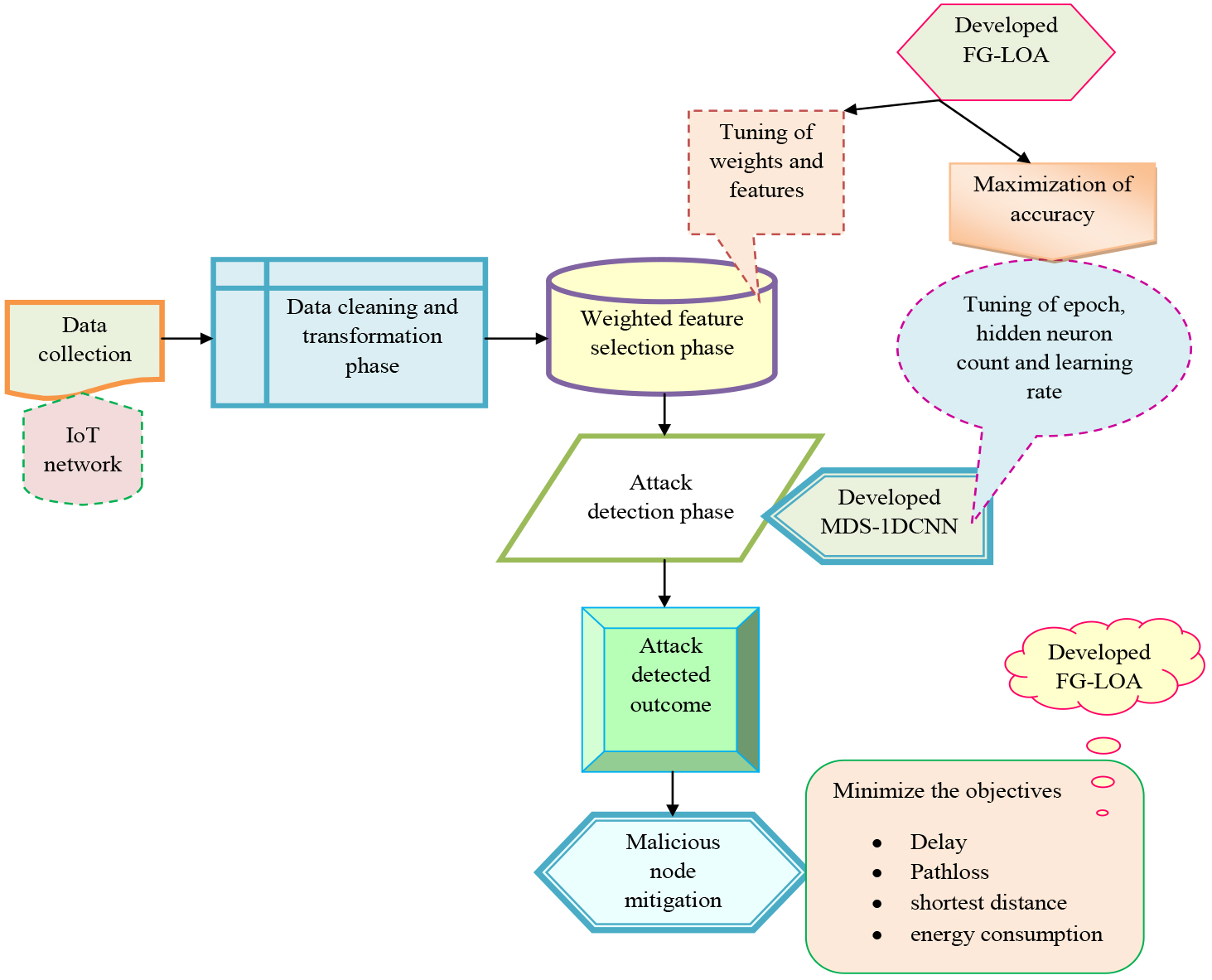
A novel energy-efficient attack detection framework with malicious node mitigation is designed to recognize different attacks like version attacks, replay attacks, and rank attacks in a secured IoT-based routing model. Initially, fundamental data for the validation are garnered from the IoT networks and forwarded to the data cleaning and transformation region. Then, the data cleaned and transformed are subjected to a weighted feature selection region. Here, the weights of the essential feature are tuned by the offered FG-LOA. Next, the weighted features are input to the attack detection phase. In this phase, the initiated MDS-1DCNN model is utilized to detect several attacks and also their parameters like learning rate, number of suitable hidden neuron count, and epochs, and are modified by developed FG-LOA to maximize the accuracy of attack detection. Later, efficient routing is performed over the selected node by mitigating the malicious node in the IoT network, and also, they efficiently validate and minimize diverse variables like delay, energy consumption, path loss, and shortest distance in the suggested framework. Therefore, the recommended attack detection structure attained an improved attack recognition rate.
Different data utilized for the investigation are gathered from the IoT-based intrusion detection dataset and the hyperlink https://drive.google.com/file/d/1iVLjkQ0G8Mo8Azcc3czeZLcmEWMDDvnb/view?usp= sharing: Access data: 2023-04-18. The dataset consists of the simulation outcome of the cross-layer intrusion detection model with an IoT network. The dataset holds two validation outcome file types. pcap and .log files. Moreover, two networks are utilized for the observation. The dataset is commonly employed to detect the Hello Flood Attack, Version Number Attack, no attack cases, and Worst Parent Attack. For every attack model, five various examinations are performed according to the density. The dataset employed for the observation attack detection in the IoT-based routing model is offered as
IoT routing model
IoT is termed the interconnection among various validating devices for supporting different applications related to monitoring and controlling. To assist multiple applications and devices from various vendors, the current IoT system accepted open standards with different protocols designed according to the wired global internet. Mostly, IoT networks are differentiated from the classical wired computing network based on their basic methodologies. These kinds of differences create essential complications in the TCP topologies presented in the IoT environment, and resolving these limitations effectively creates great in the structure of a network. Moreover, the IoT network holds more minimal-end resourced devices. The construction of these devices is obtained from minimal operational and manufacturing costs. Furthermore, IoT devices are designed with minimal validation power and must operate for huge periods with a battery. Based on power constraints, the IoT network utilized minimal energy-aided techniques with reduced power transmission rates. The common limitation presented in the IoT network is to accept the packet size with constrained links. IoT nodes save energy with wired networks and utilize the wireless mesh topology for efficient communication. The architectural view of the IoT-based routing model is given in Fig. 2.
Structural presentation of IoT-based routing model.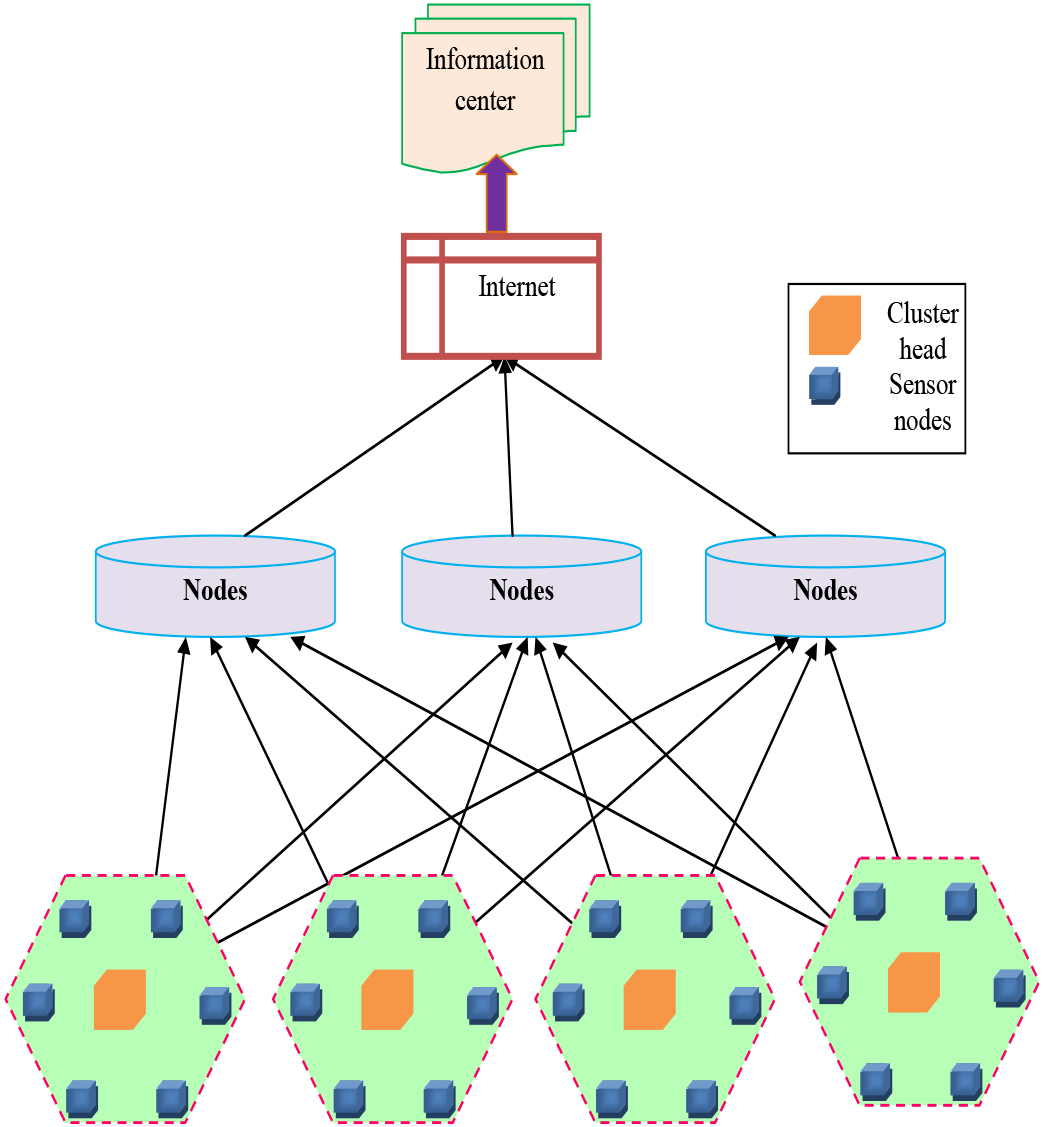
Data aggregation
In this phase, essential data like the IoT-based intrusion detection dataset for the experiments are taken from online sources, and the data presented in the dataset are acquired from IoT devices and provided as the input. Here, the collected data utilized for the analysis are termed as
Cleaning of data and transformation
The aggregated data
Weighted feature selection with heuristic tool
The cleaned and transformed data
Here, the term
Pictorial presentation of a weighted selection of features using developed FG-LOA.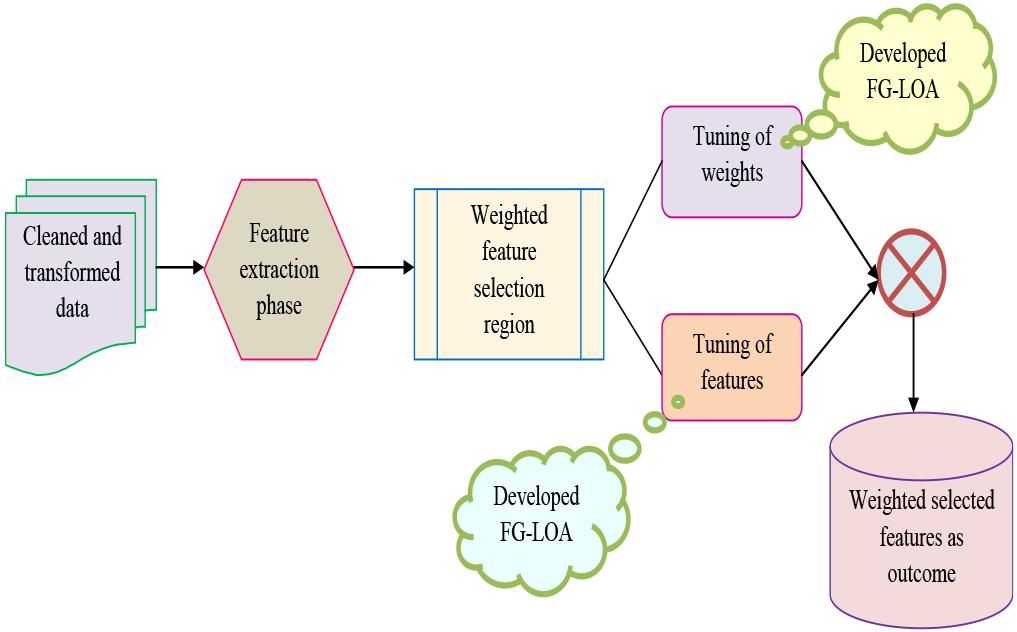
The weighted features
In the input layer of 1-DCNN [26], weighted features are used as the input. Essential features for the analysis are effectively acquired from the convolution layer and pooling layer. Moreover, efficient processing is performed in the form of layer by layer. Here, the convolutional layer consists of convolution kernels of equal sizes. Average pooling is achieved by the pooling layer, and the fully linked layer is employed to classify the outcome efficiently.
Convolution layer: In the local input region, a convolutional operation generates the appropriate one-dimensional characteristics maps. Similarly, multiple kernels are used to extract several characteristics from the input. In this phase, entire convolution kernels recognize the appropriate characteristics in the whole location from the input feature map. Furthermore, weight sharing and local connectivity are employed to reduce the limitation obtained in the network and also in counts of training parameters. The convolution layer of 1D-CNN is offered in Eq. (2).
Implemented MDS-1DCNN-based attack detection framework.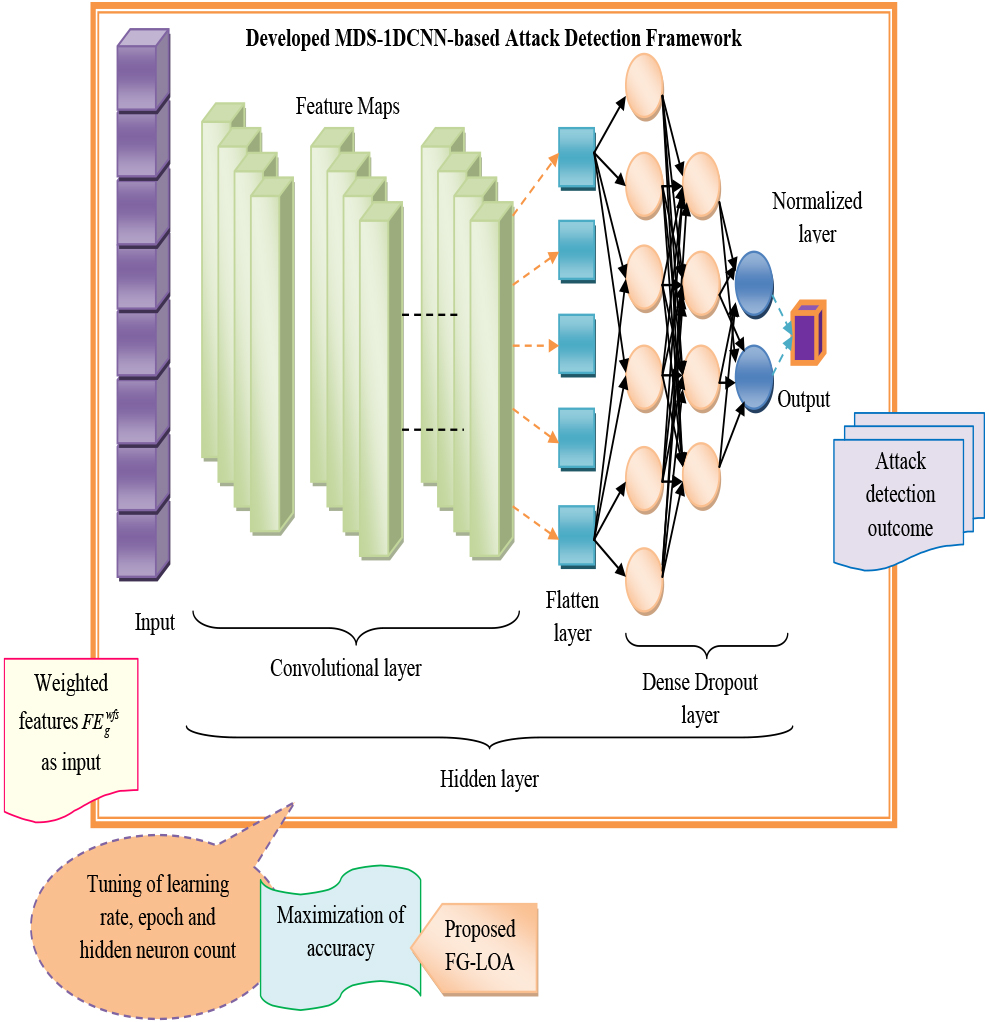
The activation function of the convolution layer is offered as
Pooling layer: The feature map counts as well as the dimensionality rate is presented in the data are improved efficiency in the down-sampling procedure, and also it led to complicated evaluations. However, the maximal pooling window process selects the increased parameter in a particular range.
In the developed MDS-1DCNN, the parameters of 1-DCNN are tuned in various ranges, where the epochs are modified in the limit of
In the above equation, the learning rate of 1-DCNN is presented as
Here, the value of false negative is indicated as
Proposed FG-LOA
A novel optimization framework named FG-LOA is designed to improve the attack detection rate in a secured IoT-based routing framework by tuning the weights in features and epochs, the number of suitably hidden neuron counts, and the learning rate in MSD-1DCNN. Here, the GSO technique offers better accuracy and deployment rate, and it effectively resolves unconstrained global issues. But, they easily fall in local optimum issued and have minimal convergence speed. To resolve this complication in GSO, a new optimization model named LOA is utilized for the analysis, and this fused combination is termed FG-LOA. The LOA model easily detects the accurate outcome by performing deep searching, and also it has a better exploration rate. Here, if the choice
GSO [27]: It is a nature-enthused heuristic model, which showcases a huge boundary and also unpredictable character changes based on the elder grasshopper to realize the exploration procedure. In the exploration region, slow and minimal-step motions are presented in the larva stage to eat the vegetation and are repeated. The characteristic nature of grasshopper is offered in Eq. (5).
Here, the term
Next, the gravity force is presented in Eq. (7).
Here, the term
Here, the unified vector over the earth center is termed as
The span between the grasshoppers is referred to as
The arithmetical presentation to replicate the nature of the grasshopper is offered in Eq. (10).
Here, the inertia weight is offered as
Here, the
The internal parameters
LOA [28]: Lemurs are categorized as prosimian primates, which are neither apes nor monkeys. Lemurs are commonly available in the Madagascar region, and they are commonly seen in wetlands, spiny forests, mountains, and rainforests. Lemurs are social animals that live as a group referred to as troops, and they utilize scent glands to convey their location.
The lemurs presented in the population matrix are termed as
The randomly distributed numbers in the different ranges are termed as
Here, the present lemur is noted as
Here, the term Citer indicates the current iteration, Hrr represents the high-risk rate, Lrr indicates the low-risk rate and MXiter presents the maximum iteration rate. The computational complexity of the recommended technique is offered in Eq. (17).
Here, the variable
The basic sensor node includes more tiny nodes with it. Here, the nodes are executed unsupervised, which leads to vulnerability. In most of the WSN systems, data collection is executed in a distributed manner or central location, so it is essential to attain control among the node identities presented in the network. Moreover, generating new nodes effectively limits the attackers. Most IoT networks are presented with minimal security. Here, the constrained resource and form factor in the IoT device generates to perform node capture electronically or physically. Later, malicious node improvement is employed by vanishing the data and information of the security key from memory. In the developed model, an essential node for the analysis is selected and finds the shortest distance, consumption of energy, delay, and path loss among the selected nodes. In the selected node, malicious node detection is performed. In case, a malicious node is presented in the selected node, then set the penalty
Here, the term
Pictorial representation of malicious node mitigation model with FG-LOA.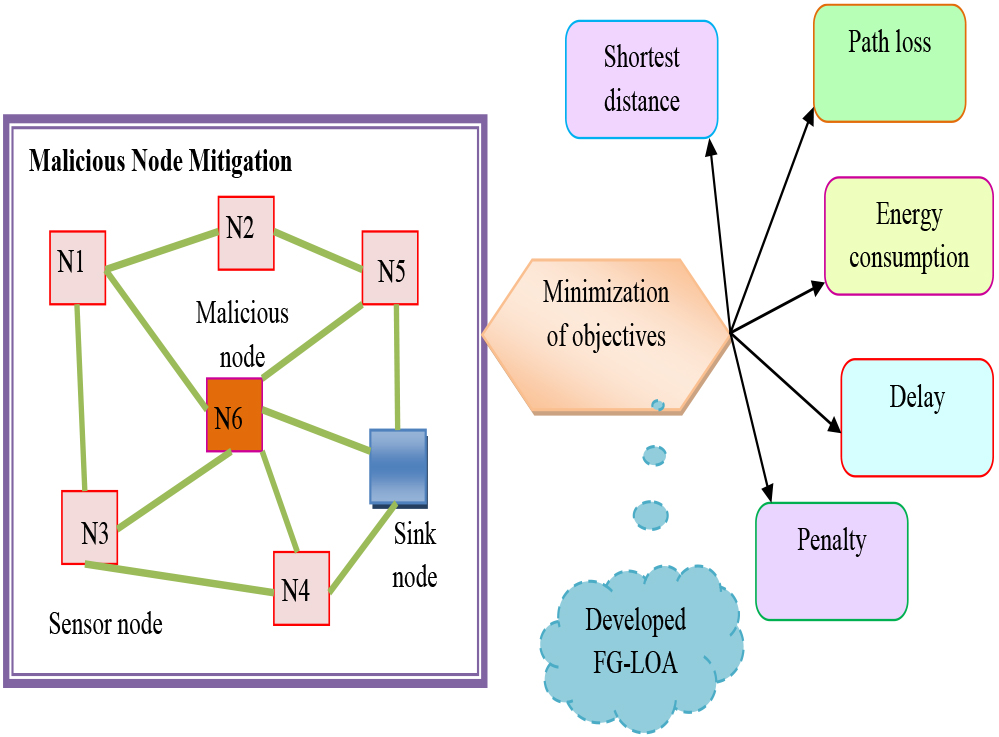
A description of the different objective constraints is given as follows.
The shortest distance
Here, the term
Energy consumption
Here, the energy utilized to obtain the data is given as
Delay
Here, the term
Path loss
Simulation setup
A novel detection of attack framework for a secured IoT-based routing model with a deep structure framework was executed in Python. Here, better attack detection rates were obtained by using the population size as 10, maximal iteration rate as 25, and chromosome length as 13. In the recommended attack detection framework, multiple observations were employed over the conventional techniques, and the implemented framework secured a better efficacy rate than the traditional models. Next, the implemented framework was contrasted over various attack detection methods like Convolutional Neural Networks (CNN) [29], Deep Neural Networks (DNN) [30], Recurrent Neural Networks (RNN) [31] and 1-DCNN [26] and also the different heuristic techniques like Deer Hunting Optimization Algorithm (DHOA) [32], Honey Badger Algorithm (HBA) [33], GOA [27] and LOA [28].
Efficacy metrics
Multiple quantitative metrics performed to examine the recommended attack detection method are elaborated as follows.
(a) The Union of highly precise characteristics as well as the detected features is referred to as precision, and it is presented in Eq. (22).
(b) The comparison of negative essential items that are classified positive in the whole surroundings when an examination is executed is said to be FPR
(c) The Examination of double monitoring speed in the validation is termed as MCC
(d) The ratio of positive integer examined accurately is referred to as Sensitivity
(e) The advancements in entire terms utilized for the observation are said to be NPV
(f) The preposition of negative items obtained correctly is referred to as Specificity
Confusion matrix observation over the developed attack detection framework.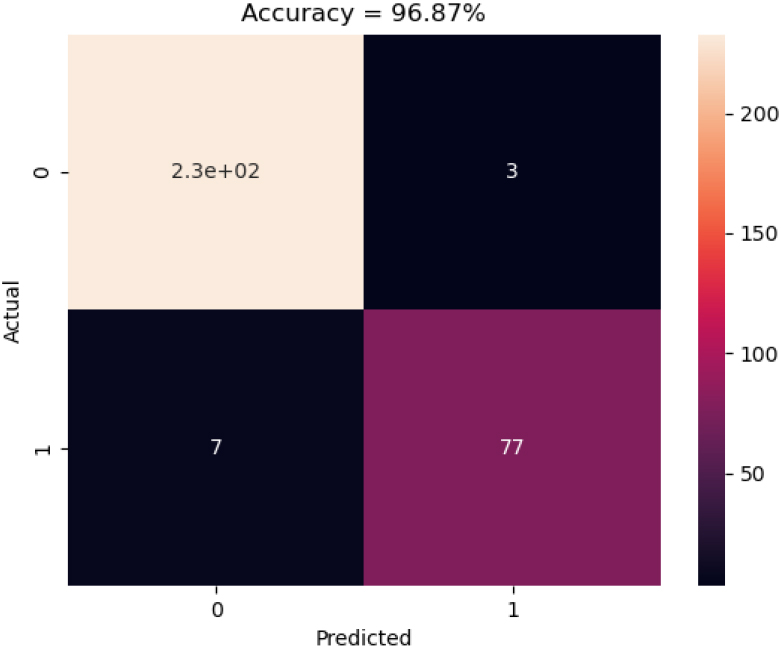
State-of-art-analysis on the recommended attack detection framework over (a) Delay, (b) Energy, (c) Path loss and (d) Shortest distance.
Efficacy validation on the offered attack detection framework over classical detection methods with (a) Accuracy, (b) F1-Score and (c) Precision.
(g) The allocation of positive charge from the negative exploration outcome is given as FNR
(h) Summing the accurate values in the observation is termed as F1-score
Validation of confusion matrix analysis performed on the recommended attack detection model is offered in Fig. 6. Here, the developed scheme is contrasted with the actual value and the predicted value. In this case, the developed model secured an accuracy rate of 96.87, which is highly better than the classical techniques.
Validation of the suggested framework using baseline approaches
Different state-of-the-art done on the recommended attack detection framework are represented in Fig. 7. The major goal of the recommended attack detection framework is to minimize the delay, energy, path loss, and shortest distance in the secured IoT routing system. Delay analysis executed in the suggested attack detection model obtained a better delay analysis rate of 17.3%, 12.24%, 10.41%, and 15.68% efficient than the classical techniques like DHOA-MDS-1DCNN, HBA-MDS-1DCNN, GOA-MDS-1DCNN, and LO-MDS-1DCNN, respectively. Thus, the suggested attack detection framework secured a better performance rate than the classical techniques.
Efficacy validation of the offered approach
Performance analysis employed on the offered attack detection framework over the classical attack detection and heuristic model is shown in Figs 8 and 9. Accuracy validation done in the recommended attack detection model attained an elevated efficacy rate as 21.3% superior to DNN, 15.7% efficient than CNN, 18.8% improved than RNN and 17.11% advanced than 1-DCNN. Hence, the offered approach attained a better efficacy rate than the classical attack detection framework, and the FG-LOA-MDS-1DCNN-based attack detection model attained an elevated performance rate.
Performance analysis of the suggested technique
Efficacy observation performed in the implemented attack detection framework over the classical baseline techniques and the attack detection methods are tabulated in Tables 2 and 3. Accuracy analysis executed on the implemented attack detection framework secured better efficacy rate as 1.97%, 1.973%, 1.63%, and 0.97% efficient than the conventional techniques like DHOA-MDS-1DCNN, HBA-MDS-1DCNN, GOA-MDS-1DCNN, and LO-MDS-1DCNN, correspondingly. Similarly, different attack detection analyses performed on the suggested framework over the classical models secured a better efficacy rate than the classical techniques. Thus, the suggested FG-LOA-MDS-1DCNN-based attack detection framework achieved a better performance rate than the conventional models.
Analysis of the suggested attack detection framework over the classical baseline techniques
Analysis of the suggested attack detection framework over the classical baseline techniques
Efficacy validation on the recommended model over a classical heuristic model with (a) Accuracy, (b) F1-Score and (c) Precision.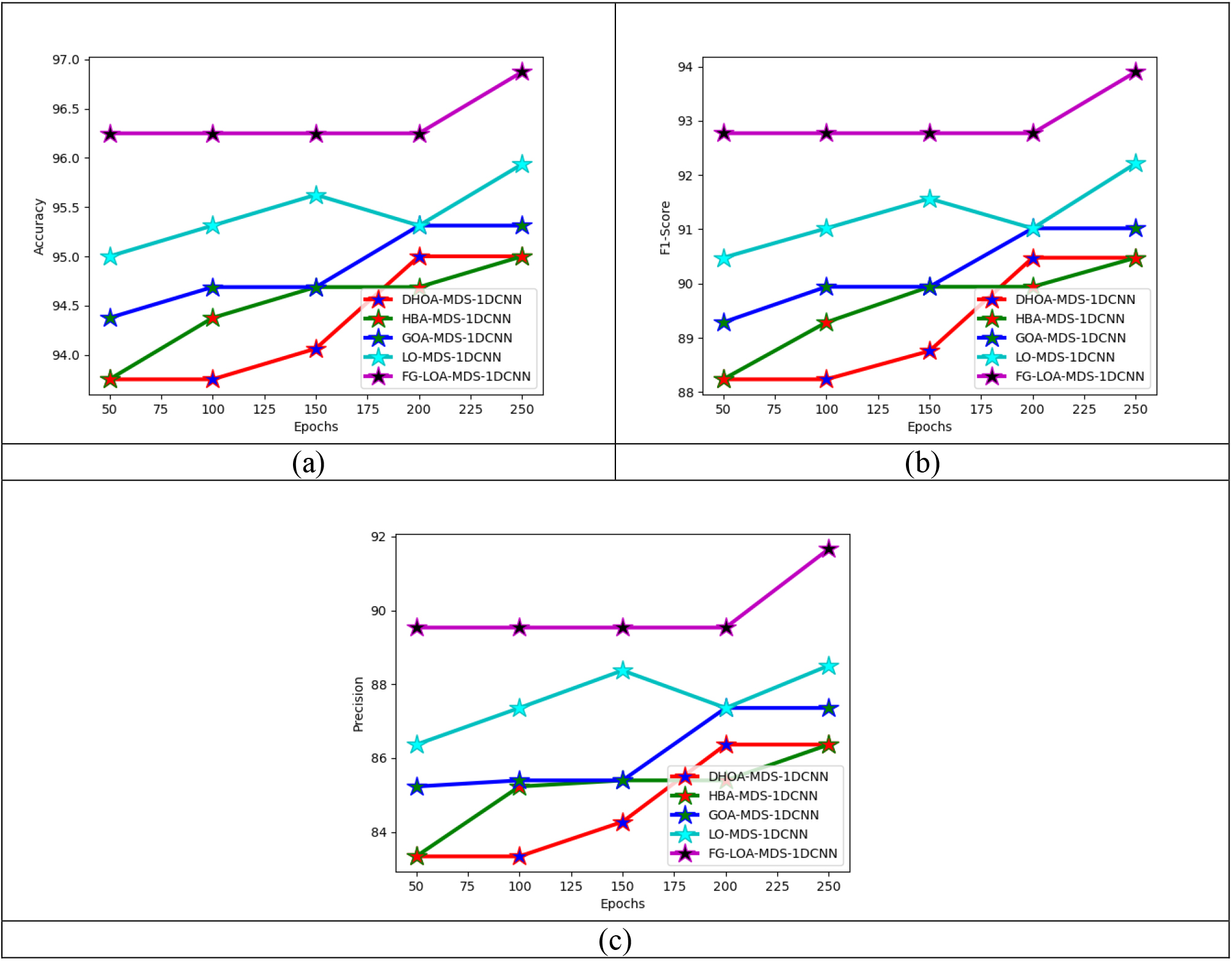
Examination of the recommended attack detection technique over the conventional attack detection model
Convergence validation on the recommended model over (a) Node 50, (b) Node 100, (c) Node 150 and (d) Node 200.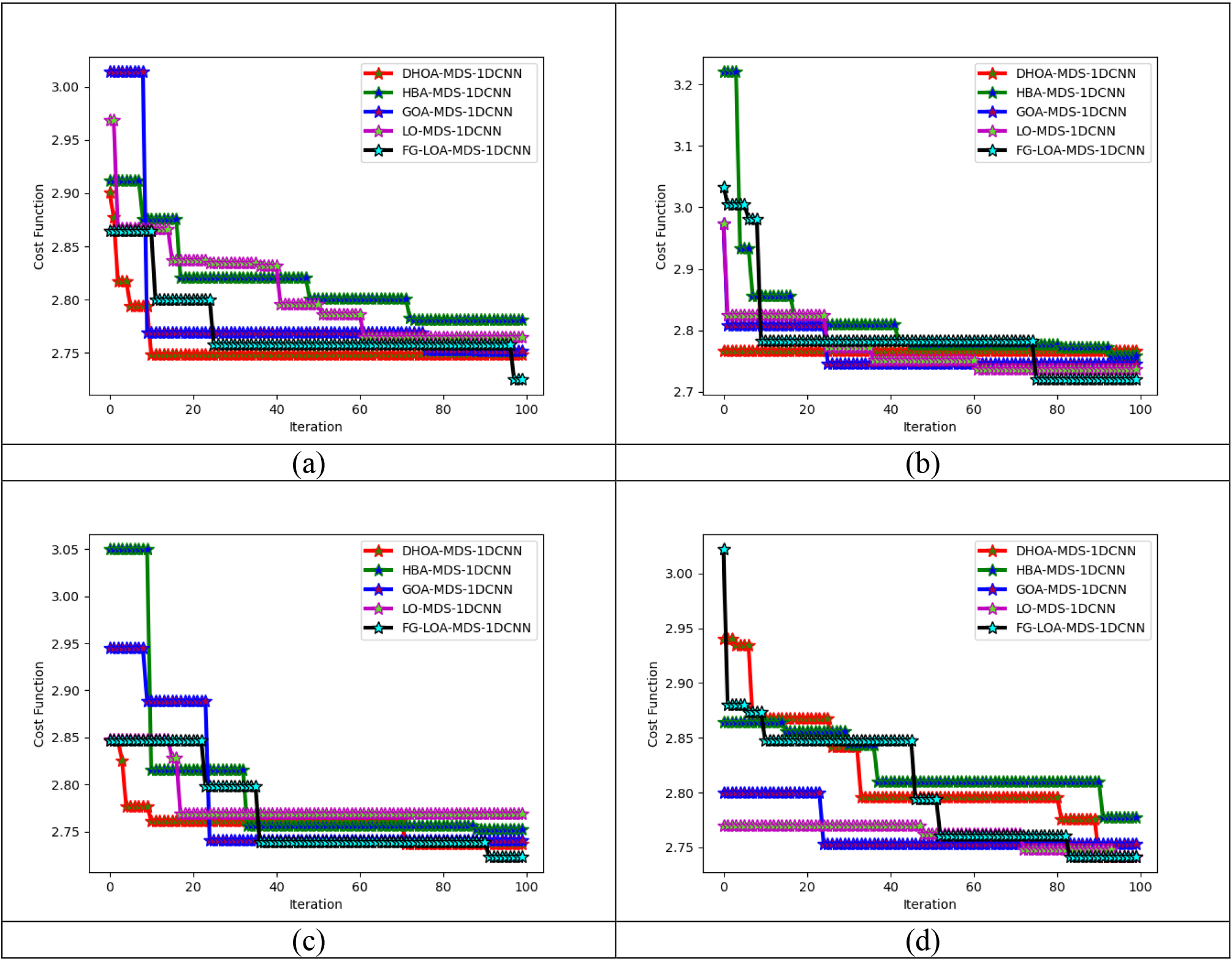
Convergence analyses performed on the initiated FG-LOA-MDS-1DCNN-based attack detection framework for secured IoT routing are contrasted over different classical approaches are presented in Fig. 10. Here, the developed model secured a better efficacy rate as 0.72% better than DHOA-MDS-1DCNN, 0.71% improved than HBA-MDS-1DCNN, 0.36% efficient than GOA-MDS-1DCNN and 0.35% efficient than LO-MDS-1DCNN in node 50. Thus, the suggested LOA-MDS-1DCNN-based attack detection framework secured a better efficacy rate than the classical approaches.
Validation of statistical analysis of the implemented routing technique
Statistical analysis performed in the recommended attack detection framework over different nodes is given in Table 4. The recommended FG-LOA-MDS-1DCNN-based attack detection model secured better performance rates as 0.86%, 2.02%, 0.98%, and 1.43% efficient than the classical heuristic techniques like DHOA-MDS-1DCNN, HBA-MDS-1DCNN, GOA-MDS-1DCNN and LO-MDS-1DCNN regarding best metrics in node variation 50. Hence the implemented attack detection framework attained better performance.
Statistical validation on the recommended a model with different node variation
Statistical validation on the recommended a model with different node variation
An innovative energy-efficient attack detection strategy with malicious node mitigation was designed to identify various attacks in the secured IoT-based routing system. At first, the important data for the experiment were aggregated from the IoT network and subjected as input to the data cleaning and transformation phase. Once the data cleaning and transformation were performed, the data were offered to the weighted features selection phase. In this phase, the weights of the essential features were modified by the developed optimization model FG-LOA. Further, the weighted features were subjected to an MDS-1DCNN-based attack detection phase, and the parameters of 1DCNN were tuned by the suggested model FG-LOA to maximize the accuracy of the attack detection rate. Later, effective routing was achieved among the selected nodes, and they effectively examined and reduced several constraints like energy consumption, path loss, delay, and shortest distance. Accuracy analysis performed in the recommended attack detection model secured a better efficacy rate as 21.3% superior to DNN, 15.7% more efficient than CNN, 18.8% improved than RNN, and 17.11% more advanced than 1-DCNN. Thus, the suggested attack detection model secured a better attack recognition rate than the classical techniques.