



Abstract
Mobile Ad hoc Networks (MANETs) pose significant routing challenges due to their decentralized and dynamic nature. Node mobility results in frequent changes in network topology, leading to unsFIG connectivity and link quality. Traditional RPs designed for static networks are inadequate for MANETs. To deal with these issues, a secure routing approach is proposed using the Red Panda-Lyrebrid Optimization (RePLO) algorithm, which combines the advantages of the Red Panda Optimization (RPO) and Lyrebird Optimization Algorithm (LOA) algorithms. The proposed approach consists of five steps: (i) configuring the system model, (ii) developing the energy model, (iii) creating the mobility model, (iv) selecting cluster heads using the RePLO algorithm, and (v) routing using the RePLO algorithm. The RePLO algorithm optimizes cluster head selection and routing while considering specific constraints such as delay, distance, energy, & security for Cluster Head (CH) selection, and link quality and enhanced trust for routing optimization. The effectiveness of the proposed approach is evaluated using various metrics to demonstrate its efficiency in MANET routing. By integrating multiple optimization techniques and considering critical constraints, the RePLO algorithm offers a systematic and secure solution for MANET routing. The evaluation results confirm the efficacy of the proposed approach in improving network performance, reliability, and security. Overall, the RePLO algorithm presents a promising approach to tackle the routing issues inherent in MANETs, paving the way for more robust and efficient communication in mobile ad hoc networks.
Introduction
In a MANET, wireless mobile nodes form a dynamic network without infrastructure, often termed as infrastructure-less [1, 2]. These networks, known as Mobile Ad hoc Networks (MANETs), consist of wireless mobile nodes that autonomously exchange data amongst each other, operating independently of a fixed base station or wired backbone network [3]. A mobile ad hoc network facilitates communication between nodes without relying on any infrastructure support [4]. Additionally, nodes within a MANET can move freely in any direction, horizontally or vertically [5]. The increasing usage of MANETs in various applications has driven the evolution and enhancement of RPs [6]. Apart from MANETs, there exist other types of ad hoc networks like VANETs [7], SPANs, and WMNs [8], all of which play significant roles in modern technology [9].
MANETs offer several advantages, especially in scenarios with crumbling infrastructure, such as military operations where it forms a Wireless Backbone network facilitating communication between soldiers and vehicles on battlefields, provides internet access, information dissemination, and even tourist information [10, 11]. However, MANETs operate with limited resources, necessitating RPs with minimal energy and computational overheads [12, 13]. Dynamic topology variations pose challenges in designing protocols that ensure both security and energy efficiency [14, 15], crucial factors given the reliance on battery power in MANET nodes [16].
Routing protocols for MANETs must contend with dynamic topologies, real-time communication, resource constraints, bandwidth management, and packet overheads, leading to complexities [17]. While various RPs exist for MANETs, many suffer from high energy consumption, impacting node battery life [18]. Security is a paramount concern in MANETs due to the vulnerability to routing attacks [19, 20, 21], wherein nodes within signal range can intercept and manipulate packets, potentially compromising the network’s integrity [22]. Data can be routed by Mobile Ad hoc Networks (MANETs) in a number of ways, depending on the needs and circumstances of the network. Every node in the network keeps up-to-date routing data for every other node using proactive routing. Routing tables or updates are exchanged on a regular basis to accomplish this. Routes are only established via reactive routing as necessary. A node starts a route discovery process to find a way when it wishes to send data to another node.To capitalize on each strategy’s advantages, proactive and reactive routing components are combined in hybrid routing. It uses reactive techniques for less frequently accessed locations and maintains routes to frequently used nodes proactively. Geographic routing makes decisions based on the coordinates, or position, of nodes. Usually, it tries to forward packets to the location of the destination node. Energy-aware routing protocols aim to conserve node energy by considering energy levels or battery capacities of nodes when making routing decisions.
In response to these challenges, a hybrid optimization algorithm is proposed as a secure cluster-based RP for MANETs. This proposed protocol, RePLO, aims to enhance efficiency and security. This protocol aims to enhance efficiency while providing robust security measures to protect against potential attacks, ensuring the integrity and reliability of communication within the network. Further, the significant enhancements that improve the efficacy of the proposed RePLO-based securedRP are outlined as follows:
Proposing RePLO algorithm for optimal CH selection and routing in MANETs. It is a hybrid optimization algorithm that combines the RPO and LOA algorithms. Compared to the conventional RPO algorithm, RePLO offers several advantages by addressing its limitations through key enhancements. These enhancements include OBL initialization during the population initialization phase, the integration of Levy Flight distribution in the exploration phase, and the hybridization of RPO and LOA using an ABP mechanism in the exploitation phase. Proposing an enhanced trust constraint for optimizing routing using the RePLO algorithm. This constraint is integrated with link quality considerations to enhance the reliability of routing decisions. Unlike traditional trust metrics that rely solely on direct and indirect trusts, RePLO incorporates a modified equation that takes into account direct, indirect, and communication trusts. This comprehensive approach ensures a more thorough assessment of node reliability in the network.
Hence, the overall procedure of the proposed RePLO-based securedRP for MANETs is structured as follows: a review of existing literature is conducted in Section 2, the outline of the proposed framework is elucidated in Section 3, simulation and experimental analyses are performed in Section 4, and the entire process is summarized in Section 5.
Below, several recent papers about MANET routing have been examined:
In 2023, G.R. Rama Devi et al. [23] implemented a cross-layered RP, integrating PSO with an adapted contention window technique. It aimed to establish constant and energy-efficient routing paths, utilizing parameters like average energy load, traffic index, trust value, and data success rate from the network layer. After creating paths, it measured network bottlenecks at the MAC layer, optimizing bottlenecks and communication-based on energy loads and bottlenecks. Node trust was calculated from group trust and quality trust, while security was enhanced through ECC and Diffie-Hellman key exchanges.
In 2022, Abhay Bhatia et al. [24] evaluated the analysis of MANET’s role in a wireless real-time communication setup for NCS. Using AODV routing, communication among 150 nodes was maintained. Simulation in NS2 involved adjusting node clusters to estimate network metrics. MANET’s fixed topology allowed flexibility and scalability without infrastructure. AODV routing, being decentralized, scaled effectively with network size, providing adaptability to dynamic configurations.
In 2022, Subha R et al. [25] introduced an AFLIPLFFM to enhance network throughput and packet delivery ratio by accurately predicting path stability. AFLIPLFFM computed the IPR of mobile nodes and utilized it as input for a fuzzy inference engine to determine path stability. This process employed IF-THEN-based rules and triangular membership functions inherited from the Mamdani Fuzzy Inference Engine, ensuring effective path stability prediction.
In 2022, N.S. Saba Farheen et al. [26] suggested a node location prediction approach, based on temporal and spatial characteristics within its neighborhood, to estimate probable locations using a hybrid approach. The approach aimed to enhance routing performance without increasing packet overhead by employing a multi-path RP that integrated assessed probability locations and implemented path deviation at key points along the route.
In 2021, Uppalapati Srilakshmi et al. [27] demonstrated the study of the integration of Hill Climbing and GA in multiphase scenarios via a GAHC-style hybrid algorithm. Initially, density peak was utilized, predicting the selection of CHs based on direct, recent, and indirect trust metrics. Trust threshold worth nodes were computed. CHs engaged in multi-hop routing and the optimal path was determined by aggregating routes from these CHs. Selection criteria relied on the predicted hybrid protocol and aggregate features including throughput, latency, and connection quality.
In 2021, Prasant Kumar Pattnaik et al. [28] suggested an algorithm which addressed challenges in Optimal MANET Routing by incorporating mobility and obstacle awareness for multipath communication. It utilized the DeCasteljau Algorithm with Bezier curves to navigate obstacles and employed a speed-based mobility estimation concept to mitigate mobility consequences. Optimal routing paths were selected based on mobility prediction indicators, path availability, link duration, and network connectivity. Evaluation using Network Simulator-2 demonstrated the protocol’s effectiveness in minimizing delay, network overhead, and energy consumption while improving data delivery in MANET.
In 2020, Jinbin Tu et al. [29] introduced an AAS for active-RPs, demonstrating its effectiveness against various attacks. Employing BAN logic to address potential malicious nodes, AAS showcased compatibility with multiple RPs. Experimental results indicated a notable increase in packet delivery rate, enhancing overall performance by 33.9% and by 18.4% in networks with malicious nodes. AAS exhibited robustness, surpassing the average network connection rate of the Cap-OLSR protocol by 1.6 times and maintaining 79.2% of network performance during simulations with malicious node attacks.
In 2022, G. Rajeshkumar et al. [30] implemented a time synchronization algorithm for mobile contexts, employing Median synchronization message and KF to enhance accuracy. A multi-objective approach utilized the MOPSO algorithm to optimize cluster number and reduce energy loss in nodes, enhancing energy efficiency and reducing network traffic. CTAA method identified unauthorized nodes in MANET, while MOPSO optimized the route and minimized energy dissipation. The proposed CTAA-MPSO method achieved a PDR of 3.3% according to research findings.
In 2023, Orchu Aruna et al. [31] presented ML-ORAfor MANETs, seamlessly blended parameter configurations, utilized HPSO to select CHs, incorporated clustering mechanisms, and integrated k-NNs for intrusion detection. Assessments conducted in NS-3 demonstrated its prowess in adapting to dynamic network conditions, yielding notable outcomes such as a 15 ms latency, 95% packet delivery ratio, 4 Mbps throughput, and 85% energy efficiency. ML-ORA emerged as a promising remedy for addressing routing complexities in MANETs, thereby boosting both efficiency and security in transmitting data across ever-changing wireless environments.
In 2023, Alaotibi et al. [46] have suggests implementing a new geographic routing protocol in MANET, where the Rock Hyraxes Swarm Optimization (RHSO) and Whale Optimization Algorithm (WOA) are hybridized to create the Hybrid Roxes Whale Optimization (HRWO) algorithm, which performs the optimal route selection process. Additionally, a number of factors are taken into account for the best routing, including the average distance between nodes (mobility-related data based on location), delay, link lifetime, packet loss, and risk assessment.
In 2023, Ramaswamy et al. [47] develops a hybrid energy-efficient secured quality of service (QoS) based multipath routing protocol was proposed in this article. For the selection of cluster heads following initial cluster formations, a modified crow search in conjunction with the tunicate swarm butterfly optimization algorithm (TSBO) and a density-based clustering approach plan is suggested. The cluster head is chosen from among all the nodes, and a node’s authentication is provided using the collaborative trust-based approach (CTBA), which uses the trust factor for mobile ad hoc network (MANET) data transfer. Lastly, this article proposed a hybrid multipath routing protocol that combines a fruit fly algorithm with multi-objective grey wolf optimization (MO-GWO) to execute the safe routing technique.
Methodologies, features, and limitations of existing MANET-related approaches.

Methodologies, features, and limitations of existing MANET-related approaches.
Furthermore, existing approaches related to MANET are summarized in Table 1, detailing its methodologies, features, and limitations.
MANET functions as a decentralized infrastructure, comprising mobile hosts that establish their network or connections dynamically without central management. The network’s dynamic nature introduces complexities, with frequent changes in topology. Bandwidth constraints, limited energy, and storage capacities of mobile nodes impose significant limitations. Communication between nodes is often restricted due to small transmission ranges, necessitating multiple hops for routing paths, with neighboring nodes acting as routers. Several MANET RPs have been developed, such as CTAA-MPSO [30] and ESCL-PSO [23], aiming to reduce power consumption while maintaining high PDRs. However, these protocols had increased computational overhead and posed security and reliability concerns. AODV protocol [24], utilized by Abhay Bhatia et al., didn’t add extra overhead to data packets, but its frequent route discovery and maintenance activities could escalate energy consumption, reducing the network’s lifespan. AFLIPLFFM [25] accurately predicted path stability, but its fuzzy techniques introduced complexity and computational overhead. Although HM-MPR [26] and AAS [29] offered better performance compared to other models, they still required improvements. GAHC achieved high throughput and PDR but only addressed selective packet-dropping attacks [27]. The MOAR protocol, introduced by Prasant Kumar Pattnaik et al., [28] enhanced average delay, energy consumption, PDR, and throughput. However, considering dynamic network topologies, node mobility patterns, and obstacle information made it more complex. Addressing these challenges necessitates the development of methods with superior performance.
Outline of RePLO-based routing for MANETs
The RePLO-based routing for MANETs follows a systematic approach aimed at ensuring efficient and secure communication within the network.
The steps involved in the systematic approach of RePLO-based routing for MANETs are:
System model configuration Development of the energy model Development of the mobility model Cluster head selection using the RePLO algorithm Routing using the RePLO algorithm
Firstly, the system model is established, adopting a multi-objective perspective to address critical factors such as delay, distance, energy consumption, link quality, security, and trust. This model encompasses a diverse array of nodes, including normal nodes, CHs, and a central BS.
Next, an energy model is determined to monitor and manage the energy consumption of nodes across various operational states. Additionally, the mobility model plays a crucial role in understanding and simulating the movement behaviors of mobile nodes over time, with a random point mobility model employed in this scenario.
Cluster head selection is a pivotal step in MANET operation, involving the meticulous application of a hybrid optimization algorithm that combines the strengths of RPO and LOA techniques. This process ensures optimal performance while taking into account critical constraints such as delay, distance, energy & security.
Subsequently, routing optimization is carried out using the RePLO algorithm, which integrates both CH selection and routing optimization functionalities. By combining RPO and LOA, the RePLO algorithm effectively addresses link quality and trust considerations for routing optimization. Unlike traditional trust metrics, RePLO incorporates a modified equation that evaluates node reliability based on direct, indirect, and communication trusts, leading to a more comprehensive assessment.
In the design of a MANET system model, a multi-objective approach is adopted, taking into account several critical factors including delay, distance, energy consumption, link quality, security & trust. The system architecture involves a source node transmitting data packets to a designated target node within the network. This network comprises a diverse set of nodes, including normal nodes, a group of CHs, and a central BS [32]. The MANET system design is represented in Fig. 1, and the parameters for its simulation setup are presented in Table 2.
Simulation parameters.

Simulation parameters.
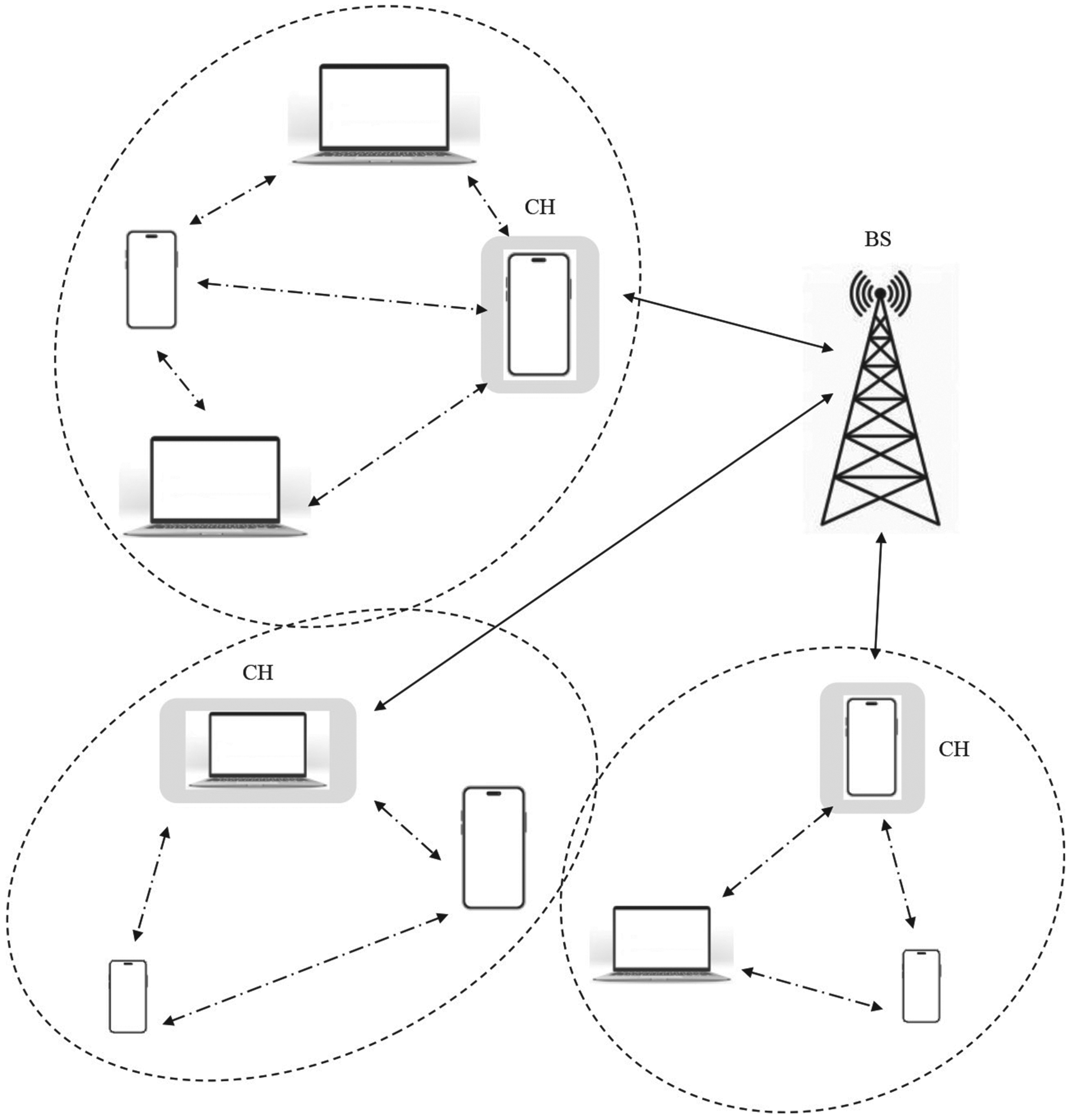
System design of MANET.
The selection of CHs is optimized using the RePLO algorithm, which integrates the strengths of both RPO and LOA. RePLO optimally chooses CHs while adhering to specific constraints such as minimizing delay, optimizing distance, conserving energy, and enhancing security. By leveraging the capabilities of both RPO and LOA, RePLO ensures efficient clustering of nodes, enhancing overall network performance.
Moreover, the routing mechanism within this MANET system model is orchestrated by the RePLO algorithm, which considers additional constraints such as link quality and trust. This RP aims to establish reliable communication paths while considering the quality of links and the trustworthiness of nodes within the network. By incorporating these factors into the routing decisions, the RePLO algorithm facilitates robust and dependable data transmission throughout the MANET system.
Overall, the MANET system model integrates advanced optimization techniques and multi-objective considerations to enhance various aspects of network performance, including efficiency, reliability, and security, thereby providing a comprehensive solution for dynamic and resource-constrained wireless communication environments.
An energy model is essential for monitoring and managing the energy consumption of nodes within a MANET [33]. This model tracks the energy usage across different operational states of the nodes, including idle, receive, transmit, and sleep modes. By capturing the energy consumption patterns in each state, the energy model provides insights into the overall energy dynamics of the network. This information is crucial for optimizing energy utilization, prolonging node lifetime, and enhancing the efficiency of communication protocols. Additionally, the energy model enables the estimation of remaining battery capacity, allowing for proactive energy management strategies such as dynamic power management and energy-aware routing. Through the integration of this energy model into the MANET system, network operators can make informed decisions to balance energy consumption and network performance, ultimately ensuring sustainable and reliable operation in resource-constrained environments.
Development of the mobility model
The mobility model in terms of the MANET framework serves as a crucial component for understanding and simulating the movement behaviors of mobile nodes over time [34]. It elucidates how the acceleration, location, and velocity of nodes evolve throughout the simulation duration. In this particular scenario, a random point mobility model is employed to simulate node movements.
Initially, at the time
Upon reaching time 
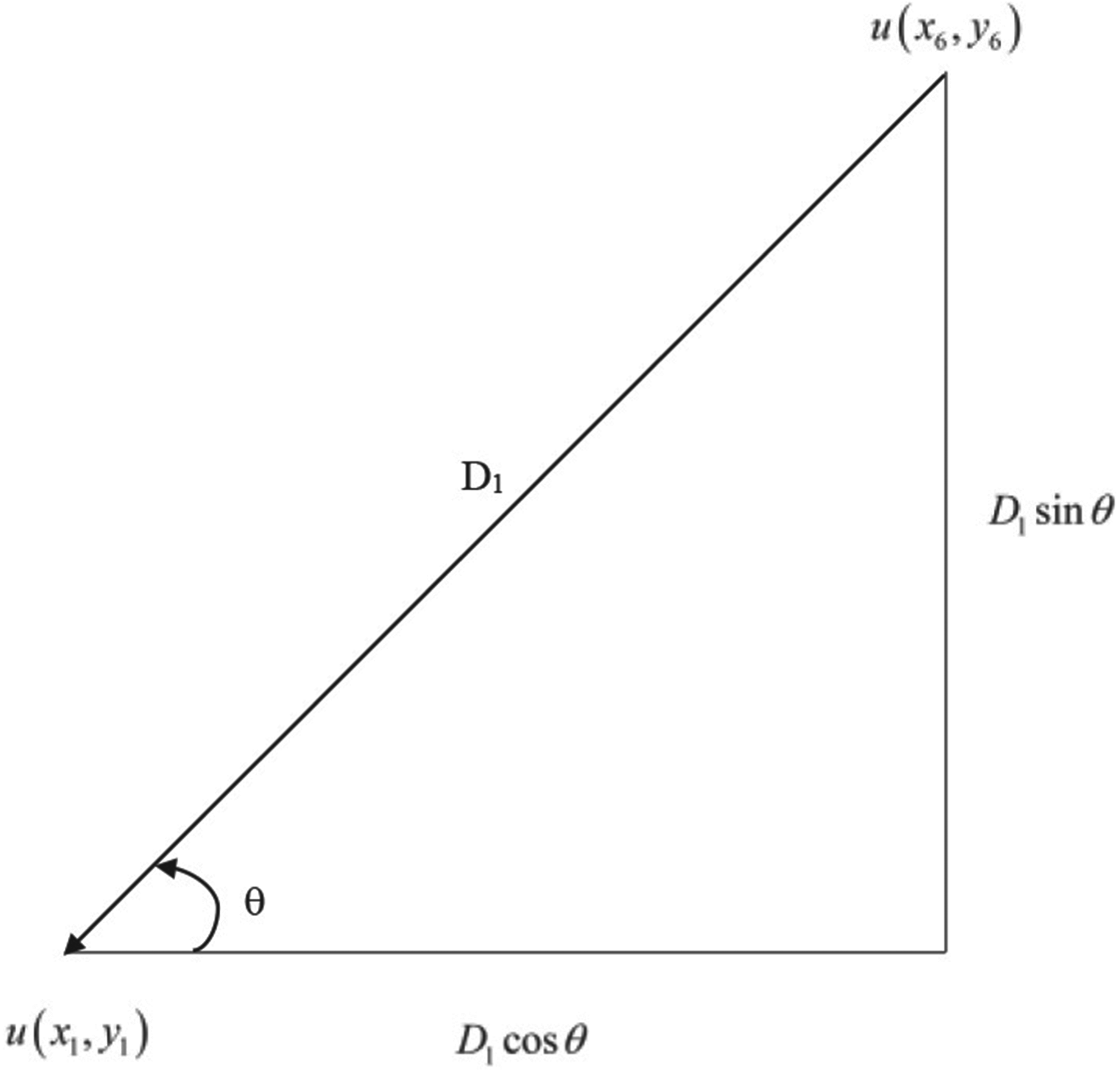
Updated location of node u after mobility.
Figure 2 illustrates the updated locations of nodes after their mobility has been simulated, providing a visual representation of their movement trajectories.
This mobility model facilitates the emulation of realistic node mobility patterns, crucial for assessing the performance of RPs in MANETs.
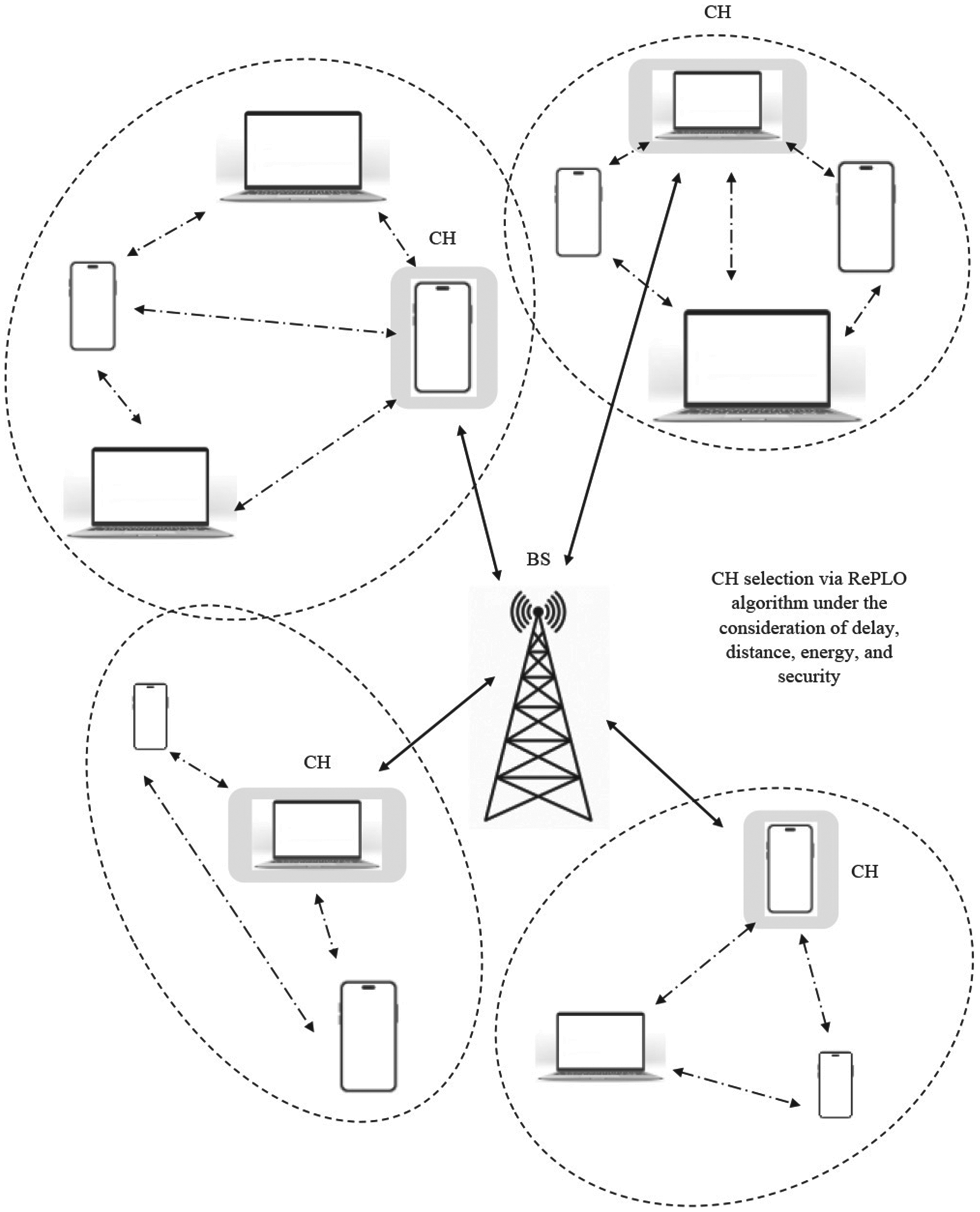
Illustration of CH selection process using RePLO algorithm in MANET environment.
In the designed MANET system model, the presence of 100 mobile nodes underscores the complexity and scale of the network. An integral aspect of MANET operation is the selection of CHs, pivotal nodes responsible for managing and coordinating communication within their respective clusters. An illustration of CH selection using the RePLO algorithm in a MANET environment based on constraints such as delay, distance, energy & security is shown in Fig. 3.
The process of CH selection is conducted meticulously, leveraging a hybrid optimization algorithm to ensure optimal performance while considering various critical constraints. This hybrid optimization algorithm integrates the strengths of two distinct optimization techniques: RPO and LOA. By incorporating elements from both RPO and LOA, the hybrid algorithm achieves enhanced effectiveness in CH selection.
Several constraints guide the CH selection process, including delay, distance, energy, and security considerations. These constraints are pivotal in determining the suitability of candidate nodes for assuming the role of CHs within the network. By accounting for these constraints, the algorithm ensures that CHs are strategically located to facilitate efficient data transmission, minimize latency, conserve energy resources, and uphold network security standards.
Through the collaborative efforts of the hybrid optimization algorithm and the consideration of multifaceted constraints, the MANET system model attains an optimal configuration of CHs. This optimized CH selection process has a pivotal role in enhancing the overall performance and reliability of the MANET, laying the foundation for robust and efficient communication in dynamic and resource-constrained environments.
The selection of CHs in MANETs has an essential part in optimizing resource utilization and network performance. The RePLO algorithm offers an effective approach for CH selection, considering various critical constraints such as delay, distance, energy& security. The detailed descriptions of these constraints are delineated below.
Delay: It indicates the time taken for data packets to travel from the source node to the target node in the network.
In Eq. (2), the term ‘ Distance: It represents the distance between each CH to BS within the network. This constraint is determined using Euclidean distance which is expressed in Eq. (3) which Energy: Energy constraints ensure that nodes operate within their energy budget to prolong network lifetime and avoid premature battery depletion.
In Eq. (5), the term ‘ Security: It represents a measure of the security difference between a CH and a particular node







By considering these constraints, the RePLO algorithm enables the selection of CHs that optimize network performance, enhance resource utilization, and ensure the robustness and security of MANETs in dynamic and challenging environments.
The objective function in terms of the RePLO algorithm for CH selection aims to minimize fitness by considering various constraints. These constraints, including delay, distance, energy, and security, are normalized using Eq. (9) to account for their different ranges. Equation (9), denoted as 
The objective function itself is formulated as a weighted sum of the normalized constraints, here, 
In Eq. (10), the weights of constraints are commonly denoted as
Furthermore, the solution encoding for CH selection involves defining lower and upper bounds, which are
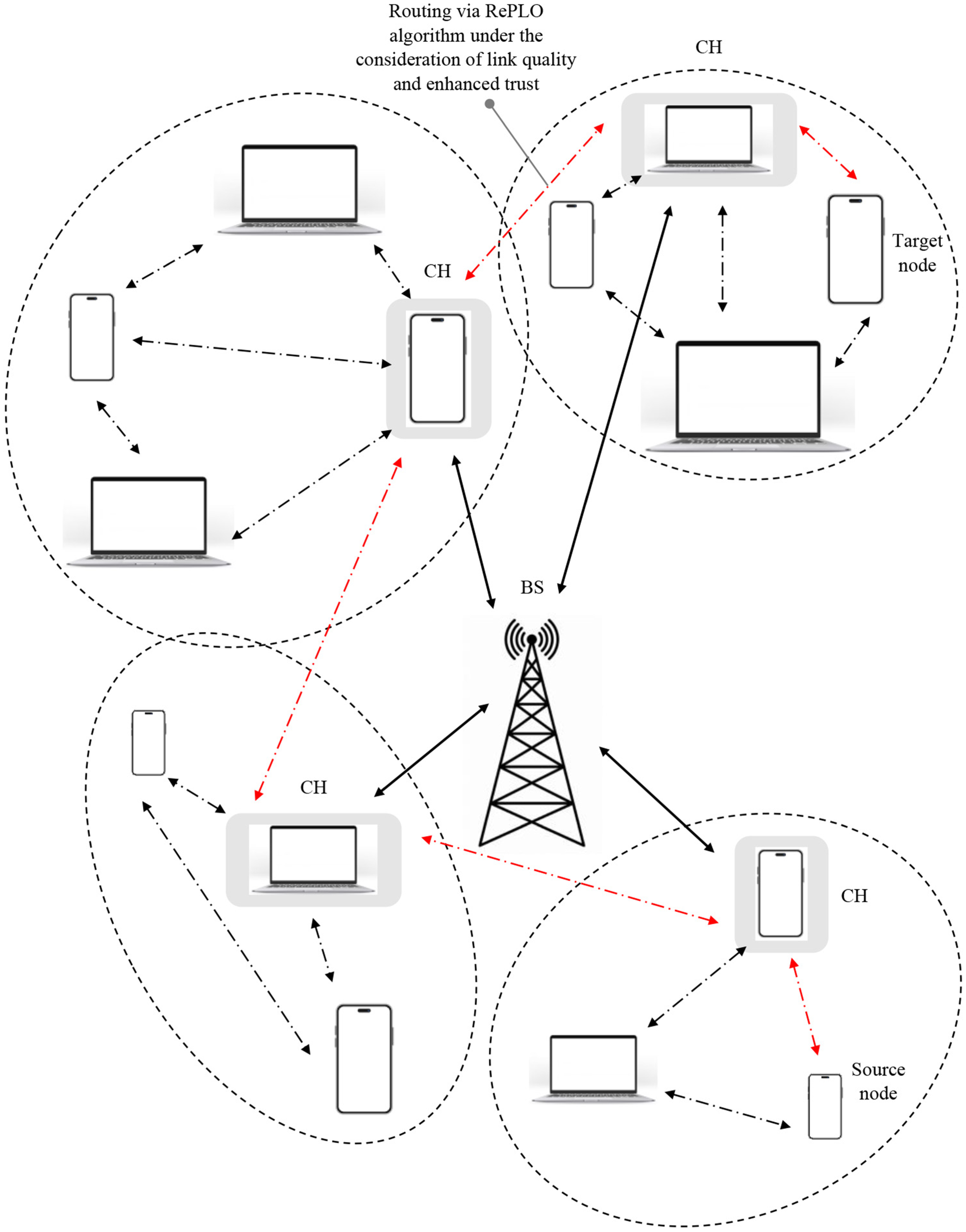
Illustration of routing process using RePLO algorithm in MANET environment.
Routing in MANETs is complex due to their dynamic and decentralized nature. Nodes communicate directly or via intermediaries, creating a network without fixed infrastructure. Efficient RPs are crucial for node communication. In this research, a hybrid optimization algorithm termed RePLO is employed for secure routing. This algorithm, combining RPO and LOA, handles both CH selection and routing optimization. An illustration of routing using the RePLO algorithm in a MANET environment based on constraints such as link quality and enhanced trust is shown in Fig. 4.
The RePLO algorithm incorporates crucial constraints like link quality and enhanced trust for routing optimization. Unlike traditional trust metrics relying only on direct and indirect trusts, RePLO uses a modified equation considering direct, indirect, and communication trusts. This provides a more thorough assessment of node reliability.
By integrating these constraints, RePLO ensures routing decisions consider both link quality and enhanced trust. This enhances network robustness, reduces the risk of attacks, and promotes reliable data communication. Ultimately, RePLO routing in MANETs offers a sophisticated and effective strategy for improving network performance and reliability in dynamic environments.
Routing in MANETs using the RePLO algorithm considers two critical constraints such as link quality and enhanced trust. These constraints are pivotal for confirming secure and reliable data transmission within the network. The detailed descriptions of these constraints are given below.
Link quality- It refers to the quality of data packets received by the receiver in the network. In the context of secure routing, assessing link quality is essential for ensuring that data packets are transmitted over reliable paths with minimal packet loss, latency, and interference.

Enhanced trust- Trust is a critical factor in ensuring the security and reliability of communication in MANETs. While traditional trust metrics typically rely on direct and indirect trusts between nodes [35], the RePLO algorithm incorporates an enhanced trust constraint that goes beyond conventional trust metrics. This enhanced trust metric considers factors such as improved direct trust, indirect trust, and communication trust, which evaluates the trustworthiness of nodes based on their communication behavior and reliability in transmitting data packets. By factoring in enhanced trust metrics, the RePLO algorithm enables more robust and secure routing decisions, enhancing the network’s resilience against malicious attacks, unauthorized access, and unreliable nodes. The equations for evaluating trust conventionally (

In Eqs (12) and (13), Direct trust: It refers to the trustworthiness of neighboring nodes based on direct interactions and observations. It assesses the node’s behavior, reliability, and performance in transmitting data packets directly to other nodes within its communication range. In conventional trust evaluation, direct trust is typically assessed using Eq. (14). However, in enhanced trust evaluation, the determination of ‘direct trust’ adopts a novel approach, as depicted in Eq. (15). Using PDR [36] enhances direct trust evaluation by accurately gauging node reliability in wireless networks. Unlike rank threshold, PDR directly measures packet delivery success, providing a granular assessment of node trustworthiness. Integration of PDR in trust models leads to informed decisions, enhancing network performance and reliability.
Indirect trust: It evaluates the trustworthiness of nodes based on recommendations or endorsements from other nodes in the network. It considers the trust ratings assigned by neighboring nodes to their own neighbors and propagates these ratings across the network. If node Communication trust: It evaluates the trustworthiness of nodes by tracking the successful delivery of packets from a source node to the destination without any loss [37]. Thereby, the equation below represents the PDR-based communication trust where, Incorporating direct, indirect, and communication trust metrics into the evaluation of node trustworthiness enhances the proposed trust evaluation, providing a comprehensive assessment of node reliability in MANETs. This approach, coupled with considerations of link quality, aids in identifying trustworthy nodes for routing decisions. Consequently, this strategy mitigates security risks and fosters reliable and secure communication in dynamic and challenging network environments.






Thus, by considering both link quality and improved trust as constraints, the RePLO algorithm ensures that routing decisions in MANETs prioritize secure and reliable communication paths. This approach helps to mitigate security risks, enhance data confidentiality and integrity, and improve overall network performance and resilience in dynamic and challenging environments.
The objective function for routing using the RePLO algorithm aims to minimize fitness while considering constraints such as link quality and enhanced trust. This objective function is formulated as follows:

In this equation,
The solution encoding for routing involves defining lower and upper bounds of 0 and 1, respectively. With a problem size of
The RePLO algorithm, introduced in this research, serves as a hybrid optimization approach proposed for both CH selection and routing in MANETs. This algorithm combines two distinct optimization algorithms: RPO [38] and LOA [39] to leverage its strengths and avoid its limitations. Within the RePLO algorithm, updates are integrated into the framework of RPO to boost its effectiveness for CH selection and routing. These updates include several pivotal modifications such as OBL initialization, Levy Flight distribution, and hybridization of RPO and LOA using ABP. In order to lessen the effects of attacks and guarantee the network’s ongoing operation, hybrid optimization can include resilience techniques like redundancy, distributed trust management, and quick topology reconfiguration. In particular, the hybrid Red Panda-Lyrebird Optimization seems to be a specialized or speculative optimization technique that is not well-known or recorded in mainstream literature, with respect to its benefits. Generally speaking, hybrid optimization strategies take advantage of the complementing advantages of many algorithms or techniques to maximize convergence speed, solution quality, or robustness against local optima. Still, it’s difficult to list all of the benefits of the Red Panda-Lyrebird Optimization without more particular information.
The RePLO algorithm, which combines characteristics of both RPO and LOA, is proposed as an advantageous alternative to conventional RPO and LOA algorithms. RPO brings its unique optimization mechanisms to the forefront, while LOA contributes its distinctive strategy for exploitation. This hybridization process aims to achieve stability between exploration and exploitation, facilitating more efficient and effective CH selection and routing decisions in MANETs.
The RePLO algorithm’s capacity to integrate innovative updates into RPO, combined with the fusion of LOA’s exploitation capabilities, positions it as a promising solution for optimizing CH selection and routing in MANETs.
Population initialization
In the RePLO algorithm, a population-based metaheuristic approach, red pandas are utilized as its members. Each red panda within the algorithm’s population represents a potential solution to the given problem, offering specific values for problem variables in accordance with its location within the solution space. This conceptualization transforms each red panda, or candidate solution, into a mathematical vector. As a result, the red pandas collectively form a matrix, as indicated by Eq. (23), where each row resembles a red panda representing a potential solution, and each column denotes recommended values for the corresponding problem variable.
In the RPO algorithm, random initialization is employed to initialize the locations of red pandas in the solution space. However, this approach often leads to inefficient exploration of the solution space. Random initialization tends to heighten the risk of becoming trapped in local optima, thereby restricting the algorithm’s effectiveness in identifying globally optimal solutions. The conventional way of adjusting the locations of red pandas in the solution space in the RPO algorithm is formulated in Eq. (24).
In contrast, during the initialization phase of the RePLO algorithm, the population of red pandas undergoes OBL initialization [40], marking the first update in the algorithm. To initiate the RePLO process, the locations of red pandas within the solution space are initialized using OBL initialization, as illustrated in Eq. (25). This proactive initialization strategy enhances the algorithm’s capability to explore the solution space effectively and mitigates the risk of premature convergence to suboptimal solutions.



In the RePLO algorithm,
Given that each red panda’s location serves as a candidate solution for the problem, we can evaluate the objective function equivalent to each of these solutions. For instance, in problems such as optimal CH selection and routing in MANETs, the objective function can be assessed. The assessed values for the objective functions of CH selection and routing are represented in Eqs (10) and (22), respectively.
The efficiency of potential solutions in an optimization algorithm hinges on the assessment of the objective function. The optimal outcome of the objective function signifies the most promising potential solution, whereas the worst outcome indicates the least desirable potential solution. With iterative updates to potential solutions, both the best and worst solutions are adjusted in each iteration. Upon completion of the algorithm, the most successful potential solution attained during the iterations is identified as the problem solution. The method of updating candidate solutions in the proposed algorithm comprises two distinct stages: exploration and exploitation.
During the exploration stage of RePLO, the localization of red pandas imitates their innate foraging instincts. With remarkable sensory capabilities in scent, sound, and sight, red pandas adeptly navigate their environment to locate sustenance in the wilderness. In the RePLO design, each red panda evaluates the locations of its counterparts, identifying those associated with improved objective function values as potential food sources. These candidate food resource locations are determined through a comparison of objective function values, as defined in Eq. (26). Subsequently, each red panda randomly selects one of these proposed locations as its designated food source.

Equation (26),
In the conventional RPO algorithm, red pandas simulate their foraging behavior by adjusting their locations towards the best candidate solution, or food source which is shown in Eq. (27). This conventional approach of random movements in the RPO algorithm often results in the algorithm becoming trapped in local optima, thereby hindering its ability to discover globally optimal solutions due to limited exploration capability. To mitigate this issue, the RePLO algorithm incorporates Levy Flight distribution [41] during the Exploration Phase. Levy Flight distribution permits occasional large steps in the solution space, aiding the algorithm to break free from local optima and explore distant regions more effectively. Consequently, this integration enables the algorithm to overcome the disadvantage of being confined to local optima and enhances its capacity to search for and converge towards globally optimal solutions. The equation representing the foraging behavior of red pandas, adjusted towards the best candidate solution or food source, incorporates Levy Flight distribution within the RePLO algorithm, as depicted in Eq. (28). Additionally, Eq. (29) illustrates the equation of Levy Flight distribution.




If the objective function shows improvement in the updated location, the red panda’s location is updated using Eq. (31).

In Eq. (27), Eqs (28) and (31),
The second phase of the RePLO algorithm intricately ties the localization of red pandas to their skill in climbing trees and finding resting spots within them. Red pandas naturally prefer spending a significant portion of their time resting atop trees, seamlessly transitioning to adjacent trees after ground foraging activities. This behavior, marked by movements towards trees and subsequent climbing, triggers subtle modifications in the locations of red pandas, enhancing the RePLO algorithm’s ability for exploitation and local search within promising regions.
However, the conventional RPO algorithm often gets stuck in local optima, hindering effective exploration of globally optimal solutions. To overcome this drawback, the RePLO algorithm introduces an ABP mechanism [42], emulating the innate tree-climbing behavior of red pandas. Integrated into the exploitation phase, the ABP governs the calculation of updatedlocations for each red panda which is determined in Eq. (33). This method of computing updatedlocations for each red panda allows the RePLO algorithm to achieve accelerated exploration during the early optimization stages and thorough exploration of promising solutions. The ABP equation is delineated in Eq. (32) where the current iteration and the maximum number of iterations are indicated as It and 
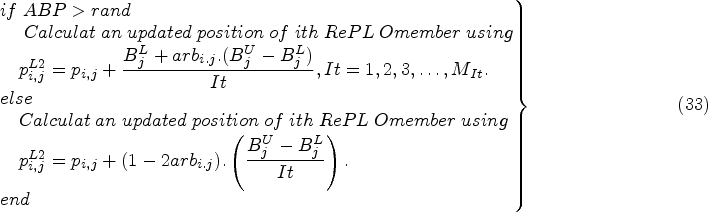
In Eq. (33),
When recalculating the locations of red pandas, if an enhancement in the objective function’s value is detected, the updated location replaces the previous one using Eq. (34). This iterative refinement process enables the algorithm to converge towards optimal solutions more effectively.

By leveraging the power of the hybrid optimization technique, RePLO seeks to enhance network performance, reliability, and security in dynamic and challenging MANET environments by optimizing CH selection and routing.
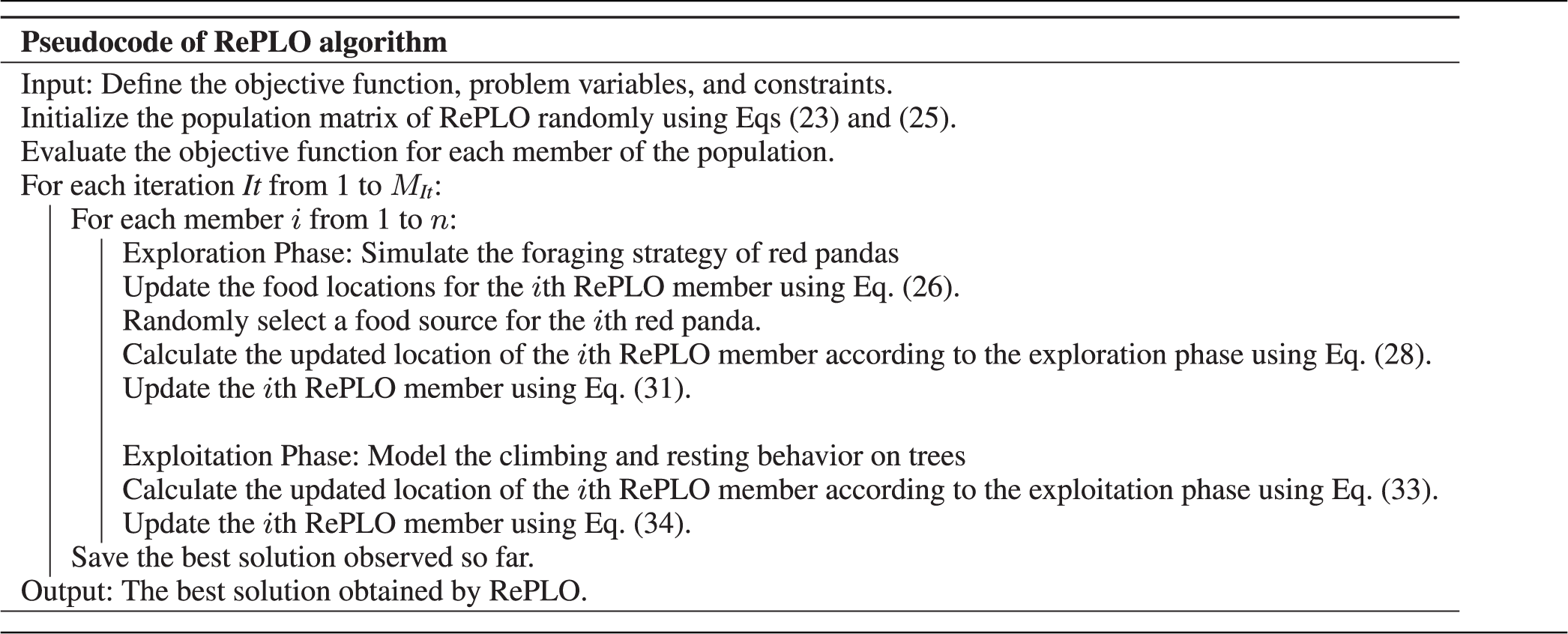
Simulation procedure
The proposed optimization-based MANET routing model was implemented through simulation using Python. Specifically, the Python version employed was “Python 3.7”. Additionally, the simulation utilized a processor with an “11th Gen Intel(R) Core(TM) i5-1135G7 running at 2.40 GHz (with a maximum speed of 2.42 GHz),” while the system had an installed RAM size of “16.0 GB”.
Performance analysis
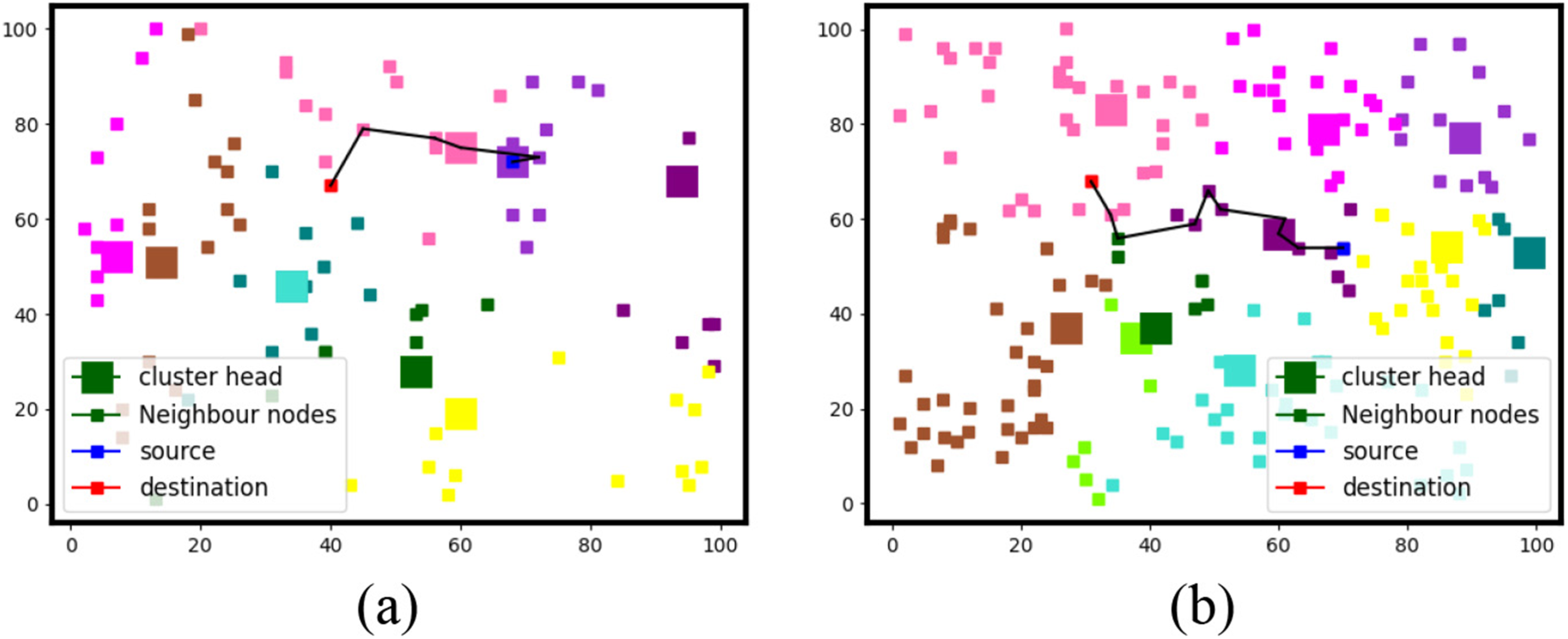
Network setup a) 100 nodes and b) 200 nodes.
A comprehensive analysis was conducted to compare the performance of the RePLO mode with conventional approaches. This in-depth evaluation encompassed a wide array of essential metrics, including Delay, Residual Energy, Security, Distance, Link Quality, and Trust. Moreover, both Convergence Analysis and Statistical Analysis were performed. Furthermore, the effectiveness of the RePLO scheme was not only compared against traditional methods such as LOA [39], RPO [38], GWO [43], BSA [44], and RHO [45] but also against state-of-the-art techniques like GAHC [27] and HPSO [31]. Additionally, the network setup for nodes 100 and 200 is illustrated in Fig. 5.

Delay analysis on RePLO and conventional methods a) 100 nodes and b) 200 nodes.
In the realm of MANETs, efficient RPs are crucial for seamless communication among nodes. In this context, the evaluation of delay performance is paramount for optimizing routing strategies. In the quest for enhanced performance, the RePLO approach is compared with various optimization techniques, including the LOA, RPO, GWO, BSA, RHO, GAHC [27] and HPSO [31]. Figure 6(a) and 6(b) depicts a comparative analysis of these techniques under node configurations of 100 and 200, shedding light on their efficacy in minimizing delay. Particularly, attention is drawn towards the pivotal role of optimal cluster head selection in achieving minimized delay ratings, highlighting the significance of this aspect in MANET routing optimization. In the comparative analysis conducted for round 2000, the delay performance of the RePLO optimization-based MANET routing strategy is examined alongside existing algorithms. Figure 6(a) depicts the exposure of delay analysis under the scenario with 100 nodes. For the RePLO algorithm, the obtained minimized delay value is 1.839
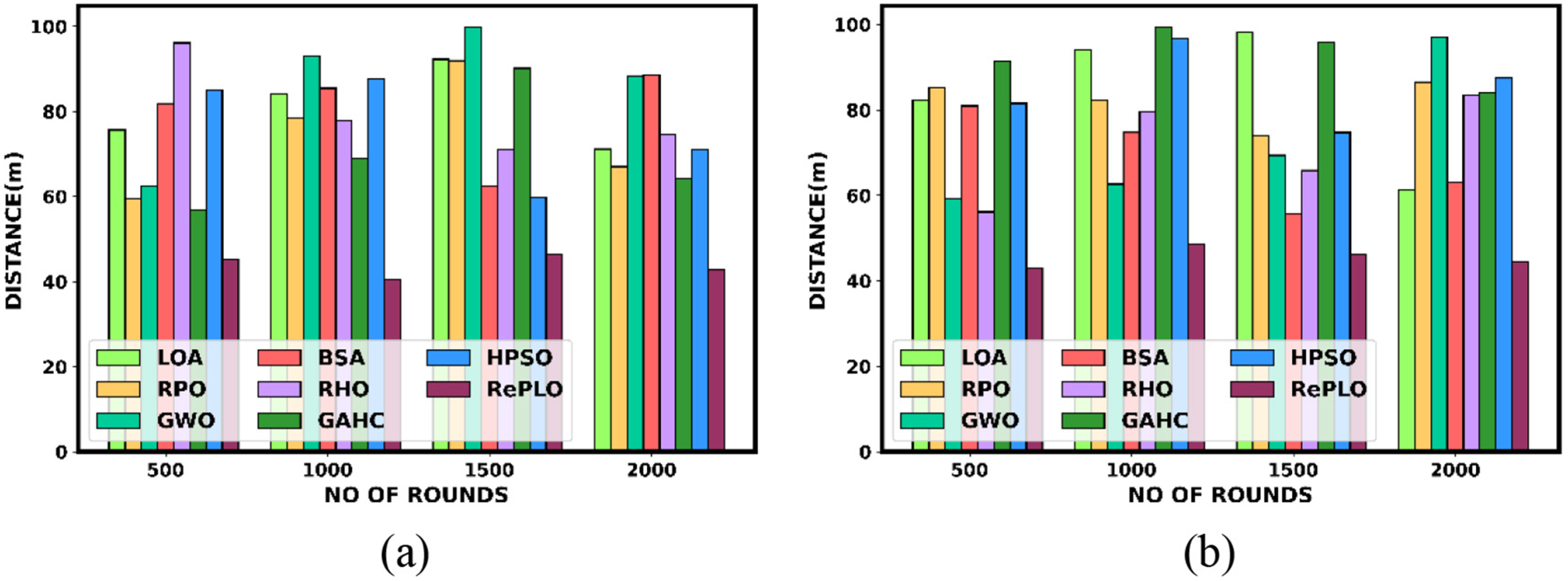
Distance analysis on RePLO and conventional methods a) 100 nodes and b) 200 nodes.
The evaluation of optimization-based MANET routing strategies involves a critical examination of distance assessments between RePLO and conventional approaches across varying node densities. As depicted in Fig. 7(a) and 7(b), the distance analysis spans scenarios with 100 and 200 nodes, illustrating the comparative performance of different routing strategies. Effective cluster head selection relies heavily on minimizing distance ratings to ensure efficient network operation and resource utilization. In the evaluation of distance ratings for MANET routing strategies across 200 nodes at 2000 rounds, a notable discrepancy emerges between RePLO and conventional methodologies. Notably, the RePLO approach showcases the most promising performance, yielding an average distance rating of 42.895 m. This signifies its efficiency in establishing shorter routing paths within the network. In contrast, conventional routing approaches like LOA, RPO, GWO, BSA, RHO, GAHC [27], and HPSO [31] exhibit notably higher average distance ratings: around 67.951 m, 65.686 m, 85.902 m, 86.571 m, 68.731 m, 62.079 m and 64.851 m, respectively. This stark contrast underscores the superiority of optimization-based routing strategies in enhancing the efficiency and reliability of MANET communication. Thus, in the pursuit of optimal MANET performance, the adoption of the RePLO strategy holds considerable promise for improving overall network efficiency and effectiveness.

Residual Energy analysis on RePLO and conventional methods a) 100 nodes and b) 200 nodes.
In the domain of optimization-based MANET routing, the analysis of residual energy holds significant importance as it directly impacts the longevity and efficiency of the network. Figure 8(a) and 8(b) provide a detailed exploration of the residual energy dynamics, comparing the performance of a RePLO scheme against conventional strategies. Initially, both the RePLO and conventional strategies exhibit higher residual energy levels. However, as rounds progress, a noticeable decrease in residual energy is observed across all strategies. Remarkably, the RePLO approach consistently maintains maximal residual energy ratings throughout the entire duration, showcasing its potential for sustaining network longevity and robustness. Notably, the RePLO scheme showcases superior residual energy levels, approximately 0.287J for 100 nodes and 0.271J for 200 nodes, indicating more efficient energy utilization compared to conventional models such as LOA, RPO, GWO, BSA, RHO, GAHC [27], and HPSO [31]. In contrast, the conventional strategies exhibit lower residual energy levels ranging between 0.213J to 0.268J for both node configurations. This discrepancy highlights the efficacy of the RePLO scheme in preserving energy resources throughout various rounds of network operation. Overall, the findings emphasize the significance of the RePLO approach in enhancing the efficiency and reliability of MANETs by prioritizing energy conservation and sustainability.
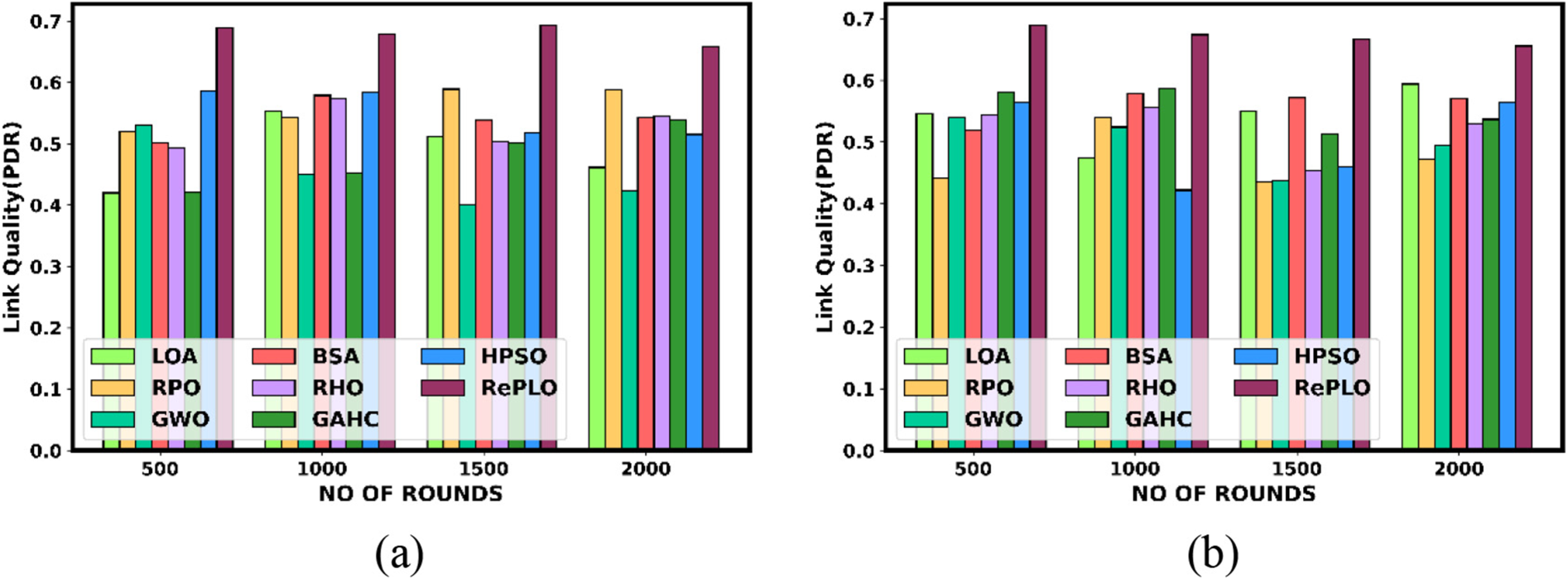
Link Quality analysis on RePLO and conventional methods a) 100 nodes and b) 200 nodes.
In exploring the efficacy of optimization-based MANET routing strategies, a crucial aspect lies in the analysis of link quality, often quantified through PDR. Figure 9(a) and 9(b) present a comprehensive comparison between the PDR of a RePLO approach and conventional methodologies, including LOA, RPO, GWO, BSA, RHO, GAHC [27], and HPSO [31], across networks of 100 and 200 nodes. The fundamental objective of this analysis is to maximize link quality, as reflected by PDR, to ensure the effective performance of the routing model. In examining the link quality for MANET routing strategies at around 1500 across 200 nodes, the RePLO model stands out with an impressive link quality of 0.685. This exceeds the performance of conventional strategies, which exhibit link quality values as follows: LOA with 0.526, RPO with 0.439, GWO with 0.441, BSA with 0.589, RHO 0.468, GAHC [27] 0.468 and HPSO [31] 0.475, respectively. Such discrepancies underline the superiority of the RePLO approach in maximizing link quality, essential for ensuring reliable and efficient communication within MANETs. By consistently achieving higher PDR levels, the RePLO model demonstrates its capacity to facilitate seamless data transmission even in dynamic and resource-constrained environments.

Security analysis on RePLO and conventional methods a) 100 nodes and b) 200 nodes.
The assessment of security is paramount in optimizing MANET routing strategies. Figure 10(a) and 10(b) depicts a comprehensive analysis comparing the security of both RePLO and conventional methods in MANET routing optimization. This evaluation aims to ascertain the robustness of each approach in safeguarding data transmission and network integrity. The security ratings must be higher for effective MANET routing, ensuring resilience against potential security threats and unauthorized access. In the comparative analysis conducted for round 500 with 100 nodes, the security performance of the RePLO optimization-based MANET routing method is contrasted with conventional approaches, including LOA, RPO, GWO, BSA, RHO, GAHC [27], and HPSO [31]. Figure 10(a) illustrates the security analysis, showcasing the security ratings obtained by each method. Notably, the RePLO method emerged with the highest security value of 0.889, signifying its robustness against potential security threats and vulnerabilities. Conversely, the conventional methods demonstrated minimized security ratings, indicating potential weaknesses in their security measures and protocols. LOA achieved a security rating of 0.795, RPO scored 0.783, GWO obtained 0.788, BSA yielded 0.792, and RHO achieved 0.681, while both GAHC [27] and HPSO [31] scored 0.715 and 0.694.

Trust analysis on RePLO and conventional methods a) 100 nodes and b) 200 nodes.
The assessment of trustworthiness plays a crucial role in optimizing MANET routing strategies. Figure 11(a) and 11(b) provide a detailed comparison of trust evaluation between the RePLO scheme and traditional strategies in MANET routing optimization. The primary objective is to maximize trust ratings, ensuring reliable and secure communication among network nodes. Evaluating trust is essential for mitigating security risks and fostering collaboration within the network. In the assessment of trust ratings for optimization-based MANET routing strategies at around 1000 in node 200. Particularly, the RePLO scheme demonstrates a superior trust rating of 0.897, emphasizing its effectiveness in fostering trust within the network. In contrast, traditional strategies exhibit comparatively lower trust ratings, ranging between 0.789 to 0.596. This discrepancy highlights the efficacy of the RePLO scheme in instilling higher levels of trust among network nodes, essential for ensuring dependable and secure communication within MANETs.
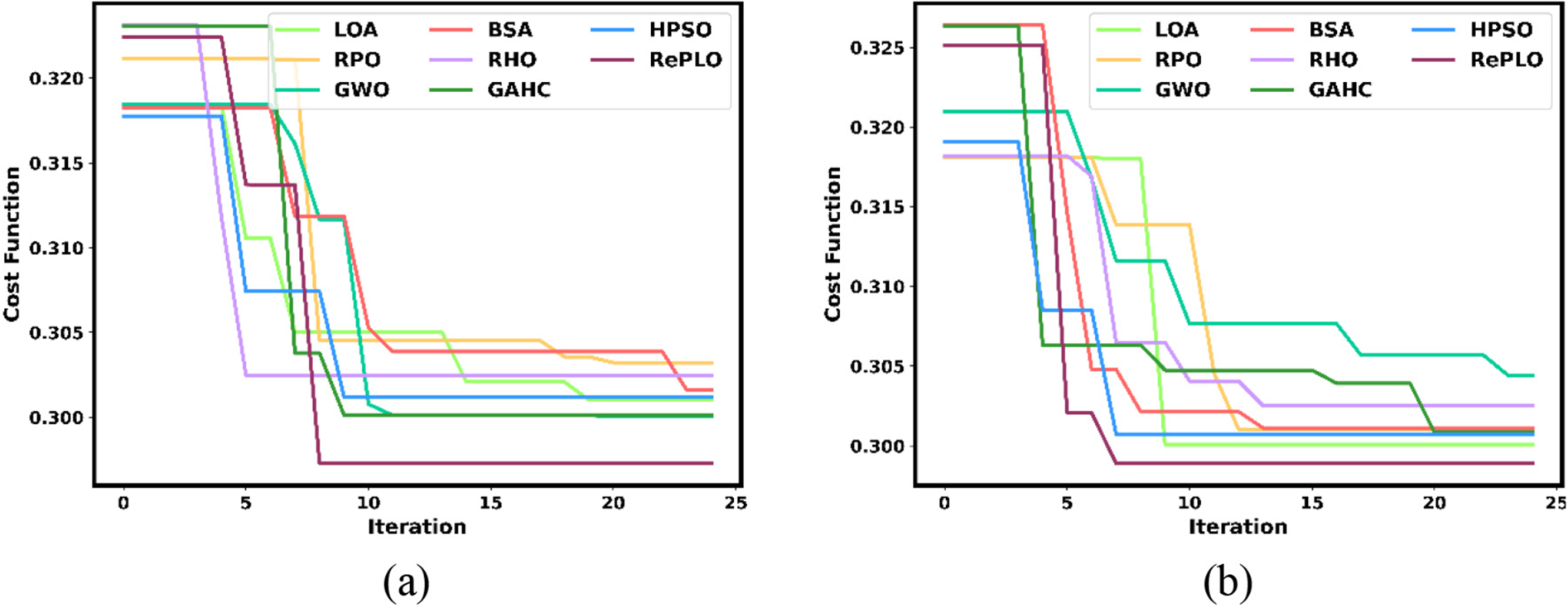
Convergence analysis on RePLO and conventional methods a) 100 nodes and b) 200 nodes.
The convergence analysis of optimization-based MANET routing methods is crucial for understanding their efficiency and effectiveness over successive iterations. Figire 12(a) and 12(b) provide a comprehensive comparison of convergence across nodes 100 and 200, highlighting the performance of the RePLO approach and conventional methods, including LOA, RPO, GWO, BSA, RHO, GAHC [27], and HPSO [31]. As illustrated in the figures, both the RePLO and conventional strategies initially displayed higher cost ratings in the initial iterations. However, as the iterations progressed, there was a noticeable decrease in the cost rates across all methods. Remarkably, the RePLO scheme consistently exhibited the lowest cost ratings compared to conventional methods, indicating its superior convergence and efficiency in achieving optimal routing solutions. In a focused examination of iteration 25, the comparative analysis highlights a significant disparity in cost ratings between the RePLO approach and traditional methods in optimization-based MANET routing. Impressively, the RePLO scheme achieved the lowest cost rate of 0.297, underscoring its efficiency in resource utilization and convergence. Conversely, traditional methods including LOA, RPO, GWO, BSA, RHO, GAHC [27], and HPSO [31] recorded maximized cost ratings, indicative of higher resource expenditure and potentially slower convergence.
Statistical analysis of fitness for node 100.
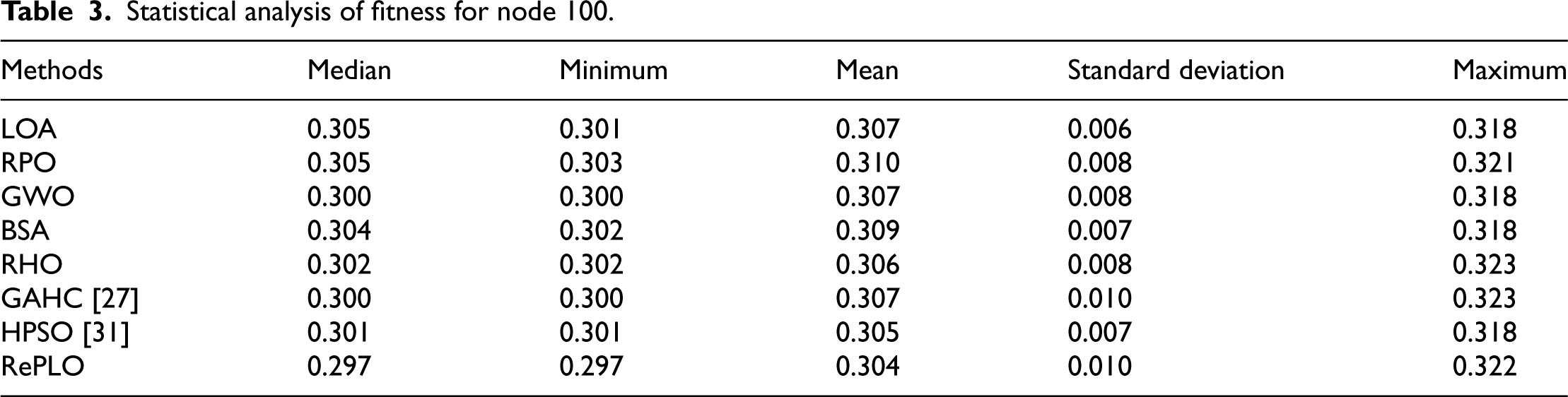
Statistical analysis of fitness for node 100.
Statistical analysis on fitness for node 200.
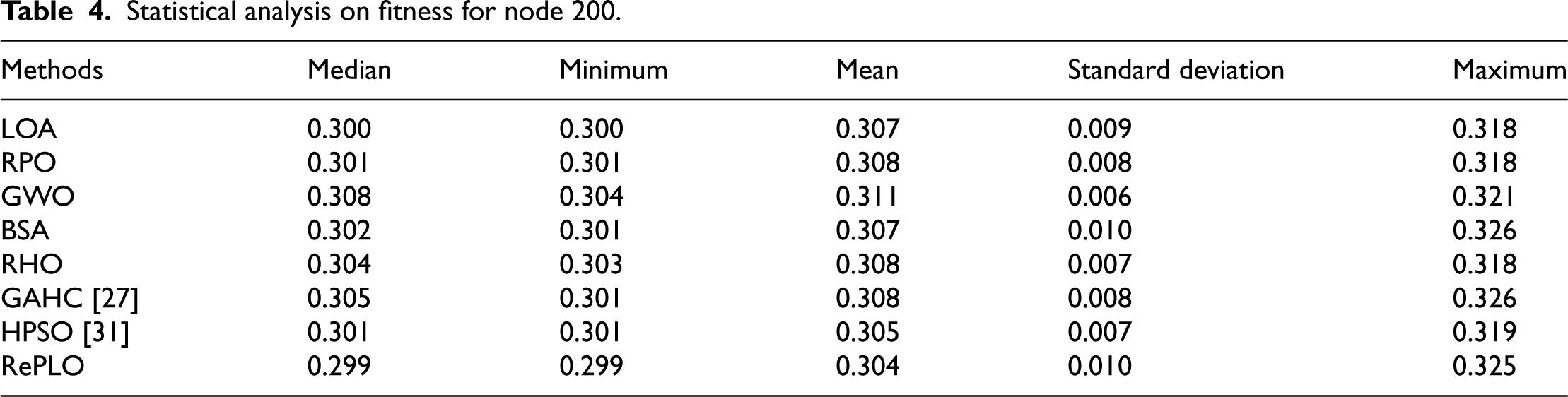
In the evaluation of optimization-based MANET routing strategies, statistical analysis serves as a crucial tool for comparing the efficacy of different methods. Tables 3 and 4 provide a comprehensive examination of fitness function performance across nodes 100 and 200, contrasting a RePLO scheme with conventional methods including LOA, RPO, GWO, BSA, RHO, GAHC [27], and HPSO [31]. In terms of the minimum statistical metric for fitness at node 100, the LOA, RPO, and HPSO [31] share the highest fitness value of 0.301, followed closely by RHO and GAHC [27] with a fitness of 0.302. Meanwhile, GWO demonstrates the lowest fitness among the conventional methods at 0.300, followed by BSA at 0.302. In contrast, the RePLO method achieved a notably lower fitness value of 0.297. This discrepancy suggests that the RePLO approach may offer a potential advantage in optimizing MANET routing efficiency by achieving lower fitness metrics compared to conventional methods. For node 200, the mean statistical metric provides valuable insights into the average fitness performance of each optimization-based MANET routing method. Among the conventional models, GWO demonstrates the highest fitness value of 0.311, indicating relatively better overall fitness performance compared to other traditional methods. On the other hand, the RePLO method exhibits a mean value of 0.304, showcasing competitive performance but slightly lower than GWO.
This research introduced a secure routing method for MANETs utilizing the RePLO hybrid optimization algorithm, amalgamating RPO and LOA techniques. The structured framework encompassed five key stages: system model configuration, energy model development, mobility model establishment, cluster head selection via the RePLO algorithm, and routing implementation using RePLO. RePLO played a pivotal role in optimizing CH selection and routing while considering specific constraints such as delay, distance, energy, and security for CH selection, and link quality and enhanced trust for routing. The evaluation involved assessing various metrics, showcasing the efficacy of this approach in MANET routing. This research culminated in the development and validation of a comprehensive and systematic approach for secure and efficient MANET routing, promising enhanced network performance and reliability in dynamic and decentralized environments. For the RePLO algorithm, the obtained minimized delay value is 1.839