



Abstract
This work is to present a new approach – the Resource Allocation Weighted Random Walk (RA-WRW) algorithm, based on IOTA-Distributed Ledger Technology (DLT), for the optimization of transaction processing within the IOTA network. The objectives of improved execution time, better CPU usage, enhanced network efficiency, and better scalability are met in accordance with stringent security measures. The Python-based algorithm considers node resources and transaction weights for the selection of the best tips. The authentication operation of the sender with private keys ensures the integrity of the data, while verification procedures confirm the authenticity of the tips and the validity of transactions.
Implementation of this algorithm greatly improves the efficiency of IOTA network transaction processing. The experiment is run on a commonly used dataset available in Kaggle and some system-specific configurations, which depicts a significant improvement in execution time, CPU usage, network efficiency, and scalability. The tips selected are very authentic and consistent, thus proving the efficacy of this algorithm.
It proposes a new RA-WRW algorithm based on IOTA-DLT, efficiently fusing resource allocation with weighted random walk strategies for improving the security, efficiency, and scalability in distributed ledger transactions. This has been a colossal development toward the betterment of processing transactions across the IOTA network and feels the pulse of such a newer approach in applications across the real world.
Introduction
The Internet of Things (IoT) facilitates the interconnection of numerous devices for data exchange across various applications like smart cities, homes, cars, and healthcare. This expansive network demands swift communication with minimal delays and substantial throughput to accommodate the vast number of both wireless and wired devices [1]. It constitutes a vast worldwide information system comprising diverse, decentralized devices capable of identification, sensing, and processing through standardized, interoperable communication protocols [2]. The IoT has the power to significantly improve both the financial situation and the quality of life for people [3]. For IoT-based systems to be widely adopted, functionalities like authorization and access control are among the essential ones [4]. Industry must develop any system that can handle a heavy load of microtransactions and maintain machine data integrity as IoT technologies are increasingly adopted [5]. The IOTA project, which means “extremely small,” aims to create an entirely decentralized network that connects all IoT devices [6]. It represents a decentralized, open-access ledger utilizing a directed acyclic graph (DAG) structure called the “tangle” for storing individual peer-to-peer transactions that are interconnected yet distinct [7].
IOTA, established in 2015, is a public distributed ledger designed for fee-free microtransactions among Internet of Things (IoT) devices. It tackles scalability and fee issues present in traditional distributed ledgers. Unlike blockchain-based alternatives, IOTA utilizes a Directed Acyclic Graph (DAG) called the Tangle to store messages on its ledger, aiming for enhanced scalability [9]. The IOTA network is more interested in improving the scalability of the system. The existing system does not provide a low computational complexity. The main aim of IOTA is to communicate via the tangle graph, which gives more security, tamper-proof communications, and is fully authenticated. Every data transaction has POW validation, which can be used to validate the corresponding edges in the tangle. This analysis work presents the comparative analysis of various methods in the IoT environment using the DLT with IOTA. An extensive study on the recent IoT-based techniques employed in the medical field is presented [36]. The motivation behind our research stems from the pressing need to enhance IOTA’s performance in IoT applications through improved resource allocation strategies. As Lamport’s seminal work on the Paxos algorithm laid the foundation for Distributed Ledger Technologies (DLTs) [10], we seek to build upon this framework to establish consensus among untrusted parties in decentralized networks [11]. The technology operates as a peer-to-peer network, offering a tamper-evident, collectively maintained digital ledger for transaction recording. The Paxos algorithm, initially introduced by L. Lamport [10], serves as the foundation for Distributed Ledger Technologies (DLT). DLTs, exemplified by IOTA, establish a framework that enables untrusted parties to reach a consensus across a decentralized network [11]. Based on the data structure utilized for the ledger, DLT is classified into three major types: Block Chain (BC), IOTA Tangle (DAG), and Hash graph [12]. It is gaining recognition as a framework with substantial potential for Cyber-Physical Systems (CPS) like the Internet of Things (IoT). This framework aids in the logging and validation of transactions among involved nodes, eliminating the necessity for a centralized database or authority [13].
DLTs can provide transparency, redundancy, and accountability [14]. In recent years, developments in DLTs, which provide consensus procedures among several untrusted parties, have led to their widespread application in interconnected networks of devices [15]. The IOTA protocol sets itself apart from conventional distributed ledger protocols through its unique numerical system [16]. The emergence of blockchain technology, a form of distributed ledger technology, has generated high expectations for more sustainable agricultural systems and practices across various aspects of the triple bottom line [17].
NOTS stands out as an Innovative One-time Signature System, boasting unparalleled compactness in both key and signature dimensions when compared to other OTS/FTS methods [18]. On the other hand, TABI represents a groundbreaking Trust-based Access Control Mechanism designed for IoT networks. Leveraging Blockchain technology, TABI ensures end-to-end security in IoT networks characterized by resource constraints [19], and an IdM based on self-sovereign identity (SSI) [20] these are some of the methods which are existing. The advanced proposed methodology is much more efficient than the existing methods.
Our study contributes to the growing body of research on DLTs in Cyber-Physical Systems (CPS) like IoT [13]. We analyze and compare various IoT-based techniques, with a particular focus on applications in the medical field [36]. Drawing inspiration from innovative approaches such as NOTS, a compact one-time signature system [18], and TABI, a trust-based access control mechanism for IoT networks [19], we propose novel resource allocation strategies to optimize IOTA’s performance in IoT environments.
The research’s subsequent segment can be succinctly outlined as follows: Section 2 delves into a relevant review of existing literature, while Section 3 formulates the system model and articulates the problem statements. The proposed framework is subsequently elucidated in Section 4, and the results are presented and juxtaposed in Section 5. The paper concludes in Section 6.
Related work
Farahani et al. [21] presented a comprehensive reference architecture covering key aspects, recent advancements, opportunities, and challenges in the intersection of blockchain and the Internet of Things (IoT). This framework enables the development of new applications and business models in specific industries. However, the energy-intensive nature of consensus mechanisms like Proof-of-Work (POW) in Distributed Ledger Technologies (DLTs), combined with the resource constraints of IoT devices, poses a significant drawback.
The widely recognized hash-based One-Time Signature (OTS) scheme WOTS has been innovatively extended with a new variant known as WOTS-S, introduced by Shahid et al. [22]. This particular signature system is specifically tailored for post-quantum cryptographic currencies. Since practically all cryptocurrencies currently in use rely on ECDSA, this method will no longer be secure if widespread access to quantum computers is possible. Although hash-based signature systems are an excellent ECDSA substitute, one major drawback is the disproportionately huge signature sizes. The decreased signature sizes offered by WOTS-S. It is not appropriate for distributed ledgers used in Internet of Everything scenarios.
Smart digital signatures (SDS), a new hash-based digital signature system that Shahid et al. [23] presented, are a quick and effective upgrade to the well-known XMSS hash-based approach. A computationally effective system, SDS-OTS reduces the time required for key generation and signature formation by 70% and 60%, respectively. With the aid of HLPN, it offers a roadmap for integrating SDS into a distributed ledger. The technological infrastructure, which includes hardware components, software programs, and connections, is crucial to SDS. The signing process may be hampered, and signature verification may be hampered if any of these components malfunction or have technical difficulties. Using technology exclusively creates a potential single point of failure and produces concern for the dependability and availability of the system.
A trust mechanism for a consensus protocol for IIoT was created by Wang et al. [24]. We use a novel module of reputation to give each participant a shared understanding of reputation at the global level during the process of reaching a consensus. This technique demonstrates how reputation could play the role of an incentive in a consensus protocol. It performs well in terms of efficiency and safety. The drawback is the possibility of information obtained through data logging being made public and the absence of encryption.
Zhao et al. [25] proposed a secure sensing data processing and logging system, emphasizing the incorporation of blockchain technology as a source of inspiration and facilitation for the system. The crucial data are necessary for safeguarding the system is logged in a public blockchain, ensuring an immutable data store. This setup eliminates the necessity for sensors to connect with the sensor authenticator through a third party, like an access point, which could potentially expose the system to attacks. However, it is important to note that the system’s limited range represents a significant drawback.
Anglés-Tafalla et al. [26] have introduced a novel strategy for decentralized management of Low Emission Zones (LEZs). This involves treating vehicle accesses as blockchain transactions and employing smart contracts for pricing and charging. Rigorous testing has been carried out in controlled and low-traffic settings to confirm its practicality in real-world scenarios. Demonstrate the new decentralized proposal’s lightweight and viability in a pertinent scenario that is consistent with the European Commission’s Technology Readiness Level 5 standards. Low-emission zones have the drawback of creating high-emission zones elsewhere.
Scheid et al. [27] introduced a distinctive improvement process, navigating from high-level business continuity (BC) selection rules to detailed BC transactions, utilizing the “Policy Continuum.” Research employing the BC selection framework developed through Policy-based administration (PBM) within the BC domain has demonstrated that this integrated approach effectively supports data administration across diverse BCs, aligning with user-defined needs, such as cost or performance considerations. Many applications and use cases can benefit from blockchain (BC), including supply chain transparency, Internet of Things (IoT) immutability, and intermediary-free financial transactions. Can potentially make the development process more complex. The challenges of the existing works are given in Table 1.
Existing work challenges.
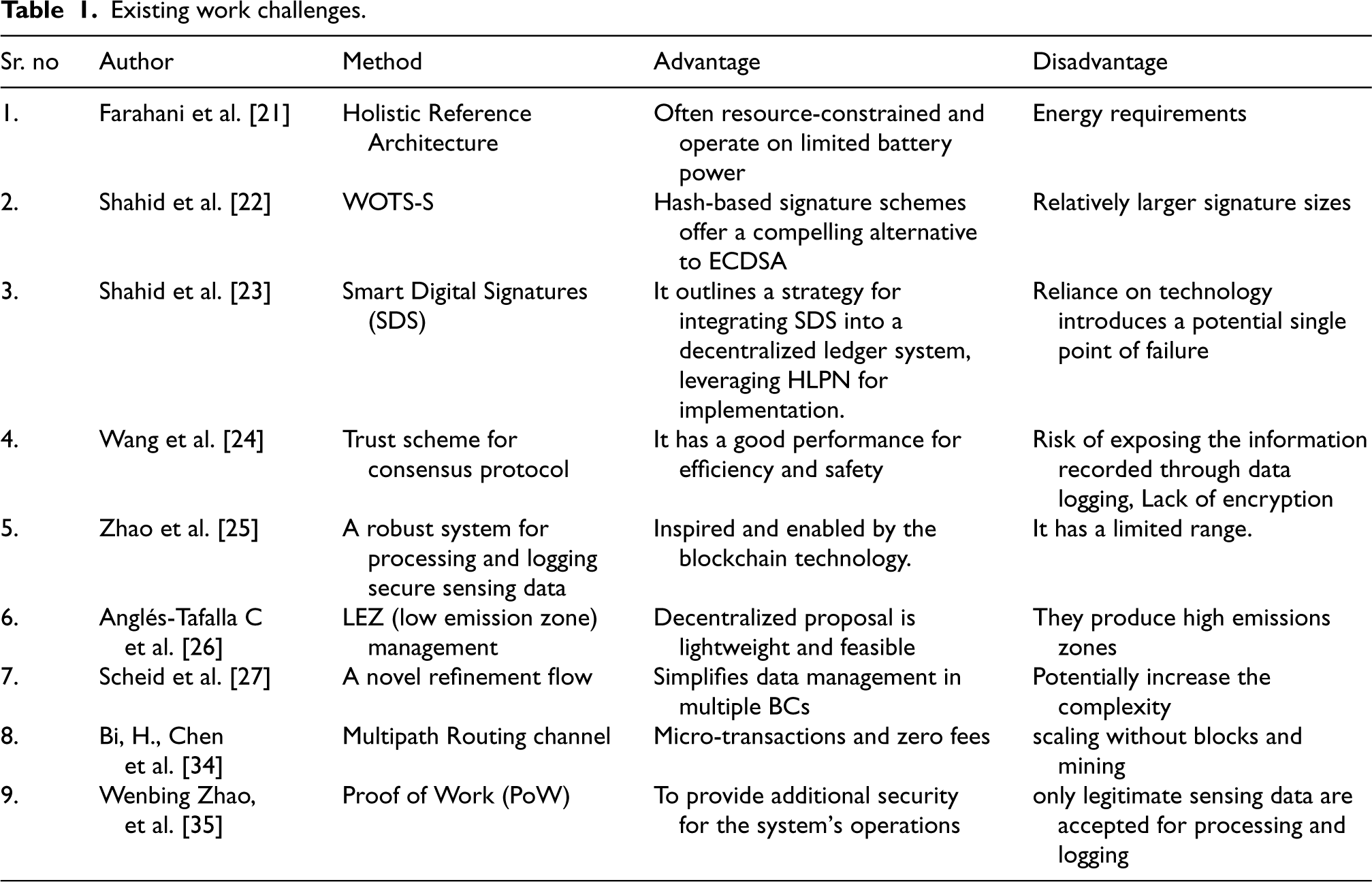
Existing work challenges.
The suggested study’s main contribution can be summed up as follows:
Initially, the transaction datasets utilizing IOTA are gathered from conventional online sources. As a result, the system imports transaction data, undergoing a preprocessing phase where noise data, null values, and error features are removed. The processed dataset is then moved to the feature extraction stage, which derives the different features like transaction amount, timestamp, transaction ID, and sender and receiver addresses. Then, the novel Distributed Ledger Technology-based Resource Allocation Weighted Random Walk (IOTA-DLT based RA-WRW) is designed in a PYTHON environment. It aims to optimize the tip selection process by considering both the available resources of nodes and the weights assigned to transactions. The extracted features are then authenticated by signing the transaction using the sender’s private key. Following that, the proposed Resource Allocation based Weighted Random Walk algorithm is used for the tip selection in IOTA tangle to improve execution time, optimize CPU usage, enhance network efficiency, and increase scalability. The algorithm aims to achieve faster transaction confirmations. The authenticity and consistency of the chosen tips are then confirmed during the verification process. Moreover, to check the format and content of the chosen tips, as well as the transaction fields, references to previous transactions, and other pertinent data. Subsequently, Security analysis assesses the overall security and trustworthiness of the IOTA network and analyzes the resilience against various attack vectors. Finally, the system’s robustness regarding recall, precision, accuracy, F-measure, Confirmation Time, Computation Time, Time Complexity, execution time, and CPU usage were computed. Specifically, limitations like battery backup, security, and computation time as the computation time in IoT devices is quite high compared to machines are addressed.
The IOTA distributed ledger technology (DLT) platform is employed by the system, which comprises a network of nodes actively engaged in the IOTA network. These nodes play a pivotal role in transaction processing, ledger maintenance, and smart contract execution within the system. Each node has computational resources, including CPU, memory, and storage. The system measures the execution time and CPU usage of transactions and smart contracts on the IOTA network.
Developing a systematic methodology to measure and record the execution time and CPU usage of transactions and smart contracts on the IOTA network. Collecting and capturing relevant data points, including timestamps, transaction types, smart contract complexities, and corresponding CPU utilization metrics. Assessing the scalability of the execution time as the system handles increasing numbers of transactions or executes more complex smart contracts concurrently. Investigating potential performance bottlenecks or limitations that may affect the execution time of transactions and smart contracts. Examining the CPU usage associated with transaction processing and smart contract execution within the IOTA network. Analyzing the variations in CPU usage based on different transaction types or smart contract functionalities. Evaluating the scalability of CPU usage as the system handles higher transaction volumes or executes more computationally intensive smart contracts simultaneously.
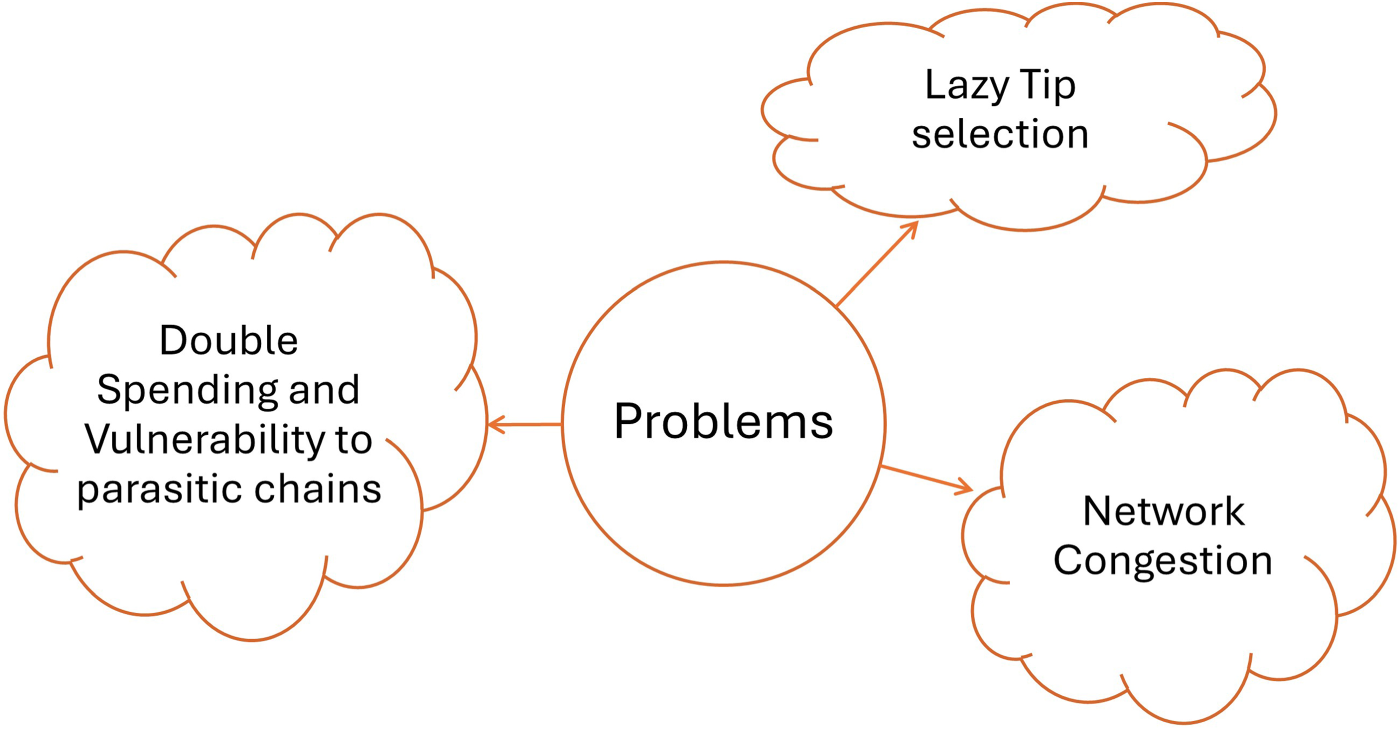
System and problem statement.
A novel Internet of Things Application with IOTA DLT-based Resource Allocation with Weighted Random Walk (IOTA-DLT based RA-WRW) strategy was designed to optimize the tip selection process by considering both the available resources of nodes and the weights assigned to transactions and to improve the execution time and CPU usage by IOTA. IOTA represents a decentralized ledger technology and digital currency specifically designed for the IoT landscape. It offers a scalable and safe framework for facilitating IoT device transactions.
The IOTA datasets are initially gathered from conventional web sources. Following this, the datasets are imported into the system, and during the preprocessing phase, efforts are made to eliminate noise data, null values, and error features. The processed dataset is then moved to the feature extraction stage, which derives the different features like transaction amount, timestamp, transaction ID, and sender and receiver addresses. Then, the novel Distributed Ledger Technology-based Resource Allocation with Weighted Random Walk (IOTA-DLT based RA-WRW) is designed in a PYTHON environment. It aims to optimize the tip selection process by considering both the available resources of nodes and the weights assigned to transactions. It aims to optimize the tip selection process by considering both the available resources of nodes and the weights assigned to transactions. It provides a secure and scalable platform for enabling transactions between IoT devices. The extracted features undergo authentication through the signing of the transaction using the private key of the sender. Following that, the proposed Resource Allocation based Weighted Random Walk Algorithm is used for the tip selection in IOTA tangle to improve execution time, optimize CPU usage, enhance network efficiency, and increase the scalability and the algorithm aims to achieve faster transaction confirmations. The authenticity and consistency of the chosen tips are then confirmed during the verification process. Also, to check the format and content of the chosen tips, as well as the transaction fields, references to previous transactions, and other pertinent data. Subsequently, Security analysis assesses the IOTA network’s overall security and trustworthiness and its resilience against various attack vectors. Finally, the system’s robustness in terms of scalability, precision, recall, accuracy, F-measure, execution time, and CPU usage was computed.
IOTA based dataset
During initialization, In IOTA the transaction data are collected from the standard website. In IOTA a data structure known as a bundle serves as the representation of a payment. Address, signature, value, and tag fields are included in IOTA transactions. A valid payment involves many transactions, which are more like inputs and outputs in IOTA. The data initialization function is used within the system to initialize the dataset. Equation (1) uses to express it.

Where represents the dataset initialization function, represents the collected IOTA dataset, denotes the information within the IOTA dataset, while represents the overall quantity of data encompassed by the dataset.
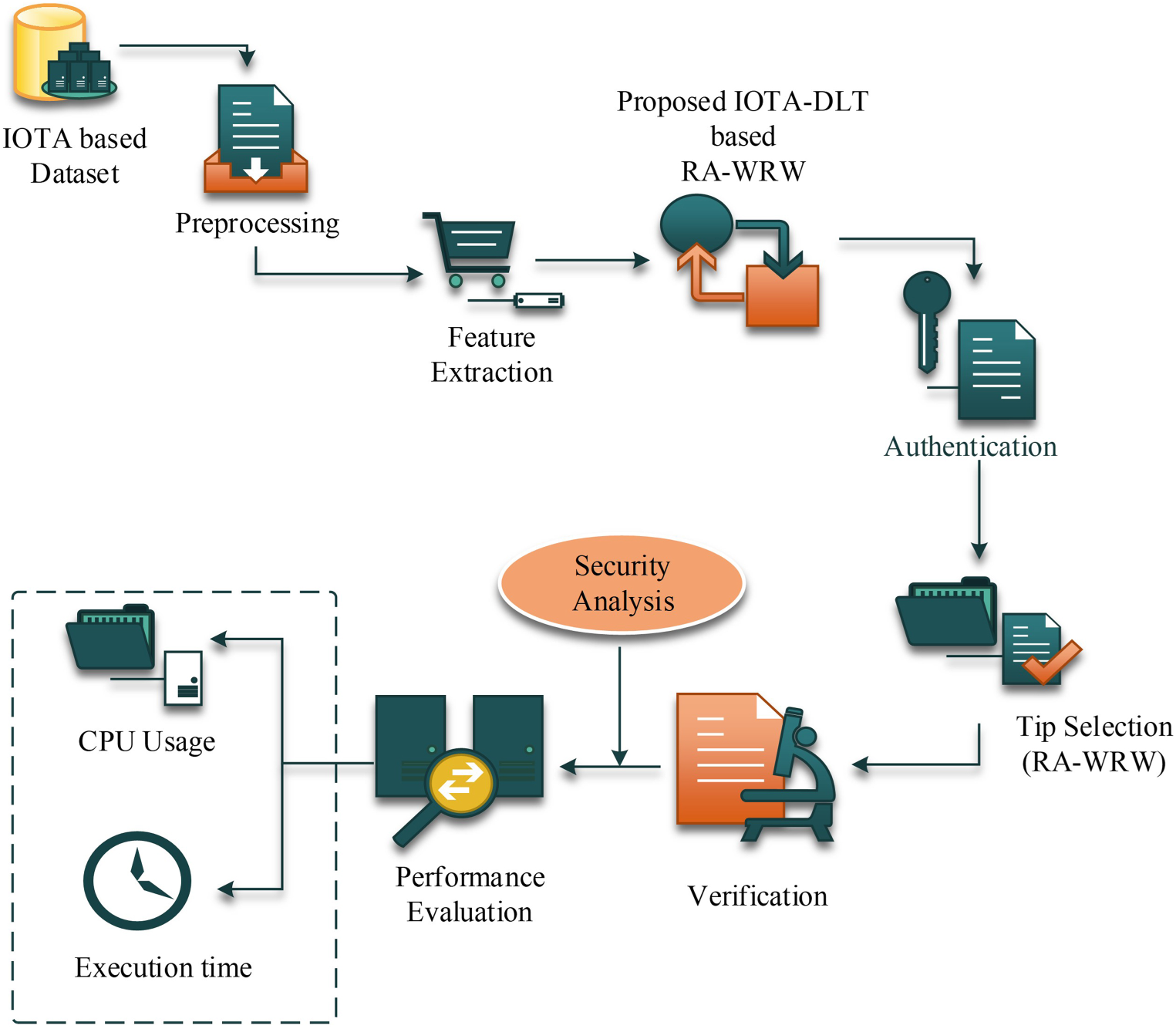
Proposed architecture of IOTA-DLT-based RA-WRW.
The collected transaction data were preprocessed in this preprocessing phase. The initialized dataset contains noise data, null values, and error characteristics. Therefore, it is imperative to preprocess the raw IOTA dataset to eliminate any undesirable features and reduce noise. Digital currency transactions in the IOTA network require cleaning and formatting in preprocessing. This includes eliminating any unnecessary characters or inconsistent formatting, assuring uniformity in data representation, and managing any incorrect or missing transaction data. The sender and receiver addresses are included in every transaction. Verifying the accuracy and legitimacy of addresses is a crucial step in the preprocessing stage to guarantee the secure and accurate delivery of funds to the intended recipient and validate the sender’s address. Furthermore, the pre-processing function improves system efficiency and reduces computation time. It is expressed in Eq. (2).

Here, represents the preprocessing function and indicates the presence of disruptive elements within the input dataset.
Feature extraction in the context of IOTA would include extracting pertinent metadata, such as timestamps, transaction amounts, inputs and outputs addresses, signatures, and branch and trunk transactions from transaction data. The timestamp provides information about the time that a transaction was generated or added to the Tangle, allowing for the analysis of transactional patterns, monitoring of confirmation times, and evaluation of network performance. In IOTA, every transaction has a digital signature that serves as evidence of the transaction’s integrity and reliability. The ability to extract the signature enables the validation of transactions and the assurance that they have not been tampered with. The IOTA network uses these derived features for transaction analysis, network performance assessment, security audits, and monitoring the transaction flow.

Where the represents the feature extraction function, indicates the wanted features, and denotes the unnecessary features.
IOTA DLT
The IOTA technology does not use the conventional blockchain concept; instead, it is built on a novel sort of DLT that seeks to tackle two of the most significant drawbacks of existing blockchain solutions: high transaction fees and lengthy processing times. Tangle uses a DAG to store data and track transactions. It was created specifically for the IoT ecosystem to enable scalable and secure transactions between IoT devices. The IOTA network has a three-step method for creating transactions that must be followed before the transaction gets propagated through the network. The processes involve signing, selecting tips, and POW. In a fully connected network of nodes, transactions can be sent between any pair of nodes. Nodes function in a synchronized manner, where they read transactions from the preceding round, carry out the Tangle protocol, and may broadcast the transaction to all other nodes. The network topology takes the shape of a complete graph.
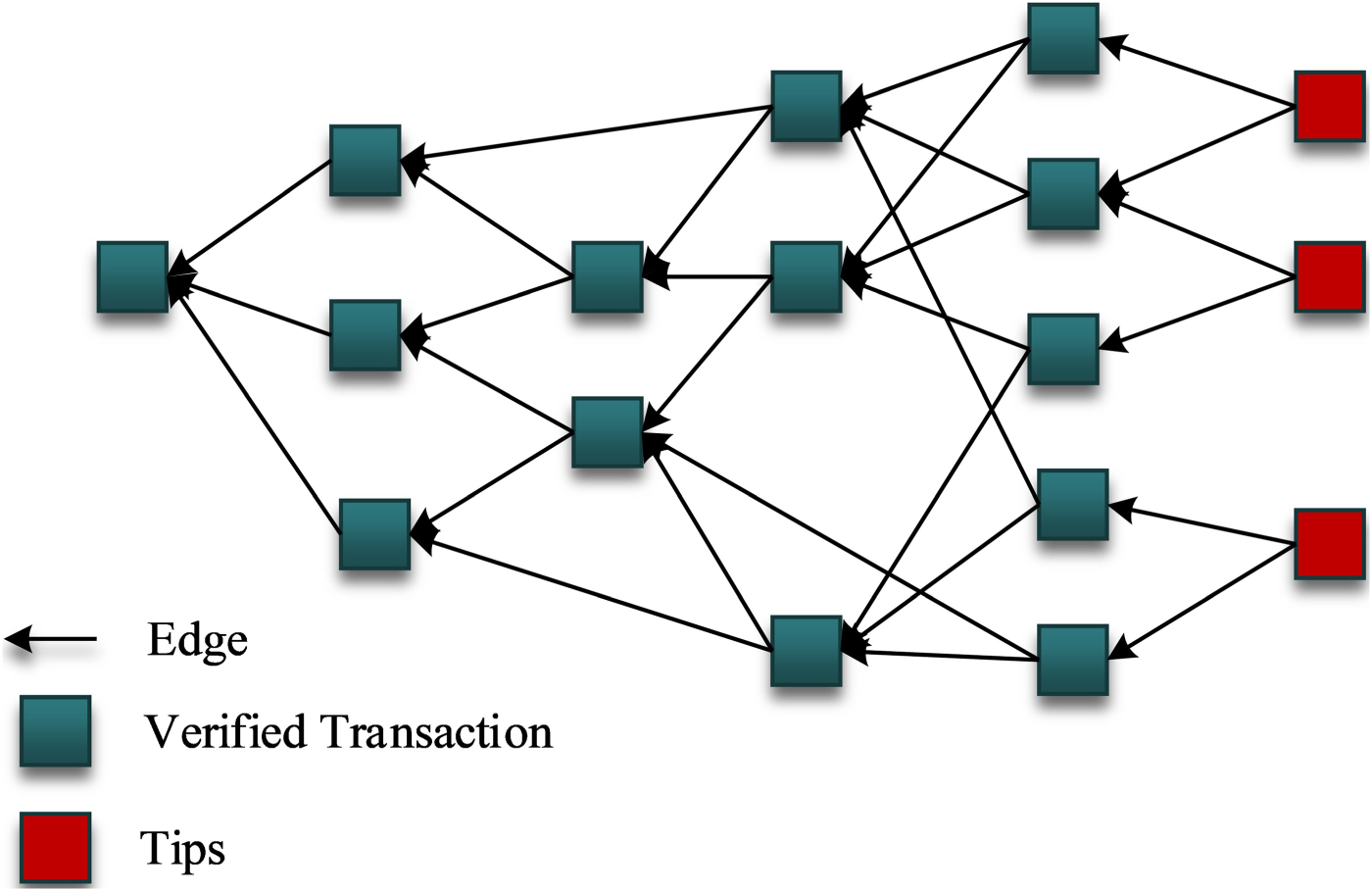
The IOTA tangle.
The Tangle, the foundational structure of IOTA, functions as a DAG responsible for storing transactions. In this graph, transactions are represented as vertices, commonly referred to as “sites.” Each site has two parent vertices, and for a new site to be added, it must confirm its two parent sites. The confirmed status extends to all sites confirmed by its parents. A “tip,” or an unconfirmed transaction, is a site that has not yet received confirmation. A unique term for a site without parents but confirmed by all other sites is “Genesis.” When a new transaction is introduced to the Tangle, it chooses two prior transactions to endorse, resulting in the incorporation of two new edges into the graph. The confirmed transaction is added to the DAG as a site. The site is then broadcast to every other node.
Authentication
In the IOTA Tangle, authentication is primarily carried out when signing transactions. Signing is a cryptographic activity performed by the sender of a transaction to assure authenticity and integrity. Generating a digital signature for transaction data involves utilizing the sender’s private key to authenticate the information. This signature acts as an aspect of authentication, confirming that the transaction comes from the private key holder. In the process of generating addresses, IOTA employs a deterministic procedure that initiates with a seed. Each address is linked to a key index, security level, and a private key. Typically, IOTA seeds consist of 81 characters, comprising uppercase English letters (A-Z) and the number 9. The private key is derived by hashing the subseed, which is a combination of the seed and index.

The system employs an alphanumeric seed (A to Z, 0 to 9) with key indices (0, 1, …). A hashing function ‘H’ [28] determines security, defining the private key length. The private key undergoes a process: hashed into 27 fragments, each subjected to 26 rounds of hashing. These fragments are then collectively hashed, resulting in the public key address. This method ensures public key uniqueness and security through successive hash operations on the private key and its fragments. The created address serves as the user’s identity in the IOTA network and is used to receive payment or send transactions.
Tip selection
A novel hybrid resource allocation-based weighed random walk algorithm (RAbWRW) is designed for the selection of tips in the IOTA tangle network. This algorithm considers factors such as transaction weights, cumulative weights, and connectivity to determine the tips that are more likely to lead to successful confirmations. The primary goal of this tip selection algorithm is to maintain network integrity and ensure the timely confirmation of transactions.
Resource allocation-based weighted random walk
Utilizing resource allocation techniques, the tip selection process is optimized by taking into account the capacity and availability of the network’s computational resources. These strategies seek to balance the workload and use resources wisely to enhance the tip selection algorithm’s overall performance. During the random walk, the algorithm considers the available resources of nodes. Nodes with higher available resources or less load are given a higher weight or priority during tip selection. This ensures that nodes with more resources can actively participate in the tip selection process. This increases the confirmation time of tip selection.
The idea behind Weighted Random Walk (WRW) draws inspiration from the progression of a walker moving from the origin to the endpoint to achieve success. For each incoming transaction, this is carried out. The separation probability for each step taken by the walker on each existing path is determined by the node’s cumulative weight. It is assessed through Eq. (4) and is defined as the cumulative sum of weights associated with all nodes that explicitly or implicitly endorse the transaction.

Where indicates each and every node that indirectly confirms the node. Assuming that is the tip to be affirmed by, and the walker is at, then the probability of transaction is. The Eq. (5) [29] represents the formula for.

Where is the cumulative weight, indicates the positive integer, and indicates each and every node that indirectly confirms the node. If the walker is on x, according to the above equation. According to the above equation, if the walker is on path x and path y directly confirms path x, therefore the probability of moving from path y is proportional to the difference between their cumulative weights. Therefore, the probability of selecting a transaction with a larger cumulative weight will increase.
After the selection of tips, a validation process ensues to ensure that the transactions being validated do not conflict with previous transactions, thereby preventing the issue of double spending. If a selected tip is deemed invalid, it is promptly ignored and discarded, and a fresh tip is chosen based on its weight. Assuming all criteria are met, the new transaction is appended to the two tips it validated. This recently added transaction then transforms into a new tip within the tangle, patiently awaiting verification through the same process. It also involves confirming the validity and consistency of selected tips and checking the structure and content of the selected tips, including transaction fields, references to previous transactions.
Security analysis
During this stage, perform an in-depth examination of the security aspects of the authentication procedure, encompassing the utilization of private keys and digital signatures. It also assesses the overall security and trustworthiness of the IOTA network and analyzes the resilience against various attack vectors. If any potential vulnerabilities, risks, and security-related aspects are identified the transaction will be cancelled to mitigate the risks.
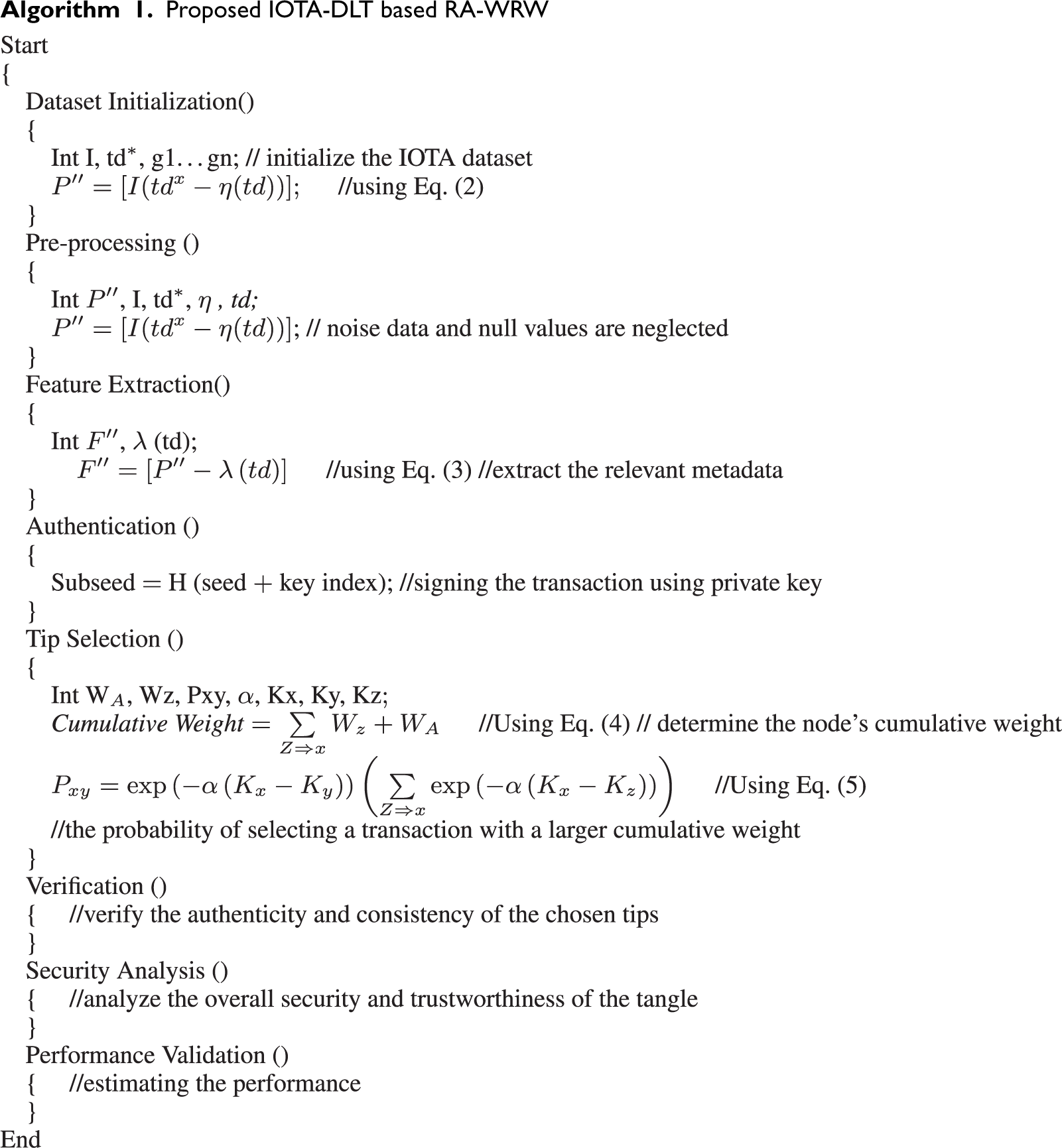
Figure 4 shows the flowchart for the IOTA-DLT-based RA-WRW algorithm. The process starts with initializing the IOTA dataset and preprocessing which involves the removal of noisy data and null values. Further considering the extracted relevant metadata the proposed framework initiates the authentication and tips selection involving RA-WRW algorithm. The chosen tips verified for authenticity and consistency are further implemented to consider execution time, CPU usage, and Time Complexity.
Result and discussion
The latest study introduces a hybrid model designed to optimize the overall enhancement of the IOTA DLT network, aiming to elevate its scalability and performance. The IOTA-based dataset was collected from the standard (Kaggle) website and fed into the system. Hereafter, a novel as IOTA-DLT-based RA-WRW has been designed with the required parameters to determine the execution time and CPU usage by improving confirmation time in tip selection. The main societal benefits are better public services including initiatives for smart cities, healthcare improvements, more efficiency, and decreased waste, which result in more environmentally friendly practices and better practices overall. While new business models and economic empowerment promote financial inclusion and innovation, increased trust and transparency in transactions encourage accountability and lower fraud. The designation and implementation descriptions are tabulated in Table 2.
Parameter description.

Parameter description.
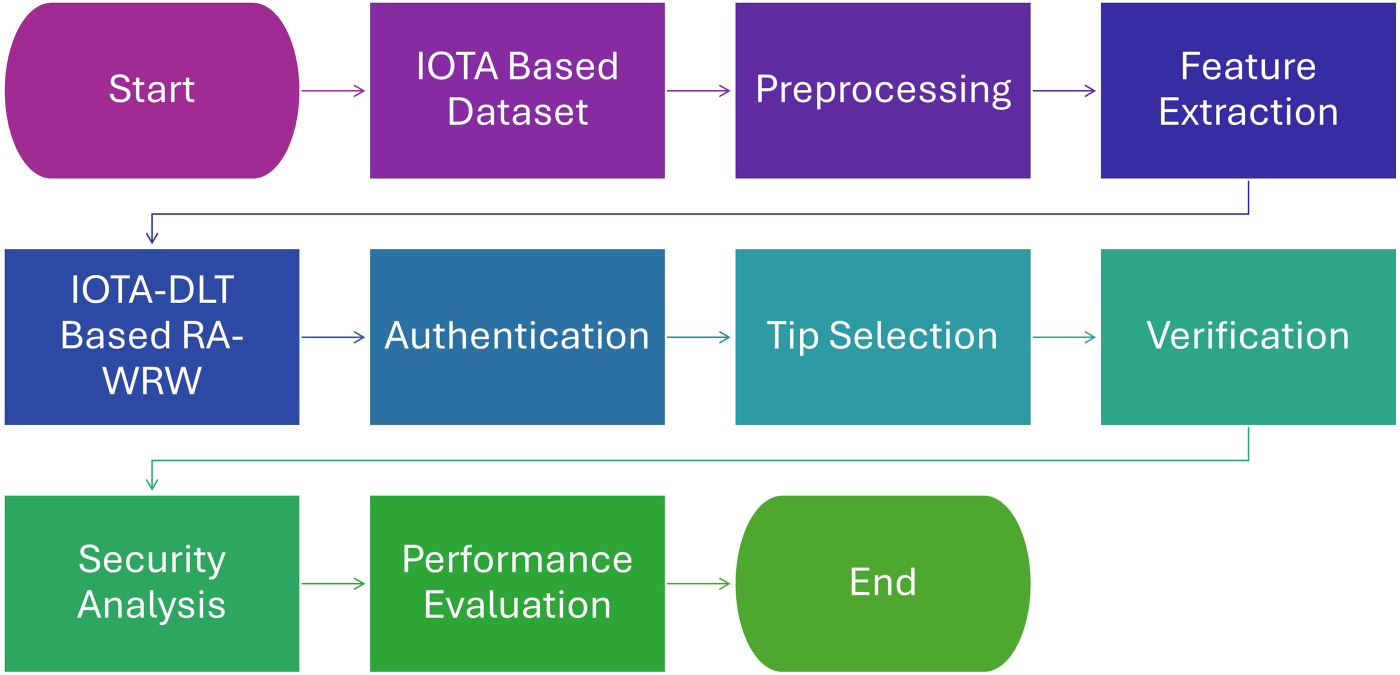
Flowchart of proposed IOTA-DLT-based RA-WRW.
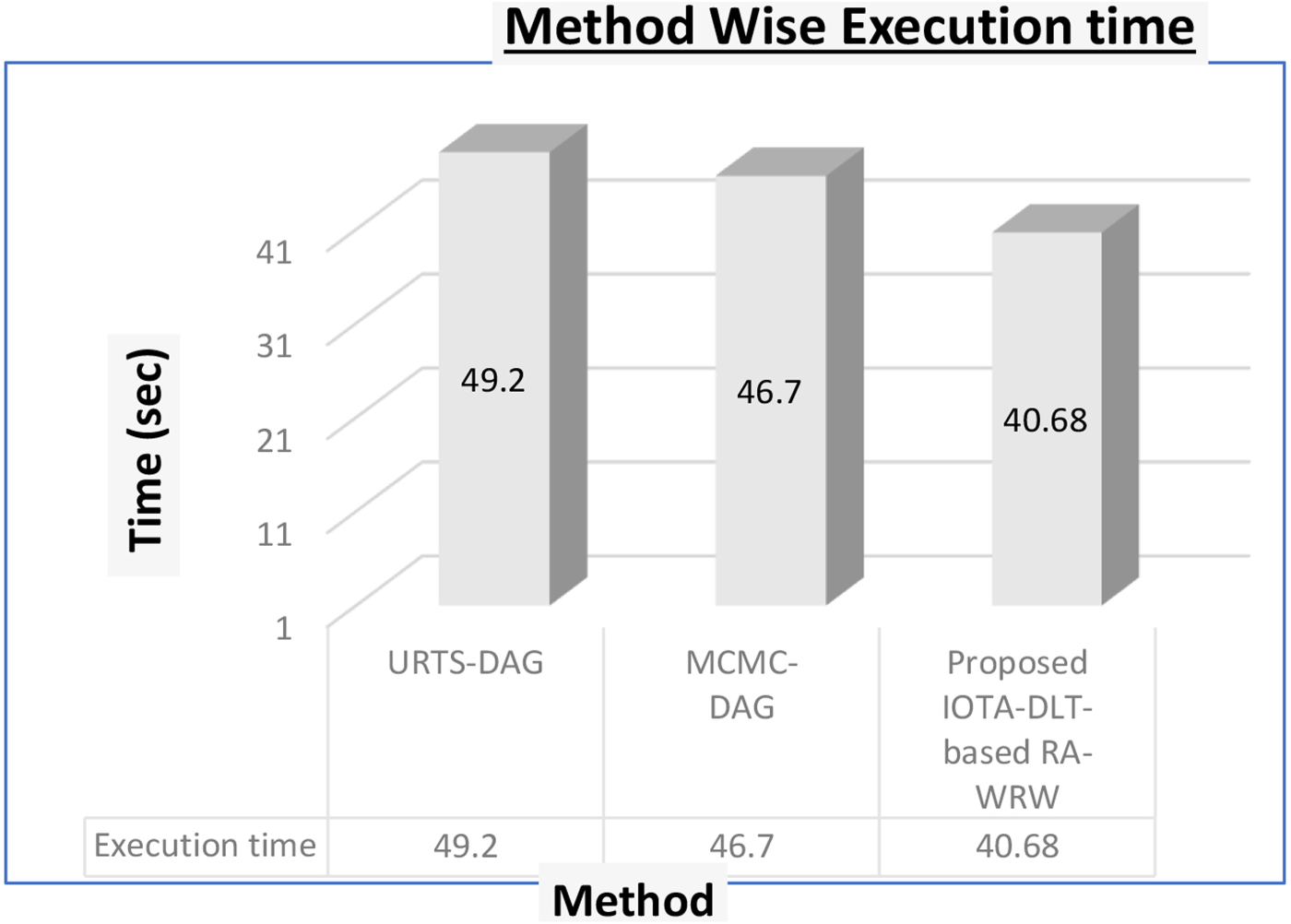
Comparison graph of execution time.
The Transaction dataset comprises several key attributes. ‘User Id’ stands as a distinctive identifier for each user, ensuring individualized tracking and analysis. ‘Transaction Id’ holds unique codes associated with each transaction, enabling precise transaction identification. ‘Transaction Time’ logs the specific timestamp of each transaction, providing a chronological perspective. ‘Item Code’ is dedicated to the unique code assigned to each purchased item, acting as a reference for the products acquired. ‘Sender Address’ contains a description of the product’s sender, offering additional contextual information. ‘Number of Item Purchased’ indicates the quantity of each item bought in a given transaction. ‘Cost per Item’ denotes the unit price of each purchased item, facilitating financial assessments. Finally, ‘Receiver Address’ records the country where the item’s recipient is located, providing insight into geographic trends and preferences. With these diverse attributes, this dataset enables a comprehensive analysis of user transactions, item details, and purchase behavior across different regions, while also offering insight into the sender’s information.
Performance metrics
To assess the effectiveness of our proposed RA-WRW model built on the IOTA-DLT framework, we gauge its resource utilization with a reduction in CPU usage in execution time.
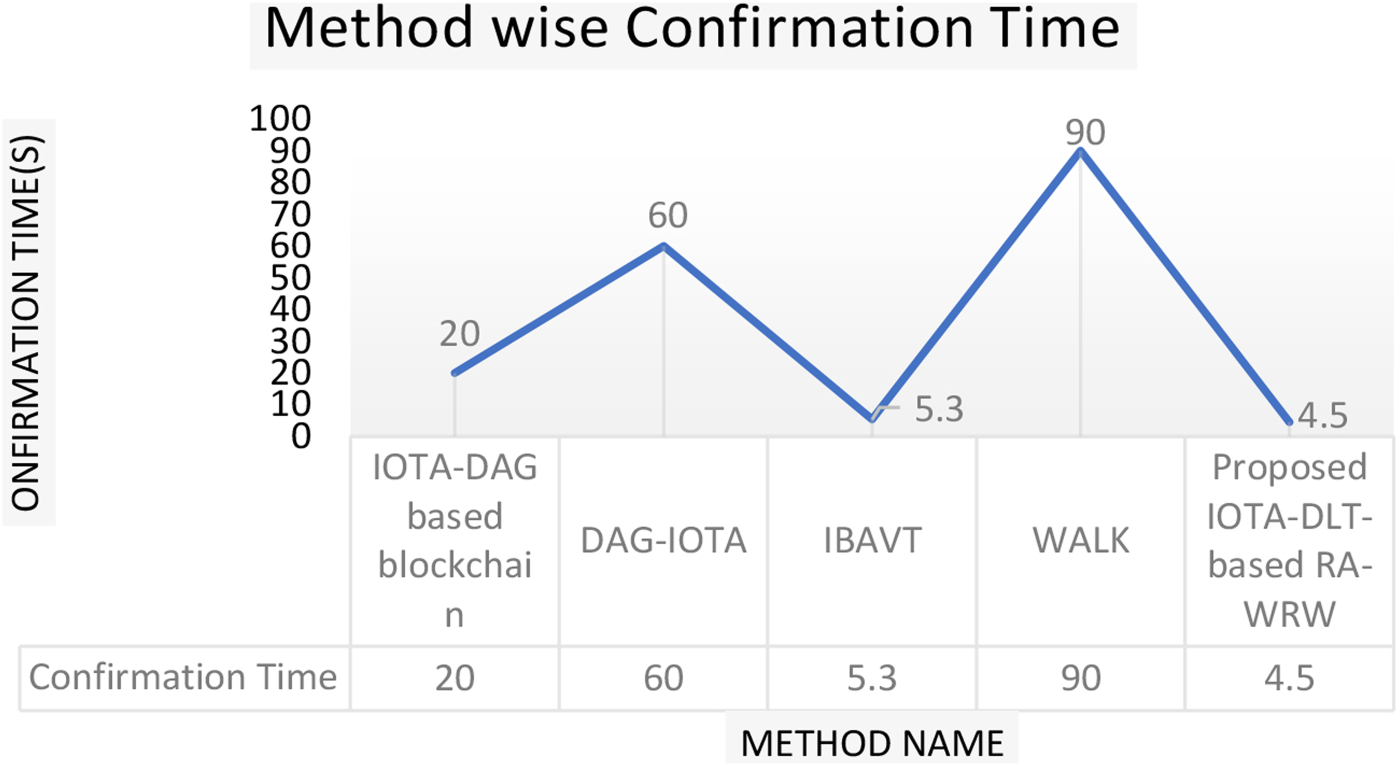
Comparison graph of confirmation time.
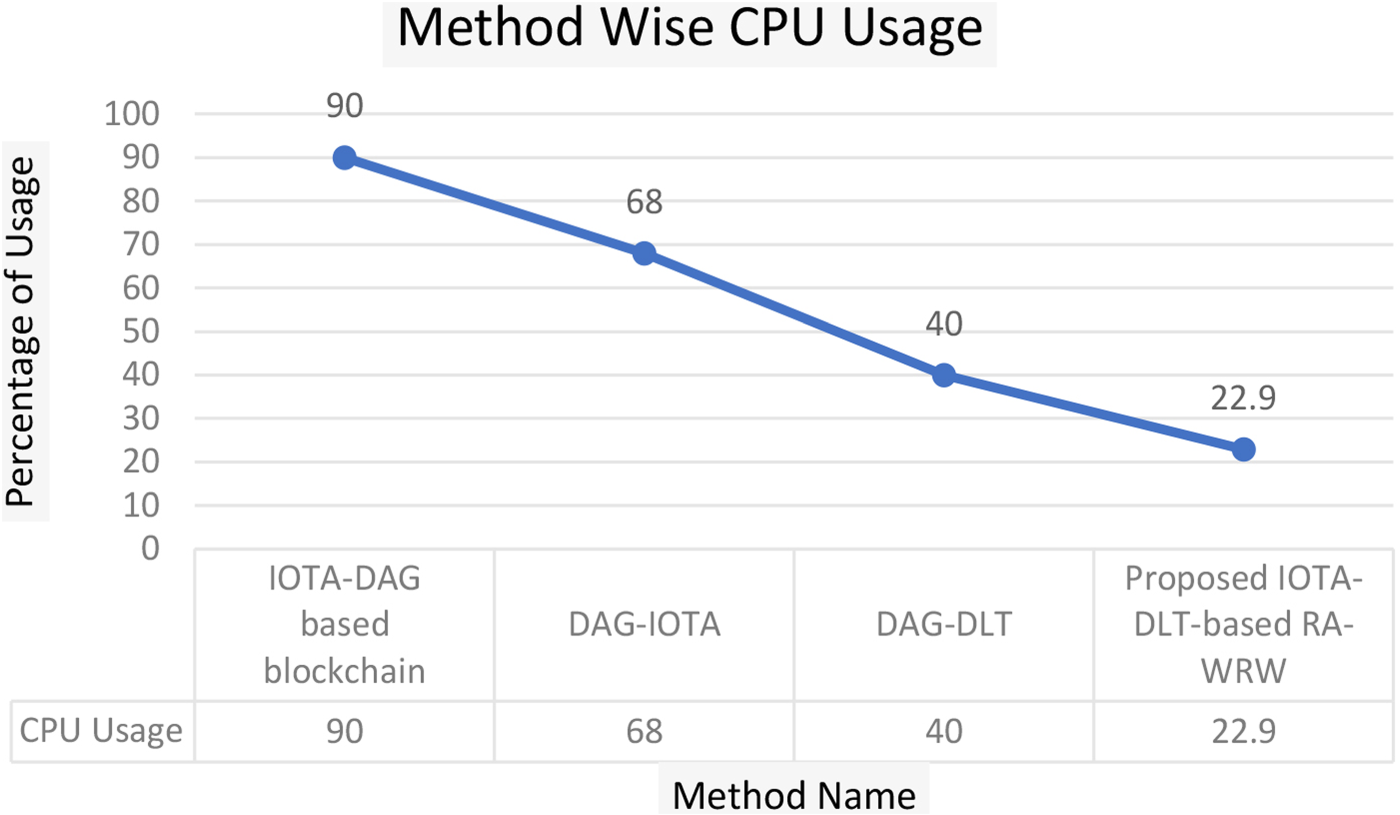
Comparison graph of CPU usage.
The comparison of proposed with existing methods is based on the execution times. The Uniform Random Tip Selection (URTS) with DAG took 49.2 seconds, while the Markov Chain Monte Carlo (MCMC) with DAG took 46.7 seconds. The Proposed IOTA-DLT-based RA-WRW method outperformed both, with an execution time of 43.8 seconds. This novel approach combines Distributed Ledger Technology and Resource Allocation Weighted Random Walk, showing promising potential for enhancing transaction processing efficiency in the IOTA network. The Comparison graph of execution time is represented in below Fig. 5.
Comparison of proposed with existing methods in terms of confirmation time
In this comparative study of transaction confirmation times within the IOTA network, various methods were evaluated for efficiency. The IOTA-DAG-based blockchain [31] confirmed transactions in 20 seconds, showcasing its speed. The DAG-IOTA [32] method took 60 seconds, slightly slower than the IOTA-DAG-based blockchain. The Index-Based Address Value Transaction (IBAVT) [30] demonstrated a significantly quicker confirmation time of 5.3 seconds. The “Walk tip selection” method took 90 seconds, indicating a longer processing time. Notably, the Proposed IOTA-DLT-based RA-WRW method exhibited the shortest confirmation time at just 4.5 seconds. This innovative approach, leveraging DLT and RAbWRW, holds great promise for expediting transaction confirmations in the IOTA network. It outperforms all other methods evaluated, highlighting its potential to greatly enhance transaction processing efficiency in distributed ledger networks. The Comparison graph of confirmation time is represented in below Fig. 6.
Comparison of proposed with existing methods in terms of CPU Usage
In this comparative study of CPU usage for various IOTA transaction processing methods. The IOTA-DAG-based blockchain [31] had the highest usage at 90%, followed by DAG-IOTA [32] at 68%. DAG-DLT [33] showed improvement at 40%, but the Proposed IOTA-DLT-based RA-WRW exhibited the lowest CPU usage at 22.90%. This approach, combining Distributed Ledger Technology and Resource Allocation Weighted Random Walk, significantly lightens the computational load. The Proposed IOTA-DLT method demonstrates superior efficiency and scalability in transaction processing while minimizing strain on computational resources. The Comparison graph of CPU Usage is represented in below Fig. 7.
Conclusion
In this work, the present a comprehensive approach to enhance IOTA network transaction efficiency. The IOTA-DLT-based RA-WRW algorithm represents a significant advancement in tip selection optimization. Through rigorous data preprocessing, feature extraction, and algorithmic design, achieved a substantial improvement in execution time, CPU utilization, network efficiency, and scalability. The authentication process using the sender’s private key ensures tip integrity and verification procedures further affirm their authenticity. The security analysis demonstrates the resilience of the IOTA network against various attack vectors, highlighting the robustness of the approach. The novelty lies in integrating resource allocation with the weighted random walk strategy, offering a unique solution to distributed ledger transaction processing. The proposed approach demonstrates significant improvements in computational resource utilization, with a 22.9% reduction in CPU usage, this model achieved a tip confirmation time of 4.5 seconds and an impressive 43.8-second decrease in execution time. This underscores the novel algorithm’s efficacy in optimizing tip selection processes in the IOTA tangle.
However, we must acknowledge some limitations. Our simulations, while thorough, may not fully represent the complexities of real-world IoT deployments. Factors like network congestion and device diversity could impact performance in practice.
Looking ahead, there’s plenty of room for further exploration. Field testing in various IoT environments would provide valuable real-world data. We’re also intrigued by the potential of machine learning to dynamically adjust resource allocation based on network conditions. Future research wants to address the efficacy of IOTA; advanced Internet of Things gadgets, such as Raspberry Pi, can connect to the network as light nodes.
