



Abstract
Background:
In the EU funded MARIO project, specific technological tools are adopted for the people living with dementia (PLWD). In the final stage of the project, a validation of the MARIO companion robot was performed from August to October 2017.
Objective:
The aims of the present study are: 1) to illustrate the key results and evidence obtained in the final evaluation phase of the project across the three different pilot sites; 2) to assess the engagement dimensions of the PLWD who interacted with the MARIO robot; and 3) to assess the acceptability and efficacy of the MARIO companion robot on clinical, cognitive, neuropsychiatric, affective and social aspects, resilience, quality of life in PLWD, and burden level of the caregivers.
Methods:
38 people (M = 14; F = 24) with Alzheimer’s disease were screened for eligibility and all were included. The following tests were administered Pre and Post interactions with MARIO: Observational Measurement of Engagement (OME), Mini-Mental State Examination (MMSE), Clock Drawing Test (CDT), Frontal Assessment Battery (FAB), Neuropsychiatric Inventory (NPI), Cornell Scale for Depression in Dementia (CSDD), Multidimensional Scale of Perceived Social Support (MSPSS), 14-item Resilience Scale (RS-14), Quality of Life in Alzheimer’s Disease (QOL-AD), Caregiver Burden Inventory (CBI), Tinetti Balance Assessment (TBA), and Comprehensive Geriatric Assessment (CGA) was carried out.
Results:
In Post-MARIO interactions, significant improvements were observed in RS-14 (p = 0.020).Considering the age of the people, PLWD with 68–76 years perceived that they had major social support (MSPSS Total: p = 0.016) and friends to support them (MSPSS Fri: p = 0.014). Indeed, the younger people (55–67 years) were less depressed (CSDD: p = 0.033), and more resilient (RS-14: p = 0.003). The people aged 77–85 years perceived they had major family support (MSPSS Fam: p = 0.018). The participants were gender and education matched without any statistically significant difference.
Conclusion:
MARIO may be a useful tool in mitigating depression and loneliness, while enhancing social connectedness, resilience, and overall quality of life for people with dementia.
Keywords
INTRODUCTION
Worldwide, approximately 50 million people have dementia (5% of the world’s older population), and every year around 10 million new cases are diagnosed [1], with an estimated economic cost of US$ 2 trillion by 2030 [2], and severe social consequences (health care demand and family burden increasing, quality of life and well-being decreasing) [3].
Robotic technology can support older people living with dementia (PLWD) and their caregivers, being part of a caring and ethical home/nursing home/hospital package [4]. However, potential benefits as well as ethical concerns related to robot use for PLWD are increasing. Principally, ethical issues are related with the acceptance process, in addiction to reduction of human contacts, humanization of robots, loss of control, and infantilization [5]. The acceptance issues are mainly related to the subject attitude toward new technologies [6, 7], and the psychological factors affecting acceptance/rejection of robots are still unclear. Moreover, current literature confirms the persistence of structural limitations to successful adoption including partial lack of clinical validation and insufficient focus on patients’ needs [8–12].
In the EU funded MARIO (Managing active and healthy Aging with use of caRing servIce rObots) project [13], specific technological tools were adopted that aimed to make it easier for PLWD to accept assistance from a robot with and, in specific situations without, the presence of a human supporting the operations made by the machine.
MARIO uses the Kompaï 2 robot platform developed by Robosoft [14]. It is a robot equipped with a camera, a Kinect, and two LiDAR sensors for indoor navigation, object detection, and obstacle avoidance. A tablet PC is located on the robot torso for interaction. Mario’s controller and interface technologies support software easy plug and play development; moreover, it includes a speech recognition system to interact with natural voice during daily life. Novel IoT technologies, based on Big Data [15], are integrated to deliver behavioral skills. The MARIO robot is innovative because it integrates into a single robotic platform several capabilities supported in the literature but so far tested in isolation.
Therefore, MARIO has been designed to support and manage the following “robotic applications” (apps), also shown in Figs. 1 and 2:
My Music app: the effect of music on neuropsychiatric symptoms in people with dementia has been shown [16–18], in particular for anxiety and agitation [2]. Reducing these symptoms is fundamental for independent living and for the quality of life of people. My Music app aims at allowing PLWD to listen to and remember their favorite songs.
MyReminiscence App: it is aimed to recall forgotten personal past experiences, feelings, self-concepts, and subconscious memories [19] by displaying pictures of the patient life. This App was developed according to the reminiscence therapy concepts and may be able to improve communication skills between caregivers and people with dementia [20] and enable caregivers to utilize older people’s crystallized intelligence (long-term memory) to promote their social interaction and positive reflection abilities [21]. Therefore, people with dementia may gain improved self-identity mobilizing crystallized intelligence, which slows down the decline in performing the activities of daily living. The App can display pictures of the user’s past and, in conjunction, MARIO tries to engage a conversation about the specific content shown by the photo, prompting the user to discuss the event which brings back happy memories.
My News app: the aim of this app is to allow PLWD to keep in touch with the daily news. Moreover, My News app allows people to select which news they wish to read or being read by MARIO, through vocal or touchscreen selection of the news categories or directly the news titles.
My Games app: the aim of this app is to carry out cognitive stimulation and entertain the PLWD. Cognitive stimulation is encouraged by the game “Simon”. This is an electronic game of memory skill invented by Ralph H. Baer and Howard J. Morrison [22]; the device creates a series of sounds and lights and requires the user to repeat the series (if the user succeeds, the series becomes progressively longer and more complex). In comparison, the entertainment function is facilitated by the provision of the following games: cards (as Briscola, Scopa, and Tressette), chess and ping-pong.
My Calendar app: the aim of this app is to improve the temporal orientation of the PLWD, and to remind them of their daily appointments.
My Family and Friends app: this app was developed to keep the PLWD in contact with their relatives and friends in order to reduce their isolation and improve their socialization.
CGA app: in older people, especially those with multi-morbidity, the Comprehensive Geriatric Assessment (CGA) approach is recommended and validated worldwide [23, 24]. From a clinical point of view, one of the aims of the MARIO project was to develop an innovative robotic module to perform an automated CGA using systems capable to explore different health domains that allow the determination of the current health status of the PLWD through the use of a Multidimensional Prognostic Index (MPI) [25]. Therefore, the app may support the reduction of adverse outcomes, thus prolonging independence.

Overview of Apps developed during MARIO project, categorized by functionalities.

MARIO robot and its user interface implemented in.
In the final stage of the project, a validation of the companion robot has been performed from August to October 2017. This paper addresses the following aims: the impact of the apps described above, when they were delivered by MARIO; the impact of robot embodiment and how this affected the interactions between PLWD and the robot [26–30]; to present the key results that were obtained across the three different pilot sites, specifically in the final evaluation phase of the project; to report how the PLWD interacted with the MARIO robot; to assess the acceptability and efficacy of the MARIO companion robot on clinical, cognitive, neuropsychiatric, affective and social aspects, resilience capacity, quality of life in PLWD, and burden level of the caregivers.
MATERIALS AND METHODS
This multicenter study fulfilled the Declaration of Helsinki [31], guidelines for Good Clinical Practice, and the Strengthening the Reporting of Observational Studies in Epidemiology guidelines [32]. The approval of the study for experiments using human subjects was obtained from the local Ethics Committee on human experimentation. Written informed consent for research was obtained from each PLWD, from relatives or a legal representative. PLWD were consecutively recruited in three pilot sites: 1) Residential care (National University of Ireland, Galway, Ireland); 2) Hospital (Complex Structure of Geriatrics, Casa Sollievo della Sofferenza Hospital, San Giovanni Rotondo, Italy); and 3) Community (Stockport Metropolitan Borough Council, Stockport, UK).
In total, 38 PLWD (10 in Ireland, 20 in Italy, and 8 in UK) were screened for eligibility and included in the study, according to the inclusion/exclusion criteria shown below (Table 1).
Baseline characteristics of the patients with dementia
Inclusion criteria were: 1) participants with diagnosis of dementia according to the criteria of the National Institute on Aging-Alzheimer’s Association (NIAAA) [33] and the Diagnostic and Statistical Manual of Mental Disorders - Fifth Edition (DMS-5) [34]; 2) presence of cognitive impairment measured by Mini-Mental State Examination (MMSE) [35], and 3) the ability to provide an informed consent or availability of a proxy for informed consent. Exclusion criteria were: serious comorbidity, tumors and other diseases that could be causally related to cognitive impairment (ascertained blood infections, vitamin B12 deficiency, anemia, disorders of the thyroid, kidneys or liver), history of alcohol or drug abuse, head trauma, psychoactive substance use and other causes of memory impairment.
The MARIO robot was shown to all participants and the applications were demonstrated. Afterward, the researchers had time to build rapport with PLWD, described them the purpose of the study and discussed their participation (Fig. 3) They were given the opportunity to ask questions about participating in the study and then their written consent was recorded. The consents to participate were recorded at every interaction throughout the study [36].
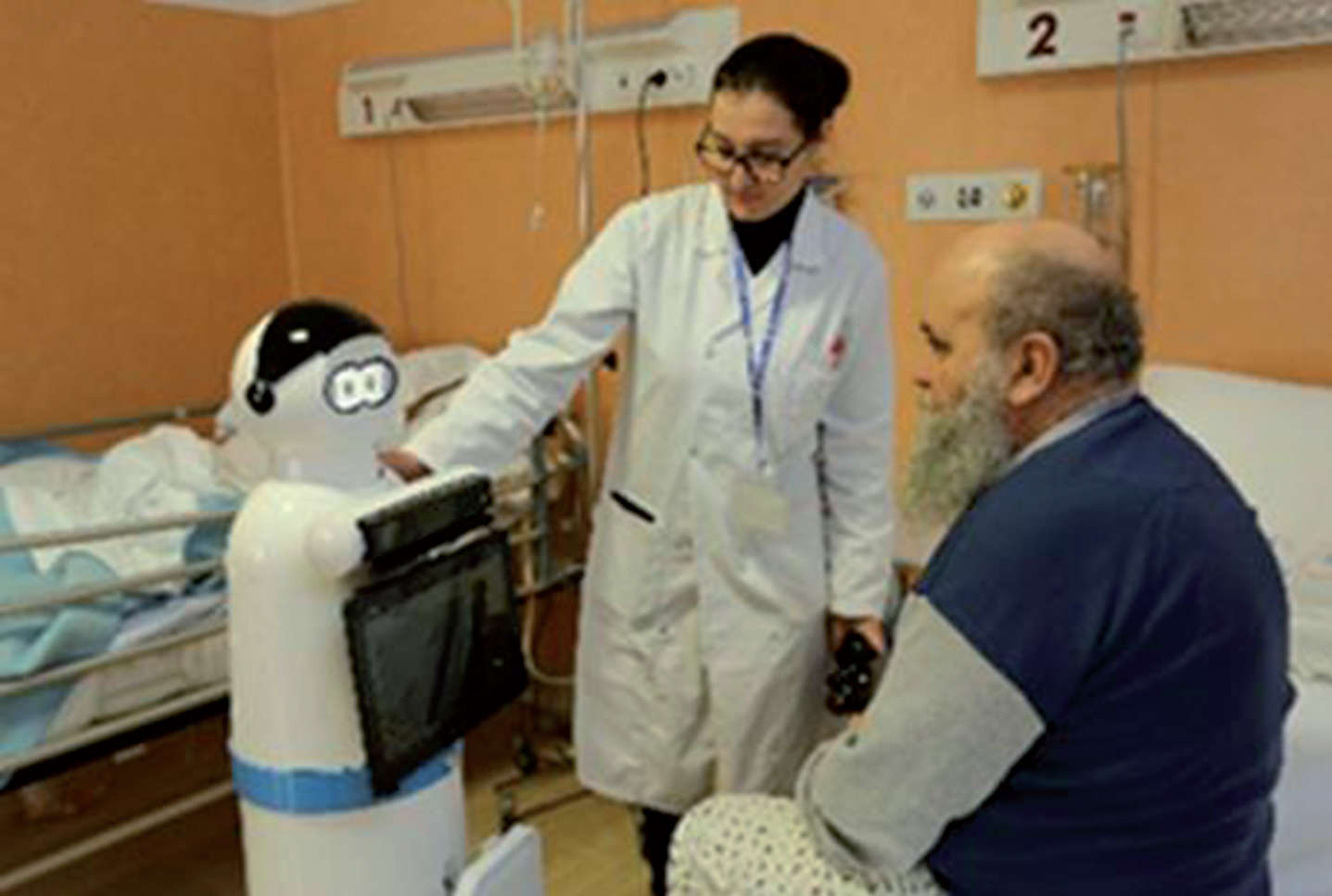
MARIO robot interacts with an elder and a clinician.
In Pre-and Post-MARIO interaction, the following parameters, explained in detail in the text below, were collected by systematic interview, clinical evaluation and review of records: demographic data, clinical and medication history and a complete multidimensional and cognitive-affective assessment.
Engagement dimension assessment
To assess the various aspects of interactions between PLWD and environmental stimuli, the Observational Measurement of Engagement (OME) [37] was used (Supplementary Material). OME is composed of the following items: attention, disruptive, attitude, duration of engagement, activity, target of resident’s talk, and content of resident’s talk.
The duration of each observation period was, set at a minimum of 3 min and a maximum of 15 min. If, after 3 min, the participant stopped engaging with MARIO for more than 30 ss the observation concluded.
Data was recorded in written format and the observers recorded the context of the engagements through baseline observations, levels of attention and attitude, cognitive and dexterous difficulty, duration, activities, and content and target of residents talk during each engagement.
Evaluation of affective status, resilience, quality of life, and social aspects
In all PLWDs, affective status was evaluated using the Cornell Scale for Depression in Dementia (CSDD) [38]. The 14-item Resilience Scale (RS-14) [39] was used to assess the ability to bounce back or recover from stress. The Quality of Life in Alzheimer’s Disease (QOL-AD) [40], a 13-item measure test, was used to obtain a rating of the person quality of life from the PLWDs. Social aspects were assessed by the Multidimensional Scale of Perceived Social Support (MSPSS) [41].
Statistical analysis
Data analyses were performed using the SPSS Version 20 software package (SPSS Inc., Chicago, IL). For dichotomous variables, differences between the groups were tested using the Fisher exact test. This analysis was made using the Two-Way Contingency Table Analysis available at the Interactive Statistical Calculation Pages (http://statpages.org/). For continuous variables, normal distribution was verified by the Shapiro–Wilk normality test and the 1-sample Kolmogorov–Smirnov test. For normally distributed variables, differences among the groups were tested by the Welch Two-sample t test or analysis of variance under general linear model. For non-normally distributed variables, differences among the groups were tested by the Wilcoxon rank sum test with continuity correction or the Kruskal–Wallis rank sum test. Test results in which the p-value was smaller than the type 1 error rate of 0.05 were declared significant.
RESULTS
Pre-MARIO interaction outcomes
The baseline characteristics of the PLWD recruited in the three pilot sites are shown in Table 1. Thirty-eight participants (M = 14; F = 24) with a general average age of 77.08±9.91 years (range = 55–93 years) were included. No significant differences were shown in the gender distribution. The difference between the age of participants across the three groups was significant (Ireland, 83.00±10.64; Italy, 76.95±7.67; UK, 70.00±10.35; p = 0.017), educational level (Ireland, 11.57±2.44; Italy, 7.65±3.59; UK, 10.43±0.54; p = 0.010), and in number of years of memory problems (p < 0.0001). All participants in the study interacted with MARIO for a mean of 44.91±11.98 min (range = 23–60) and there was a mean of 5.13±3.44 (range = 1–12) of interactions. There were significant differences in interaction time between the participants in the three sites, (Ireland, 35.09±11.11; Italy, 43.77±8.56; UK, 60.00±0; p < 0.0001) and regarding the number of interactions (Ireland, 9.60±4.12; Italy, 3.75±0.79; UK, 3.00±0; p < 0.0001).
As shown in Table 2, at the baseline, the participants significantly differed in the following parameter scores: RS-14 (Ireland, 60.00±10.73; Italy, 26.10±3.66; UK, 63.00±4.24; p < 0.0001), MSPSS Total (Ireland, 48.13±8.87; Italy, 56.00±5.51; UK, 50.50±13.44; p = 0.033), MSPSS Friends (Ireland, 15.63±3.25; Italy, 18.40±2.01; UK, 12.00±11.31; p = 0.014), and MSPSS Special Person (Ireland, 15.50±3.63; Italy, 18.80±1.88; UK, 20.00±0; p = 0.007). No significant differences were found in CSDD, QoL-AD and MSPSS Family.
Affective status, resilience, quality of life and social aspects of the patients with dementia, at the baseline for each pilot sites
CSDD, Cornell Scale for Depression in Dementia; RS-14, 14-item Resilience Scale; QoL-AD, Quality of Life in Alzheimer’s Disease; MSPSS, Multidimensional Scale of Perceived Social Support.
OME outcomes
In Table 3, the characteristics of the PLWD during the engagement with MARIO assessed by OME are shown. Prior to the introduction of MARIO, if the participants were in an environment that was too noisy/busy or if the location was not appropriate to introduce the stimulus, i.e., MARIO, they were moved to another more conducive environment. Of the total number of engagements (n = 96) completed in Ireland, there were 18 occasions where a person with dementia was moved to another location prior to starting the engagement. In Italy, of the total number of engagements (n = 75), there were 20 occasions where the person with dementia was moved to another location prior to starting the engagement. This was done to enhance privacy and reduce noise and distractions. While in the UK, no participants with dementia were moved, as rooms were pre-booked and specifically allocated in advance in a central testing center.
Characteristics of the PWD during the engagement with MARIO assessed by Observational Measure of Engagement (OME)
When participants were approached to interact with MARIO, PLWD in Ireland were engaged in other activities (reading, watching TV, listening to Mass, praying) on 28 occasions. While in Italy and the UK, since the interactions were organized specifically during times when no other activities were scheduled, the score was zero.
Participants with dementia in Ireland were interrupted by another resident or a staff member during their time with MARIO in 21 interactions. In Italy, however, PLWD were not interrupted during their time with MARIO. This was again due to fact that they were in a pre-designated room set aside specifically for working with MARIO. In the UK, 9 interactions were interrupted.
In Ireland, PLWD refused to engage with MARIO on 18 occasions. Reasons for these refusals included: having visitors (relative or friend), being already engaging in another activity (reading, watching TV, praying), being disinterested at the time, or without a specific reason. In both Italy and UK, there were no instances of participants refusing to engage with MARIO.
The percentage of time PLWDs requested modeling (to follow researcher’s example) during engagements were the following: in Ireland 60.42%, in Italy 10.67%, and in UK 20.83%.
In Ireland, across all the interactions, the mean duration time of the observations ranged from 11 to 15 min (13.48±1.35 min), while in Italy the range was 12 to 13 min (12.57±0.25), and in the UK from 10 to 15 min (13.57±0.43). Among the three country, no significant difference was shown regarding the mean duration time of the observations (p = 0.588). However, these results indicate that participants with dementia were able to maintain a sustained interest in MARIO during interactions.
In Ireland, the residents were attentive during engagements with MARIO, with mean attention scores, for each resident, ranging from 5 (somewhat attentive) to 6 (attentive) (5.70±0.53). In Italy, most of the time during engagements, participants were not attentive toward MARIO. They had mean attention scores that ranged for each participant, from 4 (not attentive) to 5 (somewhat attentive) (4.57±0.09). In the UK, PLWD were somewhat attentive toward MARIO during their engagement, with mean attention scores, for each participant, ranging from 5 (somewhat attentive) to 6 (attentive) (5.50±0.21).
Participants in Ireland were found to be very attentive at various points during their engagements with MARIO: scores ranged from 6 (attentive) to 7 (very attentive), with a mean of 6.44±0.35. Likewise, in Italy participants were found to be very attentive at various points during their engagements with MARIO: scores ranged from 6 (attentive) to 7 (very attentive), for each participant, with a mean of 6.26±0.04. In the UK, participant scores ranged from 5, somewhat attentive, to 7, meaning very attentive, for each participant, with a mean of 5.79±0.
Attitudes toward MARIO were captured via the amount of excitement or expressiveness displayed during engagements with MARIO (smiling, frowning, energy or excitement in their voice). In Ireland the mean attitude scores towards MARIO, most of the time, ranged from 4 to 6 (5.52±0.55), indicating that participants had a positive attitude towards MARIO. In Italy, the mean amount of excitement or expressiveness displayed during engagements with MARIO (smiling, frowning, excitement in voice) ranged from 4 to 5 (4.64±0.10), showing participants were neutral to somewhat positive in their attitude toward MARIO during engagements. In the UK, the mean amount of excitement or expressiveness displayed during the three participants engagements with MARIO ranged from 1 to 6.00 (5.29±0.15), indicating that participants attitudes toward MARIO during engagements were conflicting.
The highest levels of expressiveness displayed towards MARIO, during engagements, in Ireland were scored 6 (meaning positive) and 7 (meaning very positive) in their highest displayed attitudes towards MARIO (6.29±0.43). In Italy, the highest levels of expressiveness toward MARIO found that participants had a mean score of 6.18±0.10 (range = 5–7), meaning they displayed positive attitudes in their engagement with MARIO. In UK, the scores for the highest levels of expressiveness towards MARIO ranged from 1 to 7 (5.55±0.14), indicating large variability in the attitudes toward MARIO.
In Ireland, most participants only had slight cognitive difficulty when operating MARIO (2.28±0.87). In Italy, all participants showed only slight cognitive difficulty when interacting with MARIO (2.00±0). In the UK, most PLWD had no or only slight cognitive difficulty when interacting with MARIO (1.42±0.14).
The specific activities which participants completed when engaging or interacting with MARIO (Table 3.1) were: holding an object (MARIO); manipulating an object (applications); talking to an object (MARIO); talking about an object (MARIO); disruptive; distracted; and other were also recorded. In Ireland, participants were most frequently engaged with MARIO in activities that were specified in the ‘other’ category (2.10±0.87). This included dancing, tapping their fingers or the floor with their foot to the music, singing along, listening to music, and reminiscing about the content in the My Memories app. In Italy, participants most frequently engaged in talking about MARIO (2.74±0.01). In the UK, participants most frequently engaged in manipulating MARIO applications (2.42±0.07) during engagements.
Specified activities which participants completed when engaging or interacting with MARIO assessed by Observational Measure of Engagement (OME)
Data regarding who the participants were talking to during engagements with MARIO (Table 3.2) was categorized in the following ways: the stimulus [MARIO], staff, other participants with dementia, self, research personnel, cannot tell, none or NA, and other. In Ireland and Italy, participants most often talked to the research personnel (9.20±4.10 and 4.36±0.50, respectively). In the UK, all participants engaged in conversation with MARIO (3.00±0).
Target at which the conversation was directed during the engagement with MARIO assessed by Observational Measure of Engagement (OME)
Data about the content of participant’s discussions during MARIO engagements (Table 3.3) were recorded and categorized in the following ways: MARIO, staff, other residents, self, research personnel, cannot tell, none or NA, and other. In Ireland, Italy, and the UK the analysis shows that the topic of participants conversations was most often MARIO (8.50±4.11, 4.36±0.50, and 1.00±0, respectively).
Content of participant’s discussions during the engagement with MARIO assessed by Observational Measure of Engagement (OME)
Post-MARIO interaction outcomes
As shown in Table 4, after the engagements with MARIO, there were no statistically significant improvements in participant’s affective status (CSDD: p = 0.100) or their quality of life (QoL-AD: p = 0.080) scores. However, a significant improvement was observed in the combined participant’s resilience scores between pre-and post-MARIO intervention (RS-14: p = 0.020).
Affective status, resilience, quality of life and social aspects of the patients with dementia, before and after the use of MARIO robot combined across sites
CSDD, Cornell Scale for Depression in Dementia; RS-14, 14-item Resilience Scale; QoL-AD, Quality of Life in Alzheimer’s Disease; MSPSS, Multidimensional Scale of Perceived Social Support.
In Ireland, the residents had slight difficulty in their attempts to operate and manipulate MARIO via touchscreen during engagements (2.13±0.66). In Italy, most of the participants had no difficulty and few had slight difficulty in their attempts to operate MARIO during engagements (0.24±0.06). In the UK, the participants experienced slight difficulty in their attempts to operate and manipulate MARIO during engagements (1.84±0.08).
In Table 5, a comparison between the gender of participants in post-interaction with MARIO for each questionnaire score in all pilot sites is reported. No significant differences were found in all tests (CSDD, RS-14, QoL-AD Patient, MSPSS Total, MSPSS Family, MSPSS Friend, and MSPSS Significant Other).
Comparison between sex of patients in post-interaction with MARIO for each questionnaire scores in all pilot sites
CSDD, Cornell Scale for Depression in Dementia; RS-14, 14-item Resilience Scale; QoL-AD, Quality of Life in Alzheimer’s Disease; MSPSS, Multidimensional Scale of Perceived Social Support.
However, comparing the age of participants, post-interaction with MARIO, for each questionnaire score in all pilot sites (Table 6), it was found that the PLWD with 68–76 years perceived that they had major social support (MSPSS Total: p = 0.016) and friends to support them (MSPSS Fri: p = 0.014) than other participants. Indeed, the younger participants (55–67 years) were less depressed (CSDD: p = 0.033), and more resilient (RS-14: p = 0.003), when compared with older participants. The participants aged 77–85 years perceived they had major family support (MSPSS Fam: p = 0.018). No significant differences were found in the other tests (QoL-AD Patient, and MSPSS Significant Other) compared across the age of the participants.
Comparison between age of patients in post-interaction with MARIO for each questionnaire scores in all pilot sites
CSDD, Cornell Scale for Depression in Dementia; RS-14, 14-item Resilience Scale; QoL-AD, Quality of Life in Alzheimer’s Disease; MSPSS, Multidimensional Scale of Perceived Social Support.
Table 7 shows the results of comparing the educational level of participants, post-interaction with MARIO, for each questionnaire scores in all pilot sites. We found that the educational level of participants had no significant impact on the questionnaire results (CSDD, RS-14, QoL-AD Patient, MSPSS Total, MSPSS Family, MSPSS Friend, and MSPSS Significant Other).
Comparison between educational level of patients in post-interaction with MARIO for each questionnaire scores in all pilot sites
CSDD, Cornell Scale for Depression in Dementia; RS-14, 14-item Resilience Scale; QoL-AD, Quality of Life in Alzheimer’s Disease; MSPSS, Multidimensional Scale of Perceived Social Support.
DISCUSSION
In the present manuscript, we focus on the key results obtained on a small sample of PLWD across the three different pilot sites involved in the final evaluation phase of the MARIO project. The results of the OME demonstrate that engagement with MARIO varied greatly, across all three pilot sites, specifically in terms of the number of times people with dementia interacted with MARIO and in the time they spent with the robot. Participants in Ireland had more interactions than in Italy and in the UK. As Irish participants were living in a long stay care setting, they had greater access to MARIO and over a longer period. In Italy, the participants were recruited within the Geriatric unit, an acute medical ward. This has a mean hospitalization time of 7 days, which is why the number of interactions varied between 3 to 5 sessions. UK participants were required to travel to use MARIO in a specific testing venue because they lived out in the community. Because of this, researchers felt it was reasonable to request the participants’ presence on three occasions during the evaluation period. Therefore, the total time spent with MARIO in the Italian and UK sites was lower than in the Irish site.
The Irish and UK sites were found to be more accessible for MARIO interactions than the Italian site. At the Ireland site, residents were able to engage with MARIO in a variety of locations throughout the setting without being moved. A key feature of nursing homes is that in the participants are at ‘home’. Residents are free to move around the space as they engage in their daily living experiences [42]. Because interactions with MARIO could be facilitated throughout the site, the residents were less likely than participants from Italy to be moved to a secondary location. Similarly, in the UK, participants engaged with MARIO in a designated testing site, so there was no need to move to facilitate the engagements. In Italy, people are housed in a hospital room with other people; for increased privacy and to ensure a quieter environment, the participants were moved to a room specifically designated for MARIO engagements.
Participants in the residential setting were more likely to be interrupted when being invited to engage with MARIO for engaging in other activities, and to be interrupted by staff and visitors during engagements, than participants in the hospital or community setting. This was expected as other studies have highlighted nursing home residents spend the majority of their time engaging in both passive and scheduled activities [43]. People in Italy did not experience interruptions because the interactions were organized during times free from organized recreation (listening to Mass and praying) or hospital activities (doctor’s visits, laboratory and instrumental exams). Similarly, in the UK, engagements took place in a pre-booked & quiet space with no distractions.
Irish participants also refused to partake in engagements more often than the participants from other sites. This may be due to unique factors in this setting. Riedl et al. (2013) discuss the decrease in autonomy that residents often experience when moving into a long stay care setting [44]. As residents settle into routines and accept the boundaries and rules of the nursing home, they look to assert, when available, their personal choices. As consent process was put in place with every MARIO engagement, the refusal to participate in an interaction, at a given time, could be seen as the resident taking back some of their freedom to choose how they spend their time. In the hospital setting, the engagement sessions with MARIO were organized to fit within the prescribed hospital stay schedule for participant. Similarly, in the community setting, the interactions with MARIO were performed in a community hospital, and at the Alzheimer’s Society premises, where participants came into pre-arranged appointments to interact with MARIO. Since participants in Italian and the UK sites were aware that these meetings were designated for MARIO engagements, they were unlikely to decline engagements.
Requests for additional help in operating MARIO were far more prevalent in the residential care setting, where few participants needed guidance after the first engagement in both the hospital and community settings. This difference may be due to the participants in the residential care setting having a higher level of cognitive impairment, with two residents with moderate cognitive impairment and another two residents with severe cognitive impairment. In the hospital and community setting, people with mild cognitive impairment were recruited.
The Irish residents showed high levels of enthusiasm and engagement across the interactions and the UK participants showed mostly positive levels of attention and engagement. Conversely, participants in the hospital setting showed a lower level of enthusiasm and attentiveness towards MARIO. This may be because in the hospital and community settings MARIO’s speech recognition problems (in particular the software’s lack of understanding of local language/dialects) became frustrating for participants and this was a demotivating factor that negatively affected the participant’s engagements with MARIO. In the nursing home setting, the researchers turned off the voice activation. This was done because the noise levels in the surrounding environment made it difficult for MARIO to hear the low speech volume of the residents. Instead, residents operated MARIO through the touchscreen and or using a stylus, in case they found this easier than using their fingers. Modifying activities so they are tailored to the abilities of the individual has been found to increase engagement in people with dementia [45]. This may explain why Irish participants exhibited higher levels of attention and a more positive attitude than participants from Italy and the UK.
In the hospital and community settings, most participants were found as having no, or only slight, cognitive and dexterous difficulties when operating MARIO. The residential care setting participants varied on the levels of difficulty they experienced. But they still reported mostly slight to moderate issues. These differences may be explained by the cognitive impairment disparities of the participants recruited in the three pilot sites. This is congruent with the results from other studies which found cognitive profile to be an influential factor in technology usability, and the ability of participants with mild cognitive impairment to complete tasks, due to a decline in mental capacities such as attention and perception [46, 47].
The Irish participants most often interacted with MARIO by dancing with it or singing along with the music from the MyMusic app and reminiscing with staff and relatives via the MyMemories app. While those in the hospital and community settings were more likely to spend their time directly operating and manipulating the applications, the most used applications being similar to favorites from Ireland, including MyMusic, MyMemories, and MyGames. Along with the applications favored by the other sites, Italian people also utilized the CGA app a lot (average time of 25.30 min a day), and MyCalendar app (with an average time of 24.15 min a day). Across all sites, MARIO was found to facilitate conversations and social engagement with staff and relatives and provided participants the opportunity to talk about their own life.
The results reveal that there was a significant improvement in the resilience level of participants between the pre-and post-interaction measures (p = 0.020). The increase in the resilience of participants following MARIO engagements was proved through noticeable improvements in mood and focus. The data also found that participants reported an increase in their QoL scores. This suggests that in spite of their cognitive decline, participants kept and/or improved their autonomy in activities of daily living, their social interactions with others, and they experienced more positive emotions. These results are comparable to those obtained in recent studies: a study using the AIBO robot dog found improved health-related QoL in PLWD [48]; and a pilot RCT study using the Paro seal robot revealed a moderate to large clinical influence on QoL in 18 PLWD [49]. It is also not surprising that these participants also reported a decrease in their depressive symptoms. Thanks to the findings in the current study in terms of improvement in the QoL, MARIO could potentially enable participants to slow down the progression of their dementia, enabling them to maintain their level of psychological and physical functioning and their capacity to independently manage their activities of daily living [50]. Moreover, maintaining relations with others and having control of life are aspects that influence QoL in dementia [43].
Given the total sample size was small (n = 38), and the study had a relatively short length, researchers did not expect significance levels to reach the customary p < 0.05 [51]. This suggests that any statistically significant results must be interpreted with caution. Nevertheless, these findings indicate that MARIO may be a useful tool in mitigating depression and loneliness while enhancing social connectedness, resilience, and overall quality of life for people with dementia. Further research using a larger sample, is required to investigate this potential.
Anyway, the MARIO platform aims at becoming a pilot experience to design significantly personalized robotic applications while reducing development costs and the response time to address existing and emerging people needs. From a clinical point of view, it is an enabler to collect data that can improve medical treatments and care personalization. Specifically, data coming from conversations (i.e., patients’ answers) are extracted by MARIO through a Speech-to-Text module. Thus, it is possible to convey the information into an Ontology network. Although there is no standard ontology that can be used as a base for robot semantics in this field, the MARIO project has developed a specific Mario Ontology Network (MON), evolved by integrating ontologies emerging from interactions with humans, on board and external sensors [52]. The use of semantic data analytics and personal interaction has tailored the applications to better connect older persons to their care providers, community, own social circle and also to their personal interests. In particular, the integration of robot semantics with existing structured and unstructured data leveraged on innovative data integration practices (e.g., W3C semantic web, ontologies, etc.). The knowledge management is Entity-centric, that is, each entity and its relations have a public identity that provides a first grounding to the knowledge used by robots. The networked ontologies are used for organizing the stored data and support internal processes.
Moreover, the use of such diversified apps gives the clinical team the opportunity to use the MON with personal information to connect various aspects of the patient’s status and recovery activities over time.
In a future perspective, further functions could be implemented and interesting reports could be brought out by MARIO apps in order to obtain increasing amounts of data in user behaviors for future new Big Data studies in the field of Personalized Healthcare.
Footnotes
ACKNOWLEDGMENTS
The research leading to the results described in this article has received funding from the European Union Horizons 2020 – the Framework Programme for Research and Innovation (2014–2020) under grant agreement 643808 Project MARIO ‘Managing active and healthy aging with use of caring service robots’.
