



Abstract
BACKGROUND:
Phytotherapy has an important role in the functional gastrointestinal and motility disorder prevention and treatment.
OBJECTIVE:
The aims of our study were to analyze the chemical composition and the antispasmodic activity of the dry black chokeberry ethanolic extract, waste extract and the juice in the isolated rat ileum.
METHODS:
The anthocyanins and flavonoids quantification was carried out by the spectrophotometric method using the HPLC instrument. The study examined the influence of the chokeberry preparations and cyanidin-3-O-galactoside, the main anthocyanin compound, on the spontaneous, acetylcholine and KCl-induced ileum smooth muscle contraction, as well as on the contractions induced by histamine, CaCl2 and BaCl2 and contractions in the presence of nitric oxide synthase inhibitor (L-NAME).
RESULTS:
In all the examined preparations, the most abundant compounds were anthocyanins, especially cyanidin heterosides. The highest content of polyphenols and anthocyanins was found in the chokeberry waste extract. Among the chokeberry preparations, the ethanolic extract had the highest flavonoid concentration. The chokeberry preparations and cyanidin-3-O-galactoside in a concentration dependent manner significantly relaxed the rat ileum spontaneous and induced contractions. The results demonstrated that the nitric-oxide pathway was not involved in the relaxant activity of the chokeberry extracts and juice.
CONCLUSIONS:
The study demonstrated that the chokeberry preparations were able to relax contractions in the isolated rat ileum.
Keywords
Introduction
In recent years, interest of the medicinal and food science has been focused on the research of berry fruits, their nutritional values and possible therapeutic effects [1]. The chokeberry (Aronia melanocarpa (Michx.) Elliott) has been used for centuries as a rich source of bioactive compounds, mainly polyphenols. Numerous studies have determined the chemical and nutritive composition of A. melanocarpa berries. Polyphenols such as anthocyanins, proanthocyanidins, phenolic acids, flavanones and flavonols are the compounds most commonly found in chokeberries [2, 3]. Anthocyanins are the dominating flavonoids in the chokeberry, representing about 25% of total polyphenols. The fruits contain mostly cyanidin-3-O-galactoside, cyanidin-3-O-arabinoside, cyanidin-3-O-xyloside and cyanidin-3-O-glucoside [4–6]. The chokeberry fruit skin left as waste material after the juice preparation has gained more attention in the last 30 years, due to its high content of phenolic substances, mostly anthocyanins [7–9]. The high content of phenolic compounds, especially anthocyanins with their highly expressed antioxidant activity, correlates with the biological activity of these berries. A review of the literature has established many pharmacological activities of the chokeberry in vivo and in vitro. It has been demonstrated that the chokeberry juice or extract has gastroprotective, antidiabetic, hepatoprotective, anti-inflammatory, antioxidative, antiviral, antimutagenic, anticancer and radioprotective activities. Studies also confirmed hypotensive, cardioprotective and antiatherogenic effects of the chokeberry juice [10–14].
Functional gastrointestinal (GI) and motility disorders are considered to be the most common GI disorders amongst the human population. Major symptoms appear in the middle or the lower part of the GI tract and usually include spasm, nausea, bloating, abdominal pain and a range of other defecation disorder symptoms [15, 16]. Pathophysiological mechanisms of functional GI disorders have not been yet fully explored. Conventional medicine could not entirely fulfil the required challenges, and consequently patients frequently turned to complementary and alternative medicine [17]. Herbal preparations have a long history of use as spasmolytic agents. Latest studies have proven the spasmolytic effects of pharmacologically active compounds in numerous plant species. The spasmolytic activity is usually achieved by the modulation of neurotransmitter activity, by affecting the potassium and calcium channels or partially blocking the release of calcium’s ions from the sarcoplasmic reticulum [18, 19].
To the best of our knowledge, physiological effects of the black chokeberry extracts and juice on the intestinal activity in experimental animals have not yet been published. Most notably there has been no literature data on the topic of the waste materials' biological effects. The main aim of our study was to assess the effects of black chokeberry extracts, waste extracts and juice on the isolated rat ileum contractions, in addition to the chemical characterization.
Within this context, our study was conducted in order to establish the importance of preparations of A. melanocarpa berries as part of a healthy diet, as well as its importance in alternative and complementary medicine.
Materials and methods
Plant material
Fresh berries were produced in August 2018 in the experimental field certificated for organic production (Šabac locality in Serbia) and supplied by Conimex trade d.o.o. The berries were collected in the third year of cultivation. The average diameter of the berries was 7.2 mm, and average weight was 1.2 g. To prepare the juice for the experiment (chokeberry juice-CJ), frozen and then thawed berries were pressed (Bucher Vaslin, France) in Vino Župa, Aleksandrovac, Serbia, and the squeezed juice from the mash was decanted. After the juice had been processed, the waste material and the whole berries were subsequently dried in a laboratory dryer (Instrumentaria ST 01/02, Zagreb, Croatia) at 40°C for 48 h. Dried berries and the waste material were grounded up using an industry mill and obtained particles were separated by sieve 0.75 according to the Yugoslavian Pharmacopeia [20].
Preparation of the dried juice and chokeberry extracts
Dried berries and the waste material were extracted with 50% ethanol in an orbital shaker (170 rpm) for 60 min, and the solid to solvent ratio was 1:20. These are the optimal extraction conditions of the chokeberry polyphenols as described in the study of Cujic et al. (2016) [21]. After the extraction process, ethanol was evaporated by means of the rotary vacuum evaporator and dry ethanolic chokeberry extract (CE) and chokeberry waste extract (CWE) were obtained. In order to remove the residues of capillary water (Beta 1-8 Freeze Dryer, Martin Christ, GmbH, Osteroide am Harz, Germany), before the freeze drying at – 60°C (at a pressure of 0.011 mbar) for 24 h and at – 60°C (at pressure of 0.0012 mbar) for an additional hour, the chokeberry juice and extracts were frozen at – 80°C for 1 h.
Total phenolics content determination
For the determination of the total phenolic content of the lyophilized extract and juice the Folin-Ciocalteu method with slide modifications was used [22]. In brief, aliquots (200μl) were added to a 1:10 diluted Folin-Ciocalteu reagent (1 ml) and after 4 minutes, sodium carbonate (75 g/l, 800μl) was added. The incubation of the analysed mixture lasted 2 h at room temperature and the spectrophotometric measurement of the absorbance was conducted at 765 nm (Hewlett Packard, 400 N). A standard curve of gallic acid (0– 100 mg/l) was used for the calibration. The total phenolic content is expressed as gallic acid equivalents in milligrams per gram of lyophilized extracts and juice. All the measurements were done in triplicate with the calculation of the mean values.
Total anthocyanins content determination
The procedure in European Pharmacopoeia 6.0. (2008) [23] with slight modifications, as previously described, was used for the total content of anthocyanin of lyophilized samples. The compensation liquid was a solution of hydrochloric acid in methanol, 0.1% (v/v) and the absorbance was measured at 528 nm. The anthocyanins content in lyophilized chokeberry extracts and juice was expressed as cyanidin-3-O-glucoside chloride and calculated from the equation: A×5000/718×m (A = absorbance at 528 nm; 718 = specific absorbance of cyanidin-3-O-glucoside chloride at 528 nm; m = mass of lyophilized sample). The results are expressed as cyanidin-3-O-glucoside equivalents in milligrams per gram of lyophilized sample. All the measurements were done in triplicate with the calculation of the mean values.
Total proanthocyanidins content determination
For the total proanthocyanidin content of the lyophilized extracts and juice, a slightly modified spectrophotometric method with the p-dimethylaminocinnamaldehyde (p-DMACA) reagent was used [24]. The sample (100μl) was mixed with p-DMACA reagent (80μl), methanol (2 ml), and glycerol (one drop). The absorbance was measured at 640 nm after 7 minutes. The total proanthocyanidins compounds content was expressed as catechin equivalents in milligrams per gram of lyophilized CWE, CE and CJ.
Total flavonoids content determination
The spectrophotometric determination of the total flavonoid content of the investigated samples, based on the formation of a flavonoid– aluminium complex, was previously described in the research of Loizzo et al. 2012 [25] with slight modifications. The reaction mixture was prepared with 200μl of sample solution, distilled water (800μl) and 5% (w/v) sodium nitrite (60μL), which were mixed at zero time in 2 ml volume Eppendorf. After 5 min, AlCl3 was added to the mixture (60μl of 10% (w/v)), then at 6 min 1 M NaOH (400μl), followed by the addition of distilled water. After a centrifugation of 3000 rpm lasting 5 min, the absorbance at 510 nm was immediately measured. Quercetin was used as the standard. All the measurements were done in triplicate and the total flavonoid amounts were presented as milligrams of quercetin equivalents per gram of the extracts and juice.
HPLC analysis of anthocyanins and flavonoids
For the analysis of active compounds in extracts and juice, the HPLC instrument, Agilent series 1200 RR (Agilent, Waldbronn, Germany) with DAD detector and Lichrospher RP-18 (Agilent) analytical column (250×4 mm i.d., 5μm particle size) was used as a reverse phase. The quantification of anthocyanins and flavonoids was carried out in the conditions previously described in Cujic et al (2018) [6]. The experiments were repeated three times and the results are presented as the mean value±standard deviation in milligrams per grams of dry weight (mg/g DW).
Pharmacological studies
For the purpose of the study, Wistar albino rats (180– 220 g) were obtained from the Medical Faculty Animal Research Center, the University of Nis, Serbia. The rats were housed in stainless steel cages in standard laboratory conditions, and all the animals had free access to food and water. At least 1 week before the experiment, the animals were maintained at 20– 24°C with a 12 h light-dark cycle. All experimental procedures with animals were approved by the Local Ethics Committee (number 323-07-04034/2018-05/2) and were also in compliance with the EU Directive 2010/63/EU for animal experiments. The Animal Care Committee of the Faculty of Medicine in Nis approved the present research and all the experiments were strictly performed in accordance with the guidelines set by the committee.
Isolated rat ileum test
The experiments were performed on the rat ileum, as described in the earlier researches [26, 27]. The ileum segments were isolated and cleaned off mesenteries. Preparations of 2-centimeter-long parts of the ileum were placed in 10 ml tissue baths containing Tyrode‘s solution and maintained at 37°C. The mixture of 5% carbon dioxide in oxygen was used to aerate the bath. The composition of Tyrode solution was as follows: 2.7 mM KCl, 2.00 mM MgCl2, 150 mM NaCl, 12 mM NaHCO3, 1.8 mM CaCl2, 5.5 mM glucose and 0.4 mM NaH2PO4. The intestinal contractility changes were recorded by the transducer (TSZ-04-E, Experimetria Ltd, Budapest, Hungary) and analyzed with a SPEL Advanced ISOSYS Data Acquisition System (Experimetria Ltd, Budapest, Hungary). The fragment was sufficiently stretched and equilibrated for at least 30 min before the start of the experiments. Fresh Tyrode was used for washing the tissue, and the ileum fragments were equilibrated for around 10 min after each assay.
The first set of experiments examined the effect of the chokeberry ethanolic extract, waste extract, juice (0.005 – 1.5 mg/ml) and cyanidin-3-O-galactoside (0.15 – 0.5 mg/ml), on spontaneous contractions. The chokeberry ethanolic extract, waste extract, juice and cyanidin-3-O-galactoside were added to the organ bath cumulatively and the concentration response curves were consequently obtained. Papaverine was used as a positive control.
The second set of experiments examined the effects of the chokeberry ethanolic extract, waste extract, juice (0.5 – 1.5 mg/ml) and cyanidin-3-O-galactoside (0.15 – 0.5 mg/ml) on the acetylcholine induced contractions of the isolated rat ileum. After the addition of acetylcholine to the organ bath, we generated a concentration-effect curve twofold: firstly in the absence and then in the presence of the chokeberry ethanolic extract, waste extract, juice and cyanidin-3-O-galactoside. The relaxation of the ileum segments that were pre-contracted with acetylcholine was expressed in the percentage of the control response mediated by agonists. Atropine was used as a nonselective blocker of the muscarinic receptors.
The third part of the experiment included a tonic contraction of the isolated rat ileum, induced with 80 mM KCl. The chokeberry ethanolic extract, waste extract, juice (0.005 – 1.5 mg/ml) and cyanidin-3-O-galactoside (0.15 – 0.5 mg/ml) were cumulatively added to the organ bath. The same protocol was carried out with verapamil. The relaxation of the intestinal preparations, pre-contracted with K+, was expressed as the percentage of the control response mediated by K + .
To find out whether the spasmolytic activity of the chokeberry was mediated through the calcium channel blockade, the impact of the black chokeberry ethanolic extract, waste extract and juice on the contractions of the rat ileum induced by CaCl2 in Ca2 +-free medium were also examined. The concentration-response curves of Ca2 + were developed by adding CaCl2 (0.01 - 3 mM) in cumulative fashion to the tissue organ bath, both in the absence and presence of the chokeberry ethanolic extract, waste extract juice and verapamil.
In the next set of experiments, increasing concentrations of barium chloride (3– 900μM) and histamine (5– 1500 nM) were cumulatively added to the organ bath. The concentration response curves were obtained twofold: firstly in the absence and then in the presence of the chokeberry ethanolic extract, waste extract and juice in the organ bath.
To evaluate the relaxant mechanism of the chokeberry preparations, the ileum segments were pre-incubated for 15 min with L-NAME (nitric oxide synthase inhibitor, 100μM).
Statistical analysis
The results were presented as the mean value±standard deviation (SD) of three for chemical composition analysis, or six determinations for the tested spasmolytic effects. The Student‘s t-test was used, with p < 0.05 probability value as statistically significant. The concentration that caused 50% of maximal response (EC50) was determined by the regression analysis. One-way ANOVA was used for the determination of significant differences among EC50 values. The analyses were carried out by the SPSS statistical software package (v.20.0; SPSS, Chicago, IL, USA).
Results
Phenolics of the chokeberry ethanolic extract, waste extracts and juice
Table 1 shows the amounts of total phenolics, anthocyanins, proanthocyanidins and HPLC quantification of individual compounds in the chokeberry ethanolic extract (CE), chokeberry waste extract (CWE) and chokeberry juice (CJ). The results indicate that the chokeberry extract, waste extract and juice are a rich source of polypenolic compounds. High amounts of phenolics and anthocyanins were determined in the chokeberry (702.77±95.30 mg GAE/g and 456.82±12.36 mg cyanidin-3-O-glucoside equivalents/g) waste extracts. The chokeberry juice contained smaller amounts of those compounds, while the ethanolic berries extract had the poorest content of phenols and anthocyanins. Conversely, the flavonoids content was higher in the extract than in the waste extract and juice (49.36±6.88 mg catechin/g). HPLC analysis demonstrated that the anthocyanins were the most represented compounds in chokeberry preparations, which was as expected. The waste extract showed the largest amounts of the single anthocyanin compound compared to the extract and juice. The dominant anthocyanin was cyanidin-3-O-galactoside. Quercetin glycosides were also analyzed, and the largest amount was found in the chokeberry extract.
The amounts of total phenolics, anthocyanins, proanthocyanidins and HPLC quantification of individual compounds in chokeberry ethanolic extract (CE), chokeberry waste extract (CWE) and chokeberry juice (CJ)
The amounts of total phenolics, anthocyanins, proanthocyanidins and HPLC quantification of individual compounds in chokeberry ethanolic extract (CE), chokeberry waste extract (CWE) and chokeberry juice (CJ)
Each value represents the mean of n = 3±standard deviation. * mg GAE/g of CE, CWE or CJ. ** mg cyanidin-3-O-glucoside equivalents/g of CE, CWE or CJ. *** mg catechin/g of CE, CWE or CJ. **** mg catechins equivalent/g of CE, CWE or CJ. # mg/g of CE, CWE or CJ.
As the rat ileum exhibits spontaneous rhythmic contractions, the effects of the chokeberry preparations were tested without the use of agonist. The chokeberry ethanolic extract with bath concentration 0.005 – 1.5 mg/ml (p < 0.01), in a concentration-dependent manner, significantly inhibited spontaneous contractions of the rat ileum (Fig. 1).
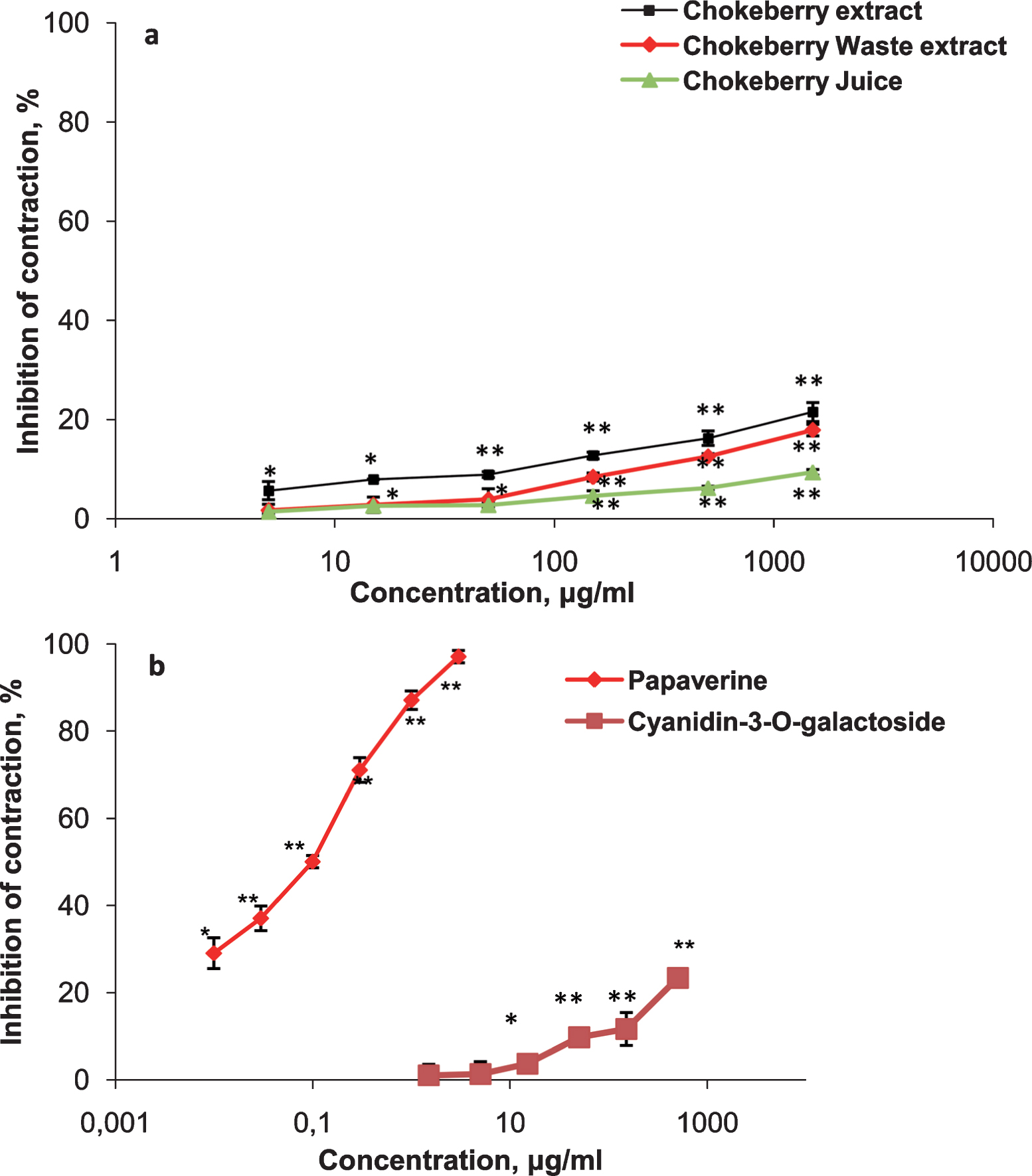
Relaxant effects of the chokeberry ethanolic extract, waste extract, juice, cyanidin-3-O-galactoside and papaverine on spontaneous contractions of the isolated rat ileum. Graphs showing: a. the values of the chokeberry ethanolic extract, waste extract and juice; b. the values of cyanidin-3-O-galactoside and papaverine (as a positive control). Each point represents the mean percentage values with respect to the spontaneous contractions in Tyrode solution (control)±SD of 6 segments. *p < 0.05, **p < 0.01 versus Tyrode.
The EC50 value for the chokeberry extract-induced relaxation was 4.45±0.12 mg/ml (p < 0.01). The chokeberry waste extract and juice also relaxed the spontaneous contraction of the intestine, relative to the concentration 0.005 – 1.5 mg/ml. The EC50 values were 4.58±0.20 mg/ml and 10.05±0.89 mg/ml, respectively. The main compound of the chokeberry, cyanidin-3-O-galactoside 0.15 – 0.5 mg/ml, induced a spasmolytic effect by reducing spontaneous contractions of the isolated rat ileum, depending on the concentration, with EC50 value of 1.11±0.09 mg/ml. As expected, papaverine (0.015– 1.5μg/mL), used as a positive control, relaxed the rat ileum in a concentration-dependent manner (EC50 value was 0.12±0.01μg/mL; p < 0.01). The statistical analysis showed a significant difference between the EC50 values of the extracts, juice, main anthocyanin and the papaverine (p < 0.01). There was no significance among the EC50 values of the ethanolic and waste extract (p > 0.05) (Table 2).
In the second experimental series, the chokeberry ethanolic extract, waste extract, juice and cyanidin-3-O-galactoside were tested in the acetylcholine (5– 1500 nM) stimulated contraction of the isolated rat ileum (Fig. 2). The chokeberry ethanolic and waste extract 0.5 – 1.5 mg/ml inhibited the ileum contractions induced by acetylcholine, in a concentration dependent manner. The chokeberry ethanolic and waste extract caused a modification of the EC50 of acetylcholine from 0.09±0.001 nM and 0.08±0.002 nM (in the absence of the extracts) to 1.11±0.03 nM and 0.66±0.02 nM, respectively, in the presence of the extracts in a concentration of 1.5 mg/ml (p < 0.01). The inhibitory activity of the chokeberry juice 0.5 – 1.5 mg/ml and cyanidin-3-O-galactoside 0.15 – 0.5 mg/ml was also obtained on acetylcholine-induced contractions. The EC50 values of acetylcholine (0.11±0.01 nM and 0.22±0.02 nM) were affected by the chokeberry juice (EC50 = 0.46±0.09 nM) and cyanidin-3-O-galactoside (EC50 = 0.48±0.03 nM) (p < 0.01). The muscarinic receptor antagonist atropine (140 nM) blocked the response to acetylcholine. EC50 of acetylcholine from 0.1±0.001 nM (in the absence of the atropine) were changed to 18261.96±958.32 nM in the atropine presence (p < 0.01).

Relaxant effects of the chokeberry ethanolic extract, waste extract, juice, cyanidin-3-O-galactoside and atropine on the Ach-induced contractions of the isolated rat ileum. Graphs showing: a. the values of control, Ach + chokeberry ethanolic extract (0.5 mg/ml), Ach + chokeberry ethanolic extract (1.5 mg/ml); b. the values of control, Ach + chokeberry waste extract (0.5 mg/ml), Ach + chokeberry waste extract (1.5 mg/ml); c. the values of control, Ach + chokeberry juice (0.5 mg/ml), Ach + chokeberry juice (1.5 mg/ml); d. the values of control, Ach + cyanidin-3-O-galactoside and Ach + atropine (as a positive control), respectively. Each point represents the mean values in percent of maximal response±SD of 6 segments. *p < 0.05, **p < 0.01 versus control.
The addition of KCl (80 mM) to the organ bath caused a tonic contraction in the rat ileum smooth muscle. The chokeberry ethanolic and waste extract 0.005 – 1.5 mg/ml relaxed the contraction induced by KCl in a concentration-dependent manner, with EC50 values of 1.86±0.25 mg/ml and 2.99±0.20 mg/ml, respectively (p < 0.01). The sustained contractions induced by KCl were dose-dependently attenuated with the chokeberry juice and cyanidin-3-O-galactoside. The mean EC50 values obtained for the chokeberry juice and cyanidin-3-O-galactoside were 3.30±0.16 mg/ml and 1.05±0.10 mg/ml, respectively (p < 0.01). Verapamil (a positive control) also relaxed the contraction induced by KCl. The EC50 value was 0.63±0.048μg/ml (Fig. 3). The statistical analysis showed a significant difference between the EC50 values of extracts, juice, main anthocyanin and papaverine (p < 0.01) (Table 2).
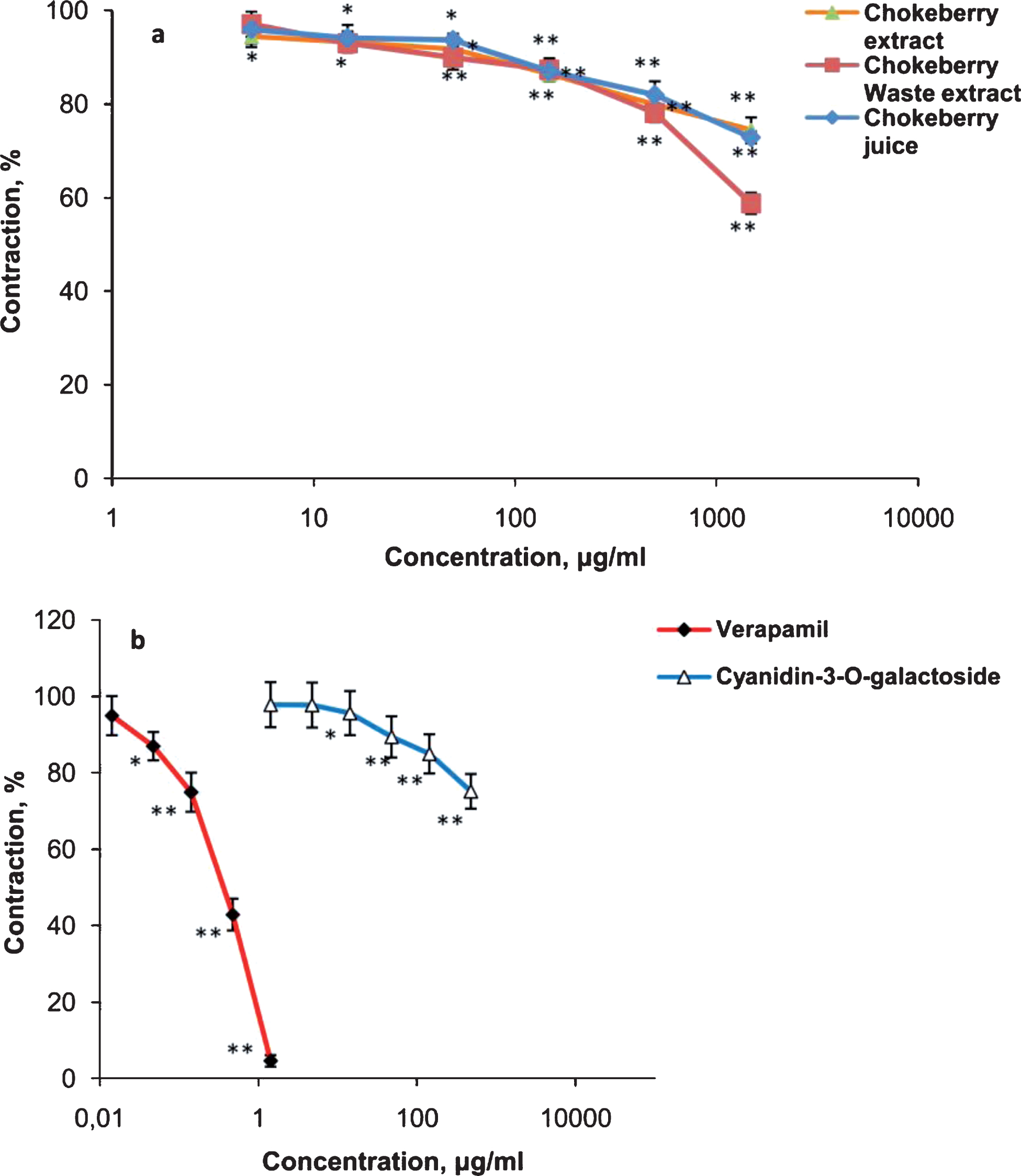
Relaxant effects of the chokeberry ethanolic extract, waste extract, juice, cyanidin-3-O-galactoside and verapamil on the KCl-induced contractions of the isolated rat ileum. Graphs showing: a. the values of the chokeberry ethanolic extract, waste extract and juice; b. the values of cyanidin-3-O-galactoside and verapamil (as a positive control). Each point represents the mean values in percent of maximal response±SD of 6 segments. *p < 0.05, **p < 0.01 versus control.
EC50 values for the spontaneous and KCl-induced contractions for chokeberry ethanolic extract, waste extract and juice, as well as the cyanidin-3-O-galactoside and papaverine (positive control). Significant statistical differences among EC50 values were obtained by one-way ANOVA
Different letters in the columns show the statistical significance (p < 0.01).
Figure 4 shows the effects of the black chokeberry ethanolic extract (a), waste extract (b), juice (c) and verapamil (d) on cumulative CaCl2 (0.01 – 3 mM) induced contractions in Ca2 +-free and high K+ depolarizing medium. The chokeberry ethanolic and waste extract in concentration 0.5 – 1.5 mg/ml dose-dependently relaxed the contractions induced by CaCl2 (p < 0.01). The EC50 values of calcium ions (0.009±0.0003 mM and 0.011±0.0005 mM, respectively) were affected by the chokeberry ethanolic and waste extracts. In the presence of the extracts at a concentration of 1.5 mg/ml, the EC50 values were 0.35±0.07 mM and 0.25±0.01 mM, respectively. The black chokeberry juice, also in the dose-dependent manner, inhibited the CaCl2 response curves (p < 0.01). The EC50 values of calcium ions (0.011±0.009 mM) were affected by the chokeberry juice (EC50 = 0.03±0.005 mM). Verapamil, a calcium channel blocker, caused the inhibition of the ileum contractions induced by calcium ions. The EC50 value for calcium ions (0.61±0.09 mM) was increased in the presence of verapamil (8.16±0.61 mM).

Relaxant effects of the ethanolic extract, waste extract, juice and verapamile on contractions of the isolated rat ileum induced by CaCl2. Graphs showing: a. the effects of the chokeberry ethanolic extract on Ca2 + dose-response curves (0.5 mg/ml and 1.5 mg/ml); b. the effects of the chokeberry waste extract on Ca2 + dose-response curves (0.5 mg/ml and 1.5 mg/ml); c. the effects of the chokeberry juice on Ca2 + dose-response curves (0.5 mg/ml and 1.5 mg/ml); d. the effects of verapamil (as a positive control). Ca2 + was added in a cumulative concentration in Ca2 +-free medium. Each point represents the mean values in percent of maximal response±SD of 6 segments. *p < 0.05, **p < 0.01 versus control.
The effects of the black chokeberry ethanolic extract, waste extract and juice on contractions induced by BaCl2 (3 – 900μM/ml) are shown in Fig. 5. The inhibition of the BaCl2 contraction response by the black chokeberry ethanolic extract, waste extract and juice (500 – 1500μg/ml) concentration was dependent and statistically significant. The EC50 values of the BaCl2 (2.41±0.18μM/ml and 1.89±0.15μM/ml, respectively; p < 0.01) were affected by the black chokeberry ethanolic extract and waste extract at a concentration of 1500μg/ml (EC50 values were 19.97±0.98μM/ml and 4.85±0.35μM/ml, respectively; p < 0.01). The chokeberry juice also reduced BaCl2-stimulated contraction of the isolated rat ileum in a concentration-dependant manner. The EC50 value for BaCl2 (1.93±0.18μM/ml) was increased to 2.29±0.28μM/ml in the presence of the juice (1500μg/ml).
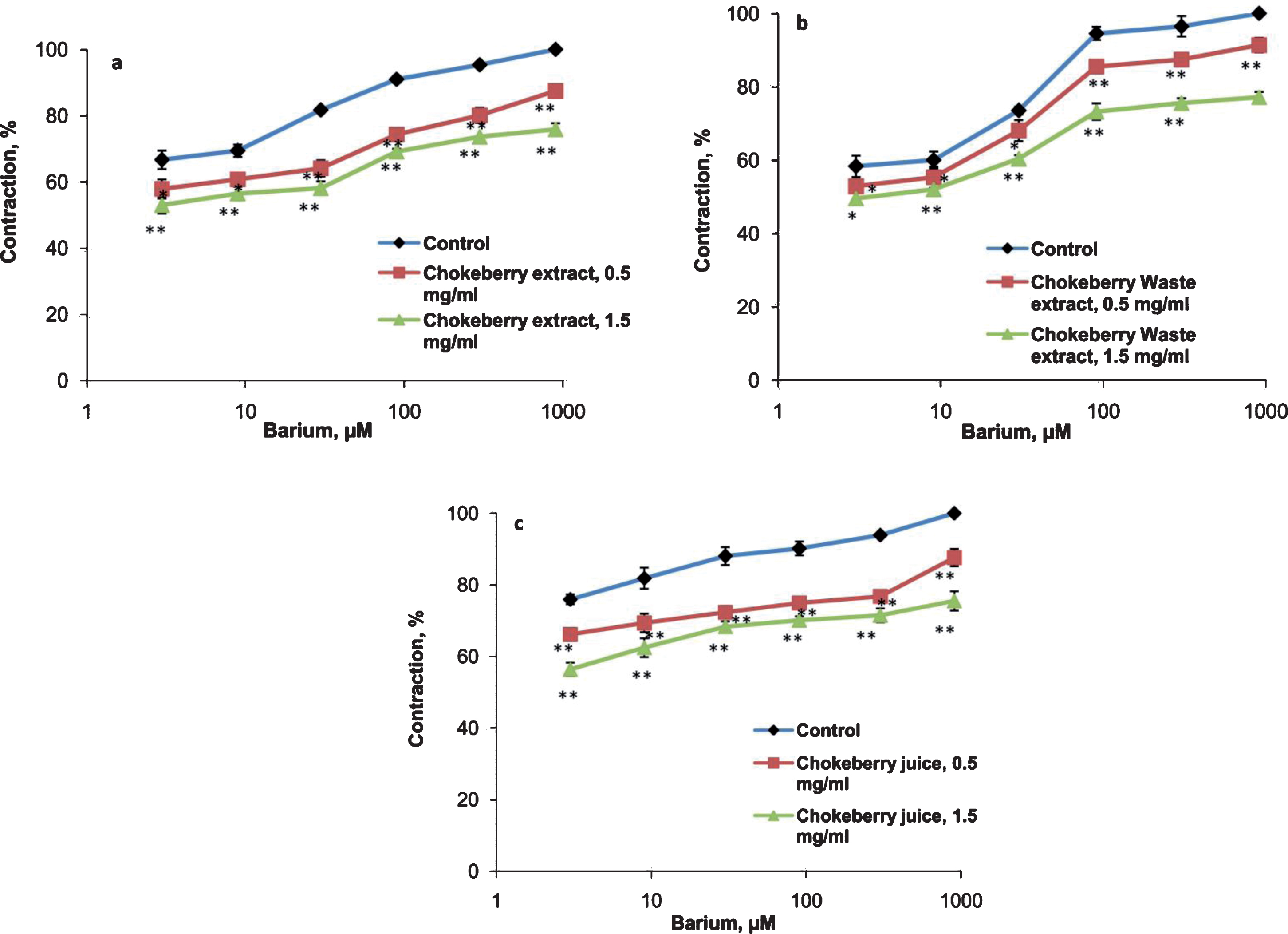
Relaxant effects of the chokeberry ethanolic extract, waste extract and juice on contractions of the isolated rat ileum induced by BaCl2. Graphs showing: a. the effects of the chokeberry ethanolic extract on Ba2 + dose-response curves (0.5 mg/ml and 1.5 mg/ml); b. the effects of the chokeberry waste extract on Ba2 + dose-response curves (0.5 mg/ml and 1.5 mg/ml); c. the effects of the chokeberry juice on Ba2 + dose-response curves (0.5 mg/ml and 1.5 mg/ml). Each point represents the mean values in percent of maximal response±SD of 6 segments. *p < 0.05, **p < 0.01 versus control.
Histamine (5 – 1500 nM) was assessed for stimulating a contractile activity of the rat isolated ileum. The black chokeberry ethanolic extract, waste extract and juice (500 – 1500μg/ml) significantly reduced the histamine elicited contractions in a concentration dependent manner (p < 0.01). The EC50 values of the histamine (2.43±0.35 nM and 2.07±0.21 nM) were modified by the chokeberry ethanolic extract and waste extract at concentration 1500μg/ml (EC50 values were 465.19±31.36 nM and 5.82±0.47 nM), respectively (Fig. 6). The EC50 value for the histamine (2.01±0.15 nM) was increased to 3.86±0.18 nM in the presence of the juice (1500μg/ml).
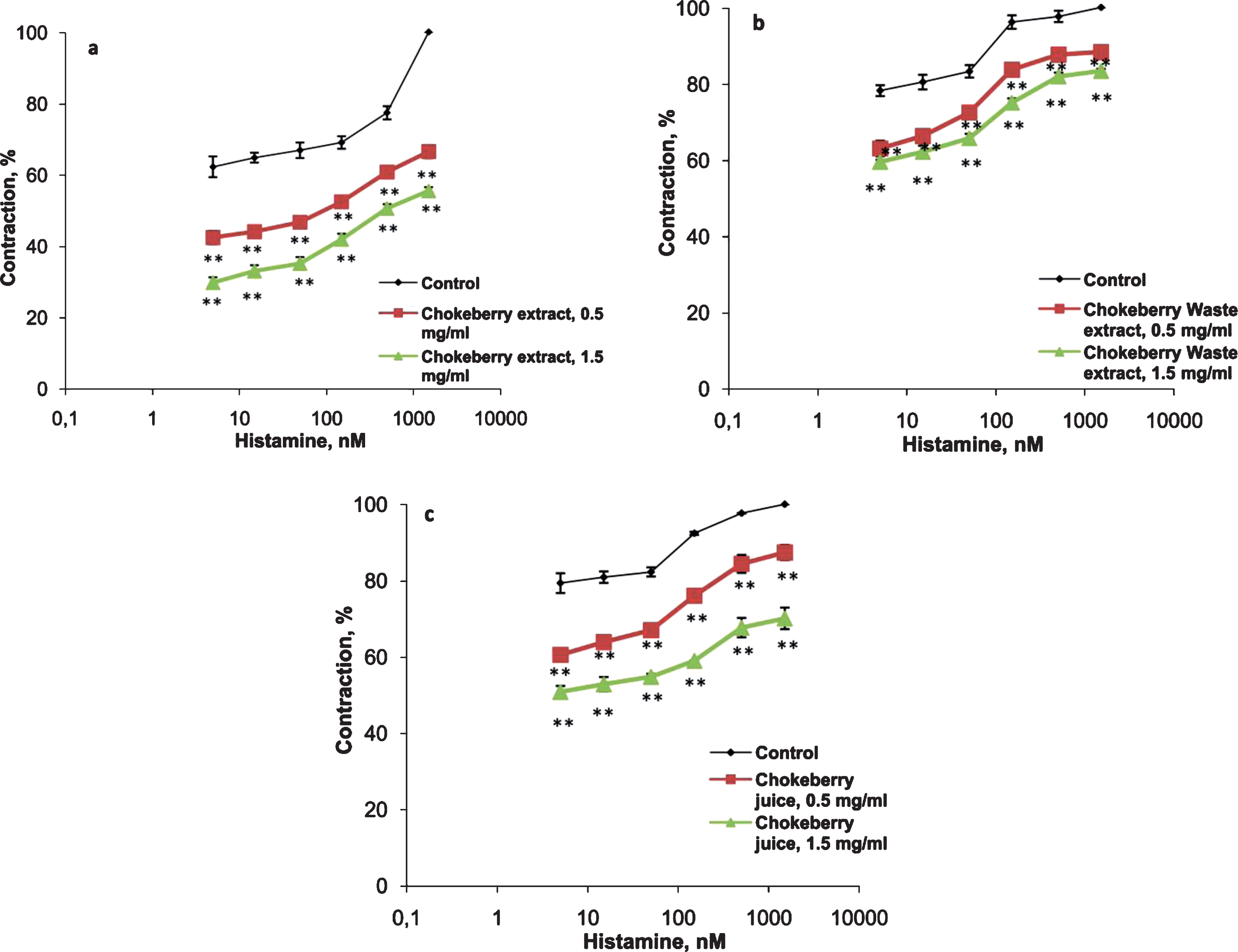
Relaxant effects of the chokeberry ethanolic extract, waste extract and juice on contractions of the isolated rat ileum induced by histamine. Graphs showing: a. the effects of the chokeberry ethanol extract on histamine dose-response curves (0.5 mg/ml and 1.5 mg/ml); b. the effects of the chokeberry waste extract on histamine dose-response curves (0.5 mg/ml and 1.5 mg/ml); c. the effects of the chokeberry juice on histamine dose-response curves (0.5 mg/ml and 1.5 mg/ml). Each point represents the mean values in percent of maximal response±SD of 6 segments. *p < 0.05, **p < 0.01 versus control.
Nitric oxide causes a smooth muscle relaxation in the gastrointestinal tract and it is likely that the chokeberry ethanolic extract, waste extract and juice did not exert the spasmolytic effect mediated by the nitric oxide or a nitric oxide releasing substance. In the presence of L-NAME (a selective inhibitor of the nitric oxide synthase, 100μM, the chokeberry ethanolic extract, waste extract and juice caused the inhibition of the rat ileum contraction (Fig. 7). There was no significant difference between the spasmolytic activity of the chokeberry in the presence and absence of L-NAME. This relaxant effect of the chokeberry ethanolic extract, waste extract and juice was removed by washing the isolated rat ileum with Tyrode solution, indicating that the inhibitory activity produced by chokeberry is reversible.
Discussion
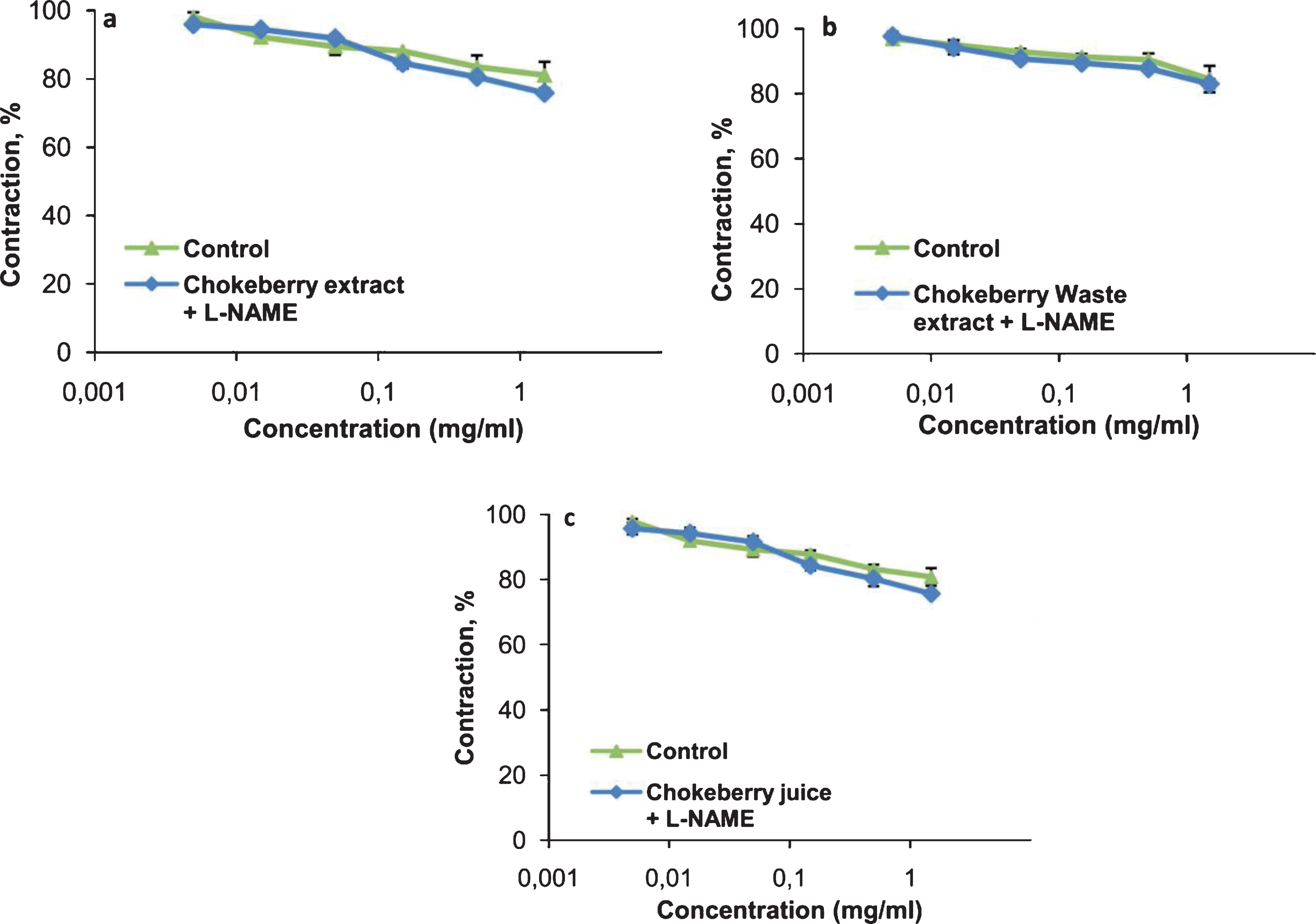
Effects of the chokeberry ethanol extract (a), waste extract (b) and juice (c) on contractions of the isolated rat ileum in the presence of L-NAME. Each point represents the mean values in percent of maximal response±SD of 6 segments.
Due to a high content of polyphenolic compounds, particularly anthocyanins, berries and berries preparations of Aronia melanocarpa have found their place as herbal remedies in alternative and complementary medicine and as functional foods in the food industry [11–13]. However, there is no published data about the role of chokeberry preparations in treating functional gastrointestinal and motility disorders. Therefore, the current study was undertaken to demonstrate that the chokeberry extracts and juice can relax the rat ileum smooth muscles contractions and can be useful in treating the above mentioned disorders. This effect could be achieved by different compounds. It is an established fact that the manner of extraction has an impact on the qualitative and quantitative composition of the extracts [28].
Chemical analyses confirmed that our extracts and juice are a rich source of polyphenolic compounds. The study showed that the waste extract had the larger amounts of poyphenolic compounds, especially anthocyanins and proanthocyanidins, while the flavonoid content was higher in the chokeberry extract. The major constituents identified by the HPLC analysis were cyanidine-3-O-galactoside among the anthocyanidins and heterosides of quercetin among flavonoids. Similar results were obtained in our previous study with chokeberry fruit extract tested in spontaneously hypertensive rat model where cyanidin-3-O-galactoside was found as a predominant compound [6]. Moreover, Hellstrom et al. (2010) [29] also found cyanidin-3-O-galactoside as the most abundant in lyophilized chokeberry juice. Extract described by Ćujić et al. (2018) [6] as well as by Ciocoiu et al. (2013) [30] contained rutin, hyperoside, and quercetin as dominant flavonoids similarly as we found for our sample.
It has been shown that that there is a difference in activity and potential health benefits between the isolated trimeric procyanidin C1 and dimeric procyanidins B2 and B5 from Aronia melanocarpa berries. The activity could be influenced by the sugar units linked to the anthocyanidin [31]. Numerous studies have confirmed that the potential health benefits and physiological effects of the anthocyanins and proanthocyanidins depend on the structure of these compounds [32–34].
Literature data have shown that flavonoids caused in vitro and in vivo spasmolytic effects on the ileum, uterus and the bronchi of rats [35–39]. It is also found that quercetin could produce inhibition of the rabbit duodenum spontaneous contractions [40]. Morales et al. (1994) [41] demonstrated inhibitory effects of quercetin on K+ induced contraction of the isolated guinea pig ileum, as well as the calcium-antagonistic effects and inhibition of the intestinal smooth muscle contractions induced by Ca2 + . Spasmolytic activities of cyanidine-3-O-galactoside have not been investigated so far.
The contractility of the gastrointestinal system is regulated by numerous physiological mechanisms and mediators [42, 43]. Through our previous work, we have proven that plant extracts, berries juices and essential oils achieve their relaxing activity mainly by influencing the Ca2 + influx [44–49]. To confirm that the preparations of the chokeberry acted in the way we previously established with other plant preparations, we investigated the possible mechanism of chokeberry preparations on the rat ileum contractions. To achieve that, we examined how different preparations can affect spontaneous, acetylcholine, histamine, CaCl2, BaCl2 and KCl-induced smooth muscle contraction, as well as the contractions in the presence of L-NAME.
Literature data have reported that the plant extracts and their secondary metabolites demonstrate a spasmolytic potential through the suppression of the spontaneous contractions of the isolated rat ileum [27, 50]. Spontaneous rhythmic contractions and relaxation of the smooth muscles of the intestine are regulated by nerve and humoral factors, or numerous neurotransmitters of the enteric nervous system [51]. Our results show that the chokeberry preparations significantly decreased those contractions. Ethanolic and waste extracts from the chokeberry proved to be better inhibitors of spontaneous contractions of the rat ileum than chokeberry juice. The main anthocyanin compound, cyanidin-3-O-galactoside, also reduced a spontaneous contraction in a concentration-dependent manner. The spasmolytic effect was reversible after washing the tissue with a Tyrode’s solution.
Gastrointestinal contractility is regulated through the multiple physiological mediators. The release of acetylcholine from the excitatory cholinergic neurons and the activation of the muscarinic receptors in the intestinal smooth muscle cells play an important role in the stimulation of muscle contractions [52, 53]. We found that chokeberry produced a significant and concentration dependent relaxation of the acetylcholine induced contractions. However, a complete relaxation of muscle contractions was not accomplished. Better spasmolytic effects were observed with the chokeberry extract, not the waste extract and juice, in concentration of 1.5 mg/ml. In the present of Ach, the induced contractions were inhibited by the cyanidin-3-O-galactoside.
It is an established fact that high concentration of K+ will cause smooth muscle contractions by opening the voltage-dependent calcium channels, allowing the inward movement of extracellular calcium and resulting in a depolarization and sustained contraction. Voltage-dependent calcium channels regulated peristaltic movements of the intestine [54]. Our results demonstrated that the chokeberry preparations and the main anthocyanin component significantly and in a dose-dependent manner inhibited the KCl (80 mM) induced concentrations of the isolated rat ileum.
The chokeberry extracts and juice reduced contractions of the isolated rat ileum induced by CaCl2 in the Ca2 +-free medium. The observed effects of the chokeberry to inhibit Ca2 + contraction suggest the presence of ingredients that can inhibit calcium channels [55].
One more possible mechanism of the intestine contractility includes barium ion (Ba2 +) as an inductor of the smooth muscle contractions by the depolarization of the membrane and opening the voltage-dependent Ca2 + channels [56]. Tested chokeberry preparations produced a statistically significant inhibition of the contractions induced by BaCl2.
Histamine induced the contractility of the smooth muscle of GIT by inducing the membrane depolarization, which led to the increased excitability [57, 58]. The chokeberry extracts and the juice-inhibited contractions were induced by the histamine in a concentration-dependent manner.
In the present study, L-NAME was used to inhibit the nitric oxide synthesis. In the rat ileum, the pretreatment with L-NAME did not alter the relaxant effect of the chokeberry ethanolic extract, waste extract and juice. Our results suggest that the nitric-oxide pathway is not involved in the relaxant activity of the chokeberry extracts and juice.
Thus, the relaxant activities of the chokeberry preparations were mainly due to their influence on the Ca2 + influx, as expected. It should be noted that all three examined preparations demonstrated excellent spasmolytic effects. The extracts had slightly better effects than the juice.
As stated above, a spasmolytic evaluation of chokeberries has not been yet published. However, there are published studies that confirm the gastroprotective activity of the berries. The research conducted by Matsumoto et al. (2004) [58] demonstrated that the methanol extract of the black chokeberry had a protective effect in suppressing the area of the gastric mucosal damage caused by the application of ethanol. Literature data report that other species of the Rosaceae families have similar effects. The methanol extract of Rubus fruticosus was able to relax spontaneous and KCl-induced contractions in the isolated rabbit jejunum [59]. The antispasmodic activity of Ribes nigrum fruit juice was demonstrated in the research of Miladinovic et al (2018) [60]. The significant reduction of the intestinal contractility and inhibition of smooth muscle contractions induced by different mediators of the flavonoid rich black currant juice have been already proven. Flavonoids identified in our extracts and juice could relax the smooth muscles in different animal models.
Our research demonstrated that the dominant anthocyanin of the black chokeberry juice, cyanidin-3-O-galactoside, relaxed spontaneous acetylcholine and K+ induced contractions in the isolated rat ileum. The spasmolytic effects of the chokeberry extracts and juice could be explained by the activity of the main compound. However, it is obvious that the spasmolytic effect of the chokeberry is likely to be caused by the synergistic activity of cyanidin-3-O-galactoside and other presented compounds.
Based on the results obtained, our study offers an important insight into the gastrointestinal activity and the potential use in phytotherapy of not only the chokeberry ethanolic extracts and juice, but also its waste extracts. It was demonstrated that the chokeberry (Aronia melanocarpa) preparations were able to relax contractions in the isolated rat ileum. The dominant anthocyanin, cyanidin-3-O-galactoside, expressed the spasmolytic effect and therefore may be responsible for the relaxant activity. Hence, the chokeberry could be used as a herbal remedy for the control of gut motility. However, it would be necessary to carry out clinical studies to confirm its spasmolytic effects in humans.
Conflict of interest
The authors have no conflict of interest to report.
Footnotes
Acknowledgments
This study was supported by the Serbian Ministry of Education, Science and Technological Development (Grant no. III 46013 and III 41018) and by the Internal Project of the Faculty of Medicine, University of Nis, Serbia (No. 25). The authors are thankful to Ms. Ljiljana Jankovic, Senior Lector of English, University of Nis and Mr. Aleksandar Jovanovic for their expertise in English.