



Abstract
Randomness of grain boundaries makes it difficult to reach a broad consensus about mechanical properties of polycrystalline graphene (PG). In the present paper, based on principle of Voronoi diagram, the models of PG with different grain sizes were established, and the fracture mechanism and mechanical properties were investigated by molecular dynamics (MD). The results showed that the crack initiation point of PG always located at the multiple junction of grain boundaries, and the crack propagation and fracture mode of PG was mainly dependent on not only the relative size but also the relative location of the indenter and grain boundaries. Additionally, the effects of grain size, indentation speed, temperature and indenter diameter on the mechanical properties were studied, which showed some interesting and different phenomena from the tensile case, e.g., the grain size seems no regular effect on mechanical properties. Furthermore, the ultimate indentation force, indentation depth and fracture showed an increase trend with the increase of indenter diameter and indentation speed, while they decreased with the increase of temperature. But when it came to the elastic modulus, it showed a decreasing trend with the increase of indenter diameter and indentation speed, while it first increased and then decreased with the increase of temperature.
Keywords
Introduction
Since graphene was first discovered by Geim et al. [1] in 2004, the research about graphene has swept across almost all fields around the world. Graphene has extremely excellent mechanical properties. Additionally, it also has been considered to be the thinnest, strongest, and the best conductive material as yet. Therefore, graphene has attracted extensive attention and application in the fields of energy storage, composite material manufacturing, microelectronics and sensor manufacturing [2, 3, 4, 5, 6, 7, 8, 9].
At present, the commonly used methods for preparing and producing graphene include chemical vapor deposition (CVD) [10, 11, 12, 13, 14], mechanical exfoliation method [15], organic synthesis, and crystal epitaxial growth method. In contrast, the CVD method has the advantages of large growth area and high product quality, and has been widely studied and used [16]. However, due to the deposition characteristics of this method, the precipitation, nucleation, and growth of carbon atoms have a certain randomness, and grain boundaries are often formed at the junctions of different regions of the substrate, making most of the graphene prepared by this method are polycrystalline. Therefore, the study of polycrystalline graphene has more important practical significance for engineering applications, and gradually began to attract researchers’ attention.
In contrast, the experimental testing of the mechanical properties of graphene is expensive, difficult and poorly reproducible. Therefore, with the development of large-scale and high-performance computers, the study of mechanical properties based on MD and other numerical simulations has gradually become an important research method. In terms of uniaxial stretching, Park et al. [17, 18] studied the relationship between the tensile mechanical properties of polycrystalline graphene and grain size. The results showed that with the increase of grain size, Young’s modulus and ultimate tensile strength increased, while the fracture strain decreased. The effect of annealing on the tensile mechanical properties of polycrystalline ink was studied by Becton et al. [19]. The results showed that the fracture strain and fracture strength decrease with the increase of grain size. The effect of grain size on the tensile mechanical properties of polycrystalline ink was studied by Song et al. [20].The results showed that the fracture strength decreases with the increase of grain size. Li Dongbo et al. [21] analyzed the effects of system temperature, grain size, and tensile strain rate on the mechanical properties of polycrystalline graphene. The studies showed that the tensile strain rate, the temperature of the system, and grain size have a great impact on its mechanical properties. Becton et al. [22] analyzed the influence of wrinkles and grain size, and the results showed that grain size has little effect on shrinkage size and hardness. In terms of nanoindentation, in order to study the influence of system temperature on the mechanical properties of polycrystalline graphene, Yi et al. [23] analyzed that with the increase of system temperature, the mechanical properties of polycrystalline graphene with only one grain boundary showed a decreasing trend. Sha et al. [24] analyzed the sensitivity of the fracture of polycrystalline graphene to the circular notch. The sensitivity of the fracture of polycrystalline graphene to the notch depends on the relative size of the notch size and the grain size. Lu Ying et al. [25] found that the measurement method and grain size have a greater impact on the fracture strength and elastic modulus. Lee et al. [26] systematically studied the mechanical properties of single crystal and polycrystalline graphene, and the results showed that the elastic modulus of single crystal and polycrystalline graphene is basically the same. Zhang et al. [27] systematically summarized the existing research on the fracture behavior of graphene, pointed out the existing problems and looked forward to the next research. Due to the existence of grain boundaries and the influence of grain size, the fracture mode of polycrystalline graphene is different from that of single crystal graphene. Therefore, the relevant research on polycrystalline graphene is one of the main topics to be solved at present.
However, due to the unique loading characteristics of nanoindentation, the fracture mode and mechanical behavior are somewhat different from other loading methods. In addition, due to the randomness of grain boundaries of PG, there are still not a broad consensus about its fracture mechanism and mechanical properties. To this end, in this paper, the PG model with randomly distributed grain boundaries would be established according to the principle of Voronoi diagram. Furthermore, the nanoindentation fracture mechanism and mechanical properties would be analyzed by MD simulations, so as to provide certain technical reference and theoretical support for theoretical or experimental research of PG.
Materials and methods
Polycrystalline graphene indentation model
The model of PG in this paper is based on the principle of Voronoi diagram [26], which is to randomly distribute
Atomic models of PG with different grain sizes based on the Voronoi diagram.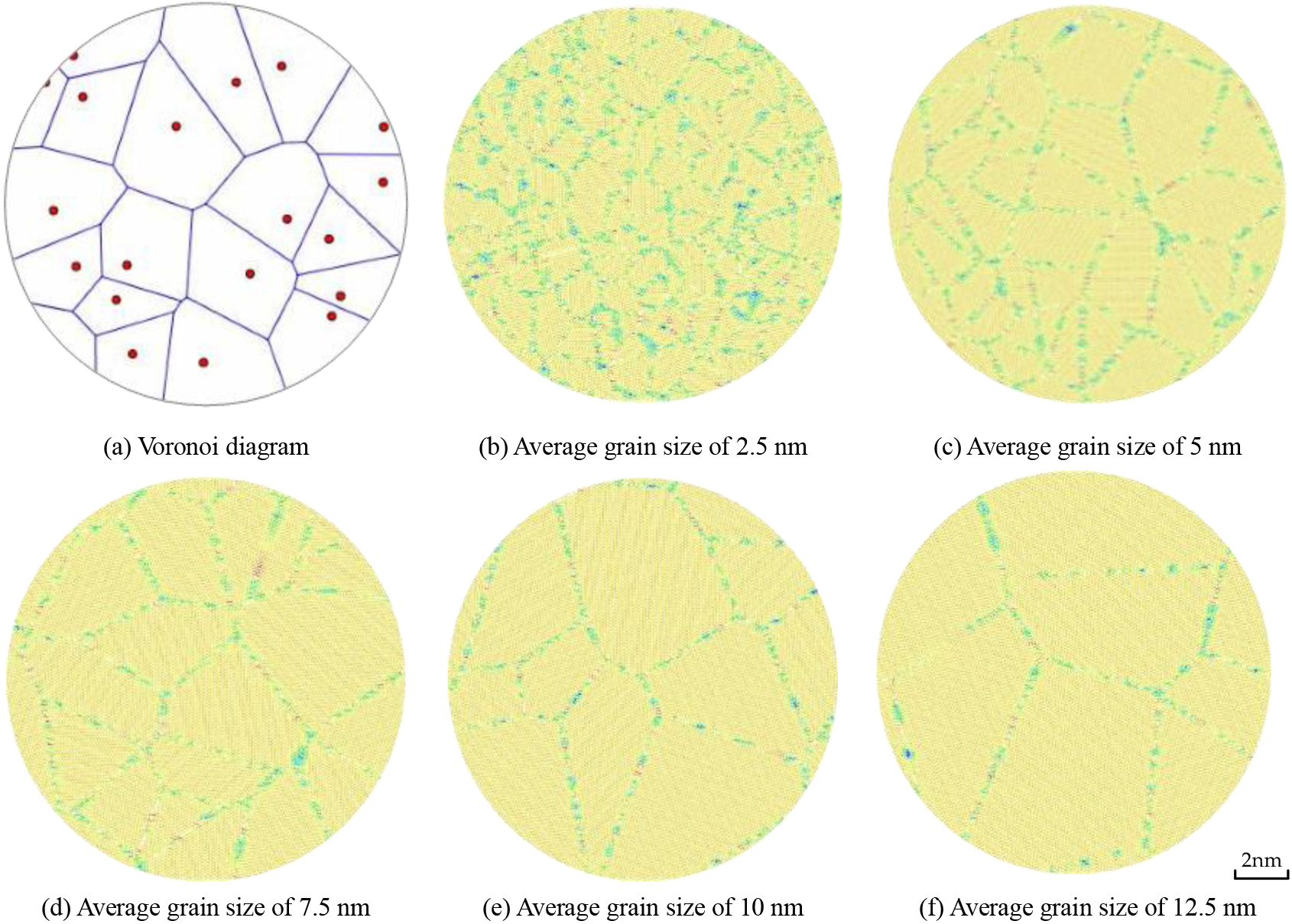
According to the principle of the Voronoi diagram, carbon atoms are filled into each region according to a specified or random crystal orientation, correspondingly forming
Based on the PG models, the PG indentation model can be further obtained as shown in Fig. 2, in which the indenter is a spherical diamond, and during the indentation process, the indenter vertically acts on the PG film downward at a certain speed.
Nanoindentation model of PG: (a) Front view; (b) Top view.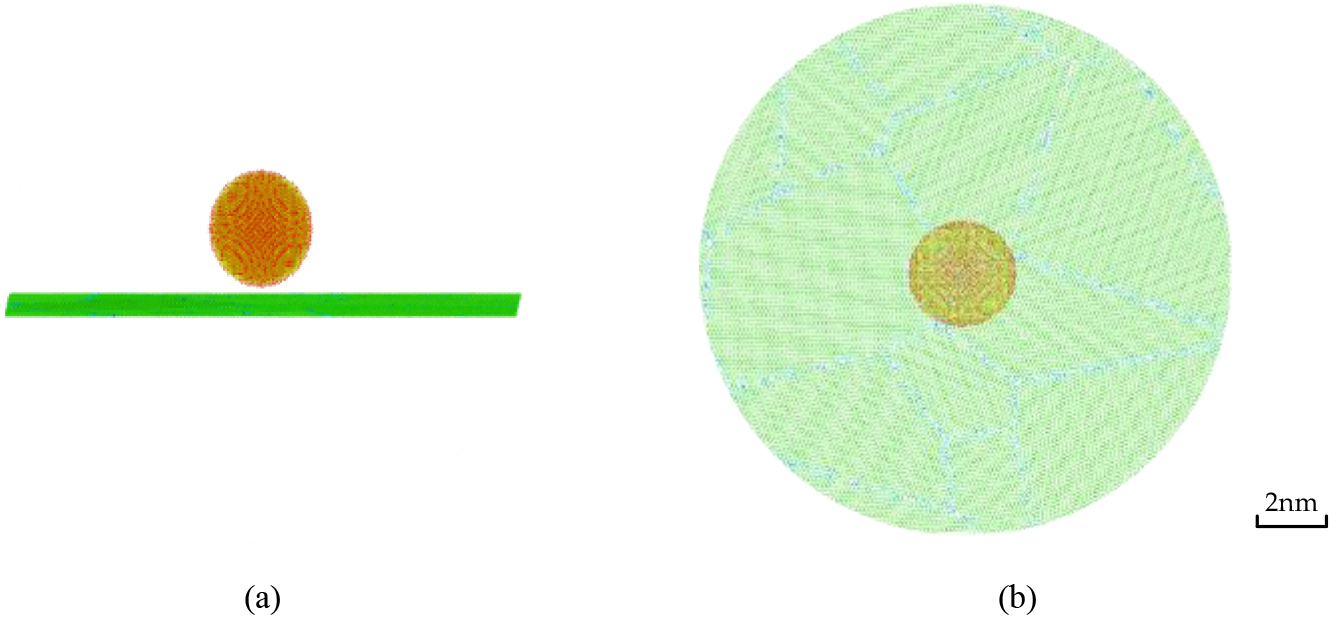
Due to the randomness of crystal orientation in each grain, the distribution of atom density at grain boundaries is quite different. In order to obtain a more stable crystal model, the NVT ensemble was first used and each model was annealed at a temperature of 3000 K (below the melting temperature of graphene) for 50 ps. The high mobility of carbon atoms at 3000 K results in a rearrangement of atomic positions, thereby eliminating abnormally low or high atomic density regions of grain boundaries, thus minimizing system energy. Then it was cooled to room temperature and equilibrated at 300 K for 50 ps. Then, the NPT ensemble was used to further relax the model for 50 ps at room temperature to obtain a stable PG model, the system energy-time curve and model are as shown in Figs 3 and 4. Compared with the model before relaxation (Fig. 2(a)), the relaxed PG model presented irregular wrinkles.
Periodic boundary conditions are applied in all directions. A constant integration time step of 0.5 fs is used in all the simulations. The atomic configurations are visualized with the Ovito package. The stress is calculated from the normal tensor component along the loading direction of the virial stress.
System energy-time curve.
Nanoindentation model of PG after relaxation: (a) Front view; (b) Top view.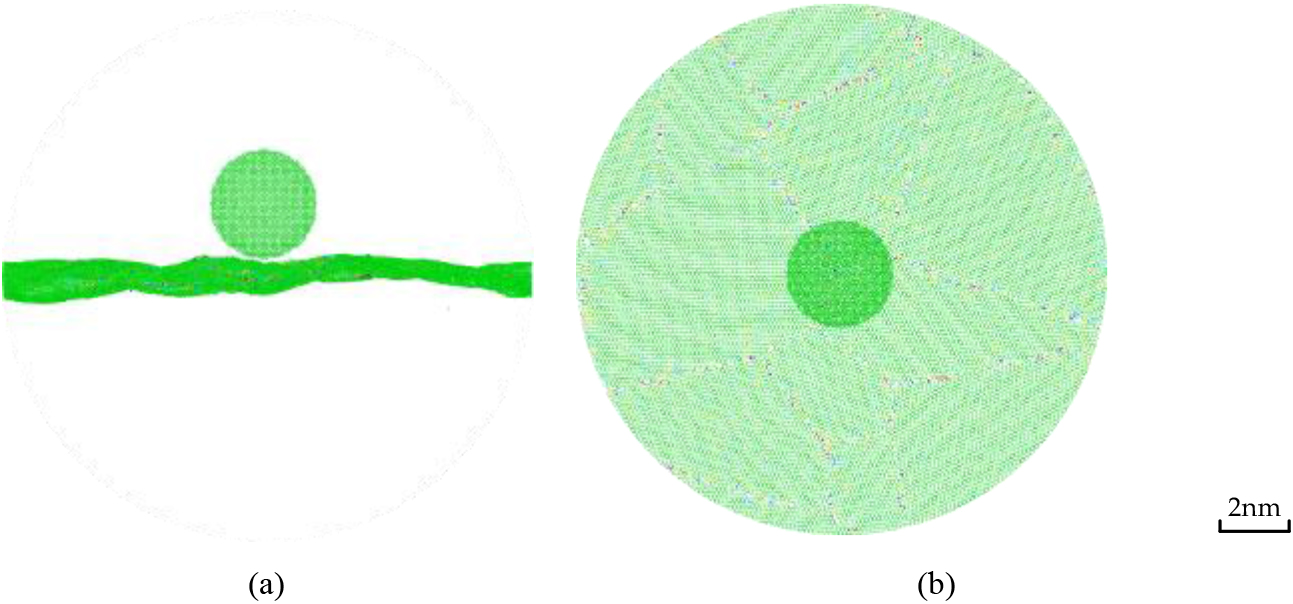
Then, the Large-scale Atomic/Molecular Massively Parallel Simulator (LAMMPS) [30] was applied to simulate the nanoindentation process. The Lennard-Jones potential function [31] was used to simulate the interaction between the indenter carbon atoms and the PG film carbon atoms. The potential function is a two-body pair potential, which can be expressed as,
Where
in which
For the nanoindentation calculation of single-layer circular PG, it can be approximated as a thin film with fixed circular boundary and loaded on its center. The force-displacement relationship can be approximately expressed as follows [31]:
where
Crack nucleation and propagation process of PG under nanoindentation: (a) Nanoindentation depth 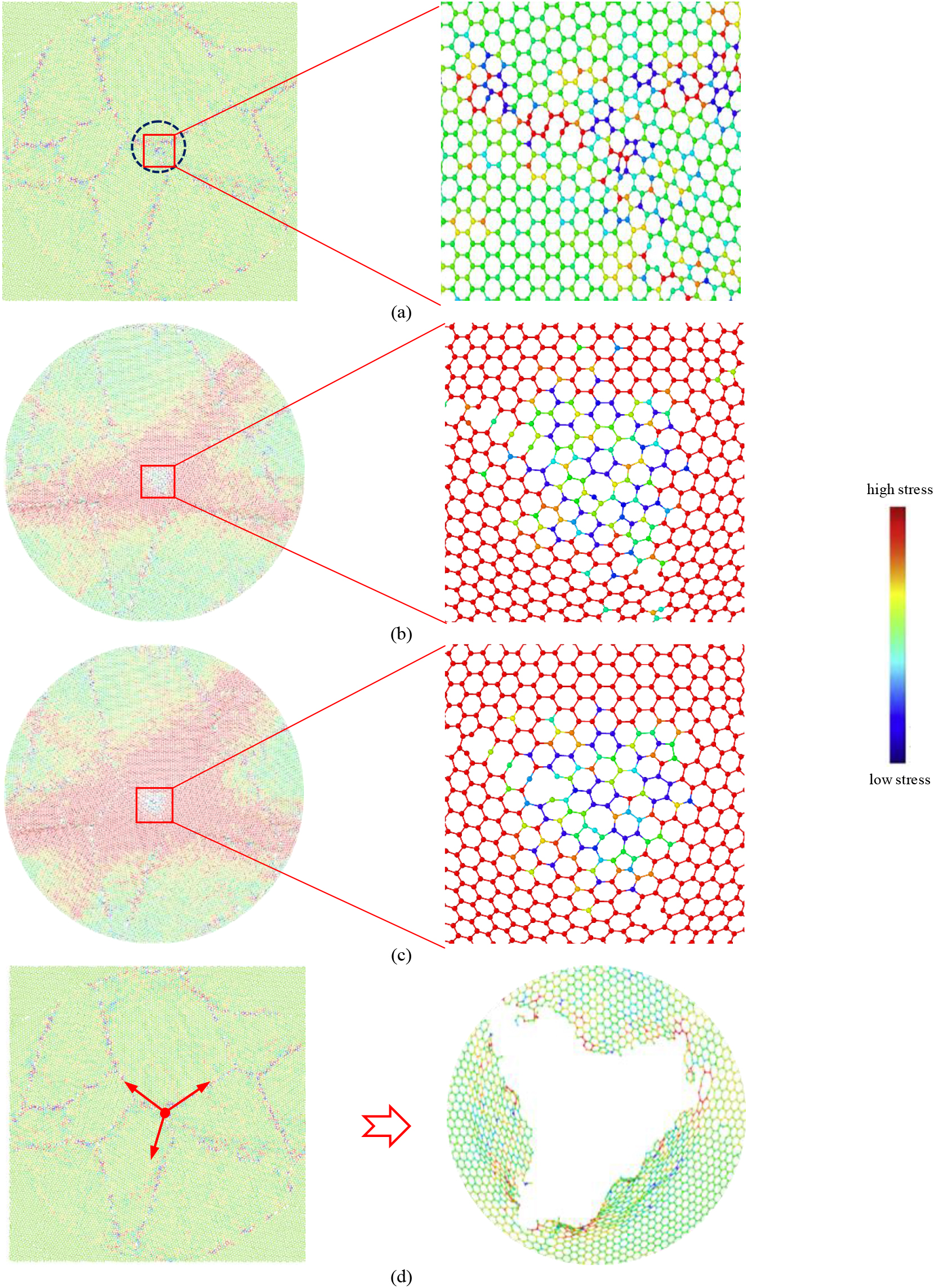
in which
Investigation on Fracture process and mechanism
Fracture process investigation
In order to investigate the indentation fracture process of PG, based on the method above mentioned, nanoindentation on the PG model with a grain size of 10 nm was performed, in which the indenter with a diameter of 60 Å, while the indentation speed is 0.015 Å/ps at a temperature of 300 K. And then, the indentation fracture process was studied, as shown in Fig. 4.
Fracture diagram of nanoindentation on a grain boundary: (a) Nanoindentation depth 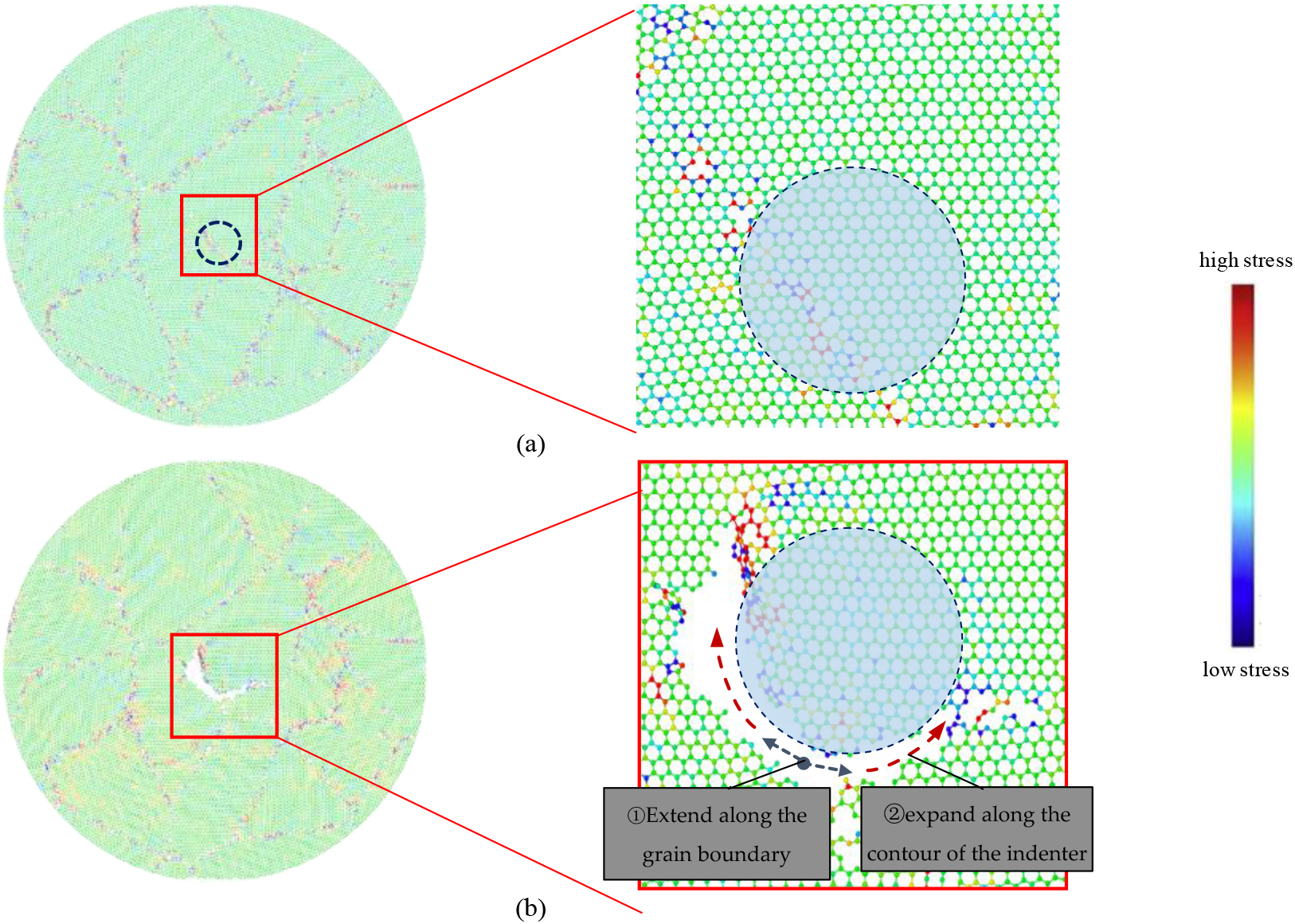
It can be concluded from Fig. 5(a) that the stress distribution within each PG grain is relatively uniform, while the stress distribution is uneven at the grain boundaries, especially at the junction of grain boundaries. As the indentation depth increases, the stress continues to increase and the stress concentration effect at the junction of the grain boundaries is intensified, leading to the extension of original defects, and forming a large number of multi-vacancy defects, as shown in Fig. 5(b). With the further increase of the indentation depth, the atomic stress level further increases, causing the denser vacancy defects to be partially penetrated along the grain boundary, as shown in Fig. 5(c). Then, as the indentation continues, the cracks will be centered at the intersection of the grain boundaries and penetrate completely along the directions of each grain boundary in a “divergent mode”, so that the PG film will eventually break, as shown in Fig. 5(d).
The results demonstrate that, due to the presence of grain boundaries, the atomic lattice will be mismatched, which will further lead to a large number of pentagons heptagons and polygons containing multiple vacancy defects. what’s more, at intersection of multiple grain boundaries, the types and number of defects would increase significantly, as shown in Fig. 5(a), which are easily to loss stability and to fracture under external force. In addition, due to the mismatch of the atomic lattice, the local stress distribution of the atoms will be uneven, resulting in a noticeable stress concentration phenomenon, especially at the intersection of multiple grain boundaries, as shown in Fig. 4(b), which will cause the stress in the three grain boundaries to increase significantly, as shown in Fig. 5(c), and eventually fracture, as shown in Fig. 5(d).
The fracture behavior of the indentation location at the triple junctions of three grain boundaries is analyzed above. To study the effect of indentation locations on PG fracture behavior another simulations about the indentation location on a grain boundary and completely inside the grain were performed, as shown in Figs 5 and Fig. 6.
Fracture diagram of the nanoindentation in the grain: (a) Nanoindentation depth 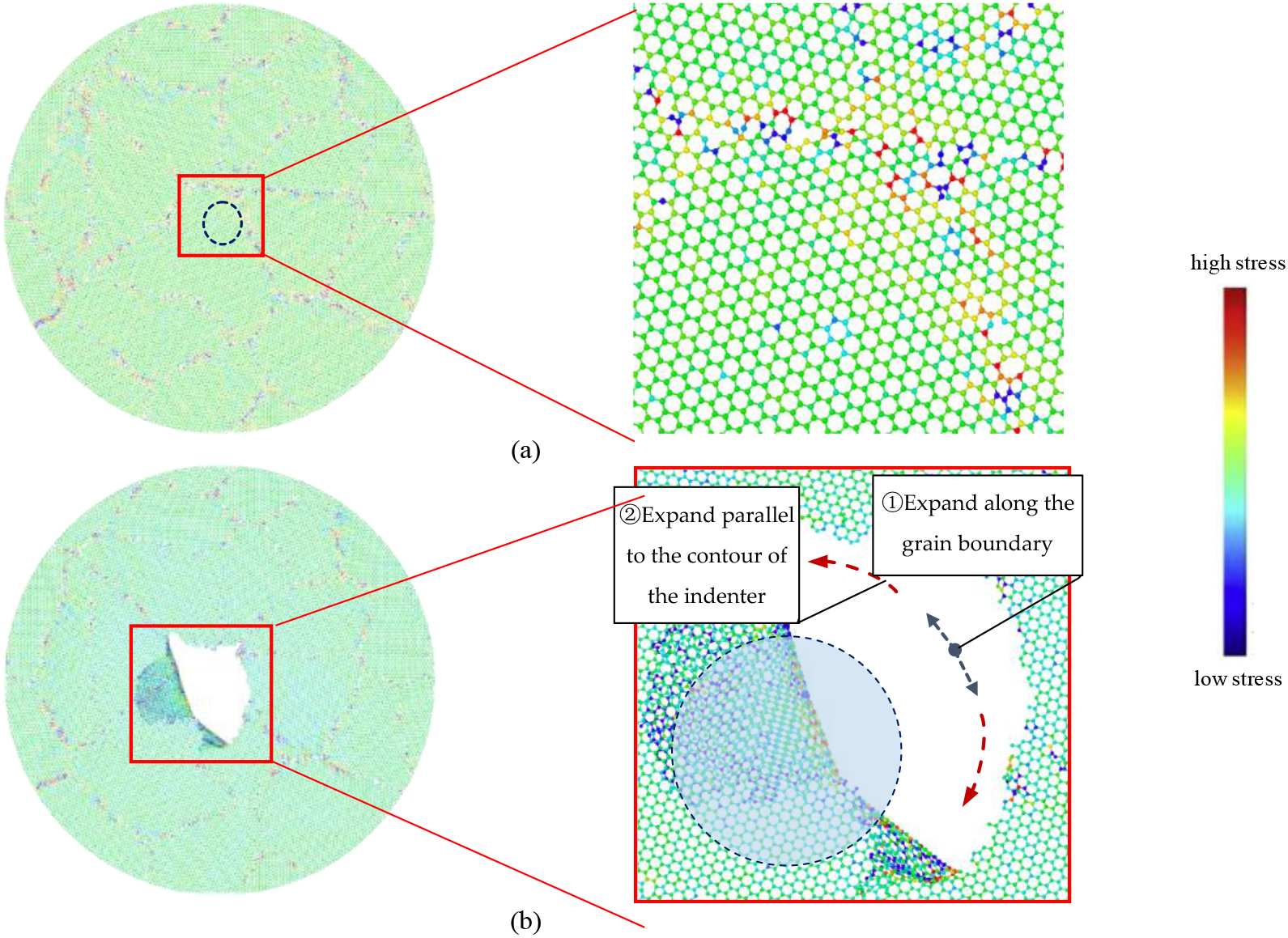
Figure 5(a) showed that when the indentation location was above a grain boundary, due to the direct action of the indenter, the defects directly below the indenter would first expand and extend along the direction of the grain boundary. As the indentation depth increased, the phenomenon similar to punching effect on the PG film was observed. That is, the crack would not continue the original tendency to extend along the grain boundary, but to extend along the boundary line where the indenter contacts the film, until the indenter is completely through the PG film, as illustrated by Fig. 5(b).
It could be observed from Fig. 6(a) that, when the indenter located inside the grain, as the indentation depth increased, the defects in grain boundary closest to the indenter was more likely to extend. For this case, the fracture pathway was that, the crack propagated along the grain boundary first, and then passed into the grain in which the indenter located until the indenter completely passed through the PG film. Additionally, the damage area was significantly larger than that when the indenter just located on the grain boundary shown in Fig. 6(b).
As is known, due to the small contact area of indenter, there would be obvious stress concentration effect in the contact area of the indenter. What’s more, if the nanoindentation location was just at the grain boundary, the stress concentration there would be further aggravated, resulting in the extension and propagation of defects at the boundary., After the initial extension of defects, the stress around the indenter would be redistribution and more noticeable stress concentration would appear in the contact boundary area between the indenter and the PG film, as shown in Fig. 7. Therefore, the crack would change its initial pathway along the grain boundaries into propagating along the contact boundary between the indenter and the film, as illustrated by Fig. 5(b). When the indenter is inside the grain, at the initial stage of indentation, under the combined actions of defects and the indenter, the stress level of the grain boundary closest to the indenter will increase dramatically, leading to defects extension. Different from the case that the indenter located on the boundary, the fracture pathway of wasn’t along the contact boundary of indenter, but extend along the line parallel to the contact boundary of indenter until the indenter passed through the PG film, as shown in Fig. 6(b).
Stress concentration diagram at contact boundary between indenter and film.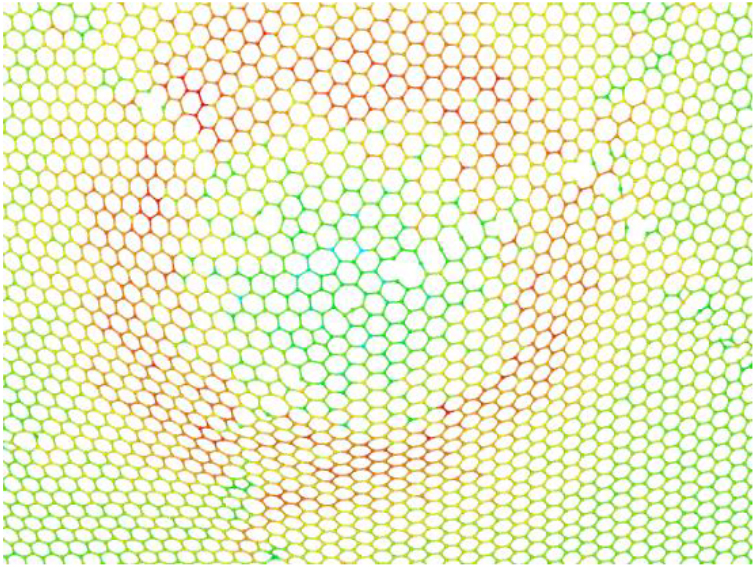
In order to further compare and analyze the indentation fracture and tensile fracture modes, this paper also simulated the tensile fracture process of PG, and the results were shown in Fig. 8.
Fracture process diagram under uniaxial tension: (a) Initial stage of crack (The arrow is initial crack point); (b) Crack propagation; (c) Fracture pathway.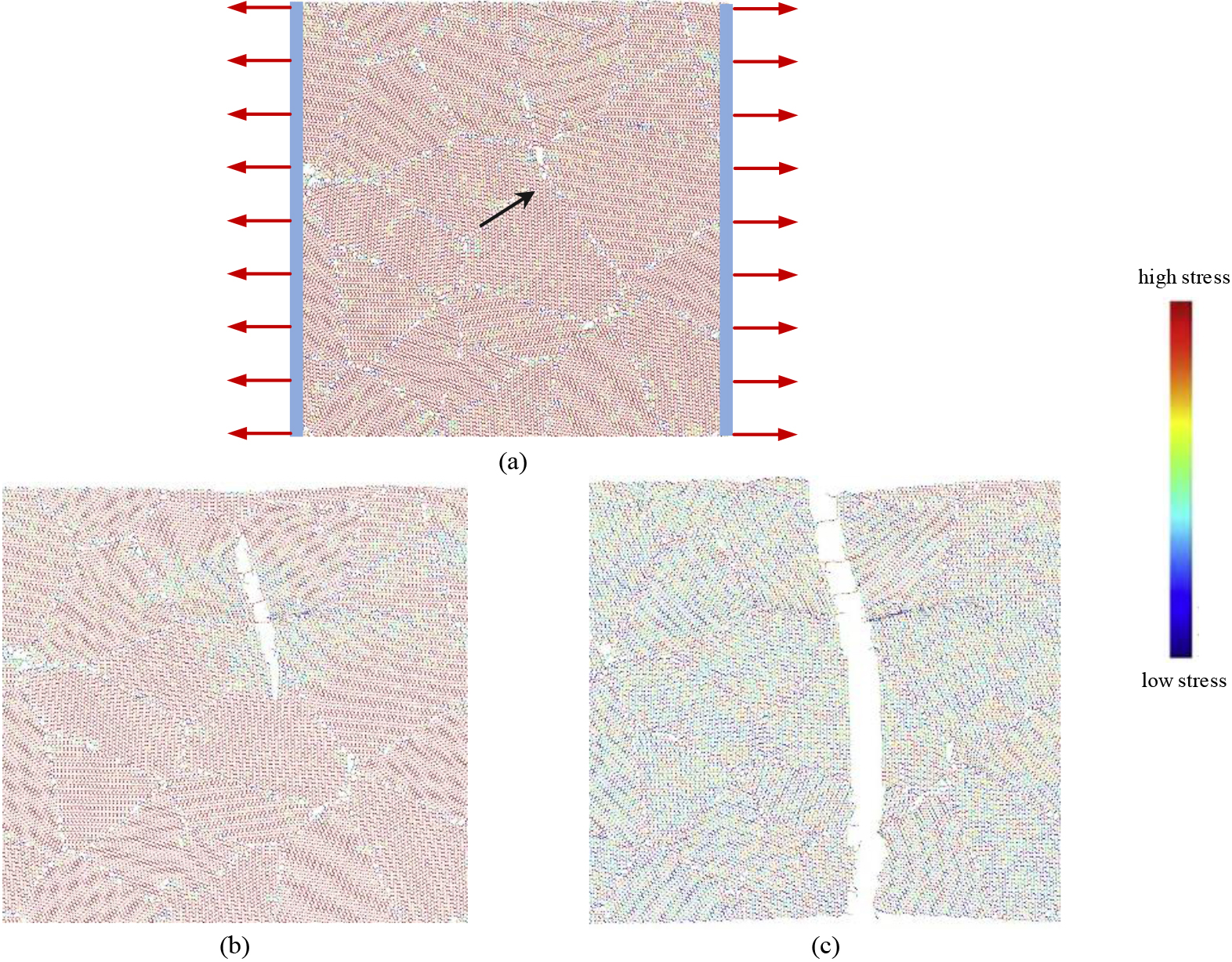
Figure 8 are the diagrams of the uniaxial tension of PG. It can be seen that the cracks begin to nucleate at the multiple junction of the grain boundaries (Fig. 8(a)). After that, crack would first propagate along the grain boundary (Fig. 8(b)). And then, the crack would propagate along the direction perpendicular to the tension direction and passed through the grain, eventually leading to the complete fracture (Fig. 8(c)).
In contrast, the initial crack points of uniaxial tension and indentation are both located at multiple junctions of grain boundaries. In addition, the fracture pathway was mainly dependent on the way of loading on the PG film. For uniaxial tension, the fracture pathway is almost a straight line perpendicular to the loading direction; When it comes to the indentation, the fracture pathway was dependent on not only the relative size of indenter and grain size but also their relative location, like the mode diverging along the grain boundary or along the boundary first and then passed through the grain.
In order to study the effect of grain size on the mechanical properties of PG, nanoindentation simulations of the models with average grain size of 2.5 nm, 5 nm, 7.5 nm, and 10 nm were performed, and the results were shown in Fig. 9.
Curves of the effect of grain size on mechanical properties: (a) Force vs. nanoindentation depth; (b) Ultimate indentation depth and force changing with grain size; (c) Elastic modulus 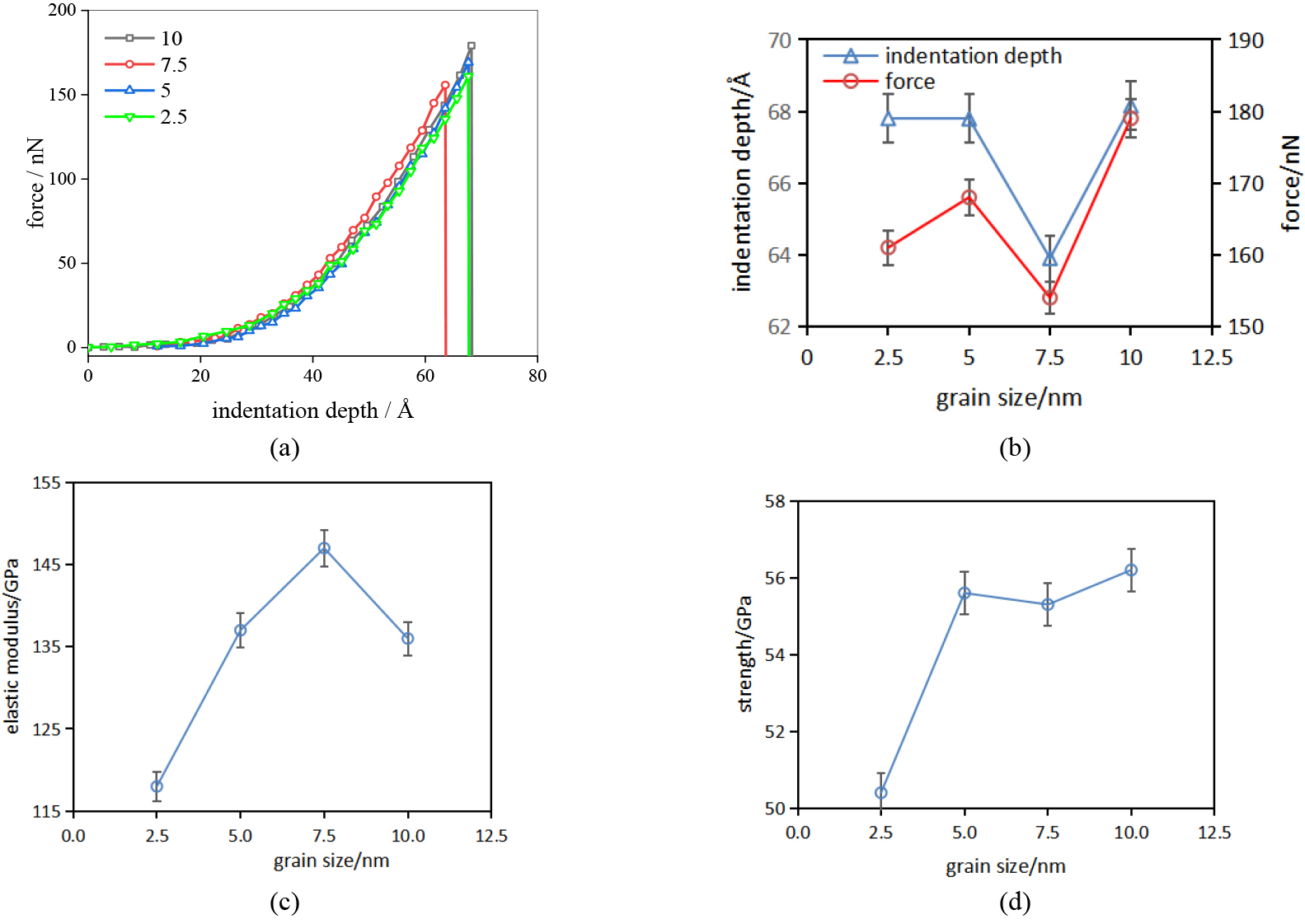
It can be seen from the figure above that, first of all, for graphene films with different grain sizes, when the indentation depth is less than 20 Å, the indentation force is almost unchanged with the increase of the indentation depth, and always remains at about 0 nN; When the depth exceeds 20 Å, the reaction force of the indenter gradually increases as the indentation depth increases. And as the grain size increases, there is no significant difference in this trend. Secondly, as the grain size increases, there is no obvious law for the ultimate indentation force, ultimate indentation depth, elastic modulus and fracture strength of PG.
On one hand, at the beginning of indentation, due to the randomly distribution of grain boundaries, the stable PG model would present irregular wrinkles which are responsible for that the indentation force remained the same at 0 nN. That is, before the PG film is tensioned, there would be no reaction force on the indenter. With the indentation going on, the wrinkles of the graphene film gradually disappear, but the film is not tensioned tightly, resulting in a small reaction force on the indenter at the initial stage (
In order to study the influence of the indenter diameter on the indentation mechanical properties of PG, the indentation mechanical properties of PG with indenter diameters of 40 Å, 60 Å, and 80 Å were studied, and the results were shown in Fig. 10.
Curves of the influence of the diameter of the indenter on the mechanical properties: (a) Force vs. nanoindentation depth; (b) Ultimate indentation depth and force; (c) Elastic modulus 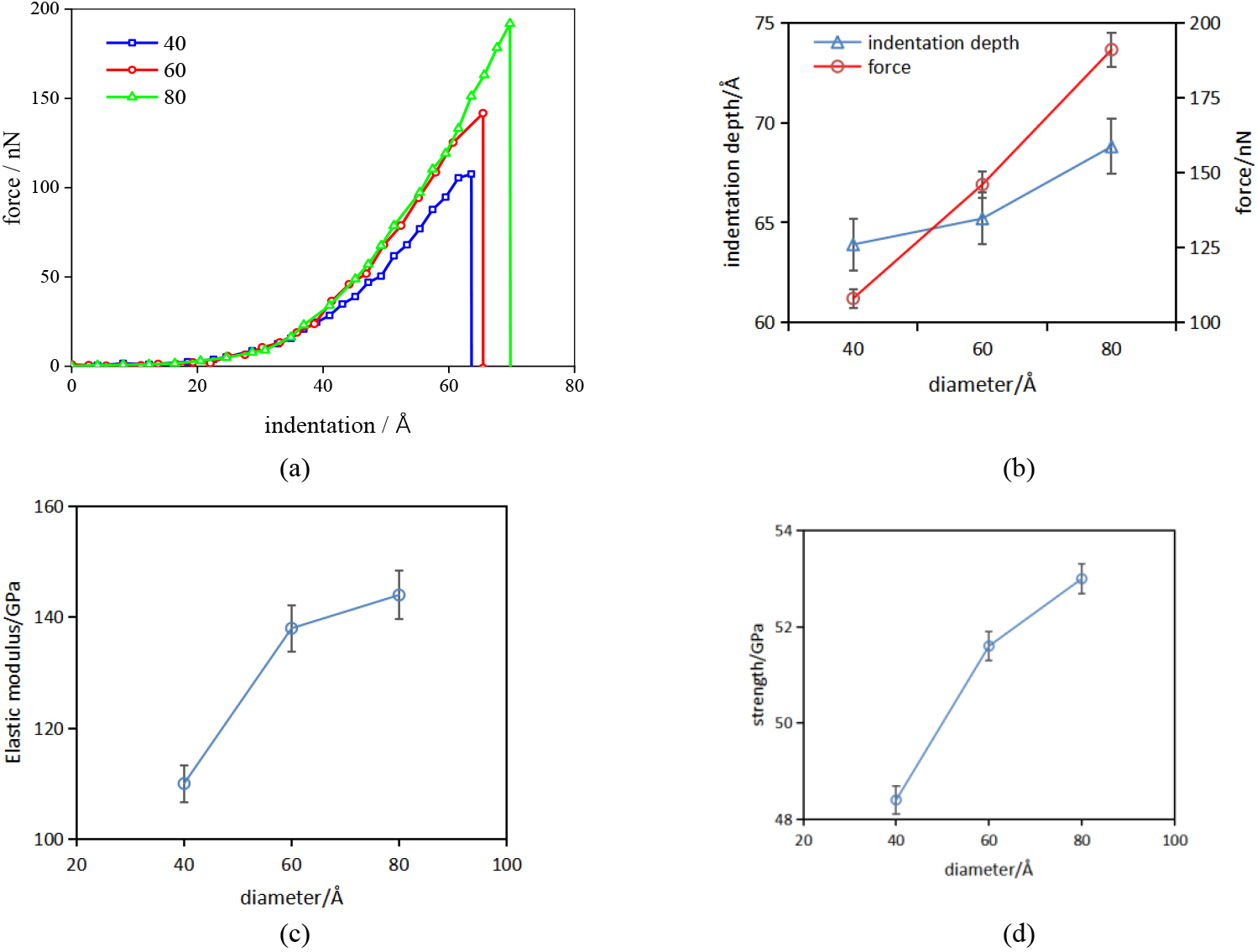
The figures showed that the ultimate indentation force, ultimate indentation depth, elastic modulus and fracture strength increased with the increase of indenter diameter. When the diameter of the indenter increased from 40 Å to 80 Å, the ultimate indentation force and indentation depth increased by 43.92% and 8.82%, respectively, while the elastic modulus and fracture strength increased by 32.72% and 8.06%, respectively.
The results demonstrate that, as the diameter of the indenter increases, the tip effect of the indenter decreases, resulting in a more passivated effect on the PG film so that the fracture failure of the graphene film will be delayed, and the mechanical properties are improved to some extent. Additionally, the bigger of the indenter, the bigger contact area of the indenter with PG film, and the smaller of stress concentration effect. Furthermore, the more atoms in contact area of a bigger indenter mean that the efficiency of energy dissipation will be relatively improved. So that the atomic stress and energy distribution on the PG film are more uniform, the intrinsic properties are more stable, and the mechanical properties are improved.
To investigate the effect of temperature on the mechanical properties of PG film, the mechanical properties of indentation at temperatures of 300 K, 600 K, 900 K and 1200 K were studied, and the results were shown in Fig. 11.
Curves of the effect of system temperature on mechanical properties: (a) Force vs. nanoindentation depth; (b) Ultimate indentation depth and force; (c) Elastic modulus 
Based on the above figures, it could be seen that the ultimate indentation force, ultimate indentation depth and fracture strength all decreased, while the elastic modulus show a trend of first increasing and then decreasing with the increase of temperature. As the temperature of increased from 300 K to 1200 K, the ultimate indentation force, ultimate indentation depth and fracture strength were reduced by 48.99%, 50.01% and 20.60%, respectively With temperature increased from 300 K to 900 K, the elastic modulus increased by 24.23%, and then decreased by 0.53% as temperature increased from 900 K to 1200 K.
As is known, corresponding to the low temperature, the thermal vibrations of atoms will be less violent, i.e., the total energy of the system is lower, and the intrinsic properties are more stable. As the temperature increases, the thermal vibrations of atoms will be more violent, which makes the energy of the system increase and easily to fracture under the action of external force, thus degrading mechanical properties. In addition, the elastic modulus mainly depends on the bonding energy between atoms, which is mainly affected by the lattice parameters. According to previous studies [32], graphene has a strong anharmonicity. When the temperature is below 900 K, it will show a certain abnormality, that is, its lattice parameters decrease with the increase of temperature, resulting in elastic modulus increase with temperature. When the temperature exceeds 900 K, this abnormal phenomenon disappears, so that the elastic modulus decreases with increasing temperature.
To explore the effect of the indentation speed on the mechanical properties, the variation curves of mechanical properties with indentation speed 0.015 Å/ps, 0.15 Å/ps and 1.5 Å/ps, were shown in Fig. 12.
Curves of the effect of nanoindentation speed on mechanical properties: (a) Force vs. nanoindentation depth; (b) Ultimate indentation depth and force; (c) Elastic modulus 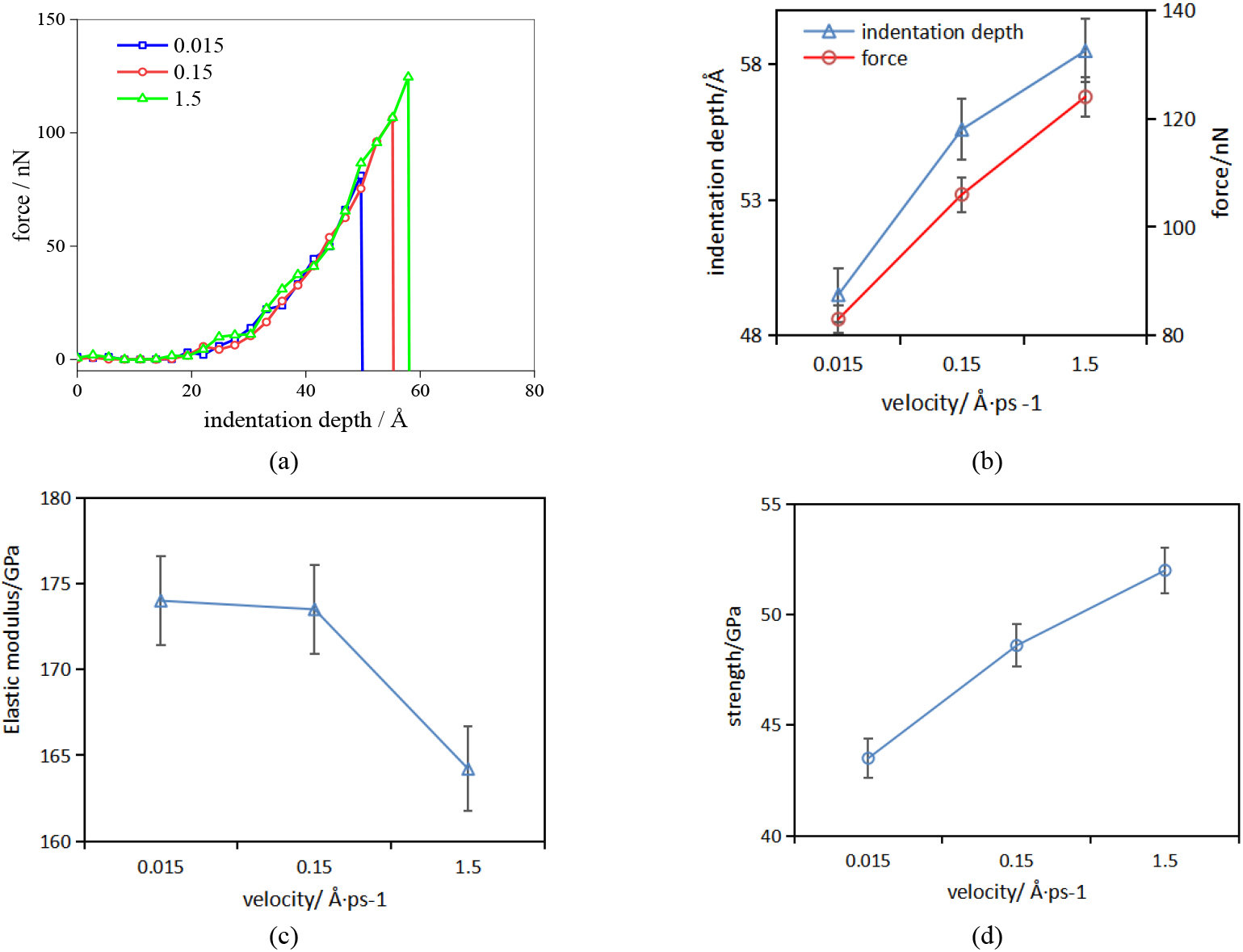
It could be seen from the figures that as the indentation speed increases, the ultimate indentation force, ultimate indentation depth and fracture strength all showed an rising trend, while the elastic modulus showed a decreasing trend. That is, when the indentation speed increased from 0.015 Å/ps to 0.15 Å/ps and 1.5 Å/ps, ultimate indentation force increases by 12.62% and 1.84%, and ultimate indentation depth increased by 3.06% and 0.49%, respectively. Fracture strength increased by 13.84% and 5.47%, respectively, and the elastic modulus decreased by 0.68% and 5.54%, respectively.
The results illustrated that as the indentation speed increased, the C-C bond will be rapidly elongated, which will dissipate more work done by the indenter. Therefore, more energy can be consumed before fracture, so that the indentation force, indentation depth and fracture strength are improved to different degrees. In addition, the elastic modulus mainly depends on the average bonding energy of the system. When the indentation speed is fast, the work done by the indenter is only transferred to individual atoms near the indenter in a very short time. As a result, its energy rises rapidly and breakage occurs, resulting in a decrease in the average bonding energy of the system, thereby making the elastic modulus decrease.
Based on the MD numerical simulation method, this paper investigated the indentation fracture mechanism of PG, and studied the relationship between the mechanical properties and various influencing factors. Some conclusions were drawn as follows:
Compared with tensile fracture, the initiation positions of indentation fracture and tensile fracture are almost the same, which are located at the multiple junctions of grain boundaries. Additionally, due to different loading methods, the crack prapagation of tensile fracture presents a line mode perpendicular to the loading direction, while the indentation fracture mode presents a divergent mode, which is more diversified due to the relative size of the indenter and the grains, and the relative location of the indenter and the grain boundary. With the increase of the indenter size,the mechanical properties of PG show an increase trend. The reasons are may be that as the diameter of the indenter increases, the force-bearing area of the PG film increases, which reduces the stress concentration effect. In addition, the number of atoms in contact area between the indenter and the PG film increases, thus improving the efficiency of energy dissipation, therefore, the stress and energy distribution of the PG film are more uniform, the intrinsic properties are more stable. The ultimate indentation force, indentation depth and fracture strength of PG decreased with the increase of temperature, and the elastic modulus increase first and then decrease with the increase of temperature. The analysis believes that as the temperature of the system increases, the thermal vibration of carbon atoms increases violently, which makes the energy of the system more unstable, and it is easily to fracture under the action of external force, resulting in a decrease in mechanical properties. The elastic modulus mainly depends on the lattice parameters, so it will increase first and then decrease with the increase of temperature. The loading speed has little effect on the ultimate indentation force and indentation depth of PG. Accordingly, the ultimate indentation force and maximum indentation depth mainly depend on the bonding energy of atoms. When the speed is small, the work done by the indenter has more time to be uniformly transferred in the PG film, so that the energy of each atom increases at almost the same rate. Bonds of atoms in different locations may exceed their fracture energy threshold and break, resulting in indentation force and indentation depth are more sensitive to speed.
Footnotes
Conflict of interest
The authors declare no conflict of interest.