



Abstract
With the rapid development of deep learning technology, its application in various fields is increasingly extensive. Especially in the field of education, the application of deep learning technology has brought great challenges and changes to the traditional teaching mode. This research is aimed at the application of deep learning in intelligent English teaching mode. Firstly, the theory of deep learning is studied in depth, and the application cases of deep learning in other fields are discussed. Secondly, the research designs and implements an intelligent English teaching model based on deep learning, and carries out a lot of experiments and tests. The experimental results show that this new teaching mode can effectively improve the efficiency and effect of students’ English learning. However, it is also found that the model has some problems, such as model training needs a lot of computing resources, has certain requirements for hardware equipment, and some students have poor adaptability to the new learning mode. To solve these problems, a series of solutions are proposed. In general, although there are still some challenges in the application of deep learning in intelligent English teaching mode, its potential is huge and it has a profound impact on improving the quality of teaching.
Keywords
Introduction
In modern society, artificial intelligence (AI) has widely penetrated into many fields, of which the impact is particularly significant in the field of education. Deep learning, as a branch of AI, has shown amazing potential in areas such as language and image recognition and natural language processing. Especially in English teaching, the application of deep learning technology has promoted the innovation of teaching mode. As one of the most widely spoken languages in the world, the optimization of English teaching methods has an obvious impact on many learners. Compared with traditional English teaching methods that emphasize grammar rules and vocabulary memorization, deep learning can be personalized according to each student’s learning habits and abilities, thus improving learning efficiency. With the continuous progress of artificial intelligence, the intelligent English teaching model is also continuing to innovate, emphasizing the active participation of students, rather than the traditional teacher-led model. Deep learning can support the development of a variety of intelligent teaching tools and applications, making the English teaching process more interesting and engaging, while also enhancing efficiency. Therefore, exploring the application of deep learning in the innovation of intelligent English teaching model can not only reveal the potential and limitations of this technology, but also provide a new perspective and method for improving English teaching. Most importantly, this research helps advance the understanding and application of deep learning in education, revealing new possibilities in education.
The application of deep learning in the innovation of intelligent English teaching mode has become an important research direction in the field of educational technology and artificial intelligence. In this context, many scholars have begun to explore and practice this topic. For example, Bin and Mandal [1] proposed an AI-based approach to English teaching practice that combines deep learning technology with education to achieve more effective English teaching. However, Guo and Gao [2] promoted the design of experiential situational English teaching through Metaverse. They emphasize the importance of emotional communication in virtual reality through emotion-based analysis. In online education, Villegas-Ch et al. [3] explored how machine learning and data analytics can be integrated to improve online education models, highlighting the potential of deep learning for personalized learning. Meanwhile, Wu [4] proposed a computational neural network model for college English grammar correction, which reflects the role of deep learning technology in improving the quality of language teaching. 5G technology is also driving this change. For example, Wang [5] proposed the effect of using 5G and cloud computing environment for independent college English vocabulary learning, while Li and Wang [6] explored artificial intelligence and edge computing methods for teaching quality assessment based on 5G-enabled wireless communication technology. In addition, artificial intelligence has also been applied to professional English education. For example, Guo [7] focused on cultivating English majors’ innovative English application ability in a mixed teaching environment based on dynamic optimization algorithms. In general, the application of deep learning and artificial intelligence in the innovation of intelligent English teaching model has made many important progress. These studies not only advance our understanding of how to effectively integrate advanced technologies to improve the quality of education, but also provide valuable guidance for future research and practice. Further research in this area will help unlock more personalized, dynamic and interactive teaching methods to achieve broader educational goals.
In this study, the main goal is to explore how deep learning can be applied to the innovation of intelligent English teaching models, and to understand how this combination can improve the efficiency and effectiveness of English teaching. In order to achieve this goal, this study will address several key issues. First, the research will explore the specific application of deep learning technology in intelligent English teaching. It is critical to understand how deep learning is integrated into intelligent teaching tools and applications, and how these tools and applications can personalize instruction based on students’ learning progress and preferences. To this end, this research will evaluate the capabilities of deep learning algorithms and how they can be used to analyze student data to provide more precise learning resources and feedback. Secondly, this study aims to understand the potential and benefits of deep learning in intelligent English teaching. Specifically, the research will explore how deep learning can help enhance students’ learning experience, improve their English skills, and stimulate their interest in learning. By analyzing the impact of deep learning on students’ learning outcomes, this study will reveal the practical value of deep learning in intelligent English teaching. Furthermore, this study will also examine the challenges and limitations that deep learning may face in the innovation of intelligent English teaching models. This includes understanding the limitations of deep learning algorithms, assessing the costs of implementing deep learning, and exploring issues such as how to balance personalized learning with educational equity. Through a comprehensive analysis of these challenges, this study will propose feasible solutions and recommendations to overcome these problems and promote the wider application of deep learning in intelligent English teaching. In addition, this study will explore the future development direction of deep learning in the innovation of intelligent English teaching model. Through an analysis of current technology trends and a deep understanding of the education sector, the study will explore the potential applications of deep learning in intelligent English teaching and make predictions and recommendations for future developments. To sum up, the main goal of this study is to deeply understand the application of deep learning in the innovation of intelligent English teaching model, and at the same time solve the key problems related to it, so as to promote the development of deep learning in the field of education, improve the quality of English teaching, and create a more personalized and intelligent English teaching model.
This study applies deep learning to intelligent English teaching mode to solve the problems existing in traditional teaching mode and improve the learning efficiency and effect of students. The study will first conduct in-depth research and understanding of the theoretical knowledge of deep learning, understand its internal working mechanism and principle, and its application cases in multiple fields. Learn about the applications of deep learning in areas such as medical imaging, tumor pathology, electrocardiogram and EEG classification to gain its advantages in solving complex problems. Secondly, the research will focus on the development and application of intelligent English teaching model, especially how deep learning can be applied to this teaching model. To understand how artificial intelligence and deep learning are applied to improve teaching effect in English teaching, music teaching and other fields, and to study how to apply deep learning to teaching mode for reference. Next, the research will design and implement an intelligent English teaching model based on deep learning. This model will combine the theoretical knowledge of deep learning and the previous research experience, aiming to improve the English learning effect of students. In this process, relevant data are collected, and these data are used to train and optimize the teaching model of this study. Then, a series of tests will be conducted on the studied intelligent English teaching model to verify its effectiveness and practicability. The study will set up a series of experiments to observe and record students’ learning after using the study’s teaching model. Some quantitative evaluation indicators, such as students’ English test scores, learning efficiency, learning satisfaction, etc., are used to evaluate the effect of the teaching model. Finally, the research results will be analyzed and discussed. Based on the experimental results, this paper analyzes the advantages and disadvantages of the intelligent English teaching model, probes into its influence on English teaching, and puts forward possible improvement strategies. The research will also discuss the prospects of applying deep learning in intelligent English teaching models, as well as possible challenges.
The whole research process will be carried out with rigorous scientific research methods, focusing on the accuracy and integrity of data to ensure the reliability and validity of the research results of this study. It is expected that the results of this study can provide valuable reference for the development of intelligent English teaching model and promote the further application of deep learning in the field of education.
Deep learning and intelligent English teaching model
Definition and features of deep learning
Deep learning, as a special form of artificial neural network and an important branch of machine learning, has the ability of complex pattern recognition and self-learning [8]. The understanding of its development and application requires not only in-depth exploration of its own characteristics, but also exploration of its wide applicability in various fields, especially its specific application in English teaching.
The key of deep learning is to learn the internal law and structure of data through multi-layer hidden network, so as to make effective prediction of unknown data [9, 10]. This learning process relies on advanced mathematical techniques such as backpropagation algorithms and gradient descent optimization strategies, allowing it to capture complex patterns in the data and adjust internal parameters.
Deep learning has several remarkable properties. First, deep learning models are able to self-learn from large amounts of unlabeled data. This is because deep learning models are able to continuously adjust their internal parameters using backpropagation algorithms and gradient descent optimization strategies to minimize prediction errors. In this way, the model is able to learn and improve itself from the data it is exposed to.
Second, deep learning is remarkably adaptive. It is able to automatically adjust its internal parameters according to changes in the input data, thus adapting to new environments and tasks. This adaptability allows deep learning models to adapt to a variety of complex real-world problems, including speech recognition, image recognition, and natural language processing [11].
Finally, deep learning is able to process unstructured data, such as images, sounds, and text. Traditional machine learning methods often require experts to pre-process the data so that the machine learning algorithms can understand it [12]. However, deep learning models can work directly with unstructured data, which greatly expands their scope of application.
These characteristics make deep learning an ideal tool for the innovation of intelligent English teaching models. Through in-depth learning of students’ learning data, deep learning models can reveal students’ learning patterns, provide personalized teaching recommendations, and generate teaching resources that adapt to students’ levels and needs.
Current situation and challenge of intelligent English teaching model
Intelligent English teaching model is a major trend in the field of education science and technology. It integrates advanced technical means, such as artificial intelligence, big data, cloud computing, etc., to provide students with personalized, flexible and efficient English learning experience. The current intelligent English teaching model mainly takes the form of intelligent teaching systems, mobile learning applications, online education platforms, etc. These platforms can provide real-time feedback, personalized resources, and rich interactive functions [13, 14].
However, although the intelligent English teaching model brings many advantages, there are also some challenges to be faced.
First, the complexity of technology integration is an important challenge. As the intelligent English teaching model requires the integration of multiple technologies, including artificial intelligence, big data analysis, cloud computing, etc., the design and maintenance of the system requires advanced technical expertise, which is a big challenge for many educational institutions.
Secondly, data security and privacy protection are also problems that intelligent English teaching model needs to face. Since the intelligent teaching system needs to collect and process a large amount of student data, how to ensure the security and privacy of data and avoid data leakage and abuse is a major concern.
In addition, the acceptance and ability of teachers and students to use new technologies is also an important factor affecting the development of intelligent English teaching model. Different teachers and students have different degrees of acceptance and ability to use new technologies, and some of them may feel strange or even resistant to the new teaching mode. This requires promoting the effective adoption of new technologies through professional training and education.
Finally, there are challenges in the assessment of the effectiveness of intelligent English teaching model. Because of the novelty and complexity of the intelligent teaching model, the traditional teaching effect evaluation method may not be able to accurately evaluate its effect, so it is necessary to develop new evaluation tools and methods.
Although the application of intelligent English teaching model has significant advantages and development potential, its complexity and a series of challenges need to be taken seriously. By deeply understanding the specific nature of these challenges and problems, research can explore more targeted solutions and further promote the innovation and implementation of intelligent English teaching models. Future research in this field should be more systematic and focus on addressing the above issues to ensure that intelligent English teaching can truly contribute value to modern education.
Application and influence of deep learning in intelligent English teaching
Deep learning is more and more widely used in intelligent English teaching, and its influence is growing. The technology and method have been incorporated into the intelligent English teaching system, which opens a new chapter of English teaching.
First, deep learning has made significant progress in speech recognition and understanding, text processing and understanding. For example, some educational institutions have developed intelligent teaching systems that can understand and respond to students’ speech input through deep learning, and can generate accurate speech output and complex text [15]. This not only enhances students’ communication skills in simulated dialogue sessions, but also provides a more realistic environment in language practice.
Second, deep learning contributes to a deeper understanding of students’ learning needs and processes. For example, through in-depth analysis of a large number of students’ learning data, some schools have been able to reveal students’ learning patterns, timely detect learning difficulties, accurately predict learning effects, and then design personalized teaching strategies [16].
In addition, deep learning also promotes the innovation and enrichment of teaching resources. For example, the simulated dialogue, automatic writing and intelligent translation generated by deep learning [17] provide a real and interesting learning environment, while greatly improving students’ learning interest and effect.
However, the application of deep learning in intelligent English teaching has also brought some problems, such as data security and privacy issues, excessive reliance on technology, and disconnection from teaching practice. In order to solve these problems, we need not only more in-depth theoretical research, but also continuous exploration and experiment in practical teaching.
In general, deep learning presents broad prospects and challenges in intelligent English teaching. How to make effective use of this advanced technology, create a more powerful teaching model, and constantly improve the quality and effect of English teaching is still a problem that needs further discussion and research.
Research design and case analysis
Questionnaire design
Selecting objects
When designing a questionnaire, it is crucial to select the right research subjects. The research objects of this study mainly focus on the following two groups:
English teachers: The English teachers selected in the study were mainly from all levels of schools, including primary schools, secondary schools and universities. These teachers have experience in using intelligent English teaching tools in daily teaching, and they have a deep understanding of the choice and use of teaching modes. English learners: The group of learners covers all ages and learning stages, including primary school students, middle school students, college students and adult English learners. The frequency and experience of using intelligent English teaching tools in the process of English learning are of great value for this study to understand the application of deep learning in intelligent English teaching mode.
As shown in Table 1 above, the specific distribution of research objects is listed.
Specific information of research objects
Through the above selection of research objects, we hope to comprehensively and objectively understand the application of deep learning in intelligent English teaching mode, and collect representative data.
When designing the questionnaire content, this research mainly focuses on the following aspects:
First, the use of intelligent English teaching tools: this includes the frequency of use, the specific tools and modes used. Second, the cognition of the application of deep learning in intelligent English teaching mode: this includes the understanding of deep learning and the views on its role in teaching. Third, satisfaction with the application of deep learning in intelligent English teaching mode: this includes satisfaction with teaching effect and satisfaction with using experience. Fourth, suggestions for improving the application of deep learning in intelligent English teaching mode: This includes suggestions for improving the teaching mode, suggestions for improving the function of tools, etc.
The main purpose of the questionnaire design is to collect the practical experience and views of the research subjects on the application of deep learning in intelligent English teaching mode. This questionnaire aims to reveal the following key aspects:
The use of intelligent English teaching tools: To explore the types and use frequency of tools in order to understand the teaching situation. The cognition of deep learning in the teaching model: To assess the understanding of deep learning by educators and students and reflect the acceptance of new technologies by educators. Teaching effectiveness and user experience satisfaction: Evaluate the actual effectiveness of deep learning applications in teaching, and the satisfaction of educators and students. Suggestions for improvement: Collect specific suggestions for improving deep learning in intelligent English teaching for future improvement.
When designing the questionnaire, the principles of objectivity, simplicity, systematicness and feasibility should be followed.
Table 2 below shows the main questions and options of the questionnaire.
Questionnaire content
Questionnaire content
Through these questions, we hope to collect the actual experience and views of the research subjects on the application of deep learning in intelligent English teaching mode, and provide strong support for this research.
The implementation process mainly covers the distribution of questionnaires, data collection information, and data processing. This study designed a detailed operation process to ensure the validity and accuracy of the data.
(1) Distribution of questionnaires
The questionnaire is distributed online and offline. For English teachers and college students, the research was mainly distributed online, including via email and online questionnaire platforms. For primary and secondary school students, after obtaining permission from the school and parents, offline paper questionnaires will be distributed. Questionnaires for adult English learners are distributed through community and online English learning platforms. A separate email address was also set up to receive completed questionnaires. At the same time, a deadline was set and a time was agreed to return the questionnaire.
(2) Data collection information
All questionnaires were collected within one month, and a total of 981 questionnaires were collected, with 965 valid questionnaires. The detailed collection is shown in Fig. 1 below.
Data collection.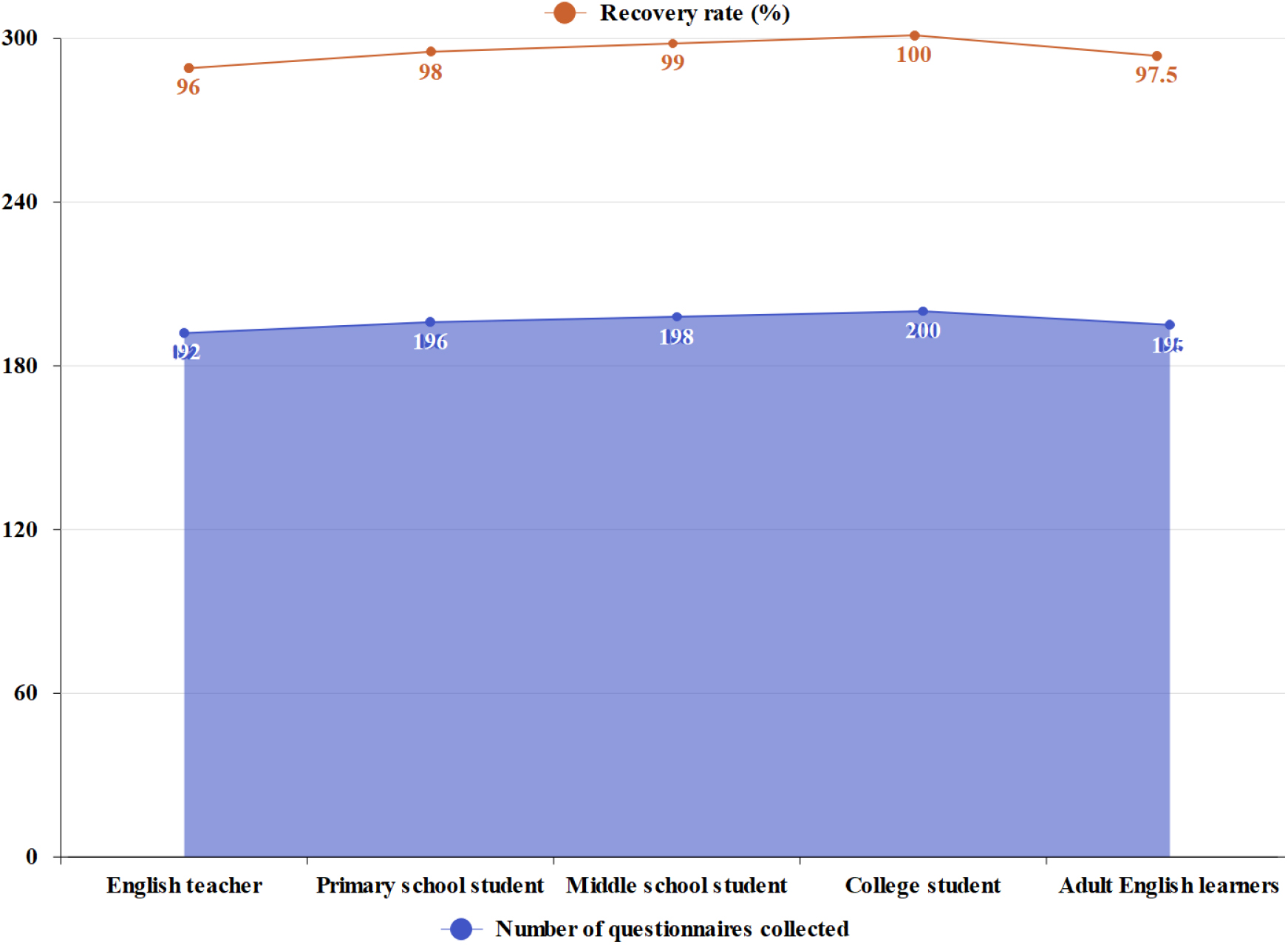
Data processing.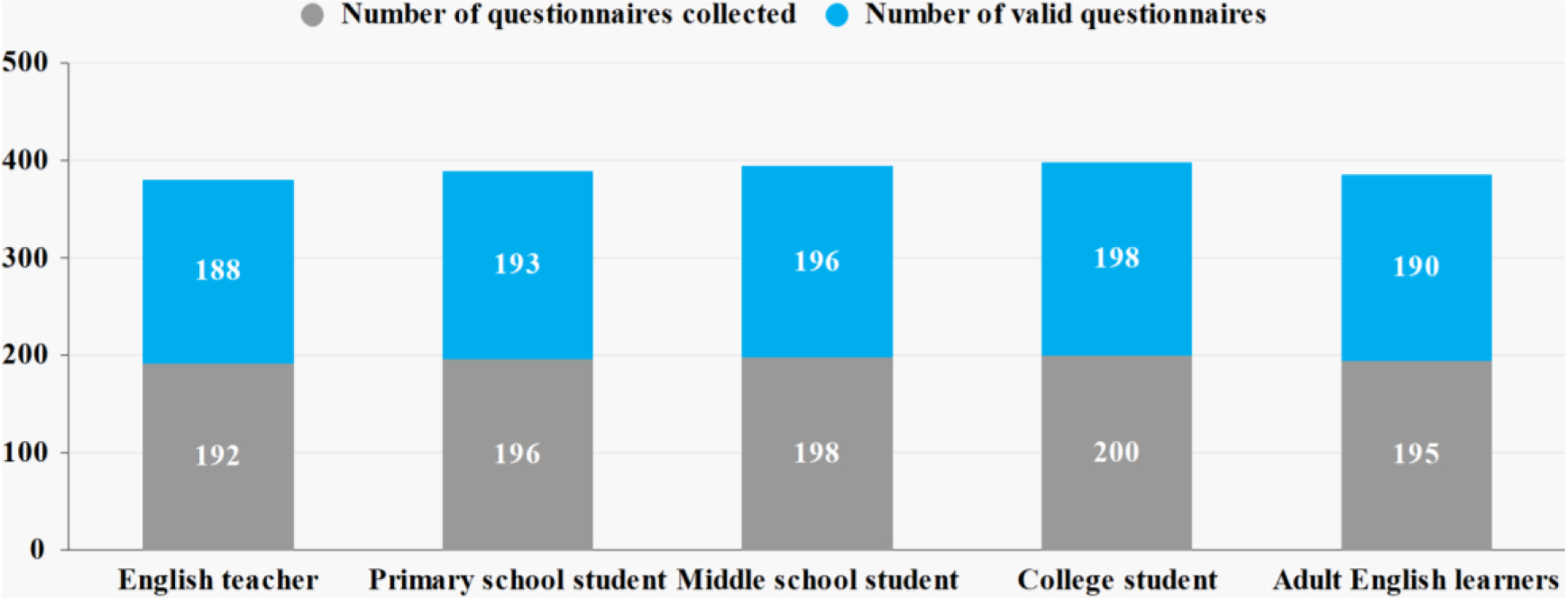
(3) Data processing process
All questionnaires received have been carefully screened and processed. Firstly, incomplete or obviously contradictory questionnaires were excluded. Then, all the questionnaire data were entered into the computer, and special statistical software was used for data analysis. For open questions, the research is classified and summarized, and the representative views are extracted. The data processing process covers the following key steps:
Screening questionnaires: Carefully check and eliminate incomplete or obviously contradictory questionnaires. Digital processing: All valid questionnaire data are entered into the computer, and special statistical software is used for quantitative analysis. Qualitative analysis: The open questions are classified and summarized, and representative views are extracted.
Figure 2 below shows the statistics of valid questionnaires.
Through this detailed and rigorous implementation process, this study ensured the quality and validity of the collected data and provided a reliable basis for subsequent research.
Qualitative analysis: Case selection and analysis
In order to further understand the application of deep learning in the innovation of intelligent English teaching model, several typical examples are selected for qualitative analysis. Examples selected in this study mainly include several English education institutions and platforms that adopt deep learning technology.
Here are three examples chosen for the study:
SmartEdu English learning platform ABC International English Training Center FutureLearn virtual English class
Based on the open-ended questions in the questionnaire, the study extracted some key feedback and comments to analyze the strengths and weaknesses of these examples.
Example 1: SmartEdu English learning platform
SmartEdu is an online platform that uses deep learning to provide personalized English learning advice to students. Its own advantages and disadvantages, as well as the relevant feedback analysis from the questionnaire, are shown in Table 3 above.
SmartEdu English learning platform feedback
Example 2: ABC International English Training Center
ABC International is an English language training center that uses deep learning technology for speech recognition and evaluation. Its own advantages and disadvantages, as well as the relevant feedback analysis from the questionnaire, are shown in Table 4 above.
Feedback from ABC international english training center
Example 3: FutureLearn Virtual English Class
FutureLearn provides a virtual English classroom environment with simulated communication and practice through deep learning techniques. Its own advantages and disadvantages, as well as the relevant feedback analysis from the questionnaire, are shown in Table 5 above.
Feedback of virtual English class on FutureLearn
The above is the qualitative analysis of the three examples. In the following part, quantitative analysis will be carried out to further quantify the application effect of deep learning in intelligent English teaching mode.
In this part, the research will conduct a quantitative analysis of the collected data.
The integration of collected data is shown in Fig. 3 above.
Data collection and statistics.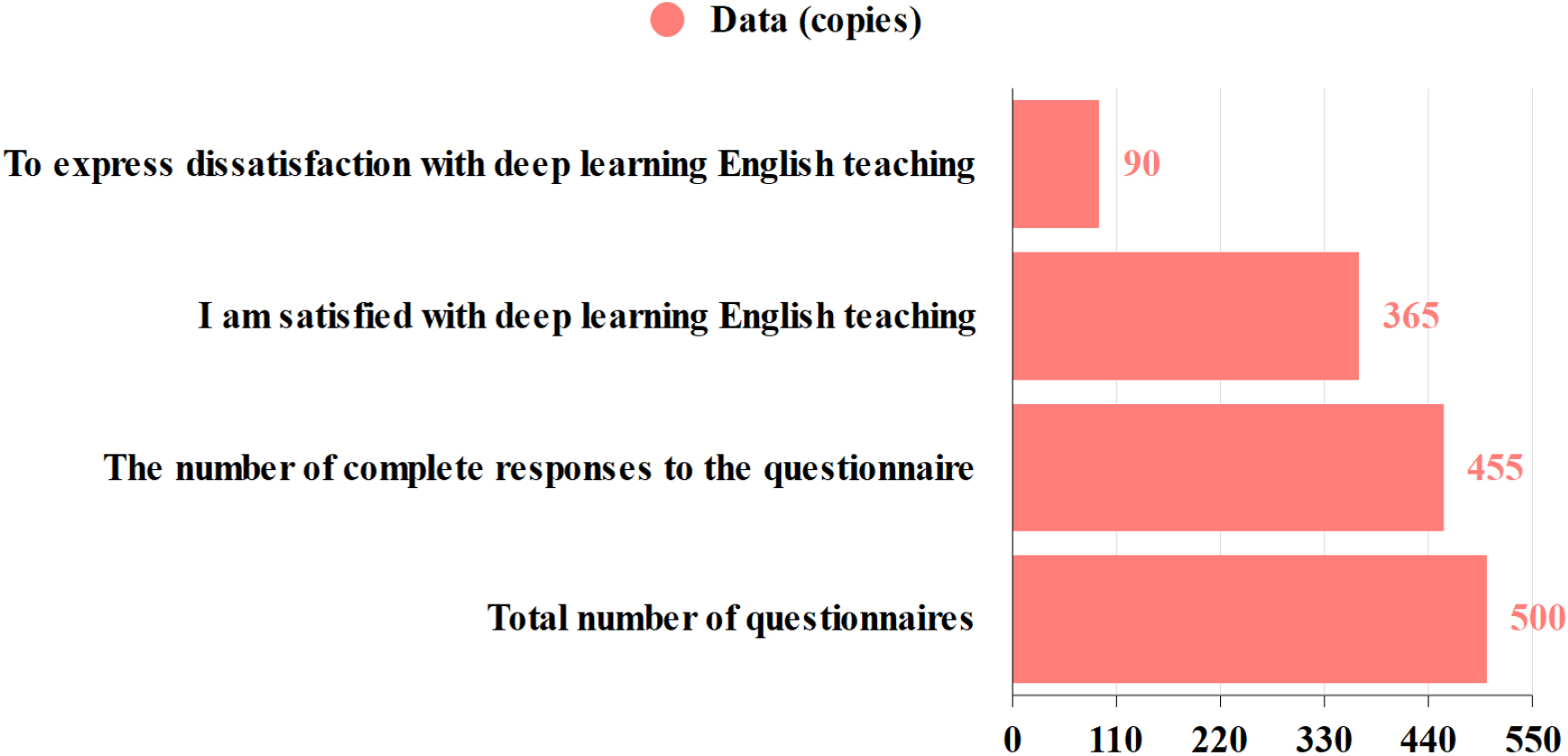
Next, the research will conduct statistics and analysis on these data separately.
(1) Statistics on deep learning English teaching satisfaction
This study conducted statistics on users’ satisfaction with deep learning English teaching, using descriptive statistical methods such as frequency distribution and percentage to visually show the distribution of different levels of satisfaction. The result is shown in Fig. 4.
Research statistics on deep learning English teaching satisfaction.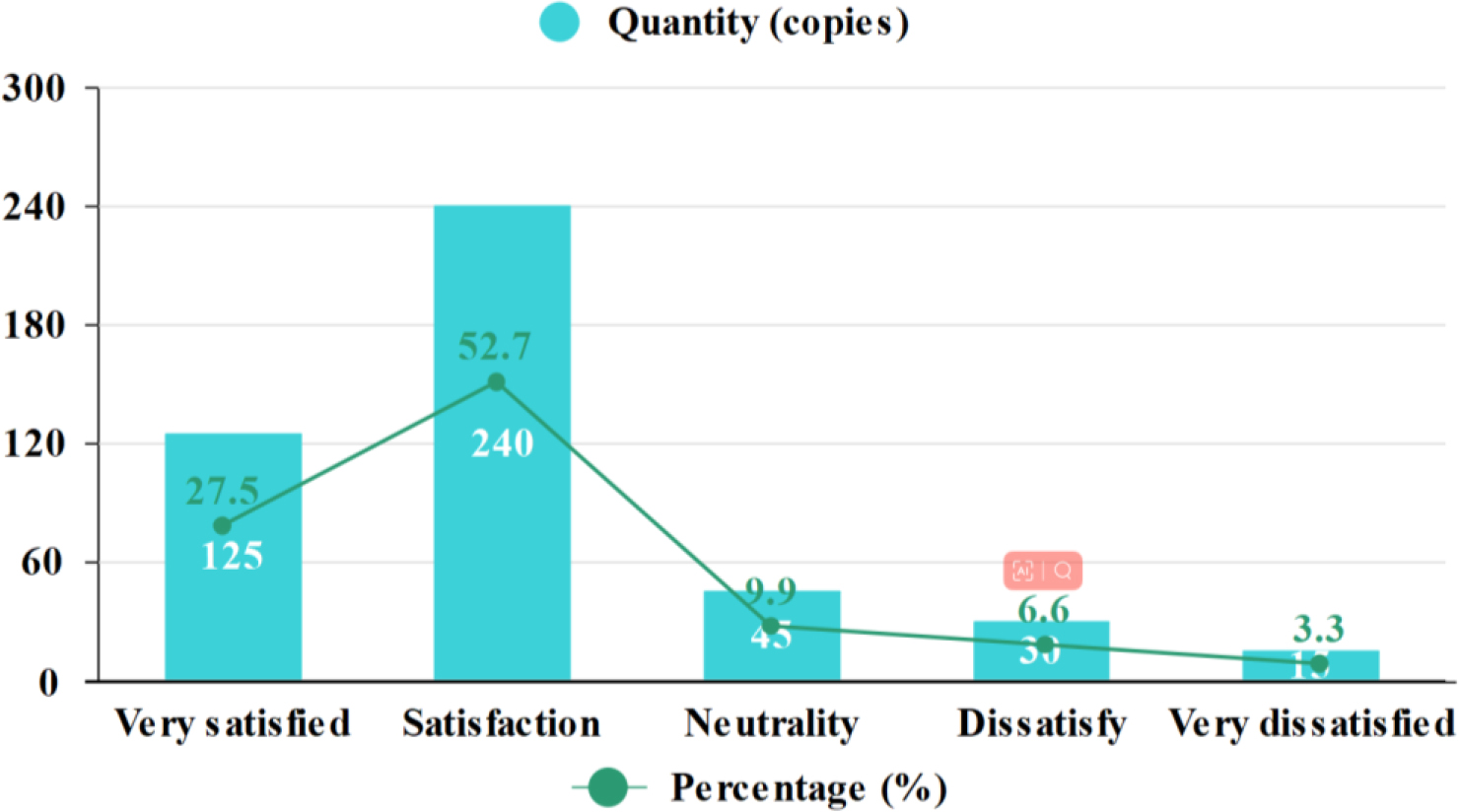
As can be seen from the figure above, most users are satisfied or very satisfied with the effect of deep learning English teaching. This statistical method can clearly depict the overall distribution of satisfaction, which is easy to observe and explain.
(2) Statistics on the influencing factors of deep learning English teaching
The research also makes statistics on the factors that affect the effectiveness of deep learning English teaching, as shown in Fig. 5 below.
Research statistics on influencing factors of deep learning English teaching.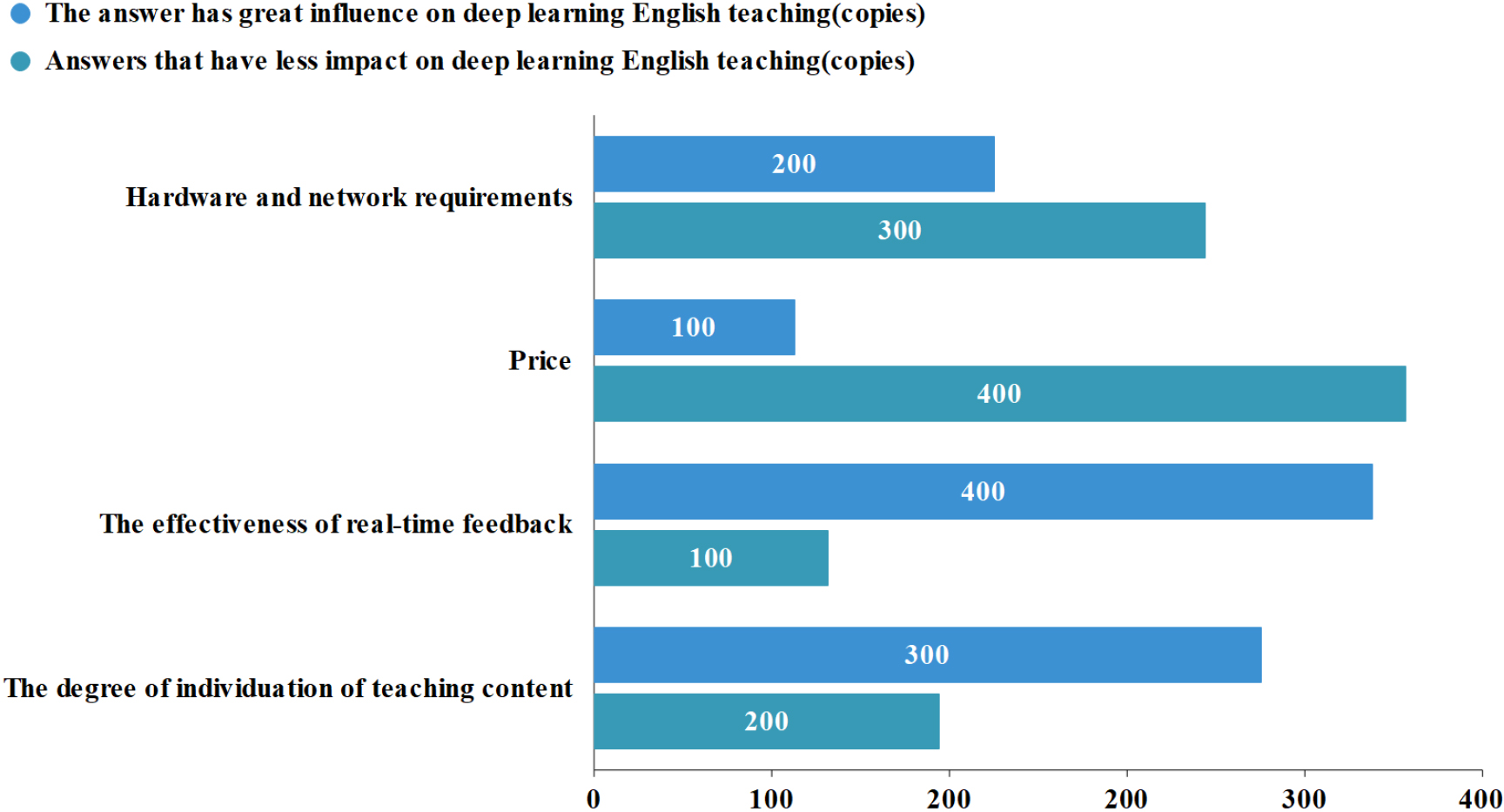
As can be seen from the figure above, the degree of personalization of teaching content and the effectiveness of real-time feedback are the main factors affecting the effect of deep learning English teaching, while the price, hardware equipment and network requirements are relatively small. This analysis provides insight into the key drivers of deep learning in English teaching and provides direction for subsequent improvements.
The above is the collection and statistics of the data. Next, the research will further analyze these data and evaluate the application of deep learning in intelligent English teaching mode.
Result analysis
User satisfaction
The research will analyze the data collected from questionnaires and case studies to evaluate the application of deep learning in intelligent English teaching models.
Firstly, users’ feedback on deep learning English teaching satisfaction was analyzed. The study defined satisfaction as a value from 0 to 1, where 1 is very satisfied and 0 is very dissatisfied. According to the questionnaire survey in this study, the satisfaction distribution obtained is shown in Fig. 6 below.
Distribution of user satisfaction.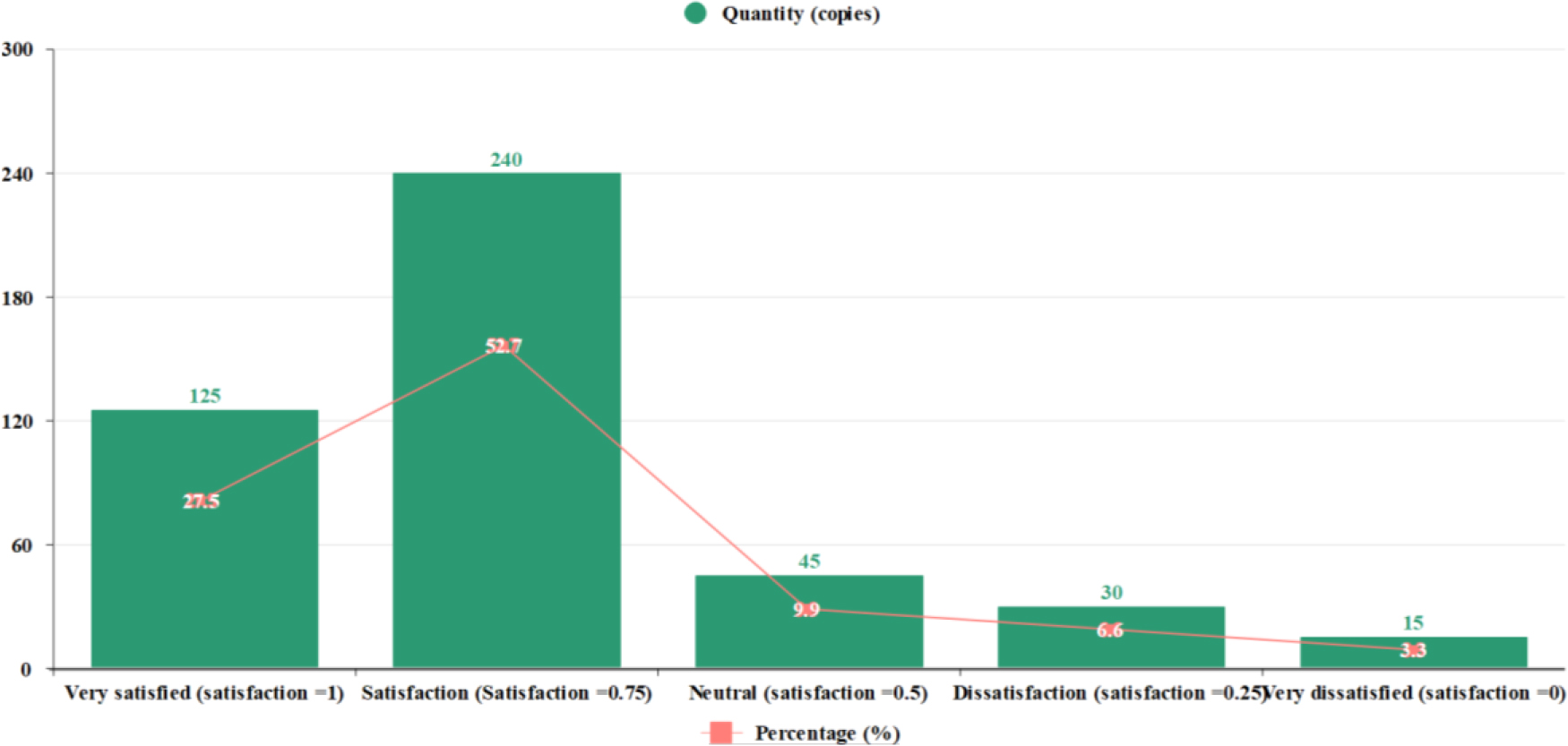
To calculate overall satisfaction, the following Eq. (1) was used:
Where
In addition to quantitative satisfaction analysis, this study also collected some specific user feedback and comments. For example: “Through deep learning technology, I can have interactive conversations with virtual teachers, which greatly enhances the interest in learning.” (College students, satisfaction 0.9).
Therefore, according to the questionnaire survey in this study, the satisfaction of users with the deep learning English teaching mode is about 0.70, indicating that most users are satisfied with the application of the deep learning English teaching mode.
Next, the paper studies and analyzes the factors that affect the effectiveness of deep learning English teaching. For each factor, the strength of its influence was calculated, defined as the ratio of “responses indicating a large influence on the factor” to the “total number of responses.” The calculation formula is shown in Eq. (2) below:
Where
Degree of individuation of teaching content: Influence intensity
It can be seen that the personalized degree of teaching content and the effectiveness of real-time feedback have a great impact on the effect of deep learning English teaching mode, while the price, hardware equipment and network requirements are relatively small. These data provide the factors that should be taken into consideration when improving the intelligent English teaching model.
The data analysis results of this study show that the application of deep learning in intelligent English teaching model has a significant impact.
(1) Improve learning efficiency and satisfaction
As shown in the result analysis section, the average user satisfaction with the deep learning English teaching mode is about 0.70, which indicates that most users are satisfied with this teaching mode. The level of satisfaction is directly related to the enthusiasm and involvement of users in the learning process, and also indirectly affects the learning effect. Therefore, the application of deep learning can effectively improve the efficiency of intelligent English teaching and user satisfaction.
(2) Highlight the importance of personalization and real-time feedback
From the analysis of influencing factors, it can be seen that the personalized degree of teaching content and the effectiveness of real-time feedback have a great impact on the effect of deep learning English teaching mode. Deep learning technology can process and analyze a large amount of learning data in order to achieve personalized teaching content. At the same time, it can also provide timely and accurate feedback to help learners correct mistakes and improve learning efficiency. This highlights the importance of personalization and real-time feedback in intelligent English teaching.
(3) Reduce the impact of hardware and network requirements
Although price, hardware equipment and network requirements have some influence on the effectiveness of deep learning English teaching model, their influence is relatively small. This indicates that the application of deep learning in intelligent English teaching mode can reduce the impact of hardware equipment and network requirements on teaching effect, so that more learners can benefit.
The above analysis results show that the application of deep learning in intelligent English teaching mode has a positive impact. But at the same time, we should also pay attention to the problems existing in this teaching mode, and how to solve these problems.
Existing problems and solutions
Although the application of deep learning in intelligent English teaching mode has many advantages, there are also some problems in practical application. Here are some of the main problems and how to deal with them:
(1) Technical problems: Optimization of intelligent teaching mode
Although deep learning has played a role in the smart English teaching model, there is still room for improvement in the current model. For example, although the degree of personalization and real-time feedback are the main factors affecting the effect, in practice, how to precisely adjust the teaching content to meet the needs of each learner and how to provide timely and accurate feedback are technical problems that need to be solved.
Solution strategy:
Strengthen research and development: Invest more resources in the research and development of deep learning algorithms and teaching model optimization technology.
Interdisciplinary integration: Combining cutting-edge technologies such as virtual reality and augmented reality to provide students with a more immersive learning experience.
Continuous evaluation and improvement: Set up a regular evaluation mechanism to ensure that technology upgrades are aligned with learning needs.
(2) User acceptance problem: The promotion of deep learning teaching tools
Although the application of deep learning in intelligent English teaching mode can reduce the impact of hardware equipment and network requirements on the teaching effect, because this teaching mode has certain changes in the learning mode of learners, some users may have resistance, resulting in low acceptance.
Solution strategy:
Promotion strategy: Through cooperation with schools and educational institutions, pilot activities, workshops and demonstrations are organized to promote user understanding and acceptance of the new teaching model.
User Experience optimization: Adjust and optimize tools based on user feedback to meet the usage habits and needs of students of different ages and learning levels.
Education and training: Provide relevant education and training resources, such as online tutorials, instruction manuals, etc., to help students and teachers more easily adapt and adopt deep learning teaching tools.
Conclusions
This study focuses on the application of deep learning in intelligent English teaching mode, aiming to solve the limitations of traditional teaching mode and improve the learning efficiency and effect of students.
Through multiple stages of theoretical research, design, implementation, testing and analysis and discussion, this study successfully demonstrates the application potential of deep learning in intelligent English teaching mode. Specifically, the results show that students’ English learning effectiveness, efficiency and satisfaction have been significantly improved. This research not only enhances the understanding and practical application of deep learning in the field of education, but may also inspire technological innovation in the broader field of education. However, this study also exposes some limitations, including the time and computing resource requirements for model training, hardware equipment requirements, and the adaptability of participants to the new learning mode. While a range of solutions have been proposed, such as optimizing model structure and improving training efficiency, these issues still highlight the practical challenges of deep learning in educational applications. In the face of these challenges, future research should focus on further optimizing algorithms, improving training efficiency, and enhancing user experience. In addition, exploring the integration of deep learning with other cutting-edge technologies, as well as its application in different educational backgrounds and cultural environments, will also be valuable research directions.
Overall, this study proves the feasibility and effectiveness of deep learning in intelligent English teaching mode. Although there are still some challenges, with the further development of technology, deep learning has a broad application prospect in the field of education. This study has made a beneficial contribution to promoting the innovation and development of educational technology, and also provides a valuable reference and inspiration for future research and practice.