



Abstract
As global economic integration continues to advance, international trade has become increasingly vital for the economic development and growth of nations. This research aims to assess the trends in industrial technology security within China’s international trade and provide practical guidance for policy-making, corporate strategies, and international cooperation. The significance of the rising trend in security within China’s international trade industry lies in its establishment of a robust foundation for the long-term development of China’s international trade, contributing to its cooperation and competitiveness with other countries. In addressing the limitations of traditional measurement methods and providing a more comprehensive and accurate assessment of industrial technology security, this research presents an approach based on a discrete Hopfield Neural Network (HNN) for evaluating industrial technology security in international trade. This method integrates multiple indicators, including technology gap rates, to construct the Superior Quality Engineering (SQE) comprehensive evaluation model. The research employs a combination model of “entropy-grey relational-Technique for Order Preference by Similarity to an Ideal Solution (TOPSIS)-discrete HNN” to assess industrial technology security. This research evaluates international trade industry technology security using patent data from 2015 to 2022 as samples. The results indicate an overall upward trend in security in China’s international trade industry. Within this trend, the research observes a stepwise increase in scale components, leading to continuous improvement in security. In terms of quality components, although security develops relatively slowly overall, it exhibits a trend of initial gradual decline followed by rapid growth. Regarding efficiency components, there is overall slow growth with periodic fluctuations. This research outcome provides substantial support for the research of industrial technology in international trade. The proposed method can assist businesses in evaluating their technological security in international trade and offer robust support for international trade decision-making.
Keywords
Introduction
International trade plays an increasingly important role in the accelerated process of globalization and the rapid development of information technology [1, 2]. However, this rapid growth is also accompanied by the escalating issue of industrial technology security in international trade. Industrial technology security is a matter of paramount importance to a nation’s core competitiveness, economic security, and national security, making it an urgent concern for governments and businesses in all countries [3, 4]. The discrete Hopfield Neural Network (HNN), a classic artificial neural network model, offers notable advantages, including self-organization, adaptive learning, and robust fault tolerance. Its applications span a wide array of domains, encompassing pattern recognition, optimization quandaries, and information processing. In the context of international trade, the integration of discrete HNNs into the sphere of industrial technology security measurement is undertaken with the primary objective of appraising and enhancing the security of industrial technology. This is accomplished through the simulation and analysis of the intricate interplay within industrial technology systems.
Research background and motivations
The objective of this research is to establish a model that utilizes discrete HNN to measure industrial technology security and to provide real-world scenarios and effects through case studies in international trade. As global economic integration deepens, international trade plays a crucial role in connecting the economic systems of different countries and regions. It fosters economic growth and prosperity in various nations and provides opportunities for the cross-border dissemination of technology, innovation, and knowledge. However, this process of globalization also brings forth new challenges in technology security that transcend national borders and have profound impacts on the international trade industry. The significance of technology security in the international trade sector is multi-faceted. Firstly, it is directly linked to a nation’s core competitiveness. In a highly competitive global market, possessing advanced technology and intellectual property rights is key for a nation to maintain a competitive advantage in the economic and industrial realms. Secondly, technology security is vital for a nation’s economic security. Losing critical technology or facing technological threats can inflict serious damage on a nation’s economy. Most importantly, technology security is closely connected to a nation’s innovation capabilities. Only when technology remains secure and stable can businesses and nations have confidence in investing more resources and efforts in innovation and development. In this context, the motivation behind this research is to explore the trends and issues related to industrial technology security in international trade, with the aim of providing insights into how to safeguard and promote technology security effectively. This research is motivated by an increasing awareness of emerging technology security challenges in the process of global economic integration and the need to address these challenges. Through an in-depth examination of industrial technology security, this research hopes to provide a solid foundation for advancing global economic integration, ensuring that all nations benefit from this evolving economic model, and enhancing the effectiveness of industrial technology security measurement.
In the current globalized landscape, industrial technology is no longer merely an asset for businesses; it has become a critical factor for national security, economic competitiveness, and innovation capabilities. The necessity to protect and safeguard these technological assets has become increasingly urgent, as they not only directly impact a nation’s core competitiveness but also have profound effects on the sustainable development of international trade. The leakage or compromise of industrial technology may harm a nation’s economic interests and pose potential threats to national defense security. Therefore, ensuring the security of industrial technology has become a key element of international trade strategies, requiring attention and action on a global scale. Furthermore, the security of industrial technology is closely related to innovation capabilities. Only when technology remains confidential and stable can businesses have the confidence to invest more resources and efforts in innovation. Therefore, industrial technology security is a matter of national security and relates to a nation’s economic competitiveness and future innovation potential [5]. In the era of rapid development of information technology and digital transformation, it has become particularly important to protect industrial technology security. Neural networks hold immense potential in international trade, offering critical support to governments, businesses, and financial institutions in areas such as data analysis, market forecasting, risk management, smart contracts, supply chain optimization, and anti-fraud measures. This technology aids in enhancing decision-making efficiency, reducing risks, and bolstering the sustainability of international trade, providing more innovative opportunities for the ongoing development of global economic integration. HNN, as a classic neural network model, possesses unique advantages in simulating and analyzing complex industrial technology systems. HNN can store and retrieve discrete data, addressing intricate problems through the interaction and information exchange among neurons [6], and as a result, it has found extensive applications in the field of industrial technology security measurement. However, there are relatively few studies on discrete HNN in the measurement of industrial technology security in international trade. Therefore, it is necessary to explore the application of the model in the measurement of industrial technology security in international trade to fill the research gap and provide new solutions for industrial technology security in international trade. Despite the potential of discrete HNN as a tool to understand trends in industrial technology security, there are still some challenges to overcome. These challenges include limitations in data quality and availability, as well as the complexity of model parameter selection and optimization. Moreover, further empirical cases and interdisciplinary collaboration are required to validate and refine the application of discrete HNN in international trade. Addressing these research gaps and limitations will contribute to a more comprehensive exploration of the potential of discrete HNN in the realm of industrial technology security in international trade and enhance its practical effectiveness.
In general, the rationale for this research can be delineated as follows: (1) Enhancement of Industrial Technology Security Measurement Effectiveness: By incorporating discrete HNN, this research seeks to augment the efficacy of industrial technology security measurement. The neural network model is poised to detect anomalies and potential threats within industrial technology systems, thus furnishing more precise and dependable security measurement outcomes for nations and businesses [7]. (2) Exploration of Neural Network Applications in International Trade: With the expansion of international trade and technological advancements, conventional methods of measuring industrial technology security may encounter limitations. Investigating the utility of discrete HNNs in international trade allows for the exploration of neural network applications. This research aims to offer inventive solutions for industrial technology security challenges. In summation, the research background and impetus involve bridging the research void in discrete HNN’s role in measuring industrial technology security within the context of international trade and ascertaining its potential applications in this domain. The introduction of this neural network model is envisaged to bolster the effectiveness of industrial technology security measurement and broaden the purview of neural networks in international trade, thus fortifying the defense capabilities of nations and enterprises. These efforts ensure the sustainable progression of international trade and foster global economic prosperity.
The aim is to explore the application of discrete HNNs in industrial technology security measurement in international trade. First, this research will commence by introducing the issue of industrial technology security in international trade and its impact on nations and businesses. This introduction will encompass a review of the current domestic and international research status and an analysis of the mechanisms by which international trade influences technological innovation. Subsequently, the research will provide a comprehensive explanation of the principles and characteristics of the discrete HNN, elucidating its advantages in the assessment of industrial technology security. Experiments will be conducted based on the design of an industrial technology security assessment model employing the “entropy-grey relational-Technique for Order Preference by Similarity to an Ideal Solution (TOPSIS)-discrete HNN.” Finally, the research will use real-world case studies to illustrate the application scenarios and effects of the discrete HNN in measuring industrial technology security in international trade.
Research objectives
This research aims to formulate a model utilizing discrete HNN capable of assessing industrial technology security within the context of international trade. The measurement and quantification of industrial technology security levels identify extant challenges and pursue suitable strategies for enhancement.
Literature review
Current status of foreign research
Currently, the subject of industrial technology security has garnered considerable attention within the academic community. However, there is a noticeable dearth of research outcomes regarding the fundamental aspects of industrial technology security. For instance, Varshney et al. [8] employed an enhanced gravitational model to gauge alterations in bilateral trade expenses within the context of China’s trade relationships with 28 countries spanning the period from 1992 to 2007. The outcomes of their analysis disclosed a diminishing trend in China’s trade costs, particularly demonstrating that bilateral trade costs between China and developed nations were lower than those involving developing countries. Furthermore, these results indicated that changes in exchange rates had a discernible impact on the escalation of trade costs, with the elasticity of trade expenses concerning geographical distance displaying a gradual reduction. Moreover, the research suggested that historically interconnected trading partners enjoyed comparatively lower information costs. Shanthi et al. [9], building upon prior research, analyzed the impact of international trade on innovation in high-tech industries at the provincial level. Their primary aim was to investigate the mechanisms, processes, and outcomes through which international trade affects technological innovation capacity. Velusamy et al. [10] introduced a novel perspective on industrial technology security theory. They improved the technology gap rate indicator and developed a comprehensive evaluation model, Supplier Quality Engineering (SQE), comprising multiple indicators. Their results showed an increasing trend in the overall technology security in the U.S. 5th Generation Mobile Networks (5G) mobile communication industry. There was no significant growth between 2000 and 2008, but rapid development occurred between 2008 and 2014. Regarding the scale component, security exhibited an overall stair-step increase, with continuous improvements. In terms of the quality component, overall security development was slow and initially decreased before a rapid increase. As for the benefit component, overall growth was sluggish, displaying periodic fluctuations. Udendhran and Balamurugan [11] compared and analyzed the intrinsic components of agricultural ecological security and existing measurement methods. They identified issues in both domestic and international research on agricultural ecological security measurement, including a lag in ‘ecology-centric’ warning signals, subjectivity in setting evaluation indicator systems and weights, difficulty in optimizing indicator systems and feature indices, and a lack of objective criteria for ecological security. Combining the insights from these studies, they constructed a comprehensive framework for measuring agricultural ecological security based on the synergy between ecology and industry.
Domestic research status
Currently, research on industrial technology security within China has been steadily increasing. Based on improved neural networks, Zhang and Jin [12] studied the credit system of an intelligent logistics public information platform. They constructed a model for measuring industrial technology security and a core technology recognition model. Empirical research was conducted to validate the scientific and practical efficacy of the models. Ran et al. [13] performed a stable and compact design of the memory-based GoogLeNet neural network, laying a technological foundation for neural network research in the field of security risks. Yan et al. [14], by combining big data and long short-term memory networks, accurately assessed a company’s credit assets under the influence of social stability risks, thereby enhancing the company’s risk management capability. Liang et al. [15] investigated security collaborative filtering solutions under intelligent networks and neural networks, demonstrating the significant role of neural networks in achieving industrial technology security.
In summary, firstly, foreign research focuses on the relationship between international trade and industrial technology security, with an emphasis on areas such as international trade costs and technological innovation. On the other hand, domestic research covers a broader spectrum, including topics like financial credit and corporate credit regulation. Secondly, foreign study often employs statistical analysis and quantitative models, while domestic research appears to place greater emphasis on model refinement and empirical validation. Lastly, foreign research centers on the theoretical aspects and model construction of industrial technology security, while domestic research is more diverse, encompassing applied research in fields like finance and corporate credit. Overall, while both domestic and foreign research have made progress in the field of industrial technology security, there are still some limitations. Existing research predominantly focuses on theoretical constructs and quantitative models, often lacking in-depth exploration and empirical validation using real-world data. The coverage areas of research, both domestically and internationally, are somewhat fragmented, failing to form a comprehensive research framework. Some studies encounter issues regarding data reliability and accuracy, which impact the credibility of the research. This research aims to address the shortcomings in both domestic and foreign research. Firstly, it employs a method based on the discrete HNN which focuses on theoretical constructs and applies it to real data measurements to validate the method’s scientific validity and effectiveness. Secondly, this research strives to construct a comprehensive model for measuring industrial technology security, incorporating data from various domains to establish a more comprehensive research framework. Lastly, special attention has been given to the reliability and accuracy of the data, with a series of measures taken to ensure the credibility of the research.
Research model
Analysis of the mechanism of international trade affecting technological innovation
The key role of importing countries in imitating and adapting foreign technology lies in their ability to fully utilize their knowledge capital, including their research and development capabilities, talent pool, and technical expertise, to comprehend, absorb, and enhance foreign technology rapidly. The application of this knowledge capital enables importing countries to more effectively adapt to external technological innovations, expedite the technology transfer process, and offer more competitive products and services in domestic markets. Importing countries’ knowledge capital contributes to accelerating their technology imitation processes and fosters domestic innovation and upgrades, providing a significant advantage in their competitive position in international trade. Knowledge capital increases as a result of the innovation activities of both imitating and exporting countries. These innovation activities deliver new technologies and knowledge and promote the accumulation of knowledge capital, further enhancing their competitive strength in international trade. This accumulation of knowledge capital equips them to address challenges in international markets, continuously improve their innovation capabilities, and adapt to the demands of international trade. As for the price competition between exporting innovators and importing imitators manifests in price competition in the market and product pricing strategies. Exporting innovators often face challenges of demand competition and price competition because their products are typically more innovative but also more expensive. In contrast, importing imitators may compete for market share by offering similar products at more competitive prices. This price competition, to some extent, influences market pricing strategies and also plays a role in promoting competition and consumer welfare in international trade.
In 1991, researchers Grossman and Helpman expanded upon the Krugman model, as initially suggested by other researchers [16, 17]. Their extension incorporated the endogenization of innovation and imitation activities, partially explaining the long-term rate of technological innovation in North-South trade among countries. They endogenized innovation and imitation activities into international trade models. Specifically, scholars explored how international trade affects the level of technological innovation in different countries. They introduced a framework that can better explain the formation and maintenance of technological innovation differences between North and South countries. In this model, there is a flow of knowledge capital and technological diffusion between exporting and importing countries. Exporting countries are typically drivers of technological innovation, using their stock of knowledge capital to develop new products or enhance the technological level of existing products. Importing countries, on the other hand, improve their production capabilities by imitating and absorbing knowledge capital from exporting countries. This cross-border dissemination of knowledge plays a crucial role in international trade. Grossman and Helpman also introduced the concept of price competition, meaning that when both exporting and importing countries have the ability to produce the same product, they compete by reducing product prices. This competition has an impact on technological innovation in international trade, as low-cost producers are more likely to gain market share.
This research simplifies the model to analyze how international trade affects technological innovation in exporting and importing countries. This model employs the Constant Elasticity of Substitution (CES) utility function, defined as
Mechanism of technological innovation in international trade.
The main components in Fig. 1 include domestic and foreign technological levels, government guidance and incentive measures, intellectual property protection, and domestic and foreign research and development outcomes.
Figure 2 represents the improvement of international trade technology.
Improvements in international trade technology.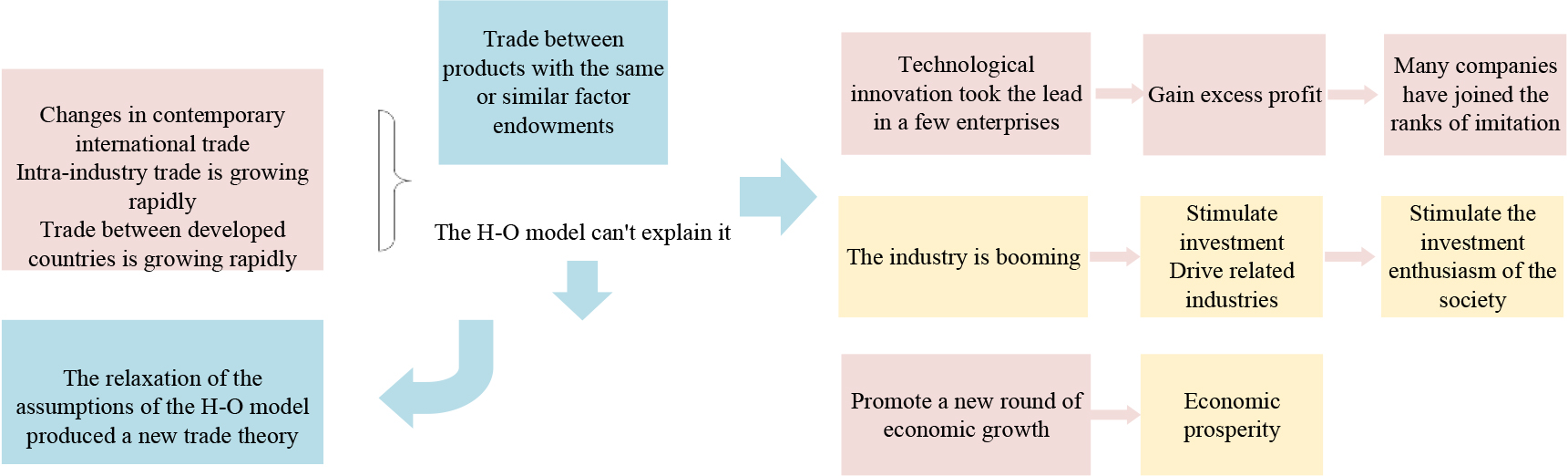
In Fig. 2, the improvement of international trade technology is primarily achieved through the technological innovations of a few companies and the rapid development of related industries, ultimately driving a new round of economic growth and achieving economic prosperity.
Figure 3 represents the international trade technology factors.
Technical elements of international trade.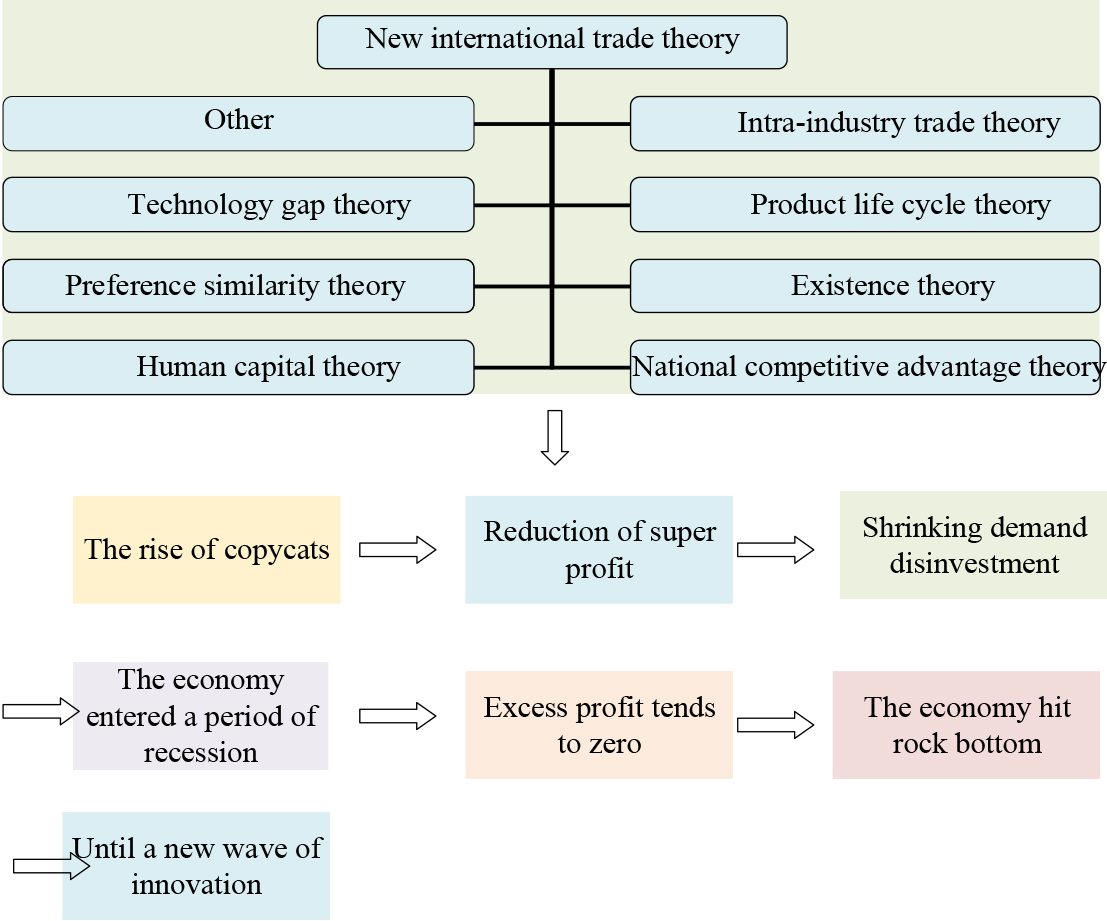
In Fig. 3, the international trade technology elements include new international trade theories, the rise of imitators, reduced superprofits, shrinking demand, economic downturn, superprofits tending towards zero, economic hitting bottom, and a new wave of innovation.
If the exporting country has patented technology for an innovative product, it will pursue maximum profit by adopting cost-markup pricing [30, 31, 32]. Thus, the pricing equation representing the monopoly manufacturer in the exporting country is
In Eqs (1) and (2),
In Eqs (3) and (4),
When in a steady state equilibrium, let
In a state of stability, manufacturers in exporting countries encounter the risk of diminishing patent value as the pace of product development escalates. They become susceptible to imitation by manufacturers in importing countries [33, 34, 35], ultimately leading to the erosion of monopoly profits. Furthermore, a higher value of
In Eq. (5),
This research has chosen a combined model of “Value-Gray Relational Analysis-TOPSIS-Discrete HNN” to meet the multidimensional, complex, and comprehensive requirements for assessing industrial technology security in international trade. The selection of this combined model is based on a profound understanding of the research problem and the advantages of the modeling approach. First, this research employs the entropy method to determine the weights of different indicators. This helps consider the relative importance of each indicator when evaluating industrial technology security. This step quantifies the information content and contribution of each indicator, allowing for a more accurate balance between various factors. Secondly, gray relational analysis is introduced to assess the similarity and correlation between different scenarios. This helps identify which scenarios are closer to the ideal solution in terms of technology security, leading to an initial screening. This step allows the research to identify scenarios with higher potential value from a large set of options. Next, the TOPSIS method is used to select the best scenario from multiple candidates. This step takes into account the performance of each scenario in different dimensions, allowing for a comprehensive evaluation across multiple indicators. It determines which scenario is closer to the ideal solution under comprehensive assessment. Finally, the research uses the Discrete HNN as a tool for integrated optimization to further enhance the model’s accuracy. This step ensures that the research’s model can adequately reflect the state of industrial technology security in international trade and provide robust support and decision-making basis. There is a close connection between these models, and the output of each model will be used as input for the next model to ensure that the research fully considers multiple dimensions and factors throughout the evaluation process. By comprehensively applying these models, the research will be able to more accurately and comprehensively assess industrial technology security in international trade, providing strong decision support for policymakers and businesses.
(1) Technology gap indicators are formulated to quantify the technological disparity. The primary measurement indicator utilized for assessing the technology gap is the technology gap rate. The technology gap is further deconstructed into three essential components: the scale, quality, and benefit gap components [36].
(2) The evaluation of industrial technology security is undertaken through the integration of the “entropy-gray relation-TOPSIS” model. Within this framework, the evaluation method employs a combination of the entropy technique, gray relational analysis, the discrete HNN, and the TOPSIS evaluation method [37]. The entropy method and the discrete HNN are employed to ascertain the weights assigned to the evaluation indicators. Grey relation analysis is utilized to establish the degree of association among the evaluation samples [38, 39, 40, 41]. The TOPSIS evaluation method is employed to determine the proximity of each evaluation scenario to the optimal solution, leading to a ranking of the various scenarios. The comprehensive utilization of the entropy and gray relation analysis methods compensates for the limitations inherent in the TOPSIS evaluation method, thereby enhancing the rationality and robustness of the evaluation outcomes. Figure 4 shows the discrete HNN.
Discrete HNN.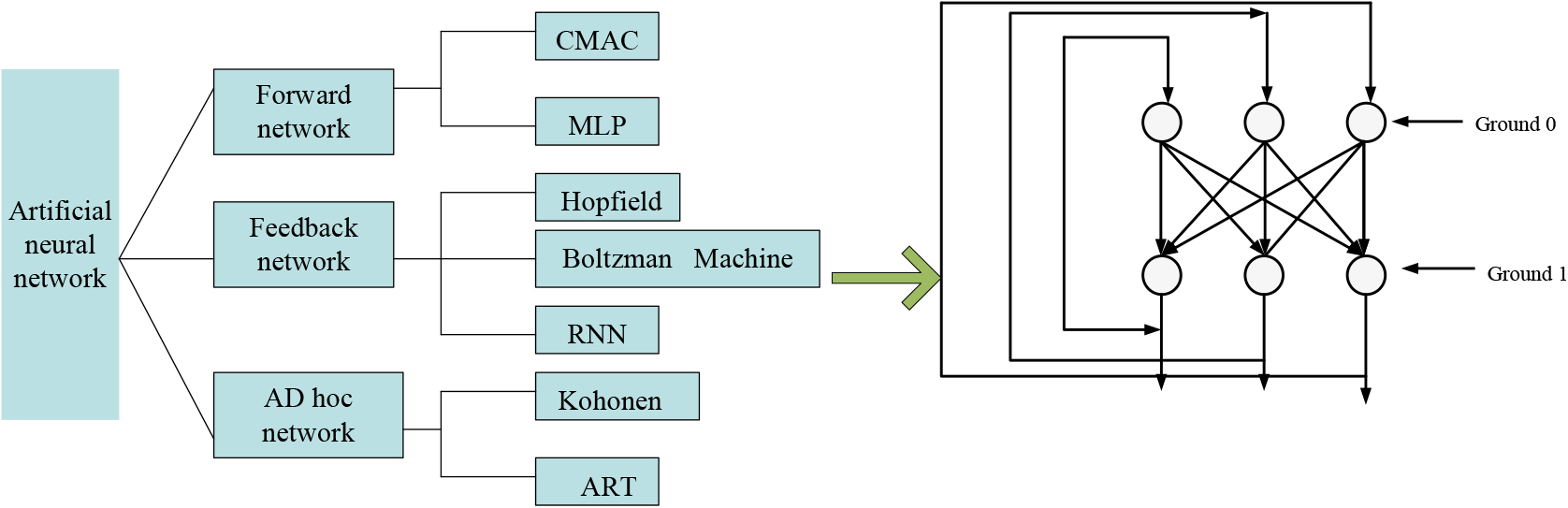
In Fig. 4, the primary application of the Discrete HNN is centered around addressing combinatorial optimization problems, which encompass challenges such as the Traveling Salesman Problem and Boolean function optimization, among others. By iteratively updating the states of its neurons, the Discrete HNN is capable of seeking local optimal solutions for these problems. While the Discrete HNN is typically employed for discrete problems, it is noteworthy that it can also be adapted for the approximate resolution of continuous problems under specific circumstances.
The steps involved in the evaluation of industrial technology security, as illustrated in Fig. 5, are elucidated below.
Steps of industrial technology security assessment.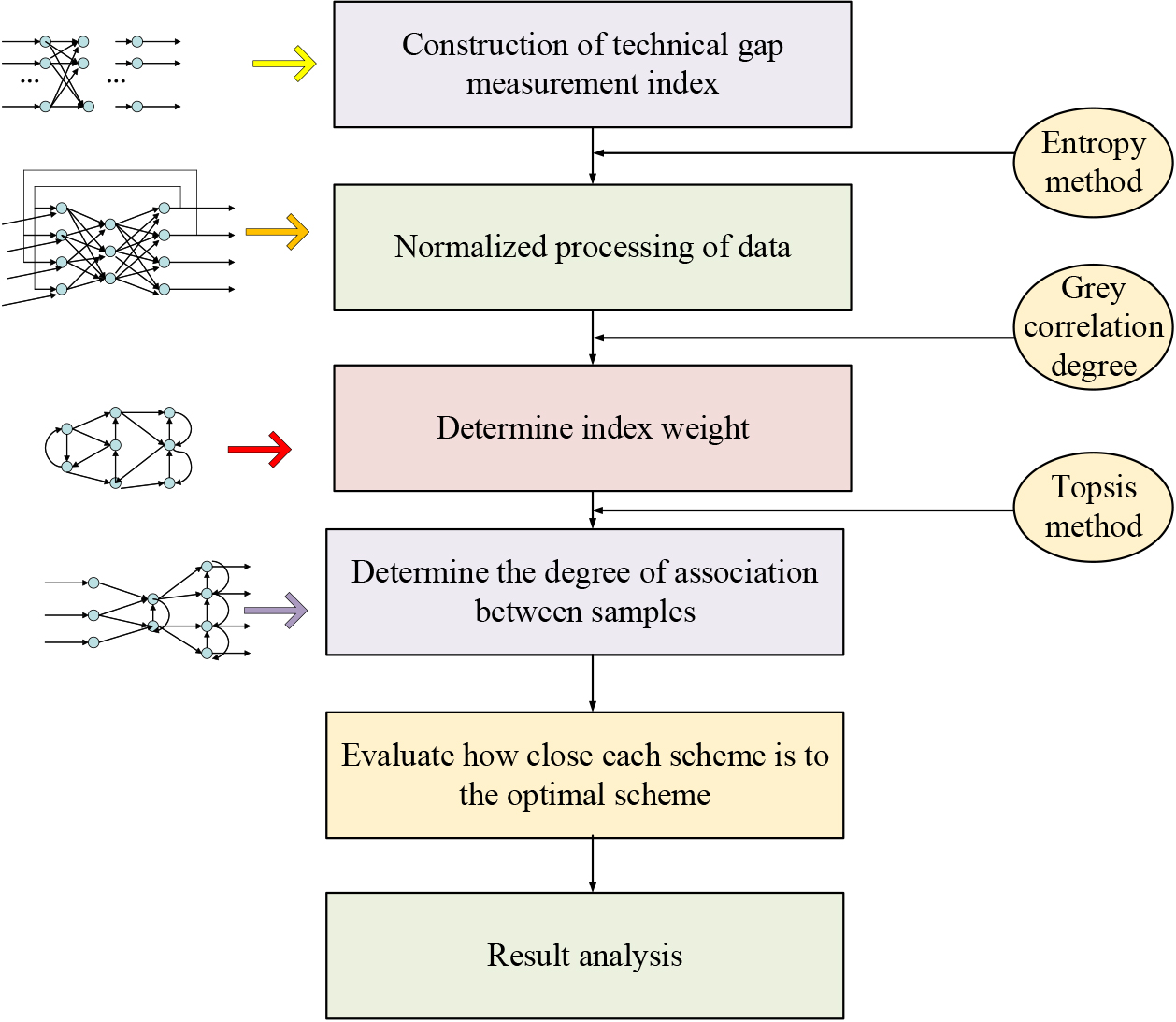
In Fig. 5, the specific evaluation steps are as follows: the first step is data normalization. The raw data must be subjected to normalization to mitigate variations in the statistical characteristics of each indicator. The standard deviation normalization method [42, 43] is employed in this regard.
The second step involves applying the entropy method to derive the weights for each index. This entails the following computational procedure:
Compute the ratio of the
In Eq. (6),
2) The entropy value of the
In Eq. (7),
3) The weight of each indicator is calculated as shown in Eq. (8):
In Eq. (8),
The third step involves the computation of the weighted normalized matrix
In Eq. (9),
The fourth step entails the computation of the gray relation coefficient matrix for each scheme concerning the positive ideal solution and the negative ideal solution.
The fifth step involves determining the grey relation degree of each scheme concerning both the positive and negative ideal solutions.
The sixth step involves the amalgamation of dimensionless distances and correlations.
The seventh step entails the calculation of the relative closeness degree,
In Eq. (10),
The eighth step involves the calculation of the Industrial Technology Security Evaluation Index,
Multiple data sources were employed in this research to ensure comprehensiveness and accuracy. Data related to a country’s export trade were obtained from the United Nations Commodity Trade Statistics Database. Gross Domestic Product (GDP) data for various countries were sourced from the International Monetary Fund, while exchange rate data was extracted from the Chinese Statistical Yearbook. This research focused on ten countries, namely Brazil, Turkey, the Philippines, Mexico, Finland, Denmark, Pakistan, Sweden, Ireland, and Israel. The sample period for this research spanned from 2015 to 2022.
Custom code was developed using Python to simulate the Discrete HNN and other models. Jupyter Notebook was utilized to organize and execute the experimental code, facilitating better visualization and record-keeping of the results. The experiments were conducted on a computer system with the following specifications: Processor: Intel Core i7 (8-core); Memory: 32 Gigabytes (GB) Random Access Memory (RAM); Operating System: Windows 10.
The collected raw data was initially standardized using the standard deviation normalization method to obtain normalized data. Subsequently, this normalized data was input into the entropy method equation to obtain the ratios of each value within each indicator, the indicator entropy, and the weights for each indicator.
Experimental design and performance evaluation
Experimental materials
The data utilized in this research to analyze the export trade of nations were sourced from the United Nations Commodity Trade Statistics Database. Gross Domestic Product (GDP) data for each respective country was obtained from the International Monetary Fund, while exchange rate data was extracted from the China Statistical Yearbook. The selection of ten countries for this investigation includes Brazil, Turkey, the Philippines, Mexico, Finland, Denmark, Pakistan, Sweden, Ireland, and Israel. The chosen sample period spans from 2015 to 2022.
Performance evaluation
The raw data collected undergoes standardization using the standard deviation normalization method, resulting in the acquisition of normalized data. This normalized dataset is then employed in the entropy method equation, allowing for the determination of various parameters including the proportion
The meanings of A-K in Fig. 6 are
The calculation process value of the comprehensive evaluation value of industrial technology security.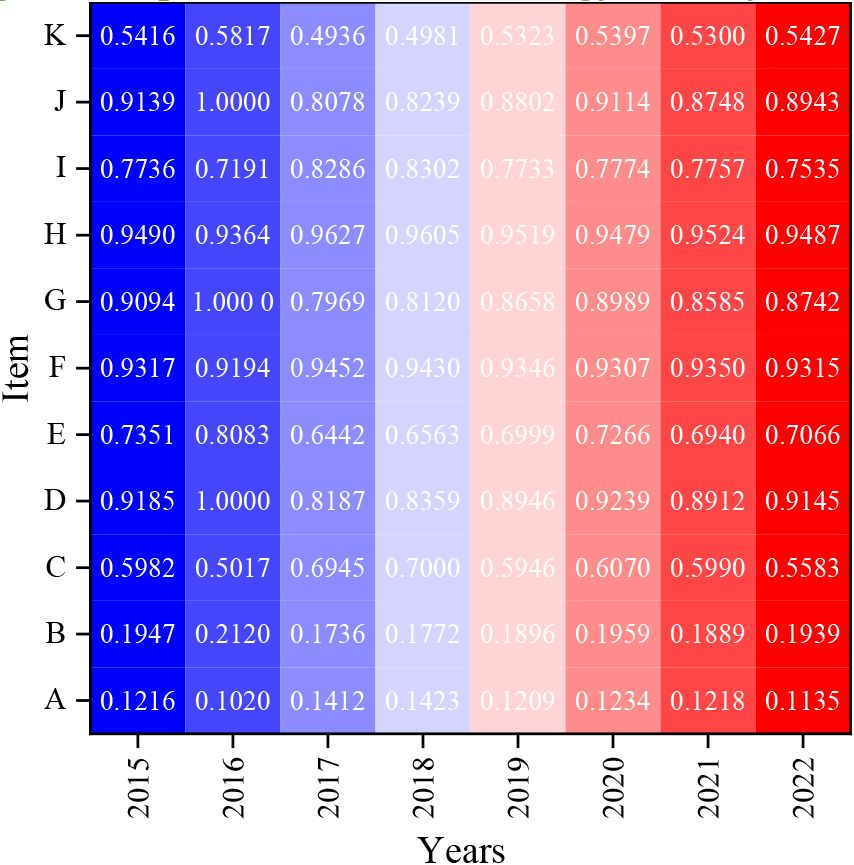
In Fig. 6, concerning the comprehensive assessment of industrial technology security, there is an overall upward trend in safety from 2015 to 2018. In 2019–2020, industrial technology security showed no significant growth, and there was even a decline.
Figure 7 illustrates the computed values in the evaluation process for the scale component of industrial technology security.
Calculated process values for scale component evaluation of industrial technical safety.
The calculation process value of industrial technology security quality component evaluation.
As depicted in Fig. 7, the comprehensive evaluation of industrial technology security reveals a notable upward trend between 2015 and 2018. However, from 2019 to 2020, industrial technology security experienced limited growth or even a decline. From 2015 to 2018, industrial technology security grew rapidly and reached its highest value. This signifies a swift economic recovery in China following the financial crisis, accompanied by significant development.
Figure 8 illustrates the computed values in the evaluation process for the quality component of industrial technology security.
As illustrated in Fig. 8, the comprehensive evaluation of industrial technology security demonstrates an overarching upward trajectory between 2015 and 2018. However, from 2018 to 2020, industrial technology security experienced limited growth or even a decline. This observation indicates that China’s initiation into complex trade industries was relatively delayed, gradually widening the technological gap with other nations.
Figure 9 presents the computed values in the evaluation process for the benefit component of industrial technology security.
The calculation process value of the industrial technology security benefit component evaluation.
As depicted in Fig. 9, concerning the industrial technology benefit component, there is a noteworthy overall augmentation in the security evaluation value. This signifies a progressive and staged upward progression. The observed pattern reveals that the core of technological innovation is focused on fundamental technology research and development, with subsequent technologies and ancillary innovations rapidly gaining traction, leading to staged and substantial growth. Between 2015 and 2019, two discernible tiers of growth were identified. Yet, the overall increase is relatively modest, suggesting that the output volume at this stage remains limited and the efficiency of technological innovation is suboptimal.
The findings presented in this research offer a novel analytical framework to enhance our comprehension of China’s expansion in export trade. Furthermore, it furnishes empirical substantiation from substantial developing nations that can be pertinent to corporate trade strategies. Notably, the research bears significant policy implications. Governments can mitigate export expenses through diverse strategies, including engagement with the multilateral trading system and establishing bilateral trade accords. The advancement of bilateral trade relations can be strategically encouraged. This research underscores the substantial policy implications relevant to shaping China’s foreign trade development trajectory, thereby bolstering China’s standing in the international trade arena. The core contribution of this research lies in the successful development and application of a method based on discrete HNN, which has proven to be highly effective in measuring industrial technology security in international trade. It has not only made significant progress in the assessment of industrial technology security but has also provided policymakers with a powerful tool to understand the challenges of technology security in international trade. Furthermore, the research has revealed significant differences in industrial technology security among different countries, emphasizing the crucial role of trade policies in promoting innovation and protection. This finding holds profound implications for the sustainable development of global economic integration and the improvement of international trade partnerships, providing a strong foundation for research and policy development in related fields. Research directions may include in-depth exploration of multinational cooperation and technology transfer in international trade. With the increasing complexity of global supply chains and the rise of multinational corporations, the flow of technology between different countries has become even more intertwined. Future research can delve into the role and mechanisms of collaboration between multinational corporations and international trade partners, particularly in the context of technology transfer. This will help deepen our understanding of the technology dissemination process while also aiding in the development of more targeted policies to promote technology security and sustainability in international trade. Another potential research direction is to focus on the security of global value chains and supply chains. In the globalization era, supply chains’ resilience and security are crucial for international trade. Future research can concentrate on the technological innovation within supply chains and the security of critical components, assisting in evaluating the stability and sustainability of global supply chains. This will help businesses and governments better manage risks and ensure the continuous operation of supply chains. Additionally, with the growing emphasis on sustainability and environmental awareness, future research can examine the dissemination of green technology in international trade and its impact on industrial technology security. The development of green technology is essential for addressing climate change and sustainability, making it crucial to understand how these technologies are disseminated and applied in international trade, with significant policy implications. In terms of applications, the results of this research can be utilized in government policy development, corporate strategic planning, international cooperation, and global economic governance. Governments can use these findings to formulate more targeted international trade policies to enhance their national levels of technology security and international competitiveness. Businesses can draw from these discoveries to develop more effective international business strategies, including technology innovation and intellectual property protection. Multinational corporations and international trade partners can leverage these results to optimize technology transfer and cooperation, achieving greater mutual benefits. International organizations and policymakers can use these research outcomes as guidance for global trade and technology policies, promoting sustainable and balanced development in international trade. To recap, the findings derived from the assessment of industrial technology security within the context of international trade hold immense significance. They contribute substantially to our comprehension of China’s expanding export trade activities, offer empirical support for enterprise trade strategies, and inform the formulation of pertinent governmental policies. In-depth exploration in this domain is poised to enhance the quality and sustainability of international trade, thereby fostering global economic prosperity and collaboration.
Conclusion
Research contribution
In light of the intensifying forces of globalization and the rapid evolution of information technology, the matter of industrial technology security within the realm of international trade has garnered progressively augmented attention. Industrial technology security encompasses a nation’s capacity to safeguard and uphold its essential technology and intellectual property rights throughout the course of international trade. Given its pivotal role in bolstering a country’s economic competitiveness and fostering sustainable development, industrial technology security assumes paramount significance. Within this context, the methodology grounded in discrete HNN has been adeptly employed to gauge the extent of industrial technology security in international trade. This approach amalgamates trade-related data with industrial technology indicators, thus furnishing a potent instrument for the appraisal of industrial technology security in the context of international trade. The outcomes underscore the substantial influence of industrial technology security levels on the steadiness and enduring progress of international trade. Heightened industrial technology security fortifies a nation’s capacity to shield its fundamental technology and intellectual property rights, thereby elevating its economic competitiveness and innovation prowess. Significant disparities in industrial technology security emerge among various nations and trade partners. Some nations accord a higher priority to safeguarding and advancing industrial technology within trade, while others lean more heavily on the importation of external technology and knowledge. This disparity can precipitate imbalances within trade relations and accentuate the risks associated with technological dependence. Furthermore, the research underscores the pivotal role played by trade policies in shaping industrial technology security. Countries have the ability to enact measures that stimulate the innovation and safeguarding of their industrial technologies. Such measures encompass the reinforcement of intellectual property protection and the promotion of technology transfer and collaborative endeavors. These strategic steps enhance a country’s bargaining power and resilience within the realm of international trade.
Future works and research limitations
The research also has some limitations, particularly concerning the challenges associated with acquiring a substantial amount of data required to train the discrete HNN and obtain high-quality reliable data. The quality and accuracy of data have a crucial impact on the effectiveness of measurement results. However, in practical applications, obtaining a sufficient quantity of high-quality data may encounter certain difficulties, such as data acquisition challenges and privacy concerns. The reliability and accuracy of the trade data and industrial technology indicators used in this research are paramount for the credibility of the experiment outcomes. Therefore, future research directions should focus on addressing data reliability issues, considering the introduction of additional data sources, and enhancing the trustworthiness of the research. These achievements will contribute to a more refined understanding of industrial technology security in international trade and provide a more robust foundation for research in related fields.