



Abstract
The traditional e-commerce’s traffic dividend is gradually declining, while social e-commerce as a new business model has attracted numerous enterprises to jump into by virtue of the advantages of viral traffic aggregation and efficient conversion. How to improve the core competitiveness and stand out from the Red Ocean battle of traffic competition is of great significance for the healthy and sustainable development of social e-commerce platforms. In view of this, this study focuses on the issues related to the attractiveness of social e-commerce platforms from the consumer’s perceptive, with the aim of providing theoretical support for social e-commerce platforms to enhance their core competitiveness and formulate relevant development strategies and decision-making mechanisms. First, four key factors affecting the attractiveness of social e-commerce platforms based on the AISAS model are proposed: the ability to attract consumers to access, promote consumers’ purchase conversion, maintain consumers’ platform loyalty, and attract to share experiences. Second, an attractiveness assessment model for social e-commerce platform including four secondary indicators and corresponding 14 tertiary indicators is constructed by using Analytic Hierarchy Process, and an arithmetic example is demonstrated. Finally, management suggestions to enhance the attractiveness of social e-commerce platforms are presented.
Keywords
Introduction
Traditional e-commerce which gradually walks into the mature period has to face the situation of the imminent loss of the traffic dividend. With the popularity of mobile Internet and social apps like WeChat and Tiktok, Social e-commerce as a new business model breaks through the traffic bottleneck of traditional e-commerce, emerging as one of the significant driving forces behind digital economy development. Social e-commerce leverages its social traffic, utilizing “user viral propagation,” “fan endorsement,” “social interaction,” and “user-generated content” to boost sales. By integrating social elements such as discussion, attention, sharing, and interaction into the consumption process, it drives innovation in e-commerce [1]. The essence of social e-commerce is “social traffic
While social e-commerce is booming, it is also facing an increasingly fierce battle for traffic. For example, in the Chinese market, besides TikTok and Xiaohongshu, many large e-commerce companies such as Alibaba and JD.com have been actively expanding into the field of social e-commerce, and it has formed a social e-commerce battle field where four giants of Pinduoduo, Taobao, JD.com and Suning.com are fighting in China, placing enormous pressure on small and medium-sized social e-commerce enterprises. In the face of the Red Ocean market, how can social e-commerce platforms enhance the inherent attractiveness, comprehensively improve consumer satisfaction with the platform, and effectively attract and retain consumers? The answers to these questions are of great significance for social e-commerce platforms to boost their core competitiveness, break away from the battle for traffic, and achieve healthy, sustainable development.
Regarding research on attractiveness of internet platforms, Shen et al. [3] observed that in e-commerce and social media, attractiveness significantly influences user attitudes and behaviors, and divided attractiveness into three dimensions: appearance attractiveness, social attractiveness and task attractiveness. Hernandez and Ferreira [4] proposed that the attractiveness of software platforms lies their ability to acquire, retain, and attract third-party developers to access, and primarily focus on attracting developers to join and retaining existing ones. Pan et al. [5] found that platform flexibility, process control and clan control positively affected e-business platform attractiveness. Penttinen et al. [6] proposed from the perspective of platform design that the factors attracting users to choose a platform mainly include: the quality of platform resources, the level of openness, supportive policies, and the size of the platform’s user base. Sternad Zabukovšek et al. [7] examined the influence of user experience factors such as perceived efficiency, perspicuity, dependability, stimulation, and novelty on the attractiveness of collaborative e-learning platforms. The results revealed that all these factors significantly impact the perceived attractiveness. Specifically, perceived stimulation demonstrated the strongest impact, followed by perceived efficiency, perspicuity, novelty, and dependability. Although the research on e-commerce platforms attractiveness has made progress, social e-commerce, as an emerging e-commerce model, differs significantly from traditional e-commerce platforms in the way of operation and management of platforms due to the customer new behavioral characteristics. Existing research on traditional e-commerce platforms attractiveness cannot fully meet the new requirements of operating and managing social e-commerce platforms. There is gap in research on the attractiveness of social e-commerce platforms, especially in analyzing factors affecting social e-commerce platforms attractiveness, as well as a comprehensive assessment of the attractiveness of social e-commerce platforms. On the other hand, it is urgent for social e-commerce platforms that have entered the stage of scaling up and stabilization improve the platform’s development strategies and decision-making mechanisms.
In view of this, this study first defines the concept of social e-commerce platform attractiveness considering the new features of consumer online shopping behavior in the mobile internet era. Next, it examines the key factors affecting the formation of the platform attractiveness based on the AISAS model from the consumers’ point of view. These factors include the ability to attract consumers to choose, the ability to promote consumers’ purchase conversion, the ability to maintain consumers’ platform loyalty, and the ability to attract consumers to share experiences. Furthermore, an attractiveness assessment model for social e-commerce platform, comprising four secondary indicators and corresponding 14 tertiary indicators is constructed by using AHP and fuzzy evaluation method, and an arithmetic example is demonstrated. Finally practical management suggestions are presented. This study will enrich the existing theories related to social e-commerce platforms and provide theoretical support for the development strategy and decision-making mechanism of social e-commerce platforms. Additionally, it will help social e-commerce platforms better understand their industry position, conduct self-assessment, identify problems and improve the operational and management strategies in a targeted manner, so as to enhance the platform’s attractiveness and market competitiveness, which is of significant practical value.
Literature review
Social e-commerce and customers behavior characteristics
Social e-commerce
The term “social e-commerce” first appeared on Yahoo, and there is still no unified definition. Han and Trimi [8] think that social commerce epitomizes a modern e-commerce strategy that capitalizes on Web 2.0 innovations and social media platforms to underpin social-centric transactional interactions. Dabbous and Barakat [9] proposed that social e-commerce integrates e-commerce platform with social media as an innovative marketing tool to promote interaction, communication as well as purchase decisions among consumers. Busalim et al. [10] defines s-commerce as a segment within e-commerce utilizing social media platforms that encourage social engagement and user-generated content. Its primary goal is to enhance the online purchasing journey by enabling consumers to participate in a collaborative online setting. Schwob et al. [11] describe s-commerce as “Internet-based social media platforms that empower active participation in marketing and selling goods and services within online marketplaces and communities.” Abbas et al. [12] believes that social commerce is a beneficial, exciting, and challenging business model, providing users with convenience. It allows customers to generate user-generated content in various ways, provide feedback, write reviews, and establish good relationships with other users.
Based on previous scholars’ views, this study proposes social e-commerce as a new derivative form of e-commerce, which is rooted in interpersonal networks and leverage internet social tools to facilitate the sale of goods or services. Its essence lies in “social traffic
Comparison of social e-commerce platforms, traditional e-commerce and social platforms
Comparison of social e-commerce platforms, traditional e-commerce and social platforms
Social e-commerce customer behavior pattern and features.
Social e-commerce is characterized by the deep integration of mobility, socialization and e-commerce, and the customer behavior pattern presents new characteristics compared to the traditional e-commerce, as shown in Fig. 1 from three main aspects [13]: First, the diversification of consumption scenes. Consumers utilize fragmented time to access a wide range of commodity information anytime and anywhere through various mobile clients, including shopping and social media applications. The online purchasing process become increasingly simple and convenient, where customers browse desired products, add them to their carts, proceed to checkout, make payments, and finally receive the goods. Second, comments and sharing of information are as ubiquitous as air on the mobile Internet. In addition to online shopping, users also provide feedback on their purchases covering aspects such as products/services quality, after-sales service, overall satisfaction, etc. They share their feelings and experiences on social networks by product ratings, text, images, or short videos. There is a strong or weak social relationship between information publishers and recipients, and the trust among users makes these comments and shares more influential on the consumption decisions and behaviors of potential users than traditional advertising and promotion by companies. This fosters the development of a more genuine and trustworthy service model, facilitating the conversion of more potential customers into actual customers. Third, the diversification of customer roles. In the social e-commerce model, individuals are no longer just simple consumers, but also become content producers and distributors of marketing information, becoming important marketing partners for brands to promote brand publicity and product sales. Leveraging people and social relationship networks, marketing information is collaboratively created, forwarded, and virally spread in social networks, ultimately achieving more accurate, faster and wider coverage of the diffusion of marketing information.
The new characteristics of customers in the mobile internet era provide direction for analyzing the factors influencing the attractiveness of social e-commerce platforms from the customer’s perspective, and also provide important basis for the design of indicators in the comprehensive evaluation model.
Attractiveness of platform
With regard to the understanding of attractiveness, theoretical physics explains the phenomenon of “gravitation” as the distortion of space caused by massive objects, resulting in the movement of less massive objects towards it. Gravity is one of the intrinsic properties of objects with mass. Objects with greater mass inevitably attract those with lesser mass. In the fields of psychology and management, scholars have also proposed explanations of attractiveness from different angles. Attractiveness typically refers to the power that leads individuals to develop interest and preference for specific attributes of a target subject, leading to a sustained response over time. That is, when people have considerable interest and preferences in the possible acquisition of an object, these contribute to its attractiveness to them. In the study of interpersonal attractiveness, Taecharungroj et al. [14] proposed that the concept of “attractiveness” evolved from initially referring to “absorbing liquids and things” to “the ability of an object to absorb other things”, and finally to the ability of people to attract others to them. Kay et al. [15] defines product attractiveness as being determined by intrinsic quality of the product, reflecting whether the product resonates with consumers and attract them to purchase. Wan et al. [16] proposed that in studying port attractiveness, the scale and function of the port makes it with the quality to attract cargo sources. For several cargo sources within the port, different directions and sizes of attractiveness form an attractive field in space. Any cargo source within the scope of the attractive field formed under the quality of the port will be attracted to the port with different intensity. The magnitude of attractiveness depends on the size and function of the port. Scholars commonly agree that attractiveness is not a single-faceted structure, but consists of at least three dimensions of the social or preference, the physical or appearance, and the task or respect [17].
This study defines the attractiveness of social e-commerce platform as the ability to attract consumers to access, stay, make purchases and ultimately share and recommend the products on the platforms by utilizing social elements such as interactivity and sharing. These four attractions synergize to form a powerful gravitational field of social e-commerce platform, which ceaselessly attracts more customers into the platform and generates strong customer stickiness.
AISAS model
The AISAS model developed from AIDMA model, was first proposed by E.S. Lewis in 1989. The AIDMA model suggests that consumers go through five stages from encountering marketing information to making a purchase: attention, interest, desire, memory, and action, as shown in Fig. 2. Essentially, the AIDMA model reflects marketing relationship in the traditional media environment, which is based on centralized communication technology. In the AIDMA model, enterprises and the media act as the active party to attract consumers’ attention, while consumers are passively informed and promoted to make purchases. In the era of mobile social-commerce, consumer behavior has undergone significant changes. Consumers are increasingly active in acquiring information, expressing opinions, and sharing usage experiences through various social media platforms, and make a decision accordingly. They are not longer passive recipients of product advertisements but have transformed into a new type of consumer with functions such as information gathering, collection, organization and distribution. The marketing approach of platforms has also shifted from being platform-centered to product- and consumer-centered. As a result, the traditional AIDMA model can no longer well explain the new patterns and characteristics of consumer behavior in social e-commerce.
AIDMA model based on traditional consumer behavior.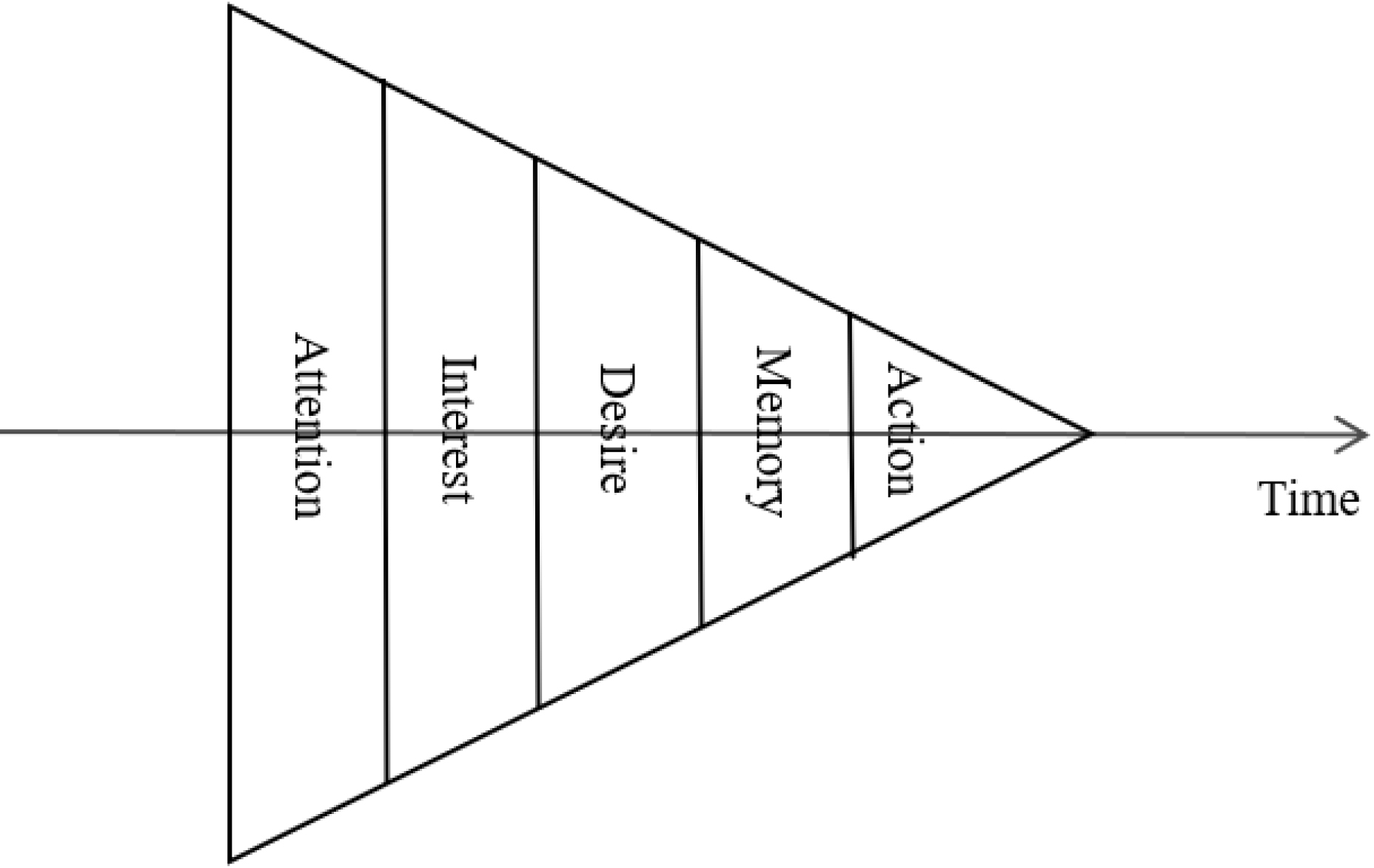
Dentsu Corporation made improvements to the AIDMA model, and put forward the AISAS model as shown in Fig. 3. This model emphasizes the changes brought by the mobile Internet to consumers, such as the shortened spatial distance in interpersonal relationships, increased frequency of communication, consumers’ willingness to share, and proactive information seeking and transmission. The AISAS model proposed five stages of consumer behavior: attention, interest, search, action and share. Attention marks the initial stage of the five-stage mode, followed by interest, which aims to stimulate consumer interest in the product. Search involves consumers spontaneously seeking product information once interest is aroused; Action is the stage where consumers acquire enough information about a product to make a substantial purchase. Finally, share involves consumers sharing product information and personal experiences online after making a purchase. Among them, Search and share signify a shift in consumer behavior in the mobile internet era from being passively information recipients to active brand promoters. Compared to the AIDMA model, the AISAS model illustrates the new patterns and characteristics of consumers behavior following the emergence of mobile social media. It considers sharing after the purchasing behavior as crucial factor affecting the purchasing decision and satisfaction of consumers. In addition, consumers’ sharing behavior on social media will also directly affect attracting the attention and stimulating the interest of potential consumers. In the context of internet marketing, the final marketing utility of enterprises not only has the natural decline trend seen in traditional marketing environment, but also shows and amplification trend due to the spontaneous sharing in customers’ purchase behavior. The sharing of positive and authentic purchase experience from customers can prolong the lagged impact of marketing for businesses, developing potential users and boosting consumer conversion rates.
AISAS model based on the consumer behavior in social mobile internet.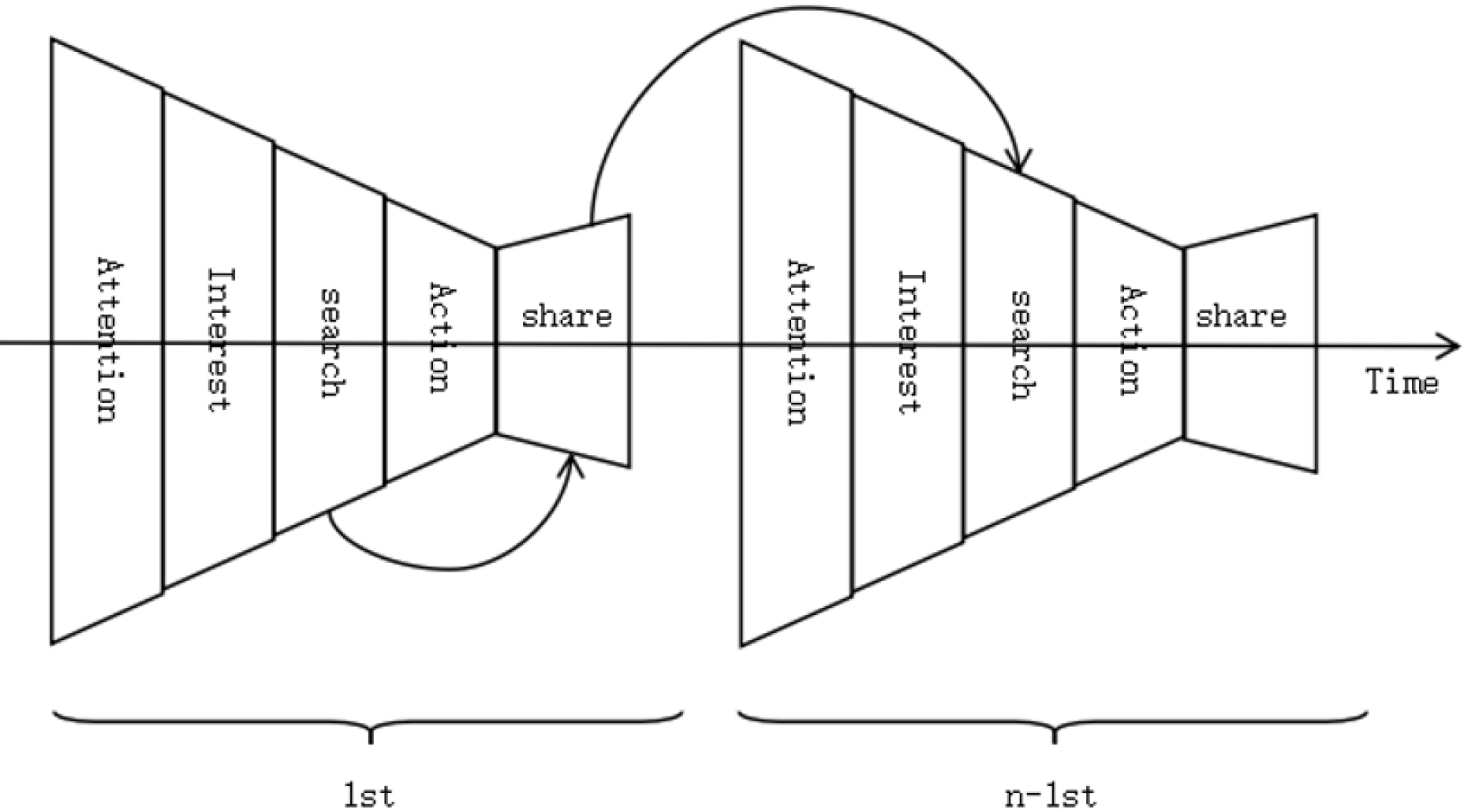
Overall, the AISAS model represents a new approach for online marketing in the new Internet environment. It considers the interaction between enterprises and consumers on Internet platform, reflecting diverse customer roles such as purchasing, commenting, and sharing, which provides a more comprehensive explanation for marketing behaviors in the social e-commerce environment. Therefore, this paper takes it as the theoretical basis for the attractiveness assessment model of social e-commence platform.
The AHP is a decision-making analysis method proposed by Professor Saaty of the University of Pittsburgh in 1973. It was developed to address the issue of allocating electricity according to each industrial sector’s contribution to national welfare. AHP regards complex multi-objective decision-making problem as a system, quantifying them into single-level, single-objective problems through qualitative and quantitative analysis of each system index. It does not involve profound mathematical knowledge for calculation, instead utilizing simple matrix operations to quantify the influence of all factors on the decision-making. Compared to other multi-attribute decision-making methods, AHP method is known for its simplicity, ease of understanding, and high practicality. It is widely applied in the evaluation of suppliers, traffic safety and urban disaster emergency capacity, etc. Therefore, this paper uses the AHP method to build the attractiveness assessment model of social e-commerce platform.
Analysis on factors influencing social e-commerce platforms attractiveness
Attractiveness of social e-commerce platform
In physics, gravity is a natural phenomenon and all objects have an attraction to those around them. Similarly, this study proposes that social e-commerce platforms also generate a kind of “gravity” for consumers, attracting them to access and engage on the platform. This “gravitational force” comes from social elements of social e-commerce platforms such as interactivity and sharing, which together constitute the “gravitational field” of social e-commerce platforms. Based on the research on attractiveness in various fields, combined with the new characteristics of customer behavior in social e-commerce and the AISAS model, this study defines the attractiveness of social e-commerce platform as the ability to attract consumers to access, stay, make purchases and ultimately share and recommend the products on the platforms by utilizing social elements such as interactivity and sharing. These four attractions synergize to form a powerful gravitational field of social e-commerce platform, which ceaselessly attracts more customers into the platform and generates strong customer stickiness, as shown in Fig. 4.
Gravitational field of social e-commerce platform.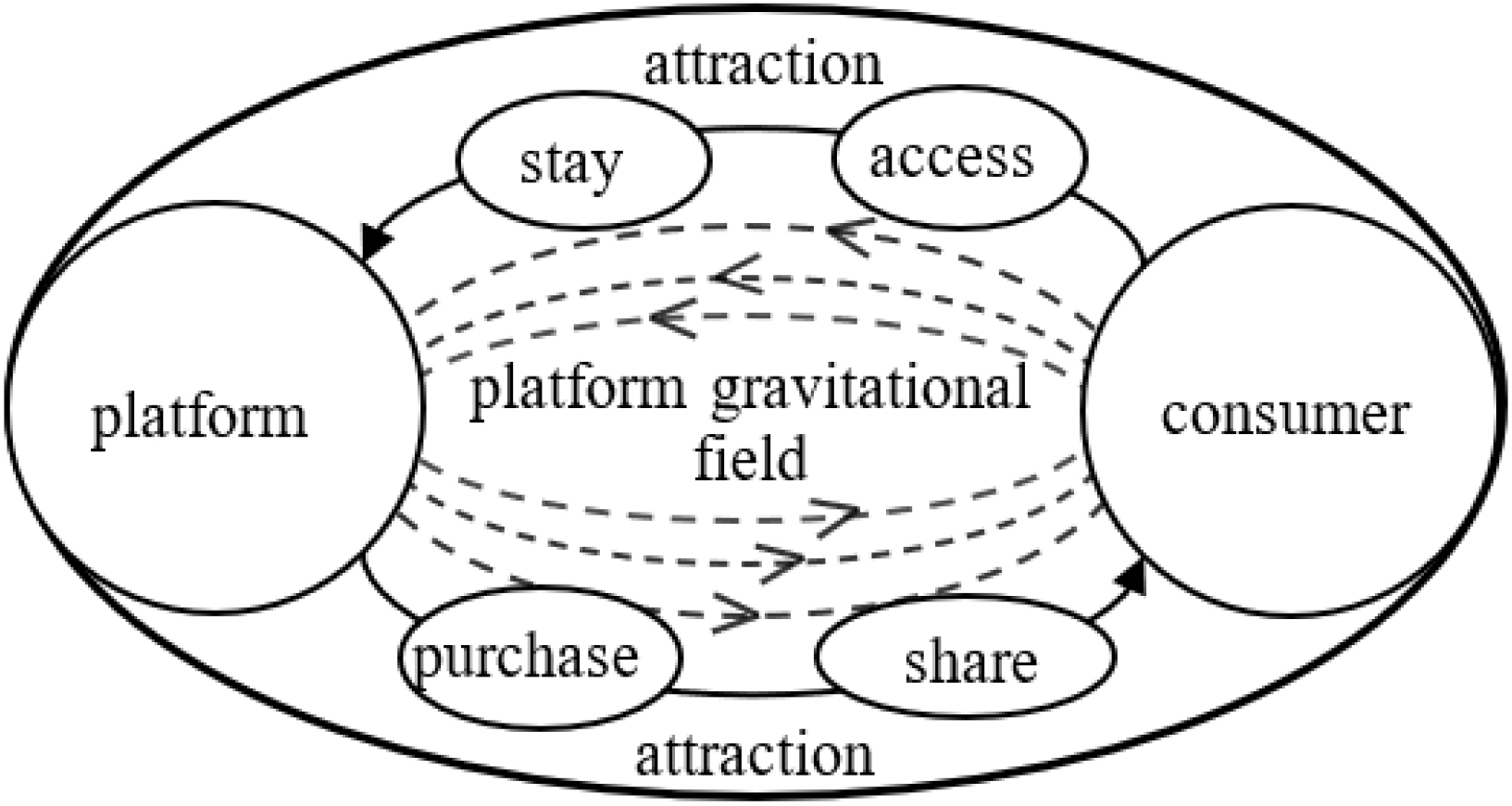
On the basis of AISAS model and understanding of the attractiveness of social e-commerce platform, this study proposes that key factors influencing the formation of social e-commerce platform attractiveness include four aspects: the ability to attract consumers to access, promote consumer purchase conversions, maintain consumer platform loyalty, and attract consumers to share shopping experiences, as shown in Fig. 5.
Theoretical model of influencing factors of attractiveness of social e-commerce platforms.
The ability to attract consumers to access a social e-commerce platform refers to the capability of enterprises to make consumers willing to click on and visit the platform through various marketing means. The more consumers a platform can attract to choose it, the higher its traffic will be, indicating that the platform has a high level of attractiveness. Tong et al. [18] pointed out that online promotional information can increase consumers’ browsing time and interest, triggering their desire and behavior to make purchases. During the stage of traffic acquisition, users click on platforms based on their basic needs through the promotional information scenes provided by e-commerce platforms. Lv et al. [19] found that in a single e-commerce platform environment, consumer choice to visit depends on whether the platform’s attractiveness outweighs consumer psychological resistance. While in a multi-e-commerce platform environment, consumers’ choice to visit is mainly influenced by the platform’s overall brand reputation, promotional intensity and complexity. A good platform reputation reflects the goodwill and capability of the platform, helping to reduce risks and uncertainties during transactions, thereby promoting intention of consumers’ visits [20].
Additionally, sociality is an important feature that distinguishes social e-commerce from traditional e-commerce. Numerous studies have explored the factors influencing social e-commerce adoption based on the social relationship theory. Mousa [21] found that social influence significantly affects consumers’ behavior intention when mobile shopping and the effect of social influence on the adoption of social e-commerce is also supported by other scholars [22]. Hu et al. [23] proposed that community interaction and perceived usefulness had a positive impact on customer trust, driving customers to use social commerce platforms. Molinillo et al. [24] and Dwivedi et al. [25] found that information support and emotional support from the social community can increase users’ intention to adopt social e-commerce platforms. Some scholars also proposed perceived trust, social pressure and satisfaction are the main factors affecting consumer adoption of social e-commerce platforms including by using the least squares method [25, 26].
Based on the findings of the above scholars, this study proposes that the factors influencing the ability to attract consumers to access a social e-commerce platform mainly include three aspects: the promotional information scenario, the comprehensive brand reputation and the social influence. These enable the platforms to attract more consumers, aggregate platform traffic and prompt them to engage in shopping activities on the platform.
Promotional information scenario
In this study, the platform promotion information scenario refers to the information scenario built by the social e-commerce platform through various promotions activities. It mainly includes the amplitude and the complexity of promotions. (i) Promotion amplitude refers to the extent of discounts offered by the social e-commerce platform through various types of promotions such as shopping promotions, flash sales, coupons, discounts, and exemptions. A larger promotion amplitude tends to attract more consumer attention. (ii) complexity of promotions primarily involves promotion comprehension and implementation difficulty. Promotion comprehension difficulty refers to whether consumers can easily understand the promotional information released by the platforms without extensive knowledge or rich online shopping experience. Promotion implementation difficulty refers to whether it is easy for social e-commerce platforms to implement promotional strategies that require active participation of consumers. For example, complex operations process such as sharing information to online social circles, inviting friends and relatives to bargain or register may increase the difficulty of implementation. If consumers struggle to grasp the promotional information or find the promotion implementation challenging, they many abandon visiting the platform and switch to others. Therefore, how to reasonably set up the promotional information scenario is crucial for increase the attraction of social e-commerce platforms.
Brand reputation
Brand reputation of the platform refers to the overall evaluation of consumers on the social e-commerce platform’s popularity, product quality, price, reputation and service experience. It is a comprehensive subjective awareness of the social e-commerce platform formed by consumers. The brand reputation of the platform is one of the important considerations for consumers to access and visit a social e-commerce platform. A social e-commerce platform with a good brand reputation can enhance consumers trust, which in turn improves the attractiveness of the platform to consumers.
Social influence
Social influence means consumers visit a specific social e-commerce platform under the influence of their social groups. When consumers cant to make direct analytical judgments, they tend to rely on the recommendations from their social groups. In the social e-commerce environment, users can exchange and disseminate information through social media, and consumers rely more on the evaluations and recommendations of friends, family, and social media influencer. Additionally, purchasing decisions may also be influenced by public opinion, product reviews and online word-of-mouth. This influence may not only comes from consumers’ social networks but also from broader online communities such as forums, blogs, and microblogs, which are referenced important sources for consumers purchase decisions making. Overall, social influence significantly affects platform attractiveness to consumers. Therefore, understanding and leveraging social influence are key strategies for social e-commerce platforms to attract consumer’s visit.
Ability to promote consumer purchase conversions
The ability to promote consumer purchase conversion refers to the capability of a social e-commerce platform to attract consumers which has already accessed it to make purchases. In terms of the factors influencing consumers’ purchase conversion, Lv et al. [19] argued building up the user’s trust on the platform leveraging social interactions can increase the willingness to buy and achieve traffic conversion. Geng and Chen [27]proposed that user-generated content (UGC) clearly articulated, comprehensive, and highly relevant can enhance users’ trust in both the information provider and the content itself, thereby promoting consumers’ information adoption and increasing their willingness to purchase. Chen and Farzin et al. [28, 29] argued that users establish connections through activities such as posting, commenting, replying to comments, forwarding, liking and following, forming a large and complex social network based on interactive behaviors, and also pointed out that variables such as social network structure, including network scale, network density and network centrality are important variables affecting the trust establishment and consumption decisions in social e-commerce.
The intrinsic mechanism of social e-commerce influencing user behavior is mainly realized through the user trust constructed by the complex social network formed by the interaction among users. Therefore, this study draws on previous research and proposes that the factors influencing the ability of social e-commerce platforms to promote consumer purchase conversions include: the degree of trust, network scale, network density, and network centrality.
The degree of trust
The degree of trust refers to consumers’ perceived level of trust in social e-commerce platforms, including consumers’ subjective perception of the platform’s honesty, goodwill, and capability. The platform’s honesty is reflected in consumers’ perception of the authenticity and accuracy of the product information, prices and promotional activities provided by the platform. The perception of goodwill refers to consumers’ perception of whether the platform considers consumers’ interests as the starting point when handling consumer issues and complaints. Capability perception is reflected in consumers’ perception of the platform’s competence in providing goods, services, logistics, after-sales services. Due to the virtualization of social e-commerce transactions, the establishment of online customer trust can reduce the uncertainty and the perceived risk of consumer purchases. Therefore, the degree of trust is a key factor in determining the success of the transaction.
Network scale
In this study, network scale refers to both the number of consumers and the extent of significant social connections among them on the social e-commerce platform. A larger network scale implies a greater number of platform users and more substantial social relationships. This allows users to obtain more information support through more frequent communication and interaction, which is exactly the original intention of the design of the social e-commerce platform. Social e-commerce platform is not only as virtual shopping venues but also as hubs for information sharing and social engagement. The frequent exchange of information plays a pivotal role in mitigating information asymmetry in online transactions, thereby boosting users’ trust in both the platform and its merchants. Consequently, this enhances consumers’ purchase intention and promotes the effective conversion of traffic. Hence, network scale stands as a crucial determinant of social e-commerce platform success. A social e-commerce platform with a large-scale network can attract more consumers and promote more social interactions, thus enhancing its commercial value. However, it also requires robust management capabilities to navigate the intricacies of the network structure and maintain platform stability.
Network density
In this study network density refers to the closeness and degree of interaction among consumers in a social e-commerce platform on the basis of theory of complex social networks. Higher network density implies more frequent information exchange and stronger emotional support among members, vice versa. Esmaeili proposed that frequent communication in online communities promotes emotional support among members, fostering community trust. Higher network density increases the likelihood of information interaction among internal members and attracts external participation [29, 30, 31]. As network density increases, the extensive exchange of product purchase and usage experiences becomes more active, reducing information uncertainty and enhancing overall trust in the platform, thereby facilitating the smoother conduct of consumption activities.
Network centrality
Network centrality measures an individual’s position within a network. Users with higher centrality tend to receive more information and support in the network, and will have a higher sense of dependence and trust in the social e-commerce platform. Individuals with higher centrality in social networks are more active, engaging in activities such as posting, forwarding, and replying, and they also tend to improve the quality of the information they post, thus gaining more recognition. Moreover, Individuals with higher centrality have more frequent connections with others, resulting in greater emotional recognition of the online community, which in turn affects purchase intention.
Ability to maintain consumer platform loyalty
The ability to maintain consumers’ platform loyalty refers to platform’s capability to retain consumer loyalty in the face of competition from other social e-commerce platforms. The stronger this ability is, the more attractive the platform is to consumers. As for the factors influencing platform maintaining consumers’ loyalty. Kim [32] argued that system quality, information quality, and service quality affect consumer platform loyalty. Yin, Chandra and Albashrawi et al. [33, 34, 35] stated that the key factors driving users to continuously use social e-commerce platforms are intelligent recommendations and personalized services that accurately match users’ preferences. Ashiq et al. [36, 37] pointed out that the repurchase of users on social e-commerce platforms is affected by product quality, after-sales service, logistics and distribution. Mamakou et al. [38] found that the main reasons for the decrease in social e-commerce user loyalty were lack of in-depth communication, the poor ability to guarantee follow-up services, and the lack of differentiation and innovation. Therefore, this study summarizes the influencing factors of the ability to maintain consumer platform loyalty into four dimensions: information quality, system quality, product quality and service quality.
Information quality
Information quality in this study refers to the timeliness, usefulness and comprehensibility of information on the social e-commerce platform. (i) Information timeliness involves regular updates and clear identification of platform information. An attractive social e-commerce platform should be able to update its information in a timely manner, including product information, price information and promotion, ensuring the information obtained by consumers is up-to-date. In addition, the platform should also clearly label its information, such as the production date, shelf life, and origin of the products. (ii) Information usefulness includes whether the platform has a clear market positioning, target consumer and adequate information resources for consumers. Social e-commerce platforms should provide relevant, practical and more accurately matched information based on their market positioning and target consumer. (iii) Comprehensibility refers to whether the information provided by the platform is easily understood by consumers. Plain and easy-to-understand language should be offered as much as possible, avoiding jargon or complex expressions. Information quality is one of key factors in attracting and retaining consumers on social e-commerce platforms.
System quality
System quality refers to whether the function of social e-commerce platform system can meet users’ diverse needs, including platform usability, interaction, response time, loading speed of image and text, and the rationality of platform design and interface layout. Once consumers become familiar with a platform’s design and proficient in its operation, they tend to stick with it and are hesitant to switch unless a new platform offers distinct advantages. Therefore, a high-quality platform system significant impact on attracting and retaining users for social e-commerce platforms.
Product quality
Product quality refers to various attributes of products available for purchase on social e-commerce platforms, including product price, product quality and the number of merchants of well-known brand. Product quality is one of the important factors affecting the success of social e-commerce platforms. Only by providing high-quality products can it meet the needs of consumers and increase their purchase conversion rate, thus enhancing the commercial value of the platform.
Service quality
In this study, service quality is the ability of social e-commerce platforms to effectively solve problems encountered by consumers and provide satisfactory services, including pre-sale, in-sale and after-sale services. Providing comprehensive and perfect platform services can establish a positive and favorable image for the platform and enhance consumer loyalty.
Ability to attract consumers to share experiences
The ability to attract consumers to share experience refers to social e-commerce platforms’ capability to attract consumers to utilize the platform’s sharing function and actively share the product information and purchase experience with other consumers through various social tools. The higher the ability of consumers to share, the higher the traffic, which means that the higher attention of the social e-commerce platform acquire, and the platform is more attractive. Oliveira et al. [39] examined three main motivations for users to share information on social network platforms: interesting, entertaining and sociability. Pereira [40] proposed that financial rewards effectively incentivize users to share, leading to more positive attitudes and facilitating sharing. Leung et al. [41] found that consumers are more willing to share commercial content when they perceive a strong sense of reciprocity. From this, it can be concluded that perceived profitability and reciprocity are key factors in attracting consumers to share their purchase experiences.
Wang et al. [42] suggested that the ease of use of a platform’s software will impact users’ willingness to share information. Kwon et al. [43] found in their study of South Korean social commerce users that ease of use of platform affect user satisfaction, subsequently influencing purchase intention and willingness to share knowledge. Thus, we conclude that users’ perceived ease and convenience in sharing product information plays a crucial role in attracting them to share.
Scholars found that information content with positive emotions is more likely to be shared than that with negative emotions [44]. Wang et al. [45] proposed that during post-purchase sharing, users’ social attributes and sense of belonging to the group are satisfied. Users’ feelings of happiness, loneliness, and sense of belonging can trigger sharing behavior. We can conclude that platform users derive self-satisfaction and pleasure from sharing product information, which encourages them to share.
Overall, this study summarizes the influences on the ability to attract consumers to share experiences into three dimensions: perceived profitability and reciprocity, perceived ease of use of sharing, and perceived pleasure of sharing.
Perceived profitability and reciprocity
Perceived profit and reciprocity refers to the expectation to obtain benefits from the exchange for the parties in the relationship. Profit and reciprocity are defined in this study as the financial gain or other benefits that users obtain by sharing product information and experiences within a social e-commerce platform.
Perceived ease of use of sharing
Perceived ease of use of sharing refers to users’ perception of the convenience of sharing commodity information in social e-commerce platforms. The TAM model also suggests that perceived ease of use is a core variable that influences users’ acceptance a new technology. Existing studies have shown that perceived ease of use has a positive impact on the sharing of commodity information.
Perceived pleasure of sharing
Perceived pleasure of sharing refers to that consumers derive entertainment, a sense of pleasure and self-worth when sharing goods or services on social e-commerce platform. Financial rewards such as receiving cash incentives satisfy people’s basic material needs, while post-purchase sharing fulfills people’s social and emotional needs such as expressing personality and the sense of belonging.
Assessment model of social e-commerce platform attractiveness
Comprehensive assessment model
This study uses the AHP to build comprehensive assessment model for the attractiveness of social e-commerce platforms. The comprehensive assessment model for the attractiveness of social e-commerce platform based on the AHP is built in the following four steps.
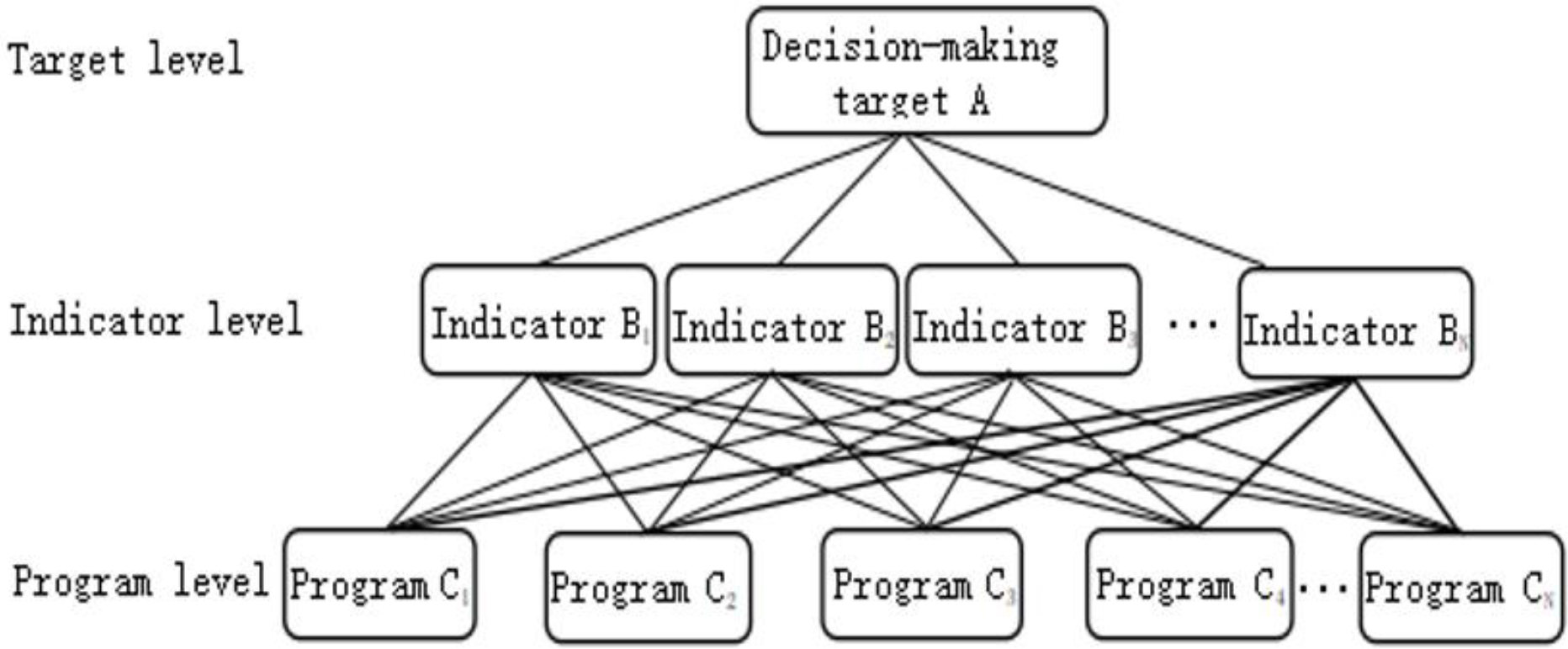
Establish a hierarchical structure. Analyze the relationship between various influencing factors in the system, disassemble a goal into different constituent factors, and then further subdivide them according to the constraint relationship between the factors and finally form a hierarchical structure. The hierarchy consists of three layers from top to bottom: the highest layer (the target layer), the intermediate layer (the indicator layer), and the lowest layer (the program layer), of which the highest layer usually has only one element, which is generally the predetermined goal or ideal result of the problem analysis; the intermediate layer includes the intermediate steps involved in achieving the goal, which can be consist of several levels, including the criteria and sub-criteria to be considered; the lowest layer is the program level, consisting of various measures and decision options available to achieve the goal. The number of levels in a hierarchical structure depends on the complexity of the problem and the level of detail of the analysis required. Generally, there is no restriction on the number of levels. There are generally no more than 9 elements dominated by each element in each level. As shown in Fig. 6.
Hierarchical structures. Constructing pairwise comparison matrices. After establishing the hierarchy, the weights of the elements at each level are determined. For most of the socio-economic problems, especially complex ones, the weights of the elements are not easily obtained directly. In such cases, their weights need to be derived using appropriate methods. AHP utilizes the judgment matrix gave by the decision maker to derive the weights. The elements of the next level dominated by the element C of the criterion layer are denoted as The definition of scale 1
The judgment matrix A has the following properties: 1)
Weight vector and consistency index. The judgment matrix obtained by pairwise comparison may not necessarily satisfy the positive reciprocal condition of the judgment matrix, and AHP adopts a quantitative criterion to measure the degree of inconsistency.
Let
By multiplying
In addition, the consistent positive reciprocal matrix
The transpose Each row of The largest eigenvalue of The eigenvector
According to the above properties, when
As for the positive reciprocal matrix
Let the nth-order square matrix
Any other eigenvalue of
If the judgment matrix is not consistent, then
For consistent positive reciprocal judgment matrix,
Average random consistency index
Define CR as the consistency ratio,
Total ranking of AHP. Calculating the ranking weights of the relative importance of all factors at the same level for the top level (overall objective) is called the total hierarchical ranking, and this process is conducted layer by layer from the high level to the low level. The total hierarchical ranking obtained at the bottom level (program level) is the total ranking of multiple evaluated programs. If the upper level
Weight synthesize method
If the consistency index of some factors at the
AHP finally obtains the weight of each decision alternative at the program level relative to the total goal. It also gives provides the total consistency index based on all judgments throughout the entire hierarchical structure. With this information, decision-makers can make decisions.
Based on the analysis of the factors influencing the attractiveness of social e-commerce platforms, this study developed a three-level assessment index system for evaluating the attractiveness of social e-commerce platforms, consisting of the goal layer, indicator layer, and program layer. The goal layer is the social e-commerce platform attractiveness, and the indicator layer comprises the influencing factors of social e-commerce platform attractiveness, namely, the four secondary indicators of the ability to attract consumers to access the platform, promote consumer purchase conversions, maintain consumer platform loyalty, and attract consumers to share experiences. The program layer is corresponding 14 tertiary indicators under these four secondary indicators, as shown in Table 5.
Evaluation system of attractiveness indicators of social e-commerce platform
Evaluation system of attractiveness indicators of social e-commerce platform
Scale of proportions
In terms of the weight of the secondary indicators, incorporating insights from e-commerce industry experts, this study considers the ability to promote the conversion of consumer purchases (B2) as the foremost priority in social e-commerce. For a platform to survive in the long term, it needs to be profitable. The conversion rate of an e-commerce platform is the core of the operation of e-commerce enterprises. Secondly, by integrating social network elements such as discussion, attention, sharing, and interaction into the consumption process, social e-commerce distinguishes itself from traditional e-commerce. Sharing and interaction serve as its main features, crucial for overcoming traditional e-commerce traffic bottlenecks. More and more enterprises also recognize the social value and economic benefits of sharing behavior. Therefore, the ability to attract consumers to share experiences (B4) is the second most important. Finally, according to Pareto Principle, 80% of a company’s profits come from 20% of its loyal customers. Moreover, the cost of acquiring a new customer is typically 5–10 times higher than retaining an existing one, which means maintaining a high level of customer loyalty is not only easier but also more important than attracting new customers. Therefore, the ability to maintain consumer platform loyalty (B3) is ranked third, followed by the ability to attract consumers to access the platform (B1). That is, the weights of B1, B2, B3 and B4 are assigned respectively as 1, 4, 2, 3. In addition, the 14 tertiary indicators of social e-commerce platform attractiveness are considered to be equally important. In order to facilitate the use of the AHP, the importance of each factor is scored with reference to the scale of proportions in Table 6, and the data obtained is the judgment matrix.
Judgment matrix of index layer
In the index layer, the judgment matrix is established according to the expert scores and input into the SPSSAU23.0 tool for calculation. The specific results are shown in Tables 7 to 11.
B1-C judgment matrix
B2-C judgment matrix
B3-C judgment matrix
B4-C judgment matrix
All of the above matrix consistency tests passed, and the consistency tests of the total weights of the hierarchy have also passed. In terms of comprehensive weight of the influencing factors of the secondary indicators, the ability to promote consumers’ purchase conversion and maintain consumers’ platform loyalty have a greater impact on the attractiveness of social e-commerce platforms, and the relative impact weight of the ability to promote consumers’ purchase conversion reaches 0.4658, and the relative weight of the ability to attract consumers to share their experiences also reaches 0.2771. Meanwhile the relative influence weights of the ability to maintain consumer platform loyalty and access the platform are 0.1611 and 0.0960. The comprehensive weight is obtained by calculating the degree of influence of the 14 factors in the third program level on the total indicator attractiveness of social e-commerce platforms. The larger the value of the comprehensive weight is, the higher the degree of influence of this factor on the results is. As shown in Table 12.
Comprehensive weights of evaluation indicators
Note: The comprehensive weight equals the weight of the second-level B indicator multiplied by the weight of the corresponding third-level C indicator under the second-level B indicator.
This study adopts the AHP to divide the social e-commerce platform attractiveness evaluation indexes into four secondary indexes and the corresponding 14 tertiary indexes, namely, the ability to attract consumers to access the platform, the ability to promote consumer purchase conversions, the ability to maintain consumer platform loyalty, and the ability to attract consumers to share experiences, and establishes a comprehensive assessment model as follows:
where,
Mathematical model of the attractiveness evaluation index system of social e-commerce platforms
Mathematical model of the attractiveness evaluation index system of social e-commerce platforms
According to the calculated scores
Computational approach
Based on the attractiveness assessment model of social e-commerce platform, this study uses fuzzy evaluation method to evaluate the attractiveness of social e-commerce platform. The computational approach are as follows:
First, model data is collected. A questionnaire survey is conducted on the users of social e-commerce platforms to collect the model data, and the reliability and validity of the measurement indicators is analyzed.
Next, a comment set (comment set
Finally, the scores of each indicator are brought into the attractiveness assessment model, and the comprehensive score of social e-commerce platform attractiveness is calculated.
Design of index measurement scale and data collection
This paper uses the questionnaire survey to collect model data. And the survey subject is the users of the social e-commerce platform. The questionnaire is designed to consist of two parts. The first part is the demographic characteristics, including the income, education background and whether or not used a social e-commerce platform, in order to survey the basic characteristics of the sample and the usage of social e-commerce platforms. The second part is designed as 5-Likert scale to measures the score of four secondary and corresponding 14 tertiary indicators in the assessment model of social e-commerce platform. Based on the previous maturity scales and research background of social e-commerce, the measurement items are modified. The measurement of variables in assessment model is shown in Table 14.
Measurement of variable in assessment model
Measurement of variable in assessment model
Reliability and validity of scale
It is assumed that questionnaires were distributed to social e-commerce platforms A, B, and C. After collecting and cleaning the data, analysis on the reliability and validity of the scale is conducted before the the calculation of social e-commerce platforms attractiveness by AHP.
Measurement reliability refers to whether a set of measurement items are measuring the same concept. That is, the degree of consistency after repeated measurement using the scale reflects the stability of measurement. Cronbach’s alpha (a) coefficient is usually used to evaluate reliability, which is mathematically defined as:
where,
Measurement validity including structural and discriminant validity can be examined by measurement model of structural equation modeling (SEM) and AMOS 28.0 software package. Under the condition that the measurement model-fit are met, the relevant parameters in the model are estimated by Maximum Likelihood Estimation (MLE) method. The chi-square degree of freedom ratio (
Model fit indexes of structural equation modeling
Model fit indexes of structural equation modeling
Construct validity reflects whether the measurement items can truly reflect the level of the latent variables [47], mainly used to examine the degree of closeness of the relationship between the measurement items and its construction. The standardized path coefficients of the confirmatory factor analysis (CFA), composite reliability (CR) and average variance extracted (AVE) are observed for the assessment. Composite reliability (CR) mainly evaluates the consistency of a set of latent constructs, indicating the extent to which all measurement indicators share the same latent construct. A higher CR value indicates a high degree of internal consistency among the measurement indicators. Average variance extracted (AVE) represents the amount of variance in the indicator variables that is explained by the latent variable construct, relative to the measurement error. When the observed variables can accurately reflect the latent variables they represent, the latent variables should have a higher AVE. Standardized path coefficient refers to the factor loading of confirmatory factor analysis, reflecting the degree of correlation between latent variables and observed variables. Usually the measure has good construct validity when the standardized path coefficient
where,
Discriminant validity refers to the extent to which a measure is not reflected by other variables. It is demonstrated by low correlations between the measured indicators and other variables, indicating strong discriminant validity [47]. There are three tests method for discriminant validity: (1) According to the method of correlation coefficient discrimination, the 95% confidence interval of correlation coefficient of two latent variables covers 1.00, indicating that the model lacks discriminate power; (2) Using the competitive model comparison method, one model does not impose restrictions on the covariance relationship between latent constructs, and the covariance parameters between latent constructs are estimated freely(unconstrained two-factor correlation estimations), while the covariance relationship between the potential constructs in the other model is constrained to 1, making the covariance parameters between latent constructs fixed. If the difference in chi-square values between the two models is significant, it indicates that there is higher discriminant validity between the latent constructs. (3) The Average Variance Extracted (AVE) comparison method. The square root of the average variance extracted between two constructs is compared to the correlation coefficient between the two latent variables. If they are all greater than that, it indicates discriminant validity are good.
And the mathematical formula to calculate the correlation coefficients between pairs of latent variables is listed as follows:
Where
After the reliability and validity of measurement meet the requirements, the data are loaded into the assessment model, and the influencing factors in each layer of the model are are compared pairwise to obtain judgment matrices. The consistency test is carried out through the SPSSAU23.0 tool, and the weight of each influencing factor is derived from the judgment matrix, Finally, the comprehensive index weights are calculated.
Establishing the the set
of evaluation objects
According to the evaluation object to establish the evaluation set
Calculating scores
for each tertiary indicator
According to the index system shown in Table 5, the subordinate subset of each factor under the tertiary indicators is established by referring to the fuzzy comprehensive evaluation method, and each item
Therefore, the corresponding subordinate subsets of assessment model of social e-commerce platforms A, B and C are as follows:
Thus the scores for each of tertiary indicators for platforms A, B, and C can be obtained, which are respectively denoted as
And in the formula for the tertiary indicator scores for A, B and C, where
Calculating the attractiveness of social e-commerce platforms (Fi)
Using the social e-commerce platform attractiveness model
Based on
Discussion
Conclusion
The main work of this study is as follows:
Based on the previous studies related to attractiveness, this study proposed the concept of “Gravitational field of social e-commerce platform”, and defines social e-commerce platform attractiveness as the ability of social e-commerce platforms to attract consumers to access, stay on the platforms, make purchases and actively sharing shopping experience and recommendation of products after purchase by using socialization elements such as interaction and sharing. Identifying the factors influencing social e-commerce platform attractiveness. Building upon the AISAS model and the characteristics of new social e-commerce customer behavior, this study identifies four key dimensions affecting platform attractiveness: the ability to attract consumers to access the platform, to promote consumer purchase conversions, to maintain consumer platform loyalty, and to attract consumers to share their experiences. Among them, the ability to attract consumers to access a platform comprises three sub-dimensions: promotional information scenario, brand reputation and social influence; the ability to promote consumer purchase conversions includes four sub-dimensions: the degree of trust, network scale, network density, and network centrality; the ability to maintain consumer platform loyalty includes four sub-dimensions: information quality, system quality, product quality, and service quality; and the ability to attract consumers to share their experiences includes three sub-dimensions: perceived profitability and reciprocity, perceived ease of use of sharing, and perceived pleasure of sharing. Attractiveness assessment model of social e-commerce platform is constructed by AHP. Combining the factors influencing the attractiveness of social e-commerce platforms based on AISAI model, the evaluation indexes of the attractiveness of social e-commerce platforms comprises 4 secondary indexes and corresponding 14 tertiary indexes. Fuzzy comprehensive evaluation method is used to determine the indicators weights, and finally a comprehensive assessment model for the attractiveness of social e-commerce platforms is built, and the arithmetic examples are demonstrated. This assessment model can be utilized for comparative analysis within the platforms to examine areas for improvement, and also can be employed for comparative analysis among social platforms in the market to identify gaps and opportunities for enhancement.
Based on the findings of this study, The managerial suggestions for improving the attractive of the social e-commerce platform is presented as the following.
In improving the platform’s ability to attract consumers to access, satisfying the basic need of users for cost-effective is the key. Social e-commerce platforms should create promotional information scenarios highlighting cost-effective advantages,which can deepen consumers’ perception of promotional activities by increasing the scale of promotions, such as offering discounts, price reductions and free postage from the platform. Simultaneously, platforms can also enhance its social image by increasing the publicity though mass media. In the face of the current security issues such as unfair competition and false propaganda by merchants on social e-commerce platforms, platforms need to strengthen standardized management, establish a set of more strict and comprehensive registration and audit mechanism, providing consumers with a healthy and safe platform environment, creating a good reputation and brand image for the platform will in turn attract consumers to access, tapping into more potential customers. To enhance the platform’s ability to convert consumer visits into purchase, the primary task is to earn users’ trust and recognition of the platform. First, platform could improve and optimize its functions with a customer-oriented approach, enhancing consumers’ experience during information browsing and interaction. Second, platforms could encourage users to establish close connections with each other and cultivate loyal users with numerous of followers. This allows more users to feel their social status and influence on the platform, thereby boosting their trust and purchase intentions. Finally, platforms could strengthen the incentive mechanism to encourage users to generate and share content on the platform. This could reduce the purchase risk for potential customers, enhance their trust, and then promote shopping conversions. Given the current decline in some consumers’ trust in products promoted by online influencer, social e-commerce platforms should operate on the basis of the consumers’ trust and emphasize the identification and cultivation of opinion leaders with high credibility. In maintaining consumer loyalty on the platform, the top priority is product and service innovation. Given the current abundance of social e-commerce platforms and homogenization of goods, it’s crucial for platforms to innovate and highlight the distinguished features of their products and services offered under the premise of ensuring product quality, which is the key to break through platforms homogenization and to establishing a differentiated core competence. Additionally, platforms could improve the customer relationship management system to create a good service experience for consumers and enhance their satisfaction. Platforms can use big data technology to analyze user behavior on the platform, provide customized and humanized services for customers. Furthermore, optimizing the platform service process and building a comprehensive pre-sale, in-sale, and after-sale service system can improve service efficiency, and ensure a quick response when customers encounter problems. For example, setting up dedicated service channels and 24-hour online customer service can provide professional and efficient services. In attracting consumers to share their experiences, social e-commerce platforms can offer economic incentives such as cash red packets and coupons to stimulate consumers to actively review and share products after purchase. A good design of a sharing reward mechanism can not only stimulate consumers’ willingness to share actively but also enhance the stickiness of users on the platform. Meanwhile, this also enables platforms to collect more authentic product reviews, providing potential consumers with reliable shopping references. Additionally, when designing the sharing environment, platforms should fully consider consumer’s psychology, maintain a balance and variety in promotional activities, and ensure consumers feel the sincerity of the platform in the participation process, avoiding aesthetic fatigue and even distrust of the platform due to excessive marketing. Lastly, platforms could simplify the sharing process to improve consumers’ sharing experience. Faced with complicated procedures, consumers might give up sharing, which will affect the sharing effect. Therefore, platforms should optimize sharing functions, minimize operation steps, and make the sharing process more convenient and enjoyable. This will help improve the frequency and efficiency of consumer sharing.
This study still has some limitations, which can be further improved in future research:
Firstly, limitations in the factors influencing the attractiveness of social e-commerce platforms. On the basis of AISAS model,this study proposes the factors affecting the formation of attractiveness of social e-commerce platforms from 4 dimensions and 14 sub-dimensions. However, this study doesn’t discuss all the factors affecting the attractiveness of social e-commerce platforms, for example, consumers’ cultural trait, social trait, personal trait and psychological trait which may also impact consumers’ buying and sharing behaviors. Future research can consider introducing relevant variables of consumer demographic characteristics, so as to explore the influencing factors of platform attractiveness more comprehensively and deeply from the perspective of consumers.
Second, limitations of the research methodology. Although the consistency test of all judgment and result matrices is good in this study, the research results may be affected by personal preferences to a certain extent due to the inherent subjectivity of AHP. Therefore, future studies could employ two or more comprehensive evaluation methods to verify the accuracy and validity of the study by comparing the results, thereby avoiding the limitations imposed by the method itself.
Finally, limitations of data. This study presents the arithmetic approach and process without the empirical data, so the practicality and applicability of the model need to be further verified. Future research could conduct on-site questionnaire survey and collect data to verify the rationality of questionnaire design and the application effect of the model. This will help to improve the practicality and accuracy of the model, so as to better serve practical applications.
Footnotes
Acknowledgments
This study was supported by the project “The research on the advantages, challenges, and optimization paths of innovation and entrepreneurship education in applied university (Grant No.: 2022JWZD33)” and the project “Research on key influencing factors of NFT digital collection user adoption based on blockchain application (Grant No.: 2022SKY287)”.