




Abstract
In order to effectively improve students’ learning outcomes and teachers’ teaching quality, this paper explores an optimization measure for students’ autonomous learning based on deep learning and Human-Computer Interaction (HCI) technology. Our proposed optimization measure constructs an interactive micro-video teaching model from teaching resources, teaching process, and teaching evaluation perspectives. The experimental results demonstrate that our proposed optimization measure can effectively improve students’ learning outcomes and satisfaction while enhancing their autonomous learning abilities and learning motivations.
Keywords
Introduction
With the continuous progress of information technology and the transformation of educational and teaching models, online teaching has gradually become an increasingly popular teaching method [1]. As an emerging teaching resource, micro-videos have been widely employed in online education [2, 3]. However, many micro-video teaching resources suffer from issues such as monotony, boredom, and lack of interactivity, which directly affect students’ learning interests and effectiveness. Therefore, improving the effectiveness of micro-video teaching and adapting it better to students’ learning needs has become an urgent problem in current educational research [4, 5, 6].
In order to enhance students’ learning outcomes and teachers’ teaching quality, The paper proposes a micro-video teaching model based on Human-Computer Interaction (HCI), and evaluates and verifies it through experimental research. This model first analyzes the content of relevant information technology resources to determine teaching objectives and students’ actual needs. Furthermore, it introduces HCI technology to create micro-video teaching aids, thereby combining online resources with teaching content. Finally, an HCI-based micro-video teaching model is constructed. This model emphasizes teaching methods’ richness and operational appeal, enabling online resources to be more effectively applied in the teaching process. It enhances students’ interest and participation in learning and their ability to learn independently and think creatively.
Research has shown that the HCI-based micro-video teaching model is a new teaching approach. It enables interaction and communication between teachers and students by applying HCI technology to micro-video teaching, and promotes students’ learning interest and participation. It has significant implications for enhancing students’ autonomous learning ability and innovative thinking. The following sections are structured as follows. Section 2 introduces relevant worldwide research on deep learning algorithms and HCI technology, explores their research status and issues, and provides a theoretical basis and reference experience for the subsequent research. Section 3 describes the process of constructing the micro-video teaching model based on HCI, including the overall design concept, the specific implementation methods, and the selection of teaching content. Section 4 analyzes and summarizes the experimental results. Section 5 summarizes the research achievements and offers prospects for future research directions. In summary, this paper provide valuable exploration and practical experience for online education in the digital era through multi-angle analysis and experimental verification.
Literature review
HCI technology is an emerging field of technological research. Its application in the field of education has received widespread attention. Although more and more educational institutions have started to disseminate and teach teaching content in the form of micro-videos, this approach has not been well promoted and applied. Therefore, many scholars have researched micro-video teaching models’ design, evaluation, and application in-depth. Liu et al. proposed an e-learning algorithm to classify micro-videos into a tree structure, thereby optimizing the micro-video organization [7]. Ren and Bao focused on the application of HCI technology in intelligent robot systems and platforms in the field of artificial intelligence. They hoped that this technology would help researchers in this field obtain the necessary information for more advanced research [8]. The advancement of Human-Computer Interaction (HCI) is inseparable from breakthroughs of AI technology; HCI harmonizes human and machine [9, 10, 11]. Hazer-Rau et al. proposed a multimodal dataset and applied it to affective computing in the HCI environment [12]. Wei et al. provided a platform for situational awareness in intelligent HCI and applied it to time-critical decision-making [13]. Regardless, researches on HCI technology are countless. Some researchers have explored HCI applications in education and teaching. Girouard et al. analyzed the role and application potential of the new interactive framework in HCI-based education [14]. Gigantesco et al. surveyed and analyzed the preference for smartphones in the classrooms, providing a direction for developing digital education activities and a solution to subsequent problems [15]. The above works show that micro-video has application potential in education and teaching. Meanwhile, HCI technology has also been applied in education, but the research on applying HCI methods or concepts to micro-video teaching is rare.
This section presents the current research progress of HCI technology in various fields, with a focus on its application in micro-videos. In terms of HCI technology, researchers employ different methods and techniques to enhance the interactive experience between humans and machines. These technologies are widely applied in various domains, such as smartphones and portable smart electronic devices. In the field of micro-video teaching, an increasing number of schools are using micro-videos to disseminate and deliver teaching content. However, the micro-video mode’s design, evaluation, and application still require further investigation, which is the research focus here. In previous studies, scholars have explored micro-video teaching from different perspectives, such as video organization and interactive frameworks. These studies provide valuable references and insights for the paper.
Methods
Micro-video design and HCI
As Internet technology develops, micro-video, a burgeoning industry, has different definitions in different application areas [16]. Overall, micro-video has the characteristics of diverse resources, convenient transmission, vivid presentation, and simple operation. Many researchers in the education and teaching area have emphasized improving cognition level and classroom effects. Here, information technology courses are considered as the basis of micro-video. The teaching contents of some grade or some discipline, which are suitable to be presented through video media, can be made into short but concise teaching resources to cultivate students’ information awareness. Micro-videos designed for these teaching contents have several typical characteristics, such as micro-principles, clear knowledge points, interactivity, and timely feedback.
HCI technology is developed based on AI technology [17, 18, 19]. At present, the feedback and interaction between humans and machines are the focuses of interactive design, and intelligent interaction is incredibly vital, which is of great significance to promote the natural interactions between humans and machines [20, 21, 22]. Currently, interactive design is widely applied in digital products; increasingly, more products emphasize on the consumers’ needs and the communication and interaction between users and products, in an effort to offer products that satisfy the users. Interactive design in the education and teaching area focuses on students’ feelings. Interactive platforms suitable for real-time, dynamic communication among students are designed based on platforms or software tools. Here, the interactive design is based on information technology-associated instructional videos, with dynamic functions added.
Construction of micro-video teaching model based on HCI
During the pre-teaching preparation stage, teachers need to analyze the teaching content, clarify the scope and depth of the learning materials, and reveal the connections between different parts of the content. First, they need to conduct a rough analysis of the teaching materials, break them down into individual knowledge points, and develop a well-structured lesson plan based on students’ cognitive patterns. Next, they need to analyze each lesson’s teaching focus and difficulties and select appropriate teaching methods. Teachers also need to analyze the information technology network resources applicable to teaching cases and effectively use online resources [23, 24]. Here, interactive-designed micro-videos are used as teaching aids. Therefore, when designing the teaching content, the content of teaching materials and network-related content are integrated to prepare for the production of micro-video and interaction design.
Teaching objectives refer to the expected level of achievement that students should attain through teaching activities, and they form the basis for designing teaching activities and assessments. Determining teaching objectives should be based on the teaching syllabus and course goals. The learning content should be organized into unit-level teaching objectives according to sections, and further subdivided into activity objectives. During the teaching implementation process, the objectives for each lesson should be determined based on the lesson schedule, and classified into three dimensions: knowledge and skills, processes and methods, and attitudes and values. This helps determine the desired level of achievement for each knowledge point. Doing so provides a basis for teachers to design teaching activities and evaluate students’ learning outcomes [25].
The design of teaching resources mainly includes the design of micro-video resources and interaction design in micro-video, and its auxiliary resources include teaching materials, courseware and case materials [26, 27, 28].
(1) Design of micro-video resources
Micro-video resources are both a learning resource and a teaching tool. Here, the application of micro-video resources in the teaching process helps students in self-learning and problem-solving, and replaces teachers in teaching and demonstrating teaching content. When designing it, it is crucial to ensure that it is educational, scientific, systematic, and logical, and video quality is also significant. Video quality evaluation usually adopts two methods: subjective evaluation and objective evaluation.
The subjective evaluation method is to evaluate the video quality by manual evaluators, and evaluators need to rate the videos according to predetermined scoring standards. The calculation method for subjective scoring is as follows:
In which,
The objective evaluation method evaluates the quality of the test video based on the difference between the reference and test videos. The calculation method is as follows:
In which, PSNR indicates the peak signal-to-noise ratio,
(2) HCI design in micro-video teaching
Nowadays, people’s attention to micro-video teaching resources is increasing, and a single viewing function can no longer meet the current learning needs. Therefore, adding interaction design to the micro-video makes the expression of micro-video teaching resources more diverse, operational, and attractive. HCI design in micro-video teaching refers to designers using technological means to make the interaction between students and micro-videos more natural, efficient, and friendly to improve students’ learning effectiveness and user experience. The paper applies HCI to micro-video design, and its equation is as follows.
In which,
By emphasizing HCI design, micro-video teaching can be made more understandable and graspable for students, thereby improving their learning effectiveness and user experience. To facilitate effective teaching, it is also important to identify the appropriate timing for interaction and create an efficient learning environment.
HCI in the teaching process refers to the interaction between teachers and students and between students and teaching tools (such as computers, smartphones, and tablets). In this process, computers and other technological tools act as intermediaries, facilitating information transmission and interaction between teachers and students. Teachers can provide personalized learning resources and teaching services based on students’ learning situations and needs. For example, students can assess their learning progress and outcomes through online tests, allowing for personalized learning arrangements and adjustments to achieve learning objectives. The quality of HCI directly affects the effectiveness of teaching. Therefore, teachers need to focus on designing and optimizing HCI to enhance teaching effectiveness and students’ learning experience. The video teaching link relies mainly on students’ autonomous learning. Students independently watch the videos and complete corresponding activities, while the teacher’s main task is to help students learn and solve problems. Here, the experimental variable is the difference in teaching videos. The experimental group of students is provided with interactive-designed micro-videos, while the control group is given non-interactive micro-videos. Other teaching factors remain the same. To ensure the experiment’s validity, the teacher avoids directly providing students with answers when guiding them. Autonomous learning refers to the process where teachers provide students with sufficient learning resources and space, enabling them to autonomously select and master the learning content under the teacher’s guidance. This teaching method revolves around students, emphasizing their autonomy in exploration and discovery, encouraging active learning, fostering interest and enthusiasm, and promoting holistic development. Autonomous learning can be achieved through various means, such as individual reading, independent exploration, group discussions, and online learning. In the teaching process, teachers should play a guiding and supportive role to promote students’ autonomous learning, enhance their self-learning abilities and competencies, and cultivate their awareness and capabilities for lifelong learning. Teacher assistance refers to the provision of necessary help and guidance by teachers during classroom teaching to facilitate students’ better understanding and mastery of the learned content. For instance, teachers can assist students in understanding and applying their knowledge and skills through analyzing case studies. They can also help students actively explore problems by posing questions and guiding their thinking, thereby fostering their abilities for independent learning abilities. Furthermore, teachers can stimulate students’ interest in learning and encourage their active participation in classroom teaching through diverse teaching methods and content.
Teaching evaluation is the process of collecting students’ relevant grades and performance data through scientific evaluation methods, quantifying them, and making value judgments on the teaching process and results. The teaching evaluation here is conducted through a combination of formative evaluation and summative evaluation based on teaching objectives, teaching content, teaching methods, and students’ behavioral performance. The expression equation is as follows:
In which,
In summary, Fig. 1 is the micro-video teaching model constructed by introducing HCI.
HCI-based micro-video teaching model.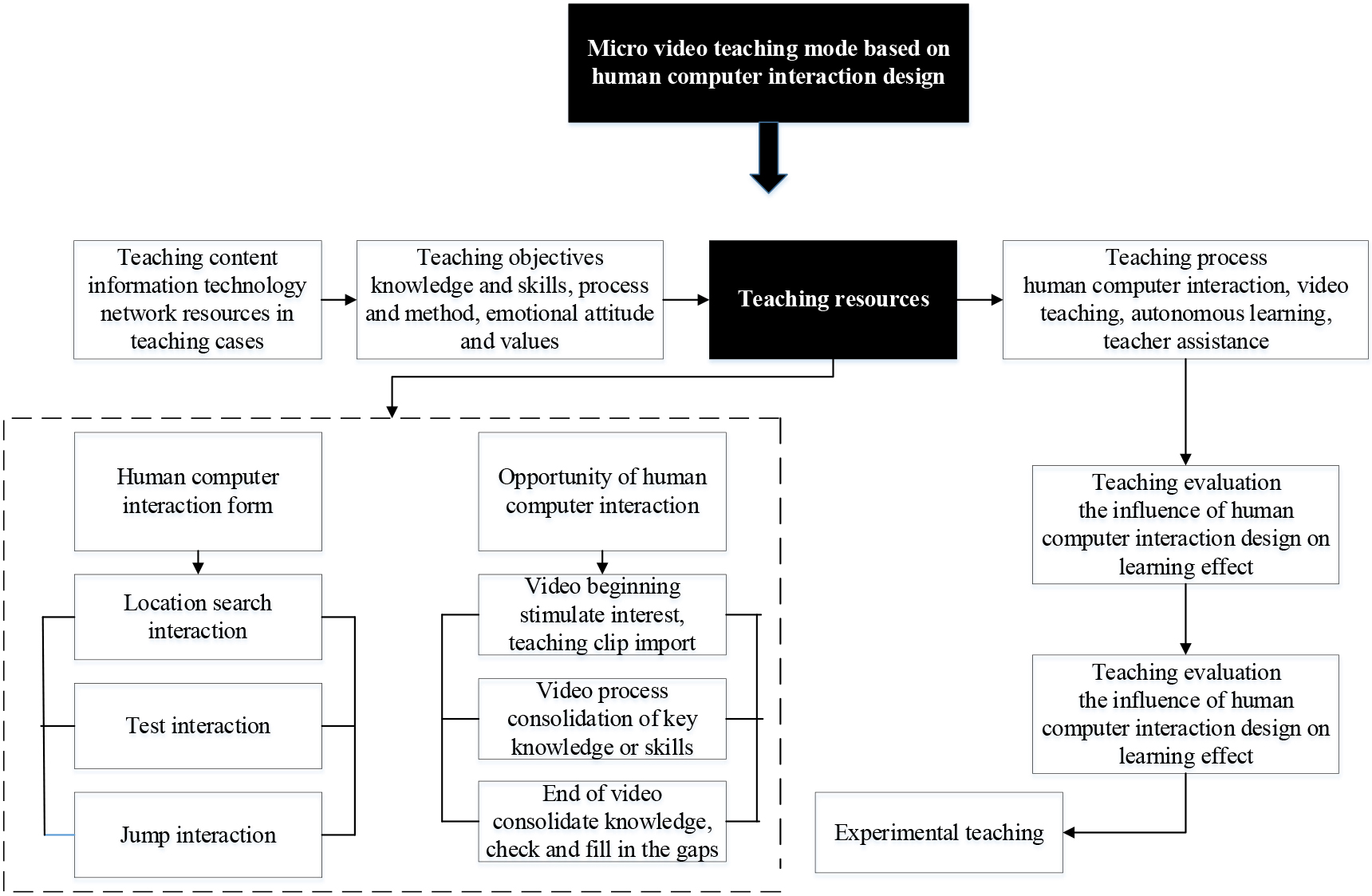
Two classes in the second grade of a middle school in Ningbo, Zhejiang Province, are included in the teaching experiment to analyze the learning effects before and after the HCI introduction. These two classes are included because of students’ similar abilities indicated by the usual pre-test. In addition, the same teacher gives information technology courses for these two classes. Here, these two classes are respectively denoted as Class A, the control class, and Class B, the experimental class. HCI is introduced to the micro-video teaching of the experimental class only, which is the only difference between both classes. The micro-video teaching of information technology course is chosen. The effect of applying HCI to micro-video teaching is analyzed by comparing the usual grades and final grades of the two classes. Students’ autonomous learning abilities are vital in the teaching process, especially the interactive teaching process. Hence, autonomous learning ability is an indicator to evaluate experimental students’ performances after introducing the HCI design. The primary classes include learning content autonomy (C), time management (T), learning strategy (S), learning process autonomy (P), evaluation and reinforcement of learning results (E), and learning environment control (L). These variables are analyzed and characterized.
This teaching experiment lasted for eight weeks. The independent variable of the entire experimental process was micro-video teaching resources. Specifically, the difference was whether to introduce HCI design. The dependent variables were the learning effects of course grades, knowledge tests, and autonomous learning ability. The control variables included class size, learning ability, teachers, teaching progress, teaching contents, teaching hours, and teaching evaluation methods. These control variables had similar levels in both control and experimental classes. Figure 2 is the experimental process of the paper.
Experimental process.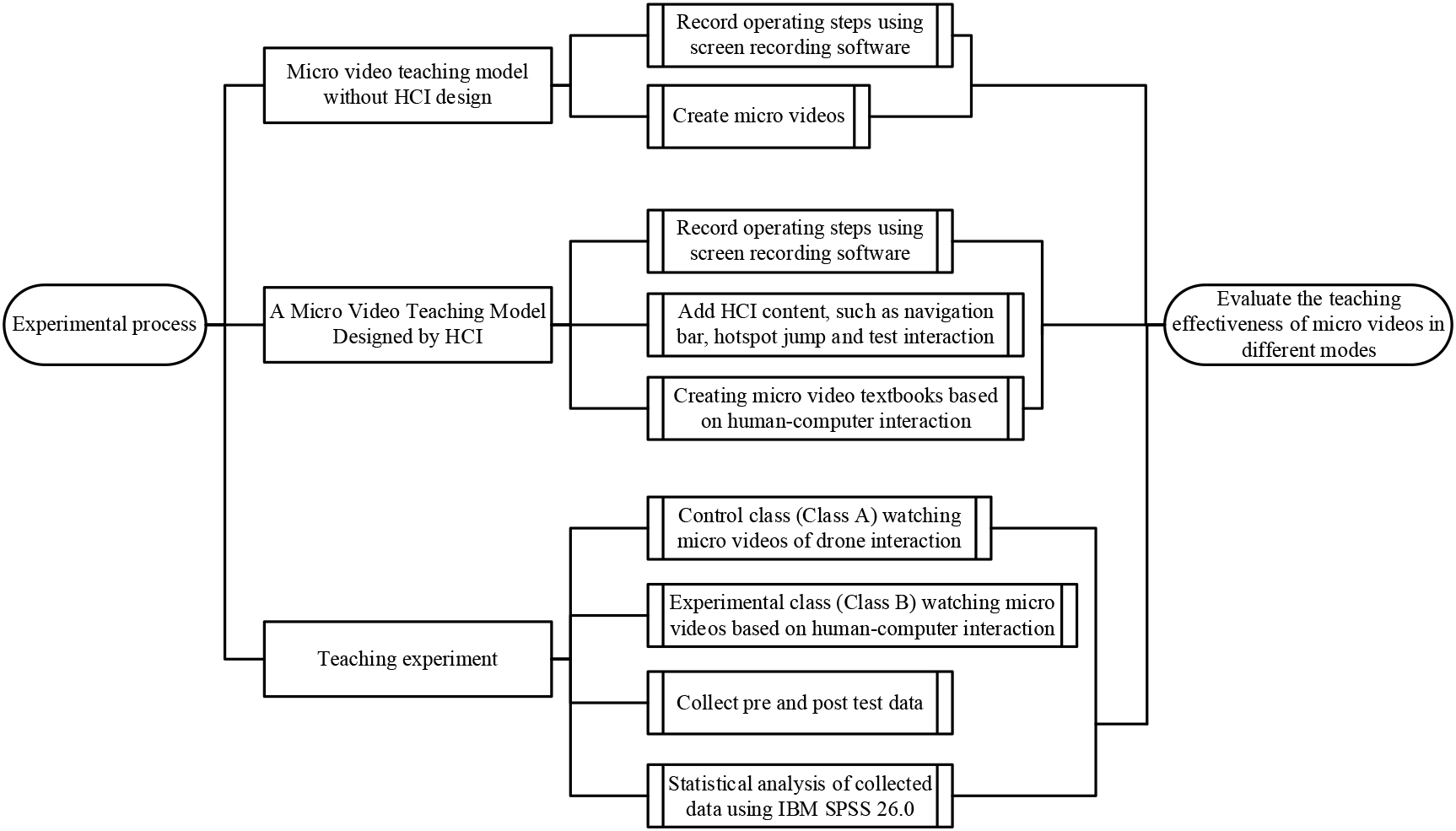
As shown in Fig. 2, for the micro-video teaching model without HCI design, first, the screen-recording software records the operating steps; then, the micro-videos are made by adding contents such as the beginning, ending, and video effects. For the micro-video teaching model with HCI design, first, screen-recording software records the operating steps as well. Then, HCI contents are added, such as a navigation bar, hot spot jumps, and test interactions. Finally, HCI-based micro-video teaching materials are produced. During the teaching experiment, the control class (Class A) watches the HCI-free micro-videos, while the experimental class (Class B) watches the HCI-based micro-videos. The teaching effects of micro-video under different models are evaluated by analyzing the pre-test and post-test data. The collected data are statistically analyzed by IBM SPSS 26.0.
Comparison of autonomous learning ability under micro-video teaching
Figure 3 is the pre-test and post-test results of students’ autonomous learning abilities in Classes A and B before and after the HCI introduction. They are compared and illustrated.
Comparison of pre-test and post-test results of students’ autonomous learning abilities (F stands for pre-test, A stands for post-test).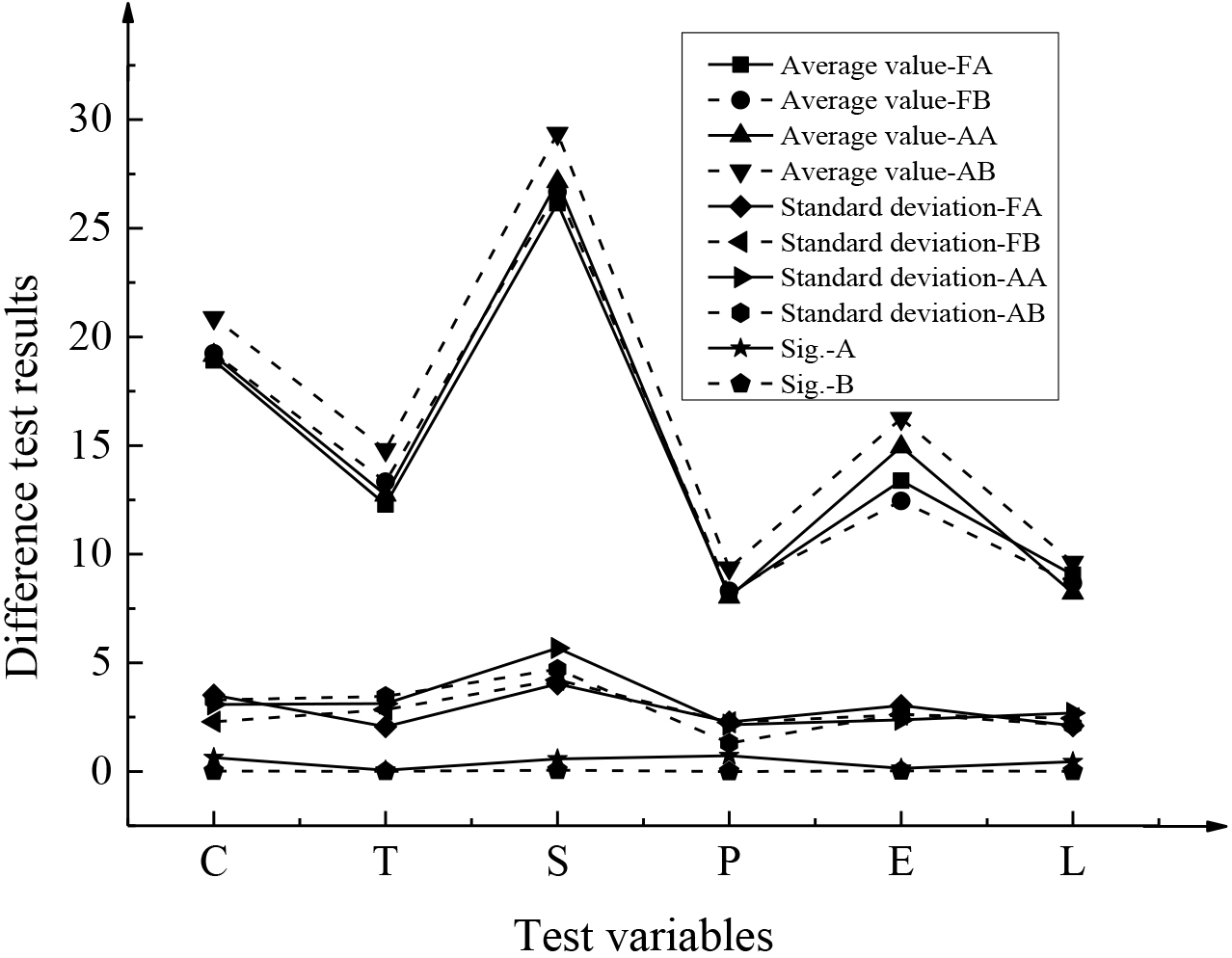
As shown in Fig. 3, the variations in the average value and standard deviation of the statistical data are meticulously examined. In group B, students’ average autonomous learning ability is increased compared with group A. Detailed results for different dimensions of autonomous learning ability are as follows. The pre-test statistical results show a significance probability of 0.636 between the learning content autonomy of Classes A and B, 0.058 between the time management, 0.578 between the learning strategy, 0.721 between the learning process autonomy, 0.143 between evaluation and reinforcement of learning results, and 0.453 between the learning environment control. Overall, the values of significance probability are above 0.05, indicating non-significant differences between Classes A and B. The post-test statistical results show a significance probability of 0.018 between the learning content autonomy of Classes A and B, 0.005 between the time management, 0.002 between the learning process autonomy, 0.025 between evaluation and reinforcement of learning results, and 0.012 between the learning environment control. Therefore, the autonomous learning abilities of students in Classes A and B are significantly different.
Figure 4 is students’ assignment performances in Classes A and B after the HCI introduction. They are compared and illustrated.
Comparison of student’s assignment performances in Classes A and B.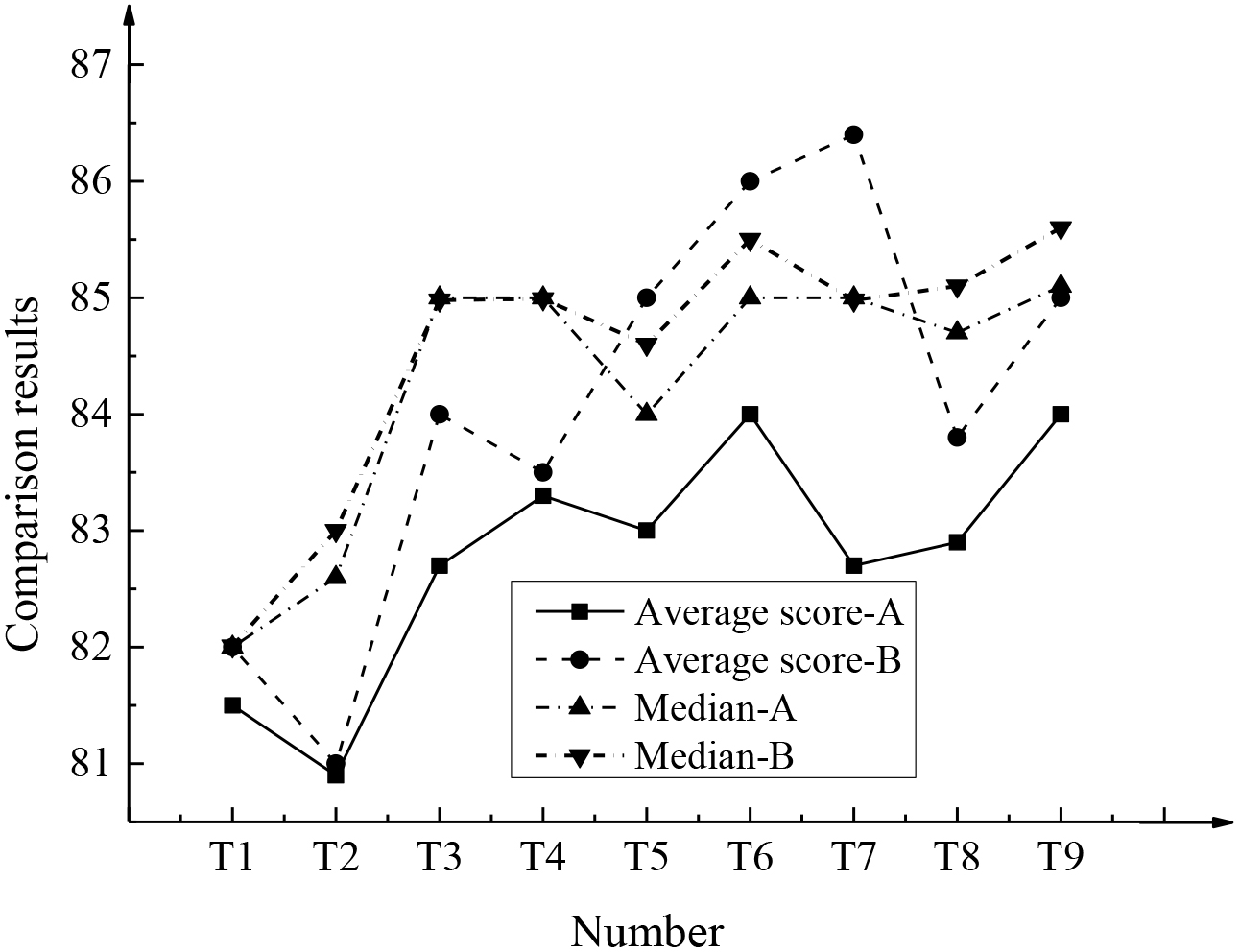
Overall, through the above experimental results, it can be observed that the assignment performances of students in Classes A and B increase from the perspective of average scores. At the beginning of the teaching experiment, the average scores of assignment performances in Classes A and B are almost the same. However, as the experiment progresses, Class B has higher average scores than Class A. From the perspective of the median, the overall changing process between Classes A and B in the micro-video teaching experiment is similar, and the overall gap is small. The median result suggests that during the micro-video teaching experiment, the intermediate learning level between Classes A and B is similar; hence, the overall change at the median level is stable. However, the improvement in academic performances is much faster in Class B, showing better learning effects. Therefore, introducing HCI design can improve students’ learning effects.
Comparison of student’s knowledge test results in Classes A and B.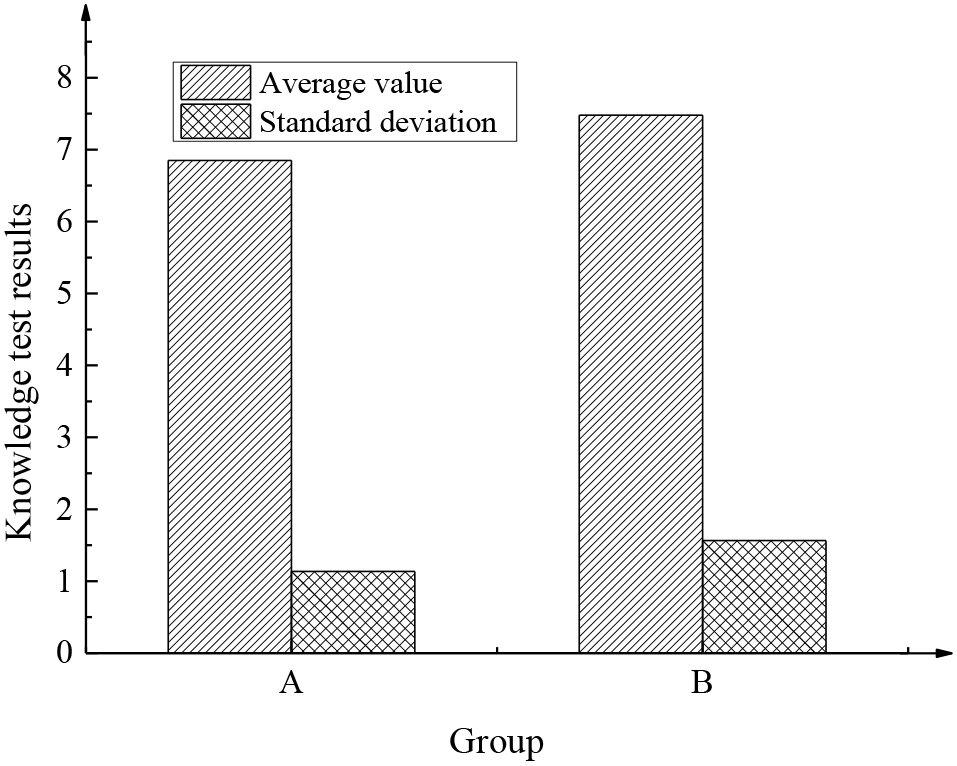
Figure 5 is student’s knowledge test results in Classes A and B after the HCI introduction. They are compared and illustrated.
Through the above experimental results, it can be observed that during the teaching experiment, Classes A and B have significant differences in knowledge tests before and after HCI introduction, and the corresponding significance probability is 0.042
Figure 6 is student’s satisfaction level results in Classes A and B after the HCI introduction. They are compared and illustrated.
Comparison of satisfaction with interactive micro-videos between Class A and Class B students within 8 weeks.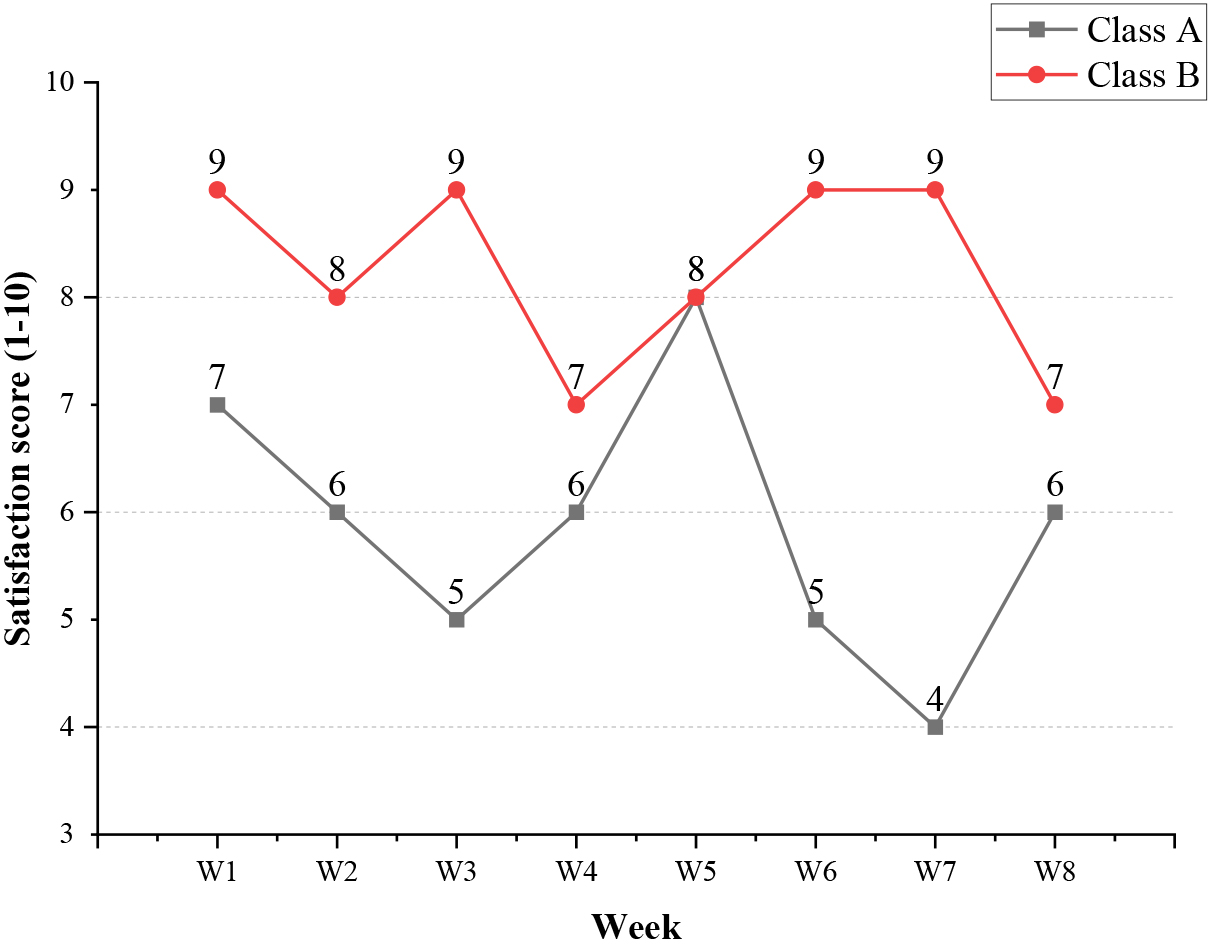
Through the above experimental results, it can be observed that Class A and Class B’s satisfaction with interactive micro-videos over 8 weeks is different. The results show that the overall satisfaction of Class B in the experimental group with interactive micro-videos is above 5 points. It indicates that introducing HCI design can improve students’ satisfaction with interactive micro-videos. Based on the data in the figure, the standard deviation of the control and experimental groups is calculated. The standard deviation for the experimental group students is 0.57, while the standard deviation for the control group students is 0.93. It indicates that the satisfaction level of the experimental group students is more consistent, while the difference in satisfaction level of the control group students is greater.
Figure 7 is the frequency of students interacting with interactive micro-videos after the introduction of HCI. The results of Class A and Class B are compared and explained.
Comparison results of full interaction frequency of interactive micro-videos between Class A and Class B students within 8 weeks.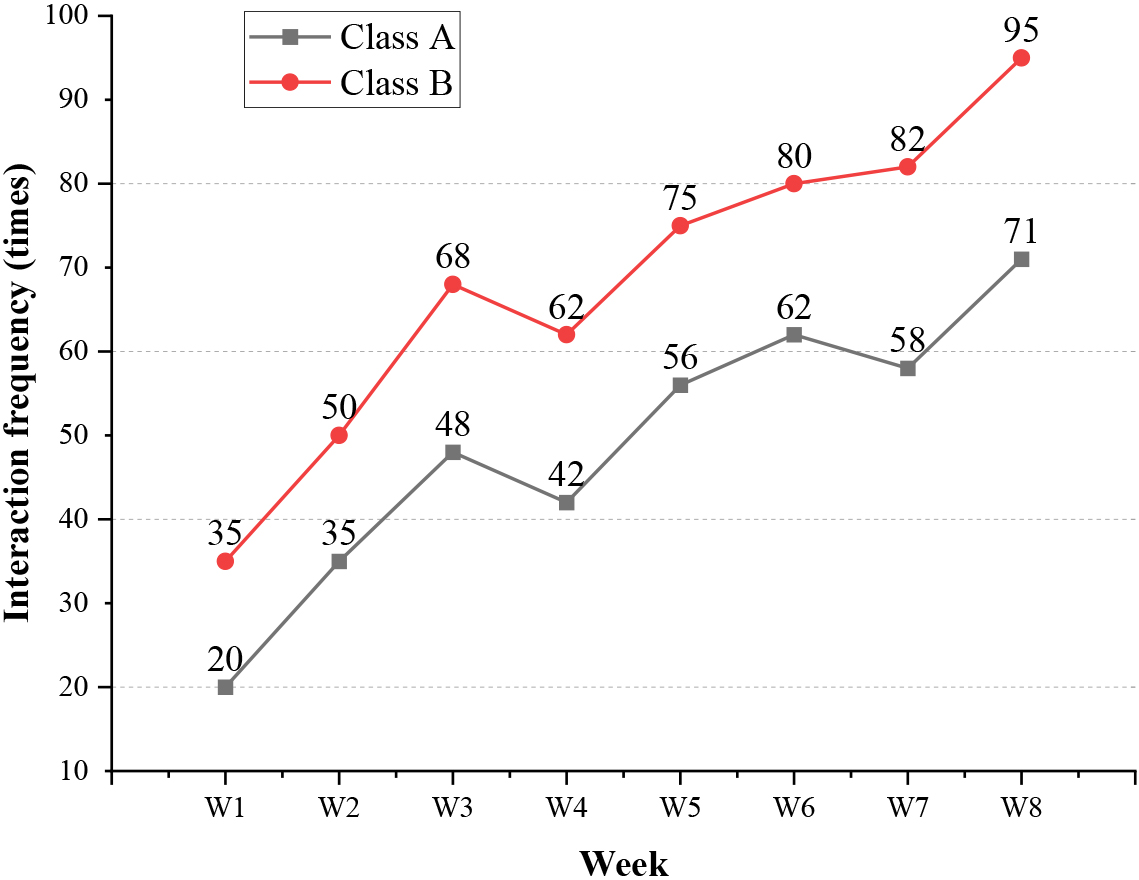
Through the above experimental results, it can be observed that the interaction frequency between Class A and Class B students on interactive micro-videos over 8 weeks is different. The data show that the interaction frequency of students in Class B is significantly higher than that of Class A. The interaction frequency of Class B has steadily increased within 8 weeks, with 95 interactions occurring in the 8th week, an increase of 171% compared to the 1st week. Although the interaction frequency of Class A has also increased, it is much less than Class B, with a maximum of only 71 times, an increase of 255% compared to the first week. It indicates that after the introduction of HCI, the experimental group students are more willing and able to participate in the interaction of micro-videos, effectively improving their participation and learning enthusiasm
AI technology has brought about significant changes in the entire society. HCI, one of the representative AI technologies, makes the information exchange between human and machine a possibility [29, 30]. HCI technology is applied to design the micro-video teaching model. The results show that introducing HCI can significantly improve students’ academic performances, learning effects, autonomous learning abilities, and the overall capabilities of acquiring and mastering knowledge. A possible reason is that the HCI-based micro-video teaching model provides students with real-time feedback of test results compared with traditional micro-videos. Substantially, the forms of micro-videos are rich and attractive, with more options. Meanwhile, micro-video participants can “operate” the video, which is vital in strengthening student’s knowledge systems in the education and teaching area. However, the improvement in students’ learning strategies after introducing HCI design is not ideal. A possible reason is its connection to time management. Overall, the enhancement of autonomous learning ability is apparent.
Micro-video, a burgeoning video form, is discussed, with an emphasis on micro-videos as teaching resources. An HCI-based micro-video teaching model is constructed by introducing the HCI design philosophy and considering the interaction forms and timing. The effects of the HCI-based micro-video teaching model are analyzed through a teaching experiment. The results suggest that it not only improves students’ autonomous learning abilities but also improves students’ overall learning effects. The results can provide a reference for applying HCI in the micro-video teaching model. However, due to the limitations of experimental conditions, the sample size is small, and more energies are put on teaching resources while designing the micro-videos. The designed HCI-based teaching model still has deficiencies. Future research can further explore how to further optimize the HCI-based micro-video teaching mode, such as how to improve the effectiveness and operability of HCI components. In addition, it is possible to consider applying this teaching model to other disciplinary fields, and further verify the effectiveness and universality of this model by comparing experiments in different disciplines.
Footnotes
Acknowledgments
The paper was supported by Hubei Polytechnic University Education and Teaching Reform Research Project (No. 2022B03).