



Abstract
This manuscript proposes a hybrid technique for determining the optimal positioning of phasor measurement units (PMUs) in power systems. The PMUs play a crucial role in power system control, wide-area monitoring, and protection. The proposed hybrid method is the joint execution of the Lichtenberg algorithm (LA) and the heap-based optimization (HBO) technique. Hence, it is named the LA-HBO technique. The objective of the proposed method is to place the PMUs in the power system for observability. The goal is to enhance the efficiency and accuracy of PMU placement, ensuring optimal positioning for improved grid monitoring capabilities. The Lichtenberg Algorithm (LA) enhances PMU placement by addressing system observability challenges and ensuring that selected locations provide comprehensive coverage of the power grid. The heap-based approach optimizes PMU placement by efficiently managing the selection process, considering factors like computational efficiency and scalability. The proposed hybrid technique is implemented in IEEE-30 and -14 bus systems. The MATLAB-based simulation results are compared with the various existing methods, such as Sea Lion Optimization (SLO), Particle Swarm Optimization (PSO), and Ant Bee Colony Optimization (ABC). By then, the outcome reveals the efficacy of the proposed method for defining the optimum PMU locations. The proposed method shows a low computational time of 0.02348 sec for the IEEE-14 bus, and 0.03565 sec for the IEEE-30 bus compared with other existing methods.
Keywords
Introduction
The ability of power systems to preserve stability and provide continuous and uninterrupted supply to meet customer demands is of utmost position [32]. With the growth of power grids over large geographic regions and the formation of increasingly difficult grids, the probability of encountering a variety of faults and disturbances has increased [24]. These disruptions can have a negative impact, ranging from a simple disconnect of the individual device from the mains to more significant occurrences like load loss or cascading failures [22,30]. Each occurrence has its own negative impact on system currents and voltages [23]. System operators’ primary purpose is to restore the system to a stable state [31]. Failures in transmission and distribution lines can result from several different things, and they have significant economic consequences [3]. Accurate fault location saves time spent determining the nature of the problem, which is especially important in lengthy transmission lines and underground cables on distribution networks [9,17]. In addition, the exact and reliable method for fault location may reduce economic losses and cut the time necessary to restore loads of disconnection [13].
The fault location algorithm may employ PMUs [19]. For the last 20 years, PMUs have often been deployed in large power systems (most notably in the United States, India, and China). PMUs are used in transmission and distribution systems for determining synchronized phasor voltage and current measurements [25].
PMUs play a vital role in modern smart energy systems like control, protection, and monitoring [15]. Because of the initial PMU installation cost, the optimum count of PMUs deployed is regarded as a critical necessity in the design of modern smart energy systems [6]. The magnitude of voltage generated by PMUs is the foundation of the recently presented backup protection mechanism [7]. The detection system comprises three phases: the initial one is identifying the failed zone; the second is recognizing the failed feeder; and the third is sending a trip command to surrounding circuit breakers [21]. The disadvantages of this approach include the location of the PMUs on each bus bar and a delay period of up to 100 ms. A reliable technique for controlling the ideal location and number of phasor measurement units has been established.
Objectives and contribution
The main contribution of this paper is to propose a hybrid approach named the Lichtenberg Algorithm and Heap-based Optimizer (LA-HBO) technique for optimum PMU placement in powert systems.
The LA-HBO technique integrates the Lichtenberg Algorithm to address system observability challenges and the Heap-based Optimizer to efficiently manage the PMU placement selection process, enhancing accuracy and efficiency.
The primary goal of the proposed method is to strategically place PMUs in the power system to enhance observability, contributing to improved grid monitoring capabilities crucial for power system control, wide-area monitoring, and protection.
The results indicate that the LA-HBO method outperforms existing methods, showcasing significantly lower computational time compared with other existing methods.
The remainder of this paper is mentioned as follows: Section 2 reviews the literature survey and their background. Section 3 shows the system model and components of PMU. Section 4 illustrates the observability and PMU placement rules for the power systems. The proposed hybrid LA-HBO technique for optimal PMU placement is illustrated in Section 5. Section 6 demonstrates the results and discussion. Section 7 concludes the manuscript.
Related work
Different works previously existed in the literature based on the optimum position of PMU using various techniques and features. A few of them are given below,
Eladl et al., [10] have presented that the optimum allocation of PMUs was important, and the Binary Integer Programming (BIP) process for the optimum allocation of PMUs on the system was important for making the whole system observable and reducing the total number of PMSs. The presented method was verified and inspected by various systems to determine the efficiency of binary integer programming. Zhang et al., [34] have illustrated an attack-resilient optimal position of PMU methods to place a phasor measurement unit. To implement the vulnerable buses, the less effort method was used. So, the adjacent buses to these executed buses were located in the phasor measurement units. Cruz et al., [8] have explained that the formulation of optimum PMU placement issues on power transmission systems lessens the difficulty in observability for state estimation and net cost. Here, the numerical observability indicators utilized in the multi-objective method demonstrated the robustness of the measurement planned.
For the best placement of the PMUs on the DS, Tiwari and Kumar, [28] have used a new hybrid method that combined the Taguchi method with a more advanced version of binary particle-swarm-optimization (BPSO). The Taguchi method created an improved population at the initialization phase that eventually bypasses initial convergence and makes BPSO more robust. Tiwari et al., [29] used non-dominated sorting GA-2 (NSGA-2) and a multi-criterion system called PROMETHEE-2 to execute a multi-objective optimum PMU placement issue (PPP) for DS conflicting purposes. Ali et al., [2] have introduced the use of a phase locked loop (PLL)-fed algorithm for PMU on a three-phase system. Several PLLs have been stated in the literature for handling normal and abnormal behavior of the network, mostly utilized for the control of converters connected to the network. Odyuo and Sarkar, [18] have presented the feasibility of giving carrier-side corrective RER combinations to offset based on random consumer-side RER integration. According to the outcomes of the continuation power flow analysis, for the corrective carrier-side RER combination, a trial-and-error method found the best position for the residence solar power generation unit between charging buses.
Background of research work
Recent study explains the optimum placement of phasor measurement units, and it is one of the vital factors. One of the most important methods to optimally allocate PMU is the binary search algorithm. It has an important advantage in providing fast formulations of combinations and also gives global optimum solutions to the optimal position of PMU issues. The combined execution of the spanning tree method and tree search method achieves the optimum placement in the novel concept of unobservability, which is explored. The genetic algorithm (GA) and immunity of GA solve the optimization problem of PMU. There is no clarity in this method, even considering the fixed count of the current measurement channels of every PMU. It has a higher convergence time. The binary PSO (BPSO) is developed without considering the vulnerability of the phasor measurement unit, but it is difficult to obtain the global optimum point. The power system uncertainties, DG, interconnected systems, and recent power system methods all make optimization issues highly challenging. The above-mentioned issues are motivating us to do this work.

Phasor measurement device.
Intelligent features of the smart grid involve two-way communication, state estimation, wide area monitoring and control (WAMC), voltage stability, power quality monitoring, and islanding detection with time stamping, which is not instigated by the usual online monitoring method called SCADA. We need to look forward to an advanced and updated technique, which is synchro-phasor technology with PMU for precise measurement [12]. Figure 1 depicts the phasor measurement device. Figure 2 shows the major components of PMU. The major components of the PMU are executed for data acquisition, processing and transmission. The analog inputs from transformers are first given to anti-aliasing filters to filter out higher-frequency components of input signals that are higher than the Nyquist rate. Then, it is applied to the ADC to digitalize the signal for each phase to provide large speed synchronized sampling with the second century. This data is given to the phasor microprocessor to calculate the phasor using digital processing techniques.
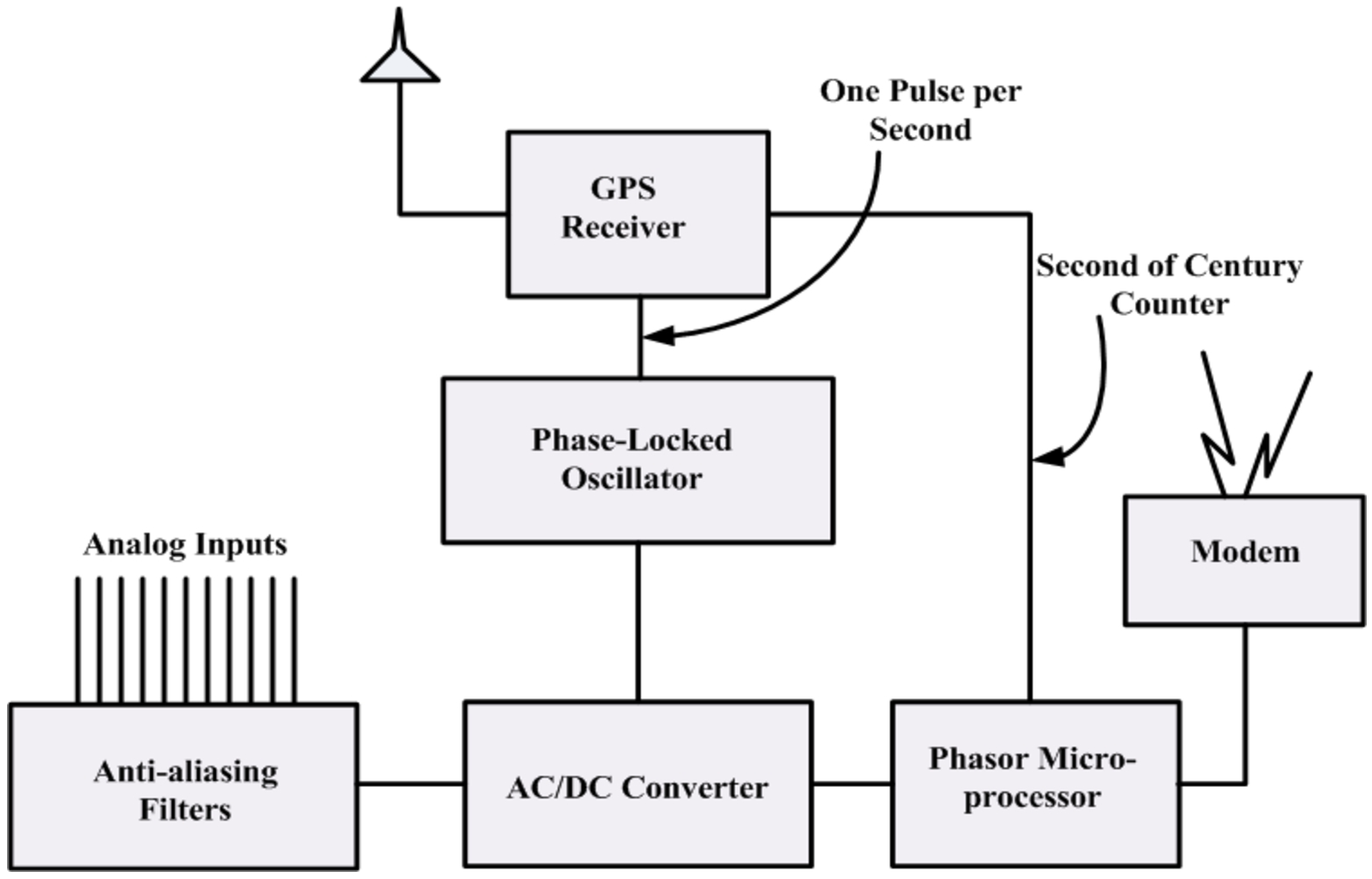
Major components of PMU.
Modems transfer calculated the time-synchronized phasors over communication links. The standards implemented in PMUs are IEEE C37.118-2 and C37.118-1. For measurements, the standard IEEE C37.118-1 is used [26].
This data from dissimilar PMUs is composed at the phasor data concentrator (PDC) for real time-monitoring with the help of a central control station, and accordingly, the control and protection schemes required are implemented in the grid.
The approaches utilized to verify the observability of the power system are topological and numerical observability. The topological observability technique relies on logical operations to provide information on measurement sorts, locations, and network connectivity [5]. The numerical factorization of the measurement Jacobian or measurement gain matrix is necessary for the numerical observability approach to work. The topological observability technique is used in this manuscript to resolve the optimum PMU placement issue.
As PMUs are very expensive to install on every bus, we need to discover the least number of PMUs so that all the buses are visible for measurement [16]. To find the least PMU location, different visibility criteria are implemented and locations are chosen to maintain full visibility. To maintain complete visibility of the power grid, we need to follow the below criteria and steps.
From the above steps, step-1 gives direct measurements; calculations of 2 & 3 are pseudo-measurement; and calculations of 4 & 5 are extension-measurement with the deliberation of Zero injection buses (ZIBs).
PMU problem design
The goal of optimum PMU location is to diminish the count of PMUs on the network in order to decrease installation costs. The objective function is shown below,
Zero injection bus model
A ZIB bus isn’t attached to a generator or load; hence, there is no need to place a PMU on it [14]. As a result, ZIB decreases the count of PMUs, which is essential to full power system observability. An incident radial bar, on the other hand, is a bar linked with a generator or load that is solely related to one branch. As a result of the PMU being positioned on this bus, it delivers limited measurement drops because it may only detect themself and the nearby buses that is connected to it [33].
1. In the network, find the zero injection bus.
2. Detect the incident network radial-buses and reject them for optimal PMU location. Lastly, combine them with the ZIBs, as portrayed in Fig. 3. The figure shows a diagram of a power system with Zero Impedance Bus (ZIB) merging onto an incident radial bus. The ZIB is a hypothetical concept that represents a point in the power system where the impedance is zero. This means that there is no opposition to the flow of electricity at the ZIB. The incident radial bus is a radial bus that has experienced an incident, such as a fault or a line outage.
Observability index (
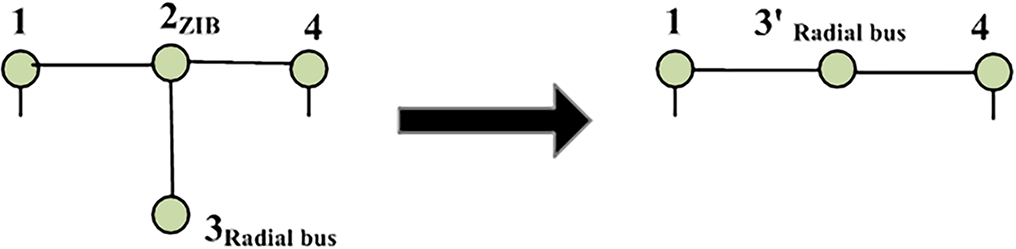
ZIB merging to incident radial bus.

ZIB merging to adjacent bus to maximum.
The observability of the network restrictions prior to merging is described in equation (6).
A bus using the greatest observability index is combined with a zero injection bus, as portrayed in Fig. 4. Figure 4 shows the merging of zero injection buses with an adjacent bus to achieve maximum power transfer capability.
The observability restriction of the network formerly merging through the bus using maximum

Flowchart of the LA-HBO approach.
The Lichtenberg Algorithm (LA) enhances PMU placement by addressing system observability challenges and ensuring that selected locations provide comprehensive coverage of the power grid. The heap-based approach [1,20,27] optimizes PMU placement by efficiently managing the selection process, considering factors like computational efficiency and scalability. Flow chart of the hybrid LA-HBO approach is portrayed on Fig. 5. The LA-HBO Technique provides a robust and intelligent solution for achieving optimal PMU placement, contributing significantly to the advancement of smart grid technologies. It enhances the reliability and efficiency of power systems by offering an innovative approach to strategically deploying PMUs, ultimately improving grid monitoring capabilities. The stepwise process of LOA is given below:
Initializing PMU data parameters for placement
The LFs are produced by the routine parameter m, and the Lichtenberg population is created [4]. Hence, it is expressed as,
The following LFs applied to the reference speed are not equal to zero according to rotation.
Set the Lichtenberg Figures to their initial state, and the optimum point of the preceding one is achieved. Hence, it achieved the best fitness continuously.
In a few points of Lichtenberg figures, fitness is examined to define the best optimum value. Depending on the objective function, fitness functions are examined. The optimization problem for PMU in the N bus system is expressed below,
The updating of the position is done using the heap-based optimization technique, which is expressed by,
If the optimal result is met, the process ends; else, the iteration continues.
Features of IEEE 14-bus
Features of IEEE 14-bus
This manuscript proposes the hybrid LA-HBO method to optimally assign PMU in the power network. The number of best phasor measurement units and their locations are identified using the proposed method. To determine its effectiveness, the proposed technique is compared to existing techniques.
Table 1 portrays the features of IEEE 14-bus. Figure 6 shows the Cost Convergence Curve with PSO under case 1. At the 10th iteration, the average best-so-far is −21.5. Both lines plummet with increasing iterations, revealing steady convergence towards a better solution. The tight gap between them hints at a swarm excelling at finding good solutions, while the smooth descent suggests an escape from bad traps. The cost convergence curve with ABC under case 1 is shown in Fig. 7. The descent tapers after 20 iterations, but lines inching down to 120 reveal continued improvement. Fluctuations in the red line hint at some solution variation, yet both curves stabilize around 120. Figure 8 represent the Cost Convergence Curve with the LA-HBO Technique. This showcasing its rapid convergence to a superior solution. This metaheuristic, blending local search with harmony search, leverages the strengths of both for efficient exploration and exploitation, ultimately achieving lower costs in fewer iterations. Figure 9 shows PMU Location Result for IEE-14 bus. This PMU configuration enhances grid monitoring and control for improved stability and efficiency.

Cost convergence curve with PSO under case 1.

Cost convergence curve with ABC under case 1.
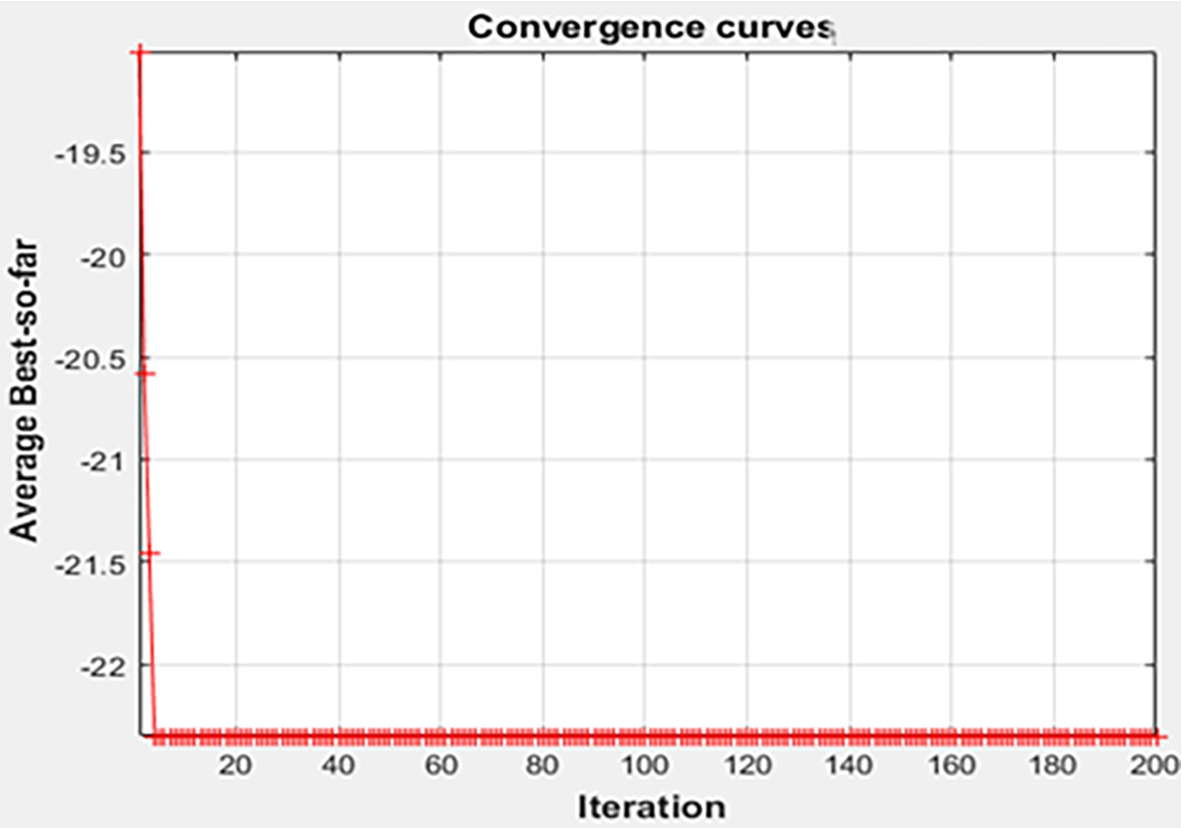
Cost convergence curve with the LA-HBO technique under case 1.
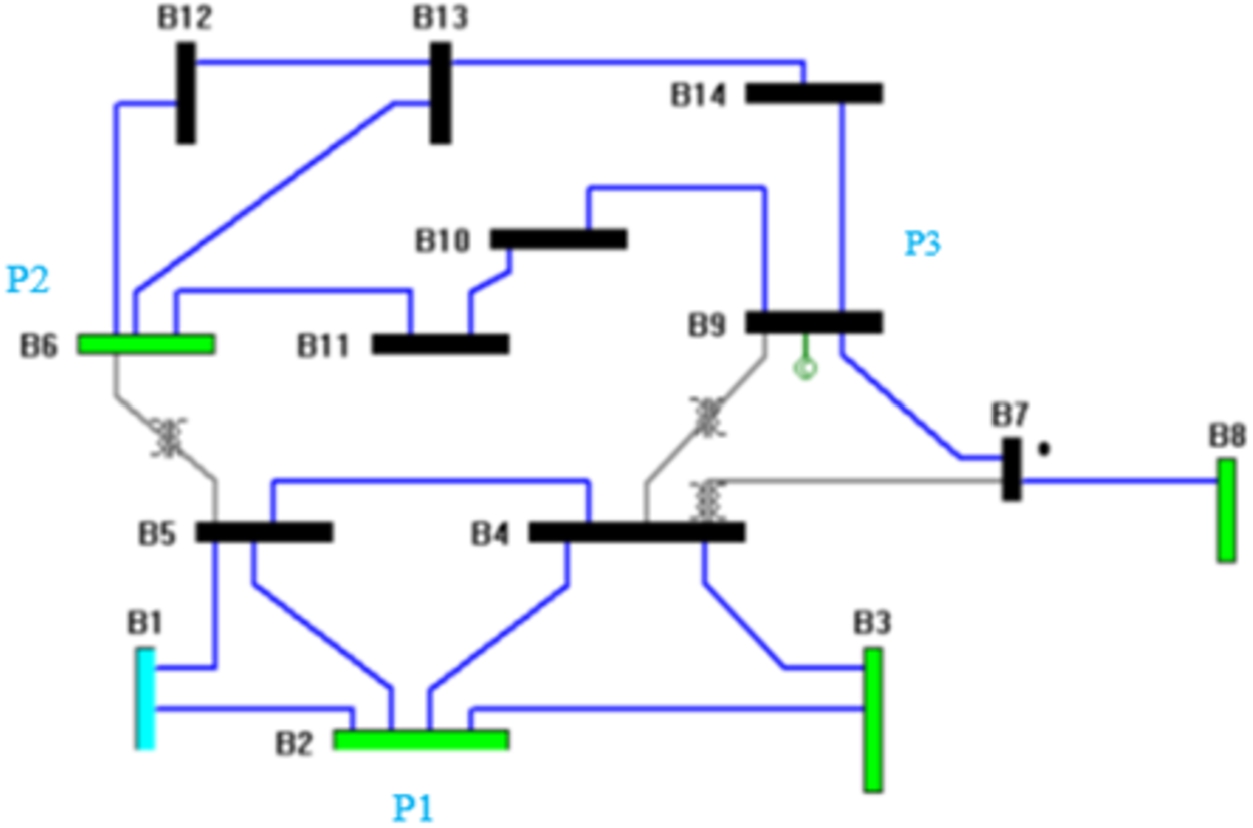
PMU location result for IEE-14 bus.
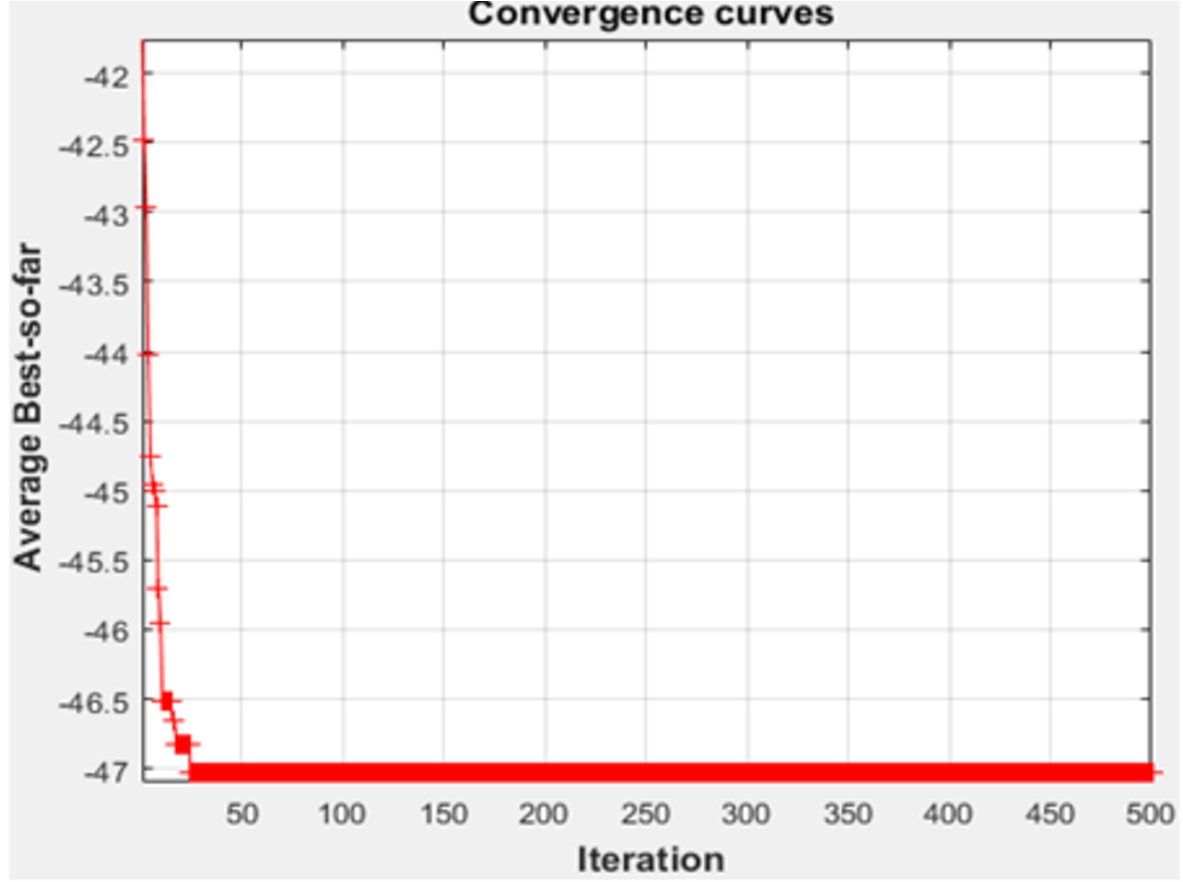
The Cost Convergence Curve with PSO under case 2 is shown in Fig. 10. While the PSO average cost initially bounces, ultimately converging to the optimal solution. Figure 11 shows the cost Convergence Curve with ABC under case 2. This demonstrates their convergence toward the optimal solution. Figure 12 illustrates the Cost Convergence Curve with the LA-HBO Technique under case 2. It demonstrates convergence towards the optimal solution. The LA-HBO’s efficiency lies in effective search and cost minimization in Case 2. Figure 13 displays the PMU location results for IEEE-30 bus. This configuration enables accurate state estimation throughout the grid, enhancing stability, power quality, and operational efficiency.

Cost convergence curve with PSO under case 2.
Cost convergence curve with ABC undercase 2.

Cost convergence curve with the LA-HBO technique under case 2.
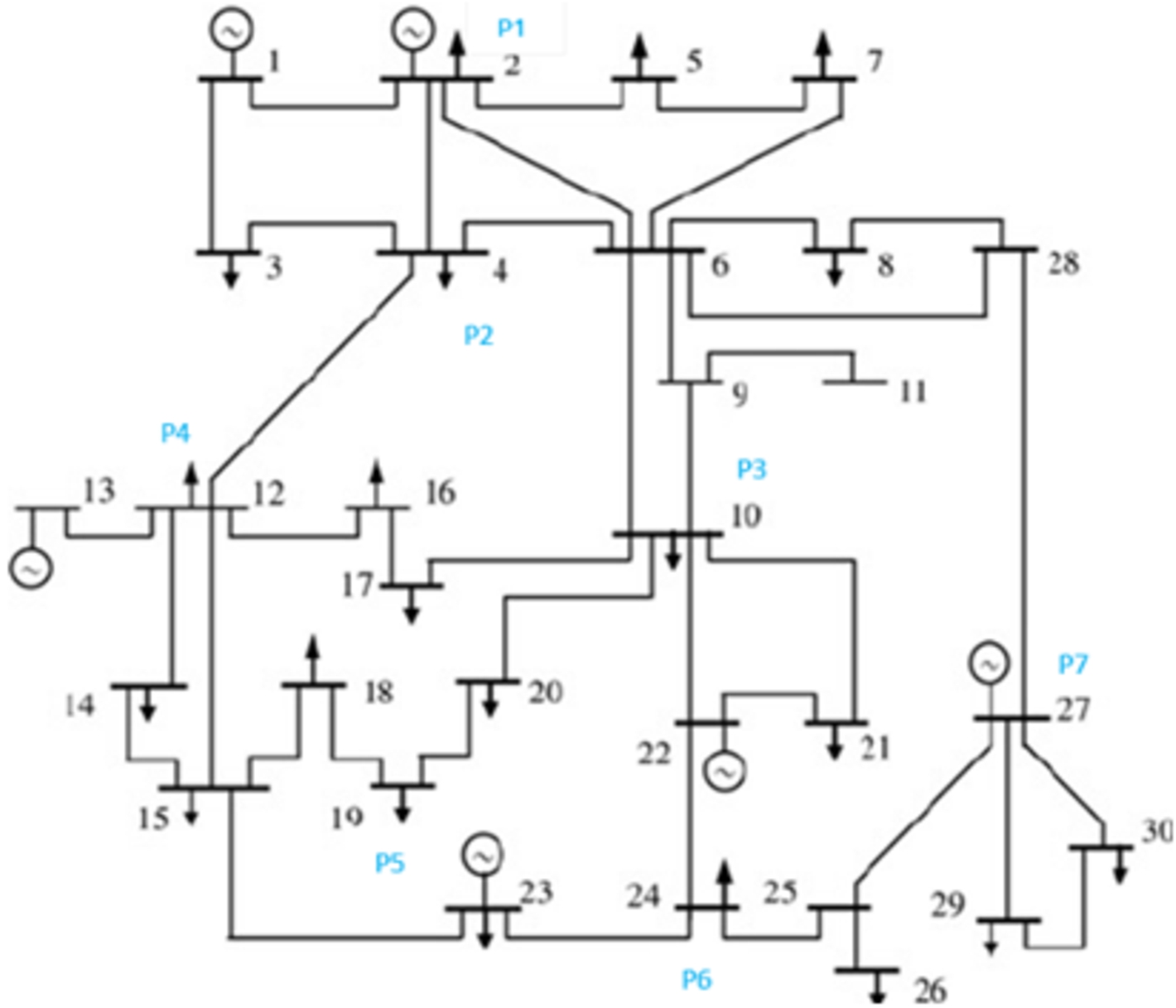
PMU location results for IEEE-30 bus.
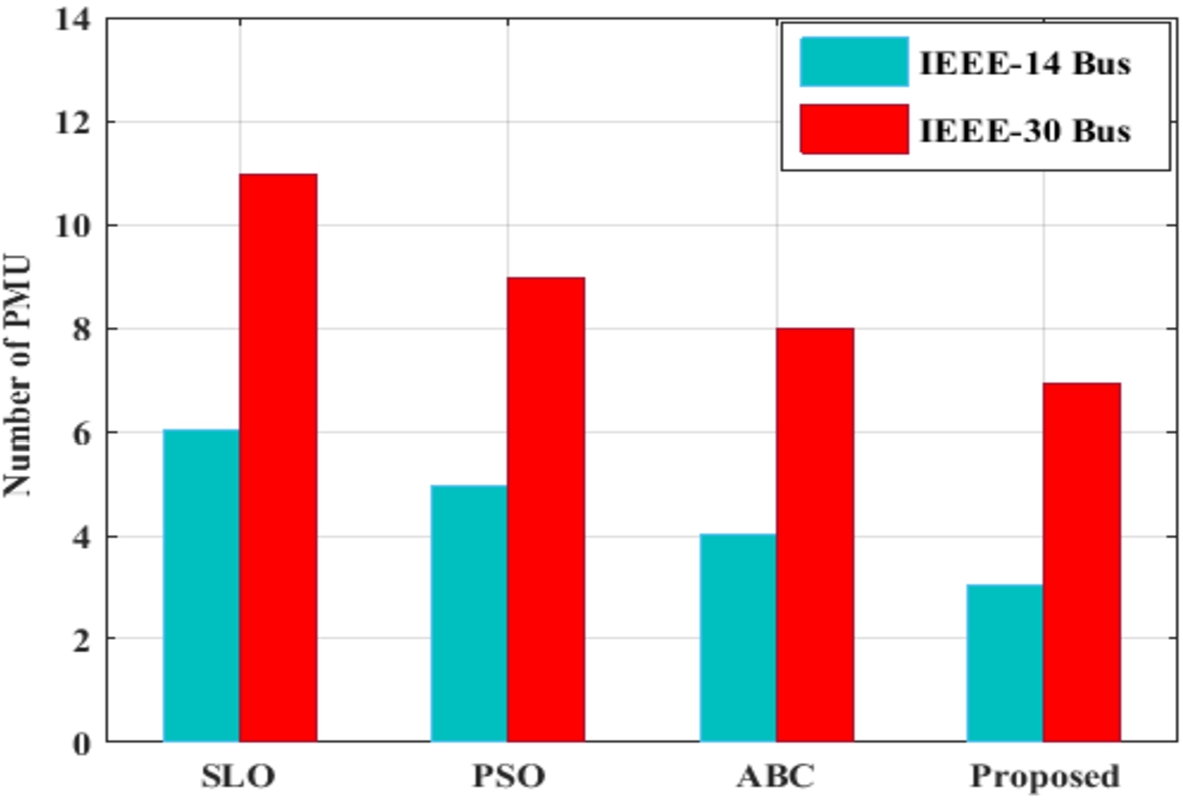
Comparison of number of PMUs with existing and proposed methods.
Comparison of location of PMU
Computational time (in seconds)
Comparison of results between different methods
Figure 14 illustrates the comparison of the number of PMUs with existing and proposed methods. In the SLO method, for IEEE-14 bus and 30 buses, the number of PMUs is 6 and 13. For the PSO method, for IEEE-14 bus and 30 buses, the number of PMUs is 5 and 9. In the ABC method, for IEEE-14 bus and 30 buses, the number of PMUs is 4 and 8. In the proposed method, for IEEE-14 bus and 30 buses, the number of PMUs is 3 and 7. The proposed method demonstrates a needed count of PMUs reduction. Table 2 portrays the comparison of location of PMU. It gives an idea about the location of PMUs with different algorithms with respect to the proposed method. Table 3 tabulates the computational time (in seconds). It shows the computational time of the proposed method compared to existing methods. Table 4 displays Comparison of results between different methods. As displayed in the table, our proposed method can outperform other systems, particularly in IEEE-57 and -118 bus systems, if the count of essential phasor measurement units is lower than in other systems, similar to the amount of PMU obtained from the tree search system. After increasing the dimension of the issue, the proposed technique may outflow the local minima with the help of improved topology. It means a greater capability of the proposed system to discover the global optima of the issue compared to the other optimization systems used to solve this issue.
This manuscript proposes the hybrid LA-HBO technique for optimizing PMU placement in power networks, assessing its performance through case studies on IEEE 14- and 30-Bus systems. Comprehensive evaluations include system feature presentation in Table 1, cost convergence curves (Figs 6–8 and 10–12), and optimal PMU locations (Figs 9 and 13). The study compares the proposed method with existing approaches, emphasizing insights from Fig. 14 on the number of PMUs and Table 2 detailing PMU location comparisons. Computational efficiency is demonstrated through Table 3, highlighting the proposed method’s reduced time compared to existing techniques. Table 4 presents a thorough comparison across methods, showcasing the hybrid LA-HBO system’s superiority, where it achieves a lower count of essential PMUs. The method’s advanced topological capabilities enhance its adaptability to larger problem dimensions, potentially avoiding local minima and exhibiting a superior capacity for discovering global optima compared to alternative optimization systems. Overall, the manuscript confirms the efficacy of the hybrid LA-HBO method in optimizing PMU placement, offering reduced computational time and enhanced system performance.
In conclusion, this section proposes a hybrid LA-HBO approach for the optimistic placement of PMUs, ensuring complete system visibility while considering Zero-Based Indexing (ZBI). The proposed system strategically places the minimal count of PMUs necessary for total system observability, thereby reducing installation costs. The results, validated on IEEE 30 and 14-bus systems, affirm the efficiency of the algorithm in defining the optimum number and locations of PMUs, ensuring both complete system observability and computational effectiveness. The proposed method exhibits a low computational time of 0.02348 sec for the IEEE-14 bus and 0.03565 sec for IEEE-30 bus, outperforming other methods. Specifically, the count of PMUs required for the IEEE-14 and 30 bus is 7 and 3, which emphasizes the effectiveness of the hybrid LA-HBO system in achieving optimal PMU placement with substantial cost savings and computational efficiency.
Conflict of interest
The authors have no conflict of interest to report.