



Abstract
In order to realize the intelligent evaluation of effective teaching quality and make up for the lack of research in this aspect, in the research, BP neural network is used as the basis for model construction analysis. Political education in colleges and universities is an important course, and its teaching quality evaluation is particularly important. Through comparative analysis, LMBP is selected as the learning algorithm, and the neural network evaluation model mechanism of college classroom teaching quality evaluation system is determined through theory and practical methods, and the simulation model is simulated by MATLAB as a simulation tool. At the same time, this paper uses the experimental method to carry out simulation training experiments in the MATLAB neural network toolbox, select the training algorithm for comparative analysis, and display the results in the form of statistical graphs. In addition, this paper sets the convergence speed and error curve as evaluation indicators, determines the appropriate training algorithm, and verifies the validity of the model. The research indicates that the BP teaching quality evaluation model based on BP neural network is a reasonable and feasible evaluation model and can provide theoretical reference for subsequent related research.
Introduction
Teaching quality is the core content of educational competitiveness, the lifeline of higher education, especially higher vocational colleges, and the basis and premise of sustainable development of education. Improving the quality of teaching is the core of improving the quality of education in colleges and universities, especially higher vocational colleges [1]. The central part of the school’s teaching process is the teacher’s curriculum teaching, and the curriculum teaching is a concentrated reflection of the teacher’s teaching quality. Moreover, the quality of school education depends on the quality of teacher teaching [2]. Therefore, the evaluation of teacher’s course teaching quality is a core content of the whole evaluation of teaching management, and it plays an important role in the whole teacher assessment process.
Through the evaluation of teacher teaching quality, teachers can improve teaching methods, update teaching methods, continuously use modern teaching media, and pay attention to hierarchical teaching, thus improving teaching quality. However, the evaluation of teacher teaching quality is a multi-level, multi-indicator, and complex evaluation. Its evaluation often depends on the judgment of subjective factors of experts, and lacks objective evaluation, and there is variability and instability [3]. Therefore, it is necessary to establish a teacher’s course teaching quality evaluation, so that the evaluation data is scientifically and objectively collected, organized and analyzed. At the same time, through the establishment of computer evaluation model for scientific evaluation, it provides auxiliary decision-making role for teaching management in higher vocationalcolleges.
The ideological and political course is an important form of Ideological and political education for college students and the practice of Ideological and political education. With the deepening of China’s reform, social development presents a trend of diversity of people’s ideas and diversity of interests. In the face of the new situation, it is particularly important to further strengthen the ideological and political education of college students, and to firmly grasp the initiative of ideology. As the main position of the ideological and political education, ideological educators in Colleges and universities need to study how to adapt to the requirements of the development of the times, innovate education and teaching methods, enable them to have a deeper understanding of Marx’s theory, understand the party’s national conditions and enhance their sense of mission and responsibility in realizing the great rejuvenation of the Chinese nation. As an important part of educational practice, University Ideological and political education resources strengthen the integrated allocation of human resources and other teaching resources, which plays a key role in the successful completion of the goal of ideological education. At present, there are still some problems and shortcomings in the practice teaching of Ideological and political courses in Colleges and universities. For example, the emphasis on practical teaching is not enough, and integration of integrated resources is insufficient. It has important practical significance to take effective measures to deepen the reform of the teaching of Ideological and political courses in Colleges and universities, and to improve the teaching effect of Ideological and political education. For multi-indicators and complex evaluations, their evaluation often depends on the judgment of subjective factors of experts, which lacks objective evaluation, and is variability and instability. Therefore, it is necessary to establish a teacher’s course teaching quality evaluation, so that the evaluation data is scientifically and objectively collected, organized and analyzed. At the same time, through the establishment of computer evaluation model for scientific evaluation, it provides auxiliary decision-making role for teaching management in higher vocational colleges [4].
The dynamic process of teaching and learning constitutes a teaching activity, and many factors can affect the quality of teaching in different degrees at different angles. Therefore, a single mathematical analytic formula cannot fully reflect the results of teaching quality evaluation, which is the biggest problem to be solved in the comprehensive evaluation process [5]. In the general evaluation methods, weighted average method, analytic hierarchy process, fuzzy comprehensive evaluation method, etc. are used, which are all methods that need to establish corresponding evaluation models. The similarity of these methods is that the various influencing factors (ie, evaluation indicators) in the evaluation process have a certain linear relationship, and these methods cannot exclude the corresponding main and objective factors, and cannot avoid the distortion and deviation of the evaluation results [6]
As a new technology, artificial neural network has the characteristics of nonlinear processing ability, strong adaptability and high fault tolerance, and overcomes the shortcomings of other evaluation methods. Therefore, various evaluation mechanisms use this method. The BP (BackPr0Pagation) network in many artificial neural networks is a multi-layer feedforward type network with powerful nonlinear mapping capability. Since the problem of teaching quality evaluation of innovation and entrepreneurship education in college tourism, and it is actually a relatively complex nonlinear decision-making problem, the evaluation method of this study selected BP neural network model analysis [7].
Related work
At present, the teaching quality evaluation methods at home and abroad mainly include: expert evaluation method, AHP analytic method, fuzzy comprehensive evaluation method, SOLO classification method, grey correlation degree method, neural network model method, distance comprehensive method and other evaluation methods. In order to reflect the scientific, objective and impartiality of teaching quality evaluation, these evaluation methods evaluate the quality of classroom teaching from different directions and scopes, and qualitatively or quantitatively analyze the evaluation results.
(1) Teaching quality evaluation based on AHP analytic hierarchy process. The characteristic of evaluating the quality of teaching through AHP is that the evaluation of qualitative classroom teaching quality can be quantified. However, because the quality of teaching is affected by many factors such as subjective and objective factors, in order to reflect the various factors affecting the evaluation object as comprehensively as possible, it is necessary to establish a comprehensive evaluation index system before conducting the evaluation. These indicators are qualitative indicators that reflect people’s subjective differences and changes, and the connotations and extensions of these differences and changes are not very clear. When the AHP method is used to evaluate the quality of teaching, the quantification of qualitative indicators with ambiguity and the determination of the weights of indicators at all levels are very difficult [8].
(2) Teaching quality evaluation based on fuzzy comprehensive evaluation model
This method uses fuzzy mathematics as the basis, simulates the thinking mode of human brain processing fuzzy information, uses scientific cognitive methods, decomposes the analysis object into several evaluation factors, uses fuzzy transform to evaluate individual factors at various levels, and then selects appropriate methods to obtain comprehensive evaluation. Fuzzy comprehensive evaluation is a fuzzy mathematical method for judging the existence and genericity of things, or a fuzzy mathematical method in which the intermediaries are quantitatively described in terms of their degree of attribution. It can effectively combine qualitative analysis with quantitative analysis, and conduct multi-level and multi-factor comprehensive evaluation, which has the characteristics of good science and high credibility [9].
(3) Teaching quality evaluation based on BP neural network model
By using the characteristics of self-organization, self-adaptation and self-learning of BP neural network, the teaching quality evaluation model based on BP neural network classroom can avoid the subjectivity and uncertainty in the process of artificially selecting weights and correlation coefficients, and makes the evaluation model more intelligent, adaptable and usable [10].
(4) Gray correlation analysis
Gray-scale correlation analysis is based on sample data of various factors, and uses gray correlation degree to describe the strength, size and order of the relationship between factors. If the sample data column reflects the situation in which the two factors change (direction, size, speed, etc.) are basically the same, the degree of correlation between them is large. On the contrary, the degree of association is small [11].
As an important part of Ideological and political education courses in Colleges and universities, speeding up the integration of Ideological and political practice teaching is an inevitable requirement for the reform of Ideological and political courses in universities, and is also the inherent requirement of the teaching practice of Ideological and political courses in Colleges and universities [12–15]. Early in the beginning of this century, the implementation opinions formulated by the state to strengthen the ideological and political work of College Students pointed out that carrying out social practice is an important link and way to enhance ideological and political education for college students [16]. It plays an important role for college students to understand the national conditions, understand the society, enrich their experience, exercise their will and enhance their sense of social responsibility [17]. Strengthening practice teaching has become an important direction and important content of the reform of the ideological and political course in Colleges and universities. Under the guidance of this idea, the Ministry of education and other relevant ministries and commissions jointly formulated the implementation opinions on strengthening and improving the ideological and political theory courses in Colleges and universities, and emphasized that we should strengthen practice teaching as an important link in Ideological and political education courses in Colleges and universities [18–20]. These policies provide a positive role in promoting the teaching reform of Ideological and political courses in universities and deepening the integrated practice teaching of Ideological and political courses. In recent years, around the evaluation of teaching quality, various related theories and methods have been introduced, which has made the evaluation of teaching improve in depth and breadth. At the same time, BP artificial neural network, radial basis neural network and fuzzy comprehensive evaluation method have been widely used in various evaluation fields [21]. Various effective experiments are carried out in various regions, and different methods are tried in order to explore methods and laws for appropriate evaluation. Therefore, comparative analysis and simulation experiments of evaluation methods have become an important topic [22]. One of the widely used evaluation methods is the expert scoring evaluation method based on the weighted average method, which evaluates the comprehensive performance of the course teaching. The expert scoring method is an evaluation method that appears earlier and is more widely used. The expert scoring method is based on the prior quantitative and re-determination, and is evaluated by scoring method, and the results have the characteristics of mathematical statistics [23]. When using the weighted average method, the school must first formulate the evaluation indicators, and set the evaluation level and the weight of each evaluation index. However, since the importance of evaluation indicators is relatively different, whether the fuzzy comprehensive evaluation method or the expert scoring evaluation method is adopted, the weights of each evaluation index must be set first. Moreover, the weight is more important, and its size will directly affect the final result of the evaluation [24]. At the same time, the weight plays a key role in the evaluation, and whether it is reasonable or not is related to whether the comprehensive evaluation result is credible. In recent years, China’s education evaluation has achieved certain results. At the same time, our country has mastered the theory and practice of foreign education evaluation, and basically established the system of education evaluation in China, and formed the mode, method and framework of education evaluation in China [25]. In order to improve the quality of teaching and the popularity of the college, most colleges and universities in China attach great importance to the evaluation of teachers’ teaching quality, and better improve the teaching quality monitoring system of the hospital. Compared with the research on the theory and method of teacher quality evaluation in foreign teachers, although China started relatively late, it has been extensively studied in recent years. At the same time, based on the foreign curriculum evaluation models, methods and theories, our country creatively propose the curriculum evaluation theory that suits China’s national conditions and is suitable for higher vocational colleges in China.
Theoretical analysis
Neural network technology is a very active interdisciplinary subject developed in recent years. It involves biology, electronics, computers, mathematics, physics and other disciplines, and has broad application prospects. The neural network has the characteristics of amazing adaptive self-learning ability, rational and agile judgment thinking, highly distributed information storage, fast and accurate real-time processing, and multi-purpose.
Neural network
(1) MP model
The first mathematical model of the artificial neural network is the MP model, established by McCulloch and Pitts, which is a multi-input, multi-output nonlinear information processing unit [17].
The following parameters can be set when building an MP model: x
i
is the input of the neural network element; w
i
is the connection weight of the neuron; θ
i
is the threshold of the neuron; y
i
is the output of the neuron, which can be connected with many other neurons; f (u
i
) is the nonlinear function of the neuron. On this basis, y
i
can be expressed as:
In the above formula, f (x) is an action function, which is also called an excitation function. The MP model is the basis of artificial neurons and the basis of neural network theory. (2) Perception
Perception is a neural network that simulates human vision to receive environmental information and is transmitted by nerve impulses. The perceptron is a neural network with learning ability, which can be divided into a single layer perceptron and a multi-layer perceptron [18].
The difference between the single-layer perceptron and the MP model is that the former’s weight can be adjusted through learning, and the learning algorithm is based on the instructor. After the end of the study, the sample patterns are stored (stored) in the network in the form of connection rights and thresholds. The limitation of applying a single-layer perceptron is that if the input mode is a linear non-separable set, then the learning algorithm of the network will not converge, and the correct classification cannot be performed.
Adding one or more hidden cells between the input and output forms a multilayer perceptron, also known as a multilayer feedforward network. Fig. 1 shows the structure of a three-layer perceptron [19].
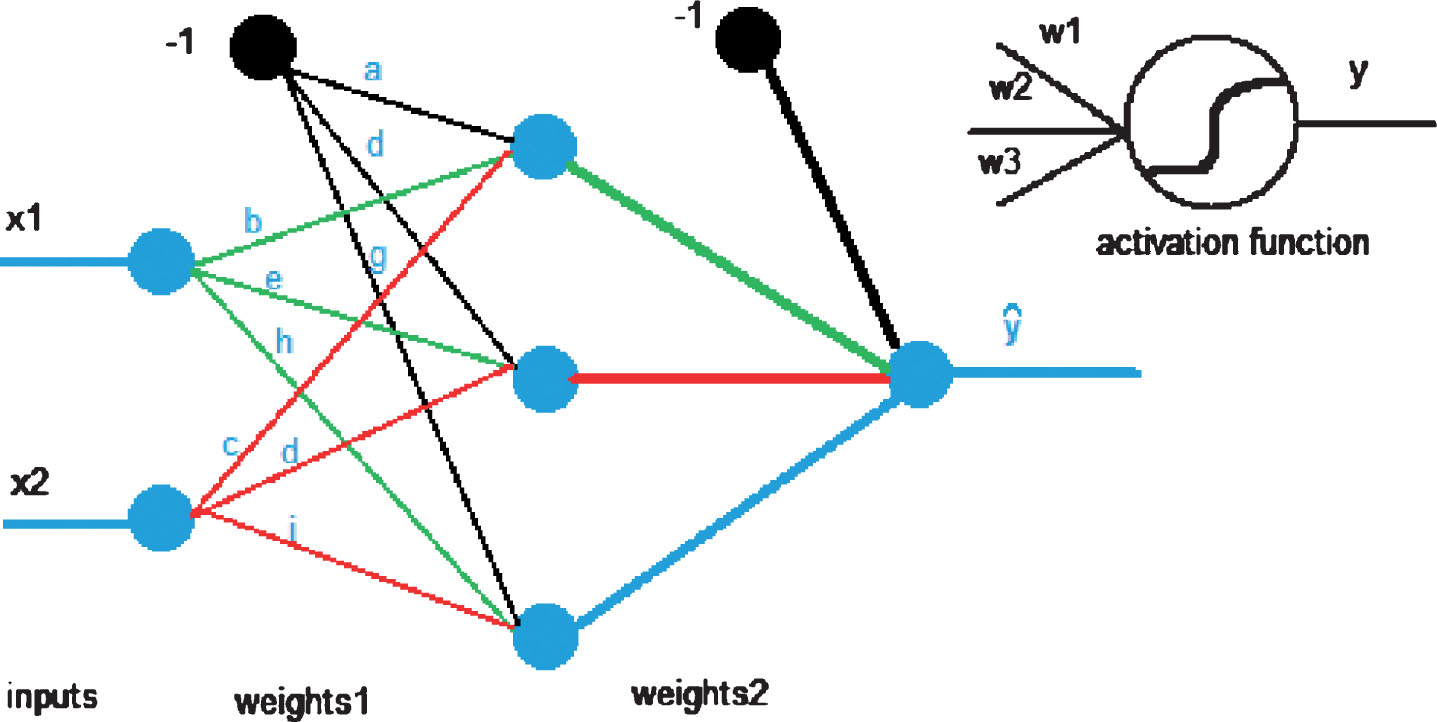
Three-layer perceptron.
For a multi-layer perceptron network, if the hidden layer nodes (units) can be arbitrarily set, any two-valued logic function can be realized by a network of three-layer threshold nodes. Alternatively, if the hidden layer nodes (units) can be arbitrarily set, the network of the three-layer S nonlinear characteristic nodes can be used to uniformly approximate the contact function on the compact set or approximate the square integrable function on the compact set by the L2 norm.
(1) Hard limit function
The hard limit function is expressed as [20]:
There is another form of expression for this function, namely:
(2) Sigmoidal function
The Sigmoidal function, also known as the S function, is a very important type of excitation function. Whether the neural network is used for classification, function approximation or optimization, the Sigmoidal function is a commonly used excitation function. The expression formula of the Sigmoidal function is Equations (4) or (5):
Among them, the parameter λ is called the gain of the Sigmoidal function, and its value determines the slope of the unsaturated segment of the function. The larger λ is, the steeper the curve is. For Equations (4) and (5), the function of Equation (4) is also called the unipolar Sigmoidal function, and the function of Equation (5) is also called the bipolar Sigmoidal function or the hyperbolic tangent function. Compared with the hard limit function, the Sigmoidal function is continuously differentiable, so that the weight of the neuron can be adjusted by the error back propagation learning algorithm (BP algorithm) [21].
(3) Gaussian function
Gaussian functions (or bell-shaped functions) are also an important class of excitation functions, which are commonly used in radial basis function neural networks (RBF networks). The expression of the Gaussian function is:
Among them, parameter σ is called the width or expansion factor of the Gaussian function. The larger σ is, the flatter the function curve is. On the contrary, the smaller σ is, the steeper the function curve is [22].
(1) Learning method
The reason why organisms can adapt to the environment is that the biological nervous system has the ability to learn from the surrounding environment. For artificial neural networks, this is also its most important feature. There are two forms of neural network learning: tutoring and tutor-free learning. Tutoring learning is also known as supervised learning. In general, the training samples that the instructor learns are input and output pairs{p i , d i } , i = 1, 2, . . . , N. Among them, p i is the sample input and d i is the sample output (teacher signal). The purpose of neural network training is to: By modulating the free parameters of each neuron, the network produces the desired behavior. That is, when the input sample is p i , the network output is as close as possible to d i .
Tutor-free learning is also called unsupervised learning or self-organizing learning. Non-mentor learning is not a teacher signal, but it only specifies the learning method or certain rules. The specific learning content varies with the environment in which the system is located (ie, the input signal condition), and the system can automatically discover environmental characteristics and laws [23].
(2) Learning rules
Whether it is a tutor or a tutor, it is done by adjusting the free parameters (weights or thresholds) of the neurons. The following is a description of commonly used learning algorithms for neurons.
For a single neuron, the set of weighted vectors can be represented as W = [w1, w2, . . . , w
n
, θ], and the input sample can be represented as X = [x1, x2, . . . , x
n
, - 1]
T
. For a tutor to learn, assuming that the expected output corresponding to input X is d, the content of the learning algorithm of the neuron is to determine the weight adjustment amount ΔW (k) of the neuron, and obtain the weight adjustment formula as
Among them, η is the learning rate and 0 < η < 1.
δ learning rules. The δ learning rule is also called the gradient descent method or the steepest descent method, which is a commonly used neural network learning method.
The basic principle of the gradient descent method can be expressed as follows: It is assumed that the goal of neuron weight correction is to minimize the scalar functionJ (W). If the current weight of the neuron is W (k), then the weight correction formula for the next moment is assumed to be:
Among them, ΔW (k) represents the correction amount of the current time. Obviously, expectations and each correction are:
J [W (k + 1)] A is carried out for the first-order Taylor expansion, and then gets
J (W) represents the gradient vector at W = W (k). When ΔW (k) = - ηg (k) is set, the weight correction amount takes a smaller value along the negative gradient direction, and the second item on the right side of Equation (10) is necessarily less than zero, then Equation (9) must be established. This is the basic principle of the gradient descent method [24].
The δ learning rule for neurons can be expressed as: Since the gradient descent method uses the gradient value of the objective function, in the δ learning rule of neuron weight adjustment, the neuron basis function takes a general linear function, and the excitation function takes the Sigmoidal function, that is,
The purpose of adjusting the weight of a neuron using the δ learning rule is: By training the weight W, the output error square
of the neurons of the training sample to {X, d} is minimized. The gradient vector is obtained by calculation:
Assume that ΔW (k) = - η ∇ J (W), the following weight correction formula, can be obtained:
Therefore, the weight adjustment formula is:
The initial weight of a neuron is usually taken as a random value near zero. The δ learning rule is the most widely used learning rule and is commonly used in single-layer, multi-layer perceptron and BP networks [25].
(3) Window-Hoff learning rules
The Window-Hoff learning rule, also known as the W-H learning rule, is a tutor learning algorithm commonly used in adaptive linear units (Adaline). The Window-Hoff learning rule is similar to the derivation of the δ learning rule. By training the weight W, the squared output error
of the neuron is minimized for the training sample pair {X, d}. Since∇J (W) = (d - W
T
X) X, here,
The weight adjustment formula is:
(4) Learning rule of discrete perceptron
If the basis function of the neuron takes a linear function and the excitation function takes a hard limit function, then the neuron becomes a single neuron perceptron. The learning rule of the single neuron perceptron is called the discrete perceptron learning rule and is also a tutor learning algorithm.
The sample input is set to X, the corresponding expected output is d, the current output is y, and the excitation function of the neuron takes the symbol function. At this time, in the discrete perceptron learning rule, the weight adjustment amount is:
Among them, the error function is:
The weight adjustment formula is:
Moreover, the initial weight of a neuron can take any value.
(5) Hebb learning rules
The Hebb learning rule is a non-mentor learning algorithm that is commonly used in ad hoc networks or feature extraction networks. According to the Hebb rule, the current input of the neuron is set to X = [x1, x2, . . . , x
n
]
T
and the output is set to y = f (W
T
(k) X), then the adjustment of the weight vector is:
Therefore, the weight correction formula for neurons is:
The initial weight of a neuron is usually taken as a random value near zero, and the excitation function can take any form. ΔW (k) in Equation (25) can be understood as the influence of the sample on the current weight.
The neural network evaluation subsystem designed by this system includes the neural network evaluation subsystem of teacher mutual evaluation, the neural network evaluation subsystem of the supervisory evaluation teacher, the neural network evaluation subsystem of student evaluation, the neural network evaluation subsystem of teacher self-evaluation, the neural network evaluation subsystem of student mutual evaluation, the neural network evaluation subsystem of the supervisory evaluation student, the neural network evaluation subsystem of the teacher evaluation student, and the neural network evaluation subsystem of the student self-assessment. Through the output of the subsystem, the input of the integrated network is formed, and the system structure block diagram (partial subsystem merge) is shown in Fig. 2.
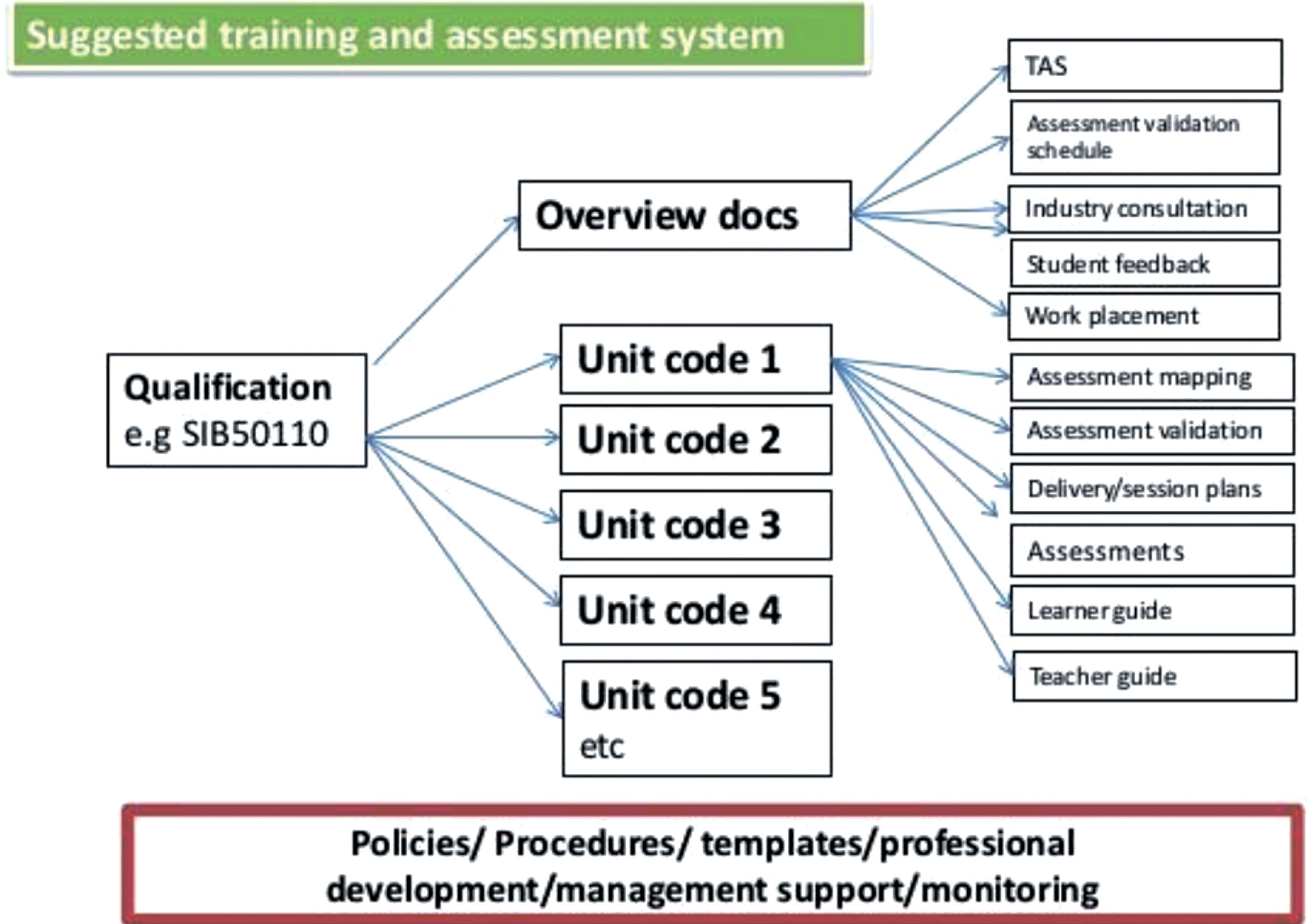
Structural framework of the quality assessment system.
According to the structural framework of the teaching quality evaluation system of colleges and universities in Fig. 2, the quality neural network evaluation system design of college classroom teaching is divided into two neural network systems, namely subsystem neural network and integrated neural network.
Each subsystem of the subsystem neural network uses a three-layer BP neural network, also known as a multilayer feedforward neural network. It is characterized in that the neurons in each layer are only connected to the neurons in the adjacent layer, and there is no connection between the neurons in each layer, and there is no feedback connection between the neurons in each layer. The input of each subsystem is its corresponding secondary indicator, and the output is the evaluation value of each subsystem. At the same time, by training the neural network samples of each subsystem, the neural network weights of each subsystem can be obtained. Training samples can be organized by teachers, students, supervisors, education experts, etc. After using enough samples to train the network, the evaluation system of each subsystem is established, and the evaluation result values of each subsystem can be obtained.
The integrated neural network, that is, the quality evaluation system of college classroom teaching, the model structure of the network is also the same as the three-layer BP neural network. The difference is that the input of the integrated network is the output value of each subsystem, which is established on the basis of each subsystem. The output is the result of quality evaluation of college classroom teaching, which is divided into five grades: excellent, good, medium, pass, and fail. The output range of each grade is shown in Table 1.
Correspondence table between grading standards and neural network output values
It can be seen that the neural network comprehensive evaluation system is a three-layer BP neural network. The number of input layer nodes is 8 and the output layer is only one output node, and the value range is set to [0, 1].
The specific steps for establishing a student evaluation neural network model are as follows:
The evaluation index of students’ evaluation of teaching is divided into four first-level indicators and 12 second-level indicators rand 12 second-level evaluation indicators are used as inputs to the input layer of the neural network. Therefore rthe number of input layer nodes of the BP neural network is correspondingly determined to be 12. BP neural network model diagram of the evaluation system was shown in Fig. 3.
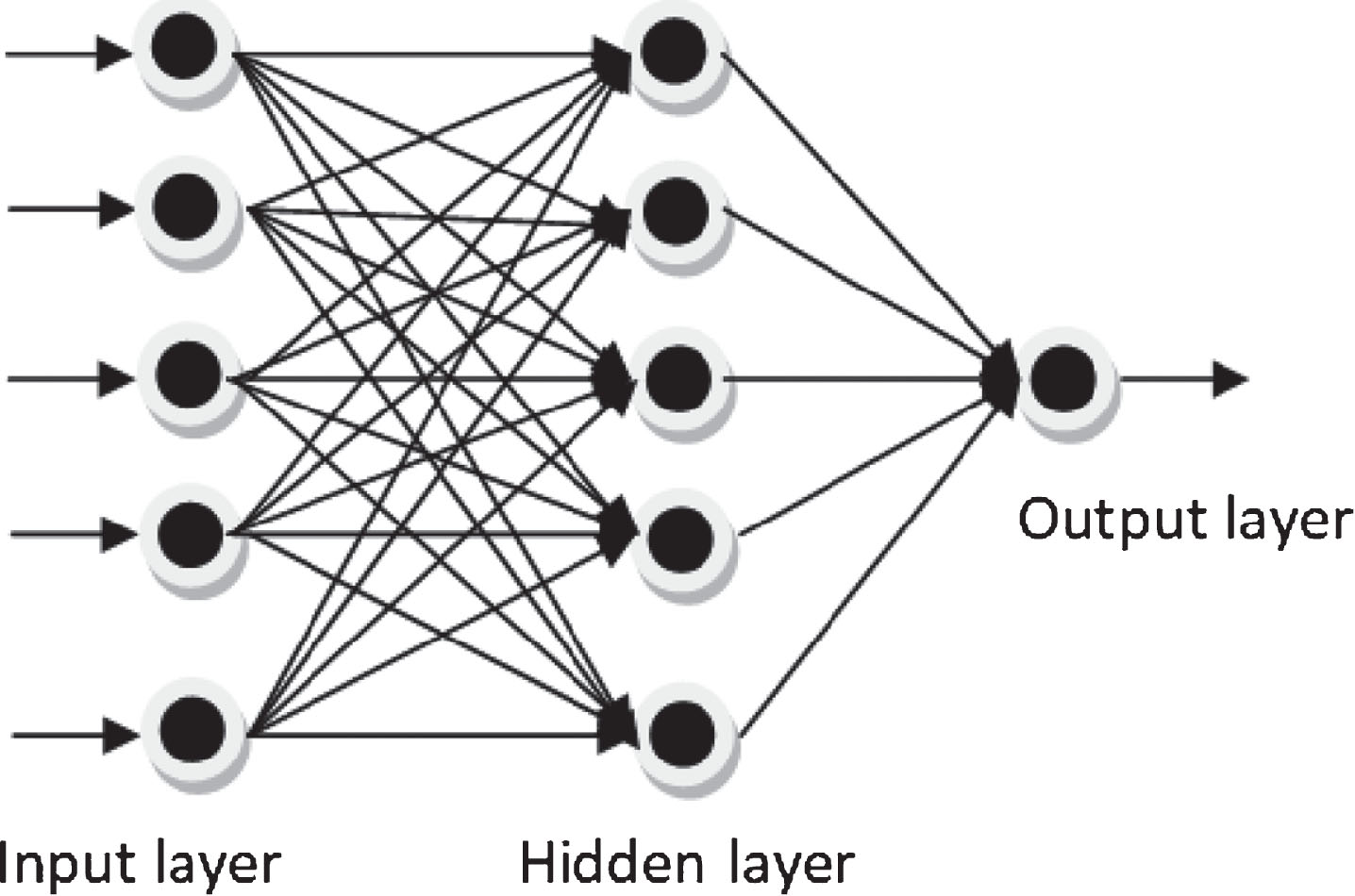
BP neural network model diagram of the evaluation system.
The evaluation index of students’ evaluation of teaching is divided into four first-level indicators and 12 second-level indicators, and 12 second-level evaluation indicators are used as inputs to the input layer of the neural network. Therefore, the number of input layer nodes of the BP neural network is correspondingly determined to be 12. BP neural network model diagram of the evaluation system was shown in Fig. 3.
Since there is only one evaluation result of the student evaluation, the output layer of the network is only set to one output node, and its value range is set to 0, 1].
One of the more common methods for determining the optimal number of hidden layer nodes is the trial and error method. When the trial and error method is used, some empirical formulas for determining the number of hidden layer nodes can be used, as follows:
Among them, m is the number of hidden layer nodes, n is the number of input layer nodes, l is the number of output layer nodes, and α is a constant between 1–10. According to formula (25), the number of hidden layer nodes is 5–14, and the experiment is performed one by one, and the number of optimal hidden layer nodes is 7.
The activation function on the hidden layer unit selects the tansig hyperbolic tangent function. Since in the training data sample set, the expected output value of the evaluation result falls within the interval [0, 1] after normalization, the activation function on the output layer unit is taken as the Sigmoid function, and the function form is:
In this network structure, the input vector is X = (x1, x2, . . . , x12)
T
, and the weight of the input layer unit i to the hidden layer unit h is W = (w11, w12, . . . , w12,7)
T
, the output of the hidden layer is Y = (y11, y12, . . . , y7)
T
, the weight of the hidden layer to the output layer is W = (w1, w2, . . . , w7), the actual output of the network is O = net (Y), and T = (t) represents the expected output of the training sample. According to Equations 2– 7 and Equations 2– 8 in Chapter 2, the output of the hidden layer node h and the output of the output layer node S are respectively:
Reasonably setting the BP neural network connection weight and the initial value range of the threshold will effectively shorten the learning time of the network. Therefore, this article sets the initial value range of the connection weight and threshold of the network to
BP neural network often uses the gradient descent method to correct the connection weights and thresholds of network nodes. The method is that the network gradually reaches the minimum point along the slope of the error function from a certain starting point during training, so that the error is zero. However, this learning method is prone to fall into local minimum defects during the training process. The LMBP optimization algorithm is an improvement of the traditional learning algorithm, and the convergence speed and accuracy of the LMBP optimization algorithm are better. Therefore, this paper applies it to adaptive learning of BP neural networks.
According to the above analysis, combined with the data of a college student evaluation, the data (partial) shown in Table 2 below is obtained.
Evaluation data
Evaluation data
Simulation process of MATLAB neural network:
(1) Network establishment: It is implemented by the function newff, which automatically determines the number of neurons in the output layer based on the sample data. The number of hidden layer neurons and the number of layers of the hidden layer, the transformation function of the hidden layer and the output layer, and the training algorithm function need to be determined by the user. (2) Initialization: It is implemented by the function init. When newff creates a network object, the initialization function init is mobilized, and the init0 command format is used. (3) Network training: It is implemented by the function trainlm, which is the training function of LMBP. It trains the network based on the input vector P of the sample, the target vector T, and the parameters of the training function that have been set in advance. (4) Network simulation: It is implemented by the function Sim, which performs simulation calculations on the test data based on the trained network.
After 9 trainings, the network error has reached the requirement. The training results are shown in Fig. 4. The error curve of the network is shown in Fig. 5, and the error at this time is Res = 0.0269.
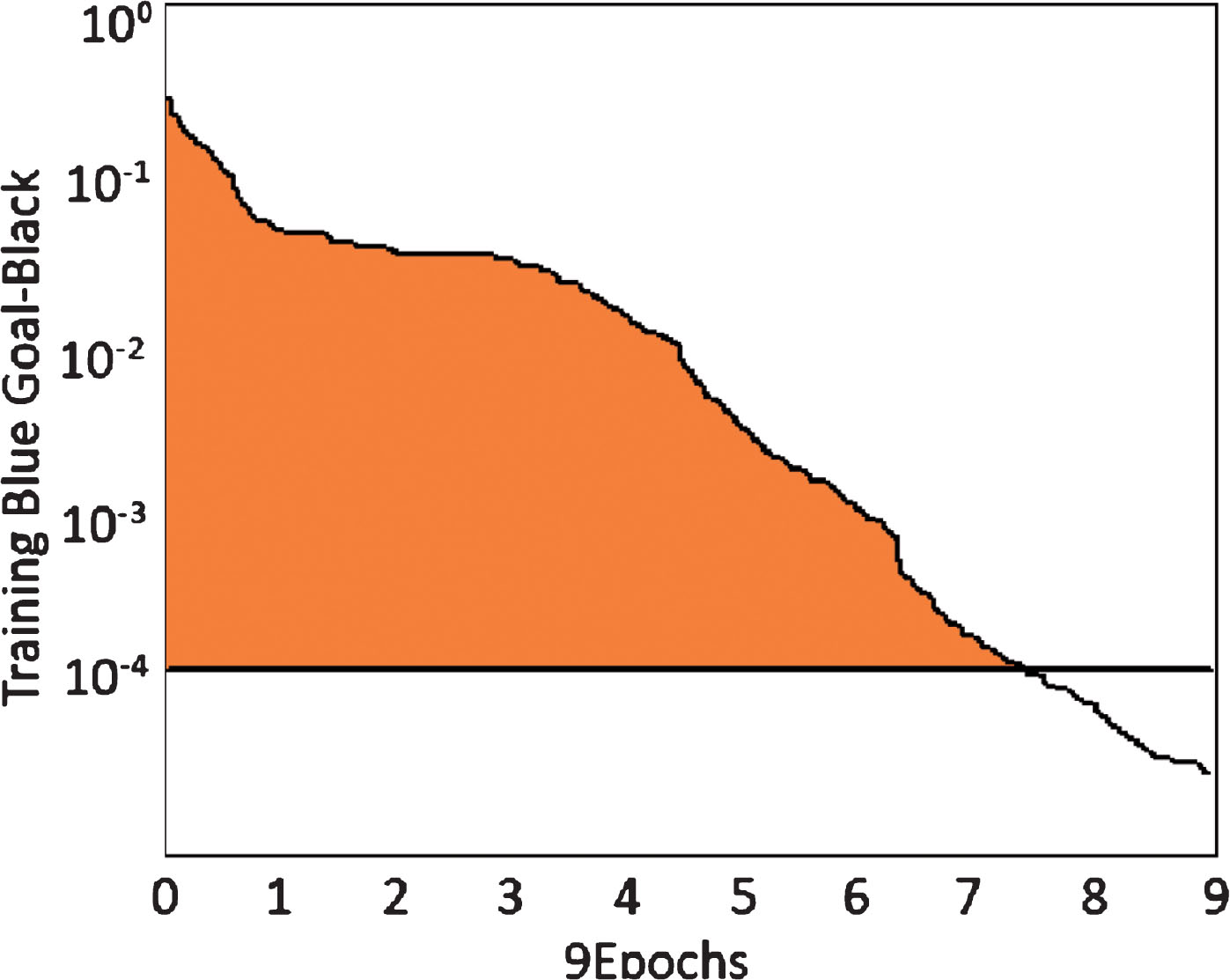
Training results (training function: rainlm).

Error curve (training function: rainlm).
The above neural network trains the network using the function tminlm, and the learning algorithm of the function is the Levenberg-Marquadt backpropagation algorithm. The advantage of this training function is that the convergence speed is very fast. Using different training functions will affect the performance of the network, such as convergence speed, network promotion capabilities. In order to compare which training function is more optimized, the network is trained with different training functions, and the results are observed.
First, traingd is used to train the network, and the learning method used by this function is the ordinary gradient descent method. The training results are shown in Fig. 6.
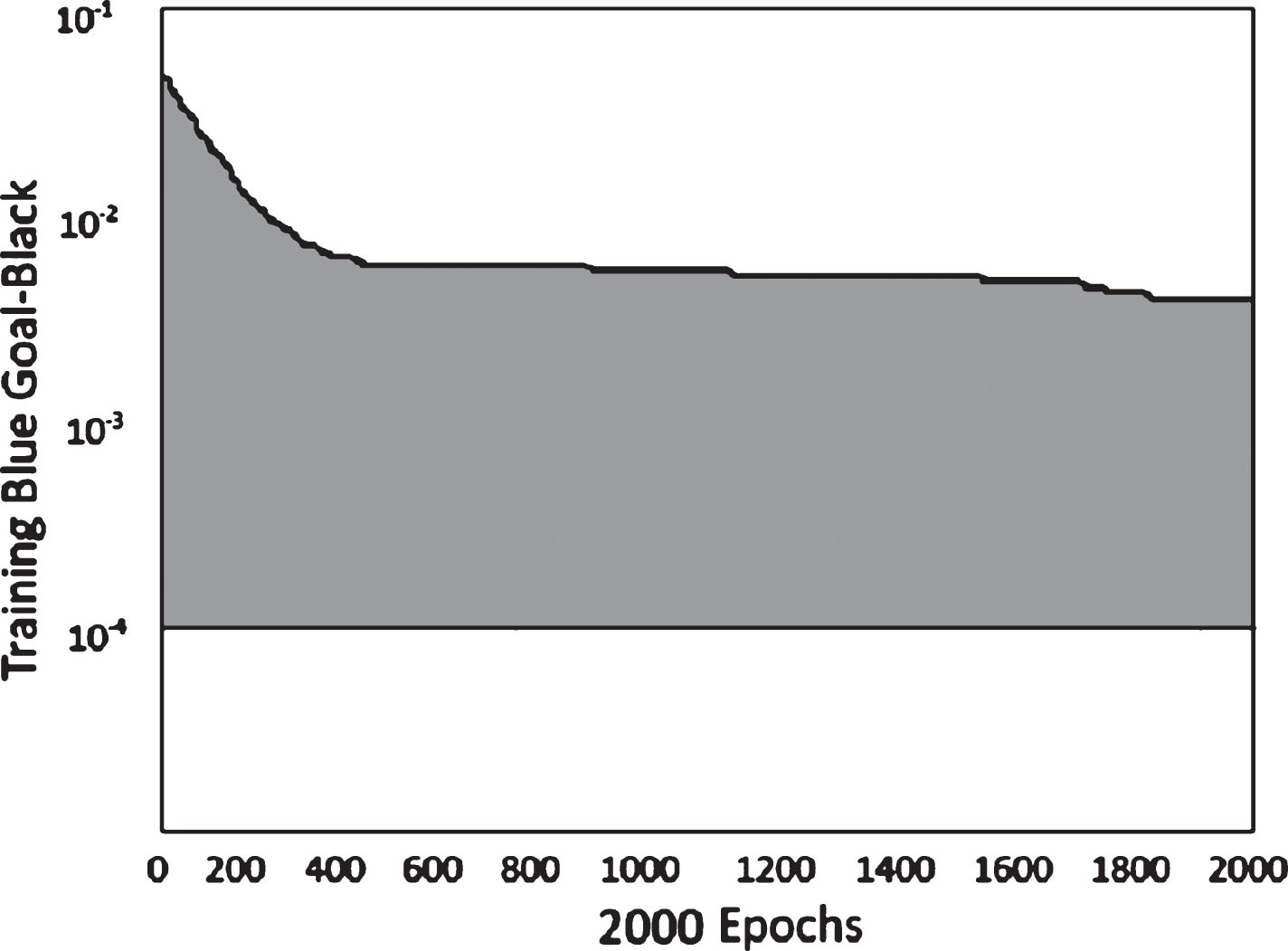
Training results ((training function: traingd)).
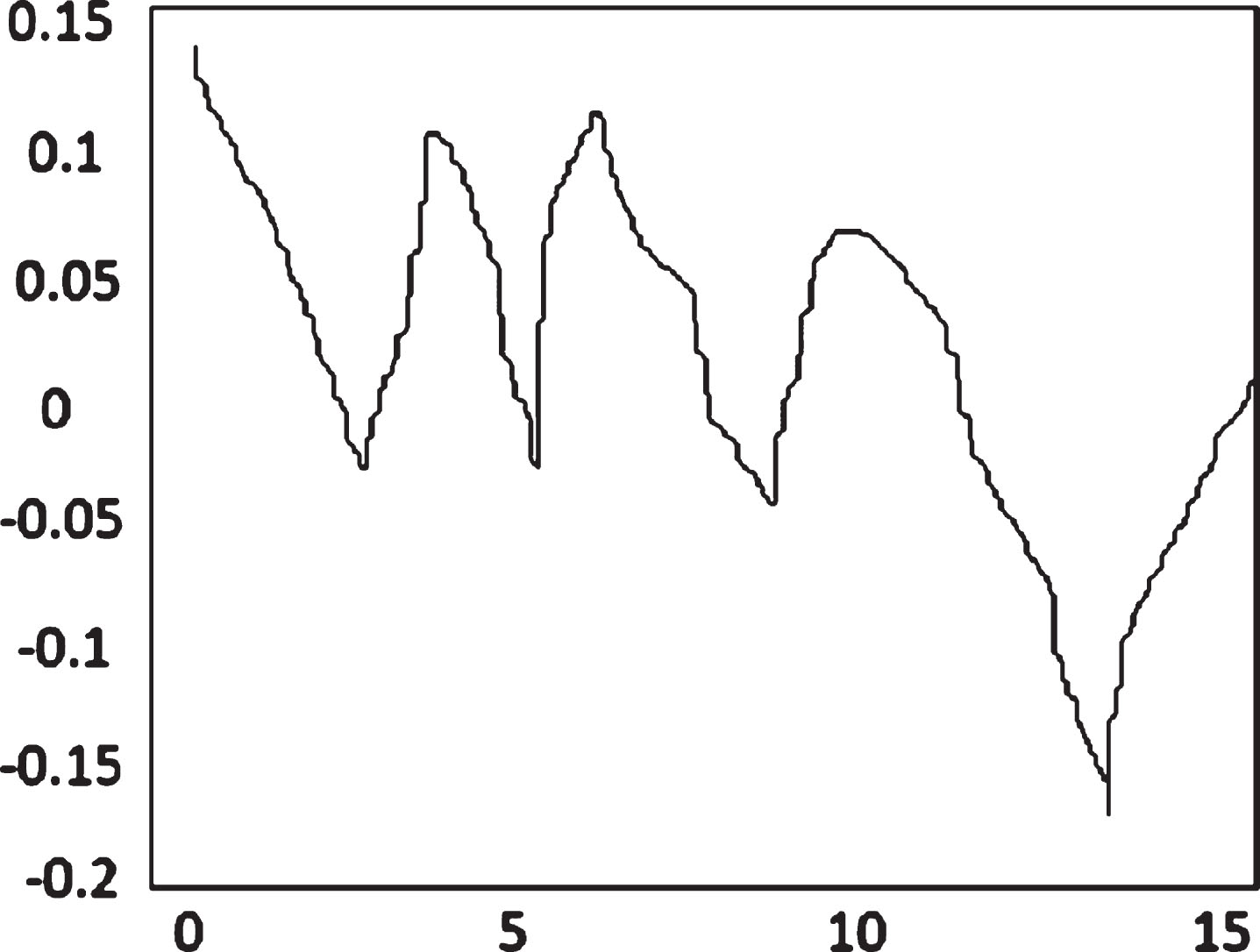
Error curve (training function: traingd).
After that, the network is trained by the function traingdx, and the learning algorithm of the function is the gradient descent method. Moreover, in the process of training, the speed of learning is white-adaptive (variable).
The simulation results are shown in Fig. 8. After 2000 trainings, the network error target cannot be satisfied, the convergence process is very slow, and the network error curve is large. The network error curve is shown in Fig. 9.
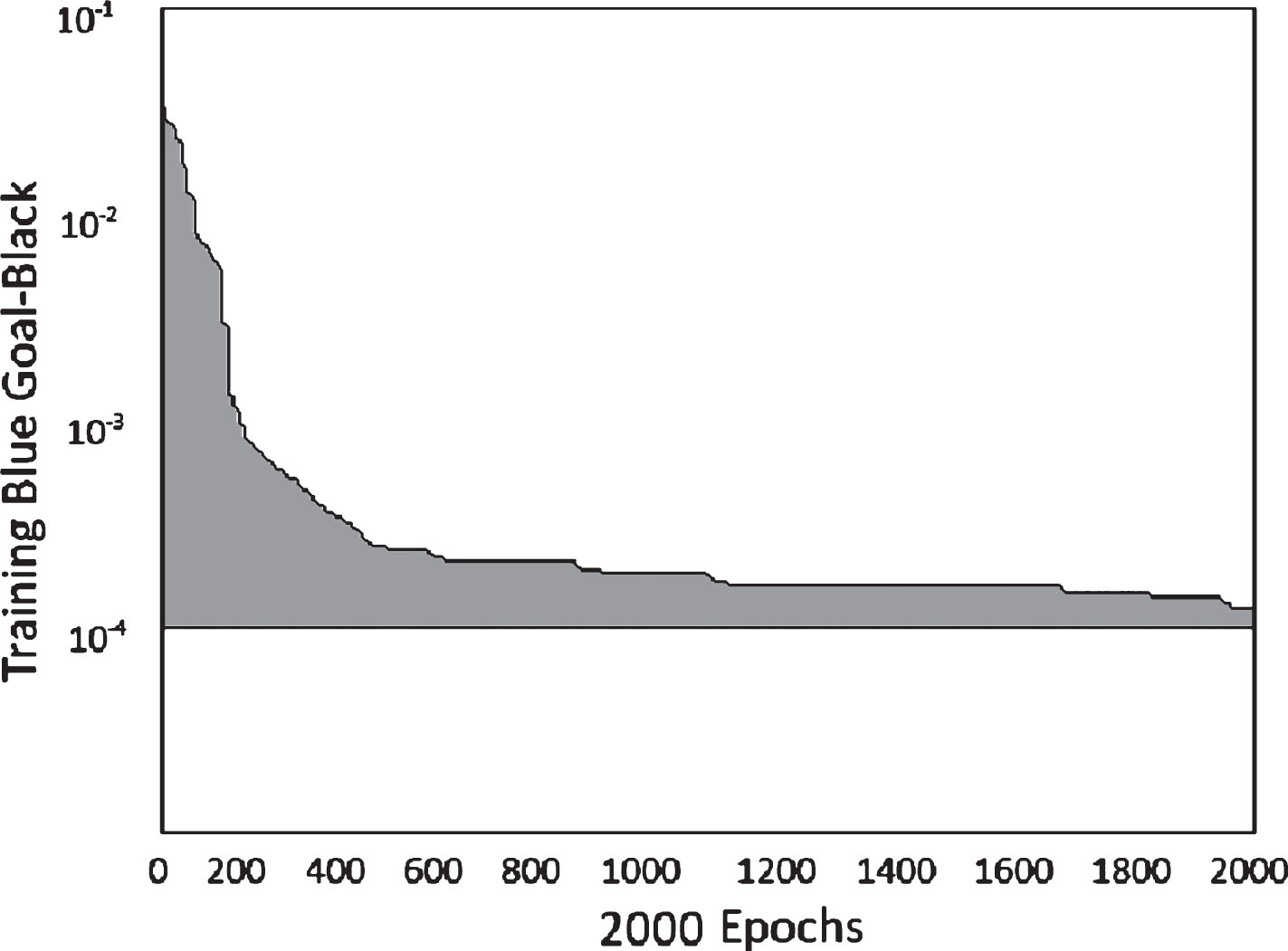
Training results (training function: traingdx).
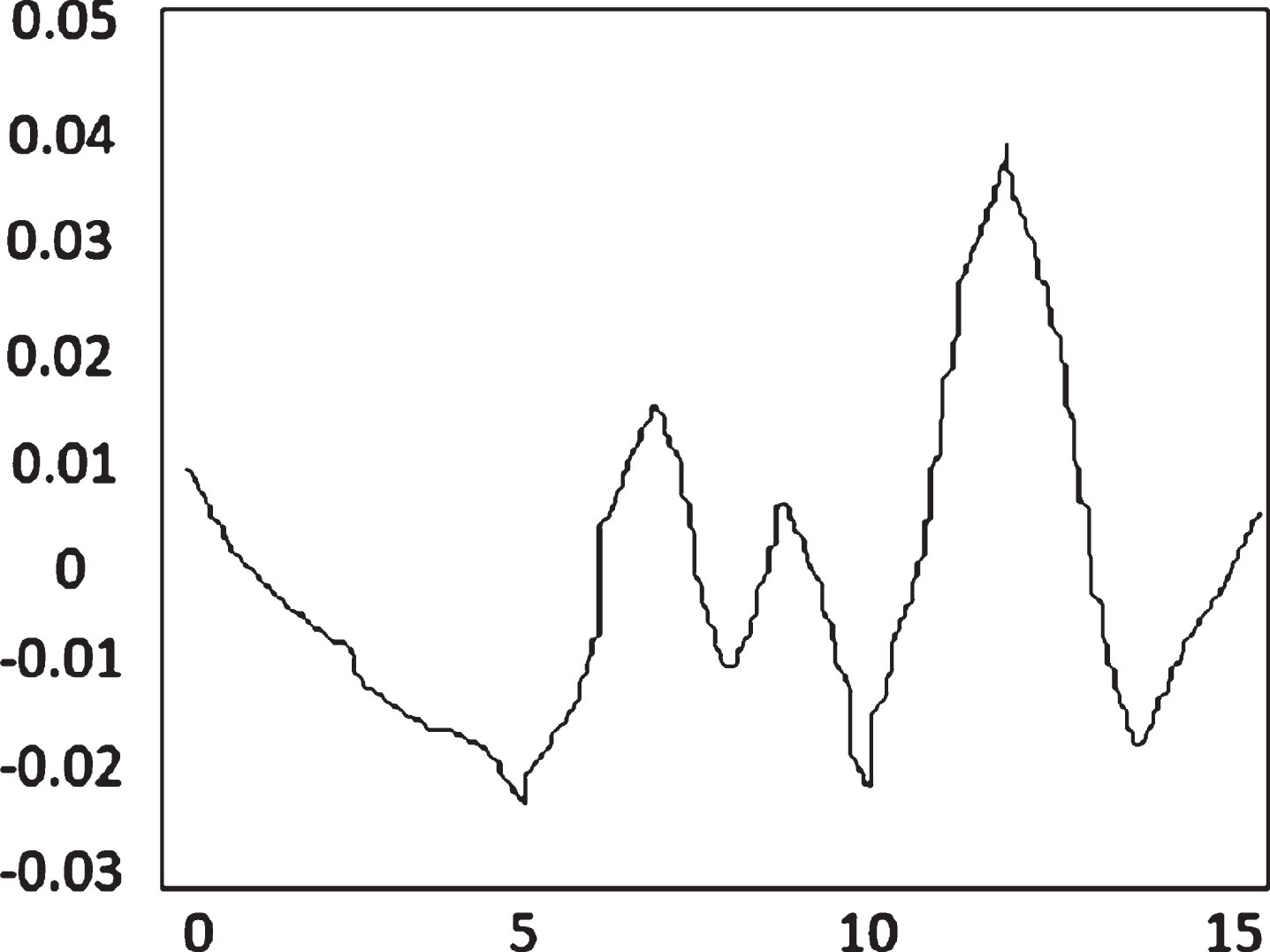
Error curve (training function: traingdx).
Comprehensive analysis of the different training processes of the above three training algorithms found that when the training function trainlm is used to train the network, the convergence speed of the network is the fastest, the training error of the network is also the smallest, and the error precision is required, and the performance of the network is good. Therefore, this paper uses trainlm to train the network and then simulate it through a trained network.
In order to verify the evaluation effect of the model, this paper will prepare five sets of test data in advance and input them into the trained neural network. The results obtained by the simulation and the results of the expert evaluation are shown in Table 3. The results show that the results of the simulation and the evaluation results given by the experts are also close.
Comparison table between the results of the simulation evaluation and the evaluation results of the experts
From the above analysis, the model of this paper is not only within the acceptable range of training and prediction accuracy, but also the error of the test sample is very close to the error of the test sample. Therefore, the evaluation model based on BP neural network is a reasonable and feasible evaluation model.
As an important part of Ideological and political courses in Colleges and universities, ideological and political practice teaching plays an irreplaceable role in improving the quality of Ideological and political course teaching, stimulating students’ interest in learning ideological and political courses, cultivating students’ innovative consciousness and exercising willpower quality. In the process of developing college students’ Ideological and political education, colleges and universities should combine ideological and political practice teaching with theory teaching, and fully recognize the importance and significance of practical teaching. Colleges and universities also put practical teaching in the same position as the theory teaching, and put the ideological and political practice into the school practice education and teaching planning system. Combined with the new ideas, new theories and strategies put forward by the Party Central Committee in the new era, we should integrate the socialist core value system into the ideological and political practice teaching, so that the ideological and political practice teaching in Colleges and universities can better reflect the times and development.
The research work of this thesis mainly focuses on the design of college classroom teaching quality evaluation system based on BP neural network theory. It is a multidisciplinary research work of computer application, artificial intelligence, education and teaching technology. At the same time, this thesis has made in-depth research on the subject of classroom teaching evaluation and evaluation indicators, and the construction of BP neural network evaluation system. In addition, through the neural network to make a reasonable evaluation of the quality of classroom teaching, this paper overcomes the direct influence of human factors on the evaluation results, which opens up a new method for the reasonable evaluation of classroom teaching quality and provides meaningful reference value for the research of teaching quality assessment
Sample data is a very important link in the training of neural networks, which directly affects the results of network training. Therefore, in the selection of sample data, scientific analysis methods must be used to select appropriate samples.
The input indicators of the classroom teaching quality evaluation system of the university need to be further studied and discussed, and it is also necessary to select the essential, typical and objective indicators reflecting the teaching.
In addition, it is necessary to further develop and design other subsystems of college classroom teaching quality neural network evaluation, so as to improve the neural network evaluation system of college classroom teaching quality.
Conclusion
The research work of this paper mainly focuses on the design of college classroom teaching quality evaluation system based on BP neural network theory. This system designs 8 neural network evaluation subsystems. According to the structural framework of the evaluation system of the teaching quality of colleges and universities, the neural network evaluation system design of college classroom teaching quality is divided into two neural network systems, namely subsystem neural network and integrated neural network. At the same time, this paper applies its adaptive learning for BP neural network as a learning algorithm. The model simulation is realized by the function newff, and the number of neurons in the output layer is automatically determined according to the sample data. Moreover, the number of hidden layer neurons and the number of layers of the hidden layer, the transformation function of the hidden layer and the output layer, and the training algorithm function need to be determined by the user. Moreover, initialization is implemented by the function init, and when the newff creates the network object, the initialization function init is mobilized, and the init0 command format is used. At the same time, the network training is implemented by the function trainlm, which is the training function of the LMBP. It trains the network according to the input vector P of the sample, the target vector T, and the parameters of the training function that has been set in advance. At the same time, this paper implements network simulation through the function Sim, which simulates the test data according to the trained network. It can be seen from the analysis that the evaluation model not only has the training and prediction accuracy completely within the acceptable range, but also the error of the test sample is very close to the error of the test sample. Therefore, the evaluation model based on BP neural network is a reasonable and feasible evaluation model.