



Abstract
The design of a wireless sensor network (WSN) faces many constraints. Mostly, WSN is energy constraint because the sensor nodes are battery operated. Available power expenditure in WSN largely depends on the efficient use of limited resources and appropriate routing of the data packets. The power consumption can be minimized by balancing the energy consumption between the sensor nodes and selecting the minimum power consumption route for the data packets. Clustering is one of the most effective technique that not only uniformly distributes the energy among all the sensor nodes but also play a vital role in the designing of routing protocols. So based on these advantages, a low power consumption routing protocol is proposed that makes use of fuzzy c-means++ algorithm. The proposed approach minimizes the power consumption of the sensor network by the excellent management of the WSN and also raises the lifespan. The simulation result illustrates the effectiveness of the proposed routing method when compared with the recently developed protocols based on k-means and fuzzy c-means algorithms.
Keywords
Introduction
A WSN is a network which consists of spatially distributed autonomous devices, equipped with a sensor to monitor various physical or environmental phenomenon enabling the interaction between persons or computers and the surrounding environment. Sensors of a WSN work as a transducer. They sense the physical phenomenon and convert them into an electrical signal. These electrical signals contain the information that happens around the sensors. The receiver/transmitter section of WSN transmit this information to the desired location.
Due to rapid advancement in technology, present age sensors have got a size in micros, a small memory on-chip and a battery as a finite energy resource. This energy resource decides the life and nature of the network. Therefore, it is one of the most important constraints in the development of a WSN. The high bandwidth demand and the large storage requirements are the main challenges in large-scale video surveillance systems [1]. Clustering is the most popular technique to minimize power expenditure and enhance the lifetime of a WSN. In this technique, clusters are formed in an ordered manner by partitioning the WSN nodes into groups on the basis of some phenomenon. Now, overall communication occurs among different clusters. These clusters utilize energy resources very efficiently so reduces the energy consumption and increase the life of the sensor networks. A WSN is divided into several clusters. Each cluster consists of a cluster head (CH) node and other member nodes. A CH node aggregates the received information from member nodes and sends it to the base station by using single or multi hop communication. In this whole process, the CH node consumes much higher energy in comparison to member nodes. For getting equilibrium in the power expenditure, all other nodes of the network also have an opportunity to play the role of a CH [2, 3].
In the WSN, most of the energy spend during the communication between transmitter and receiver. In recent years for making WSN energy efficient, many communication routing protocols have been designed. These protocols are mainly categorized on the basis of the structure of the network and operation of the protocol. According to the architecture of the WSN, the routing protocols categories in three groups that are Flat, hierarchical and location-based. The routing protocols are also divided into multipath, query, negotiation, QoS and coherent routing protocol based on protocol operation [4–6].
Related work
In recent years, many hierarchical clustering routing protocols have been proposed for WSN. Some of them are Low energy Adaptive Clustering Hierarchy (LEACH), Hybrid Energy Efficient Distributed clustering (HEED), Hierarchical Cluster-based Routing (HCR), Power Efficient Gathering in Sensor Information Systems (PEGASIS), Threshold Sensitive Energy Efficient Sensor Network (TEEN), Stable Election Protocol (SEP) [7–12], K-means algorithm based routing protocol [13, 14] and Fuzzy C-means based routing protocol [15, 18].
The LEACH [7] protocol, which is considered the most popular protocol. It provides a strong base for other routing protocols for WSN, runs on a cluster base architecture and uses a probability function to opt the leader node or cluster head. The position of CH node keeps rotating within a cluster to balance the expenditure of energy in the network. CH nodes program the member nodes within the cluster to send the information to the CH by following Time Division Multiple Access (TDMA). In this program, CH node receives the information from each member node in the scheduled time slot and send it to the sink.
The LEACH and other related protocols such as TEEN, APTEEN, etc. provide a significant improvement in the life span of the sensor networks. However, these protocols lack in the optimization of the network structures which can be achieved by K-means and fuzzy C-means algorithms.
A protocol proposed by Gong et al. [13] provides better results in comparison to LEACH by utilizing the K-means, minimum energy and geographical schemes. These algorithms are used to control the amount of energy at CH location, data transfer from CH to sink and sensor nodes to CH respectively. Tan et al. [14] suggested a balance parallel K-means protocol in which clusters are formed by the K-means algorithm. In this protocol, CHs are selected according to the residual energy, the distance between cluster center and nodes. This protocol has an attractive feature of parallel computing because of that a CH not only communicates to all cluster nodes but other CH also.
Among these protocols, fuzzy C-means (FCM) based routing protocols are considered the right solutions to improve the network lifetime and optimize the cluster structure. FCM algorithm assigns a degree of membership to each sensor node of a cluster and provides a better structure of the cluster in comparison to the K-means algorithm for ambiguous and hard data sets. Osama Mohd. et al. [15] proposed a Decentralized Fuzzy Clustering Protocol (DCFP) for the networks with improved lifetime and reduced energy consumption. The FCM algorithm has been used in DCFP for the cluster formation. This protocol runs in the different rounds and in each round, a CH is chosen for the data transfer. Hoang et al. [16] proposed a centralize protocol and it utilizes fuzzy C-means algorithm for clustering purpose. The proposed protocol provides better organization of the wireless sensor network, because of this it improves the lifetime of the network for different topologies.
FCM algorithm does not provide unique clustering because it selects the initial cluster randomly. Therefore, it requires more iteration time and hence the clusters remain unstable. The Reliability and Lifetime performance of a wireless sensor network depend crucially on a set of parameters as node density, number of cluster head etc. [17].
In this work, FCM++ based routing protocol has been proposed. This protocol exploits the K-means++ algorithm initialization technique and increases the performance of the FCM algorithm concerning energy expenditure and lifespan. In the proposed protocol, clusters are formed on the basis of membership function in which sensor nodes not only belongs to a single cluster but also many clusters depending on a degree of belongingness to other clusters. In this protocol, the optimized structure of the cluster is achieved using FCM++ algorithms that minimize the gap between cluster centers and member nodes. The proposed protocol ensures that the clusters remain uniform and highly dense in the deployed sensor networks. It also provides balance power consumption within a cluster, and the relay load of CH is balanced in the global network.
Preliminaries
In this section, assumptions used in the network, radio energy model and energy consumption model are presented. In the deployed area every sensor node operates in two modes, sensing mode in which the node senses the physical phenomena or changes and in the communication mode node sends the information to the sink periodically. In the communication mode, nodes are categorized into CH and non-CH nodes. The member nodes transfer their information to CH nodes which aggregate the collected information and send it to the sink. The role of the sensor nodes change after each cycle based on the clustering algorithm.
The following assumptions have been made about the sensor nodes and the underlying network model.
Assumptions
In the deployed field, the sensor nodes and sink are immobile in nature and the sink is at the long distance from the nodes. The network is considered homogeneous, and initially, every node is at the same potential. At the deployment, entire sensor nodes contain own power level and location information. Symmetric propagation channel is employed. All the sensor nodes sense the surrounding conditions at a constant rate and transfer them at regular intervals to the CH nodes. The nodes have the facility to adjust their transmission energy by own.
Radio model
A radio model shows a considerable effect on the designing and working of a protocol. In this work, first order radio model, which consists of a transmitter and receiver as shown in Fig. 1, used by Heinzelman et al. [7] has been adopted. Path loss exponent (n) depend on the distance between transmitter and the receiver, If the distance is less than a threshold d0, the free space (fs) loss model is used with n = 2; otherwise, the multi-path (mp) loss model is considered and n = 4.
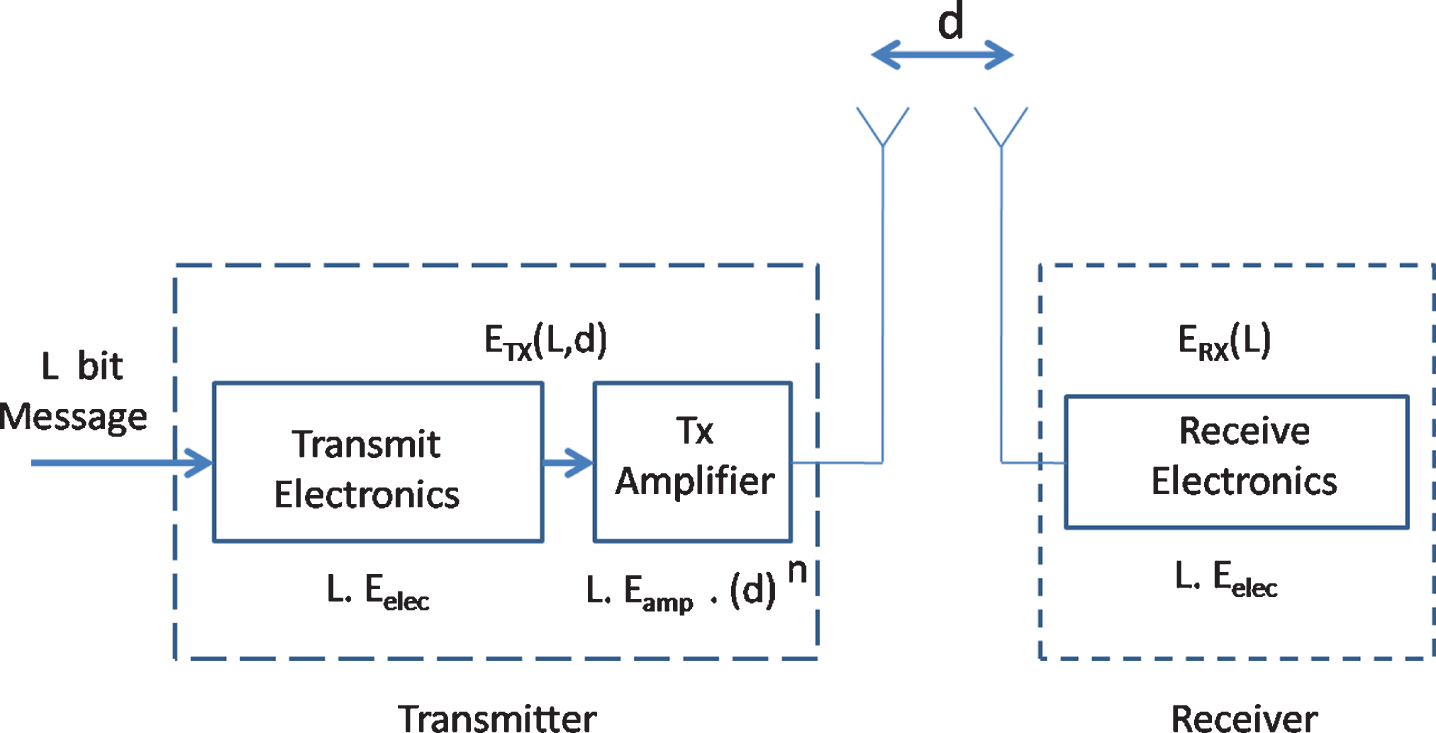
Radio Model.
A sensor node consumed energy in amplification is E amp . This energy may be E fs . d2 or E mp . d4 based on the distance d [7, 19].
In the present work, the same, LEACH [19], energy consumption model has been used for a network with k clusters and n uniformly distributed nodes in M × M area. In each cluster one node acts as a CH node and other remain as non-CH nodes.
The energy consumed by single non-CH for sending L bits to the CH is given as:-
The energy consumption in a cluster for one round of data transmission is given by
In this section, two different algorithms are described that have been generally used for the formation of clusters.
K-means algorithm
The K-means clustering algorithm [20, 21] is a mathematical, non-manageable, non-deterministic, iterative method. In this algorithm, sensor nodes are partitioned into k groups and each node belongs to different groups or clusters depending upon some similar features. Each cluster contain a centroid or CH. The desired number of clusters are decided according to the inputs and outputs, which remain similar in this algorithm. This algorithm begins with the random selection of the initial centroids and clusters are formed in the subsequent iterations. In the cluster formation, euclidean distances are computed among all centroids and nodes. A centroid with the nearest node forms a cluster. These steps are repeated till the formation of stable clusters.
This clustering technique exploits the concept of Euclidean distance and makes an effort to improve the clustering features locally. The steps involved in this algorithm are as following: Pick k initial centers randomly from all the nodes V
i
={ v1, . . . , v
k
}; i= 1, 2,...K. For all, i ∈ (1, . . . , k), placed the cluster V
i
so belongs to the set of points in χ that are adjacent to v
i
than they are to v
j
for all j ≠ i. For every i ∈ (1, . . . , k), set v
i
to be the center of mass of all points in V
i
: Keep repeating second and third steps until the clusters get fixed at a point or centers become unchanged.
In the k-means algorithm, the random selection of initial cluster centers lacks the guarantee of accuracy which can be achieved by adopting different initialization technique [22].
Fuzzy c-means algorithm
As the name implies, Fuzzy c-means (FCM) [23] clustering algorithm uses the concept of fuzziness in which one node may be associated with more than one group. The FCM algorithm divides the sensor network into a predefined k number of clusters through optimizing an objective function. In the process of clustering, FCM assigns a membership to each sensor node referencing a cluster center depending on the distance of a node from the cluster centers. In this algorithm, all the sensor nodes have a degree of membership from cluster centers. Sensor nodes closer to the cluster centers have a higher degree of membership.
The aim of FCM is to reduce an objective function, which is given as.
The cluster centers are updated using the following equation.
The time line process for the designed protocol is shown in Fig. 2. The designed protocol is divided into distinct rounds. Every round is a combination of set-up and steady-state phases. The proposed protocol is a centralized protocol, therefore the clustering is done by the base station. In the beginning, the base station aggregates all the information from the sensor nodes regarding their energy and geographical position. The set-up phase is used for making the clusters. The base station uses the FCM++ algorithm to form the clusters. After the completion of the clustering process, the base station sends information about these clusters to the sensor nodes. The steady-state process is divided into different frames. In each frame, the nodes send their data to sink through the CH node within its time slot.
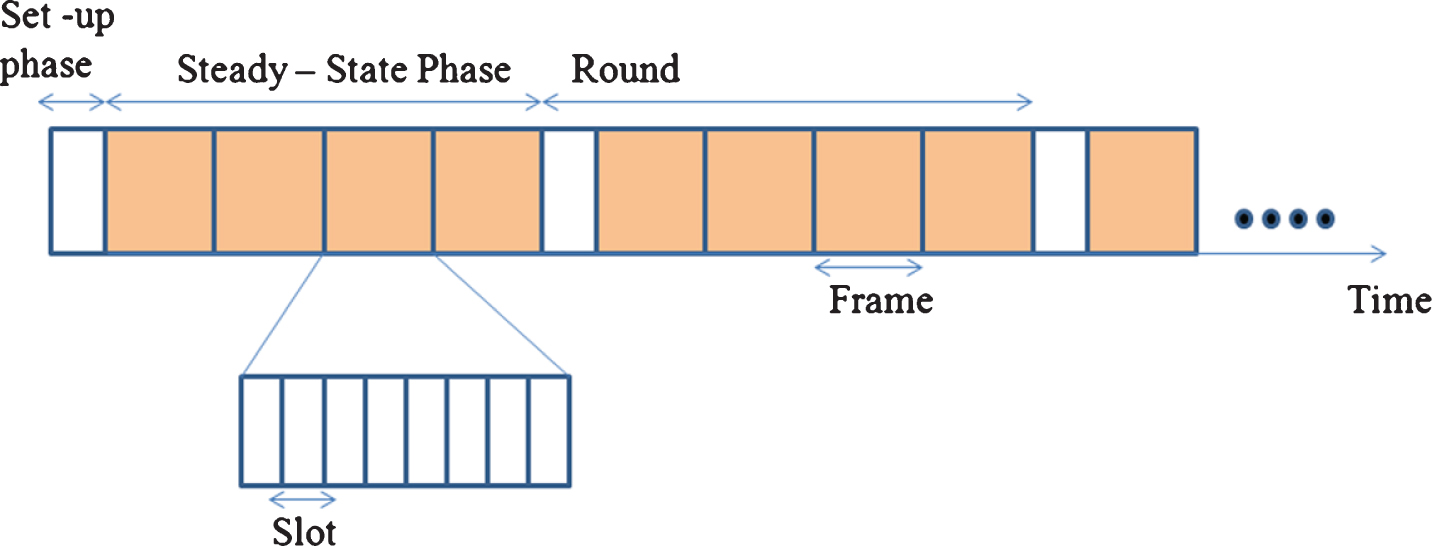
Communication Model for Proposed Protocol.
As the FCM++ routing protocol is a centralized clustering protocol. In these types of routing protocols, the allocation of the sensor node into the clusters is done on the basis of information collected by the sink from each node. After forming the cluster, a node is appointed as the CH which has the maximum energy. These CH nodes communicate with the base station.
The flow-chart for the FCM++ algorithm is shown in Fig. 3. Here the k-means++ algorithm is adopted to improve the existing FCM algorithm which is sensitive to initial cluster centers. In the k-means++ algorithm, the sensor nodes, far away to each other, are selected as cluster centers to achieve better clustering performance. In the k-means++ the initial center is selected arbitrarily from the nodes, after that, each subsequent cluster center is selected on the basis of probability proportional to its squared distance from the closest node of the existing cluster center. The k-means++ initialization method includes two dependent phases. The first one selects the center point according to the probability and the second one refreshes the sum of distances that points to their nearest centers. After the selection of the initial cluster center by k-means++ algorithm, the standard FCM algorithm is applied in the clustering process. In this algorithm, the sensor nodes are associated with a cluster base on the scale of belongingness to the cluster but not absolutely belongs to a single cluster. For this reason, the sensor nodes which are at the border of a cluster can be joined to other clusters according to the degree of belongingness. The convergence condition is satisfied when a threshold value is achieved or a maximum number of iterations is performed.
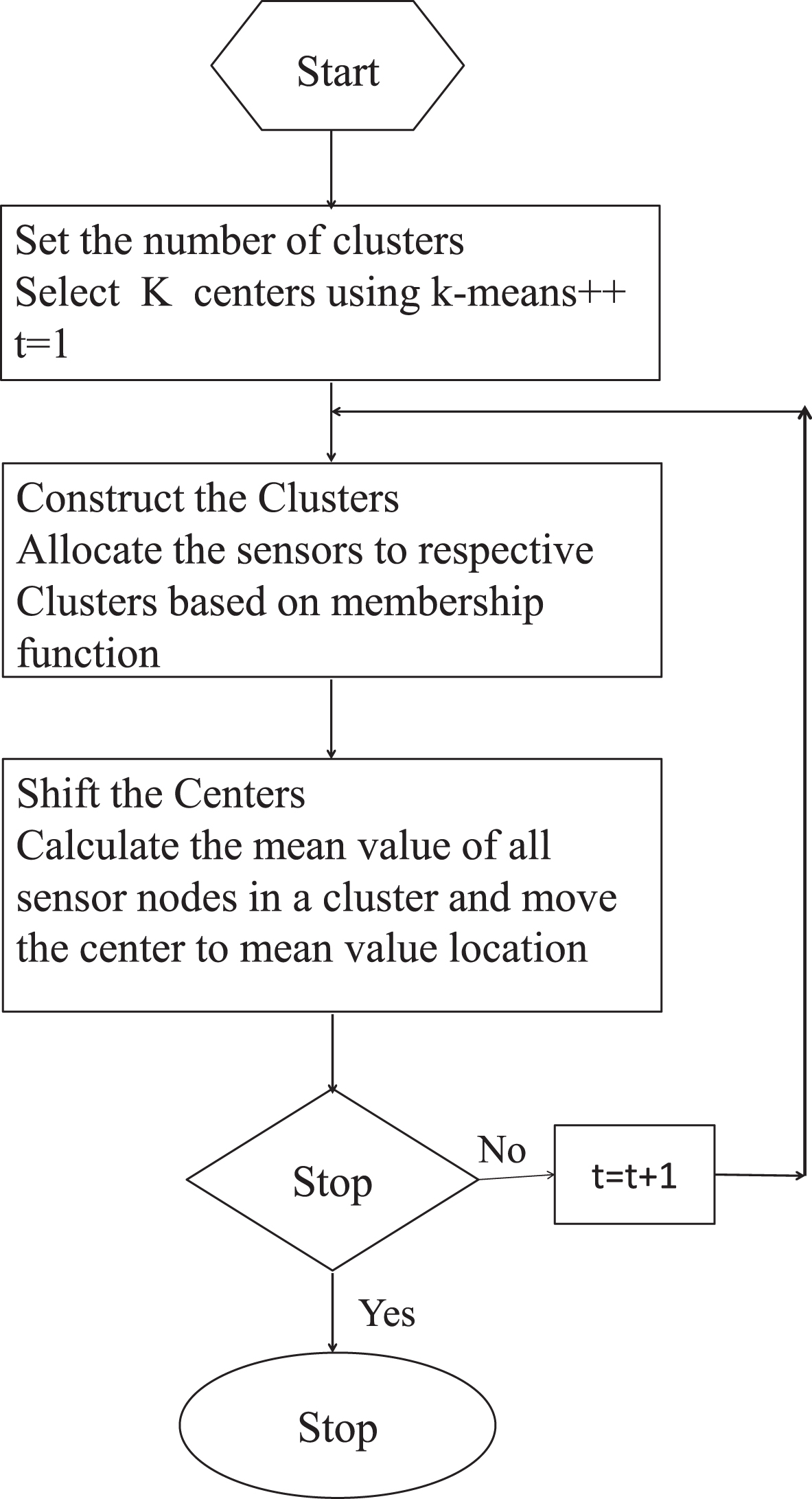
Flow chart for FCM++ algorithm.
The working of this routing protocol is splited into different phases, in second phase, the CH is selected which receives the information from the sensor nodes and deliver it to sink.
The development of proposed protocol is divided into following three steps:
Let χ is a data set of x data points and D(x) is the Euclidean distance between x and the nearest center that has already been chosen. The FCM++ algorithm is illustrated in following steps: Select a first point v1, homogeneously at arbitrary from χ. Choose the succeeding center v
i
, picked the v
i
as, v
i
= x′ ∈ χ along probability function Repeat second step until k number of centers are obtained. Opt the initial cluster center as v1,v2........v
k
among all sensors. Figure out the members of fuzzy partition matrix using formula.
Compute the cluster center using
Repeat fifth and sixth steps until the completion of required iterations or following termination condition is achieved.
Where, β is the iterative threshold in the range [0,1]. After the completion of cluster formation, base station selects a node to play the role of leader node.
Simulation setup
The k-means, FCM, and FCM++ cluster based routing protocols are simulated to determine the effectiveness of our proposed protocol. The performance is measured by the energy consumption and lifetime of the network by varying the number of clusters. The simulation parameters taken into consideration in this work are depicted in the Table-I.
Simulation Parameters
Simulation Parameters
Table II shows the energy used by the different routing protocols for different numbers of clusters (K). From this table, it can be observed that the proposed protocol not only consumes minimum energy but also provides better lifetime to the network in comparison to k-means and FCM routing protocols. FCM protocol produces better result than k-means protocol in terms of lifetime and power consumption. These results show that the proposed protocol is overall better than from both the k-means and FCM routing protocol.
Comparison of different algorithms based on energy consumption
Comparison of different algorithms based on energy consumption
In the Fig. 4 a comparison of the results for various protocols is shown. The results show the energy consumption when number of clusters are varied from two to twenty. We can see, from the graph that our proposed protocol consumes less energy than others. The proposed protocol has the bell organized network, so the load is equally divided between the nodes. The result also shows a notable point that is when the number of clusters increases the energy consumption is decreased. The proposed protocol has a remarkable gain over the FCM and k-means because it has an approach for choosing the initial cluster center compare to random selection. Fig.12 shows the energy consumption and gain of the FCM++ algorithms for the different number of clusters. Fig.8 shows the energy consumption of the FCM++ algorithm for different values of K, and finally Fig.12 shows the FCM++ gain over the FCM algorithm for K varying from 5 to 20.
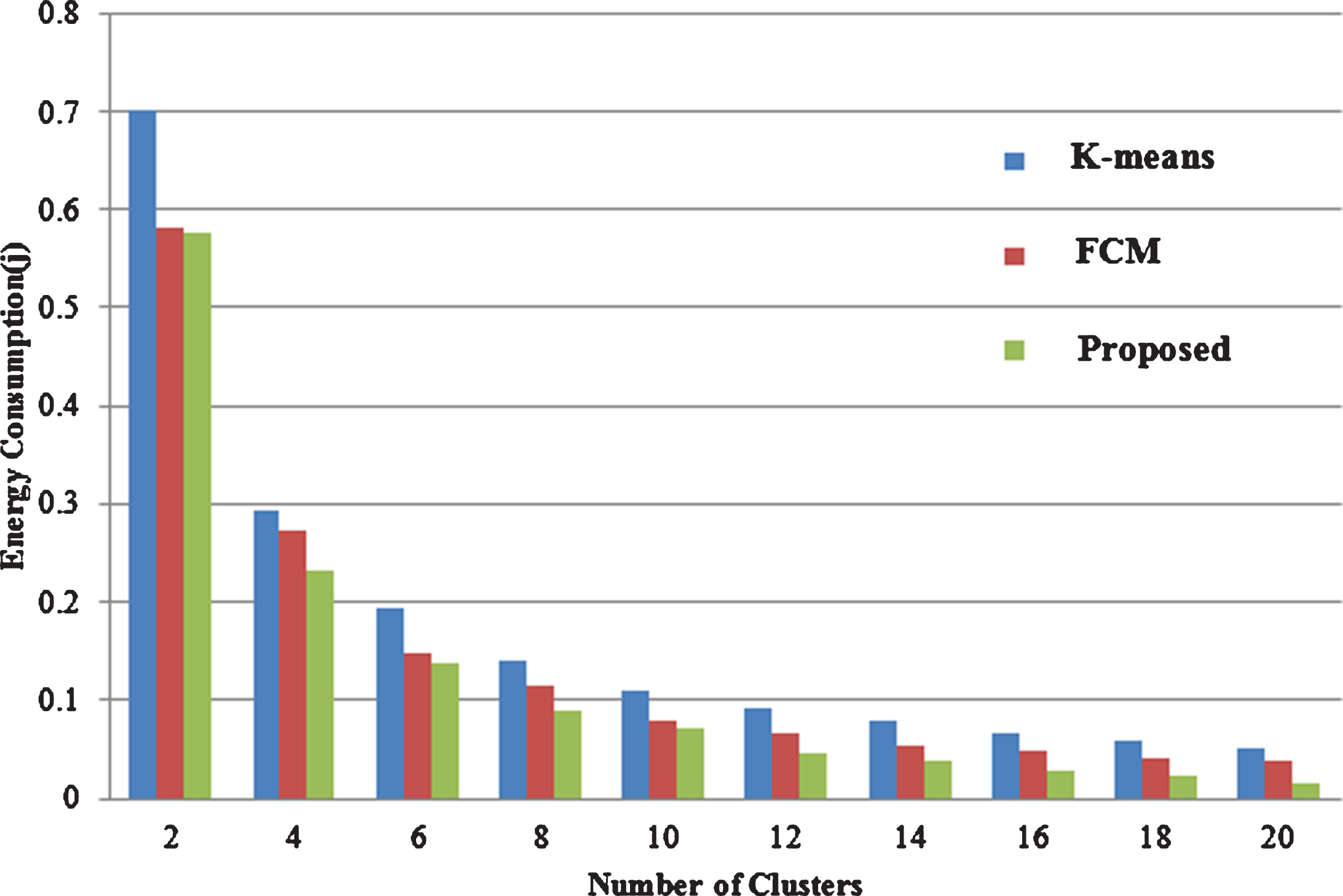
Energy consumption for the different number of clusters.
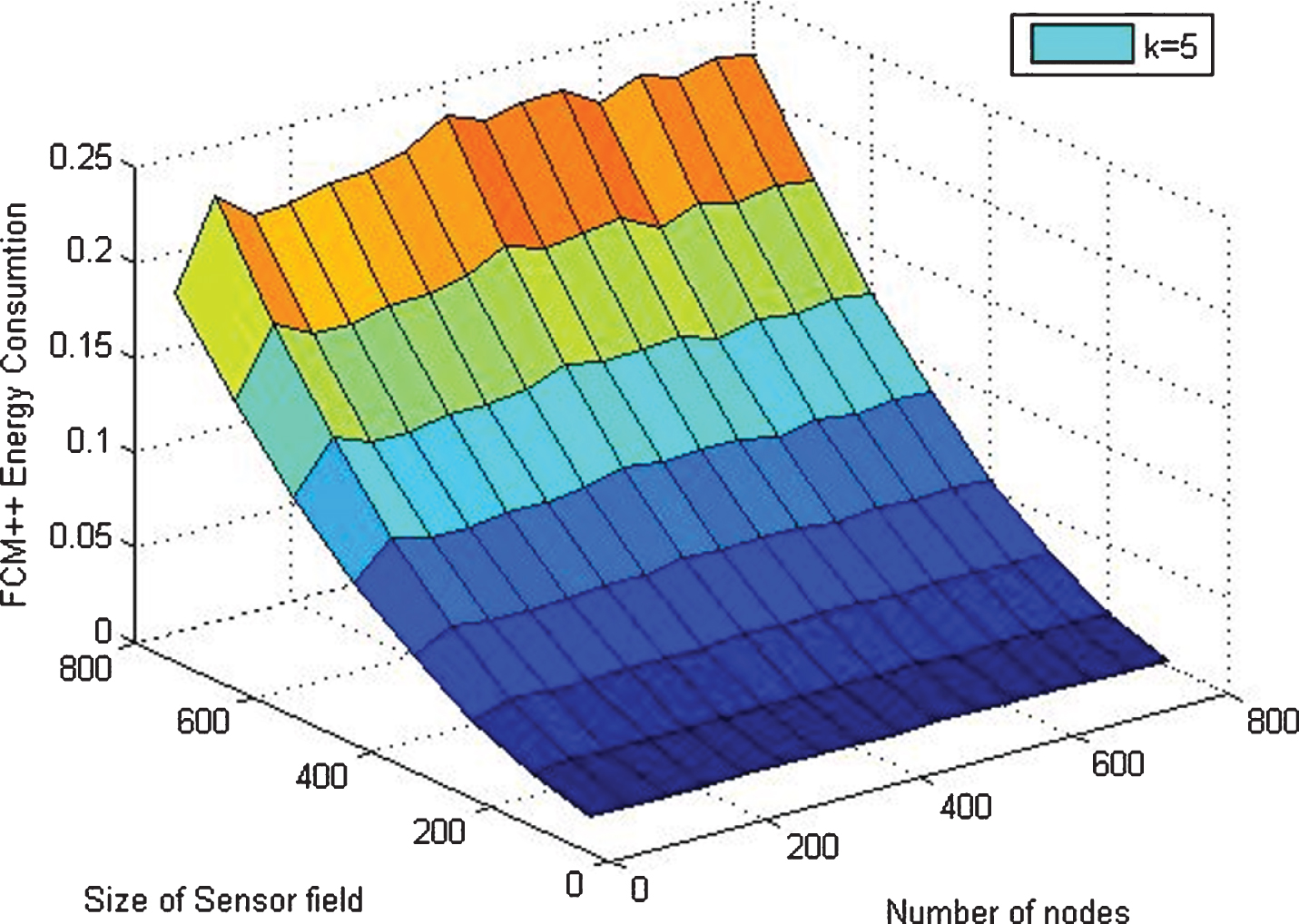
fcm++ energy consumption k=5.
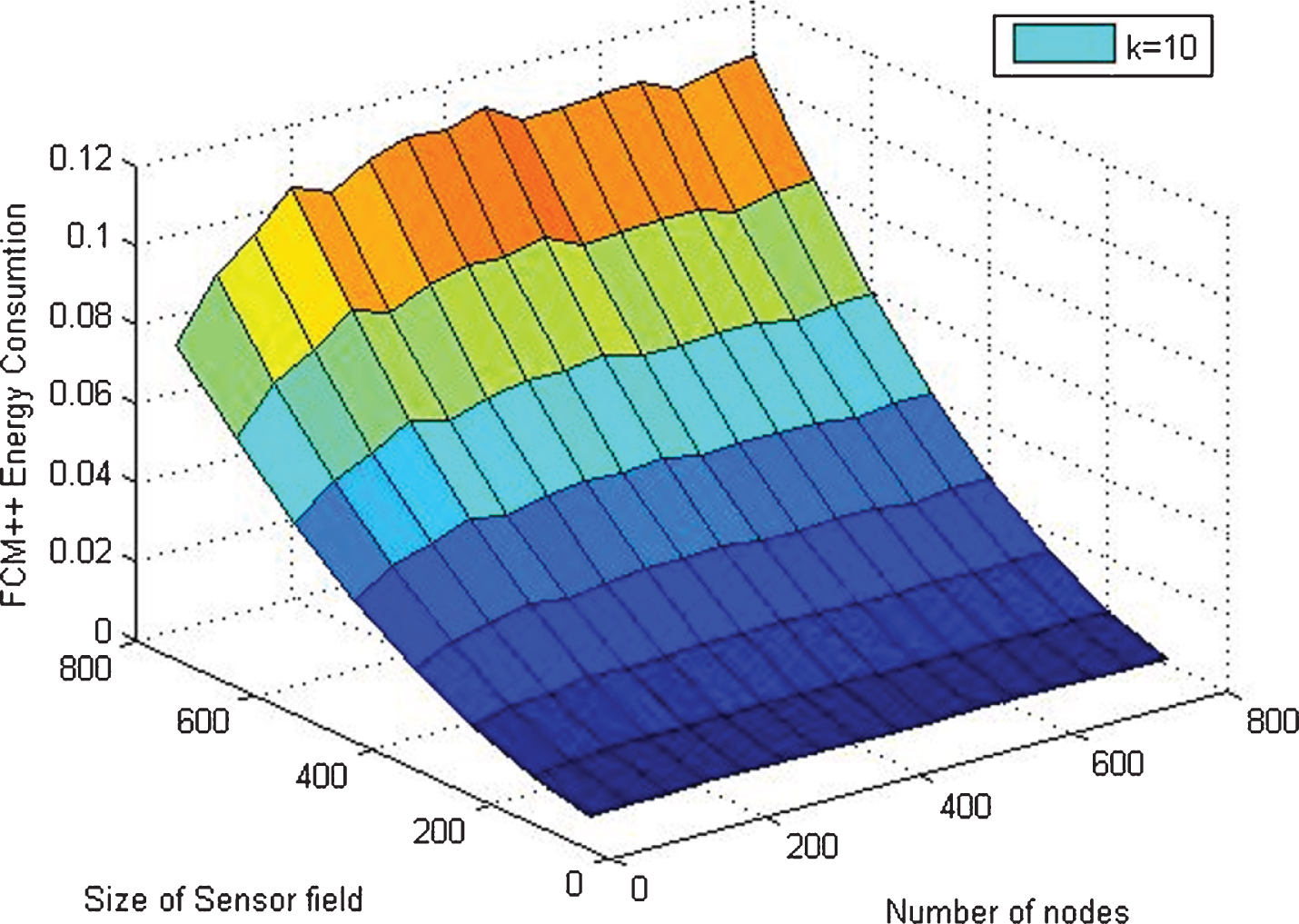
fcm++ energy consumption k=10.
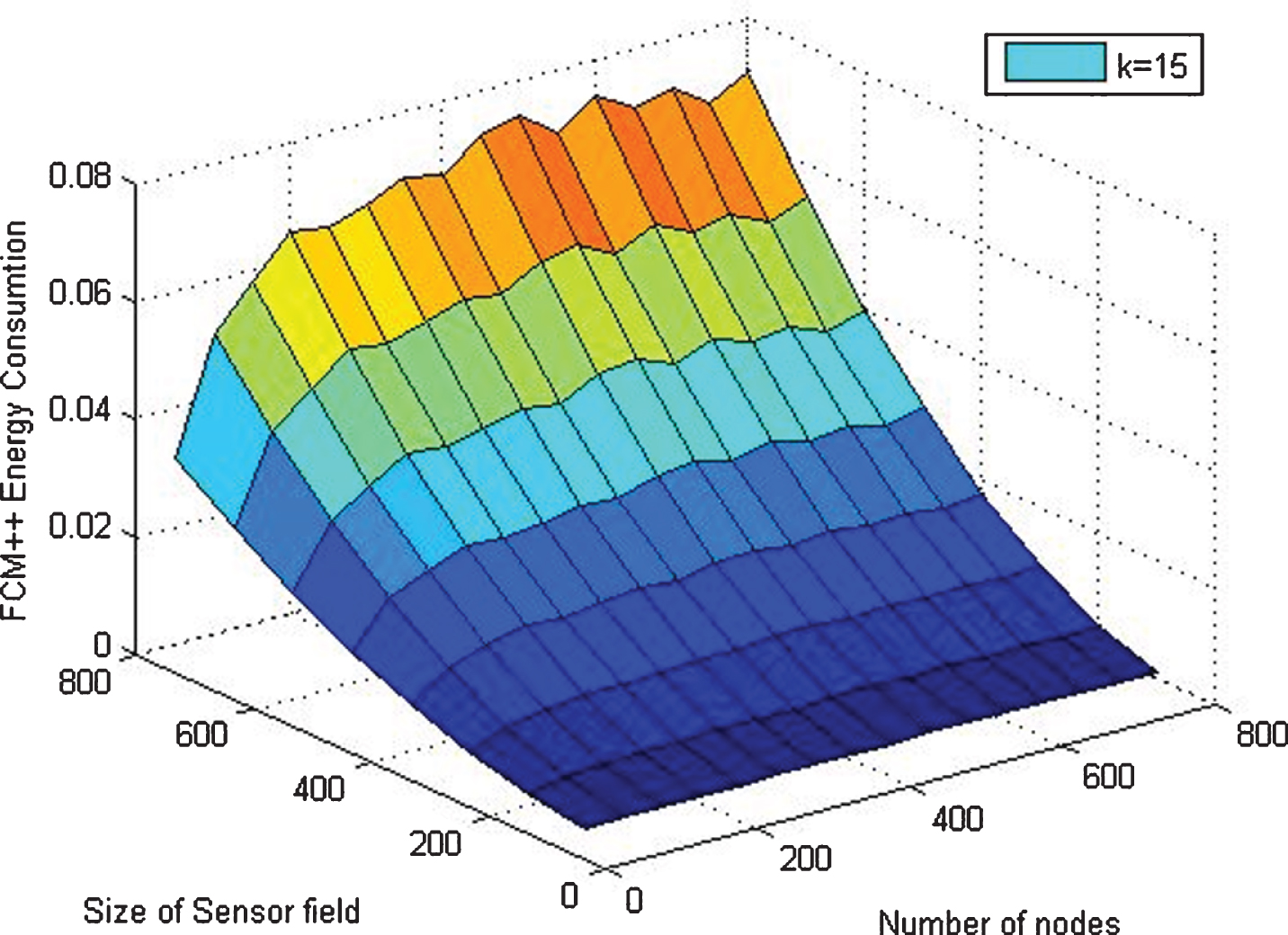
fcm++ energy consumption k=15.
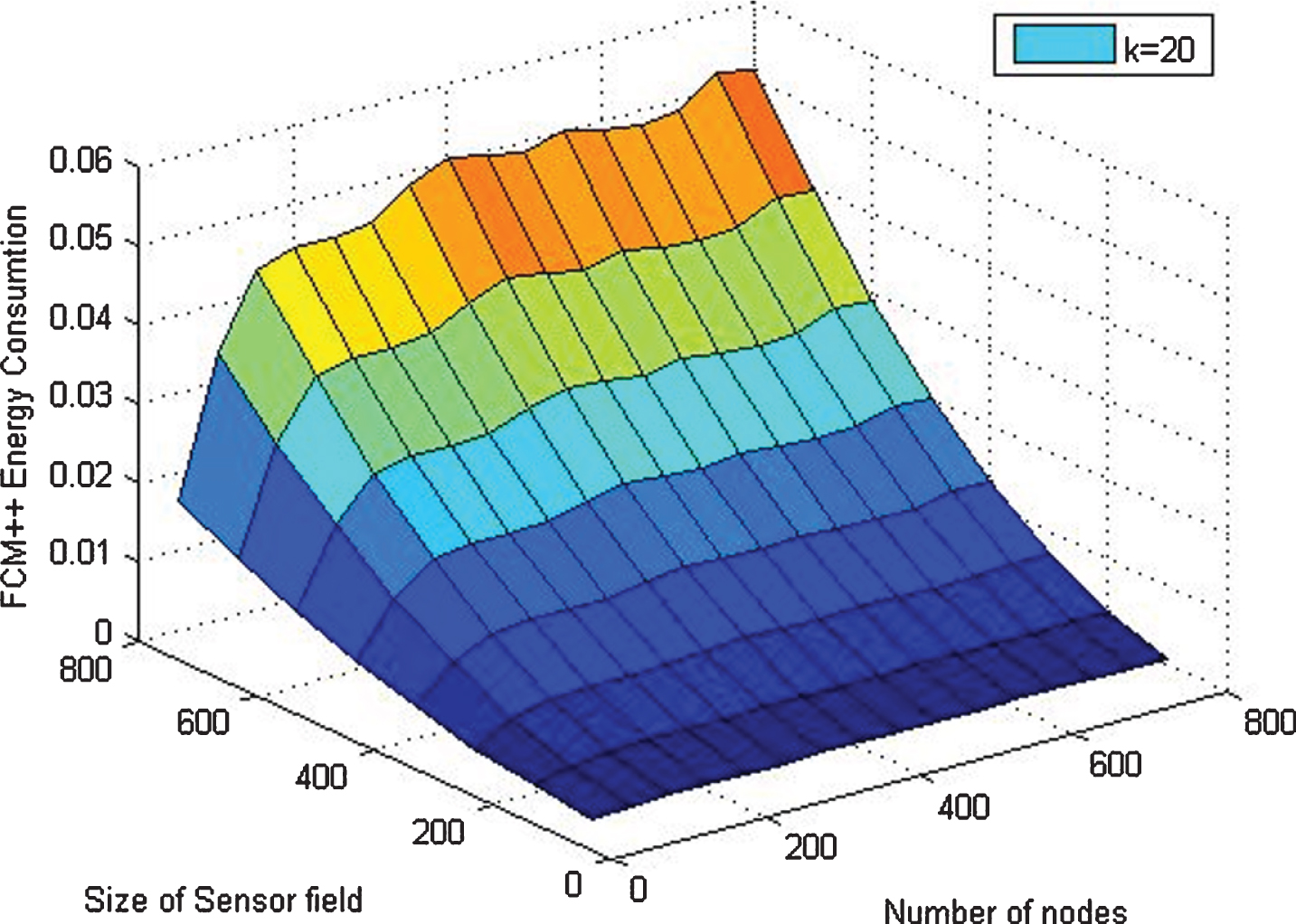
fcm++ energy consumption k=20.
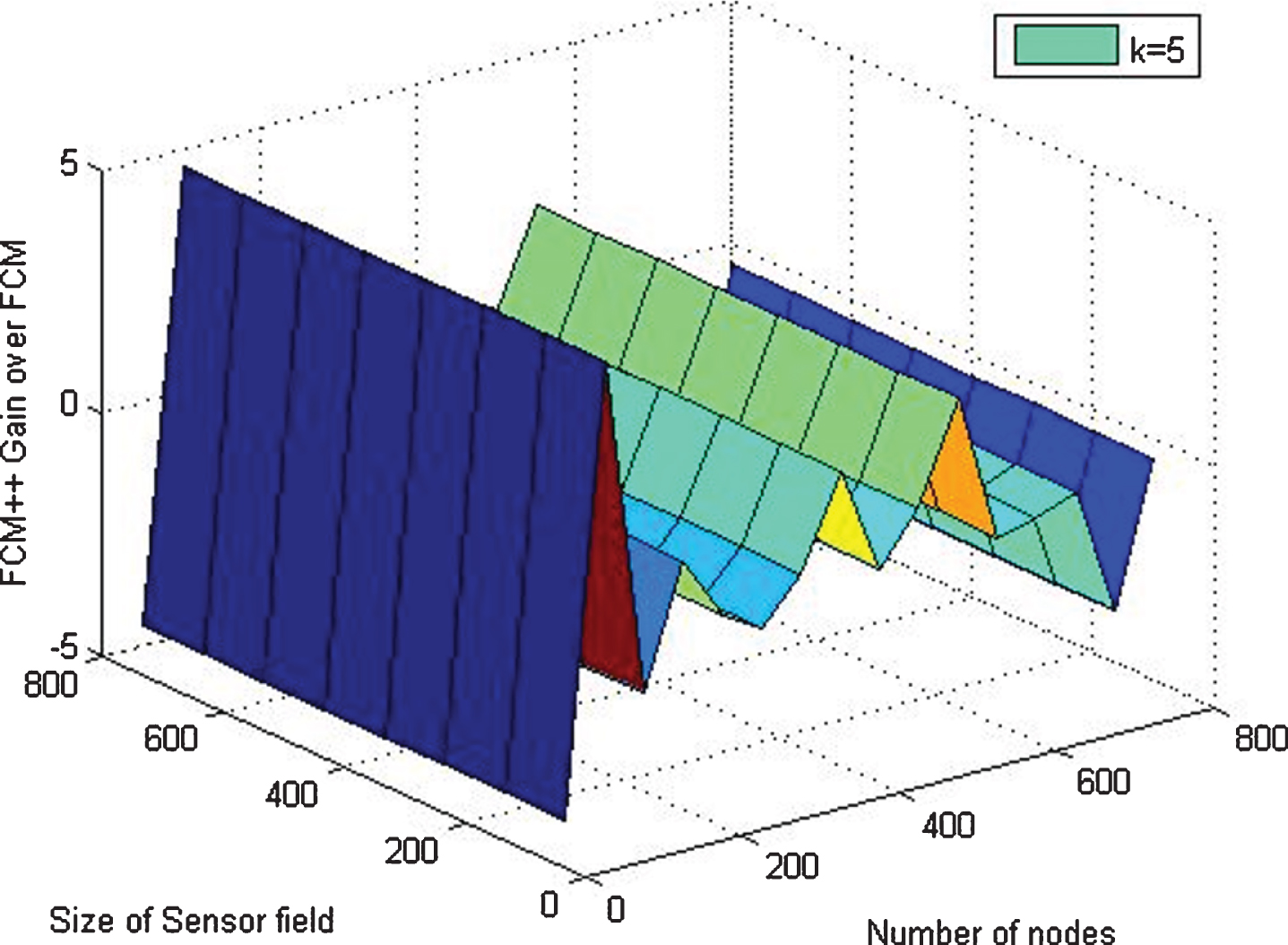
fcm++ gain over fcm at k=5.
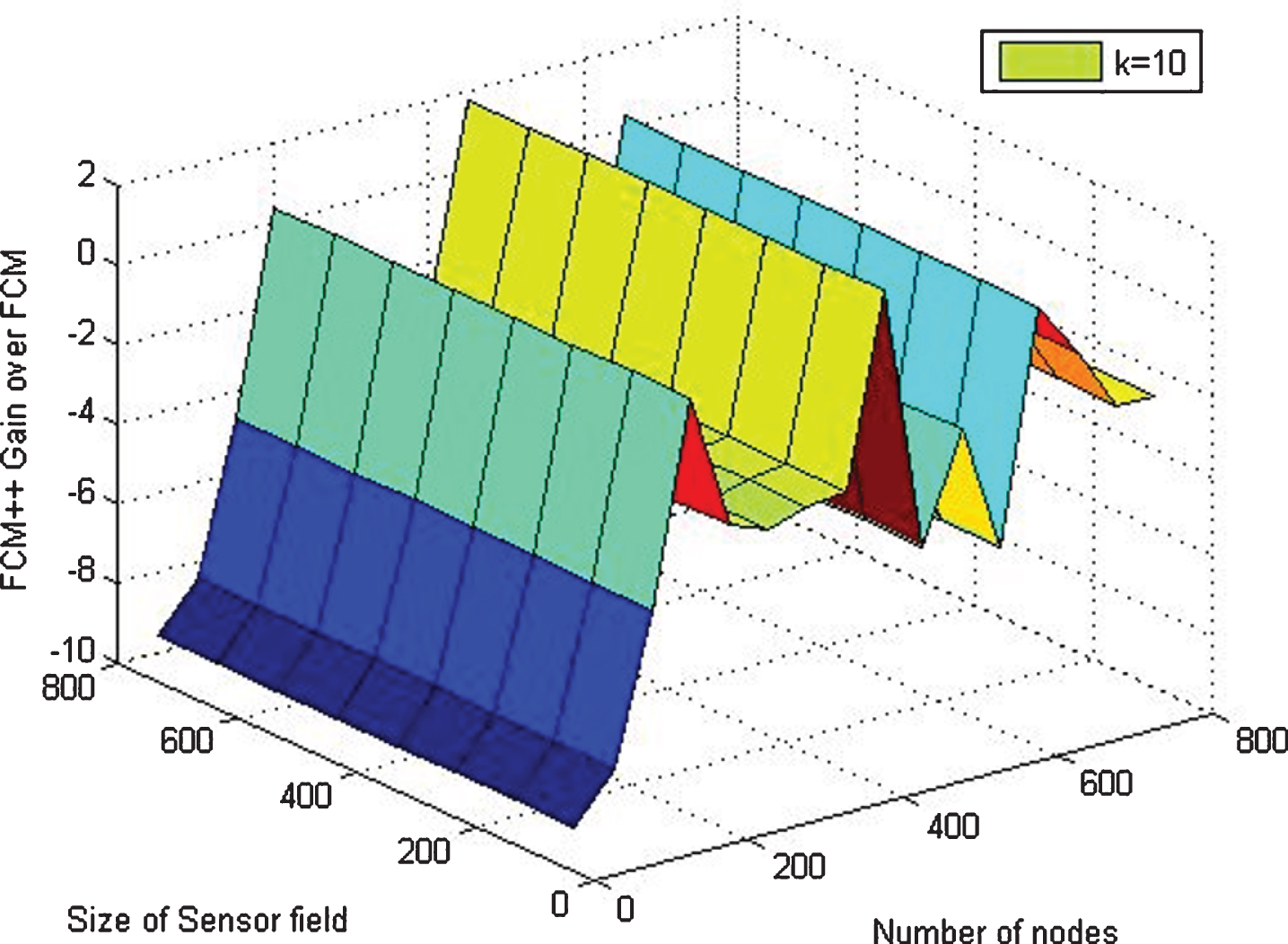
fcm++ gain over fcm at k=10.
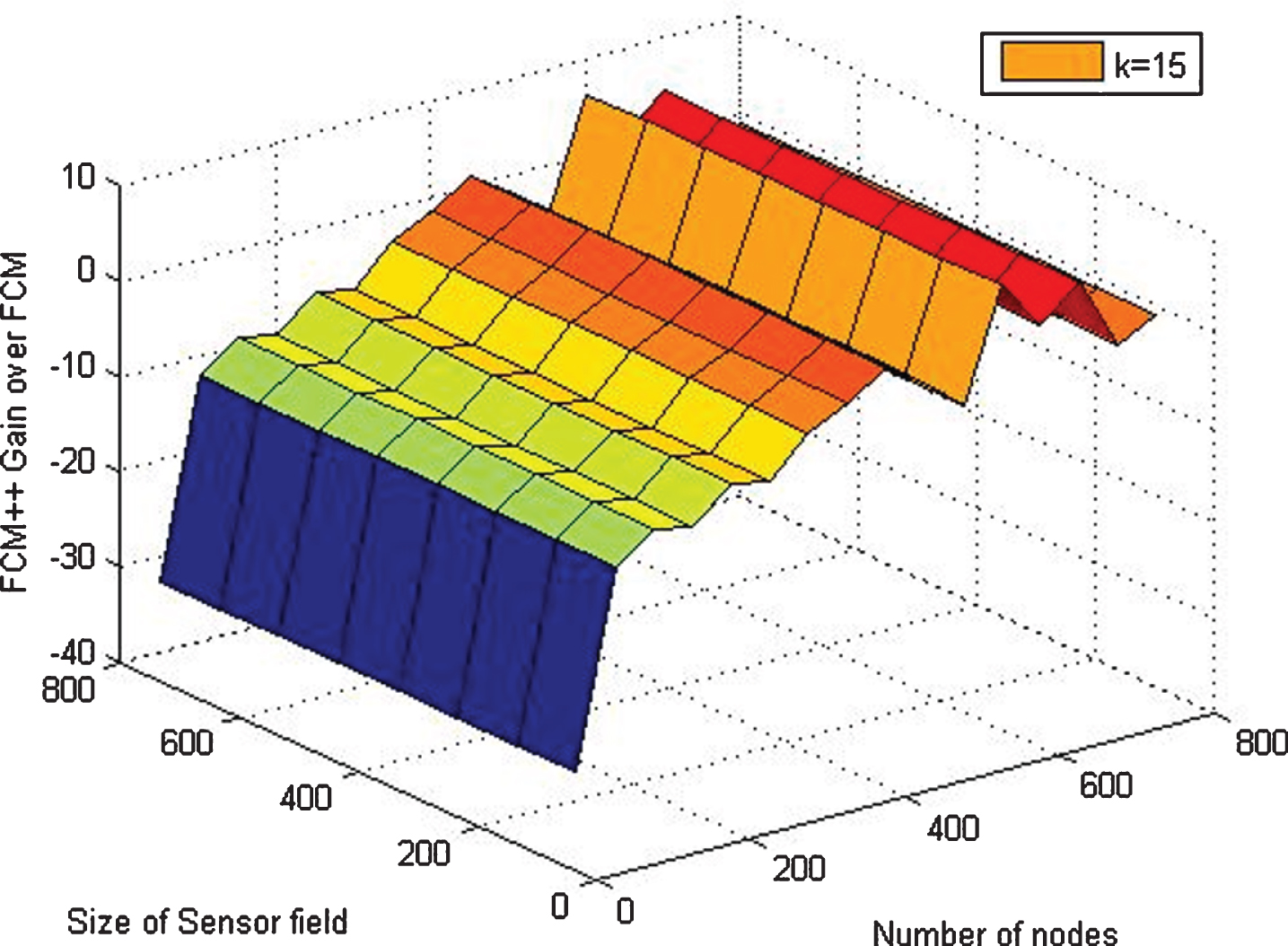
fcm++ gain over fcm at k=15.
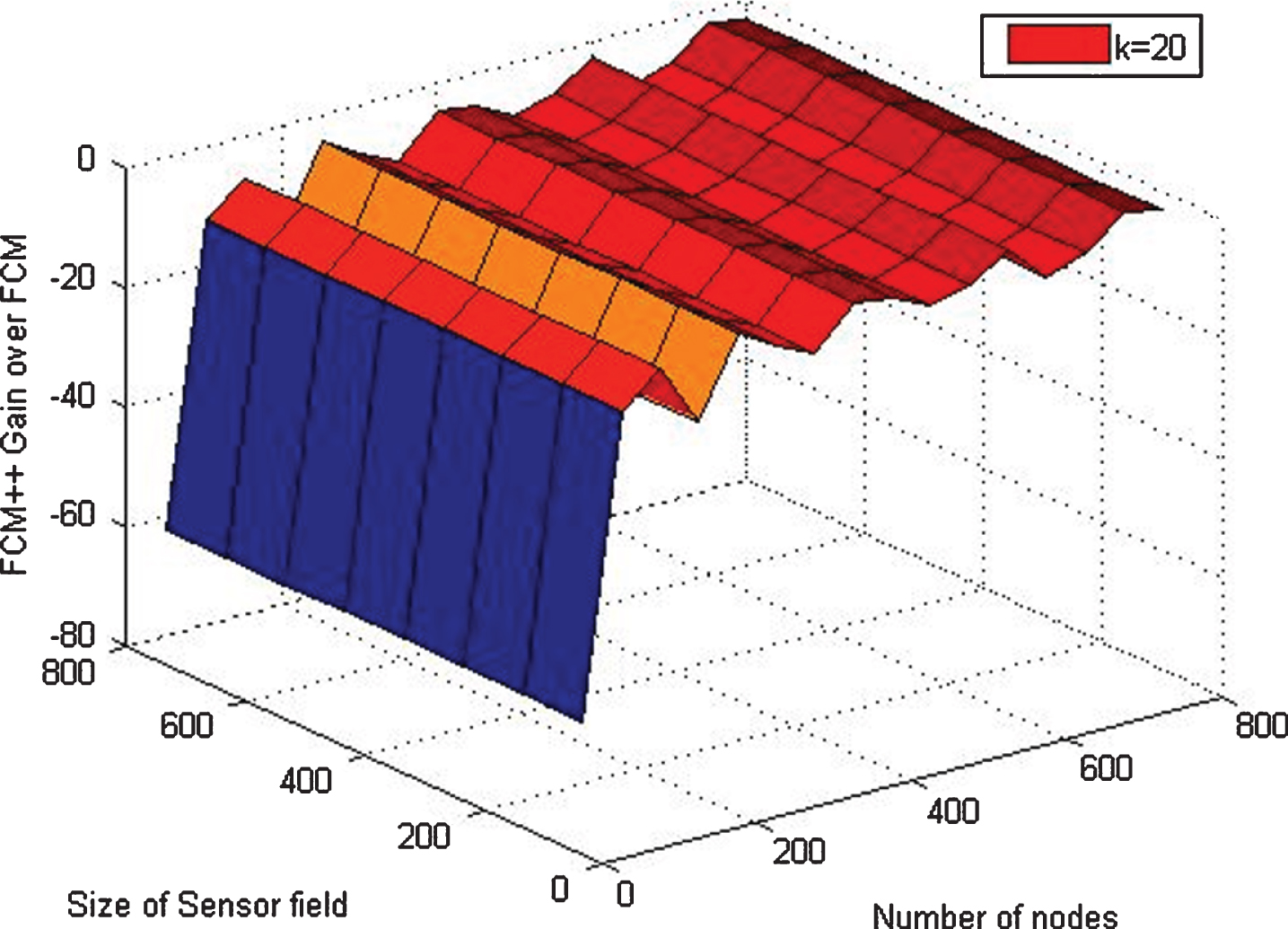
fcm++ gain over fcm at k=20.
Long life and energy efficiency are the most important factors for the efficient working of WSN. In this article, an FCM++ clustering based routing protocol has been proposed that minimizes the power consumption and increases the lifetime of the network. In this work, the FCM++ algorithm is used to develop the most appropriate network infrastructure that reduces the distance of sensor nodes and sink from leader node. The proposed protocol has the different energy saving techniques like TDMA schedule, rotation of the cluster head and aggregation of data, based on these techniques, it balances the power consumption in an optimized network structure and reduced the volume of the information to be sent to the sink. The simulation results prove the proposed protocol is competent, which reduced the power expenditure and enhances the lifetime of the sensor network when compared with K-Means and FCM based protocol.