



Abstract
This article is based on artificial intelligence technology to recognize and identify risks in college sport. The application of motion recognition technology first need to collect the source data, store the collected data in the server database, collect the learner’s real-time data and return it to the database to achieve the purpose of real-time monitoring. It is found that in the identification of risk sources of sports courses, there are a total of 4 first-level risk factors, namely teacher factors, student factors, environmental factors, and school management factors, and a total of 15 second-level risk factors, which are teaching preparation, teaching process, and teaching effect. When the frequency of teaching risks is low, the consequence loss is small. When the frequency of teaching risks is low, the consequences are very serious. Risk mitigation is the main measure to reduce the occurrence of teaching risks and reduce the consequences of losses.
Introduction
With the changes and development of society, in the past, the sun and night dew, the “ coming in the mud, going in the mud “ type of labor based on physical exertion is gradually being dominated by the mental labor of pressing a button and tapping the keyboard replaced by the way of survival. The widespread use of machines and the rise of artificial intelligence have not been completely freed human beings from fatigue and fatigue [3]. Working with machines and computers for a long time has put forward higher requirements for people’s mental attention, reaction speed, and emotional control [5]. After people have created and accumulated a large amount of material wealth, they have produced new and more difficult to dissolve forms of fatigue. Ensuring safety, especially the full protection of the personal safety of teachers and students in teaching practice, is the primary prerequisite for talent training and education in universities [7]. Diversified sport needs of students and society’s demand for high-quality professional talents in sport development have prompted more and more colleges and universities to pay more attention to the development of the sport on campus [1–2, 8]. However, venues and ways of expanding game are quite different from those of traditional sport, and relatively speaking [4]. There are greater safety risks. Once the safety risks of extended sport teaching or competition evolve into safety accidents, it will not only directly cause great harm to the physical and mental health of students participating in the extended game, but may even endanger their lives [12]. It is also due to the existence of the safety risk of expansion game that some colleges and universities hesitate to wait and see whether to introduce an expansion game into campuses. Some schools have made it clear that they cannot bear this risk and would rather sacrifice the diversity of physical education courses and extracurricular sports activities. Nor will it build-related facilities on campus, and directly drain the outreach activities outside the school. Facing ever-increasing demand for expansion sport and the safety risks of expansion game, scholars have noticed that China’s current expansion game still lack the necessary norms [9]. The training of teachers and coaches is not systematic, and the level of coaching varies. Quality standards for specialized expansion equipment are not yet perfect. Expansion equipment of some units in some areas is in continuous use all year round, even exceeding the service life specified by the manufacturer, but it is still in use to save costs [10]. Participating students’ lack of self-protection awareness, lack of professionalism, systems, and effective safety emergency plans, make it very urgent to strengthen the research on expanding safety risks, and take practical and effective measures to ensure the development of university expansion courses and related activities. Safety has become a key factor restricting the smooth development and further popularization of the expansion movement on campus [11].
Based on investigating the status qua of physical education in ordinary colleges and universities, this paper analyzes the problems of physical education curriculum reform in colleges and universities as a whole and evaluates that the existing reforms are swaying at the conceptual level [22]. Each college has its governance and has not been profound in planning the reform of its own school physical education curriculum. To understand the essence of modern physical education, most of the reforms implemented are focused on partial deletion, edition, or adaptation of teaching content. Physical education curriculum reform does not fully consider the effective connection with the physical education curriculum of the previous school system in terms of teaching objectives and content, and the reform is a fragmented phenomenon. Starting from the characteristics of physical and mental development of college students, college students’ sport learning activities are creative in the mastery of sport knowledge and skills. Participating in sport activities can help college students to demonstrate their personality and shape an optimistic and positive attitude towards life [17]. The application of the Australian sport risk management model in sports injury and safety is not perfect. In the general areas of occupational health and safety and musculoskeletal injuries, the risk management process dominates. Athletes and the public have recognized the risk of injury in sport, but the danger and risks need to be measured and evaluated. It makes good attempts to deal with the key elements of risk and safety management, and provides a reasonable balance between theory and actual implementation [13]. The specific management of risk should not be thought of after the fact or a reminder activity. With a good understanding of the risk, you can manage the risk appropriately. Concerning risk assessors, it is worth emphasizing that managers must ensure that employees are trained, and employees cannot rely on common sense alone [15]. In the development of ice and snow sports, the development of ice and snow course for young people while in school should also pay attention to the sustainable development of ice and snow sports.
In reality, the security risks of extended teaching exist objectively, but there are relatively few systematic research results on the security risks of extended teaching in universities [16]. Which risks need to be accepted, which risks must be avoided, and which risks must be transferred in a certain way. Risk awareness needs to be more systematically demonstrated and analyzed, and then provide some useful references for colleges and universities to expand teaching safety so that teachers and students can be targeted when participating in the expansion game [20]. At present, expansion is accelerating its entry into various colleges and universities across the country. With the continuous development and change of expansion projects, the number of students participating has increased. However, due to the phenomenon that education emphasizes mentality over physical education, the physical fitness of students is on a downward trend, and the individual psychological characteristics of college student’s sexuality and low psychological quality increase the possibility of safety accidents in outreach training teaching. In this context, the research attempts to investigate and analyze the security risks of college expansion course, propose improvements and perfection of college expansion security prevention strategies, and reduce the negative impact of unsafe factors on teaching [14]. Through research, it is hoped to strengthen the risk awareness of university teachers and students in expanding course, helping teachers and students to systematically identify and assess the risks of expanding sport, combining their physical fitness and the status of the teaching environment, etc. To propose risk response strategies, and to expand teaching safety risks carry out effective management, we need to effectively avoid the risks of curriculum teaching, and realize safer participation in expansion sport, and promote the popularization and promotion of expansion courses in universities and the society.
Artificial intelligence-based sports risk recognition and identification design
Design of artificial intelligence sports cognitive recognition system
To better carry out the construction of disciplines and ensure the standardized teaching, of course, the improvement and maintenance of the course system are essential. Curriculum system modules are oriented to the role of teacher users. First of all, teachers need to be able to create new systems and modules independently according to the need for professional learning in system management and explain them. Therefore, here is a problem with the system structure display. How to make the multi-layer structure of the system can be clearly shown to students while allowing teachers to easily add and improve is a focus of research. As showed in Fig. 1, because all the experimental operations of this system are implemented based on DOCKER container technology when adding new modules, teachers need to select the mirror and host for the modules they create and set the start of the experimental module course.

The framework of artificial intelligence game recognition system.
According to the research objectives and tasks, a questionnaire was made to understand, collect, and analyze information on safety accidents, safety awareness, factors affecting safety, and safe operation management in the college expansion course. The questionnaires are divided into three categories. The first category is a questionnaire for full-time college teachers who have opened an extension course, the second category is a questionnaire for college students who have participated in an extension course, and the third category is for those who have not opened an extension course [18].
Similar to the general physical education course, there are more environments and things in the expansion course. The construction of venues and equipment changes greatly. The curiosity of students is strong. The complexity and variability of the integrated human body and the expansion of the classroom make it difficult for students to participate in the expansion course. Accurately and comprehensively grasp all kinds of risk information, the risk of extended course teaching is almost everywhere, and even every behavior of each participating student is a potential threat to the extended course teaching. In actual production and life, risk refers to whether individuals or groups have the awareness and ability to judge risks. Risks are truly and objectively present in people, things, things, and the environment and development process in which they are located. The teaching of the curriculum security risks is no exception [21–26]. From the analysis of the personality characteristics of the student group, college students are younger than some enthusiasts in the society, which are also jointly determined. The objective existence of risks is in college expansion sport. Besides, the expansion of high-altitude and medium-low-altitude projects involves many factors and many unknown variables. Some ground to carry out the project, to increase the authenticity of its context, it needs to set a specific natural environment or the environment. These have become a form of objectivity to expand risk sport college.
The strategy is also based on each node CPU load calculation and memory usage. The spreading maintenance is minimal stack load information. When a scheduled task arrives, the swarm finds the node with the smallest load from the smallest heap and assigns the task to this execution node. The essence of this strategy is to evenly allocate scheduling requests so that resources can be used evenly, achieving a certain degree of load balance. Intake and Spread strategies are essentially a kind of dynamic weighted load balancing, and the calculation formula can be expressed as:
Analyzing the Spread scheduling algorithm from the above formula, it can be seen that the algorithm consider the occupancy of CPU and memory. For most applications, network load has a great impact on system performance, and disk utilization is also a related factor in performance. The algorithm does not consider network resources and disk occupancy.
To fully realize the reasonable allocation of cluster resources, a full range of considerations is required. The built-in spread scheduling algorithm in the swarm has great shortcomings. This algorithm will result in the execution of tasks that take up less memory and CPU resources, but when network resources take up more tasks, only relying on CPU and memory to consider is lacking and cannot be achieved. Therefore, this section proposes a dynamic weighted scheduling optimization algorithm for the above shortcomings. In the optimization algorithm, with CPU utilization, memory utilization, network load, disk utilization factors from four overall. It calculates the load on each node. Network load refers to the network bandwidth occupied during task execution [17]. Combined with the formula, the optimized scheduling algorithm is expressed as:
For optimization algorithm, we found that when a particular task in resource utilization and other cars is too high resource utilization, the resource node appears an unbalanced situation, when a machine learning experiment with a very large number of iterations is performed. The resource consumption of the CPU is very high. This is a CPU -friendly task. Therefore, the four weight cannot be allocated equally, but more CPU resources should be allocated. Therefore, the weight value needs to be further dynamically adjusted according to the task situation. We will add an adjustment factor to the algorithm here.
Risk identification refers to the analysis and judgment of various risk factors objectively existing in the course of something or activity through special methods such as collection, retrieval, and investigation, and the use of certain scientific methods to identify the dynamic process and results of risk occurrence, including identification. The source of risk describes the specific characteristics of the risk and the impact after the risk occurs. As the basis and starting point of security risk management, risk identification is the most basic and most important link in the expansion of the entire risk management process. In this link, experts or teachers who teach and students participating in learning are required to learn from their professional knowledge, Experience, and the risk information discovered by the investigation and collected, and then the status, characteristics, and degree of the risk can be judged. Risk identification requires managers to have certain knowledge reserves and anticipation of risks before they occur so that they can be identified in time and effective risk response and prevention measures can be taken.
Risk identification has certain characteristics. The first is the full process of risk identification. Whether it is before, during, or after the implementation of the extension course, as long as there is an unknown in an extension project task, there must be risk factors and the possibility of risk accidents, even at a certain stage. It should be said that risk factors run through the entire course of teaching. Therefore, identification of risks also runs through the entire teaching process. The second is the holistic nature of risk identification. Human factors are one of the most complex factors in teaching. The experience of expanding the project must be completed by the students’ personal experience. However, there are differences in the knowledge, skills, and awareness of risk management among different students. In the face of unknown risks, the management experience of students has certain limitations [19]. To ensure that risks can be identified in a timely, comprehensive, and accurate manner, risk management organizations need to participate in the students to complete the risk identification work. Finally, the dynamic nature of risk identification, things are constantly evolving, and risk factors will also change. Risk factors always change dynamically with the changes of time and space and the progress of students completing the expansion project. Therefore, the process of risk identification must not be limited to advancement. It is a continuous dynamic cyclical process, as showing in Fig. 2.

Risk identification design.
The effect of risk identification is greatly influenced by subjective factors of risk managers, and it is particularly important to collect expert opinions systematically and comprehensively. The expert survey method is mainly through in-depth communication with experts, using the information provided by experts in related fields, problems discovered, subjective feelings, etc. As the information source of risk analysis, thereby effectively identifying risks. The success of the risk identification expert investigation method largely depends on the expert’s expertise in risk prevention and control and the richness of risk prevention and control experience in this field [5]. The expert adjustment method is mainly applicable to situations where there are too many decision-related factors and too much data. It is usually carried out following procedures such as determining the investigator, drawing up the survey outline, selecting the survey expert object, consulting the survey content, collating the survey results, and forming the survey report. However, it should be noted that there is a large part of the expert’s personal subjective judgment of the information and familiarity of the extended question under investigation. The investigator needs to base on the understanding of objective facts and combine the information provided by the expert. The judgment and analysis are a necessary process for us to understand things. In risk identification of extending course teaching, an on-site investigation method is necessary. In practice, an on-site investigation is one of the most commonly used and effective risk identification methods. Relatively speaking, the on-site investigation method is more accurate, which is very helpful for risk managers to accumulate a lot of direct experience. It is usually necessary to go deep into the specific situations of the expansion bases and courses of each university and conduct detailed investigations on the actual situation of the school expansion venues, the understanding of the individual differences between teachers and students, possible risk events, and possible losses, to obtain more true information. Because it is necessary to go deep into the subject teaching site to observe and investigate, the use of this method usually takes a lot of time, energy, and expenses, and the cost is relatively high, but it can directly obtain first-hand information.
The checklist method is a common method and a tool for risk identification. It means that the investigator displays the known risk factors that may occur in the form of charts, and checks them one by one according to the description in the chart. The investigator may ask the expert teacher to list the risk factors in the form of inspection, check whether there is a problem, and make a record of existence. Because of the characteristics of the expansion project, it is necessary to keep a good record of the use of the props and equipment of the expansion project activity, especially the ropes and locks of the high-altitude project, which play a vital role in protecting the safety of students. It is necessary to strictly follow the rope service life and times, and list the forms for the rope status, such as the rope purchase time, use times and date, main purpose, etc., to record and check-in time, so that the next time you can use the inspection form at a glance. The pre-analysis method of risk factors refers to the method of pre-analyzing all aspects of possible risk accidents before the occurrence of extended safety risk accidents. This risk identification method contains many content tasks. The method generally analyzes the types and causes of possible accidents, predicts the possible consequences of the accident, summarizes the risk factors, and classifies them.
The charms of students’ active participation in outreach activities are also due to the existence of risks because the freshness and excitement brought about by expansion is just in line with the characteristics of the physical and mental development of college students. There is no absolute safety in any sport activities, and the expansion is the same. Among 218 teachers and students surveyed, more than half of the teachers and students have correct perceptions of risk. They can understand that risks exist all the time, and 37% of teachers and students believe that the risk of extended course is not big. It is not ruled out that 4% of teachers and students still have no correct understanding of risk and lack of correct knowledge of risk, which may also become the fuse leading to risk accidents. From field investigations and interviews, it is found that many school leaders and teachers still like to avoid the term and tend to pursue a kind of safety. This means making trouble for themselves because of this intensifies school expansion. Misunderstanding of risk management can also give students an illusion, making them not aware of risks. The existence of risks all the time does not mean that the risks cannot be avoided. It let the students understand the possible risks and let them choose for themselves. Participate and strengthen their risk awareness capabilities, so that the expansion process is smoother and the possibility of teaching safety accidents is reduced.
Risk assessment indicators are the yardsticks and standards for scientifically assessing the risks of sports courses, and the assessment indicators are also the basis for risk monitoring. Sport has high requirements for students in all aspects, and there are many potential and unknown risk factors in teaching. We can analyze a large number of risks and injury accidents in the process of carrying out sports, sort out and summarize the factors that may or potentially cause risk accidents, and finally establish a framework of risk assessment indicators through the review of many experts. The realization of management goals provides a reference basis.
Identification of risk sources is the first step in risk management. Identification of risk sources for sport courses in universities will play an important role in the control of risks. The classification of risk sources provides a theoretical framework for the comprehensive identification of risk factors. In this paper, the classification of risk sources is based on analyzing and summarizing the data of risk management theory, and then through the scoring and evaluation of experts. The risk sources are classified and modified. Finally, four primary risk sources of teachers, students, environment, and school management are formed. The identification of risk factors is the further analysis and classification of risk points based on risk sources. In the entire process of risk management, how to minimize the possibility of risks and minimize the consequences depends largely on our comprehensive understanding and analysis of risks. The classification of risk factors allows us to have a clearer understanding of risk management, and at the same time helps us to find the causes of risks [19]. This article classifies the risk factors by referring to many theoretical data on risk management, combined with the actual situation of the development of sport events, and is reviewed and revised by expert teachers. Finally, a classification of fifteen secondary risk factors was formed, as showed in Fig. 3.
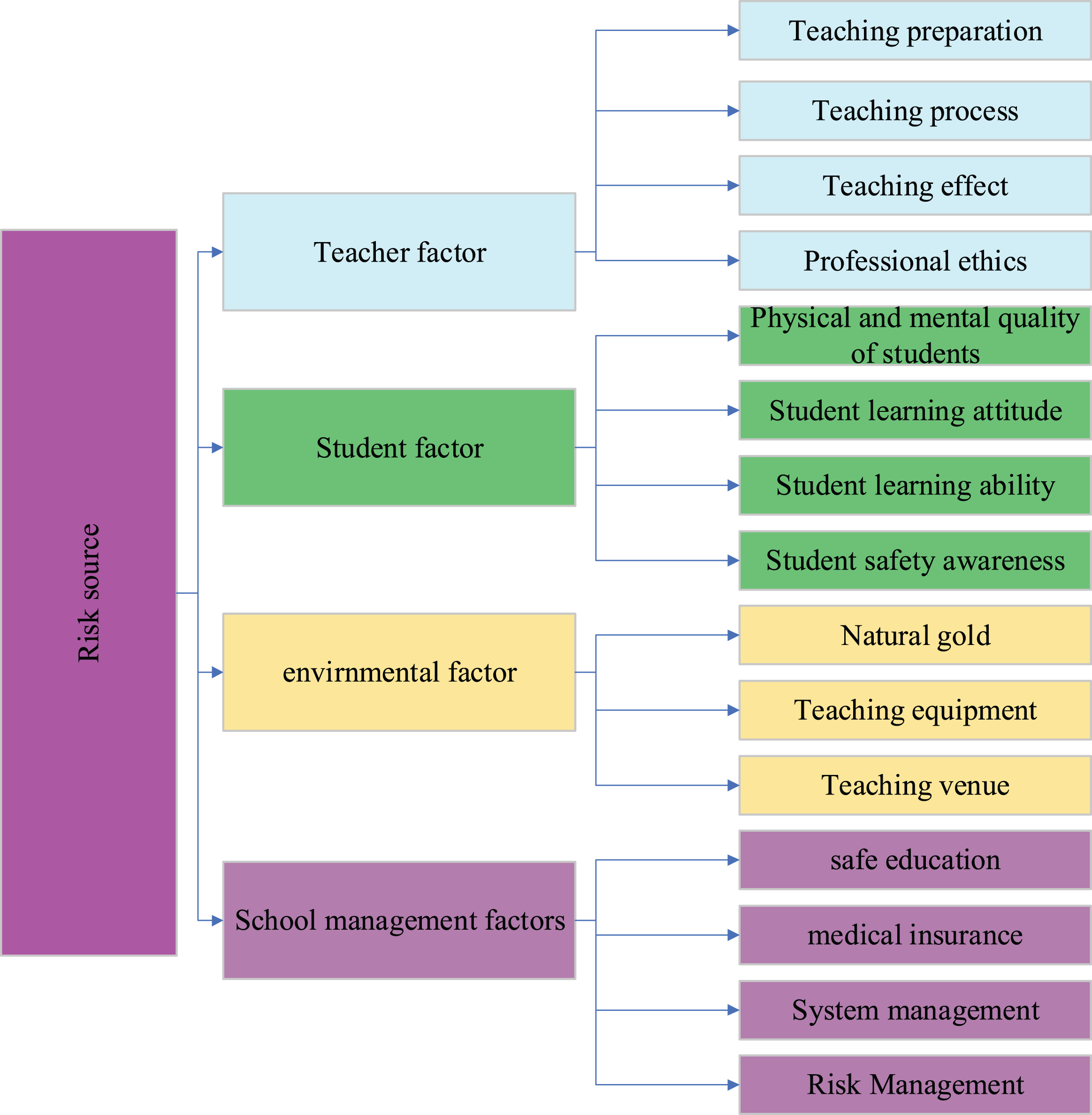
Risk source design.
Risk assessment indicators are the scales and standards for scientifically assessing the risks of sport courses in Inner Mongolia, and the assessment indicators are also the basis for risk monitoring. The game has high requirements for students in all aspects, and there are many potential and unknown risk factors in teaching. We can analyze a large number of risks and injury accidents in the process of carrying out sports, sort out and summarize the factors that may or potentially cause risk accidents, and finally establish a framework of risk assessment indicators through the review of many experts. The realization of management goals provides a reference basis. In the above, through expert questionnaire surveys and interviews, four first-level risk assessment indicators for sport courses in Inner Mongolia colleges and universities have been determined. The second-level indicators were determined through a questionnaire survey of 30 teachers, and finally, 28 valid questionnaires were obtained. For each teacher’s choice and suggestions, to make the risk indicators have a good representation, the indicators with a pass rate of more than 95% are directly adopted, 85–95% are adopted after modification according to the teacher’s opinion. Indicators of less than 85% are deleted directly. The final statistical results are shown in Table 1.
Matrix scale and its meaning
According to the above 1–9 level judgment scale, we compare the first and second level risk factors obtained by the risk identification, and compare them in pairs at the same level, ask experts and teachers to score, and finally convert the statistical data into a judgment rectangle, by using the sum-product method to find the weight of each risk factor.
Analysis of identification system performance results
A test case is a text description of each module in the system and records the test process and results. The test cases in this system are divided into user information module testing, teacher module testing, and student module testing. The test case is shown in Fig. 4. In the testing phase, the system has done a lot of experimental tests to verify whether the online experiments of the system meet expectations. Here is a linear regression experiment as an example to show the experimental effect. The experimental content is shown on the left side of the figure. The experimental effect is shown in Fig. 4.
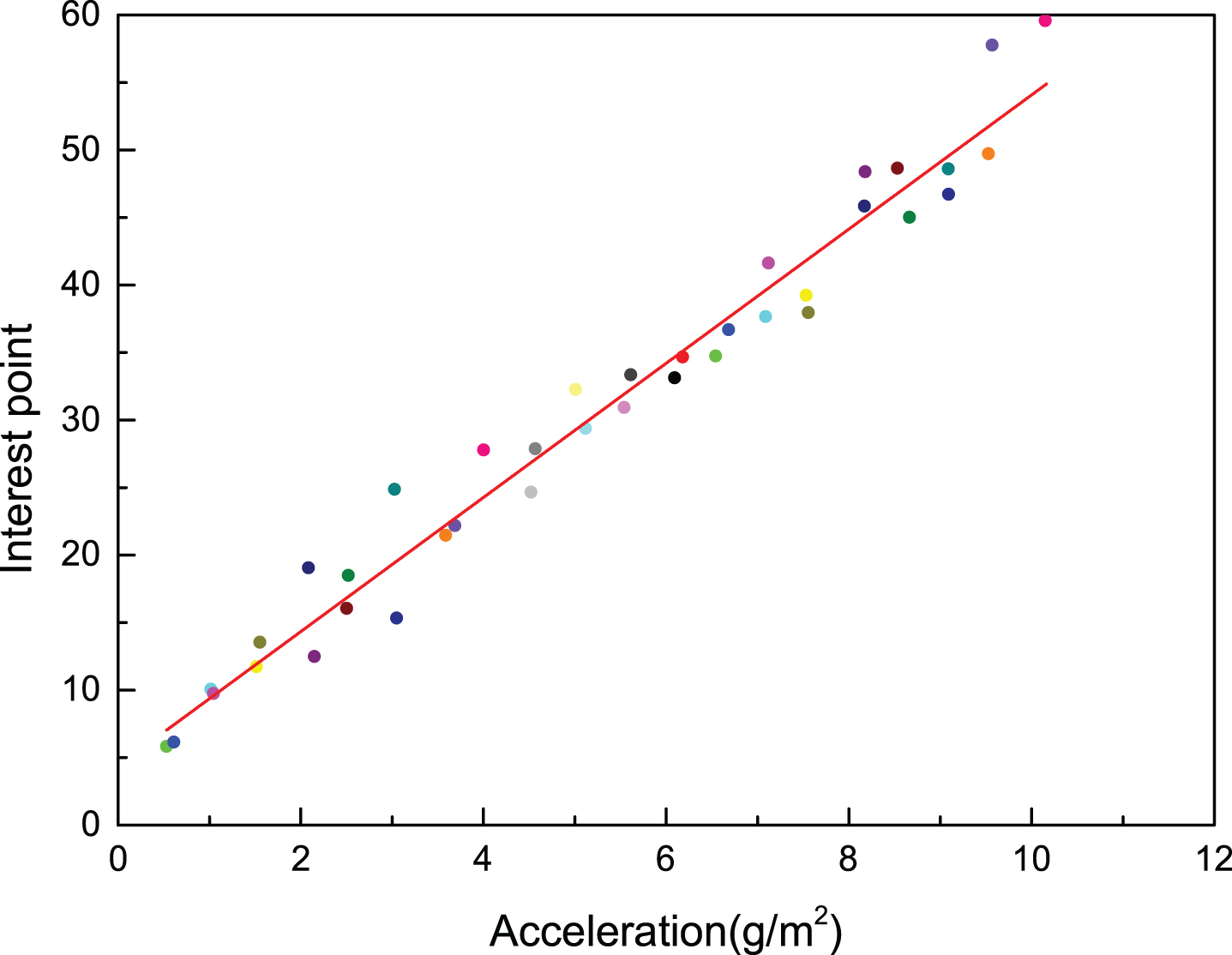
Demonstration diagram of linear regression model implementation.
Because the parameter measured by the ADXL362 three-axis accelerometer is the value of gravitational acceleration, it can be changed according to the resultant acceleration when the object moves to obtain the degree of interest of the visitors. We collect the acceleration of the object every 0.1 seconds, and the acceleration curve of the object can be obtained by simulation in the matter as showed in Fig. 5.
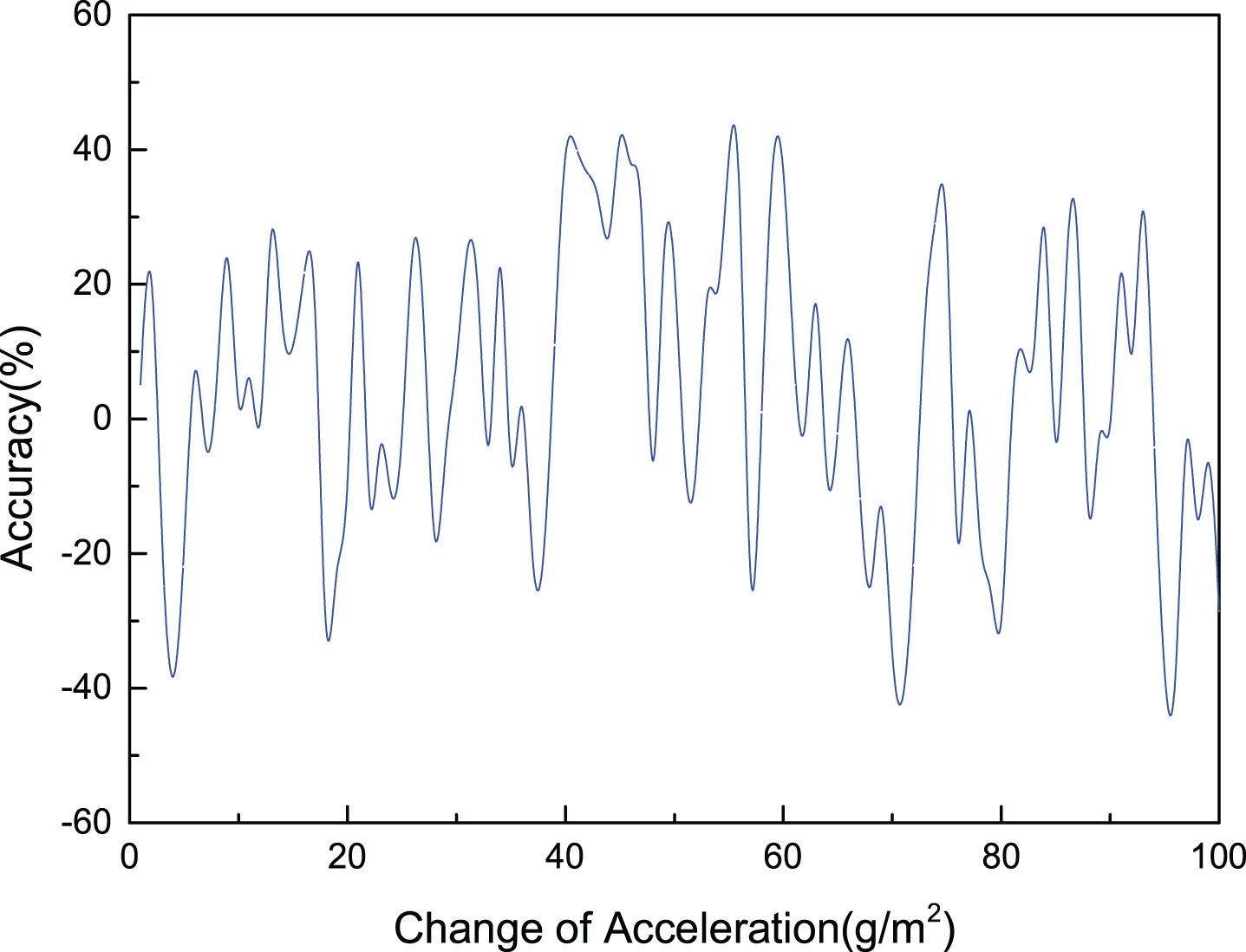
Simulation diagram of acceleration change.
IDEA running in the background shows the intuitive results, and then verify the accuracy of the recommended algorithm by simulation on the matter. Since 70% of the data is used as training in the testing phase of the recommendation algorithm, the result verification at this stage will use the remaining 30% of the data to complete the data verification. Top-N recommended classification usually uses two index parameters to measure, the recall rate and accuracy rate. From the above results, it is found that when n takes a relatively small value, as the number of users increases, the increase in accuracy tends to be stable. As the value of n gradually increases, the accuracy rate also increases, but the volatility and randomness of the accuracy rate also increase.
Therefore, in comprehensive consideration, when the value of n is 1000, compared with other values, not only the accuracy rate is relatively high, but also relatively stable as the number of users increases. Therefore, the value of N in this article is 1000. When the value of N is determined, we perform simulation on the Matlab platform, and the result is shown in Fig. 6. The higher the accuracy and recall values obtained, the higher the accuracy of the algorithm. When the value of N is determined, we perform simulation on the Matlab platform. The higher the accuracy and recall values obtained, the higher the accuracy of the algorithm.
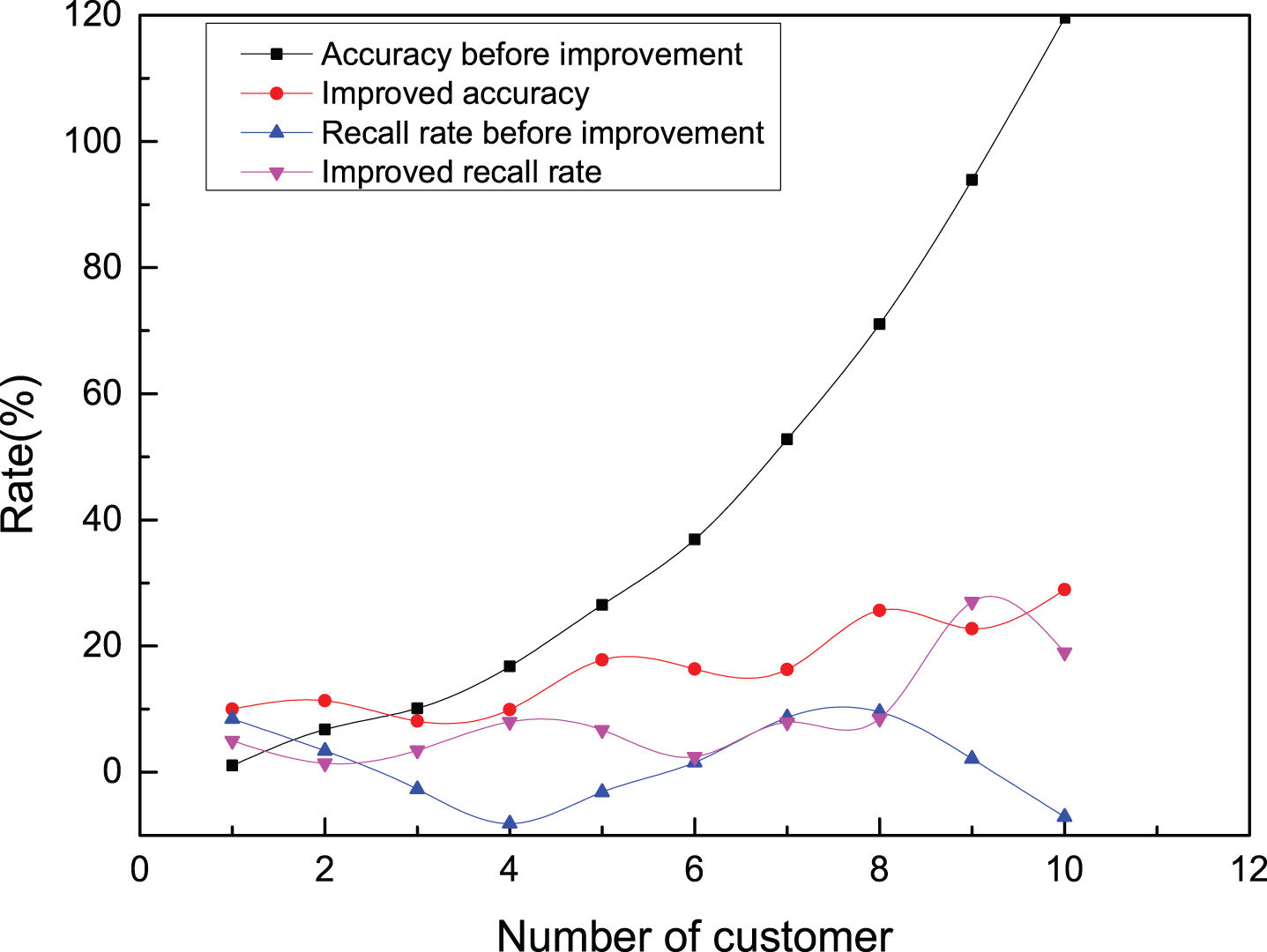
Simulation results of the algorithm. (a) The accuracy of the algorithm. (b) Algorithm recall rate.
The recognition model is trained with the motion static recognition model based on ResNet-50_v2, and finally tested with the trained motion static recognition model. 3000 motion posture pictures of the trial data set are used for motion sharing classification prediction. In the same training process, the training effect of the motion static recognition model based on reset is shown in Fig. 7.
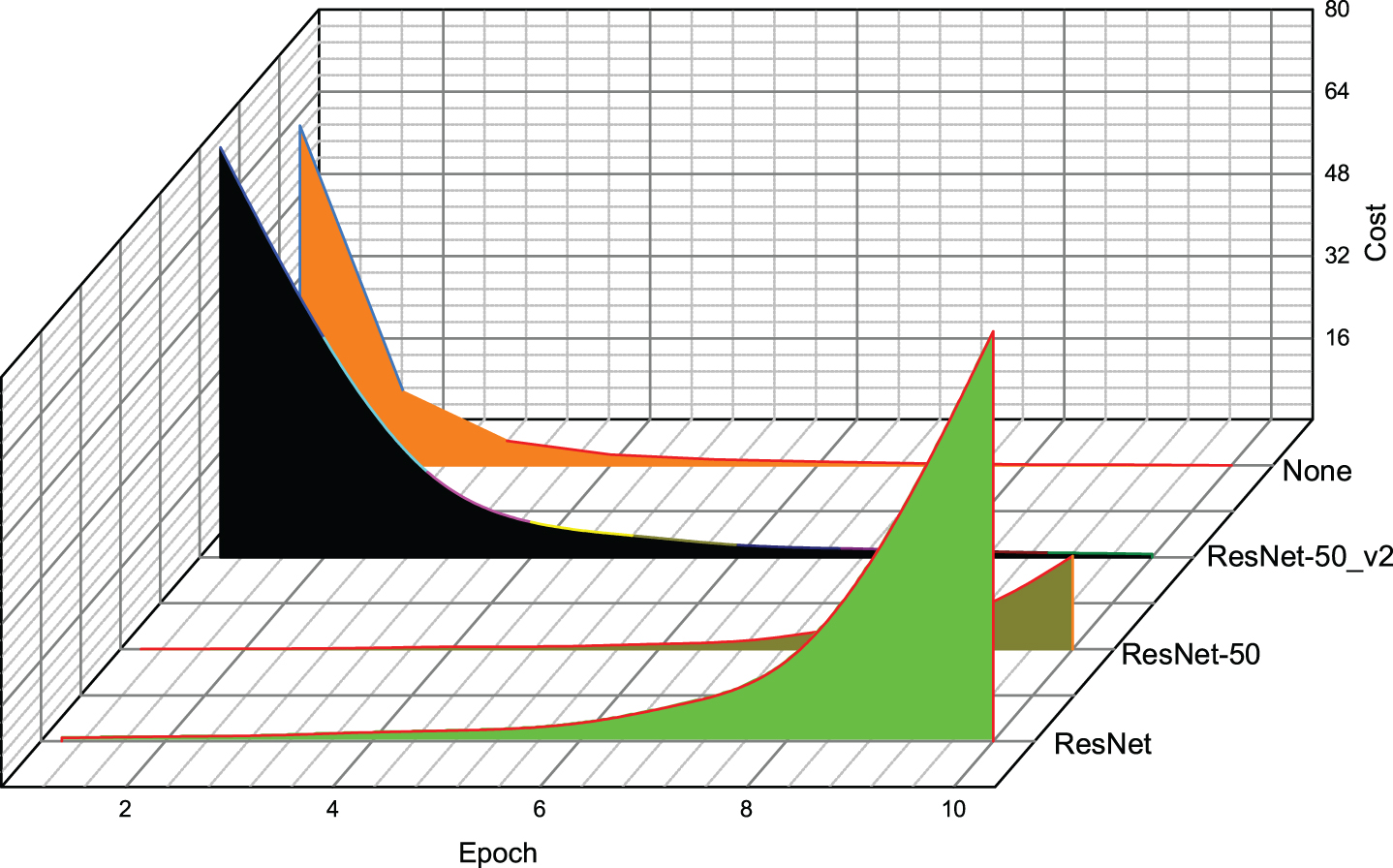
Exercise recognition training effect.
From the training results, after the same number of training iterations, the training time of ResNet-50_v2 motion static recognition training is shorter than that of ResNet-50 motion static recognition training, and the accuracy rate of ResNet-50_v2 motion static recognition training is higher than that of ResNet. The accuracy rate of 50 motion static recognition training is high, and the accuracy rate of ResNet-50_v2 motion static recognition test reached 96.27%. From this result, ResNet-50_v2 motion static recognition training is very effective, and the motion static recognition model accurately learns the motion posture features in the static recognition data set Tfrecords1.
We sort out the statistical results of the first-level risk factors for sports courses in colleges and universities. The matrix is formed by teacher factors (A1), student factors (A2), environmental factors (A3) and school management factors (A4), which is shown in Fig. 8.
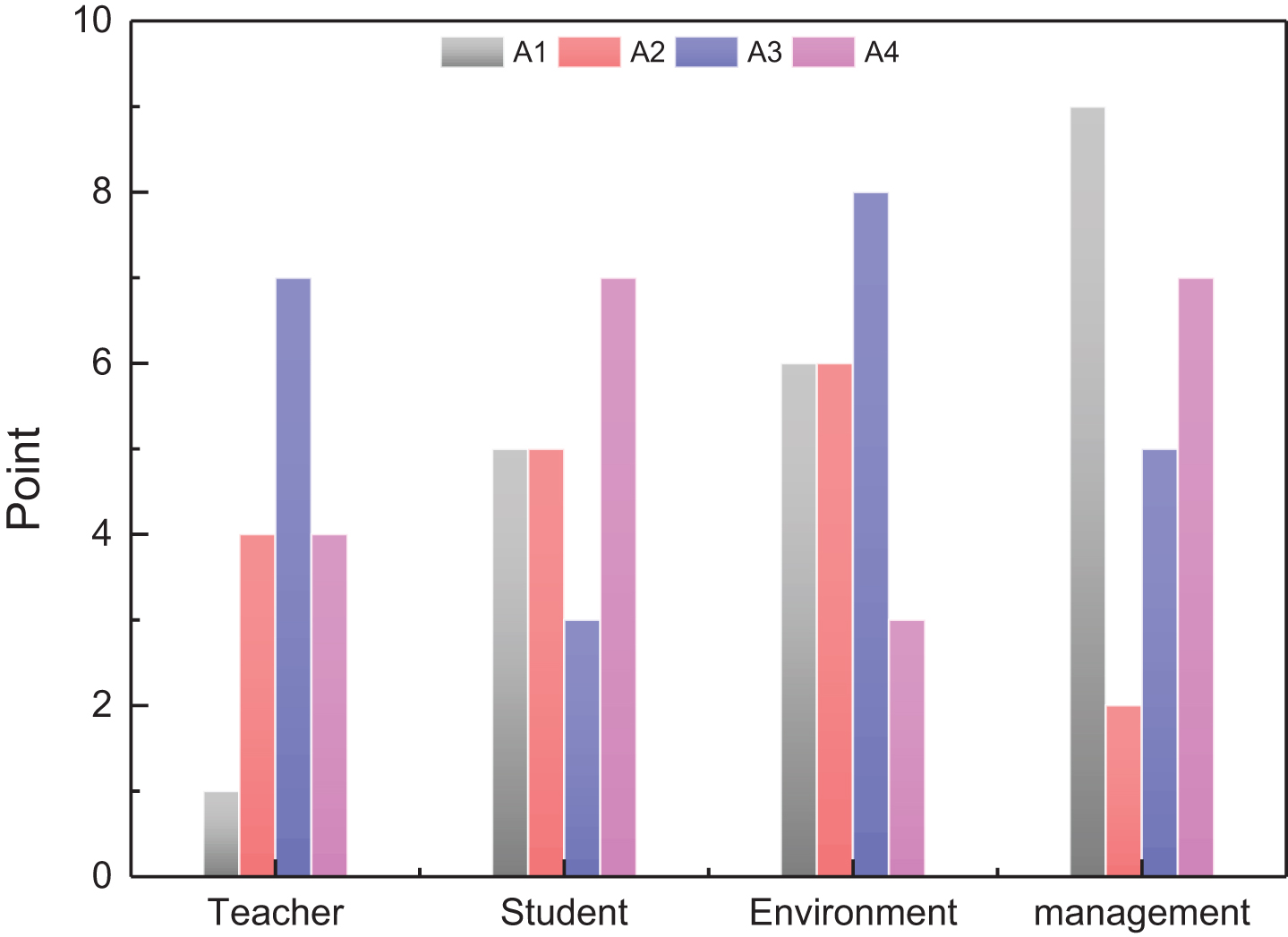
Judgment matrix of first-level risk indicators for sports courses in college sports.
Through the risk checklist filled by the expert teacher, combined with the above five-level evaluation criteria, the data obtained are statistically analyzed, and the final risk assessment result is shown in Fig. 9.
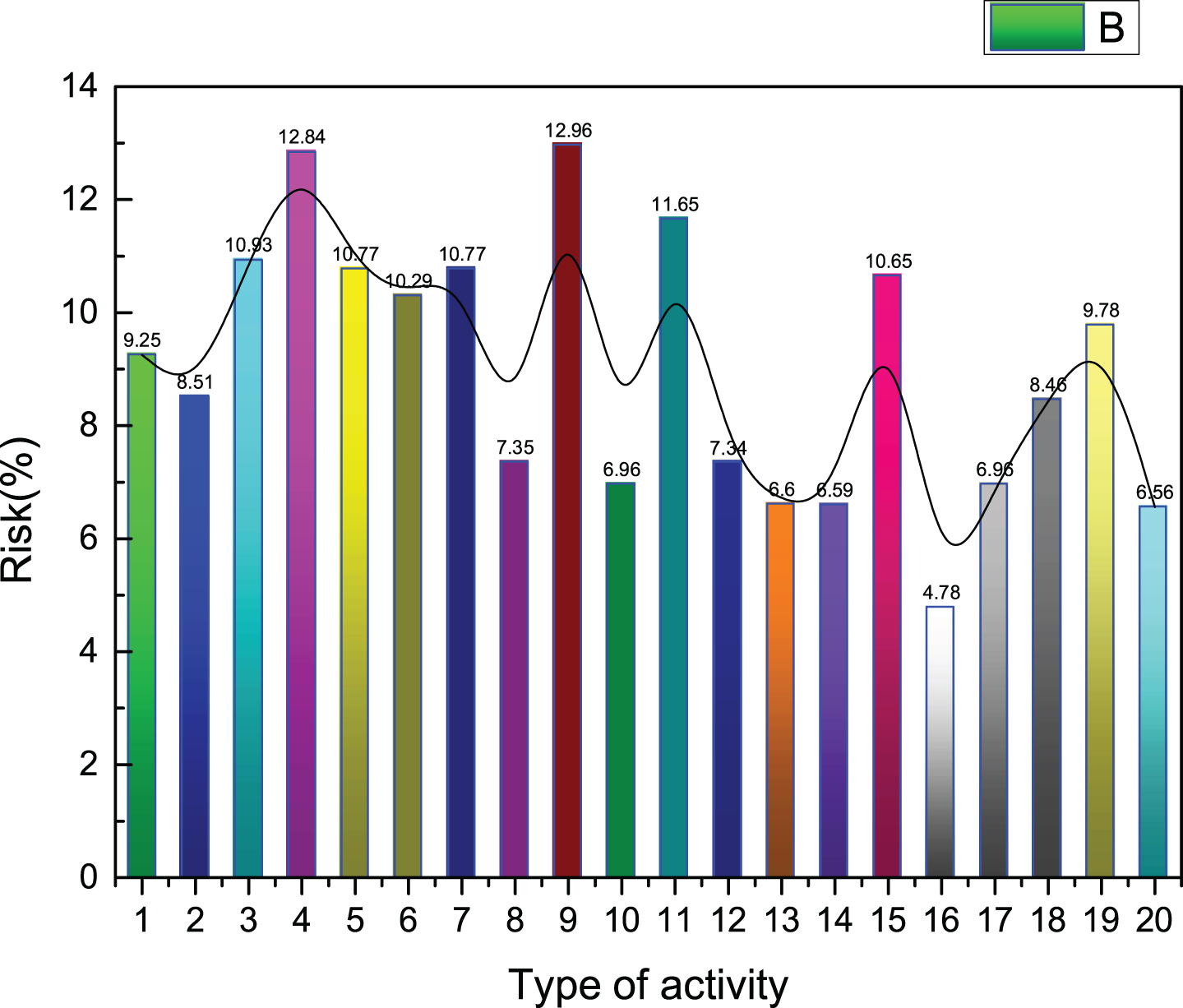
Results of risk assessment of sports courses in college sports.
In the risk assessment of teacher factors, the top three risk factors are the improper arrangement of venues and equipment during teaching, insufficient protection measures (12.96), the unreasonable arrangement of class preparation activities (12.84). The correction of students’ wrong actions (11.76) shows that colleges and universities should give full play to the role of teachers when developing sport course. Special attention should be paid to lead students to prepare for warm-up activities according to the characteristics of the project before teaching. It is necessary to ensure that safety measures and equipment arrangements are reasonable. At the same time, the teacher’s action demonstration must be accurate and easy for students to understand and master. Taking into account the teacher’s demonstration ability, it can also better assist teaching through various teaching methods such as videos. Students are practicing in the process of learning, correct students’ wrong actions in time so that students can master good actions, which help to reduce the probability of students’ risk of injury accidents during the learning process.
In the risk assessment of student factors, the top three risk factors are self-safety, insufficient protection awareness (14.32), poor self-control ability (13.72), poor physical fitness. It can be seen that in the process of student participating in sports course. Students’ self-protection awareness takes first place. Judging from the characteristics of the project, sports is a project prone to dangerous situations, so the improvement of students’ self-protection and safety awareness is the key to mitigating the occurrence of risk accidents to a large extent, whether students have good self-control ability is also an important factor in reducing risks. Students’ physical fitness is the basis for mastering technical movements, and the three are indispensable. At the same time, teachers are reminded to pay great attention to the cultivation of students’ self-protection awareness in the teaching process.
In the risk assessment of natural environmental factors, the top three risks are venue facilities, outdated teaching equipment (13.59), cold weather, easy to cause damage (13.12), limited venue space, resulting in crowded students (12.81). In the development of the iceberg sport course, the quality of the equipment can cause great safety hazards. States used in the project in Inner Mongolia are provided by most schools. Year-round use and the degree of wear of the equipment will directly determine the effect of learning. The game is a characteristic course in the north. There are many students taking ice course in winter. If the venue arrangement is not reasonable, collisions between students are prone to occur. Therefore, the reasonable arrangement of the venue space is very important. Besides, students are taking courses at the right time. In the cold winter season, the weather is very cold, which is not conducive to the mobilization of the muscles and nerves of the students. Therefore, teachers should arrange reasonable and adequate warm-up activities according to the specific weather conditions to reduce the risk of personal injury.
In the risk assessment of school management factors, the top three risk factors are not regular safety training for teachers (13.83), no teaching risk management information system (13.75), lack of professional medical personnel to deal with teaching accidents. School management and management factors play a role in controlling sport courses in colleges and universities. Whether teachers use good teaching safety knowledge, in addition to their learning, schools should also pay attention to the training of teachers’ safety teaching knowledge. Through the inspection of the teaching risk management system, teaching guidelines of each sport event and the countermeasures for some sudden risks are clarified. To effectively respond to and reduce the risk of hazards, medical personnel who specialize in teaching accidents should be equipped to treat or deal with accidents in time, to avoid delaying the best treatment time due to waiting for hospital treatment. The provision of this medical personnel can effectively reduce accidental injuries during teaching and reduce the consequences of accidents.
As showed in Fig. 10, it can be found from the student survey questionnaire that more than half of the 208 college students who participated in the extended course survey have obtained relevant certification, and 48% of college students have not obtained relevant qualification certification. College students generally lack relevant professional knowledge training for expansion game. Without relevant professional training, just relying on dozens of students in a class of classroom learning, professional knowledge may not be strong enough. Generally speaking, students who have not participated in professional training lack the understanding and mastery of professional skills for expansion course and do not pay attention to self-safety protection measures in the course of activities. Life safety of students cannot be guaranteed due to serious consequences.
To ensure the authenticity of the research, we went to the site of the extension course to observe, demonstrate and explain the typical unreasonable rope protection in the extension project, and take the operation of taking pictures with hidden safety hazards into the form of image analysis. According to the content of the questionnaire for teachers and students in colleges and universities that offer extended courses, judging from the answers filled by the students who participated in the questionnaire survey, most students can make some judgments about the irregularities in the pictures, but the judgments are not comprehensive. As showed in Fig. 10, most of the students were able to pinpoint the mistakes that were caused by hard hits and unreasonable equipment construction and were able to accurately grasp the percent in the knots and the direction of the main block. In general, the students surveyed the judgment of the two pictures are far from enough. If the potential safety hazards cannot be fully evaluated, it indicates that the students are not sufficiently familiar with this aspect, and they need to continue to strengthen their professional skills operation and judgment.
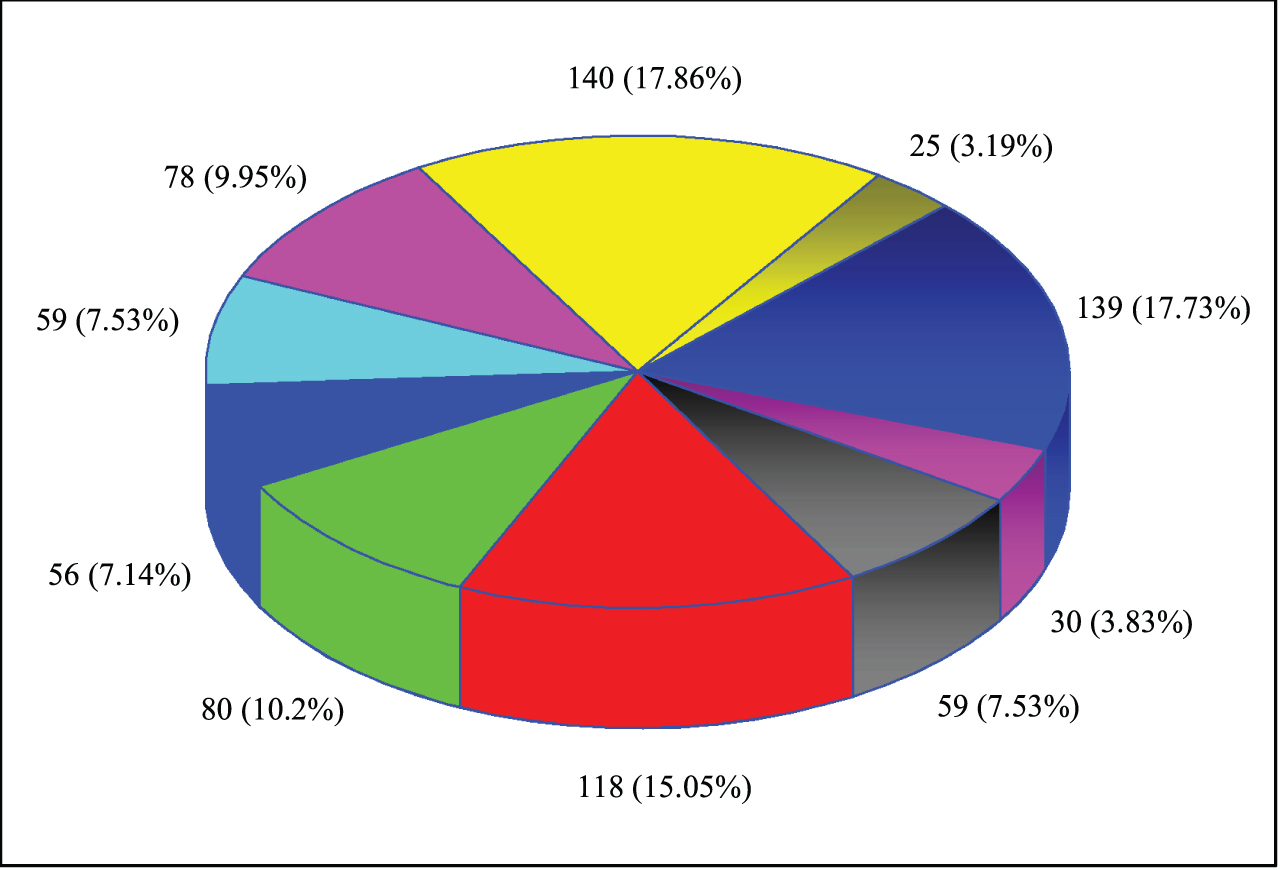
Judgment and analysis.
In this paper, through the construction of a sports risk recognition and identification system in colleges and universities with artificial intelligence technology, it classifies and recognizes sport risks in college sport. Risk identification is the starting point for the safety risk of teaching management of a college expansion course and follows the whole process of risk identification. Characteristics of staff and dynamics, using expert investigation method, on-site investigation method, checklist method, and risk factor pre-analysis method and other common methods, can be timely and accurately identify the teaching risks of college course. To evaluate the safety risk of extended course teaching, it is necessary to conduct a comprehensive analysis of students, teachers, extended equipment and facilities, environmental and medical security factors, understand the objective existence of risks, and conduct a comprehensive risk analysis so that corresponding countermeasures can be adopted when risk factors are transformed into safety accidents. We conduct a comprehensive analysis of the university’s extended teaching activities in terms of the possibility of risk occurrence, the negative impact or loss that will occur, and the controllability of the risk, to determine the degree of risk, and risk avoidance, risk-taking, or risk transfer can be adapted to carry out risks. Before the implementation of extended teaching, we should formulate emergency plans for security risk incidents in extended course teaching based on the results of risk assessment, combined with the specific environment and project characteristics, to scientifically respond to security risk events and reduce the degree of harm of risk events. It is possible to construct the essentials of teaching safety regulations covering the whole process of teaching preparation, implementation, and completion from the two aspects of environmental regulations and teaching operation regulations, which will help universities to expand the prevention and control of curriculum safety risks in teaching.