



Abstract
The evaluation system of physical education is limited by many factors, so the reliability of the quantitative results of its intelligent scoring system is not high. In order to improve the teachingeffect ofphysical education major, this paper combines a machine learning algorithm and SVM to build anevaluation system of physical education. The system uses optimized machine learning as the system algorithm. In order to improve the operating efficiency of the system, this study optimizes the system physical layer certification to improve the system data processing speed and accuracy and uses a three-layer structure to build a basic model of the system structure and analyze its functional modules. Moreover, this study uses a database based on an expert evaluation system for data processing to achieve physical education evaluation and puts forward corresponding improvements. In addition, system performance verification is carried out on the basis of building the system. Through various experimental verifications, we know that the model constructed in this paper has good performance and can be applied to actual physical education.
Introduction
Since ancient times, the country has attached great importance to the cultivation of talents. Talent is an indispensable backbone of the country’s development, and the country’s political, economic, and cultural development all requires talent. In the early days of my country’s founding, many industries needed to recover. In order to realize the great rejuvenation of the Chinese nation, the country has put forward the strategic policy of “people-oriented, rejuvenating the country through science and education, and strengthening the country with talents’’. Knowledge is power, and talent is the future. It can be seen that the degree of importance attached by the state leaders to talent training. In the process of cultivating talents, the key link lies with teachers. Teachers should not only know “what to teach” and “how to teach’’, but also to teach students the ability to apply their knowledge while cultivating scientific and cultural knowledge. In particular, in addition to the need to train students to master professional knowledge and skills, normal colleges and universities should also cultivate students’ teaching and practical abilities, which is the comprehensive ability demonstrated by completing teaching tasks in actual teaching activities [1]. In the teaching and training of martial arts compulsory courses in the undergraduate major of physical education, the traditional teaching mode unconsciously emphasizes the imparting of students’ knowledge and skills but neglects the students’ ability to apply teaching practice, which is inconsistent with the training goal of physical education.
At present, the national education reform is very vigorous, and more emphasis is placed on optimizing student training models. With the rapid development of science and technology, the society’s demand for professional talents is increasing day by day, and training students to become talents has become a reality’s primary task. Physical education major is a major set up by physical education colleges, which is mainly for training excellent sports talents, serving the society, and enriching people’s cultural life. Now, the cultivation of sports talents has shifted from a single direction to multi-directional development. That is, it has developed from a single training of school physical education teachers to the training of skill-based, application-oriented, and professional-type composite physical education talents [2]. As a normal sports student, not only need to pass the technical level, but also need to develop their own teaching ability, that is, they need to learn to train students. The training goal of the physical education major is to train students to master basic theoretical knowledge and skills, and to cultivate professional talents with certain teaching abilities and specialties who can engage in physical education. In order to be able to solve this problem, the training plan for martial arts students should be adjusted. Teaching implementation ability is a necessary skill for teachers engaged in teaching work and belongs to teaching ability. Students majoring in physical education should focus on cultivating teaching implementation abilities to ensure students’ core competitiveness in society [3].
Related work
The literature [4] explored how to improve students’ attention and initiative during learning. At the same time, it put forward 15 suggestions for students on how to cultivate self-discipline in mental work. Among them, it was mentioned that reasonable time arrangement and concentration are the primary issues that students need to pay attention to. The literature [5] pointed out that teachers should play a good role model in the classroom and use peaceful words to care for students kindly. The attitude held by the literature [6] in the study of student-oriented classroom behavior management strategies is respect, understanding, trust and calm. The literature provided an objective description of the behaviors of classroom problems generated by students, elaborated the author’s feelings and only discusses matters, and does not comment on student behaviors. All heteronomy cannot change the essence. The ultimate goal of heteronomy is to arouse students’ inner motivation to learn, to arouse students’ sense of responsibility for self-discipline, and to make students’ behavior change from heteronomy to self-discipline. The literature [7] believed that teachers pay too much attention to teaching and teaching materials, while ignoring classroom management itself. From the perspective of teachers, it was suggested that teachers should pay attention to the promotion strategies of students’ self-management. Coincidentally, in the effective teaching research on the theme of returning to the teaching source, the literature [8] also put forward the idea of taking students as the foundation from the perspective of teachers and constructing a classroom management mechanism for effective learning of students to make classroom management more efficient. In terms of research content, the literature [9] has conducted research on distracting attention and intervention in classroom problem behavior and intervention analysis. The study summarized various behavior monitoring methods such as self-remind, self-debate, self-suggestion, and behavioral contract law, and began to focus on students’ self-management issues. In terms of research strategies, Wang Jiazhe [9] from the perspective of psychology, annotated Skinner’s reinforcement theory of positive reinforcement, negative reinforcement and natural regression and other three types of reinforcement mechanisms. In positive reinforcement, he summed up example reinforcement, social reinforcement, contract reinforcement and activity reinforcement to help manage students’ classroom behaviors.
The literature [10] formed a classroom problem behavior system by studying classroom problem behaviors, including phenomena, characteristics and precipitating factors, and proposed countermeasures from three dimensions of prevention, control and correction for this system. Lang Xiaoye [11] took the problem behaviors of senior elementary school students as an example, and also proposed problem behavior countermeasures from the three dimensions of prevention, intervention and regulation. Yao Lei [12] investigated and analyzed university classroom behaviors and attributed the causes of classroom silence to fewer teacher-student interactions, a single lecture format, and a dull atmosphere. When the classroom effect is not good, teachers and students need to work together to improve classroom teaching and learning effect. The literature [13] studied the interaction between teachers and students in classroom behavior and pointed out the existing problems in the form of classroom interaction between teachers and students in classroom teaching. In response to these problems, the literature proposed methods for optimizing classroom interactions, such as enhancing the teacher’s awareness of classroom interactions, reforming the form of classroom interactions, creating a harmonious atmosphere for classroom interactions, expanding the ways of classroom interactions, selecting topics for classroom interactions, and enhancing teacher-student feelings.
The literature [14] is a psychological study of college students’ classroom behavior. Moreover, it analyzed and summarized college students’ classroom behaviors into seven different types: active participation, timely charging, incomplete attendance, entertainment, leisure, boredom, passive resistance, and unexpected romance. In the end, it applied psychology to classroom teaching practice to improve teaching effectiveness. Research on students’ classroom problem behavior is relatively common, but research on sports classroom problem behavior is less. Literature [15] pointed out in the management strategy of problem behaviors in physical education classrooms that teachers should standardize students’ classroom behavior standards, encourage students and make appropriate reinforcement to increase students’ positive behaviors. At the same time, it pointed out that teachers should correct students’ problem behaviors according to students’ classroom behavior standards and standardize students’ classroom behaviors according to the corrective steps. In the study of problem behavior analysis and management optimization in physical education classrooms, the literature [16] conducted research on the statement that “there are no bad students, only teachers who can’t teach’’, and pointed out that teachers should flexibly deal with the various behaviors of students in the classroom. The literature [17] analyzed inefficient behaviors in physical education classrooms, believed that inefficient behaviors seriously affect the quality of classroom learning, and proposed strategies to reduce or reduce inefficient behaviors in physical education classrooms. The literature [18] constructed martial arts classroom behavior norms, discusses the importance of martial arts classroom behavior standardization, and made normative requirements from the aspects of clothing, equipment, language, collection, and practice behaviors, and finally cultivated talents with the characteristics of the times. The literature [19] took martial arts classroom as an example to study how to scientifically evaluate martial arts teachers’ classroom behavior. Moreover, the literature compared and analyzed two teachers with different titles through a case study method and finds that there are obvious differences. In addition, it puts forward the following suggestions: teachers need to enhance their oral expression skills; teachers need to always pay attention to students’ learning status and make timely evaluations; teachers need to combine oral language and body language to increase the evaluation results; teachers need to use spatial distances reasonably to promote positive evaluation of teachers. The article [25] implementated IoT-based Smart City is achieved by exploiting IoT and BigData Analytics using Hadoop ecosystem in real time environments. The article [26] reflects on IoT and its main role in the development of human behaviors and actions. The paper also deals with the compilation of various data from different databases connected to the Internet. The literature [27] addresses the numerous issues in the field of vehicle communication with the suggestion for a mutual unified and dispersed spectrum sensing model. The introduction of a mutual cognitive paradigm minimizes conflict and multiple unknown problems. The literature [28] discusses the issue, such as large amount of bigdata, and introduces the SmartBuddy framework for creating smart and adaptive ecosystems using human behaviors and human dynamics. The article [29] talks around the development of coordinated non-cyclic chart for video coding calculations for movement estimation in parallel reconfigurable computing frameworks. The partitioning algorithm moreover plays a key part in optimizing the encoding of images [30, 31].
Deep learning
Logistic Regression is a generalized Linear Regression model. It uses a logic function σ (z), which is the Sigmoid function, to achieve the binary classification of vectors. The logic function is as follows [20]:
More specifically, for a vector x,
Then, the output
When training parameters ω and b of the logistic regression model, a data set X ={ x(1), x(2), ⋯ , x(m) } with m samples is considered as the training set of the logistic regression model, and its corresponding label data set is Y ={ y(1), y(2), ⋯ , y(m) }. For the i-th training sample x(i), its conditional probability determined as y(i) under the logistic regression model is:
Therefore, for a given input data set and corresponding labels, the conditional maximum likelihood estimates of the parameters ω and b of the logistic regression model are:
The log-likelihood maximum likelihood estimate of its conditional probability is:
By maximizing the likelihood estimation function, the parameter estimates
The theoretical basis of neural network algorithms, especially deep neural networks, has been relatively lacking. Since the research in this article is based on neural networks, some more important concepts and several important theorems are listed here for easy reference and demonstration [22].
Among them,
Then the function set
Among them,
Then the function set
In other words, a single-layer or multi-layer feedforward neural network can approximate any continuous function with arbitrary precision. It is precisely because of this characteristic of the neural network that the performance of its fitting can be used to complete the prediction problem (regression), and it can also be applied to the classification problem [23].
Physical layer authentication uses wireless user channel differences to distinguish users. On the whole, the channel differences of different users mainly include large-scale fading caused by distance and small-scale fading caused by factors such as multipath, moving speed and signal bandwidth. More specifically, the physical layer information that can be used by different users to achieve physical layer authentication includes channel state information, received signal strength, received signal strength indication, channel impulse response, channel phase response, power spectral density, and so on. The traditional physical layer authentication method based on threshold is to select a kind of physical layer channel information and extract its channel characteristics and distinguish users by comparing the channel characteristics of two users.
Physical layer authentication method research generally starts from three aspects. First, the selection and acquisition of physical layer channel information. For example, the received signal strength or channel state information can be selected as the characteristic quantity of physical layer authentication. In addition, the acquisition of channel state information, that is, the study of channel estimation methods, is also an important aspect. Second, the calculation of test statistics. This is especially the case when channel state information or channel impulse response is selected as authentication information, such as Euclidean distance, Pearson correlation coefficient, JS divergence, etc. Third, the determination of the threshold. How to choose the optimal threshold will directly affect the authentication rate of physical layer authentication.
The wireless channel is mainly affected by two aspects, one is additive noise, and the other is fading. During the propagation of wireless electromagnetic waves, shadow fading occurs due to the obstruction of obstacles, and multipath fading occurs due to the electromagnetic waves undergoing reflection, scattering, and diffraction in the atmosphere. The channel differences brought by these factors, such as additive noise and fading, make the channel information of wireless users in different locations and at different times have obvious differences, which provides a practical basis for physical layer authentication research. Jakes proposed a uniform scattering model and analyzed and proved that in the coherent time of wireless electromagnetic waves, when the user position is greater than half a wavelength, the correlation of its small-scale fading will be reduced very low. Therefore, this article focuses on listing three physical channel information commonly used to implement physical layer channel authentication.
The difference in received signal strength is more caused by large-scale fading, and large-scale fading mainly includes path loss and shadow fading formed by large obstacles. Commonly used large-scale fading models include general path loss models, log path loss models, and log-normal shadow fading models. General path loss models are often used to describe Line of Sight (LoS) environments, such as satellite communication systems. The free space path loss can be derived from the Friis formula, and its expression is as follows:
Among them, d represents the distance between the transmitter and the receiver (unit: m), and λ represents the wavelength of the transmitted signal (unit: m). Subsequently, by introducing a path loss index γ that varies with the environment, a more general log path fading model is obtained. Its expression is [24]:
Among them, d0 represents the reference distance of different environments. In 1996, in order to simulate a more realistic environment, T. S. Rappaport et al. proposed a log-positive shadow fading model (the 802.16d model is a typical log-normal shadow fading model). The path loss is as follows:
Among them, X σ represents a Gaussian random variable with mean 0 and variance σ2.
Channel impulse response refers to the response generated at the receiving end by sending an impulse signal at the sending end. Due to multipath delay spread and Doppler shift, different receivers will have different channel impulse responses. Outside the coherence time at the same location, the channel impulse response correlation will also be relatively small. The typical delay extended impulse response model proposed a statistical model of fading channel for Clarke. The delayed impulse response is shown as follows:
Then the receivers at different locations will have different channel impulse responses due to multipath. As shown in Fig. 1, after sampling the channel impulse response, the impulse response amplitude of different users is different.

Channel impulse response of different users.
The channel frequency response is the Fourier transform of the channel impulse response,
Or in discrete cases, use Fast Fourier Transform (FFT),
Different users have different channel frequency responses, as shown in Fig. 2.

Channel frequency response of different users.
Channel state information refers to the propagation properties of wireless communication links, including influencing factors such as power attenuation, multipath fading, and Doppler frequency shift. CSI describes the changing combination of electromagnetic waves from one receiver to another, that is, the channel state information is more abundant than the physical layer information above. User physical layer authentication is implemented using CSI. CSI is divided into statistical CSI and instantaneous CSI. Statistical CSI refers to some statistical information of the channel, such as fading distribution type, statistical average delay, Rician factor, and spatial correlation. The instantaneous CSI is obtained through channel estimation, such as signal arrival estimation, blind channel estimation, and semi-blind channel estimation based on training symbols (pilots). The physical layer security authentication based on CSI studied in this paper is realized by using the pilot estimated instantaneous CSI, that is, using the channel response matrix. MIMO systems are usually modeled as:
Among them, X and Y represent the input and output matrix or vector of the system, respectively.
H is the channel frequency response matrix, which is the CSI used for physical layer channel authentication in this paper. There are many ways to estimate the channel matrix, such as channel estimation based on training symbols (pilots), blind channel estimation, and semi-blind channel estimation. Here we briefly introduce the least squares (LS) estimation and the minimum mean squared error (MMSE) estimation in channel estimation based on training symbols. These two estimation algorithms are widely used in channel estimation. X is a pilot matrix X P composed of known pilot sequences, and Y P is a received signal matrix.
(1) LS estimation is by minimizing the cost function
Among them, (·) H means Hermitian transpose. Because LS estimation is relatively simple to calculate, and it does not require system statistical characteristics and channel noise statistical characteristics. It is widely used in channel estimation, including the LS estimation used in the schemes or algorithms mentioned later in this article.
(2) MMSE estimation is to minimize the mean square error (MeanSquared Error, MSE) of the real channel and the estimated channel. The mean square error of the channel estimation is:
Among them, H
P
and
Among them, R N is the covariance matrix of noise, and R H is the channel autocorrelation matrix, which represents the subchannel correlation. When the channel statistics (for example, fading model and maximum Doppler frequency shift) are known, the channel correlation matrix is known. It is precisely because of considering the statistical characteristics of the channel estimation and the variance of the noise, the MMSE channel estimation has better performance.
The test statistic of the physical layer security certification is to enable the physical layer channel information to generate a separability criterion. It can start from two aspects: distance measurement and correlation measurement. The distance metric refers to differentiating different users by using the distance between different users’ physical layer channel information as test statistics. Commonly used distances include Euclidean distance, Manhattan dis-tance, and Minkowski distance. The correlation measure is to use the channel information of the same user to have a strong correlation, and the channel information of different users has a weak correlation, thereby distinguishing different users.
(1) Euclidean distance. If the channel matrices of two users are H1 and H2, respectively, the test statistic can be constructed by Euclidean distance, that is, the Frobenius norm (also called L2 norm) of the difference between the two channel matrices:
(2) Manhattan distance. That is, the test statistics can be constructed by the matrix L1 norm:
The matrix L1 norm is used to construct multiple test statistics to improve the physical layer channel authentication performance.
(3) Minkowski distance. The Minkowski distance of the two vectors is obtained from the p-norm of the difference between the vectors. It extends to matrices, and the matrix L
p
norm can be used to obtain test statistics:
Correlation of user channel information can be measured with a linear correlation coefficient (cor-relation coefficient). The correlation between the characteristics and categories is determined by the correlation coefficient. The Pearson correlation coefficient for the channel vector information of two different users is as follows:
In fact, the channel correlation between two users whose distance is more than half a wavelength is very small, so the correlation coefficient is not outstanding for physical layer authentication performance.
The physical layer authentication obtains the inspection statistic ρ through the user physical layer information, and then realizes the user authentication by comparing the inspection statistic with the threshold. That is,
Among them, H1 and H2 respectively represent the physical channel information of two users.

Statistics distribution of channel information test for different users.
Threshold-based multi-user physical layer authentication research has very strong limitations. First, as shown in Fig. 4, multiple users need to use multiple thresholds, and the more users, the smaller the distinction, the worse the overall performance. Second, based on the threshold-based physical layer authentication, a user’s physical layer channel information is used as a benchmark to construct test statistics. Therefore, in a multi-user scenario, its authentication performance is also highly related to the selected benchmark user.
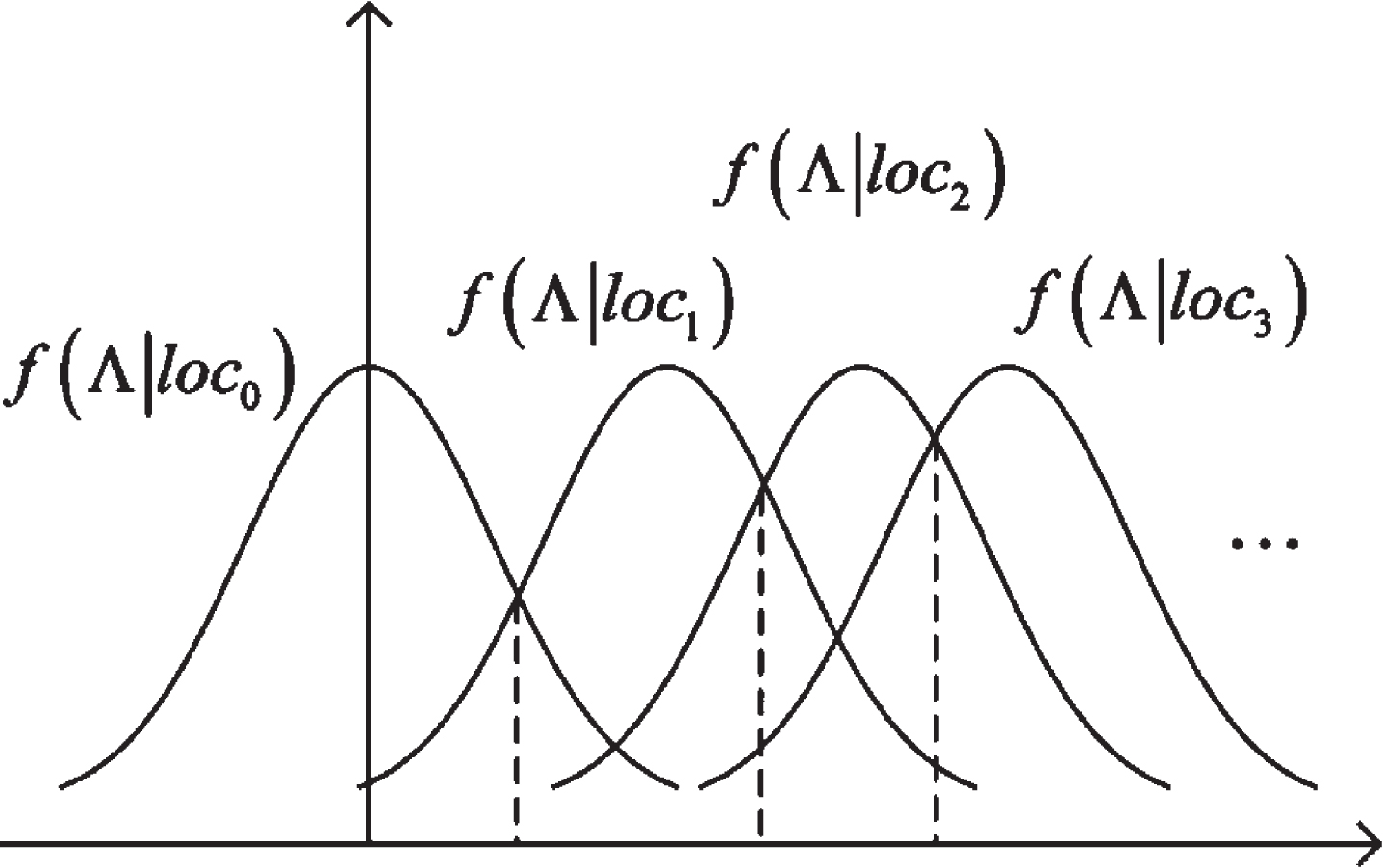
Statistical distribution of multiple users’ channel information verification.
This paper builds a evaluation system of physical education major based on machine learning algorithms and SVM. The overall structure of the system is shown in Fig. 5.
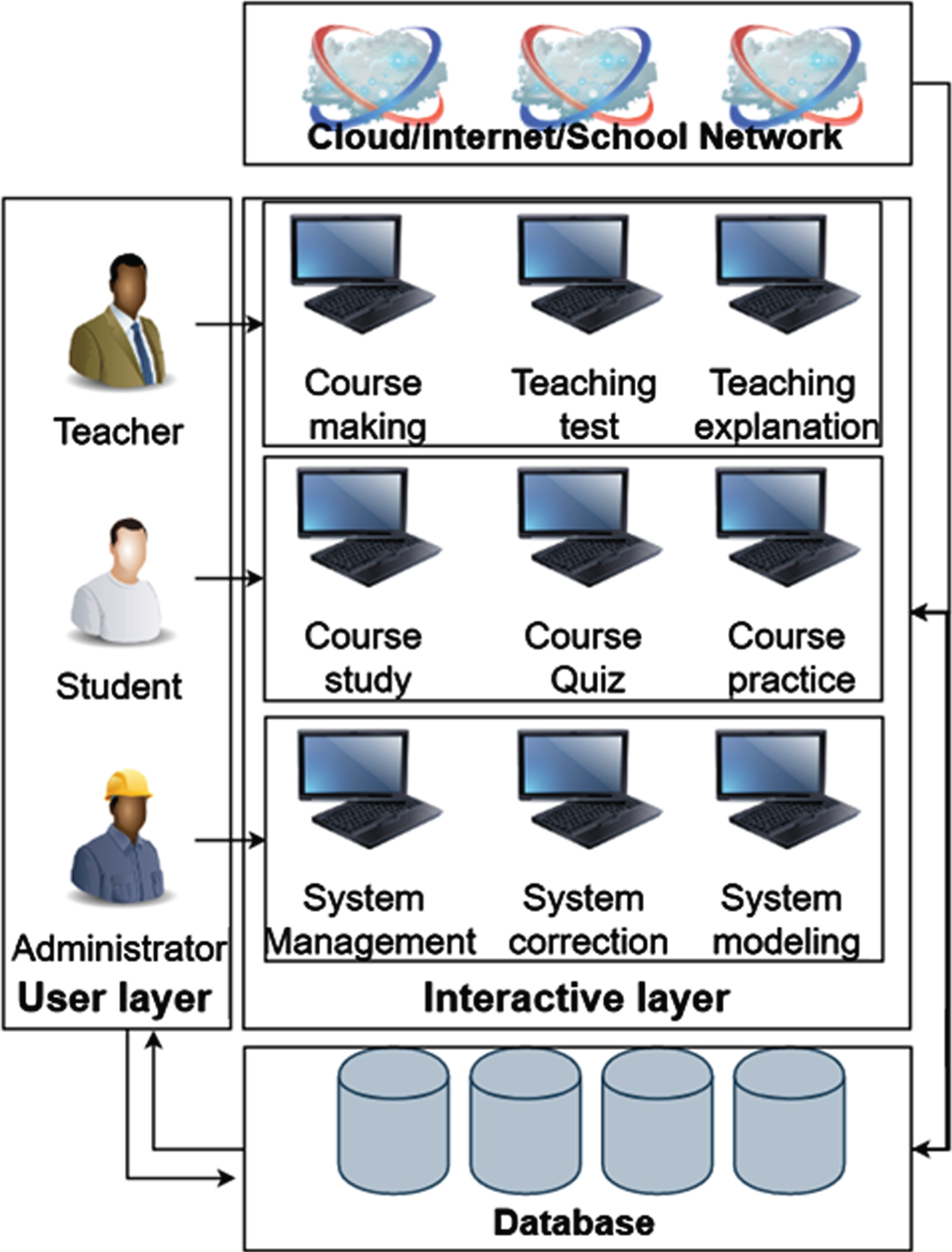
Model of evaluation system of physical education based on machine learning algorithm and SVM.
Figure 5 shows the model structure of the education evaluation system of physical education based on machine learning algorithms and SVM. From the model structure, it can be seen that the model is designed with a three-layer structure, and its evaluation system is in the database part, which can be expressed as shown in Fig. 6.

Database scoring system.
The system effectively manages the education of physical education through the teaching plan management process, which is convenient for problem analysis after evaluating the score. Moreover, it formulates a more scientific and effective evaluation process. The flow chart of the teaching plan management function is shown in Fig. 7.

Flow chart of teaching plan management function.
Based on the above models, this study conducts model performance evaluation. First of all, this research studies the system’s recognition of physical education problems. That is, this research studies the system’s recognition of sports actions of sports majors. In this study, 70 sets of action data are set up, and action recognition is conducted through this study system to explore the recognition rate of these actions by this study system. The results are shown in Table 1 and Fig. 8.
Statistical table of the system’s recognition rate of sports actions
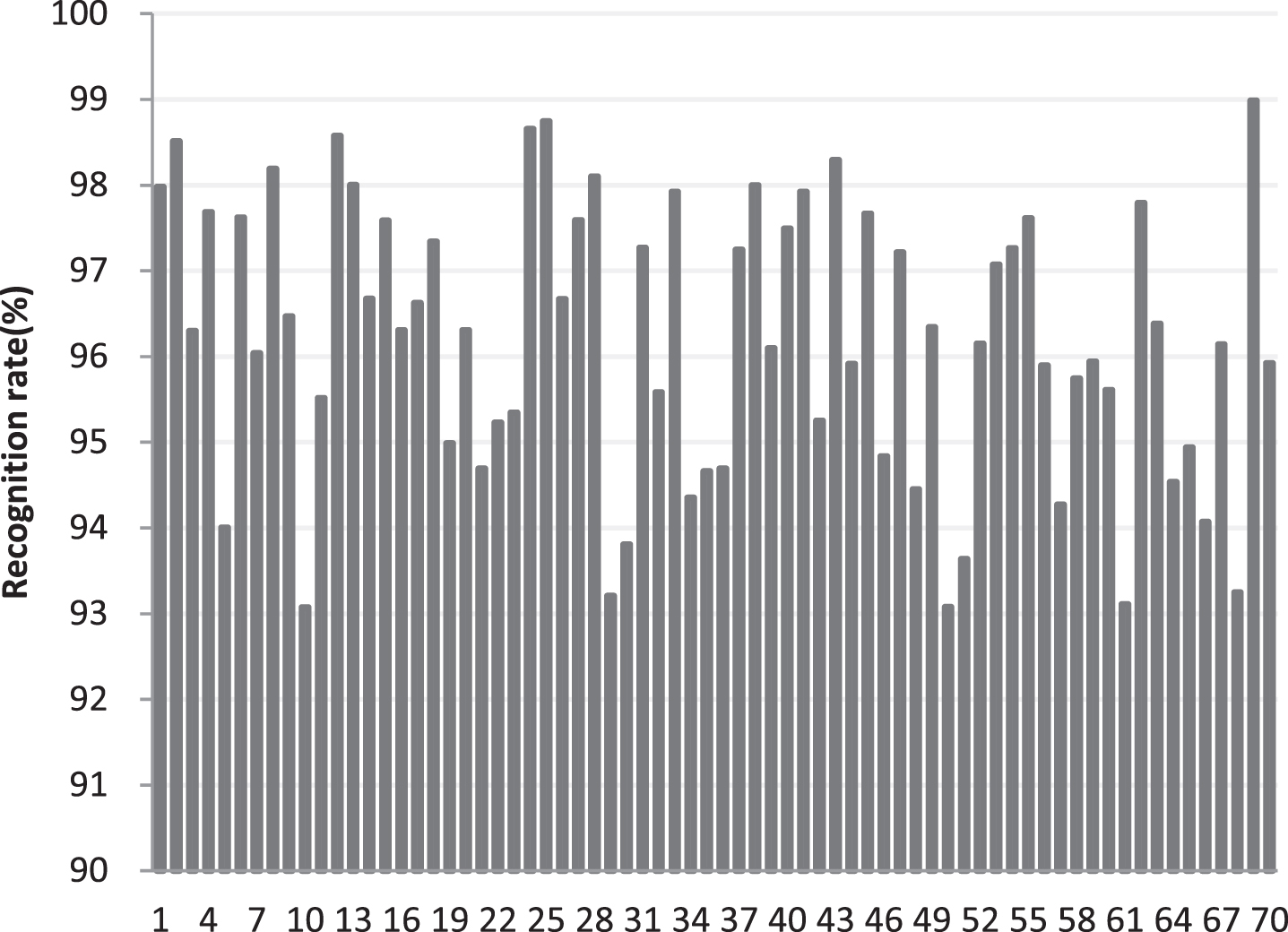
Statistical diagram of the system’s recognition rate of sports actions.
From the above analysis, it can be seen that the system’s recognition rate of sports actions is above 93%, which is a relatively high level and meets the actual needs. Next, the system performance is verified and analyzed. The results are shown in Table 2 and Fig. 9. The performance mainly verifies the system’s response time to data and the reliability of the system’s educational evaluation results. The obtained results are shown in Tables 2, 3, and Figs. 9 and 10.
Statistical table of response time
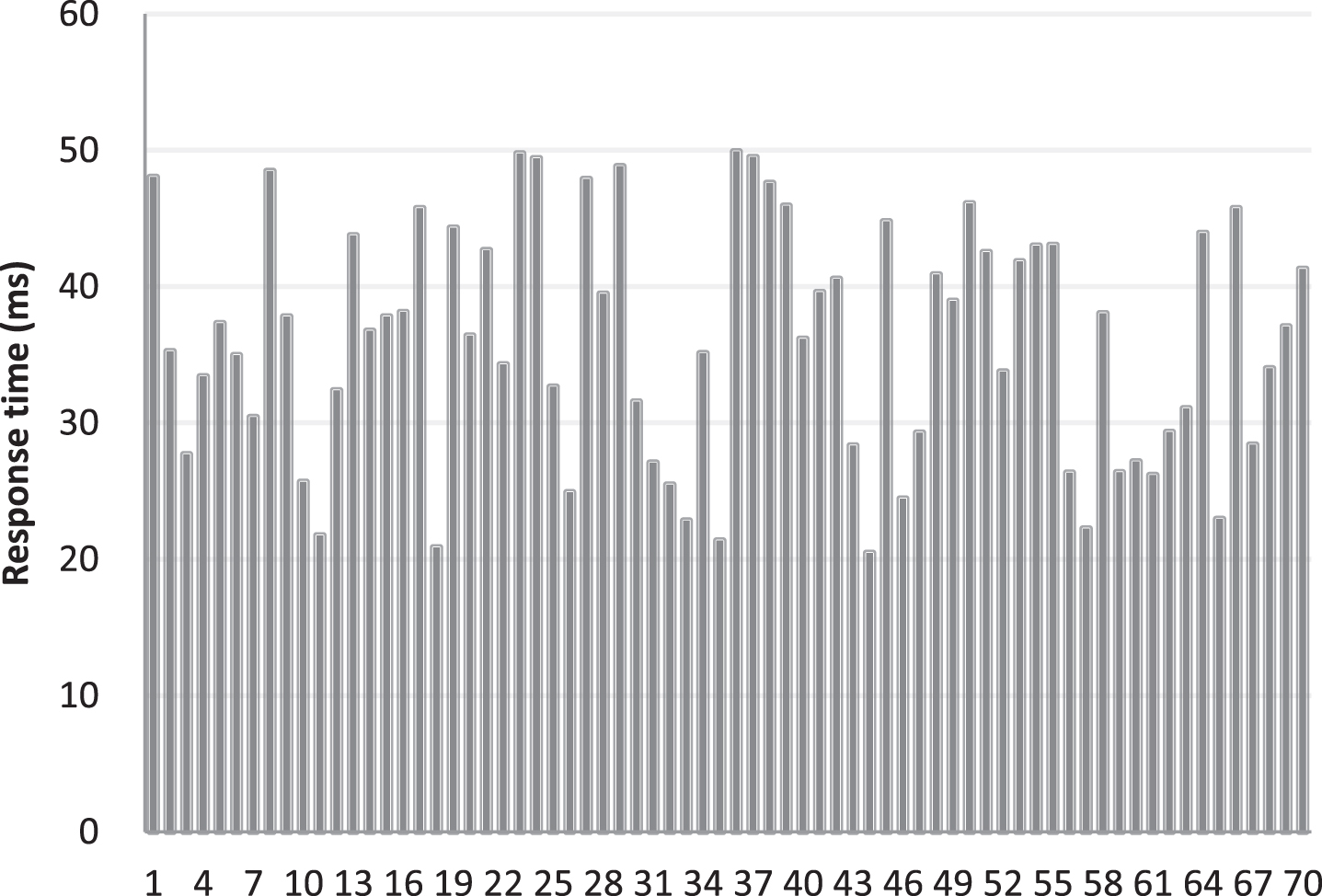
Statistical diagram of response time.
Statistical table of reliability score

Statistical diagram of reliability score.
From the above analysis, it can be seen that the system constructed in this paper has good performance and certain practicability.
Following the guidance of machine learning and SVM ideas, this research project has rebuilt and improved the performance and service level of the college physical education evaluation system. Through the data center and analysis, calculation, and storage functions in the system, personalized customization of user services is realized, and an intelligent educational management information cloud service platform is formed. The entire process of the design and implementation of the college physical education management system based on the cloud platform followed the cloud computing ideas. Moreover, it makes full use of the advantages of modern computer network information technology, improves teaching efficiency, and provides technical guarantee for the sustainable development of colleges and universities. The establishment of college physical education management system relies heavily on the cloud computing model. The teaching management cloud service platform provides a favorable guarantee for the development and implementation of teaching activities and can provide constructive suggestions for further research on the teaching management cloud computing platform. In addition, under the guidance of effective programs, it will provide users with more scientific opinions. Finally, the experimental research proves that the system constructed in this paper has good performance.
Footnotes
Acknowledgment
1. The fund project of Huainan Normal University in 2016(2016HSJYSM19): “establishment of the standards for public physical education curriculums”.
2. Provincial Quality Engineering Project in Colleges and Universities in Anhui Province in 2017(2017JYXM1348): “on the Characteristics of Closed Circulation System of Professional Evaluation Index system”.