



Abstract
In order to achieve optimal selection of design schemes in cloud environment, this paper proposed a novel hybrid Multi-Criteria Decision-Making (MCDM) model integrated Fuzzy Analytic Network Process (fuzzy-ANP) and Fuzzy Quality Function Development (fuzzy-QFD). There are three steps in the novel approach. In the first step, the evaluation target system of design scheme is identified considering four dimensions: economy, society, environment, and culture. The proper indicators are identified by the integration of multi-intelligent techniques. In the second step, decision-makers are asked to compare the decision indicators, and the weight for each indicator is determined using the intuitionistic fuzzy number and fuzzy-ANP. In the third step, the decision-making system of design scheme is developed to compare and rank alternatives. The decision-makers are invited over to compare different options and rank them with the aid of fuzzy-QFD in the cloud environment. A case study is provided to validate the proposed approach. Twenty-five sensitivity analysis experiments are conducted to figure out the influence of evaluation indicators on decision making process. The novel approach makes use of the strength of fuzzy set theory in handing vagueness and uncertainty, the fuzzy-ANP in non-independent hierarchy evaluation on the indicator system, the advantage of fuzzy-QFD in multiple-objective decision analysis. Based on the comparative study and assessment, the results show that the proposed approach is more efficient and provided users with multidimensional evaluation.
Keywords
Introduction
The rapid development of communication, information technology and the Internet of things bring new chances for the construction of cloud service system [1].Cloud service has the characteristics of high liability, high scalability and massive storage, therefore, the research on the system of cloud service is the tendency of IT technology [2]. The term, “cloud environment", has become such a household word owing to its characteristics of virtualization, integration and smartness [3]. Users can upload requirements to the cloud and realized the real-time intelligent matching with multi-intelligent techniques. Virtualization and cloud computing are creating new junctures in how the assembly, deployment, and management of service systems [4]. Cloud environment with aims to create more values for users and gain competitive advantages, is a service-oriented andknowledge-based new system which supports resource sharing and collaborative work [5].
The application of cloud environment has increasingly become more extensive. At present there have been some service platforms such as Quirky (cloud design platform), Shapeways (cloud manufacturing platform), and SkyForm (cloud management platform) [6]. Cloud environment is an integrated service system that has been widely concerned by scholars. The research of cloud environment mainly includes: Yoosomboon S et al. [7] proposed a social cloud model based on embedded engineering learning to enhance creative thinking and creative product. Wu D et al. [8] presented a cloud-based networked product development model in which service consumers are enabled to configure, select, and utilize customized product realization resources. Werner S et al. [9] discussed the cloud-based design and virtual prototyping environment. Lai C F et al. [10] proposed a cloud-based program in which services ranging from computer-aided engineering software to reconfigurable recommendation system. Mital M et al. [11] presented a cloud-based management and control system based on smart community services in cloud computing ecosystems. Demirkan H et al. [12] developed a conceptual framework for decision support systems in cloud service environment. Villegas D et al. [13] proposed a layered service model based on cloud federation. Liu J et al. [14] developed a method for member selection based on comprehensive performance in cloud platform. Chen J et al. [15] proposed a method of modular restructuring and collaborative distribution in cloud platform. Guo L et al. [16] developed a method for service evaluation based on fuzzy theory for cloud computing.
Based on the above analysis, we found that many authors tend to focused on the transaction mode, service optimization, and resource matching in cloud environment. Owing to the diversity and complexity, the efficiency of decision-making in a cloud environment has become a challenge. As the important part of decision-making, multi-criteria decision-making is a systemic project including many uncertain factors. Scholars have solved some classes of the decision-making problems using the methods of statistical analysis method, qualitative decision analysis method, and quantitative decision analysis method. It is the new research field that several subjects cross. The following points from previous studies must be noted for their significance: Li X et al. [17] developed a novel hybrid decision-making approach based on rough ANP and rough TOPSIS. Qiu Z et al. [18] developed an evaluation method based on AHP and dual hesitant fuzzy sets. LIU Peide et al. [19] proposed a multi-attribute decision-making under risk with interval probability based on prospect theory and the uncertain linguistic variables. ZHANG Z et al. [20] developed a hesitant fuzzy multiple-attribute decision-making method based on linear programming and TOPSIS. Qu M et al. [21] developed an improved rough set approach to evaluate auto-mobility systems based on the R-TOPSIS and R-AHP. LI J un et al. [22] developed a comprehensive assessment method using multi-objective functions. Li Yupeng et al. [23] proposed an evaluation method based on the improved multiple-objectives acceptability analysis. Hao J et al. [24] proposed a function-based computational method for design concept evaluation. Wang et al. [25] proposed an multi-criteria decision-making methods with interval probability based on regret theory. Chen Y et al. [26] suggested a performance evaluation method and algorithm of knowledge management for product innovation design. Liao H et al. [27] proposed an ANP framework based on intuitionistic fuzzy numbers. Wu Xet al. [28] proposed an approach based on probabilistic linguistic term sets for multi-expert multi-criteria decision making.
For multi-criteria decision-making, several studies have been conducted to evaluate decision-making considering the design, manufacture, and management. Scholars have solved some classes of the decision-making problems using AHP (analytic hierarchy process), GRA (grayey relational analysis), ANN (artificial neural network), TOPSIS (Technique for Order of Preference by Similarity to an Ideal Solution), etc [29–43]. However, some studies ignored the interdependencies among qualitative descriptions and subjective judgments of decision makers. Some studies ignored the complexity of indicators. Considering the existing situation, the decision subject in a cloud environment is relatively single and the decision results data lack scientific basis and methods. There is no consensus on the effective implementation of optimal selection in cloud environment, especially for design schemes.

Optimal selection of design scheme in cloud environment.
Therefore, it is of great significance to further explore the new mechanism (cloud environment) of value decision-making. The following research question should be addressed: how to effectively using the multi-criteria decision-making model for optimal selection of design schemes in cloud environment. To address the above question, a decision-making model is proposed in this paper. Its purpose is to efficiently realize the optimal selection of design scheme in a cloud environment. The novel approach makes use of the strength of fuzzy set theory in handing vagueness and uncertainty, the fuzzy-ANP in non-independent hierarchy evaluation on the indicator system, the advantage of fuzzy-QFD in multiple-objective decision analysis.
The reminder of this paper is organized as follows: Section 2 introduces related works of fuzzy set theory. A decision-making model based on integrated approach is proposed in Section 3.
A case study in conducted in Section 4 to show the procedure of the proposed approach at length. We conclude the paper and discuss the significances and limitation of the improved approach in Section 5.
The theory of fuzzy set was originated with the seminal work by Zadeh (1965). The theory was refined and further developed by Kaufman (1975), Kandel (1979) and Dubois (1980), among many others [44–46]. Decision science is one of the most successful areas to which the fuzzy set theory is applied. Zadeh first introduced the fuzzy set theory, which is suitable for subjective judgment and qualitative assessment in the evaluation processes of decision making. Primarily based on Bellman and Zadeh’s model of decision in fuzzy environments, models have been suggested which allow flexibility in constraints and fuzziness in the objective function in linear and nonlinear programming. Here fuzzy mathematical programming is defined as the term is usually used in operations research, we shall primarily consider a special model of the problem maximize an objective function subject to constraints”, namely the “linear programming model” [47].
The model described in this part is the approach put forward by Bellman and Zadeh in which they assume that objectives as well as constraints in an ill-structured situation can be represented by fuzzy sets.A fuzzy set A in X is characterized by a membership function μA (x) which is associated with each point in x a real number in the interval [0, 1], with the value of μA (x) at x representing the grade of membership of x in A. Thus, the closer the value of μA (x) to unity, the higher the grade of membership of x in A. When A is an ordinary set, its membership function can take on two values 0 and 1, with μA (x) =1 or 0 according as x does or does not belong to A. μA (x) is referred to as the characteristic function of theset A.
A fuzzy set A is completely characterized by the set of pairs
A fuzzy set on X is expressed as:
Where ∑ represent the union operation.
In this section, fuzzy number is used to characterize fuzzy judgement information, and the concept of fuzzy numbers is integrated into ANP and QFD methods. This study proposed a novel hybrid MCDM approach based on fuzzy-ANP and fuzzy-QFD to assist in optimal selection. The general view of the proposed hybrid MCDM model is shows in Fig. 2.

Hybrid MCDM model.
Selection of appropriate indicators is a crucial layer to optimal selection of design scheme in cloud environment which is conducted mainly by the integration of multi-intelligent techniques (such as big data and cloud computing). There are three steps in indicator selection.
Weights determination
This layer is based on the intuitionistic fuzzy number, a new score function is introduced to rank the decision makers. We apply the method of fuzzy-ANP to determine the importance of weights for each selected indicator.
(1) Fuzzy-ANP for evaluation indicators
Analytic network process (ANP) is one of the most widely used methods for decision making. Compared with others, this method has a new point which takes into account the association of feedback relationships among elements or factors. ANP is more flexible and reasonable in dealing with evaluation and decision problems. Decision science is one of the most successful areas to which the fuzzy set theory is applied. This paper proposed a hybrid approach combining fuzzy set theory and ANP.
Here k ∈ [1, l].
Where, a
ij
is the fuzzy number corresponding to the evaluation indicators in the evaluation process. And a
ij
based on ANP can be represented as:
Where μ hx , ν hx and π hx are the relationships among the evaluation indicators (such as internal relationship; external relationship and feedback relationship.)
Where: W is the fuzzy un-weighted super matrix;
Where:
Where:
Where:
A fuzzy weighted super-matrix represents a preference measure of any element in any element group. The dominance among element groups are compared and sorted according to the preference-deviation measure analysis.
Where: d
ij
stands for the priority of element group EG
i
with regards to EG
j
.
Using Equations (2–11), the fuzzy weighted hyper matrix can be got as:
IFN for decision makers
The concept of IFN (Intuitionistic Fuzzy Number) is proposed based on the fuzzy set theory. The intuitionistic fuzzy number has been widely applied in many fields such as fuzzy control, decision making, and fuzzy pattern recognition, about which cause many scholars to highly concerned. IFN defines the membership degree, non-membership degree and hesitation degree, which is more in line with the nature of fuzzy objects in the objective world. It is more practical and flexible for dealing with ambiguity and uncertainty.
The U is a non-empty set based on the target object, we use X as the intuitionistic fuzzy set. X = {< x, μA (x) , υA (x) > |x ∈ U}.
Where: μA (x) represents the membership degree of element x, υA (x) represents the non-membership degree of element x. πA (x) represents the hesitation degree of element x. The following conditions should be fulfilled: μA (x) , υA (x) ∈ [0, 1] , 0 ⩽ μA (x) + υA (x) ⩽ 1.
There are n design schemes and m evaluation indicators, D = {D1, D2, ⋯ , D n } , G = {G1, G2, ⋯ , G m }. where D stands for design scheme set, G stands for evaluation indicator set. w stands for the weight of evaluation indicators and E represents the decision maker set, E = {E1, E2, ⋯ , E P }. The quantitative indexes are evaluated by each decision maker with linguistic variables, W k represents the weight of decision-maker k. W k = (μ k , v k , π k ). λ k represents the weight of decision-maker in real number. The hierarchy system of evaluation indicators is constructed.
According to Tables 1 and 2, the language variables of decision-maker are converted into intuitionistic fuzzy numbers. By using the relations between the elements in the linguistic evaluation scale and their indexes, the evaluation matrix of decision-makers based on the additive weighted mean operator of intuitionistic fuzzy numbers is presented.
The linguistic variable corresponds to intuitionistic fuzzy number for decision-makers
The linguistic variable corresponds to intuitionistic fuzzy number for evaluation indicators
QFD (Quality Function Development) is a kind of management-type design method to meet user demand, which taking improvement of product quality and market competitiveness as goals [48–50]. HOQ (House of Quality) is the core of QFD and consists of customer requirements, quality factors (technical response), relationship matrix, correlation matrix. However, there is some limitation that the target value of the HOQ in QFD often depends on subjective experience and incomplete information.
In order to solve the problem of multi-schemes evaluation on the premise of incomplete information available, the structure of conventional HOQ is modified based on the fuzzy set theory. The novel approach makes use of the strength of fuzzy set theory in handing vagueness and uncertainty, the advantage of fuzzy-QFD in multiple-objective decision analysis. Figure 3 shows the structure of fuzzy-QFD. The steps of are listed as follows:
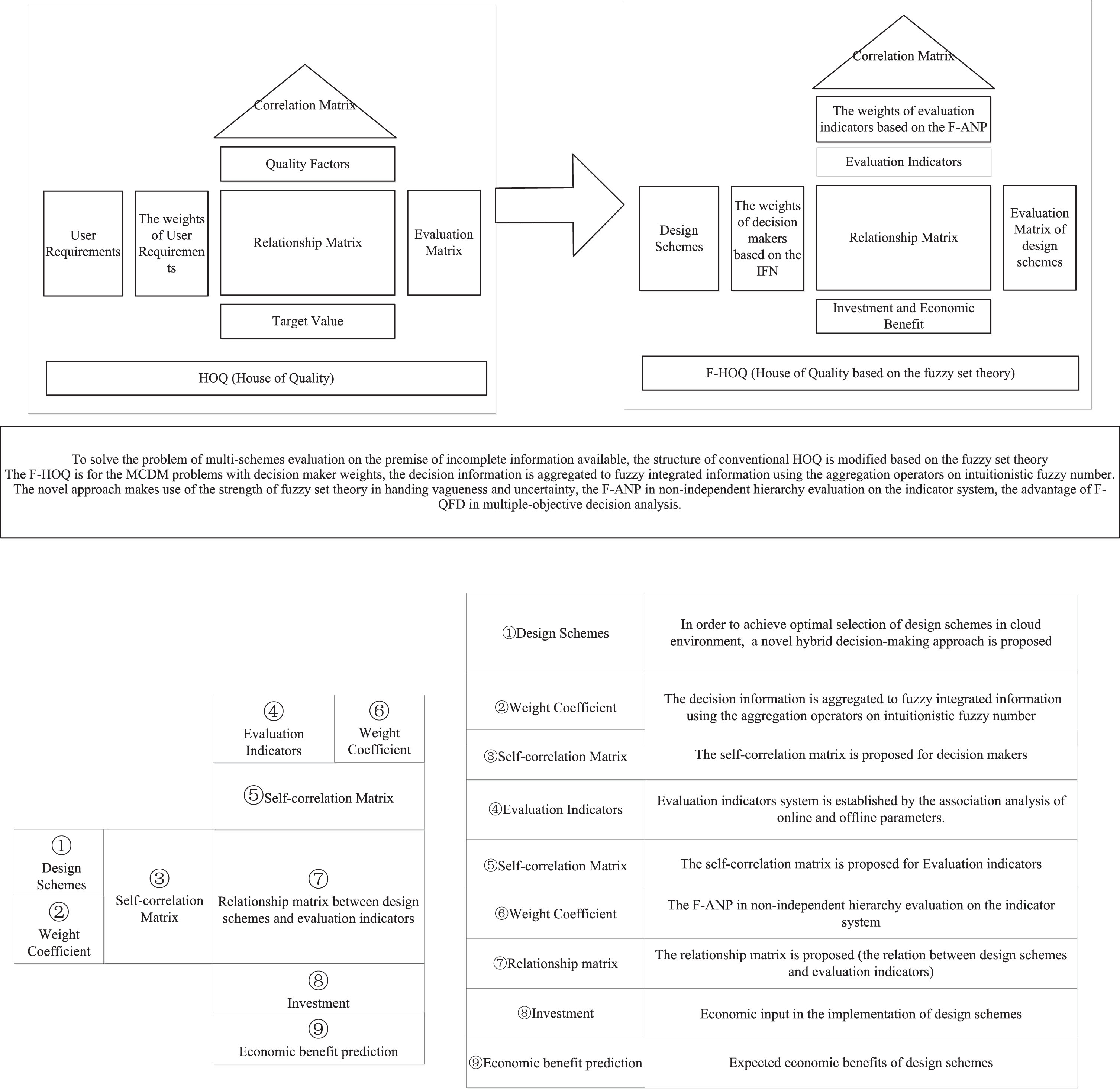
Model of fuzzy-QFD.
Where: M stands for the maximum value of schemes;
In this section, optimal selection of design scheme (such as automobile design) is taken as an example to demonstrate the practicability and validity of the proposed approach. Cloud environment is an integrated service system that can provides on-time dynamic service for user. It is mainly composed of two parts: the front-end (such as HTML, CSS, and JAVASCRIPT) and the back-end(such as PHP, ASP and JSP). With the advancement of access technology and virtualization technology, the effective real-time information of dynamic service is identified based on the connection between the front-end and back-end. It is necessary to establish a system to monitor and predict the key characteristic parameters of product quality in real time, and put forward the feasibility of systematic design solution, based on the target framework analysis, requirements analysis, business process analysis, data flow analysis, system module design, coding, implementation of the system normal operation.
Indicator selection
Evaluation indicators system is established by the association analysis of online and offline parameters. The building process are listed as follows: First, real-time data mining in cloud environment. In order to improve the system scalability and realize real-time recommendation, data mining method of fuzzy clustering is used to cluster the users and items in offline data pre-processing stage. After that, data retrieval, caching and refreshes are handled automatically. Second, real-time data analysis in artificial intelligence technology. Real-time data will eventually be converted to historical data storage within a certain time limit. Knowledge data can be obtained from massive historical data and stored it in the knowledge base. With the continuous production, historical data can be accumulated and reused continuously, and knowledge data will be enriched constantly. Third, real-time data processing in decision making. We identify a list of 32 evaluation indicators, and we delete those repeated items and choose the most representative 12 indicators by means of online interviews. Finally, we identify a list with 4 dimensions and 12 indicators to evaluate the automobile design (see Table 3).
Hierarchy structurefor evaluation system.
Hierarchy structurefor evaluation system.
(1) IFN for decision makers
This part analyses the weights of decision makers. The factors of decision-makers themselves also affect their decision-making behavior, which includes adaptation ability, stress ability, risk preference and negative emotions. Based on fuzzy set theory, the uncertainty of decision makers are comprehensively considered.
The weight vector of decision-makers is expressed as A = {A1, A2, A3, A4, A5}. The evaluation object is expressed as O = {O1, O2, O3, O4, O5}. The evaluation matrix of decision-makers is expressed as follows.
Based on formula (18-19), the evaluation values is made.
In additional, a priority matrix R* is established.
Based on the above analysis, the fifth decision-maker has the highest weight and the second decision-maker has the lowest weight. Fuzzy-ANP for evaluation indicators

Fuzzy-ANP structure for evaluation indicators.
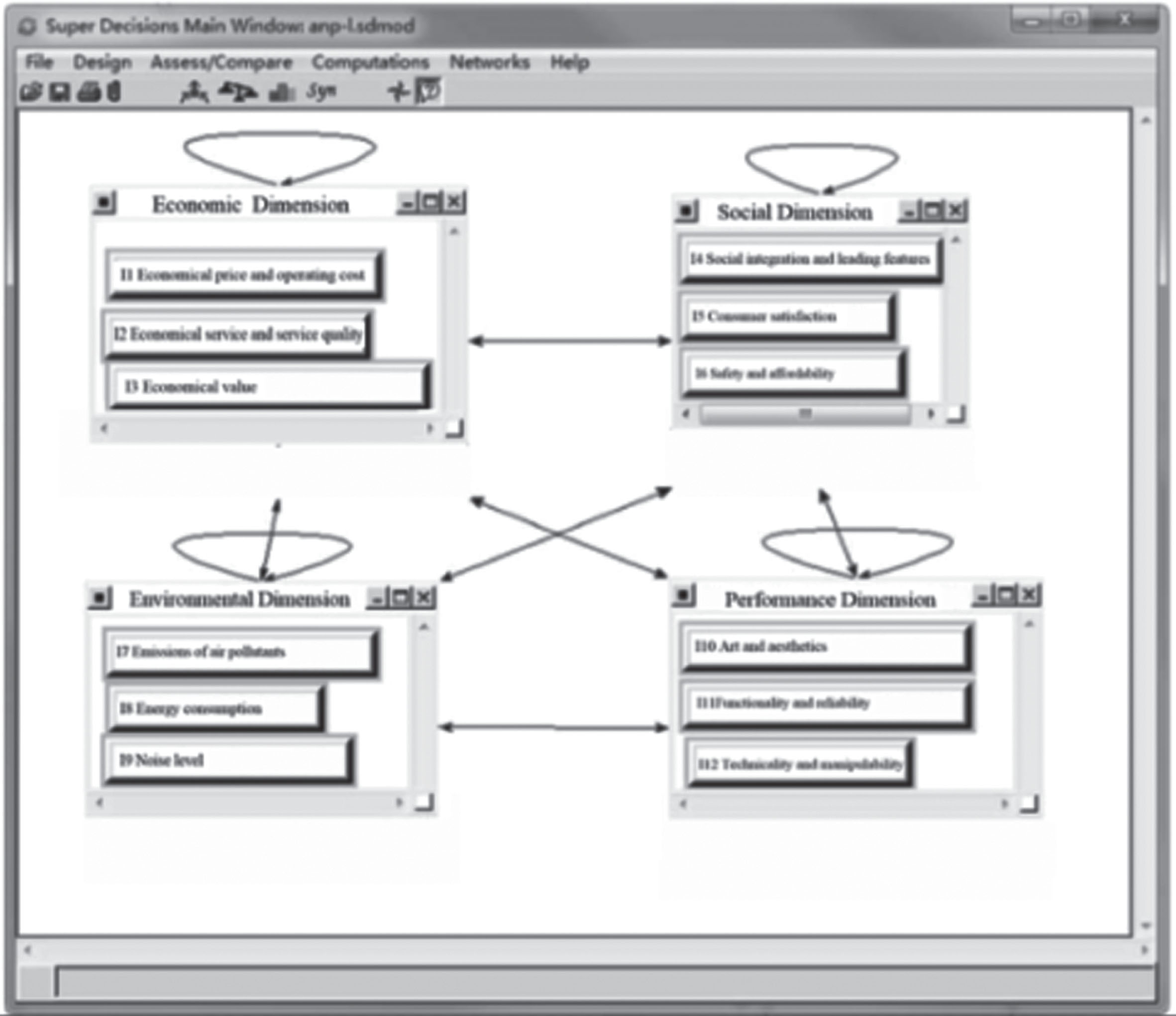
The network hierarchy structure in super decisions.
As to
Similarly, we can get the fuzzy numbers of other indicators in the group evaluation matrix.
Therefore, a complete fuzzy un-weighted super matrix can be constructed.
Similarly, we can get the weighs of other indicators.
Fuzzy weights of evaluation indicators
In a comprehensive consideration of the market factors, a hierarchical model of design schemes is constructed based on the Fuzzy-QFD. It includes many factors such as evaluation dimensions (D1, D2, D3, D4), evaluation indicators (I1, I2, I3, I4, I5, I6, I7, I8, I9, I10, I11, I12), design schemes (S1, S2, S3, S4, S5, S6, S7, S8, S9) and decision makers in cloud environment (W1, W2, W3). Figure 6 shows the hierarchy structure of fuzzy-QFD.
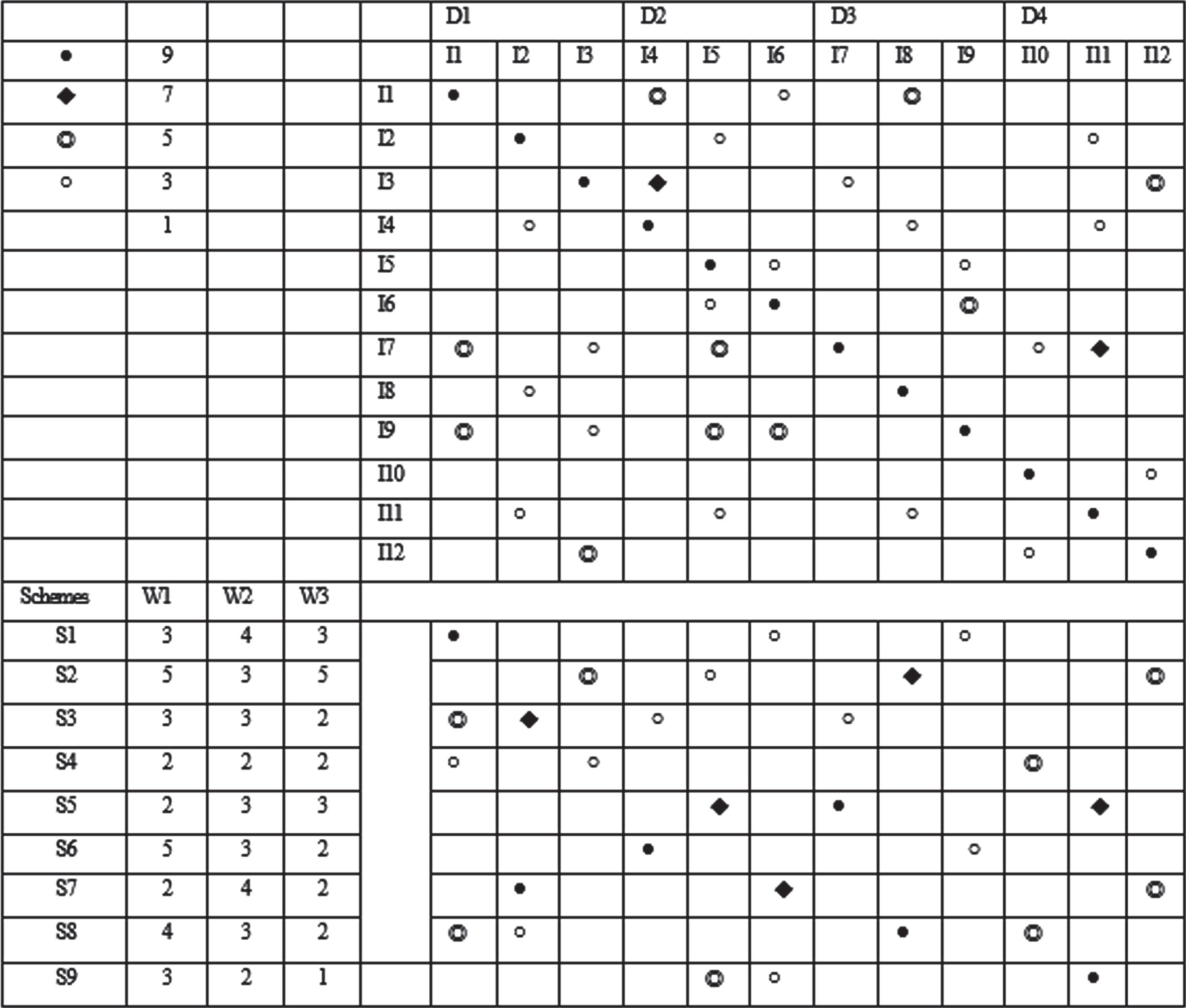
Hierarchy structure of fuzzy-QFD.
The comprehensive information of user satisfaction is shown as follows:
Where: T stands for the fuzzy comprehensive decision making of design schemes; W stands for the weights of the decision-makers; R stands for the relation matrix between decision indicators and design schemes; P stands for the correlation matrix of decision indicators.
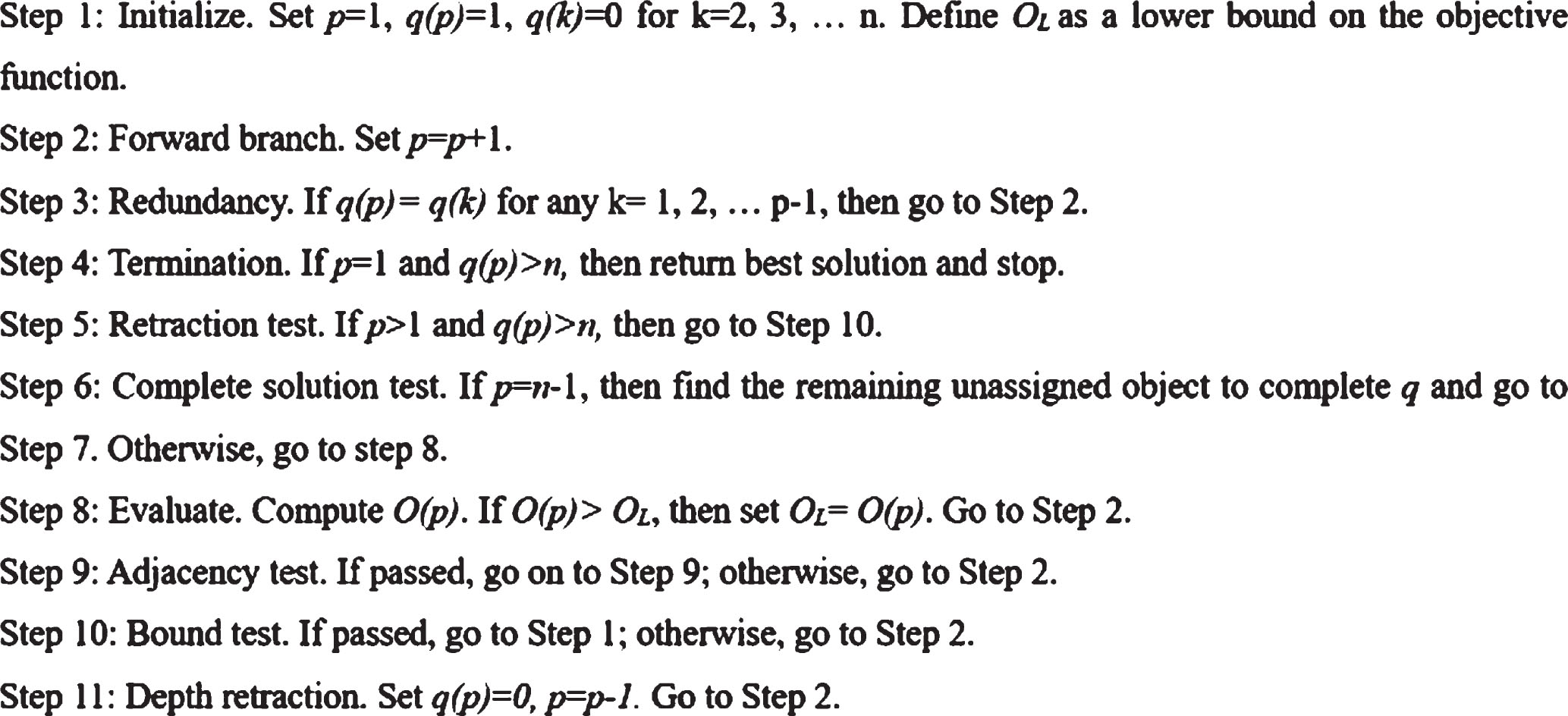
Branch-and-bound method.
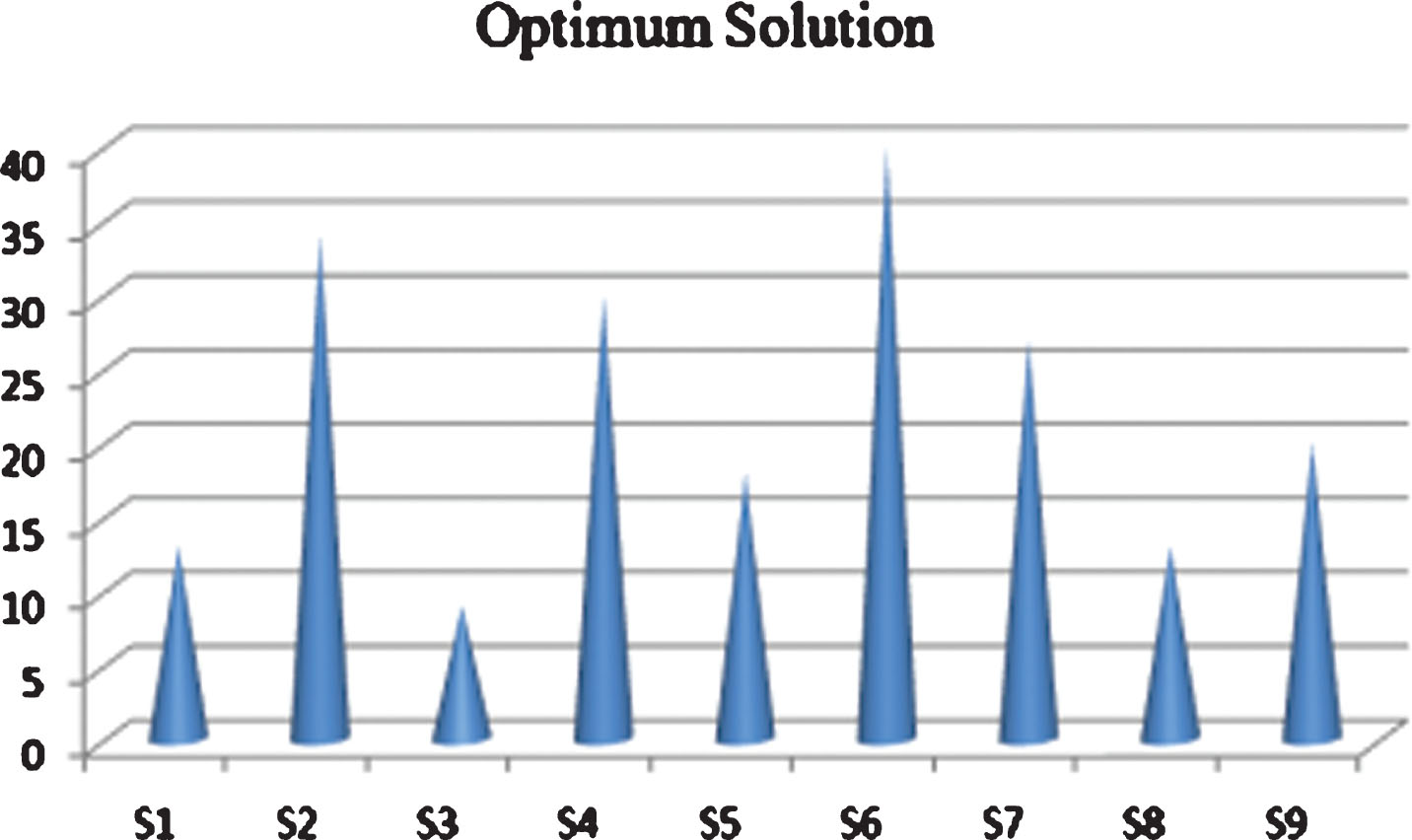
Decision making.
Optimization solution
SPEA2 (Strength Pareto Evolutionary Algorithm 2) is introduced in the process of sensitivity analysis. In order to find out the sensitivity of decision-making process to slight changes in individual weights, sensitivity analysis experiments are conducted. The object function, encoding scheme, fitness calculation, selection, crossover and mutation operations of SPEA2 are designed deliberately by taking into consideration the pareto-optimal solution of design scheme. A multi-objective particle swarm optimization algorithm based on decision preferences is used to solve the difference of objection among each participant for design scheme. Starting from the initial population, SPEA2 makes the population evolution to better area of the search space by the processes of selecting, variation update and evolution restructuring. In order to verify the effectiveness and stability of the proposed approach, users were invited to evaluate the design schemes in cloud environment. Based on the HTML(Hyper Text Markup Language), CSS(Cascading Style Sheets) and JavaScript, user participation is introduced into the decision system in cloud environment. Twenty-five experimenters were conducted to analyze sensitivity of 9 schemes to alternative ranking. The forms of decision making is vary from thumb-up assessment to star-class assessment (see Fig. 9). Based on the above analysis, the valuable decision indicators of design schemes can better reflect customer requirements such like economical price and operating cost (I1), economical value (I3), social integration and leading features (I4), safety and affordability (I6), emissions of air pollutants (I7) and art and aesthetics (I10). Finally, the results are shown in Fig. 9.

Multi-criteria decision-making in cloud environment.
To reveal the advantages of the proposed method, comparison has been done with other methods namely, research on multi-objective decision-making under cloud platform based on quality function deployment and uncertain linguistic variables [49], and optimal selection of manufacturing services in cloud manufacturing [17]. The other two methods have such disadvantages as being subjective and complex computation (i.e. different experts may give different scores to the same design scheme due to the experience or knowledge bias). Although the research methods are different, the research background are the same, namely cloud environment. The ranking of design alternatives are calculated for different values for the same case study. The effectiveness of this work is demonstrated through specific analysis below. Research background: Li’s work and Fan’s work is based on the cloud platform. This work provided a better way to interact with users in a co-development process by capturing the evaluation information in cloud environment. Research purpose: The purpose of Li’s work and Fan’s work is to support decision-making for optimal selection in cloud platform. To improve the evaluation efficiency, this work presented a hybrid decision model, which included three layers: indicators selection, weight determination and comparison of different alternatives. Research methods: Li’s work proposed a decision making approach integrated rough ANP and rough TOPSIS. Fan’s work developed a decision making model based on QFD and uncertain linguistic variables. This work proposed a novel approach of multi-criteria decision-making based on Fuzzy-ANP and Fuzzy-QFD. The approach makes use of the strength of fuzzy set theory in handing vagueness and uncertainty. The ranking computed by the proposed method is different from the other two methods Research results: the decision results of Li’s work were given by calculating the rough distance between positive and negative samples.The decision results of Fan’s work were analyzed based on the evaluation matrix among various levels and the weight matrix of different influence factors. The results of this work were obtained by applying the multi-criteria fuzzy decision mechanism.
The ranking results from Li’s work, Fan’s work and this work were different. The results derived from Li’s work was S2 > S6 > S4 > S7 > S3 > S9 > S5 > S8 > S1, the best alternative is S2; The results derived from Fan’s work was S6 > S4 > S2 > S3 > S7 > S9 > S8 > S5 > S1, the best alternative is S6; whereas the results derived of this work was S6 > S2 > S4 > S7 > S3 > S9 > S5 > S1 > S8. The results are depicted in Fig. 11 and Table 6. The ranking difference can be explained: this work utilized the advantage of fuzzy-ANP and fuzzy-QFD in multi-criteria decision-making, and it adopt decision methods to combine with quantitative evaluation to bring about the most effective results for design scheme; whereas Li’s work and Fan’s work does not fully take advantage of probabilistic hesitant fuzzy information and it may cause the loss of information.
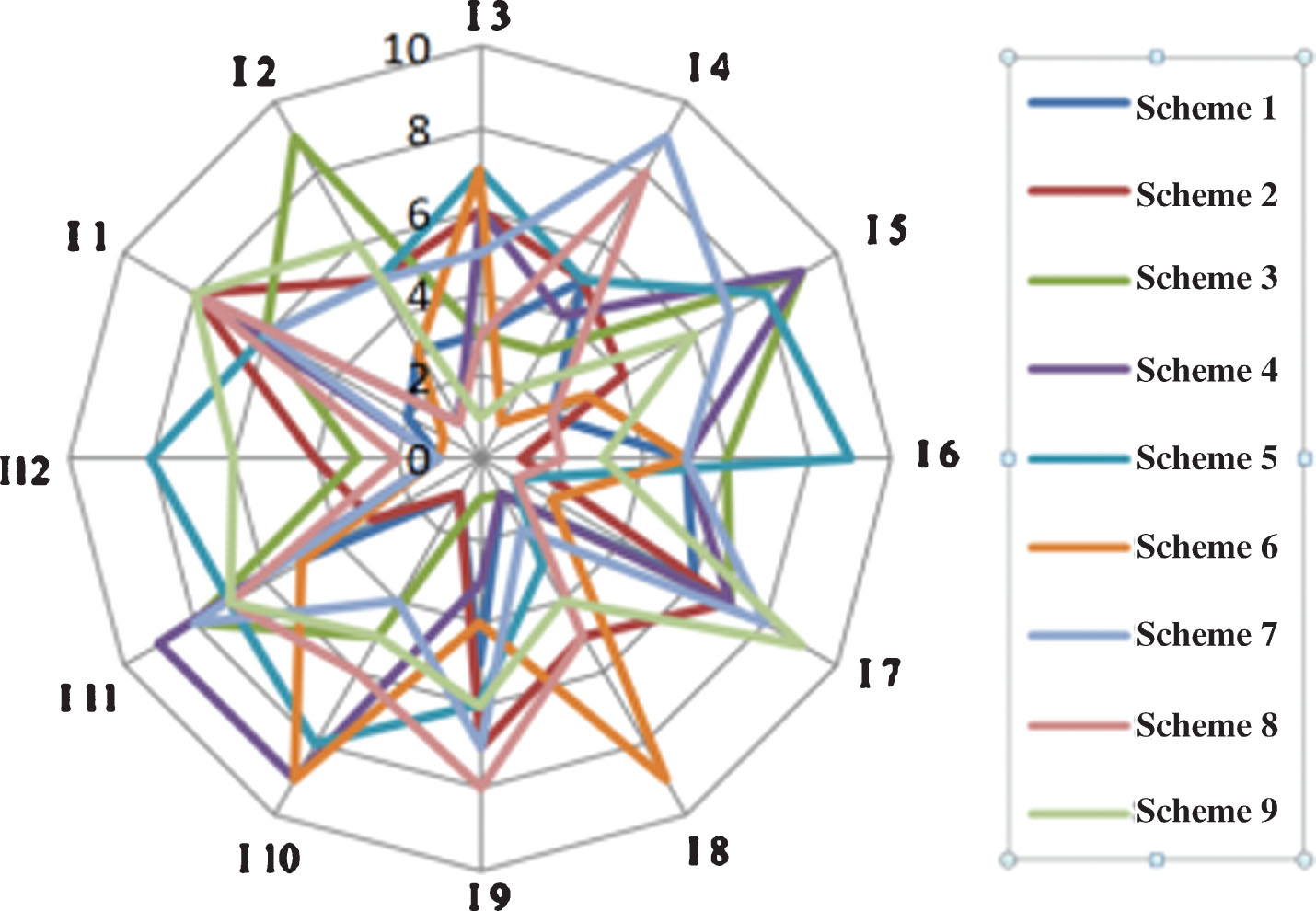
Results of sensitivity analysis experiments.
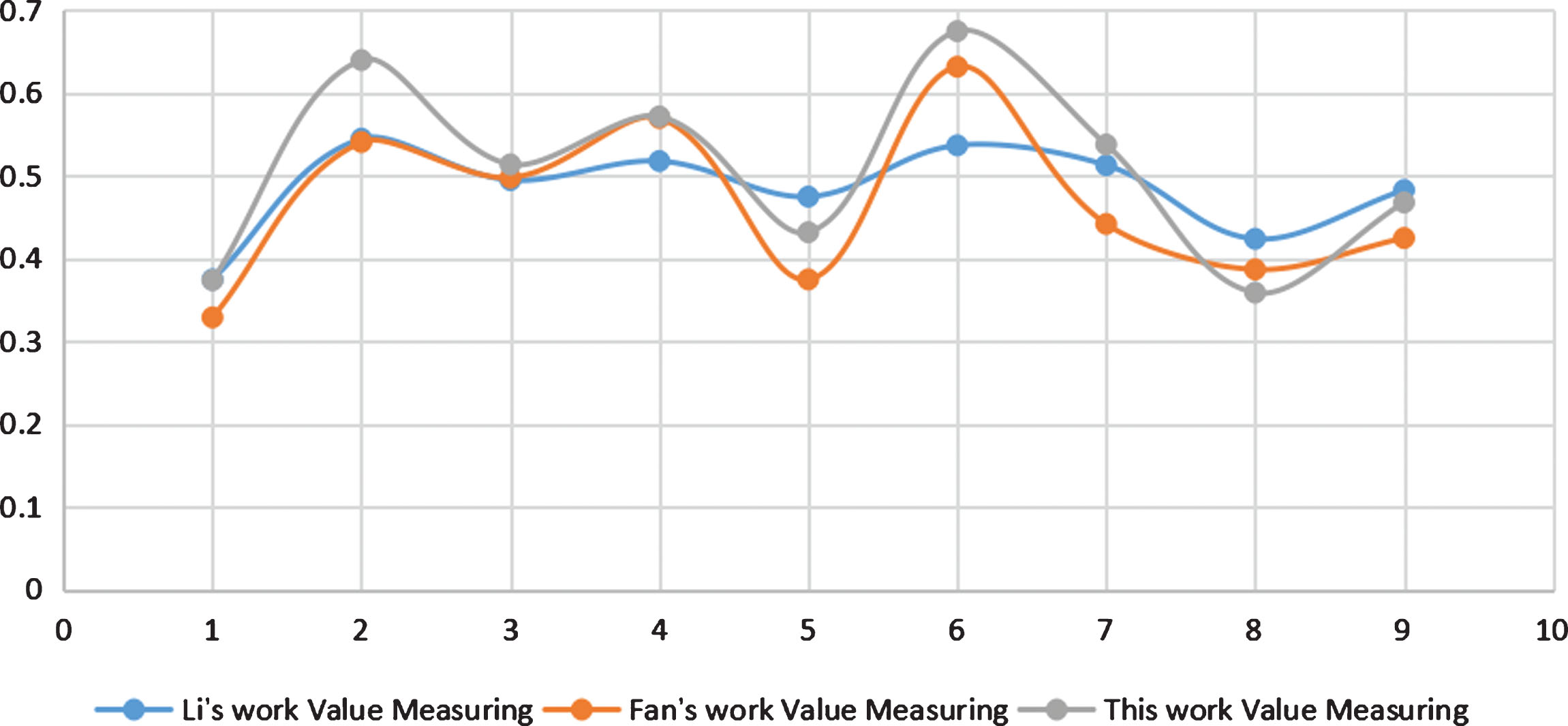
Value measuring.
Decision results
The last part put the improved method into the application, using MATLAB program to realize and making comparison with the result of regression analysis. The genetic algorithm is used to solve the problem. How the mutation rate, the crossover rate and the number of population influence the optimizing results is analyzed. The mutation rate is 0.05, the crossover rate is 0.8 and the number of iterations as shown in Fig. 12.
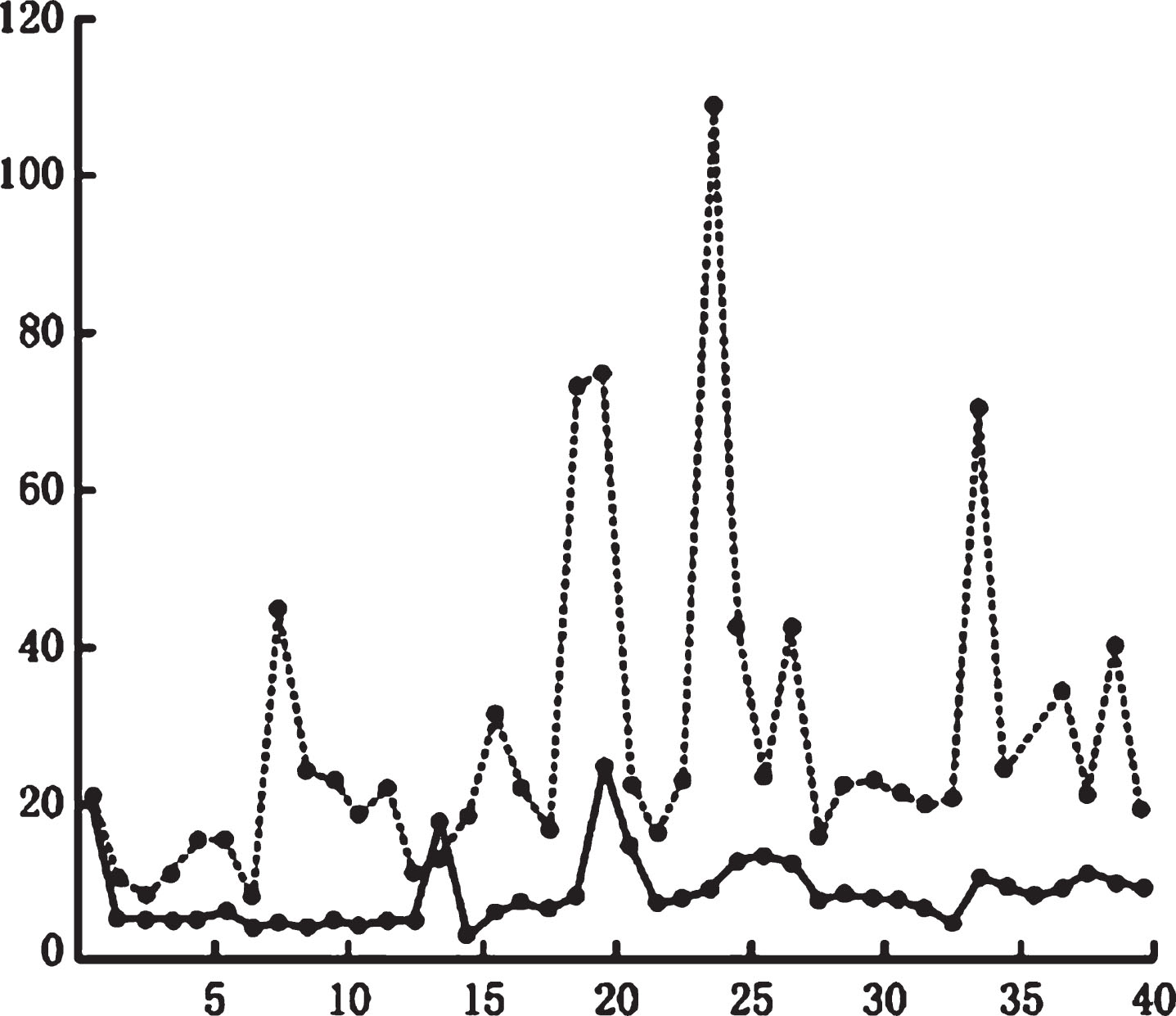
Number of iterations.
The result shows that the proposed method is more efficient and dynamic than the other two decision methods. Dynamic decision progress: The dynamic process of the collection, storage, updating, and application of key decision data to dynamic quality control is created in cloud environment. The increased level of user participation can achieve a better working environment and continuous improvement, which consist of multidimensional decision making and multi-regional decision making. Real-time decision analysis: dynamic data driven could play an important role on real-time decision support in cloud environment. It also provides on-time service system through modern information and communication technologies. Integrated decision technology: utilize advanced cloud computing technology, information digitization gathering technology, and computer logic analysis technology, provide the theoretical foundation and experimental data for decision making in cloud environment.
This paper proposed a novel hybrid MCDM approach integrated fuzzy-ANP and fuzzy-QFD. The presented approach makes use of the strength of fuzzy set theory in handling vagueness and uncertainty, the superiority of fuzzy-ANP in non-independent hierarchy evaluation and the advantage of fuzzy-QFD in multiple-objective decision analysis.
This study has three main contributions. First, to solve the problem of multi-schemes evaluation on the premise of incomplete information available, the fuzzy set theory is introduced. The decision information is aggregated to fuzzy integrated information using the aggregation operators on intuitionistic fuzzy number. Second, to solve the problem of multi-criteria decision-making, fuzzy inference mechanism is introduced into the decision-making support system. An approach by combining sensitivity analysis with branch-and-bound method is developed. Based on the hybrid multi-criteria decision-making approach, set up an aided mathematical programming, which is useful to estimation for the approximation solution. Third, we proposed a novel hybrid MCDM approach to achieve optimal selection of design schemes in cloud environment. This model can be used to measure the user satisfaction. To reveal the advantages of the proposed method, comparison has been done with other methods. At last, MATLAB programming is used for comparison and accuracy certification. The results show that applying the proposed method to select design schemes can coordinate the user’s requirement synthetically, the selected scheme is more reasonable and scientific.
However, the proposed approach also has some limitations. The 4 selected dimensions may not represent the actual case comprehensively, which ignored the impact of other factors on MCDM, such as echnological progress, preference change, and national macroeconomic policies regulations. Three decision-makers were invited to participate in decision process, they were inadequate and the decision was usually made by the team. Research can be conducted in the future to handle the above-mentioned issues.
The future works are summarized as follows. First, it is focused on reflecting the personalized requirements to the evaluation process in cloud environment. There is an inevitable trend of in multi-objective decision-making that the new mechanism of value evaluation will be studied further based on the cloud environment. Secondly, as a result of non-commensurability and contradiction on multiobjectives decision, decision behavior is more complicate. The value orientation and multiobjectives often are not consistent. Frequently there are paradoxes and nonuniform measurement in decision process. We need to study the conflict resolution in decision process. Thirdly, the research method will be explored to extend to a more complex product design process in the cloud environment. The scientific exploration of a more complete and scientific decision-making method are a major research direction in the future.
Footnotes
Acknowledgments
This research was supported by the National Key Research and Development Program of China (No. 2017YFB1104205); and the 111 Project under Grant No.B13044.