



Abstract
Inventory management decisions have become increasingly complex as they are driven by multiple criteria both within and without the organizations; as a result of that, the multi-criteria analysis methods have been gaining importance as an alternative to support the decision making process. The present work endeavours to systematize the main articles that have approached MCDA and Inventory within the last 31 years (1987–2018), determining the multi-criteria methods with greater prominence in the scientific community discussions as well as the main problems addressed by them. The authors conducted a study about the criteria for decision making in inventory and its alignment with the specialized literature, initially 439 articles catalogued in the Scopus/Embase and Web of Science database were considered for the present revision; after careful analysis of their theoretical content, 47 of them were chosen as they held the information needed to complete the study. The authors observed that the majority of the selected articles refer to the utilization of the Analytic Hierarchy Process (AHP) method and its fuzzy extension whilst the main problems addressed are ranking and sorting.
Introduction
MCDA – Multicriteria Decision Analysis – is a comprehensive term to describe a collection of formal approaches that seek to take into account several criteria to help individuals or groups to explore decisions that matter [1, 2].
One of the main objectives of the MCDA approaches is to help decision makers organize and synthesize information as to make them feel at ease and confident in making decisions, minimizing the potential for regrets after the decision as well as meeting all the criteria or factors duly analysed [1].
Such methods focus on the search for the optimal solution at the maximum value and/or minimum value. However, there is a great variety of decision problems [3]; thus, the ideal solution is not always strictly the maximum value and/or the minimum value, but rather a value (or set of values) that are intermediary.
In this sense, uncertainty is an important part of real-world decision-making problems, deriving from two areas: (1) uncertainty in subjective judgments (2) uncertainty due to incomplete data [4]. MCDA problematics are divided into four fields: (1) choice, (2) classification, (3) ordering and (4) description [5].
In general terms, three types of formal analysis can be employed to resolve decision making problems: The descriptive analysis is concerned with the problems the decision makers really solve; the prescriptive analysis considers the methods that the decision makers must use to improve their decisions; the normative analysis, on the other hand, focus on the problems the decision makers must idealize [5].
There are several studies that analyse the MCDA methodologies applied to inventory management, some studies focus on the inventory management with conventional multicriteria methods such as AHP [6, 7, 8], whilst others engage in the discussion of multicriteria with Fuzzy [9, 10] methodology. Furthermore, there are studies that work on methods combination [11, 12].
One of the inventory control techniques widely utilized on inventory management is the ABC analysis (Pareto Principle) which is useful for the planning process simplification as well as for the effectiveness of material control [13, 14, 15].
The ABC classification is, in practical terms, a method for the division of the inventory per order of importance: Class A (very important); class B (moderately important) and class C (little importance) in order to allocate resources such as work, time and capital into items according to their relative importance [16, 17].
The items classification on the A, B and C categories have been usually based on only one criterion, the monetary value of the item. That is, the traditional ABC methodology considers as unique criterion the unitary prices of the items utilized annually. The total cost criterion, however, does not reflect the complexities intrinsic to the procurement process [18].
Given the diversity of the items, there are other criteria that emphasize different considerations for inventory management – the reliability of suppliers, the obsolescence rate and the impact of an item break are but a few examples. Some of those criteria may outweigh the monetary value of the item as an essential condition. Hence, it is possible to argue that the traditional ABC analysis may often be an infective method for the appropriate classification of the stock items [19, 20].
MCDA becomes fundamental when the conflict level amongst the different criteria or the conflicts regarding the classification of importance and urgency of the criteria by different stakeholders reaches a level in which an intuitive decision-making process is no longer satisfactory [1].
As a result of that, the multicriteria inventory classification problem is increasingly attracting more interest from researchers, becoming a key aspect of inventory management research [21]. Hence, the present research endeavours to develop a systematization of the scientific works concerning multicriteria decision analysis in inventory management in order to determine the multicriteria methods most commonly found in scientific researches as well as to identify the key issues addressed by them.
Methodology
Scopus/Embase and Web of Science were analysed on August 29
During the full text revisions, some studies were excluded for not attending two key criteria: (1) application of a multicriteria method and (2) application on inventory management. The studies were not excluded based on the quality of their methodology. The final sample for analysis was 140 articles from a total of 439 studies. At the end of the selection process, 47 scientific articles remained to be fully revised. So far in the present research no revision article was found that approached the theme currently addressed in this paper. In Fig. 1 there is a representation of the analysis process taken to select the articles that presented relevant characteristics in accordance to the systematization interests of the present revision.
Review development flow charter.
Evolution of publication related to inventory and multi-criteria.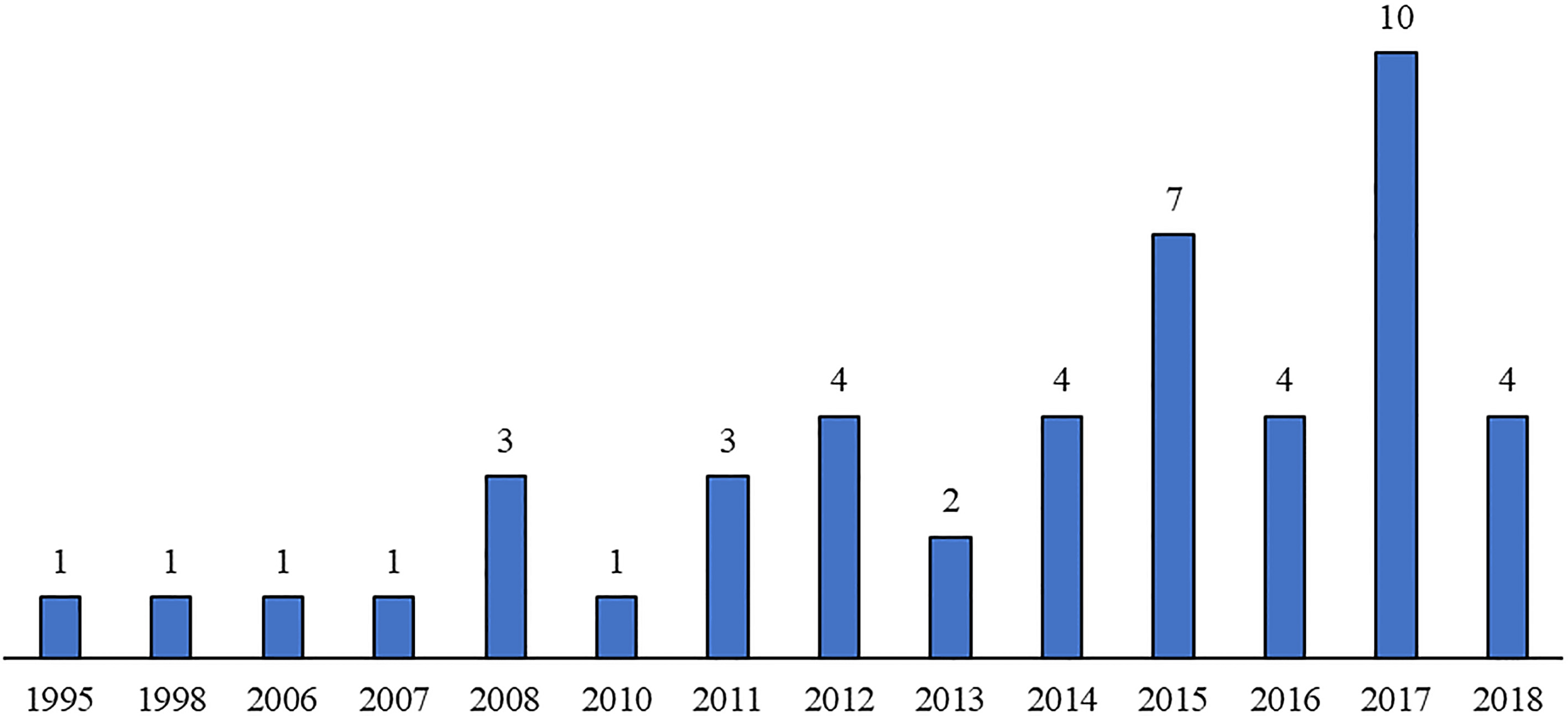
Publications on inventory and multi-criteria per country.
Keywords found in database search.
Seven main journals with publications on the topic.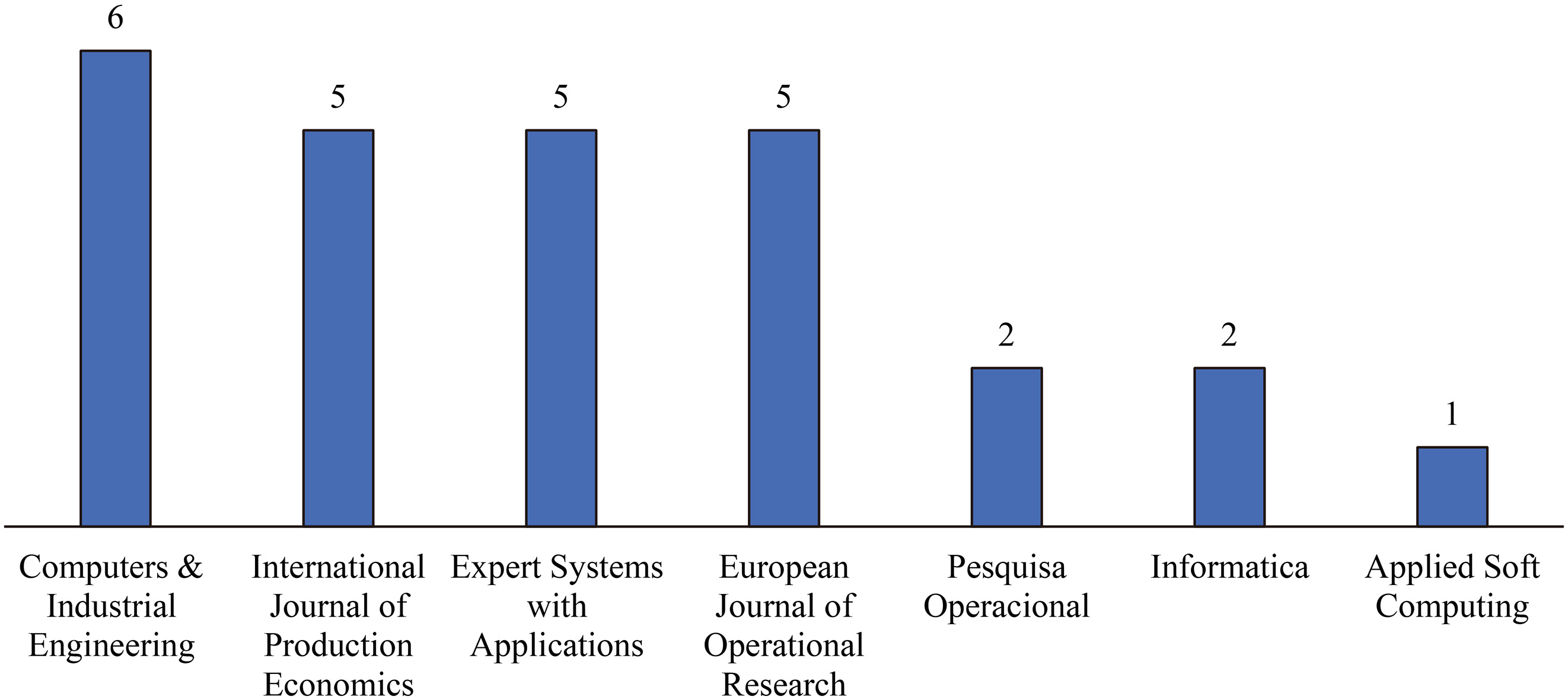
The database research catalogued the following indicators in the selected articles: year of publication, journal in which it was published, Scimago Journal Rank (SJR), Journal Citation Report (JCR), country in which the study was conducted, title, authors, keywords, article objectives, multicriteria method utilized, criteria utilized in the method, where it was applied, limitations. Based on the initial data, it was developed an analysis of the descriptive statistics elements and the graphic representations of that evaluation are present in the current study, as to numerically evaluate the conclusions obtained by the authors. The results are presented and discussed in Sections 3 and 4 respectively.
Bibliometric review
Throughout the systematization of 31 years of scientific production related to inventory and multi-criteria, when taking into account the years the articles were published, it is possible to perceive that the number of qualified research on inventory and multi-criteria has substantially increased, as it is evident on Fig. 2.
The continents with larger number of relevant studies on the topic are Asia [22, 23, 24, 25, 26, 27, 28, 29, 30, 31, 32, 33, 34, 35, 36, 37, 38, 39, 40, 41] and America [42, 43, 44, 45, 46, 47, 48, 49, 50] as it is evident on Fig. 3. The former is responsible for 53.19% of the total number of publications whilst the latter only 23.40%. Furthermore, the number of publications on inventory and multi-criteria in Africa is rather small.
Journal Citation Report and Scimago Journal Rank on the journals referred in the present review
Journal Citation Report and Scimago Journal Rank on the journals referred in the present review
Classification of the multicriteria methods within the articles selected as categories MADM and MODM.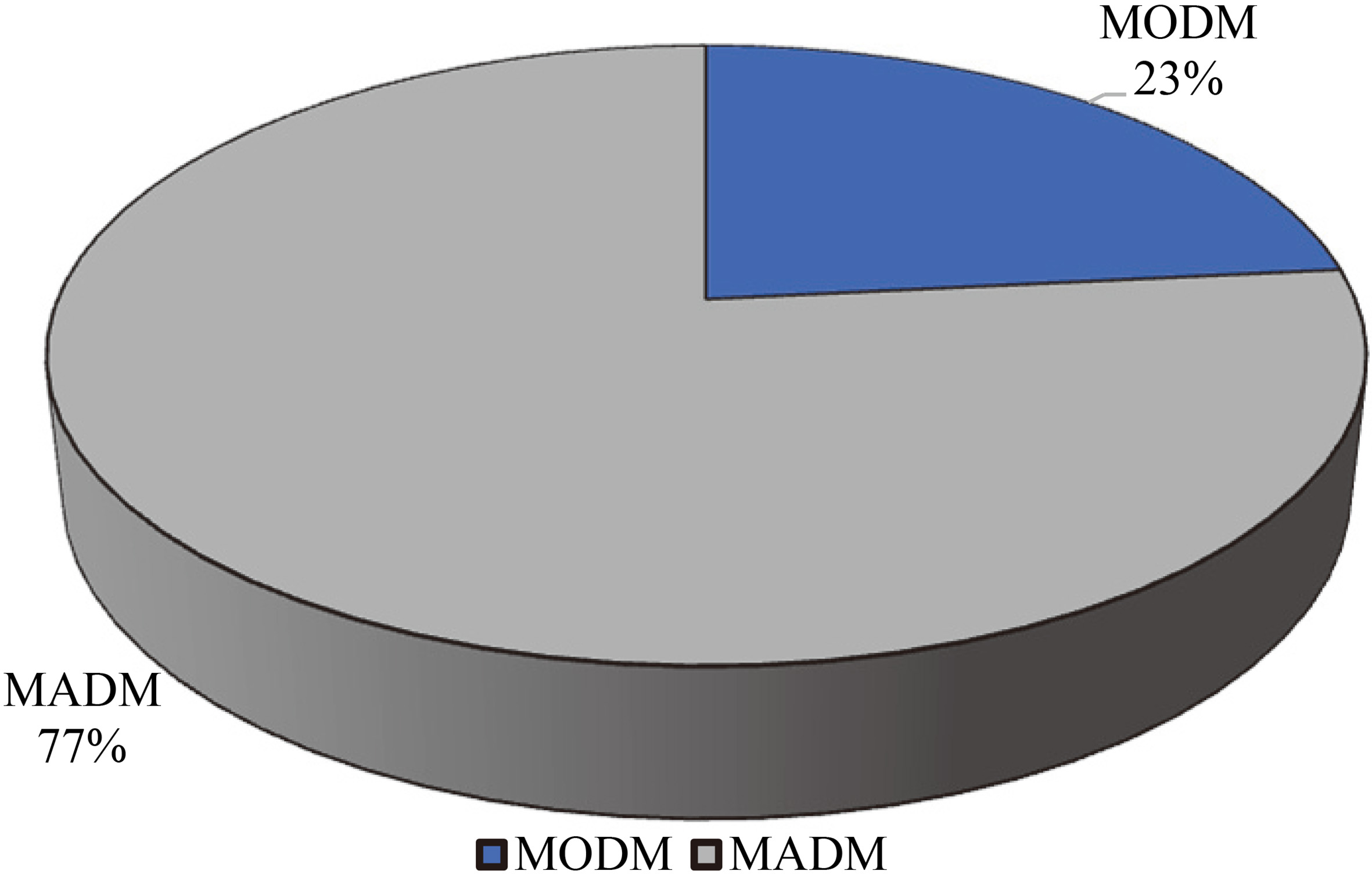
Classification of the multicriteria methods of the articles selected in the categories MADM and MODM.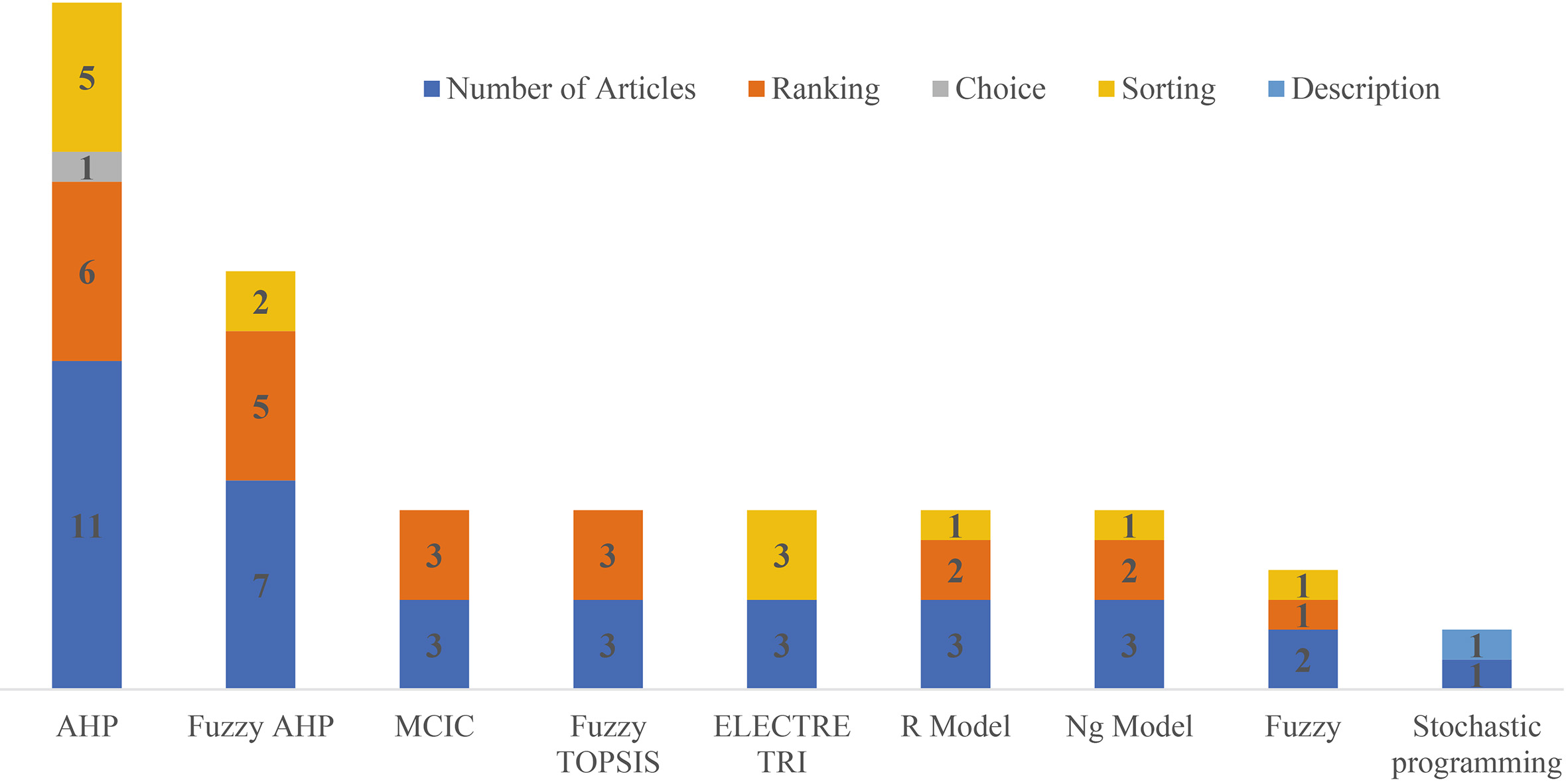
Turkey is the country with more qualified scientific publication related to multi-criteria analysis and inventory; followed by China and USA. It is possible to perceive the representativeness of the emerging countries in publications related to inventory and multi-criteria, which raises the debate about the strategic interest seen by researchers in these countries in contributing to the development of studies that explore inventory management methodologies, thus perfecting tools and strategies to overcome logistical barriers and increase competitive advantage through inventory control [10, 22, 23, 25, 28, 30, 32, 34, 36, 38, 41].
Figure 4 represents the network diagram of keywords found during the research, the circumferences diameter represent the frequency in which the keywords were referred in the articles. The most referred keywords were multicriteria analysis, decision making and inventory control. It is also important to notice the frequency in which the descriptors Landslides and Landslide Susceptibility appeared in the initial research without filters. The Authors have investigated the interrelation between those descriptors and the keywords Inventory and multi-criteria and have identified that there are works that relate integrated inventory management to multi-criteria to conduct the historical records on landslides in specific locations.
On Fig. 5 it is possible to see the number of articles published by qualified journals. In total there are 28 distinct journals, however, only those that had more than one publication and another with a significant JCR (
Criteria proposed by Flores et al. [6] referred by the articles in the review
In order to facilitate the systematic research on MCDM, Hwang and Yoon suggested classifying MCDM problems into two main categories: Multiple Attributes Decision Making (MADM) and Multiple Objective Decision Making (MODM), based on different objectives as well as data types.
When decisions are met in continuous space the MODM techniques are utilized, on the other hand, when the space of decisions is narrow, the MADM techniques are employed. As it is possible to perceive on Fig. 6, within the studies analysed, there is a larger frequency of applications of the category MADM.
Figure 7 presents the most applied multicriteria methods and their respective problems: (1) Choice problem, which indicates that a decision must be taken; (2) Classification problem, which defends to accept or reject determined actions; (3) Ranking problem, which suggests a partial or total order of categories containing actions considered to be equivalent; and (4) Description problem, which formally and systematically describes actions and their consequences both in qualitative and quantitative terms [51, 52, 53].
Amongst the articles selected for this review, the main MCDA method applied was the Analytic Hierarchy Process (AHP) and its fuzzy extension. It should be noted that AHP and AHP-fuzzy were used in association with other methods; thus, through the application of AHP, the weights for each criterion and respective values of the alternatives considered in the problem were obtained. Hence, this information supported the classification of alternatives [22, 24, 26].
The AHP method was developed by Saaty (1980) and employs direct evaluation of all possible alternative pairs with respect to each criterion in order to determine the preference of the criterion pair according to Saaty’s fundamental scale [1].
Further to the AHP method, the TOPSIS, ELECTRE TRI, R Model and NG model were also used. The Technique for Order Preference by Similarity to Ideal Solution (TOPSIS) is a multicriteria method developed by Hwang and Yoon in 1981, which bears a simple understanding and application [54]. This method presents as a key feature the concept of ideal solution which in this context is represented as two artificial alternatives: (a) The positive ideal solution and (b) the negative ideal solution [52]. The positive ideal solution is composed of a value considered by the decision maker as ideal for each criterion, so that the negative ideal solution is its opposite [5].
Both R Model and Ng Model are models created specifically for inventory. The R Model is a model in which the weight of each criterion on each item is automatically generated when the model is run, generating an inventory score for each item. The objective function provides the optimal inventory score for the item. And the model is repeatedly solved for each one, changing the objective function [13]. Ng Model, on the other hand, can get stock item scores without a linear optimizer. When the model is solved, the objective function maximizes the score of each inventory item; thus, weights are automatically generated when the model is solved [55].
The ELECTRE multicriteria method is rather ubiquitous in decision-making problems [56]. Elimination Et Choix Traduisant la REalité (Elimination and Choice Expressing Reality-ELECTRE) was originally developed by Roy (1978) and consists of an Outranking method, so that dominance relationships are established between the alternatives [5, 57]. ELECTRE is an umbrella term for a family of methods, including ELECTRE III, whose main feature is minimizing the effect of compensation on decision-making issues [56, 57].
Flores and Whybark [18] were the pioneers on working with inventory management utilizing more than one criterion. According to these authors, there are many other important criteria to be taken into account in inventory management besides costs, such as lead time, obsolescence, availability, substitutability and criticality. Table 2 analyse the criteria utilized in the systematized studies according to authors mentioned above.
As it can be seen, only Keshavarz et al. [36] did not carry any of the established criteria due to the fact that their work is a literature review thus not carrying any practical application. Amongst the other studies analysed, it is evident the frequency of the criteria utilized related to costs, lead time and criticality. Besides the criteria defined by Flores and Whybark, other criteria were also applied such as item weight, storage space and item demand.
Conclusions
The present article has reached its aim to develop the systematization of works referring to the multicriteria decision analysis in inventory management. The research undertaken during the methodological process demonstrated that multicriteria analysis has been gaining space and its application may generate positive returns to inventory management.
In relation to the general aspects of the study, it was observed that different countries have produced relevant studies into inventory management; however, in numerical terms, Turkey, China and USA do stand out.
Furthermore, the most dominant journals on the subject are Computers & Industrial Engineering, International Journal of Production Economics, Expert Systems with Applications and European Journal of Operational Research. Those journals are in a prominent position in relation to the JCR indicator. The words that were most referred in the revised articles were: multicriteria analysis, decision making and inventory control.
During the systematization, it was verified that more than half of the articles addresses multiple attributes decision making (MADM), furthermore, the problem analysis indicates that the inventory management has a comprehensive problem solving application by Ranking. In regards to methods, it was patent the prevalence of AHP and Fuzzy AHP. Finally, the criteria often used in the methods were cost, lead time and criticality.
Thus, it is possible to identify based on the description and analysis of the data of this review that more than the multicriteria methods, the multicriteria decision model has been highlighted in the inventory management.
Finally, from the 47 articles listed in this review, it was possible to identify that 18 of them have applications based on numerical experiments or data replication, which comprises 38.3% of the total papers. This gap in real applications tends to create a deficiency of links with decision makers, resulting in application barriers related to the environment and criteria, which ultimately, delays potential improvements in the area. Furthermore, these applications have a deficit in the healthcare field [67], as the existing applicability comes from Reid’s replication data [68], found in Flores’s research [6].