



Abstract
Service-oriented design is used in product development to accommodate diverse customer requirements and provide a profit-making strategy. Existing designs encounter difficulties in assessing design alternatives systematically during conceptual design involving customer heterogeneity and cognition vagueness. To evaluate these alternatives, a new systematic service-oriented design is proposed. The fuzzy analytic hierarchy process is used to handle the subjectivity and uncertainty of expert judgments and customer desires. In addition, the structure of service-oriented design within a mapping information flow is illustrated and then associated with technical characteristics via the results of the House of Quality. A consideration of influential design factors is developed to identify optimal alternative on the basis of the PageRank algorithm. Based on the integrated methods, a priority index is proposed to evaluate these alternatives, which can flexibly handle customer heterogeneity under limited technical conditions. At the same time, a design calculation program of a front axle suspension system was developed based on MATLAB GUI, which shows the design extensibility and robustness of the proposed approach. Overall, the results of the priority index-based method clearly demonstrate the superiority and appropriateness of the technique in selecting the optimal alternative. It also standardizes the design process from the case study of the front axle suspension system, provides rapid reasonable selection of the design scheme, and thereby improving intelligent design capacity from the perspective of product and its services.
Keywords
Introduction
With increasing demand for market differentiation, service-oriented design as an integration of core value is being employed to effectively handle customer needs, subjectivity and vagueness [1, 2]. In this process, the design requirements (DRs) of products are constantly modified to meet market demand, which are capable of satisfying customer requirements (CRs) and technical characteristics (TCs) [3]. Similarly, service-oriented design is focused on the needs of end customers’ rather than the product during product service system (PSS) development in which a combination of design factors is evaluated with respect to different criteria to select an optimal one [4, 5].
For new product development, service-oriented design is a multidisciplinary approach that enhances the value of a service by determining the appropriate criteria to satisfy customers [6, 7]. Notably, service-oriented design strategy was developed from the life cycle perspective to provide an optimized product combination to satisfy CRs, and corresponding development tools have also been proposed for mass customization [1]. Service-oriented product design includes the service objectives, conceptual design and design for “X” (such as design for quality, design for benefit and design for efficiency). In the design phase of “X”, many specific design issues need to be considered in the phase of design for “X”. Thus, designers produce optimal designs to enhance product value by reducing the cost or increasing the function of their resources through modification of factors that influence design, Accordingly, identification of influential service-oriented designs plays an important role in product research and development.
A critical aspect in the implementation of a service-oriented design is the identification of influential service-oriented design factors. Various studies have recently focused on identifying design factors, including design parameters [8], components that consider both customer requirements and product reliability [9], multiple-attribute decision in light of the decision-making preference of alternatives [10], and compromise-typed variable weight decision [11]. However, the identification of influential service-oriented designs in the scheme design phase remains difficult. First, existing design methods have disadvantages on evaluating design alternatives systematically, including cognition vagueness and related design factors [12, 13]. A large number of design needs and vagueness are involved in the evaluation of a conceptual design. A systematic service-oriented design environment is required to identify optimal alternatives that consider both product positioning and evaluation accuracy. Second, the degree of effect of influential factors on service-oriented designs has not been considered in the determination of the optimal set. Moreover, research on the identification of factors that influence product design has practical and significant value. Third, quick selection of a design scheme is impeded by the complexity of the existing architecture. The aforementioned approaches cannot be employed to identify the influential service-oriented designs during the conceptual design stage. Therefore, the subjectivity and vagueness of cognition and judgment of the designer need to be reduced by searching the appropriate choice from these equipped schemes.
Prompted by these existing approaches, a method for identifying influential service-oriented designs based on the existing application is proposed in this study. The identification of influential modules during the conceptual design stage plays a vital role in product development, conducting differentiated selection of specific TCs or CRs for service-oriented designs. The effects of influential service-oriented designs are ultimately verified by systematic analysis, and then realized the rapid design of scheme for front axle suspension system. This study is divided into the following sections: Section 2 introduces service-oriented design and solution analysis. Section 3 presents the proposed methodology and implementation of intelligent rapid design. Section 4 provides the case study. Sections 5 and 6 describe the contribution and conclusion of this study.
Service-oriented design framework and solution analysis
Service-oriented designs
Service-oriented designs are resourced from multiple mapping attributes that satisfy technical and engineering characteristics or replace quality characteristics [14]. These attributes are clearly displayed based on cross analysis between CRs and TCs. Selection for these attributes leads to the problem of selecting design alternatives for different design objects. Therefore, selection of the appropriate scheme is becoming an important element of design for mass customization. For this aim, service-oriented design can be flexibly implemented by selecting a reasonable priority ranking scheme [15], in which a series of alternatives are evaluated with respect to different criteria [16]. Corresponding, various uncertain factors are derived from the interactions. During this design stage, some influential design factors are not easy to evaluate for designer under the impacts of design complexity and subjective vagueness. Accordingly, a systematic service-oriented design is required for evaluating design schemes in which both subjective redundancy and evaluation accuracy are considered. A proposal is summarized for the service-oriented design in Fig. 1.
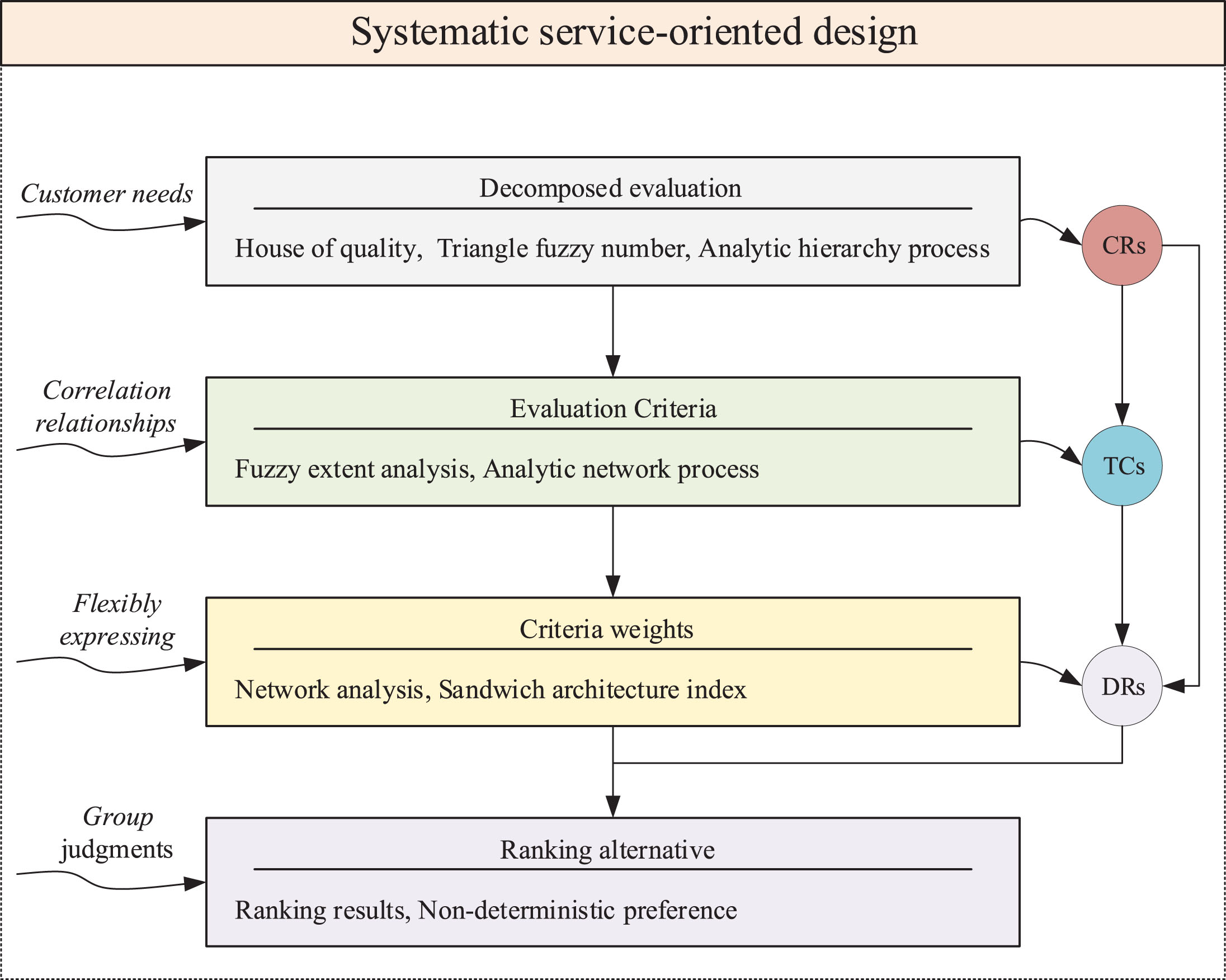
Systematic service-oriented design architecture.
In service-oriented design, the customer needs to present the initial input for the design objective. Not all customer needs have the same level of importance for customers. With this statement considered, an expert evaluation or different analytical techniques can be applied to determine the level of priority of customer needs. TCs are the basis for technical attributes providing technical feasibility. Thus, the evaluation criterion for each module can be identified based on the relationship matrix between CRs and TCs. Subsequently, DRs are the attributes that satisfy technical and engineering characteristics or substitute quality characteristics, which can facilitate its competitive differentiation. In addition, a fuzzy weighted average method with a consensus ordinal ranking technique is proposed to enhance robustness of prioritizing TCs in a quality function deployment planning process. Whereupon, a systematic selection-making method is developed for searching the most suitable alternative to realize the differential design.
Aiming to decouple the correlation of mapping among service-oriented designs, related elements can be released to the hierarchal structure. In the same hierarchal structure, a relation can be depicted as a graph G = (V, E), where the elements of V are the nodes, and the elements of E are the weights to link the nodes. Its relationships are illustrated in Fig. 2.
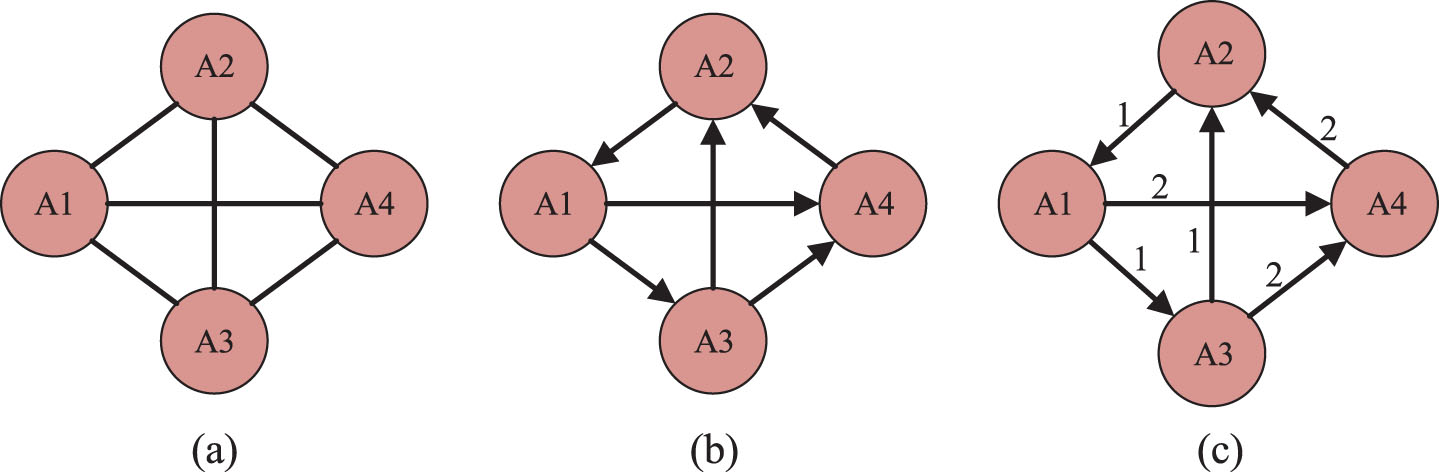
Graphic representations of several simplified networks. (a) Undirected and unweighted network; (b) Directed and unweighted network; (c) Directed and weighted network.
For the components of service-oriented designs, information flow can be expressed as an adjacency matrix with m × m elements, where m is the number of nodes. The elements of the adjacency matrix can be defined with Eq. (1).
Fuzzy set theory handles uncertainty attributed to imprecision and vagueness. Since its introduction by Zadeh (1965) as a quantitative approach for evaluating uncertain information [17]. Thereafter, the fuzzy set theory has been applied in various fields such as operation research and control, among others [1, 18–23]. This technique is also used in engineering because of their suitability for representing fuzzy uncertainty values of customer needs. Thus, fuzzy set approaches are presented to analyze the mapping relationship between DRs and customers’ preference, in which DRs are measured by TCs and CRs, whereas customers’ preference is determined from the evaluation of customer needs. A triangular fuzzy number (TFN)
The main algebraic operation for the two triangular fuzzy numbers can be provided [25]. In addition, the method can be formulated on the basis of the extent analysis method [26]. Each object is taken and extent analysis for each goal set is performed, respectively. Therefore, m extent analysis values for each object can be obtained, expressed in the following:
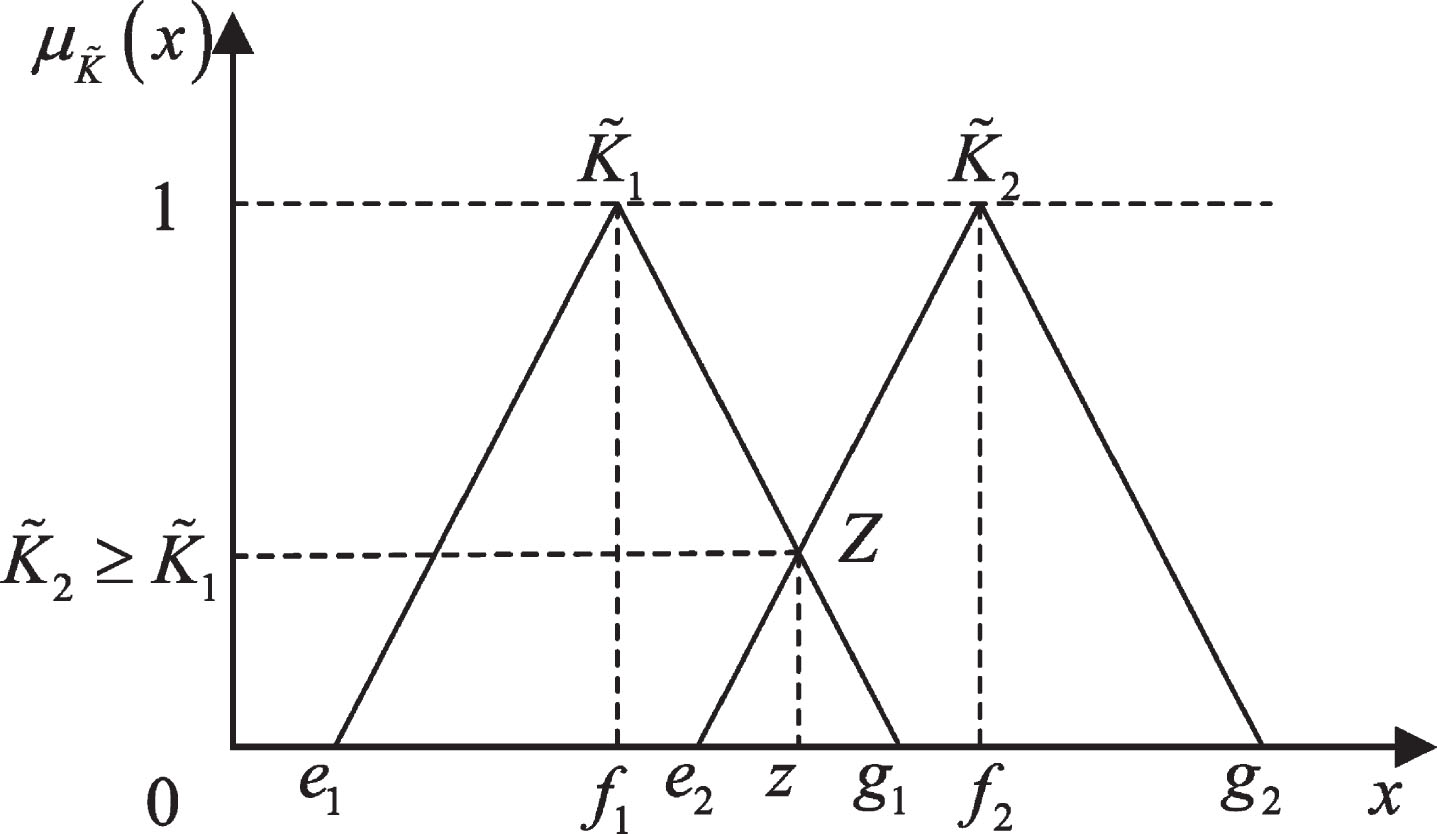
Degree of possibility of
where z is the ordinate of the highest intersection point Z between
Assume that p = min, The weight vector is then computed using
Fuzzy quality function deployment
Quality function deployment (QFD) is an integrated method that translates CRs into DRs in accordance with the TCs [27, 28]. The key to QFD is to determine the correct “importance” weight. The customers are asked to provide relative importance ratings for each CR. However, the traditional method cannot effectively acquire customer perception to prioritize CRs. Therefore, fuzzy analytic hierarchy process (FAHP) with extent analysis is used to determine the importance weight for CRs [29]. Besides, the basic structure of QFD is the house of quality (HoQ), including the various relationship matrices among CRs, TCs, and module characteristics (MCs). In addition, the relationship matrix represents the dependency degree in which each design factors affects its associated design components. Owing to its dependency attribute in a network structure, Analytic network process (ANP) can illustrate interrelationships among different level attributes by releasing the restrictions of its hierarchical structure. The relations among elements are used to express the hierarchy as shown in Fig. 4.
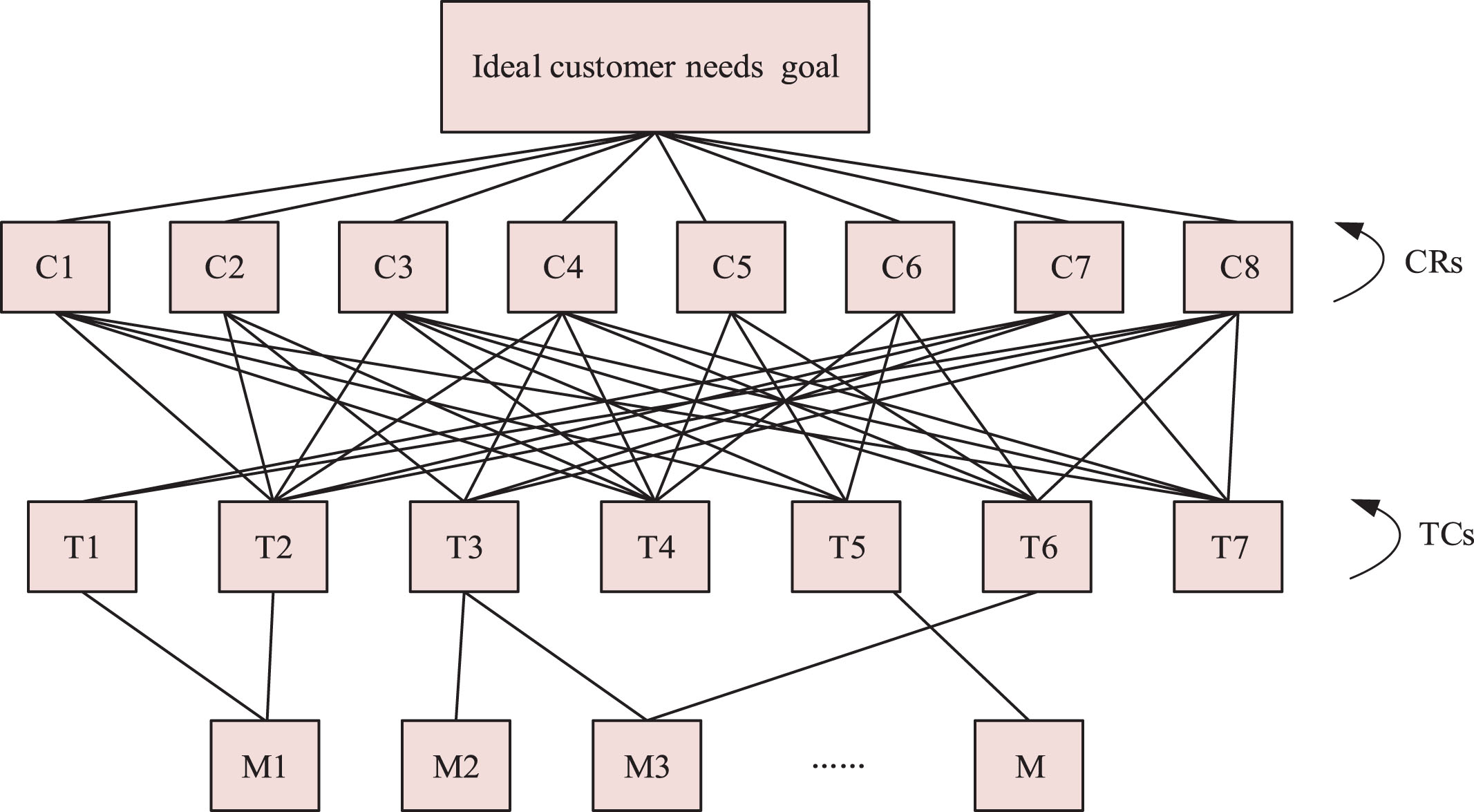
Mapping in house of quality.
PageRank is developed by Google to rank webpages in the world-wide-web, which is used to identify influential nodes [30]. As a network of N nodes (i = 1, 2, …, N) the Google number (G), for the ith node can be defined by the recursion formula on the basis of the following reference relations [30, 31]:
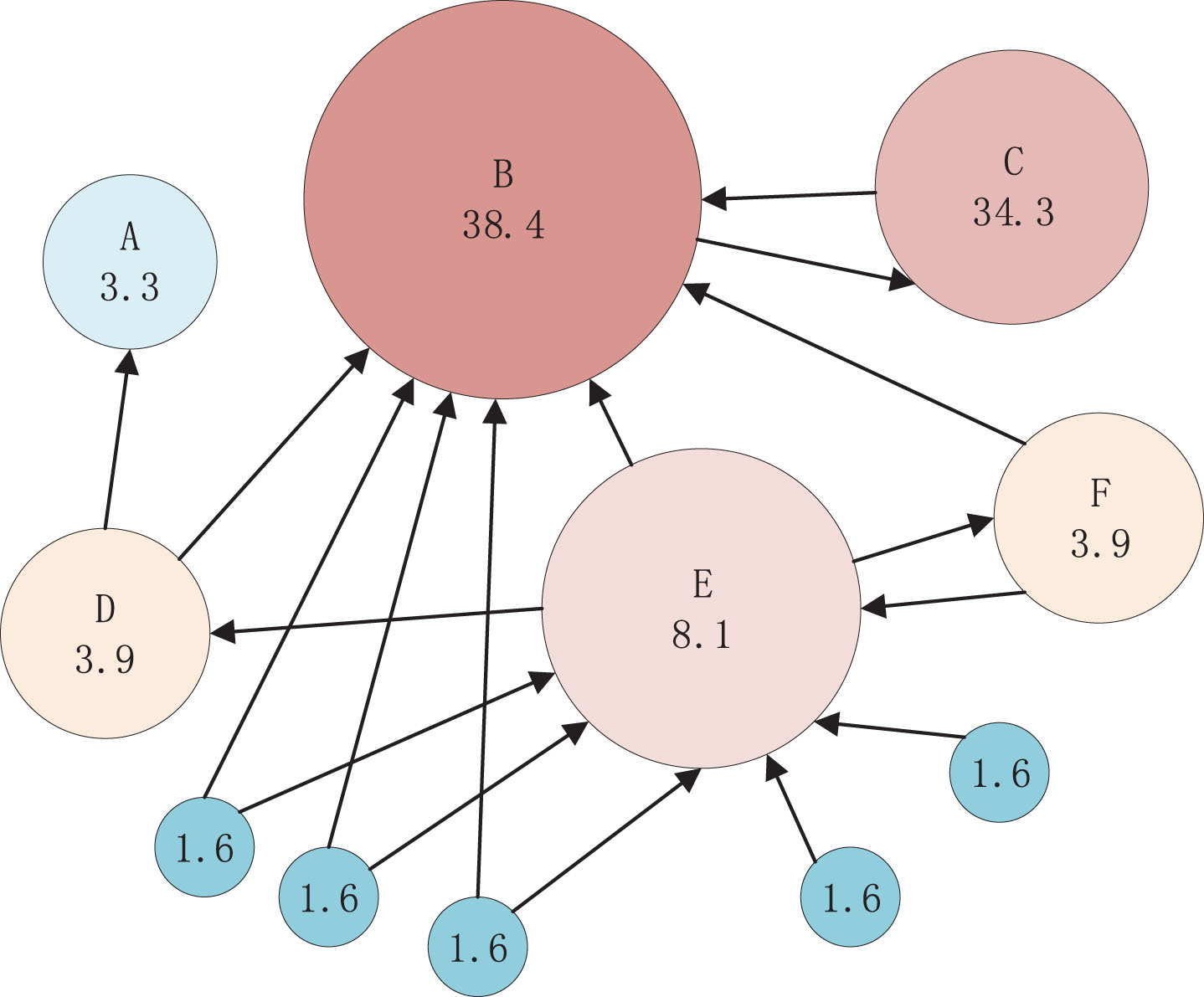
Degree value calculated by PageRank. Source: http://en.wikipedia.org/wiki/PageRank7.
In this study, the fuzzy quality function deployment (FQFD) framework is applied to solve a multidimensional design-making problem, which involves the use of the HoQ matrix, fuzzy analytic network process (FANP) and FAHP with extent analysis. The PageRank algorithm is then used for ranking analysis related to FQFD construction. The proposed methodology is expected to enable designers to identify a set of influential design factors and calculate their importance levels more effectively by using the software program.
Proposed approach for service-oriented designs
As introduced in the FQFD framework, the vagueness of human judgment can be reduced for different selections [23, 27]. An extended PageRank algorithm can be used to automatically extract the product features [32]. Similar to this principle, the proposed integrated methodology mainly consists of two parts. FQFD is designed to calculate the importance weights of CRs and TCs. PageRank is used to select influential service-oriented design factors that affect DRs. Moreover, the integrated methodology is applied to categorize the criteria and choose the optimal scheme on the basis of influential design factors. The matrix mapping of the scheme selection is then considered to determine the optimal scheme in this study. The flow chart of the proposed integrated algorithm is presented in Fig. 6.
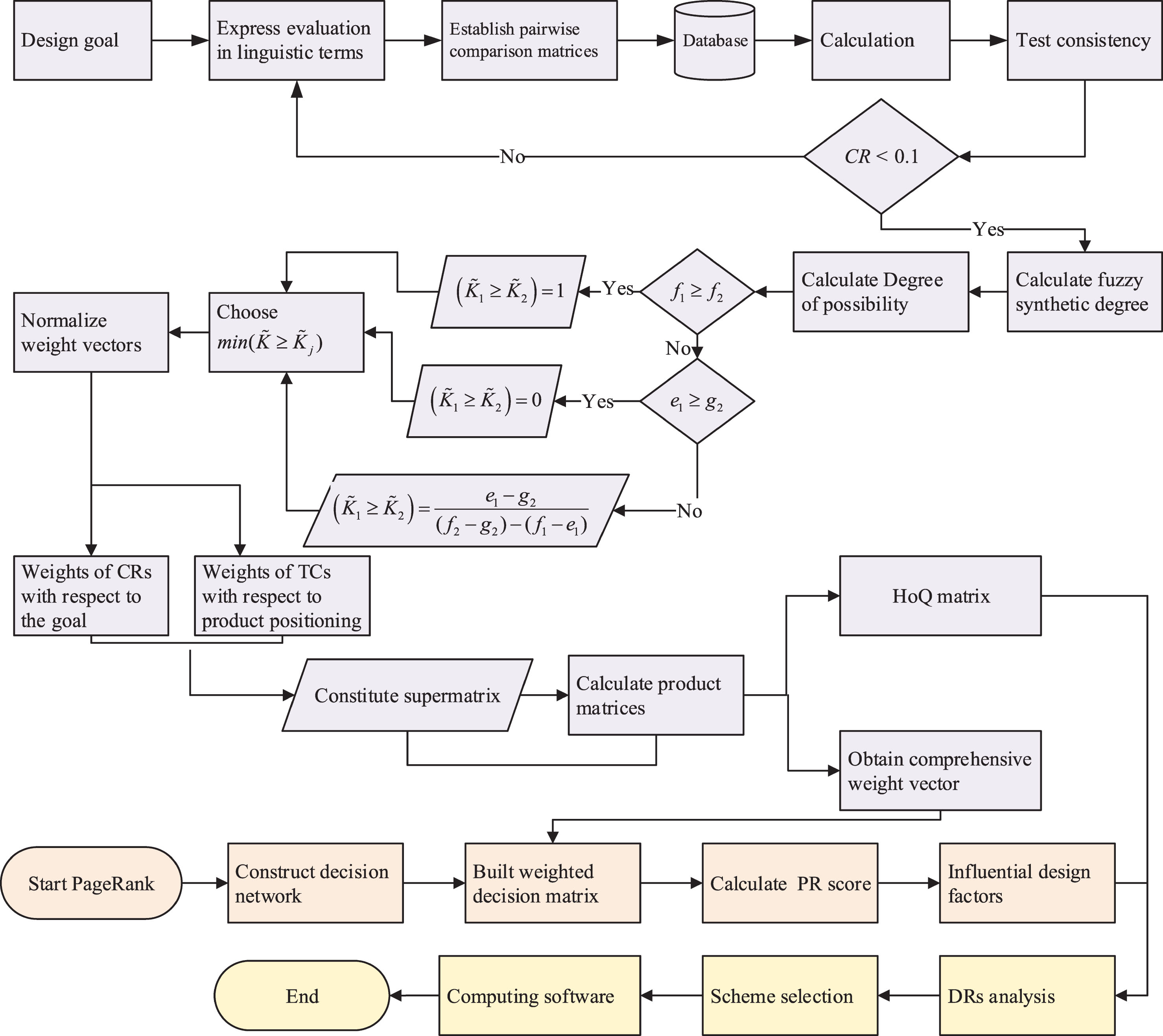
Flow chart of the integrated algorithm.
The proposed approach can be presented as follows:
Membership function for linguistic scale [33]
To measure the design alternatives from the consumers’ viewpoint, the rank score of the examined elements are rated by weight vector and PR score. The clusters are used to demonstrate the hierarchical structure with the information flow as shown in Fig. 7. The importance weights (W CRI ) for CRs with respect to the goal, as well as those (W TCI ) for TCs are determined. The internal dependency matrix of DRs are then constituted and calculated using the PageRank algorithm. The influential factors (IF s ) of service-oriented design are calculated with Eq. (15). The comprehensive weight vector of the DRs (W DRW ) is calculated using Eq. (16) to assess the degrees of importance of the DRs with respect to the alternative scheme. At the end, the PI (PI i ) is proposed to evaluate the scheme alternatives.
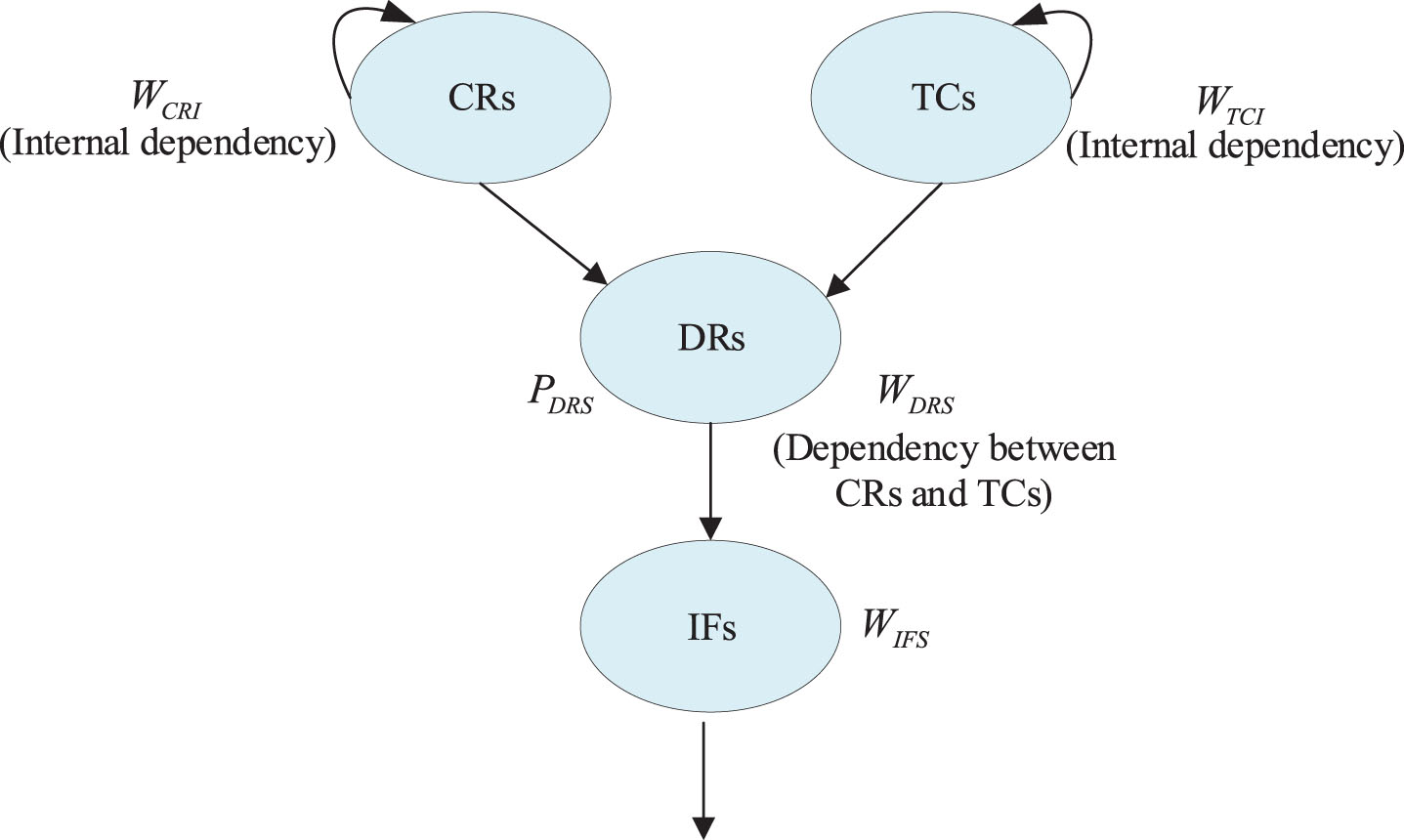
Ranking structure of the proposed model.
The proposed approach is implemented using MATLAB 2016b on a computer with the following specifications: Intel® Xeon® Processor E5620 CPU at 2.40 GHz, 8GB of RAM, and Windows 7 SP1. A design calculation program based on the MATLAB graphical user interface (GUI) is established, which then serves as the selected design scheme. Simultaneously, MATLAB GUI is used to provide an information interaction platform for the designers. The flow chart of the GUI design program is presented in Fig. 8 to facilitate accurate and speedy analysis. Besides, various results obtained using different alternatives for different operating conditions are also presented.
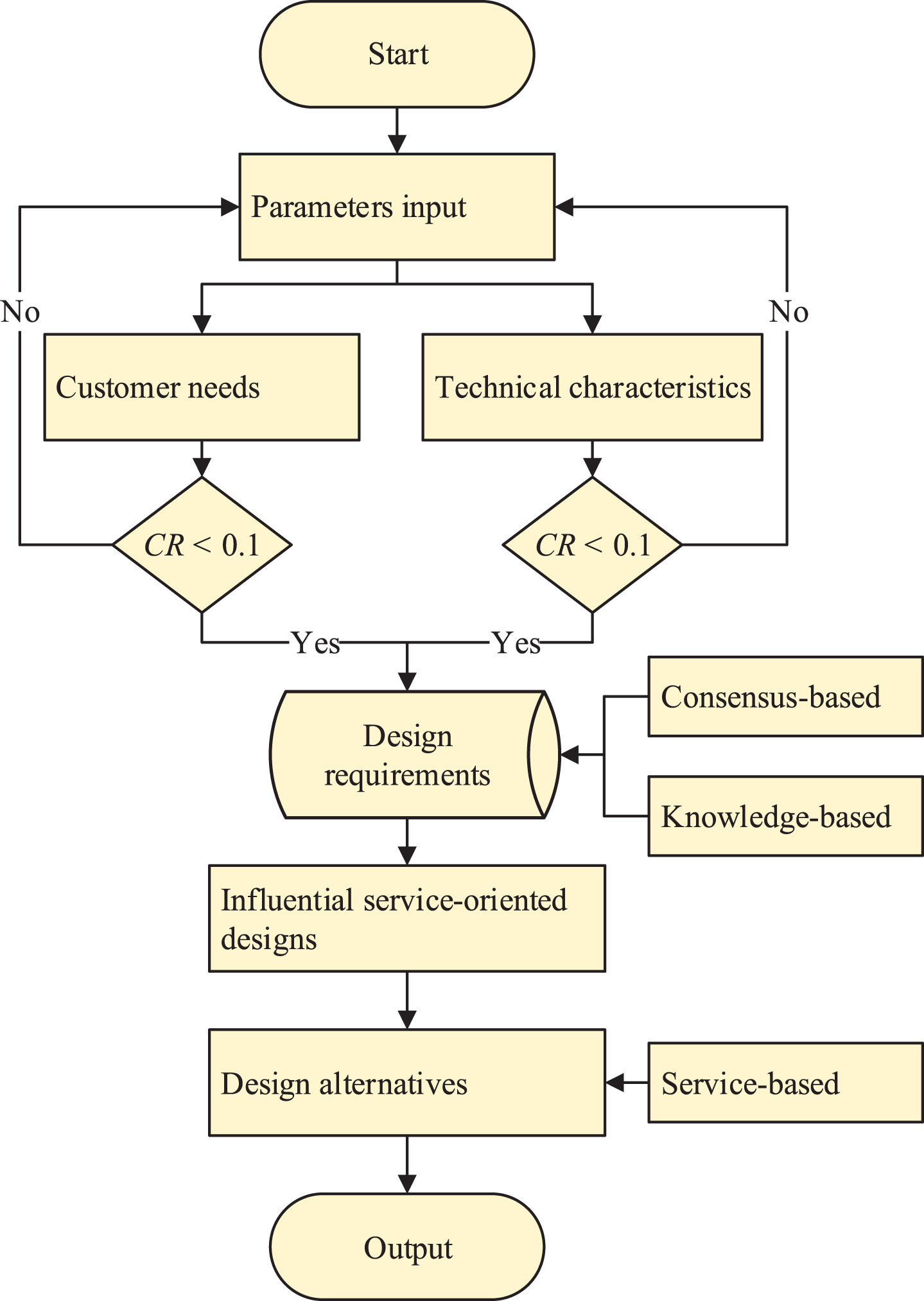
Flow chart of the design program.
The front axle system is widely used in a wheeled farm tractor with different power grades ranging from low to high, which is to realize the steering or straight driving [34]. A newly developed suspended front axle is also produced to improve the safety and comfort of the ride for customer satisfaction. Many farm tractors, such as John Deere 8r, Valtra T and Massey Ferguson 8700, are equipped with this axle system [35]. The front axle suspension system is an important apparatus of high-power wheeled farm tractor to provide driving comfort, which consists of several interlinked modules (e.g. hydraulic module, front axle module, steering module, etc.). During its conceptual design stage, several feasible design alternatives co-existed and various uncertain factors interacted. The major obstruction to the designers is the quick selection of an appropriate alternative in an obscure environment. The proposed method is used to evaluate service-oriented design alternatives of the front axle suspension system and to realize the intelligent rapid design against the complexity of influential service-oriented designs.
Definition of scenarios
Scenarios of customer needs and technical characteristics
The wheeled farm tractor currently provides a sophisticated front axle suspension system to customers with increasing demand for ride comfort [36, 37]. The front axle suspension system of a wheeled farm tractor during the conceptual design stage is adopted (Fig. 9). To realize the scenario definition of design objects, subjective partitioning of the system design can be acquired using expert evaluation or different analytical techniques. Tables 2 and 3 illustrates the scenarios of customer needs and TCs, respectively.
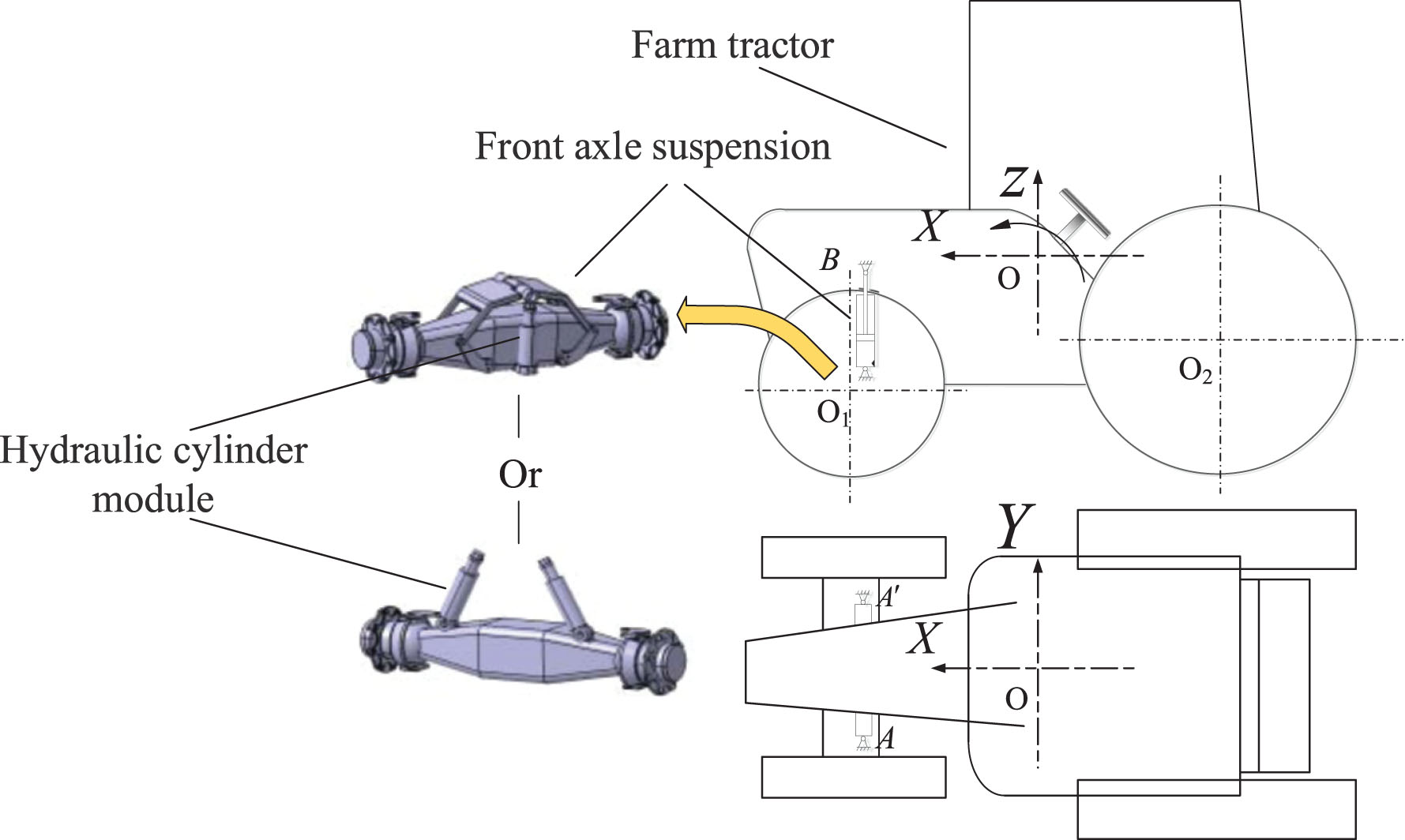
Front axle suspension system for a wheeled farm tractor.
Scenarios of customer needs
Scenarios of technical characteristics
On the basis of Tables 2 and 3, the internal relationships among CRs and TCs, with their hierarchical attributes considered, are presented in Fig. 10 (a) and (b), respectively. The relationship between CRs and TCs are indicated over the HoQ. Considering its dependency attribute in a network structure, an ANP can illustrate interrelationships among different level attributes by releasing the restrictions of its hierarchical structure. The relations among elements are used to express the hierarchy (Fig. 10).
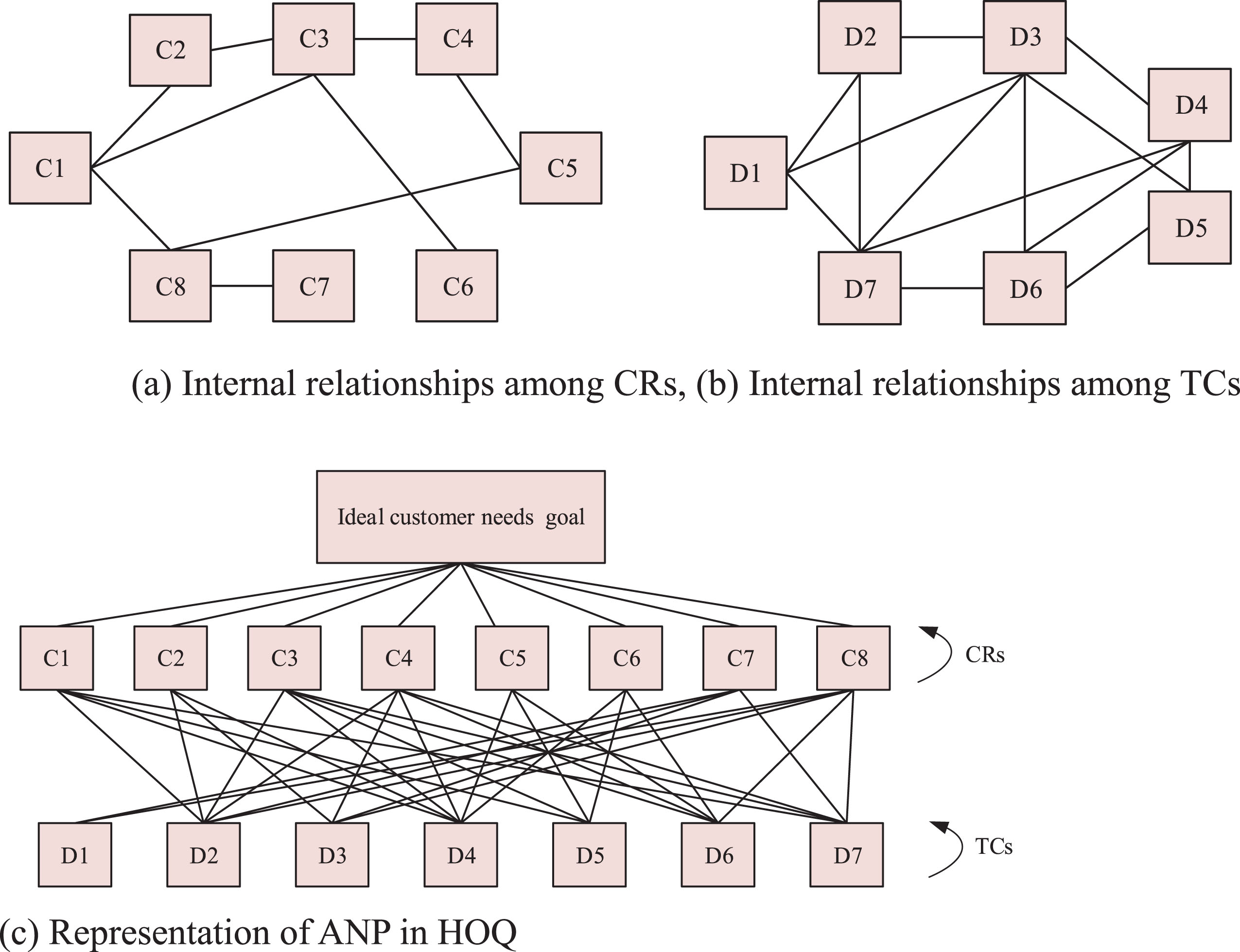
(a) Internal relationships among CRs, (b) Internal relationships among TCs, (c) Representation of ANP in HOQ.
At the beginning stage of service-oriented design, customer action and information exchange on specific factors that characterize service-oriented design [23]. In this context, the design engineer should take fully consideration of mapping perceptions between components and service-oriented designs. The flexibility of production design for meeting different product positioning is thus increased. Therefore, a comprehensive comparison of design factors is a significant support for design engineers to develop an optimal alternative to adapt to market demands in service-oriented stages. The product positioning of front axle suspension is given in Table 4.
Positioning goal of wheeled farm tractor for customer needs
Positioning goal of wheeled farm tractor for customer needs
As introduced in the integrated algorithm, the perception matrix is the key element for implementing the calculation. In addition, the collected data are resourced from the perception matrix on the basis of the appendix 1–5, which can generate the input for service-oriented designs. By using the collected data, pairwise comparison matrices are obtained among CRs, TCs and DRs. Consequently, the attributes of these characteristics can be defined on the basis of the matrix, which may be responsible for satisfying CRs, as soon as the TCs are accomplished. Accordingly, aggregation results for the pair-wise comparison matrices are derived, which are then regarded as the criteria for measuring the correlation requirements.
As shown in Table 5, the front axle suspension system has 14 function modules and the relationship between the modules is represented using the function flow matrix on the basis of appendix 3. Thus, the modules are mapped into the nodes and the elements of the matrix represent the relationship between the modules based on Eq. (1). Thereafter, the influential design factors are evaluated by the adjacency matrix between function modules and TCs on the basis of the appendix 4. The selected scheme is depicted with the relationship matrix between CRs and DRs in accordance with the appendix 5. Finally, the selected scheme is measured by performing different operations on the matrix mapping among influential design factors, CRs and DRs.
Function modules of the front axle suspension system
Function modules of the front axle suspension system
Computational results
The pairwise comparison matrices are obtained in accordance with the appendix 1 and 2. By using the FANP with extent analysis, the internal dependency weights of the CRs and TCs are calculated. Similar to the principle stated in the literature [38], the importance weights of pairwise comparison matrices are φ
i
= (0.2, 0.2, 0.2, 0.2, 0.2). The aggregation results are shown in the following eigenvector:
With regard to the results of TCs in Fig. 11, D7 is the most important TC with an importance weight of 0.23. The weight values vary from the input matrices with respect to the positioning goal of the wheeled farm tractor in accordance with the existing manufacturing conditions. Simultaneously, the weights of the TCs are applied in Eq. (15). The PageRank algorithm is subsequently used in the calculation of network nodes for function modules 1–14.
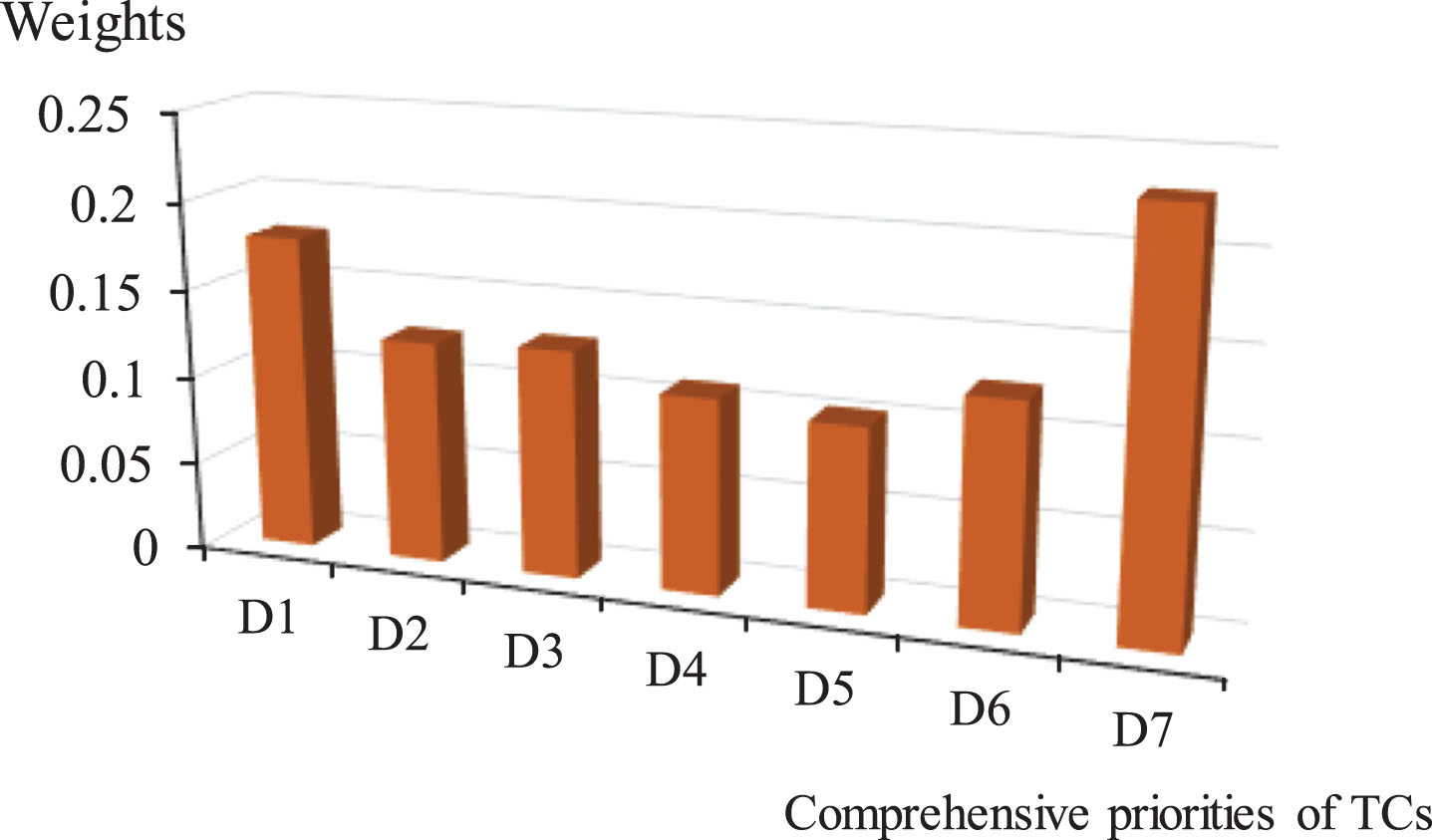
Comprehensive priorities of TCs, W TCI .
The PageRank scores of the function modules are presented in Fig. 12. Table 6 lists the PR score. Nodes 1 and 6 are in the top 10% region. Nodes 14, 4 and 10 are in the top 10–30% region, and the remaining nodes are in the 30–100% region. Function modules 1 and 6 are strongly influential, the function modules 14, 4 and 10 are moderately influential, and the other function modules are relatively influential.

PageRank scores.
PageRank score of nodes in function modules
Subsequently, the degrees of possibility are derived by Eq. (15) as follows:
where W IFM can be determined from Appendix 4. The identified influential function modules are presented in Fig. 13, in which IF1-IF14 represented the affecting degrees of Nodes 1–14 on TCs, respectively.
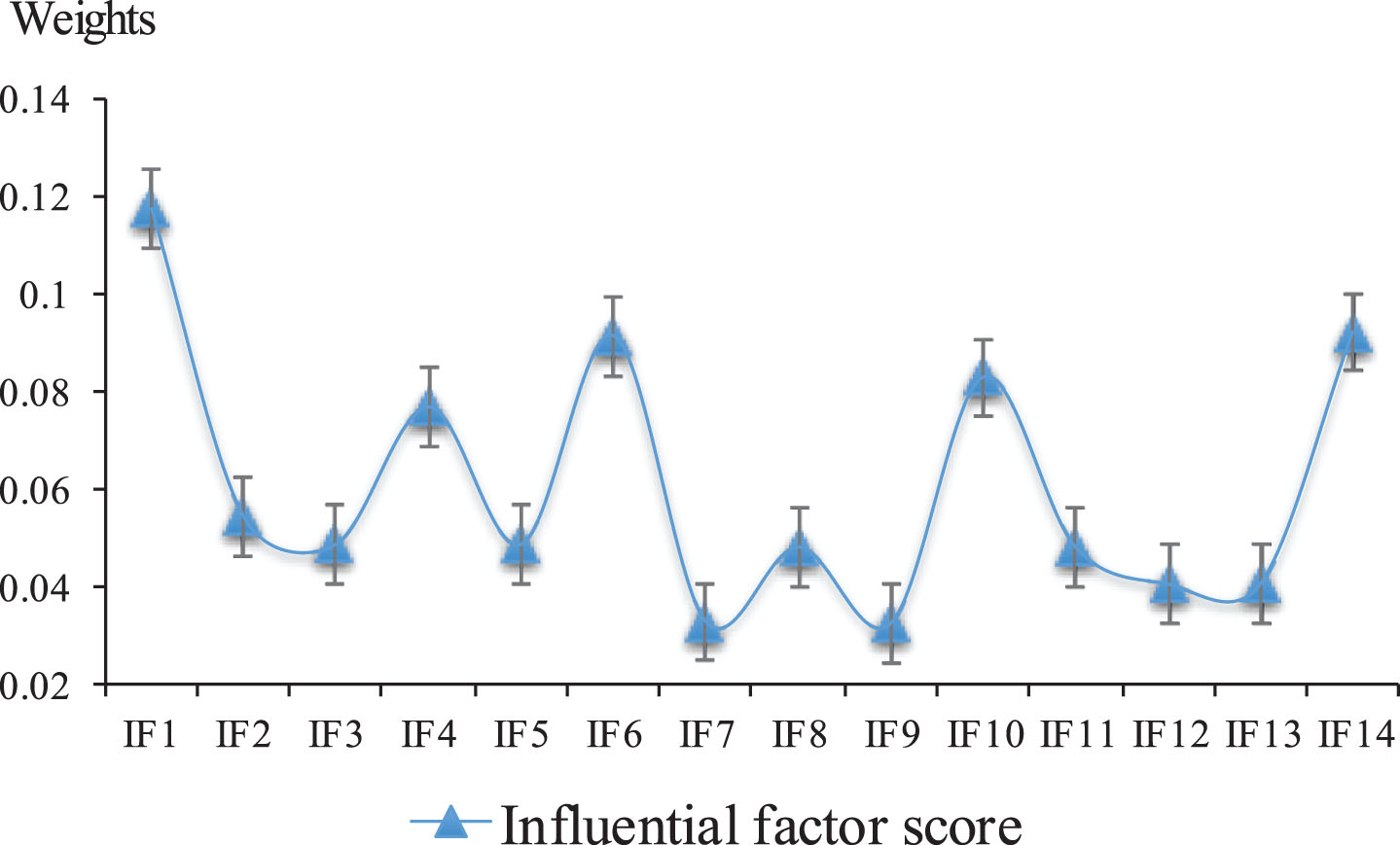
Influential factor scores of function modules in the system network.
As presented in Appendix 6, cases 1–4 represent different design schemes for the wheeled farm tractor. Aiming to identify the influential degree of function modules on different schemes, the importance weights of the cases are determined in accordance with the proposed method. In this process, W TCR can be obtained on the basis of the matrix mapping from CRs to DRs. Subsequently, the influential factor scores of the function modules with design schemes are presented in Fig. 14. The weight vector can be calculated as follows:
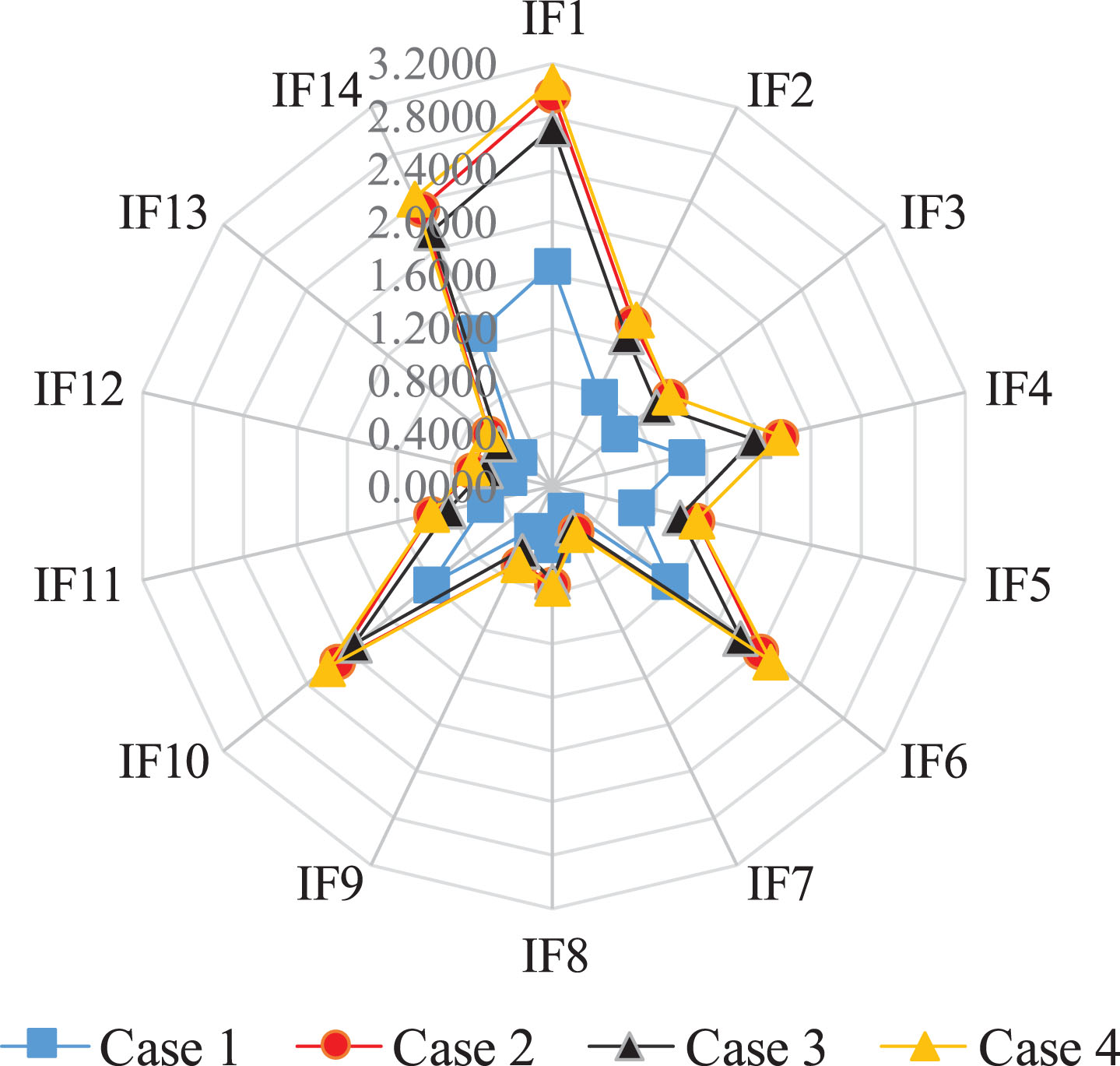
Influential factor scores of the function modules with different schemes.
To evaluate the influence of customer importance weights on scheme selection, priority index analysis is conducted by changing the vector of A i . A i allows analysis of the dependence of the influence of positioning goal on final selection. Function module nodes 1, 6, 14 and 10 with the highest degrees of importance are considered in the influential design factors analysis, which are calculated with respect to the internal dependencies of the function module. In accordance with influential function modules, the TCs can map its affecting degrees on CRs with perception matrices. For instance, the increase in weight of C7 leads to an increase in demand of D3 to satisfy specific D1. In this case, the priority index can be measured on the basis of mapping matrices and influential function modules by considering the attributes of the positioning goal. The change in the priority index of the available front axle suspension system for the farm wheeled tractor in China is then determined. Finally, PI results are presented in Fig. 15.

PI of selected alternative schemes.
As shown in Fig. 15, the influential function module is indeed influenced by selecting design scheme case. This observation indicates that the PI values of these design alternatives vary in the degree of importance of function modules. As depicted in Fig. 16, the PI score of each design scheme exerts different effects on the selection of the most optimal alternative for the front axle suspension system. Another indication is that the choice of CRs significantly affect the PI values. This result is consistent with the relevant study.
Measurement of design alternatives is an important and critical issue for service-oriented design. With the complexity and vagueness of service-oriented designs considered, this process presents a challenge because of information insufficiency and cognitive vagueness during conceptual design. An integrated approach to service-oriented design for selecting design alternatives is then developed to systematically evaluate service-oriented designs. Service-oriented design can be divided into multiple modules for measuring inputs. Influential service-oriented designs can be identified in different schemes using a priority index-based method. The main contributions are given as follows.
A systematic service-oriented design: Extending the application of service-oriented design
DRs need to be identified for positioning the differentiated customer needs and improving the design capacity. Therefore, this study provides a systematic service-oriented design to identify the influential service-oriented designs and extend their application to evaluate the degree of influence of each function module at the conceptual design. Meanwhile, the measurement of CRs and TCs and the application of a case study are similar to the studies of Akbaş and Ma et al [9, 27]. Moreover, fuzzy logic is used to calculate weight vectors within the QFD framework to avoid inconsistencies caused by imprecise human judgement. Importance weights also vary for different products and the effects on CRs and TCs also vary. The use of influential service-oriented designs can integrate design information into the decision process systematically.
Aiming to solve the problem of selection for differentiation, the input is varied for different products. The effect on alternatives selection agrees with the findings in the study by Geng et al [1, 39]. A priority index method based on influential designs is proposed to measure design alternatives, which uses service-oriented architecture with perception matrices to develop designs and select different alternatives. As the consideration of the interdependence characteristics between the relationships of function modules and the requirement networks, PageRank is employed to identify the influential designs. Consequently, the process focuses on the design factors to realize the differential design using the calculated priority. This case study extends the application of service-oriented designs, with focus on their measurement. Moreover, this study may present an advantage of the front axle suspension system design, which adequately considers the relationships between the product and CRs to match the development of intelligent agricultural machinery.
Analysis of influential service-oriented designs from practical viewpoints
The function modules with higher PR scores, which significantly affect the front axle suspension system, were theoretically discussed using the proposed model. The front axle (node 1) and steering mechanism (node 6) are the most important influential function modules, facilitating driving in a straight-line or realizing steering of the tractor. These modules are also used to implement basic functions for the wheeled farm tractor; failure of these modules renders the entire system paralyzed. As the influential modules have received more attention in the development process, the system is expected to exhibit good service performance.
The suspension hydraulic cylinder (node 10) has a high PR score, indicating its degree of influence, which can improve driving comfort by decreasing vibration accelerations. Hence, this module significantly affects the front axle suspension system, improving the hydraulic power supply to accomplish the self-levelling function.
The supporting module (node 9) can help in supporting the workload of the tractor body to ensure safe connections. As this module is made from cast iron, it can hardly fail. Moreover, it does not significantly affect the CRs. Therefore, this module is not relatively influential. Modules similar in principle to other function modules exert their influence on the CRs and TCs, On the basis of the aforementioned discussion, the method proposed in this study can be used to effectively identify the influential function modules within a service-oriented design. The calculations indicate that the PI of the scheme obtained from the proposed method is reasonable and accurate.
Limitations of the proposed approach
For the calculation of perceptual matrices, a larger number of importance comparison matrices are required, rendering this method tedious and time-consuming, particularly for designers with no experience in ANP. However, when statistical data have to be frequently calculated and compared, an optimal design would be generated to analyze products, increasing the level of optimized design capacity. Thus, future research can concentrate on obtaining the inputs conveniently, such as the standard matrix mapping between TCs and CRs based on cloud data. Consequently, the flexible design capability is improved to satisfy mass customization.
Conclusions
In this study, a systematic service-oriented design in the service-oriented framework, together with FQFD to identify influential designs from which design scheme is selected during conceptual design. The presented methodology involves the interaction of fuzzy logic and QFD to determine the importance weights of CRs and TCs within the FQFD structure, PageRank is also implemented to measure the DRs. A priority index based on these integrated methods is proposed to select the design scheme of the front axle suspension system in a wheeled farm tractor in China. The results of this study show that cases 2 and 3 are the relatively close. Moreover, influential design factors should be improved to generate a differential design. Explicit identification and application of the multiple factors of the service in its design process can facilitate the systematic execution of the design under the framework of the factors. Consequently, service-oriented designs can be integrated into the intelligent design for mass customization.
Footnotes
Appendix:
Appendix 1. Information collection table of customer needs.
Appendix 2. Information collection table of technical characteristics.
Appendix 3. Information collection table of design requirements.
Appendix 4. Information collection table of influential design factors.
Appendix 5. Information collection table of scheme.
Appendix 6. Case 1–4.