



Abstract
The purpose of maintenance is to ensure the maximum efficiency and availability of production assets at optimal cost considering quality, safety, and environmental aspects. Assets criticality analysis is one of the main steps in many maintenance methodologies, including Reliability Centered Maintenance. The present study seeks to provide a solution for determining critical assets for more efficient maintenance management. In this regard, an integrated approach of the analytical hierarchy process and fuzzy inference system was proposed based on the concept of the risk matrix. According to the concept of the risk matrix, two main criteria of failure consequences and probability were employed to determine assets criticality. Analytic Hierarchy Process (AHP) was used to consider all sub-criteria of failure consequences and probability. Finally, using two main criteria as inputs, a fuzzy inference system was developed to determine the criticality of the assets. The proposed approach was implemented in a gas refinery; the results showed its effectiveness and applicability in the process of prioritizing assets based on criticality criteria. The proposed approach has the advantages of multi-criteria decision-making techniques, modeling ambiguity and uncertainty in real issues, modeling the process of inference in the human mind, and storing the knowledge of the organization’s expert.
Keywords
Introduction
Maintenance aims to cope with the inevitable depreciation of assets and keep those assets functional [5]. The costs of maintenance include 15–70% of the entire costs and sometimes exceeds the net yearly benefit [38]. Because of its great prices and its necessity to secure the continuous performance of an organization, maintenance managers should apply the most favorable maintenance plan to reduce expenditures, provide safety, and, therefore, remove actions that are not necessary. One of the main phases in maintenance planning methods is critical analysis. According to previous studies, it is possible to lower the costs of spare parts by 22.17% through the assets criticality evaluation [3]. Moreover, using such analysis, systems can attain proper preventative maintenance for more secure assets, lower maintenance expenditures, more item accessibility, and superior prediction and planning. As a result, they face less waste of time and urgent repair and can record the whole actions of maintenance and associated costs, which can provide essential information for maintenance managers to survey and restrain maintenance costs [41].
Reliably Centered Maintenance (RCM), which is an analysis procedure to improve maintenance strategies [52], is developed to reduce the expenditures of preventive maintenance, regarding the probable failure consequences [17]. As displayed in Fig. 1, identifying the Maintenance Significant Items (MSI) is among the first phases of the RCM, which is a procedure to determine critical assets whose operational failure might significantly affect the system operations. According to conventional RCM, a qualitative approach, which is rooted in the experiences of operators and maintenance engineers, is employed to determine critical assets such as MSI [4]. The borderline between MSI and non-MSI is equivocal when using the qualitative approaches. The mentioned approaches avert losing some of MSIs and meanwhile do not guarantee that the failure of the MSIs inevitably influences the organization. Furthermore, various factors control whether a system constituent is MSI and the value of such factors in the MSI evaluation procedure is not equal; however, their values are not examined through the traditional RCM [51].
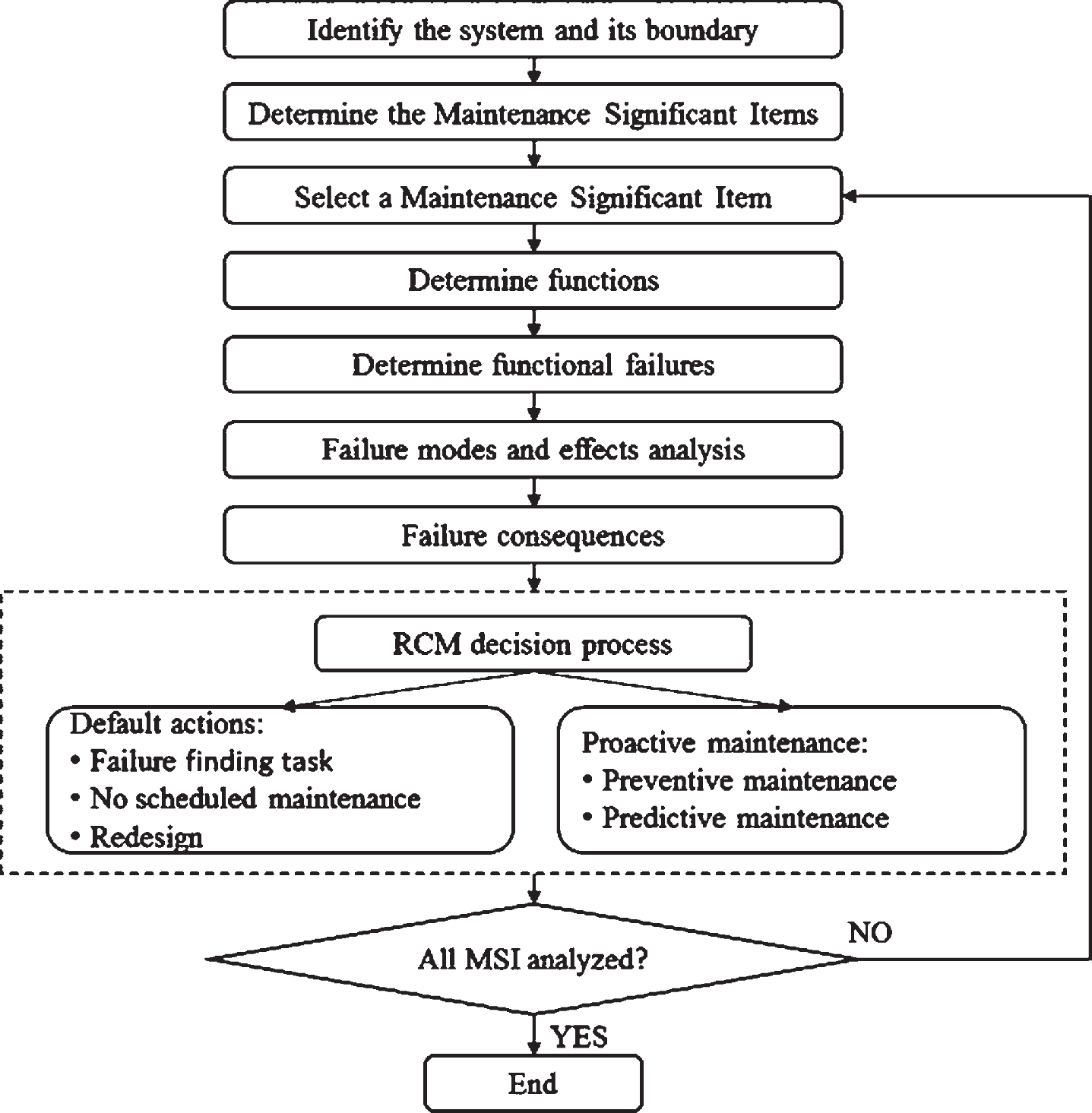
RCM process.
The Risk-Based Maintenance (RBM) method [29] is known as a suitable risk evaluation methodology compared to the various methods for criticality analysis of asset failures. According to the United States’ MIL-STD-882D [19] and the definition of risk is the multiplication of probability and consequences, the risk matrix is the most suitable instrument to evaluate the risk. The amalgamation of risk in the maintenance strategy was at first employed for the maintenance of military assets [37, 50]. Arunraj [6] and Khan and Haddara [29] examined the utilization of risk evaluation for maintenance management and advanced the application of RBM as an instrument for determining priorities in maintenance activity on account of predicting the risk level. The RBM analysis method is currently employed vastly to optimize the actions related to maintenance [43, 44].
In the current research, a combined method is suggested to decide the criticality of assets. The criticality of the system assets is determined using risk matrix concepts, RBM, Analytic Hierarchy Process (AHP) as an Multiple-criteria decision-making (MCDM) instrument, and fuzzy inference system (FIS) as a soft computing method. To design a FIS according to the notion of the risk matrix, it is necessary to consider the consequences and probability criteria. Nevertheless, to determine these criteria more precisely, their sub-criteria must be thoroughly examined according to the features of the system under examination. An increase in the dimension of the FIS and the number of rules interrupts the process of developing reasonable and consistent rules by experts. As a result, it is impossible to apply all sub-criteria as input to the FIS directly. In this research, AHP was employed to examine the sub-criteria of the criteria of consequences and probability effectively and to compute the mentioned main criteria. To this end, a FIS was designed for identifying the criticality of system assets by employing the consequences and probability as input. A gas refinery was used for implementing the suggested method. Eventually, the outcomes were compared with those of the conventional model for evaluating the assets’ criticality.
In order to provide a clear picture of the research background and to determine the research gap, in this section, the literature related to criticality analysis has been reviewed.
maintenance management, risk management, and reliability engineering include various sorts of criticality analysis for various aims [33]. Various methods such as neural network, fuzzy logic, and evolutionary algorithms have been considered for evaluation and management of risk and equipment susceptibility.
Abdul-Nour et al. [1] employed weighted criteria to determine machine criticality. A technique was suggested by Carot and Sanz [11] to compute the criticality of non-repairable items for a complicated system. Failure Mode and Effects Analysis (FMEA) was employed by Braglia [9] and Stamatis [49] to identify and adjust the maintenance actions rather than classifying the equipment. Software criticality analysis is suggested by Bishop [8] to identify the most critical constituents of software. Accordingly, a multi-criteria classifying methodology to have a precise and organized categorization of critical equipment is developed by León Hijes and Cartagena [33]. An instance of using RCM is given by Afefy [3], who employed the total values of weighted criteria for identifying the critical assets of a steam-process plant.
Furthermore, two procedures for prioritizing failure modes in failure mode, effects, and criticality analysis (FMECA) were presented by Gargama and Chaturvedi [24]. Based on the first approach, linguistic variables were employed to indicate three risk factors. Also, according to the second approach, a method developed based on the degree of match and the fuzzy rule-based model was presented. It is of note that the latter method considered variety and uncertainty based on the viewpoint of the FMEA team members. Dehghanian et al. [20] suggested an approach to determine the criticality of assets in power distribution systems by employing three reliability indices to include the following standpoints: utility perspective and customer standpoint. A description of criticality and an approach to categorize the future criticality regarding present values of asset management variables is suggested by Curilem et al. [18]. In that regard, a framework developed by Crespo Márquez et al. [16] to evaluate the criticality of complicated engineering assets can be considered. According to these researchers, criticality analysis is the first phase to analyze the current maintenance strategies and ranked assets based on the risk and cost-benefit analysis, multi-criteria analysis, and significance of assets to fulfill particular goals. Through spectral analysis of fault trees, a method was developed by Ayav and Sözer [7] to identify critical constituents of hardware or software systems.
Adams et al. [2] employed a criticality-based maintenance method for optimizing the maintenance strategies to enhance risk management and increase the cost savings. In this method, equipment criticality should be investigated consistently, and when it changes, the time of maintenance activities must be adjusted as well. Pourahmadi [40] employed the game theory to develop an approach to prioritize system assets regarding their failure effects on system capacity. Furthermore, Queiroz et al. [42] employed RCM to present a methodology to determine the maintenance plan for electrical equipment, which includes electric motors. At the beginning phase of the mentioned method, the criticality of the equipment is determined by employing criticality indicators and their weights. A methodology to determine the critical system assets for prioritizing maintenance actions is offered by Melani et al. [36]. This methodology is based on using risk and reliability analysis procedures like hazard and operability study (HAZOP), fault tree analysis (FTA), and FMECA. Moreover, it employs the fuzzy analytic network process (ANP) method to indicate critical components. A novel support implement was presented by Gharakheili et al. [25] applying AHP for determining the most critical assets of power transmission systems. Gupta and Mishra [27] developed an ANP-based method for component criticality analysis. Next, it was assessed through a case study about a CNC lathe machine. Besides, a new power grid complex network model was applied by Chen et al. [13] to determine the critical constituents of power grids according to a power flow transmission network. Shayesteh and Hiber [46] implemented RCM in a power system using renewable energy sources. For this purpose, the severity risk index, suggested by NERC’s operating and planning committees in 2010, was employed to evaluate the significance level of various assets and to choose the most critical ones.
Different factors can be considered in evaluating the criticality of assets. Regarding complication and ambiguity of criticality analysis, decision-makers usually choose fuzzy judgments rather than crisp comparisons. Compared to traditional dichotomous or bivalent crisp sets, the fuzzy method succeeds in dealing with the imprecise nature of risk. Employing fuzzy membership function (MF) for risk allows the integration of a level of vagueness to cope with the inaccuracy inherent to various problems [32]. Accordingly, the fuzzy logic is applied to identify criticality in the FMECA model by Gargama and Chaturvedi [24] and Braglia et al. [10]. Additionally, Pillay and Wang [39] suggested a novel method by the fuzzy rule base and the theory of gray relation to solve some flaws of the FMEA method. A risk-based inspection and maintenance method was developed by Khan et al. [30]. This method employs fuzzy logic for estimating the risk by integrating the fuzzy likelihood of occurrence and its fuzzy consequences. Khanlari et al. [31] proposed a methodology to prioritize the equipment for preventive maintenance actions employing fuzzy rules. Moreover, an algorithm that is based on the comprehensive fuzzy evaluation in combination with a three-layer back-propagation network for evaluating equipment criticality of a new petrochemical section developed by Guo et al. [26]. Duminică and Avram [23] introduced a system was to integrate fuzzy logic into the FMEA as a means of ranking potential risks. Taking advantage of fuzzy AHP, Dehghanian et al. [21] proposed a technique to specify the key components in power distribution systems. Using ANP, Kumar and Maiti [32], suggested an RBM using cost and risk as required measures. Ratnayake [43], applied FIS to RBM to estimate the functional failure risk ranks of rotating tools and equipment. Furthermore, Qi et al. [41] employed organizational equipment maintenance to provide a fuzzy logic-based criticality assessment system. The results indicated the capability of this system in enhancing the crisp criticality assessment system. In this regard, Jaderi et al. [28] analyzed the criticality of petrochemical assets using RBM and fuzzy RBM.
Research gap
A review of the literature indicated that to prioritize asset maintenance objectives, a vast range of qualitative and quantitative techniques has been employed in the relevant literature. the majority of earlier studies were not mainly focused on identifying MSIs. A limited number of studies have been done on developing a systematic technique to identify the critical assets of a system from a maintenance point of view and as the first RCM implementation step. As stated by Tang et al. [51], there are a small number of easy-to-use and systematic methods accessible for identifying MSIs.
The fuzzy logic method has been used in several papers for the modeling of risk analysis. Nevertheless, a literature review suggests that fuzzy techniques have rarely been used for the criticality analysis of the optimization of maintenance activities. Likewise, they are limited applications in addressing ambiguity and uncertainty during the identification of MSIs and the determination of critical assets. The application of FIS appears to be a useful means of fostering earlier studies. To deal with this weakness, fuzzy logic has been used in two areas in this research. The first is to use linguistic variables and corresponding fuzzy numbers in collecting criteria values to facilitate criteria assessment by experts and consider the ambiguity and uncertainty in the process of determining criteria values for assets. The second is to use the fuzzy inference system concept to model the mental decision-making process of experts and store their knowledge.
Besides, the majority of the previous studies have solely highlighted a specific type of equipment. A comprehensive methodology needs to be applied to various assets in a given industry. Moreover, past MSI identification studies have failed to address different aspects of judging criteria. In this regard, issues like environmental regulations, safety, and expectations of other users should be assumed during asset criticality analysis and MSI determination processes. MCDM methods can be effective in identifying critical assets more accurately. In the proposed approach, a comprehensive method is proposed to determine the criticality of system assets. It is also suggested that, using the opinions of experts and the existing literature, all criteria affecting the criticality of the system assets be considered.
Despite numerous FMEA-based studies to identify the critical assets of a system based on failure mode criticality values, these techniques may be highly time-consuming. Although this technique can prove advantageous in different applications, using FMEA to select MSIs in implementing RCM would lead to several contradictions. RCM is mainly aimed at utilizing techniques like FMEA to determine appropriate maintenance activities for assets. Maintenance experts and managers are in favor of applying FMEA simply on MSIs and critical assets regarding their limited resources. FMEA is not beneficial in identifying the critical assets of a system in the first step of RCM implementation. To this end, it is necessary to use a highly accurate, cost/time-effective, and non-resource-intensive technique that is applied to various equipment in an industrial system. Due to this contradiction in the literature, in this research, a systematic approach is presented that, unlike the FMEA method, identifies the MSIs considering all effective criteria, and ambiguity and fuzziness in decision making process and with the ability to store expert knowledge in a fuzzy inference system, without the need to analyze the extra details considered by the FMEA method.
The remainder of this paper is divided into five sections. Section 2 summarizes the techniques used in this study. Section 3 describes the proposed approach for assets criticality analysis. Section 4 examines the proposed method using data gathered from a gas refinery Co. Finally, Section 5 presents the concluding remarks.
Preliminaries
Before proposing an approach to deal with the problem of assets criticality analysis, it is necessary to present the concepts and techniques used in the proposed approach. Therefore, in this section a summary of the risk matrix concept, the AHP method, and Mamdani Fuzzy Inference System is provided.
Risk matrix
In general, a risk matrix is a semi-quantitative risk assessment tool used for risk assessment and analysis in various industries. In this matrix, risk levels conventionally depend on both consequences and probability ordinal numbers that form discrete points. A risk matrix is indeed mapping consequences and probability to risk to ensure a monotonic increase in mapping function (increased monotonicity of the mapping function) [22]. Four fundamental steps are taken to form a risk matrix [35]: Defining scales and categories of probability and consequences levels; Defining scales and categories of output risk index; Formulating risk-based regulations; and Developing a graphical representation of the risk matrix
AHP
AHP is a popular MCDM technique recently applied for various decision-making problems. It contributes to the prioritization of criteria, sub-criteria, and alternatives during decision-making processes [53]. It is also used for group decision-making. AHP implementation is a six-step process [45]: Specifying objectives, criteria, sub-criteria, alternatives, and hierarchical structure; Conducting pairwise comparisons of criteria and comparing alternatives based on each criterion; Conducting pairwise comparisons of various criteria taken in the second stage organized in square matrices; In the case of using experts’ opinions, pairwise comparison matrices must be integrated using the geometric mean. The latter ensures the reversibility of the pairwise matrix. Thus, it is the best-suited mathematical rule to combine pairwise comparison matrices. Calculating the priority vectors; Calculating the consistency ratio (CR); the data are consistent if CR is less than 10%. Otherwise, it is inconsistent and, therefore, the pairwise comparison matrix needs to be modified. Analyzing AHP scores; finally, if the model is consistent, the best-suited alternative will be selected based on the AHP scores.
Mamdani fuzzy inference system
Zadeh [54] developed the fuzzy set theory to address uncertainty and imprecision (vagueness or fuzziness) inherent in human judgment and decision-making using membership degrees and linguistic terms. A fuzzy set is a class of objects with a continuum of membership grades. A normalized MF takes values within the range [0,1] [54]. Mathematically, a fuzzy set can be expressed by considering a set of objects X, which is given as follows:
Following Zadeh’s work, the feasibility of using the compositional rule of inference was examined by Mamdani [34].
A fuzzy logic system is a powerful decision-making tool under uncertainty conditions, which is akin to human complex patterns of thinking. The fuzzy logic system is founded upon the probability theory in converting crisp inputs into fuzzy inputs to be processed by referring to the conditions under which fuzzy rule bases are developed by experts. The problem may be solved during fuzzy rule-based processing, in which fuzzy outputs are converted into crisp outputs [12, 15]. The fuzzy logic system has been greatly highlighted in risk assessment thanks to their capability in satisfying the requirements for complex calculations, programming-based approach, and other benefits as soft computing tools [48]. As shown in Fig. 2, the Mamdani FIS system has four parts. Fuzzifier: Fuzzy sets of inputs are depicted by an MF to convert crisp inputs into fuzzy inputs. Various functional forms of MFs are accessible to illustrate different circumstances of fuzziness of situation; i.e., concave, exponential, and linear shapes. Linear triangular MF and linear trapezoid-shape MF are among the widely-used MF types [14]. Rules: “Rules” are at the core of the FIS model. The fuzzy IF-THEN rules are formulated based on expert knowledge in each area. A fuzzy rule can be expressed as “if x1 is a1 and x2 is a2, then y is c1”, where x1 and x2 are variables, y is a solution variable, and a1, b1, and c1 are fuzzy linguistic terms. Inference Engine: The fuzzy inference engine employs a fuzzy reasoning mechanism to reach a fuzzy output. Defuzzifier: A defuzzifier converts fuzzy outputs into crisp outputs. Among the four parts of a FIS, the defuzzification process entails the highest computational complexity. The defuzzifier ultimately detects a numeric output value. Among the renowned defuzzification methods, one can name the bisector of area method (BOA), the center of area method (COA, also known as the centroid method), the largest of the maximum method (LOM), the mean of the maximum method (MOM), and the smallest of the maximum method (SOM) [47].
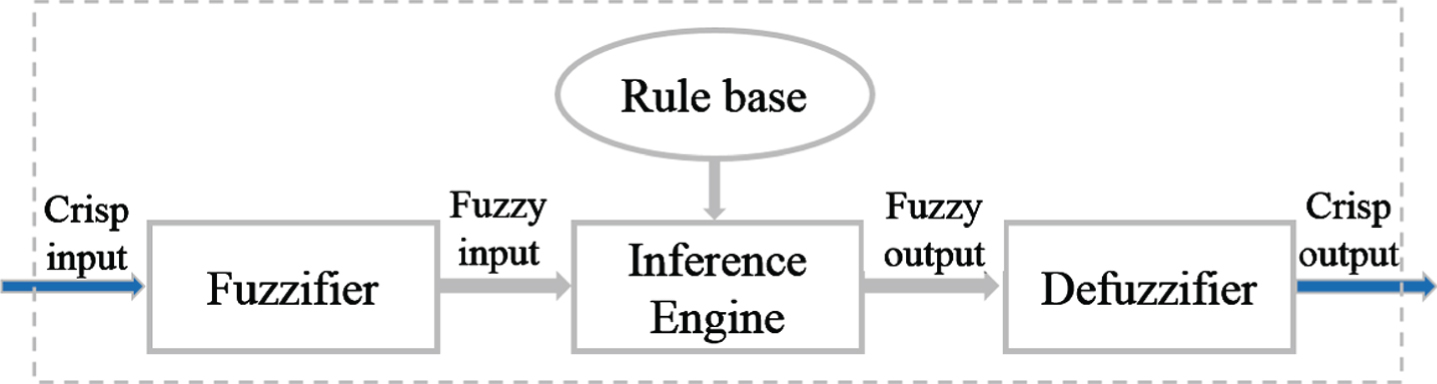
The structure of a Mamdani FIS.
This section details the proposed approach to deal with the problem of determining the criticality of assets.
In this research, the concept of the risk matrix is used to determine the criticality of assets. In a risk matrix, the failure risk of assets is determined by two criteria of consequences and probability. However, assets failure could have various consequences such as harming individuals, negative impact on the environment, and imposing direct and indirect costs.
Additionally, the probability of a failure in many assets is determined by the judgments of experts due to the lack of accurate information on the previous failures.
For this reason, it is required to define sub-criteria for the criteria of consequences and probability to determine the criticality of assets more accurately. On the other hand, not all the sub-criteria can be exploited in the risk matrix since it would increase the number of matrix dimensions. As a result, it would be impossible to build the risk matrix and categorize the risks of assets by it. To solve this problem, the sub-criteria should be integrated into two main criteria (namely consequences and probability) to build the risk matrix based on these two main criteria.
Furthermore, the effects of such sub-criteria on the criticality of assets are not the same and are dependent on different factors. Thus, as shown in Fig. 3, the first step of the proposed approach is to identify the sub-criteria of consequences and probability using experts’ views, users’ expectations, and related literature. These quantitative and qualitative sub-criteria have different weights. So, the AHP technique was applied to obtain the weight of sub-criteria based on their effects on the criticality of assets. Once the sub-criteria are weighted, the main criteria of consequences and probability must be calculated. Let c
i
(0 ⩽ c
i
⩽ 1) denote the normalized values of consequences sub-criteria that have a direct effect on consequence criteria; ci′′ (0 ⩽ ci′′⩽1) be the normalized values of consequences sub-criteria that have a reverse effect on consequence criteria; p
j
(0 ⩽ p
j
⩽ 1) be the normalized values of probability sub-criteria that have a direct effect on probability criteria; and pj′′ (0 ⩽ pj′′⩽1) be the normalized values of probability sub-criteria that have a reverse effect on probability criteria. Then, consequences (C) and probability (P) are calculated as:
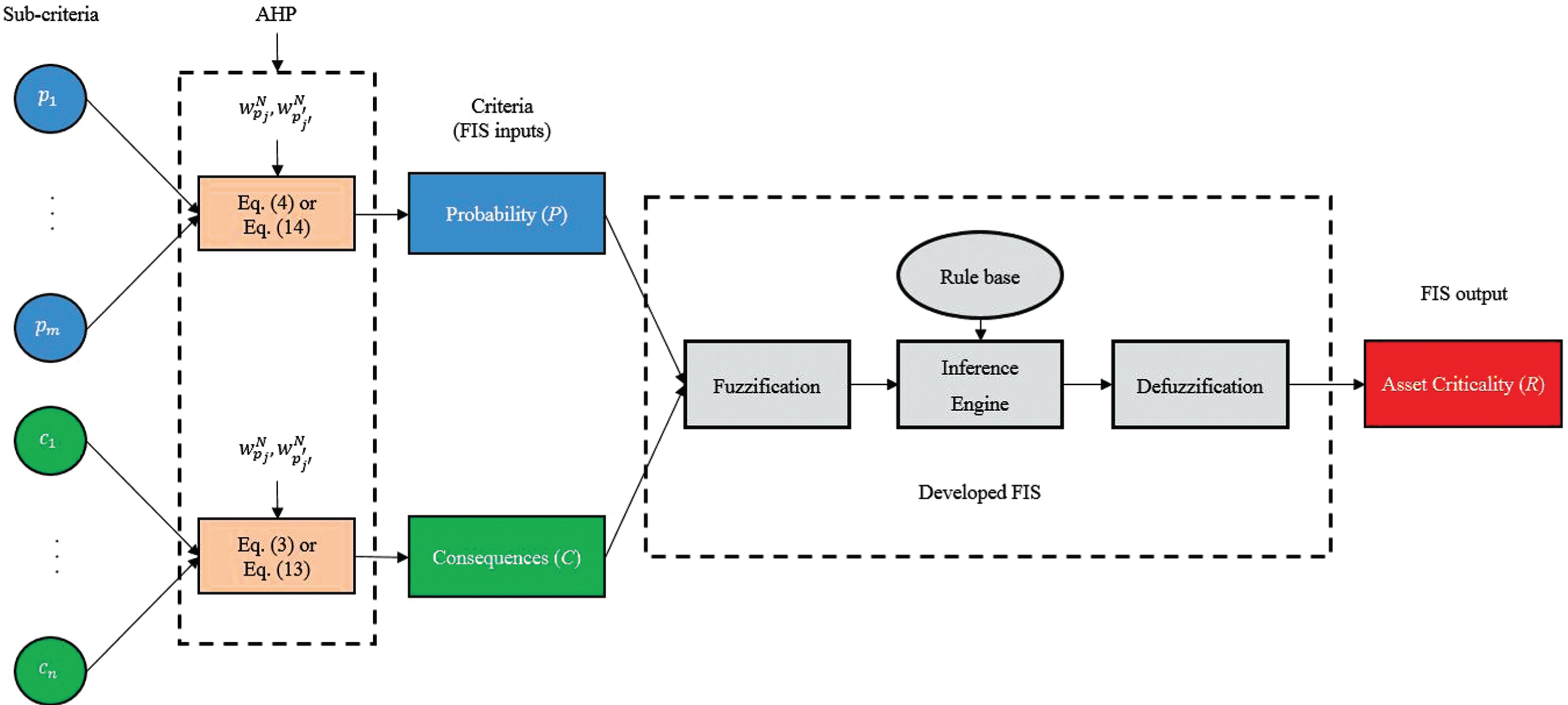
The proposed integrated approach.
When the values of the sub-criteria are received as linguistic variables from experts, the fuzzy numbers equivalent of the linguistic variables should be determined to obtain the values of C and P. The proposed model employs triangular fuzzy numbers owing to their ease of use and high calculation efficiency. Thus, the sub-criteria of C and P are defined as:
C and F are calculated in the form of fuzzy numbers as:
The last step of the proposed model is FIS development. The Mamdani fuzzy inference system is built using the risk matrix concept. The inputs of this system are C and P, and its output is the criticality of assets (R). To this end, the membership functions of C, P, and R are obtained according to the expert views. C and P are defined in k and o categories, respectively. Also, R is placed in h category. To obtain the membership functions of the inputs and output, triangular and trapezoidal fuzzy functions are employed based on the expert views.
The linear triangular function, which is a popular function in this field, is defined by a lower limit a, an upper limit b, and a value m, where a < m < b and its membership function has the following formula:
The linear trapezoidal function is defined by a lower limit a, an upper limit d, a lower support limit b, and an upper support limit c, where a < b < c < d and its membership function has the following formula:
Then, the rules of the fuzzy inference system are extracted using the expert views and risk matrix. The number of the rules is k × o, which is the product of the number of C membership functions and the number of P membership functions. The associated risk matrix is defined using the categorization function as:
The last step is to determine the defuzzification algorithm. Here, the center of gravity (centroid) method, which is the most popular defuzzification method, is employed as:
Once the FIS is built, it is employed to determine the criticality of assets. Then, experts can prioritize assets and implement a proper maintenance plan for the assets in priority.
In order to evaluate the performance and applicability of the proposed approach in solving real problems, a gas refinery was selected as a case study.
Considerable financial losses can emerge following the interruption of the gas refinery process or reduction of its output quality owing to the complex structure of natural gas markets. Moreover, severe environmental damage can arise, which may jeopardize people’s safety due to inconsiderable failures in gas refineries. Thus, rising demand for natural gas production makes gas refineries to consider maximum reliability when operating.
Given the significance of maintenance and reliability management in gas refineries, the proposed method was applied by employing the information gathered from an Iranian gas refinery with a total capacity of 44,000,000 m3/day. Figure 4 shows the block flow diagram (BFD) of the company. Unit 100 is composed of an emergency drainage tank, two finger-type slug catchers, condensate transfer pumps, and two-phase and three-phase separators. Unit 200 is comprised of inlet separators together with six tri-ethylene glycol (TEG) natural gas dehydration units. Unit 300, which performs condensate stabilization, consists of a condensate loading station, condensate storage tanks, a hot oil heater, pumps, and a stabilizer tower. Likewise, Unit 600 serves as a hydrocarbon dew point control unit that prepares gas for natural gas transmission pipelines. It is composed of a Joule-Thomson valve, a low-temperature separator, shells, tubes, as well as sending & receiving facilities and storage tanks.
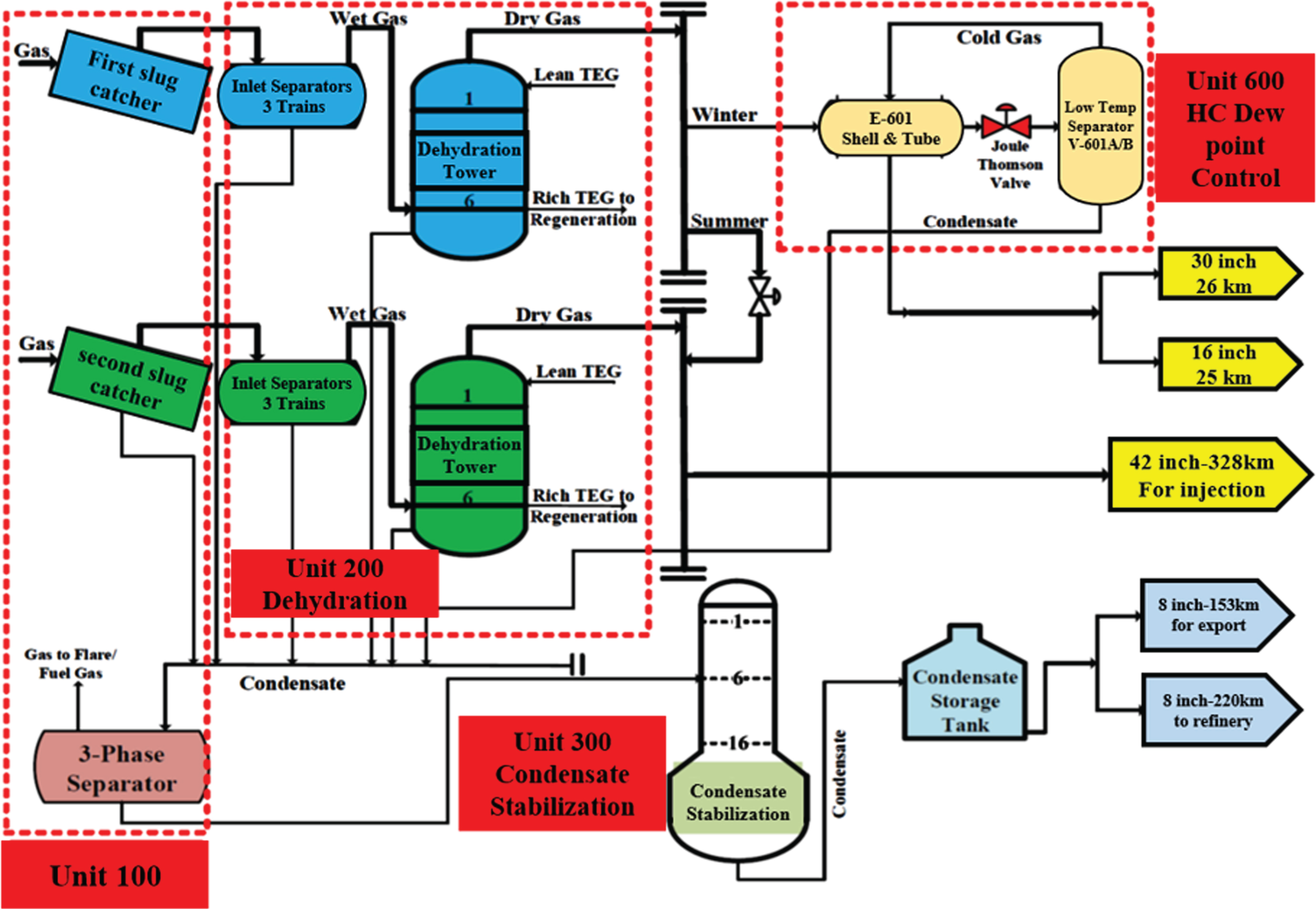
The Block flow diagram of the studied refinery.
A set of criteria including several factors affecting the assessment function were applied to determine the criticality of gas refinery assets. According to expert opinions and review of relevant literature, 10 sub-criteria for consequences criteria and 4 sub-criteria for probability were determined (Table 1).
Consequences and probability sub-criteria
Consequences and probability sub-criteria
In the next step, appropriate linguistic variables for the sub-criteria were determined using expert opinions. In Table 6, linguistic variables and corresponding fuzzy numbers for c1 to c8, and p1,
Linguistic variables and corresponding fuzzy numbers for c9 and
Linguistic variables and corresponding fuzzy numbers for p2
Pairwise comparisons were carried out using the opinions of seven experts. According to Table 4, CR for each expert was reported to be less than 0.1.
Pairwise comparisons consistency ratio
Pairwise comparisons consistency ratio
Pairwise comparisons were then combined using the geometric mean. The combined pairwise comparison matrix had a CR of 0.01. Finally, the weights of 14 criteria were computed and shown in Table 5.
Output weights of the AHP method
Fuzzification
The consequences and probability criteria were placed at five levels using the five-point Likert scale (Tables 7 and 8). The fuzzy values of the linguistic variables at each of the five levels were obtained by the experts’ views and using triangular and trapezoidal fuzzy numbers.
Linguistic variables and corresponding fuzzy numbers for sub-criteria c1 to c8 and p1,
, and
Linguistic variables and corresponding fuzzy numbers for sub-criteria c1 to c8 and p1,
Linguistic variables and corresponding fuzzy numbers for criteria C
Linguistic variables and corresponding fuzzy numbers for criteria P
The next step is to categorize the membership functions of R. The criticality of assets was divided into five levels. The linguistic variables and corresponding fuzzy numbers of R are shown in Table 9.
Linguistic variables and corresponding fuzzy numbers for R
Another step in building a FIS is to extract fuzzy rules. Since the model had two inputs and each input had five categories, 25 rules were defined for the fuzzy inference system using the expert views (Table 10).
The rule base of asset criticality analysis FIS
The rule base of asset criticality analysis FIS
Figure 5 illustrates the corresponding risk matrix.
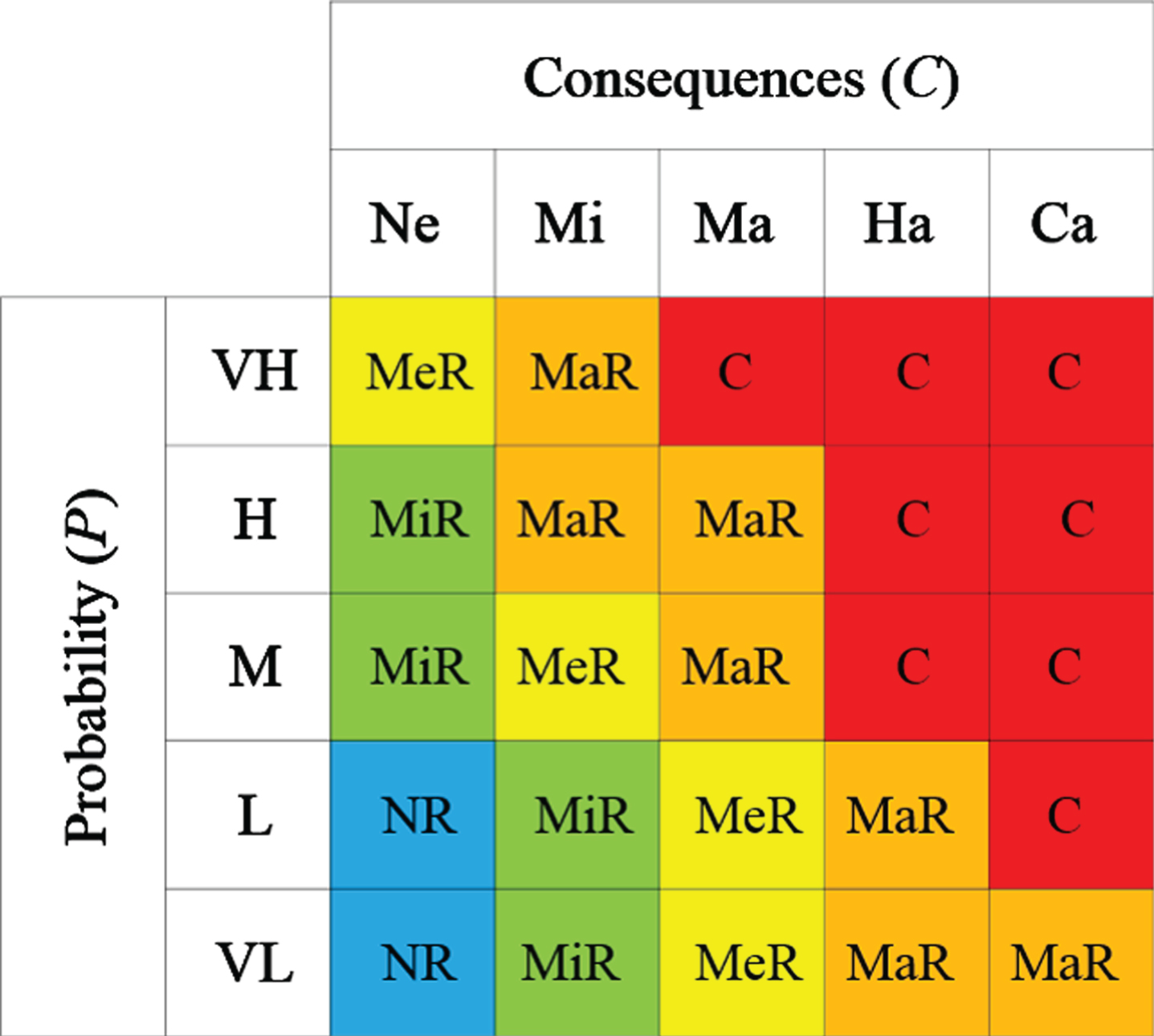
Risk Matrix related to asset criticality analysis FIS.
The last step in the FIS development is to determine a defuzzification algorithm. To this end, the COA method was employed as Equation (19).
The developed Mamdani FIS was implemented in MATLAB R2017a software. Figure 6 depicts the overall structure of the developed FIS along with the membership function shapes of the inputs and outputs.
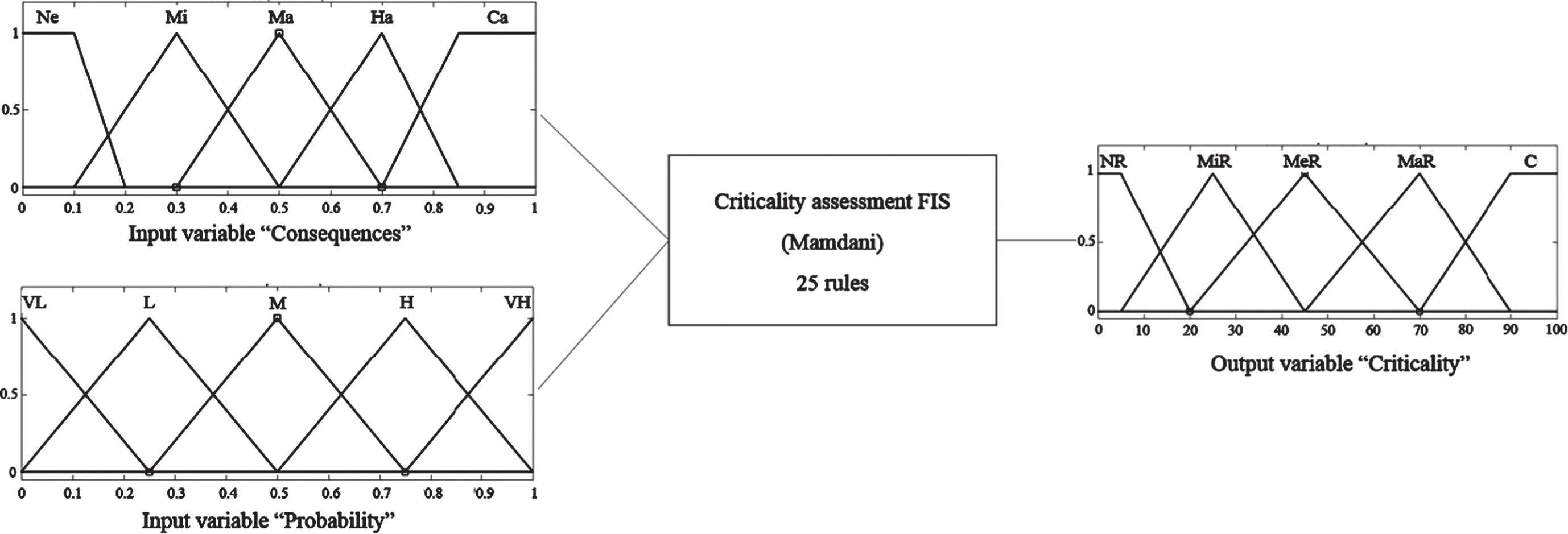
Developed FIS structure.
Figure 7 was obtained using the MATLAB fuzzy logic toolbox, which provides a roadmap of the asset criticality analysis FIS. These 25 rows represent the 25 rules of the FIS. The first two columns provide the input criteria and their membership functions, while the third column shows the output of the FIS and its membership function. For example, the criticality of the output for C = 0.6 and P = 0.4 was calculated to be R = 67.8. Figure 8 is the three-dimensional curve that represents the mapping from C and F to R. Output surface lets experts examine the output of the FIS for any two inputs.
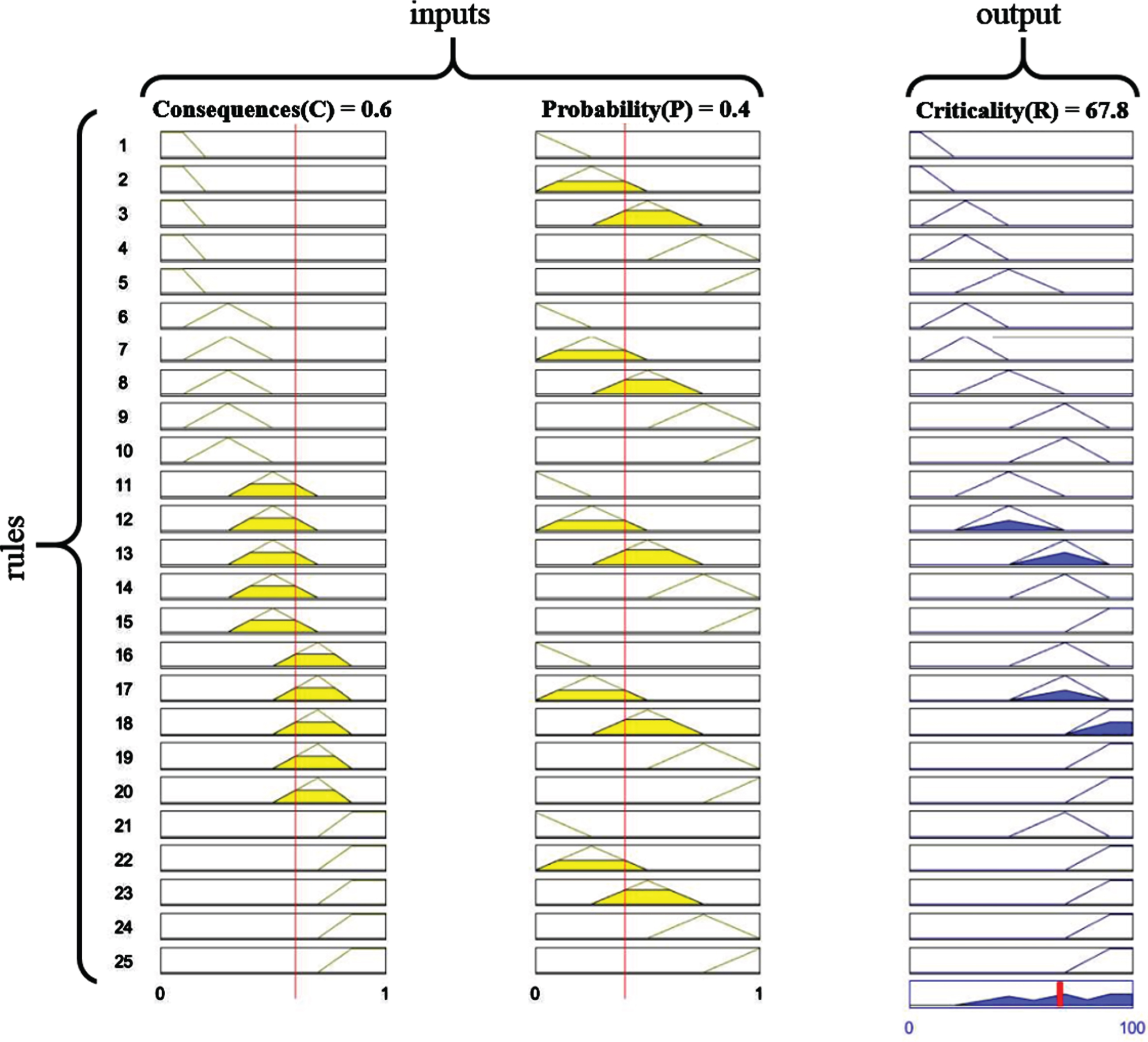
Assets criticality analysis FIS of the gas refinery.
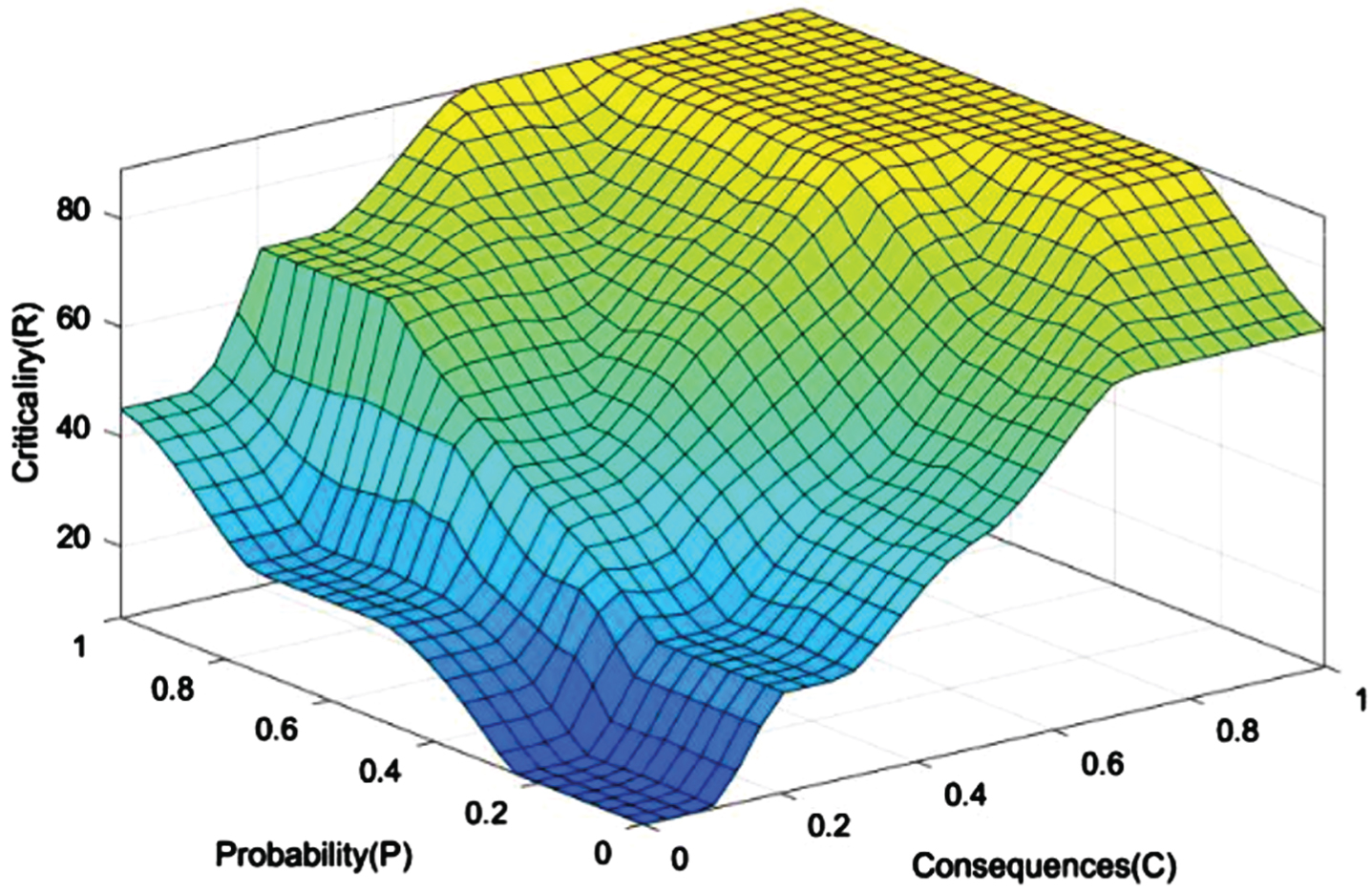
Developed FIS output surface.
To determine the criticality of assets, the values of C and P sub-criteria were determined for 70 assets of gas dehydration units. Then, the related fuzzy values of the linguistic variables were determined using Tables 2, 3, and 4. The C and P values of assets were calculated using Equation (13) and Equation (14), respectively. The triangular fuzzy values of C and P were transformed into crisp values using Equation (15). The crisp values were the inputs of the fuzzy inference system. Finally, the criticality of assets was calculated using the developed FIS. Table 11 provides the values of the sub-criteria, the crisp values of C and P, and the output of the FIS (R). The assets were ranked based on their criticality. Also, the last two columns of Table 11 show the critically and ranks of the assets obtained by the traditional method using Equation (20).
According to Table 11, Condensate Storage Tank is the most critical asset of the studied refinery. This is not surprising since the failure of Condensate Storage Tank would have a very high effect on maintenance staff and high effect on upstream and downstream, production cost, and production quality. It has a very high preventive maintenance cost and a high post-failure maintenance cost. The next critical asset is Tower. The failure of the tower would have a very high effect on the production capacity, production quality, the safety of the employees, and repair cost. It is also subjected to high pressure, which makes it more likely to fail. Feed Surge Drum is the next critical asset. The failure of Feed Surge Drum would have a very high effect on upstream and downstream and production capacity, and high effect on product quality and safety of maintenance staff. Also, it has a high maintenance cost.
Sub-cteria values, proposed FIS outputs, and traditional method outputs for 70 assets of a gas refinery
Sub-cteria values, proposed FIS outputs, and traditional method outputs for 70 assets of a gas refinery
On the other hand, pressure indicators are the least critical asset. The failure of the pressure indicator would have a slight effect on the safety, environment, and production capacity and quality. Also, the preventive maintenance cost and repair cost of the pressure indicator is small. Besides, experts described the spare part availability and MTTF of the pressure indicator to be high, suggesting that the item is not critical. Level Gauge is the next least critical asset. The failure of Level Gauge would have a very low effect on safety, production capacity and quality, and upstream and downstream. Moreover, it has a very low preventive maintenance cost and post-failure maintenance cost.
The ranking results of the developed FIS and traditional methods are different. One reason is that the proposed method ranks assets by modeling the mental decision-making process of experts. However, the traditional method uses only the multiplicity of consequences and probability criteria to determine critical assets. Also, comparing two methods shows that the traditional method has an optimistic approach. The maximum and minimum values of risk are 43.1 and 1.4 in the traditional method, respectively. In comparison, in the proposed method, the maximum and minimum risk values are 87.8 and 6.72, respectively. These values represent the risk of assets more effectively and separable, considering the sub-criteria of the assets. This weakness of the traditional method arises from the use of arithmetic multiplication for determining the criticality of assets. The proposed method and traditional method placed the assets in 61 and 63 priorities, respectively. Nevertheless, due to the wider range of criticality values in the proposed method, the proposed method has a higher capability of separating assets based on their criticality.
Determining the critical assets is a basic step in maintenance management methodologies such as RBM and RCM. The present study proposed a new solution for the criticality determination and prioritization of system assets using a multi-criteria decision-making method (AHP) and Mamdani FIS based on matrix risk concept. Because of using the AHP to integrate the sub-criteria, the fuzzy inference system was built more easily and efficiently. Rules are developed using expert views in a FIS, which stores knowledge of experts and models the inference process in the human brain. This is the most important advantage of FIS. The proposed approach was implemented in a gas refinery and the results showed good performance of the model. However, the proposed model can be applied to any organization. The main contributions of the present study include: Using a fuzzy inference system to model the human inference process for the criticality determination and prioritization of assets, and storing the knowledge of experts in the knowledge base of a FIS; Applying a risk matrix concept to facilitate the modeling of assets criticality determination in a FIS; Using AHP to enhance the fuzzy inference system development process; and Incorporating the entire sub-criteria influencing assets criticality using the AHP, and the capability of considering both quantitative (precise) and qualitative (ambiguous) data in assets criticality determination
The proposed approach enables organizations to prioritize their assets based on their criticality and concentrate the financial sources, maintenance department manpower, and other valuable resources on the critical assets. The empirical results indicated that the integration of experts’ knowledge in organizations can be employed to improve the organizational process performance, including the maintenance of assets. To maintain their assets, organizations require accurate and effective programs that consider their resource limitations and ensure the proper functioning of the system and the meeting of the expectations of its stakeholders. To this end, different criteria are considered to determine critical assets accurately. In the proposed method, based on a risk matrix concept, two general criteria (namely consequences and probability) were selected as the assets risk determination criteria. Also, sub-criteria are determined according to the expectations of users. However, other sub-criteria can be employed, depending on the requirements of organizations.
Future works can focus on the use of considerably more efficient methods to determine fuzzy rules and membership functions and to determine the weights of the rules. Moreover, using the views of expert groups rather than individual views can improve the accuracy of the results. Finally, using new extensions of Zadeh fuzzy sets such as Pythagorean fuzzy sets and multiple attribute decision-making techniques derived from them can be effective in improving the proposed approach of this research.