



Abstract
Cardio vascular disease threatens human life with higher mortality rate. Therefore it is quite important to monitor. An arrhythmia is an abnormal heart beat and rhythm which causes the disease. The best tool to find the heart rhythm of heart is Electro Cardiogram (ECG) which provides information about the different types of arrhythmias. This paper aims at proposing an automatic framework by employing multi-domain features to classify ECG signals. Proposed work uses optimum method of feature selection to improvise the efficiency of the classification process. A hybrid optimization algorithm is used for feature selection and proposed to optimize the parameters of the existing Support Vector Machine (SVM) classifier. Proposed hybrid optimization algorithm was developed using Particle Swarm Optimization (PSO) and Migration Modified Biogeography Based Optimization (MMBBO) algorithm. Algorithm provides an improved solution to the optimizing the parameters of ECG signals. Results are evaluated by implementing in MATLAB software and the performance is justified with comparative analysis. The proposed framework enhances the process of automatic prediction of various arrhythmias or rhythm abnormalities which performs in gaining better accuracy. For data sets, the average classification accuracy of this method is 97.89%. This result is an improvement of 4–5% over the comparison of other methods.
Keywords
Abbreviation and Noumeculture
Introduction
ECG signal classification into different arrhythmia categories is tough pattern recognition task. The analysis of ECG signals is one of the best available methods for diagnosing various arrhythmias. Automatic ECG prediction can provide improved accuracy and provides a better solution for cardiac abnormalities mass screening in an affordable cost [1–3].
Classification is attained successfully by determining the characteristic shapes of the ECG waveform that differentiates the required various arrhythmias categories as shown in Fig. 1. ECG provides effective representation of heart’s electrical activity and depicts the behavior of biological and clinical evidence of heart [4]. In a conventional method, a heartbeat is identified from the waves of the QRS (Quasi Random Signal), T (Ventricular repolarization wave), and possibly P (Atrial depolarization wave) as shown in Table 1. These waves are measured by its magnitude, duration and area. One of the most popular databases MIT-BIH is used to train and test our proposed framework for auto ECG classification which includes many different features. Many works have been done in this database for testing various algorithms in detection and classification of various arrhythmias’. Various methods have been implemented to classify the ECG waveforms. The Fisher Linear discriminate method is presented in [5] to perceive the distance between the P and T wave occurrence and also RR interval duration is determined. A PVC [6] (Premature Ventricular Contraction) detection is considered to be more efficient than ANFIS. The author had used a SVM-based method for predicting the disease. A PSO-SVM is proposed in [7] as a new approach for feature selection to classify the cardiac arrhythmias. In [8], a Neuro-fuzzy approach has been described to classify heart rhythms using the ECG signal where the QRS complex wave is characterized using Hermite polynomials, whose coefficients has been given as a feed to the Neuro-fuzzy classifier.
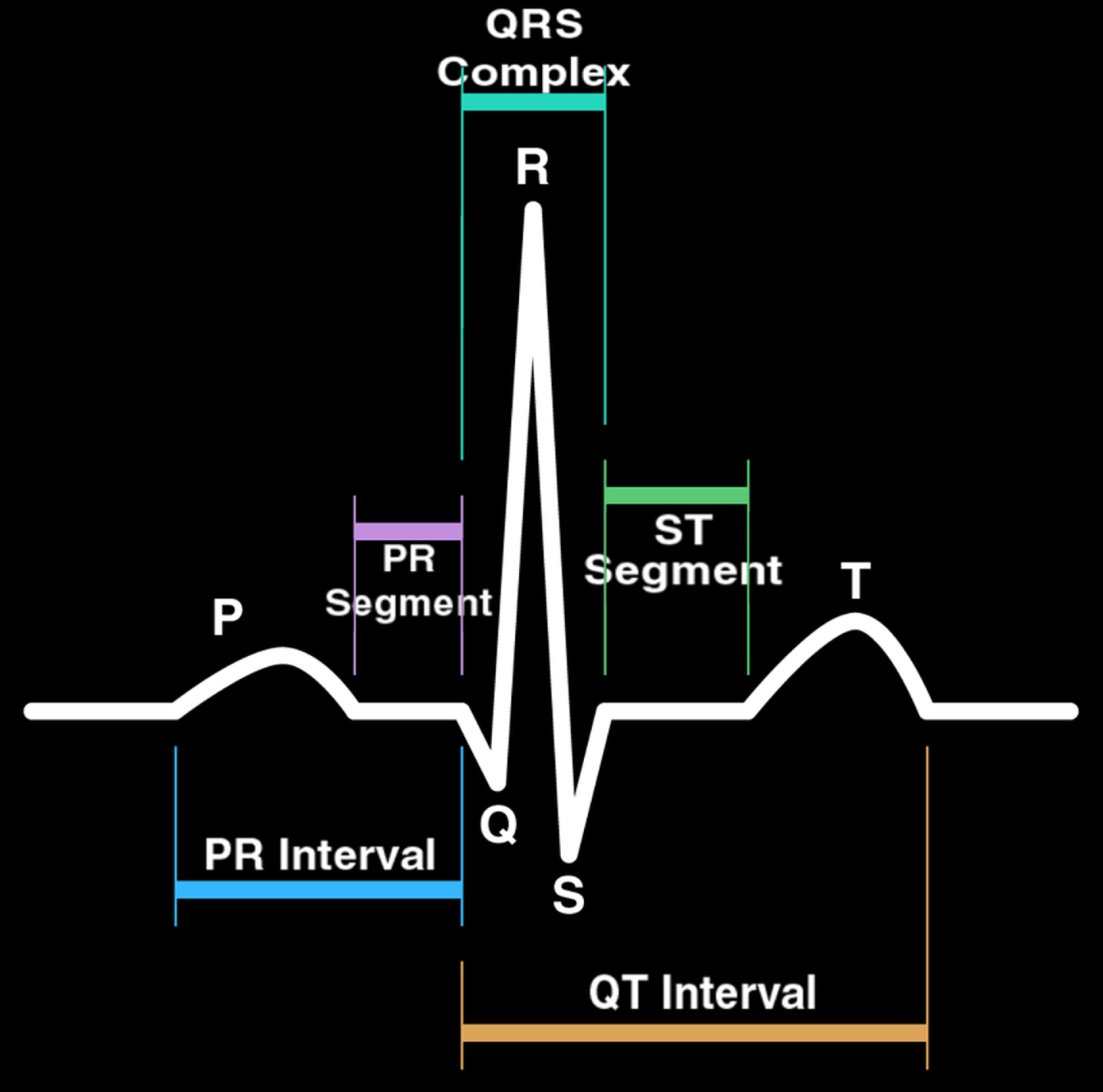
Normal ECG signal.
Normal ECG signal in different phase
Independent Component Analysis (ICA) and Wavelet transform have been handled in [9] to extract important features for predicting various arrhythmias’. Wavelet and timing features [10] were used by the author in a neural network classifier to classify heart beats of a huge volume of data. Arrhythmia is a state when the heart electrical activity is irregular or faster or slower than the ordinary rate. It is caused due to many reasons like genetic conditions and heart diseases. Typically, the atrial repolarization phase of the ECG signal is invisible since the large ventricular activity in the signal covers this phase. Therefore, signal averaging is required to obtain a satisfactory signal to noise ratio (SNR). Usually different noises and artifacts present in the ECG signals. The presence of artifacts and noise makes the process of discriminating the ECG signals into normal and arrhythmia signals as a challenging task. These issues can be eliminated with the application of suitable preprocessing techniques.
Another notion to be considered is that the signals recorded from the human body are usually non-stationary. So the reflection happens at arbitrary instants in the time-scale. The symptoms of disease occur periodically. Hence the heart rate through ECG must be observed for long interval so that the disease can be diagnosed successfully. Thus a large amount of data is recorded which makes signal discriminating process as time consuming. For processing such large amount of data, computer-based techniques can provide better results in diagnosis. In computerized techniques for ECG analysis, the issues occur because of the large variation presenting in the structure of the ECG signals.
Further the recorded ECG signals may vary sometimes for the same patient [11]. Still the researches have been in progress to detect the effect of P-wave in the detection of arrhythmias. Hence in some works, the impact of atrial repolarization phase in the PQ interval is inspected for analyzing the ECG signals. Atrial repolarization phase is considered to overlap absolutely and concealed by the QRST complex. After applying the signal averaging process to reduce SNR, a QRS detector is employed to detect heart beats in the signal. The phases of depolarization and repolarization in the atria have negative association to each other which is opposite to the association existing in ventricles. Atrial repolarization amplitude is equal to 1/10thamplitude of the P wave. Also, the polarity of atrial repolarization phase is opposite to depolarization phase which represents that repolarization ‘propagation’ moves on same path to depolarization phase.
The artifacts and noise presenting in the medical signals can be removed with the aid of filters. The techniques using digital filters have been presented in many works for removing noise in different medical signals [12]. In works [13], instead of the digital filters, other mathematical algorithms were presented as pre-processing tools. Many algorithms for automatic arrhythmia detection were presented in the previous works. There are mainly four features significantly used in ECG waveforms. They are time, frequency, morphological and nonlinear features. In time domains, ECG signals have complicated structure and contain more noise interferences. Hence the conventional time domain based feature extraction methods give poor accuracy [14]. Various time and frequency domain features can be extracted using the transform and morphological methods [15]. Still, these features cannot provide accurate details about ECG for achieving high classification accuracy. Hence the combination of many methods has been widely employed for feature extraction in recent works. In many works, the feature reduction process like ICA and PCA are applied [16]. However the feature reduction process may fail in preventing the significant information after the reduction process. Therefore, the method for selection of optimum feature set is recommended for reducing the number of features.
Electrocardiogram (ECG) signal is the primary tool used by most of the researchers for predicting the heart disease. The classification of ECG signal into different arrhythmia categories is very difficult since there are issues in the pattern recognition task. The examination of ECG signals is the best way in predicting various arrhythmias diagnosing heart disease. Automatic ECG arrhythmia prediction can provide improved accuracy and provides a better solution for cardiac abnormalities mass screening in an affordable cost [17].
Machine Learning (ML) techniques are largely used by researchers since it gives effective result after training the model with right dataset [18]. Though ML methods are efficient in producing results, according to researchers integrating the selected features with the suitable ML algorithm is a difficult process. In addition, the performance of the system gets degraded due to missing values and uncertainty [19]. Scalable methods are needed to process the gathered data [20] to handle the enormous amount of healthcare data.
In this work, Hilbert Huang Transformation (HHT) is used to attain the separation of ECG signal using phase shift method. By doing this, the original ECG signal are separated into a countable Intrinsic Mode Functions (IMF’s). The Hilbert function is applied to all the three IMF’s and the useful signals were extracted from the original data without changing its physical properties. After doing this, the finest signal is given as input to PSO and MMBBO to classify the signal into various arrhythmia classes. In the existing algorithm the migration process is done without knowing the key and the process takes delay to complete the mutation process. To overcome this issue, hence this work proposes a new technique called MMBBO. This technique uses both migration and mutation operator to increases the classification rate of the model proposed. To make the proposed model to be computationally less, hence the modified limb nodes are used in taking ECG input signal. It is also important to feed suitable features to the classifier to obtain good prediction. Thus, the proposed new technique MMBBO is associated with the existing features selection algorithm called PSO.
In this proposed work, the feature extraction process is performed followed by the pre-processing stage. Here the time features, frequency features and statistical features are extracted. Before the classification algorithm is implemented, all extracted characteristics are given as input to the feature selection. Using the hybrid optimization algorithm, the optimal features are chosen. The hybrid algorithm is generated by combining the algorithm of PSO and MMBBO. Consequently, the simultaneous optimization is performed with this algorithm for optimizing the parameters of the SVM classifier.
The primary contributions of this work are, A proposed an automatic framework by employing multi-domain features to classify ECG signals for predicting various arrhythmia diseases. This work concentrates on applying a new hybrid optimization algorithm for feature selection. The hybridized optimization algorithm is developed by combining PSO and MMBBO algorithm The outcome of the proposed work helps to optimize the parameters of the existing SVM classifier. The experimental result provides an improvised solution to optimizing the parameters of ECG signals and enhances the process of automatic prediction of arrhythmias’ which performs better accuracy.
The paper is organized procedure as follows step by step:
The performance test of the proposed hybrid algorithm is carried out by using the kernel function. It is observed from statistical analysis of the result is that the convergence speed of the algorithm has been improved. The sections mentioned below are structured as follows: Section 2 represents related work, Section 3 the proposed methodology is introduced, Section 4 describes the experimental results and discussions, Section 5 indicates conclusion with scope of future work.
In conventional approach, in order to do the ECG classification, first an algorithm must be developed to extract the desired features from an input signal. Next, a suitable classifier has been chosen for doing the classification stage. The traditional approaches in most of the works involve preprocessing, feature extraction, feature reduction, and classification. In this section various studies on several approaches were elaborated for ECG classification.
In this proposed methods [21–23], wavelet transform (WT) method with respectable time-frequency property was presented as noise removal method for ECG signal. In work [24], an adaptive filtering algorithm was presented for noise removal and the results were compared with the method of wavelet shrinkage [24]. The decomposition of the Empirical Mode (EM) and improved approximate envelope technique for ECG signal analysis were presented in [25]. In paper [26], Using the combined poly phase wavelet representation and PSO based feature extraction process, discrimination of ECG signals was carried out. For labeling the signals the SVM classifier was employed. In the method provided in [27], normalized R-R interval (RRI) and morphological features were extracted and linear discriminant classifier was utilized to detect the disease from the ECG signal. In work [28], random forest, linear discriminant classification, neural networks (NNs), and support vector machines are evaluated for the efficiency of applying different classifiers in the detection of arrhythmia (SVM).
A cross-correlation-based approach is presented in [29] as feature extraction method, and a Least Squares SVM (LSSVM) as classifier. In [30], ICA was applied to the extracted features from ECG signal and obtains high accuracy in disease discrimination. The bi-spectral features from the ECG signal were extracted at first. Then the feature reduction process was performed by using principle component analysis (PCA) and a four-layer Feed-Forward NN with LSSVM was used for classification [31]. In work [32], a personalized probabilistic structure was developed and instantaneous spectrum and bi spectrum were taken in extracting features. In [33], EM decomposition and singular value decomposition methods were employed for feature extraction and multiclass-directed acyclic graph SVM was utilized for ECG classification. In [34], In order to evaluate ECG recordings from the energy point of view, the Teager energy operator was presented and features were extracted from the nonlinear variable in time and frequency domains.
In work [35] pre-processing stage was performed using improved wavelet threshold method and a new multi-domain feature extraction method was proposed. In feature extraction phase, kernel-independent component analysis and discrete wavelet transform were employed to extract nonlinear feature extraction and frequency domain features respectively. For classification of the signals based on these features, Genetic algorithm (GA) optimized SVM was employed. In work [36], the ECG signal is classified using Ant Colony Optimization (ACO) based clustering analysis. Using the time domain feature extraction method and the discrete wavelet transform (DWT) method for frequency domain features, the features are extracted. Many wavelet coefficients are obtained in the DWT phase relative to the time domain parameters.
Principal Component Analysis (PCA) technique is applied to the wavelet coefficients to make their dimension equal to the time domain characteristic dimension. The reduced wavelet coefficients of the dimensions are then combined with the features of the time domain and added to the ACO classifier. Moreover the performance of the work is compared by implementing different types of features and using neural network algorithm and linear discriminant analysis (LDA) for analyzing the effect of ACO clustering results. In [37], an end-to-end model was presented that used the Convolutional Neural Networks (CNN) and Recurrent Neural Networks (RNN) jointly to extract and classify high-level characteristics from RRIs into an atrial fibrillation (AF) signal or normal signal. In [38], a signal quality index (SQI) algorithm is developed to evaluate noisy instances and densely connected CNNs for classifying the ECG signals into normal signals, AF signals, other signals (O) and noisy signals. In this paper, authors presented two CNN models. One main model for processing 15 s ECG recordings and a secondary model for processing shorter 9 s ECG recordings were trained using the training data set.
CNN used in the automated classification of ECG signals. In [39] the authors have done patient-specific ECG categorization and developed an observing system using three-layer CNN with the R-peak wave. They attained a better accuracy in detecting supraventricular ectopic and ventricular ectopic beats respectively. A three layer CNN is used [40] with 44 ECG recordings acquired from MIT-BIH database. The authors extracted R-peak ECG beat patterns for the training. They achieved higher accuracy in predicting the ECG into multi classes such as normal, fusion, supraventricular ectopic, ventricular ectopic and unknown beat. These works [39, 40] automatically detect and classifies QRS waveforms.
SVM conventional supervised machine learning algorithm, which has been proposed to build a strongest classifier model to classify the various arrhythmias’. SVM is the powerful method in predicting the diseases with very fewer knowledge on the data. SVM classifier is suggested by most of the researchers and used for disease classification in order to attain good accuracy of the result. The existence significant issues faced by most of the researchers in disease prediction is over-fitting and network configuration. In this proposed work this particular challenge is addressed effectively by the SVM algorithm. The authors were come up with an increased volume of computation and this in turn enhances the model’s time cost. Since, SVM possesses high generalization in nature, it gives even more effective accuracy in classifying the arrhythmias when compared with ANN model. In recent days many healthcare researchers are doing few changes to the SVM model and using it in their research work for the finest results. Though it is a conventional model it the one algorithm recommended by maximum of researchers to build a prediction model. This motivation makes us to combine SVM with the combination of PSO and MMBBO algorithm to achieve good prediction. Since, this combination assures solving the issues of network optimization and also enhances the performance of the SVM model. Thus, the proposed work shortens the problem mentioned above and enhances the overall performance of risk prediction.
Methodology
Pre-processing
The preprocessing stage is the initial step, where filtering, baseline correction and normalization strategies are carried out. The ECG signals acquired from MIT-BIH repository are sampled at a frequency of 360 Hz. Hence, the ECG signals are down-sampled from 360 to 250 Hz. Then, all the noises like High -frequency Noise, Physiological Artifacts are removed with FIR filter and the median filter used for ECG baseline Wander correction and Power line Interference [41]. Subsequently, the detection mechanism of QRS is realized and the position of R point is identified. The R-point is used as the reference point and the window functions for detecting P and T points. Then, the ECG waves are segmented based on the heart conditions and sorted with the suggested annotations retrieved from the MIT-BIH database. The segmented ECG signals are normalized with Z-score normalization. Hence, amplitude scaling is addressed and it eliminates the offset effect. Further, these normalized segments are fed up into CNN for training and testing.
Feature extraction
The time-domain features like R-peak features, RR-interval features, P-wave morphology features are extracted. Mean and Standard Deviation of detected R-peaks are computed using the R-peak based features. Subsequently, mean and variance of RR interval, Heart rate (HR) and Heart Rate Variability (HRV) are extracted with the help of RR-interval values. In case of P-wave morphology feature, the absence of P-wave is identified by extracting P peak to QRS ratio and the number of P waves occurrences per unit time.
Then the time domain coefficients are computed and normalized between, Detected R wave and the former R wave function RR interval between the detected R wave and the subsequent R wave function QRS amplitude of the detected segment function QRS region of the queried beat function detected segment’s and normalized QT interval function the detected beat’s and normalized QRS interval function
The characteristics are determined as follows. The amplitude of QRS is measured as the distance from the R-peak to the baseline. The area of the QRS complex is much greater than the baseline. The QT interval is calculated based on the time span between the moment of time corresponding to the height of the T wave and the Q wave time of onset. Consequently, the QRS interval determined by the time span that corresponds to the S wave’s lowest point between the time instant and the time instant that corresponds to the Q wave’s lowest point
Hilbert Huang Transformation (HHT) for Frequency domain features
HHT provides the signal characteristics of time and frequency domains. It is computed using an adaptive decomposing method called Empirical Mode Decomposition (EMD) [42]. The EMD method breaks down the data series into a limited and finite number of Intrinsic Mode Functions (IMFs) that process Hilbert transforms [43]. The purpose of HHT is to accomplish the time-frequency of the ECG signals. Compared to conventional transformation techniques such as Short Time Fourier Transform (STFT) and wavelet analysis, the linear and stationary limit is completely discarded by HHT. HHT has been shown to provide a respectable local representation of the non-stationary or nonlinear oscillating components of the signal [44]. The proposed HHT-EMD algorithm is shown in below.
Proposed methodology
Optimum feature vector selection
In this section to find best optimum solution using the proposed PSO and MMBBO algorithm described. Usually, the performance classifiers a affected when we feed them with large number of extracted features. To make it better, a limited amount of features are applied. Hence, it is a significant process to select essential features before doing the classification task. Therefore an optimal feature selection approach is presented that uses proposed PSO-MMBBO. The proposed algorithm chooses optimal features by considering the computation time and the accuracy of the classifier. Another advantage of the proposed algorithm is to optimize the parameters of SVM classifier. BBO algorithm has been developed by the inspiration from the distribution of the species in various geographical regions. The movement of the species from one place to another place in the geographical regions is called as habitats. In the proposed algorithm Habitat Suitability Index (HSI) factor is used to find the amount of suitability of the habitat for the desired species.
The habitats with higher HSI will denoted as a suitable dwelling place for the desired species. HSI index is calculated by the Suitability Index Variables (SIVs) that are present in the habitat. The atmospheric influences of the geographical habitat are making the habitat acceptable for the dwelling of the species which includes temperature, crop diversity, humidity, rainfall, topography etc. These factors are usually termed as SIVs in the BBO algorithm. It may vary depends on habitats. Each habitat has its unique HSIs based on their factors. The larger HIS will turns into its higher emigration rate of the species. While emigration, the species living in a given environment migrates to another habitat. In other hand, one species enters an ecosystem from another habitat during immigration. The immigration rate (λ) is calculated using the Equation (1)
ki – represents the rank of a habitat after sorting
The emigration rate (μ) of every habitat (Habi) is computed using the Equation (2).
μ i – Emigration rates calculated for ith habitat, ki – represents the rank of a habitat after sorting
Many habitats are taken and set as the population of solution space for the optimization problems. The SIVs are looked into the components of the solutions. HSI determines the consistency of the solution. Hence, the fitness function for aoptimization problem is assigned as the HSI in the BBO algorithm. If a habitat has larger rate and less rate, the species will leave from the corresponding habitat. After leaving the habitat, the species would like to share their SIVs with other habitats for making them possess improved quality. Sultaneously, those habitats will not accept the SIVs of other habitats, as they have low quality. However, if a habitat has a larger rate and less rate, the space for the arrival of new species from the other habitat will be provided. Thus, the suitability of the respective habitat can be increased. Another term exists in the BBO and it is known as mutation. The process of mutation is defined as the unexpected modification in one or several SIVs of habitats. The modifications in SIVs are usually caused by several natural occasions. Under this condition, a randomly generated new habitat supersedes the SIV of the habitat. The mutation rate will be calculated by the Equation (3).
The SIVs of the problem are initialised with random values within the prescribed limits. The vector containing the group of SIVs for a particular habitat is known as the solution set and this is denoted as habitat set. The habitat set considered for finding the optimal set of solutions for the optimization problem is represented in the Equation (4)
Where, x11 ... xn, HnSIV – represents group of Suitability Index Variables (SVI) for a particular habitat. HSI value is used to calculate number of species S. The optimal HSI value of each habitat is kept as elite habitats. Other than these habitats a only considered for the migration process. One of the two processes either immigration or emigration is carried out based on the values. The probability for performing the modification index is depends on its immigration and emigration rate. A habitat is selected first, then based on its probability of proportional to both the rates, a random SIV is chosen and it is replaced with an existing SIV.
If the probabilities of the habitat are not proportional λ and μ, the position of the corresponding habitat is changed using the proposed PSO algorithm. In the proposed PSO algorithm, the habitat set is considered as the particles and the updation of its position is performed in the swarm. The process of PSO algorithm is explained in the algorithm. The updated particle swarm is then applied to mutation process. Then, on each non-elite habitat, the mutation process is performed and HSI for each habitat is determined. If it is selected then it is exchanged with randomly generated SIV components. If the solution set computed in this manner is not the optimum solution, then the above step is disregarded and the next iteration starts until the optimum solution is attained as shown in Fig. 2(a).
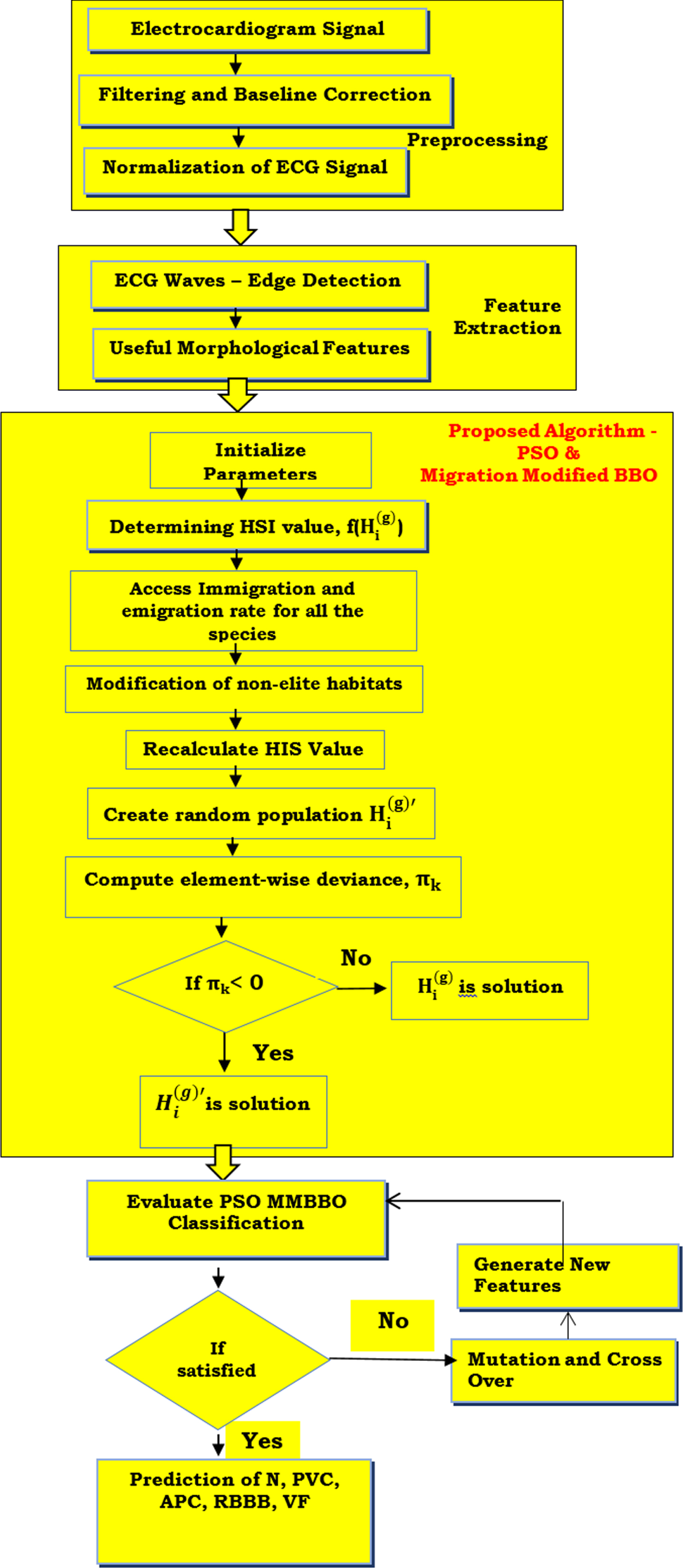
(a) Dataflow diagram of proposed algorithm.
PSO considers a group of particles which involved in searching the better position through several iterations. In this searching, information of particles is updated from one iteration to the next. With the objective of finding the optimal solution, each and every particle moves towards the previous best (pbest) position and the global best (gbest) position in the swarm. The pbest and gbest positions are calculated using the Equations (9) and (10)
Where, Gbest () – represents global best
The traditional BBO system, the habitat is randomly chosen either from its neighbouring collection or somewhere else for the immigration process. The deviation between the SIV chosen for immigration and the current SIV in the habitat set must, in the process of selecting the immigration habitat, be important in order to produce a significant improvement in the results. In the normal algorithm where the migration process is done without bring this key in mind, a large amount of time is utilized. This makes the algorithm to be computationally expensive and occupies huge space.
Thus, with the traditional BBO, the Probabilistic Migration () approach was implemented in the proposed work. In the PM, the immigration rate and the emigration rate are modified in accordance with the difference between the values of SIVs. Consequently, the SIVs that have more deviance are only taken in the migration process. Thus, the optimal solution can be arriving quickly. The immigration rate and the emigration rate in the PM system are probabilistically adjusted based on the deviation between the values of the SIVs. If the set of SIVs represented as ‘T’ relates to the SIVs located in the ith row and relates to the SIVs located in the kth row. The element-wise deviance between and can be computed using Equation (11).
The normal λ and μ rate of the conventional BBO process are replaced by the probabilistic immigration rate and emigration rate.
For evaluating the proposed work, the MIT– BIH [45] ECG database is taken which contains 6 different arrhythmia signals. The signals are recorded with the Sampling frequency of 360 Hz. Normal Sinus Rhythm (N), Premature Vtricular Contraction (PVC), Atrial Premature Contraction (APC), Right Bundle Branch Block (RBBB), Ventricular Fusion (VF) and Fusion (f) are the signals throughouthe dase as shown in Fig. 2(b).
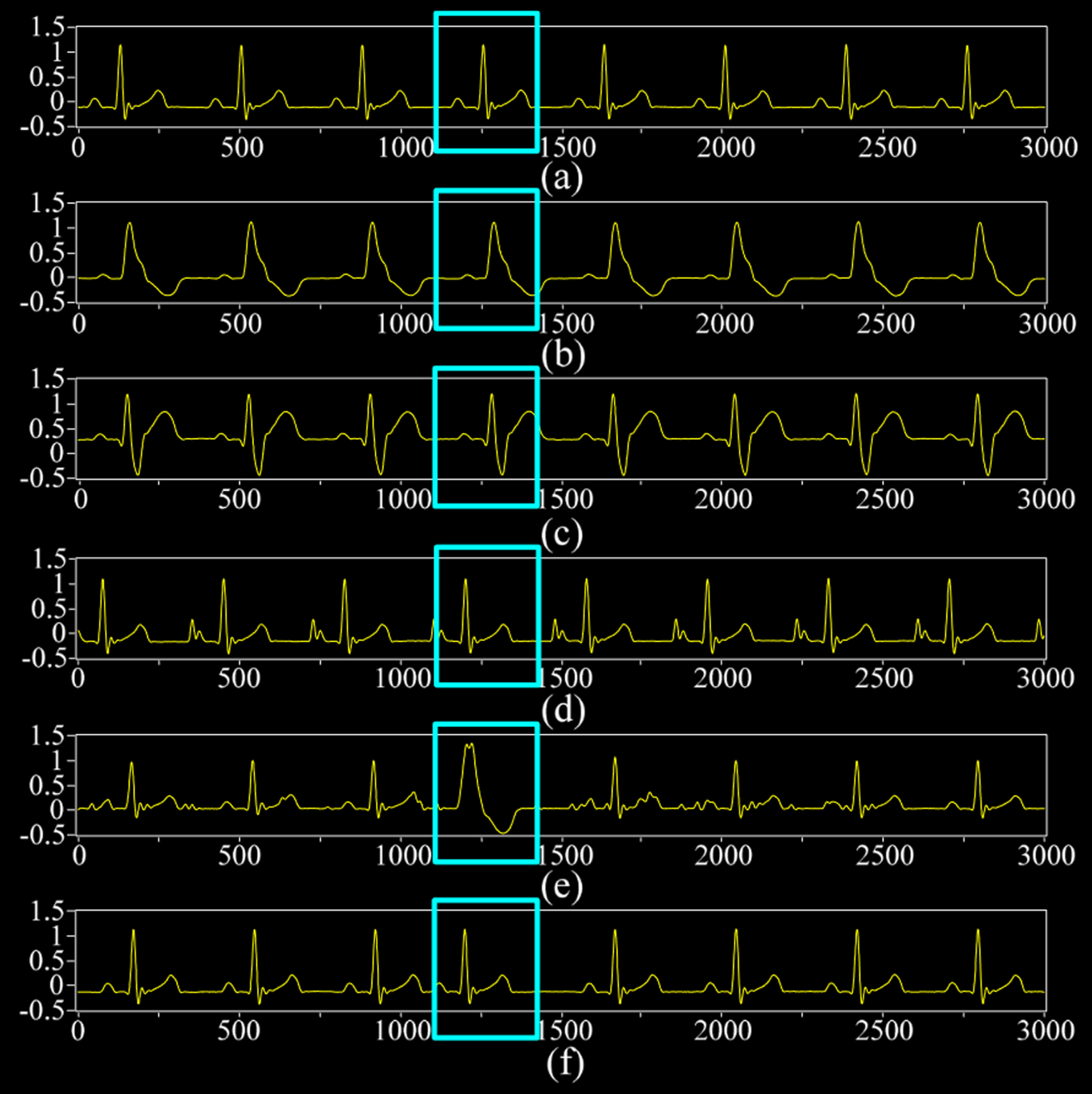
(b) 6 category ECG signal (a) N, (b) PVC, (c) APC, (d) RBBB, (e) VF, and (f) f.
The ECG signals are recorded from 32 patients. The distribution of recorded ECG samples into testing set and training set is shown in Table 2. The training samples are first applied to the classifier learning phase and then the testing samples are labeled into the different arrhythmia classes. The number of training and testing sample of ECG signals were illustrated in Fig. 3a. There are totally 6619 ECG records are of normal ECG beats. Among 6619 ECG waveforms 250 are given to training phase and the remaining 6639 records are given to testing phase.
Distribution of samples for training and testing
Initially, the proposed work uses HHT method to decompose the original ECG signal using phase shift function. All the three IMF’s are applied with HT function. Thus, the useful signals were extracted from the original data without changing its physical properties. Secondly, the extracted signal is fed into PSO and MMBBO for classification of various arrhythmias. The existing algorithms takes much time to complete the mutation process.
To overcome this issue, hence this work proposes a new technique called MMBBO. This technique uses both migration and mutation operator to increases the classification rate of the model proposed. The combination of PSO and MMBBO is effectively classifies various ECG waveforms. The proposed work uses, the migration process with the known key value. Hence, we achieved 97.89% accuracy when compared with existing model. To make the proposed model to be computationally less, hence the modified limb nodes are used in taking ECG input signal as shown in Fig. 4.
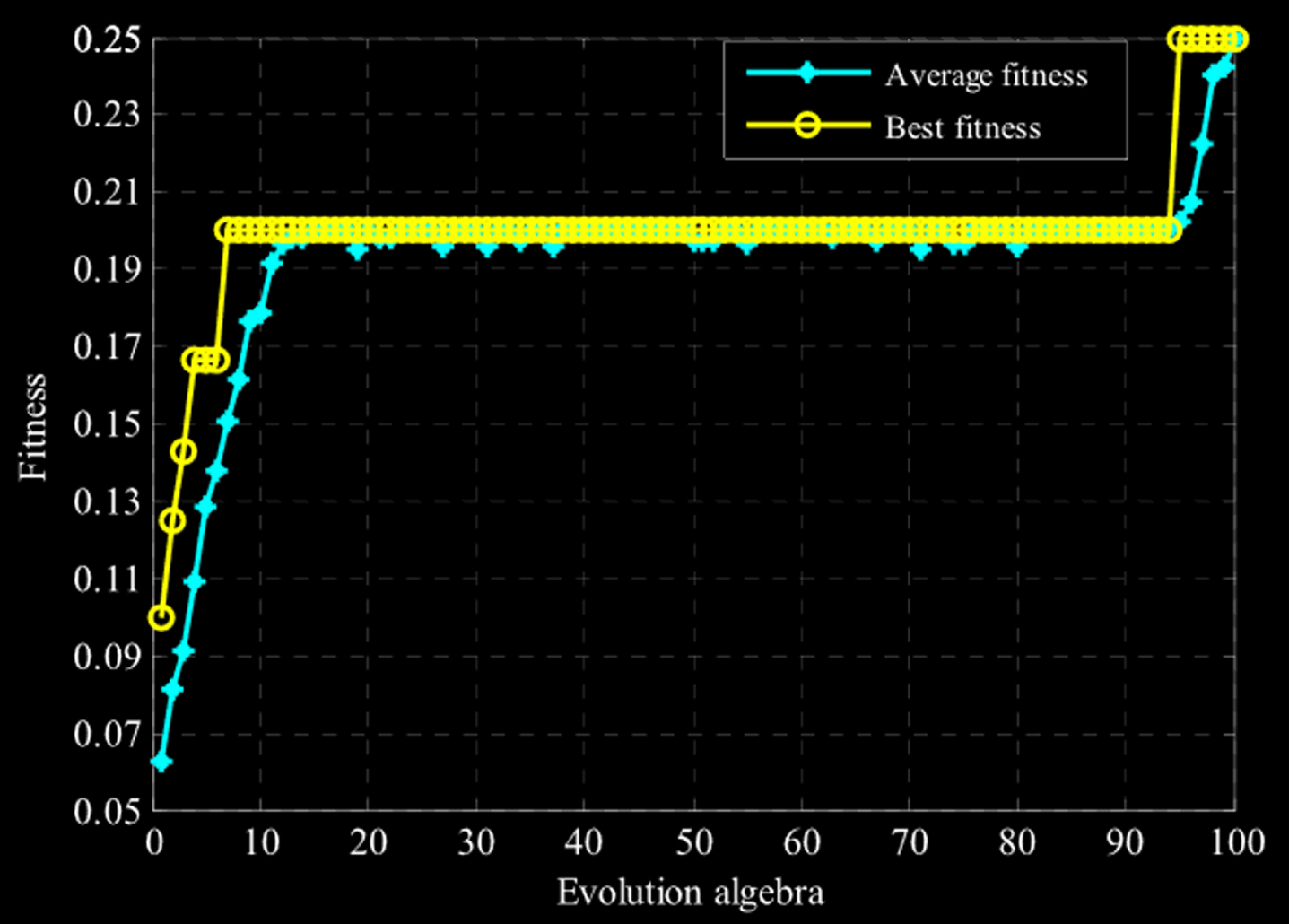
Fitness curve for proposed algorithm (PSO-MMBBO).
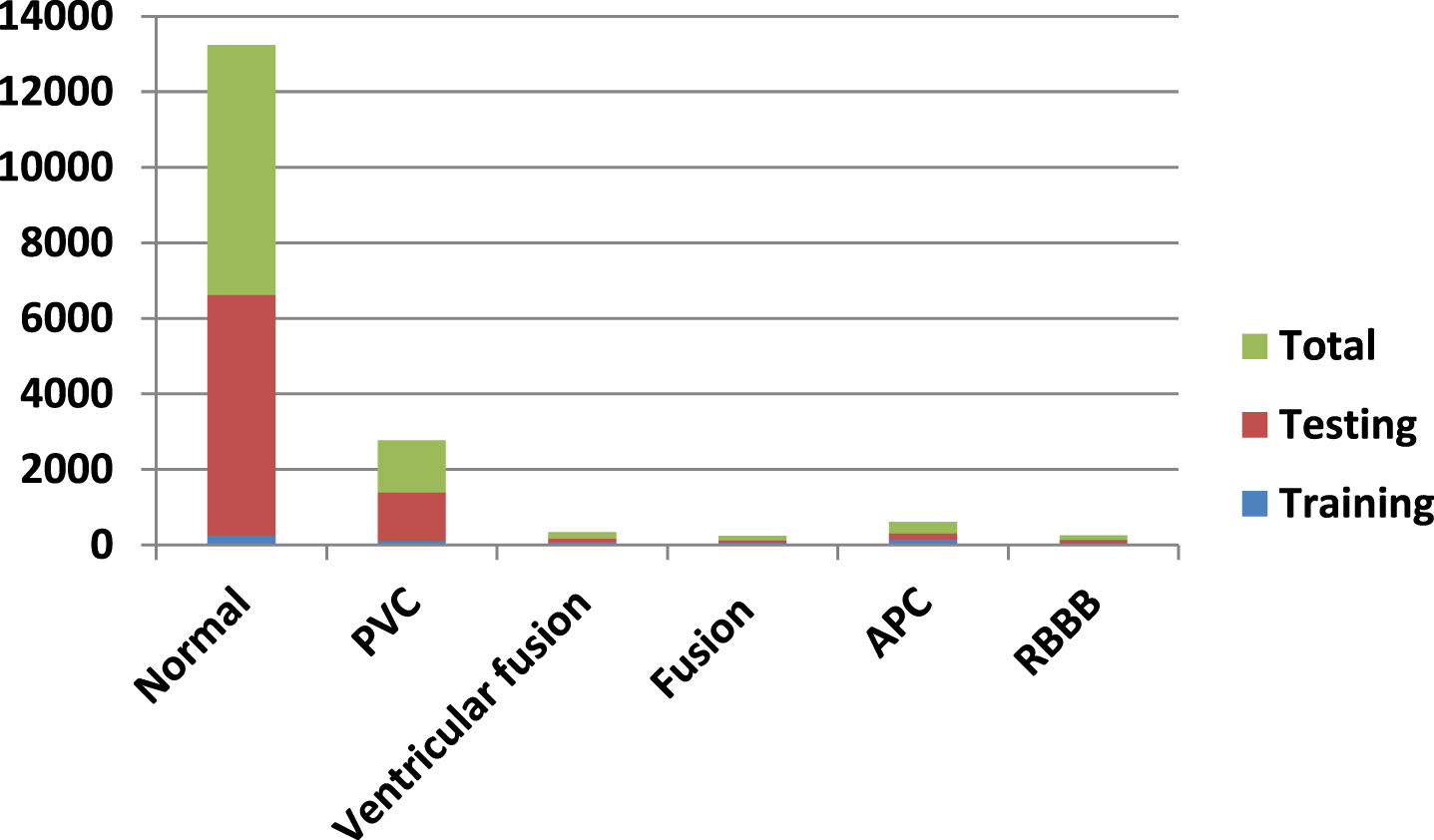
Total number of training and testing samples.
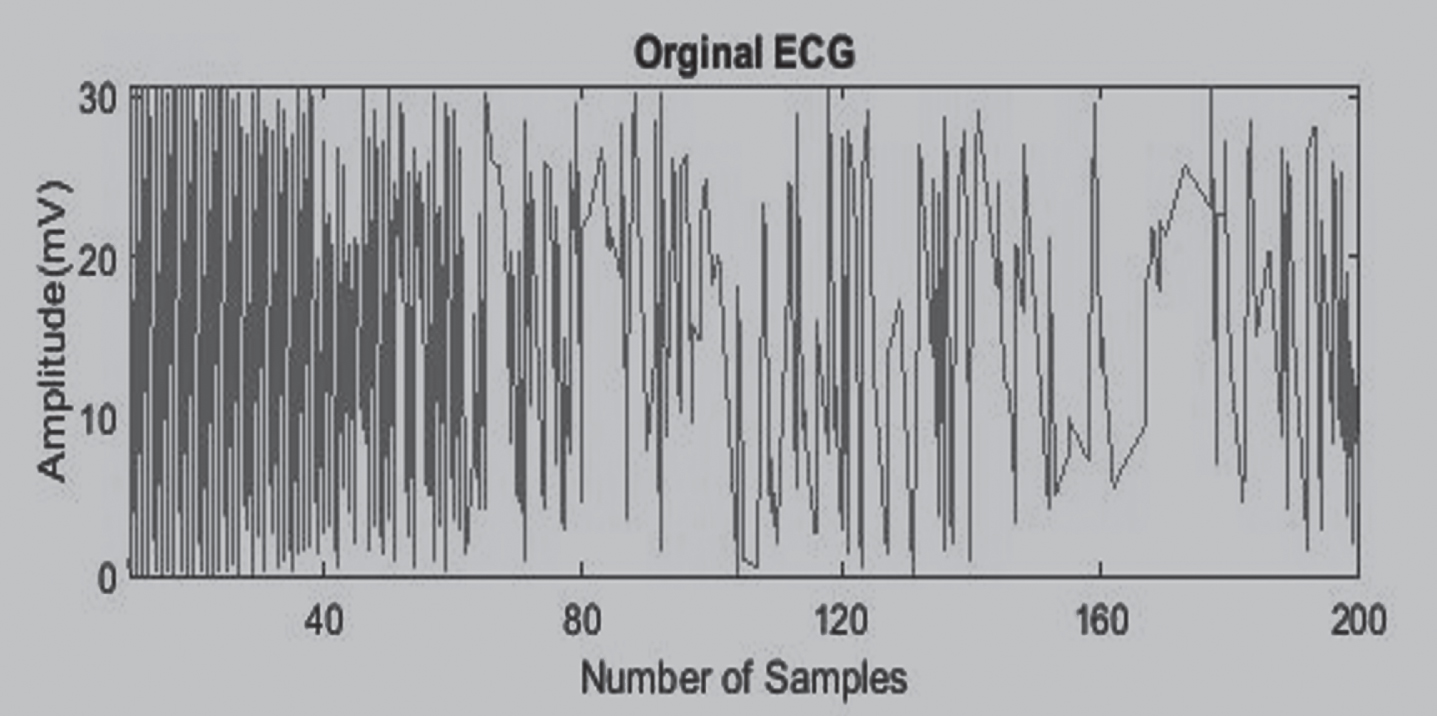
Input ECG signal.
The proposed work uses, the hybrid optimization algorithm, hence the optimal features are chosen. The hybrid algorithm is generated by combining the algorithm of PSO and MMBBO. Consequently, the simultaneous optimization is performed with this algorithm for optimizing the parameters of the SVM classifier. The intrinsic mode compute empirical decomposition is shown in Fig. 5. Figure 6 is depicted instantaneous frequency waveform computed from IMF. In Fig. 7 various measuring parameters were between the existing algorithms and the proposed PSO-MMBBO. It is observed that the proposed algorithm takes lesser computation time in classifying various arrhythmias when compared with the entire existing algorithm considered in this paper. It is clearly illustrated that in Table 3 the performance metric sensitivity and precision were compared and shows that the best result is obtained by the state-of-art hybrid model (PSO-MMBBO).
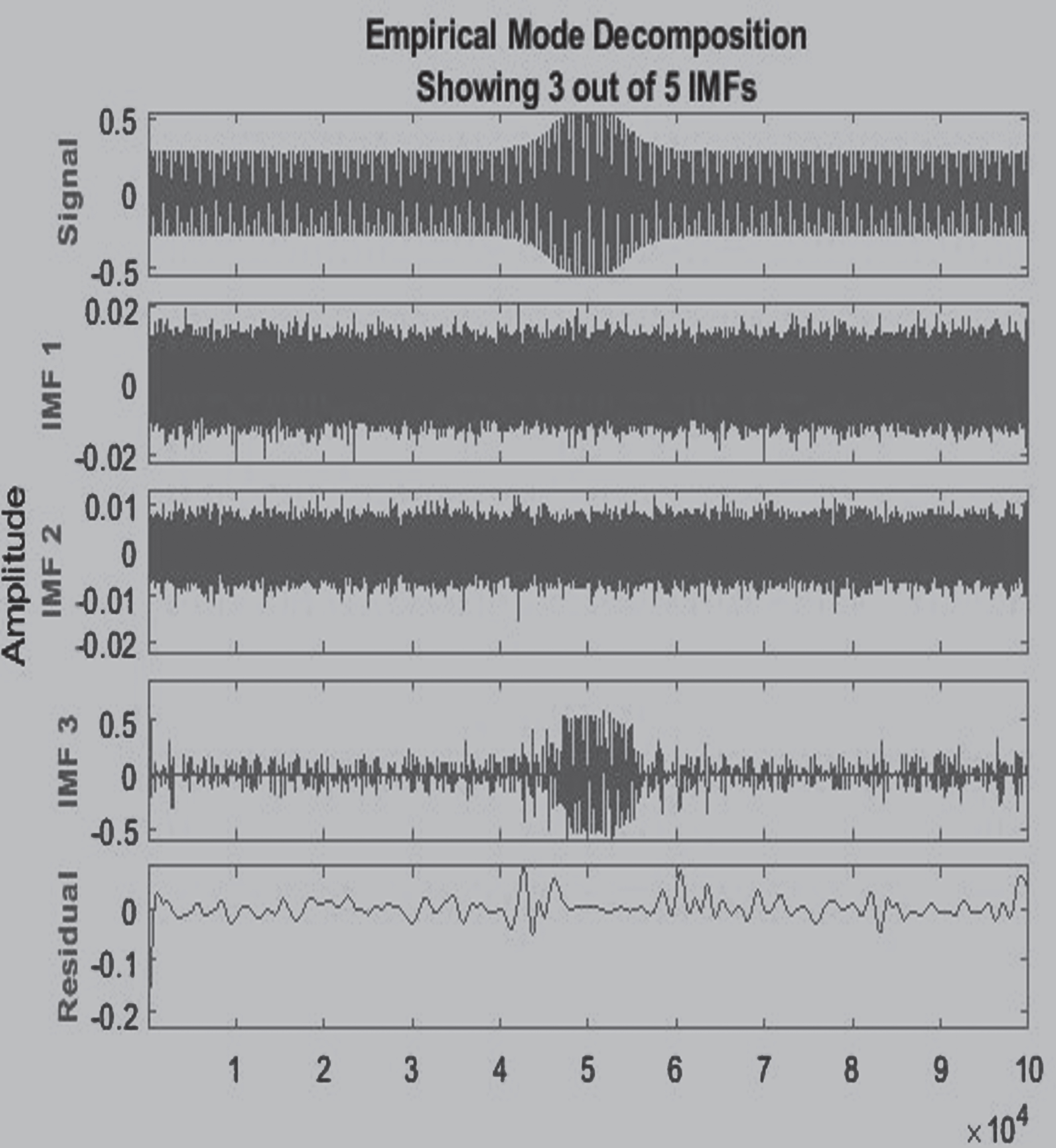
Intrinsic mode functions computed with HHT.
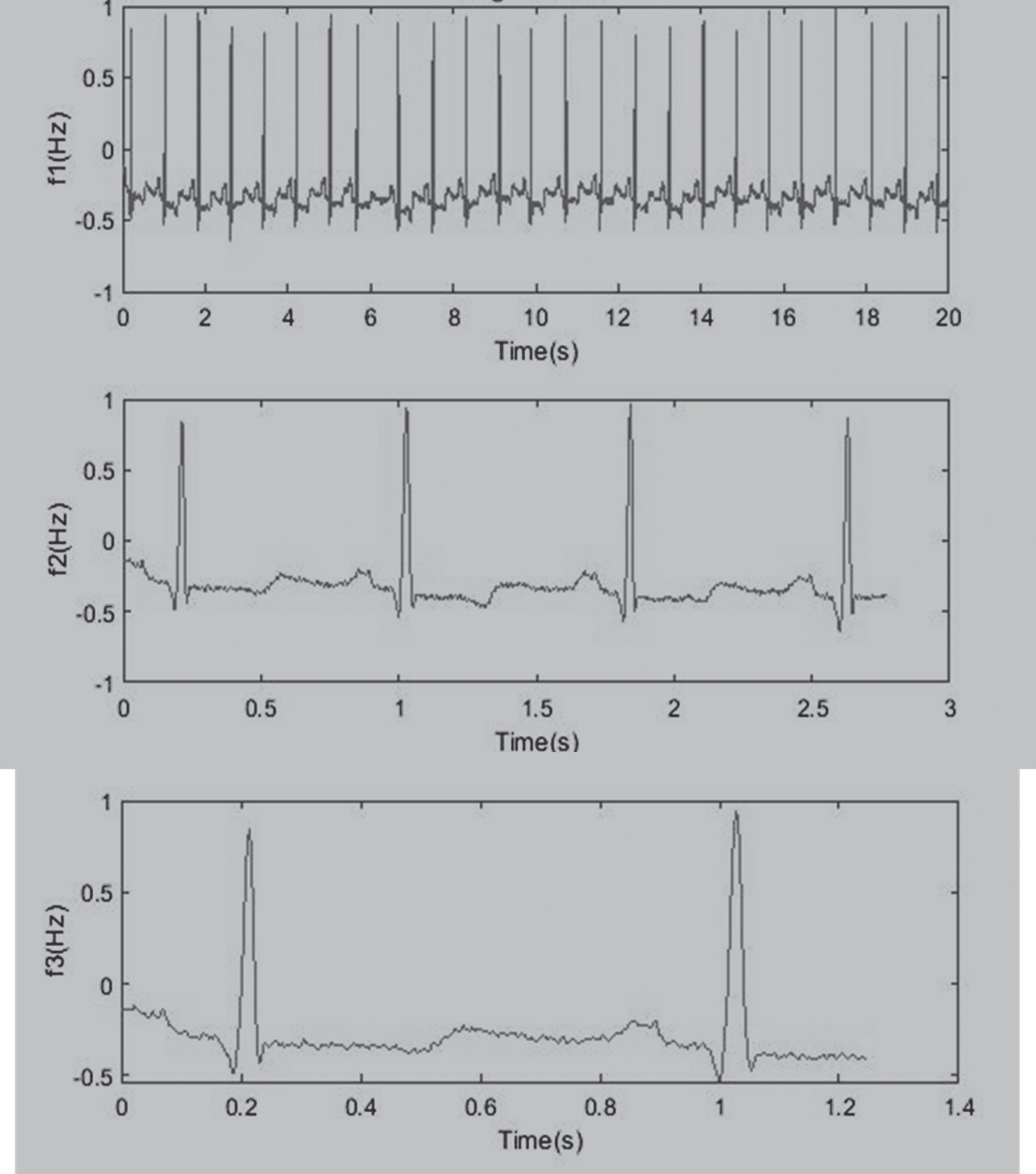
Instantaneous frequency waveform computed from IMF.
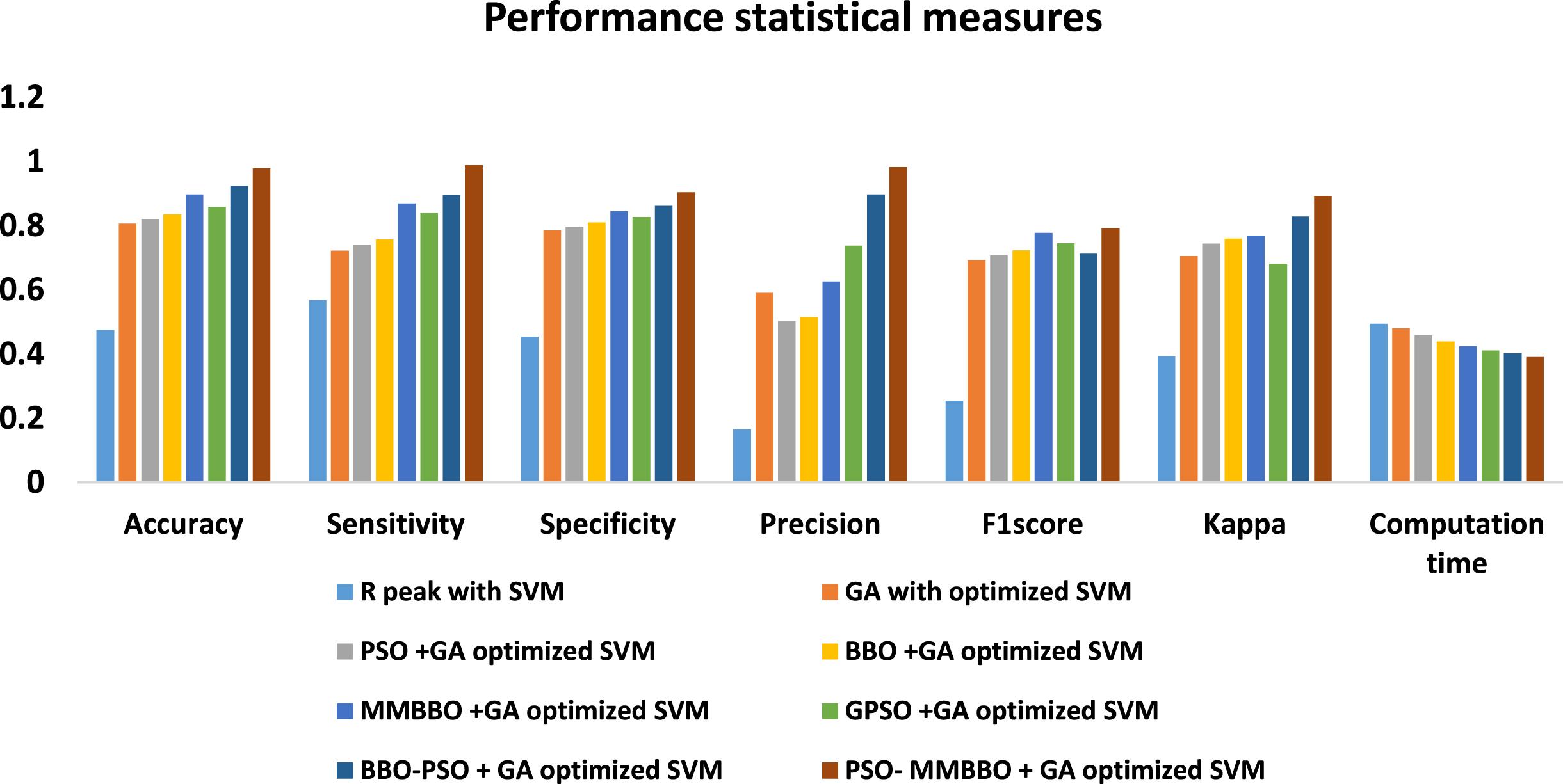
Bar Chart – Comparison of performance statistical measures of various existing algorithms with proposed algorithm (PSO-MMBBO).
Performance parameters with different methods
It is observed that, the proposed model outperforms with an accuracy rate of 97.89% on optimal feature set when compared with other existing model. The proposed model achieves the sensitivity rate to be 98.89% which is 9% more than the next highest level of performance in the existing models. The proposed hybrid optimization attains, 90.47% specificity which is 4% higher than the combination of BBO-PSO. The precision and F1 score of the MMBBO-PSO increases up to 8.61% and 7.94 respectively over BBO-PSO. The advantage of MMBBO over BBO is that the modified limb nodes data will make the proposed model to achieve and attain 89.2% of kappa value than all other existing models. It is observed that, the proposed model takes minimal computation time to compute the classification. When compared with the next highest level model, the proposed model utilizes 1.11% lesser time to compute the process of classification.
The ECG signal classification using automatic detection method is presented. The different arrhythmia signals are classified by using the selected features. Among the extracted features such as time domain features, frequency domain features, statistical features, the optimum feature vector is selected using the hybrid MMBBO-PSO algorithm. The performances of the used models are shown (Table 3), it express that the best result is obtained by the state-of-art hybrid model (PSO-MMBBO). This algorithm simultaneously optimizes the SVM classifier by optimally choosing the values for the parameters of the kernel function. When comparing with the previous works, in this method, the accuracy is improved to 97.89% and sensitivity is improved to 98.89%. The performance results of combining SVM with other algorithms, the proposed model has better performance on all measurement units. Compared with the results of other works have done on the same data set, the classification accuracy, sensitivity, specificity, precision, F1 score obtained in this paper is also very modest. It is observed form the experimental results that the computational time taken by the proposed work is lesser than other existing algorithms. As results of the proposed work, hybrid optimization algorithm created by the good characteristics of PSO with MMBBO can be used to find the optimized parameters of the classifier and rate of success of the proposed model can be increased.