



Abstract
It is worth exploring how “novices in academic entrepreneurship” can more clearly judge their performance in academic entrepreneurship process, self-diagnose the interaction effect between internal and external factors, and improve the effectiveness of entrepreneurial activities. This research takes Chinese academic entrepreneurs as the object, through the qualitative research method of grounded theory analysis, constructs the behavior map of academic entrepreneurship. The main stages of academic entrepreneurship chain are divided, including four stages: starting point, finding technology application, stabilizing technology application, and enterprise mature development. The common decision logic of academic entrepreneurs in each stage is explained. At the same time, the map shows the main influencing factors of academic entrepreneurial behavior and the logic of these factors’ influence on academic entrepreneurial behavior. The above results not only enrich the research theory in the field of academic entrepreneurship process, but also have guiding significance for the practical activities of “novices in academic entrepreneurship”.
Introduction
With the rise of a new round of technological and industrial changes, economic development is increasingly dependent on innovation. University research achievements are regarded as the key elements for developing new products and cultivating emerging industries [1]. Academic entrepreneurship is an important channel for applying new scientific knowledge to the market. Chinese universities are also constantly encouraging scholars to commercialize academic achievements. This process is academic entrepreneurship, which refers to all activities carried out by universities and their industry partners, with the aim of commercializing the research results of the college by creating new enterprises [2].
However, for “novices in academic entrepreneurship”, it is a long and difficult road to turn academic achievements into commodities. This study puts forward the concept of “novices in academic entrepreneurship”, which mainly refers to scholars who have just begun to try to commercialize academic achievements. They are curious about academic entrepreneurship, but they still lack a basic understanding of it.
Due to the lack of accumulation of user demand and tacit knowledge of the industry [3, 4], this may lead to the “valley of death” phenomenon formed by the fault between technology research and development and market demand [5].
For “novices in academic entrepreneurship”, if they lack clear entrepreneurial positioning and theoretical guidance, they are prone to get lost and fall into errors. For entrepreneurs in confusion, they need the “wind vane” most. The relevant conclusions from the perspective of academic entrepreneurship process can provide a theoretical basis for academic entrepreneurs. For example, Chen Hong divides the academic entrepreneurship process into prototype research and development, engineering, initial commercialization and commercialization development [6], but most of the stages of such research are linear, showing the initial and final stages of academic entrepreneurship in turn. But for “novices in academic entrepreneurship”, it is likely that they have fallen into difficulties in the first stage. Therefore, if we can provide academic entrepreneurs with a map of entrepreneurial behavior, show the possible trends of academic entrepreneurial behavior on each “key coordinates”, and explain the decision logic of each trend, it will have more reference value for “novice in academic entrepreneurship”.
In addition, there is a correlation between academic entrepreneurial behavior map and intelligent and fuzzy systems, but it is still rare in the existing research. In the field of academic entrepreneurship, intelligent and fuzzy systems can help entrepreneurs better analyze and predict market trends and improve the success rate of entrepreneurship. Set parameters for the influencing factors on the academic entrepreneurial behavior map, build artificial intelligence neural network and fuzzy logic algorithm, and provide prediction for academic entrepreneurial activities.
Literature review
Academic entrepreneurship process
There are many research results on the entrepreneurial process, but the research on the academic entrepreneurial process is relatively few. The entrepreneurial process usually includes the process of a business opportunity with market value from the initial conception to the formation of a new venture, as well as the growth management process of the new venture [7].
The entrepreneurial process is complex and dynamic, and its research evolution is from side repetition and complexity to focusing on dynamics, and then to the integration of dynamics and complexity. The research idea of lateral repeatability is mainly to explore the entrepreneurial elements of the entrepreneurial process and the internal relationship. For example, Cartner’s theoretical model includes four elements: individual, environment, organization and founding process, and the four elements interact with each other. The total number of sub variables under the four elements has reached more than 50, which shows the complexity of the model, but the interpretation of the relationship between the elements is not clear enough [8].
The research focusing on dynamics mainly focuses on the division of entrepreneurial stages. Holt divides the entrepreneurial process into pre start-up stage, start-up stage, early growth stage and late growth stage from the perspective of enterprise life cycle, and points out the content and focus of activities in each stage [9]. At the end of the 20th century, the theorists gradually realized that the dynamic and complex characteristics of entrepreneurial process were the fundamental reason why entrepreneurial research was different from general management research, and some dynamic and complex entrepreneurial process theoretical models gradually emerged. For example, Bhave believes that the entrepreneurial process is a rational, non-linear and repeatedly revised practical process, including initial opportunity identification, product line construction, organization creation, market transactions and customer feedback [10].
The research on the process of academic entrepreneurship also follows this research paradigm, taking into account the dynamics and complexity. For example, Rasmussena et al. Based on the social network theory, studied the strategic realization process of academic entrepreneurship, including opportunity identification, resource utilization and team building. This study constructs the theoretical framework of academic entrepreneurial behavior map, which consists of four stages [11]. Duanqi et al. constructed an academic entrepreneurship process model covering 9 key elements, including technology ownership, entrepreneurial fire line, opportunity identification and acquisition [12]; Yao Fei built an entrepreneurial process model including role identification, network construction, team building and entrepreneurial marketing [13]. However, the above research is at the level of organizational process, which does not clearly show the decision logic of individuals at each stage.
In addition, in terms of influencing factors, it has confirmed the influence of many factors, such as system, entrepreneurial system, entrepreneurial subject itself and so on. However, the current research perspectives of influencing factors are mostly focused, so there is still a lack of factor network integrated in the “academic entrepreneurial behavior map”.
Academic entrepreneurship behavior map
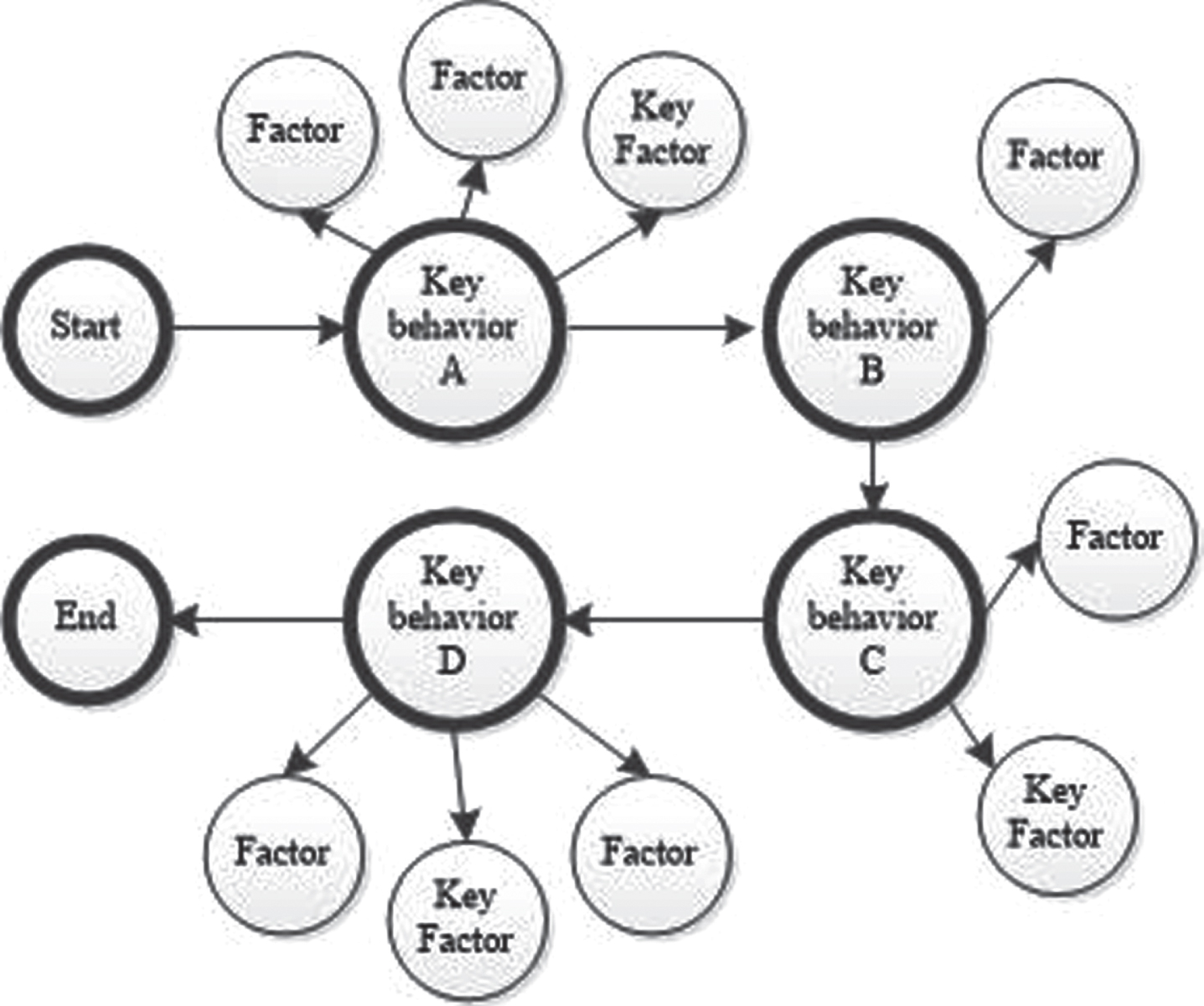
The concept of academic entrepreneurship behavior map is not mature, but that of behavioral mapping and entrepreneurship map is relatively mature. Behavioral mapping, mainly used in industrial design, was proposed and developed by Ittlelson et al. in 1970. It is a method of systematically observing and studying behavior from the perspective of time and space [14], which is used to record the behavior occurring in the designed building so as to help the designers to connect the design characteristics with the behavior in time and space. It can transform abstract user data into explicit connections of user behavior in time and space, as shown in Fig. 1.
Working principle of behavioral mapping.
In the process of product design and research, behavioral mapping takes the population and place as the observation units to obtain the behavioral characteristics of different users using a certain product, so as to mine and contact the relevant behavioral data of users, and find the user needs in the key behavior analysis.
Behavioral mapping can also be applied to academic entrepreneurship, because it arises from the job inventions of researchers, and then produces a series of entrepreneurial derivative behaviors, which is similar to the concept of behavioral mapping in terms of occurring in the system (building). If you want to better promote the success of academic entrepreneurship, you need to identify the key behaviors of researchers in entrepreneurship and optimize the element system in which the key behaviors are located.
The concept of “map” is widely used in business fields. However, most concepts about “entrepreneurship map” refer to business plans. For example, Han Shujie proposed that entrepreneurship map is a dynamic map that needs continuous iteration [15].
The academic entrepreneurship behavior map defined in this study is a key node and element system describing the commercialization process of technology by researchers when facing the uncertainty of resources, market and environment from the beginning of holding job inventions. Despite rapid and in-depth advances in the research of academic entrepreneurship, it lacks an overall description. What does the backbone path of academic entrepreneurship look like? What factors affect the final direction?
The significance of this study is as follows. (1) At the social level, due to the lack of mature theoretical framework and the lack of understanding of the objective laws of academic entrepreneurship behavior and the existing key nodes, the policy support means of local governments and universities are prone to deviation. (2) At the individual level, we provide theoretical reference. In the process of entrepreneurship, researchers can judge their own academic entrepreneurial activities stage as well as the possible risks and opportunities.
Research methods
At present, China’s academic entrepreneurship has obvious local characteristics, such as differences in entrepreneurial atmosphere, policy, academic entrepreneurs’ ambition, mentality, cultural background [16, 17]. Therefore, there is a lack of an overall framework for academic entrepreneurship in the Chinese context. Moreover, since there is no mature theory for academic entrepreneurship behavior map, new theoretical views are still constructed through qualitative research.
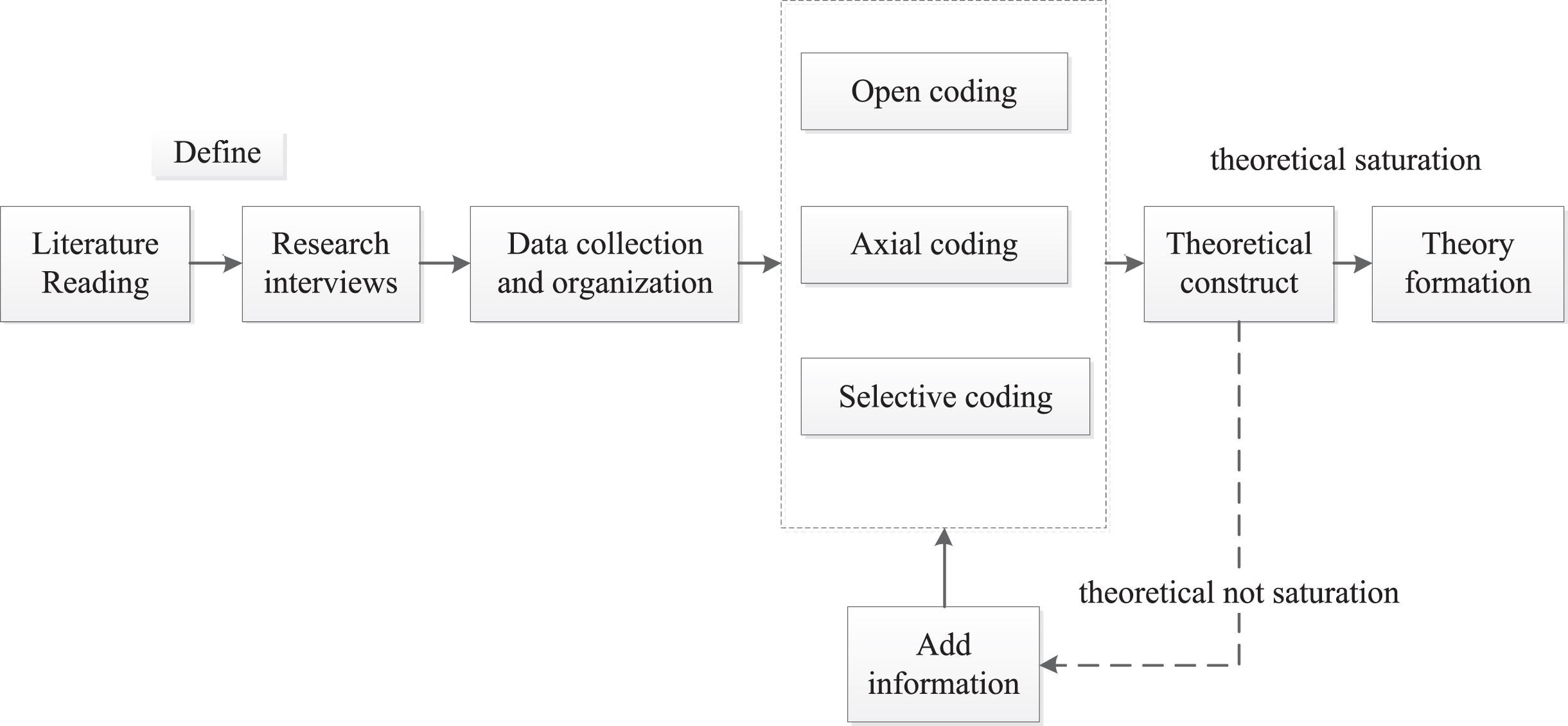
Through the systematic analysis and induction of original data by grounded theory, the relevant concepts and categories of constructing theories were gradually summarized and refined, and the connections were determined [18]. The specific process is as Fig. 2: use open coding, axial coding and selective coding to construct the theory of technology entrepreneurship process of university researchers, and then use constant comparison to constantly revise the theory structure until the theory is saturated.
Research process of grounded theory.
This study builds a theoretical model of academic entrepreneurship behavior map based on multi-source interview data and Nvivo11 software, and summarizes the key characteristics of academic entrepreneurship behavior and the main influencing factors of its evolution.
According to Yin’s theoretical sampling principle, academic entrepreneurial enterprises in different entrepreneurial stages, types and industries were investigated, including 2 teachers who hold patented technology but do not start a business, 1 ordinary university enterprise, 3 research institute-local government cooperative enterprises, and 2“985” university enterprises.
The data of this study came from multiple channels such as field interviews, project tracking, secondary data collection and other methods, so as to build an evidence triangle chain, avoid a single data source problem, and improve the reliability and validity of the research results.
The specific respondent data is shown in Table 1:
Respondent data
Respondent data
This study collected data from 2015 to January 2022, during which the researchers conducted an average of 3-5 in-depth interviews with these enterprises, a total of 25 in-depth interviews. The interview text amounted to 394,000 words. And the public information and related reports of these enterprises were collected online, totaling 48,000 words.
Some interview topics are shown as follows: What is the transformation form of scientific and technological achievements in the current project? What other forms of transformation of scientific and technological achievements do you know? Why choose this form? How to understand the distance from the prototype to the product? What are the innovations of your school in academic entrepreneurship? After seven years, your enterprise is now in this situation. How do you evaluate it? What do you think is the reason for its failure? What policy subsidies have you enjoyed? What do you think of the effect?
Open coding
Open coding is the primary link of constructing theoretical models, It is a process of classifying, comparing and integrating the original data, and refining a strong generalized concept.
Following the principle of grounded theory, the original data were deeply decomposed in this study. And Nvivo11 software was used to number the selected texts and make the labels simple. In the process of coding, the conceptual categories were extracted and the core categories were refined through expert opinion consultation, repeated thinking and comparison. Finally, the theoretical model was constructed from the bottom up based on the connection between the categories. A total of 57 labels, 37 concepts, and 28 categories were obtained.
Axial coding
The categories of open coding were further summarized to establish the connection between different categories and develop the primary category. The categories were made more rigorous by developing their nature and level, and the independent categories were associated, and the potential logical relationship between the categories was discovered and established. 20 subcategories and 3 primary categories were formed through induction, as shown in Table 2.
Examples of axial coding
Examples of axial coding
Selective coding aims to link certain core categories to other categories, validate their relationships, and complement the categories that have not yet been fully conceptualized. The typical relationships of the primary categories in this study are shown in Table 3. Through repeated thinking and comparison of the primary and secondary categories and the interview materials, we found that all the primary categories can represent different characteristics, and the lack of any one category can not accommodate all the contents of the interview materials [19].
Examples of typical relationships
Examples of typical relationships
Through selective coding, a clear story line about the academic entrepreneurship behavior map was obtained: affected by the internal and external influencing factors, the scholar holding a technology walks out a unique academic entrepreneurship trajectory on the “academic entrepreneurship behavior map”. There are four key coordinates on the “academic entrepreneurship behavior map”: technology holding, finding technology application scenarios, stabilizing technology application scenarios, and mature operation. The essence of academic entrepreneurship is entrepreneurship, so it must follow the business logic and financing logic (Table 3).
4 interview texts were collected from the academic entrepreneurial enterprises, and then the theoretical saturation of the constructed model was constructed by referring to the previous 4 reserved network interview texts and 1 field interview text. And a full-sample search of the obtained codes was conducted using Nvivo11 software.
The results showed that the key coordinates, ecological elements and their logical relationships of academic entrepreneurship behavior map were still within the core categories obtained in this study, and no new primary and secondary categories and relationships were found, so the obtained codes were nearly saturated.
Model interpretation and research findings
Based on the grounded theory analysis, this study has obtained the academic entrepreneurial behavior map theoretical model, as shown in Fig. 3:

Theoretical model of academic entrepreneurship behavior map.
Different from other academic entrepreneurship Process theory, the four entrepreneurship stages proposed in this research are more inclined to the practical operation process, and explain the possible trends under each “coordinate”. Previous studies have defined the process of academic entrepreneurship in a relatively general manner, such as dividing it into technology accumulation, trial products, and products [20], but the explanation of the main tasks at each stage is not clear enough. In addition, previous research has focused more on the logic of entrepreneurial growth, with a perspective on the enterprise rather than the actions of entrepreneurs. For example, some scholars divide the entrepreneurial process into stages of knowledge innovation and property protection, understanding and acquiring industry partnerships, selecting commercialization mechanisms, and commercialization [21].
This theoretical framework starts from the perspective of “ novices in academic entrepreneurship”, standing in the “game map”, and can directly bring in the role of “player” to determine the direction of one’s entrepreneurial activities.
It is found that there is a “behavior map” of academic entrepreneurship in Chinese universities through case studies. The “coordinates” of academic entrepreneurship behavior map include four stages: starting point, finding technology application scenarios, stabilizing technology application scenarios, and mature operation.
Starting point
The starting point of academic entrepreneurship is the technology holding of the individual scholar or his / her team. The technology of some entrepreneurs is of their own, and that of other entrepreneurs is shared by the academic team. So starting a business by the academic team is common. However, the scholars’ choice to start a business is usually influenced by individual entrepreneurial intentions.
Finding technology application scenarios
(1) Signing technology development contracts
If scholars are willing to start a business, they will either apply for patents or sign technology development contracts with enterprises. Most scholars’ academic entrepreneurship stops at this coordinate, because it is the least risky academic entrepreneurship.
As for patents, some scholars can sell them smoothly and get patent transfer fees, but most scholars find it hard to sell them. First, scholars couldn’t find a market for their patents, because the actual application of patents is not high as they are applied for professional title evaluation and assessment. It is easy for scholars to give up paying patent fees for no substantive income. Second, scholars attach great importance to the value of patents, and can not meet the market demand, so it is difficult for them to agree on the value of patents. Of course, some business-conscious scholars adopt the patent layout to form their own patent moat to raise their patent premium rather than rushing to sell patents.
The application research stage is mainly to produce samples and conduct trials, which determines the direction of the technology application. At this stage, scholars may sign technology development contracts with enterprises. Many entrepreneurs will only choose to enter this stage to help the company solve specific technical problems, and receive rewards from the company, which ends this small collaboration.
(2) Product solidifying
If scholars have the opportunity for technological iteration, they may solidify the product, and then build the product, which is the product research stage. But this process requires a lot of opportunities, such as whether the technological iteration can be realized, whether they have accumulated a stable cooperation with enterprises, enterprise development needs, industry prospects and so on.
Building a product requires a carrier, which may be an enterprise founded by scholars themselves, a site funded by universities, or a collaboration with external institutions. At this time, a team with a clear division of labor is required to handle these things, such as technical guidance, process flow, product packaging, product batch number, quality inspection, etc. This stage means that scholars have entered the door of academic entrepreneurship.
(3) Market validation
Whether to experience market validation is a key step for academic entrepreneurship activities from technology to the market. Technology transformation without market validation is a “pseudo-transformation”. The survey found that some academic entrepreneurial projects with a strong background still failed even after obtaining financing. This is because these projects cannot fundamentally solve the pain points of the market or don’t have enough advantages to replace the existing products in the market despite very advanced technology.
Products at this stage usually face the organizational market, not the consumer market. A 10% volatility in the consumer market could lead to a 200% volatility in the organizational market. Therefore, the market demand at this stage is still very unstable.
Stabilizing technology application scenarios
After the entrepreneurial project passes the initial market validation, it enters the third key coordinate — stabilizing technology application scenarios. At this stage, entrepreneurs need to constantly adjust the product parameters and form the goods or services that can be sold stably to stabilize the market. This stage may last for a long time, which is equivalent to the commodity research stage of the academic entrepreneurship process.
At this stage, scholars may either continue to export orders steadily or have other new partners or suspend the cooperation with the enterprise because of low enterprise benefits or failure to sell products in a short period of time due to the long product use cycle. Thus, the academic entrepreneurship activity may stagnate at this point.
(1) Market development
If scholars continue to export orders steadily or have other new partners, the enterprise founded by them may further expand the market.
(2) Stagnant entrepreneurial activities
Market demand at this stage is a key obstacle to the trajectory moving forward. For further development, broad and solid technology application scenarios are necessary, which requires a lot of money. If not financing, there is insufficient funding for R & D or expanded production; if financing, failure can lead to significant borrowing or even bankruptcy.
Mature operation
At this stage, the enterprise’s customer group is relatively stable, the order income is stable, and the enterprise has the ability to expand the market, and enhance the research and development. The sales revenue continues to grow steadily, the market share is gradually expanded, and the enterprise has the ability to realize the capitalization operation.
Influencing factors of academic entrepreneurship behavior map
Because each stage is affected by the internal and external influencing factors, each entrepreneurial project will walk out of its own unique “trajectory”.
Internal influencing analysis
After scholars hold the technology, they either have or do not have the entrepreneurial intention. Scholars without entrepreneurial intention tend to pursue academic research in order to smoothly follow the career path of universities. The career of scholars is divided into two stages, and each stage faces two career choices, namely, academic research and academic entrepreneurship [22]. Career development orientation. Different scholars have different career development orientations. Some scholars are committed to making breakthroughs in academic research and becoming real scientists; others aim to solve technical problems in social development, and become industry experts and entrepreneurs. Knowledge. Scholars will have different careers for their different levels of knowledge. Some experienced scholars are more likely to have business behavior if they have knowledge about business logic, market prospects, and business operations. Values. Personal values play a key role in guiding whether to enter the academic entrepreneurship behavior map and where to go. Personal values will affect the values of the enterprise. If the enterprise wants to develop, it must have a clear “vision, mission and values” to guide and motivate the founder and the entire team, otherwise the enterprise will fall apart. For example, Silicon Valley and Boston were once sources of innovation, but now Silicon Valley has a much higher level of innovation than Boston. Boston also has a lot of good technologies, but the main purpose of those academic spin-off enterprises is to incubate them and sell them, rather than to continue disruptive innovation. Similarly, some academic entrepreneurs want to develop their enterprises, while some academic entrepreneurs just want to commercialize their scientific achievements. Psychological factors. Academic entrepreneurs’ definition of success, emotion quotient, adversity quotient and other psychological factors will also affect their entrepreneurial choice. Academic entrepreneurs come from universities or research institutes, who have little contact with the market. So they are more likely to fail. Successful entrepreneurs are mostly continuous entrepreneurs. Yi Gaofeng found that failure mood repair and re-entrepreneurial motivation formation are important leading variables to trigger the subsequent entrepreneurial ability improvement [23]. Entrepreneurial ability. Kai-Fu Lee once said that science innovation enterprises need a very good product experience. The survey found that there is a big difference between the market demand in the eyes of scholars and the real market demand, so it is difficult for scholars to find the market. Risk preference.
In the university environment, academic entrepreneurs have a low-income but stable job. But in the market environment, they will encounter all kinds of problems. Thus, for risk averters, they are more likely to start a business on the job.
However, in academic entrepreneurship entrepreneurs need the courage to cut off all means of retreat; otherwise, it is difficult for them to have a breakthrough entrepreneurial performance.
External influencing factors analysis
Subject nature. Basic subjects have few entrepreneurial opportunities, while subjects in the field of application research have many entrepreneurial opportunities Industry. Different industries have different entrepreneurial characteristics. For example, the biomedical industry is very expensive, so early angel investment is necessary. Entrepreneurial resources. Entrepreneurial resources refer to the technology, entrepreneurial team, capital, connections, market and other resources owned by scholars. If the resources are sufficient, then the possibility of starting a business will also be higher. For example, if a young scholar has been working with his tutor’s research team, and the tutor starts the academic entrepreneurship, then he is more likely to start a business. Academic entrepreneurship environment. If universities and local governments implement the academic entrepreneurship policy well, it can better encourage and guide the academic entrepreneurs to start their own businesses. For example, Kuaishou started its own business in HuaqingJiayuan in Wudaokou, Beijing, and then moved to the TsingHua Science Park across HuaqingJiayuan. The diversity and inclusiveness of cities contribute to innovation, which is true of academic entrepreneurship. Entrepreneurial team
If academic entrepreneurship wants to go further, entrepreneurs must start a business of their own. The key to starting a business is to build a competent team, otherwise the company is still difficult to sustain. The team of most academic entrepreneurs’ companies comes from the same or similar academic teams, including the “first tutor”, the “second tutor”, and their own students. This model guarantees the same technical background, but it has a simple structure, making it easy to get into the “information cocoons”.
Underlying logic of academic entrepreneurship
Liu Run, a well-known business consultant, made a point in his book Underlying Logic: See the Bottomline of the World: “Only the underlying logic can be applied to new environmental changes, thus producing a methodology to adapt to the new environment.” This study agrees with this view, and it does find that there is an underlying logic in the academic entrepreneurship process.
Business logic
(1) Core logic of academic entrepreneurship
The essence of academic entrepreneurship is entrepreneurship, so it must follow the business logic. For many academic entrepreneurial enterprises, only paying attention to the technical logic while ignoring the business logic is exactly the root cause of their failure. Compared with its competitors, can it be convenient, easy to use and low-cost?
Too much emphasis on technological innovation may lead to entrepreneurship failure. Because the high pursuit of the performance of the product is making a mistake of “marketing myopia”, which will drive up the cost of the product.
(2) Combination of rationalism and empiricism
The essence of entrepreneurial behavior is the integration of entrepreneurial resources, and the process that entrepreneurs use, accumulate and expand their resource endowment, which will be affected by the entrepreneurial motivation and entrepreneurial opportunity perception. The same goes for academic entrepreneurship.
The fundamental purpose of business logic is to obtain entrepreneurial resources by meeting customer needs, but the acquisition of entrepreneurial resources is full of scarcity and uncertainty. In the face of uncertainty, people have no way to explain it with rationalism. So entrepreneurship needs empiricism.
As Mintzberg noted, “Management is both science and art.” Science means that there are logic and theories that can be followed and replicated. Art means that each enterprise has its own internal and external environment, so it needs to update according to its own situation. The same is true of entrepreneurship process. The part of rationalism is that it is an activity conducted with scarce resources and an uncertain future that always needs to meet customer needs.
But there is also the part of empiricism. For example, how to meet customer needs? How to expand the market? How to properly handle the relationship between the various roles in the whole market chain?...... There is no unified answer to all of these questions, which need to be summarized by entrepreneurs according to their own and others’ experience. The internal and external environment of each enterprise and the characteristics of entrepreneurs are different. Therefore, the law of academic entrepreneurship is limited to certain conditions. For entrepreneurship, the part of rationalism is to obey the business logic. If the business logic goes wrong, it is difficult to survive. However, the business logic is full of deformation, which belongs to the part of empiricism.
Financing logic
Policy factors. Whether enterprises can obtain financing is closely related to the policy orientation. Investment is bound to be in line with the general trend. For example, Professor Yang’s industry is the medical industry, which has advantages. Development stage. In the early stage, the enterprise requires little capital for just team building and market validation. However, it may also be recognized by the market and achieve a sudden growth. If so, it needs much capital.
The bank generally only approves the loan when the enterprise has a certain sales revenue. And Angel investment only invests when the enterprise starts selling products.
Research conclusions and discussion
Main conclusions
The multidimensional integration model of academic entrepreneurship behavior map was constructed based on grounded theory to systematically explain its main logic. The study found that: (1) The “coordinates” of academic entrepreneurship behavior map include four stages: starting point, finding technology application scenarios, stabilizing technology application scenarios, and mature operation. (2) The internal and external influencing factors work together on the entrepreneurial subject, which determines which position the entrepreneurial subject can go on the academic entrepreneurship behavior map. (3) The internal influencing factors include entrepreneurial intention, values, career development orientation, knowledge, values, psychological factors, etc.; the external influencing factors include subject nature, academic entrepreneurship environment, industry opportunities, etc. The internal and external influencing factors are independent of each other, which can not only affect academic entrepreneurship alone, but also produce superposition effects. (4) Academic entrepreneurship also follows the underlying logic of entrepreneurship.
Practical enlightenment
(1) Scholars themselves: consolidating entrepreneurial literacy
Firstly, Identify the Key “coordinates” and clarify the entrepreneurial position
Scholars can consider the depth of entrepreneurial behavior by combining the internal and external factors of entrepreneurship and the possibility of success. For example, most scholars choose to sell patents directly, and about 80% of scholars can make prototypes according to the needs of enterprises, but the proportion of teams that can make products is very small. If the team can gain a foothold in the product, it will consider continuing to start a business.
Secondly, Strengthen the cultivation of academic entrepreneurship concept. Many scholars are not willing to start a business, and their internal entrepreneurial drive is insufficient. Some scholars are willing to take root in basic research, preferring to deal with the physical world; some scholars regard academic research as a means to make a living, and they do research to publish papers and evaluate professional titles, and have no real plans to apply their research to any specific scenarios. Still, some scholars have no sense of academic entrepreneurship. They only know that research can be used to publish papers, but never consider the concept of the commercialization of scientific achievements. Few scholars are willing to start a business, but they have no way of doing it. Their patent was not sold, and was abandoned after paying patent fees for several years. Thus, there is a huge waste of innovation resources, including talents, scientific research funds and scientific achievements.
Therefore, the concept of academic entrepreneurship should be implanted in the hearts of young researchers in the stage of graduate education, so that they can form the awareness of the commercialization of scientific achievements.
In the wave of innovation and entrepreneurship, it is necessary to guide researchers on how to commercialize their scientific achievements, give researchers enough power mechanism, and provide carts with wheels for the “pony” driving innovation. Give researchers a map to know where they may go in the future, rather than bumping or staying where they are.
Thirdly, enhance academic entrepreneurs’ understanding of entrepreneurship laws. Let scholars realize that the road of transformation of scientific and technological achievements into commodities and the scientific research process are two kinds of ideas, and objectively understand that there is no real concept of being an enterprise at the beginning of entrepreneurship
(2) University: It is suggested to provide guarantee mechanism
Firstly, University should Build Bridges. If universities can sort out the patents owned by teachers and ask science parks to help meet the needs of enterprises, there will be more successful patents.
Teachers have no sales experience, making it difficult to reach companies with real needs. And they do not have enough energy to do so. Therefore, if China wants to promote the development of academic entrepreneurship, it must improve the support system for academic entrepreneurship and effectively provide guarantee from the organizational and government levels.
Secondly, it should provide Institutional guarantee. If the ownership of service invention has always belonged to universities, and teachers do not have the right to dispose of it by themselves, then they won’t have enough motivation to transform their scientific achievements. In the survey, teacher spay a 10% management fee to the university, leaving the remaining 90% for themselves. In this way, their enthusiasm has been significantly improved.
(3) Government Policy guarantee.
Take Suzhou in China as an example, which ranks among the top 10 cities in China in terms of innovative development and economic development. In the survey, a large number of enterprises in the science parks in Suzhou are in the stage of product research to application research, and the rate of return is very high, reaching 100 billion level. This confirms that a scientific and reasonable technology financial service system is needed in the process of academic entrepreneurship.
Research limitations
The “Academic Entrepreneurship Behavior Map” constructed by this research is more suitable for “novices in academic entrepreneurship”. The key “coordinates” in the theory are more inclined towards the practical operations of beginners in academic entrepreneurship, and the interpretation of the “coordinates” is more inclined towards the immature early stages of entrepreneurship.
Meanwhile, due to research limitations, the sample size selected for this study is relatively small. In the future, we will further expand the research sample to make the conclusion more universal.
Footnotes
Funding statement
This paper was supported by the Fund: ‘The construction of academic entrepreneurship demand model and policy tool system driven by innovation’, The achievement of the scientific research plan of Tianjin Education Commission, (161071). ‘Research on the Impact of Venture Capital and Organizational Culture on Entrepreneurship Enterprises’, Tianjin Education Commission Social Science Major Project (2017JWZD30). ‘Marketing Research’, Tianjin University of Commerce Ideological and Political Demonstration Project, (22XJKCSZ0142). The implementation path of the integration of ideological and political education with business literacy under the narrative logic - taking the course <Consumer Data Collection and Application> as an example, Tianjin University of Commerce graduate Education Reform Project, (23YJSJG0110).
Data availability statement
The data used to support the findings of this study are available from the corresponding author upon request.
Conflicts of interest
The authors declare that there are no conflicts of interest regarding the publication of this paper.