



Abstract
By designing a digital power grid multi-source data security collaborative management platform, the system configuration problem of the OMS system and the power grid management platform for the main distribution network of the power grid is solved. A design method for the digital power grid multi-source data security collaborative management platform based on discrete particle swarm optimization algorithm is proposed. Based on the design concept of SOA, realize the overall design framework of the platform according to the design method of multi-layer technical system in the business presentation layer, business process and composition layer, service layer, component layer and resource layer, realize the basic layer design of the system management platform through the basic application platform design scheme of XML configuration, implement the query, processing and output representation of the grid’s multivariate data using B/S architecture protocol, and use the Spring Framework The platform software architecture is implemented using J2EE technology and multi module component design scheme. The discrete particle swarm optimization algorithm is used for the fusion and scheduling of multi-source data in the digital power grid. The interface design and functional construction of the power grid management platform are implemented in the OMS system of the power grid main distribution network, and the logical model of the transformation project is constructed to achieve platform optimization and construction. Tests have shown that the designed digital power grid multi-source data security collaborative management platform has good human-machine interaction, strong data fusion scheduling ability, reduced resource and subsystem coupling, and supports the flexibility of physical deployment and maintenance.
Keywords
Introduction
China Southern Power Grid Corporation has clearly put forward the requirements for the construction of digital Southern Power Grid, and regards digitization as one of the company’s development strategic paths. In order to solve the bottleneck problem of this strategic development, it is necessary to build a digital grid multi-source data security collaborative management platform. In combination with the Company’s Digital transformation and Digital Southern Network Construction Action Plan (2020 Edition) issued by China Southern Power Grid Corporation in 2020, and in combination with the grid coordination and operation management mechanism, it is necessary to design a digital grid multi-source data security collaborative management platform, gradually integrate internal business, and integrate supply chain resources, Improve the flattening and digital management capabilities of the power grid, optimize the design of the digital power grid multi-source data security collaborative management platform, construct an efficient operation system for power grid assets and power grid security, combine big data and cloud information processing technology, achieve digital power grid multi-source data security collaborative scheduling, promote high-quality development of power grid digital construction, and support the company’s transformation into a digital power grid operator. Studying the optimization design method of a multi-source data security collaborative management platform for digital power grids is of great significance in constructing a management system for power grid digital business platforms [1].
The digital power grid multi-source data security collaborative management platform is the main component of the integration of the OMS system of the Guangxi power grid main distribution network and the power grid management platform. In order to ensure the normal flow of business, it is necessary to fully inherit the business collaboration between the original 6 + 1 system and the OMS system [2]. Through the digital power grid multi-source data security collaborative management platform, the interactive scenario design of the interface for business collaboration is achieved. Through the operation platform collaborative management scheduling, Realizing interactive scenario control for the power grid management platform. Currently, due to historical reasons, the OMS system and the original safety production management system have inconsistent specifications and fields between both parties [3]. Traditional digital power grid multi-source data scheduling and management solutions can cause obstacles and communication problems for both parties to collaborate, which does not meet the requirements of Southern Power Grid’s defense in depth. In the design of digital power grid multi-source data security collaborative management platform, Due to the independent deployment and use of subsystems, there is a problem of high operation and maintenance costs in personnel management and organizational structure management. When the system cannot meet the performance requirements of the application system by adding hardware configuration, horizontal scaling cannot be used to deploy business function modules separately [4]. In response to the problems existing in traditional methods, this article proposes a design method for a digital power grid multi-source data security collaborative management platform based on discrete particle swarm optimization algorithm. Firstly, the overall design architecture of the digital power grid multi-source data security collaborative management platform is carried out. Based on the design concept of SOA, a multi-layer technical system design method is implemented according to the business presentation layer, business process and synthesis layer, service layer, component layer, and resource layer to achieve the overall design of the platform [5]. Then, particle swarm optimization algorithm is used to achieve the fusion processing of digital power grid multi-source data, combined with a modular platform design scheme, build a logical model for the renovation project to achieve platform optimization and construction. In terms of system deployment design, the physical deployment strategy is designed based on the requirements and configuration suggestions for the host system, storage system, backup system and disaster recovery center of the company’s unified planning according to the application architecture design, data architecture design and implementation technology. In terms of security system design, it is mainly designed from the technical and management levels. The technical level of security design mainly includes application security, data security, system security, network security, physical security, etc. Application security is the core of the security protection system for safety production business. The safety design at the management level mainly includes safety organization and personnel assurance, safety management system, safety technical specifications, safety assessment and supervision, and other contents [6]. This BPSO based optimization design for power grid multi-source data fusion management platform can significantly improve the reliability and security of the entire power grid system. Through the implementation of digital management platforms, relevant practitioners in the power industry can more conveniently access and analyze multi-source data, thereby improving work efficiency, improving decision-making accuracy, and effectively addressing various potential risks. In addition, the optimized management platform can also strengthen the monitoring and management of multi-source data, improve the accuracy of power grid fault prediction and scheduling decisions. Overall, the implementation of this platform will provide users with more reliable power services, help the power industry achieve intelligent operation and management, and further improve the safety and stability of the entire power grid system.
Overall design architecture of the platform
In order to achieve the design of a digital power grid multi-source data security collaborative management platform, the overall system design architecture analysis is first conducted. Combined with the technical architecture design of the platform, it mainly involves the interface between the OMS system of the Guangxi power grid main distribution network and the power grid management platform, functional construction, and technical implementation of the modification project, system deployment, and security system design [7]. Under the embedded cloud computing platform and the Internet of Things platform, the software development and resource scheduling algorithm design of the digital power grid multi-source data security collaborative management platform are implemented. The system is based on the design concept of SOA, and a multi-layer technical system design is implemented according to the digital power grid multi-source data security collaborative scheduling business presentation layer, business process and synthesis layer, service layer, component layer, and resource layer, Through the enterprise comprehensive information platform, various components of the system can be integrated and reused at various levels within the enterprise to meet the management business needs of different functional levels within the company. The vertical integration and horizontal integration of information exchange provide efficient and convenient services for customers and partners, and provide technologically advanced work platforms and flexible business construction capabilities for business personnel [8].
In terms of system deployment design, the physical deployment strategy is designed based on the requirements and configuration suggestions for the host system, storage system, backup system and disaster recovery center of the company’s unified planning according to the application architecture design, data architecture design and implementation technology. Adopting an embedded Java architecture system, a digital power grid multi-source data management model, and a security collaborative management platform fusion architecture design method, a Java based digital power grid multi-source data security collaborative management platform is developed. In terms of security system design, it is mainly designed from the technical and management levels [9]. The technical level security design mainly includes application security, data security, and System security, network security, physical security, etc., among which application security is the core of the security protection system for safety production business. The safety design at the management level mainly includes safety organization and personnel assurance, safety management system, safety technical specifications, safety assessment and supervision, and other contents [10]. Based on the overall design architecture mentioned above, the overall structure diagram of the platform is shown in Fig. 1.
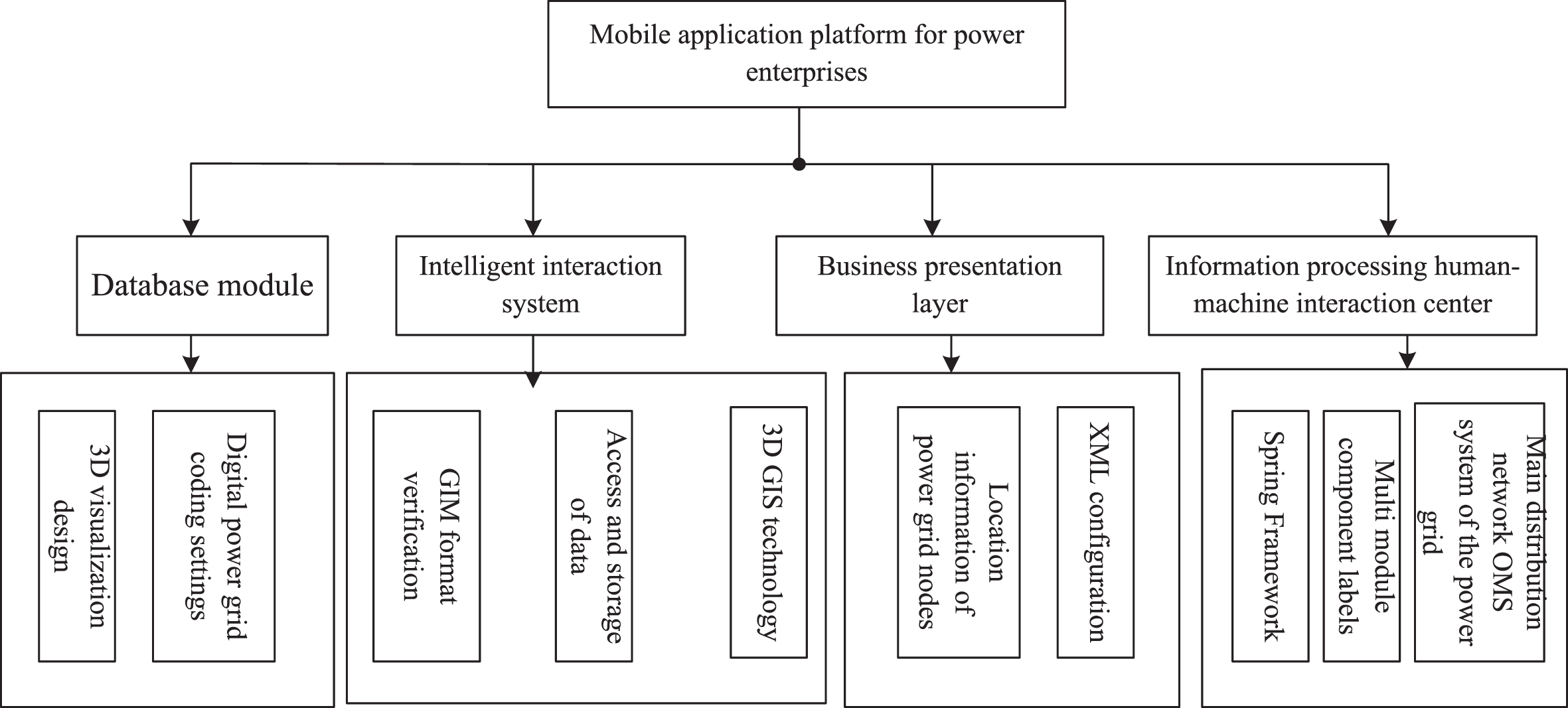
Overall Design Architecture of the Platform.
Basic application platform based on XML configuration
The application configuration of multi-source data security collaborative management of digital power grid is realized by using XML Extensible Markup Language, and the tagged electronic file of multi-source data security collaborative management of digital power grid is constructed by using a subset of standard generic markup language, so that it has a structural markup language. In the information symbol model of multi-source data security collaborative management in digital power grids, through this labeling, the feature quantity of multi-source data security collaborative data in digital power grids is calculated. It can be used to label data and define data types, and is a source language that allows users to define their own markup language. It is very suitable for the security and collaborative management of multi-source data of digital power grid in the World Wide Web transmission. It provides a unified method to describe the exchange information of the security and collaborative management of multi-source data of digital power grid. Through dynamic information interaction, it makes the security and collaborative management of multi-source data of digital power grid independent of structured data of applications or suppliers. It uses the Internet’s document information transmission control technology to improve the stability of system output [11].
B/S architecture
Develop system software hierarchy under the B/S architecture, which is a cross platform application software structure that supports all software and hardware systems of TCP/IP protocol. The hybrid development of the digital power grid multi-source data security collaborative management platform is carried out using the Native app local application program and the Web app web application program. The software development of the platform mainly includes the development of the platform’s power enterprise information database, the development of the data processing module of the digital power grid multi-source data security collaborative management platform, the development of the network communication module, and the development of the digital power grid multi-source data management output interface. The network design of the digital power grid multi-source data security collaborative management platform is carried out under the B/S structure system, and the logical database design is carried out with MySQL as the database, which reduces the time and energy for maintaining the client software and customer training, and also facilitates the use of users.
Component based design
Using the logical component structure design method, a component control model for the digital power grid multi-source data security collaborative management platform is established. A distributed computing framework design scheme based on Java combines reusable object-oriented components with a healthy and reliable implementation environment to submit multi application collaboration. By combining mobile communication networking and IoT technology, the network networking control of the digital power grid multi-source data security collaborative management platform is carried out. Based on the dynamic management method of application programs, these business components can be independently installed and upgraded. The advantage of its relationship lies in its ability to tightly integrate or insert selected third-party product components. Users can obtain a set of components to meet their specific and unique maintenance, scheduling, and procurement needs [12].
J2EE technology and spring framework
Adopting the Browser/Server architecture method, combined with J2EE technology, the server-side design of the Java technology development for the digital power grid multi-source data security collaborative management platform is implemented. The J2EE application server is used to establish a J2EE enterprise level deployment platform for the digital power grid multi-source data security collaborative management platform. Due to their adherence to the J2EE specification, enterprise level applications developed using J2EE technology can be deployed on various J2EE application servers.
In the design of a digital power grid multi-source data security collaborative management platform, Java EE 5 design method is used to implement some important features to simplify the work of developers. The JCP organization has summarized the experience and lessons learned from past J2EE practices and made significant adjustments to J2EE technology in the Java EE 5 specification. In Java EE, support for web services remains an important topic. Web services in the Java Enterprise Edition platform mainly revolve around two application development interfaces: the Java API (JAX-WS) 2.0 for XML Web services, which is a continuation of JAX-RPC and JAXB.
In the collaborative management of multi-source data security in digital power grids, Spring’s open source framework design method is adopted, which is created to address the complexity of enterprise application development. Spring uses basic JavaBeans to achieve an EJB-based hierarchical architecture for collaborative management of multi-source data security in digital power grids. It uses 7 core container networking control technology to create, configure, and manage the collaborative management of multi-source data security in digital power grids. The physical architecture of the network structure layer for collaborative management of multi-source data security in digital power grids is shown in Fig. 2.
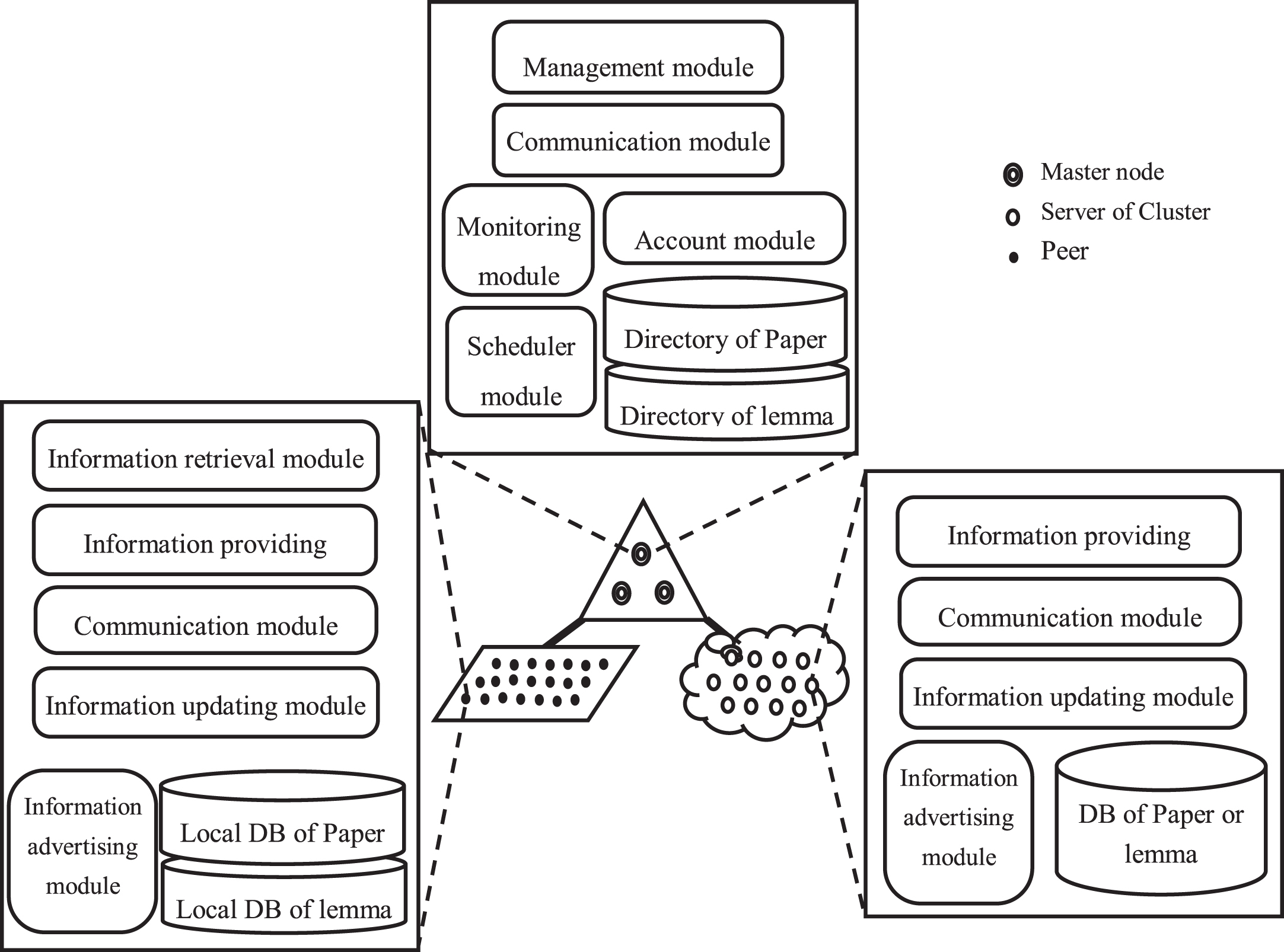
Construction of Network Physical Architecture.
This article adopts middleware technology to achieve heterogeneous hierarchical data fusion in the digital power grid multi-source data security collaborative management network. The middleware designed in this article for the digital power grid multi-source data security collaborative management network includes: (1) network middleware of Hibernate framework; (2) Configure middleware; (3) Hibernate is an open source object relationship mapping framework that enables Java program scheduling and object compilation methods to manipulate digital power grid multi-source data security collaborative management network databases. Hibernate has a total of 5 core interfaces, namely Session, SessionFactory, Transaction, Query, and Configuration. These 5 core interfaces will be used in any development in the digital power grid multi-source data security collaborative management platform. Through these interfaces, not only can persistence scheduling and object management of multi-source data resources of the digital power grid be realized, but also transaction control can be carried out through access to the keywords “provides” and “uses", and the Hibernate framework structure of the digital power grid multi-source data security collaborative management platform can be obtained, as shown in Fig. 3.
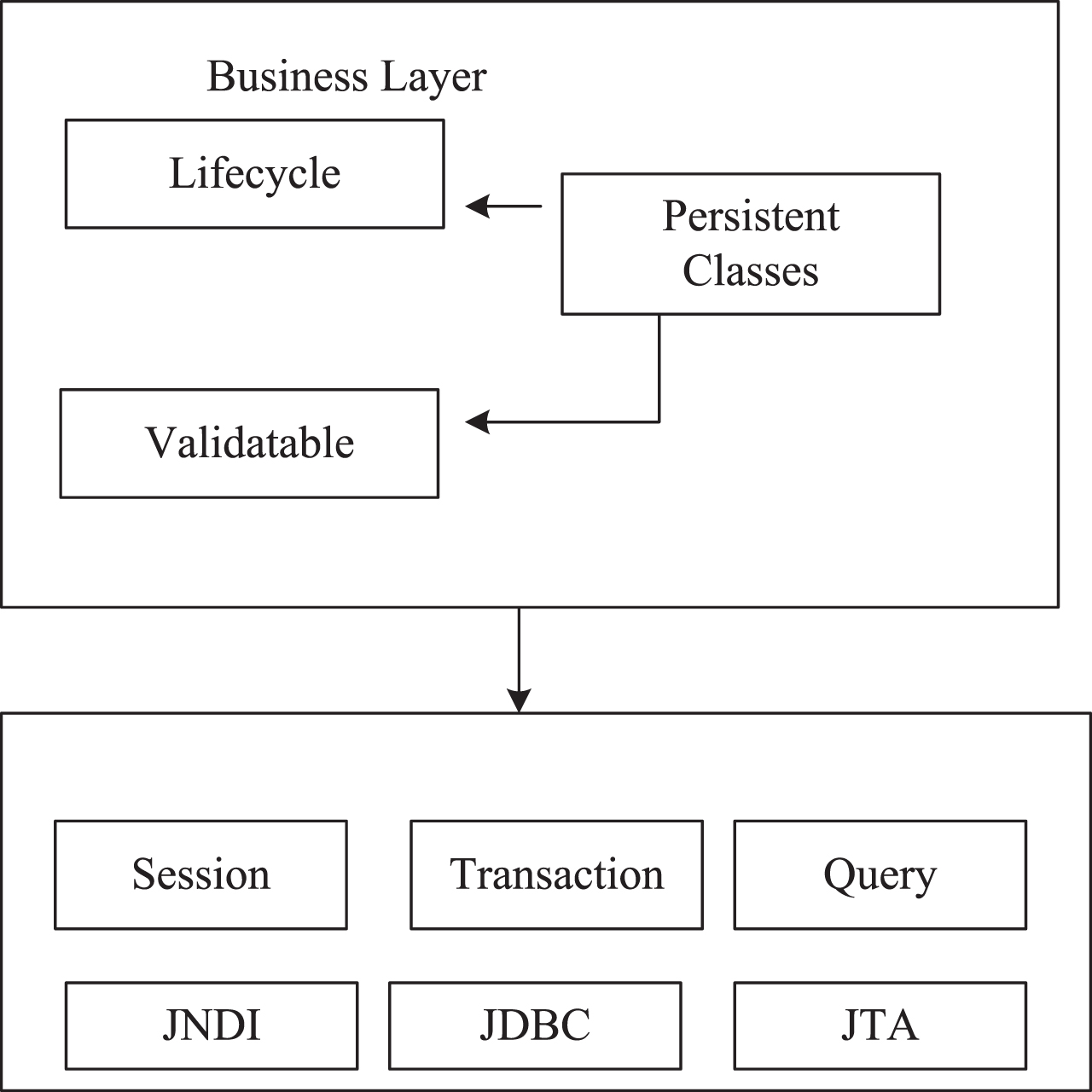
Hibernate framework structure of collaborative management platform.
Construction of scheduling model for discrete particle swarm optimization algorithm
Firstly, the discrete particle swarm optimization algorithm is a heuristic optimization algorithm that seeks the optimal solution in the solution space by simulating the behavior of bird populations. For the scheduling problem of multi-source data fusion, the scheduling tasks of different data sources can be viewed as individual solutions in the solution space. The discrete particle swarm optimization algorithm iteratively updates the position and velocity of particles to gradually optimize and solve the objective function.Build a secure cooperative scheduling of multi-source data of digital power grid based on discrete particle swarm optimization algorithm. There are m particles to form a distributed population of multi-source data of digital power grid. The selected individuals need to be fused with multi-source data of digital power grid through crossover and mutation operations to generate individuals with higher fitness, The digital grid multi-source data security cooperative control particle updates itself by updating two “extreme values": one is the optimal solution found by the particle itself, which is called the individual extreme value pbest of digital grid multi-source data security fusion, and designs a population’s fitness function, genetic operations, including crossover and mutation, convergence conditions The particle updates its speed and position according to the following two formulas:
Wherein, v t is the current speed of particles in the process of multi-source data fusion of digital power grid, and x t is the fitness value of persistent scheduling of multi-source data resources of power grid. c1 and c2 are operator constants, usually taken as c1 = c2 = 2; rand1 () and rand2 () are random numbers for program scheduling and object compilation between [0,1]. For each function corresponding to Xi, they are:
Wherein, f
i
is Xi fitness function, and
The particle mutation extremum model for secure collaborative scheduling of power grid multi-source data is obtained through the meme group jump cycle method, and the operator value is obtained. Under the unconstrained condition of non independent related variables, the process entropy of secure collaborative management of power grid multi-source data is obtained, which satisfies:
Set
Considering the global optimization problem min f (x), the discrete particle swarm optimization algorithm is used to search for the optimal value in the D dimension space using a group of particle sets, and the variation fitness value of the grid multi-source data security collaborative management is obtained as follows:
Wherein, F g is the association rule function, which has not yet been updated during the search process to achieve particle adaptive optimization for secure collaborative scheduling of multi-source data in the power grid.
The hybrid ICMICPSO-BP algorithm is used to conduct secure cooperative scheduling of power grid multi-source data, and FNNs are trained. Assuming that the optimal movement probability of secure cooperative scheduling of power grid multi-source data is
The gradient descent (BP) method based on error back propagation is used to train the grid multi-source data security cooperative scheduling process, and the mean square error function of particles is calculated as:
In the formula, q is the number of input samples for multi-source data in the power grid, ɛ k is the initial weight sensitivity coefficient of the output layer, and d k is the global extreme value for the security collaborative control of multi-source data in the k-th node of the output layer. The differentiated spectral analysis method is used to test the PSO algorithm to search in the D dimensional space, and m grid multi-source data security cooperative scheduling particles form a population. Then the current position of the ith particle can be expressed as the vector xi = (xi1, xi2,..., xiD), and its speed can be recorded as the vector vi = (vi1, vi2,..., viD). Considering the global optimization problem, the grid multi-source data security cooperative scheduling training can be carried out through error back-propagation gradient decline, The particle update formula is obtained as follows:
The discrete particle swarm optimization update formula for collaborative management and fusion of multi-source data security in the power grid is:
Wherein, pad is the average value of the individual optimal position of the grid multi-source data security collaborative control, the probability density function of the optimal clustering solution that tends to be stable, and the particle set of the grid multi-source data security collaborative filtering. Taking this as the input weight value, the particle swarm optimization with dynamic inertia weight is used to obtain the global optimal Xex best of grid multi-source data security cooperative scheduling. Particles update the speed and position of grid multi-source data security cooperative control according to individual optimal and global optimal, C1 and C2 are learning factors, rand() is a random function based on [0,1] uniform distribution, The particle algorithm update formula for secure collaborative scheduling of multi-source data in the power grid is as follows:
Wherein, W α, w β The upper and lower limits of inertia weight represent the secure collaborative scheduling of multi-source data in the power grid. Based on the above algorithm design, discrete particle swarm optimization algorithm is adopted to achieve multi-source data fusion and security collaborative management of the digital power grid.
Adopt the multi-layer architecture based on SOA of the digital grid multi-source data security collaborative management platform, adopt the B/S mode thin client on the front-end display of the digital grid multi-source data security collaborative management platform, and realize RIA through Velocity Template technology; The WEB layer responds to front-end HTTP requests through the Spring MVC framework and invokes backend services to complete business logic operations; Build a three-layer structure system for the digital power grid multi-source data security collaborative management platform, including a service layer, component layer, and application layer, and develop it using JAVA language. The software architecture of the digital power grid multi-source data security collaborative management platform is shown in Fig. 4.
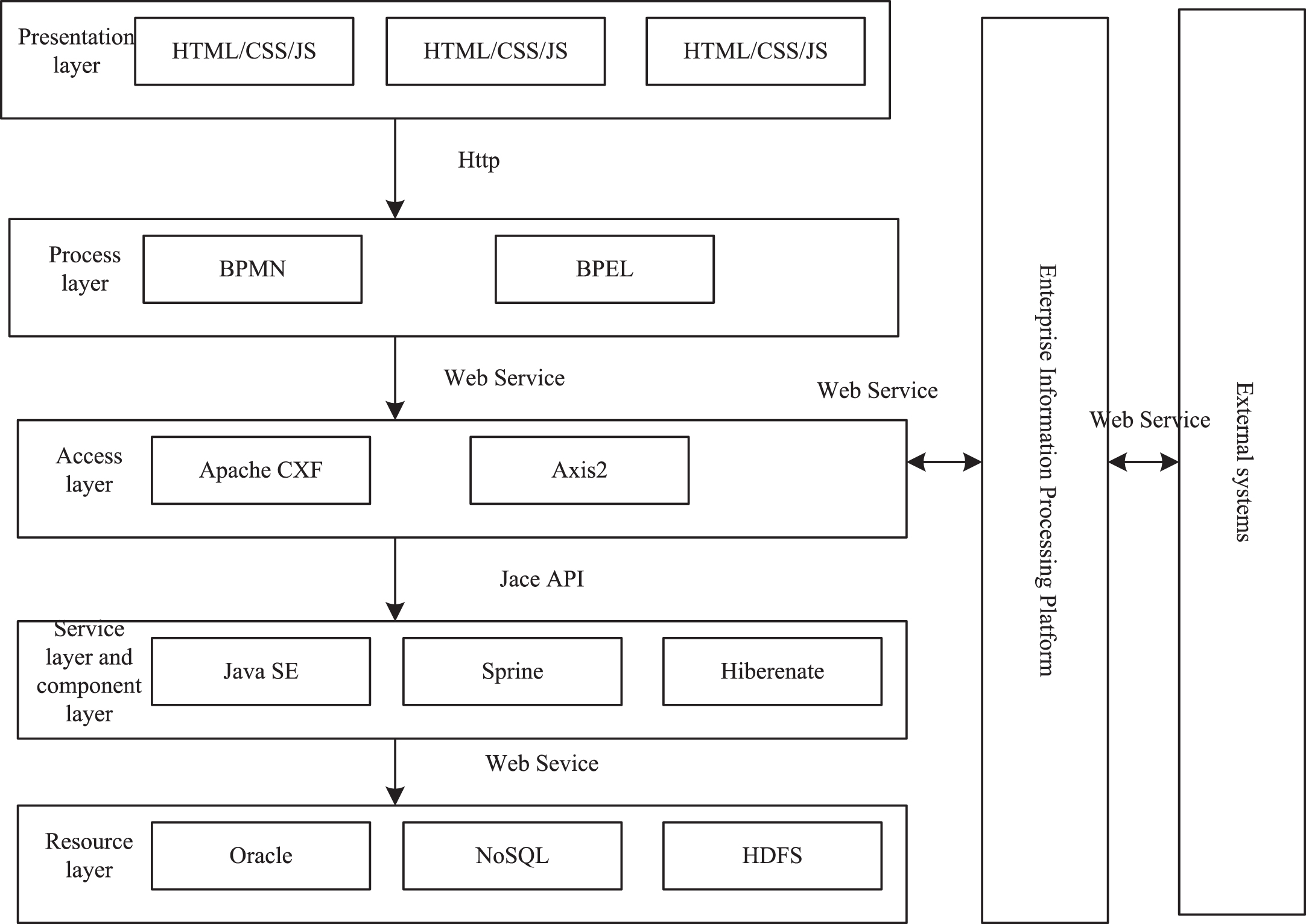
Software architecture of the digital power grid multi-source data security collaborative management platform.
In Fig. 4, the presentation layer of the digital power grid multi-source data security collaborative management platform is based on the HTML/CSS/JavaScript technology system, and the RIA client design of the digital power grid multi-source data security collaborative management platform is implemented using Velocity Template technology; For charts and business process diagrams, Flex technology is used to achieve rich graphical presentation. The process layer implements the definition and flow of internal business processes in the system based on the BPMN2 and BPEL standards. At the access layer of the digital power grid multi-source data security collaborative management platform, the Apache CXF or Axis2 framework is used to provide a unified web service interface. The service layer and component layer of the digital grid multi-source data security collaborative management platform use Java language, the Spring Framework is used to realize business services and public services, Hibernate is used to realize object relationship mapping, and the communication terminal of the digital grid multi-source data security collaborative management platform is established through JDBC and background database. The logical model hierarchy diagram is shown in Fig. 5.
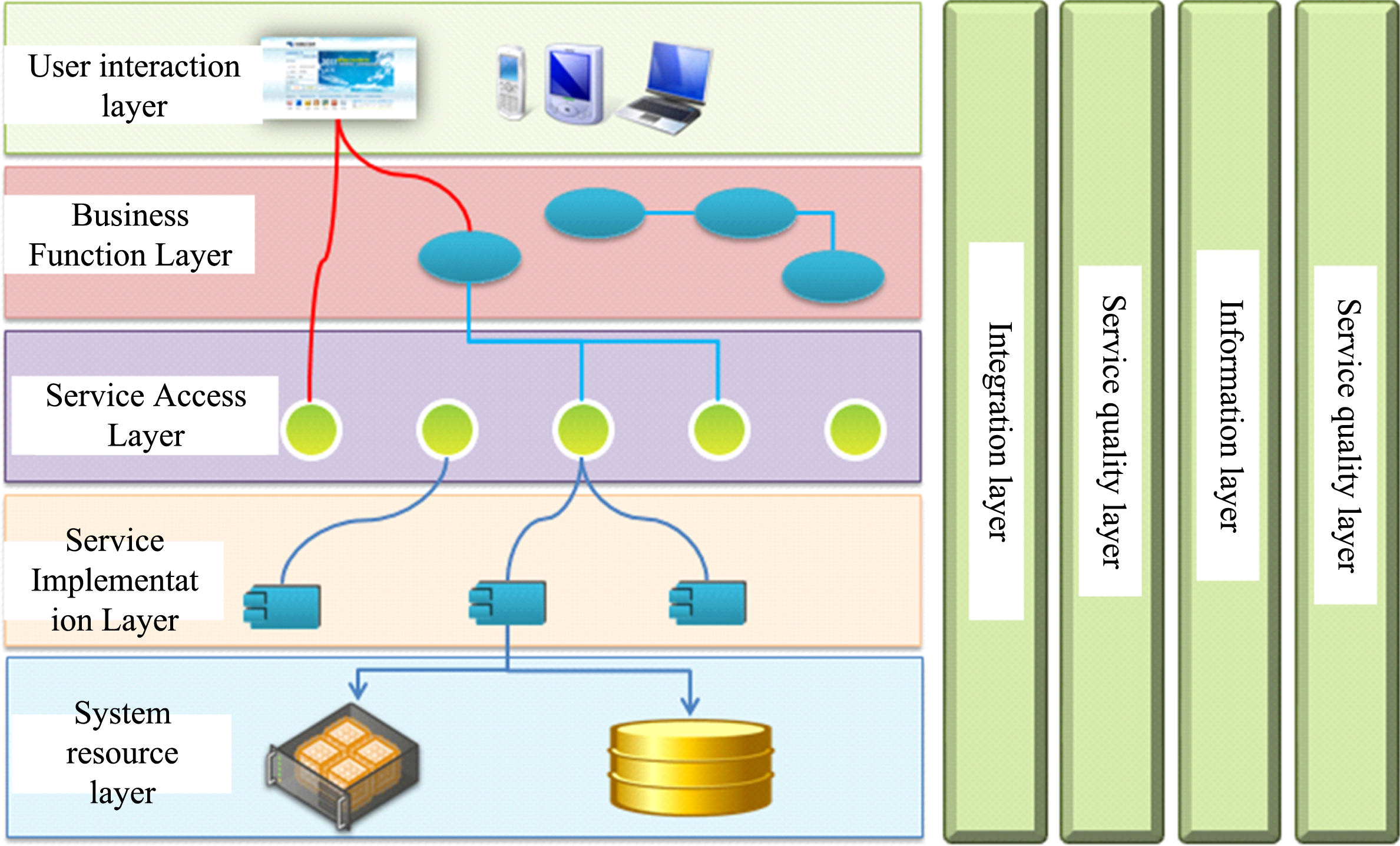
Platform Logical Model Hierarchy.
In summary, in the OMS system of the main distribution network of the power grid, the interface design and functional construction of the power grid management platform are implemented, and the logical model of the renovation project is constructed to achieve platform optimization and construction.
In order to verify the application performance of the digital power grid multi-source data security collaborative management platform designed in this article in achieving multi-source data scheduling in the power grid, experimental tests were conducted. The optimization parameters for the digital power grid multi-source data security collaborative control were 0.213 MW, 0.658 MW, and 2.45 MW under three operating conditions, with a droop characteristic parameter of 0.12 for reactive power. The digital power grid multi-source output frequency was 48 Hz, and the dynamic load parameter was 12 MW. Other simulation parameters are shown in Table 1.
Parameter settings for multi-source data security collaborative management in digital power grids
Parameter settings for multi-source data security collaborative management in digital power grids
Based on the above parameter settings, dynamic identification and scheduling of multi-source data security collaborative management in digital power grids are carried out, and the time-domain waveform of multi-source data input to the power grid is shown in Fig. 6.
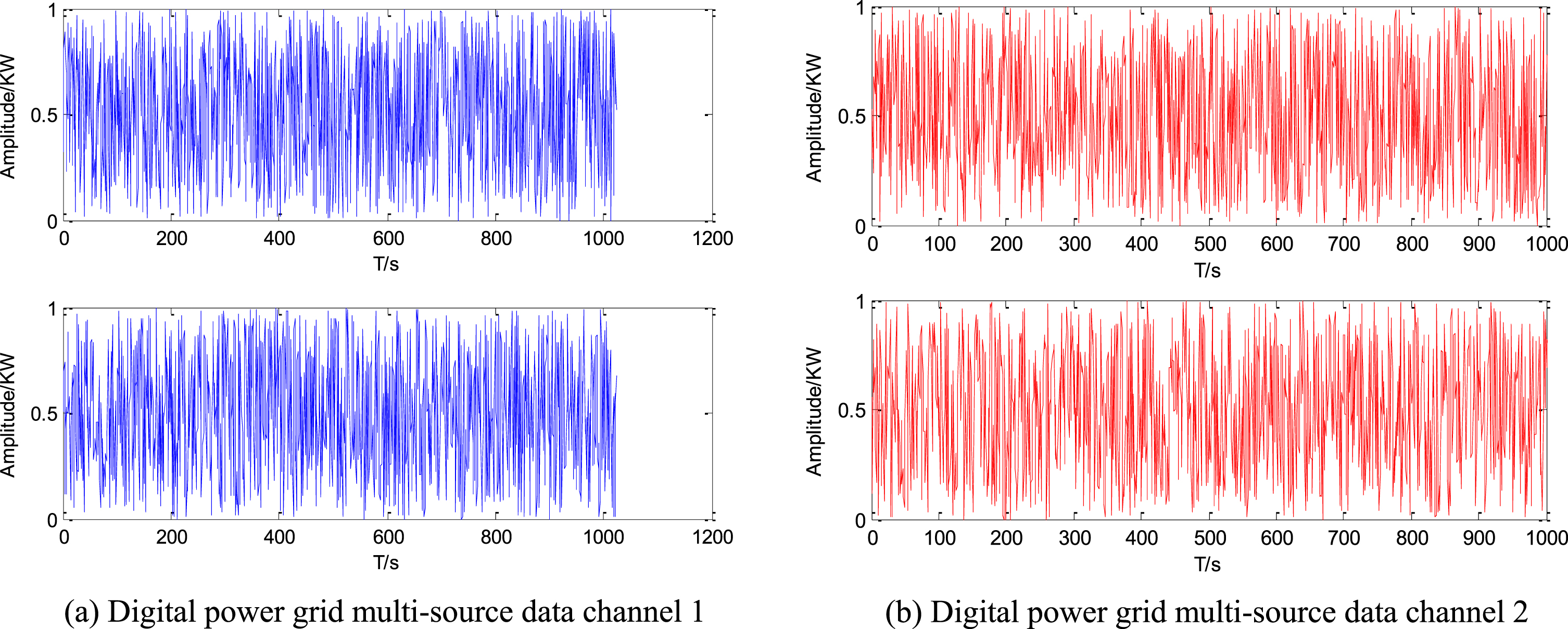
Time domain waveform of multi-source data input from the power grid.
According to Fig. 6, the time domain waveform of the input signals of the two digital grid multi-source data channels is relatively balanced, without missing, and has certain effectiveness, which can be further applied in testing. Based on the analysis of the energy storage response characteristics of the power grid in Fig. 6, the method proposed in this paper was used to optimize the scheduling of multi-source data security collaborative management objectives in the digital power grid. The directional gain of the optimized scheduling of multi-source data security collaborative management objectives in the digital power grid is shown in Fig. 7.
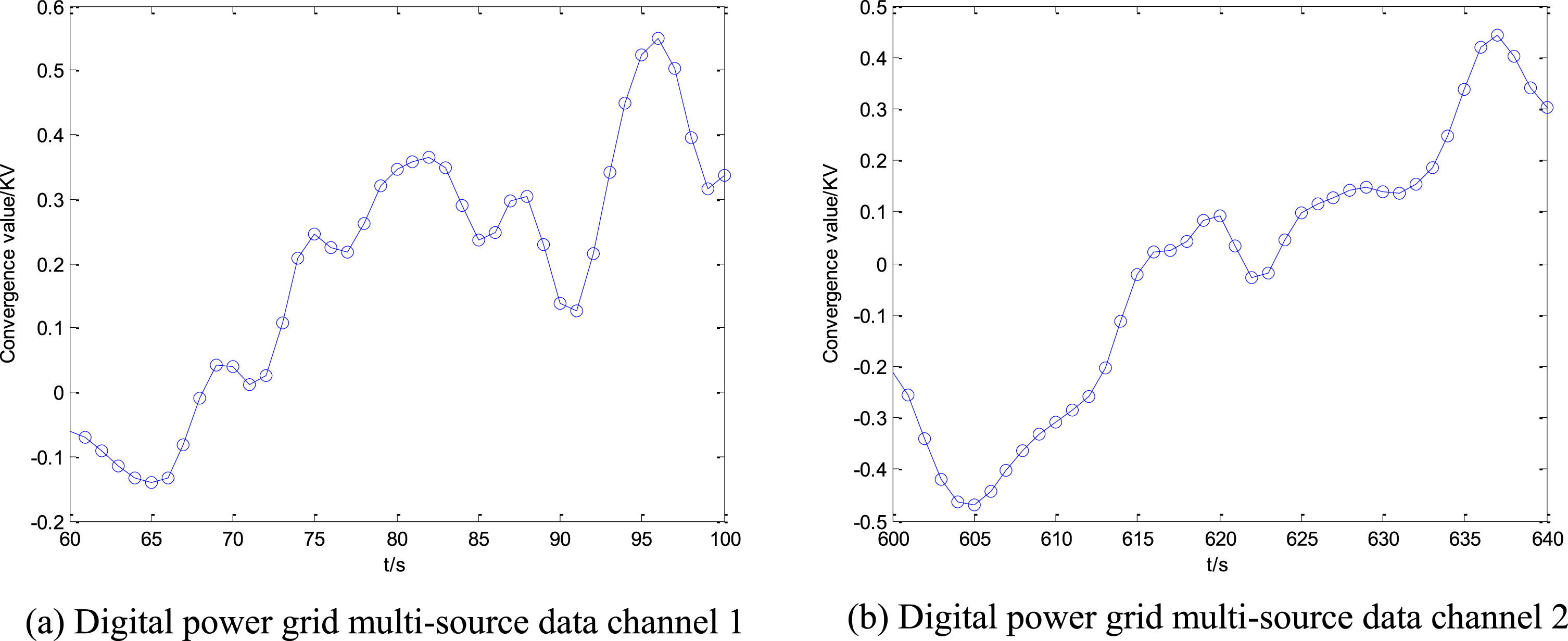
Target scheduling oriented gain for collaborative management of multi-source data security in digital power grids.
According to the analysis results in Fig. 7, it can be seen that after optimizing the security and collaborative management of multi-source data in the digital power grid, the target power gain of the two multi-source data channels in the digital power grid has significantly increased, reaching 64 dB. This phenomenon indicates that the system has made significant improvements in optimization capability and reliability, thereby improving the efficiency and overall performance of multi-source data in digital power grids. Firstly, the numerical increase in power gain reflects the positive impact of optimized scheduling on system performance. The multi-source data channels in the digital power grid may face problems such as signal attenuation and interference during transmission. Through multi-objective optimization scheduling, the system can more effectively configure and allocate resources, improve the quality and stability of data transmission, and thereby enhance the target power gain. This indicates that optimized scheduling plays a significant role in improving the performance of data channels, providing strong support for the secure transmission and efficient management of digital power grid data. Secondly, a power gain level of 64 dB means that the system has achieved significant performance improvement after optimizing scheduling. This significant improvement not only means an improvement in signal quality during data transmission, but also reflects an enhancement in the overall optimization ability and stability of the system operation. Therefore, the efficiency of multi-source data in digital power grids has been significantly improved, providing more reliable data support for power grid operation and further ensuring the safe and stable operation of the power grid. Test the convergence of different methods for multi-source data scheduling in digital power grids, and compare the convergence results in Table 2. Analysis shows that.
Table2
The analysis results show that the algorithm proposed in this paper has good convergence and high efficiency in the collaborative management of multi-source data security in digital power grids. After searching for the global optimal value of 4.46883440e+05 in the 20th iteration, and until reaching a better global optimal value of 4.332227e+05 after 2745 iterations, the search has been in a stable stage, improving the scheduling ability of multi-source data in digital power grids.
This study designs and implements a power grid multi-source data fusion management platform based on BPSO, committed to solving the challenges of complexity and diversity in power grid data management. By using the discrete particle swarm optimization algorithm as the core optimization method, the fusion and scheduling of multi-source data have been achieved, improving the intelligence level of power grid operation and the efficiency of data analysis. Meanwhile, through the implementation of this platform, the reliability and safety of the power grid system have been improved, providing users with more reliable power services. However, there are still some limitations in practical applications, such as the need for further optimization in terms of real-time performance and efficiency in large-scale data situations. Future research directions can include further improvement of algorithms, platform scalability and flexibility, and closer integration with actual power grid operation needs to optimize platform functions..