



Abstract
The open problem of comparing fuzzy numbers as one of the most important issues in fuzzy sets has been studied by many researchers. However, this problem has not been solved up to now and perhaps it will never be fully answered. This work proposes a necessary condition for ranking of triangular fuzzy numbers on the basis of some efficient height-independent ranking methods such as centroids, total integral value, signed distance and defuzzification. To the best of our knowledge, this paper provides the first use of a necessary condition in ranking methods. Fortunately, suggested approach is very straightforward, fast and efficient to use in the real problems. To evaluate the suggested approach with the result of existing methods, six examples are presented. Finally, we apply this necessary condition for ranking fuzzy numbers to a fuzzy failure mode and effect analysis (FMEA) problem. The results show that our approach is practical and has reasonable outcome.
Introduction
An absolutely necessary subject in fuzzy sets is how to rank fuzzy numbers (FNs). Literature review shows that ranking of FNs as one of the most important operations in fuzzy sets plays a very vital role in decision making. Jain [11] is the first to suggest an approach for ordering of FNs, after that, numerous procedures have been presented to compare FNs (e.g., [15, 20, 31, 6, 23, 2, 16, 7, 33, 3, 25, 12]). A list of ranking methods was provided by Ghasemi et al. [9]. Although most of these methods have demonstrated their ability in some problems of ordering FNs, hitherto, none of these methods is totally accepted (Wang and Kerre [28]). Wang and Kerre [28] pointed out that FNs, in contrast to real numbers, have no natural order and ordering of them is one of the most complex open problems in fuzzy sets. It is because FNs are displayed by possibility distribution and may overlap. Moreover, various challenges in the field of fuzzy mathematics have been pointed out. As a result, it is not easy to find out whether a FN is smaller or larger than other (Kumar et al. [16]). Literature review shows that approximately all ranking procedures suffer from a number of drawbacks, namely some of them are intricate to use, counterintuitive and not discriminating [15]. But more importantly, according to Sotoudeh-Anvari et al. [26], many of these methods do not satisfy the reasonable properties of FNs suggested by Wang and Kerre [28]. Obviously, to ensure that a trustworthy decision is always achieved, a rational and easy ranking approach with appropriate discriminatory potential is necessary. Sotoudeh-Anvari et al. [26] reviewed many ranking fuzzy methods and unfortunately, reported that this operation is very young in this context. For example, several methods such as Chen and Chen [6], Wang et al. [31], Wang and Luo [29], Gu and Xuan [10], Boulmakoul et al. [4], and Rezvani [24] proposed to rank FNs, neither of these methods worked (Kumar et al. [16]; Asady [2]; Ghasemi et al., [9]; Sotoudeh-Anvari et al. [27] and Sotoudeh-Anvari et al. [26]). One of the reasons for this failure was revealed by Liou and Wang [20] and Kumar et al. [16]. They pointed out that fuzzy ranking does not rely on the height of FNs. However, all these ranking methods depend on. Unfortunately, this major shortcoming can also be observed in similarity measures. Similarity measure is a key index in fuzzy sets which determines the similar grade between FNs. Although to date several methods have been suggested to quantify the similarity, in nearly all of these methods, the degree of similarity depends on the height of FNs. According to Khorshidi and Nikfalazar [14], there are serious drawbacks in these methods.
As mentioned, the challenges of ranking FNs have not been solved so far and probably they will never be. To reduce some defects of existing works and make simpler the ranking procedures, in this paper, a necessary condition to comparing triangular fuzzy numbers (TFNs) based on centroid (Wang et al. [30]), integral value (Liou and Wang [20]), defuzzification (Chen [5]), signed distance (Yao and Wu [36]), deviation degree (Asady [2]), etc is introduced. There is a key reason why we select the aforementioned indexes in our suggested approach. Some researchers such as Liou and Wang [20], Kumar et al. [16], and Sotoudeh-Anvari [25] pointed out that comparing FNs is independent of the height of them. Also Sotoudeh-Anvari et al. [26] reported that in nearly all height-dependent ranking techniques, some results are unreliable. Moreover, each of the aforementioned methods alone takes into consideration a special feature of a FN. Hence, in this study, we suggest a necessary condition for comparing TFNs on the basis of some efficient ranking methods. Clearly, the suggested necessary condition is not unique, but provides a powerful index for fast comparison among TFNs. Also in this work we reveal that some previous methods such as Wang et al. [31], Chen and Chen [6], Nejad and Mashinchi [23], Chen and Sanguansat [7], Dat et al. [8], Xu et al. [33], Bakar and Gegov [3] and Jiang et al. [12] are not flawless. Finally, the suggested method is used to deal with a fuzzy failure mode and effects analysis (FMEA) problem. FMEA is a well-known risk assessment technique that reduces potential failures, particularly in manufacturing processes before they happen (Liu et al. [21]). Literature shows that FMEA is becoming very popular in various fields of engineering, business, management, etc because of the simplicity and applicability it provides to rank and tackle the failure modes (e.g. Ardeshir et al., [1]).
This paper is organized as follows: in Section 2, a number of fundamental concepts are reviewed. In Section 3, a necessary condition for comparing TFNs is proposed. Section 4 prepares various numerical instances to demonstrate the benefit of our approach. In Section 5, the introduced necessary condition is applied to a fuzzy FMEA problem. Conclusion is provided in Section 6.
Preliminaries
In this section, we review a number of basic materials that will be exerted in this work.
Fuzzy numbers (FNs)
There are different kinds of FNs that can be employed in applications. However, triangular fuzzy number (TFN) is one of the most popular forms. TFNs are very practical owing to their computation easiness and distinctive attributes. The other kinds of FNs such as Gaussian and trapezoidal fuzzy number may increase the complexity of problems without considerably affecting of the outcomes (Mandal and Maiti [22]). We believe that a TFN can sufficiently represent the fuzzy variables. Therefore, in this study, TFNs are employed. A fuzzy number
where
Also main arithmetic operations between
In decision process, decision makers (DM) are classified into three groups: (i) pessimistic (ii) neutral and (iii) optimistic (Bakar and Gegov [3]). The index
Reasonable properties of FNs (Wang and Kerre’s axioms)
According to Wang and Kerre [28], we have the axioms for all FNs as follows:
In this section, based on some efficient indices a necessary condition for comparing TFNs is extracted.
A necessary condition for this order can be suggested as follows:
or
In the other words, if at least one of these conditions does not hold, FN
These conditions satisfy several efficient indices suggested by Lee and Li [18], Liou and Wang [20], Chen [5], Yao and Wu [36], Wang et al. [30], Asady [2], Kumar et al. [16], Sotoudeh-Anvari [25] and many others. Literature review shows that the aforementioned methods are among the most efficient procedures for comparison of FNs (Sotoudeh-Anvari et al. [26]). For example, Liang et al. [19] highlighted the key advantages of integral value method (Liou and Wang [20]) by comparing with other fuzzy ranking techniques. Also Wei et al. [32] pointed out that Liou and Wang’s [20] method satisfies eight out of nine the reasonable properties of FNs and concluded integral value method is reliable for ranking of FNs. Kumar et al. [16] proved Liou and Wang’s [20] method and also suggested a new ranking method. Noteworthy, Kumar et al. [16] used in this paper satisfies all reasonable properties of FNs. On the other hand, as pointed out by Dat et al. [8], the centroid is the most significant index in comparing of FNs by people’s intuition. Also defuzzification, despite some drawbacks, is one of the most tangible and applicable method for ranking of FNs. According to Yeh and Deng [37], in real problems, DMs just accept ranking techniques that can generate result consistent with human’s intuition. Fortunately, the conditions Eqs (6) and (7) hold the centroids approach for ranking of FNs, suggested by Liou and Wang [20] and defuzzification method for comparing of FNs suggested by Chen [5], simultaneously.
Proof Now, the proof of aforementioned approach is presented.
As pointed out by Liou and Wang [20], the total integral value of the TFN
The centroids of TFNs (Wang et al. [30])
According to Wang et al. [30], for any TFN, it is
Index of Kumar et al. [16] for fuzzy ranking
According to Kumar et al. [16], for generalized TFN
Index of Chen [5] for defuzzification
According to Chen [5], the defuzzification value of the TFN
Index of Sotoudeh-Anvari [25] for ranking
Sotoudeh-Anvari [25] suggested two indexes for ranking FNs. According to the first index, for two TFNs
Index of Yao and Wu [36] for signed distance
Yao and Wu [36] employed a signed distance to rank the FNs. This index for a TFN is defined as
Index of Asady [2] for deviation degree
As pointed out by Liang et al. [19], for ranking TFNs, distance minimization method
Index of Yager [34] for ranking
Yager [34] proposed
Index of Lee and Li [18] for ranking
Lee and Li [18] applied mean and standard deviation to compare fuzzy numbers on the basis of probability measures of fuzzy sets. Because probability density function is unknown, assumptions for the distribution of fuzzy sets should be made. Lee and Li [18] obtained the mean for uniform and proportional distributions in the case of TFN
Fuzzy numbers 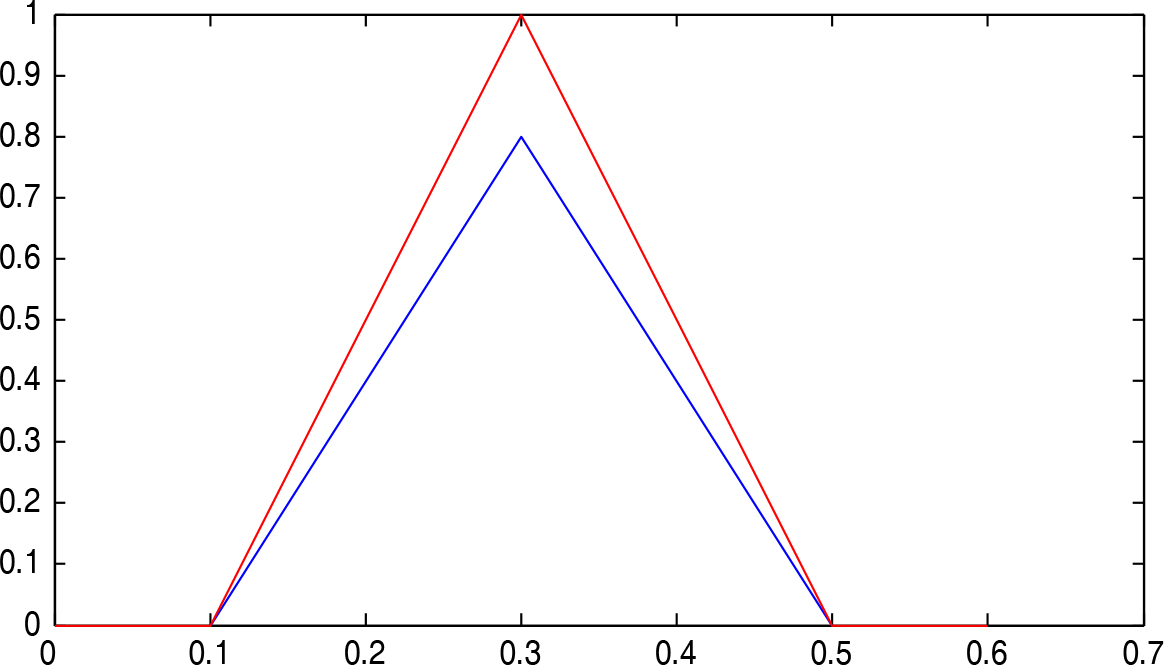
It should be mentioned that although none of the above ranking methods are perfect (for example please see Kumar et al. [17])2, we have used the strengths of them in this paper. Finally, as mentioned, researchers are still facing various challenges in fuzzy arithmetic.
In this section, the necessary condition is compared with result of other methods in comparing FNs.
On the other hand, according to Liou and Wang [20], Kumar et al. [16] and Sotoudeh-Anvari [25], the ranking of FNs in this example is
According to Dat et al. [8] and Chen and Sanguansat [7], the ranking of FNs in this case is
Fuzzy numbers 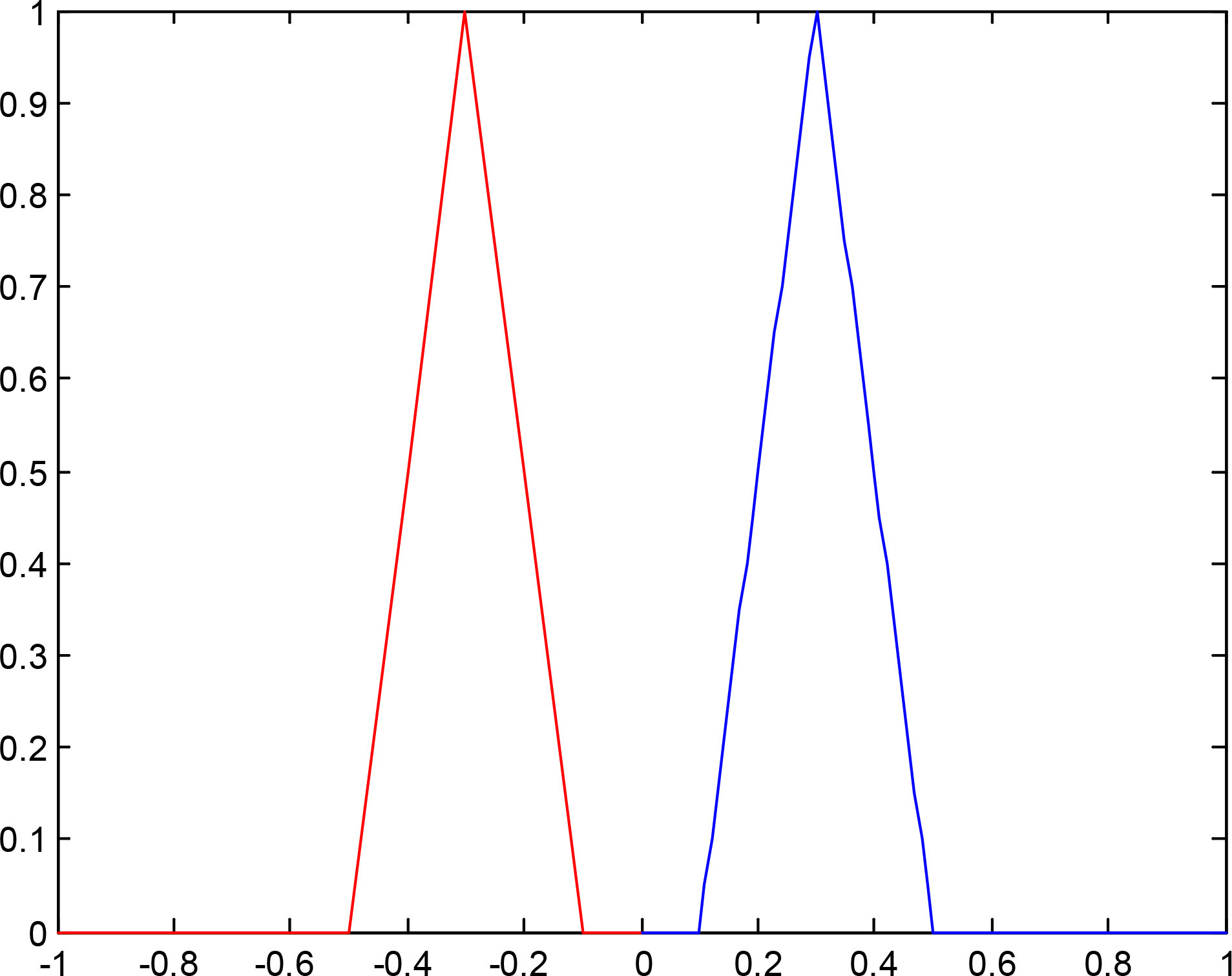
Fuzzy numbers 
Fuzzy numbers 
Fuzzy numbers 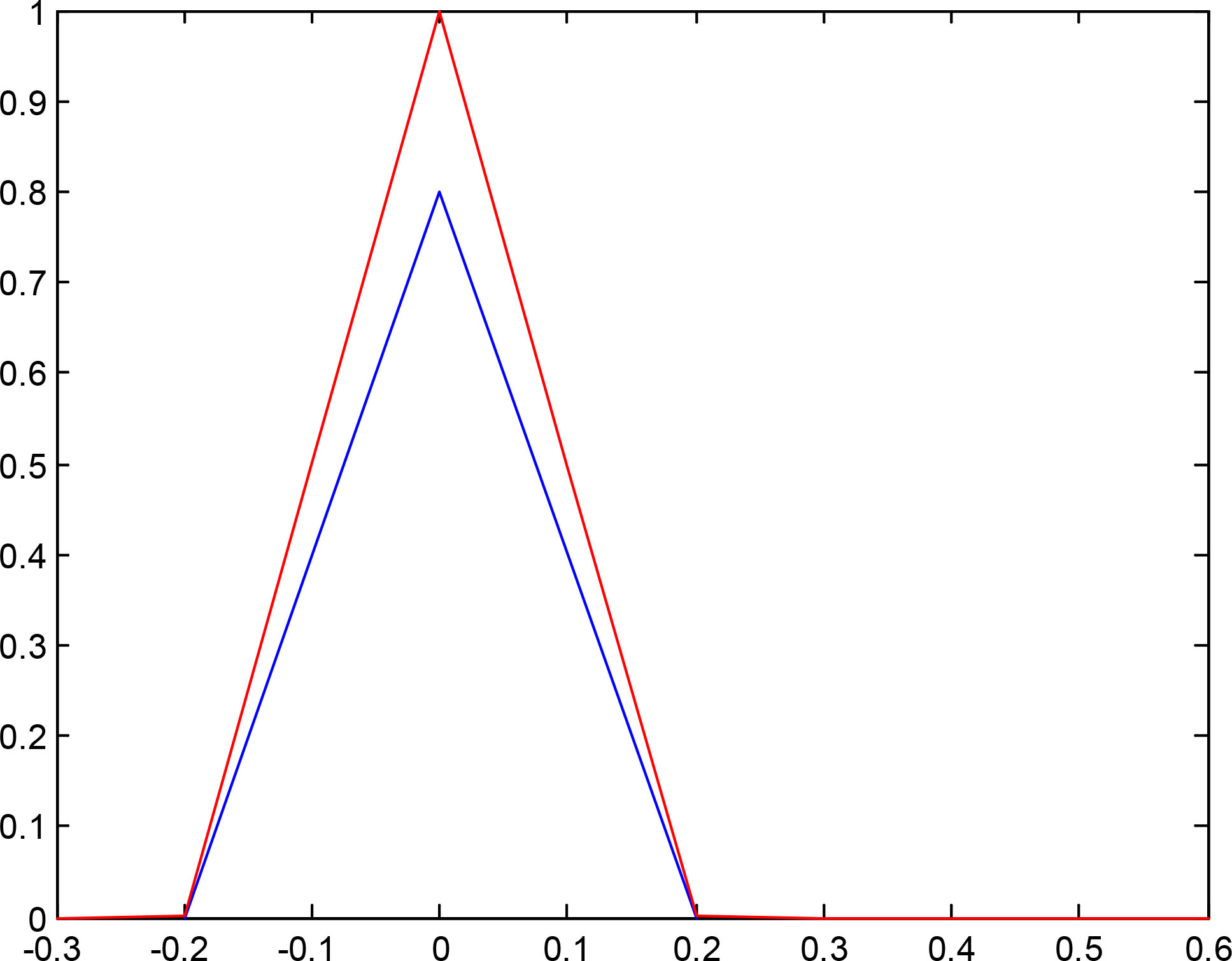
Fuzzy numbers 
In this section, we study an application of the suggested method to a fuzzy FMEA model. FMEA is an important and very popular technique that is employed to identify and remove known or potential failures to improve the reliability of system (Ardeshir et al. [1]).
In FMEA, the risk priorities of failure modes are derived based on RPN (risk priority number), which is the product of three risk factors including the probability of failure (O), the severity of failure (S) and the probability of not detecting failure (D). That is
Traditional FMEA scale for O
Traditional FMEA scale for O
Linguistic terms for rating the failure modes (Liu et al. [21])
Linguistic terms for scoring the risk factors weight (Liu et al. [21])
Aggregated evaluation information and fuzzy RPNs for failure modes (Liu et al. [21])
Higher RPN higher is the risk of failure mode. On the other words, based on RPNs, the failure modes should be prioritized and appropriate operations must be taken on the high-risk cases (Liu et al. [21]).
Although classical FMEA has shown its efficiency in various problems, crisp RPN has been extensively criticized by some researchers (e.g. Mandal and Maiti [22]; Liu et al. [21]; Ardeshir et al. [1]). Indeed, it is too difficult for a general DM to exactly assess the risk factors in real-life problems. As a result, some researchers have evaluated these parameters using fuzzy linguistic variables.
Now, fuzzy FMEA process based on the suggested method for ranking TFNs is studied in a TFT-LCD3 product. This example is taken from Liu et al. [21].
In the first step of FMEA, potential failure modes should be determined. This TFT-LCD has 11 failure modes (FMs) such as “Greyscale display defect (FM1)”, “Flickering display (FM3)” and “Missing pixels (FM5)”, as well as 15 causes of failure (CFs) such as “Liquid crystal resistance too low (CF6)” and “Bias level tolerance too large (CF11)” (as demonstrated in Table 4). Moreover, the risk factors, namely O, S and D as well as their weights are evaluated by the linguistic variables defined in Tables 2 and 3. Let us recall that although in traditional FMEA, risk factors are assumed to have identical importance, indeed, each risk factor has a different weight depending on the case considered (Mandal and Maiti [22]; Liu et al. [21]). As a result, in new extensions of FMEA, different weights can be assigned to O, S, and D values.
In this case, the FMEA team is established of five DMs to handle this problem and therefore, their assessments should be aggregated. The aggregated information can be found in Table 4. Clearly, RPN of each failure mode is a TFN and consequently, the procedure of comparing and ranking FNs should be done.
In this step, suggested necessary condition for fuzzy ranking are used to partially compare TFNs. The possible ranking of CFs on the basis the suggested method (Model 6 or 7) is as follows:
CF9
Evidently, this result is completely consistent with Liu et al. [21]. Moreover, possible ranking order by suggested method is the same as Liou and Wang [20], Chen [5], and Kumar et al. [16].
Although we cannot assert to definitively handle one of the defects in ranking methods, this case demonstrates that suggested method provides comparable outcomes with other ranking methods and also is practical. This can be intuitively understood by recalling the fact that the proposed method is only a necessary condition for ranking of fuzzy numbers, in contrast to other ranking methods.
In this paper, we proposed a necessary condition for comparing of TFNs on the basis of some efficient height-independent methods. We cleared that for
The application of introduced method to complex multi-criteria decision making (MCDM) problems is suggested to further studies.
Footnotes

Thin film transistor liquid crystal display.
Acknowledgments
The author is grateful to Prof. Guiwu Wei and reviewers for their important comments to improve the earlier version of this work.